

AAPOD2 Image Archives
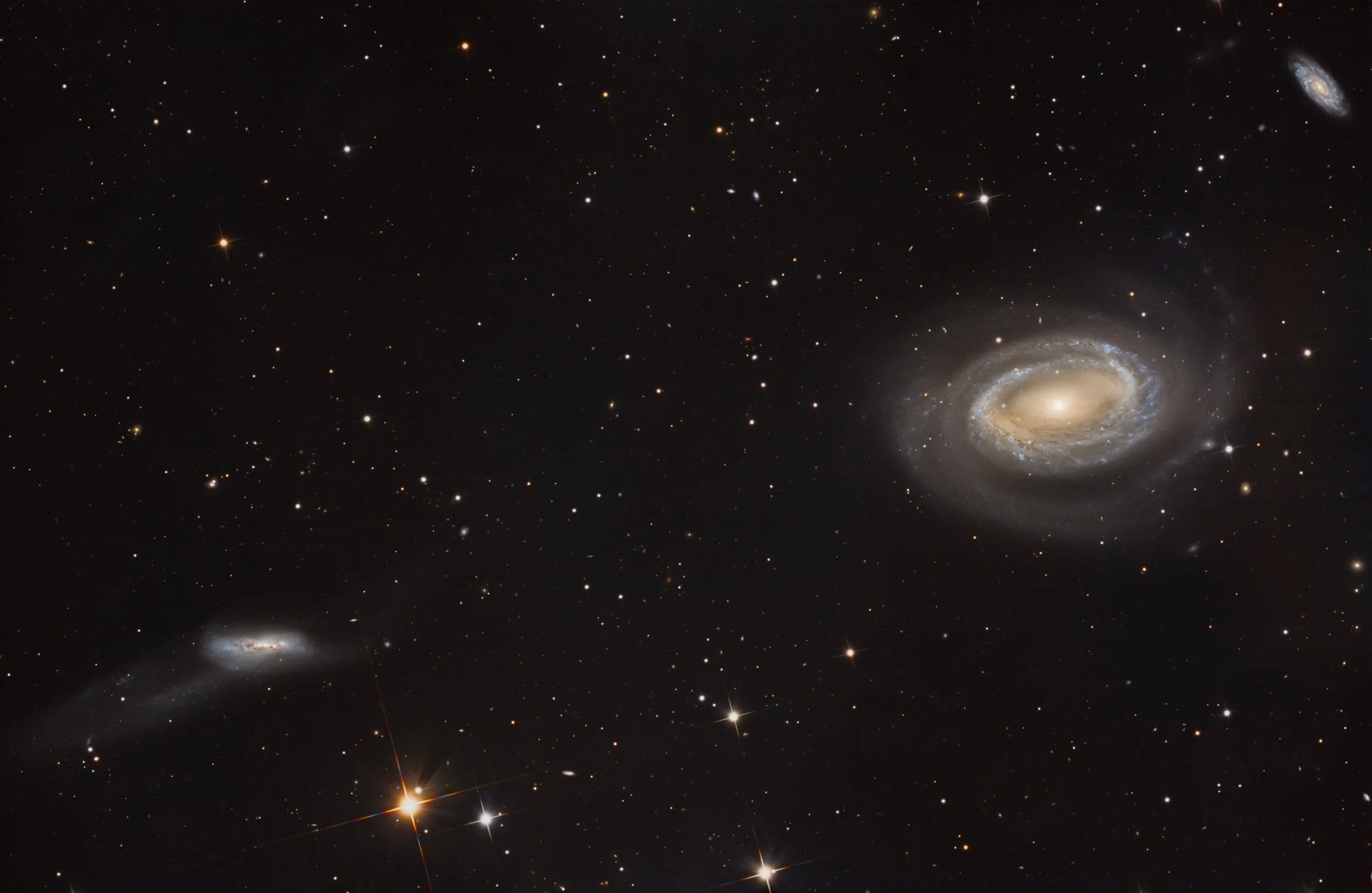
Galactic Drama in Coma Berenices
This dramatic scene in Coma Berenices centers on NGC 4725, a striking barred spiral galaxy about 41 million light-years away. To its lower left is the disrupted dwarf galaxy NGC 4747, visibly warped by gravitational forces. Faint tidal streams connect the two, evidence of a galactic interaction that began hundreds of millions of years ago. Above right, the more distant spiral NGC 4712 adds balance to the frame, creating a layered view into cosmic depth.
Captured from the Alentejo Remote Observatory in Portugal, this deep exposure reveals subtle details often lost in shorter integrations — including delicate arcs of stellar material around NGC 4747 and the pronounced one-arm spiral structure of NGC 4725. These distortions hint at past encounters, telling a story not just of light, but of motion and transformation. Tidal tails like these serve as galactic fingerprints, preserving the history of collisions in the quiet vastness of space.
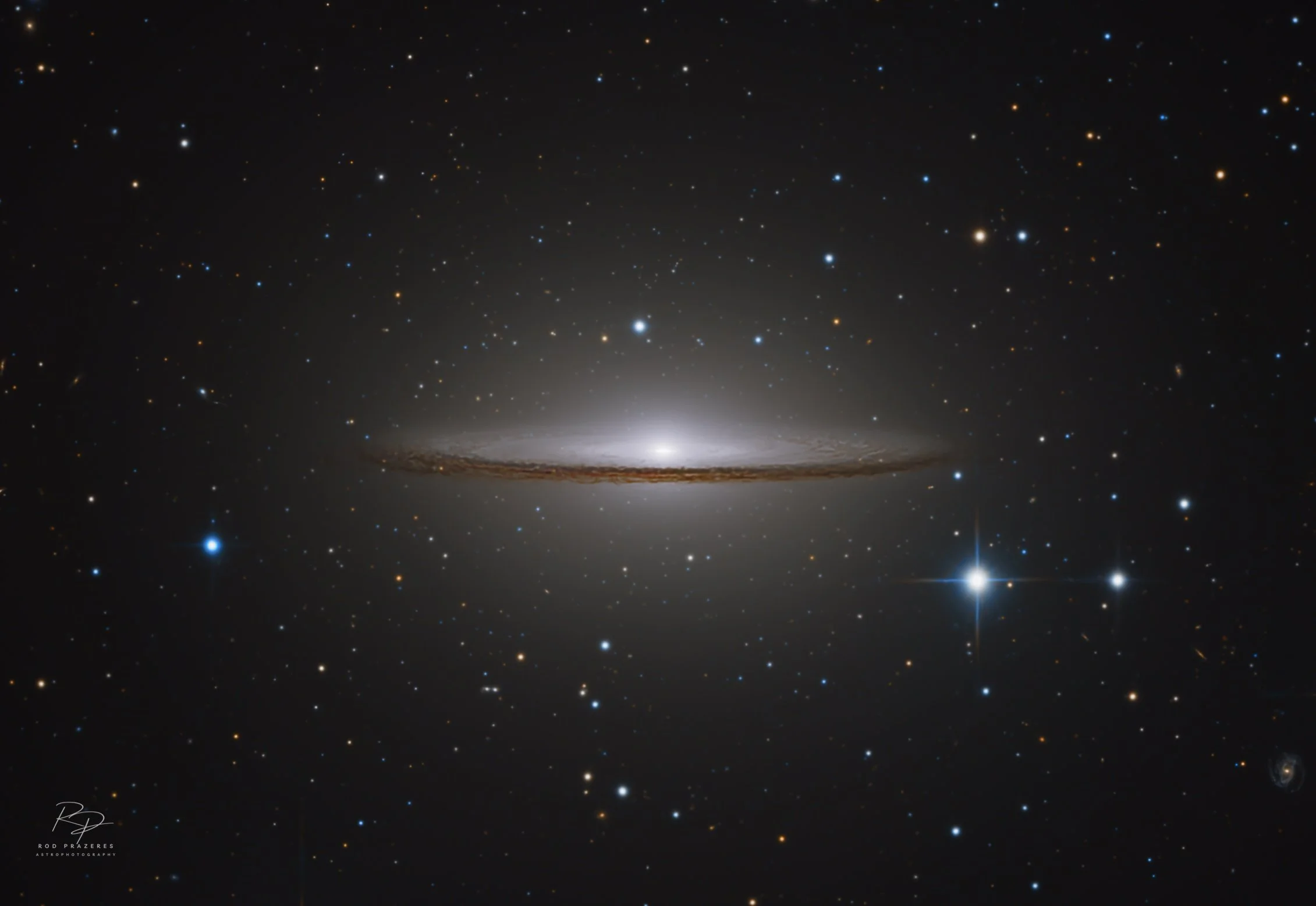
"Edge of Elegance" - M104 - The Sombrero Galaxy
Seen edge-on from our vantage point on Earth, Messier 104—better known as the Sombrero Galaxy—cuts a dramatic profile against a rich field of distant stars and galaxies. The thick dust lane bisecting its bright, glowing halo is what gives M104 its distinctive hat-like appearance, while the brilliant central bulge reveals the intensity of stellar activity and a suspected supermassive black hole at its heart.
Located approximately 28 million light-years away in the constellation Virgo, M104 spans nearly 50,000 light-years across. This deep image masterfully reveals the fine structure of the galaxy's dark dust, glowing core, and extended halo, along with hints of background galaxies far beyond. The clarity and isolation of the Sombrero in space make it one of the most photogenic spiral galaxies in the sky.
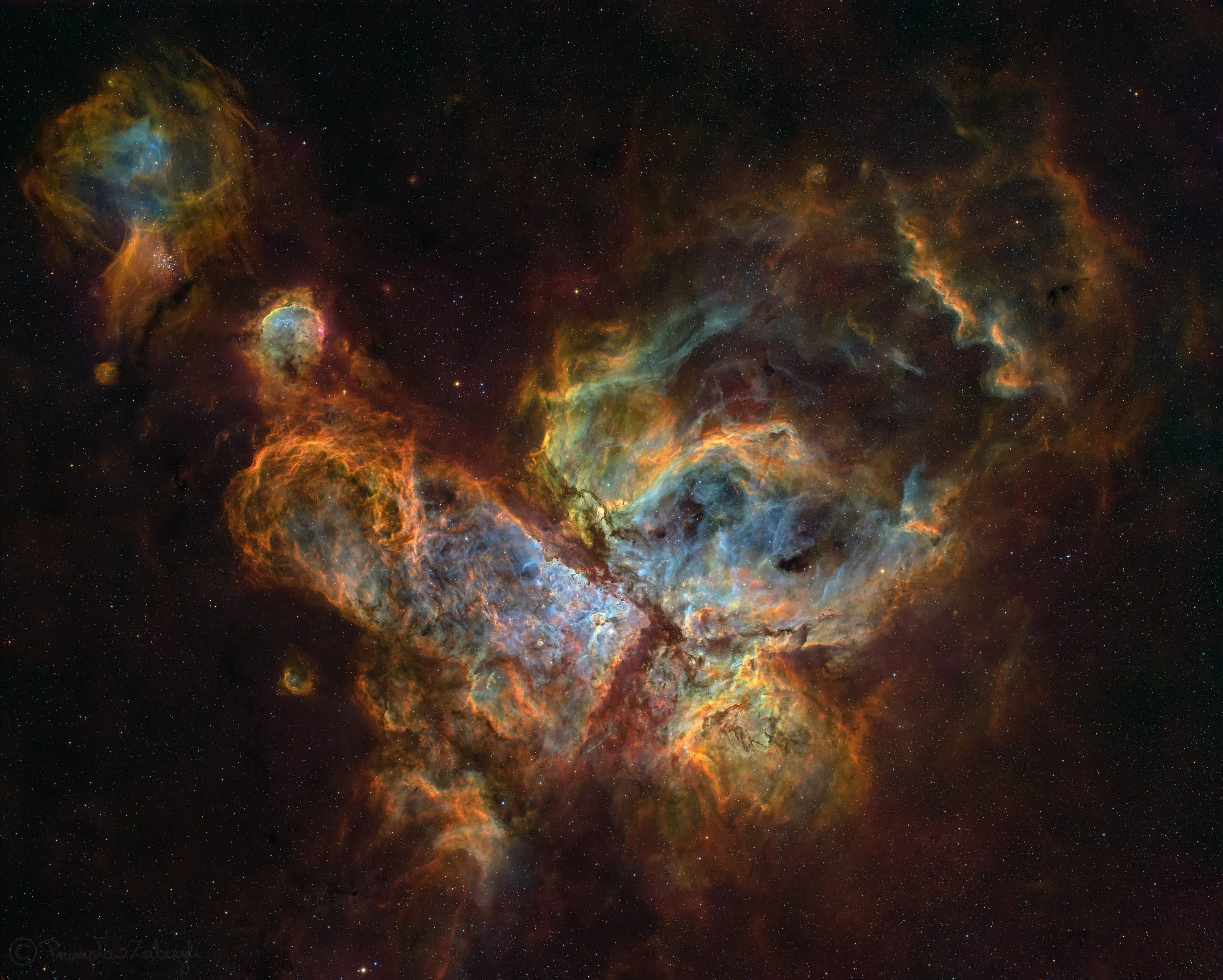
The Great Carina Nebula – A Celestial Masterpiece (NGC 3372)
One of the southern sky's grandest spectacles, the Carina Nebula (NGC 3372) blazes with energy in this high-resolution capture from Blesfontein, South Africa. Home to massive stars like Eta Carinae and sculpted by intense stellar winds and ultraviolet radiation, this immense cloud of ionized gas stretches over 300 light-years and serves as a stellar nursery where new suns are born in the shadows of dying giants.
Framed under pristine southern skies, this image showcases dramatic contrasts of glowing hydrogen clouds, dark dust pillars, and radiant young star clusters. The photographer also documented the journey to this remote site with a video, offering a behind-the-scenes look at the effort and wonder involved in capturing such a cosmic jewel.
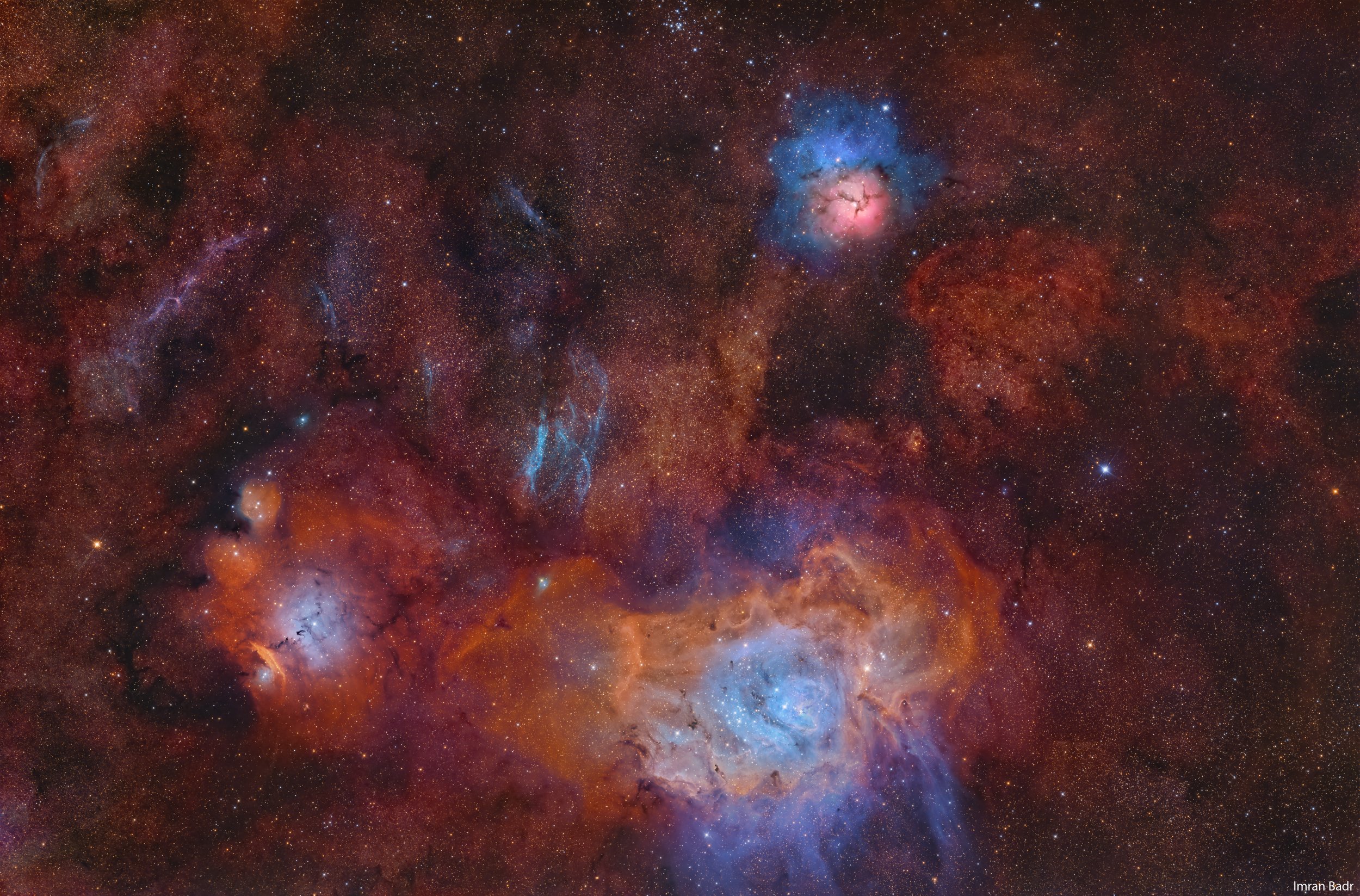
Lagoon, Trifid, and the Ghost of G007.5–01.7
This vibrant wide-field mosaic captures the rich H II region of Sagittarius, home to two of the most iconic star-forming regions in the night sky—the Lagoon Nebula (M8) and the Trifid Nebula (M20). Rendered in the SHORGB palette, the image highlights colorful emission structures: blue-green oxygen regions, sulfur filaments, and active hydrogen zones swirling around massive stars and dark dust lanes.
Ghosting faintly in the background is the elusive supernova remnant G007.5–01.7, an ancient stellar explosion now barely visible in optical wavelengths. Its faint blue filaments and arcs weave through the frame like a hidden fossil, adding depth and cosmic history to an already breathtaking stellar nursery.
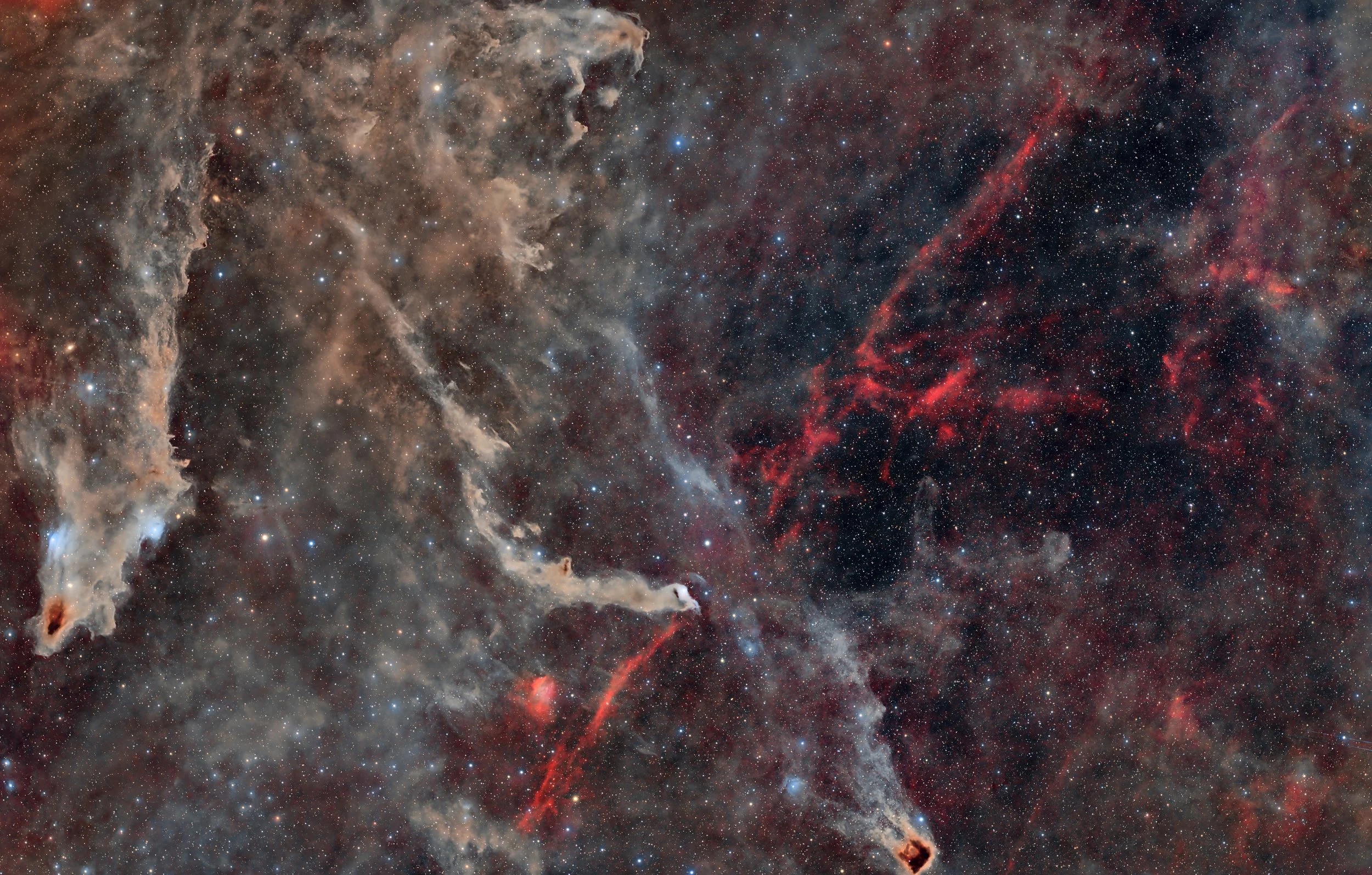
Wide-Field View of the Wolf's Cave Nebula Zone
This expansive wide-field image showcases the Wolf’s Cave region (LDN 1217 and LDN 1219) in the constellation Cepheus. Dominated by a dense network of dark nebulae and reflection clouds, the scene evokes the eerie appearance of a cave lurking in the cosmic dust. The “Wolf’s Cave” itself appears as a compact, obscured structure enshrouded in thick molecular clouds that block visible starlight, making this an ideal field to study star formation.
Surrounding the nebula, reflection zones faintly glow with scattered starlight from young stars embedded within the complex. The image’s rich color palette and intricate contrast between dark, dusty filaments and background stars highlight the turbulence and structure of our galaxy’s interstellar medium.
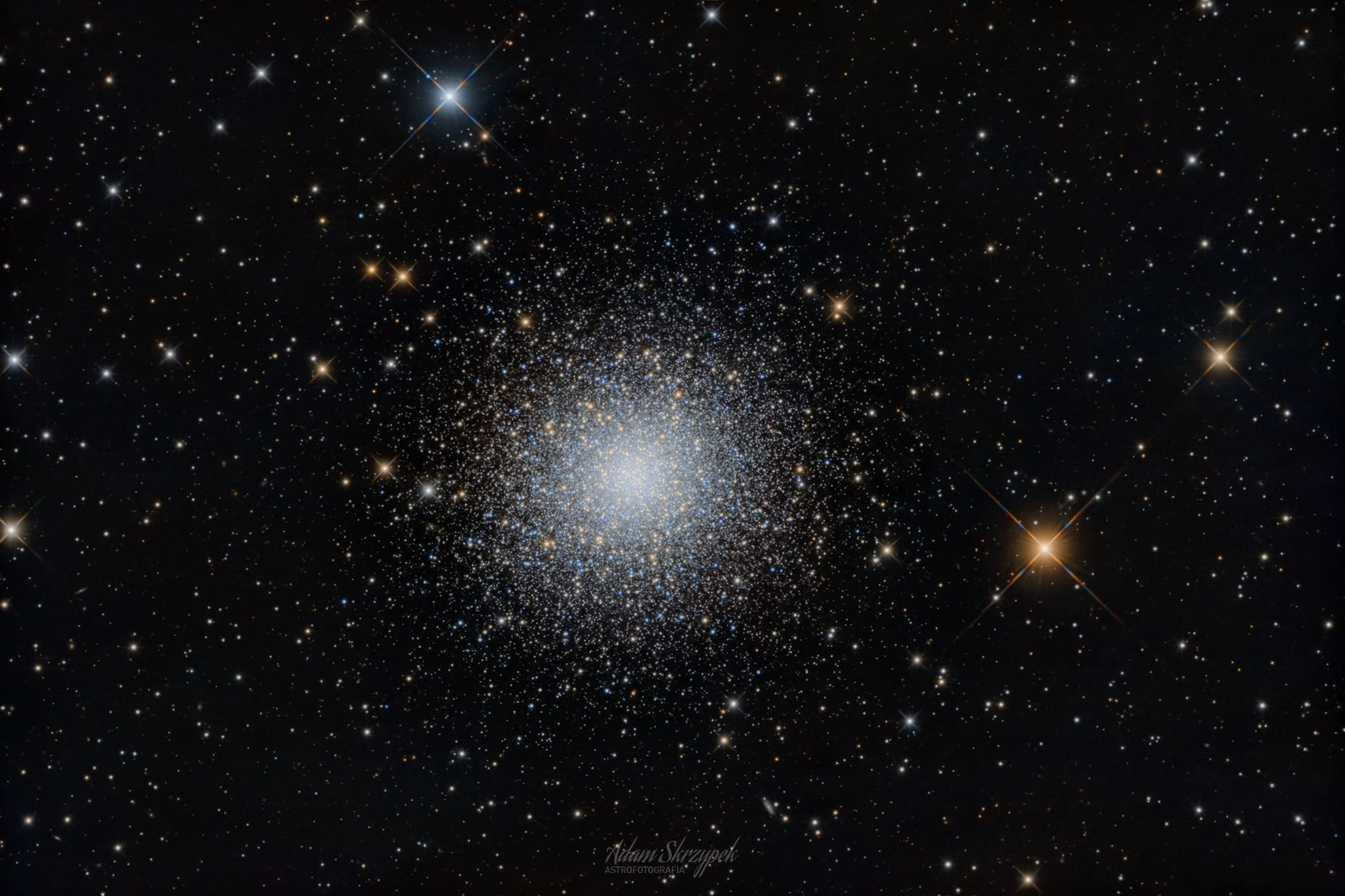
Messier 13 – The Great Hercules Cluster
Messier 13, or the Great Hercules Cluster, is a massive globular cluster located about 22,200 light-years from Earth in the constellation Hercules. This densely packed sphere of stars spans roughly 145 light-years in diameter and contains several hundred thousand ancient stars. Its brilliance and size make it a favorite target for both amateur and professional astronomers in the northern hemisphere.
With an age of approximately 11.65 billion years, M13 is among the oldest known structures in the Milky Way. Its core shines with densely concentrated stars, while its outskirts appear gradually more diffuse. This detailed image captures the varied star colors—ranging from cooler orange giants to hotter blue stars—emphasizing the cluster’s aged and evolved population.
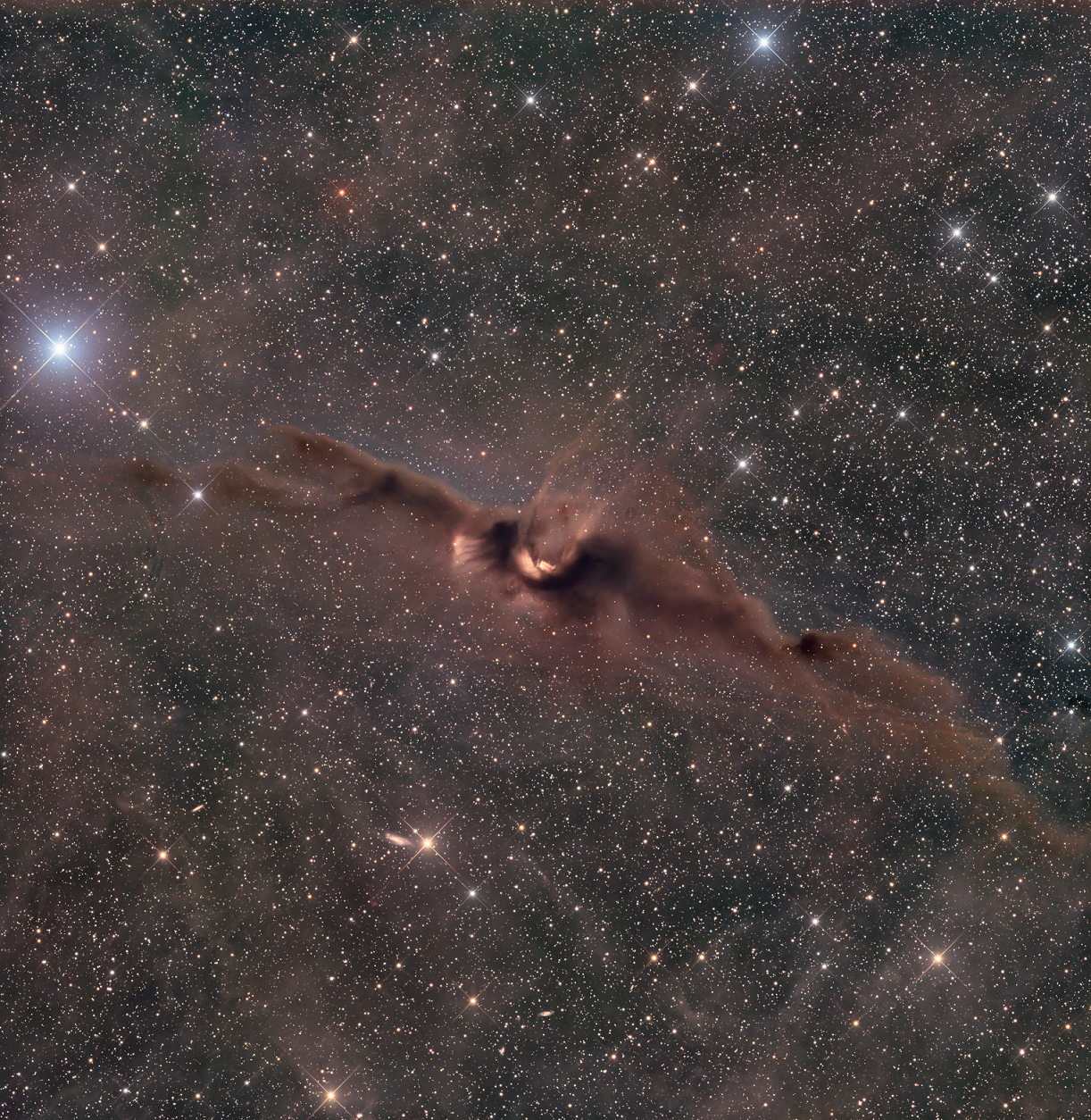
LDN 43 – A Dark Cloud in Serpens
LDN 43 is a dense dark nebula located in the constellation of Ophiuchus, near the Serpens-Ophiuchus boundary. This cloud of cold gas and dust obscures the starlight behind it, forming a stark silhouette against the rich star field of the Milky Way. Inside its opaque interior, young stellar objects are forming, hidden from optical view but revealed in infrared studies. These cosmic birthplaces are essential to understanding star formation in our galaxy.
This image was captured using high-quality RGB and Luminance data with Astrodon Gen1 and Gen2 filters, allowing for exceptional color balance and clarity. The use of Astrodon E-Series filters (Blue, Green, Red, and Gen2 Lum) helped isolate the true colors of the region and preserve faint background stars, while the luminance channel enhanced fine detail and contrast in the dark dust lanes.