
APPOD2 2022 images
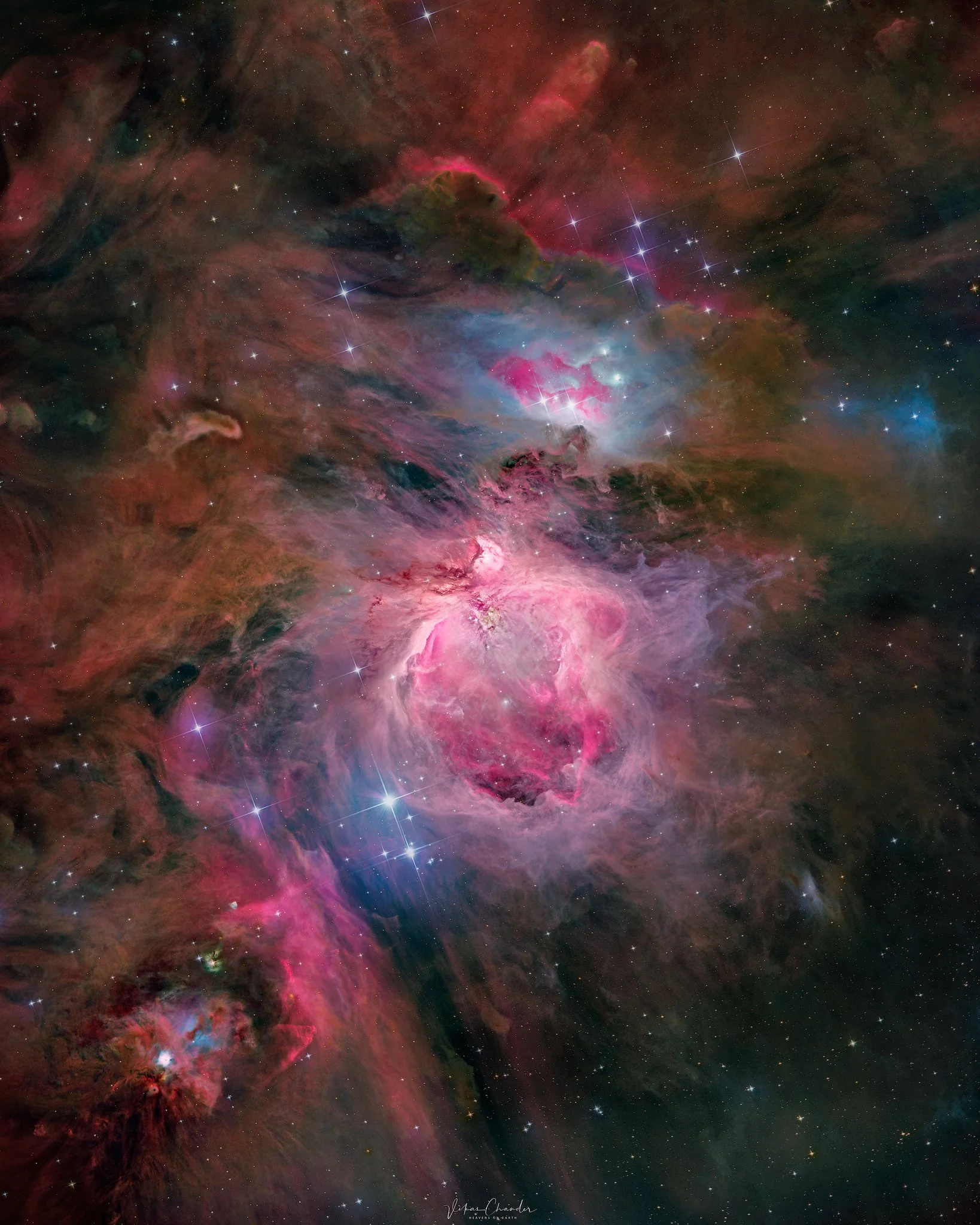
The Orion Nebula is a vast and colorful cloud of gas and dust located in the constellation Orion. It is one of the most famous and easily recognizable nebulae in the sky, and is often referred to as the "Great Nebula in Orion" or the "Orion Nebula Cluster".
Difficult to process but done well here, is the Orion Nebula Trapezium, a group of four young hot stars located within the center of the Nebula. The stars, which are known as Theta-1 Orionis A, B, C, and D, are some of the most massive and luminous stars in the Orion Nebula, and are thought to be less than a million years old.
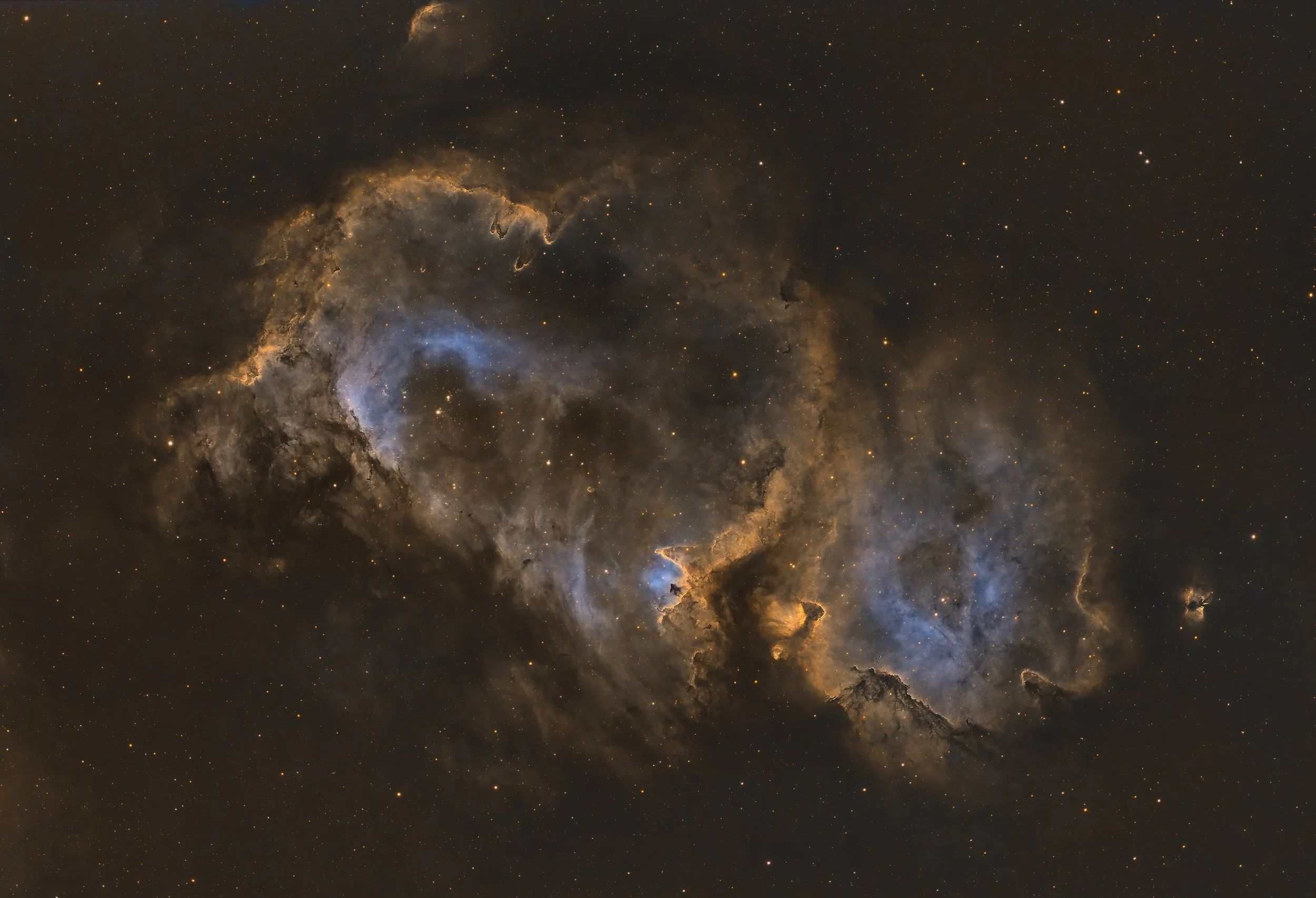
The Soul Nebula, also known as the Embryo Nebula and designated as IC 1848, is a large emission nebula located in the constellation Cassiopeia. It is about 7,000 light-years away from Earth
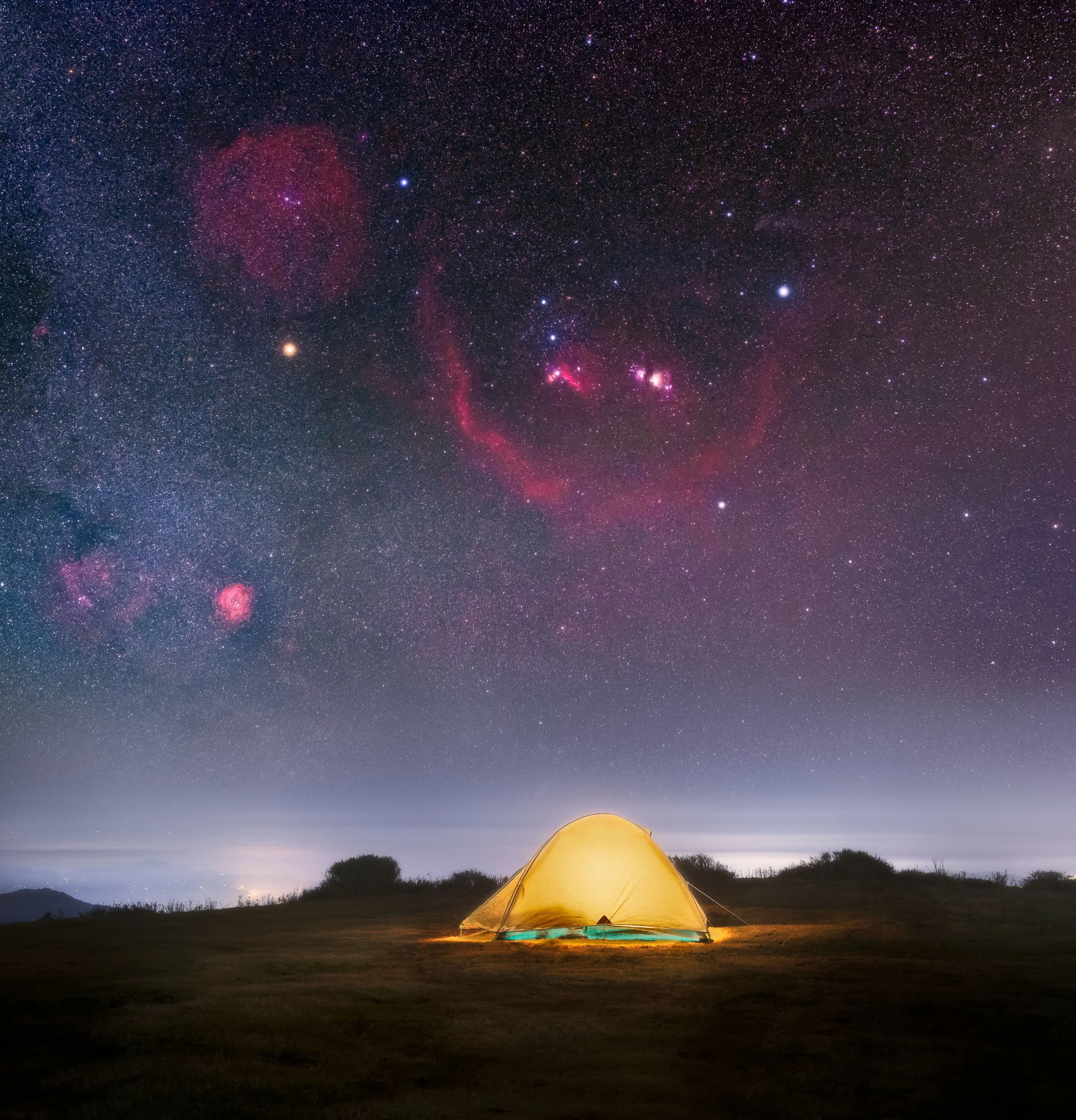
The Orion Complex is a group of stars and nebulae located in the constellation Orion. Seen here rising over a beautiful campsite. It’s an interesting region for astronomers because it contains a number of bright, young stars that are still in the process of forming. These stars are surrounded by clouds of gas and dust, which are the remnants of the material that originally formed the stars.
The Orion Complex is home to several famous nebulae, including the Great Orion Nebula (aka M42), a spectacular example of a region where new stars are being born. The Orion Complex is a popular target for amateur and professional astronomers because it is visible with the naked eye and contains a wealth of great targets.
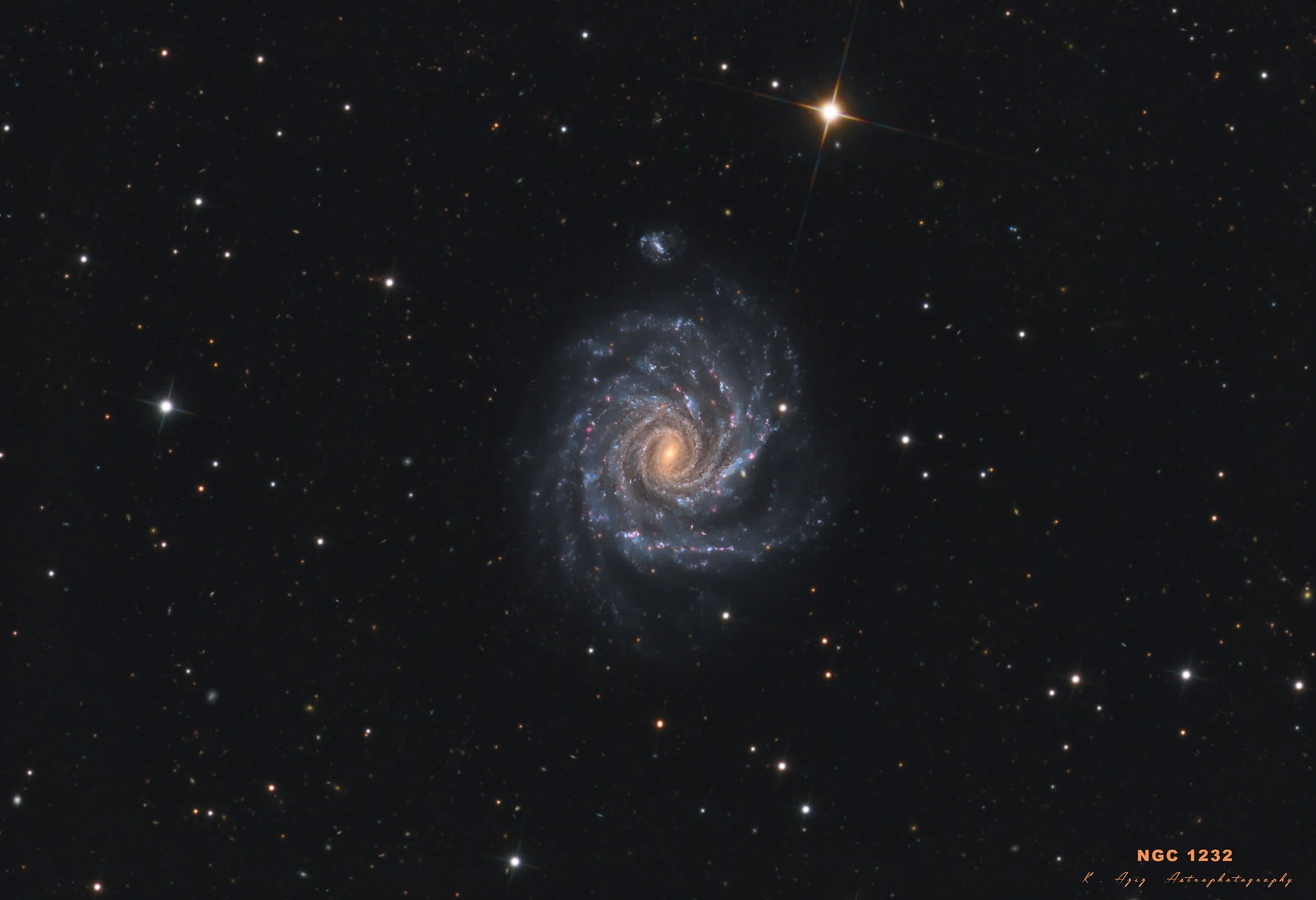
Observations of NGC 1232 have shown that it contains a significant amount of gas and dust, which is thought to be the raw material for star formation. The galaxy also has a number of young, bright blue stars, which are thought to be less than a few hundred million years old.
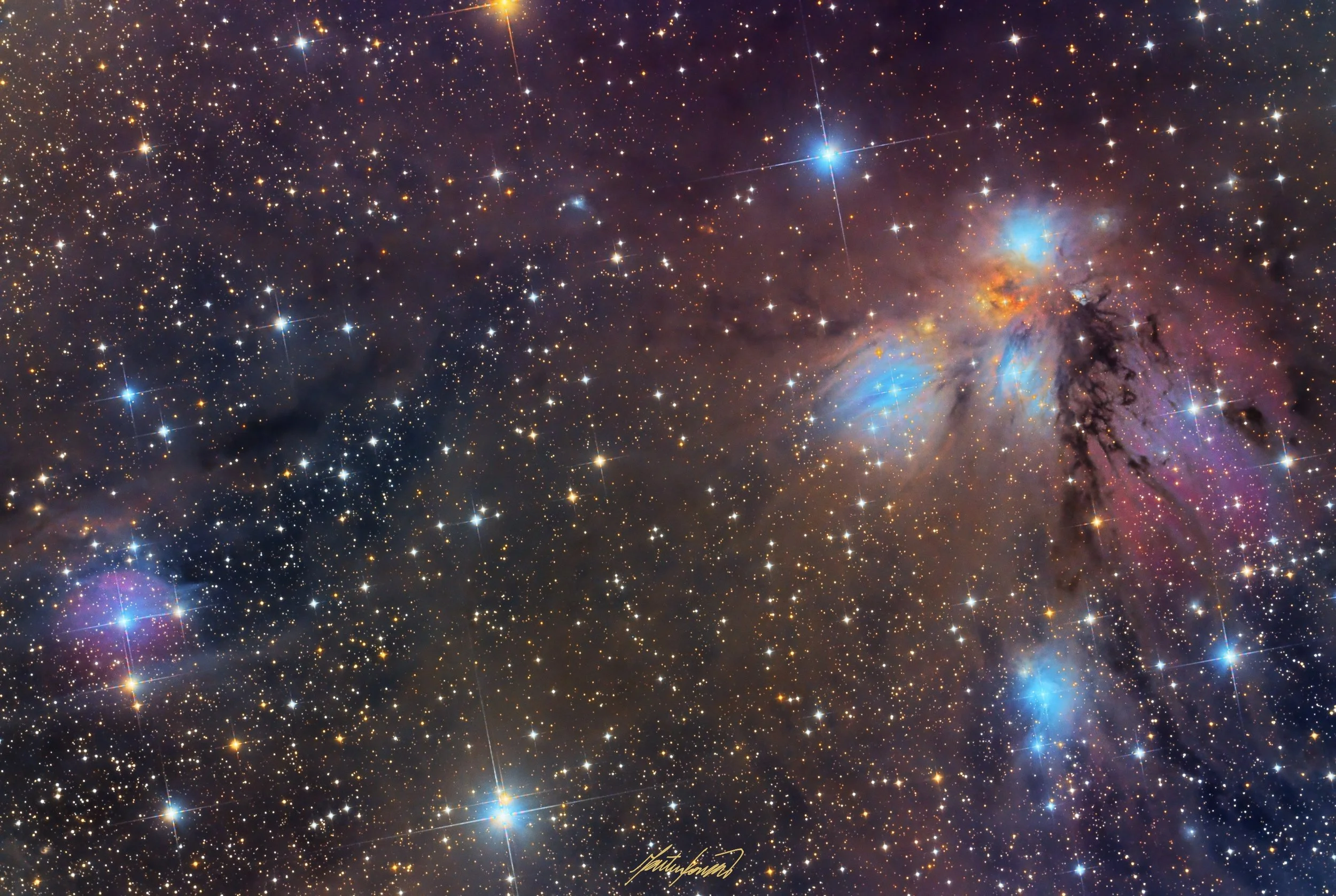
NGC 2170 is a reflection nebula located in the constellation Monoceros. Reflection nebulae are clouds of dust and gas that reflect the light of nearby stars, giving them a blue or blue-white appearance. NGC 2170 is illuminated by a group of hot, young stars located just outside the nebula. These stars are thought to be less than a few million years old, making them some of the youngest known in the Milky Way galaxy.
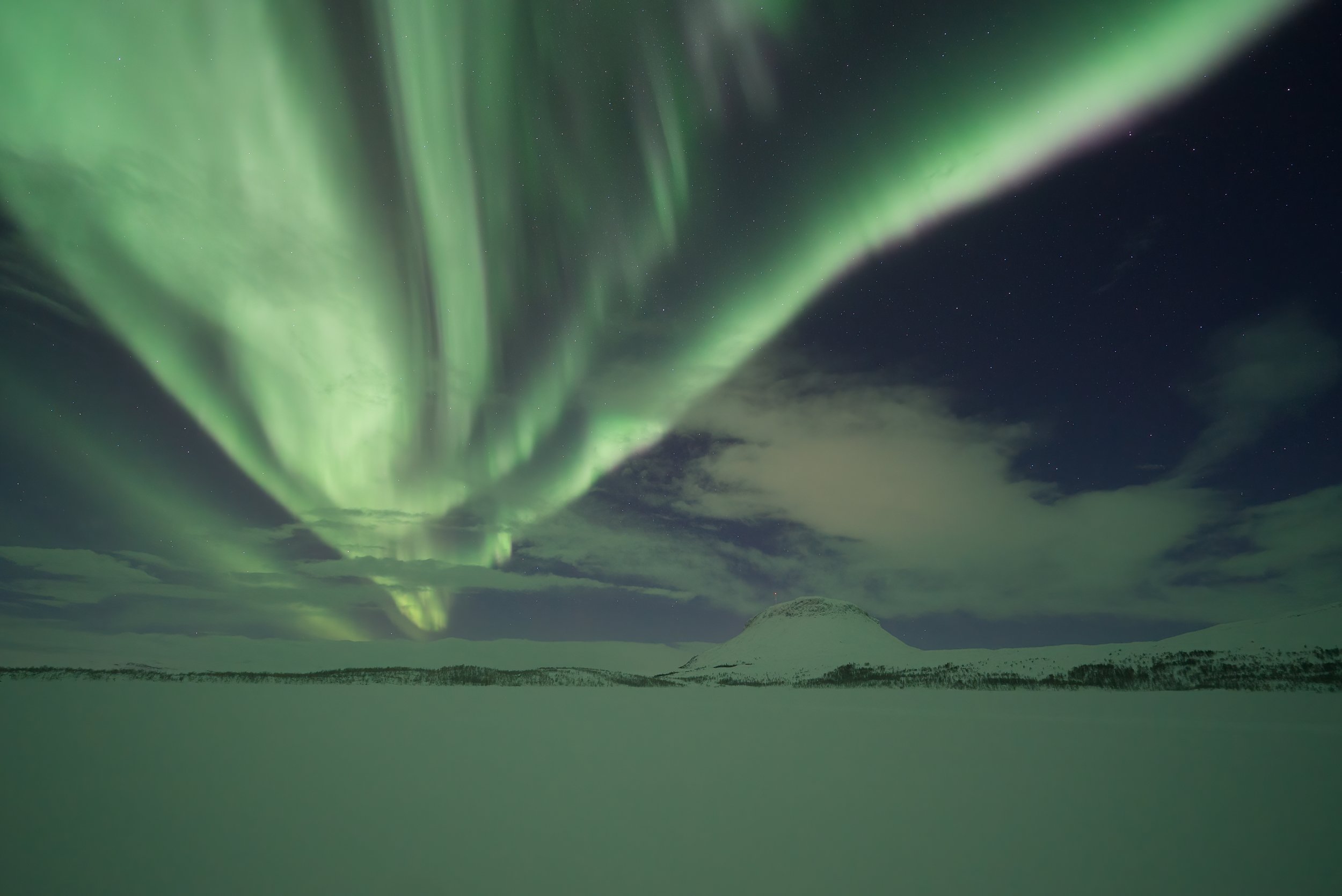
The Northern Lights are more commonly seen in the polar regions because the Earth's magnetic field funnel the solar particles towards the polar regions. The intensity of the Northern Lights is affected by the amount of solar activity, so they can be more or less visible at different times.

Image Description and Details : I spent two nights imaging it with narrowband filters to highlight the abundant Hydrogen, Oxygen regions - with the plan to create a HOO image in order to keep the red color of Hydrogen - making this image even more Christmassy.
Telescope used: Tecnosky Owl Apo 130/900
Tracker mount: Rainbow Astro RST-300
Cemera: ZWO ASI 6200MM Pro
Taken in 12.2022 in Lugano, Switzerland
Ha: 9 hours, Oiii: 6 hours of integration time
Copyright: Luca Bartek @The_Space_Koala

Image Description and Details : I imaged the Sun for 365 days between 25 December 2020 and 31 December 2021, missing just six days during this period. The project started with the aim of recording the journey of a single sunspot across the solar disc, but I managed to continue it for a year.
I blended the images to create a single shot, which records the rise of Solar Cycle 25. A total of 127 active regions appeared on the Earth-facing solar disc (AR 12794–AR 12921) during this phase and the image shows all of them. The sunspots create two bands on the solar disc, around 15–35 degrees north and south of the equator and gradually start drifting towards it – a phenomenon known as Spörer’s law.
Post-processing: PIPP, Photoshop
Equipment: Nikon D5600 camera, Sigma 150–600c lens, Thousand Oaks Filter (White-Light)
Exif: f/6.3, ISO 100, 365 individual exposures (1/80-second to 1/500-second), 600mm
Location: Kolkata, India
Copyright: Soumyadeep Mukherjee

This one here was a difficult mosaic to do. I had a total of 12 sessions in APP due to different cameras, optics, exposure length, orientation, etc. I mixed some stuff from Telescope Live in with a ton of my own data from both here at home and from trips to Marfa TX. There were a total of 226x 120s, 180x 180s, 204x 300s, and 264x 600s totaling 77 hours and 32 minutes of integration taken with the Telescope Live AUS-2, CHI-5, CHI-6, Pentax K5 with Samyang 135 f/2, Pentax K5 with Borg 55FL f/3.6, Pentax K5 with WO Redcat 51, Pentax K3 with WO Redcat 51, and Pentax K3 with Borg 55FL f/3.6. All of this was processed in APP and Photoshop.
Copyright: Scotty Bishop
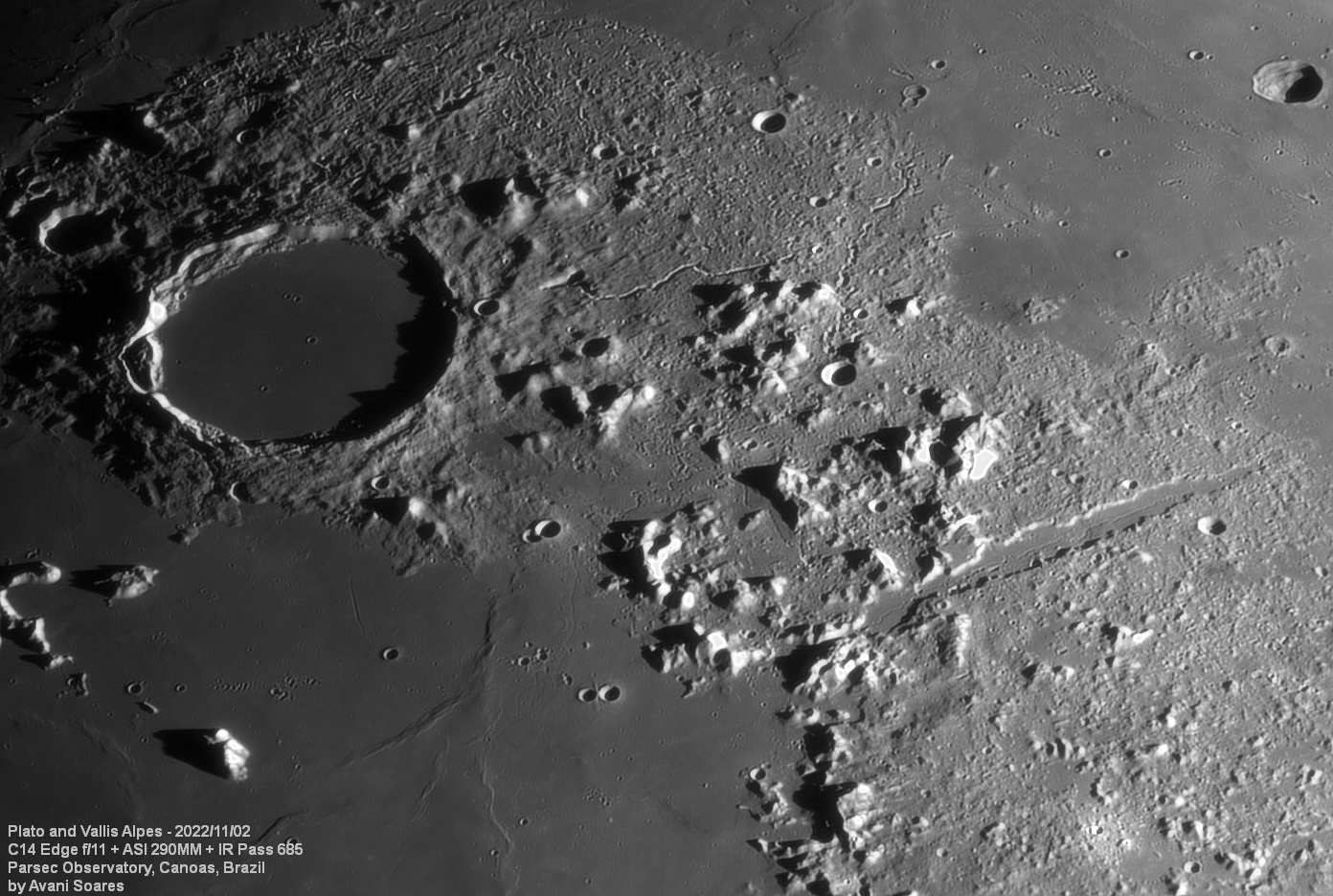
Image Description and Details : With an image of such magnitude it is difficult for me not to comment on the two targets that stand out the most; Plato and Vallis Alpes.
Plato is one of the main targets of lunar astrophotography.
A good photo of Plato should show at least 3 or 4 smaller craters present on its floor, always in a darker hue than the surrounding terrain.
But every good self-respecting atrophotographer knows that it's not easy to make these small craters appear on your floor and, for that to happen, certain conditions must be met.
Firstly, an opening of no less than 250mm is ideal, not that it is impossible to register them with 200mm or even 180mm, but with 250mm it is much easier.
Secondly, the angle of incidence of sunlight must also be observed, if the terminator is too low and close, the contrast is too great making it difficult to record, if on the other hand the sun is too high, the smaller craters do not form shadows which it also makes it impossible to register them. I believe that the ideal is the Sun at an altitude of 30° to 45° so the contrast is not so great and shadows are still formed, facilitating their perception.
Thirdly, we must pay attention to seeing, with a bad seeing any recording is almost impossible, as these small craters disappear when the turbulence is strong.
I won't talk about focus because any mistake destroys a good result!
As a general rule, in order to get an impressive photo of at least some of these small craters, they would have to be visible briefly during the real-time screen capture on the lap top. If so, we learned that after the best stacked frames, these small craters will show up perfectly as seen in the attached photo.
Vallis Alpes, in the south of Mare Frigoris, not far from the Cassini crater and Plato's Great Eastern Plain, is one of the most spectacular valleys on the moon.
Seen in this image, Vallis Alpes (Alpine Valley) is a feature that extends 166 km from Mare Imbrium, running northeast to the edge of Mare Frigoris. This valley was discovered in 1727 by Francesco Bianchini. The valley is narrow at both ends and widens in the center to be about 10 kilometers in diameter.
The bottom of the valley has a flat, lava-flooded surface with a narrow 'channel' winding through the middle. This channel is generally thought of as a "graben", an area between two parallel faults that have fallen below the surrounding area. The narrow inner channel is believed to have been formed after the formation of the Imbrium basin, after the lava flows into the sea. It probably corresponds to a 'lava tube' that collapsed in a later geological episode due to the high velocity and low viscosity of the magma.
Very interesting to know that channels are common on the moon, considered one of the most fascinating volcanic features due to their wide range of scales (from 100 meters to over 100 km in length) and morphologies they present (linear, curved or sinuous). 🇧🇷
Channels typically form when lava flows erode the existing surface, melting the substrate, removing mechanical material, or a combination of thermal and mechanical processes. However, some may have been lava tubes, rilles, that suffered roof collapse after their formation.
Trying to detect this relatively narrow and winding channel that runs along the bottom of Vallis Alpes is one of the favorite challenges of lunar observers, its exact dimensions are not exactly determined, but its vision is a very satisfactory test, as are the small craters on the floor. Plateau.
I hope these tips are of some use to anyone like me who likes to venture into Lunar photography!
Copyright: Astroavani

I had that RGB stack of short exposures 20x30 sec. each filter for a while now and didn´t really know what to do with it.
The fwhm on the combinded image is 0.75" so it was a real magic night.
I croped the field and rotated it by 45 degrees to have the hydrogen bar horizontal.
still not sure if I have done the raw data justice, but even the small field has a dreadful dynamic range and was quite difficult to process.
Copyright: Wolfgang Promper

Image Description and Details : NGC 2736 is the brightest part of the Vela supernova remnant.
The image was taken with an ASA 12" newtonian at Tivoli astrofarm, Namibia, camera: ASI 6200MM. The image is a combination of a RGB and a narrowband image. Exposure time: RGB: 15 / 18 / 11 x 120s, Ha 8 x 500s, OIII 8x500s. Image processing was done with Pixinsight.
Copyright: Juergen Stein

NGC 7789 with the collected Ha data,when I decided on this object, I suspected that there would have to be dust and ha there in the end of our Milky Way.Continuing to expose NGC 7789 in the following clear nights was the right decision.At that time, the moon appeared in the second half of the night. So I switched to the Ha filter and realized that it is really like that, Ha is quite present in the area of Cassiopeia.Caroline's rose includes many red giants, so this beautiful star cluster appears in the warm orange-red light. The additional Ha radiant in red makes this very old open star cluster even more impressive.Such star fields with all the differently shining stars fascinate me every time anew.
Integration 15h
Telescope: Takahashi FSQ 85
Camera: ZWO ASI 2600 mm
Baader Filter: 75x 300" Ha 6,5 Nm, 55x300" Lum, 35x120" RGB each
Mount: EQ6Rpro
GuidingScope:
GuidingCamera: ZWO ASI 120 mm
Copyright: Stefan "Harry" Thrun
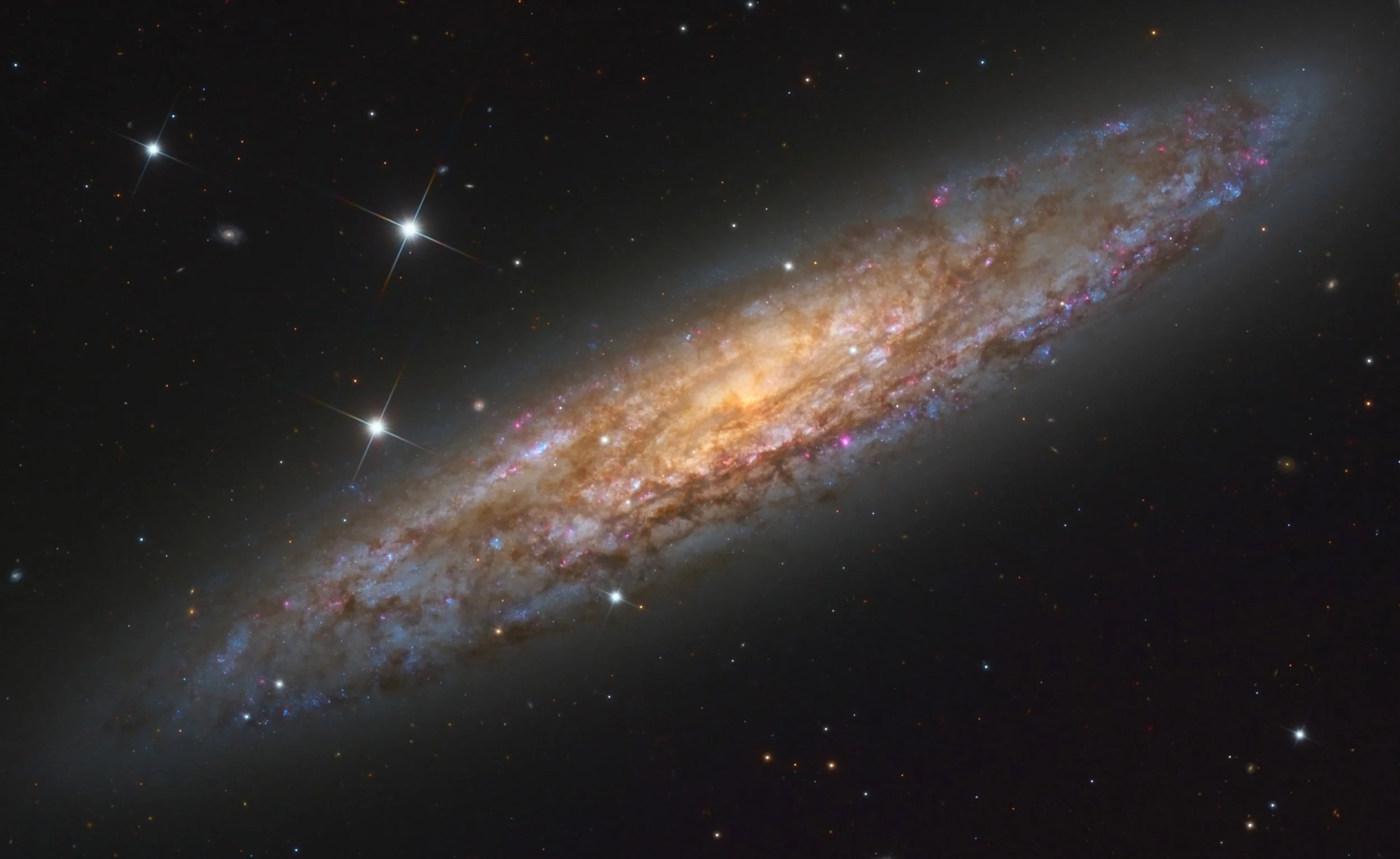
Image Description and Details : First light image with my new CDK17 located at Obstech in Chile. 16 hours of LRGB data equally split between the 4 channels. Deconvolution done in CCDStack. Seeing was excellent with the Luminance master coming in at 1.35" FWHM
Copyright: Kevin Morefield

Here is NGC 3201 taken with the Telescope Live CHI-1 setup. It is 22x 600 each of LRGB processed in APP and Photoshop.
Cooyright: Scotty Bishop

NGC 1808 is a barred spiral galaxy located 40 million light years from Earth in the constellation of Columba.
While most spiral galaxies are flat disks this one has spumes of dust and gas on its outer spiral arms. The unusual shape may have been caused by a proximate encounter with another galaxy (NGC 1792). This is supported by the amount of gas moving towards the nucleus of NGC 1808 which has triggered a very high level of new star formation. The galaxy is classified as a starburst galaxy, but the heavy amount of gas and dust tends to obscure the starburst regions in ground based images. Of interest in this deep image is the resolution of the faint outer arms and star streams.
Imaged in LRGB on our CDK 1000 at Observatorio El Sauce, Obstech, Chile.
Deconvolved with RC Astro Blurxterminator Beta version.
Image Processing: Mike Selby and Mark Hanson

Image Description and Details : M78(Messier 78)
Object type: Reflection nebula
Distance: 1,350 ly
Radius: 5 ly
Magnitude: +8.3
Constellation: Orion
It’s one of the most beautiful reflection nebula I’ve ever imaged due to its morphological complexity and comet like blue reflection. Its proximity to Barnard’s loop made of bright Ha emission makes this target a popular wide frame image as well. Also refers as “Casper the Friendly Ghost” of the heavens. M78 is a stellar nursery of young hot blue stars reflecting off the surrounding dust clouds. 17 Herbig-Haro objects are identified within this nebula. HH are narrow jet steams associated with new born stars that collide with nearby clouds of gas and dust.
SCT 8”, Hyperstar v4, ZWO(ASI294MC Pro, ASIAIR Pro, ASI290mm, EAF) | Sky-Watcher EQ6R Pro | 60mm Svbony guide
193X120” | IDAS LPS D3
Gain: 100, -10 °C
APP, PS(Camera Raw + Plug-ins)
10/27-28/2022
Bortle 5 Ca, USA
Copyright: Paul Diosomito

Image Description and Details : Behind the molecular cloud of gas and dust, LBN 419 (detail) of the Constellation of the Pegasus, a hidden fuel of future star lights, hides galaxy NGC 7497, 60 million light years old.
Copyright: Georges Chassaigne

Image Description and Details : Amazing event: full Moon, occultation, Mars opposition in one shot
C11HD EDGE F/10
Asi183mm asi290mc
Composition of 4 images
Copyright: Alessandro Ravagnin
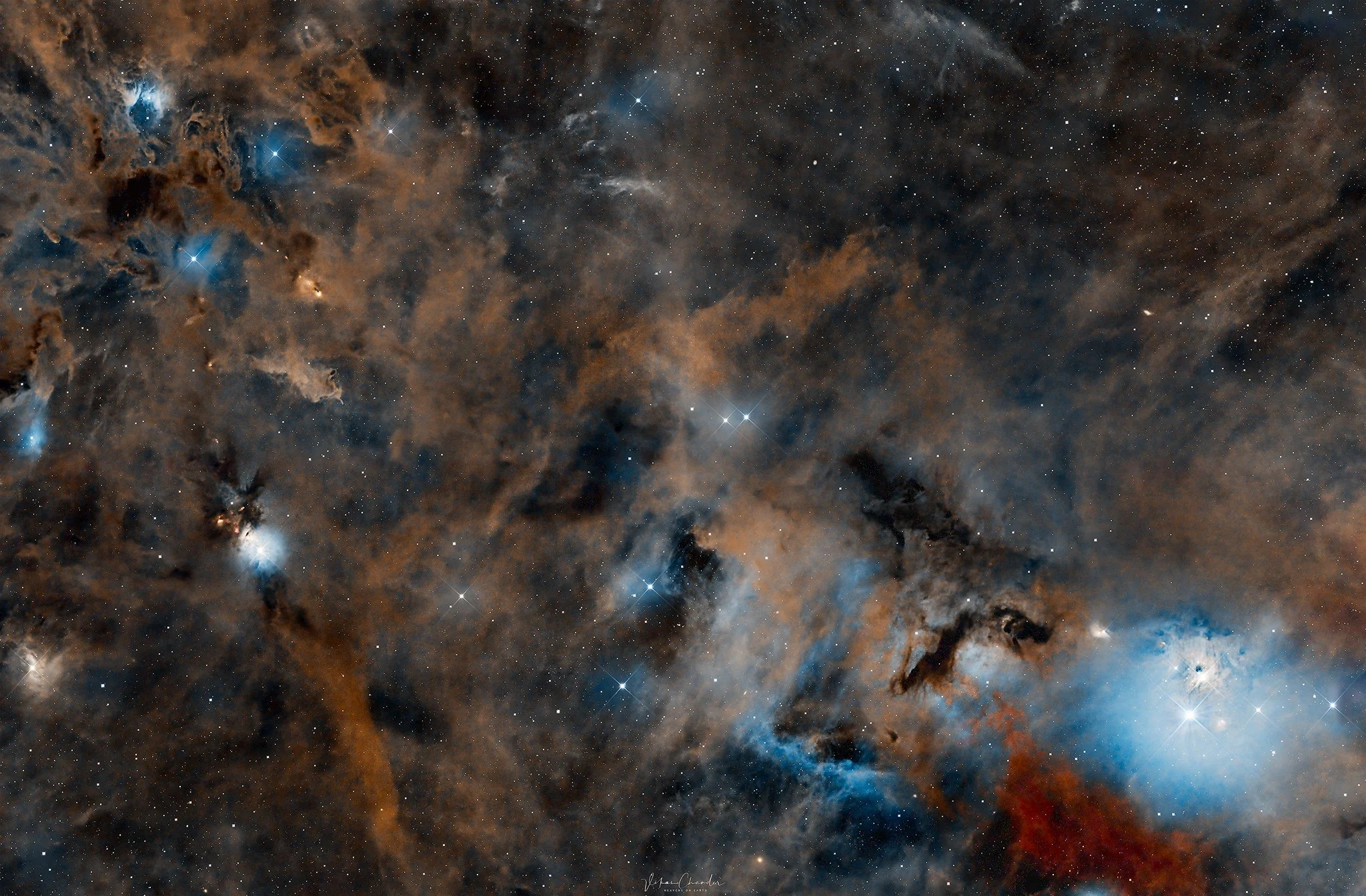
Image Description and Details : Dust of Perseus
Lying a thousand light years away, in the constellation of Perseus, lies NGC 1333. It is a reflection nebula which basically is a region of dust and gases which are reflected back from the light of a nearby star. It is a region of beautiful chaos arising out of a dense group of stars being born. Dusty regions intrigue me a lot and I am very fascinated by seeing some brilliant images on various platforms of the dusty regions in Taurus and Perseus. They are best brought out with widefield mosaics with long exposures and a deft hand at post processing. A fast scope such as the E180 married to a modern sensor is best suited for the job.
Telescope: Takahashi Epsilon 180 F/2.8 Astrograph
Camera: ZWO ASI 2400MC Pro Colour CMOS 35mm Sensor
Mount: Software Bisque Paramount MX
Observatory : Roboscopes, Spain.
RGB OSC = 60 frames x 300secs x 4 panels
Total integration = 20hrs
Software = PixInsight
Copyright: vikas chander
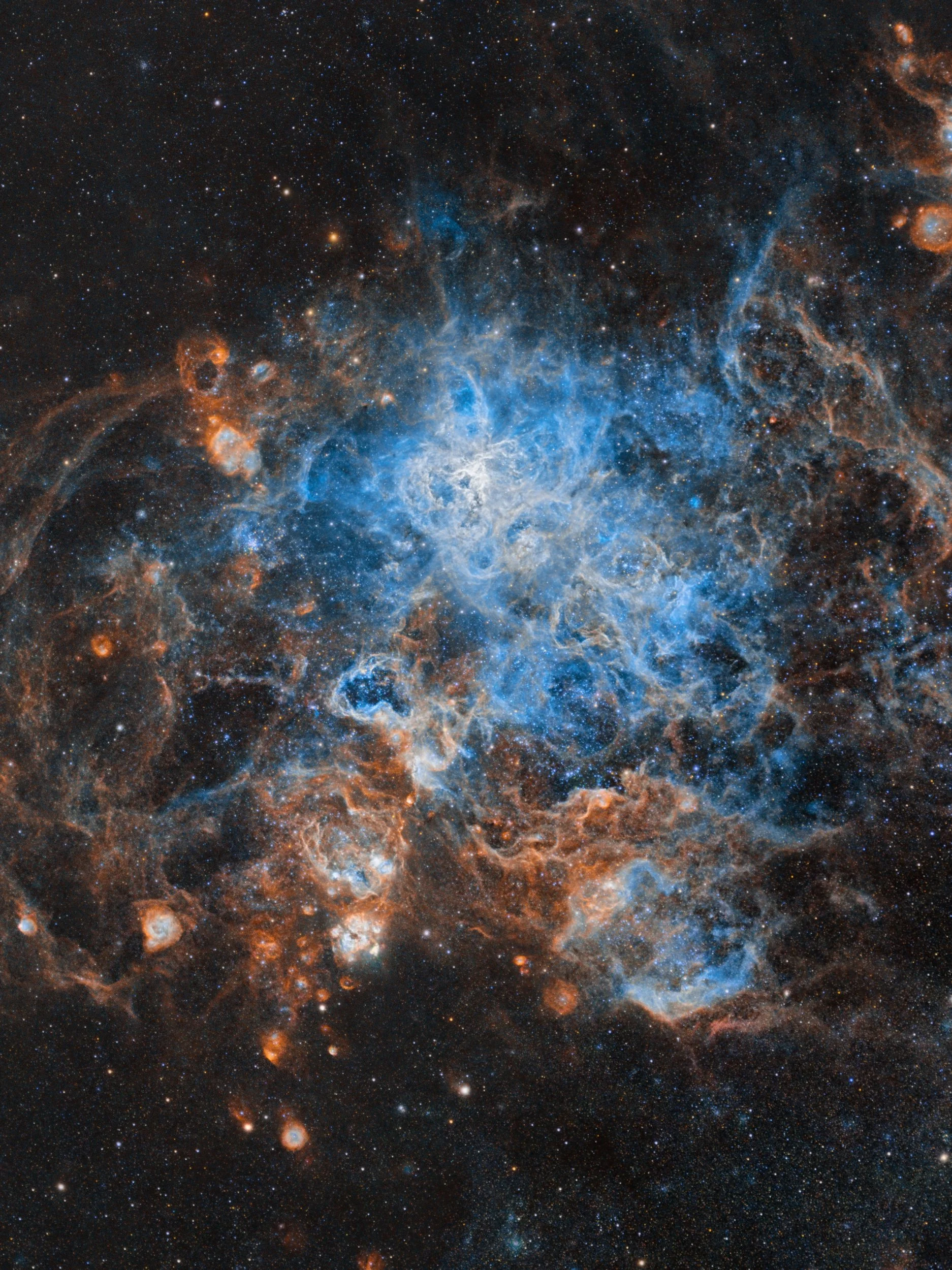
Image Description and Details : Tarantula Nebula, NGC 2070
One of the most amazing things in the entire sky - and only seen from the Southern Hemisphere - the Tarantula Nebula NGC 2070 in the Large Magellan Cloud is so large and bright that if it were as close as the Orion Nebula, it was cast shadows at night!
This is a SHO blend with RGB stars, taken over 12 nights through Oct-Nov 2022
Copyright: Christopher Boyd
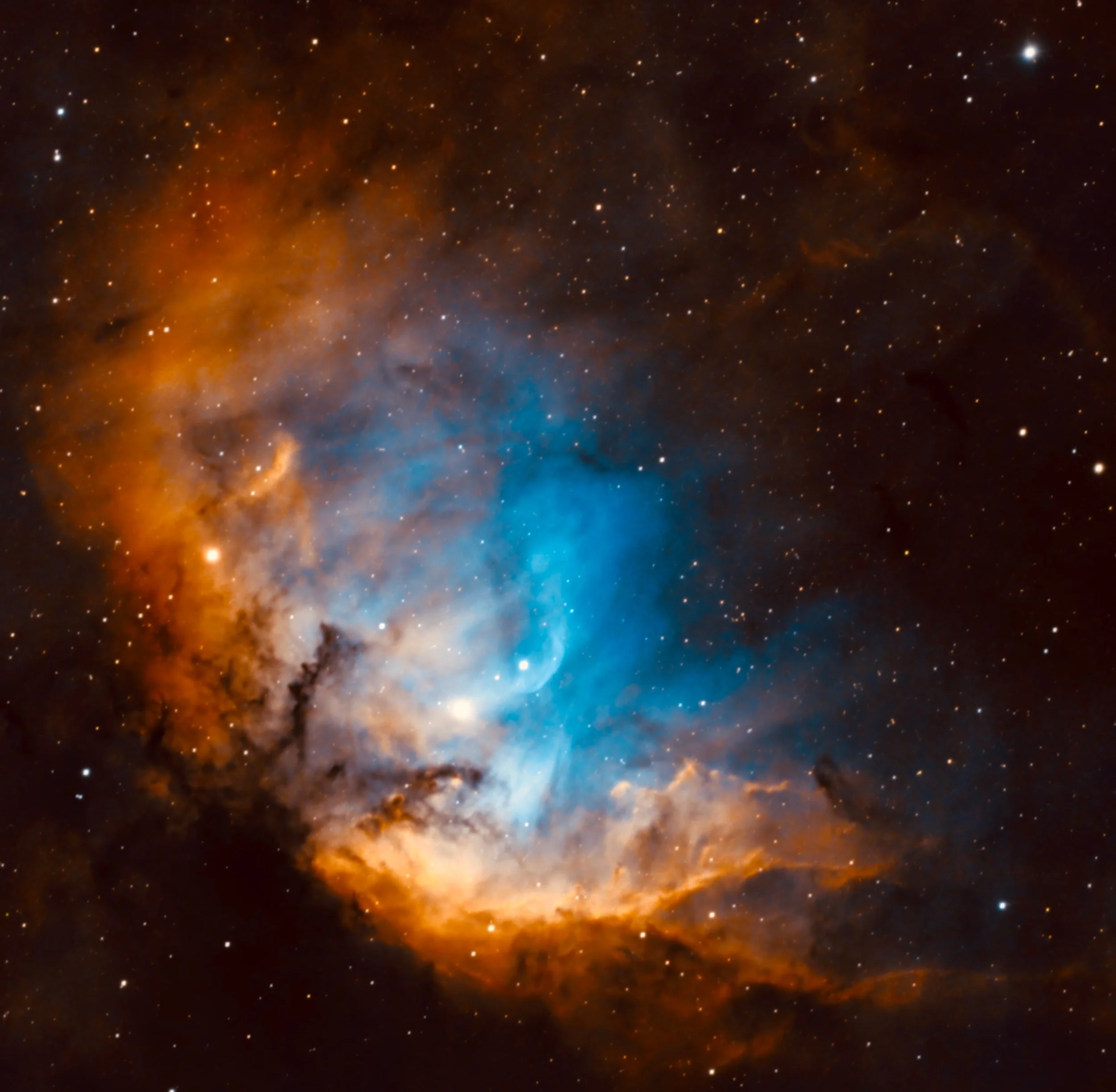
Image Description and Details : SH2-101 - The Tulip Nebula. Located 6,000 light years away in the constellation Cygnus.
Celestron 11” Edge HD with .7x reducer at F/7
Celestron OAG and a ZWO 174mm guide camera
Ioptron CEM 70 mount
ZWO 2600MM Pro cooled to -10° / gain 100.
ZWO ASIAIR pro+
ZWO EAF focuser
Chroma 3nm filters with ZWO 7x36mm EFW
Processed in Pixinsight.
Shot from my backyard, bortle 8.
Ha - 5 min subs x 64= 5.33 hrs.
Oiii - 5 min subs x 61 = 5.08 hrs.
Sii - 5 min subs x 63 = 5.25 hrs
Total integration time = 15.66 hrs.
Copyright: Richard McInnis
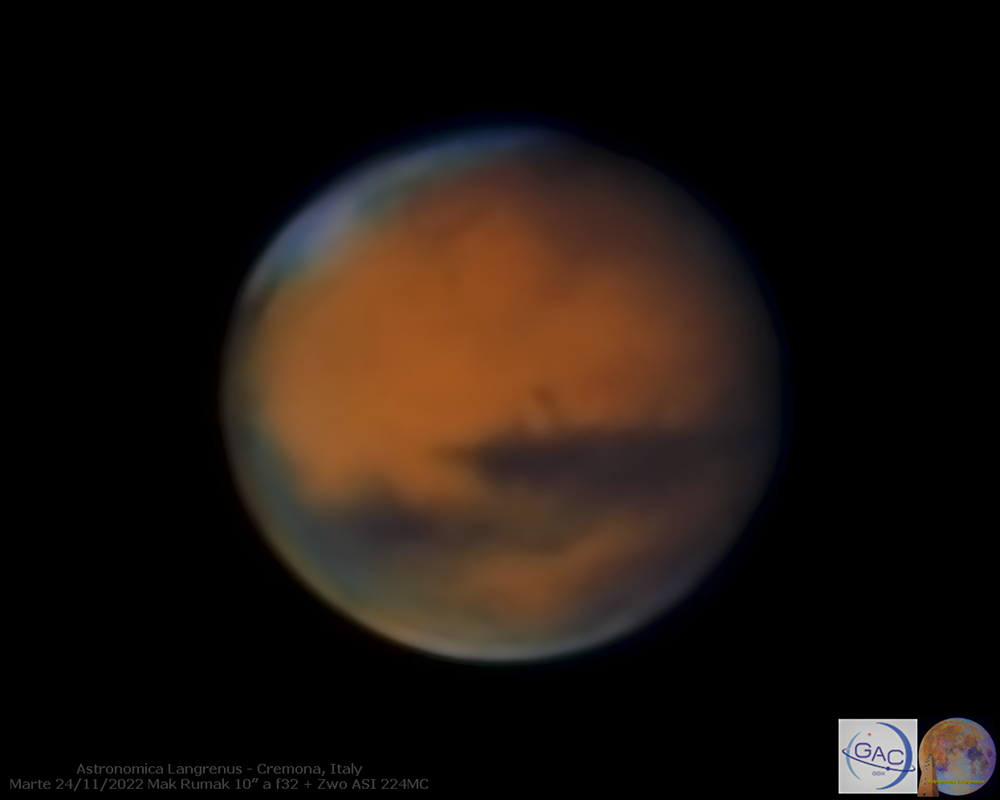
Image Description and Details : Image of the planet Mars in wich we can observe Syrtis Major (on the left side), Syrtis Minor, Isidis Planitia and Gomer Sinus. On the top of Mars we can see the Planum Boreum. Images was captured through a 255mm f20 Maksutov Rumak telescope at f32 (Barlow lens) + Zwo ASI 224MC Cmos color camera and UV-IR Blocking filter.
Copyright: Francesco Badalotti

Image Description and Details : Réalisé en starles sho et hoo pour les étoiles 10h50 temps total
Copyright: Méré Rémi

Image Description and Details : HOO combination of 310 x 300s exposures
NIKON 180mm f 2.8 - ASI 2600MM - Antlia 3nm - AsiAir
Taken at beautiful Astro Finca Olivar - Gaucin / Andalucia
Copyright: M. Hochbruck
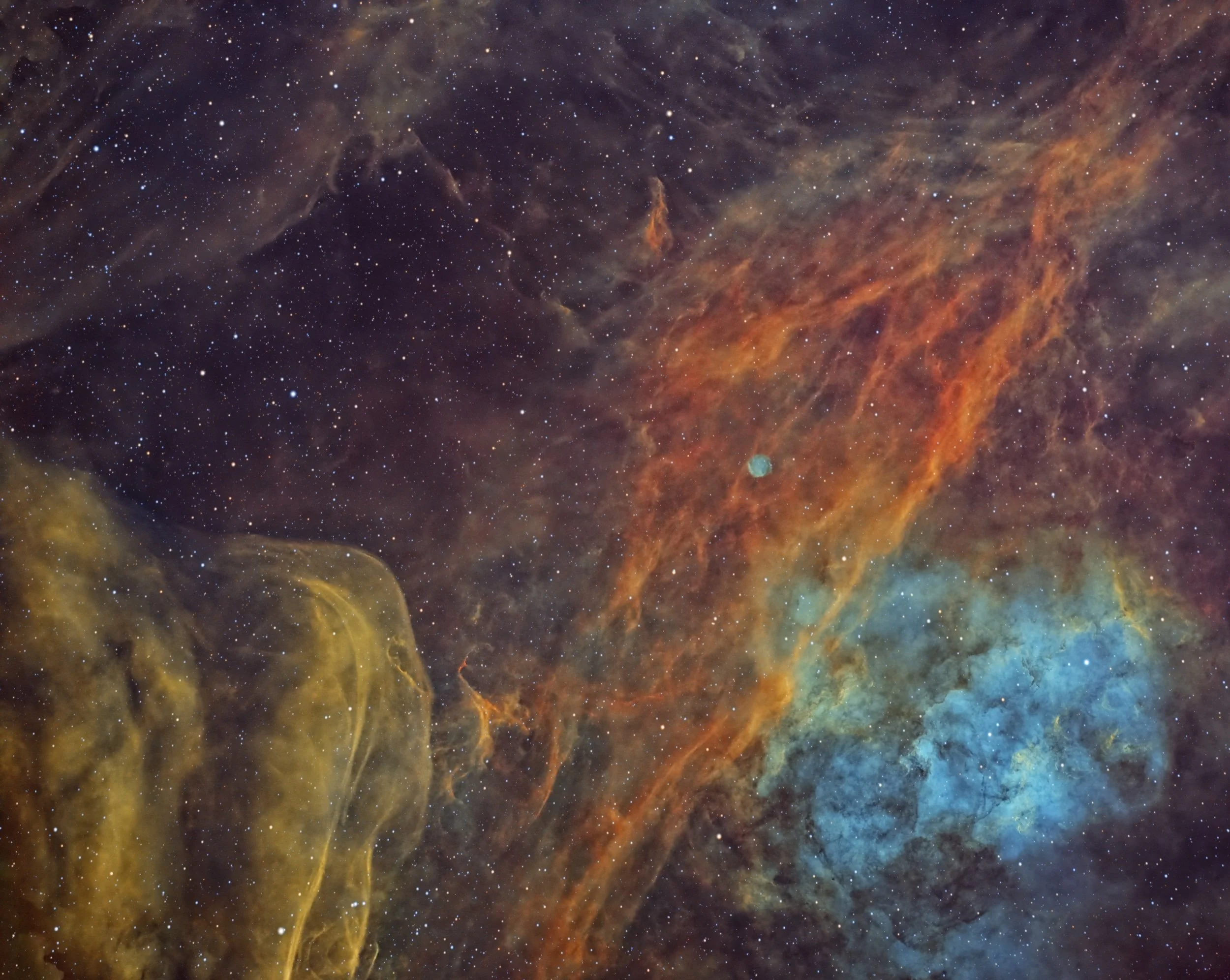
Image Description and Details : SH2-115 is a faint emission nebula located in Cygnus, close to Deneb, the brightest star of that constellation.
SH2-116 or Abell 71 is the designation of the small round patch of emission nebulosity in the center, it is a small patch of emission nebula.
Imaged in Bortle 6 skies in Washington DC suburbs in my backyard.
Scope: Astro-Physics Stowaway 92mm f/5.3
Imaging Cameras: ZWO ASI2600MM Pro
Mounts: iOptron CEM40
Filters: Chroma 3nm SHO
Software: Adobe Photoshop, Pleiades Astrophoto PixInsight, Tria
Copyright: gmadkat
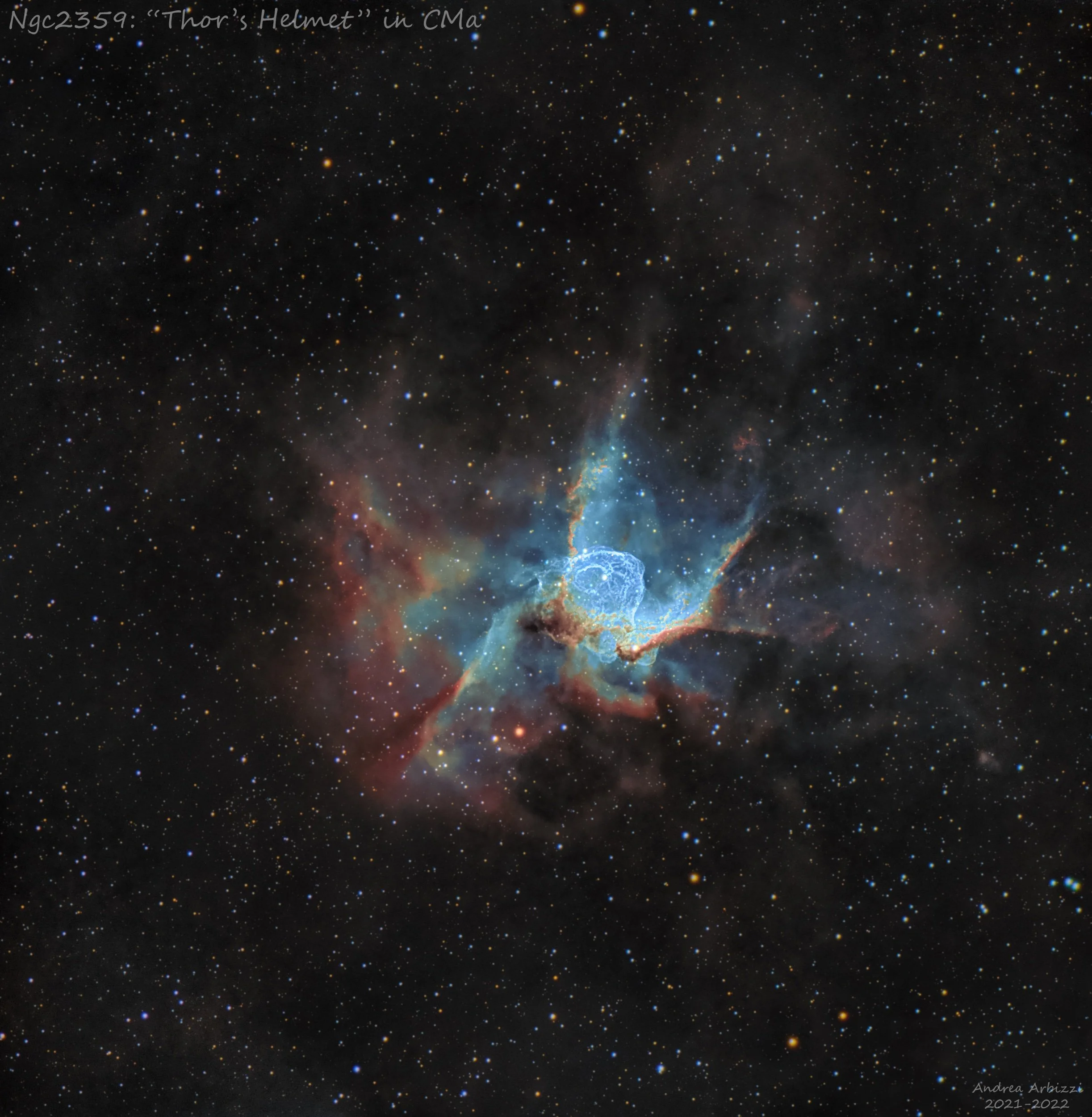
Image Description and Details : NGC 2359 (also known as Thor's Helmet) is an emission nebula in the constellation Canis Major. The nebula is approximately 30 light-years in size. The central star is the Wolf-Rayet star WR7, an extremely hot star thought to be in a brief pre-supernova stage of evolution. It is similar in nature to the Bubble Nebula, but interactions with a nearby large molecular cloud are thought to have contributed to the more complex shape and curved bow-shock structure of Thor's Helmet.
The nebula has an overall bubble shape, but with complex filamentary structures.
APM Apo 140 F4,6 (646 mm) + Tecnosky Apo 125 f5,1 (640 mm)
ZWO ASI533MC Pro
iOptron GEM45 + iOptron CEM40
November 2022
Optolong L-Ultimate (3 nm): 62X600"
Optolong Uv Ir cut: 40X30” (star color)
November 2021
Optolong L-eXtreme: 87X600"
Tot: 25h 10'
Modena (Bortle 8), Italy
Copyright: Andrea Arbizzi
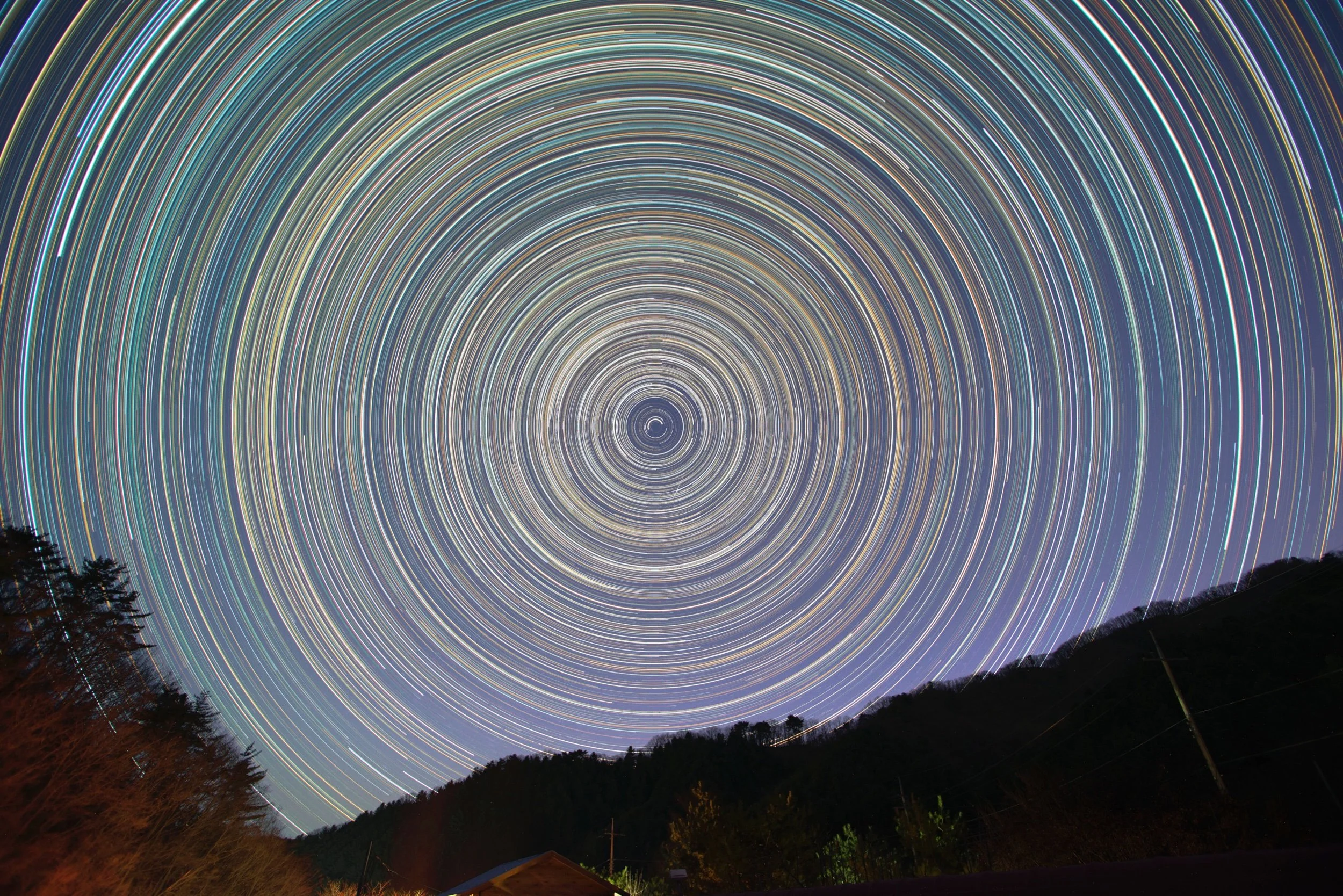
Image Description and Details : Nikon D800
Tamron SP AF 17-35mm F/2.4 (25mm, F/4)
ISO 200, 1min x 692
Manfrotto 055D
Copyright: Kim Young Dae
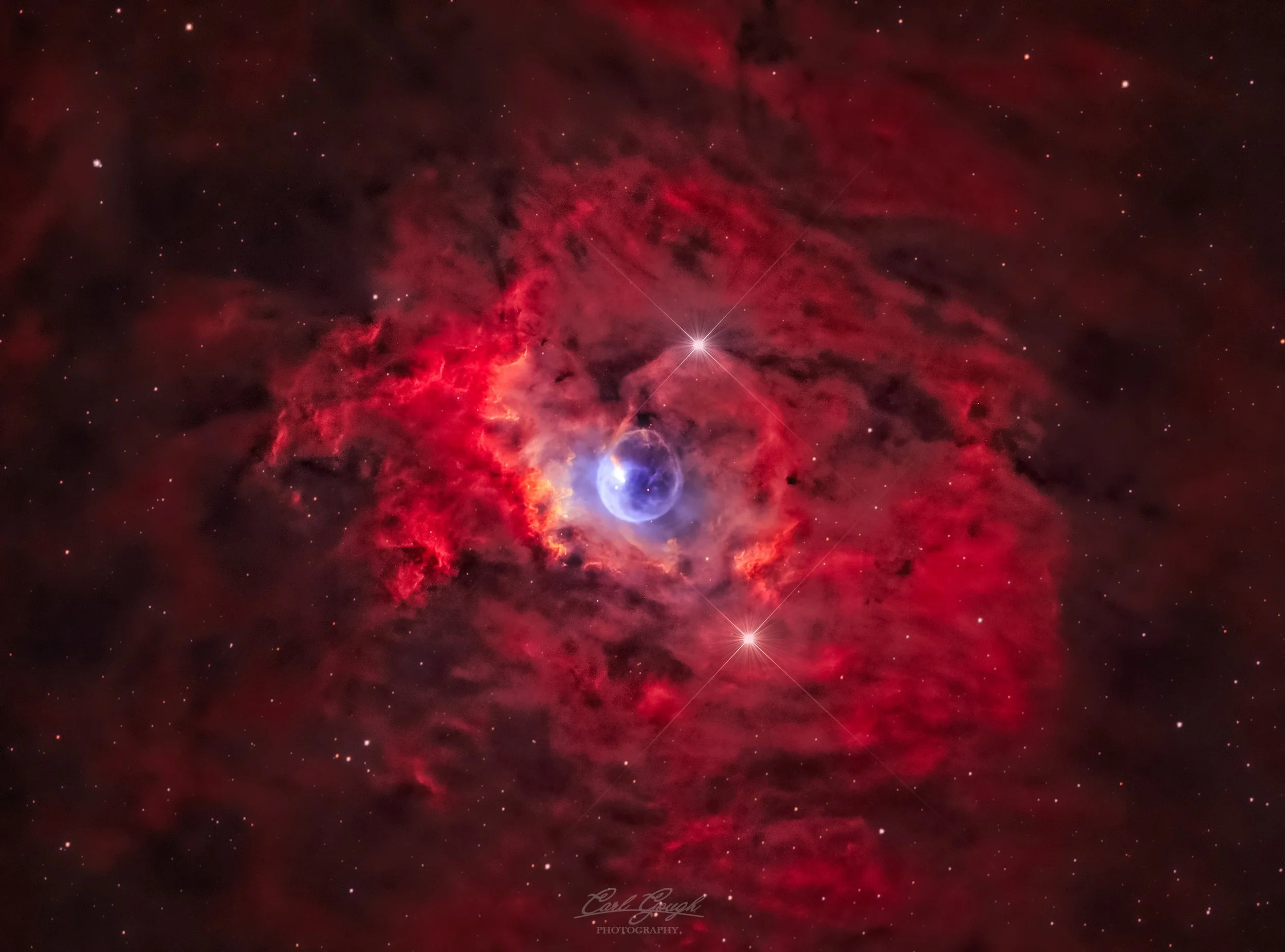
Image Description and Details : After a few months off while i had planetary equipment on the mount. The RC is now back on the mount for some deep sky imaging again. Starting with the Bubble nebula or NGC 7635. 8000 light years away in the constellation Cassiopeia. Captured from my Bortle 5 backgarden in west sussex over many nights. I also added the data i captured back in 2021, as it's a target i find fascinating and keep returning to. Capture details:118x 600 Ha. 63x 600 oiii and 58x 600 sii.Equipment details: EQ6-rASI 1600mmBaader 1.25" narrowband filtersOrion RC 8"
Copyright: Carl Gough
IC 447 is a reflection nebula located in the constellation Monoceros. A reflection nebula is a cloud of dust and gas that reflects the light of nearby stars, giving it a glowing appearance. IC 447 is thought to be illuminated by the light of the young, hot star HD 45677, which is located near the center of the nebula.
An interesting feature of IC 447 is that it contains a number of protostars, which are stars that are still in the process of forming. The presence of these protostars suggests that IC 447 is an active site of star formation.