

AAPOD2 Image Archives

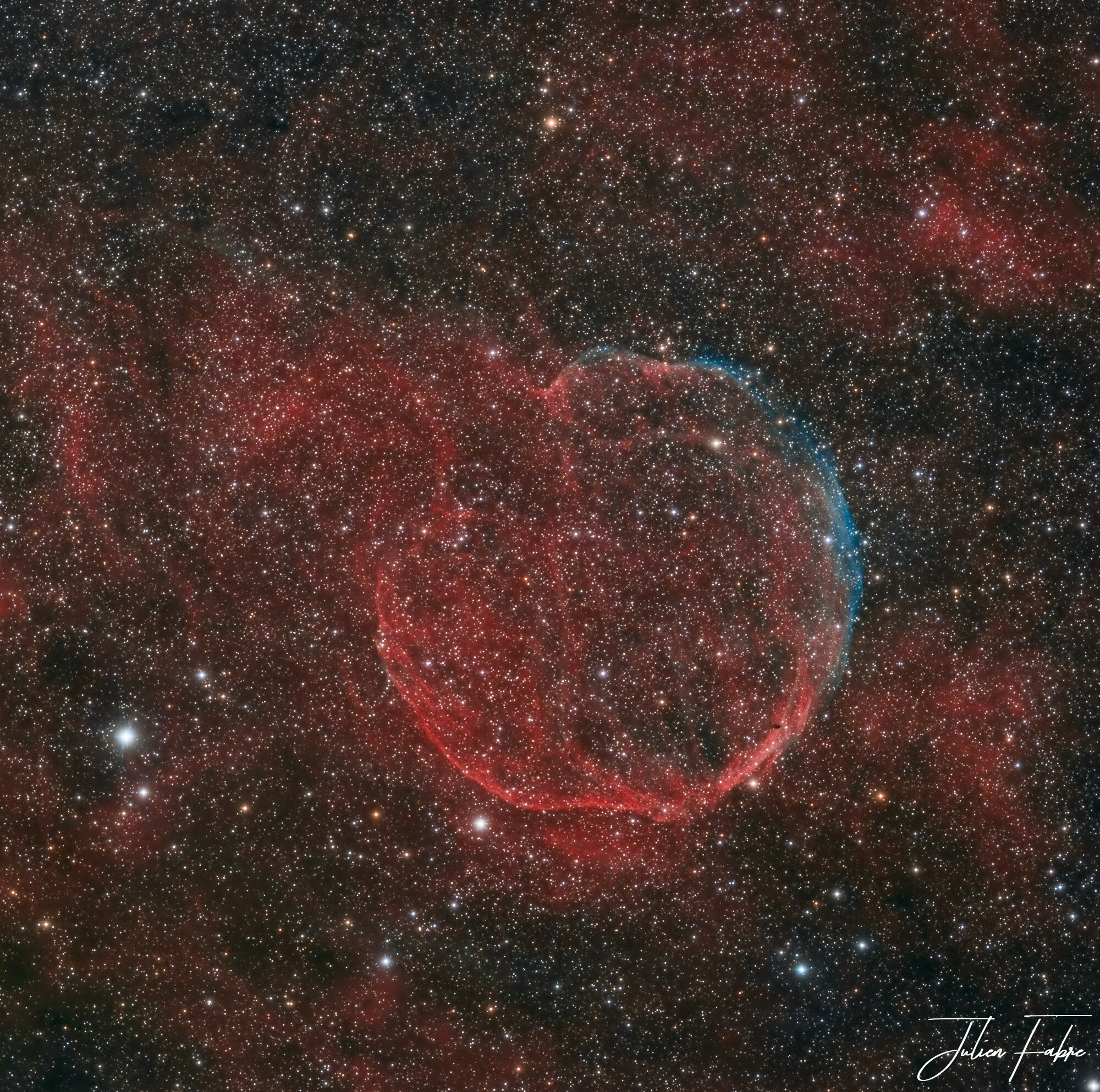
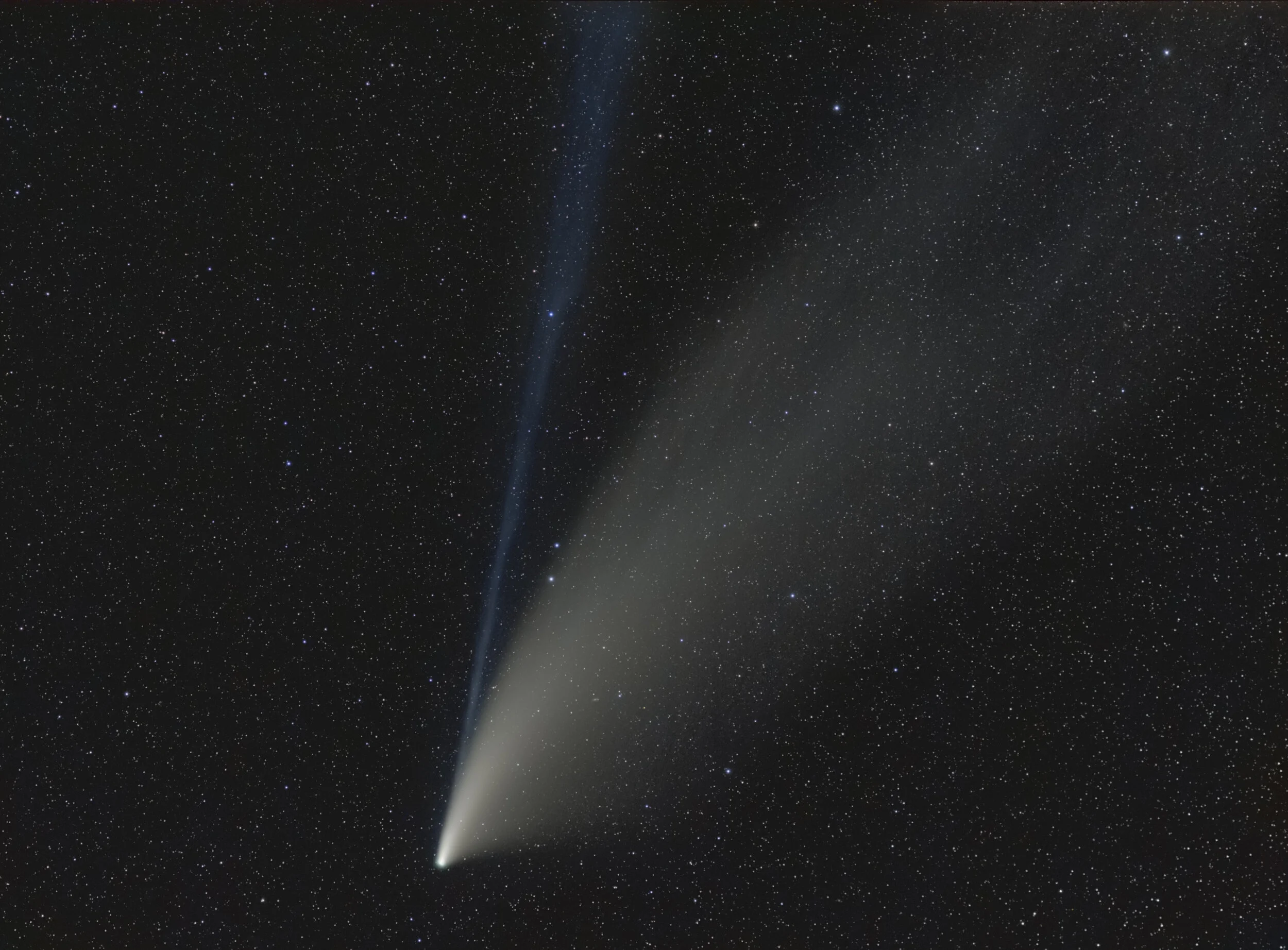
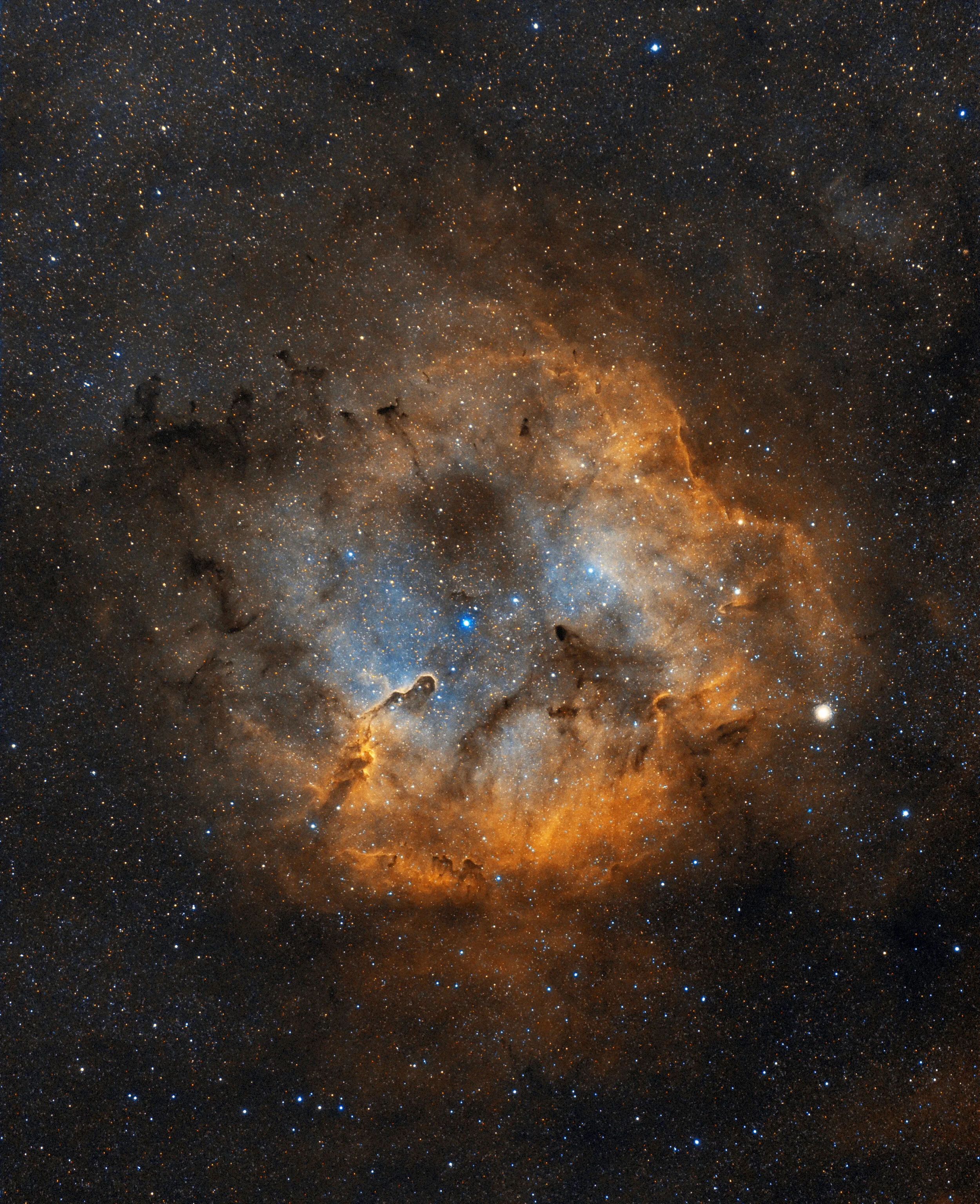
The Elephant Trunk Nebula, IC1396, in Cepheus. H,H+O,O Palette
Image Description and Details :
The Constellation Cepheus is often in the shadow of the Hydrogen rich constellation of Cygnus but within its boundaries it really has a little bit of everything, such a varied bunch of targets. However, there is clearly a crowning jewel among the many rough diamonds. That is IC1396, the Elephant Trunk nebula. It’s a nebula that gives great color and contrast, with great areas of dust and the magnificent detail of the central trunk reaching in to the well of Oxygen that lies at its center. Around 5 hours of 600s subs stacked in DSS. Processed entirely in PhotoshopZWO ASI1600MC Pro, Unity Gain, -15CCanon EF L 70-200mm f/2.8 at 200mm f/4iOptron CEM25PZWO ASI120MM-S guide cameraZWO 60mm guide scopeRadian Triad Ultra Quadband 2” OSC FilterImages captured by APT, guided by PHD2, shot under Bortle 7 skies in my back garden from New Years Eve 2019 to mid January 2020
Copyright: AstroPhotoRoss
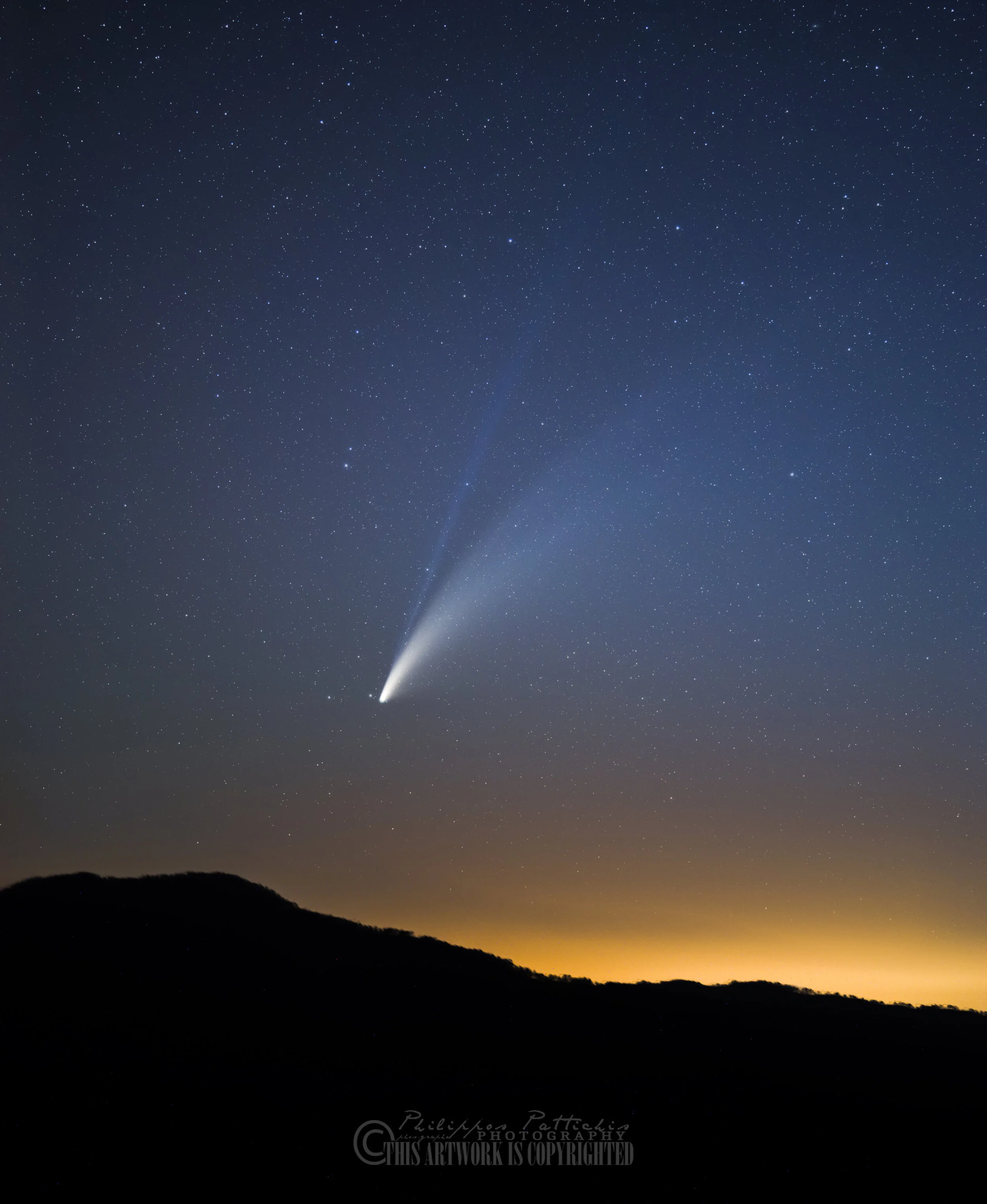
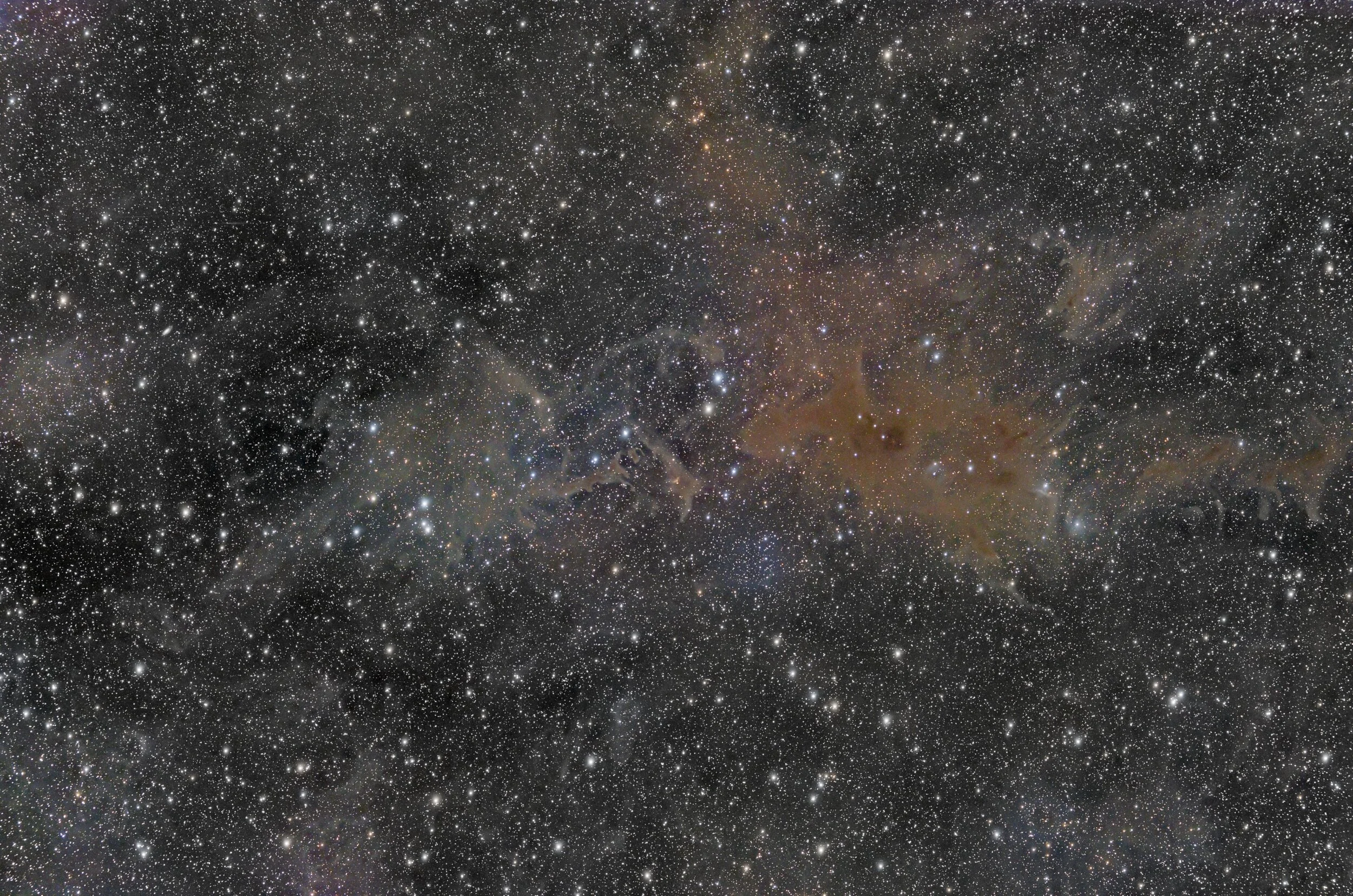
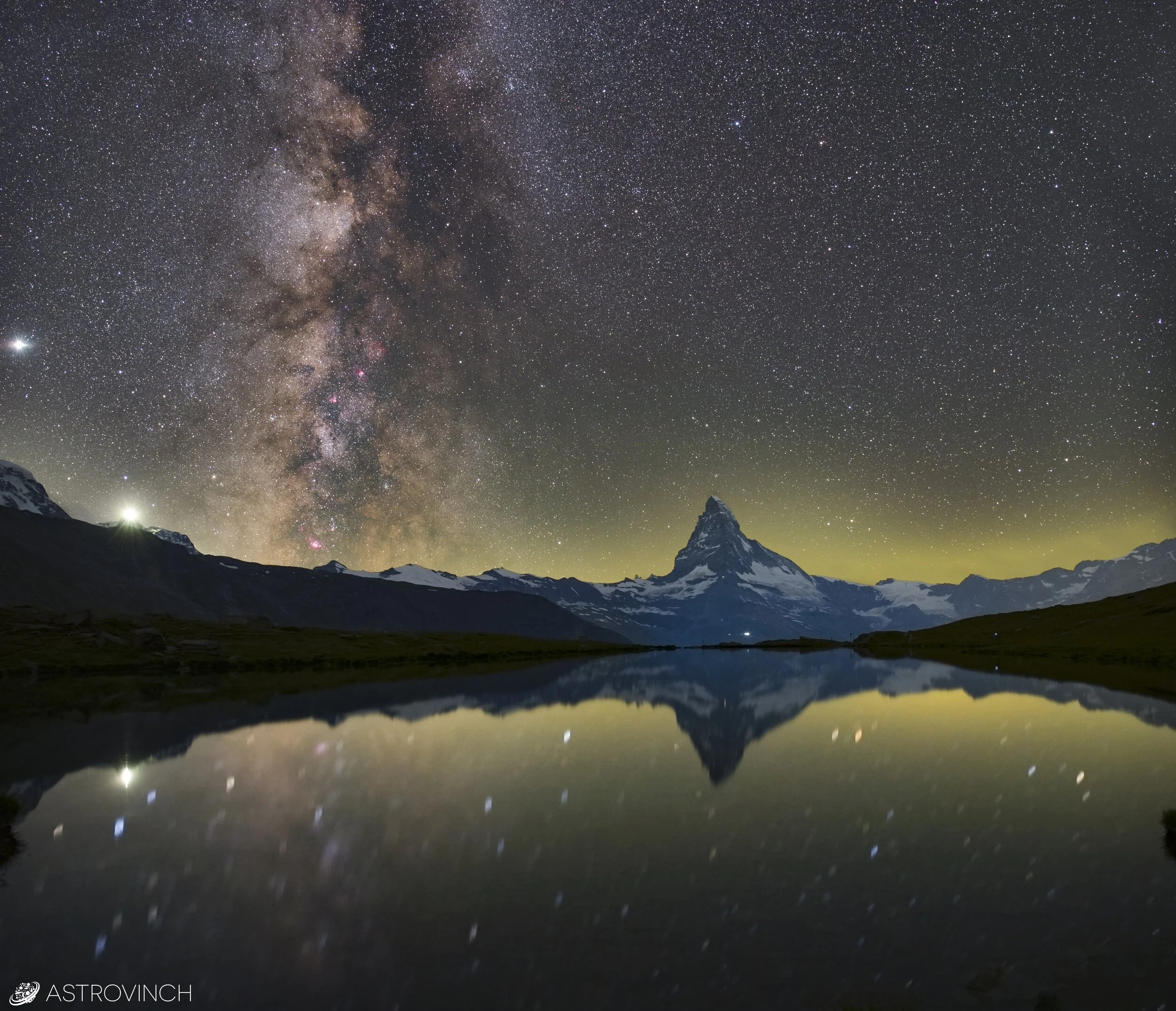
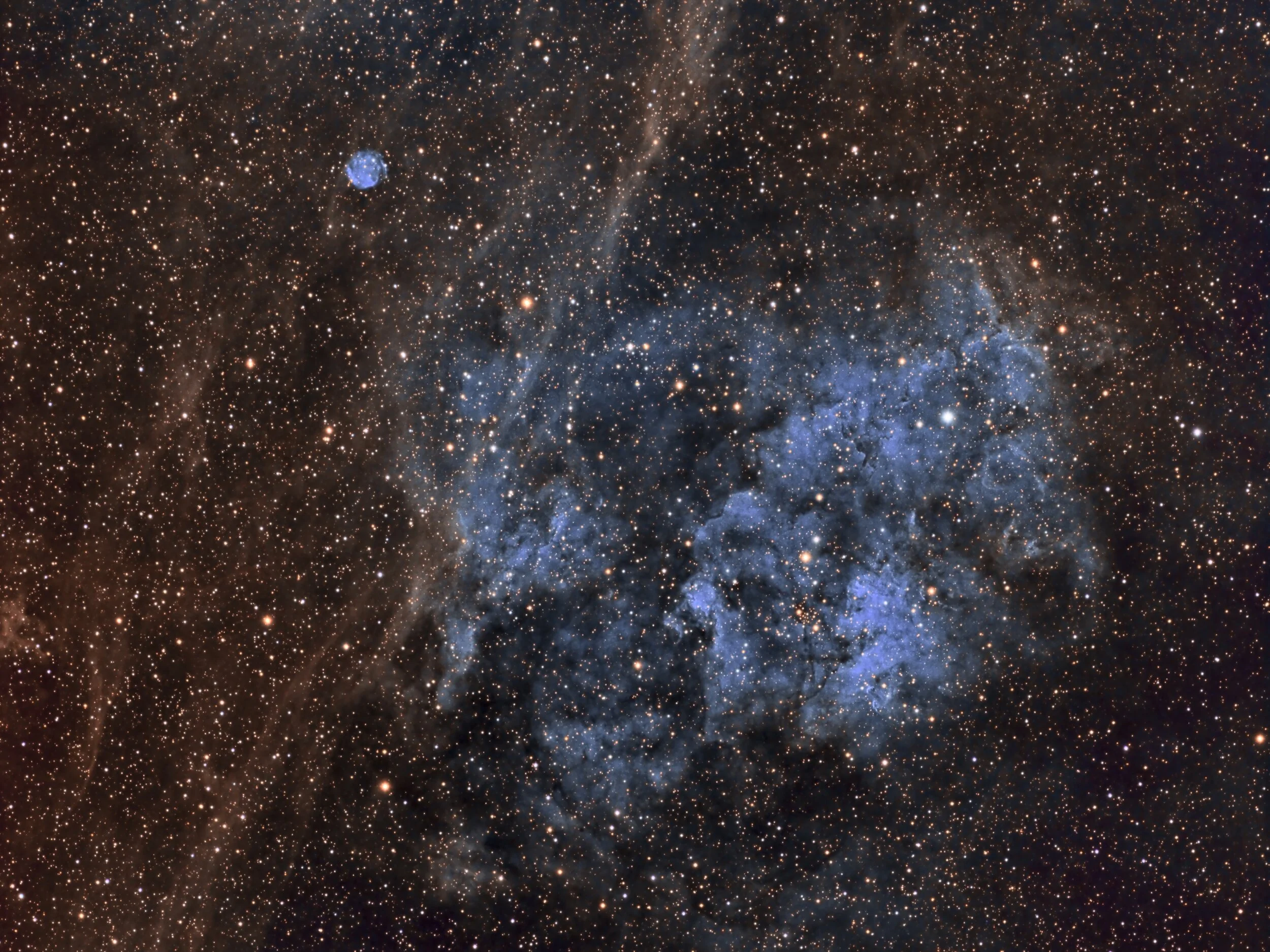
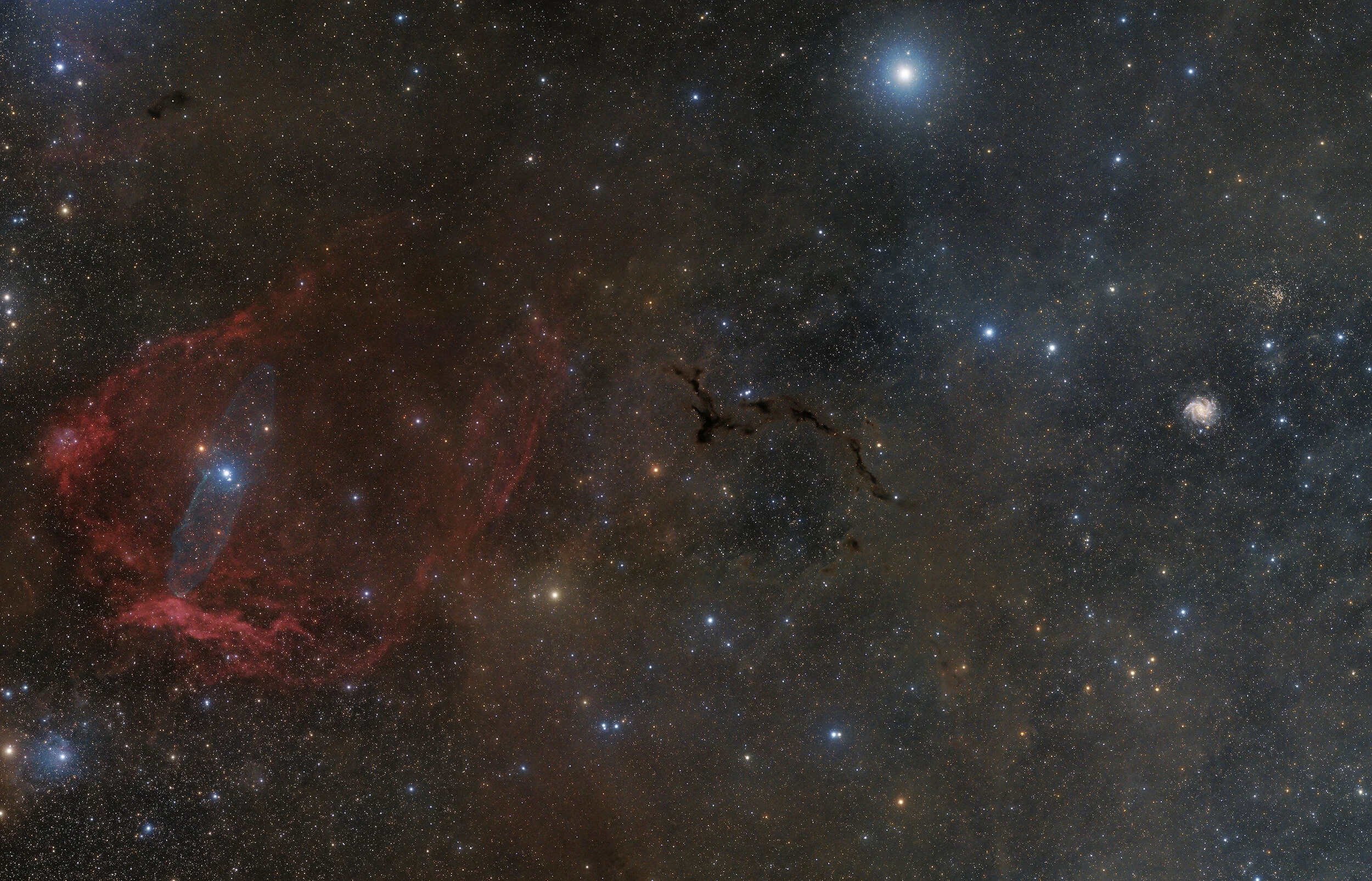
Bat, B150, Fireworks 9 Panel Mosaic
Image Title: Bat, B150, Fireworks 9 Panel Mosaic
Image Description and Details :
Skywatcher Esprit 100
Zwo Asi 071
150 second subs
9 Panels
Total integration 31 hours
Oiii for Squid added courtesy of Olly Penrice

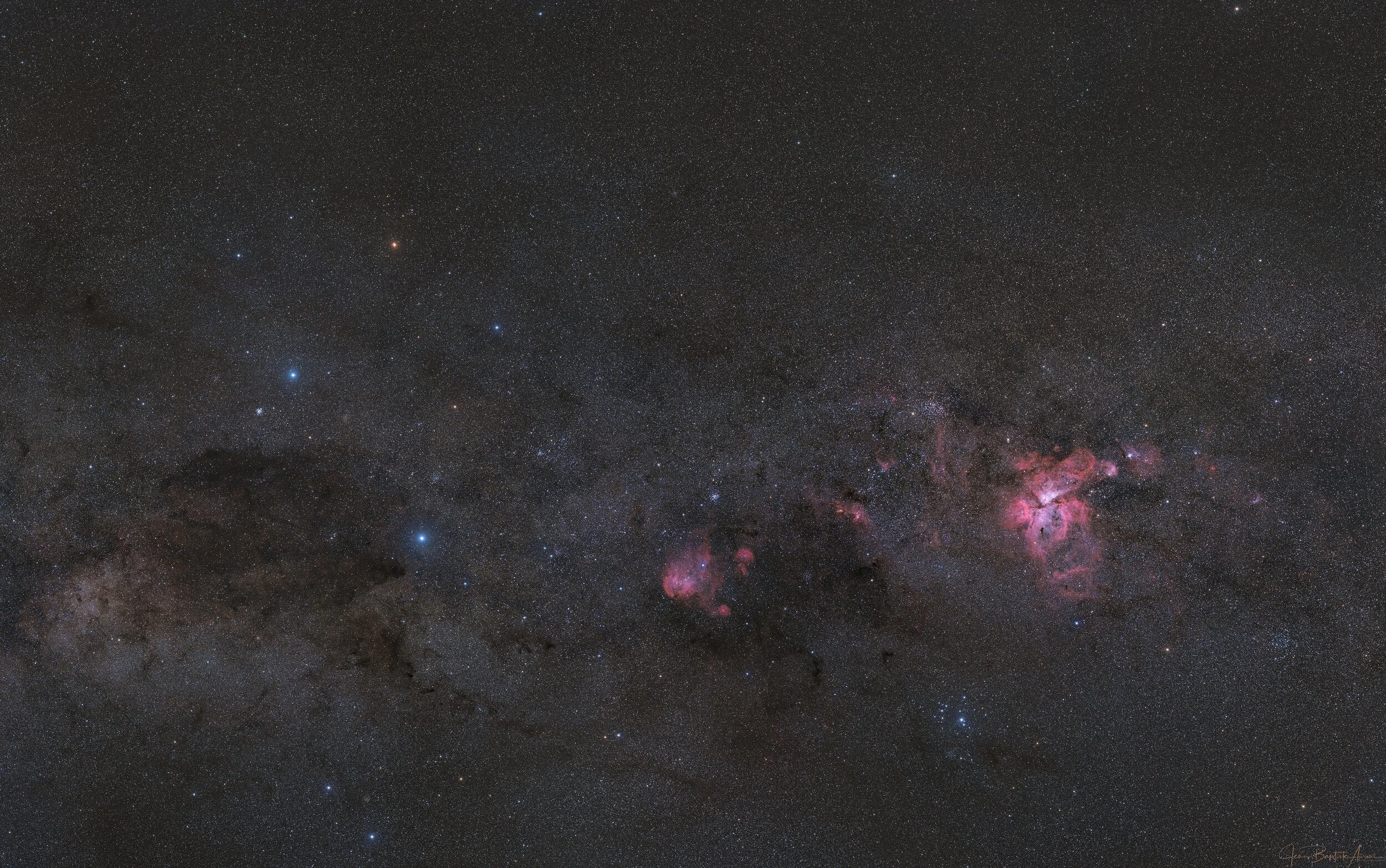
From Southern Cross to Carina nebula
Among the most notable objects, we can find the Carina nebulae, the Chicken run, the Statue of Liberty, the Coalsack Nebula, but also beautiful open clusters such as the jewel box, the Pincushion Cluster, the southern Pleiades, the Pearl cluster, etc.
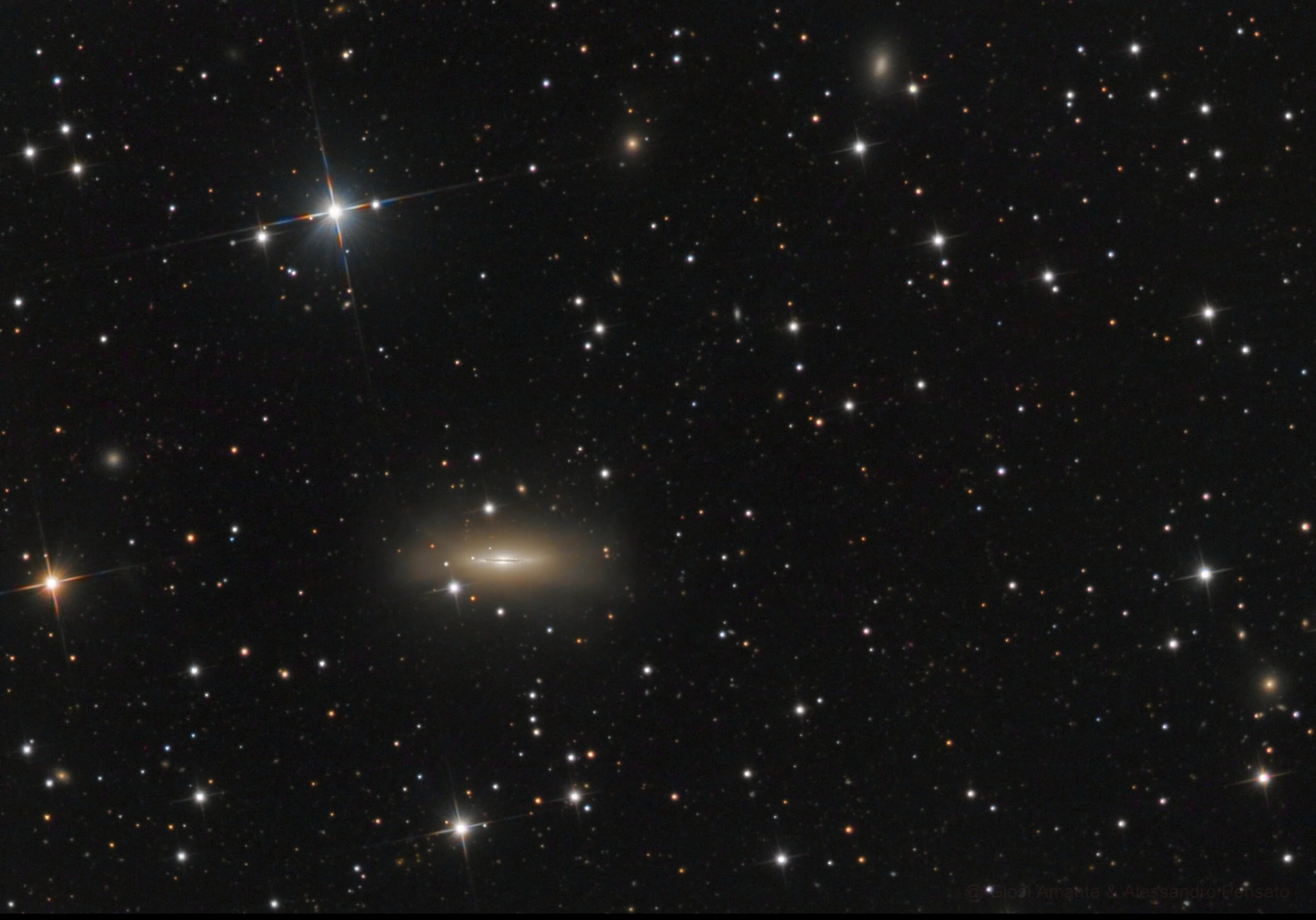
M102; NGC5862, NGC5870 and more
Image Description and Details :
M102 complex captured during multiple nights with two RC 8" and two QHYCCD 183M camera and a CFW3 filter wheel equipped with Baader LRGB filters. Multiple exposure time has been used to obtain the best of details from the galaxy center, for a total exposure time of about 43hours
Copyright Information: ALESSANDRO PENSATO - GIUSEPPE AMANTE

Noctilucent cloud over Europe
On the 5th of July one could see beautiful NLC's over Europe. Here is a view from Vienna. Image was aquired with a Canon EOS 60D and very little post processing was done in Adobe Lightroom 6
Copyright: Benjamin Werner
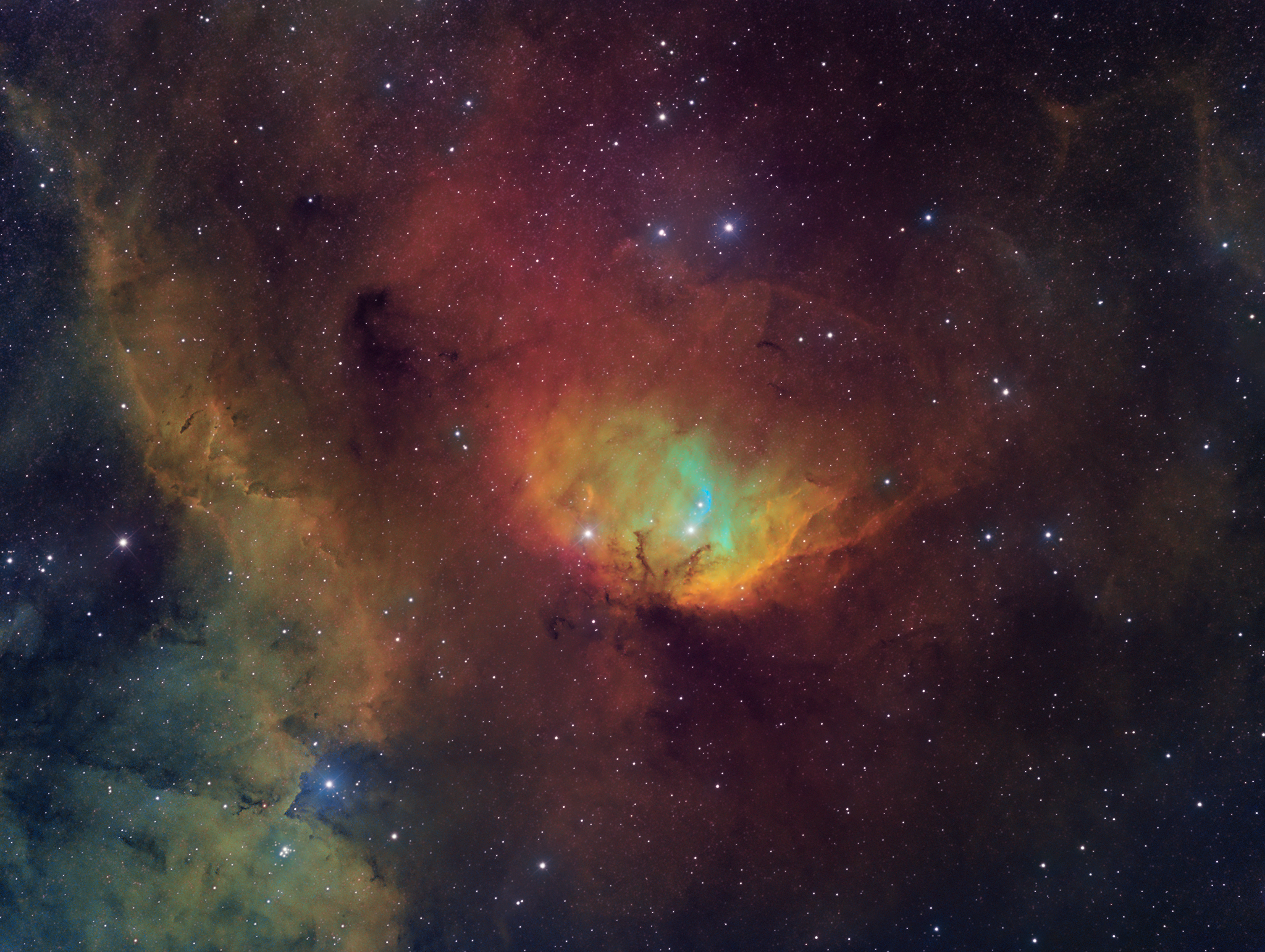
The Tulip Nebula Sh2-101
Image Description and Details:In a constellation rich in nebulae such as the Swan, there is an object commonly called the Tulip nebula. An incandescent cloud of interstellar gas and dust cataloged in 1959 by the astronomer Stewart Sharpless as Sh2-101.About 8,000 light years away from Earth, the ultraviolet radiation from the young stars on the edge of the Cygnus OB3 association ionizes and feeds the emissions of the Tulip Nebula.Near the center of the nebula there is a very bright star called HDE 227018, while in the upper right you can see an arch originating from Cygnus X-1, a microquasar, and from the star with which it shares a binary system. This is one of the most intense X-ray sources measurable from Earth, probably attributable to the presence of a black hole. Cygnus X-1 was in fact at the center of a bet between physicists Stephen Hawking and Kip Thorne, on the presence or absence of a black hole and ended in the 90s when the data reinforced the hypothesis of its existence.Shooting DataTulip Nebula Sh2-101 | Hubble Palette SHOSii 49x300'' | Ha 77x300'' | Oiii 56x300''Sky-Watcher 200/800 f/4 | AZEQ6-GT | QHY 163M | Optolong narrowband FiltersFrames captured between 26/29th of Jun 2020 from Carl Sagan Observatory in Maranello (Italy).Bortle 5 / SQM 19.65
COPYRIGHT: Luca Fornaciari

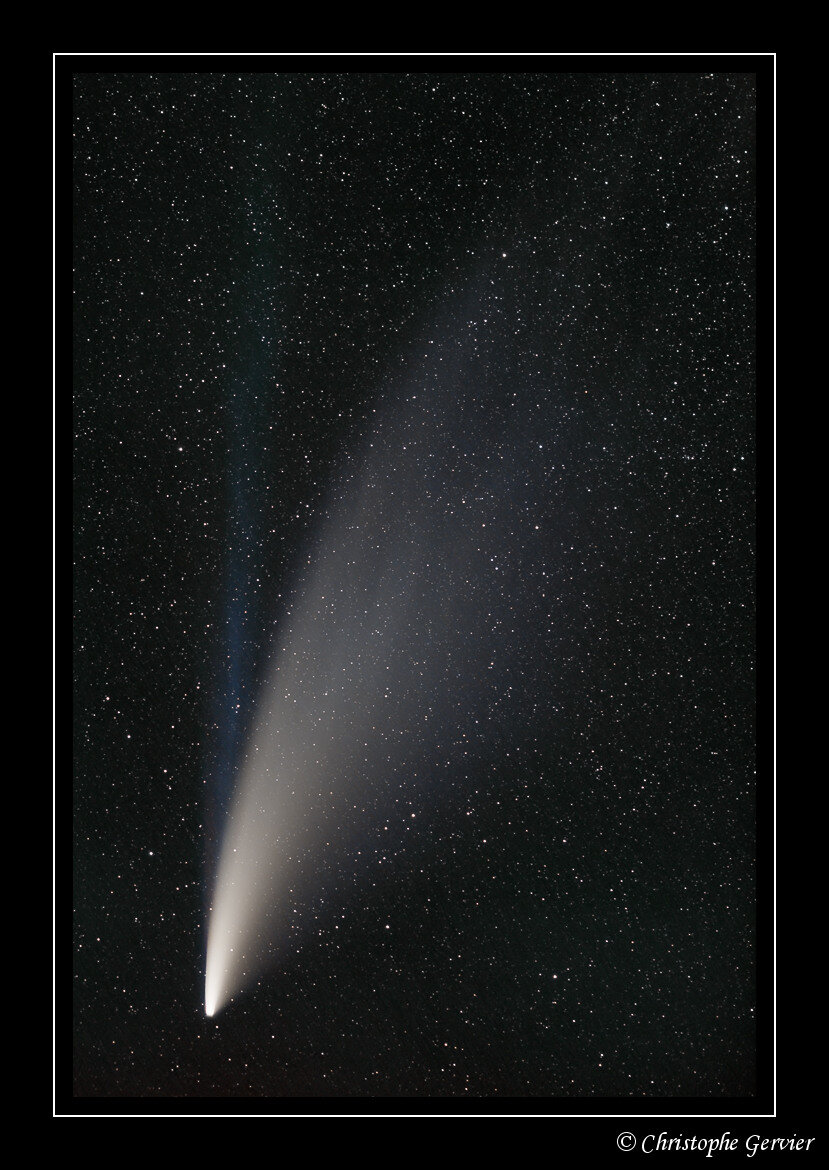
Comet C/2020 F3 NEOWISE
Comet C/2020 F3 NEOWISE rising over Plattsburgh, New York and the Champlain Valley. I woke up early this morning and trekked to a hilltop in the Adirondacks for this capture looking toward the East at sunrise. The comet was clearly naked eye and an amazing sight. I highly urge you to check it out. Right now it is in the early morning sky at sun rise but it will be working it’s way to the evening sky and toward Ursa Major later this month. I used a Canon T5i camera with a stock 75mm to 300mm lens on a fixed tripod, with an intervalometer. The first image is at 200mm focal length and the second wide field image is at 75mm.
COPYRIGHT: TJ Connolly

Jupiter Lum_IR_UV_CH4 Wavelengths Composite
Object Details:
Although I've been using various wavelengths for Deep Sky Objects (e.g. h-alpha, Oxygen III & Sulfur II), h-alpha for solar, and occasionally even 'narrowband' (e.g. DSO style) h-alpha filters for lunar and 'white-light' solar imaging (e.g. in an attempt to improve the seeing as longer wave-lengths tend to scatter less than shorter ones), I had not before tried any 'specialized' wavelength filters on the planets. Therefore, the attached composite is my first attempt to use such filters on Jupiter.
Starting with a 'normal visible' (luminance - IR/UV cutoff), from left the shots were taken using an Infrared, Ultraviolet, Methane and once again a Luminance filter. As is somewhat common, when utilizing 'specialized' filters, greyscale versions of each are included in the second row. Although Jupiter only reached an altitude of 26 degrees above our southern horizon and the seeing was fairly poor that evening, I was fortunate to catch the Great Red Spot while it was rotating on.
Generally speaking, when used on Jupiter the IR filter allows for greater penetration of the haze resulting in an enhanced contrast of small details; the UV enhances the cloud structures, while the methane (i.e. absorption) shows higher features in the Jovian atmosphere, with more methane appearing darker (and thus indicating lower) while little or no methane appears brighter (and thus indicates higher features in the atmosphere).
Image Details:
Taken by Jay Edwards at the HomCav Observatory on the morning of June 26, 2020. Being aware that the filters would attenuate the image, but not knowing to what degree, I kept the optical system used as 'photographically fast' as possible while still trying to maintain a reasonable focal length to provide some level of detail.
Therefore, the attached were shot at the prime focus of a (vintage 1970) 8-inch, f/7 Criterion newtonian reflector using an ASI290MC plaentary camera / autoguider. This scope is mounted on and tracked with a Losmandy G-11 running Gemini 2 control system.
Processed quickly using a combination of AS3, Reistax & PSP, given that these test shots turned out reasonably well, I'm looking forward to trying these filters again as we approach Jupiter's opposition next month, and if possible will add a barlow lens to increase the focal length / magnification.
Copyright: Jay Edwards
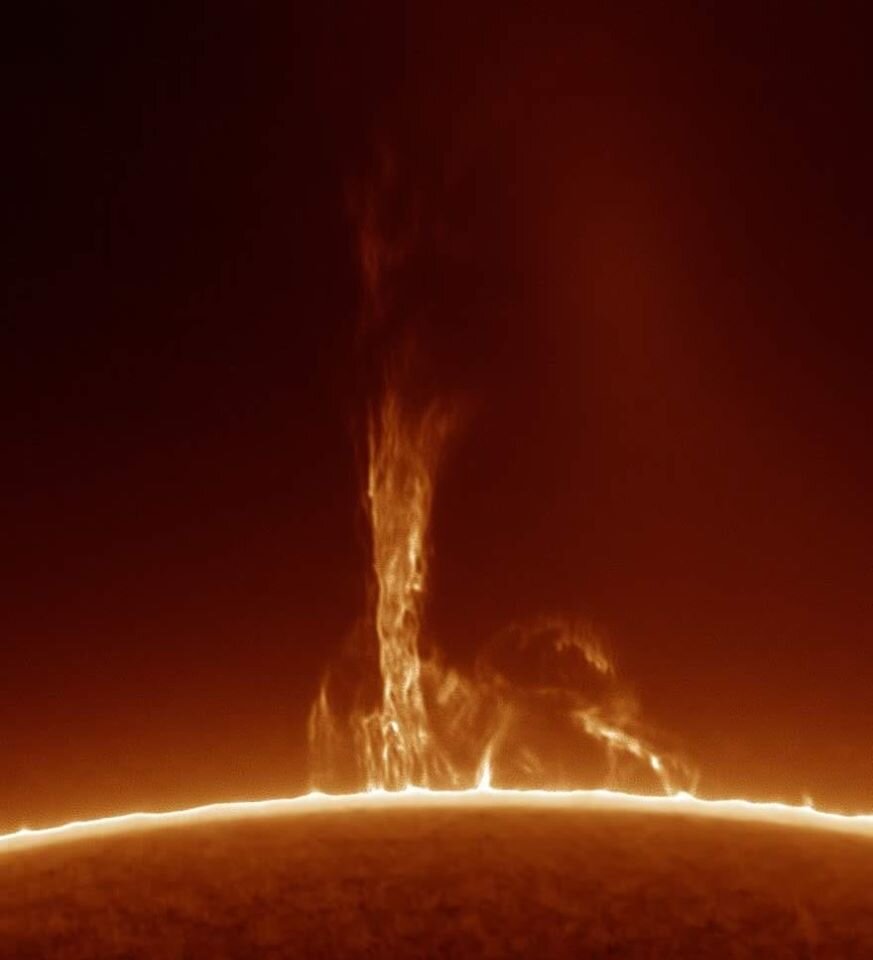
Solar Prominence
Small solar prominence which must be twice the size of the earth.
Orion ED80CF T
Daystar quark chromospere
ASI120MM-s
Copyright: Mathieu Varis
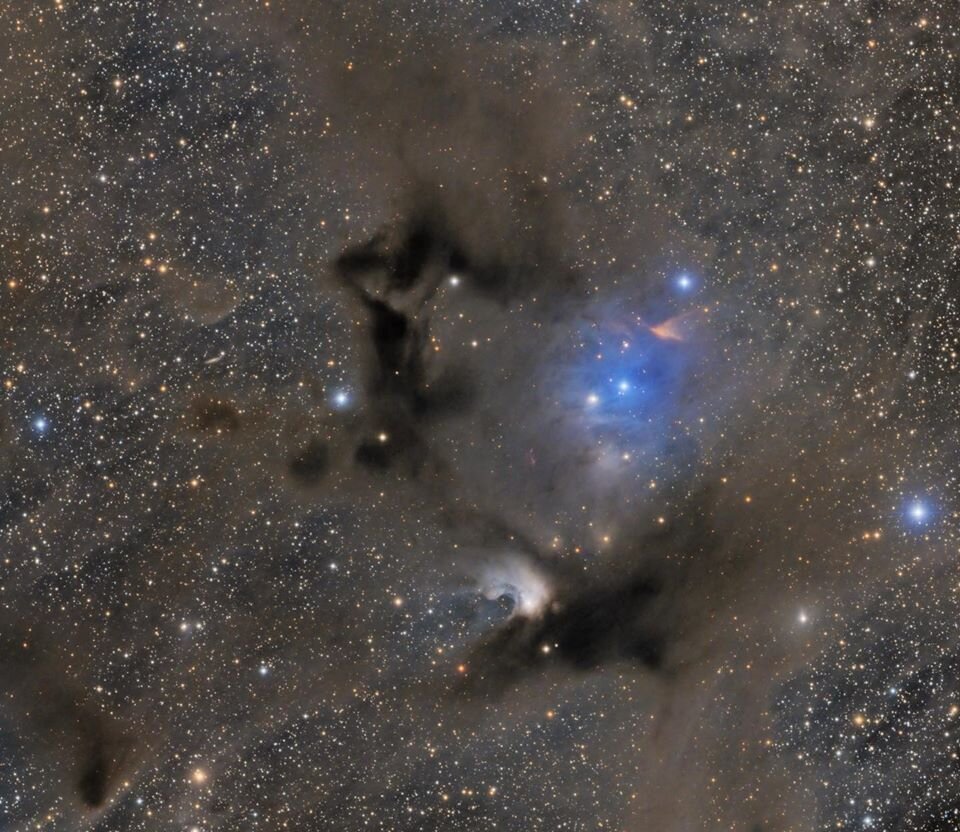
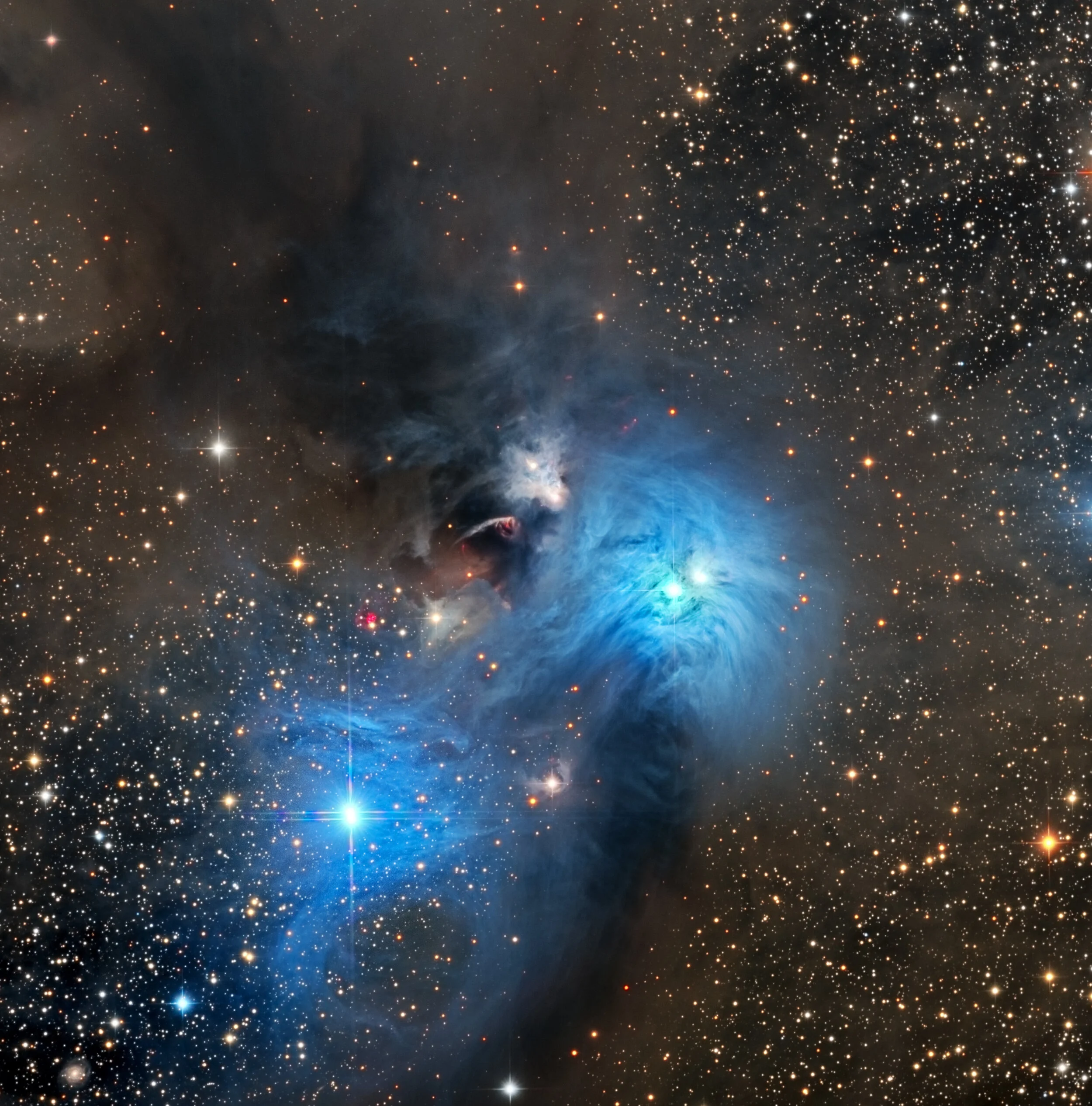
Cederblad 111 (Ced 111)
Cederblad 111 (Ced 111) is a blue reflection region in the southern constellation of Chamaeleon and is part of one of the closest (~550 light years) dark cloud complexes to the Sun. Ced 110 is the bright reflection in the lower portion of the image with the distinct bright arc. Both are part of Cha I dark cloud complex. The median age is estimated at ~2 Myr. The cloud complex is a stellar nursery and many new stars have been detected through their variability and H-a emission. The small, elongated, bright red objects at the center of the image are Hebrig-Haro objects (HH 49-50), which form from a collision between ionized jets of gas ejected from newly born stars and the surrounding cloud.
Imaging telescopes or lenses:Takahashi TOA-150
Imaging cameras:FLI ML16200
Mounts:Astro-Physics 1600 with Absolute Encoders
Filters: L , B , G , R
Integration: 16.7 hours
Copyright Good Astronomy