

AAPOD2 Image Archives
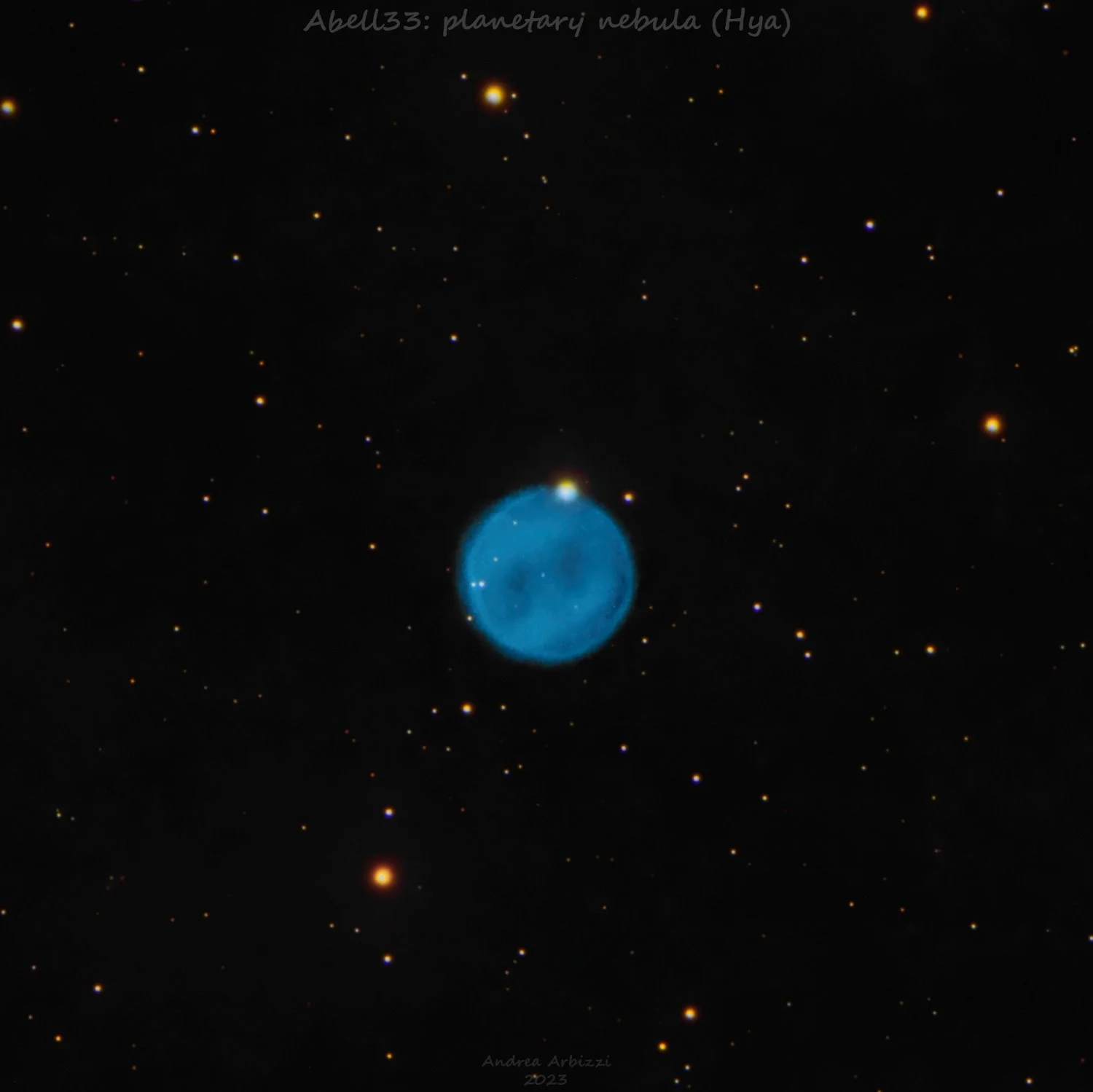
Abell33
Image Description and Details : Abell 33 is a planetary nebula 2700 light-years away in the constellation Hydra, located behind the star HD 83535, making it look like a diamond ring.
APM SD Apo (Fpl53) 140 F7 (979 mm)
ZWO ASI 533MC Pro + iOptron GEM45
ZWO ASI 220MM Mini + ZWO OAG-L
ZWO EAF ZWO + EFW 5X2
ZWO AsiAir Plus
Mar 2023
Optolong L-Ultimate (3 nm): 120X600"
Optolong Uv Ir cut: 30X60” (star color)
Tot: 20h 30’
Modena (Sqm 18.3-18.9 Bortle 7,5-8), Italy
Copyright: Andrea Arbizzi
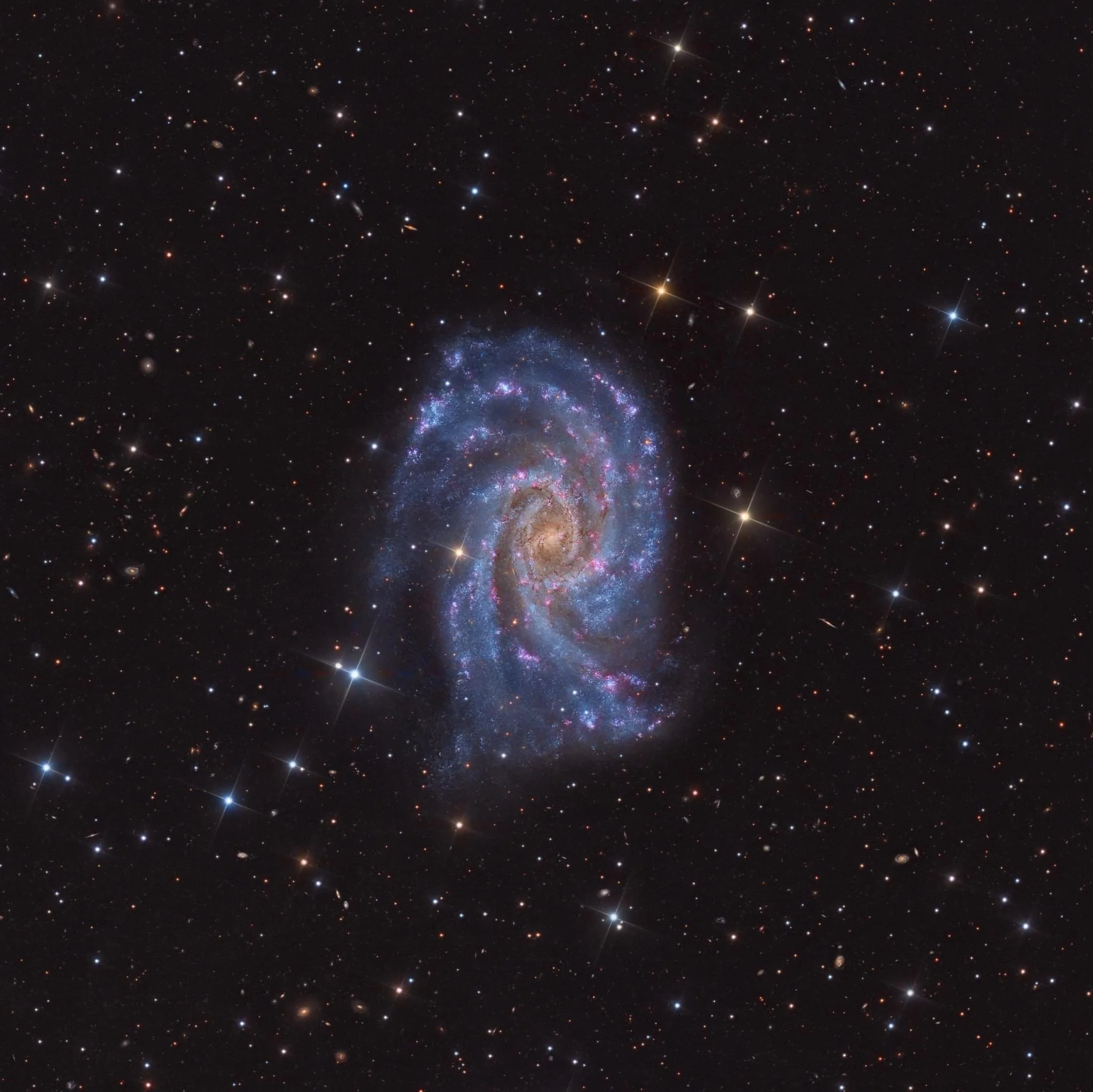
Ngc2835
NGC 2835 is an intermediate spiral galaxy located 35 million light years away in Hydra.
The galaxy spans around 65000 light years across which is around 1/2 the size of our galaxy. There are multiple twisting spiral arms which create the illusion of an eye at the center. Numerous bright blue regions indicate high levels of near ultraviolet light which are star forming regions.
The galaxy hosts a massive black hole at its center.
Imaged in LRGB and H alpha on Planewave CDK 1000 at Observatorio, El Sauce, Chile.
Image Processing: Mike Selby and Mark Hanson
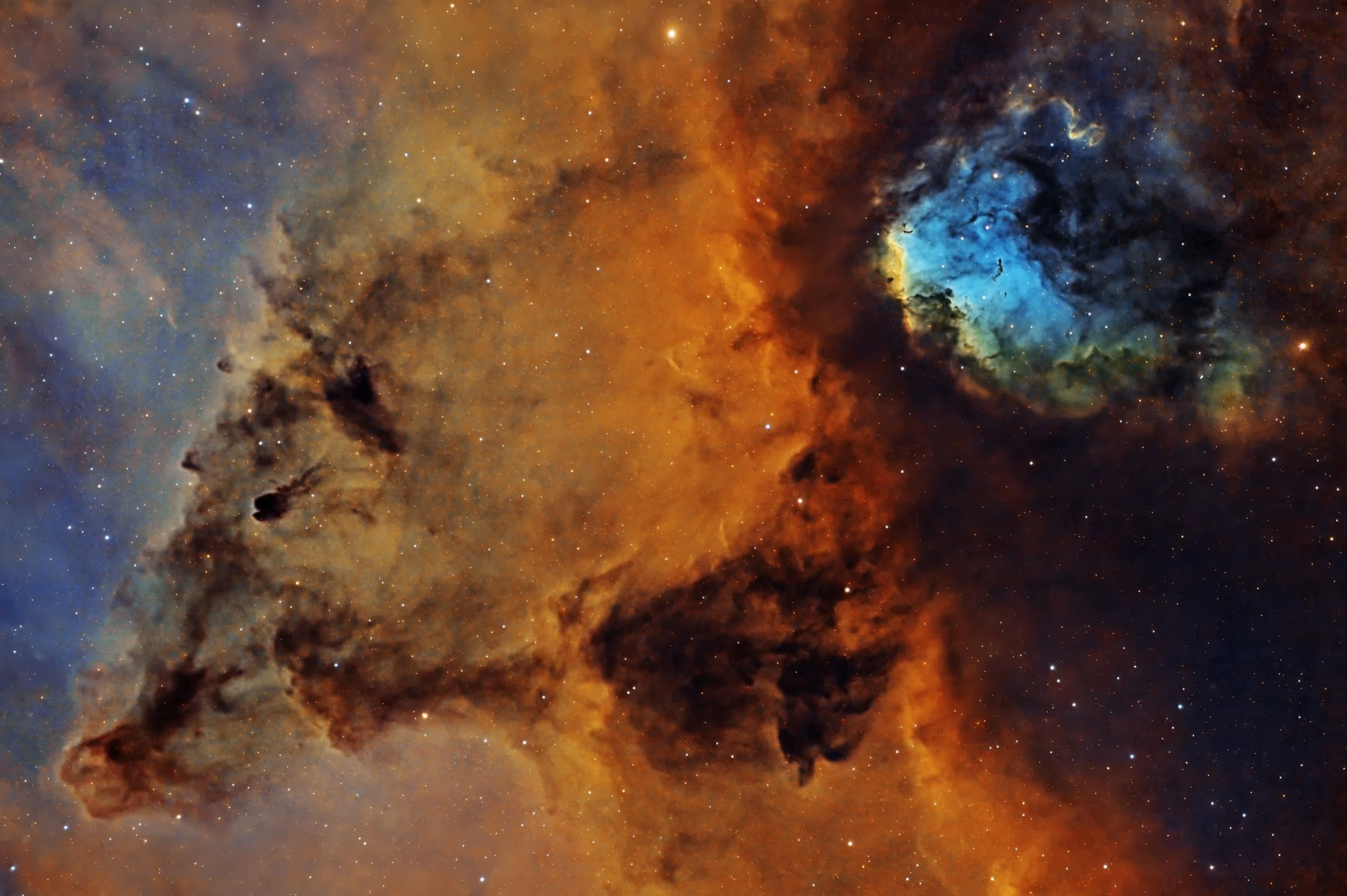
The Razorback and the Little Tulip - B39 and LBN902
Image Description and Details : I can find no direct information about how far away these objects are, but from our perspective, they are just to the northwest of the Cone and Foxfur nebulas as well as the Christmas Tree cluster in Monoceros. The Cone nebula is about 2,700 light years away from us, but these objects could be much closer or much farther away.
The dark nebula, B39, resembles the shape of a feral hog to me, so I gave it that name. And the bright region, LBN902, reminds me of the larger Tulip nebula in Cygnus.
Details: Celestron EdgeHD 1100 telescope with 0.7x reducer; ZWO ASI6200MM camera; 10Micron GM1000 mount; Chroma 3nm narrowband filters; Bortle 8; 19hrs 6min exposure time.
Copyright: Copyright 2023 by the Accidental Astronomers
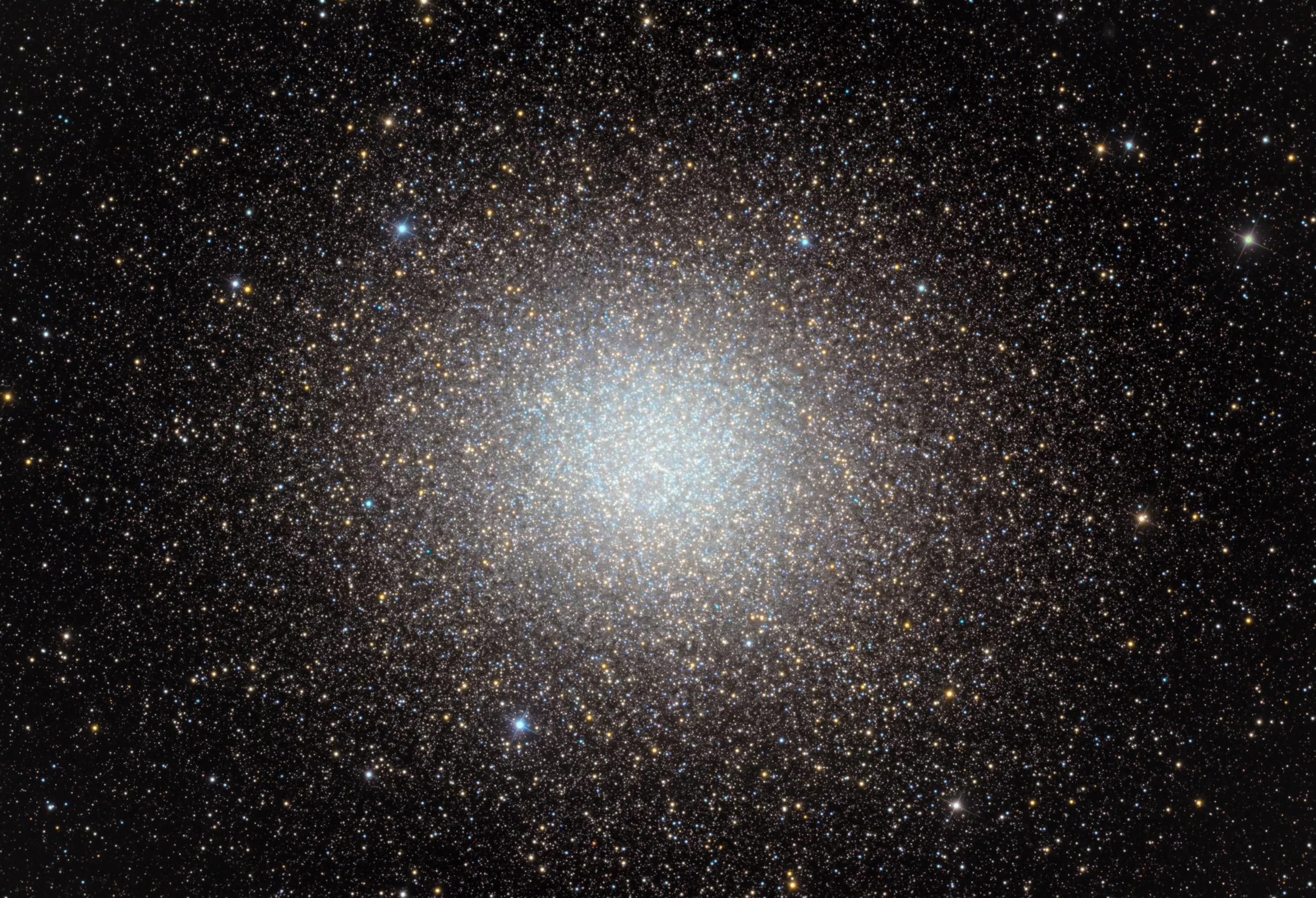
NGC 5139 - Omega Centauri Globular Cluster
Image Description and Details : Containing around one billion stars, this target is very bright and only requires a few images to capture the details. To preserve the core I used a series of masks when stretching the image.
Location of capture: Heavens Mirror, Yass, Australia by Martin Pugh
Light frames:
Red: 6 x 600 seconds
Green: 6 x 600 seconds
Blue: 6 x 600 seconds
Luminance: 6 x 600 seconds
Total Integration: 4 hours 10 minutes
Equipment details are:
Telescope: Planewave CDK17
Mount: Software Bisque Paramount ME II GEM
Camera: SBIG STXL-11002
Filters: Astrodon Gen2 E-Series True Balance Red, Blue, Green and Lum
Copyright: Neil Corke
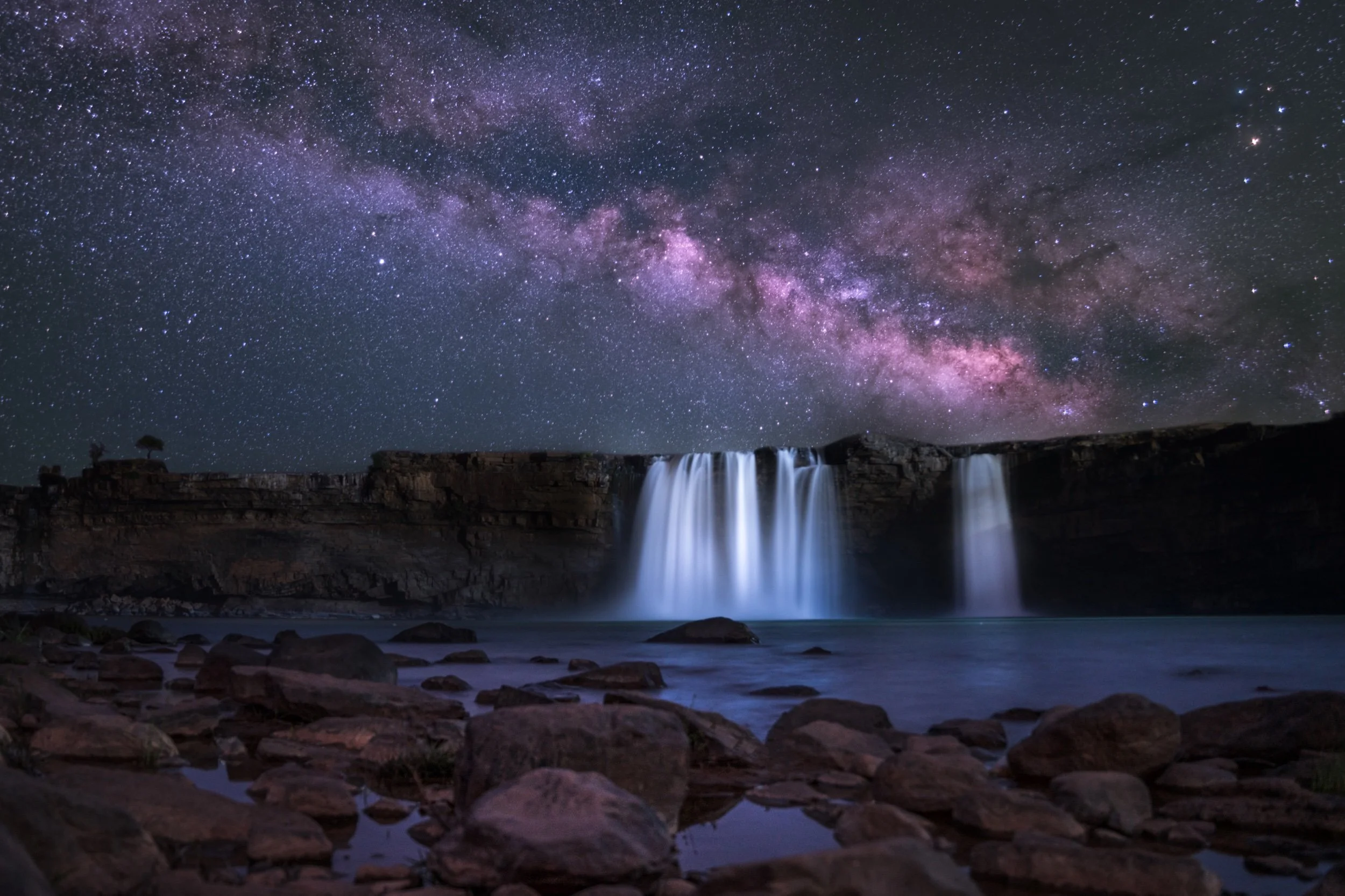
Season of Milkyway
Image Details:
This beautiful frame captured at February end in this year 2023 .
Milkyway's core & Sagittarius arm started rising just before the Sunrise.
Picture taken in-front of a beautiful waterfall at 4 am in February end ,2023.
Milkyway Core with T-Pot of Sagittarius & Scorpius constellations and Rho-Ophuichi, all are clearly visible.
From now on every upcoming month it's rising time will be 1 hour backward from sunrise .
In July it will be seen throughout the night ( sunset to sunrise). In October it will be present in the sky for just 1 hour and 30 minutes after Sunset.
After early November the Milkyway core can't be seen in the sky and the season will end.
Camera : Sony a7R III
Lense : Sigma 24-70 ( 24 mm used with f 2.8)
Tripod : Manfrotto 290
For Sky total 12 light frame and 8 dark frame taken in shutter speed of 15 sec with ISO 3200
For Foreground 1 frame taken at Blue hour in 20 sec with iso 3200
Stacked in Seaquator , Blend in PS , Process in LR & PS
Copyright : Anupam Naskar
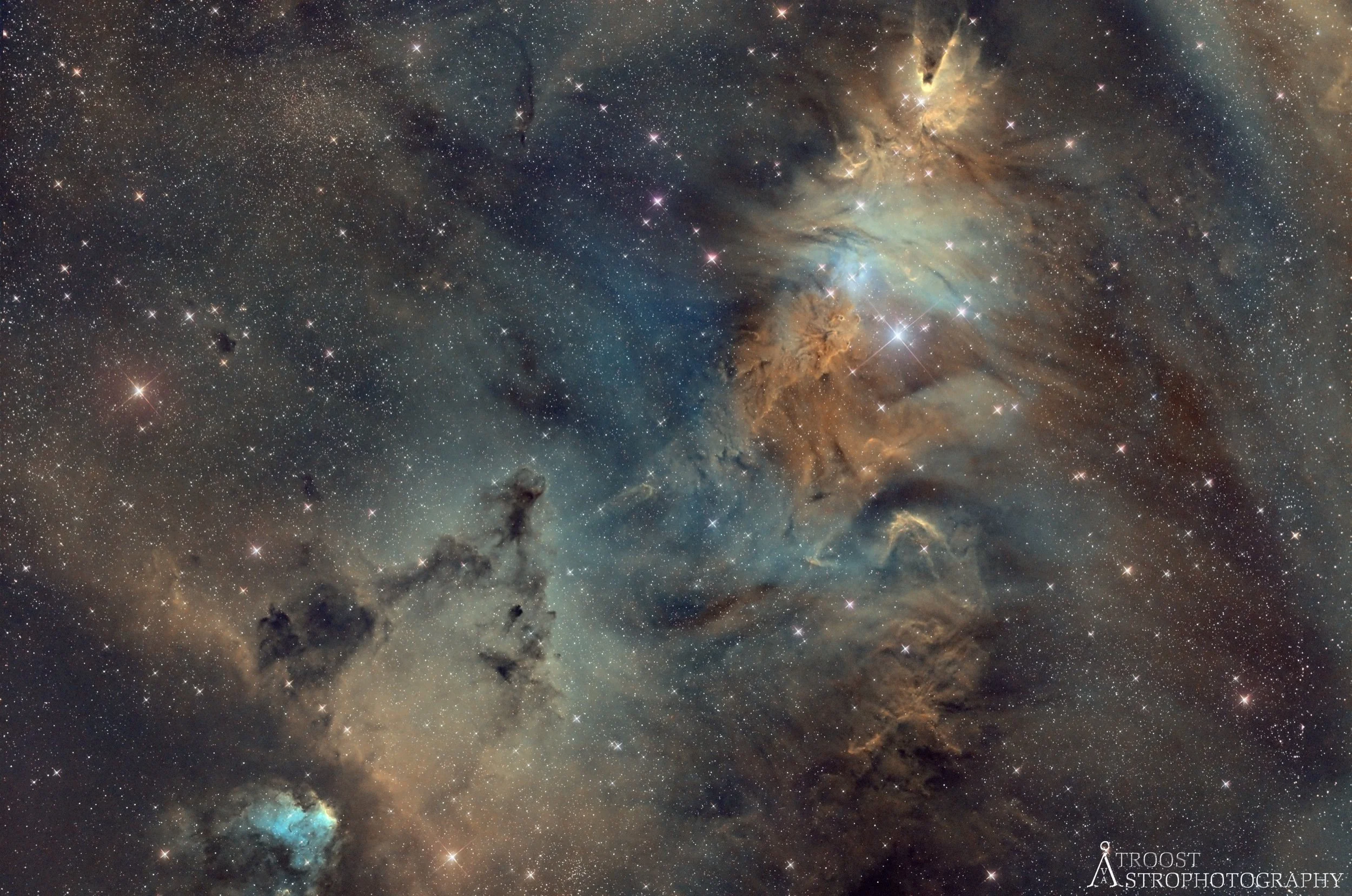
Christmas Tree Cluster and Cone Nebula
Image Description and Details : Taken with Takahashi Epsilon 160ED, ToupTek 2600KMA, EQ6-R pro, Mgen3, Antlia Edge filters at a Bortle 5 area.
20 x Ha, 20 x Sii, 26 x Oiii à 180 seconds each plus RGB stars.
Copyright: Ava Troost Astrophotography
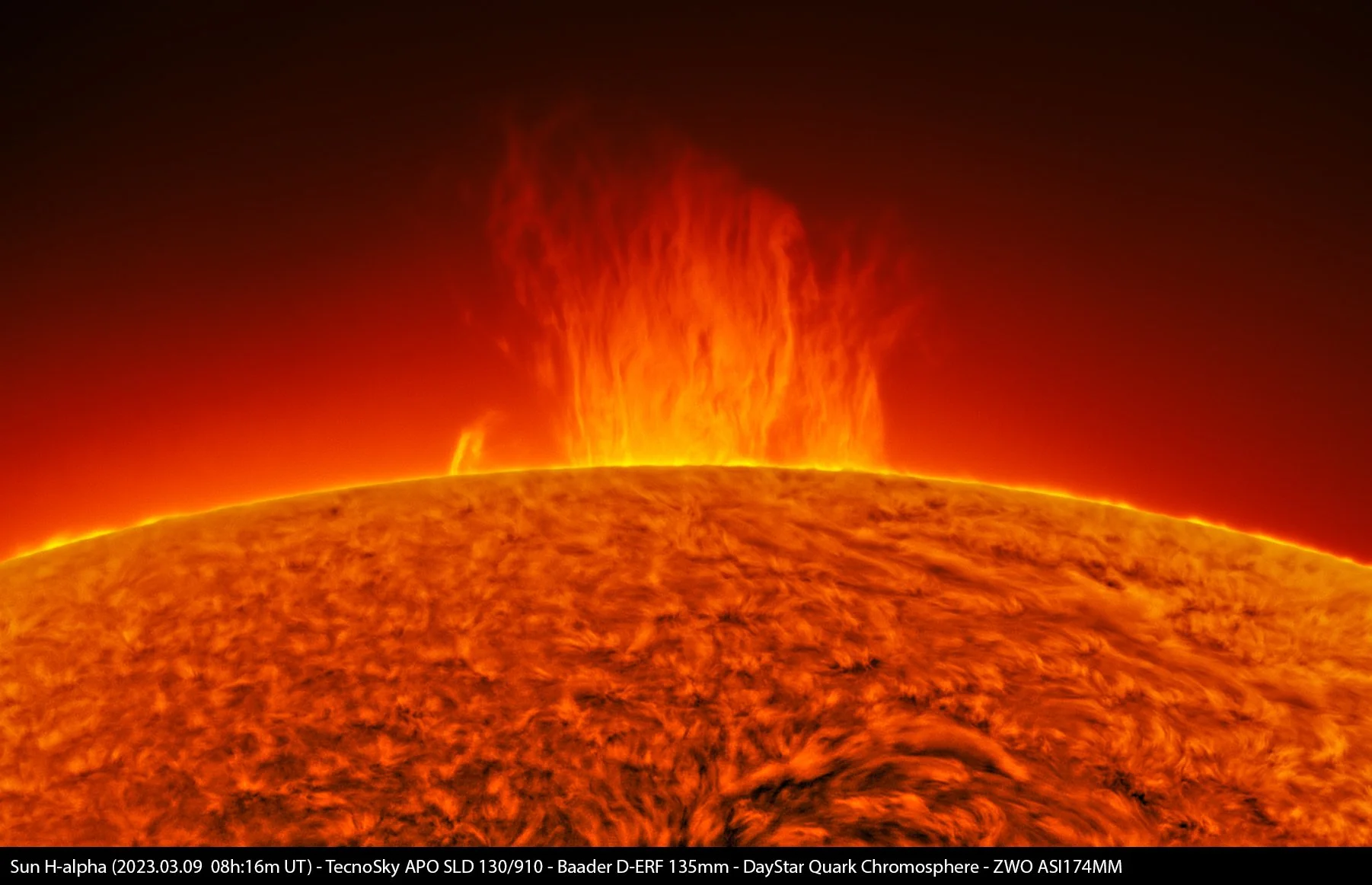
Big solar prominence
Image Description and Details : Big solar prominence taken with an H-alpha filter and an apochromatic refractor.
Copyright:: Salvo Lauricella

A freeze-frame on the Prawn Nebula & Many More
Image Description and Details : This wide field picture features many celestial jewels, including but not limited to IC 4628, NGC 6268, NGC 6231, & NGC 6244. The main object drawing the astronomer attention is most probably IC 4628, a bright Nebula appearing in the constellation Scorpius and located somewhere 6,000 light years from our solar system. Also dubbed the "prawn nebula", it is believed to be a massive stellar nursery, where new stars are forming. Scientists classify it as an emission nebula because its gas has been energized, by the radiation of nearby stars.
Acquisition details:
Processing : @ae_astrophotography
Data : telescope l
Scope : Takahashi FSQ 106 located in Australia
Filters : Sii, Ha, Oiii which gives the so-called "Hubble Palette"
Total integration time : 15H
Copyright: @ae_astrophotography
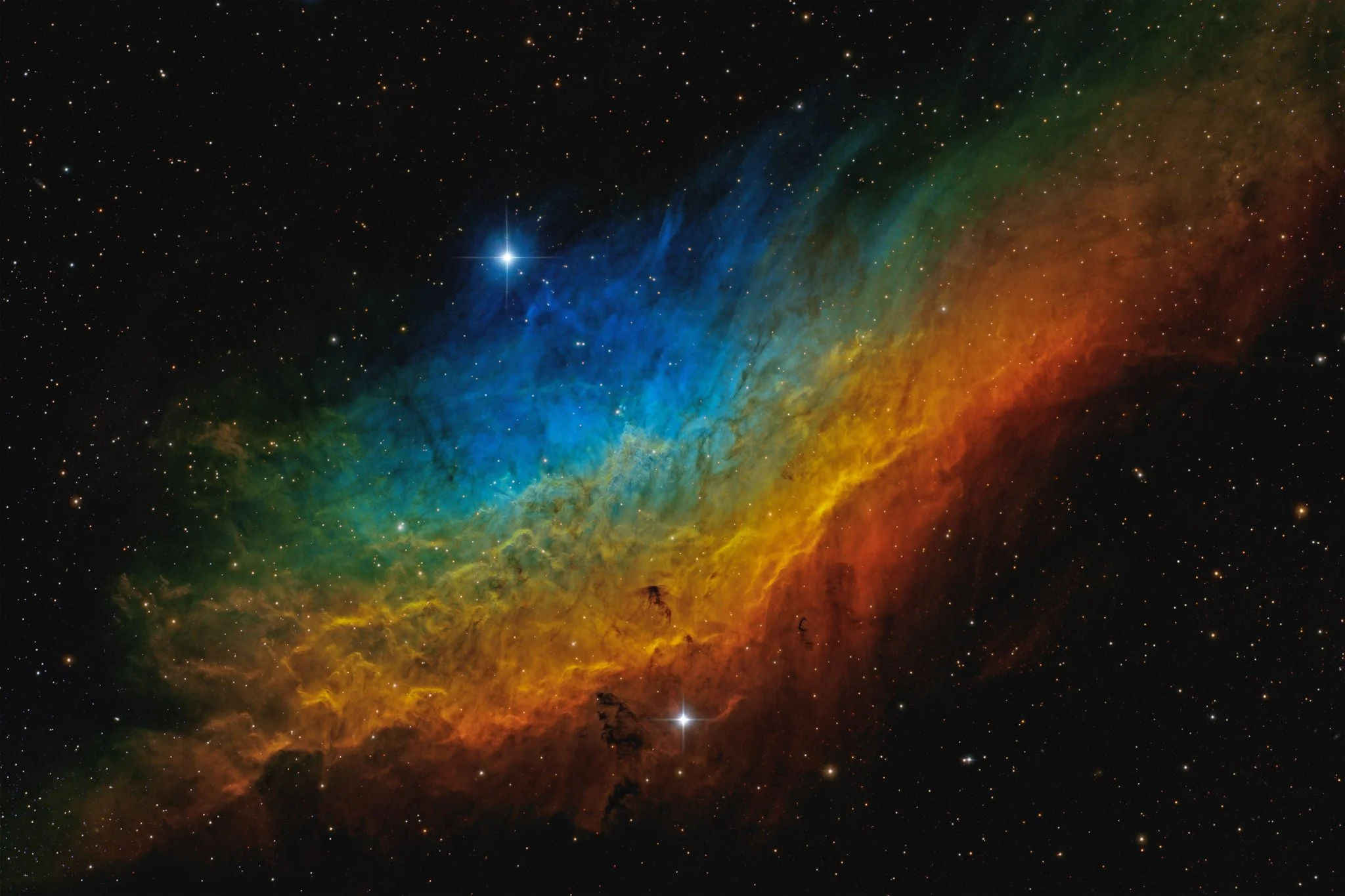
NGC 1499 - California Nebula
Image Description and Details : To make this a little different to the usual red images of this target, I used narrowband filters and processed this in the SHO Hubble palette resulting in a colourful rainbow-like image. The OIII signal was however very faint, so I captured extra data with this, 19 hours in all, resulting in 48 hours total integration time.
Date of capture: Jan 13 to Feb 17, 2023
Location of capture: Castilléjar, Spain
Light frames:
Ha: 83 x 600 seconds
OIII 114 x 600 seconds
SII: 74 x 600 seconds
Red: 25 x 180 seconds
Green: 24 x 180 seconds
Blue: 25 x 180 seconds
Total Integration: 48 hours 55 minutes
My equipment and details are:
Telescope: Takahaski FSQ106
Mount: Software Bisque Paramount MX+
Camera: Moravian C3-16000 PRO
Filters: 3nM Chroma Ha, OIII, SII and Red, Blue, Green for the RGB stars
Guiding: Moravian C1-1500 and OAG
Focuser: Moonlite NiteCrawler WR35
Copyright: Copyright: Neil Corke
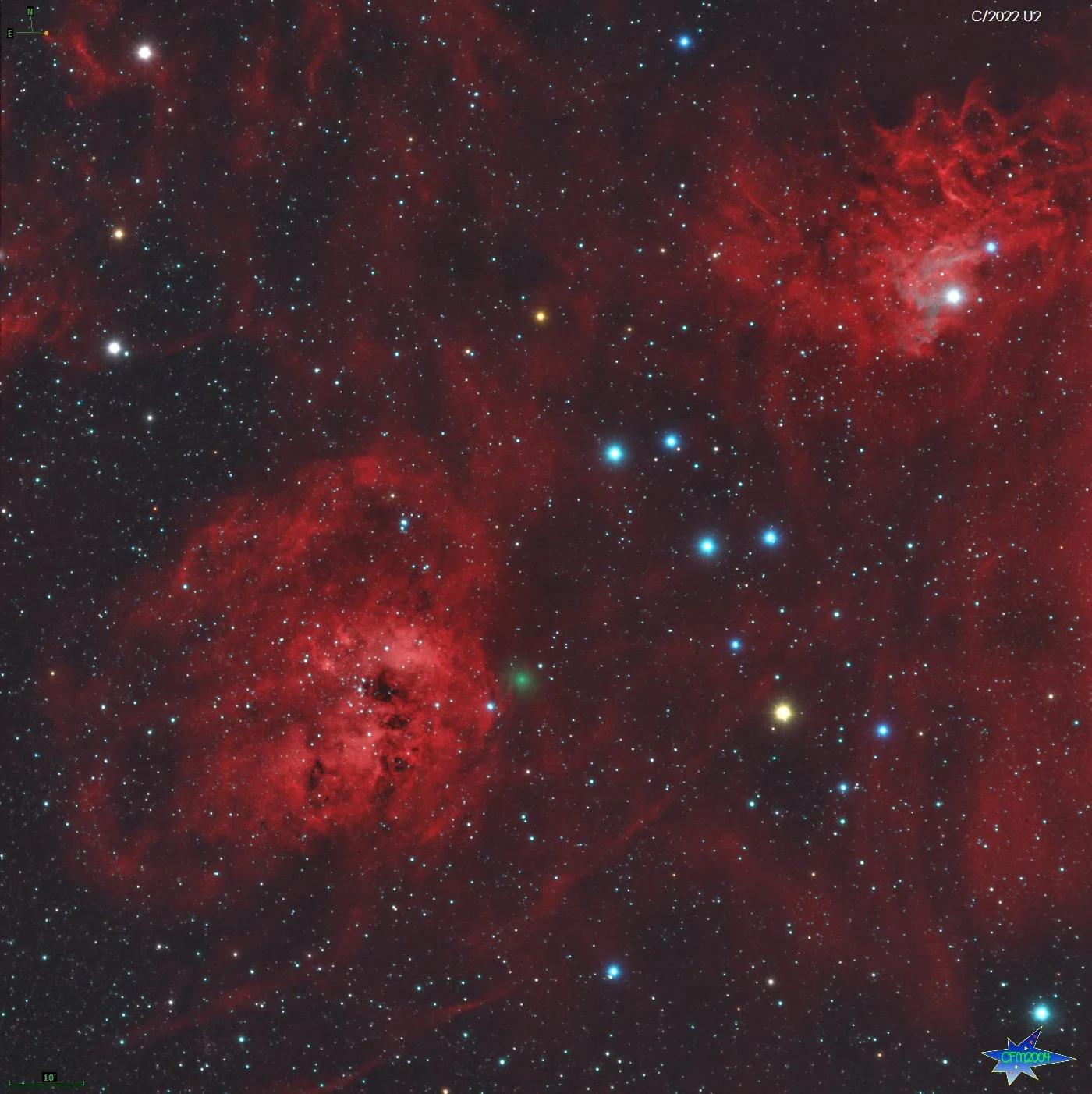
Comet C/2022 U2 Atlas in Auriga
Image Description and Details : Februar 12th 2023 - time 18.00 u.t.
Location: San Romualdo - Ravenna (Italy)
Tecnosky AG70 on Avalon M1
QSI540ws cooled -20
Autoguide with Celestron OAG and QHY174MM
Astrodon RGB GenII E-series and Narrowband 3nm filters
HA-RGB: Ha 15x5min bin2; R 15x2min, G 15x2min and B 15x2min Bin1
Acquired with: Astroart8
Calibrated with bias, dark and flat
Processed with: Astroart8, Paint Shop Pro2023 e plug-in vari.
Copyright: Cristina Cellini
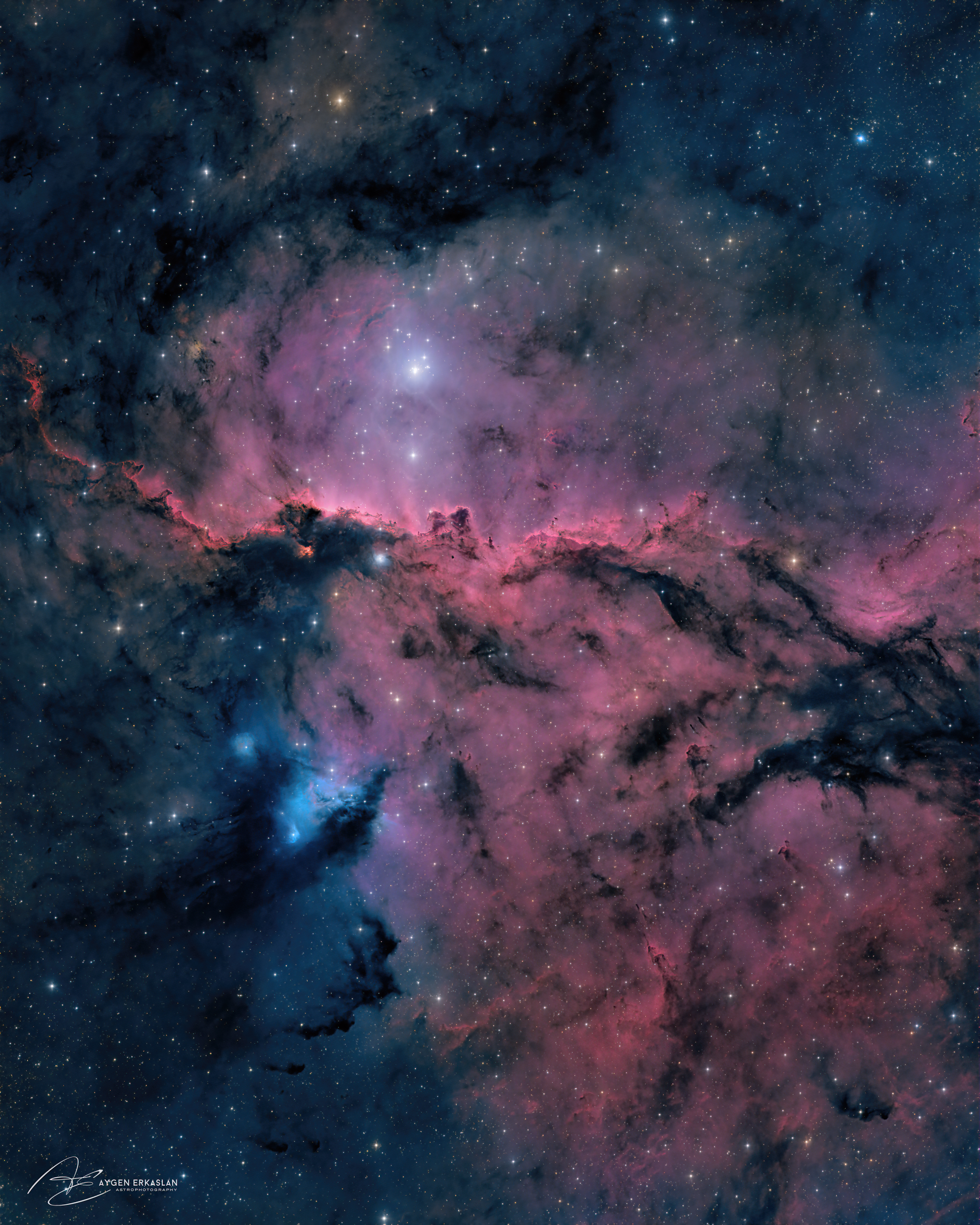
NGC-6188 Chaos & Hope
NGC 6188 is a dazzling emission nebula located in the southern constellation of Ara, about 4,000 light-years away from Earth. This celestial object is a site of active star formation, boasting a cluster of hot, massive stars that illuminate the surrounding gas and dust with their intense radiation.
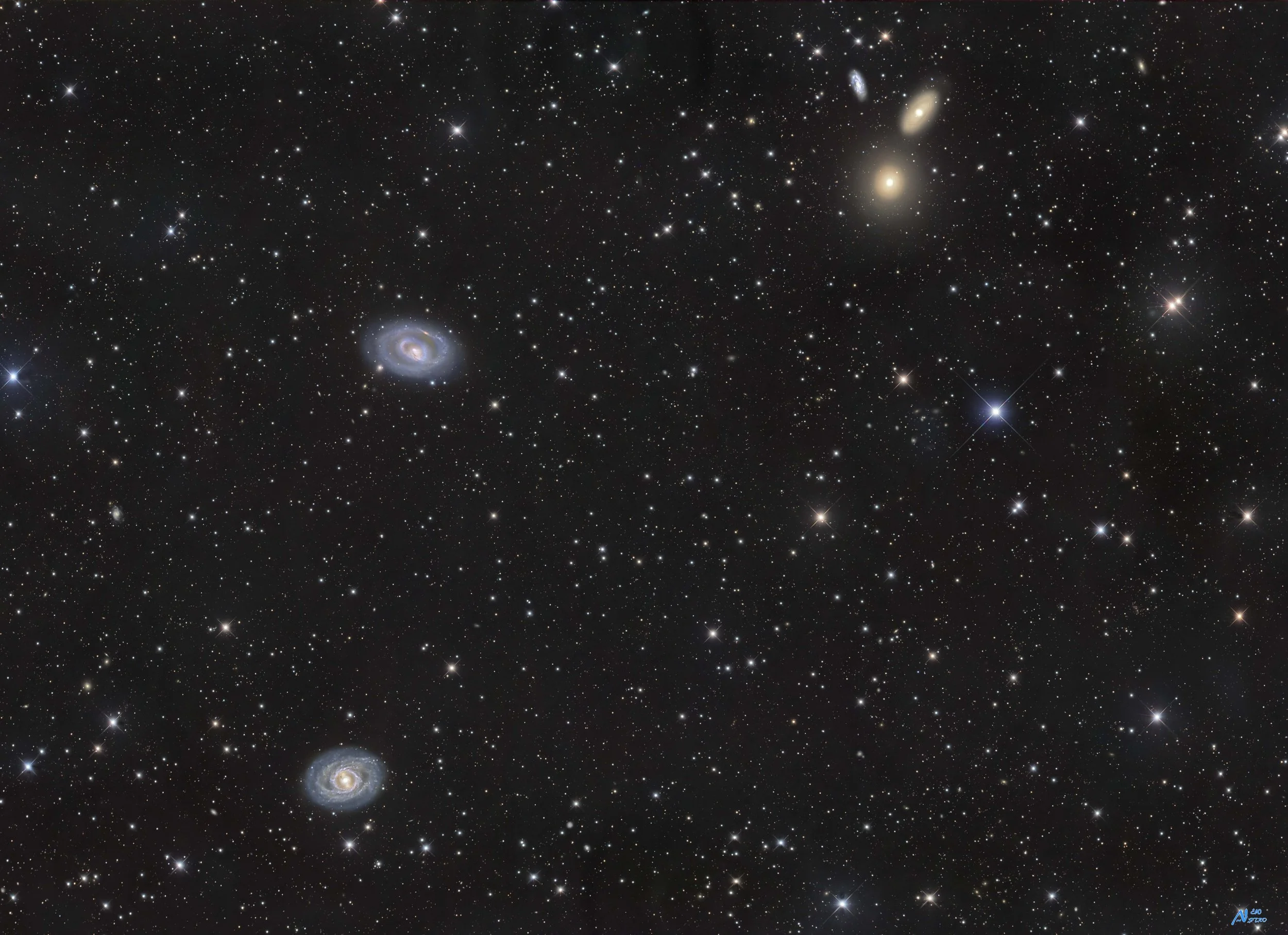
M95-M96
Image Description and Details : The M96 group, also called the Leo I group, is a collection of galaxies in the constellation Leo. The group contains between 8 and 24 galaxies, including three Messier objects. It is one of the many clusters in the Virgo supercluster.
M96 is the ‘dominant’ galaxy in the group, i.e. the most massive. M95 and M96 are both barred spiral galaxies, of comparable dimensions and a little smaller than our Milky Way (93 000 AL for M96 and 73 000 for M95).
At the top right is the elliptical galaxy M 105 from the bottom, then Ngc 3384 and then Ngc 3389, the highest in the image.
We can also see a beautiful spiral galaxy (seen – by contrast – from the edge) camouflaged in one of the spiral arms of M96.
Other more distant galaxies can be detected in the picture.
Photo taken in Normandy (France) . 7H 15 in L;R,G,B
Set up: Newton skyvision 250 900 f/d 3.6 on Skywatcher mount. Camera ZWO Asi 6200 MM.
Processing APP-Pixinsight-Photoshop
Copyright: Francis Bozon

Abell 39
Image Description and Details :
Abell 39 planetary nebula made from Tona ( Bareclona ) bortle 5 sky with an Orion Optics VX8 200mm f900mm f4.5 reflector and Zwo 1600mm pro camera on skywatcher mount Eq6- r pro. For guidance, the evoguide 50 f230 with zwo178 mm camera has been used. There are a total of 65 * 300s in OIII filter on February 3 and 65 * 60s RGB to each channel on February 12, all shots acquired with NINA 2.0 and processed with Pixinsight 1.8.9-
Copyright: Jordi Compte

NGC 4038/4039 - Viennese waltz in space
Image Description and Details :
For me as an Austrian these are clearly 2 galaxies dancing Viennese Waltz
Astrophysicists consider NGC 4038 / NGC 4039 as 2 interacting galaxies
at a distance of about 75 million light years in the constellation Corvus.
This pair of galaxies is also called Antennae galaxies, named for the long tails of gas and dust they eject.
IAS 10" Newton f/4.5 / QHY268M65
L 65 / R 27 / G 29 / B 26 x 120s (4h54min)
Remote IAS Observatory Hakos, Namibia
Copyright: Herbert Walter
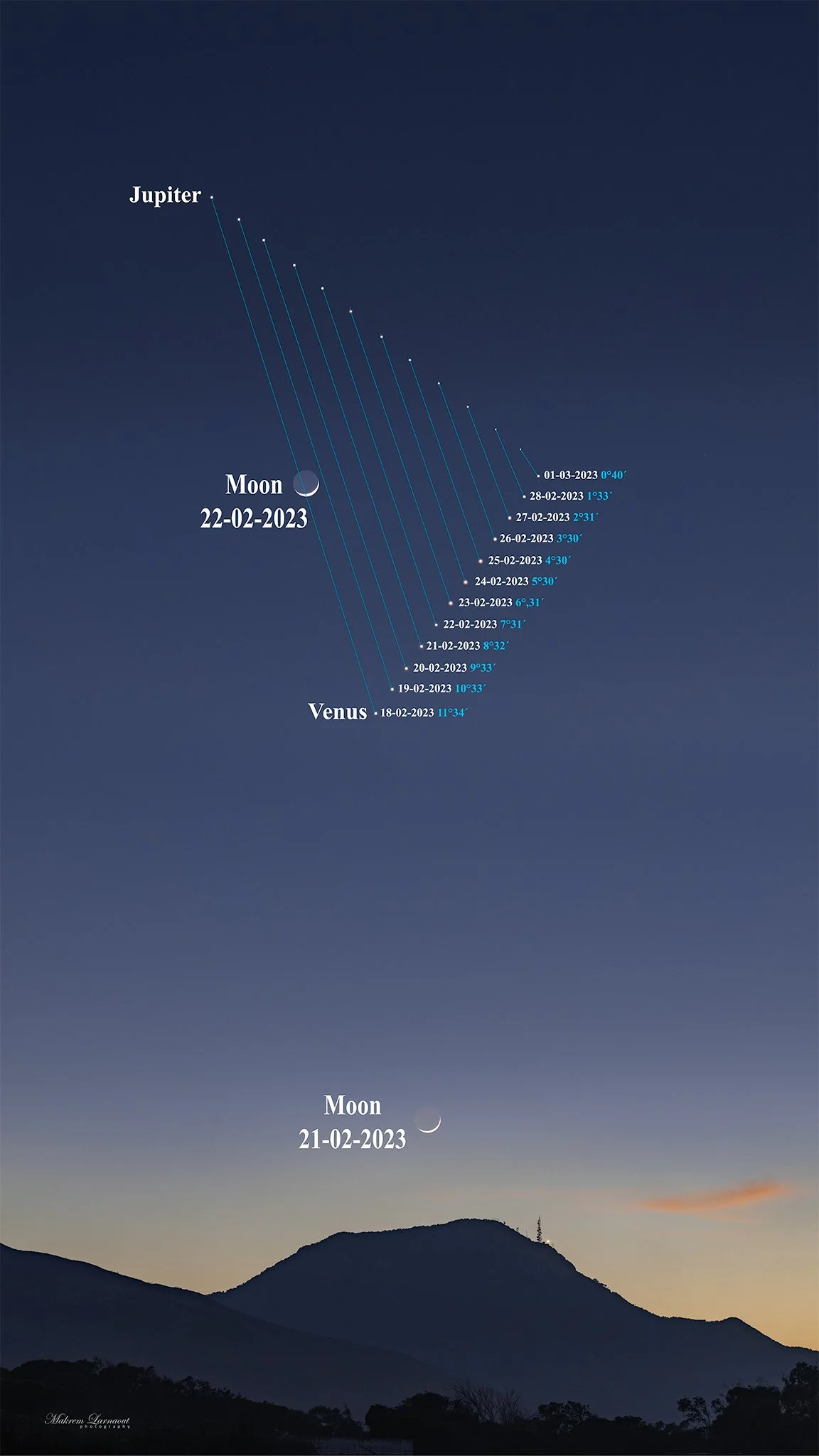
Conjunction Jupiter & Venus
Image Description and Details : Conjunction between Jupiter and Venus over Bougarnin mountain at Tunis
A panorama of 12 photos take it at 18h45 (Tunis Time) from 18/02 to 01/03 with nikon D850 and Sigma 105mm
Copyright: Makrem Larnaout
Messier 106 and surroundings
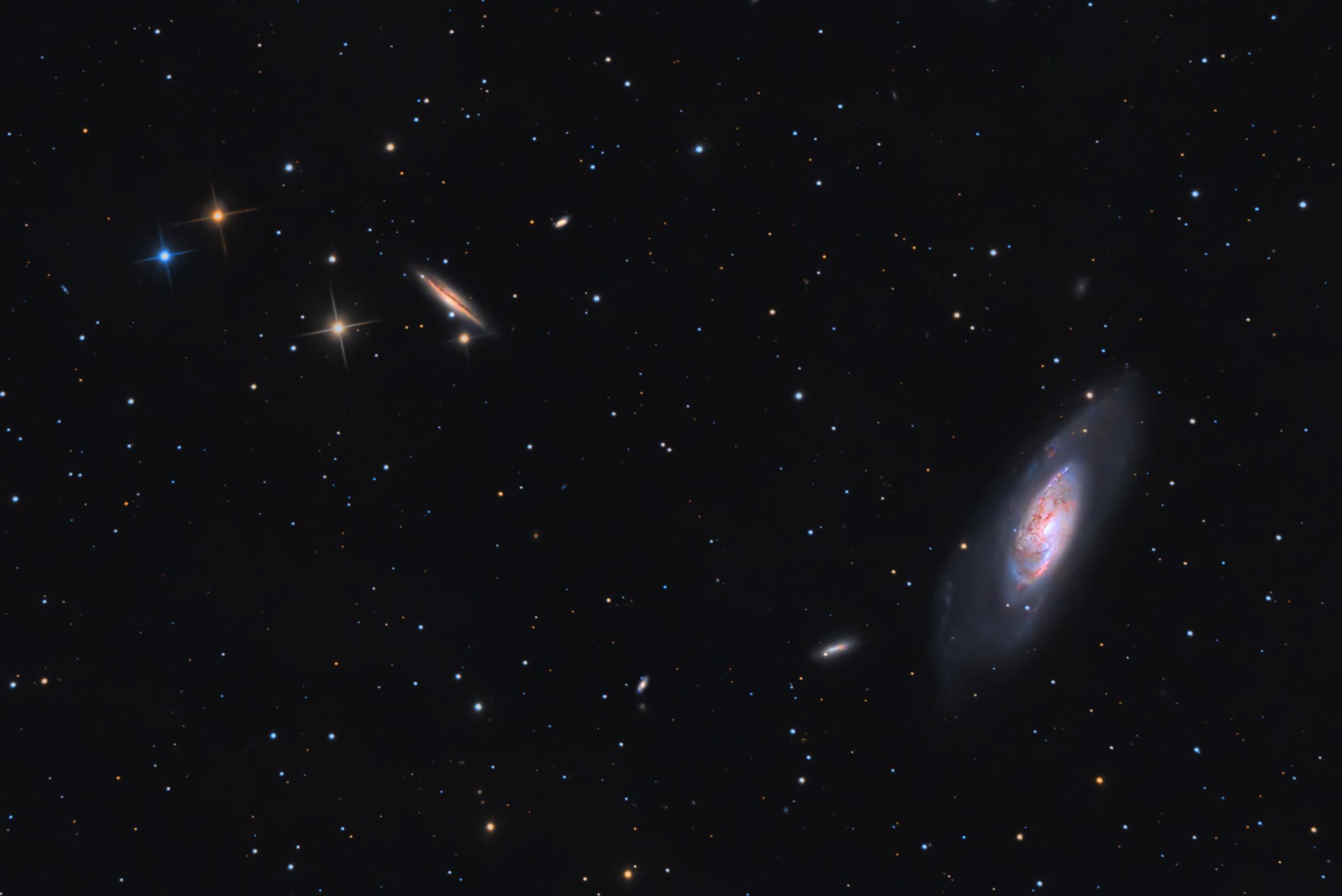
Image Description and Details : Messier 106 (also known as M106 or NGC 4258) is a spiral galaxy located in the constellation Canes Venatici, lies at a distance of 23.7 million light years from Earth and has an apparent magnitude of 9,1.
At its heart, as in most spiral galaxies, is a supermassive black hole, but this one is particularly active. Unlike the black hole at the centre of the Milky Way, which pulls in wisps of gas only occasionally, Messier 106’s black hole is actively gobbling up material. As the gas spirals towards the black hole, it heats up and emits powerful radiation. Part of the emission from the centre of Messier 106 is produced by a process that is somewhat similar to that in a laser – although here the process produces bright microwave radiation.
The galaxy has another startling feature; i.e., instead of two spiral arms, it appears to have four. Unlike the normal arms, these two extra arms are made up of hot gas rather than stars, and their origin remained unexplained until recently. Astronomers think that these, like the microwave emission from the galactic centre, are caused by the black hole at Messier 106’s heart, and so are a totally different phenomenon from the galaxy’s normal, star-filled arms.
Messier 106 may have a companion galaxy, the spiral galaxy NGC 4217 (top left in my picture, along with the 3 bright stars). NGC 4217 is about 80,000 light years across and appears almost perfectly edge on.
Konus 200/1000 @960mm, f/4.8
Qhy168c @-20 °C
Sky-Watcher Eq6r Pro mount
SvBony CLS filter 222x180"
Optolong L_Ultimate filter 101x300"
N.I.N.A., APP, PixInsight, PS
Copyright: Massimo Di Fusco
The Eye of Horus - NGC-1097
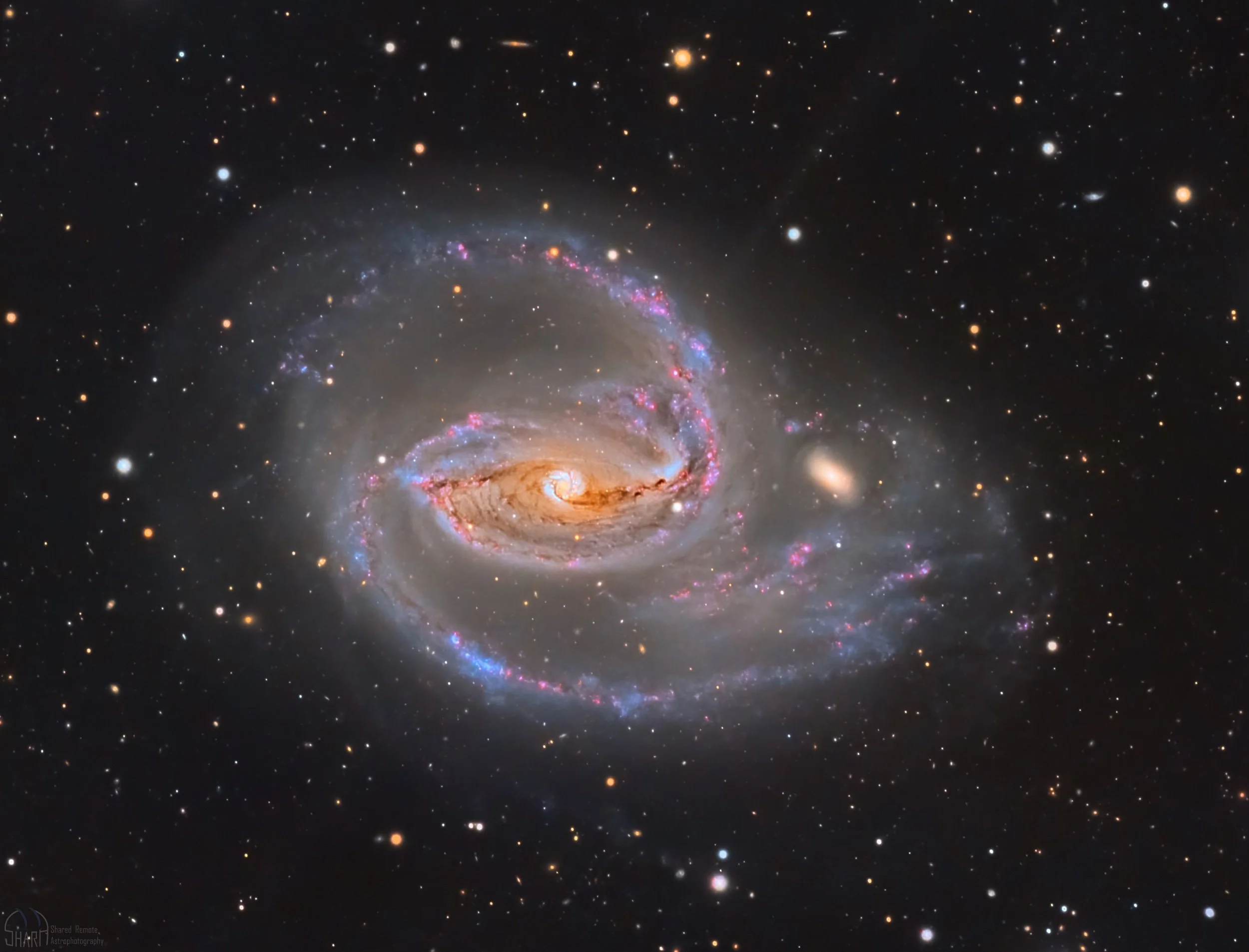
Image Description and Details : NGC1097 is a splendid barred spiral galaxy, about 45 million light years away and located in the southern constellation of Fornax. It is cataloged as a Seyfert galaxy and at its center hosts a supermassive black hole that is devouring a few billion tons of matter every second.
The object is really interesting to photograph because it has many molecular hydrogen clouds (star formation zones), some of which are positioned in a circular shape right around the galactic center and spiraling around the black hole. The spiral shape is deformed due to the gravitational interaction with some neighboring galaxies: NGC1097A (embedded “perspectively” in one of the two arms) and NGC1097B (farther from the center).
Copyright: Massimo Di Fusco
APOLLO MISSIONS
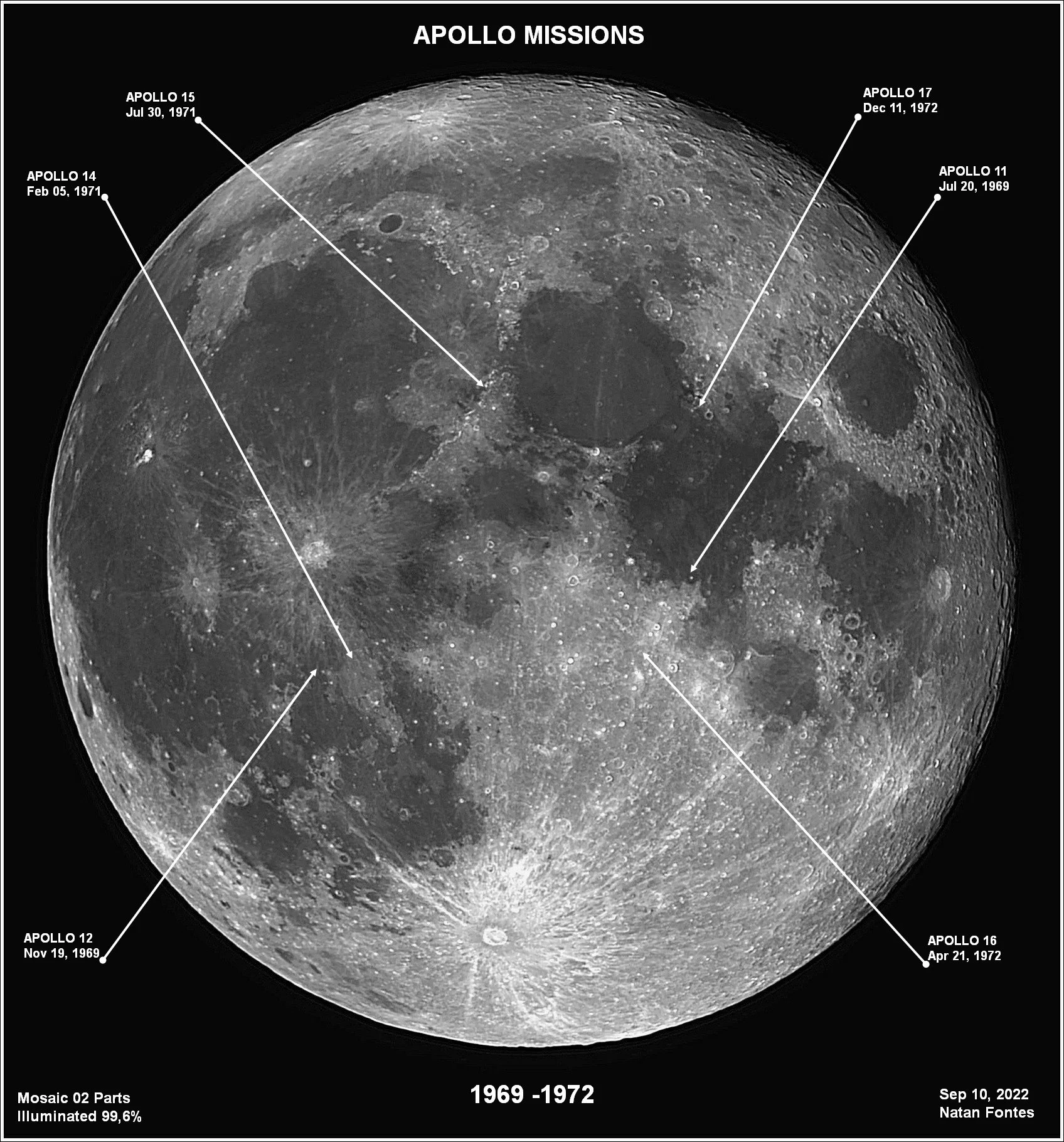
Image Description and Details : The Moon has always fascinated humanity, for its beauty, size and phases.
In 1969, the man managed to walk on it and return safely, overcoming all the challenges of the time.
After this unprecedented landing, there were five more successful missions of manned landings, ending the Apollo Mission in 1972 with the landing of Apollo 17.
Today man is repairing himself to return to the Moon and continue his exploration of this precious satellite of ours.
This photo depicts the regions and dates of the six manned moon landings, symbolizing the golden period of lunar exploration, signaling future lunar explorations.
Technical Specification: Explore Scientific APO 80 mm Telescope; Baader IR685nm filter; ZWO ASI 290MM camera; AZEQ5 Sky-Watcher mount; Programs: FireCapture 2.6.08, AutoSakkert!3, Image Composite Editor, AstroSurface, RegiStax6, Affinitty Photo and IrfanView 64. Photo composed by mosaic of 02 panels.
Copyright: Natan Fontes
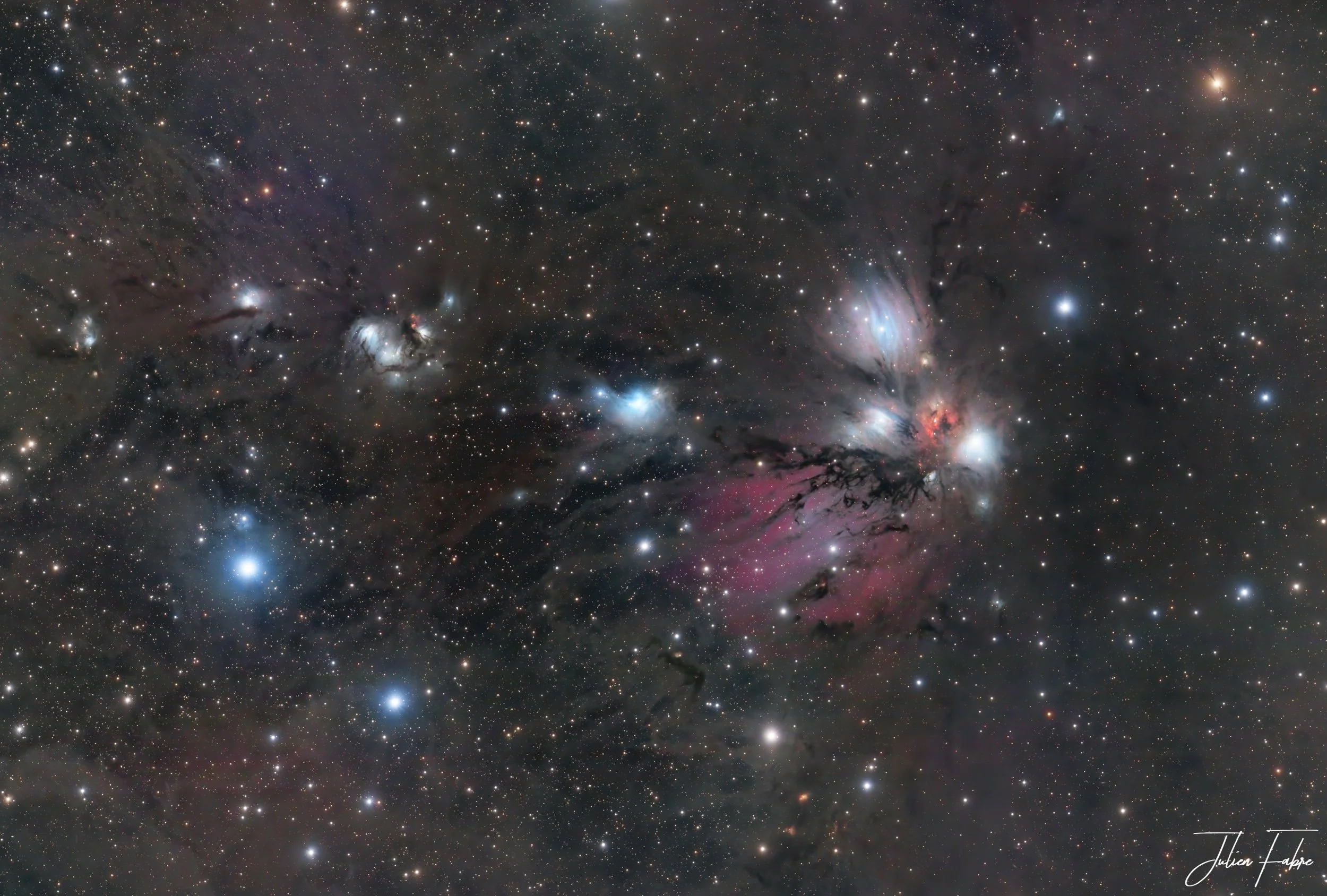
The angel nebula
Image Description and Details : NGC 2170 is a dusty reflection nebula and stellar nursery that formed about 8 million years ago, located at the edge of the giant star-forming molecular cloud Monoceros R2, some 2,700 light-years away. the constellation of Monoceros. The bluish areas are reflection nebulae, so named because they reflect light from nearby hot stars. The red areas are emission nebulae and glow because ultraviolet light from nearby stars excites hydrogen and other gas atoms in the nebula, which then emit their own light in specific colors. What looks a bit like black ink spread across the image are dark nebulae, and are only visible because of the light they block.
TSA120 and asi 2600mm
300 x 180s with L filter
45 x 180s on each rgb channel
Total: 21h45
Copyright: Julien FABRE