
AAPOD2 Image Archives
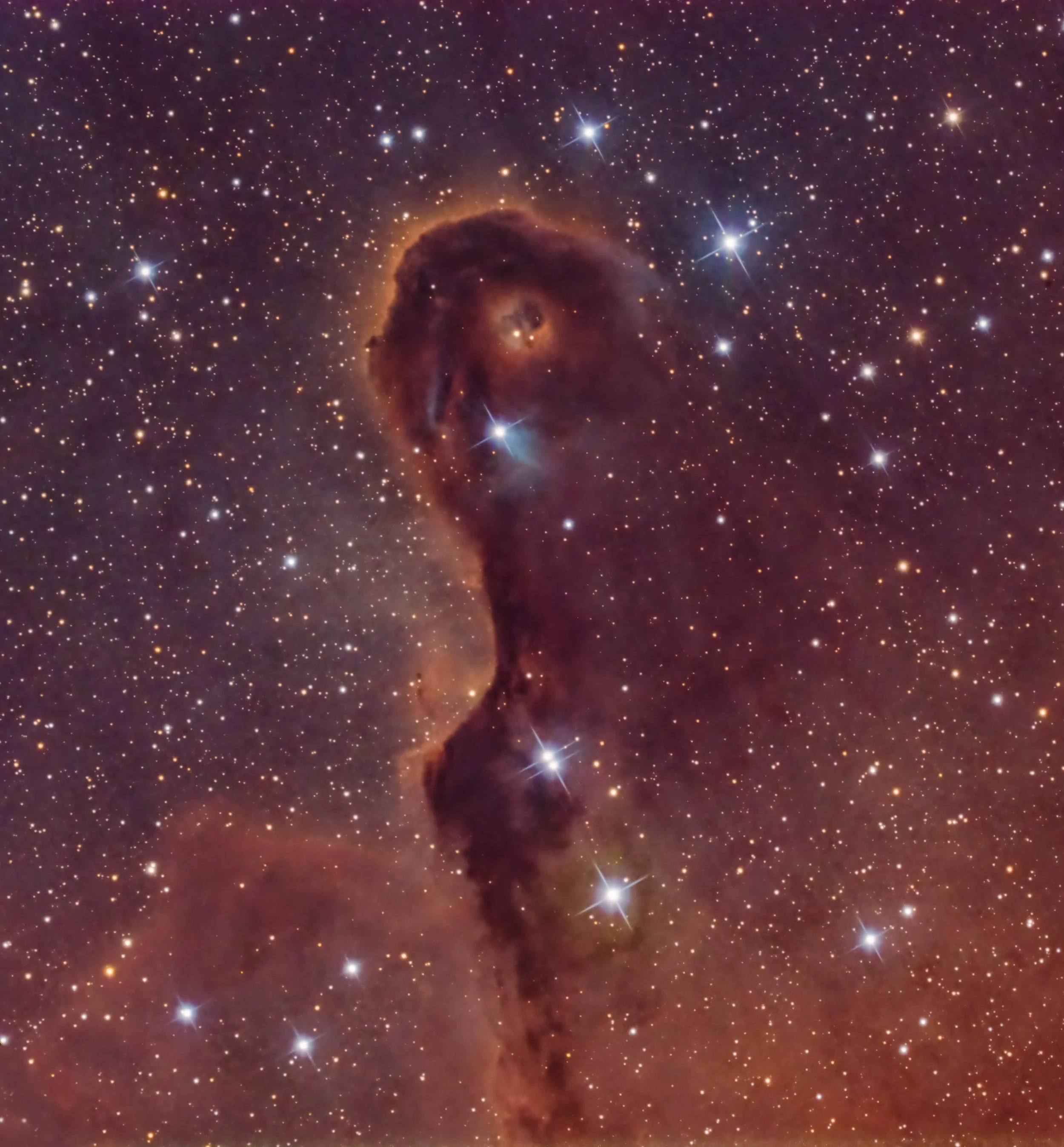
The Nose of the Elephant Trunk
Image Description and Details: This is the cometary globule inside IC1396, in Cepheus. It is named "the elephant trunk" due to the similarity with the trunk of this big animal. The globule contains many different protostars and it is shaped by a very energetic star in the center of the nebula complex. In this image I composed 3 different sessions: SHO and L-Extreme images taken with my C11HD from my backyard and RGB images taken with CDK500 from Skygems remote service.
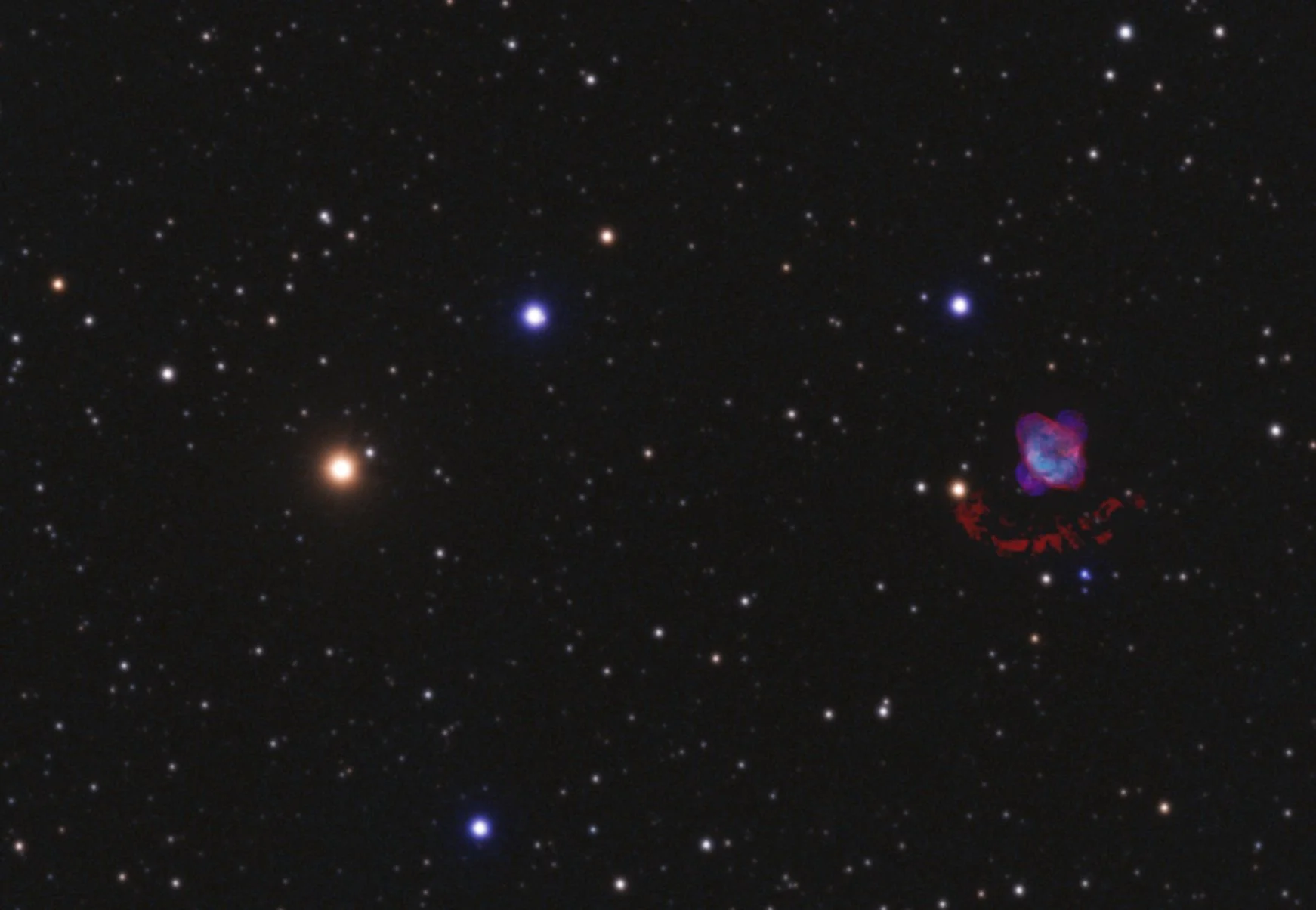
M 2-55 and its elusive fragmented bow-shock front
Image Description and Details: M 2-55 is an evolved rarely-imaged planetary nebula in the constellation Cepheus. It was first discovered and identified by the German-American astronomer Rudolph Minkowski on photographic plates at Mount Wilson in 1947. The plates were taken by W.C. Miller with a 10" f/5.2 refractor.
IM 2-55 possesses two sets of bipolar lobes.
It was only in 2020 that a team of Chinese professional astronomers detected an arc of material running from the SE to the SSW. (Chih-Hao Hsia et. al, March 13th 2020, “Discovery of Extended Structures around Two Evolved Planetary Nebulae M 2-55 and Abell 2”). They concluded that this arc was furnishing strong evidence for an interaction of the expanding nebula of \m 2-55 with its surrounding interstellar material. The presence of fragmentation in the arc may be the result of a phenomenon known as Rayleigh-Taylor (RT) instabilities.
A total of 115 hours HaOIIIRGB image capture
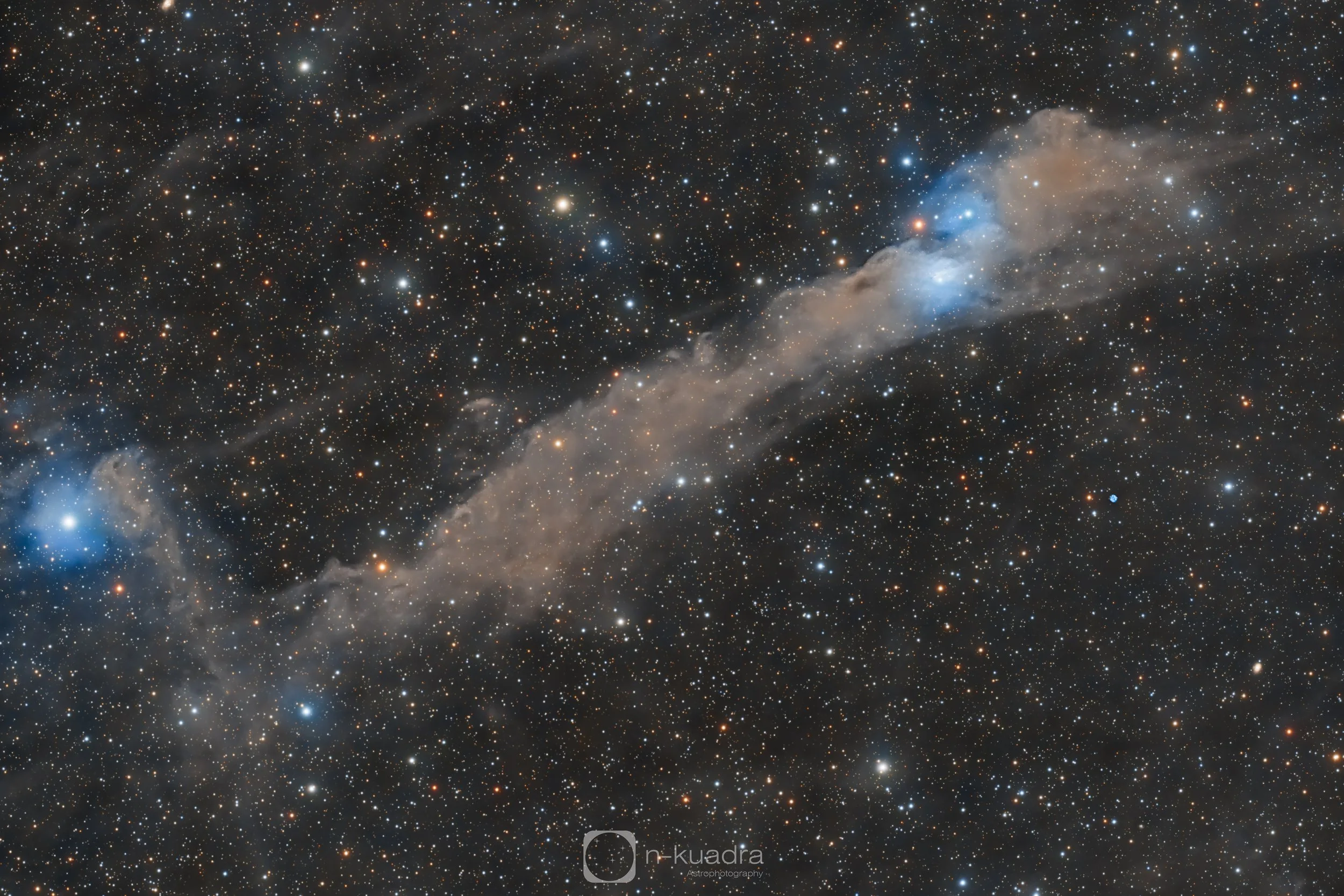
COSMIC CHECKMARK (LBN534+VdB158)
LBN 534 and VdB 158, located in the constellation Cepheus, together form a captivating interstellar duo offering a wealth of scientific insights. LBN 534 is classified as a diffuse emission nebula, while VdB 158 is a reflection nebula. Emission nebulae, like LBN 534, are primarily composed of ionized gas emitting light at various wavelengths, providing valuable information about the properties of the interstellar medium. VdB 158, on the other hand, owes its striking appearance to the scattering of light by dust particles.
In the case of VdB 158, the bluish appearance is the result of the preferential scattering of shorter, bluer wavelengths of light. Its juxtaposition with LBN 534 offers a unique opportunity for astronomers to study the interaction between the illuminating stars and the surrounding dust and gas. Analyzing these nebulae contributes to our understanding of the intricate processes governing star formation and the dynamics of the interstellar medium in the vast expanse of our galaxy.
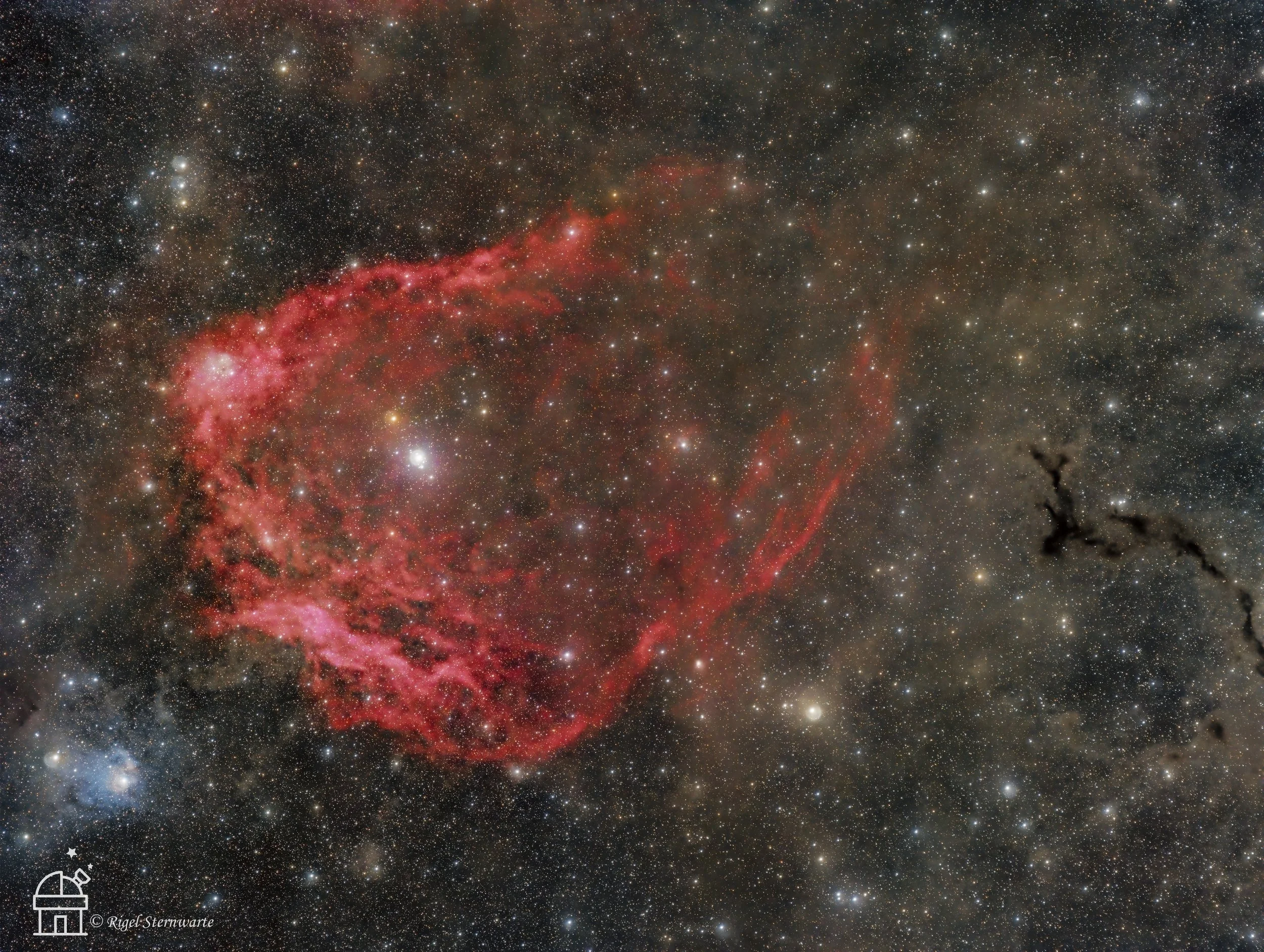
SH2-129 LRGB
Sh2-129, also known as the Flying Bat Nebula, is an emission nebula located in the constellation of Cepheus. It derives its name from its resemblance to a flying bat with outstretched wings. Scientifically, Sh2-129 is a complex nebula featuring both emission and reflection components. Emission nebulae are formed by the ionization of gases by nearby stars, while reflection nebulae occur when dust particles scatter light from nearby stars. Sh2-129 is illuminated by the radiation from O-type stars, which are known for their high temperature and luminosity. Its intricate structure provides astronomers with an opportunity to study the interplay between stellar radiation and the surrounding interstellar medium. The examination of Sh2-129 contributes to our understanding of the mechanisms behind the shaping and evolution of such intricate cosmic formations.

2023 October 14 Annular Solar Eclipse in H-Alpha
An annular solar eclipse occurs when the Moon covers the Sun's center, leaving the Sun's visible outer edges to form a "ring of fire" or annulus around the Moon. Observing such an eclipse in H-alpha light, which is a specific spectral line of hydrogen, can provide valuable insights into the Sun's chromosphere and prominences.
For the October 14, 2023, annular solar eclipse, this H-alpha view highlights the chromospheric features and prominences. Observers using specialized solar telescopes equipped with H-alpha filters would have been able to see the eclipse with more details and observe any solar prominences that were present during the eclipse.
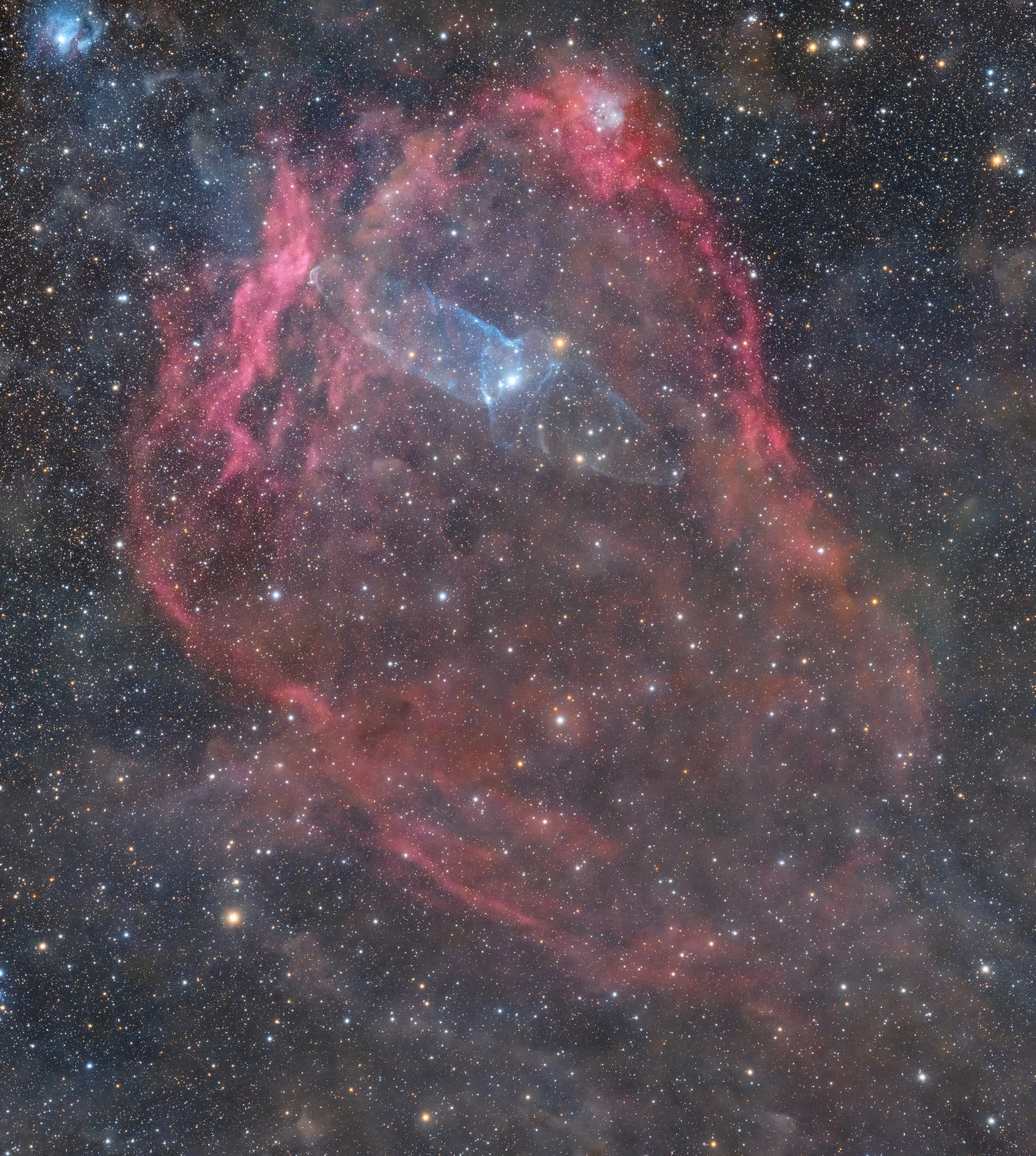
SH2-129 and OU4 in OIII-RGB
This composite image features a captivating 2-panel mosaic of the intricate SH2-129 and OU4 nebulae, highlighting their stunning OIII-RGB emission patterns. Through the implementation of specialized filters, the mosaic vividly portrays the intricate interstellar structures and the distinct emission characteristics of these nebulae. SH2-129, also known as the Flying Bat Nebula, boasts dynamic filamentary features, while OU4, the Iris Nebula, exhibits intricate details and a captivating ring-like appearance. The utilization of the OIII-RGB technique enhances the contrast and color separation of the nebular components, providing valuable insights into the ionized gas dynamics and the underlying physical processes driving the evolution of these stellar nurseries.
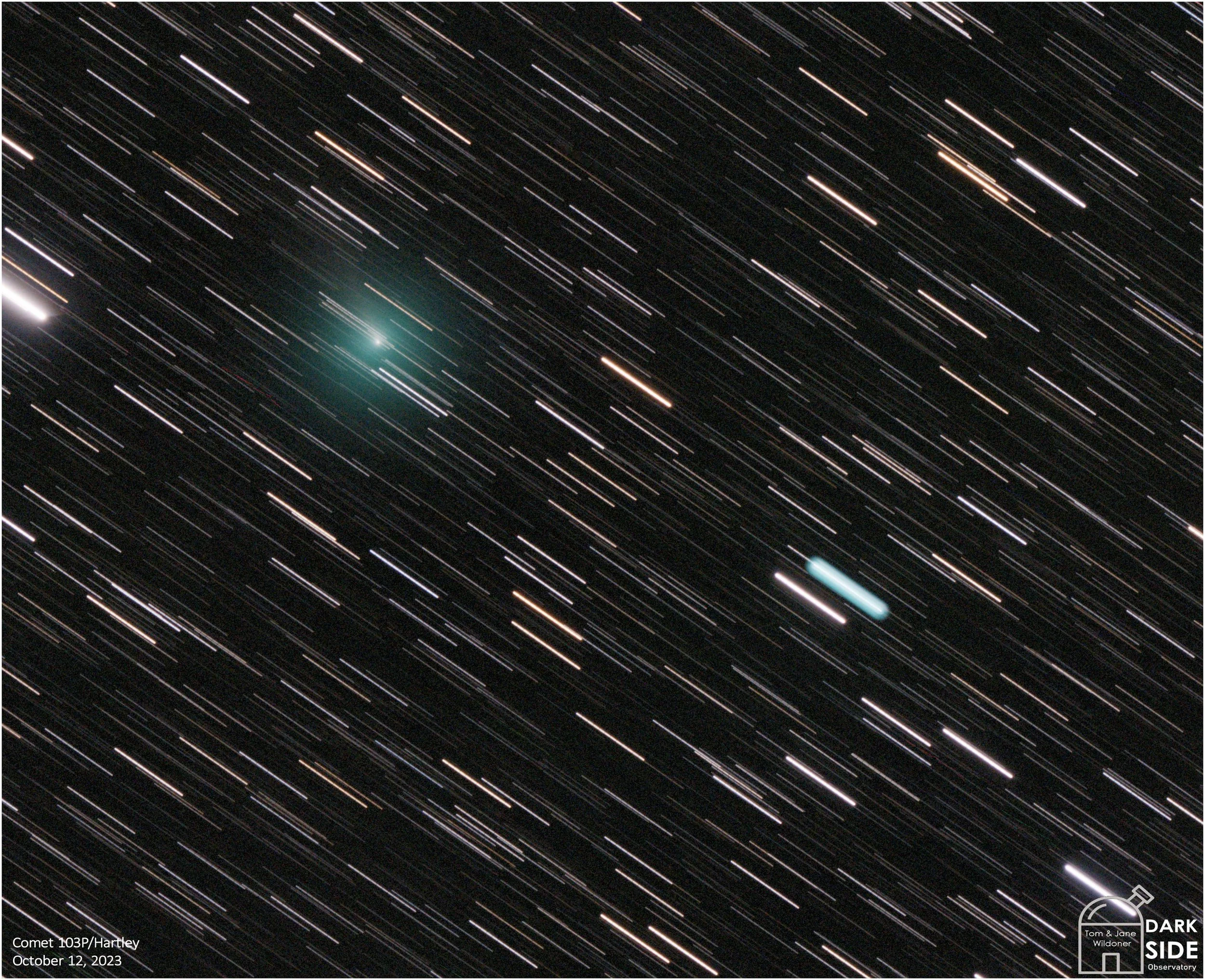
Comet 103P/Hartley and the Eskimo Nebula
This composite image captures the celestial journey of Comet 103P/Hartley against the backdrop of a starry night sky. The stacked image technique highlights the graceful trajectory of the comet, while accentuating the subtle motion of the trailing stars due to the Earth's rotation. Comet 103P/Hartley, known for its periodic return to the inner solar system, exhibits a distinguishable coma and tail, showcasing its volatile nature as it interacts with the solar wind. The juxtaposition of the comet's transient presence and the steadfast backdrop of the stars offers a profound visual testament to the dynamic and timeless nature of our universe.
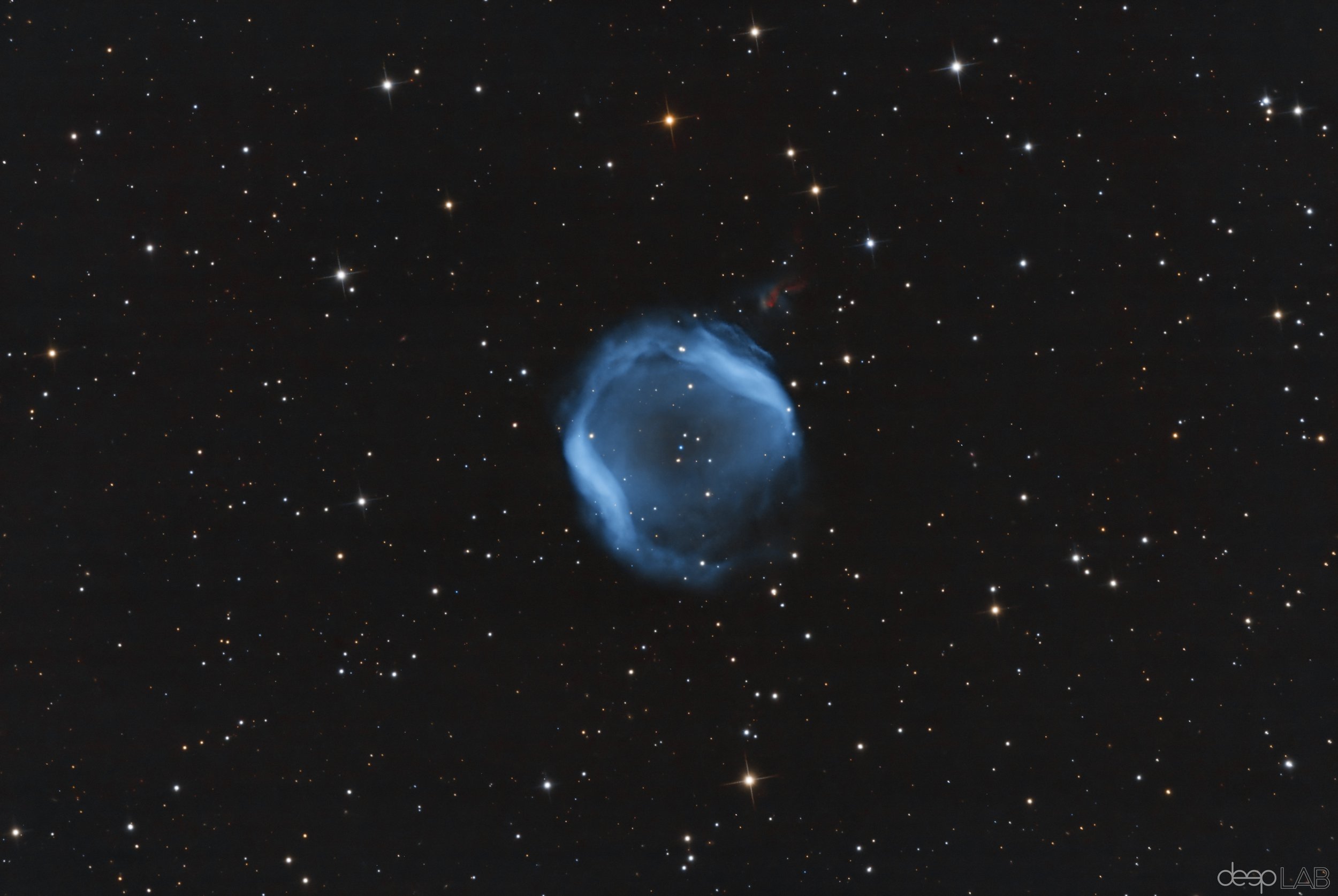
PK104-29.1 PLANETARY NEBULA IN PEGASUS
This image provides a comprehensive view of the PK104-29.1 planetary nebula situated in the Pegasus constellation. The image delineates the complex structures and color variations inherent in the nebula, shedding light on its intricate composition and spatial distribution. PK104-29.1, characterized by its distinctive bipolar morphology, offers valuable insights into the astrophysical processes governing the late stages of stellar evolution.

IC1805 - Melotte 15
This deep-space image, captured using the Hubble palette, offers a unique perspective of Melotte 15, a star cluster nestled within the expansive cosmos. Comprising Sulfur (S), Hydrogen-alpha (Ha), and doubly ionized Oxygen (OIII) emissions, the image provides a distinctive, color-enhanced view of the cosmic phenomena. Melotte 15 is renowned for its remarkable stellar richness, harboring a concentration of hot, massive stars, including O-type stars, which are among the universe's most massive. This makes it an exceptional laboratory for exploring the intricacies of stellar evolution and massive star formation. Additionally, within this cluster, various variable stars exhibit periodic changes in brightness, supplying astronomers with valuable data for unraveling the fundamental properties of stars and the dynamics of Melotte 15, enhancing our comprehension of this celestial ensemble.
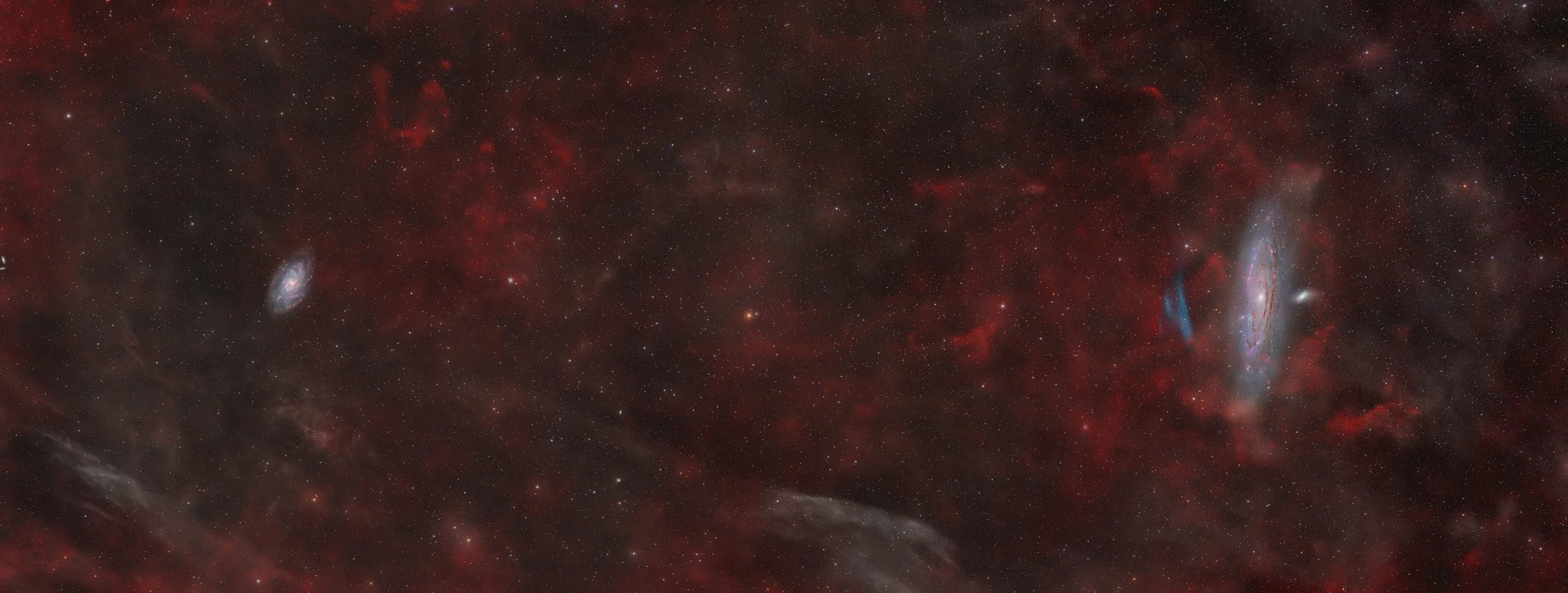
From Triangulum to Andromeda
This captivating deep-space image spans a vast cosmic expanse from the Andromeda Galaxy (M31) to the smaller yet equally enchanting Triangulum Galaxy (M33). This astronomical composition is a mesmerizing blend of multi-spectrum imagery, seamlessly harmonizing hydrogen-alpha (Ha) and doubly ionized oxygen (OIII) emissions with luminance (L), red (R), green (G), and blue (B) channels. In this breathtaking capture, the fiery tendrils of Ha and the ethereal glow of OIII emissions intertwine with the intricate details of stars and dust, creating a celestial astro-photo that not only reveals the grandeur of these neighboring galaxies but also provides a glimpse into the intricate astrophysical processes shaping the universe.
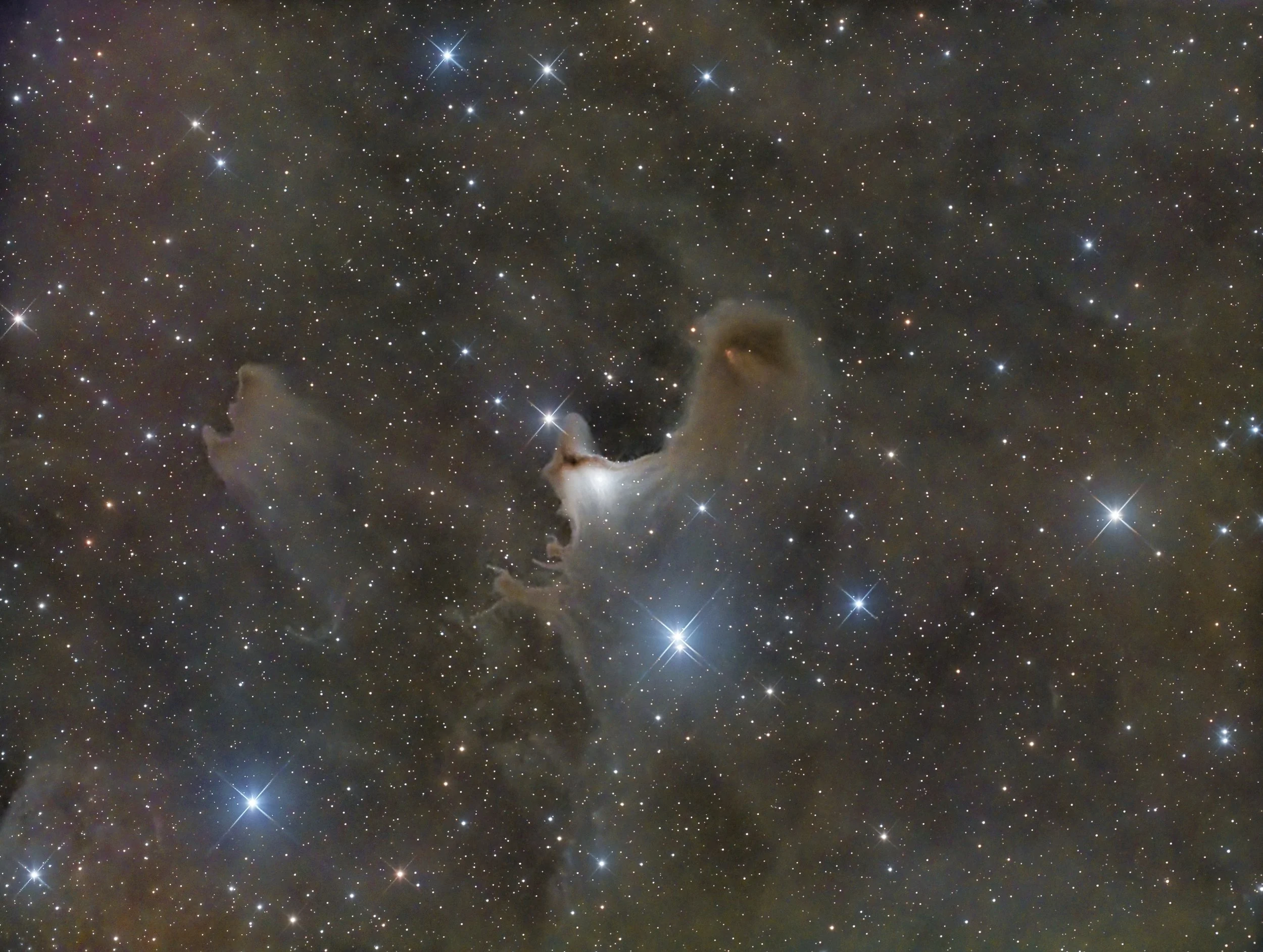
VDB 141 The Ghost Nebula
VdB 141, also known as the Ghost Nebula, is a hauntingly beautiful reflection nebula situated in the constellation Cepheus. This celestial apparition gets its name due to its ghostly, ethereal appearance, as it appears to be a faint, shimmering cloud against the dark backdrop of space.
In this striking image, VdB 141 is bathed in the soft glow of starlight, which is scattered and reflected by dust grains within the nebula. This creates a captivating blue haze that envelopes the nebula, making it seem almost like a phantom in the cosmic night. The nebula is a stellar nursery where new stars are born.
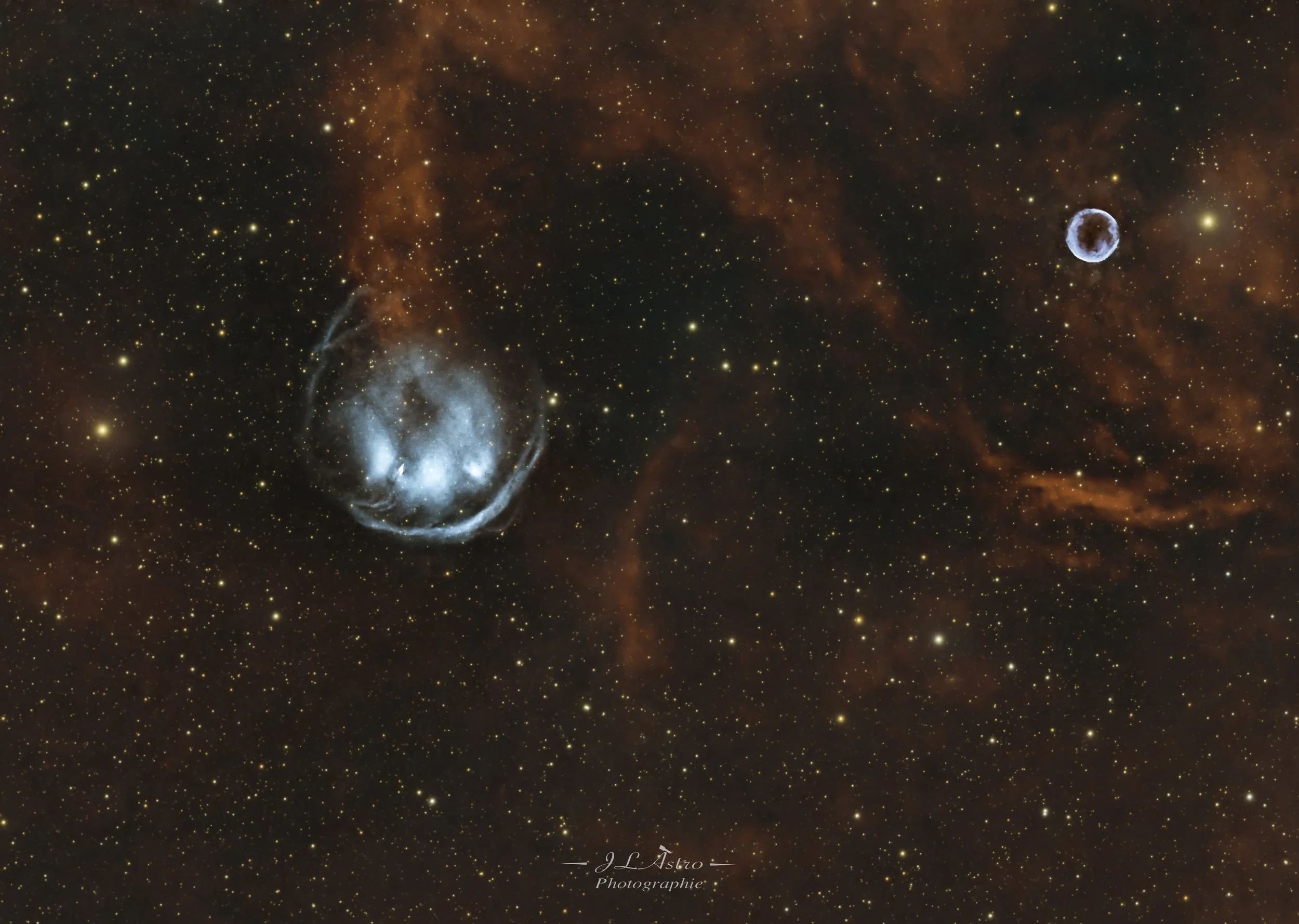
HFG1 & Abell 6
HFG 1, also known as Abell 6, is an intriguing planetary nebula located in the constellation Lynx. Planetary nebulae are shells of gas and dust ejected by dying stars, and they often exhibit unique and captivating shapes. HFG 1 is no exception and offers a remarkable cosmic spectacle.
In this image, HFG 1 and Abell 6 come to life, revealing their intricate and alluring features. HFG 1, the central object, showcases its intricate, lacy structure with a central star at its heart. Surrounding it, Abell 6 is a faint, circular shell of gas, representing the outer layers of a star that were expelled during its final stages of evolution.
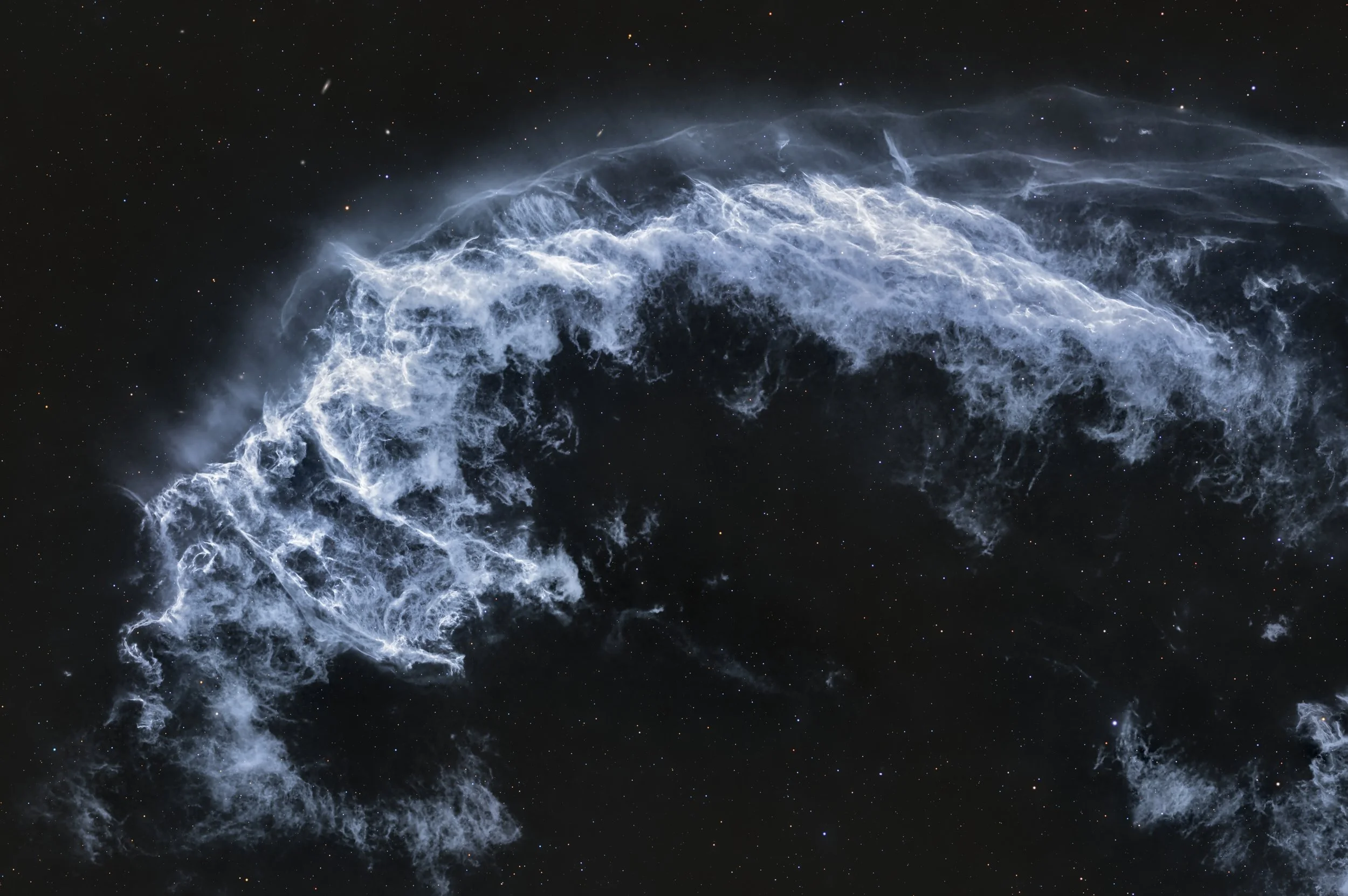
The Great Wave of the Eastern Veil nebula
This unique processing of the Eastern Veil Nebula, blending data from Hydrogen-Alpha (HA) and Oxygen-III (OIII) emissions to create an ethereal palette of light blue and white, presents a celestial masterpiece that transcends the boundaries of conventional astrophotography. Located in the constellation Cygnus, this nebula's delicate tendrils and intricate structures are unveiled in a new, captivating light.
The light blue hues represent the dominance of Oxygen-III emissions, highlighting regions where oxygen ions are abundant. These areas often signify shock fronts and interactions with the surrounding interstellar medium. In contrast, the serene white regions emanate from Hydrogen-Alpha emissions, showcasing areas rich in ionized hydrogen gas, a hallmark of star-forming regions.
This artistic synthesis of data results in a mesmerizing celestial dreamscape, where the veil-like wisps of the nebula come to life with an otherworldly beauty. It's a testament to the power of image processing in revealing the hidden nuances and cosmic wonders that reside within the vast expanse of space, inviting us to contemplate the profound mysteries of the universe.
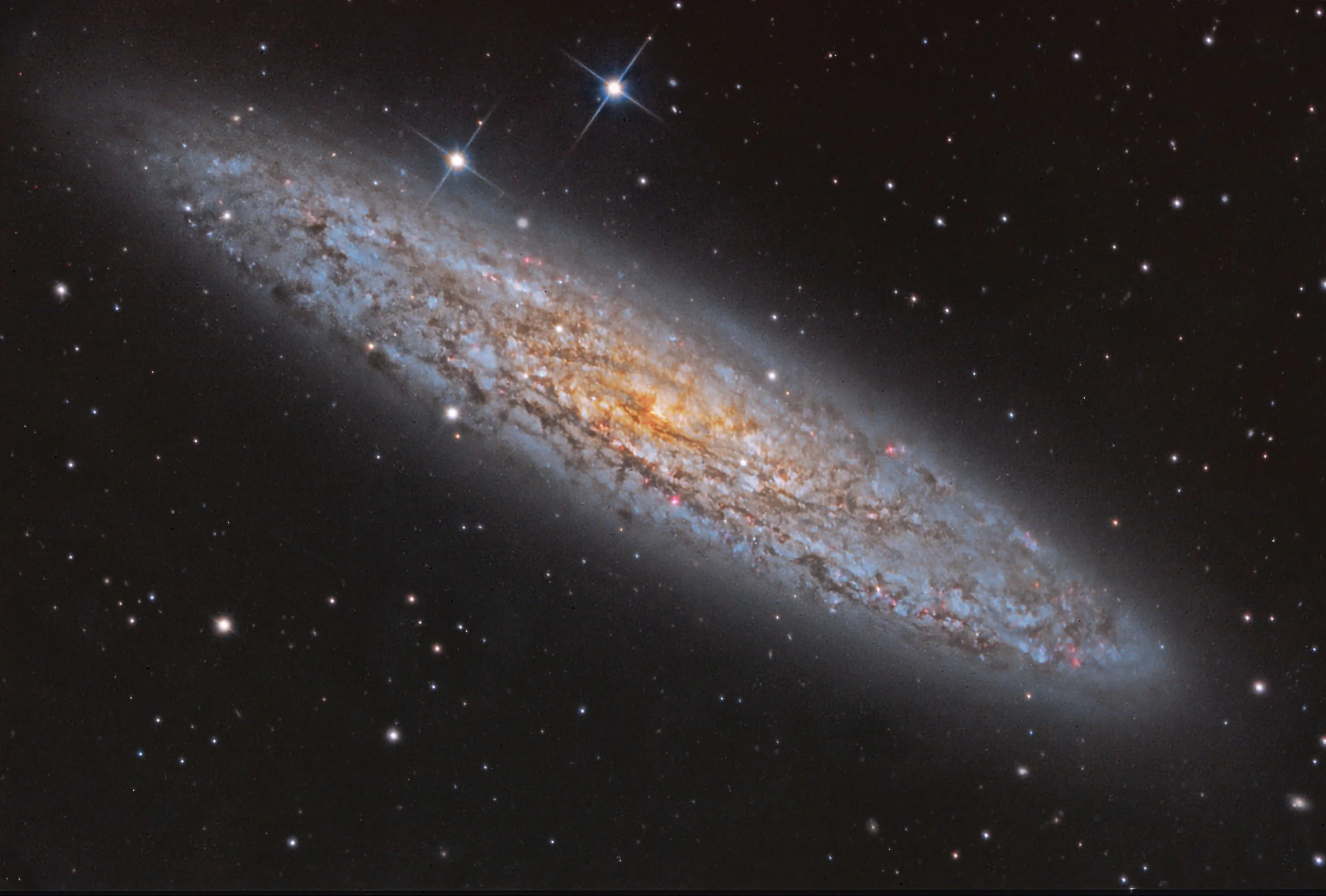
NGC 253 - the Sculptor Galaxy
The Sculptor Galaxy, NGC 253, is a magnificent spiral galaxy that graces our night sky from the constellation Sculptor. Its remarkable beauty lies in its intricate spiral arms, which swirl with bright, young stars and cosmic dust lanes. Located about 11 million light-years away, this galaxy's central region harbors intense star formation, evident in the luminous clusters of blue, while the surrounding arms stretch out gracefully like a cosmic pinwheel. The Sculptor Galaxy's visual appeal and proximity make it a favorite target for both amateur and professional astronomers seeking to unravel the mysteries of our universe.
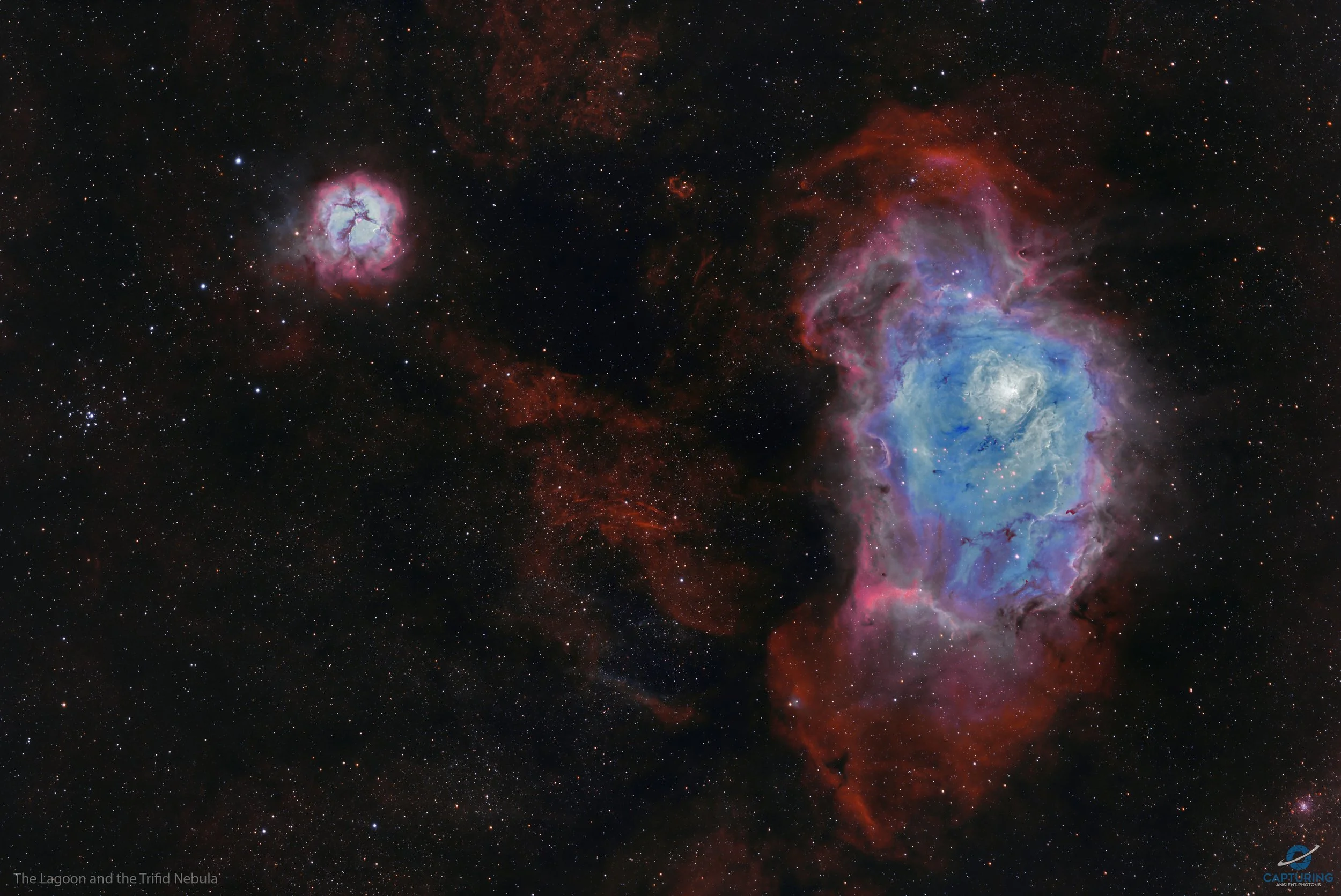
The Lagoon and Trifid Nebula in Foraxx/HSO
This image captures the stunning beauty of the Lagoon Nebula (M8) and the Trifid Nebula (M20) in the narrowband color palette of Foraxx/HSO (Hydrogen-Alpha, Sulfur, and Oxygen). Situated in the constellation Sagittarius, these celestial wonders showcase their intricate structures and vivid colors in this composite view.
The Lagoon Nebula, resembling a celestial lagoon surrounded by dark lanes of interstellar dust, is a region of intense star formation. In contrast, the Trifid Nebula exhibits its distinctive three-lobed appearance, with blue reflection nebulae, dark lanes, and pink emission regions. The Foraxx/HSO color scheme emphasizes the unique emissions of hydrogen, sulfur, and oxygen, revealing the dynamic interplay of gas and dust within these nebulous regions. This image is not only a visual feast but also a scientific treasure trove, offering valuable insights into the birth and evolution of stars in our galaxy.
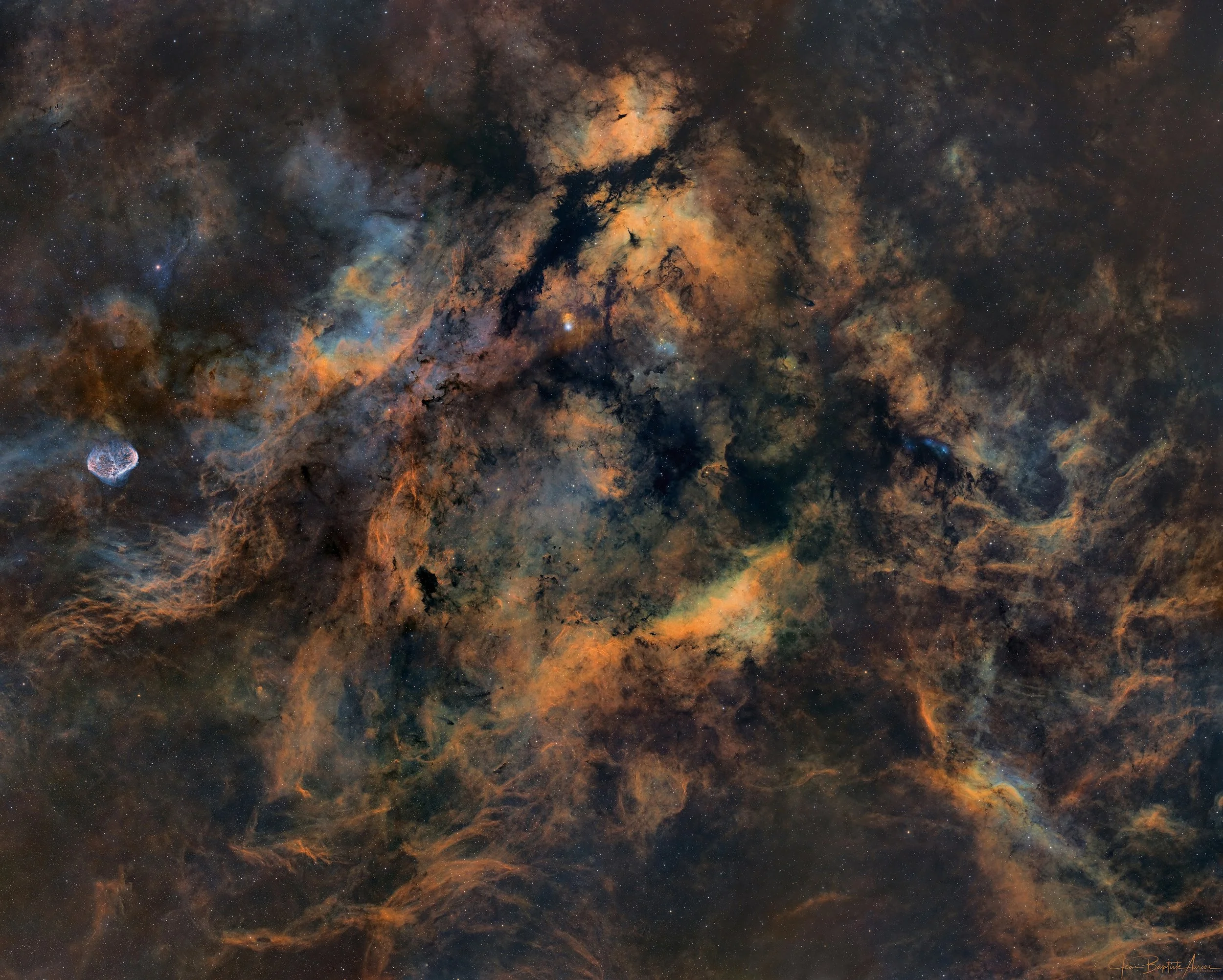
Sadr region (100h / 9 panels mosaic)
The Sadr Region within the Cygnus constellation, remains an overlooked celestial gem. It's a place where dark nebulae, cosmic dust veils, and radiant stars come together to create a cosmic spectacle. At its heart lies the Sadr Nebula, a masterpiece casting a glow upon its surroundings, concealing the fascinating processes of stellar birth, where gigantic stars like Deneb emerge, illuminating the area.
What's often kept in the shadows is the Sadr Region's unique placement along the enigmatic Cygnus Rift—a colossal dark lane of molecular clouds and celestial debris that obscures our view of the Milky Way's galactic center, adding an air of cosmic intrigue. Rich in cultural and mythological significance through the ages, the Sadr Region invites us to embark on a celestial journey, reminding us that even in the lesser-known corners of the night sky, we find stories of creation, beauty, and cosmic wonder waiting to be explored.
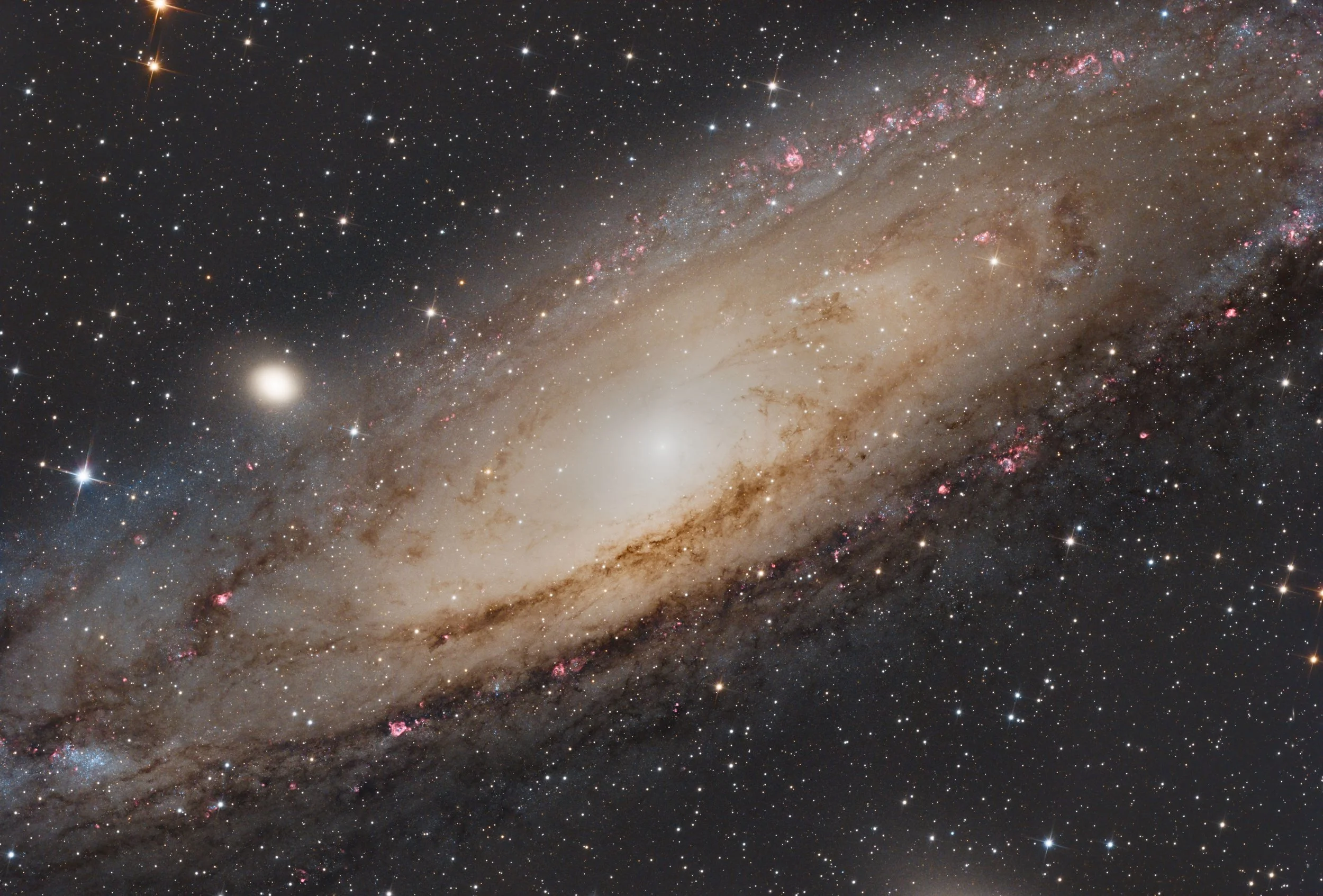
The countless nebulae of M31
While the Andromeda Galaxy, or M31, is celebrated as our Milky Way's nearest spiral neighbor, there are intriguing lesser-known aspects to this cosmic wonder. Recent measurements hint that Andromeda might be a bit closer than the widely quoted 2.5 million light-years, emphasizing the ever-evolving nature of our astronomical knowledge.
Andromeda's invisible halo of dark matter, its history of galactic cannibalism, and its impending collision with the Milky Way in about 4.5 billion years add layers to its mystique. Within its vast expanse lie ancient star clusters, older than their Milky Way counterparts, offering insights into the early cosmos. Beyond its beauty, M31 harbors a universe of secrets, making it an enduring subject of astronomical wonder.
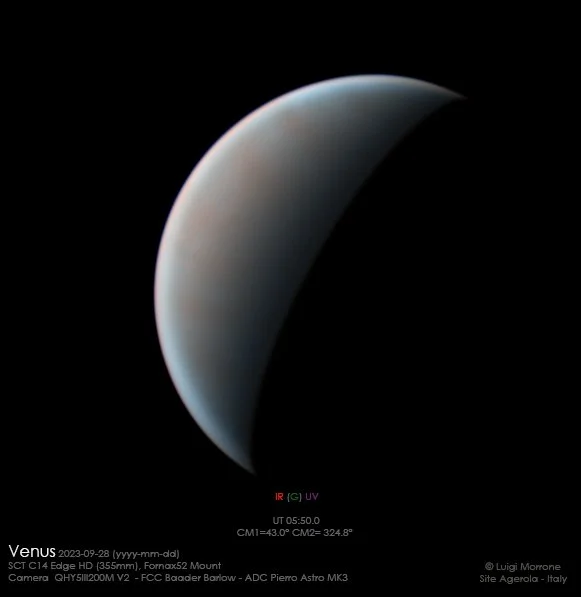
Venus
Venus, often referred to as Earth's "sister planet" due to its similar size and composition, harbors some lesser-known intriguing facts. Unlike most planets in our solar system, Venus rotates in a retrograde motion, meaning it spins clockwise on its axis, opposite to the direction of its orbit around the Sun. This unusual rotation results in extremely long Venusian days, lasting longer than its years. Venus also boasts one of the most hostile environments in our solar system, with surface temperatures hot enough to melt lead and crushing atmospheric pressure akin to being 3,000 feet underwater. Furthermore, Venus has a mysterious phenomenon known as "super-rotational winds," where its thick cloud cover rotates much faster than the planet's surface, with winds reaching speeds of up to 224 miles per hour (360 kilometers per hour). These enigmatic features make Venus a captivating but challenging celestial neighbor to explore.
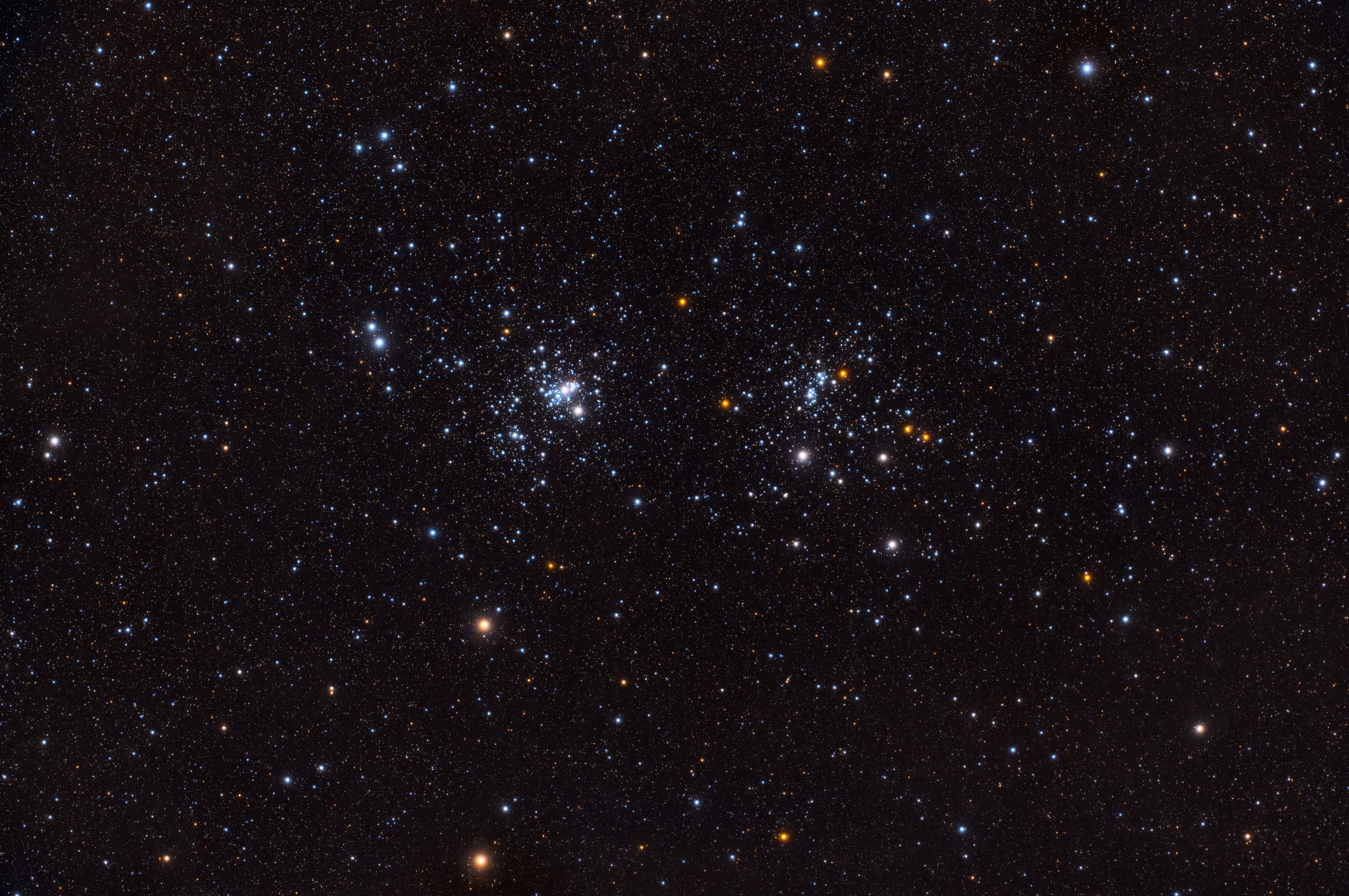
NGC 869 & NGC 884 - The Double Cluster
The Double Cluster, also known as Caldwell 14, is one of the most prominent and captivating open star cluster pairings in the night sky. Located in the constellation Perseus, these clusters are relatively young, with an estimated age of around 12.8 million years. What makes them particularly fascinating is that they are not physically associated with each other, despite their apparent proximity in the night sky. NGC 869, the northern cluster, is about 6,800 light-years away from Earth, while NGC 884, the southern cluster, is approximately 7,500 light-years away. This intriguing separation highlights the optical illusion of their proximity and adds a layer of complexity to their celestial beauty.
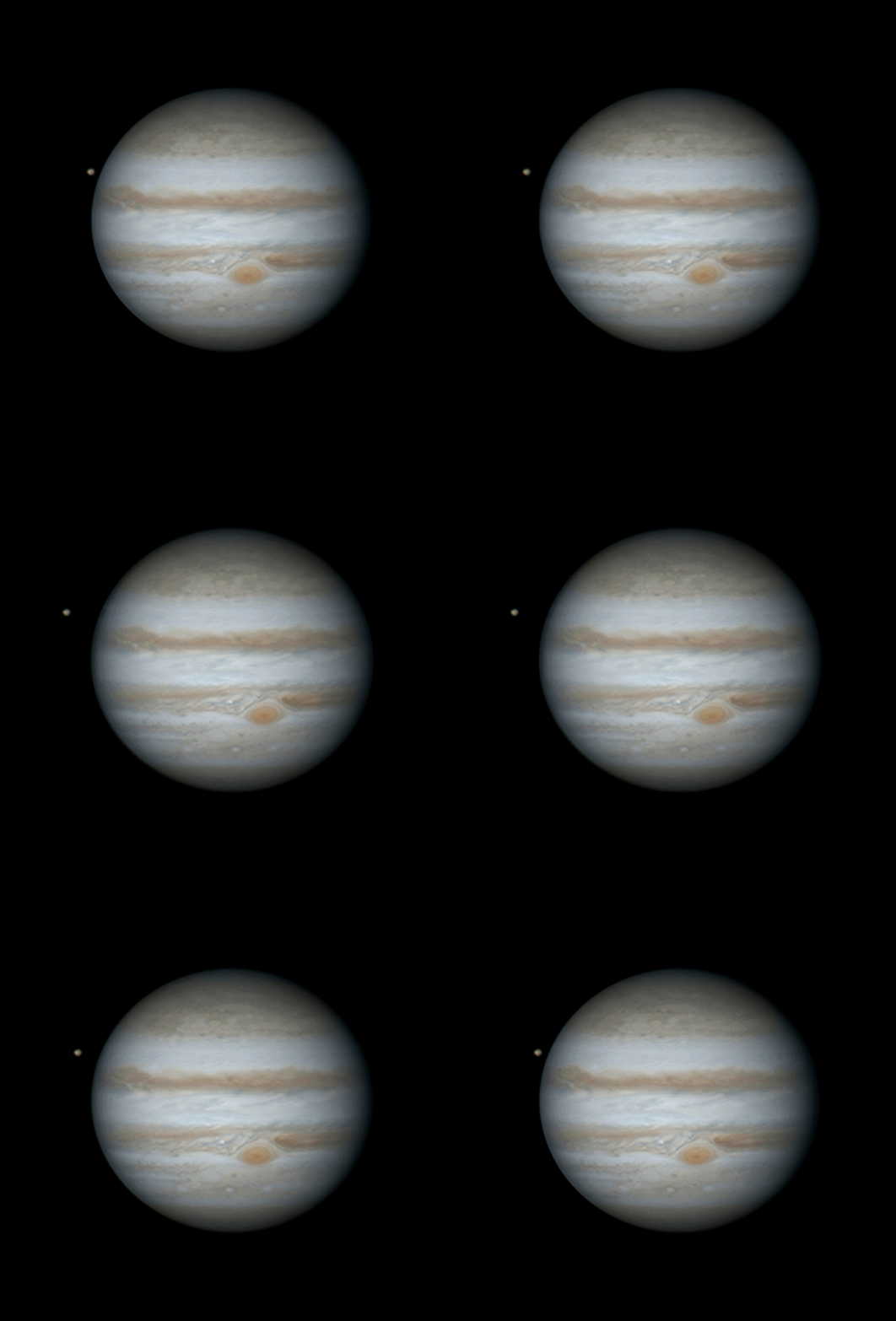
Rotation of Jupiter and Io
This mesmerizing animation captures the celestial ballet between Jupiter, the largest planet in our solar system, and its volcanic moon, Io. In this GIF, Jupiter's massive gaseous sphere slowly rotates, revealing its intricate cloud bands and swirling storms, while Io, the innermost of Jupiter's Galilean moons, orbits gracefully in close proximity. This dynamic display showcases the intricate interplay of gravitational forces and celestial mechanics, offering a vivid glimpse into the captivating dance of celestial bodies in the cosmos.