

AAPOD2 Image Archives
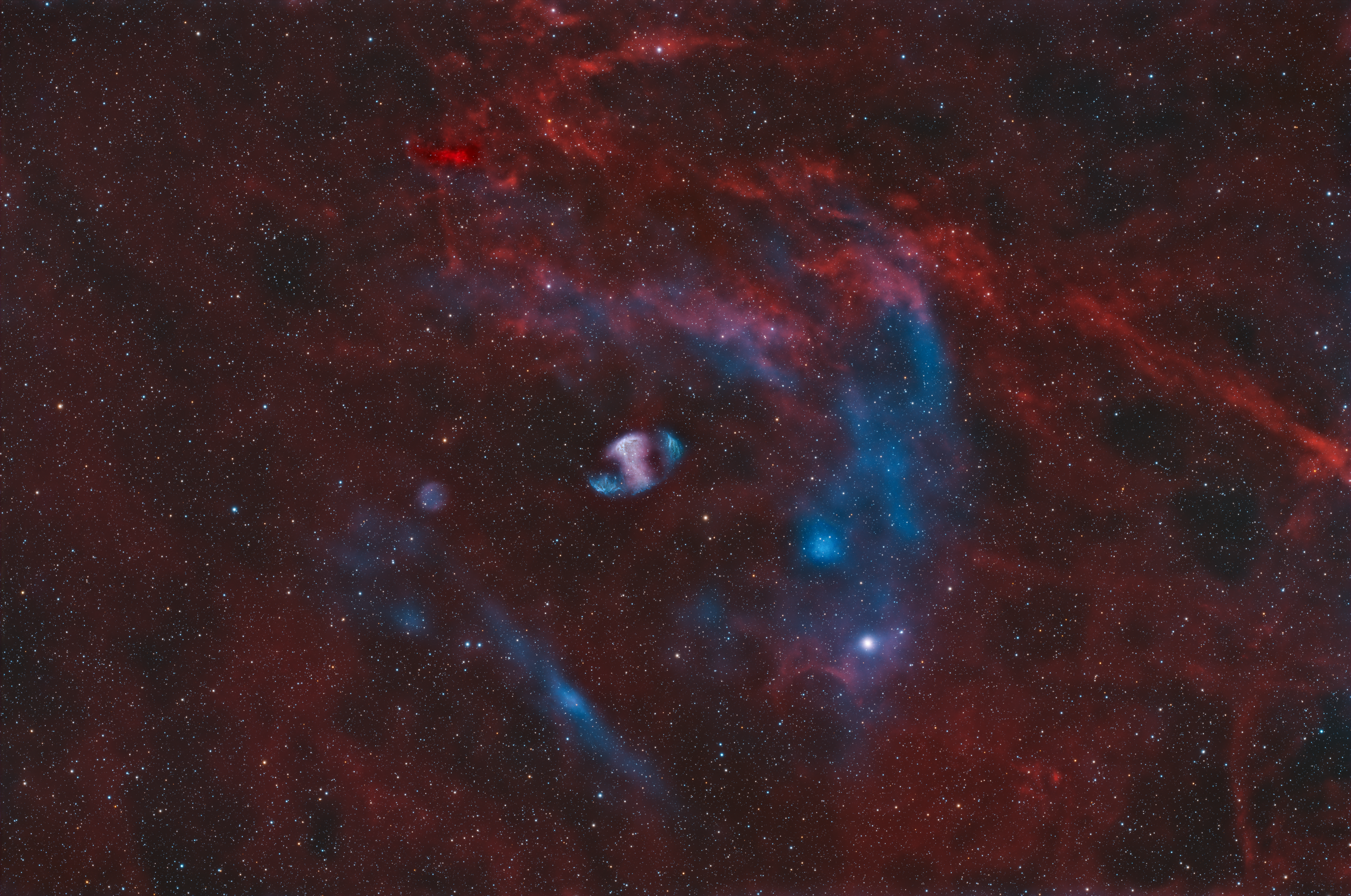
MWP1 and ALV1: Ancient Planetary Nebulae in Cygnus
This narrowband deep-field image highlights two faint planetary nebulae situated against a rich background of ionized gas clouds in the constellation Cygnus. Near the lower-center of the field sits MWP1, an extraordinarily large and ancient bipolar planetary nebula (~150,000 years old) glowing with prominent bluish-cyan Oxygen-III shell emissions. Just to its lower-left lies ALV1, a fainter, asymmetric planetary nebula shaped by surrounding stellar winds. The surrounding field is swept with intricate red Hydrogen-alpha filaments and faint cosmic dust, creating a striking dual-color contrast across the star-studded field.
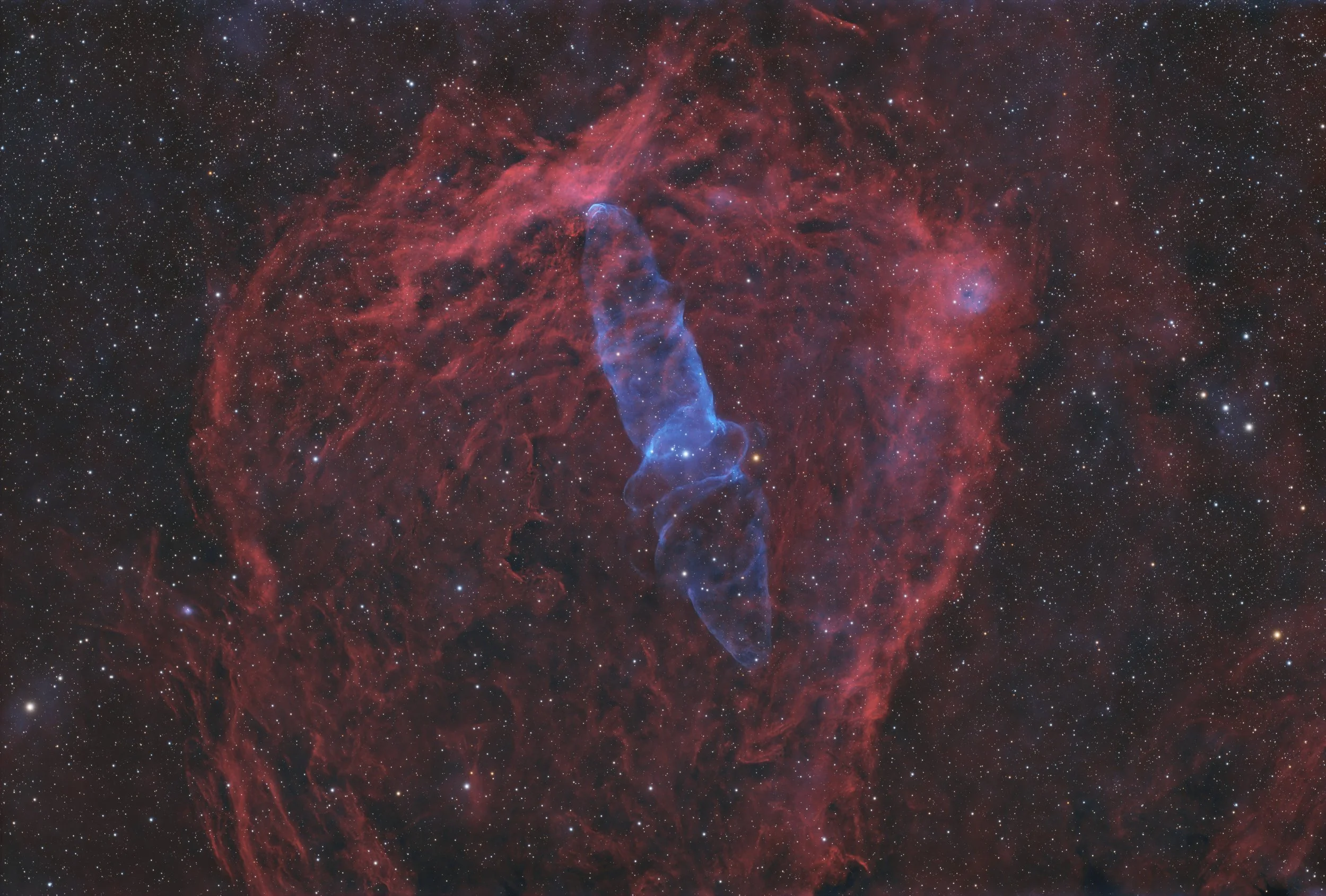
Squid Nebula
An elusive giant of the night sky, the mysterious Squid Nebula (Ou4) swims through a sea of ionized gas in the royal constellation Cepheus, appearing as an ethereal blue-green structure nestled within the deep reddish folds of the larger hydrogen emission region Sh2-129 (the Flying Bat Nebula). Discovered recently in 2011 by French amateur astronomer Nicolas Outters, this incredibly faint bipolar outflow stretches nearly 50 light-years across and shines with the unmistakable signature of emission from doubly ionized oxygen atoms ([O III]). Driven by a powerful triple system of hot, young, and massive stars cataloged as HR 8119 at its core, capturing this ghostly cosmic geometry required a true masterclass in patience from Zielona Góra, Poland. This spectacular deep-sky portrait represents an incredible 63 hours and 25 minutes of total integration time, with 47 hours and 45 minutes strictly to the ultra-faint [OIII] channel to pull the elusive Squid from the cosmic background.