

AAPOD2 Image Archives
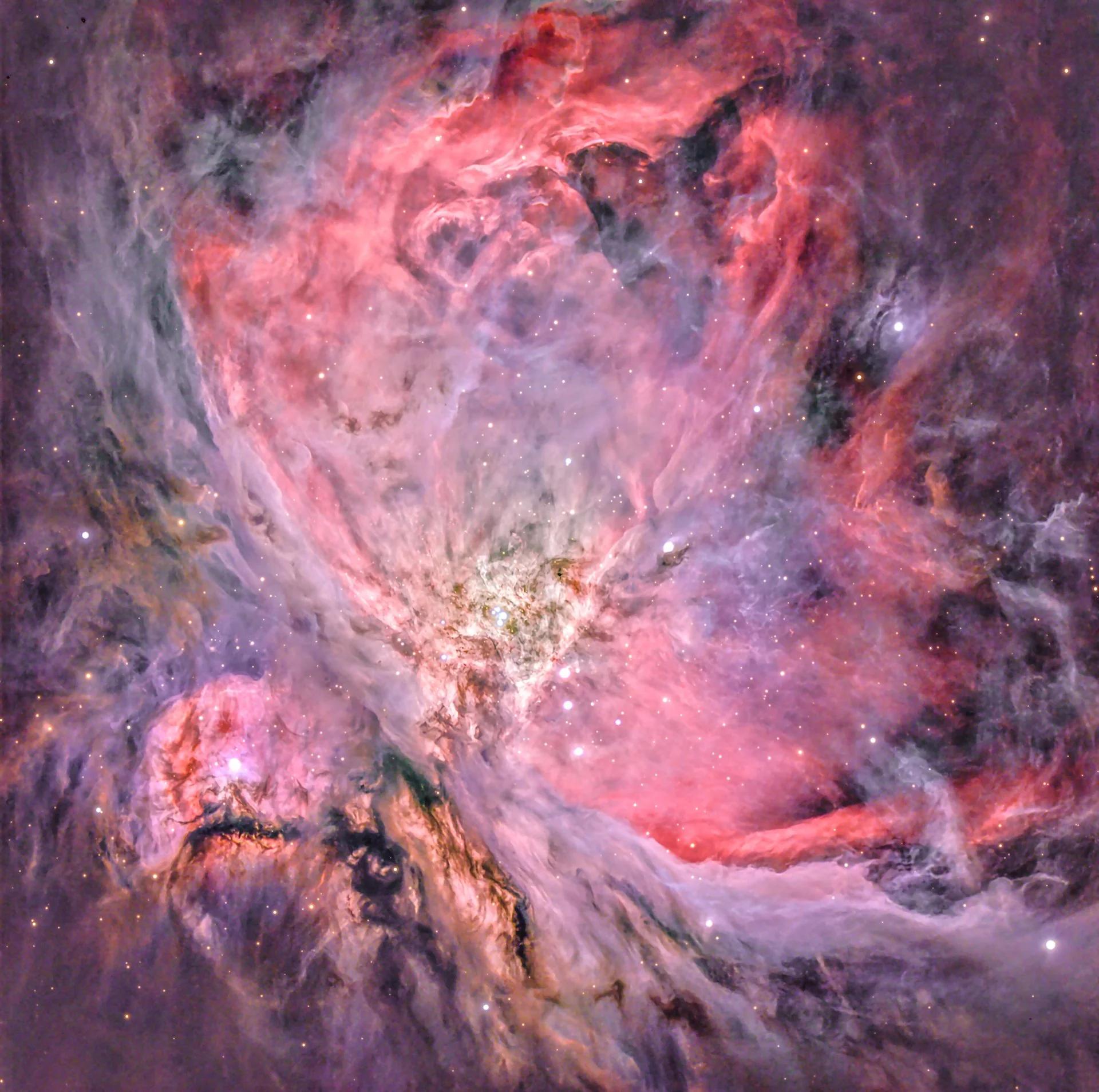
Core of the Orion Nebula
At the heart of Messier 42—the Orion Nebula—lies a turbulent stellar nursery just 1,350 light-years away, where gas and dust swirl in a chaotic dance of creation. This image captures the nebula’s intensely bright core, a high-dynamic-range composition that preserves both the brilliant Trapezium star cluster and the dim, sculpted tendrils of ionized hydrogen and oxygen. The Trapezium’s fierce ultraviolet radiation carves and illuminates the surrounding gas, shaping cavities and jets from newly forming stars buried within the nebula.
Far from a static scene, the core of Orion is a theater of evolution. Stellar winds, shock waves, and magnetic fields drive a cycle of destruction and creation, with infant protostars still forming within cocoons of dust. Hidden within this brightness are features such as proplyds—planetary systems in the making—offering an unparalleled view into the conditions that may mirror our own solar system’s beginnings.
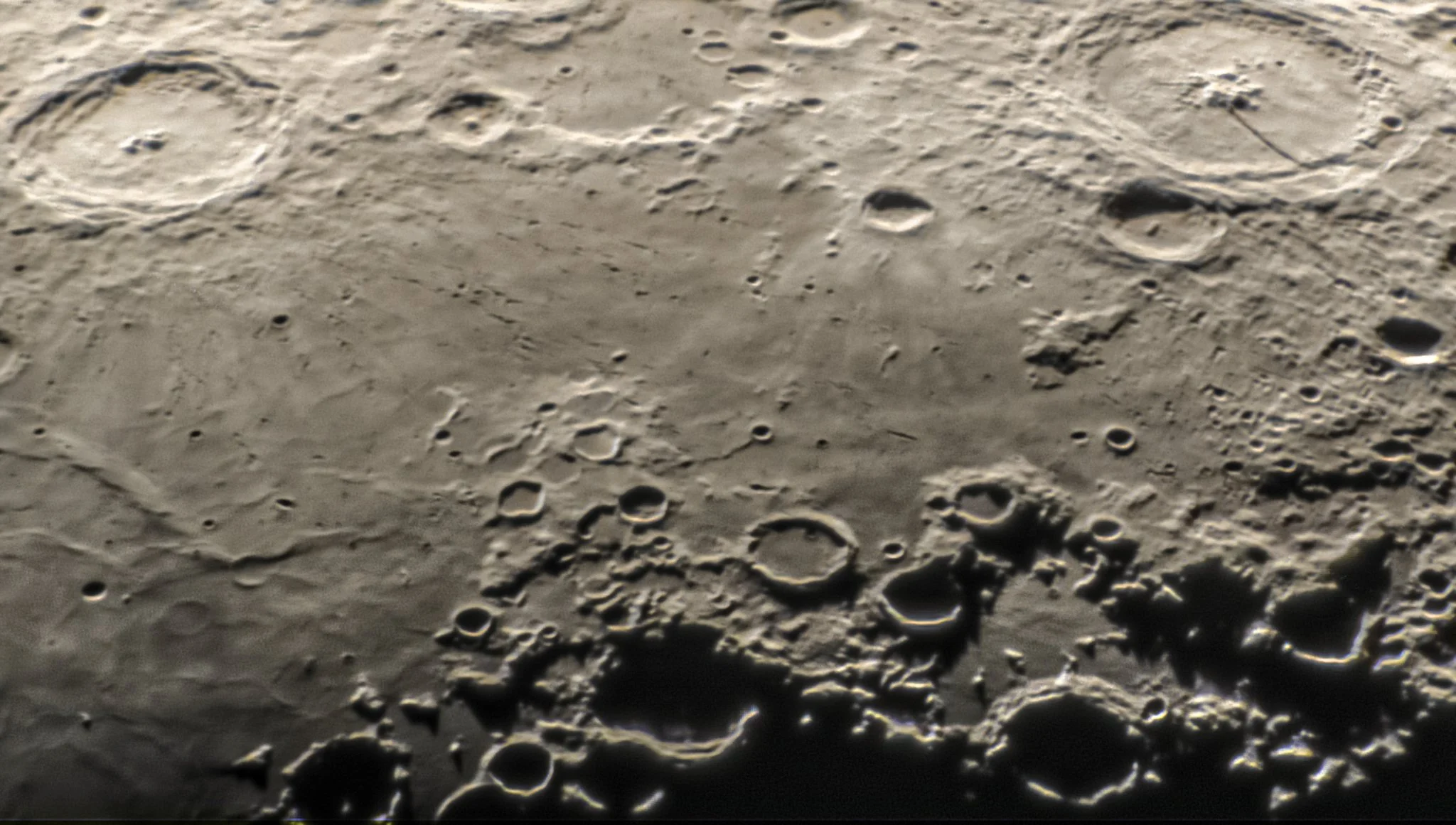
Shadows and Peaks Along Alpine Valley
This high-resolution lunar image showcases the dramatic contrast between shadowed and sunlit terrain along the terminator, revealing an intricate interplay of impact history and geological evolution. The dominant crater Aristoteles, a 3.8-billion-year-old impact structure, stands out with its terraced walls and central peak, while the neighboring Eudoxus adds to the rugged topography. Below, the Cassini crater, partially flooded by ancient lava, marks the transitional boundary between the rough highlands and the smooth plains of Mare Imbrium. The rugged Lunar Alps stretch across the frame, with the sinuous Alpine Valley cutting through them—a rift possibly formed by tectonic forces or subsurface magma movement. This image is a striking testament to the Moon’s violent past and the forces shaping its ever-scarred surface.