
AAPOD2 Image Archives
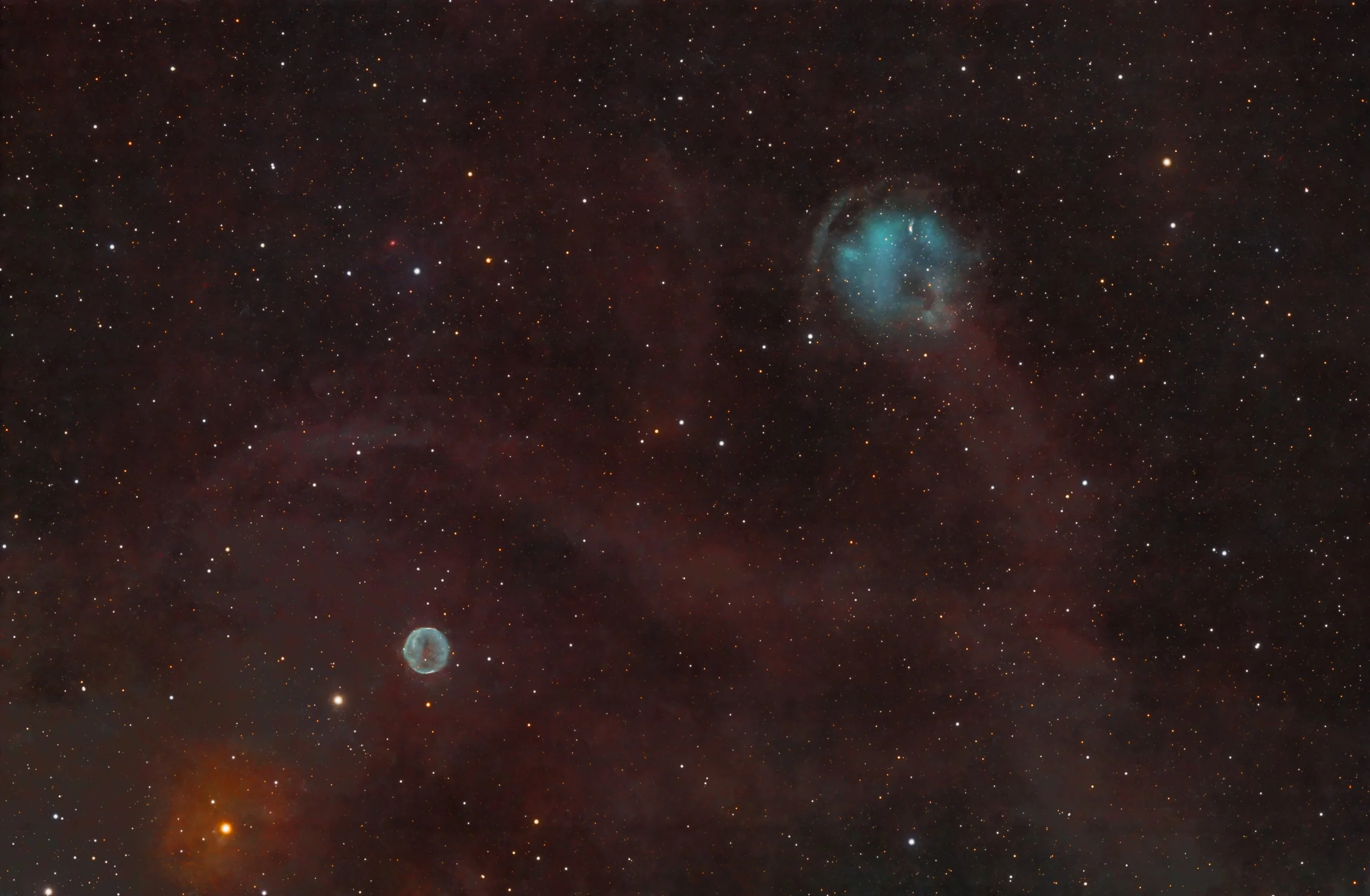
Abell 6 and HFG 1
This deep-field image captures a fascinating pairing of two distinct planetary nebulae within the constellation Camelopardalis (the Giraffe): HFG1 and Abell 6.
Dominating a significant portion of the field is HFG1, a faint and ancient planetary nebula. Spanning an expansive diameter of over one light-year, HFG1 represents the gaseous shroud shed by a dying star thousands of years ago. Because of its advanced age, the nebula has become highly diffuse and subtle. At its core lies a binary system consisting of a white dwarf and a companion star; as this system plows through the interstellar medium, it produces a prominent, dramatic wake in its trail.
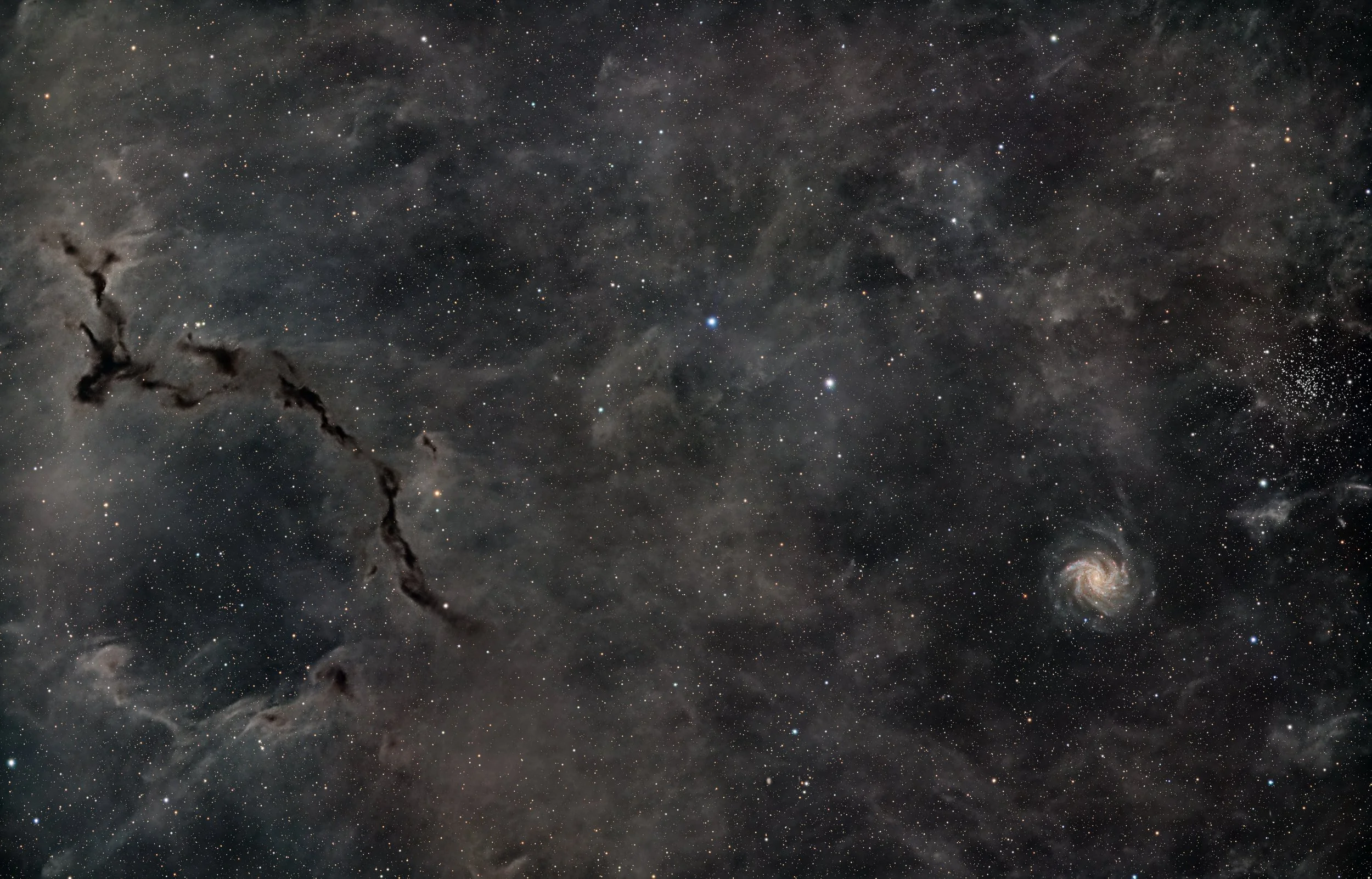
Fireworks Galaxy, Seahorse Nebula, and NGC 6939
This wide-field image beautifully frames three distinct astronomical objects in the constellation Cepheus. Near the center-right lies the Fireworks Galaxy (NGC 6946), a face-on spiral galaxy located about 22 million light-years away and known for its frequent supernova activity, ten have been recorded there in just the past century. Just above it, to the right, sparkles the open star cluster NGC 6939, a dense collection of young stars roughly 3,800 light-years from Earth.
On the left side of the image, the dark, snake-like shape of the Seahorse Nebula (LDN 1251) winds through the faint glow of the Integrated Flux Nebula (IFN), a tenuous mix of dust and gas reflecting starlight from our galaxy. The scene is a compelling blend of deep-sky structure and scale, bridging the contrast between nearby galactic cirrus and distant stellar metropolises.