

AAPOD2 Image Archives
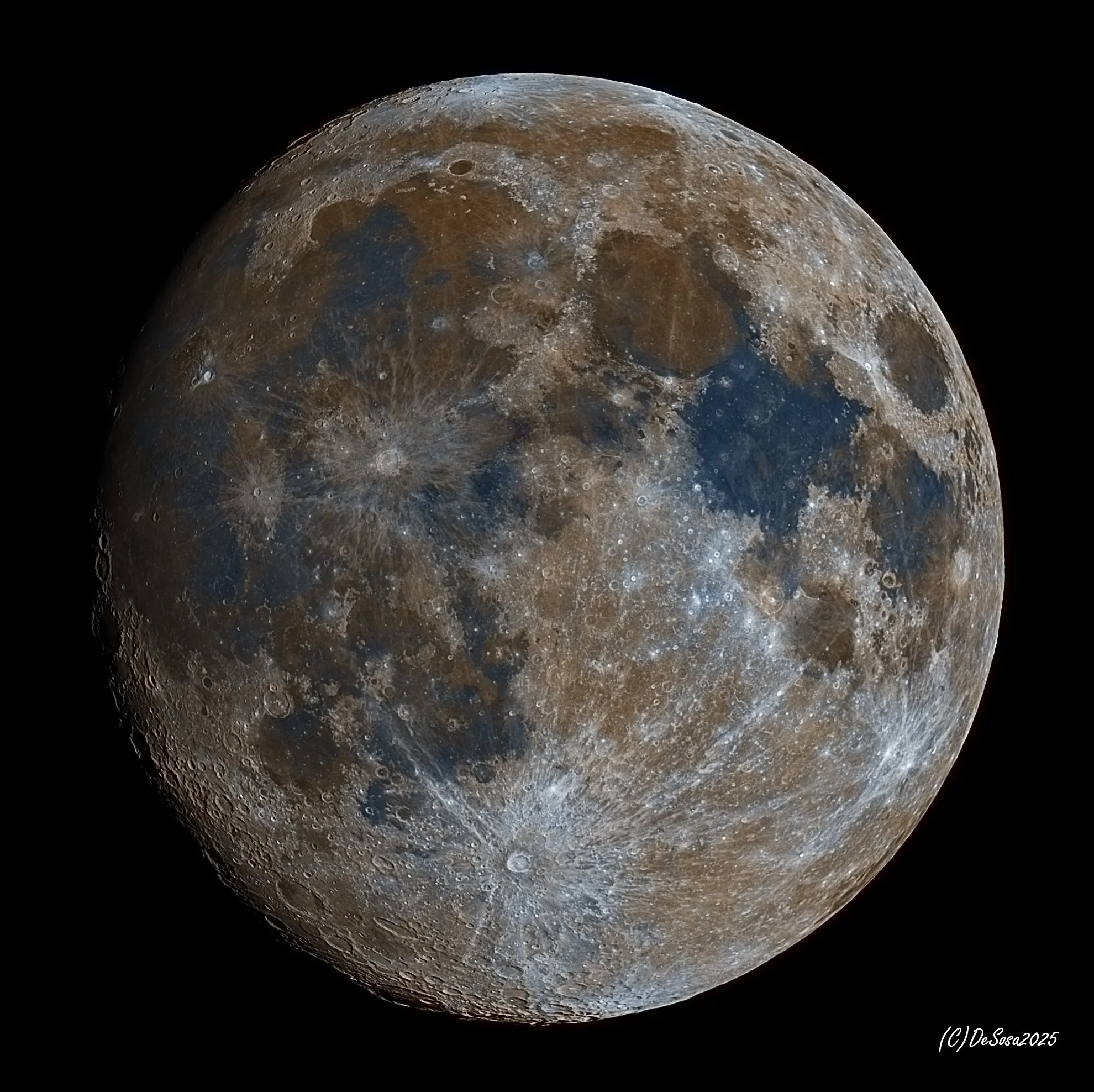
Natural Colors of the Lunar Surface
Although the Moon appears gray to the unaided eye, its surface contains subtle but genuine color variations that reveal the mineral composition of the lunar crust. Basaltic maria rich in iron and titanium take on cool blue hues, while highland regions dominated by anorthosite and iron oxides lean toward warmer browns and golds. These colors become visible when carefully enhanced from stacked, calibrated frames, allowing the mineral map of our nearest celestial neighbor to emerge with scientific clarity.
In this image, the interplay of lunar geology becomes strikingly apparent. Titanium-rich basalt flows trace ancient lava plains, while ejecta from long-ago impacts paints surrounding terrain with distinct mineral signatures. By bringing out these natural colors, the image turns the Moon from a seemingly monochrome world into a complex and dynamic record of volcanic activity, impact history, and surface evolution spanning billions of years.