
AAPOD2 Image Archives
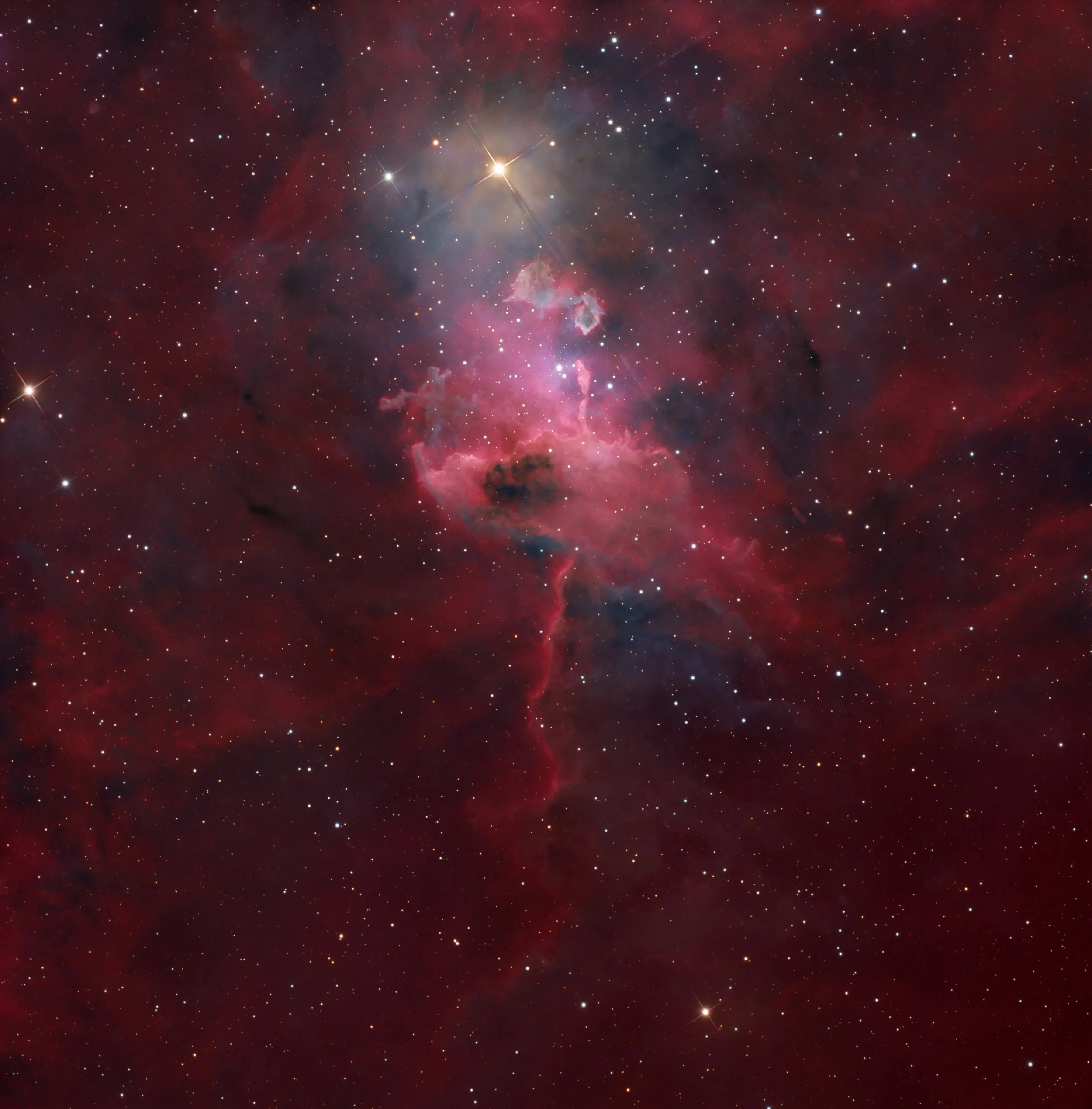
IC 417 – The Spider Nebula
Located in the constellation Auriga, IC 417 is a sprawling emission nebula energized by young, massive stars embedded within its core. Its intense red glow comes from ionized hydrogen gas excited by ultraviolet radiation from these hot stellar newborns. The surrounding region is part of a larger star forming complex that includes the nearby open cluster Stock 8, whose energetic stars sculpt the nebula’s intricate shapes and carve out pockets of glowing plasma and obscuring dust.
Delicate tendrils of gas stretch outward like cosmic legs, giving IC 417 its popular nickname, the Spider Nebula. Dark lanes of interstellar dust thread through the luminous hydrogen clouds, hinting at ongoing star formation hidden within. The interplay between radiation, stellar winds, and gravity continues to shape this dynamic region, making it both an active stellar nursery and a dramatic example of how massive stars influence their galactic environment.
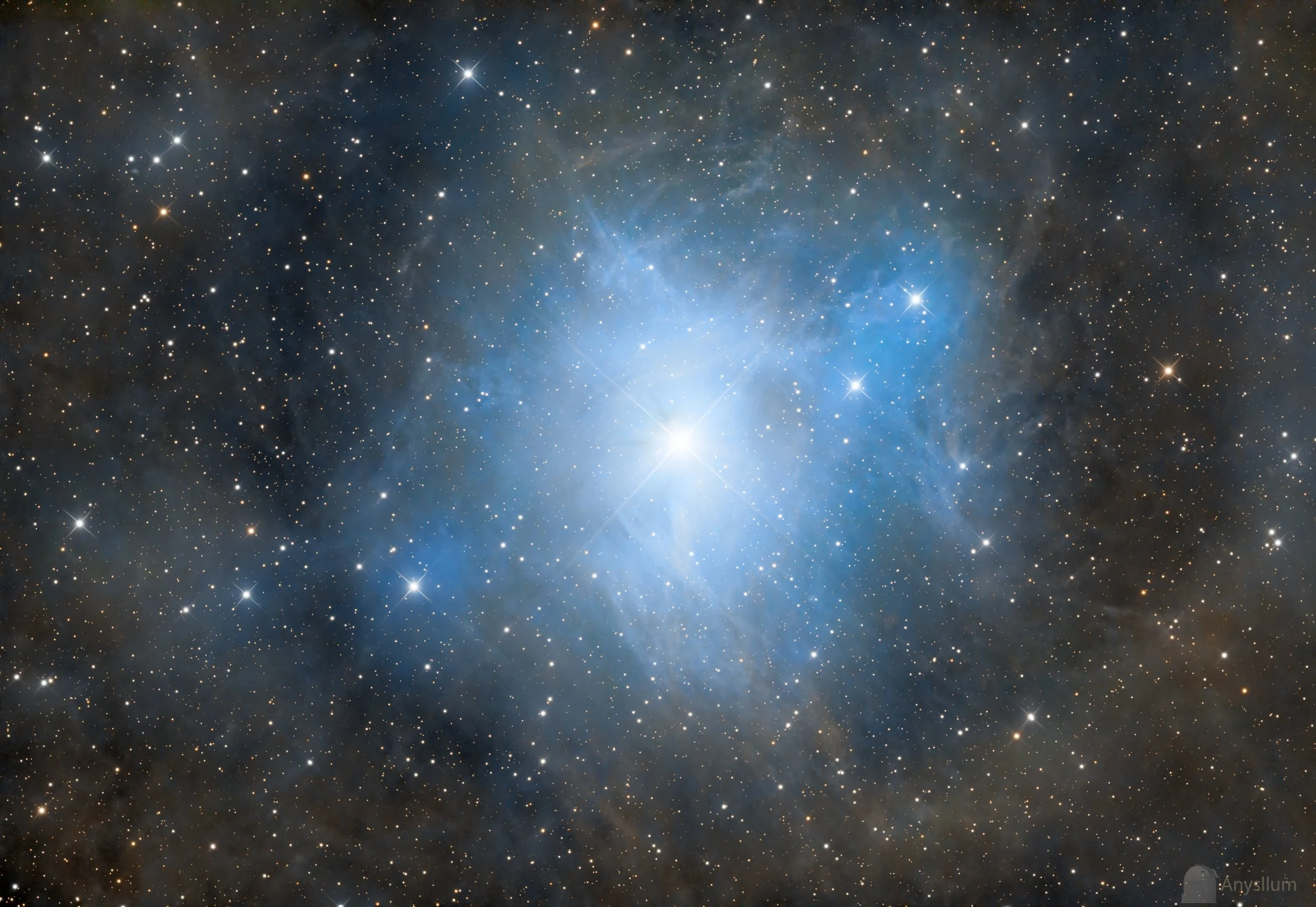
VdB 10 - Reflection nebula in Perseus
VdB 10, a striking blue reflection nebula in the constellation Cassiopeia, lies approximately 1,000 light-years away. This delicate nebula reflects the light of a nearby star, creating a soft, ethereal glow. Accompanying it is LBN 680, a faint and complex region of interstellar dust and gas. Together, these structures illustrate the interplay of starlight and cosmic material in the Milky Way, with VdB 10’s bright, scattered light contrasting beautifully against the darker, more subdued textures of LBN 680.
This view was captured from Ager in Lleida, Spain, using a personal telescope setup under pristine skies. The intricate details of these nebulae require long exposures to reveal their subtle beauty, making them a rewarding target for astrophotographers. The scene highlights the hidden treasures of the night sky, where seemingly empty spaces come alive with light, shadow, and the whispers of star-forming processes.