
AAPOD2 Image Archives
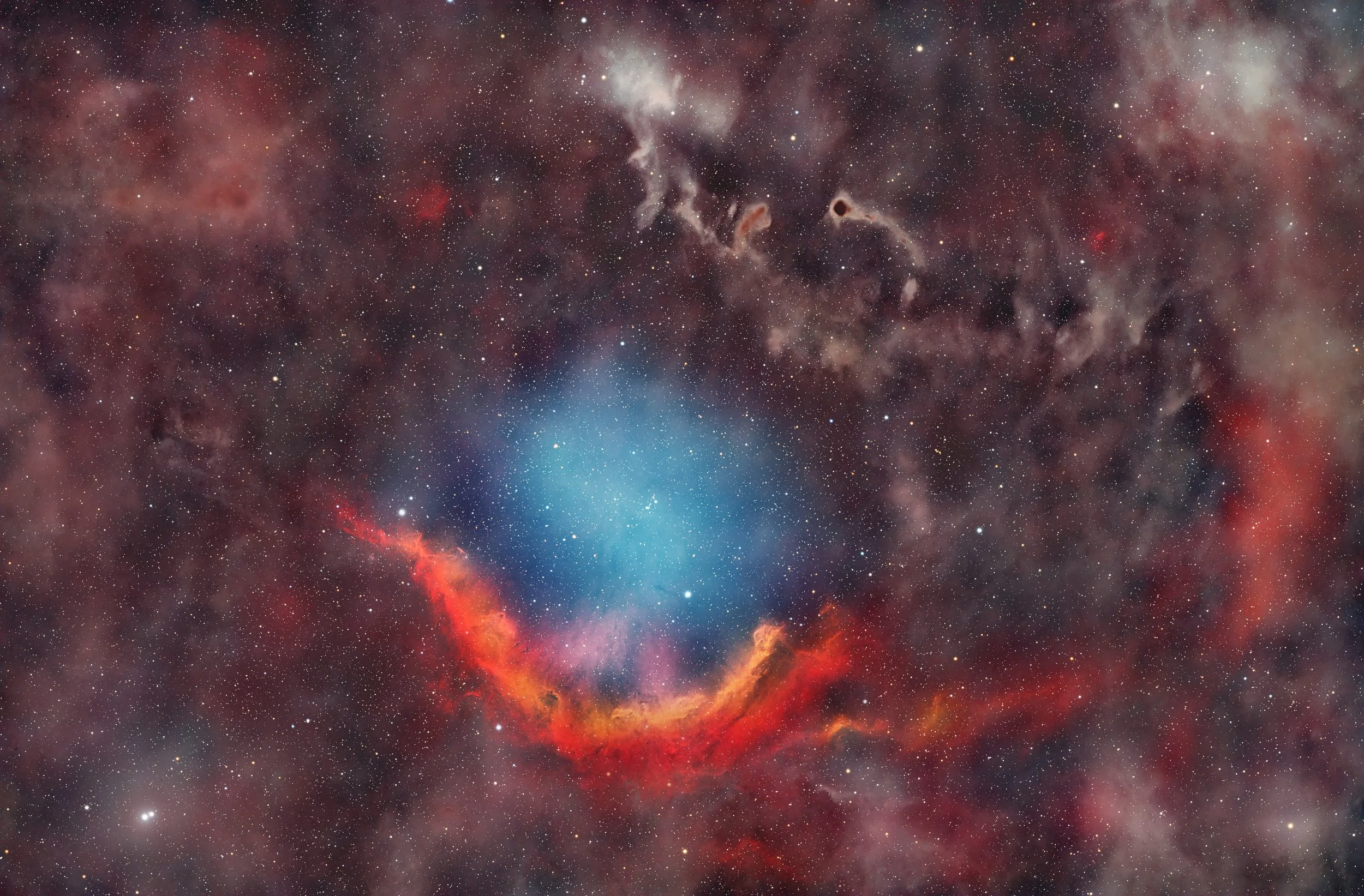
Fire Shrimp nebula Sh2-204
Sh2-204 is a compact emission nebula in Camelopardalis, glowing primarily in hydrogen alpha and sculpted by the intense radiation of nearby massive stars. Its curved, asymmetric form is created by the pressure of stellar winds sweeping through the cloud, compressing the gas into this distinctive shrimp-like arc. The region sits along the outer Milky Way and is often overlooked because of its faint surface brightness, but long integrations reveal complex filaments and a surprisingly rich ionization front.
The blue accents often seen in images come from oxygen emission that outlines parts of the shock front, while the deeper reds trace hydrogen heated by ultraviolet light. Sh2-204 is part of a larger network of clouds in the Camelopardalis OB1 association, an area filled with young, energetic stars that continue to shape the surrounding gas. Capturing it cleanly requires both dark skies and patience, but when it comes together, the structure is one of the more unusual forms in the northern sky.
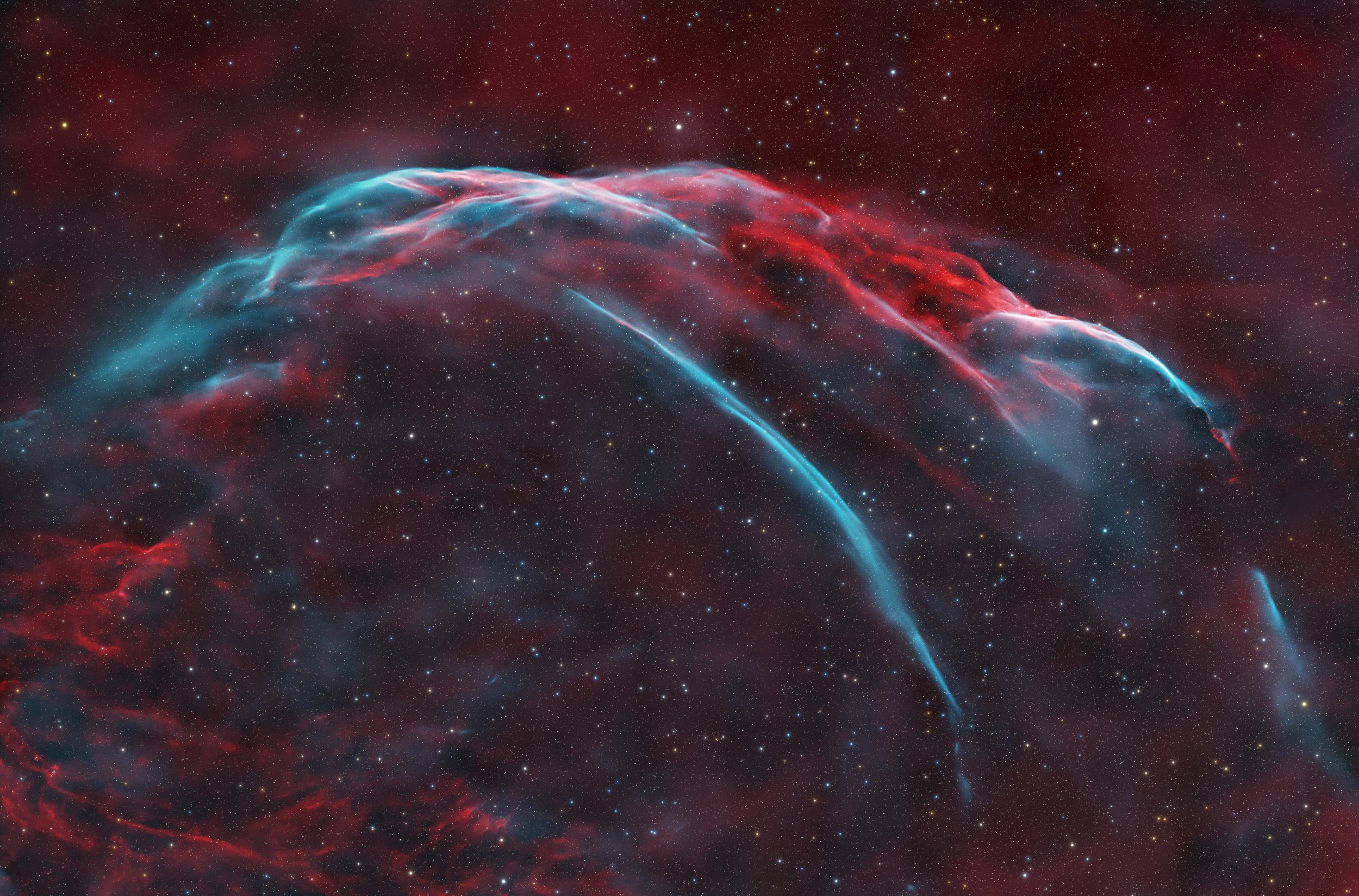
Filamentary Remains of Sh2-91 in Cygnus
This ethereal arc of glowing gas marks part of the supernova remnant Sh2-91, located in the rich star fields of the constellation Cygnus. Likely the result of a massive star that exploded tens of thousands of years ago, the remnant stretches across space in tangled, luminous filaments of ionized hydrogen (red) and oxygen (blue-green). Though not as well-known as the Veil Nebula, Sh2-91 is believed to be part of the same vast Cygnus Loop complex, now fading into the interstellar medium.
Captured in exquisite detail, this deep exposure reveals the shock fronts sweeping through the surrounding interstellar material. The arcing structure and radiant hues convey the immense energy of the original explosion, now diffused across light-years of space.