

AAPOD2 Image Archives
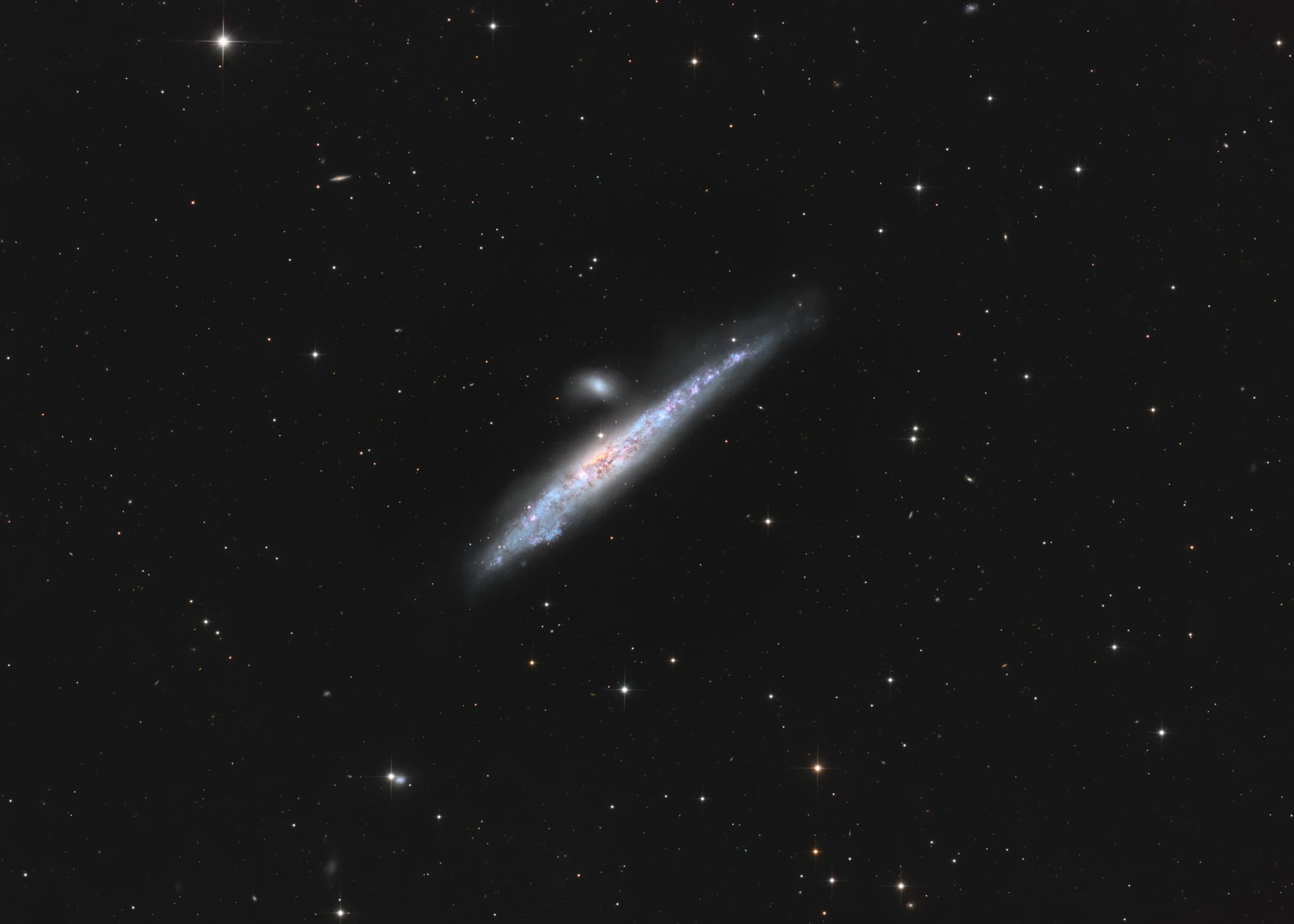
The Whale
This deep-space portrait features NGC 4631, commonly known as the Whale Galaxy—a striking edge-on spiral galaxy located about 30 million light-years away in the constellation Canes Venatici. Its elongated shape and subtle warp resemble a breaching whale, while surrounding star fields and faint galactic structures hint at past gravitational encounters, particularly with its smaller companion, NGC 4627.
Captured over three nights in March 2025, this image combines 16 hours and 30 minutes of data using a remote 8-inch reflector telescope and a cooled monochrome camera, paired with both broadband and narrowband filters from @starfront_observatories. The result is a richly detailed view of this elegant galactic swimmer in a sea of stars.
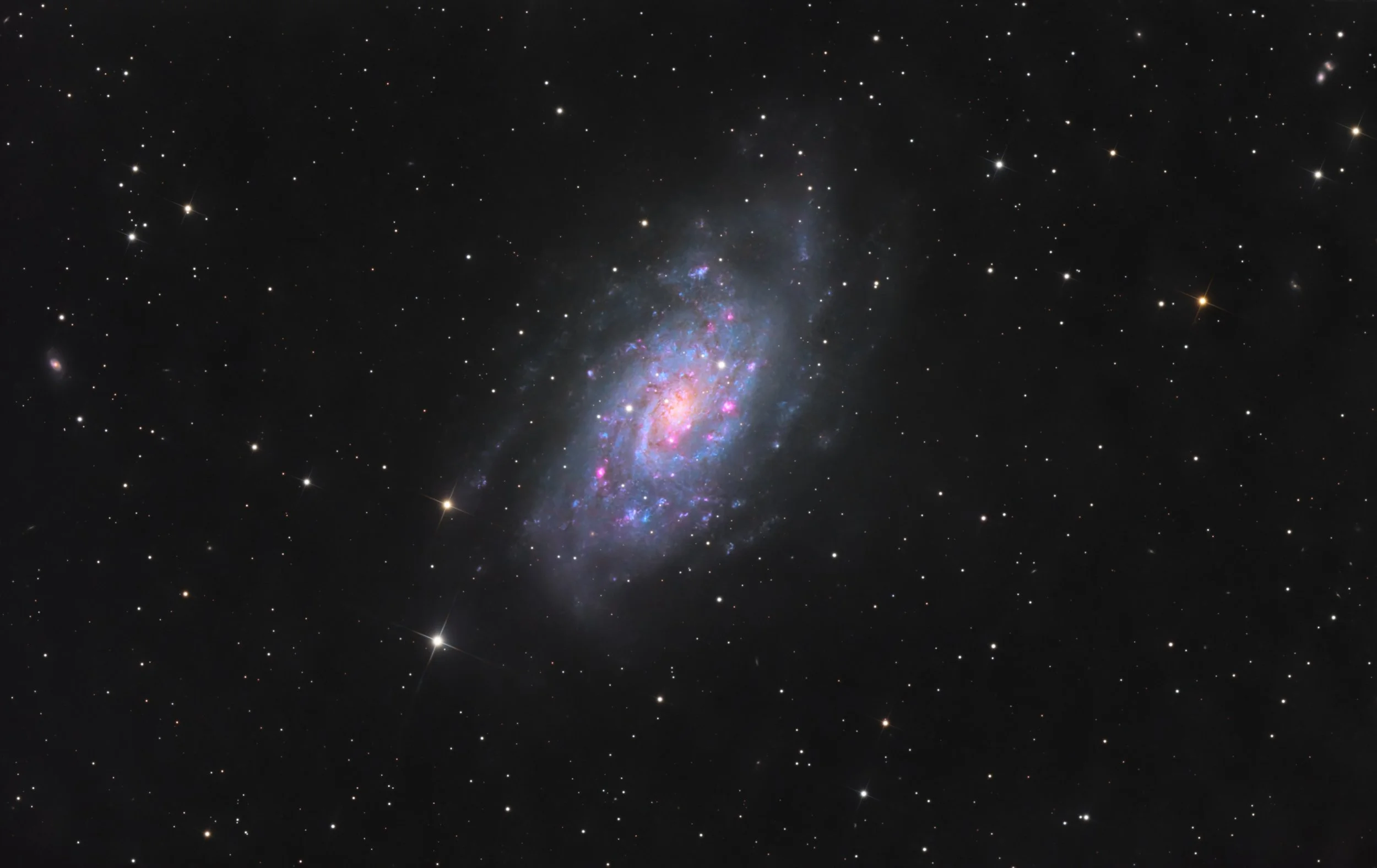
NGC 2403
NGC 2403, situated in the constellation Camelopardalis, is a spectacular spiral galaxy located approximately 8 million light-years away from Earth. This cosmic beauty spans about 50,000 light-years in diameter, making it roughly half the size of our Milky Way galaxy. NGC 2403 belongs to the M81 group, a small galaxy cluster that includes notable members such as Messier 81 and Messier 82.
This galaxy is renowned for its vibrant star-forming regions and features a considerable number of young, massive stars. NGC 2403 has been the subject of extensive astronomical observations and studies, providing valuable insights into the processes of star formation and galactic evolution. Its relatively close proximity to us makes NGC 2403 an ideal candidate for detailed astronomical investigations, contributing to our understanding of the broader cosmic landscape. As a member of the Local Group—a collection of galaxies that includes our own Milky Way—NGC 2403 adds to the rich tapestry of celestial wonders within our cosmic neighborhood.
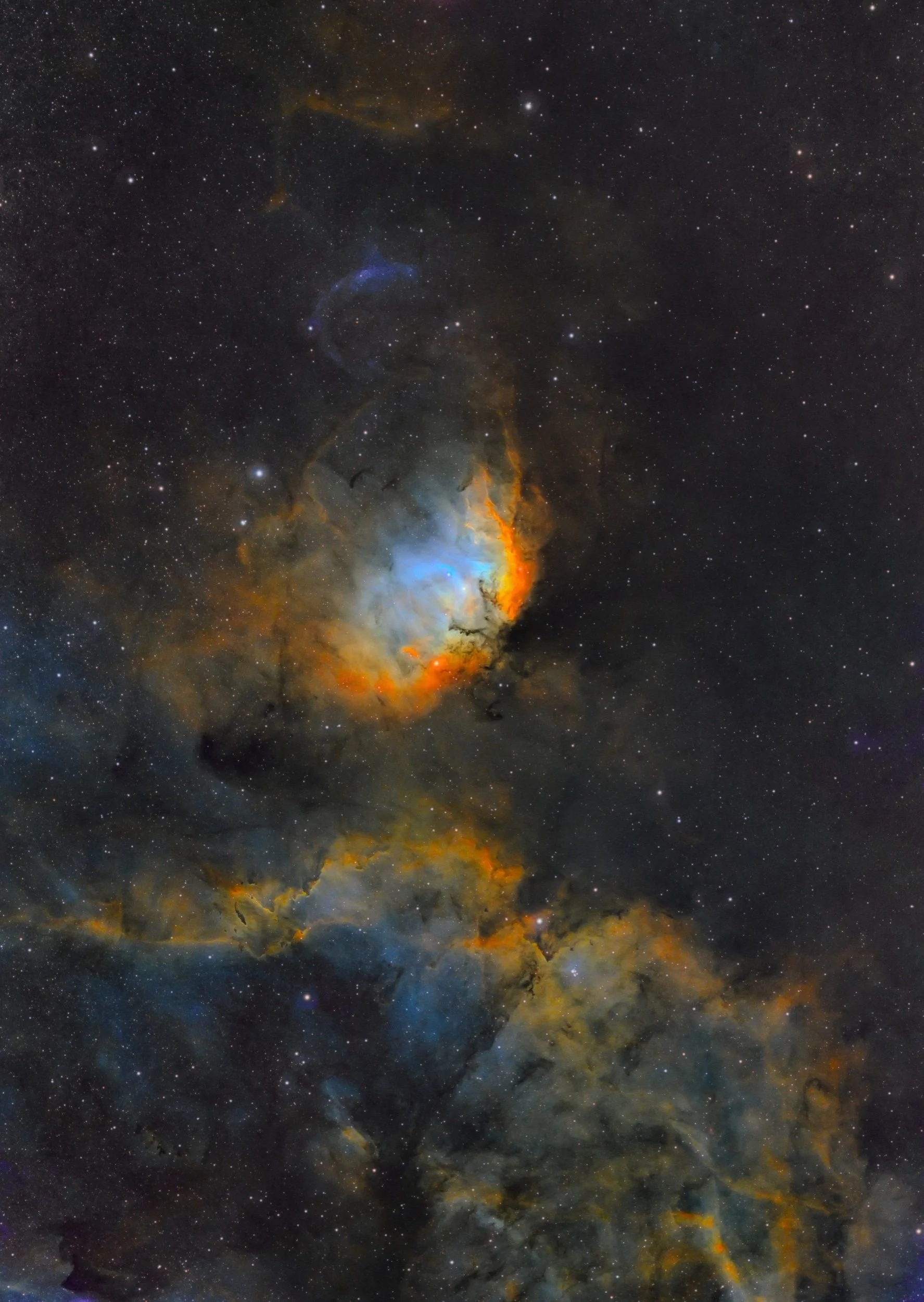
The Tulip
Image Description and Details : This colourful region, located in the constellation Cygnus, has many distinct views of energized gas, all of which give a deep sense of wonder and amazement. The night sky is wonderful, always look up!
We are star dust.
——————
This was captured over 8 nights across June and July, only 3 hours at a time due to our limited darkness on the 51st parallel North.
27hr 47min total exposure time
94x300” Sii
84x300” Ha
119x300” Oiii
31x120” R
32x120” G
28xx120” B
40x Darks
180 Flats/Dark Flats
06/06, 06/25-30, 07/09/2021
Bortle 6/7
Calgary, AB
Setup#1 - SHO
711mm Focal Length
@williamoptics GT102
@williamoptics Flat68iii
@antliafilters SHO 3nm, 2”
@antliafilters RGB, 2”
@skywatcherusa EQ6-R Pro
@zwoasi ASI2600MM-Pro, unity, -10C
@zwoasi EAF
@zwoasi EFW 7x2, 2”
@zwoasi OAG68M
@zwoasi ASI290MM-mini
@zwoasi ASIAir Pro
APP, PI, PS, MLR
Copyright: Andrew Lesser