

AAPOD2 Image Archives
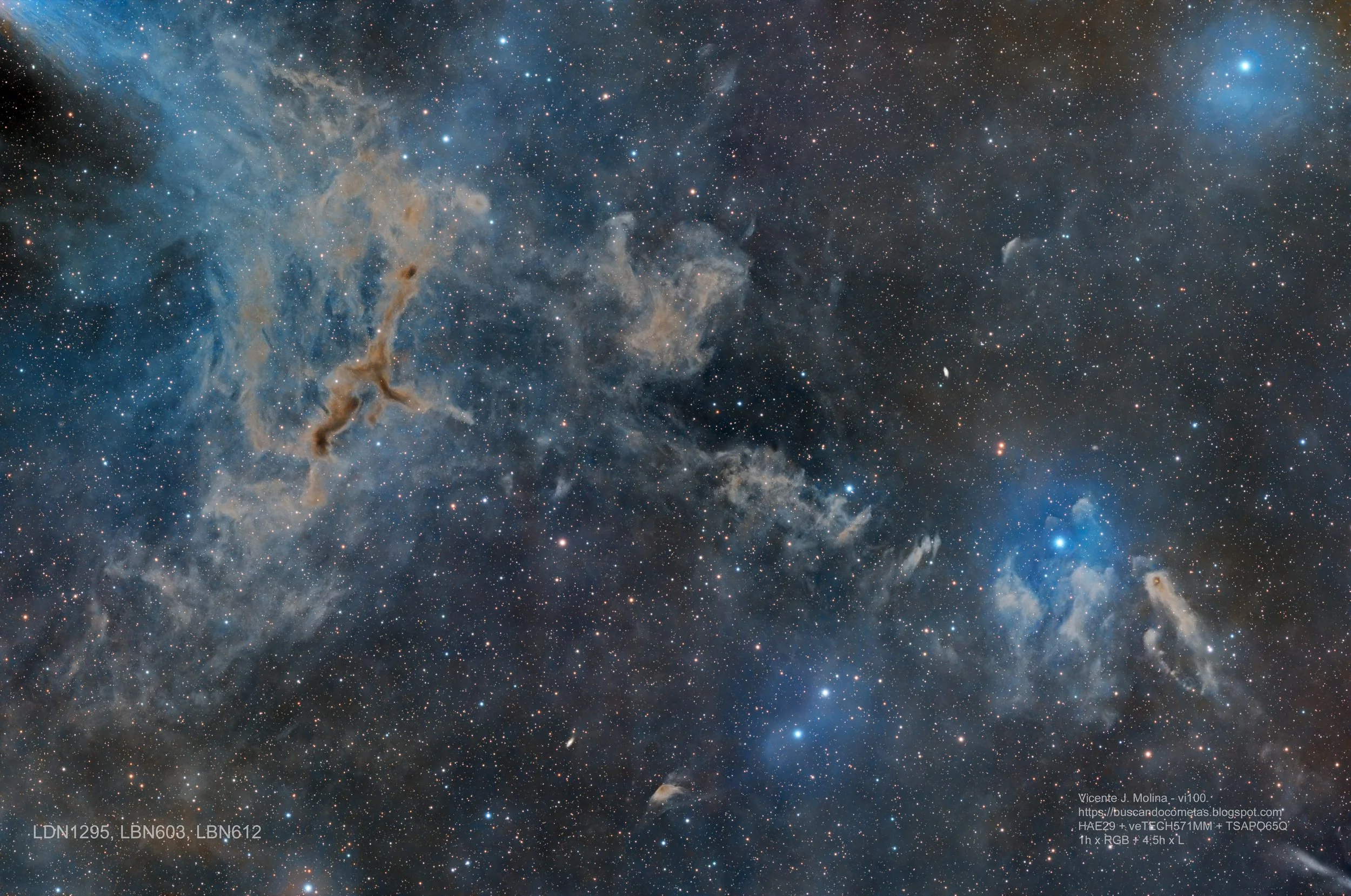
The Giraffe Nebula — LDN 1295 in Camelopardalis
Amid the quiet reaches of the constellation Camelopardalis lies the dark nebula LDN 1295, part of a vast network of molecular clouds often called the Giraffe Nebula. Intertwined with reflection nebulae LBN 603 and LBN 612, this dusty region stretches over several light-years, sculpted by faint starlight and the slow collapse of dense gas. The delicate filaments and dark tendrils of dust obscure the background stars, hinting at the hidden process of star formation within.
This deep exposure reveals the subtle interplay between dark and reflective clouds, the brown lanes of cold dust contrasting with the faint blue light scattered by nearby young stars. Located in one of the most remote and least studied regions of the northern Milky Way, the Giraffe Nebula stands as a quiet but beautiful reminder that even the darkest parts of the sky are alive with creation.
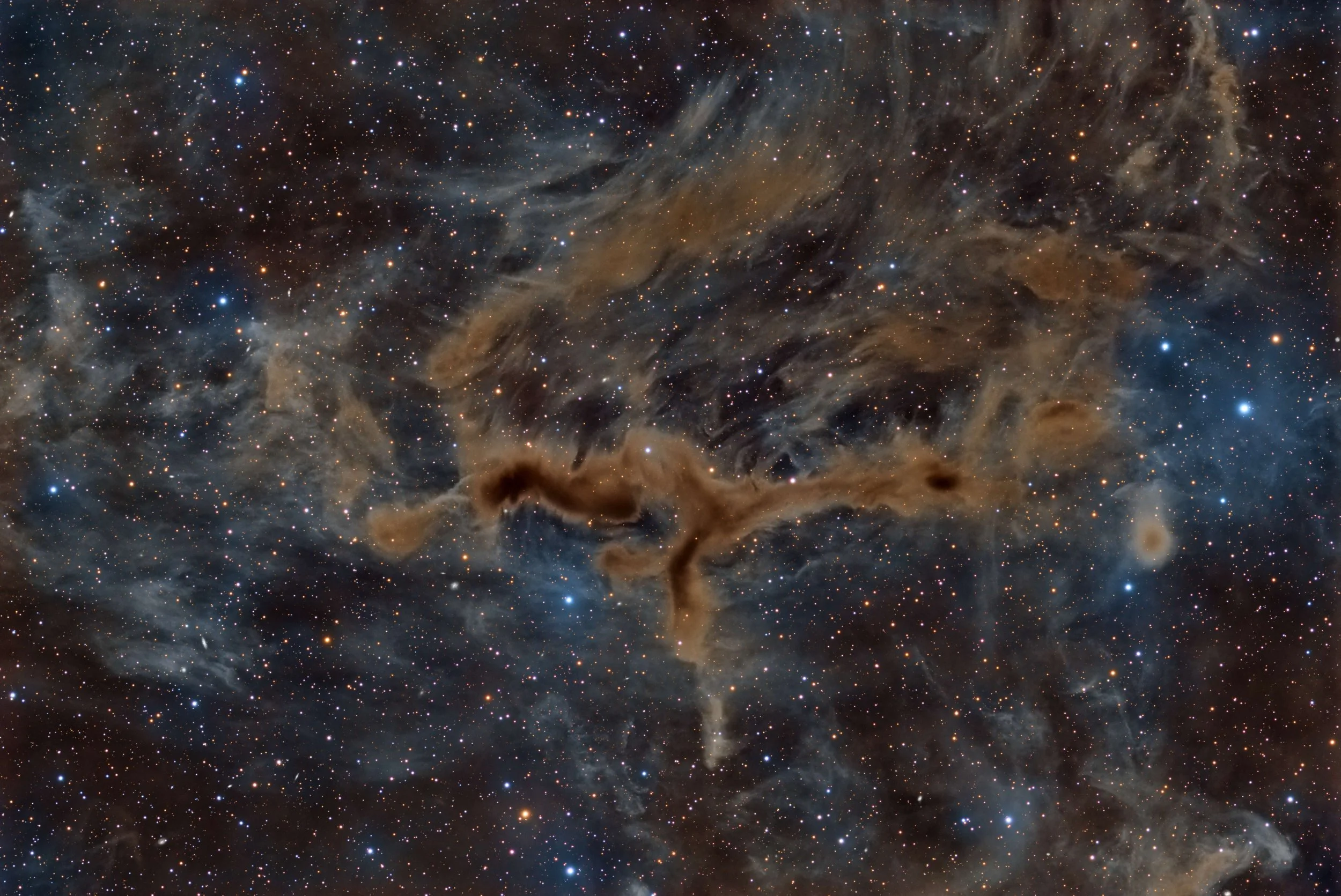
LBN 603 LDN 1295 and 1296
Amidst the celestial expanse in the constellation Cassiopeia, the elusive LBN 603 reveals itself as a faint nebula, delicately positioned between the Pacman Nebula and the Andromeda Galaxy. Garnering LDN catalog category 6, denoting its status among the most subtle cosmic entities, this ethereal nebula imparts a sense of celestial mystery from its location approximately 410 light-years away. Woven into this astronomical image are 38 hours of luminance data and 22 hours of RGB data, unraveling the nuanced details of LBN 603 and portraying its celestial choreography alongside cosmic companions.