
AAPOD2 Image Archives
NGC 6888 – The Crescent Nebula
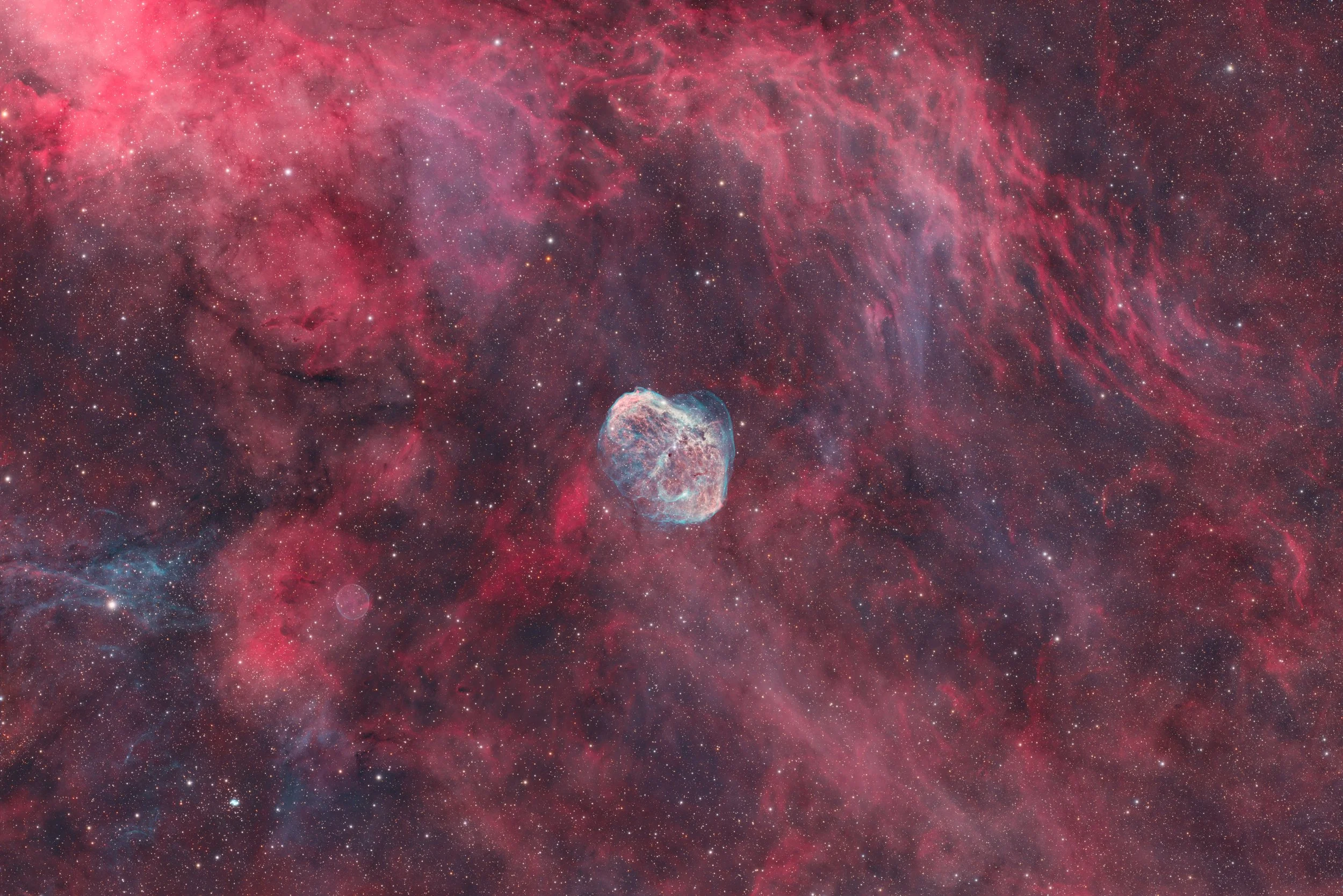
NGC 6888, also known as the Crescent Nebula, glows brilliantly in this wide-field image captured in RGB and hydrogen-alpha (Ha). The hydrogen emission dominates the surrounding region, revealing the intricate filaments and shock fronts generated by the powerful stellar winds of its central Wolf-Rayet star, WR 136. Surrounding the nebula is a faint OIII bubble envelope, adding an additional layer of depth and structure.
In this image, you can also spot the “Soap Bubble Nebula” (PN G75.5+1.7), a small, nearly perfect spherical shell discovered only a few years ago. It appears like a tiny soap bubble suspended in space, making it a unique feature within the same field of view.
NGC 6888 - The Crescent Nebula in SHO
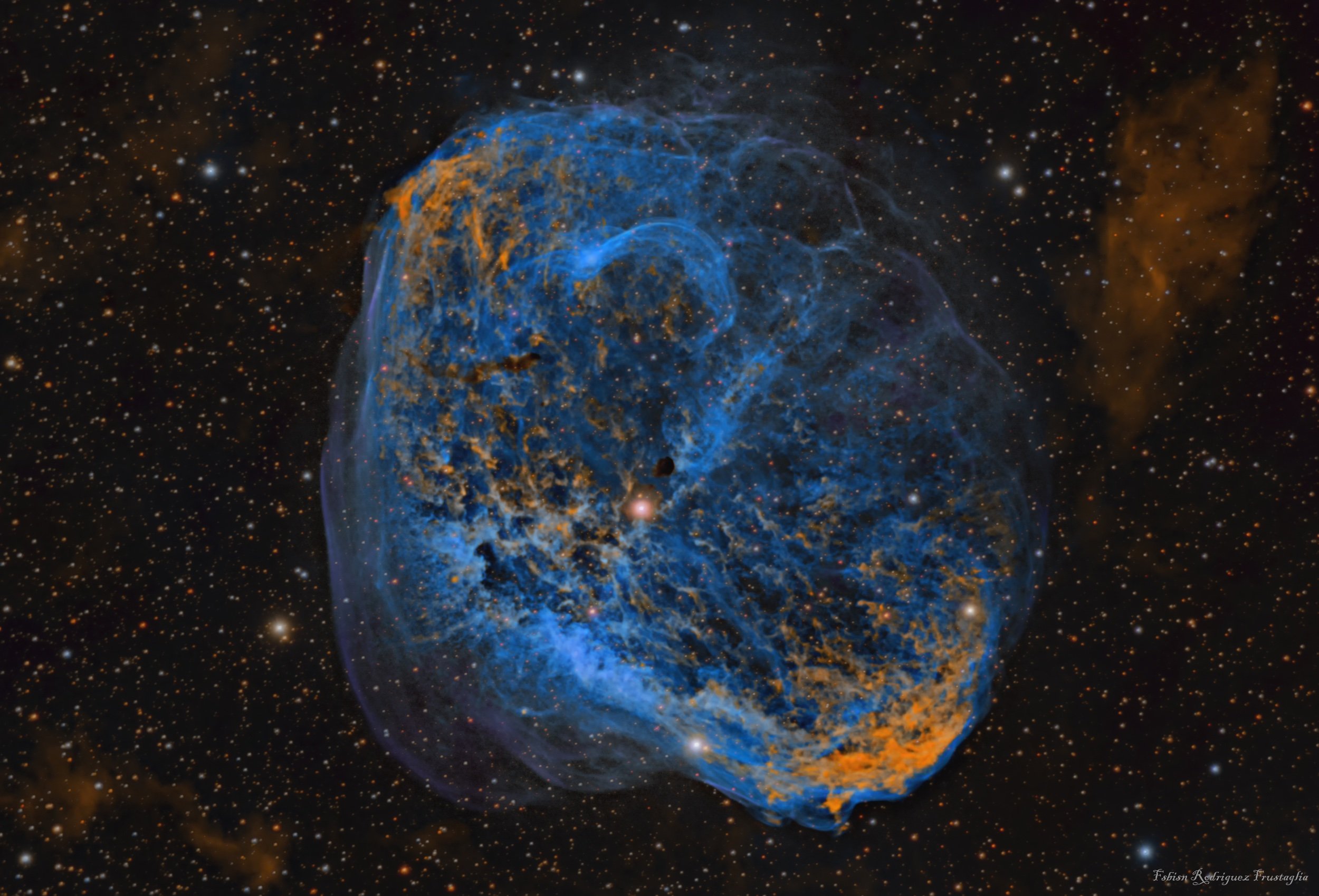
Image Description and Details : Image taken with Meade LX8500 12" + QHY268m from Fregenal de la Sierra in Spain.
Ha 102x600" + OIII 102x600" + RGB for the stars. Total integration time of 49 hours processed in SHO palette.
Copyright: Fabian Rodriguez Frustaglia

NGC 6888 Crescent Nebula
Image Description and Details : I photographed this composite image during July-August 2020 in my private observatory (Russia, Moscow region, Makeikha SQM 20.70 mag./arc sec2; Bortle class 4).Technical Data:Telescope: SkyWatcher Quattro 8SShooting Camera: ZWO Optical ASI 1600-MM COOLEDMounts: SkyWatcher EQ 8 PRO MountTelescope Guides: SkyWatcher EvoGuide 50EDGuide camera: ZWO ASI ZWO 120mm miniFocus Reducers: TeleVue Paracorr Type-2Program: Ivan Ionov Fitstacker · by Christian Buil Iris 5.59 · Fitswork 4 · Adobe Photoshop CS 5.1Filters: Astronomik LRGB 1.25 "the Type IIc · Baader Planetarium OIII 1.25" 8.5nm-CCD · Baader Planetarium H-alpha 1.25" CCD 7 nmFrames:Astronomik B (type 2c): 10x180" -20C bin 1x1Astronomik G (type 2c): 10x180" -20C bin 1x1Astronomik R (type 2c): 10x180" -20C bin 1x1Baader Planetarium H-alpha 1.25" CCD 7 nm: 105x600" -20C bin 1x1Baader Planetarium OIII 1.25" CCD 8.5nm: 60x600" -20C bin 1x1Accumulation: 29.0 hoursDark frames: ~ 15Flat field frames: ~ 15Offset Frames: ~ 15
Copyright: Sviatoslav Lips

Crescent & Soap Bubble Nebula
Image Description and Details :
Part of the Cygnus constellation, the crescent nebula is located in the immediate vicinity of the star Sadr. Its atypical shape also gave it the name "Euro Sign Nebula" (currency).
On the left is visible the "Soap Bubble nebula", discovered only in 2007 by amateur astronomer Dave Jurasevich.
The image is a composition in the HOO palette, with an exposure time of 37 hours.
Setup DDM60 mount, Moravian G3-16200, Takahashi fsq85.
Copyright Information: Copyright: Emil Pera