
AAPOD2 Image Archives
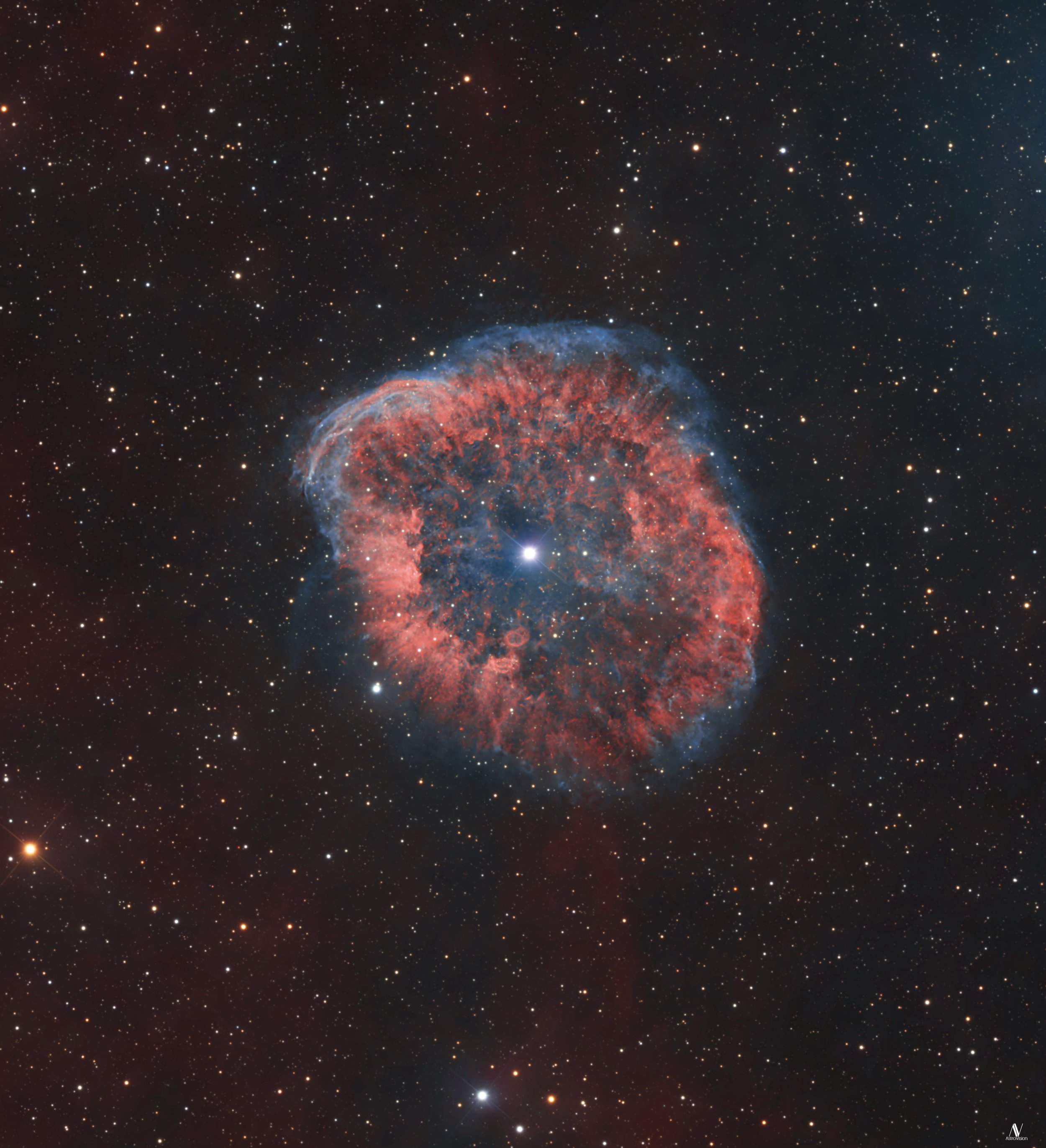
RCW 58: A Shell Around WR 4
RCW 58 is a dramatic emission nebula formed by the powerful stellar winds of the Wolf-Rayet star WR 4, located roughly 13,000 light years away in the constellation Carina. These winds expel the star’s outer layers into surrounding space, carving out the distinctive filamentary bubble seen in this image. The glowing gases are primarily hydrogen and oxygen, energized by intense ultraviolet radiation from the central star.
Captured using a personal telescope setup and the ZWO ASI 6200MM camera, this image represents 156 hours of exposure in a modified HOO-RVB palette. The red filaments trace ionized hydrogen, while the blue highlights areas of doubly ionized oxygen. Wolf-Rayet nebulae like RCW 58 are short-lived stages in the evolution of massive stars, providing a glimpse into the final, unstable phases before a potential supernova.
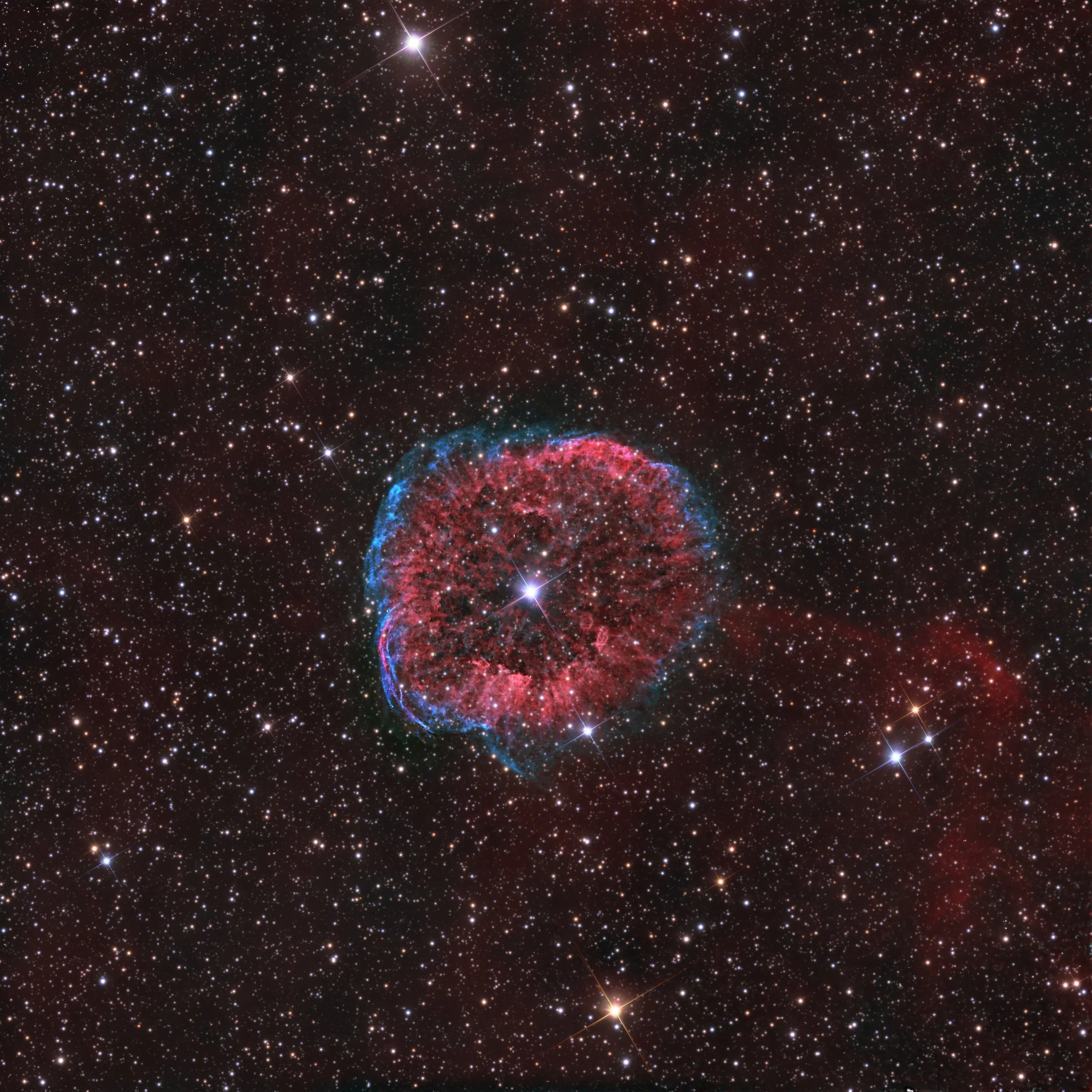
RCW-58 Cosmic Flower
RCW 58 is a striking emission nebula surrounding the Wolf-Rayet star WR 40, located in the constellation Carina. This nebula is a stellar wind-blown bubble formed by the intense radiation and powerful outflows from WR 40, a massive, evolved star nearing the final stages of its life. The surrounding filaments and arcs of ionized gas are the remnants of material ejected by the star in previous evolutionary phases, shaped by its violent stellar winds.
Wolf-Rayet stars like WR 40 are rare and extremely hot, with surface temperatures exceeding 100,000 K. Their strong winds create intricate nebular structures such as RCW 58, which glows brightly in hydrogen-alpha (Hα) and oxygen-III (OIII) emissions. These regions serve as laboratories for studying the late evolution of massive stars before they ultimately end their lives in a supernova explosion. Observing RCW 58 in narrowband filters reveals detailed shock structures and interactions between the ejected material and the surrounding interstellar medium, offering insight into the final turbulent stages of stellar evolution.