

AAPOD2 Image Archives
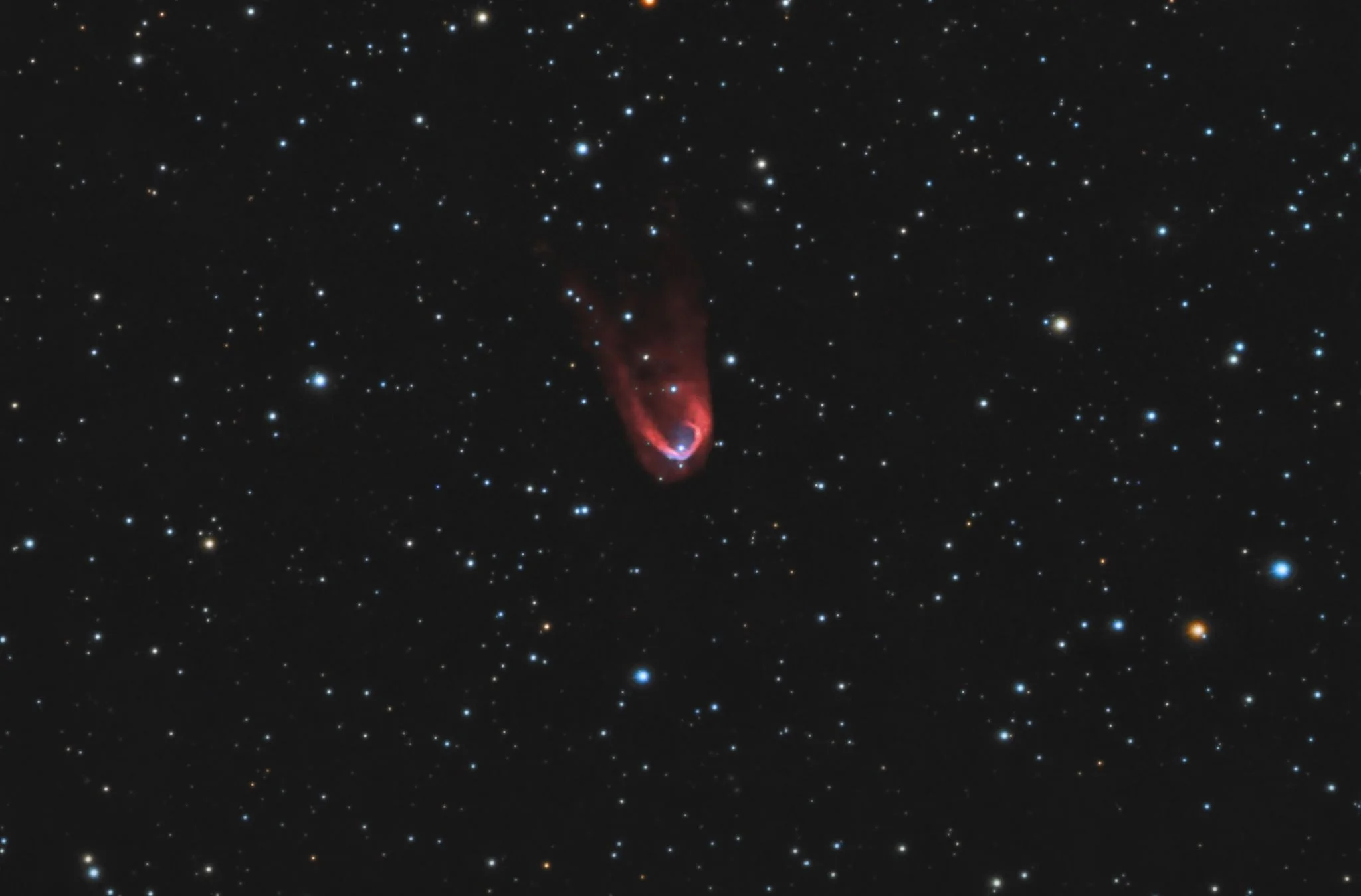
EGB 4
EGB 4 (a nebula discovered by Ellis, Grayson, & Bond in 1984) is NOT a comet, despite it's comet-like appearance. It is an emission nebula surrounding a catacylismic binary star system called BZ Cam in the constellation of Camelopardis.
It has an unusual bow-shock structure as BZ Cam (with it's associated wind) moves through the interstellar medium, similar to the bow wave in front of a ship that is moving through water.
BZ Cam is believed to be a white dwarf star that is accreting mass from an accompanying main-sequence star of 0.3-0.4 solar masses.
It is around 2,500 light years away, and has a space velocity of 125 km/second.
I can only find one previous image of EGB 4 online, a NASA APOD from 2000, so I believe this could be the first amateaur image and thefirst colour image.
Yes it's incredibly faint!
Image capture details:
Astrodon Blue: 15x300"
Astrodon Green: 15x300"
Astrodon Lum: 20x600"
Astrodon Red: 15x300"
Astrodon OIII: 25x1800s bin 2x2
Astrodon Ha: 56x1800s bin 2x2
Total Integration: 48 hours
Captured on my dual rig in Spain.
Scopes: APM TMB LZOS 152 (6" aperture 1200mm focal length)
Cameras: QSI6120wsg8
Mount: 10Micron GM2000 HPS
Copyright Details: Peter Goodhew
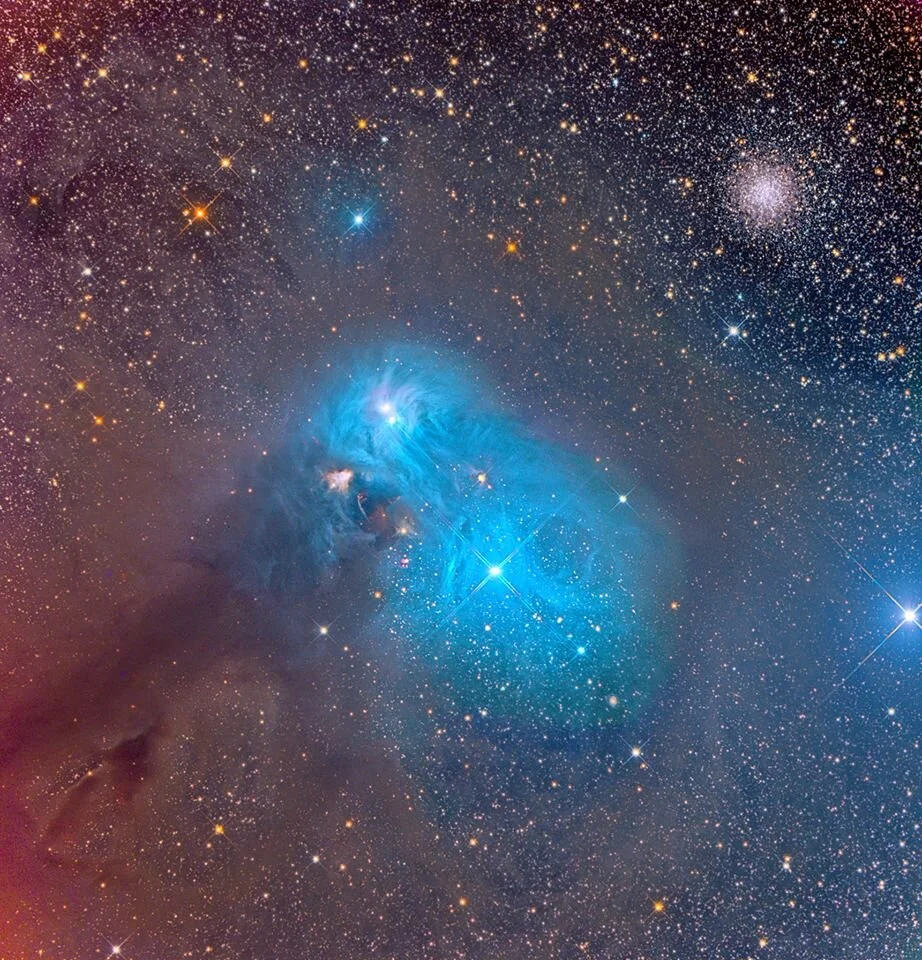
Anteater Nebula - NGC 6726
NGC 6726/6727 and IC 4812 are blue reflection nebulae, where bright stars are embedded in a large cloud of dust which reflects the blue light of the stars. NGC 6729 is a butterfly-shaped emission/reflection object that is a variable nebula, powered by the irregular variable star, R Coronae Australis (R CrA). R CrA was discovered about 100 years ago. HH objects are shown as delicate, small arcs of glowing gas.
20" ASA FLI PROLINE 16803 CCD
3.7 HOURS of LRGB
Chilescope T2 Stacked in PI , Processed n Ps
Copyright: Zhuoqun Wu & Utkarsh mishra
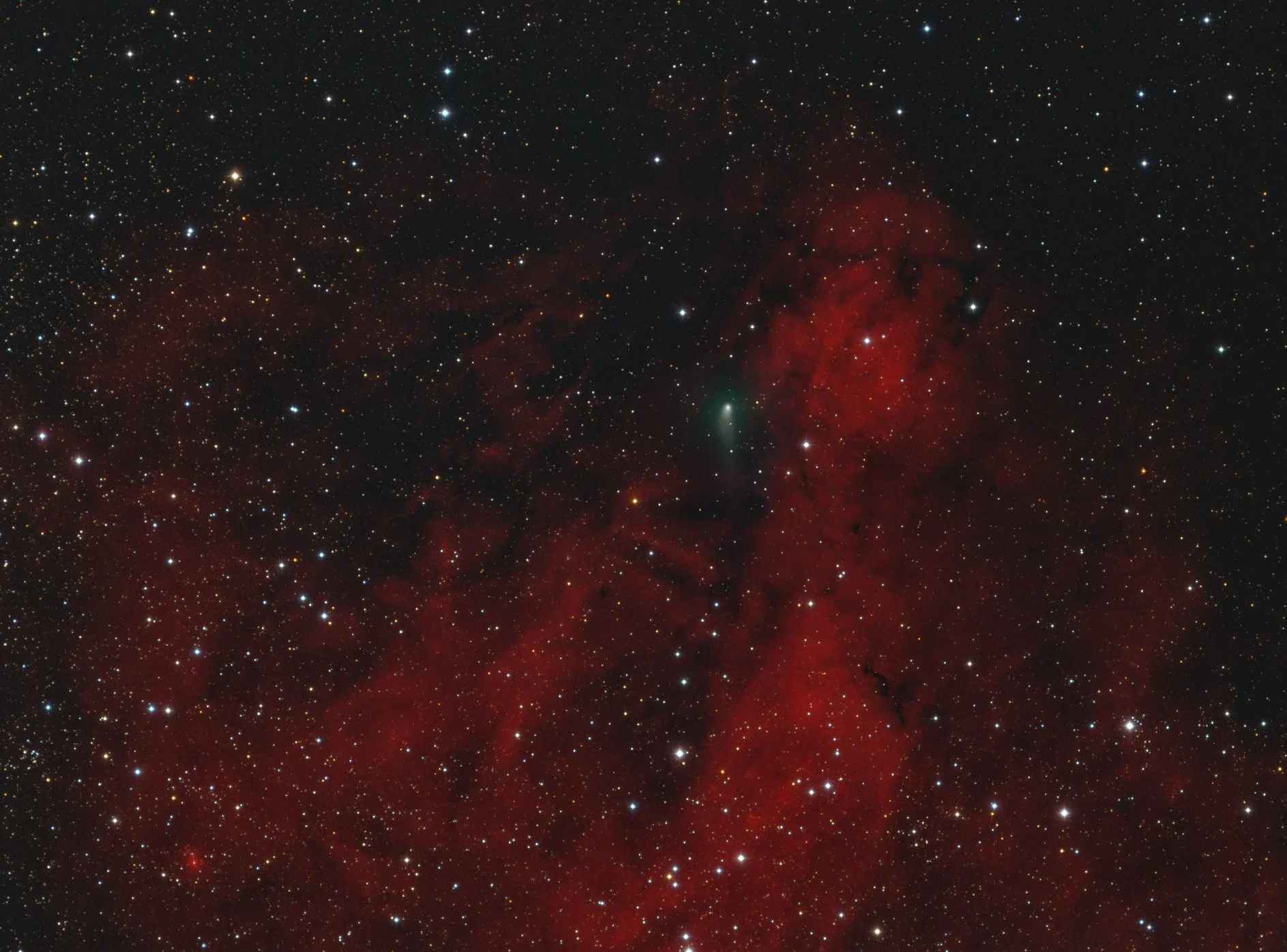
comet c / 2017 T2 Panstarrs
This is the comet c / 2017 T2 Panstarrs, imaged thru its passage of sh2- 205.
Based on the absolute magnitude published for this comet by the British Astronomical Association's Comet Section, it is estimate that it may be around mag 7 at perihelion.
Comet C/2017 T2 (PANSTARRS) will make its closest approach to the Sun, at a distance of 1.61 AU.
From BAA….C/2017 T2 (PANSTARRS) was discovered at 20th magnitude in 2017 September when it was it was 9.3 au from the Sun. It is heading for a perihelion at q=1.6 au in early 2020 May. The comet is currently in conjunction but it was apparently brightening rapidly when last seen in April. It should become visible from the UK in mid July very low in the morning sky as it moves slowly NE in Taurus. By then it will be 3.8 au from the Sun and 4.5 au from the Earth. It moves higher in the sky and will be visible throughout the autumn, winter and spring as a circumpolar object and it remains well placed in Ursa Major at perihelion. Magnitude estimates through the late summer and autumn should help to constrain the lightcurve.
Copyright: Cristina Cellini
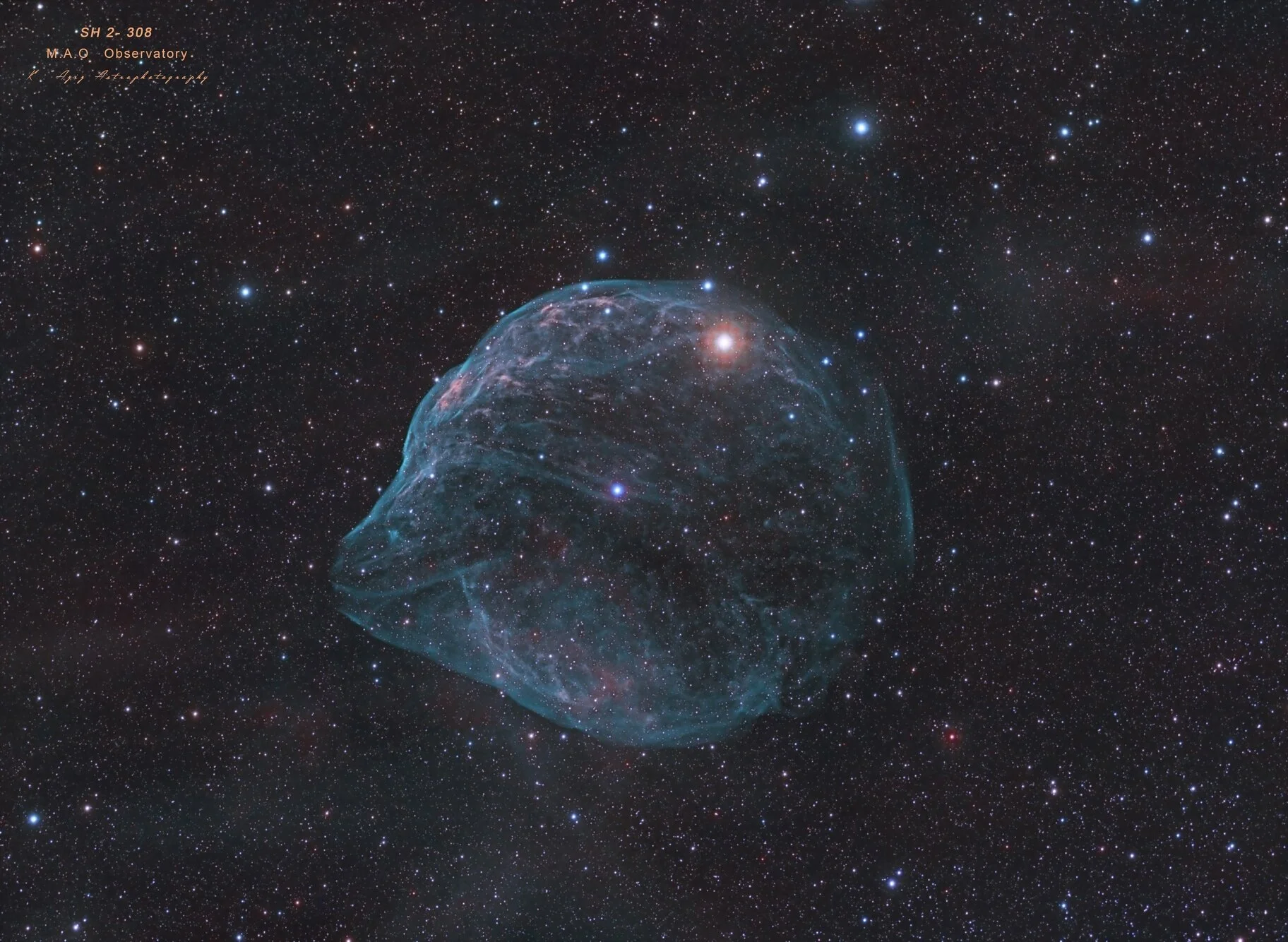
Dolphin Head Nebula -Sh2-308
Image Description and Details : Here is my first object captured in 2020.
This is the dolphin head nebula, Cataloged Sharpless SH 2-308, it is about 5,200 light-years from home towards the constellation of the Big Dog.
The massive star (Wolf-Rayet type) that created the bubble is the bright star located near the center of the nebula.
It generates a powerful radiation which drives out the gas around thus creating a giant bubble.
Technical details :
• TS 102mm F5,1 apo astrograph bezel
• Azeq6gt mount
• Zwo asi 1600 mm cooled pro
• Sampling: 1.47 arcsec / pixel.
Frames:
Astronomik 6nm OIII 36mm: 93x300" -10C
Astronomik HA 6nm 36mm: 17x300" -10C
ZWO B 36mm: 27x60" -10C
ZWO G 36mm: 27x60" -10C
ZWO R 36mm: 27x60" -10C
Integration: 10.5 hours
• DOF: 15x101x0
• Date: January 1 and 2, 2020
• Location: MAO Observatory of Ben Slimane.
Copyright: Aziz Kaeouach

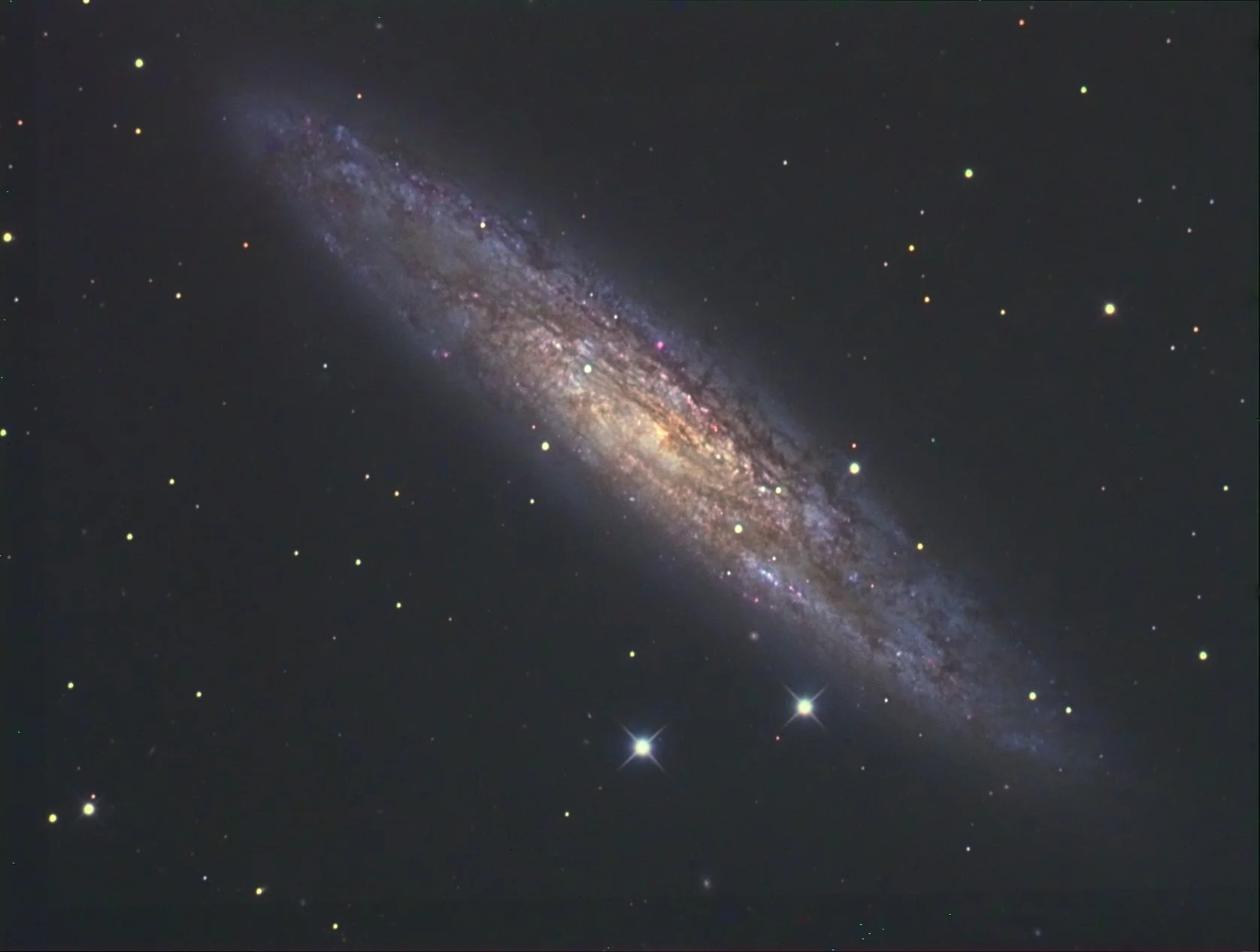
M66
This is an image of M66, also known as NGC3627. It is an intermediate spiral galaxy about 36 million light years away in the constellation Leo. It is a member of the Leo Triplet, which also includes M65 and NGC3628.
Dates: December 14, 2017 - January 17, 2018
Location: Dark Sky New Mexico
Telescope: Planewave CDK-17
Camera: FLI PL16803
Mount: Paramount ME
Luminance: 27x20 minutes (binned 1x1)
Red: 12x15 minutes (binned 1x1)
Green: 12x15 minutes (binned 1x1)
Blue: 12x15 minutes (binned 1x1)
Copyright: Bernard Miller

Messier 82 AKA, the Cigar Galaxy
Messier 82 also known as the Cigar Galaxy or NGC 3034 is a starburst galaxy approximately 12 million light-years away in the constellation Ursa Major.
Imaging telescope or lens: Planewave CDK17
Imaging camera: Finger Lakes Instrumenttaion Proline 16803
Guiding telescope or lens: Planewave CDK17
Guiding camera: Starlight Xpress Lodestar X2
Software: PHD2 PHD 2.6.2, PixInsight 1.8 Pisinsight 1.8
Filters: Chroma Blue, Chroma Green, Chroma Red
Copyright: Seymore Stars
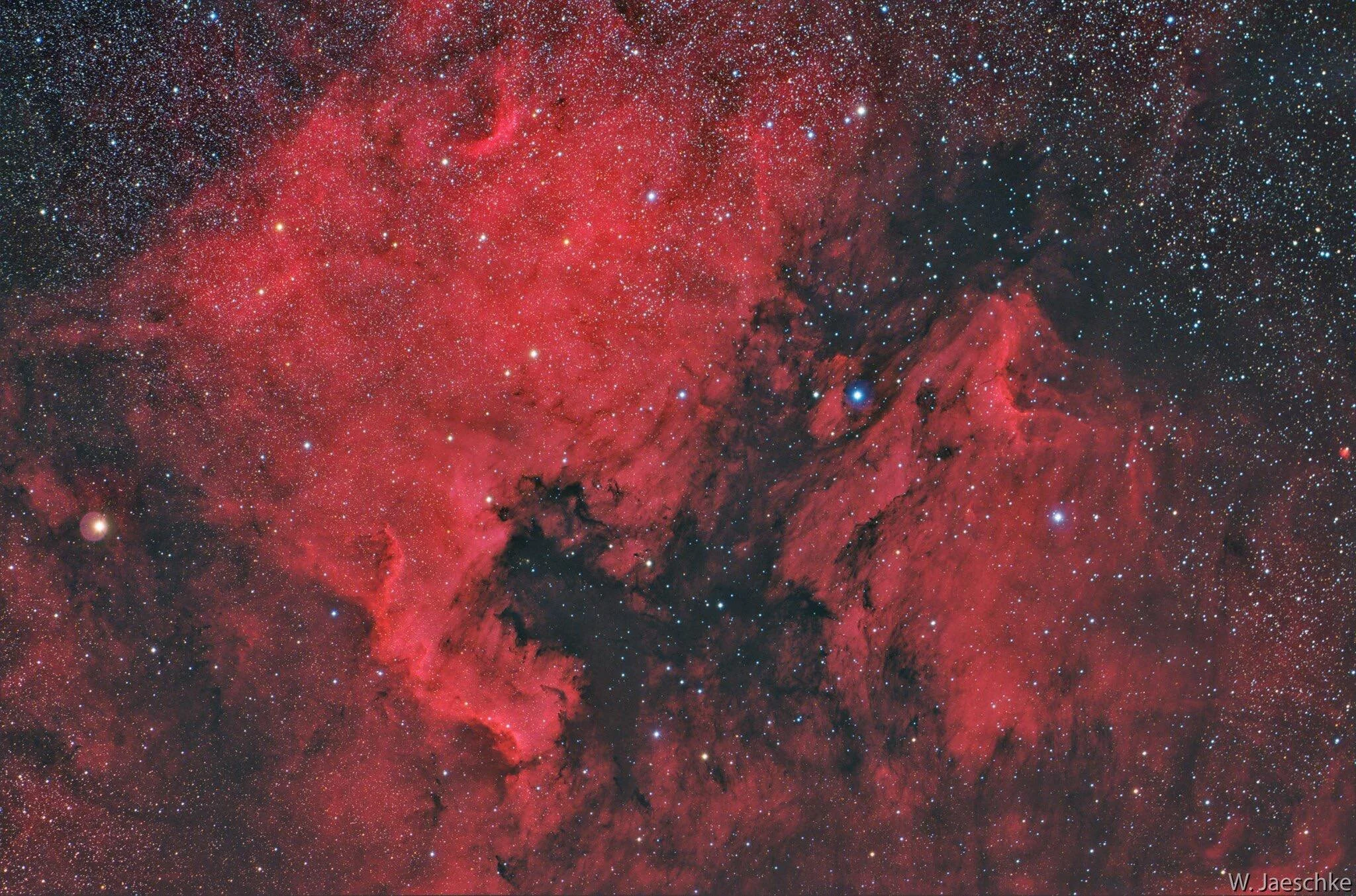
The North American And Pelican Nebulae
The North American And Pelican Nebulae.
Taken with a Takahashi FSQ106 and SBIG 11000m.
45 hours total exposure.
Copyright: Wayne Jaeschke
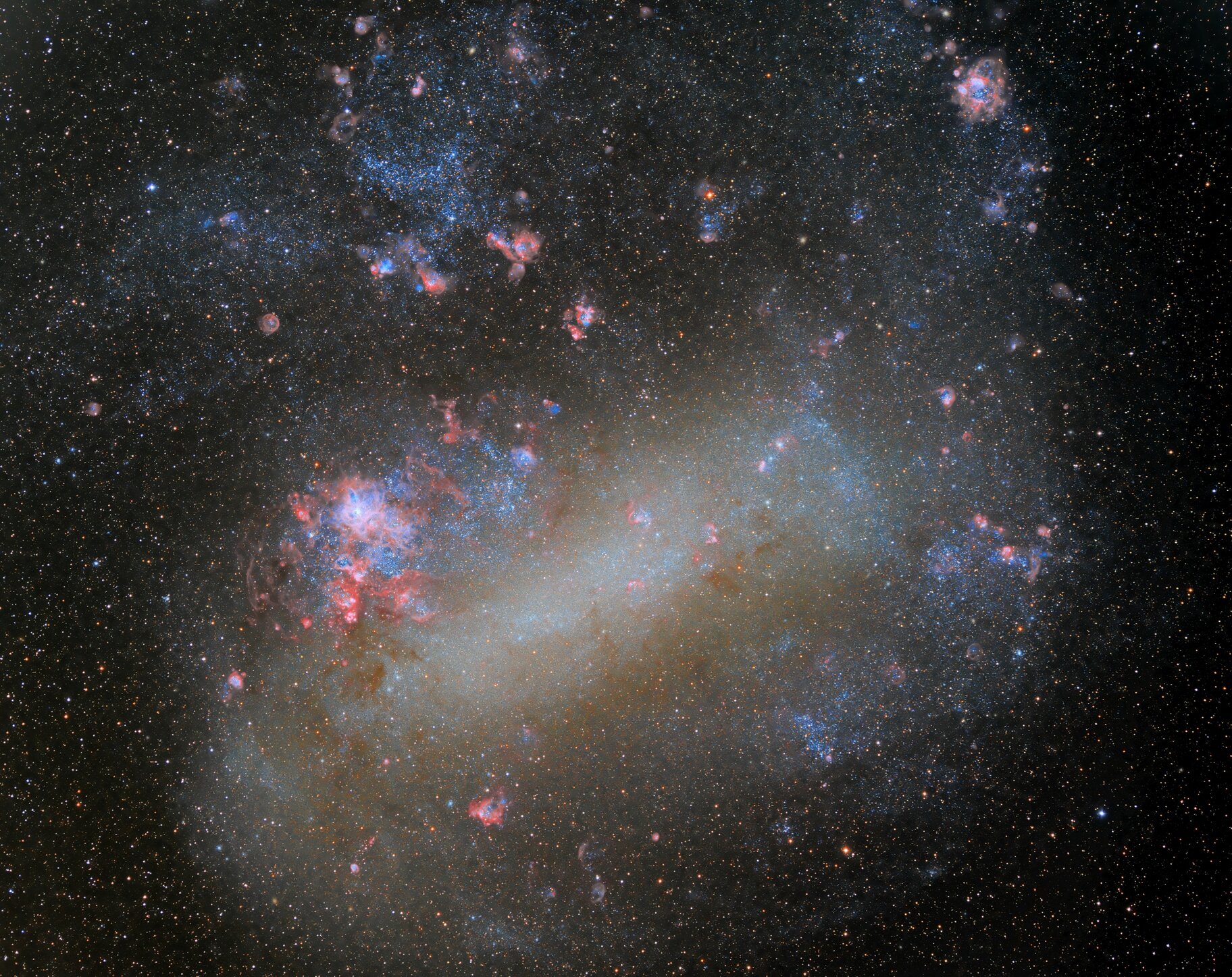
The Large Magellanic Cloud (LMC)
The Large Magellanic Cloud (LMC) is a satellite galaxy of the Milky Way. At a distance of about 50 kiloparsecs. The LMC is classified as a Magellanic spiral. It contains a stellar bar that is geometrically off-center, suggesting that it was a barred dwarf spiral galaxy.
The picture was taken in the remote observatory of ChileScope with telelens nikon 200 f2 and a camera fli 16200.
The set was HaLRGB and was 40min of Ha and 15 min in LRGB.
Copyright: Javier Flores
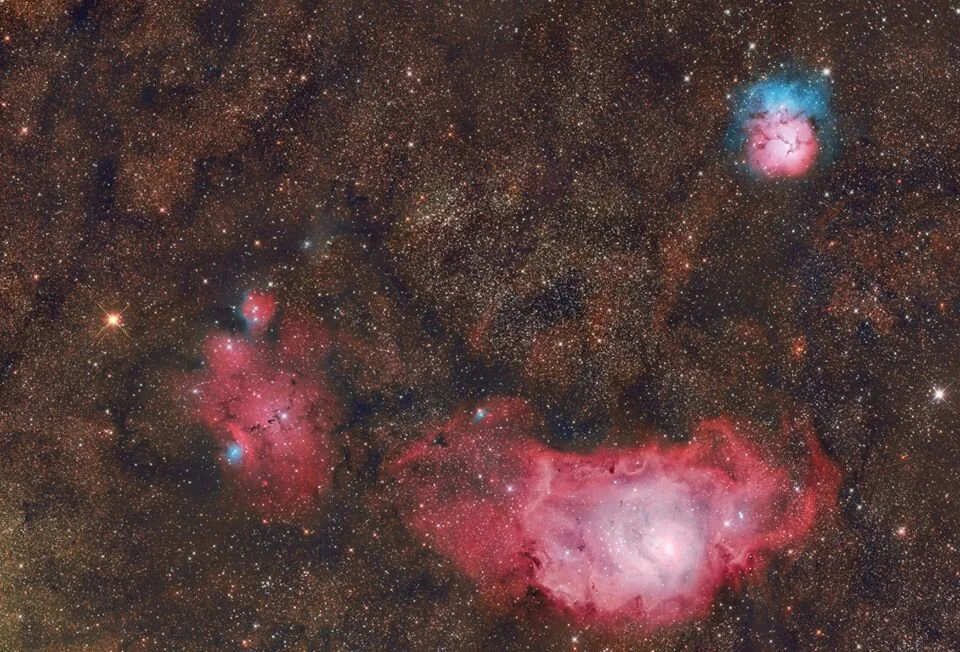
Mosaic in Sagittarius
305mm Reflector + AZ / EQ-6.
Canon 6D mod.
Cooling box.
Coma corrector.
Cls-ccd filter
48 x 300 ISO 1600
Copyright: Adriano de Oliveira
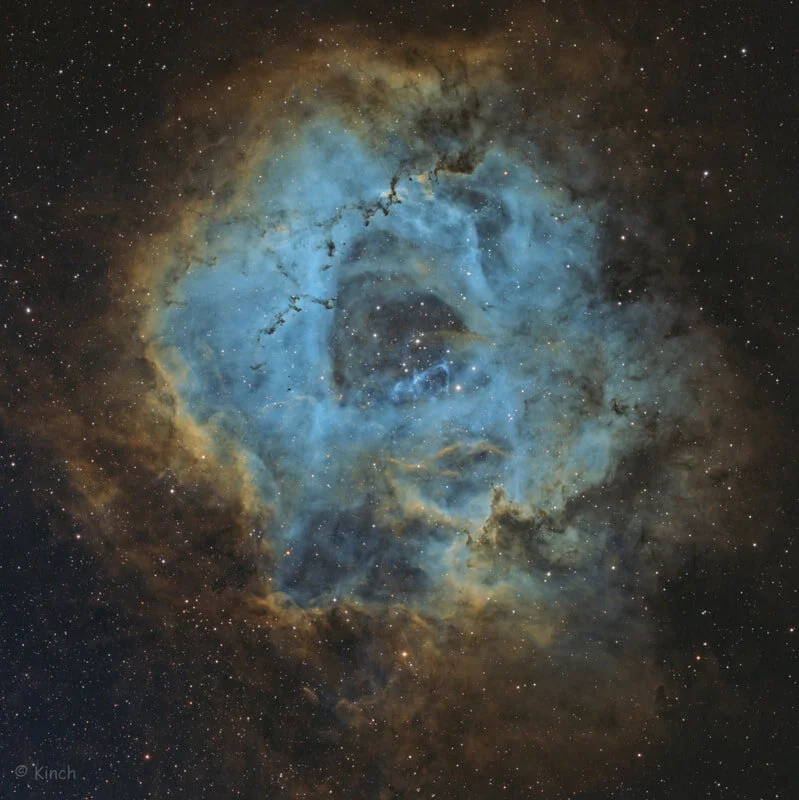
Rosette Nebula
Imaging telescopes or lenses: Takahashi FSQ130ED
Imaging cameras: FLI ML16200 ADT
Mounts: Takahashi EM 400 Temma 2M
Guiding telescopes or lenses: Takahashi FS60CB
Guiding cameras: QHY CCD QHY 5 II
Focal Extender / Reducer: None
Software: Sequence Generator Pro SGP (for capture) PHD 2 (guiding), Astro Pixel Processor & PixInsight,
Filters: Astrodon Ha, OIII, SII.
Accessories: Robofocus Focuser, ATIK EFW3
Original Resolution: 3570 x 4225
Dates: 1st Jan to 4th Jan 2020
Frames:
Astrodon Ha 30 x 10'
Astrodon OIII 30 x 10'
Astrodon SII 36 x 10'
Total integration = 16 hours.
Copyright: Brendan Kinch


Clavius and Moretus
Imaging telescope or lens: Celestron C14 EDGE HD
Mount:CGE Pro
Software: Fire Capture, AS!2, Photofiltre - Irfan
Filtro: Baader Planetariun IR Pass 685
Copyright: Avani Soares

NGC 1365
NGC 1365 taken at Martin Pugh Astrophotography in Australia.
NGC 1365 is barred spiral galaxy in the Fornax cluster. Within the larger long bar stretching across the center of the galaxy appears to be a smaller bar that comprises the core, with an apparent size of about 50″ × 40″.
This second bar is more prominent in infrared images of the central region of the galaxy, and likely arises from a combination of dynamical instabilities of stellar orbits in the region, along with gravity, density waves, and the overall rotation of the disc. The inner bar structure likely rotates as a whole more rapidly than the larger long bar, creating the diagonal shape seen in images. The spiral arms extend in a wide curve north and south from the ends of the east-west bar and form an almost ring like Z-shaped halo.
Astronomers think NGC 1365's prominent bar plays a crucial role in the galaxy's evolution, drawing gas and dust into a star-forming maelstrom and ultimately feeding material into the central black hole.
NGC 1365, including its two outer spiral arms, spreads over around 200,000 light-years. Different parts of the galaxy take different times to make a full rotation around the core of the galaxy, with the outer parts of the bar completing one circuit in about 350 million years. NGC 1365 and other galaxies of its type have come to more prominence in recent years with new observations indicating that the Milky Way could also be a barred spiral galaxy. Such galaxies are quite common — two thirds of spiral galaxies are barred according to recent estimates, and studying others can help astronomers understand our own galactic home.
Copyright: Albert Barr
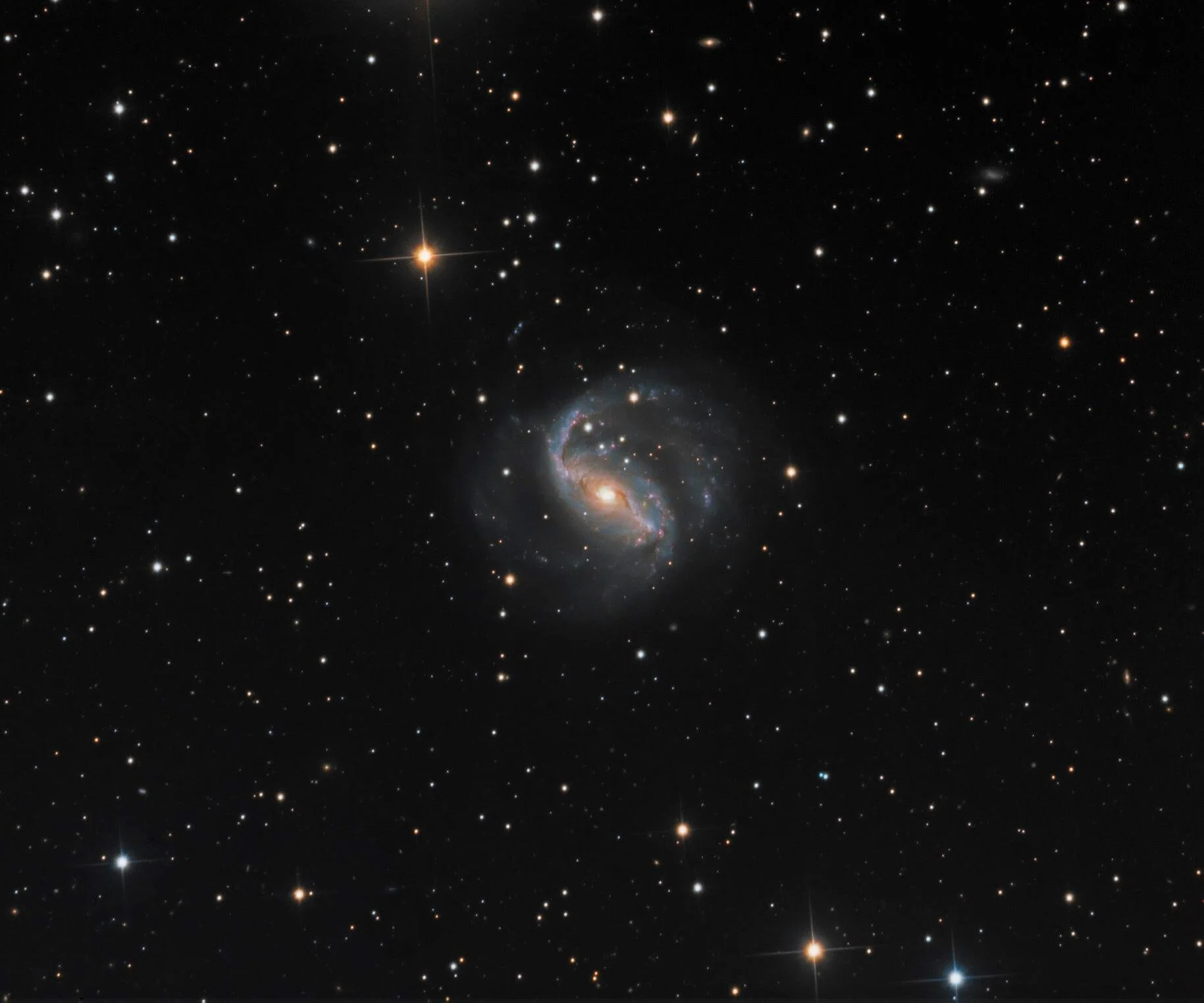
NGC 1672 in Dorado
NGC 1672 is a barred spiral galaxy located in the constellation Dorado. It was originally thought to be a member of the Dorado Group, however, this membership was later rejected.
NGC 1672 has a large bar which is estimated to measure around 20 kpc. It has very strong radio emissions emanating from its nucleus, bar, and the inner portion of the spiral arm region. The nucleus is Seyfert type 2 and is engulfed by a starburst region. The strongest polarized emissions come from the northeastern region which is upstream from its dust lanes. Magnetic field lines are at large angles with respect to the bar and turn smoothly to the center.
It was taken with a 36.8 cm F9 Ritchey Chretien telescope using a SBIG STXL16200 CCD camera. The exposure is a LHaRGB image with about 9 hours total imaging time.
Copyright: Steve Crouch
AAPOD2 Title: NGC 1672 in Dorado
AAPOD2 Page Link: https://www.aapod2.com/blog/ngc-1672-in-dorado
Sumbit Your Photo!

Star trails of the Great Pyramid
(Egyptian Pharaoh Khufu BC.2589 ~ BC. 2566)
Location: Al Giza Desert, Egypt
Camera: Nikon D750, ISO200, F5.6
Lens: Nikon 24-70mm (38mm)
Exposures: 20 sec x 430
Tripod: Horusbennu
Copyright: Young-Dae Kim
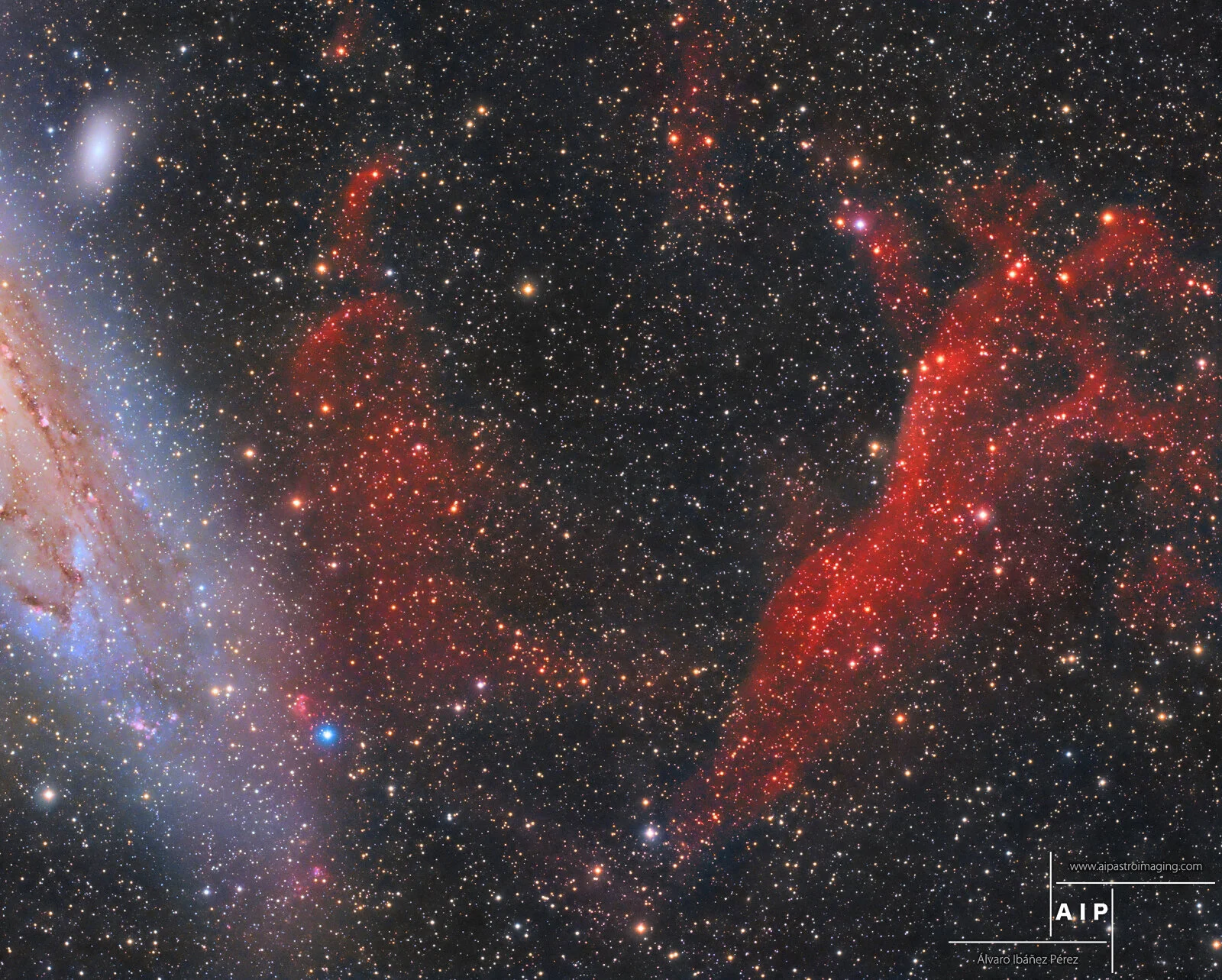
Andromeda Clouds in HaRGB
Here is an image of Andromeda Clouds in HaRGB, with 23 hours of total exposure.
Captured during 6 nights of New Moon from Pioz, Guadalajara, Spain.
It is the biggest project I have done since I started doing astrophotography and it is an honor for me to be one of the few astrophotographers who have photographed these strange clouds in color.
You can see more information and photos in my section of the website:
https://aipastroimaging.com/m31-ha-clouds-hargb/
In full resolution:
This photo was taken with this setup:
Telescope: Takahashi FSQ106EDX (f/5)
Mount: Takahashi EM-400 Temma2
Camera: Atik 16200 (Kodak KAF16200)
Guider: Lunático EZG-60 + SXLodestar
Filters: Baader Ha 7nm, Baader LRGB
Focuser: RoboFocus Rev3.1
Date: November and December 2018
Place: Pioz, Guadalajara, España
Software: MaxIm DL + AstroMatic
Processing: PixInsight Core + Photoshop CC
Exposure: Ha: 80x900s bin2, RGB: 12x300s bin2.
Total: 23h
Copryright: Álvaro Ibáñez Pérez
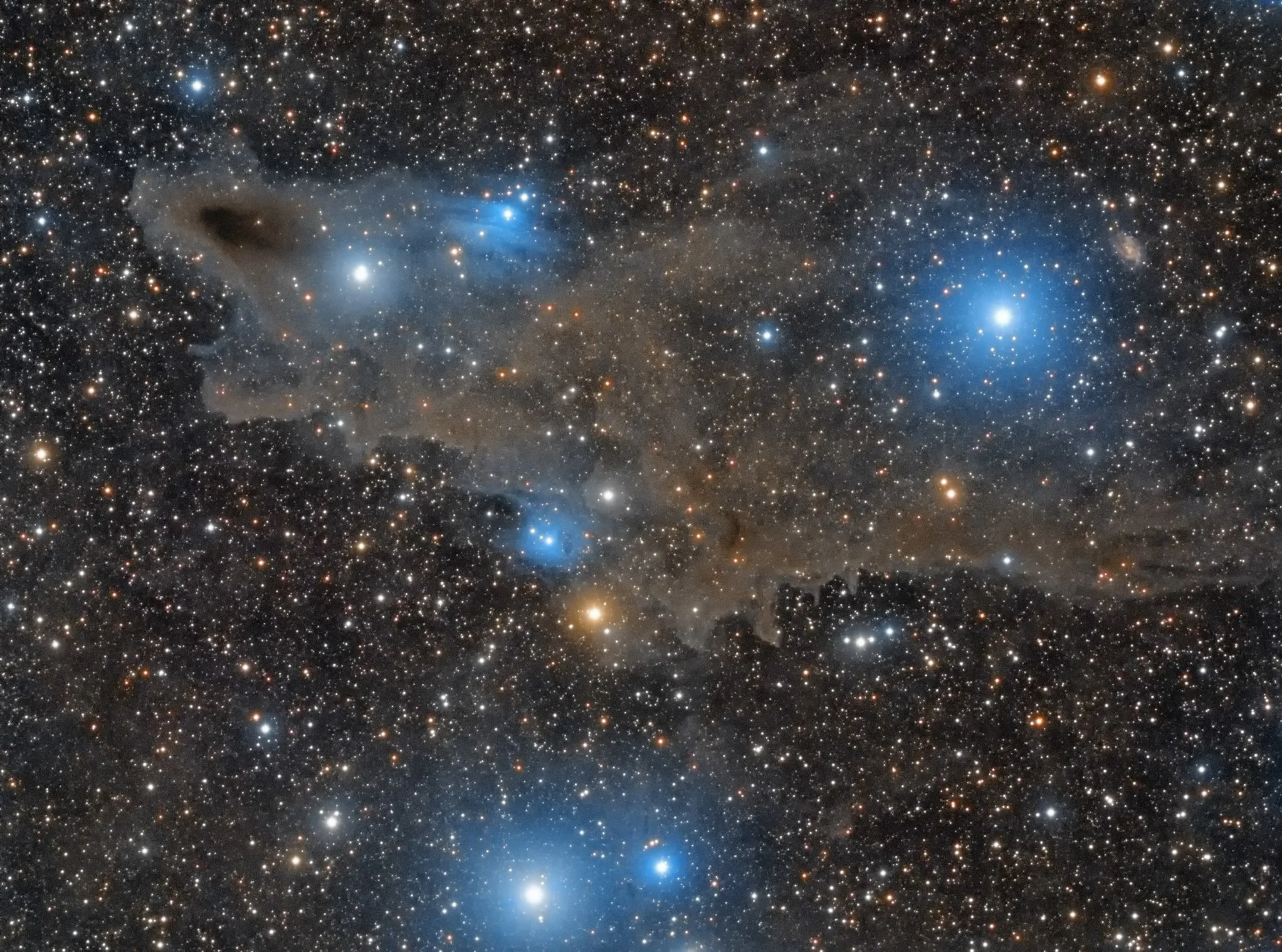
The Shark Nebula (LDN1235)
This image shows the Shark Nebula (LDN1235) in the constellation of Cepheus.
This is a nice cloud of gas and dust which is highlighted by the light of nearby stars.
Telescope: TMB92 @ f/5.5
Camera: QSI583ws
Mount: Skywatcher EQ6
Exposures:
L: 53 x 600s
R: 9 x 600s
G: 9 x 600s
B: 9 x 600s
Total: 13,3 hours
Copyright: André Van Der Hoeven

Solar Eruption
LUNT LS100THa PT (Single Stack) / B1800 / Barlow 3X / DMK31AU03
LucamRecorder-AutoStakkert!2-ImPPG-PS5
Copyright: Peter Desypris
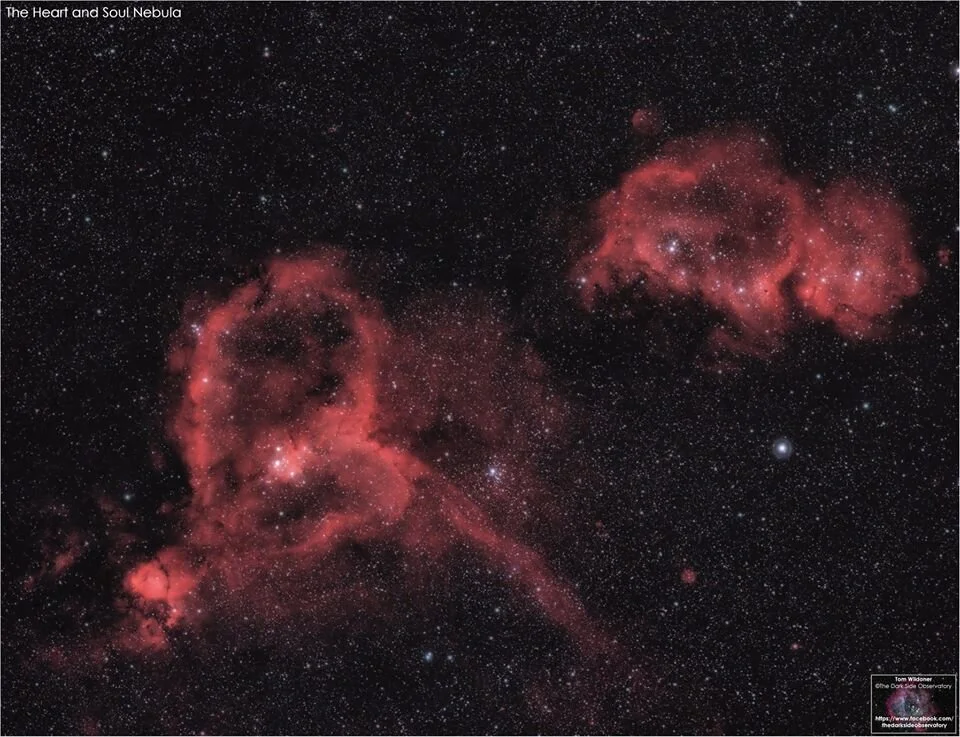
Heart and Soul Nebula
Tech Specs: Williams Optics Redcat 51 APO, Celestron CGEM-DX mount (pier mounted), ZWO ASI071MC-Pro, Optolong L-eNhance 2” filter, each panel was 60 x 60 second exposures at a GAIN of 200, one hour total exposure with dark/bias frames, guided using a ZWO ASI290MC and Orion 60mm guide scope. Captured using Sequence Generator Pro (SGP) v3.03. Image date: November 25, 2019. Location: The Dark Side Observatory, Weatherly, PA, USA.