

AAPOD2 Image Archives
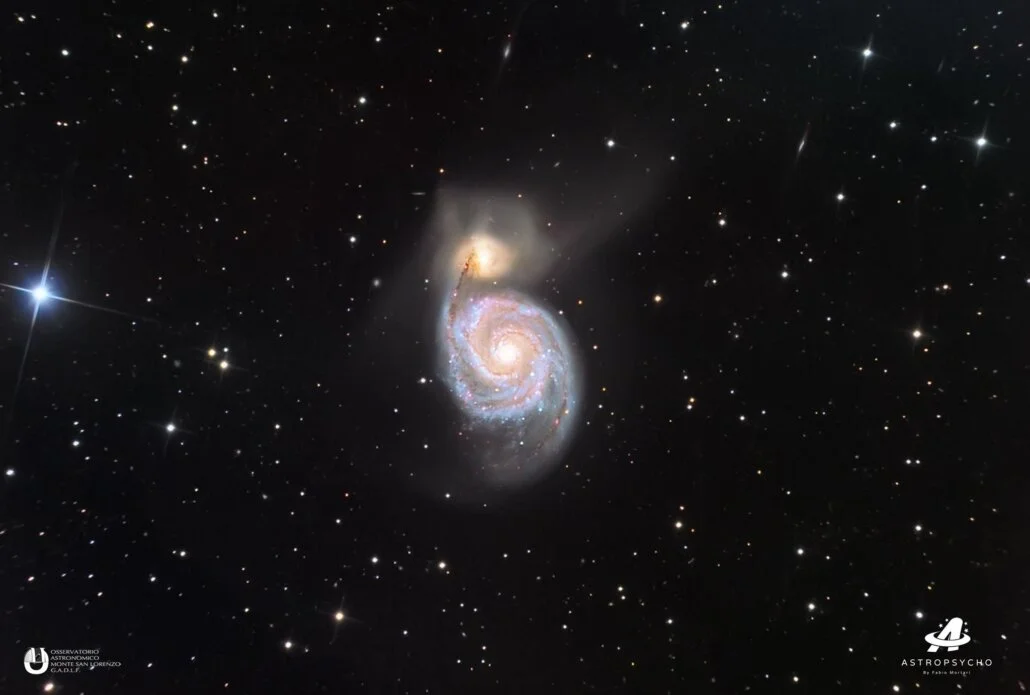
M51
Telescope: Newton GSO 250MM F/4.9
Sensor: CCD MORAVIAN G2 8300
Mount: Neq6
OAG: Ts D-King
Guide Camera: Lodestar
FilterWheel: Starlight Xpress
COPYRIGHT: Fabio Mortari
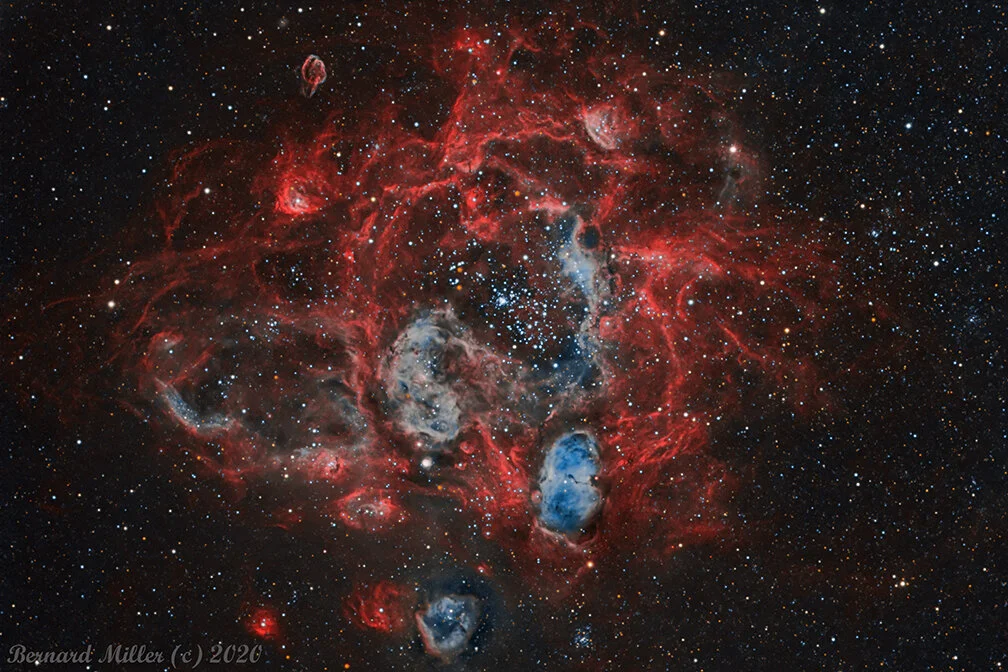
NGC 1760
January 30, 2020
Location: New South Wales, AU
Telescope: RCOS 12.5 inch F9
Camera: SBIG STXL11002 with AOX
Mount: Paramount ME II
Ha: 22x30 minutes (binned 1x1)
OIII: 20x30 minutes (binned 1x1)
RGB: 14x2 minutes each (binned 1x1)
Copyright: Bernard Miller

M78
Image Description and Details : Description – Just north of Orion’s Belt lies this beauty, Messier 78, with a hint of barnard’s loop in the top left of the frame. A reflection nebula approximately 1500 ly away, this is a Target I’ve wanted shoot for a long time. See my Facebook page for capture details!
Location/Date – Deep Sky West, December 2017
Imaging System – Astrophysics Riccardi-Honders 305, Astrophysics 1600, SBIG STX-16803, Astrodon Gen 2
Exposure – LRGB, 13.1 hours
Processing – Pixinsight
Credit/Copyright – Good Astronomy

WeBo 1
WeBo 1 is a recently discovered planetary nebula that is just emerging. A distinct oval-shaped disc of glowing gas forming around a binary star system, it was only discovered in 1995.
Borg 107mm refractor at 420mm focal length and f/3.9. Hobym Crux 170 mount with QHY367C camera, with Triad Ultra narrowband filter. Off-axis-guiding with ASI290mm-mini guide camera, all controlled by Stellarmate.
21x1200 sec subs, all calibrated with flats, darks, and bias frames and processed with Pixinsight and Photoshop.
Copyright: Gazing Outwards

Solar System
Captured in a single day
Jupiter and Mars are in color with a 2xBarlow and Venus in UV and Mercury in IR in prime focus (2x enlarged).
Celestron 11" EdgeHD f/10 (f/20 for Mars & Jupiter) ASI290MC AVX mount
Copyright: Eric Sussenbach
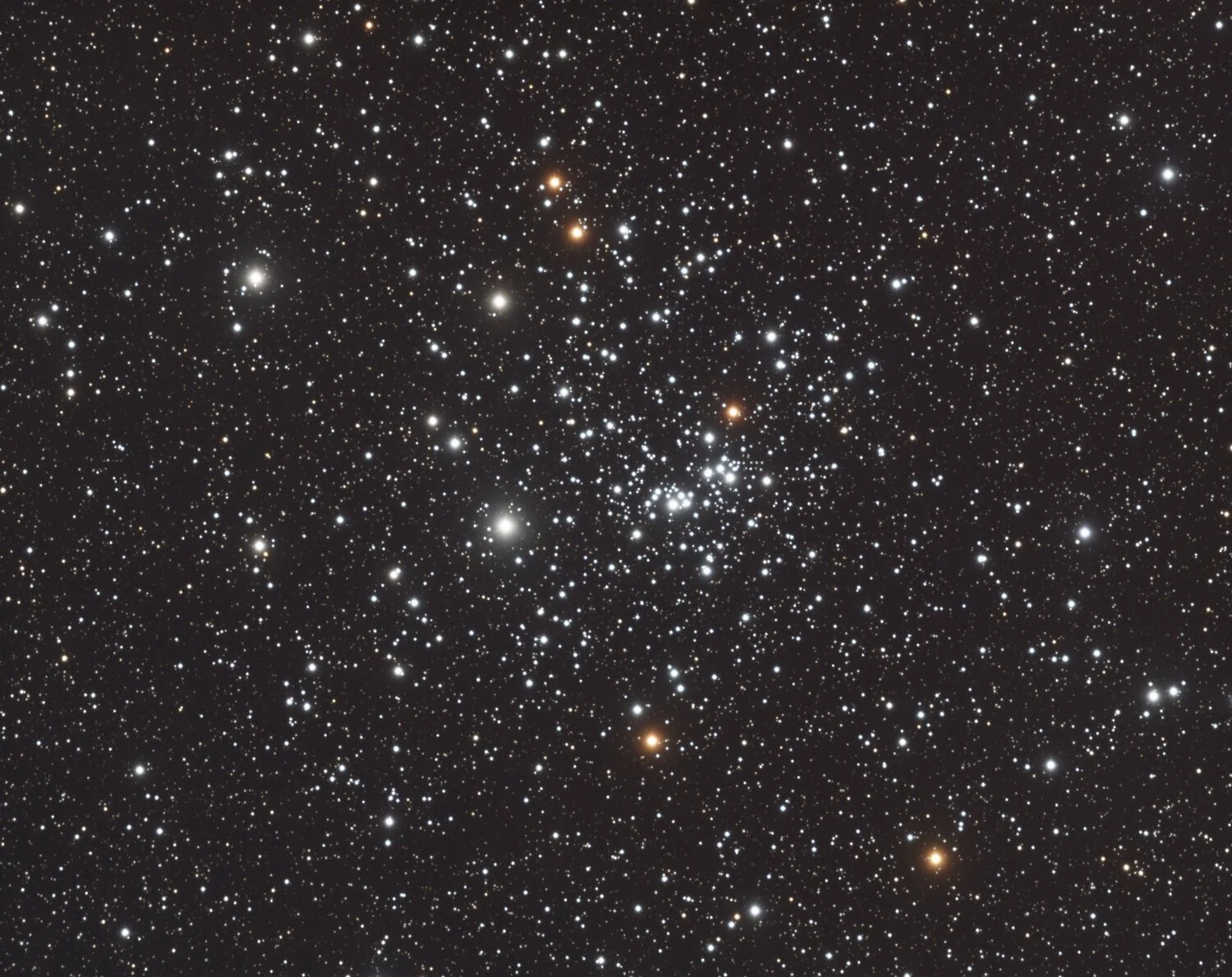
NGC 884 Part of the Double Cluster
This is Part of the Double Cluster imaged during the moon phase so not the best conditions. I may make this a mosaic and capture the other half to complete it. Processing wise I have not really done much just stretched it and a bit of noise reduction and that's it a nice easy one.
Captured by David Wills at PixelSkies, Spain www.pixelskiesastro.com
Red 25x300Secs
Green 34x300Secs
Blue 48x300Secs
8 hours 55 mins in total.
Equipment used:
Telescope: Tec 140 F7
Camera: Xpress Trius SX-694 Mono Cooled to -10C
Image Scale: 0.95
Guiding: OAG
Filters: Astronomik RGB
Mount: iOptron CEM60 "Standard" GOTO Centre Balanced Equatorial Mount
Image Acquisition: Voyager
Observatory control: Lunatico Dragonfly
Stacking and Calibrating: Pixinsight
Processing: Pixinsight 1.8
Copyright: David Wills
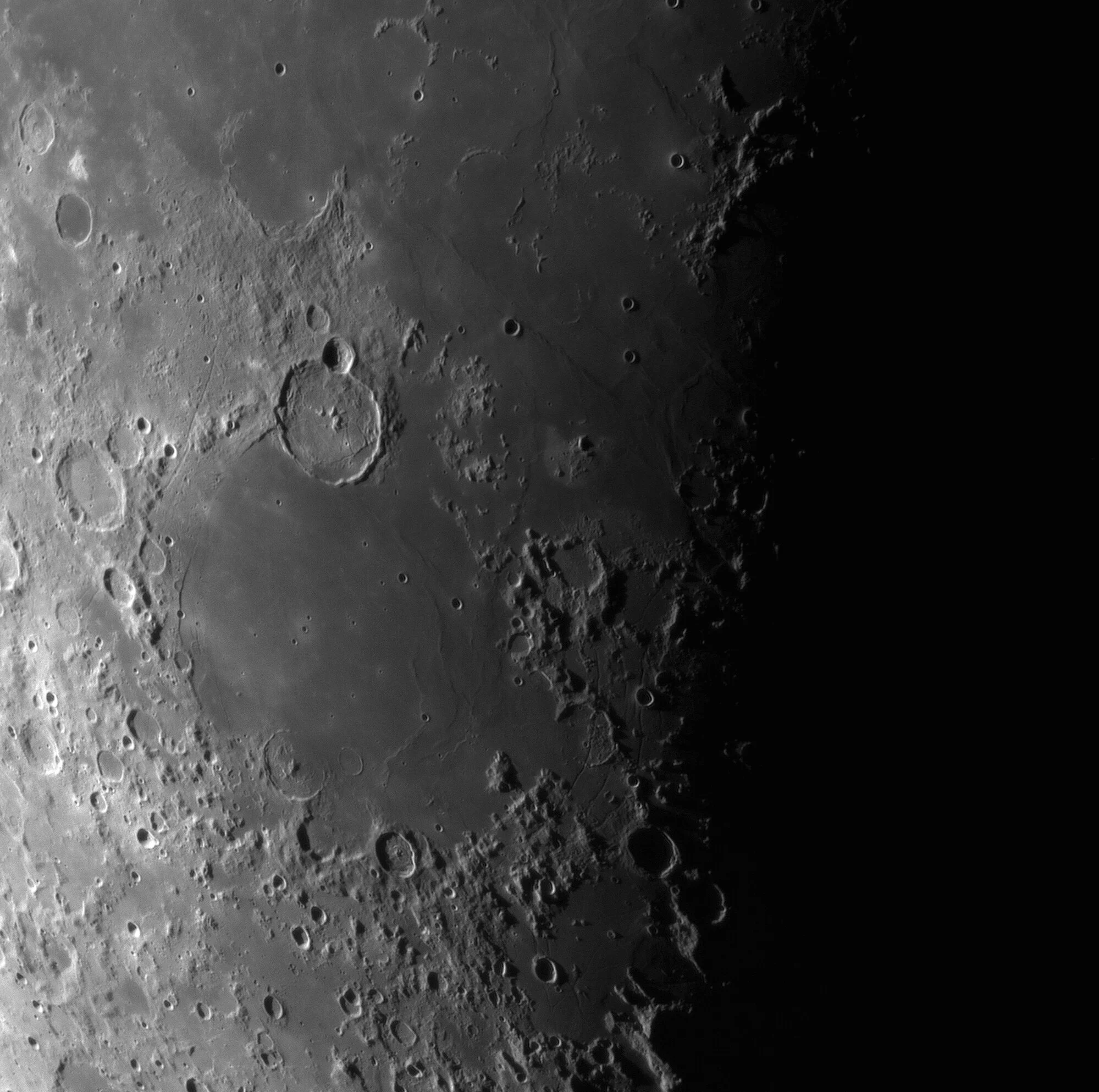
Mare Humorum
Mare Humorum, Gassendi, Hippalus Rille, Montes Riphaeus
Mosaic of two frames. This composition contains many interesting and characteristic formations. Mare Humorum and a wax seal in the north, Gassendi crater. Ditch complexes in the west: Rimae Mersenius, Rimae de Gasparis and Rimae Doppelmayer, in the east: Hippalus Rille and the crater with two "faces" - Hippalus. In the upper corner - Montes Riphaeus, a band of shock artifacts that have recently intrigued me. Below is a lava landscape with hill ranges.
Achromatic Refractor TS 152/900, Barlow Celestron Ultima 2x (F-2270mm), ASI290MM, Baader Halpha 35nm, EQ-ATM, FireCapture v2.6, Autostakket!3 (400/2000), Registax6, Microsoft ICE.
Copyright: Jerzy Łągiewka
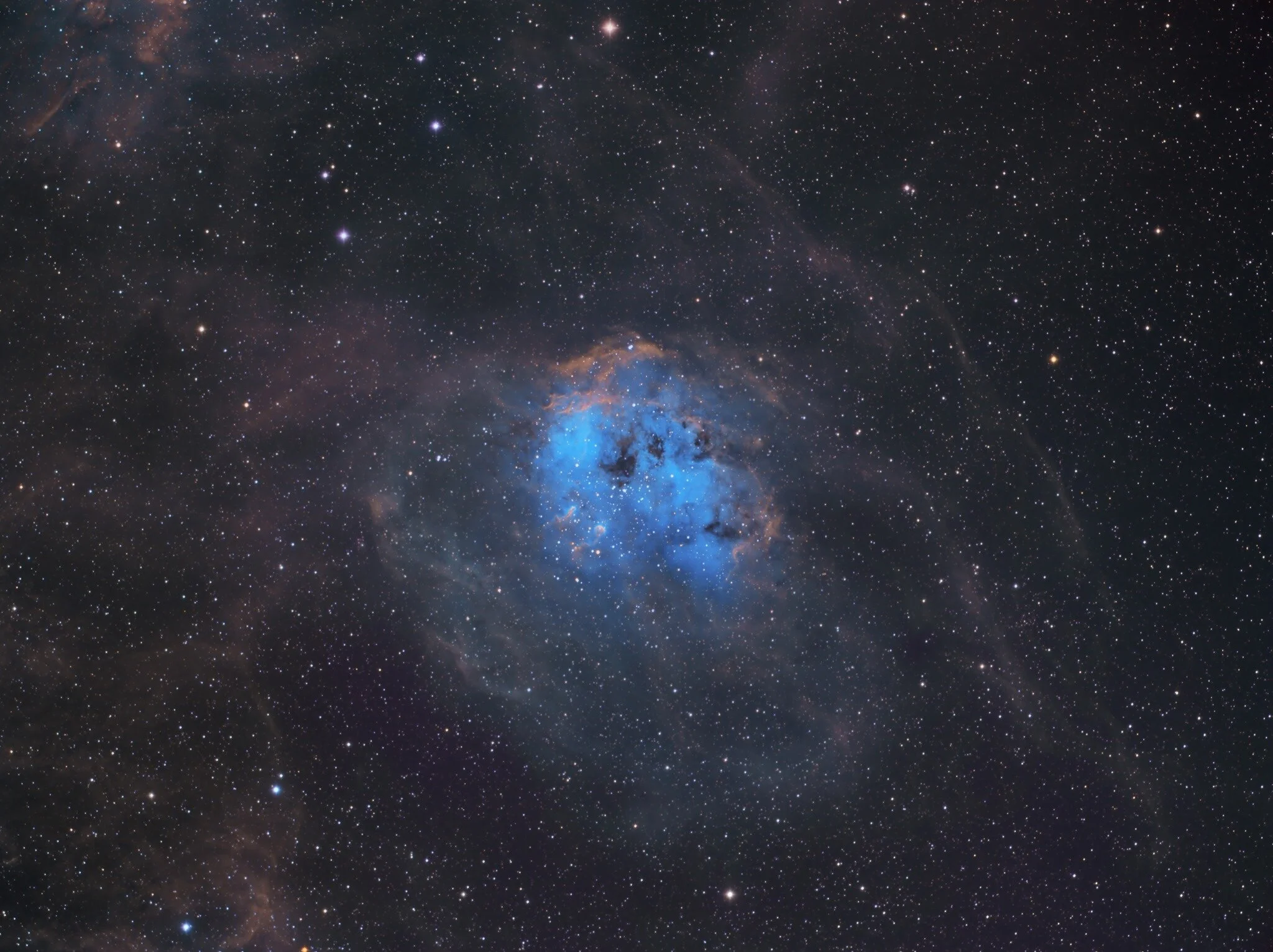
IC410 - Tadpoles nebula
IC 410 and surrounding Nebula. With and without stars. Imaged on multiple nights with a total exposure time of 27.8 hours.
Telescope: Takahashi FSQ-106EDX IV
Camera: QSI 683wsg-8
Mount: Software Bisque Paramount MX+
Astrodon Ha: 37x900" -20C bin 1x1
Astrodon OIII: 37x900" -20C bin 1x1
Astrodon SII: 37x900" -20C bin 1x1
Integration: 27.8 hours
Copyright: Craig Patterson
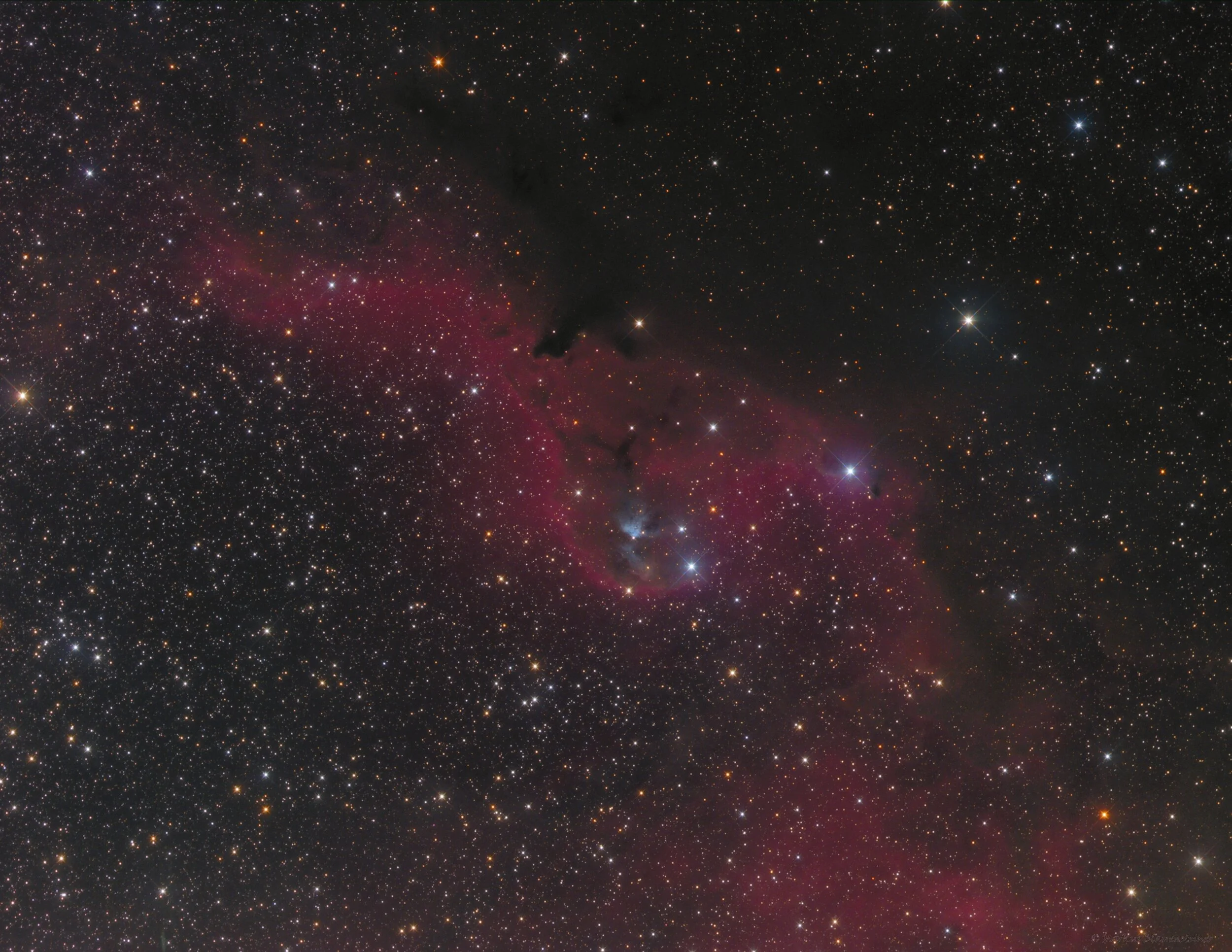
Cederblad 51 in Orion
Cederblad 51 is a reflection nebula, which appears divided in two by a cloud of dust in the foreground. Nearby there are some Herbig-Haro objects, indicating recent star formation. Ced 51 is embedded in the large emission nebula GN 05.30.0.
Scope: TAK Epsilon 130ED
Mount: 10micron GM2000 HPS II
CCD: Moravian G2-8300, Baader filters LRGB, Ha
Exposure time: L 19x10 min, RGB 12x10 min per filter, Ha 33x10 min, total 14 h 40 min
4 nights in December 2019
Copyright: Markus Blauensteiner
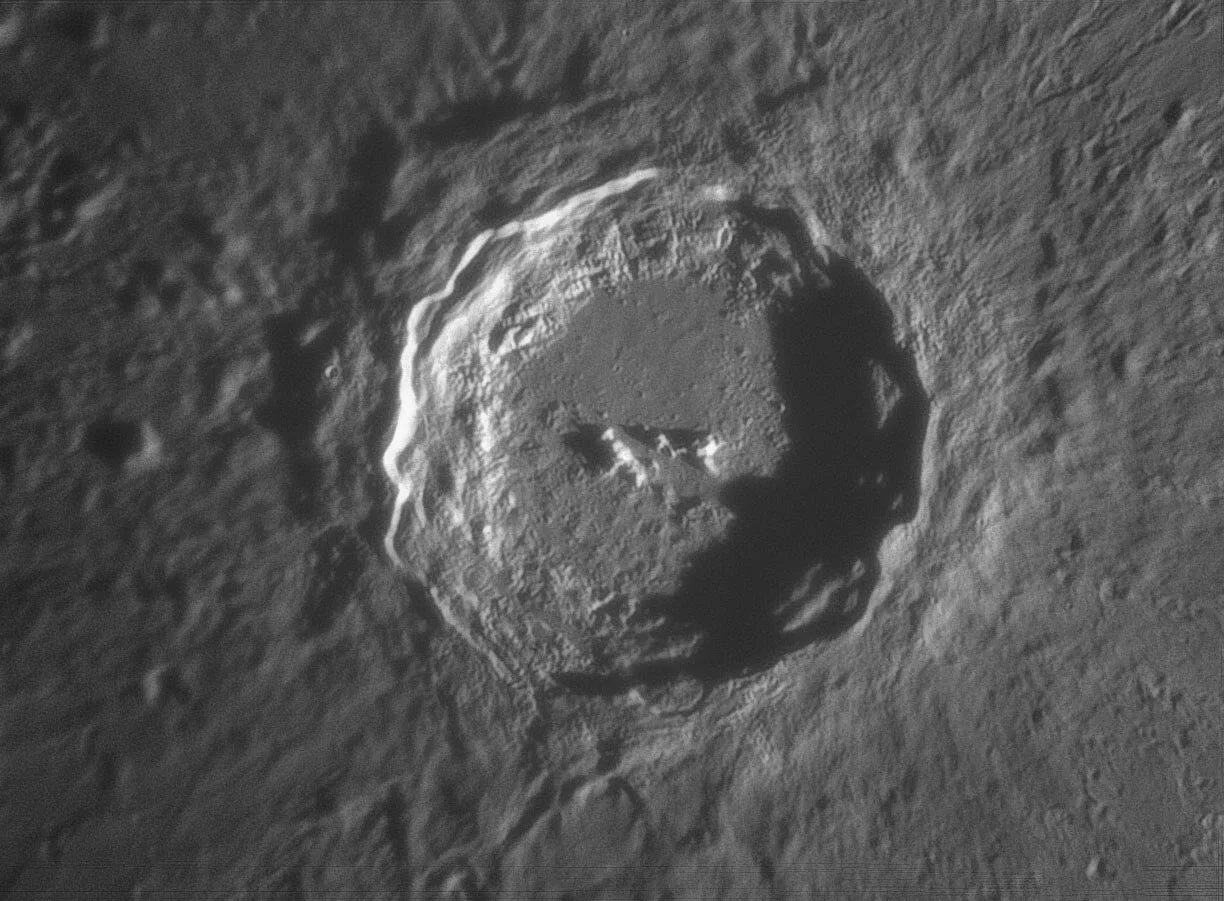
Moon - Copernico
Moon 2020-02-03 Copernicus
Telescope C14 F / 22
Camera Camera 5 II L
Capture Sharcap
Stacking Autostakkert
Processed pshop c6
Altamira J24 Observatory
Fasnia Tenerife Canary Islands
Copyright: Quico Hernandez Cabrera
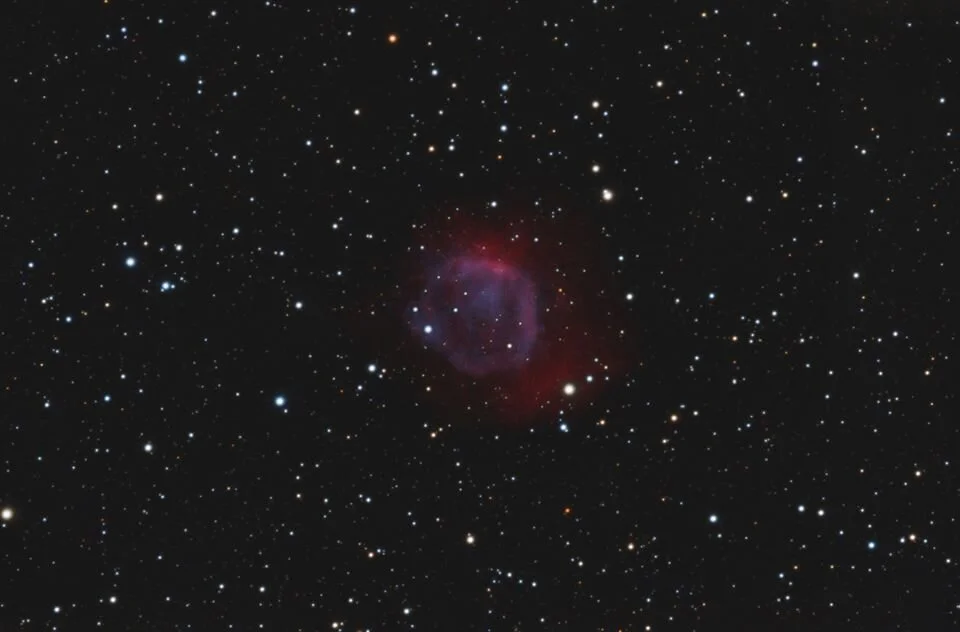
StDr 1
StDr 1 - a possible planetary nebula in the constellation of Taurus, discovered by Xavier Strottner and Marcel Drechsler in November 2019. This is the first time it has been imaged in color. It is extremely faint - and so 1800 second exposures binned 3x3 were necessary.
Astrodon Blue: 17x300"
Astrodon Green: 18x300"
Astrodon Red: 18x300"
Astrodon Lum: 21x300"
Astrodon OIII: 8x1800s bin 3x3
Astrodon Ha: 19x1800s bin 3x3
Total Integration: 20 hours
Captured on my dual rig in Spain.
Scopes: APM TMB LZOS 152 (6" aperture 1200mm focal length)
Copyright: Peter Goodhew

The Heart of the Eastern Veil
Telescope: TEC APO140FL
Camera: QHY16200A
Mount: 10micron GM1000HPS
Acquisition data:
Integration: 31 hours
Frames: Astrodon 3nm Ha: 62x900" -20C bin 1x1, Astrodon 3nm OIII: 62x900" -20C bin 1x1
Location: Sammamish, WA, United States
SGPro and PHD2
Aug 2019
Processing: AstroPixelProcessor and PixInsight.
Copyright: Alex Pinkin

Sunspots active region and solar granulation
In this mosaic we can see some sunspots active regions and surrounding solar granulation taken before the current low solar activity. Images was taken from Cremona in northern of Italy through a Maksutov Rumak F20 telescope with an F12 focal reducer, Baader Planetarium ASTF280 astrosolar filter and Baader Planetarium Continuum CWL 540nm filter. Cameras used was I.S. DBK41 and Zwo ASI 224MC. Frames stacked with Autostakkert and processed with Wavelets of registax and Photoshop.
Copyright: Francesco Badalotti
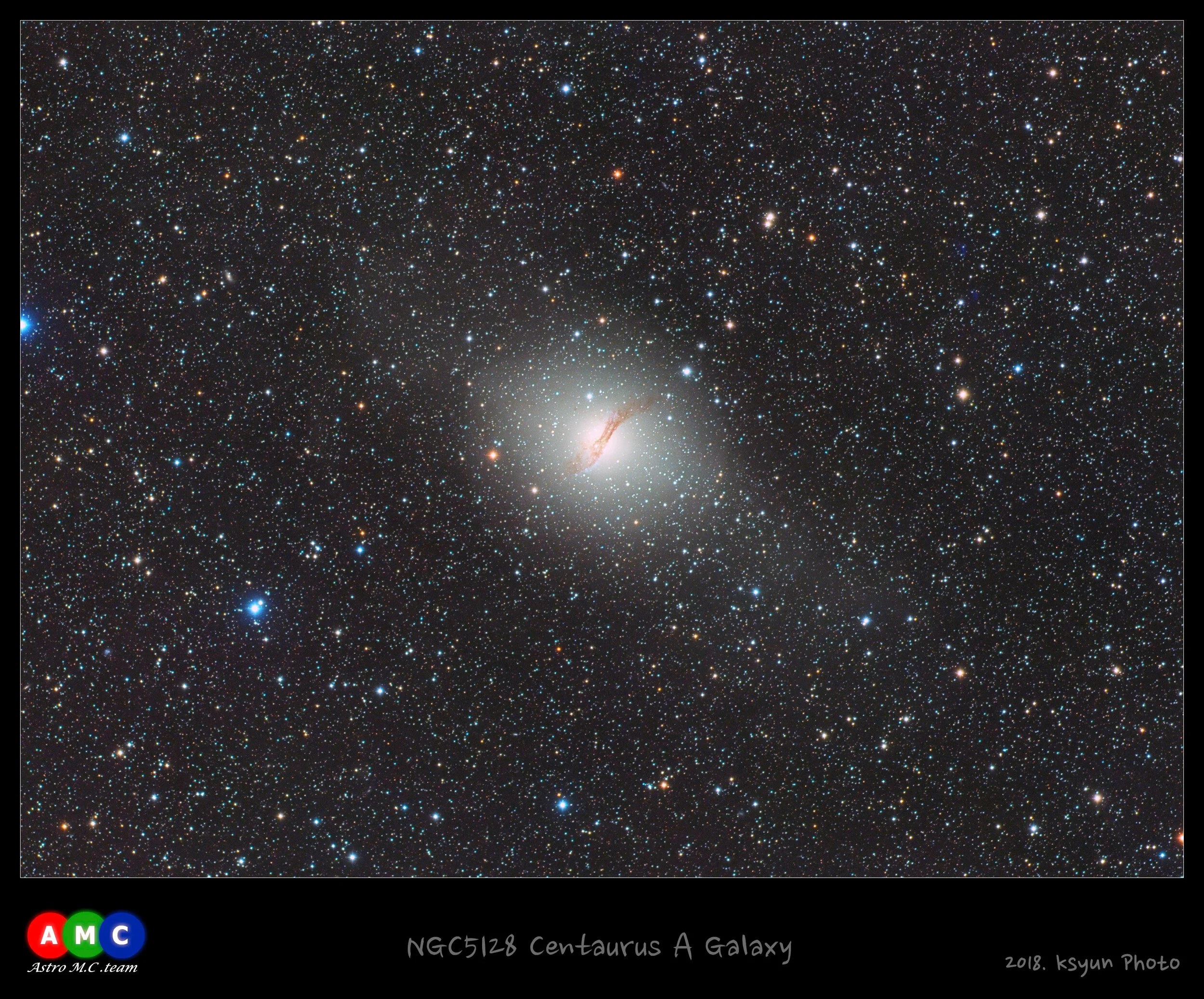
NGC5128 Centaurus A Galaxy
- Perth
- APM107/700 + Riccardi 0.75x Reducer
- KENKO AZ-EQ6GT
- QSI683WSG
- L 1Bin 600sec 13shots / R/G/B 2Bin 300sec shots each
Copyright: KyeongSang Yun
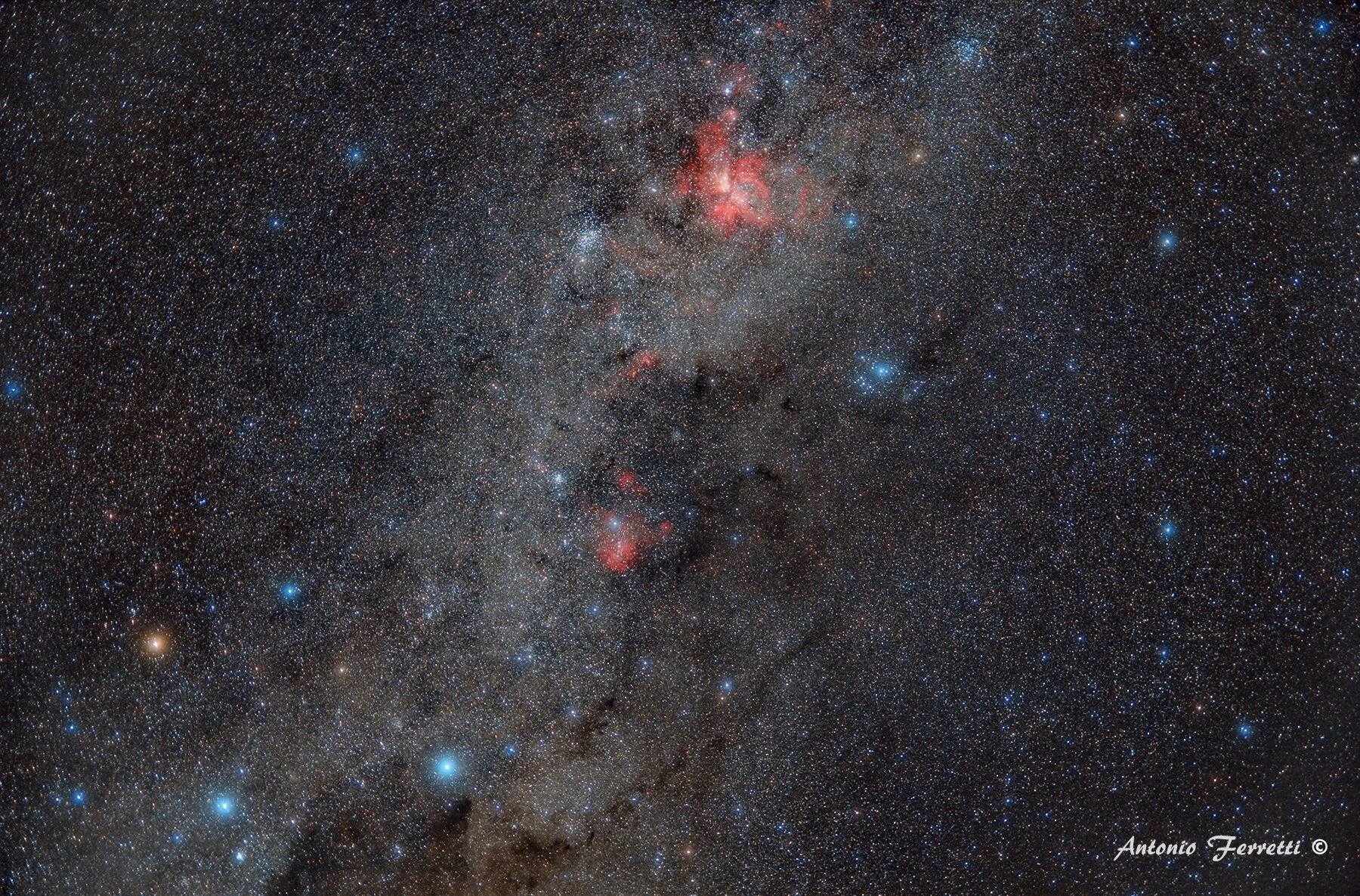
Southern Milky Way
Mount SkyWatcher Star Adventurer.
Digital Camera Canon 60 Da
Lenses Tamron SP 17-50 mm F/2.8 at 50/2.8
Total exposure: 44’ with integration of n. 19 image
Guider: QHY5L-II-M and Mini Borg ED 45
Adquisition: MaximDL
Imaging Processing by Attilio Bruzzone with PixInsight
Copyright: Antonio Ferretti (Photo Acquisition) from Papamoa (New Zealand) and Attilio Bruzzone (Imaging Processing).

The Great Spiral in Triangulum- M33
Image Description and Details : The great spiral galaxy M33 in Triangulum, a favorite among imagers, imaged from my home observatory under suburban Bortle 5 skies, during the month of Oct, early Nov 2019. Stellarvue SVX152T @f8, 1200mm FL on a Paramount MyT. QSI 683 camera using Luminance, Red, Green, Blue, and 5nm Ha filters. 360min Luminance bin 1x1, 300min Red, 290min Green, 280min Blue and 660min Ha bin 2x2. Total of 31.5hrs of exposure time. PixInsight used for processing. Please visit the full size link on the web page above to see individual stars resolved within the galaxy.
Copyright: Jon Talbot
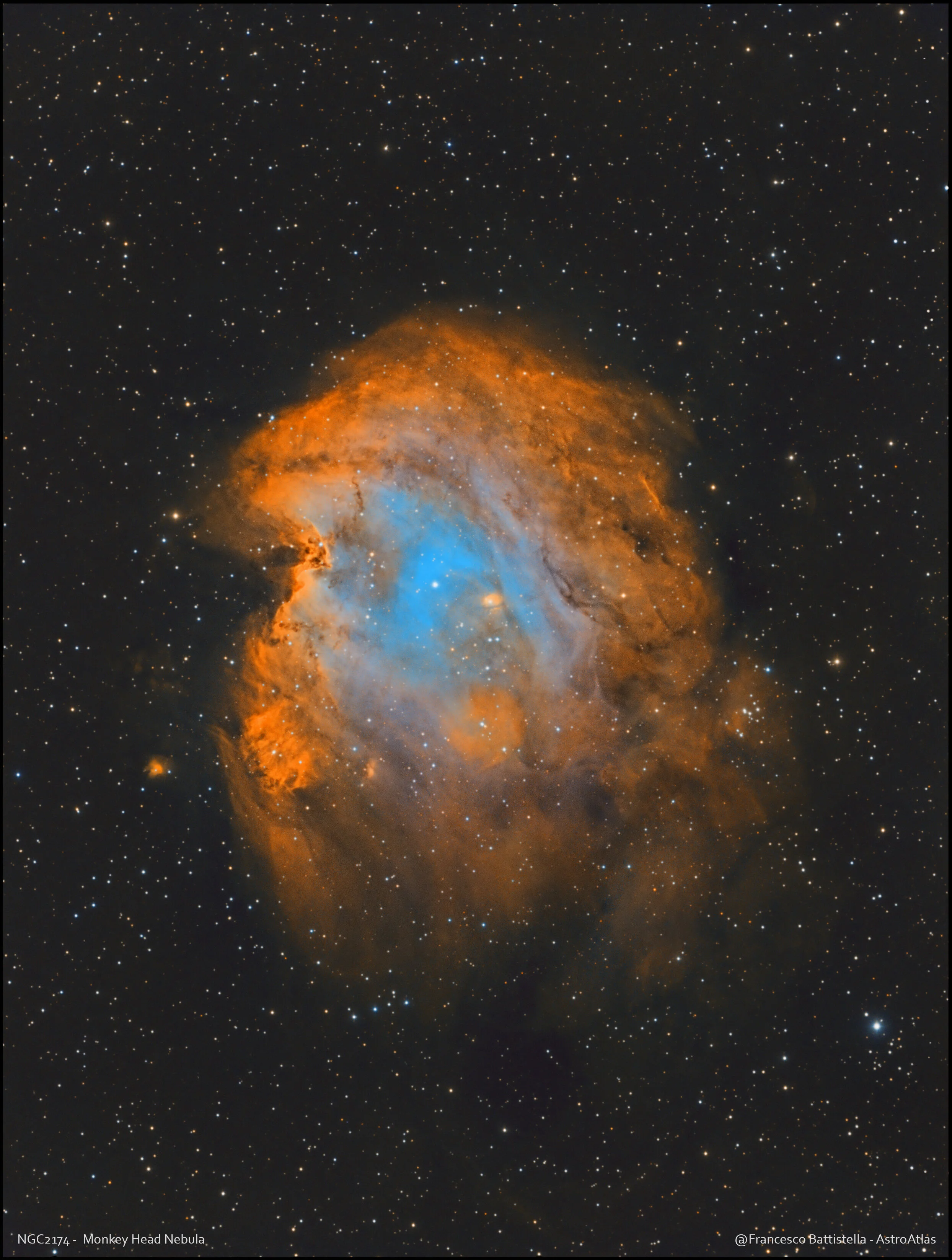
The Monkey Head Nebula - NGC2174
The monkey head nebula - ngc2174 is an emission nebula located in the Orion Constellation. It is associated with the stellar cluster ngc2175. It was given this name as you can see well from the photo, the face of a monkey.
I decided to process this photo with the Hubble Palette technique, and therefore, with fake colors to highlight better the emission areas of the various chemical elements that compose the nebula.
Optolong Astronomy Filter
Qhyccd
Technical Information:
Telescope: AIRY APO 130T
Mount: Paramount MyT - Software Bisque
Room: qhy9
Filter: Optolong H-A 7 NM, oiii 6.5 NM, be 6.5 NM
Frames: H-a: 32 x900s -- oiii: 32 x900s -- SII:32x900s
Total Integration: 24 Hours
Software: SGP – TheSkyX – PHD2 – DSS -PixInsight – CS6
Location: Noventa di Piave (Venice) 4 meter above sea level – ITALY
Environment Temperature: About 2°C
Relative Humidity: 88%
Date: 29.12.19 - 30.12.19 - 31.12.19 - 01.01.20
Copyright: Francesco Battistella
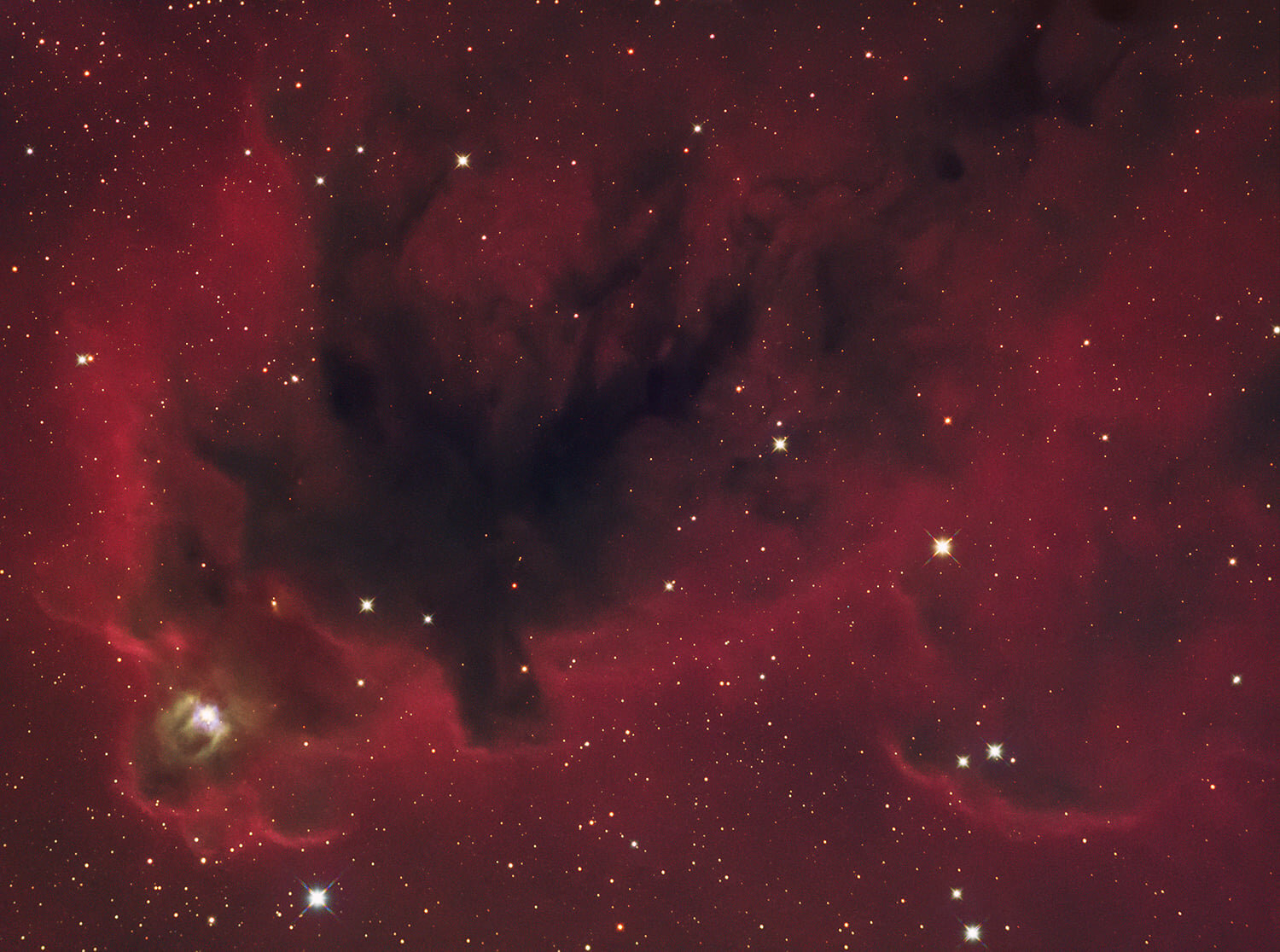
The Boogie Man Nebula
LDN 1622 "Boogie Man Nebula" in the constellation Orion
Equipment SBIG STT-8300 CCD Camera Takahashi CCA-250, 1,250 mm f/5 Astro-Physics 1200 GTO mount LRHa-RHaGB image, total exposure 1,180 mins (19hr 40 min) From TJ Observatory, Banmi, Lopburi, Thailand
Copyright: Tragoolchitr Jittasaiyapan

M63- Sunflower Galaxy
Astrnomik CLS-CCD: 90x300" -10C bin 1x1 ATIK 460ex_neq6pro_newton 200/1000
Astronomik RGB: 45x150" bin 1x1
Integration 9.4 Hours
Copyright: Rémi MERE