

AAPOD2 Image Archives
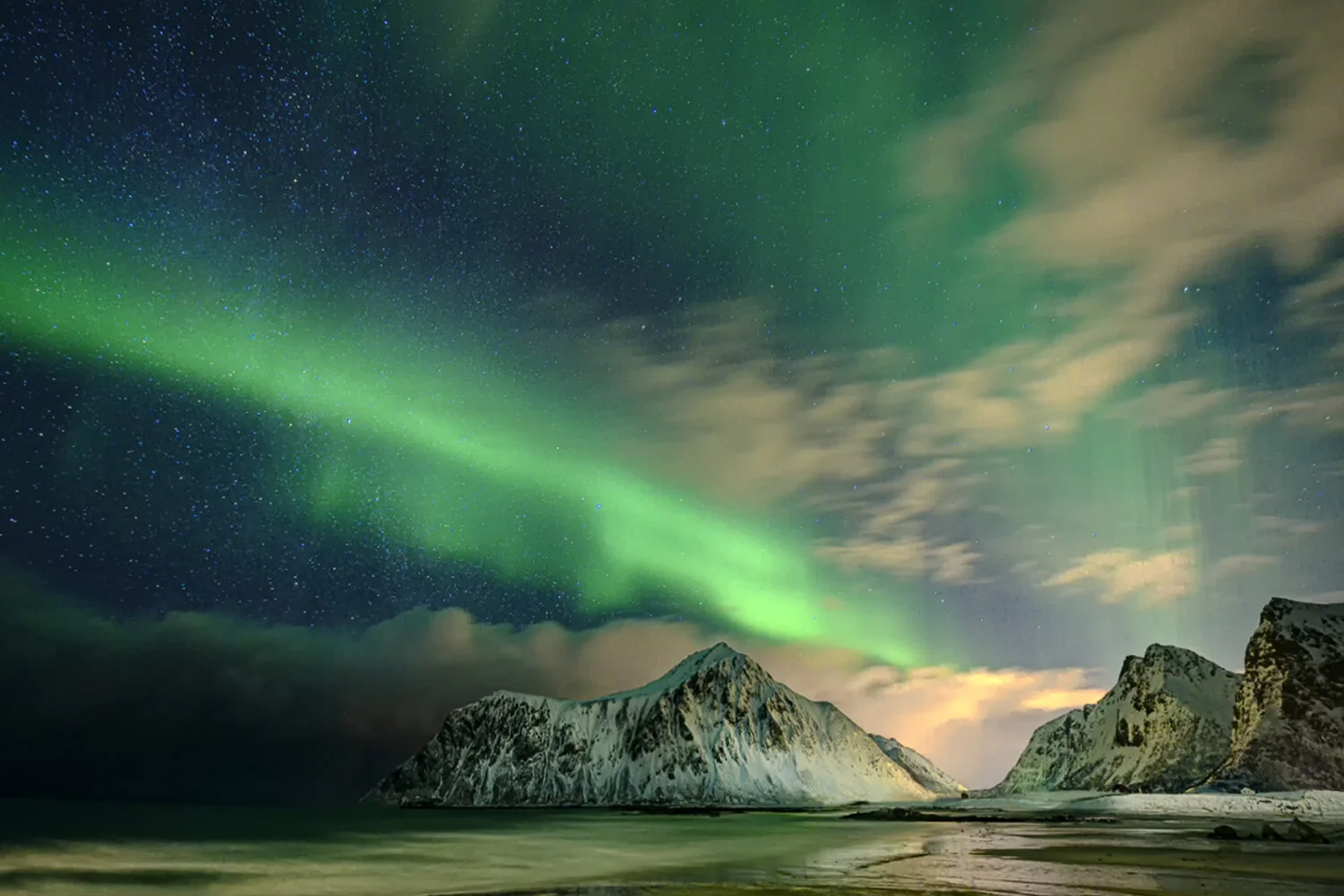
Green dance Over norway
Norway's peak season for the Northern Lights is between September and March, though that's to do more with the long, dark nights at this time of year rather than an increase in solar activity. Forecasting the Northern Lights means predicting solar activity, which is virtually impossible with our current technology. Timing is everything.
PLACE OF PHOTOGRAPHY
LOCATION: PLAYA DE SKAGSANDEN - LOFOTEN (NORWAY)
PHOTOGRAPHIC PARAMETERS
CAMERA: NIKON Z7 CAMARA
LENS: NIKOOR 14-24 F2.8
FOCAL: 14 MM
ISO: 800
SPEED: 30 S.
APERTURE: 2.8
TIME: 21:41
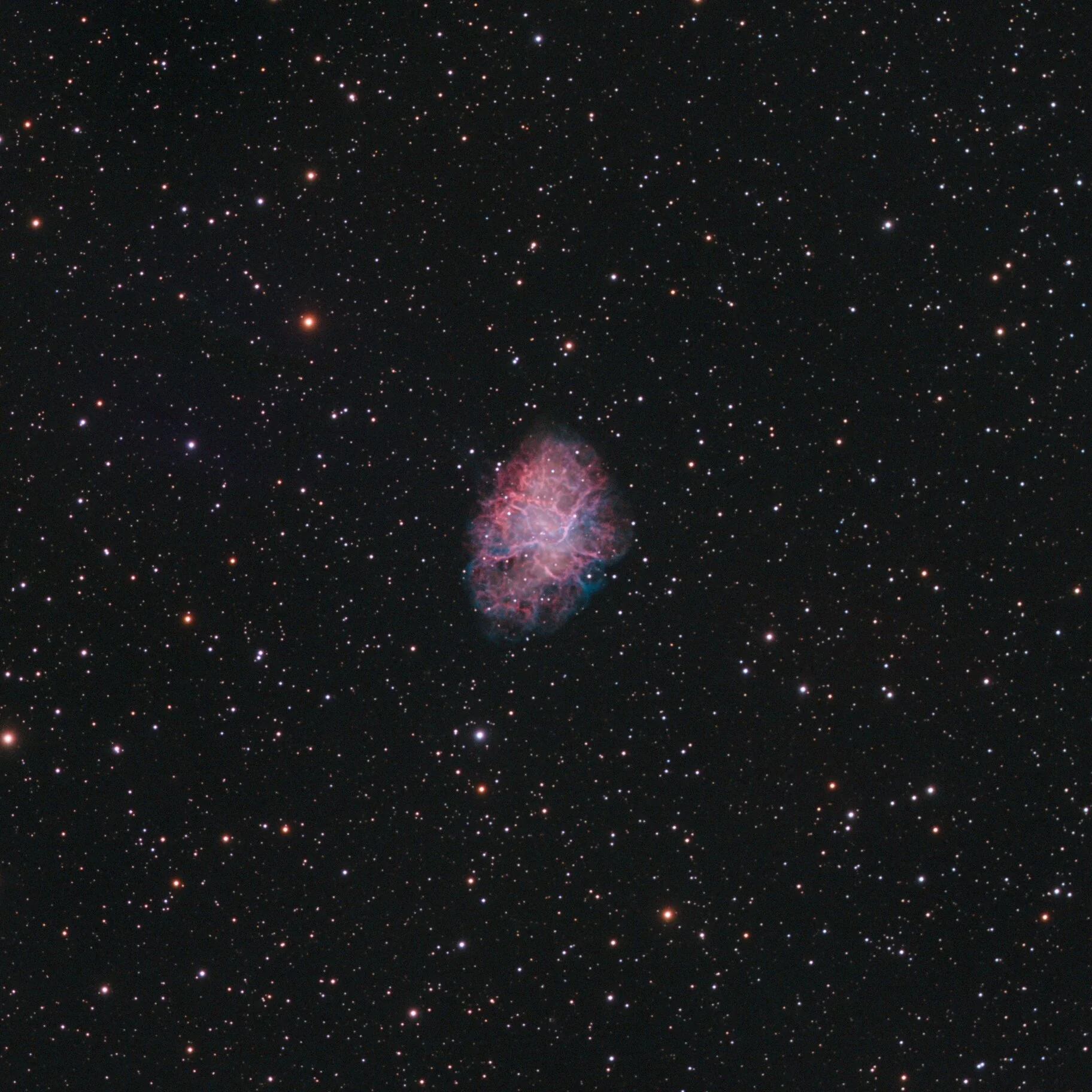
Crab Nebula : M1
A RGBHOO version of M1, Crab Nebula. Total integration time is 12 hours 19 minutes (R 2h 6m, G 2h, B 13m, Ha 4h 30m Oiii 2h 40m), image has been cropped.
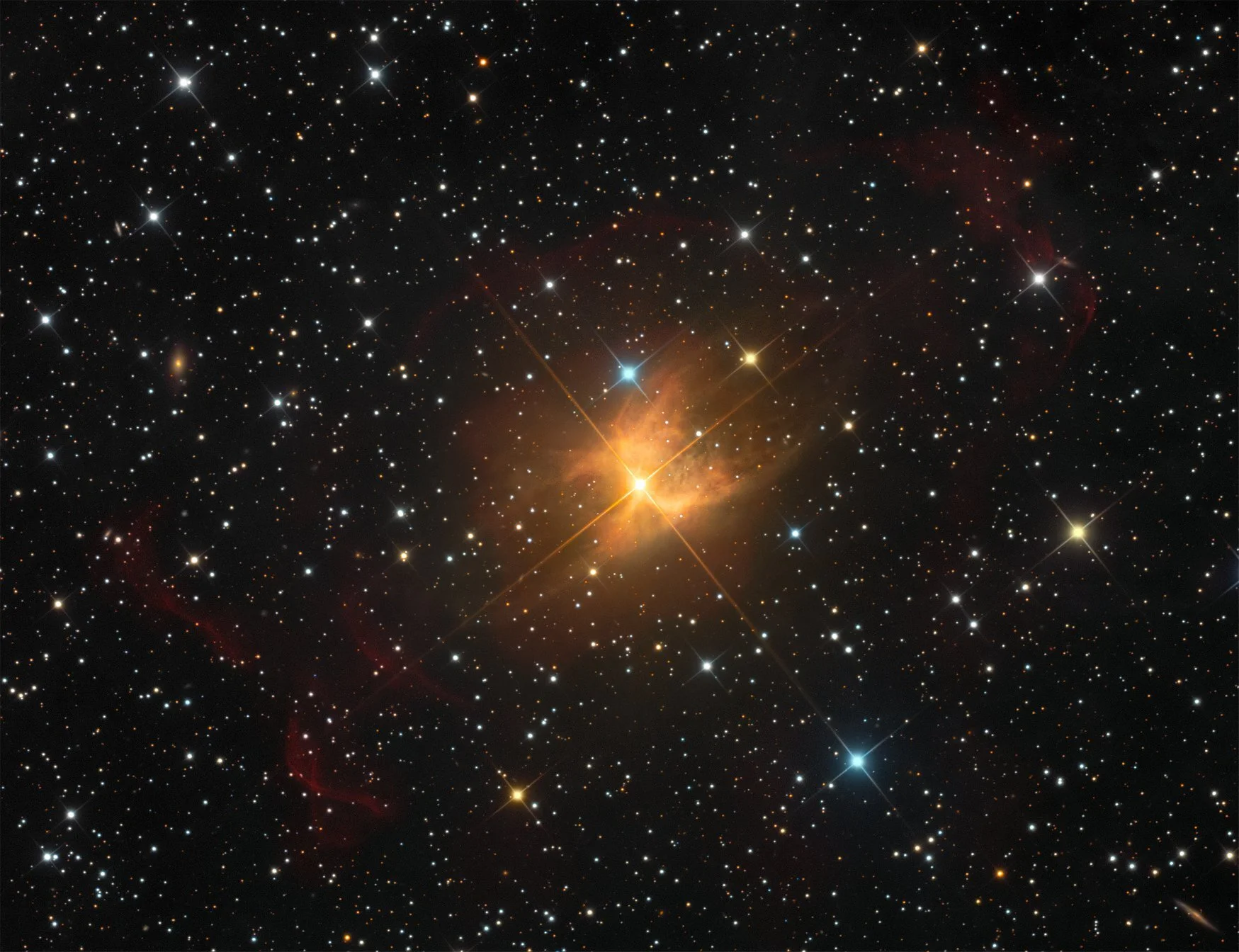
IC2220 - Toby Jug Nebula
Here is the Toby Jug Nebula imaged with the CDK17 in Chile (Obstech El Sauce).
While there are many images of this out there, few feature the outer Ha halo that was only recently discovered (I dont know how recent or who by).
The Ha is extremely faint and it took 21 hours at bin 2x2 to reveal what is shown here.
HFG 1
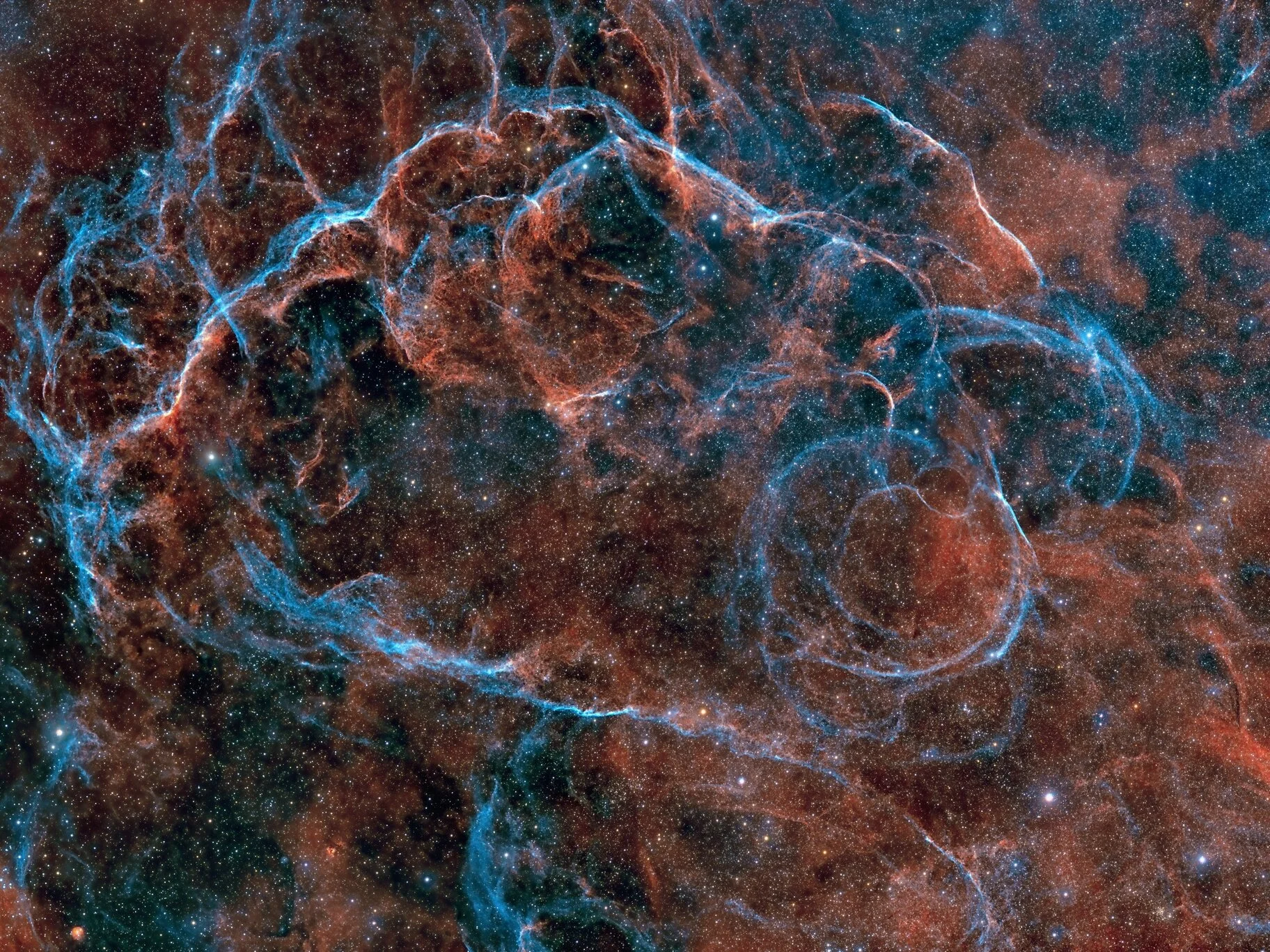
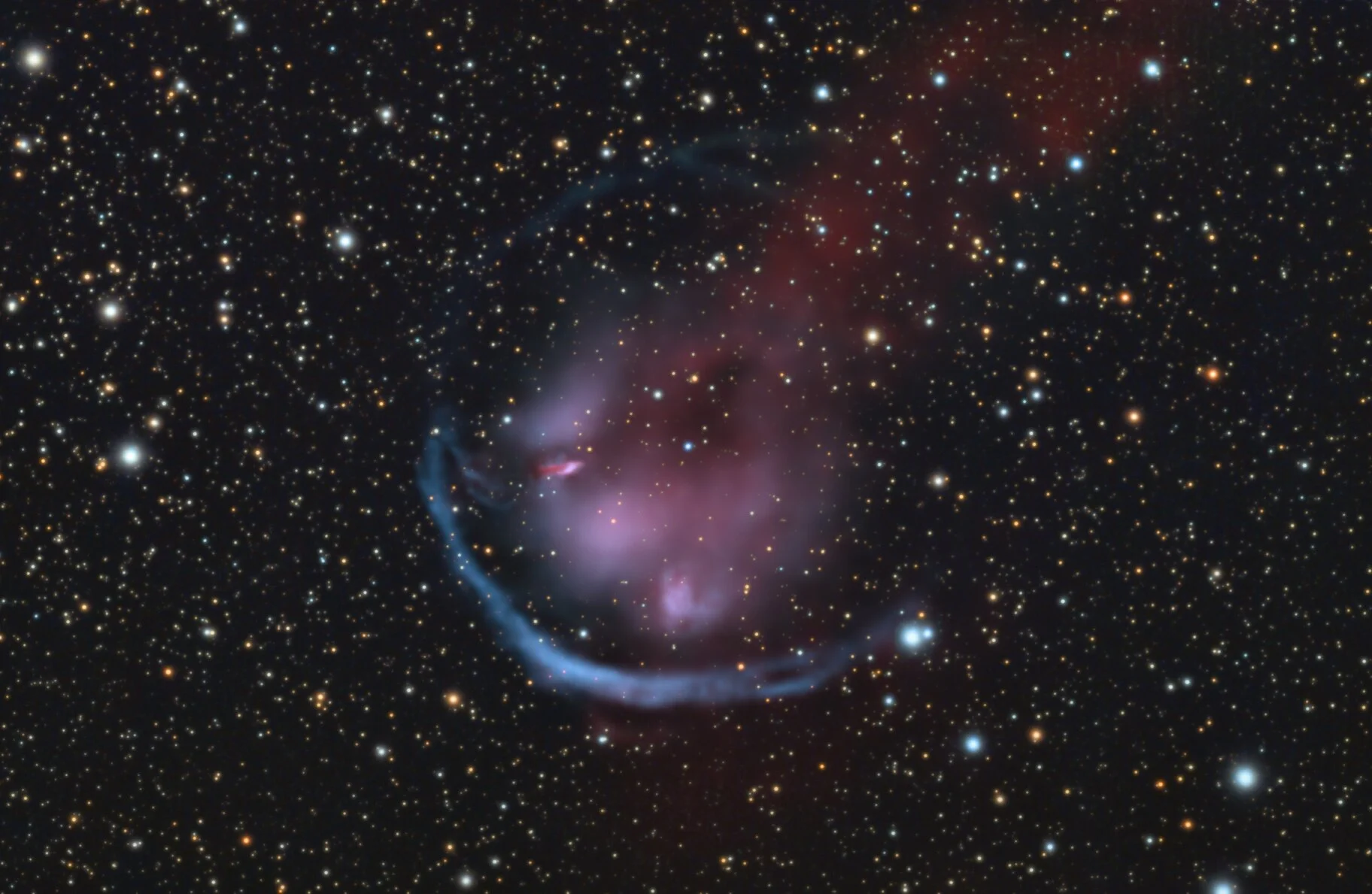
HFG 1 is a very old large, low-surface-brightness planetary nebula in Cassiopeia. It surrounds, and was produced by, a binary star system (V664 Cas) that is moving rapidly through our Galaxy. V664 Cas is comprosed of a white dwarf star and a large red giant. The two stars are very close and rotate around their common centre of gravity every 14 hours. The star system is moving towards the lower left of the image. As HFG 1 plows through the interstellar medium, a bluish bowshock is produced; and a red trail of gas is left behind in its wake.
EQUIPMENT USED
Twin APM TMB LZOS 152 refractors
10Micron GM2000 HPS mount
Twin QSI6120 CCD cameras
Astrodon filters
IMAGE CAPTURE
5nm H-Alpha: 33x1800 bin 2x2
3nm OIII: 35x1800 bin 2x2
Luminance: 11x600 bin 1x1
Red: 10x300 bin 1x1
Green: 10x300 bin 1x1
Blue: 10x300 bin 1x1
Total integration: 38.3 hours
Pixel scale: 0.533 arcsec/pixel
Field radius: 0.351 degrees
Capture dates: 15 October - 6 November 2019
Capture location: Fregenal de la Sierra, Spain
Copyright: Peter Goodhew
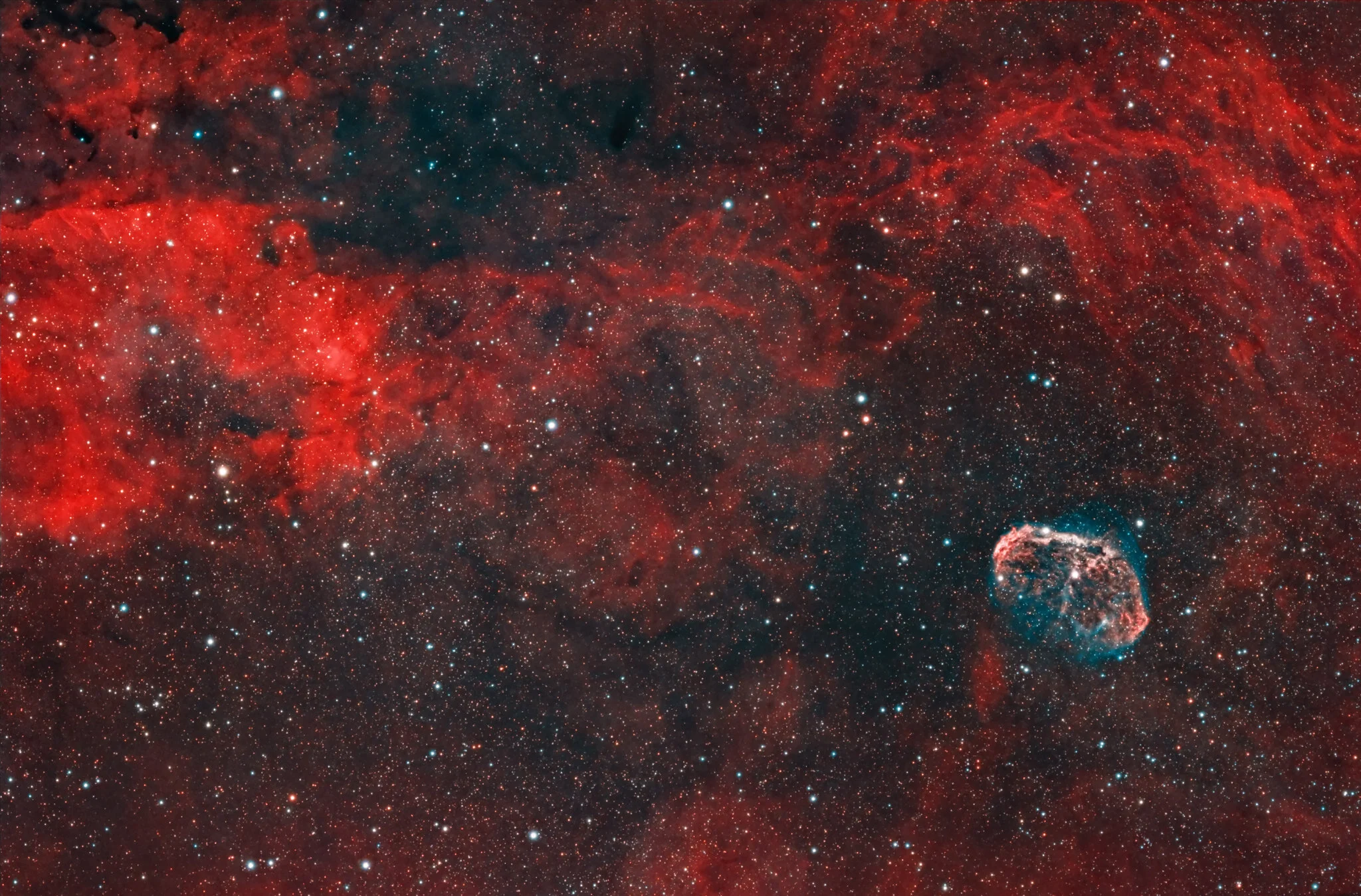
Crescent Nebula aka NGC6888
Triple shot combination in H Alpha, OIII and RGB late October 2019.
Crescent Nebula, NGC6888, remnant of an ancient supernova in the Swan constellation, just below the bright star Sadr.
Shooting on 29-9, 30-9, 02-10 from a 5.5 bortle sky
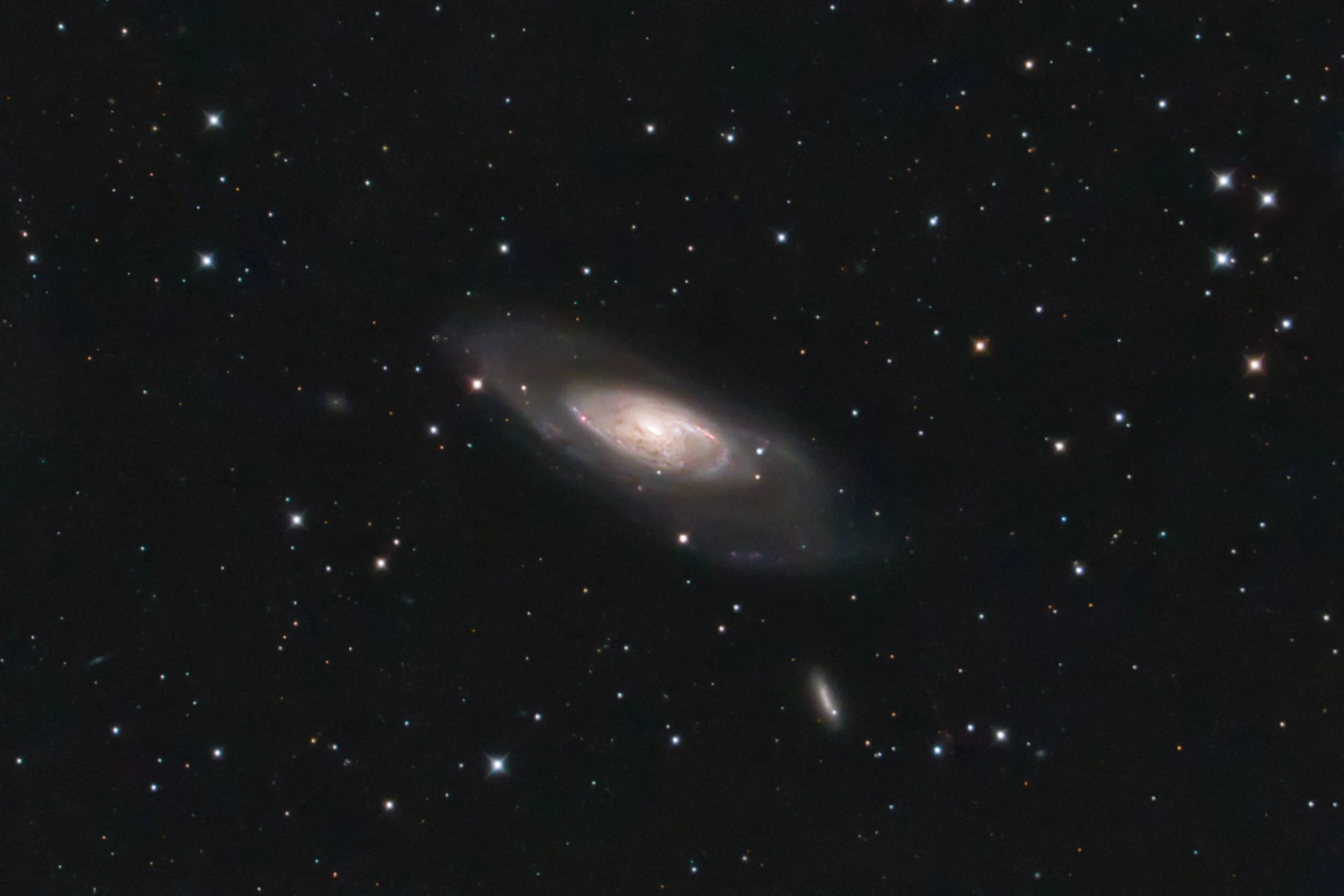
M106: in Canes Venatici
Discovered by Pierre Méchain in 1781, Messier 106 (M106) is a spiral galaxy located in the northern constellation Canes Venatici. The galaxy lies at a distance of 22 to 25 million light years from Earth. It has the designation NGC 4258 in the New General Catalogue.
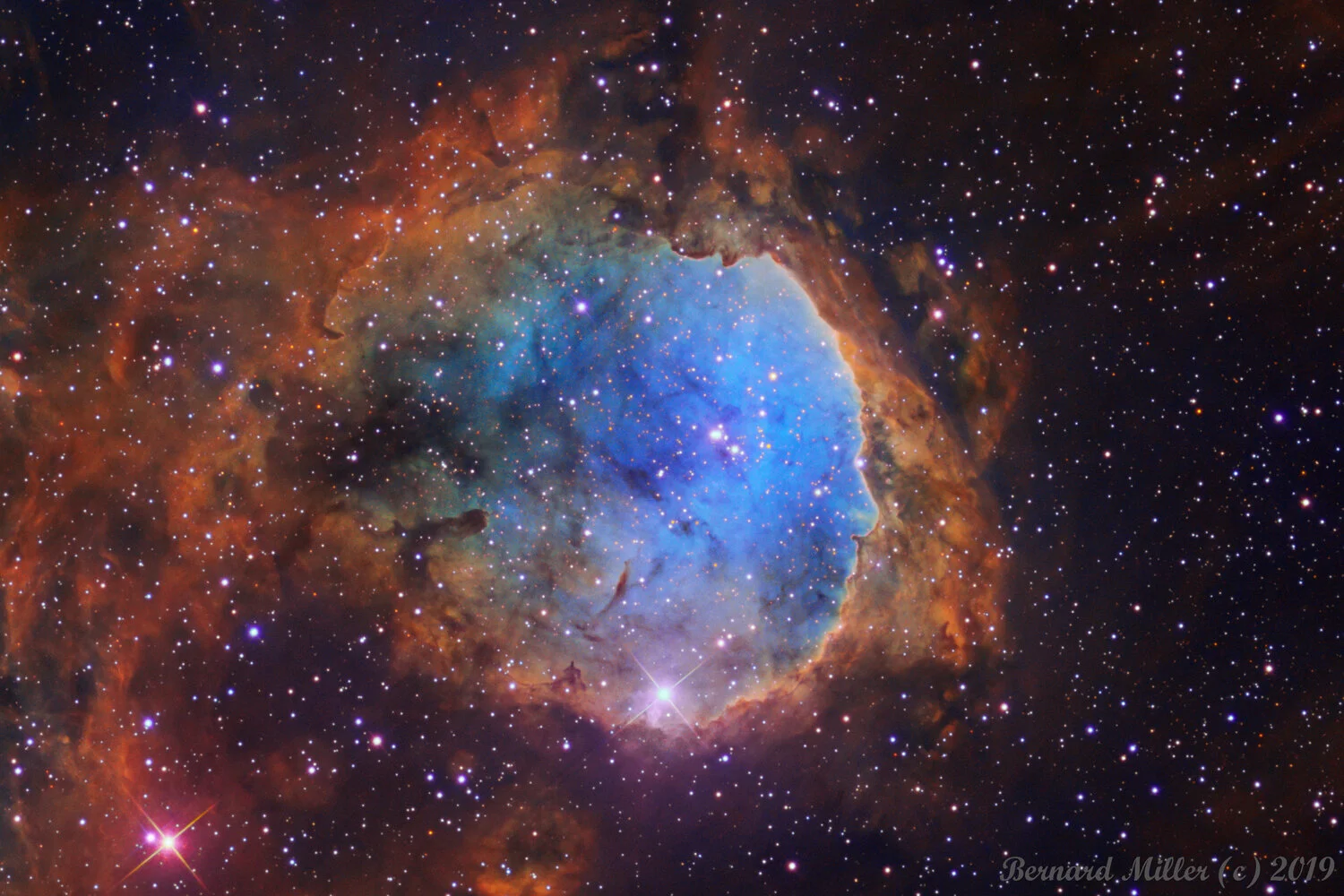
NGC 3324 The Gabriela Mistral Nebula
Copyright 2020 Bernard Miller
March 30, 2020
Location: New South Wales, AU
Telescope: RCOS 12.5 inch
Camera: SBIG STXL11002 with AOX
Mount: Paramount ME II
HA: 12x20 minutes (binned 1x1)
SII: 12x20 minutes (binned 1x1)
OIII: 12x20 minutes (binned 1x1)
RGB: 8x20 minutes each (binned 1x1)
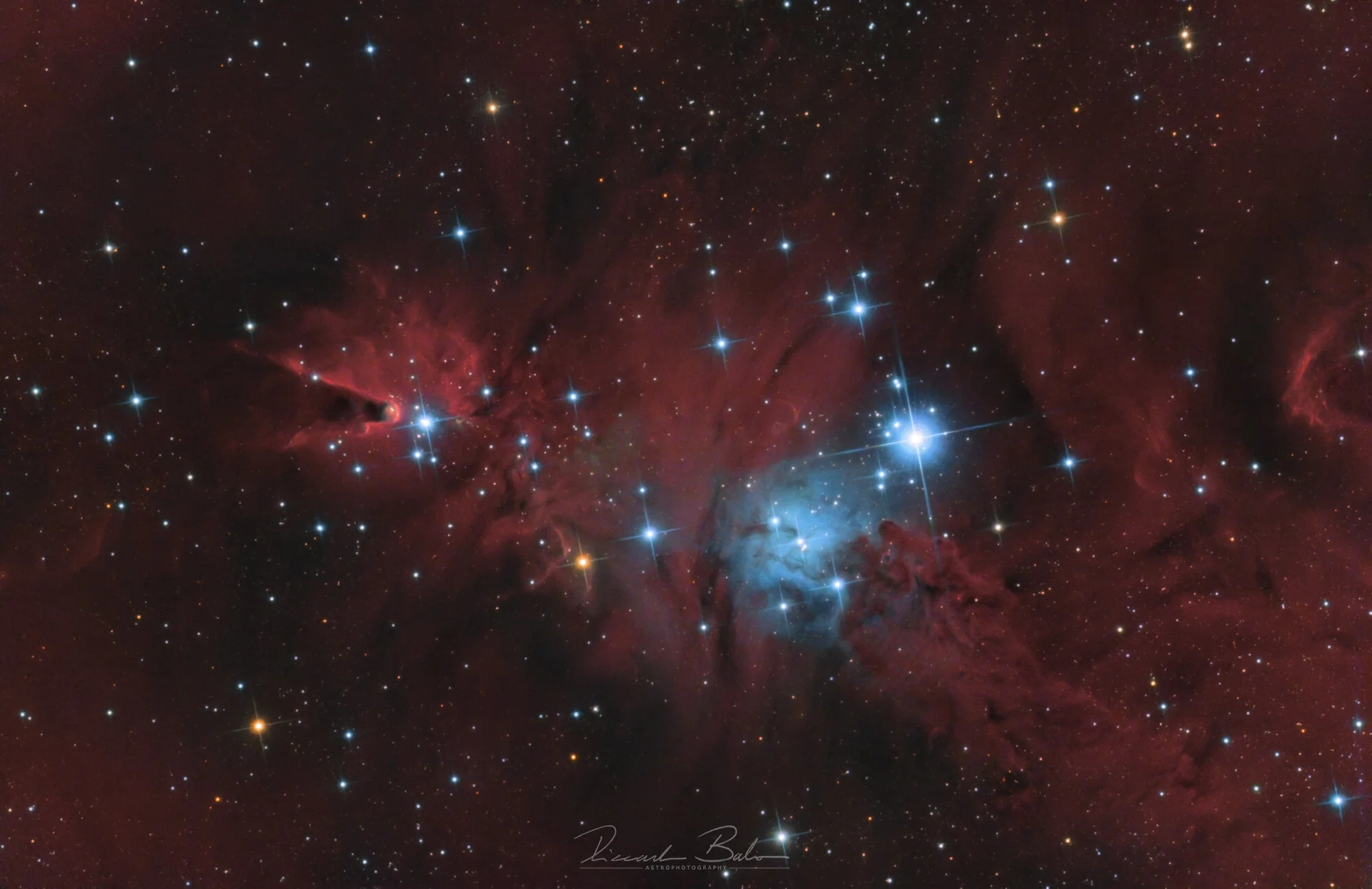
Cone Nebula Complex
This is an image of the brightest part of the Monoceros OB1 molecular complex, which include the Cone Nebula, the Christmas Tree Cluster and the Fur Fox Nebula. The image is an HaRGB composition, frames are taken under rural sky (sqm 20.5) with a reflex Canon 1000D mod. Baader, for a total exposure of 15h (6h RGB, 9h Ha).
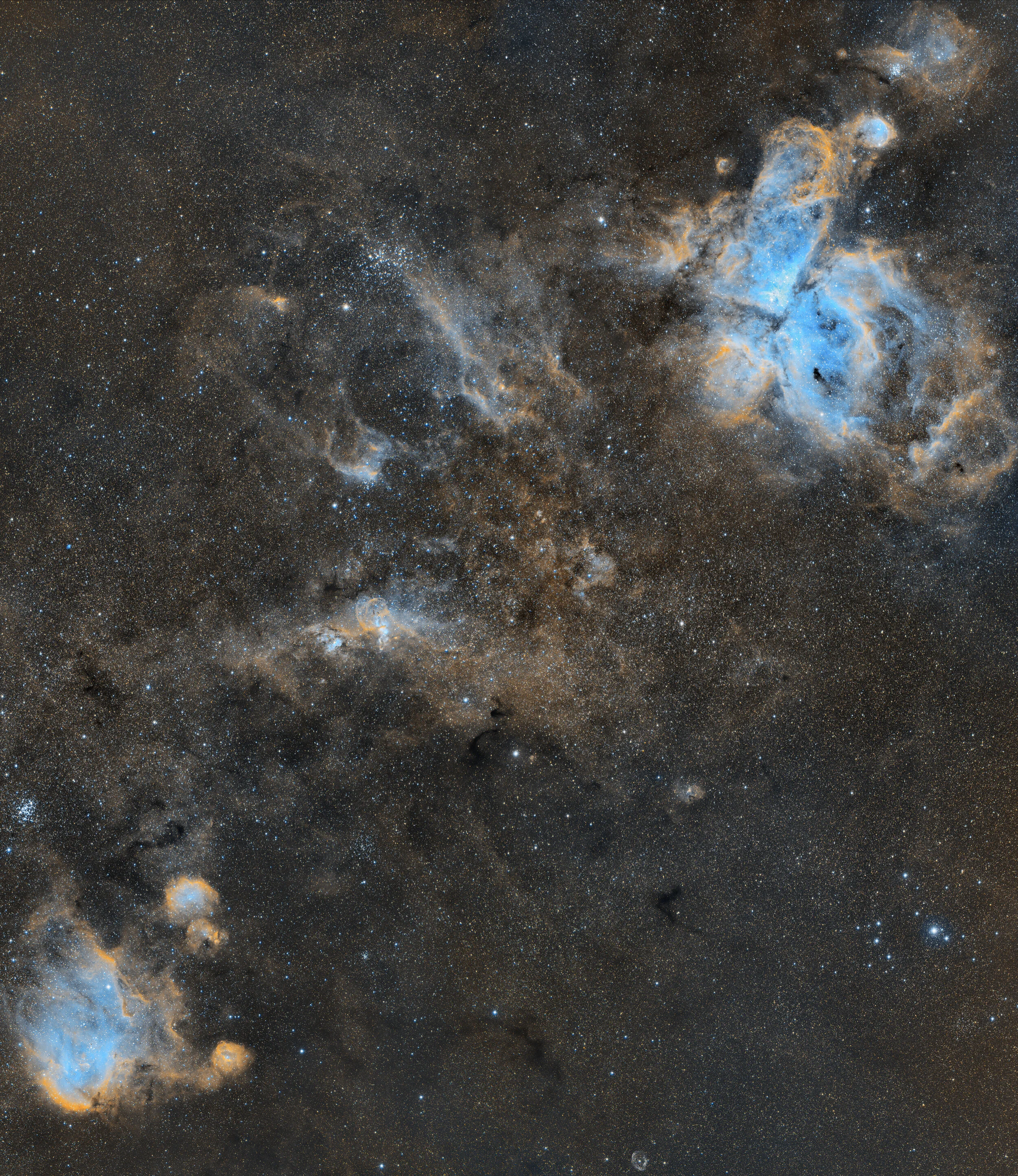
Eta Carinae & Running Chicken region
This has been the biggest (and most pleasurable) challenge of all. Make a mosaic using a narrow band from a wide region of the sky. It was almost two months using every good day to capture.
The biggest difficulty was being able to make the correct color adjustment of the background of the image without affecting the nebulae, I lost count of how many times I used DBE on Pix or redid the mosaic by the APP until I managed to reach this final…
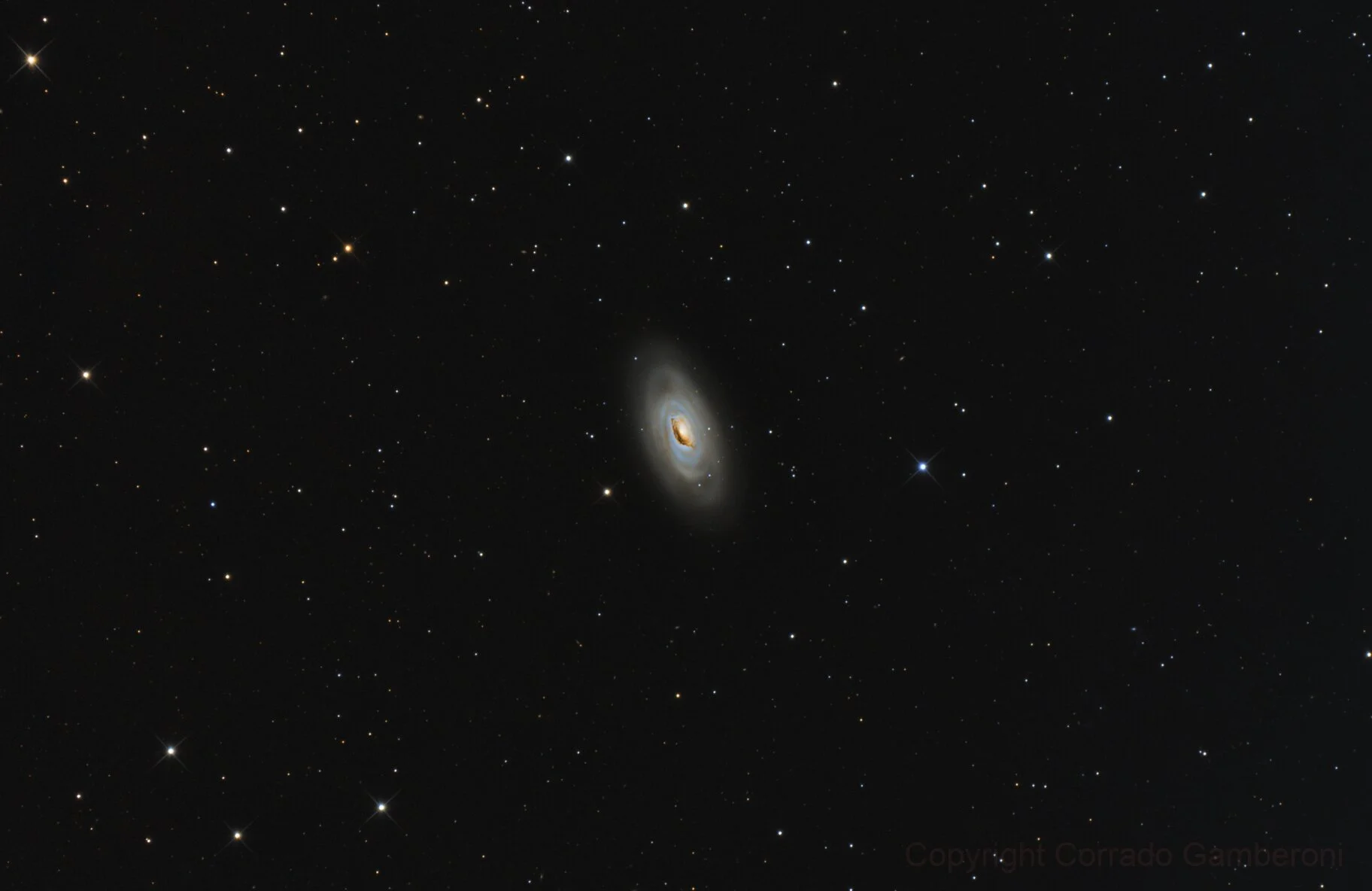
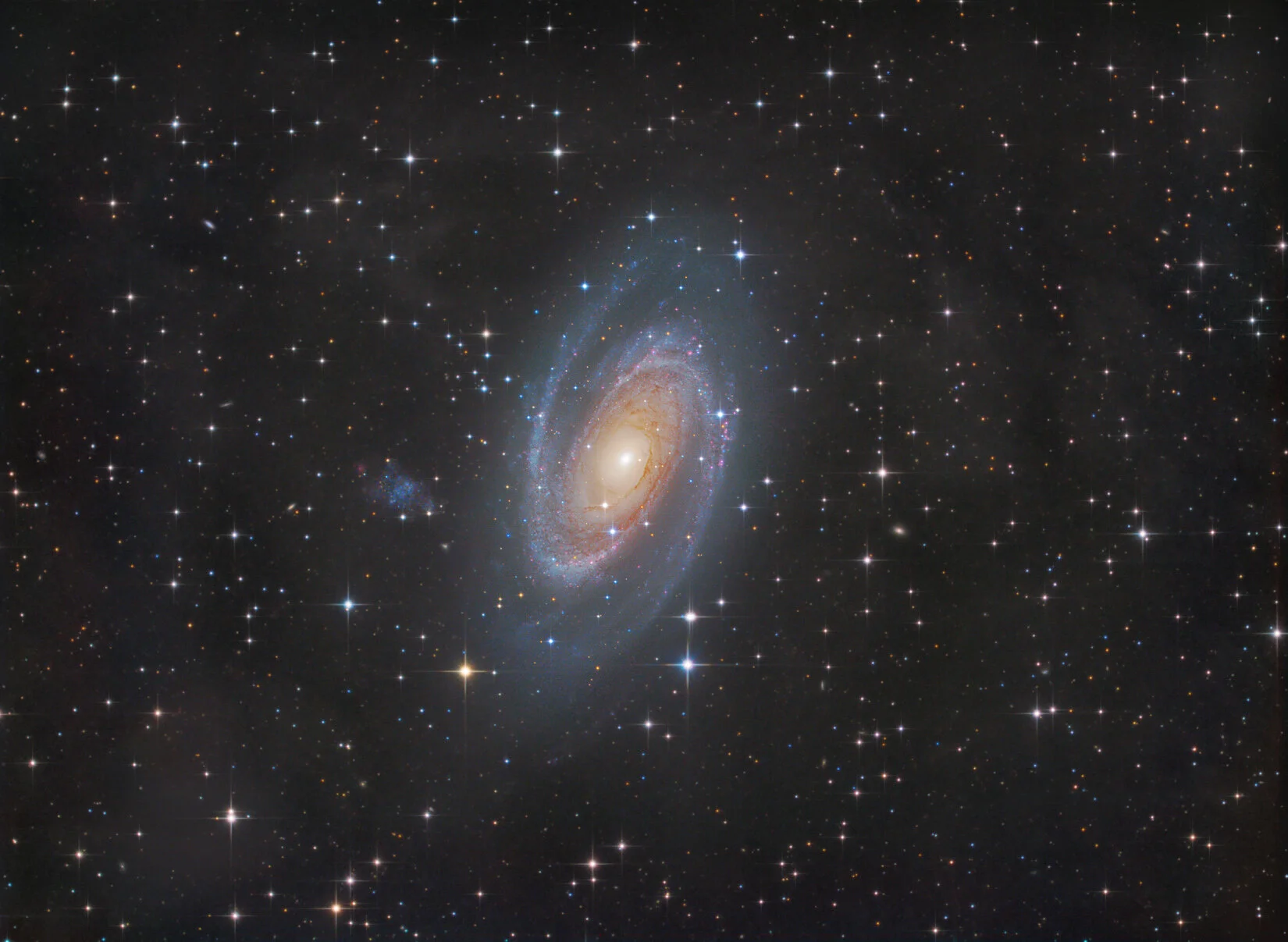
M64
17 million light years from us, in the Constellation of the Chioma of Berenice we find a bright and beautiful galaxy marked by the initials M64.
It is also called "Black Eye Galaxy" due to a vast area of dark dust that covers part of the central area.
The latest studies have shown that the peripheral part of the Galaxy rotates in the opposite direction of the nucleus, probably due to an "ancient" clash with a smaller galaxy captured by M64. This clash would have started to rotate the outer part of the galaxy in the opposite direction to the nucleus. These two areas that rotate in the opposite direction collide forming compressed "gas pockets" creating regions with an extremely intense star formation.
Imaging telescope or lens:Geoptik Formula 20 - Newton 200/1200
Imaging camera:Nikon D5100 full Spectrum Modded
Mount:Sky-Watcher EQ6 SynTrek
Guiding telescope or lens:Sky-Watcher 80/400 f5 acro
Guiding camera:QHYCCD5L-II-M
Filter:Optolong UV/IR Cut
Accessories:Explore Scientific HRCC Coma Corrector , Selfmade Peltier CoolingBox
Dates:15 Mar 2020 , 16 Mar 2020
Frames:
Optolong UV/IR Cut: 58x300" ISO200 -5C
Optolong UV/IR Cut: 39x600" ISO200 -5C
Integration: 11.3 hours
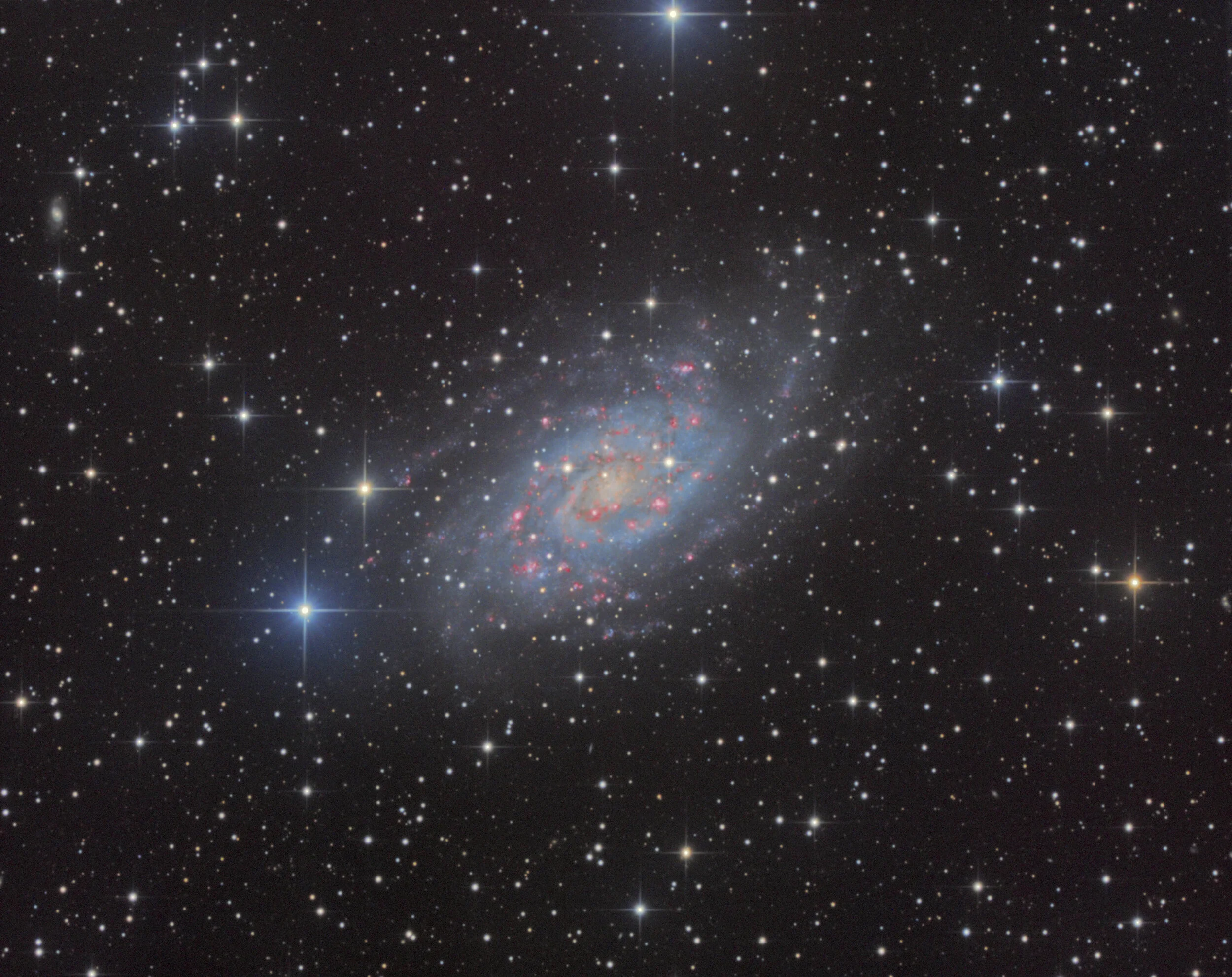
Ngc 2403
Instrument or lens: SkyWatcher 200/1000 BLACK DIAMOND Atik 460 EX Mono SkyWatcher NEQ6 Pro Goto Guidance ZWO OPTICAL DIVIDER Reducer / focal corrector SkyWatcher Coma Corrector II Astronomik RGB, Baader Ha 7nm, Astrnomik CLS-CC Access -s Astrnomik CLS-CCD: 104x300 "-10C bin 1x1Baader Ha 7nm: 140x300" bin 1x1 Astronomik RGB: 48x150 "bin 1x1 Integration: 22.3 Hours Darks: ~ 50Flats / PLU: ~ 11Bias / offset: ~ 1001Astrometry.net job AD: 7h 36 '52 "DEC center: + 65 ° 36' 10" Pixel scale: 0.468 arcsec / pixel Orientation: 179.532 degrees Field radius: 0.450 Source data: BackyardCopyright: Rémi Méré

M95 Spiral Galaxy
Messier 95, also known as M95 or NGC 3351, is a barred spiral galaxy located about 33 million light-years away in the zodiac constellation Leo. It was discovered by Pierre Méchain in 1781, and cataloged by fellow French astronomer Charles Messier four days later. It has around 40 billion stars.
Copyrigth: David Wills at PixelSkies, Spain www.pixelskiesastro.com
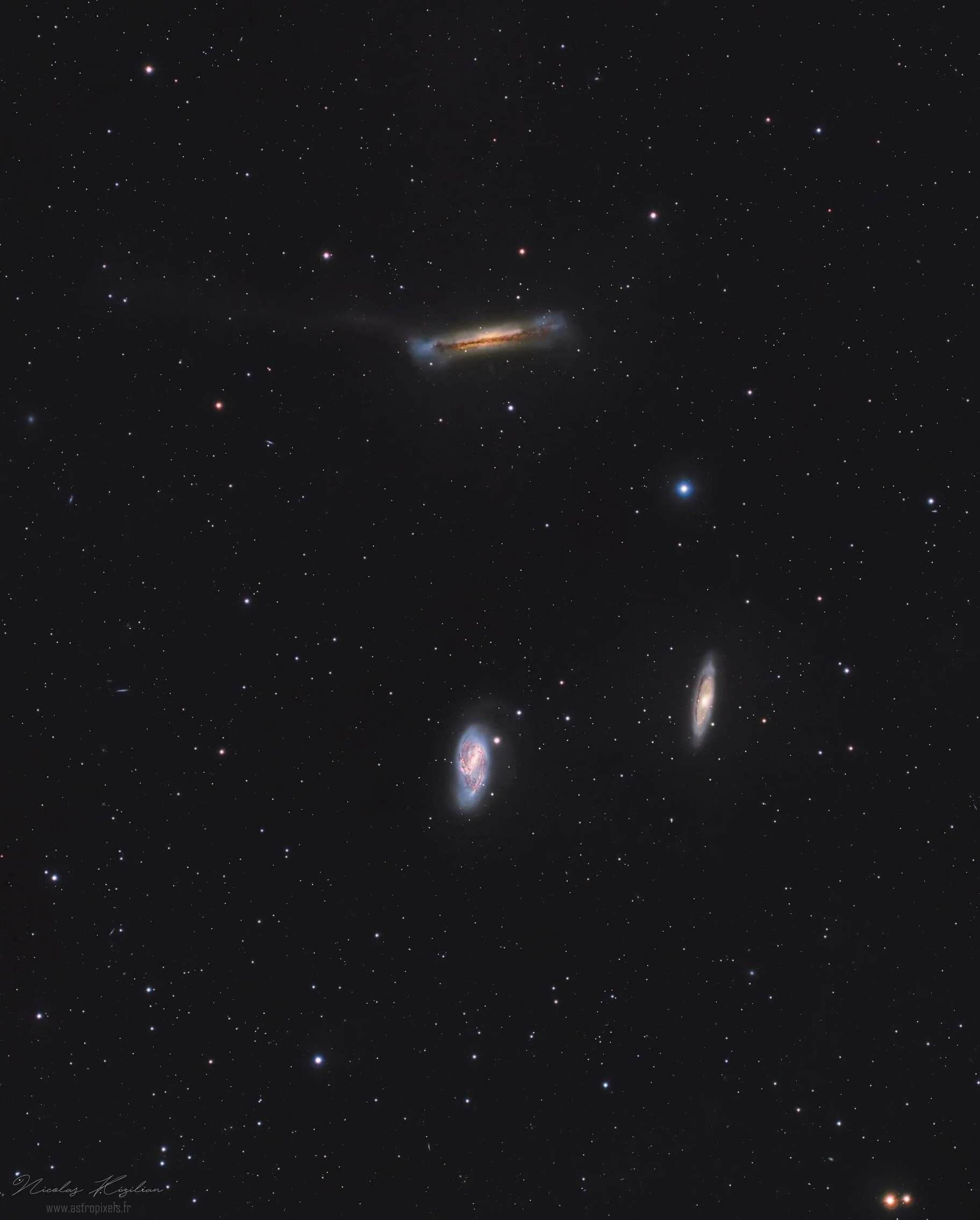
Cosmic Distancing: The Leo Triplet AKA M66
Even the cosmos is practicing “Social Distancing” The great classic of this time of year: Leo triplet, made from a backyard in the Paris region.
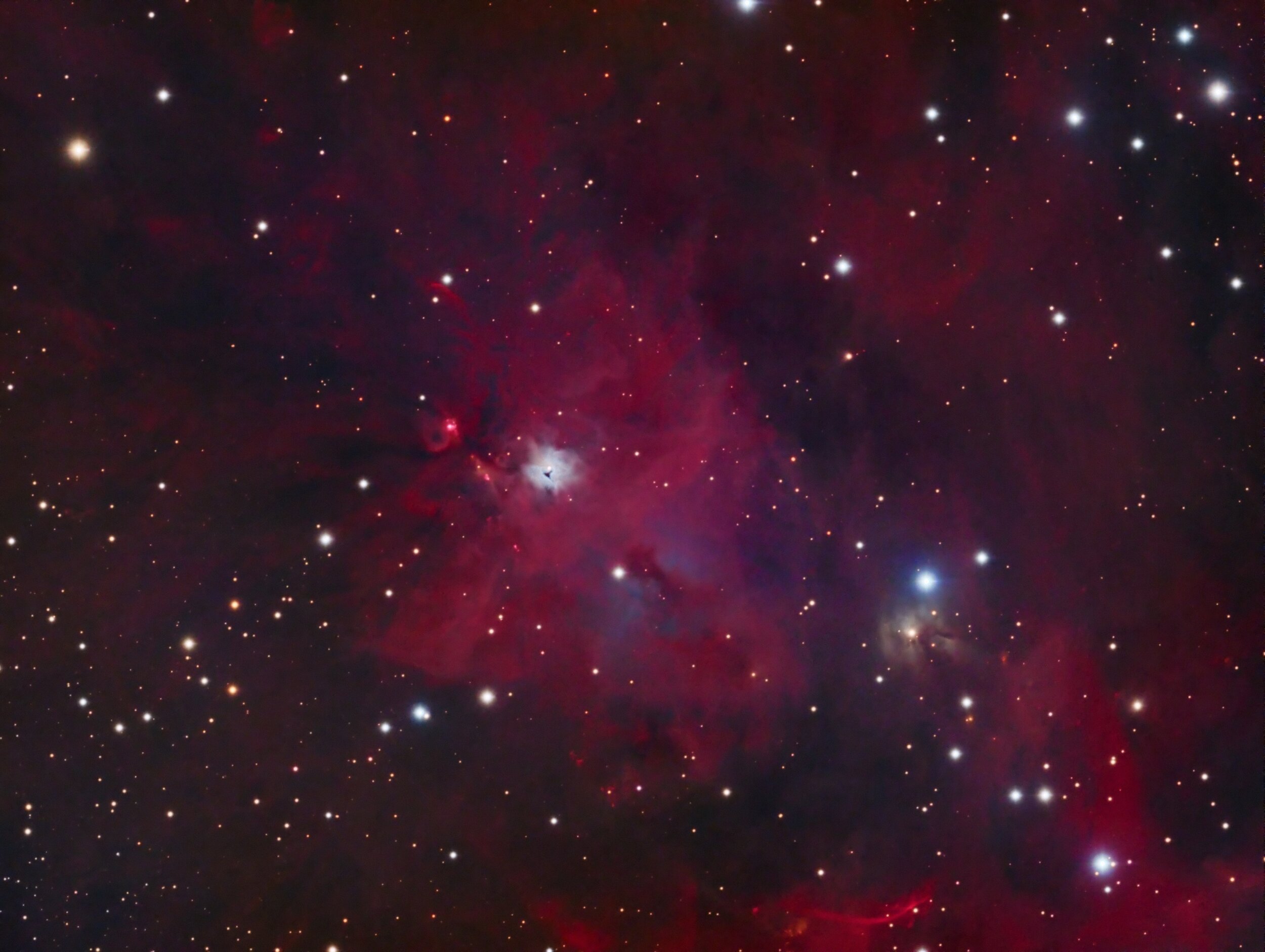
Reflection Nebula NGC 1999
Reflection nebula NGC 1999 in Orion. The small bluish patch of nebulosity with an inverted T at its center is enveloped within a much larger area of emission nebulosity in Orion. The nebula is illuminated by the variable star V380 Orionis which is visible right nest to the dark inverted T. This dark are is a source of much discussion and has been images by many of the great observatories.

SH2-205 Nebula
September 2018 / January 2020
Location: San Romualdo - Ravenna
Tecnosky AG70 / 350
ASA DDM60PRO with Autoslew and Sequence.
QSI 583wsi cooled CCD -20 - Unguided
RGB Astrodon Gen2 E-seriese Narrowband 3nm
HA-RGB: HA 32x15min, R 30x5min, G 30x5min, B 28x5min
Copyright: Cristina Cellini

NGC 3576 - The Statue Of Liberty Nebula in Hubble Palette
NGC 3576 is a minor nebula in the Sagittarius arm of the galaxy a few thousand light-years away from the Eta Carinae nebula. This nebula even received six different classification numbers. Currently, astronomers call the entire nebula NGC 3576. A popular nickname is "The Statue of Liberty Nebula" because of the distinctive shape in the middle of the nebula. The name was first suggested in 2009 by Dr. Steve Mazlin, a member of Star Shadows Remote Observatory (SSRO).

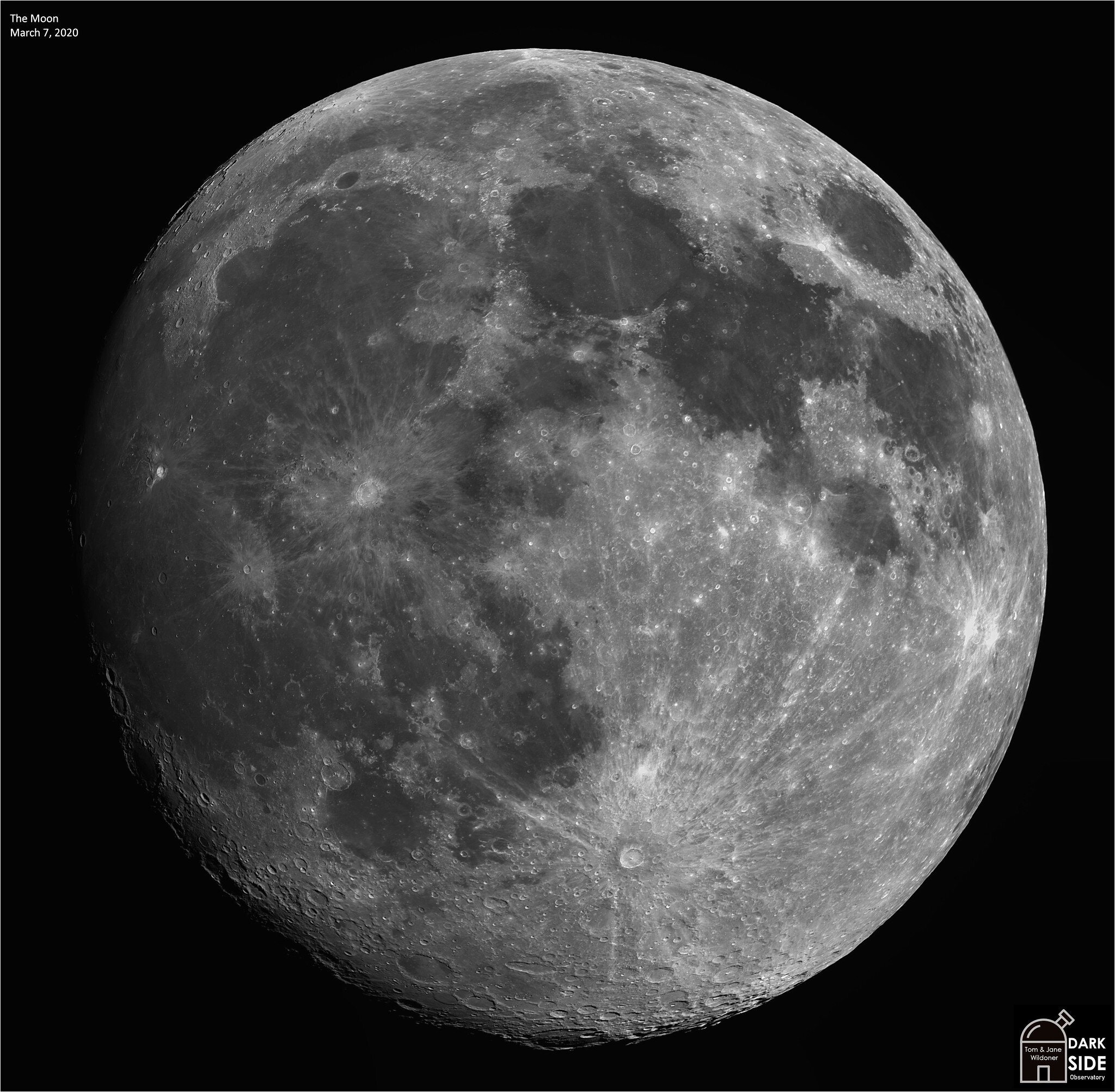
Worm Super Moon
The more northern tribes of the northeastern United States knew this as the Crow Moon, when the cawing of crows signaled the end of winter, explains NASA, on its website. Other northern names were the Crust Moon, because the snow cover becomes crusted from thawing by day and freezing by night, or the Sap (or Sugar) Moon as this is the time for tapping maple trees.
Worm supermoon and four towers of Madrid.
Composition seven shots:
Camera: Canon 7d mkII
Lens: 150-600 Tamron.
Copyright: German Penelas Perez