
AAPOD2 Image Archives
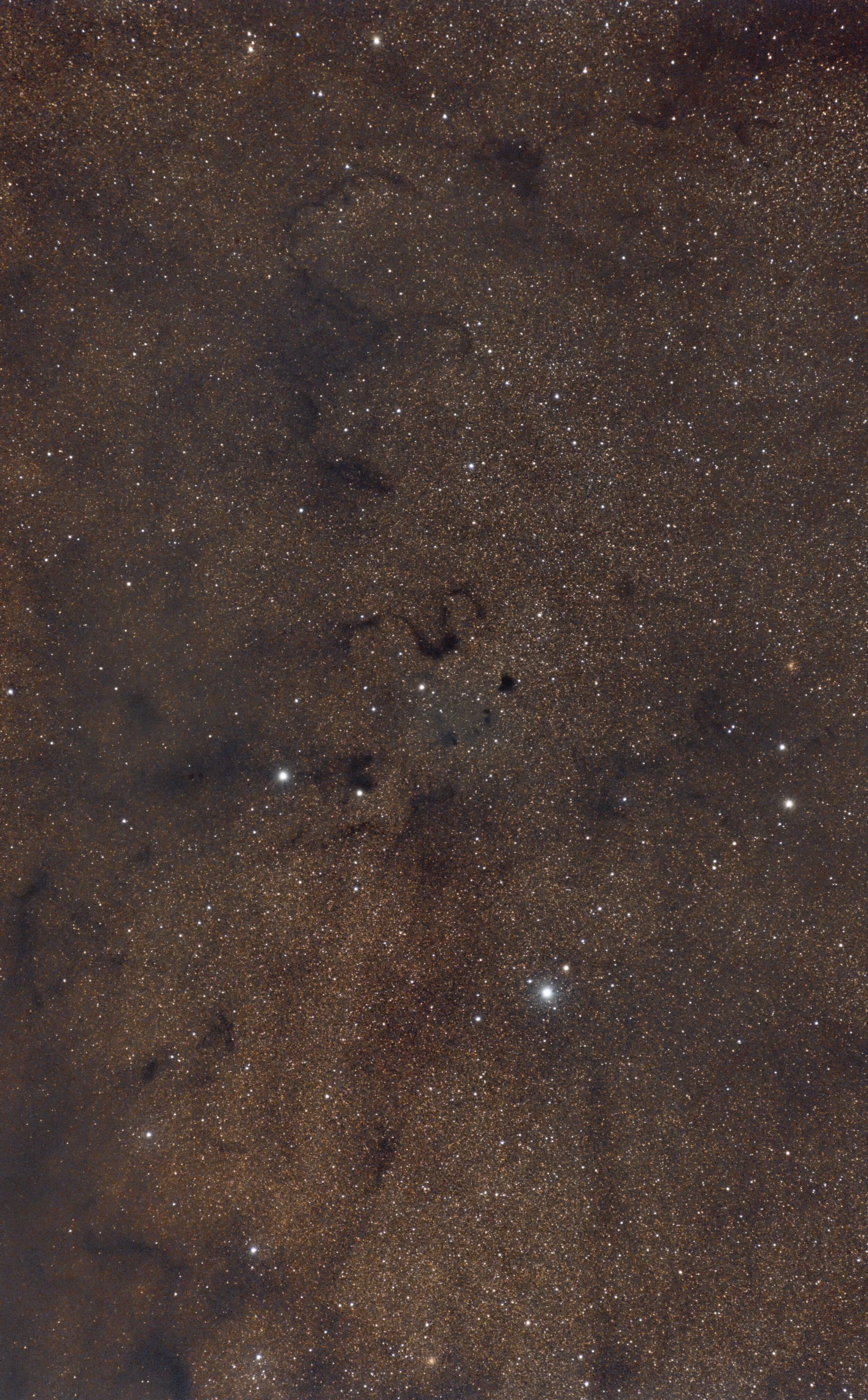
A Snake in the Dark
Image Description and Details :
The Snake Nebula and Ink Spot Nebula visible in front of the thousands of coreside stars.
Shot from my backyard under Bortle ~5 rural skies. Located close to Indian city of Dehradun.
40x90s (1 hour) exposures at f6.3 & ISO1600 with a Sigma 100-400 lens at 400mm and a full spectrum Canon 6D on an iOptron SkyGuider Pro portable star tracker.
Processed in Pixinsight and Adobe Photoshop. Binned 2x2 for web display.
Copyright Information: Jaasim Mulla
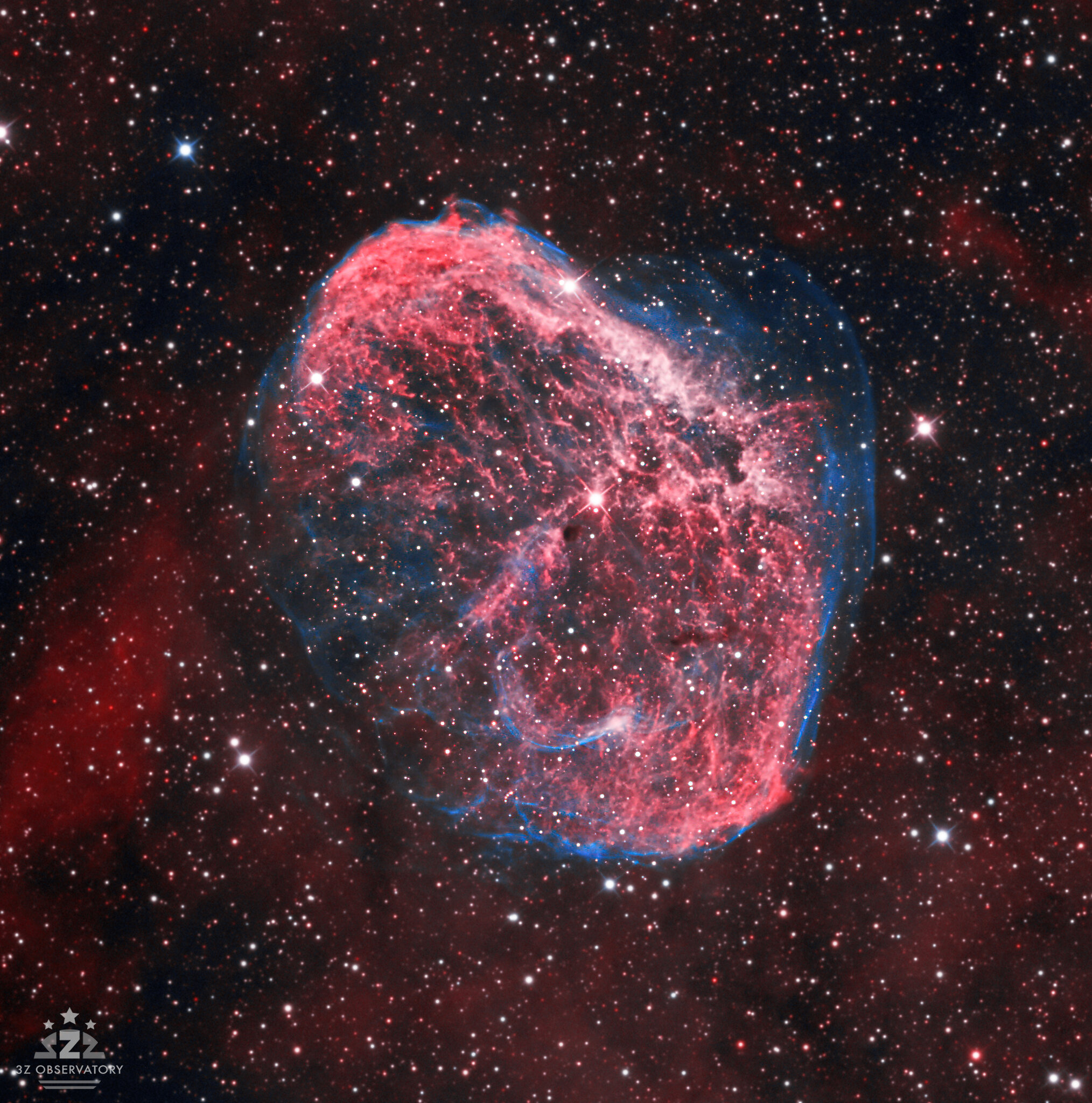
Ngc 6888
Image Description and Details : NGC6888, also known as the Crescent Nebula, is a diffuse nebula visible in the southern part of the Swan constellation.
It is located approximately 4,700 light years from the solar system and spans 16 light years in space. It can be identified with a small telescope from good quality skies.
LRGB composition about 16 hours of integration with bin2
Instrumentation:
RC12GSO on EQ8
G24000 CCD
Astrodon Filter HAO3S2
62x600 Ha
35x600s O3
Processing via Pixinsight / Photoshop
Copyright Information: 3zObservatory - Paolo Zampolini e Giorgio Mazzacurati
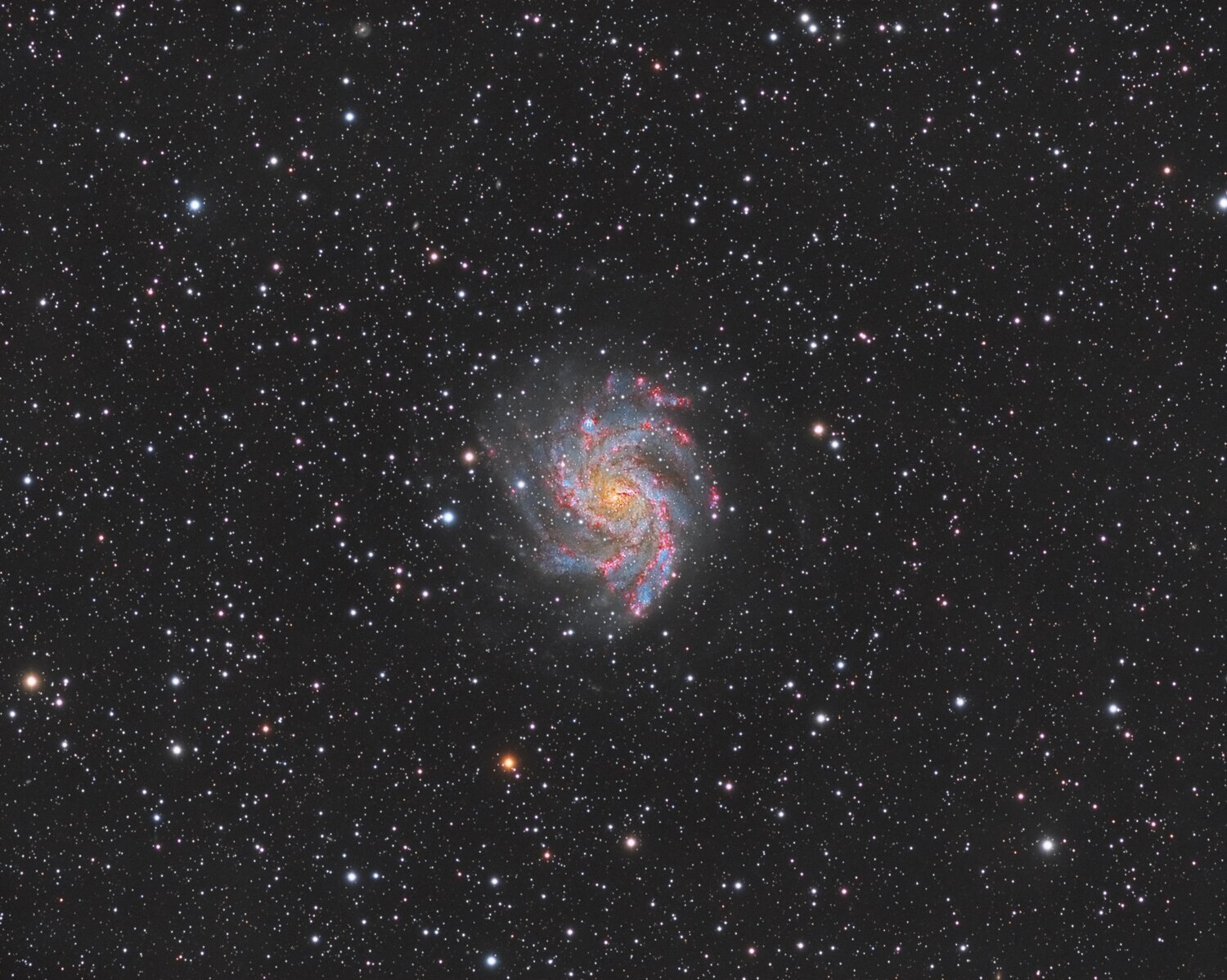
NGC 6946 The Fireworks Galaxy
I have had this on my Hard drive for some time now but was never happy with the outcome of the processing so now we are in lockdown it seemed a good time for a revisit. I spent the whole day and started from the beginning I'm now very happy with how it turned out.
Lum 19x900Secs
Red 15x900Secs
Green 11x900Secs
Blue 14x900Secs
Ha 22x1800Secs
22 hours 5 mins in total.
Equipment used:
Telescope: Tec 140 F7
Camera: Xpress Trius SX-694 Pro Mono Cooled to -10C
Guiding: OAG
Filters: Astronomik L
Mount: iOptron CEM60 "Standard" GOTO Centre Balanced Equatorial Mount
Image Acquisition: Voyager
Observatory control: Lunatico Dragonfly
Stacking and Calibrating: Pixinsight
Processing: Pixinsight 1.8
Copyright: David Wills

The dance of the Antennae Galaxies
Image Description and Details : This picture shows the Antennae galaxies (Caldwell 60-61), a pair of interacting spiral galaxies in the constellation Corvus. The blue hue represents a star forming regions.
Date image was taken: 3/8/2020
Scope: Planewave CDK17
CCD: SBIG STXL-11002
Mount: Paramount ME
Integration time: 27.1 hours
Filters: 22*1200s (L), 15*1200s (R); 15*1200s (G), 16*1200s (B), 9*1800s (Ha)
Location: Chile
Copyright Information: Data acquisition by Martin Pugh
Processing by Nicolas Rolland
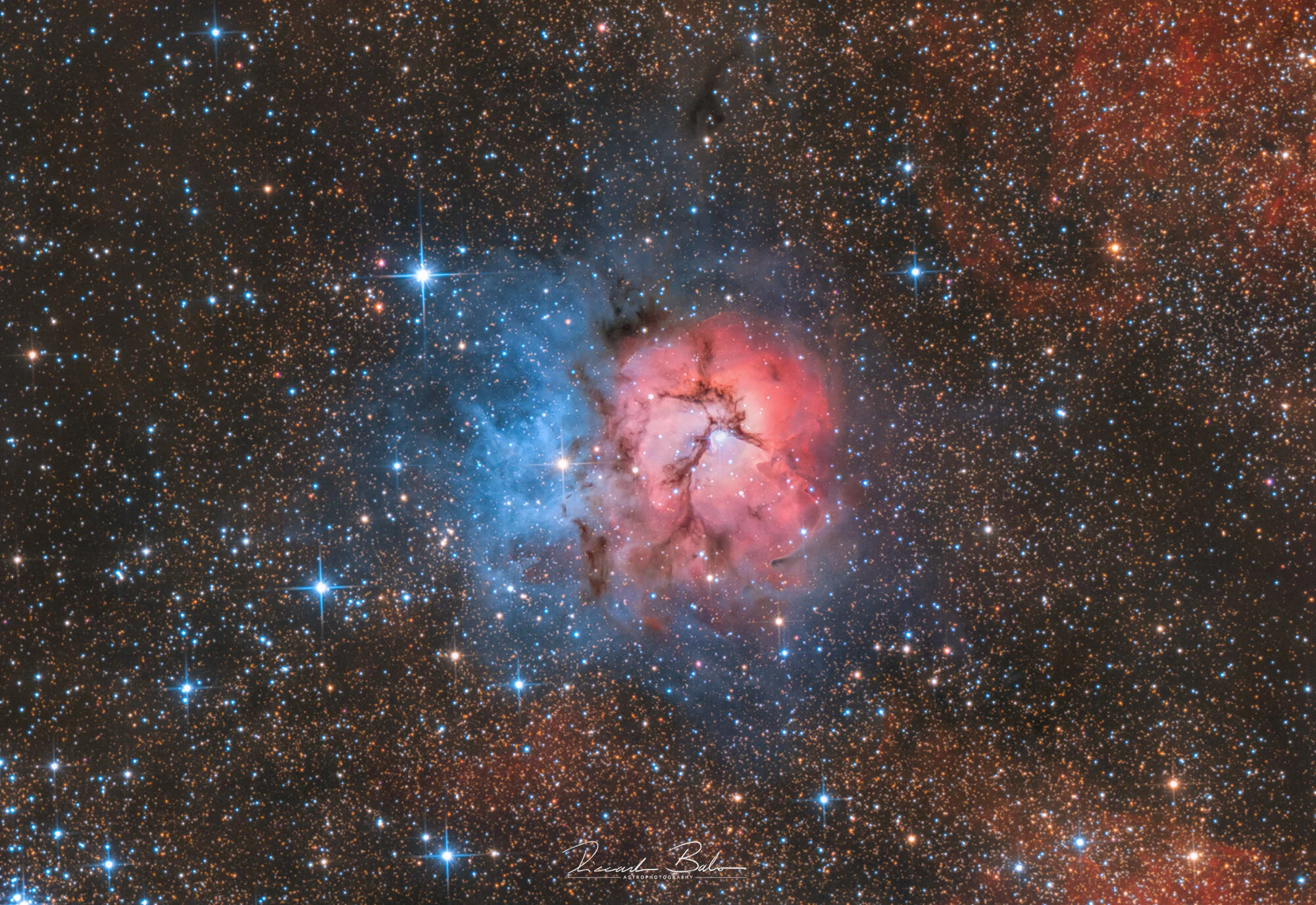
M20 - Nebulosa Trifida
Image Description and Details : M20 - Nebulosa Trifida
The subject of the image is a diffuse nebula in the constellation of Sagittarius, indeed it is possible to see the milky way and Halpha filaments in the background. Frames are acquired from the countryside of Sant'Antioco, Sardinia, Italy.
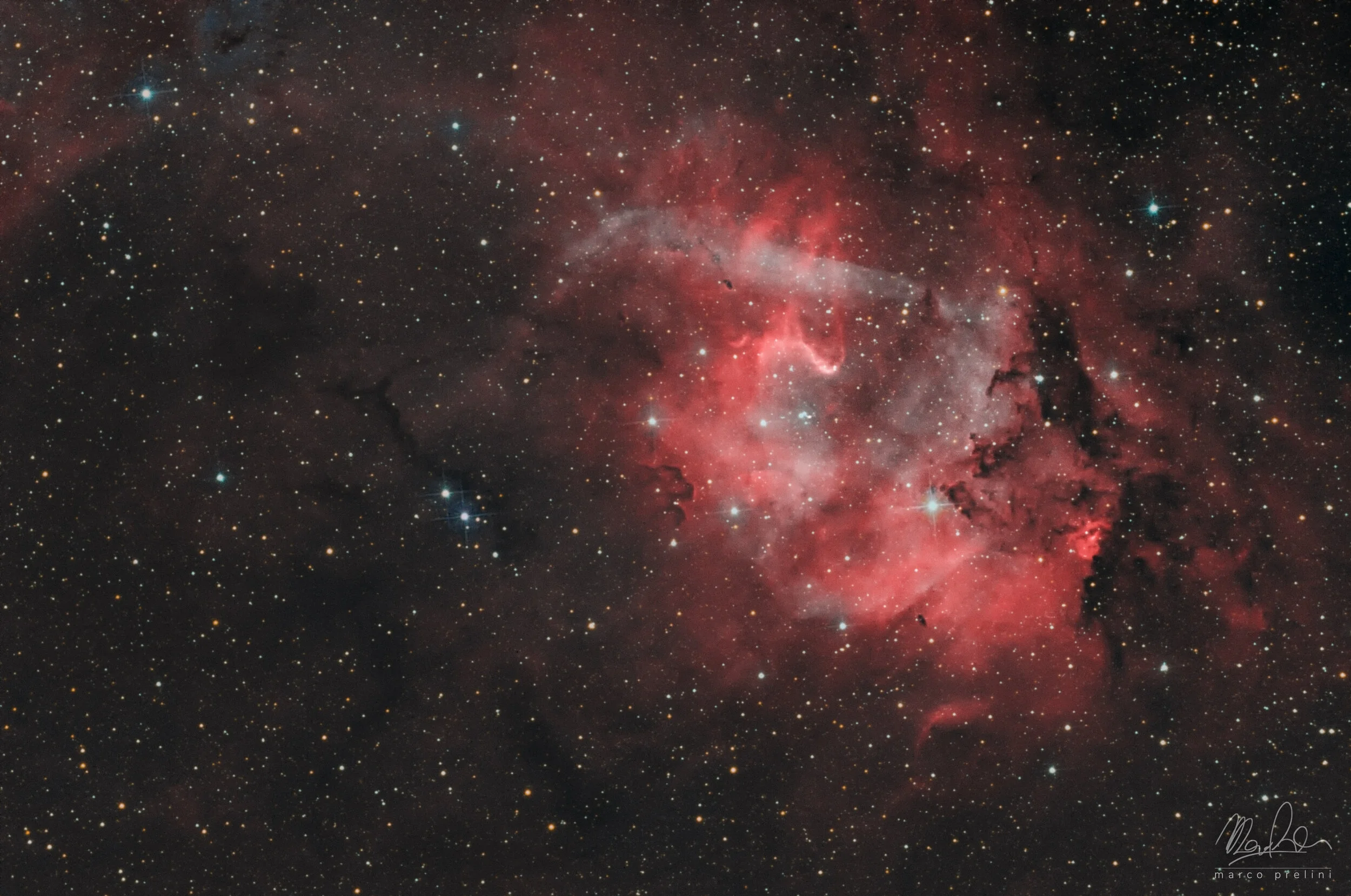
Sh2-132 Lion Nebula
Image Description and Details : This is actually a part of the Lion Nebula: you can see upside down the Lion’s head on the center right and his back and tail doing an arc on the top left of the picture.
This region is populated by a huge number of class O and B and also by a couple of Wolf-Rayet stars as it used to be a strong star nursery area.
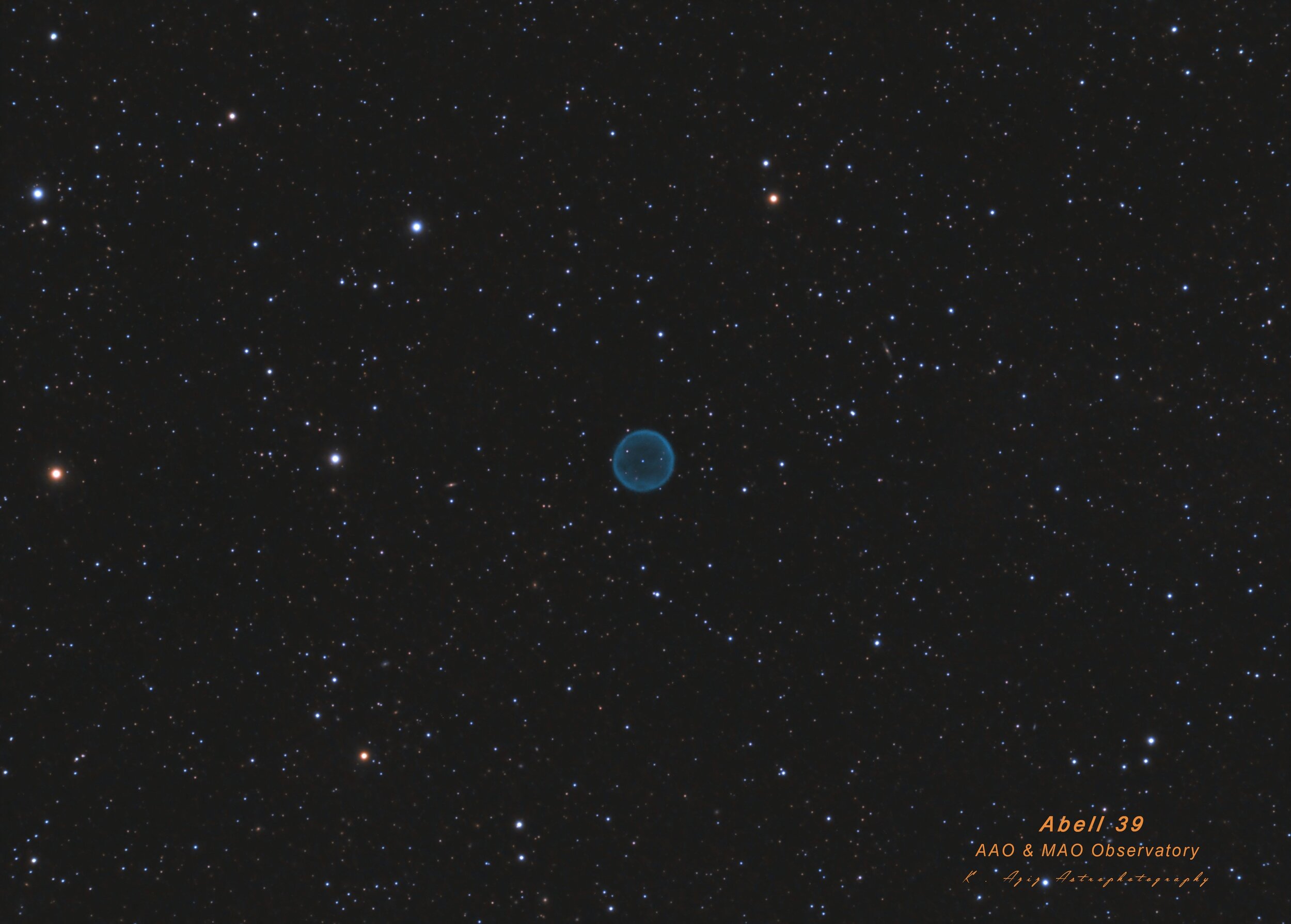
Abell 39
Image Description and Details : Here is the planetary nebula known by the sweet name Abell 39. Very dim, it is located about 6800 light-years from home in the direction of the constellation of Hercules.
Its peculiarity lies in its almost spherical shape, and despite its too small angular size, its radius is 2.5 LY making it one of the largest known planetary nebulae.

NGC 3628: aka The Hamburger Galaxy
This image is a view of an edge-on spiral galaxy named NGC 3628, AKA “The Hamburger Galaxy”. A fluffy galactic hamburger shaped galaxy divided by a dark dust lane.
The galaxy is about 100,000 light-years across and 35 million light-years away in the springtime constellation of Leo.
NGC 3628 shares its neighborhood in the local Universe with two other large spirals M65 and M66 in a grouping otherwise known as the Leo Triplet. Gravitational interactions with its cosmic neighbors are likely responsible for the extended flare and warp of this spiral's disk.

Iris Nebula in Cepheus
The Iris Nebula (also known as NGC 7023 and Caldwell 4) is a bright reflection nebula and Caldwell object in the constellation Cepheus. Reflection nebulae are clouds of interstellar dust which might reflect the light of a nearby star or stars. The energy from the nearby stars is insufficient to ionize the gas of the nebula to create an emission nebula, but is enough to give sufficient scattering to make the dust visible. Thus, the frequency spectrum shown by reflection nebulae is similar to that of the illuminating stars. Among the microscopic particles responsible for the scattering are carbon compounds (e. g. diamond dust) and compounds of other elements such as iron and nickel. The latter two are often aligned with the galactic magnetic field and cause the scattered light to be slightly polarized.

Star-trails and the star colors
Image Description and Details : The color of the stars is linked to their "superficial" temperature (in quotation marks because the stars do not have surfaces, since they are not solid or liquid) - and, contrary to common sense where we associate blue with cold and red in the heat, the bluish / violet ones are the hottest, while the red ones are the coldest - The stars with peak emission in other bands of the visible spectrum have intermediate surface temperatures. Thus, exists stars with peak emission in practically the entire visible spectrum: blue, white, yellow, orange, red ...
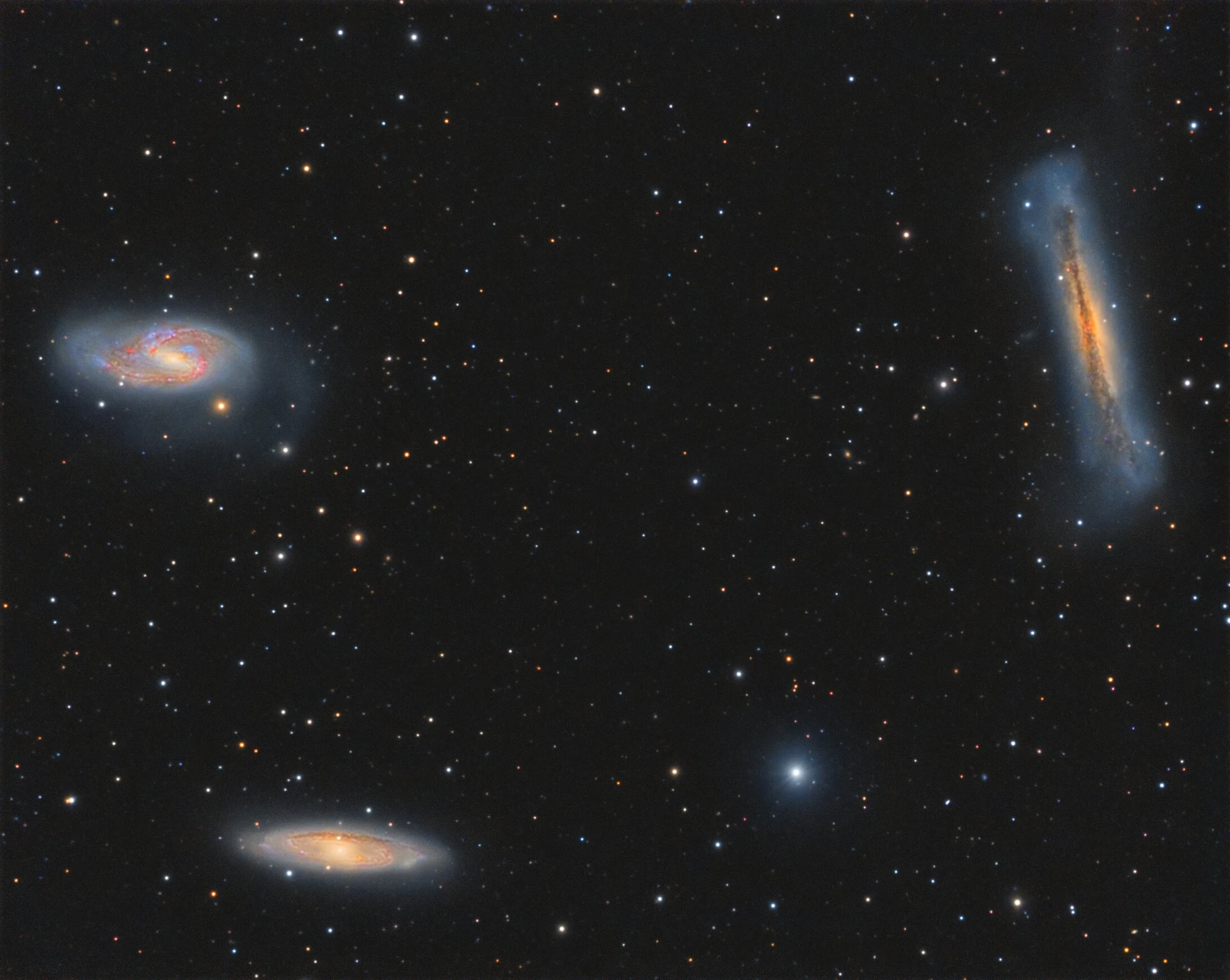
Leo Triplet
Image Description and Details : The Leo Triplet, or the M66 Group, is a group of interacting spiral galaxies located in the northern constellation Leo.
The group consists of the galaxies Messier 65 (NGC 3623), Messier 66 (NGC 3627) and NGC 3628, also known as the Hamburger Galaxy. The Leo Triplet lies at an approximate distance of 35 million light years from Earth.
In this photo we can see the M66 (upper left), M65 (lower left) and NGC 3628 (right).
Winds on Venus
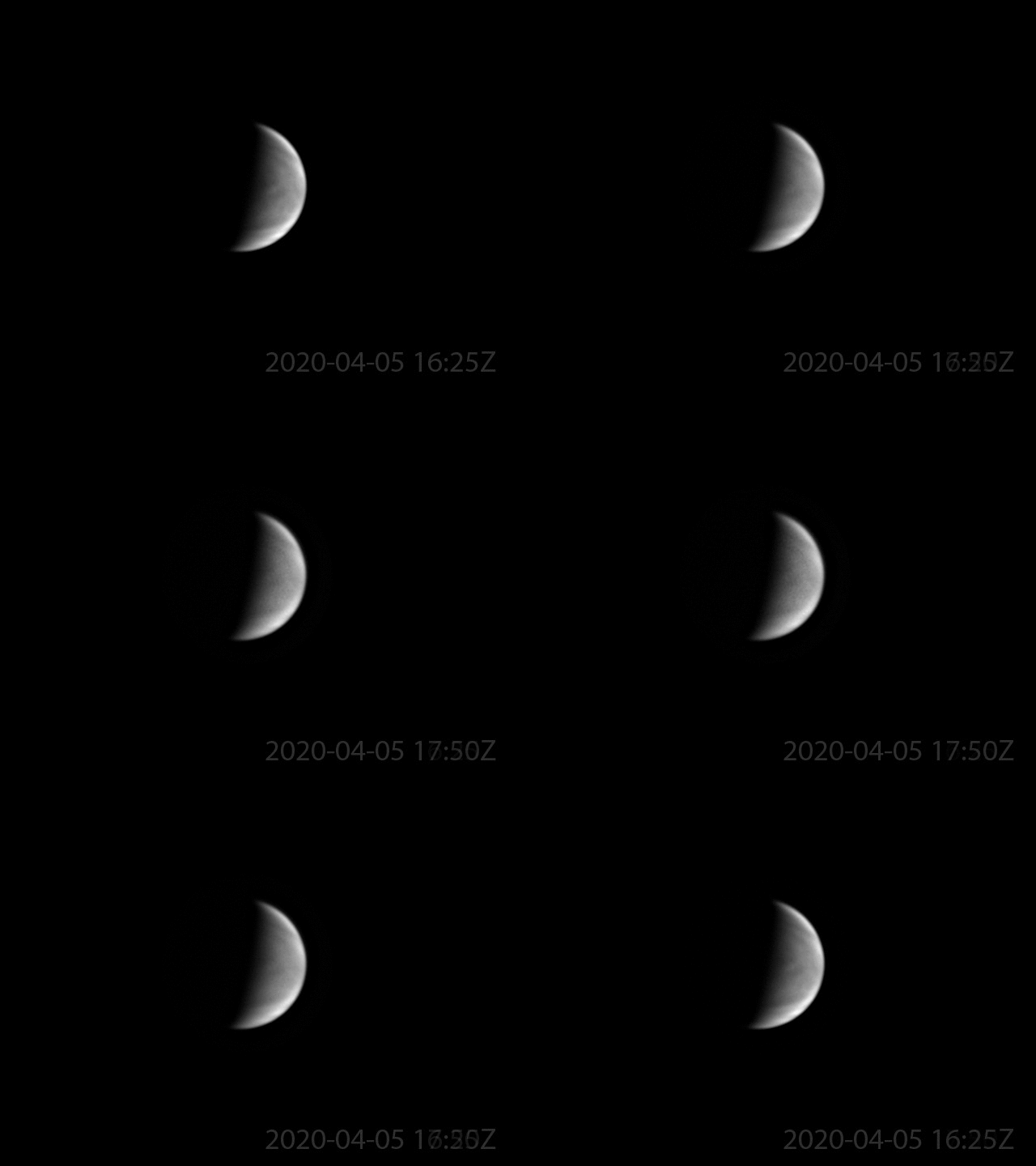
Using the same gear as yesterday, the N150/750, the motorized filter wheel, the green and Calcium K line filters and the cooled ASI 178MM, all guided by the soapbox, I imaged Venus. On this day the atmosphere was kind enough to allow me to photograph not only a still, but also the movement, even though the second frame shows a considerable decrease in details.
Copyright: Pál Váradi Nagy

Crew Dragon docked with the International Space Station
Crew Dragon docked with the International Space Station, can be seen Crew Dragon DM-2, HTV-9 and Progress 75.
2020-06-01 21:16.9 UT
SW Maksutov 180
ZWO290MC
Altair Sabre V2 mount, manual tracking
Date Image was taken: 6/1/2020
Copyright: Antonio Vilchez Muñoz
Comet, Galaxies, and IFN Nebula
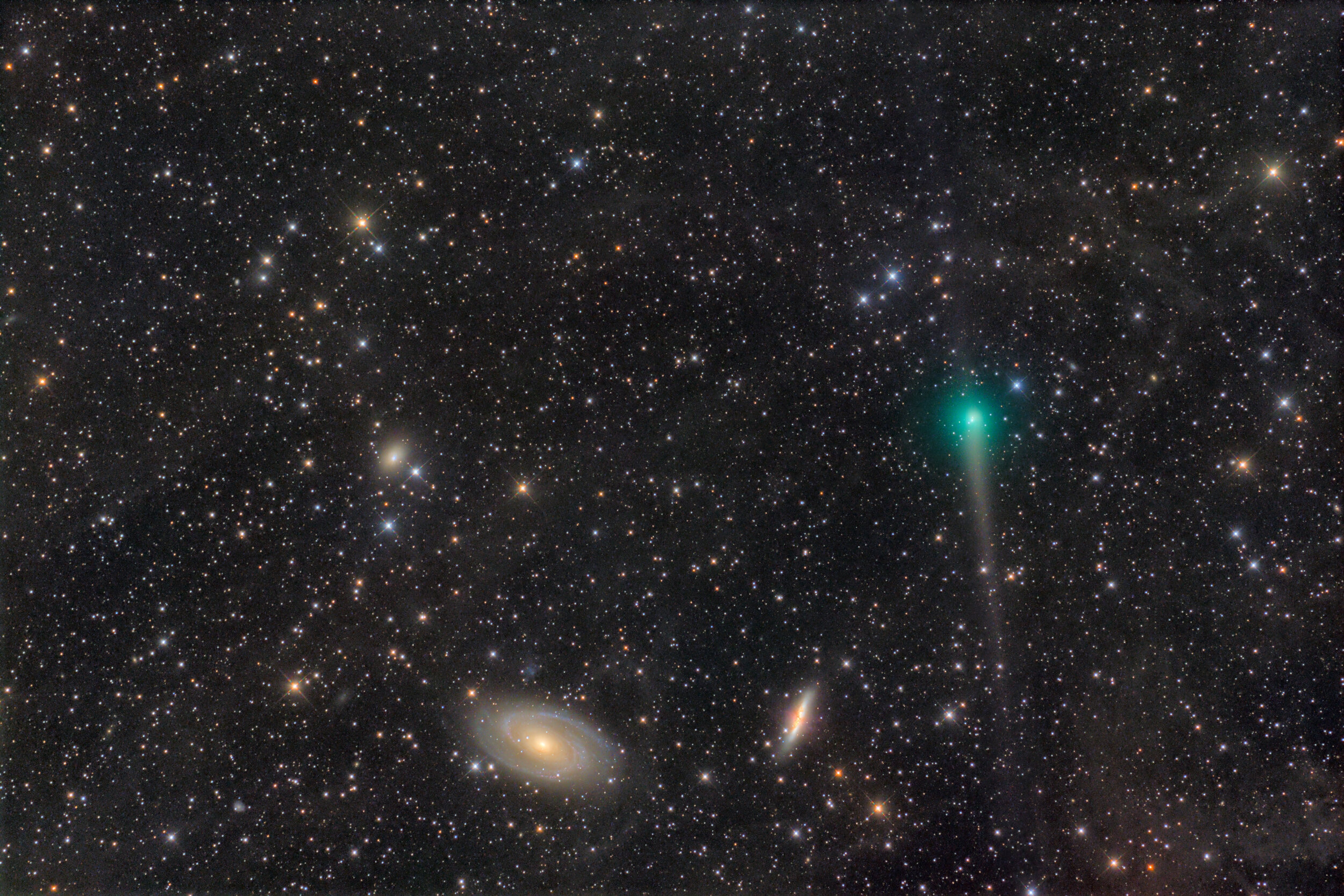
Comet C/2017 T2 PanSTARRS, dragging two long and straight dust tails, passed by near the galaxies M81 and M82.
In this long-exposure photo, some nebulae can also be seen filling the entire field of view. They are Integrated Flux Nebula. Unlike ordinary nebulae illuminated by nearby stars, IFN is far away from the Galaxy disk and is illuminated by the stars in the entire galaxy.
Comet C/2019 U6 (Comet lemmon) and M41
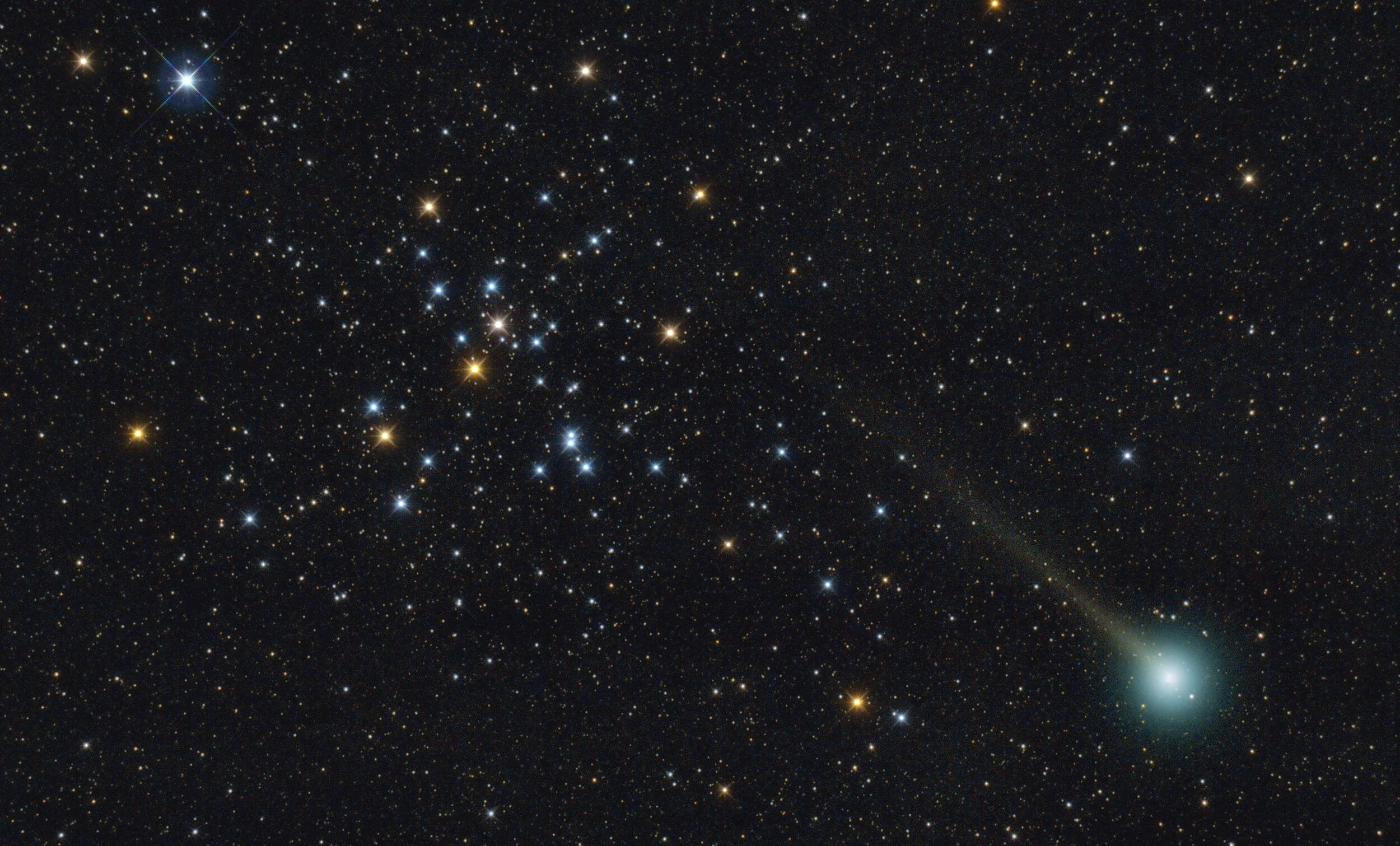
C/2019 U6 (Lemmon), or Comet Lemmon is a comet with a near-parabolic orbit discovered by the Mount Lemmon Survey on October 31, 2019. It will make its closest approach to the Sun on June 18, 2020. It is currently visible in binoculars at an apparent magnitude of 7.0, and might be visible near the naked eye limit in June.
Nocilucent Clouds “AKA Night Glowing Clouds“
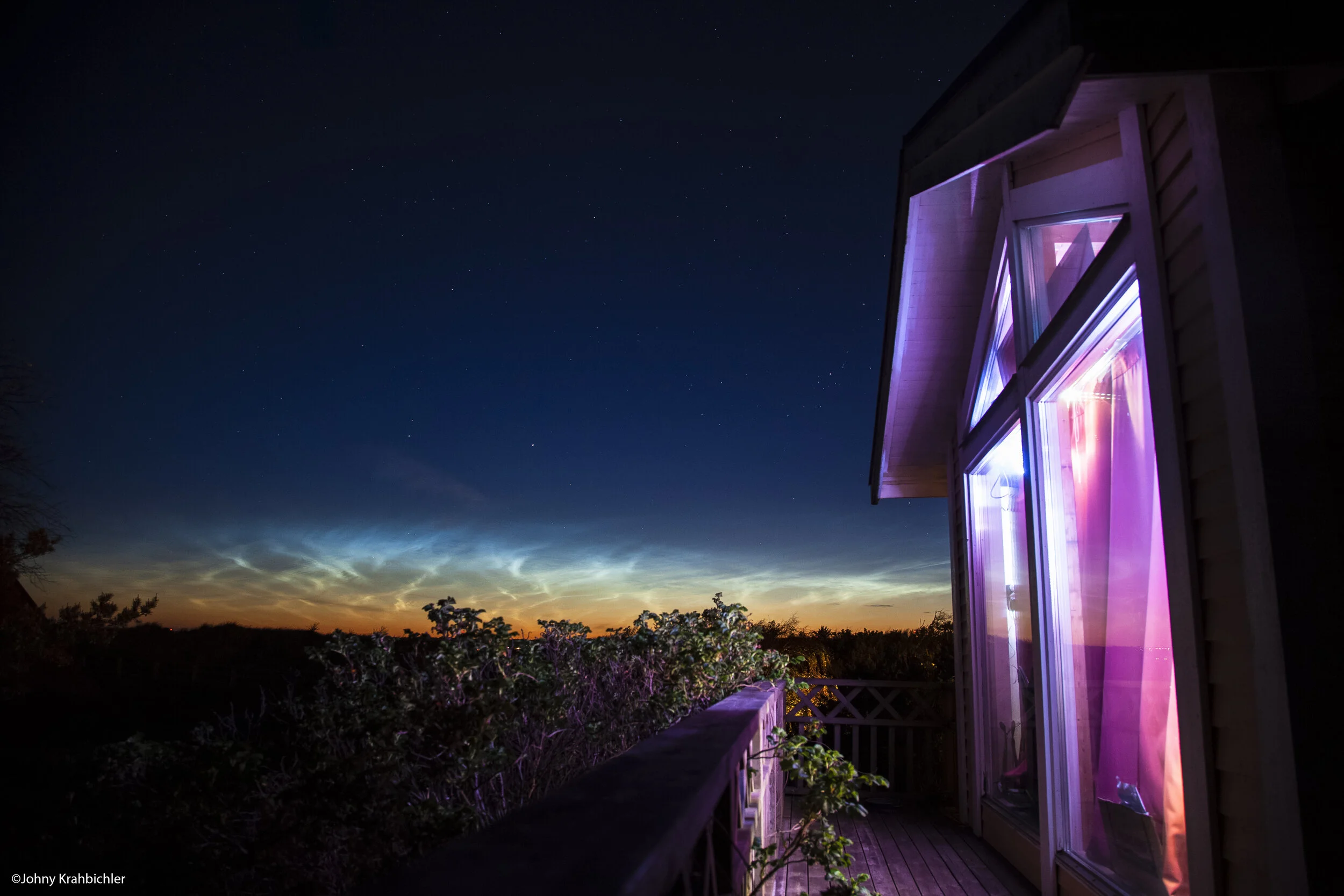
Noctilucent clouds, or night shining clouds, are tenuous cloud-like phenomena in the upper atmosphere of Earth. They consist of ice crystals and are only visible during astronomical twilight. Noctilucent roughly means "night shining" in Latin.
Noctilucent clouds are not fully understood and are a recently discovered meteorological phenomenon. No confirmed record of their observation exists before 1885, although they may have been observed a few decades earlier by Thomas Romney Robinson in Armagh.
Noctilucent clouds can form only under very restricted conditions during local summer; their occurrence can be used as a sensitive guide to changes in the upper atmosphere. They are a relatively recent classification. The occurrence of noctilucent clouds appears to be increasing in frequency, brightness and extent.

Galaxy with a Tail
Ultra deep View of NGC 5907
Back in 2019 after completing my project on M63 Sunflower galaxy, I decided to search for new objects to image using Insight Observatory's 16" f3.7 Dream astrograph reflector, ATEO-1, remote telescope. While I was surfing the internet, I came across an interesting galaxy. I made sure that it is visible in the northern hemisphere as ATEO-1 is located in the dark skies of New Mexico. I researched a bit more about this edge-on galaxy and found that tidal streams create a loop around this galaxy. I found a couple more images where there were two loops wrapped around the galaxy. I was really excited to capture this galaxy remotely as it was one of a kind and I could not find a similar galaxy that had two loops. I made a decision to capture this galaxy and I decided to email Michael Petrasko and Muir Evenden, Co-founders of Insight Observatory. As the tidal streams were very faint, it would mean investing a lot of imaging time. We started out and collected 5 hours worth of luminance data with ATEO-1.
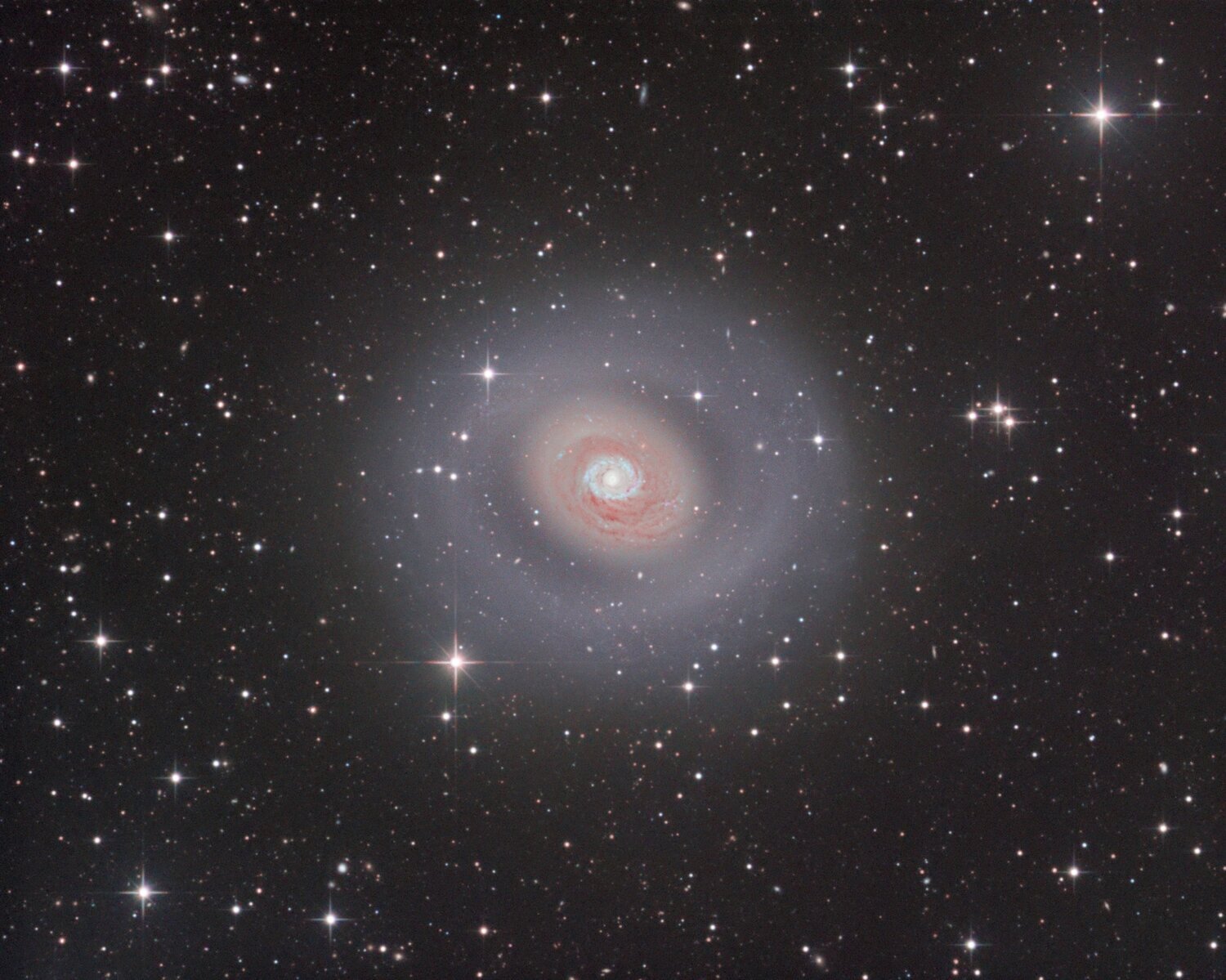
M94
M94 is classified as having a low ionization nuclear emission region (LINER) nucleus. LINERs in general are characterized by optical spectra that reveal that ionized gas is present but the gas is only weakly ionized (i.e. the atoms are missing relatively few electrons). M94 contains both an inner ring with a diameter of 70 arcseconds (approximately 5400 LY, 1.700 kpc at the distance of M94) and an outer ring with a diameter of 600 arcseconds (approx. 45,000 LY, 14 kpc). These rings appear to form at resonance locations within the disk of the galaxy. The inner ring is the site of strong star formation activity and is sometimes referred to as a starburst ring. This star formation is fueled by gas that is dynamically driven into the ring by the inner oval-shaped bar-like structure.
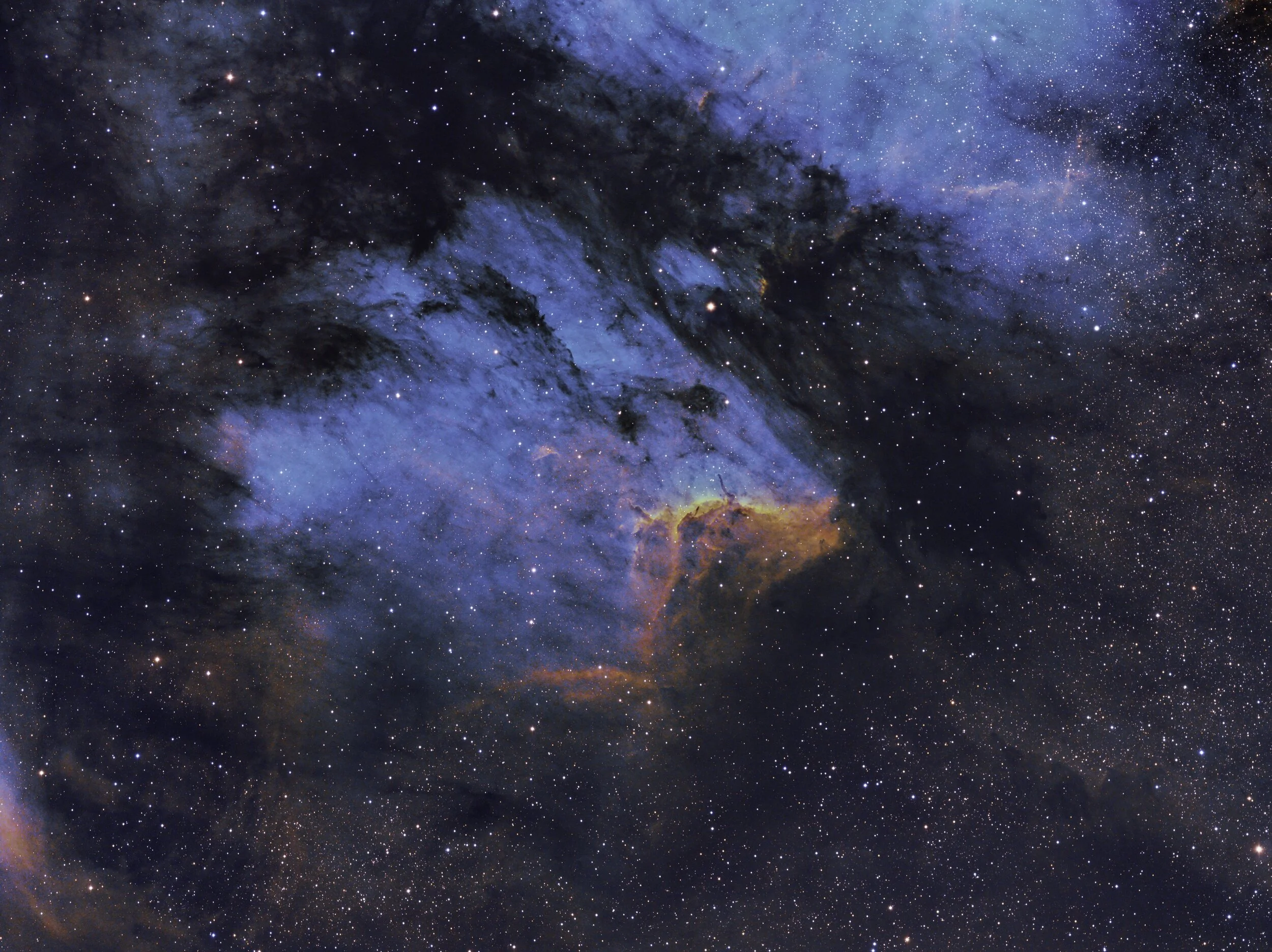
Pelican Nebula also known as IC 5070
Pelican Nebula ( in SHO ) also known as IC 5070 is a large area of emission nebula in the constellation Cygnus, close to Deneb. It bears a resemblance to a pelican, hence its name.
The image was taken during 4 nights and is a total of aprox. 11h of data.
Equipment used :
Baader Narrowband filters
Ha(7nm) - 70x300sec
Oiii (8.5nm)- 8x1200sec
Sii(8nm) - 10x1200sec
Televue Np101 telescope
EQ8_PRO Mount
Moravian G3_16200 camera
SG-4 standalone autoguider and Borg50 guidescope
Data captured with SGpro,alligned and stacked with ccd_stack 2 and processed in Pixinsight.
Location - Henlow (Bedfordshire).