

AAPOD2 Image Archives
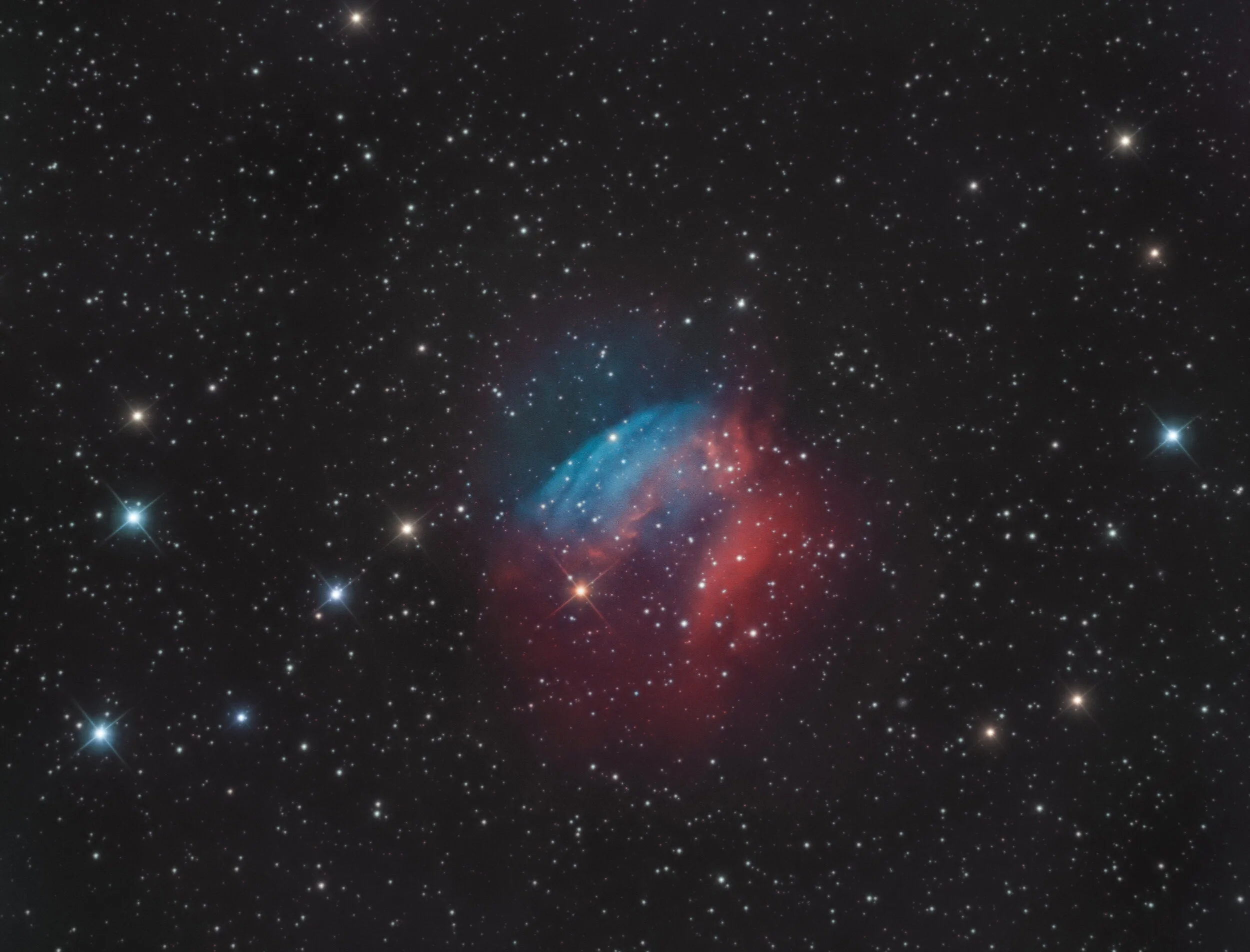
SH2-174 : Valentine Rose Nebula
Image Description and Details :
I'm very proud to present this photo in L-HOO which required a total exposure of 27 hours per 20 minutes per photo, spread over 7 nights of the month of May, not counting the 10 hours of image calibration. At a magnitude of 14.74, it is very little luminous, which makes it difficult to image it.
It is located in the constellation Cepheus at a distance of 980 light-years.
Sh2-174 is one of the oldest planetary nebulae that is more unusual because the white dwarf is not in the center of the nebula. This asymmetry is due to the interaction of the planetary nebula with the surrounding interstellar medium.
Exifs :
Imaging telescopes: Skywatcher 200/1000 Newton
Imaging cameras: ASI 1600MM-Pro
Mounts: Skywatcher AZ EQ-6 GT Pro
Guiding telescopes or lenses: Skywatcher 200/1000 Newton
Guiding cameras: Altair GPCAM2 290C Colour
COMA Corector: Baader MPCC Mark III
Software: Pixinsight - NINA - Lightroom
Filters: ZWO OIII 7nm 36mm · ZWO Hɑ 7nm 36mm
Accessory: ZWO OAG
Dates:May 22, 2020 - Country: Hymont (Vosges )- France
Frames: 80x1200" (40 with Ha filter - 40 with OIII filter)
Integration: 26.7 hours
Copyright Information: Jordan Marlière
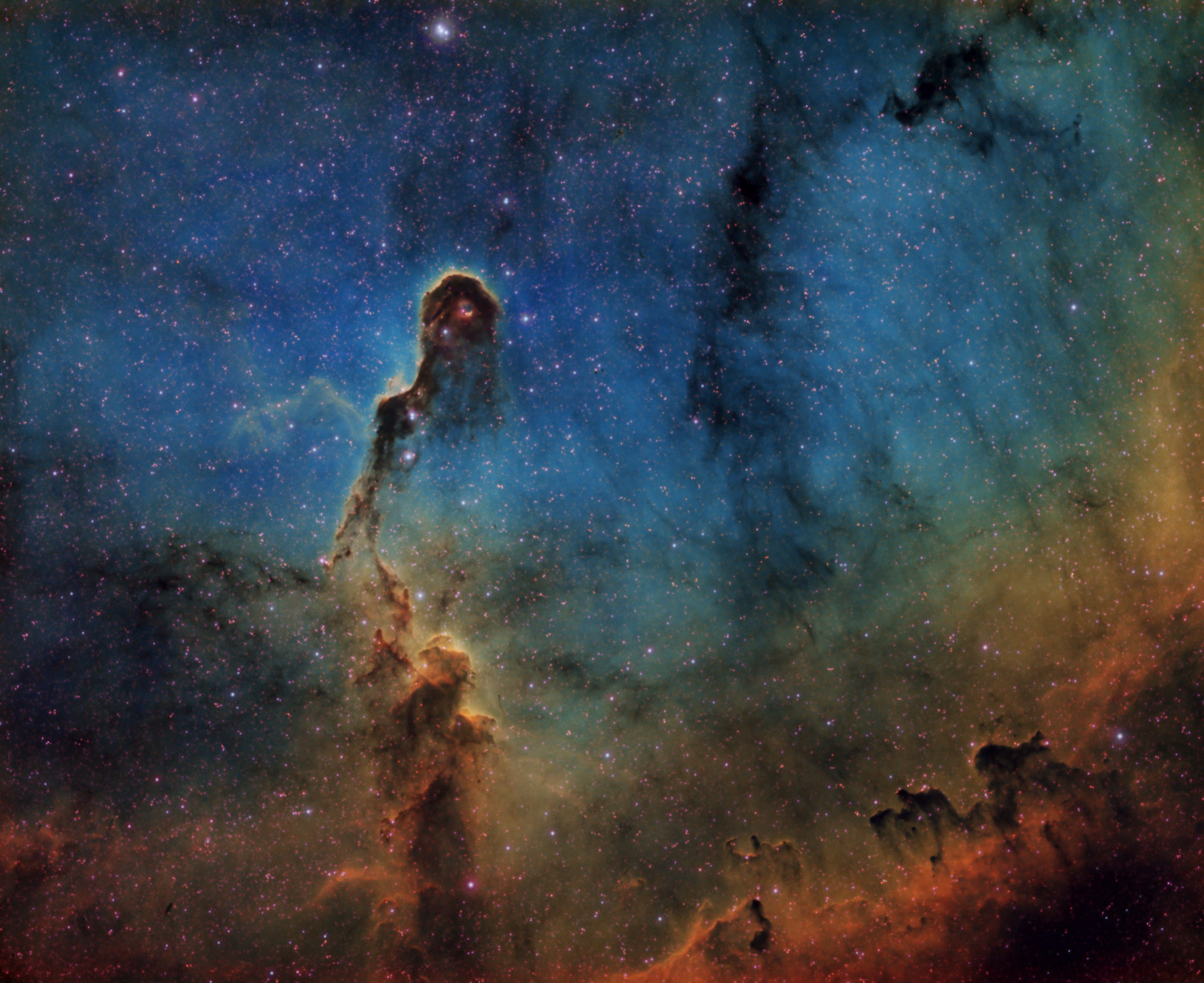
Elephant Trunk Nebula in SHO 2020
Image Description and Details :
Captured over several nights in August 202027.5 hours total using HA – OIII – SII filtersAll are 15min exposures – 440xHa – 36xOiii – 30xSii Skywatcher Esprit 120ED with Apex-L reducer – 546mm fl – f/4.55Starlight Xpress Trius Pro-814Astrodon 5nm Ha – 3nm Oiii – 5nm Sii filtersSkywatcher EQ6R Pro mount guided with Lodestar X2 using OAG on the Midi filter wheelOther gear - Intel Nuc PC, Pegasus UPBv2, Starlight Instruments Posidrive autofocusCaptured with N.I.N.A., PHD2, Polemaster All processing in PixinsightCaptured from my backyard in Birch Bay, WA
Copyright: Justin Katsinis - AstroLayne

Soaring Birds
This image shows the rising Seagull Nebula soaring high above Mt. Druesberg in central Switzerland.
The Seagull Nebula is an emission nebula on the borders of the constellations of Monoceros and Canis Major. Its location 10 degrees below the celestial equator puts it rather low for northern hemisphere observers, which may be the reason why it is not as famous as other nebula that rise higher during the night.
For deepscapes however, a deep space object needs to hug the horizon, which makes the Seagull Nebula a perfect target.
Despite careful planning, the resulting image contains a big surprise: The Seagull Nebula is not that splendid bird with a bright body and wispy wings and tail you can see in this deep image. I didn't even know that these structures exist. What is known as the Seagull Nebula is just the bright body part that remotely resembles a soaring bird on its own - it is the bird in a much bigger, more detailed bird! How awesome!
EXIF
Canon EOS 6D, astro-modified
ZWO ASI 1600MM Pro
Canon EF 70-200mm f/2.8 @ f/4
Baader Ultra Narrowband H-alpha and Olll filters
Modified Skywatcher AZ-GTI mount, controlled with ASIair
Sky:
Canon EOS 6D @ 200mm:
26 x 60s @ ISO1600 for RGB
ZWO ASI 1600MM Pro @ 96mm (to match the 200mm full frame FOV)
20 x 300s H-alpha @ Gain 200
10 x 300s Olll @ Gain 200
Foreground:
8 x 90s @ ISO1600
Copyright: Ralf Rohner
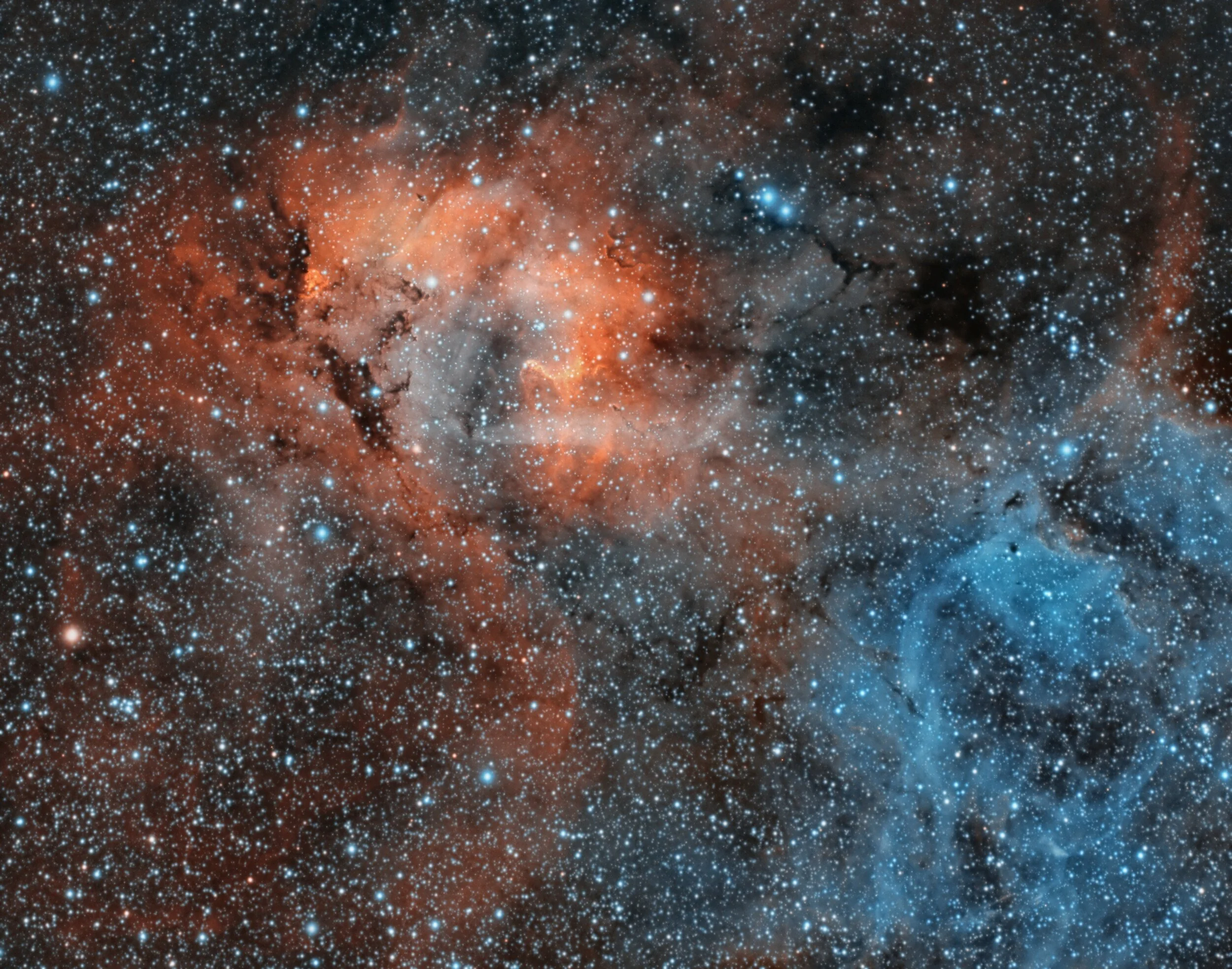
Sh2-132 The Lion nebula
Image Description and Details :
Sh2 -132 is a large and very weak emission nebula in the constellation of Cepheus .
The stars responsible for the ionization of its gases are very hot and massive; in particular, two Wolf-Rayet stars were identified , known with the initials HD 211564 and HD 211853.
Processed by Santiago Rodríguez
Combination:
Image captured with Halfa and OIII filters of 5 nm. by Carlos Uriarte.
R:Halfa
G: 20%Halfa/80% OIII
B:OIII
Halfa astrodon 5nm filter (900 "x 91): 22.75h BIN 1
OIII astrodon 5nm filter (900"x50):12.5h
Total: 35.25h
CCD: Atik 460exmono
Telescope: Takahashi FSQ106ED
Ager, LLeida, Spain
Copyright: SantiRoHe
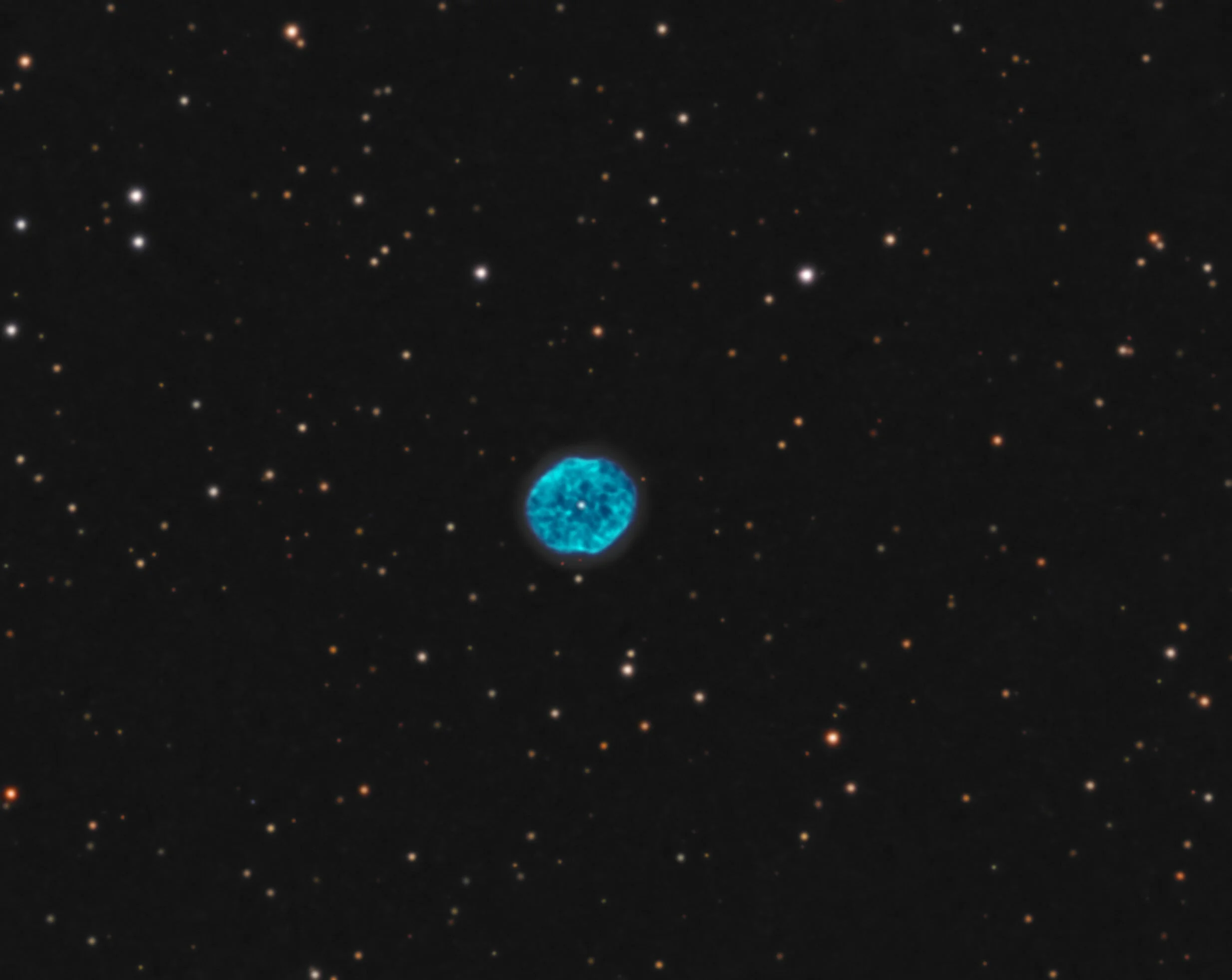
NGC 1501
Image Description and Details :
Another bright planetary nebula to capture during a full moon.
NGC 1501 is a complex planetary nebula in the constellation Camelopardalis.
It's progenitor star is a pulsating star, meaning that its brightness varies regularly and periodically. In the case of NGC 1501’s progenitor star, this is incredibly fast, with the star’s brightness changing significantly in just half an hour.
Image captured on my dual rig in Spain.Scopes: APM TMB LZOS 152 RefractorsCameras: QSI6120wsg8Mount: 10Micron GM2000 HPSA total of 7 hours image capture.
Copyright: Peter Goodhew

Southern Hemisphere
This portion of the Milky Way in the southern hemisphere is very rich in nebulae and some star clusters, my favorite constellation "The southern cross" with its beautiful stars (Acrux, Mimosa, Gacrux and Imai) are the 4 main stars that they form this constellation which serves to find the south cardinal point by moving the central axis of the "cross" 3 and a half times.
We can also see the nebula of the keel or eta carina and below the cross the sack of coal or head of the "Choique" as the Mapuches knew it.
While taking these photos I was able to observe the passage of the International Space Station next to some Russian polar orbit satellites in the province of Rio Negro.
Nikon D 850 camera, 3x 25 ". Iso 6400 nikon 24-120 f4 lens
Copyright: Ariel Maderna
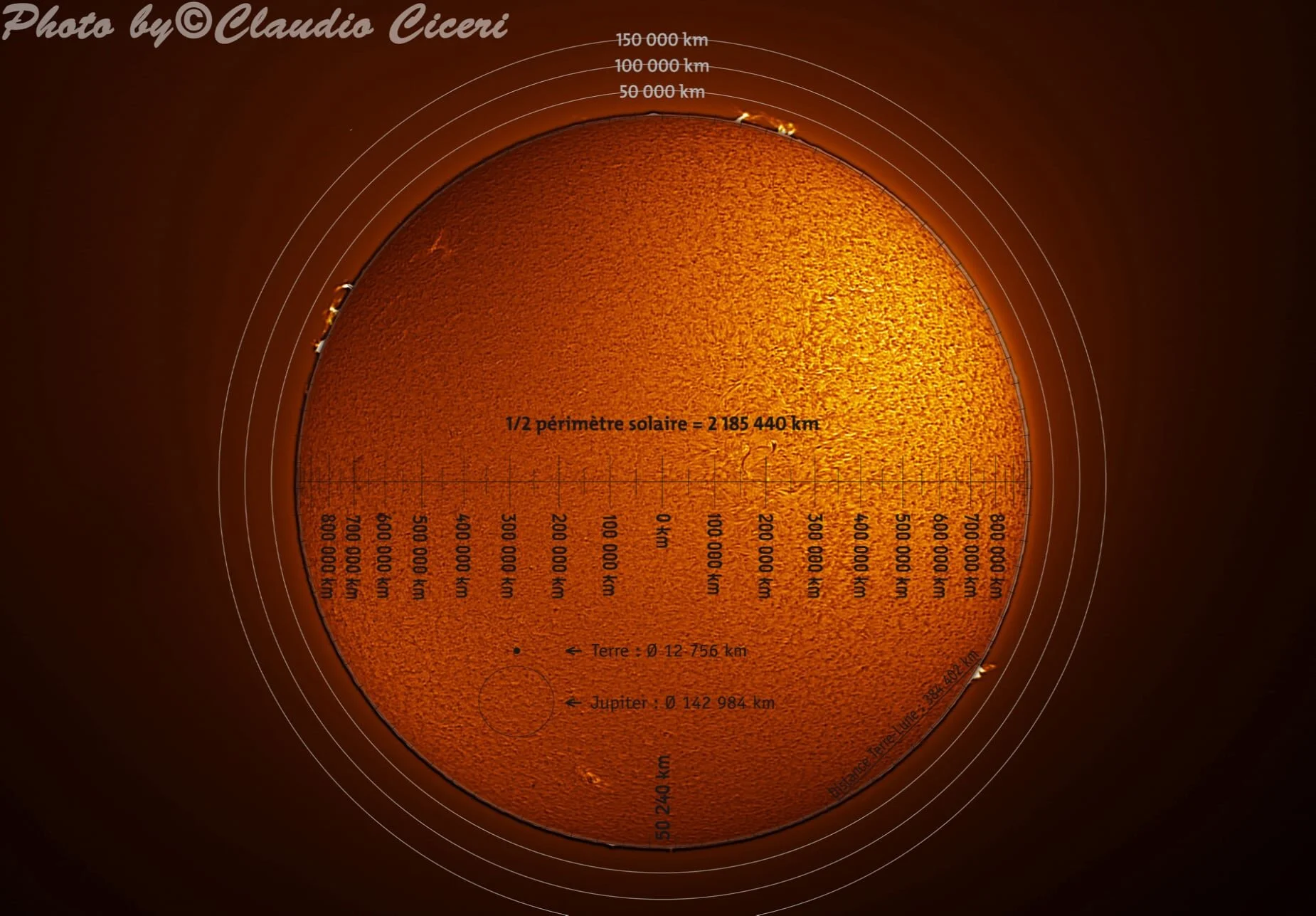
The Sun between veils and clouds
Coronado Solarmax 3 Double Stack
Asi Zwo 178 MM
Copyright: Claudio Ciceri

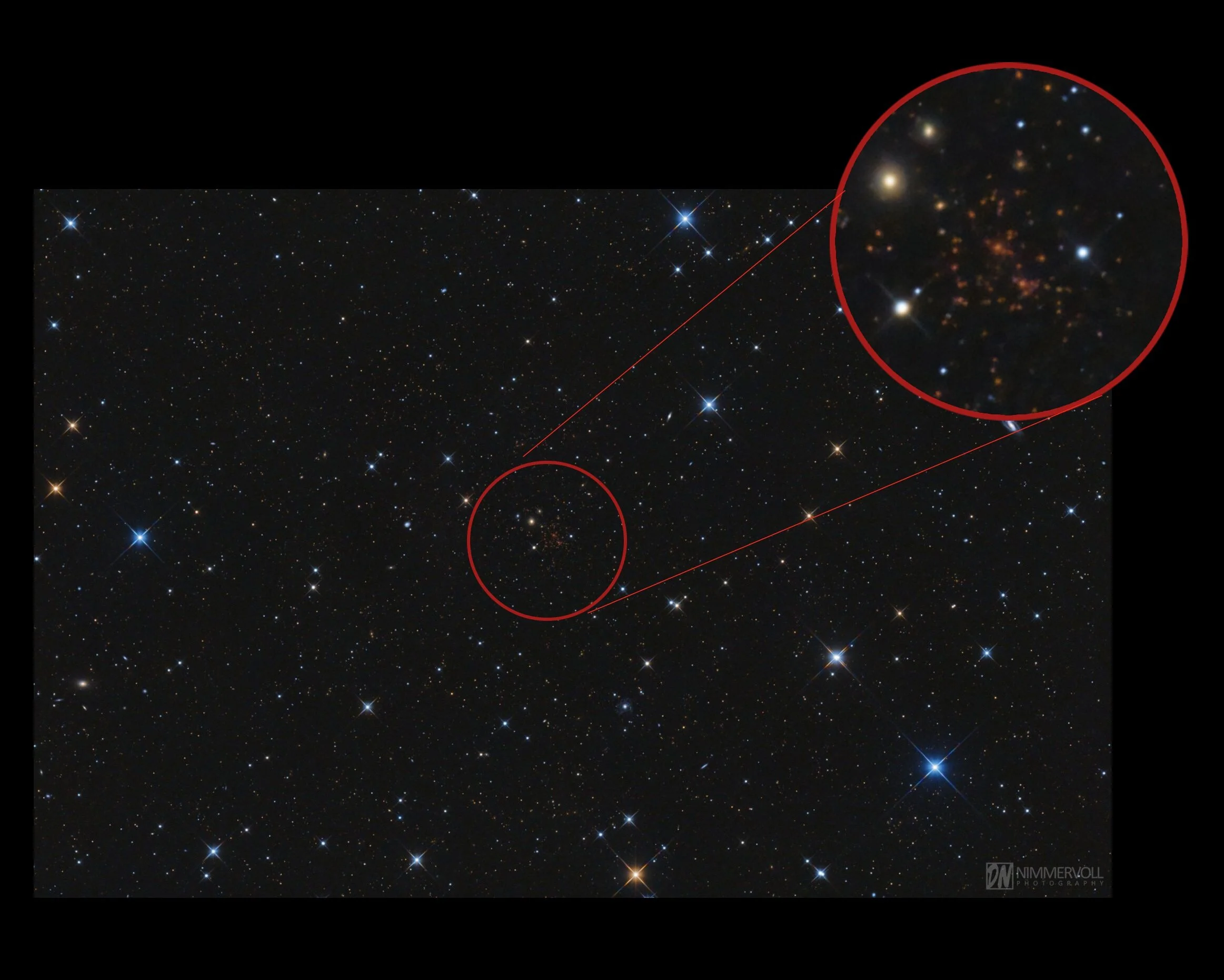
Abell 370
Abell 370 is known for its gravitational lensing effect.
RECORDING DATA:Object: Abell 370Date of recording: November 2020 Distance: 6 billion light yearsExposure: 240 x 180 sec. (Total 12 hours)
Calibration: Darks / Flats / DarkFlats
Mount: Skywatcher EQ6-R PRO
Telescope: Lacerta Fotonewton 250/1000
Corrector: Lacerta GPU coma corrector
Filter: Astronomik L2 UV-IR Block 2 ″Camera: QHY268c @ Gain 0 at -15 °
CGuiding: ZWO OAG with ASI 120mm-s and
PHD2Resolution: 0.77 arcseconds / pixel
Software: APP / Photoshop CC
Copyright: Daniel Nimmervoll
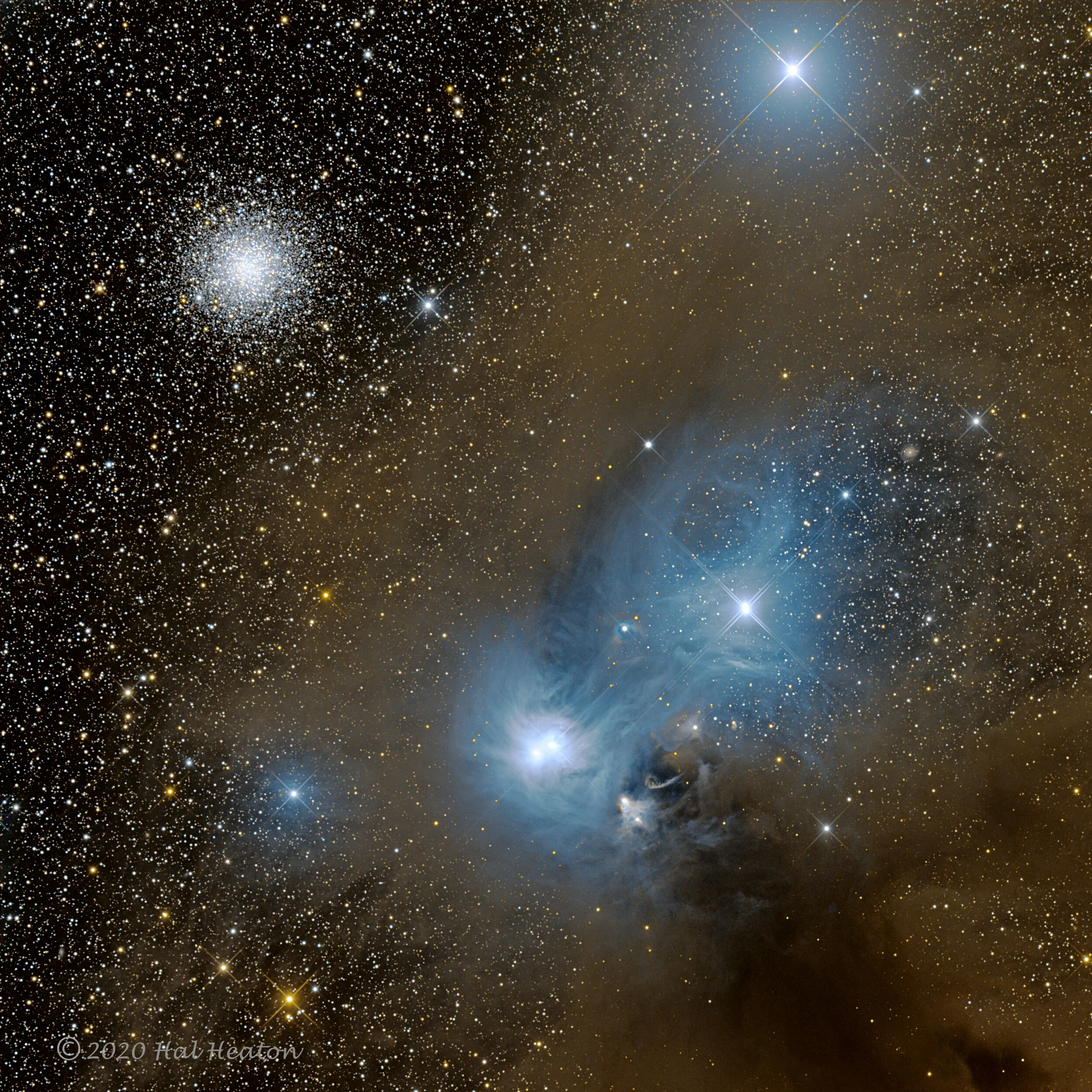
The Eclectic NGC 6726 Region of Corona Australis
Image Description and Details :
Just below the teapot of Sagittarius in Corona Australis lies a strikingly-beautiful region containing several objects of widely differing ages and distances. Exquisite blue reflection nebulae (NGC 6726/27), lit by the embedded bright stars TY CrA and HD 176386, and IC 4812 (HD 176269 and 176270) appear to be connected by wispy blue filaments that span the dust lane SL-41. Nearly 200 lys closer than those stars, the wing-shaped nebula (NGC 6729) below those filaments is energized by the 310 ly distant R CrA. Closer still is the bright blue eclipsing binary star at the upper right, epsilon CrA, at 102 lys, which along with the far more distant globular cluster NGC 6723 span the "depth" of this 53-arcmin x 53-arcmin scene. The image was made using ten minute guided exposures taken through red, green and blue filters by an unbinned FLI ProLine 16803 camera mounted on Chilescope’s 0.5-m Telescope 2, which were stacked for 1-hr; north is left, and east is down.
Copyright Information: Hal Heaton
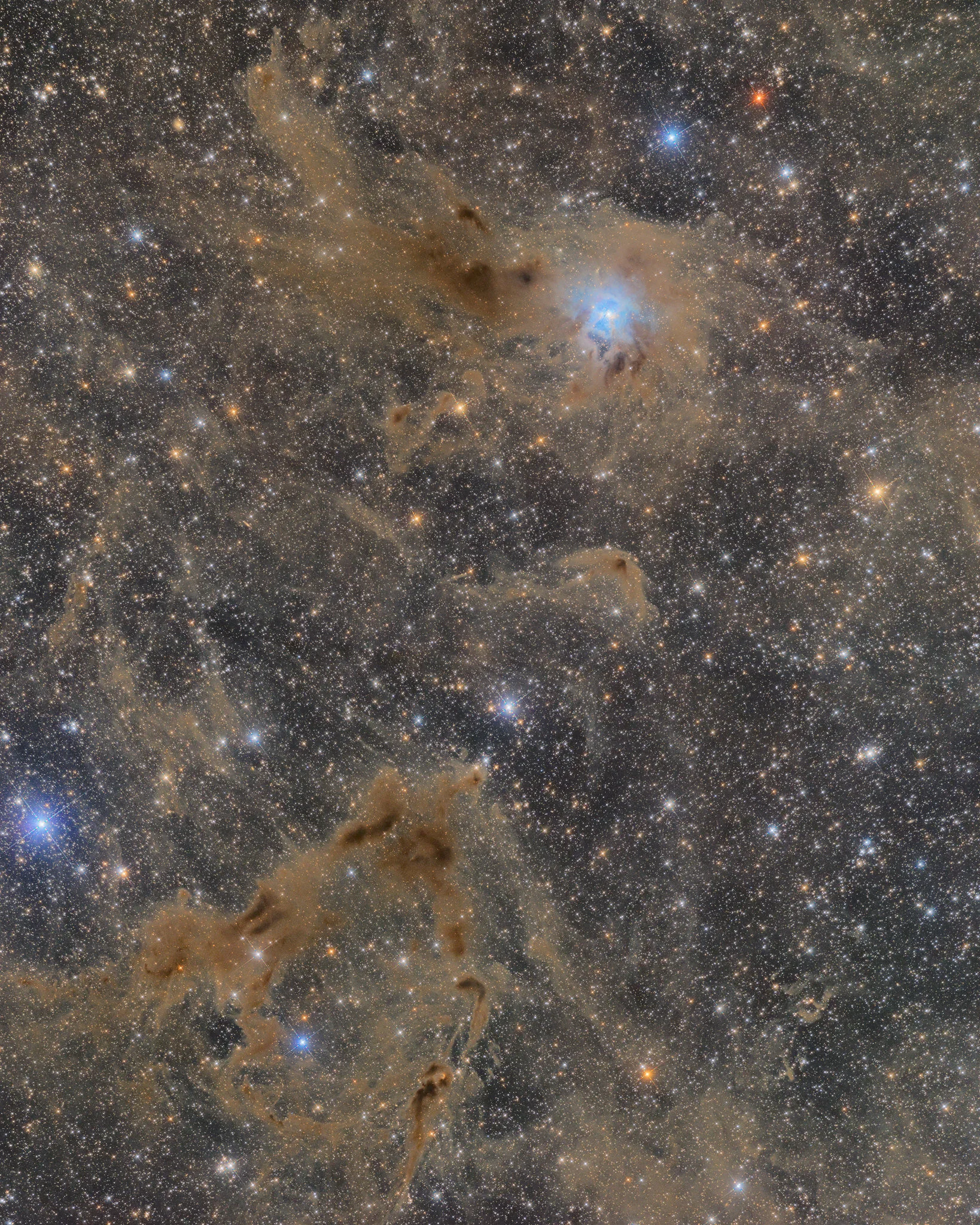
Iris Nebula and its interstellar dust friends
Image Description and Details :
The Iris Nebula is a reflection nebula in the constellation Cepheus, which is actually a patch of interstellar dust illuminated by a blue star. In the 2-panel-mosaic wide-field image, you can see that this area of the sky is actually filled with interstellar dust, but the other dust is not illuminated by nearby stars like the Iris Nebula. Image Telescope/Lens: SharpStar 150 2.8 HNTImage Camera: QHYCCD QHY268CMount: iOptron CEM 70Frames :301 * 300sIntegration: 25.1 hoursLocation: Milky Way Observatory, Kangbao County, Zhangjiakou, Hebei Province, China.
Copyright Information: Steed Yu
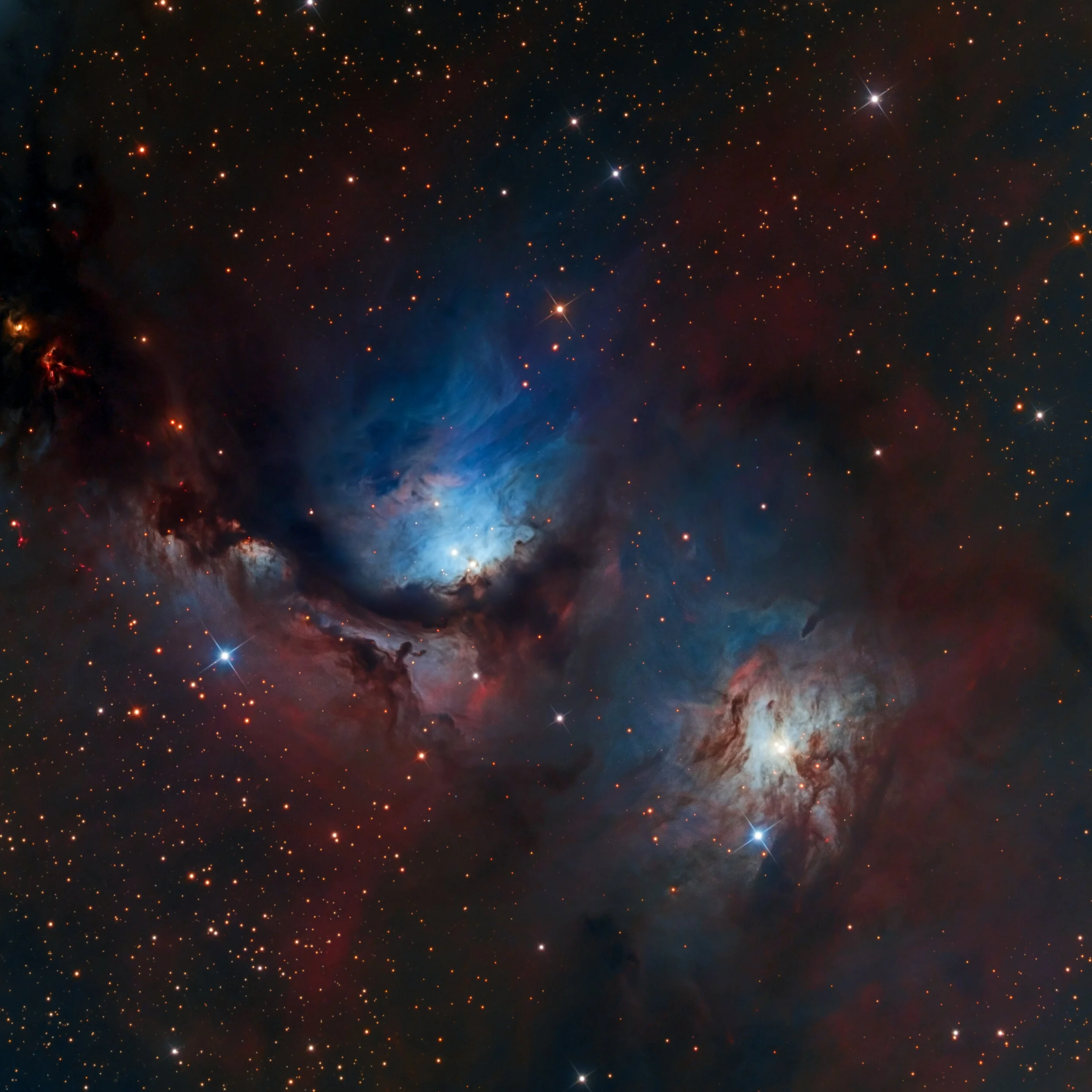
M78
Image Description and Details : This is an image of M78. Actually, M78 is the brightest reflection nebula (blue nebula near the center) of a nebula complex that includes NGC 2064 (the red nebula on the left of the image), NGC 2067 (the reflection nebula just on the other side of the dark nebula from M78) and NGC 2071 (the reflection nebula in the lower right of the image). This nebula complex is about 1,300 light years away in the constellation Orion, slightly above Alnitak, the leftmost star in Orion’s belt.Telescope: Planewave CDK-17 Camera: FLI PL16803 Mount: Paramount ME Luminance: 27x20 minutes (binned 1x1)Red: 16x15 minutes (binned 1x1) Green: 16x15 minutes (binned 1x1) Blue: 16x15 minutes (binned 1x1)
Copyright: Bernard Miller
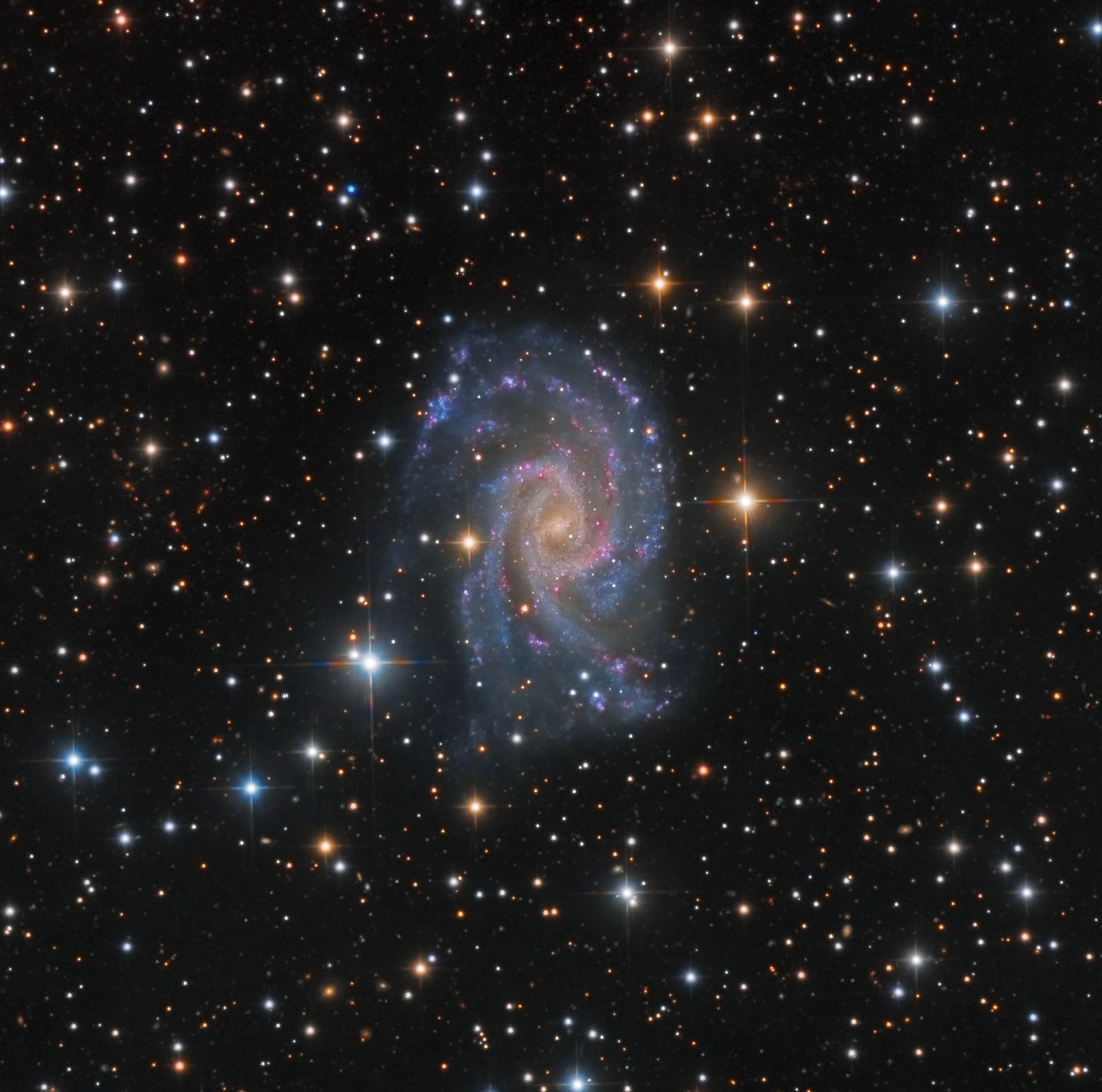
NGC 2835
Image Description and Details :
NGC 2835 is an intermediate barred spiral galaxy with a massive black hole at its center. It is located in the constellation Hydra, at a distance of approximately 35 to 40 million light years from Earth, and is about 65,000 light years across. Seen face on with its tightly woven arms it has a sea shell like appearance.Imaged in LRGB on our Officina Stellare RiDK 700 at Obstech,Chile.OTA RiDK 700 FL 4900 mm, Mount OS Polar Fork, Camera PL 16803, Filters ChromaLuminance 15 hours 900sRGB 6 hours per channel 900s bin 2
Copyright: Mike Selby
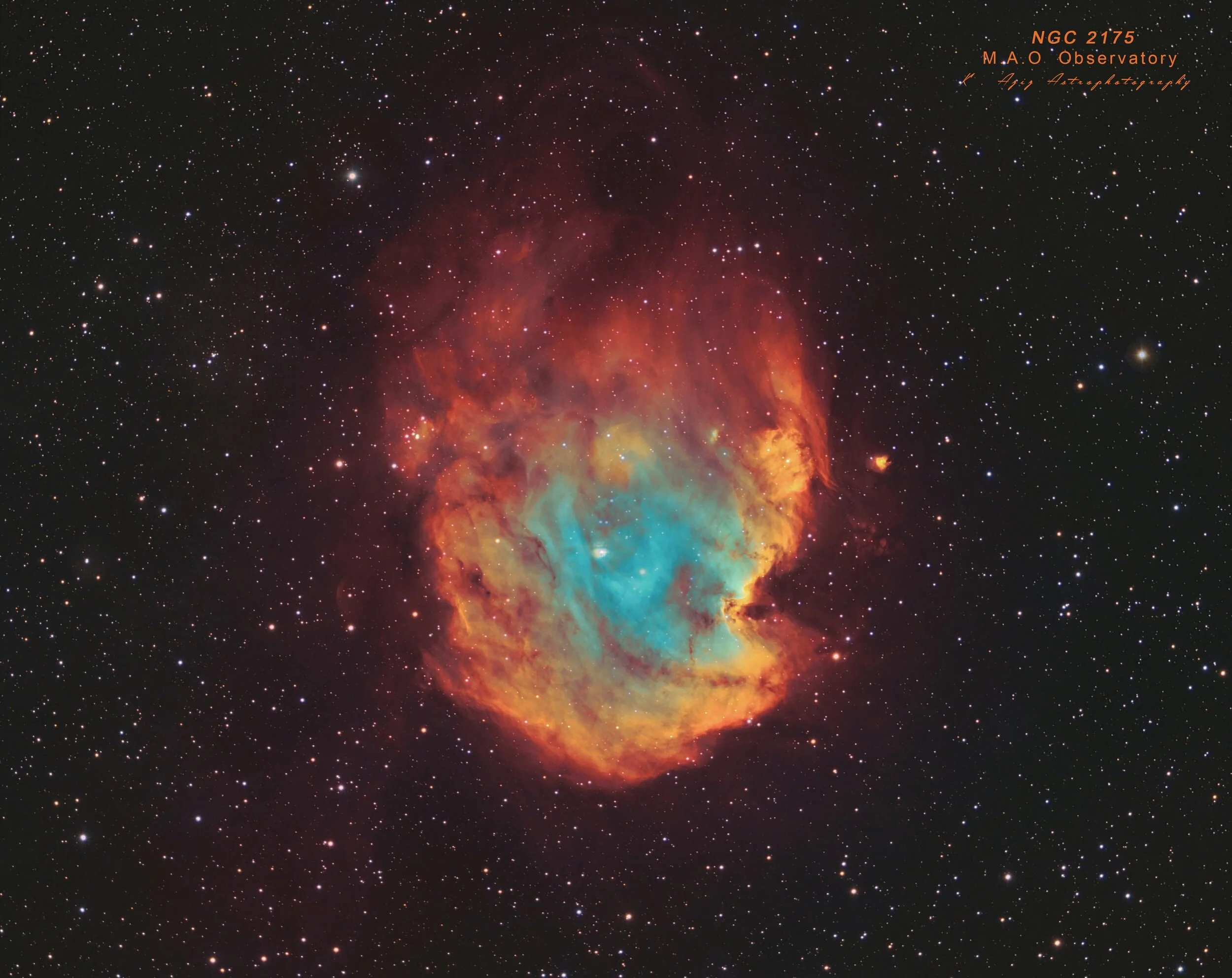
The nebula of the head of the monkey in HOO
Image Description and Details :
Located in the direction of the Orion constellation about 1600 light-years, its apparent size is slightly larger than the full moon.the monkey's head nebula or simply NGC 2175 is an emission nebula that emits in different wavelengths mainly in HA but also in Sii and Oiii.In the center is the star catalogued HD 42088 which emits a strong ultraviolet radiation that ionizes the gases in the vicinity.In addition to ultraviolet radiation, this star emits powerful stellar winds that shape the nebula's gas cluster, helping to create several pillars (visible in the image) that form a star nursery.Technical data:- Takahashi fsq 85 F/D 3.8- iOptron cem60 ec mount- Zwo asi 1600 mm cooled pro- 130x300s HA : 10h50min- 145x600s OIII : 24h10min- 30x3x60s RGB : 1h30 min- Total integration: 36 hours 30 minutes- DOF: 27x101x35- Date: January 2021- Location: Ben Slimane MAO Observatory, Morocco.
Copyright: Aziz Kaeouach

Out on a Wing Part 2
Image Description and Details :
Image of the area from Cederblad 90 to beyond NGC 2327 in Monoceros and Canis Major. This area is the right wing of the famous SeaGull Nebula (IC2177) lying approx 3,700 light years distant. The area is full of emission and reflection nebula. 10.2hrs of exposure time with a 152mm refractor and ASI 6200 CMOS camera using LRGB and Ha filters.
Copyright: Jon Talbot
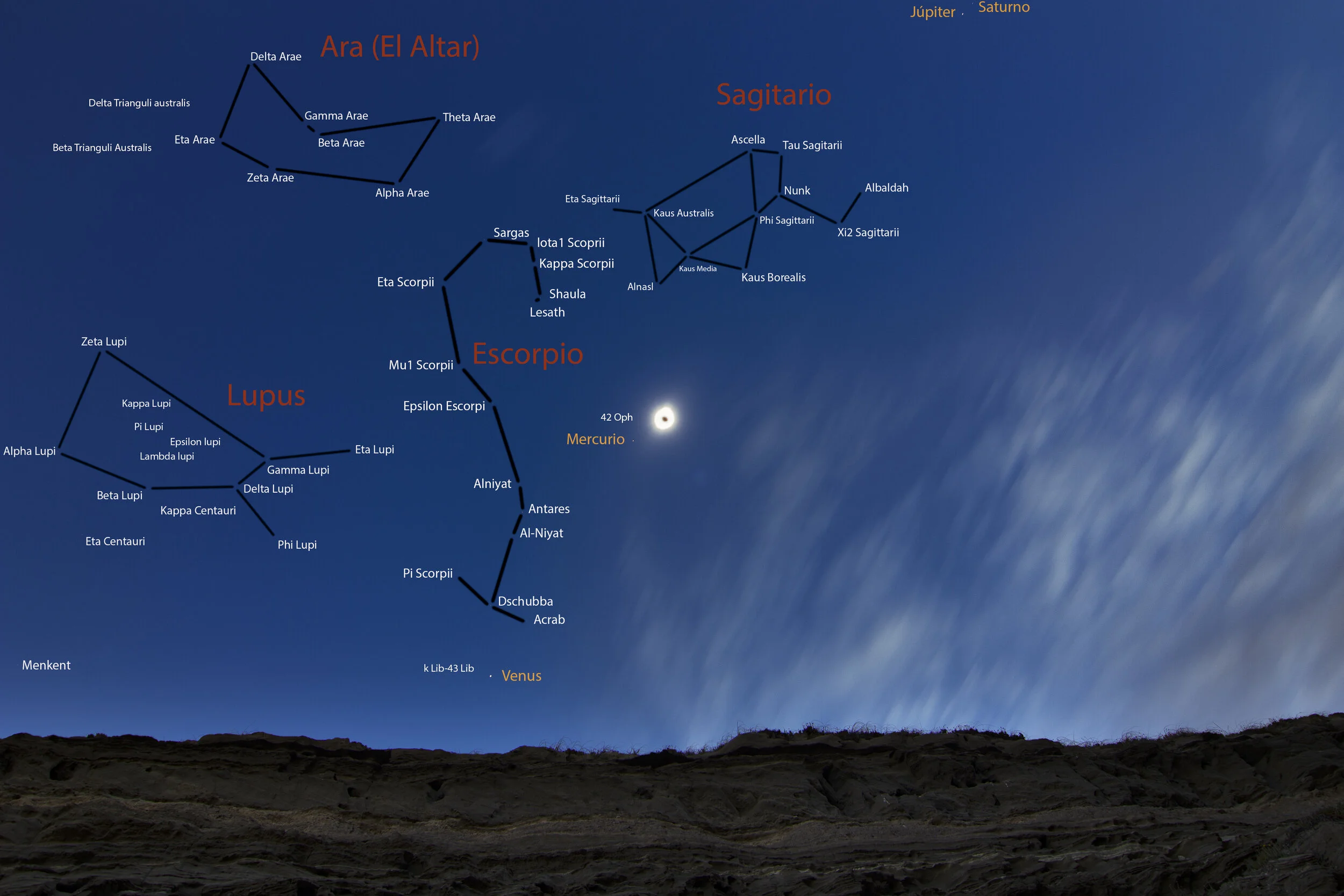
Eclipse and constellations
Image Description and Details : I wanted to share this photograph taken during the last total solar eclipse on December 14th.During the last total solar eclipse, in La Lobería, Río Negro, Argentina, on the edge of the South Atlantic and its immense cliffs, which helped to compose the image that I present here, 4 planets could be observed with the naked eye, some stars, and others could be captured with a long exposure photograph. The photography is the result of a composition of two images, one with a long exposure to capture the stars (where the eclipse was overexposed) and the other with a short exposure (with the eclipse well exposed).Cámera: Canon T3Lens: Tokina 11-16, in 11 mm F: 7.1 / 5.6ISO: 200 / 3200Exposure: 2 shots: 10 seconds and 1/20 seconds Software: Photoshop.
Copyright: Cristian López

M42 and IC 434 widefield in Narrowband
Image Description and Details :
This image shows the Orion Nebula, De Mairan’s Nebula, the Horsehead Nebula and the Flame Nebula. It was taken with a small refractor telescope from the city. For this, narrowband filters were used and long exposure times helped reveal a lot of gas and dust all around the nebulae. The color was achieved by combining the narrowband channels into a “OHS” combination. This is rarely done and gives this part of the sky a unique look. Other combinations (Hubble Palette or true color) did not really make the objects pop as much. I believe the OHS combination is the best when it comes to imaging this section of the sky in narrowband only, although it is either you love it or you hate it!
Copyright: Antoine and Dalia Grelin
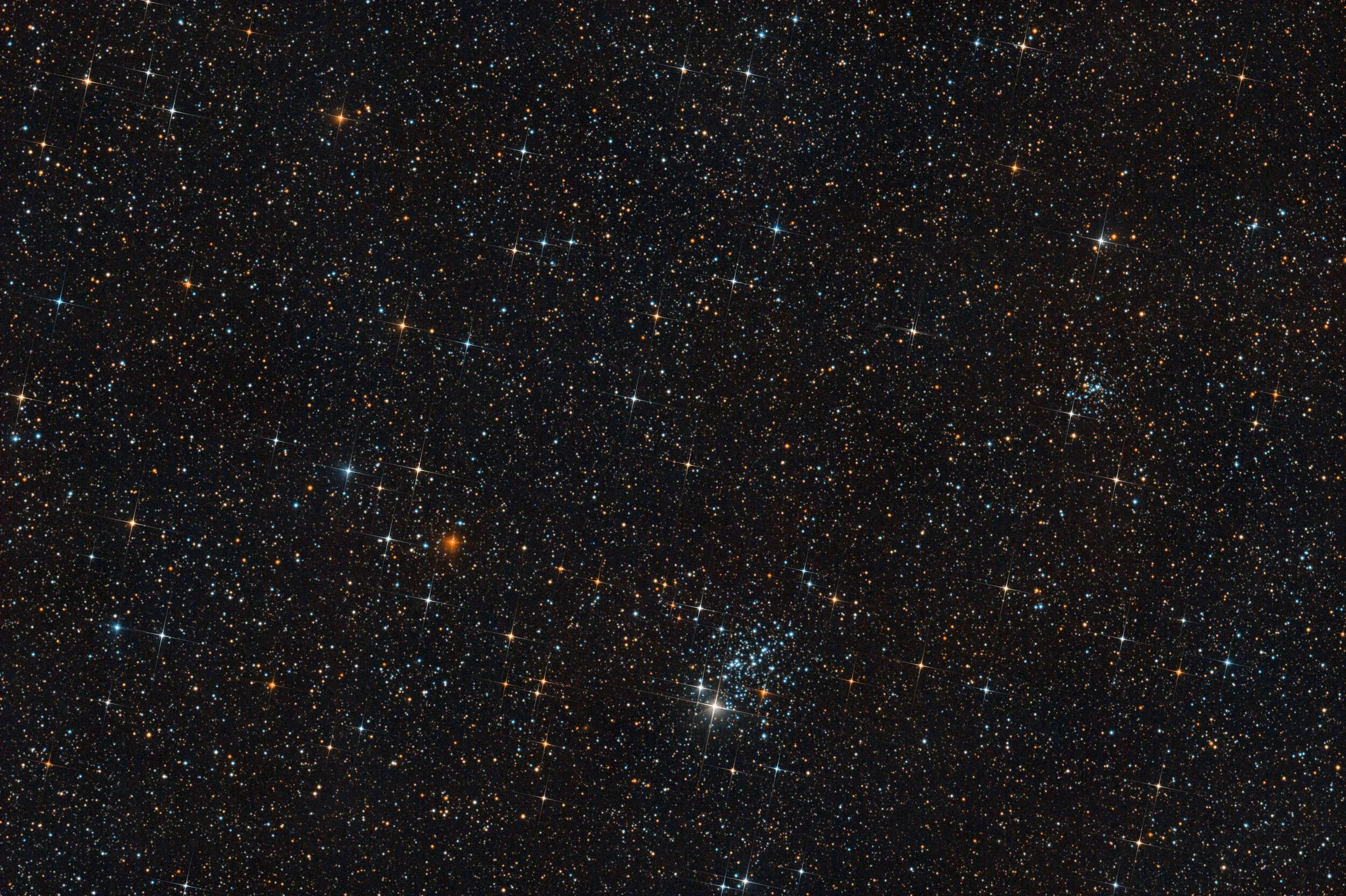
Libellenhaufen-NGC457
From approx. 2h exposure time without darks, flats, bias. Rasa11 and ASI 2600 pro color. Location: Terrace - Bad Harzburg City Area (B4)
Copyright: Andre Rachwalski

Eta Carinae in HSO
Takahashi FS60c
ASI1600MM Pro
7 Position FW, 36mm
Feather Touch Starlight
Pegasus Astro
EQ6
Astronomik Ha 6nm: 44 ∙ 420s (gain: 139.00) -10C bin 1x1
Astronomik S2 6nm: 40 ∙ 420s (gain: 139.00) -10C bin 1x1
Astronomik O3 6nm: 36 ∙ 420s (gain: 139.00) -10C bin 1x1
Location:
Colombari's Terrace, Belo Horizonte, Minas Gerais, Brazil
FAST · PSCS5 · Pixinsight
Copyright: Roberto Colombari
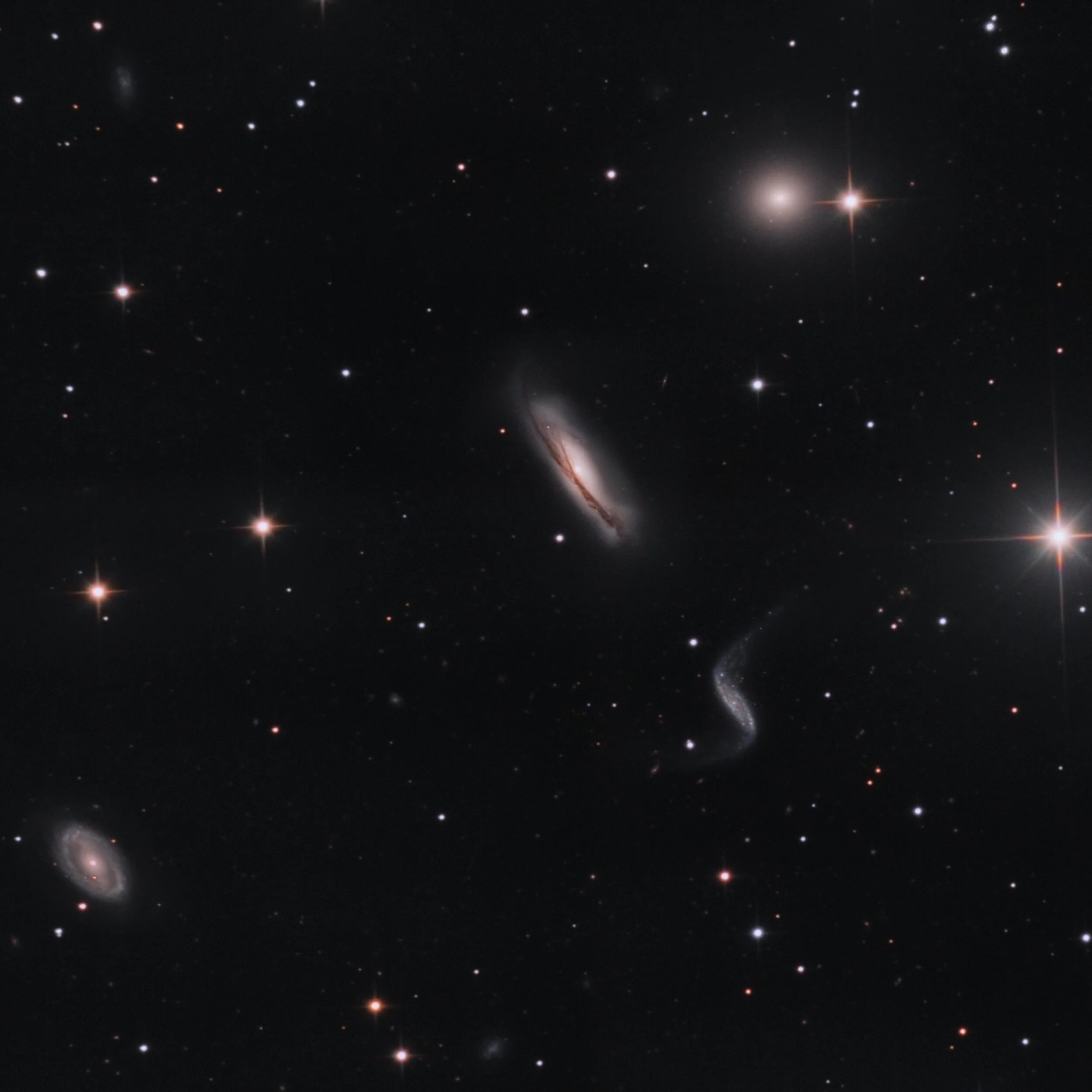
ngc 3189/90
NGC 3189 is situated close to the celestial equator and, as such, it is at least partly visible from both hemispheres in certain times of the year.