

AAPOD2 Image Archives
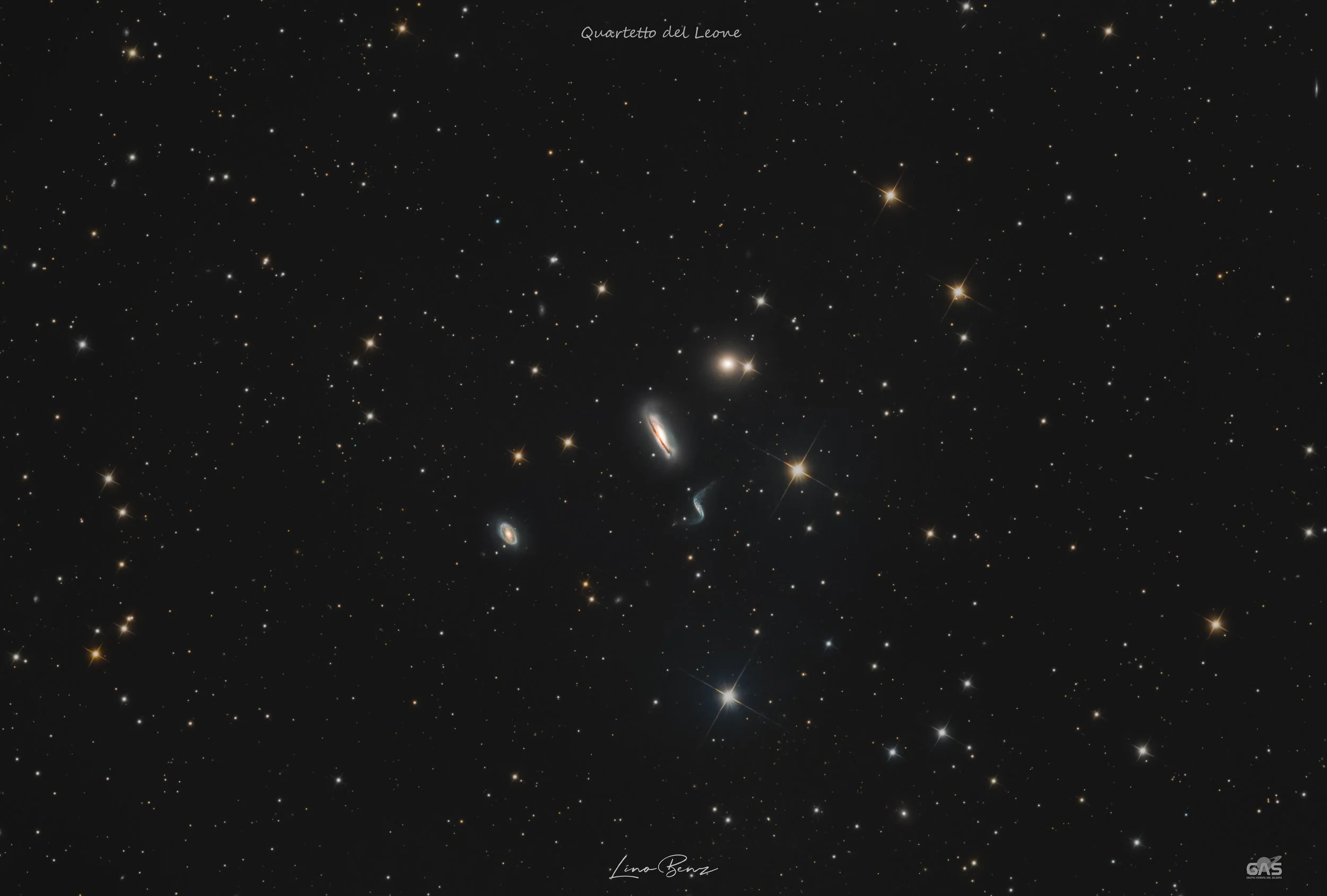
Leo Quartet/ Hickson 44
Hickson 44, also known as the Leo Quartet, is a compact galaxy group located approximately 80 million light-years away in the constellation Leo. This interacting system consists of four prominent galaxies: NGC 3190, NGC 3193, NGC 3187, and NGC 3185. NGC 3190, the brightest and most striking member, is a warped spiral galaxy with a prominent dust lane cutting across its disk. Nearby, NGC 3187 showcases distorted spiral arms, a sign of gravitational interactions, while the elliptical NGC 3193 remains relatively undisturbed. The smallest of the group, NGC 3185, exhibits a faint barred spiral structure.
These galaxies are in the process of a slow cosmic dance, their mutual gravitational forces shaping their evolution over millions of years. Hickson 44 is an excellent example of galaxy interactions influencing star formation, structural distortions, and potential future mergers. Deep exposures reveal faint tidal streams and extended halos, evidence of past interactions that continue to shape this fascinating galaxy group.
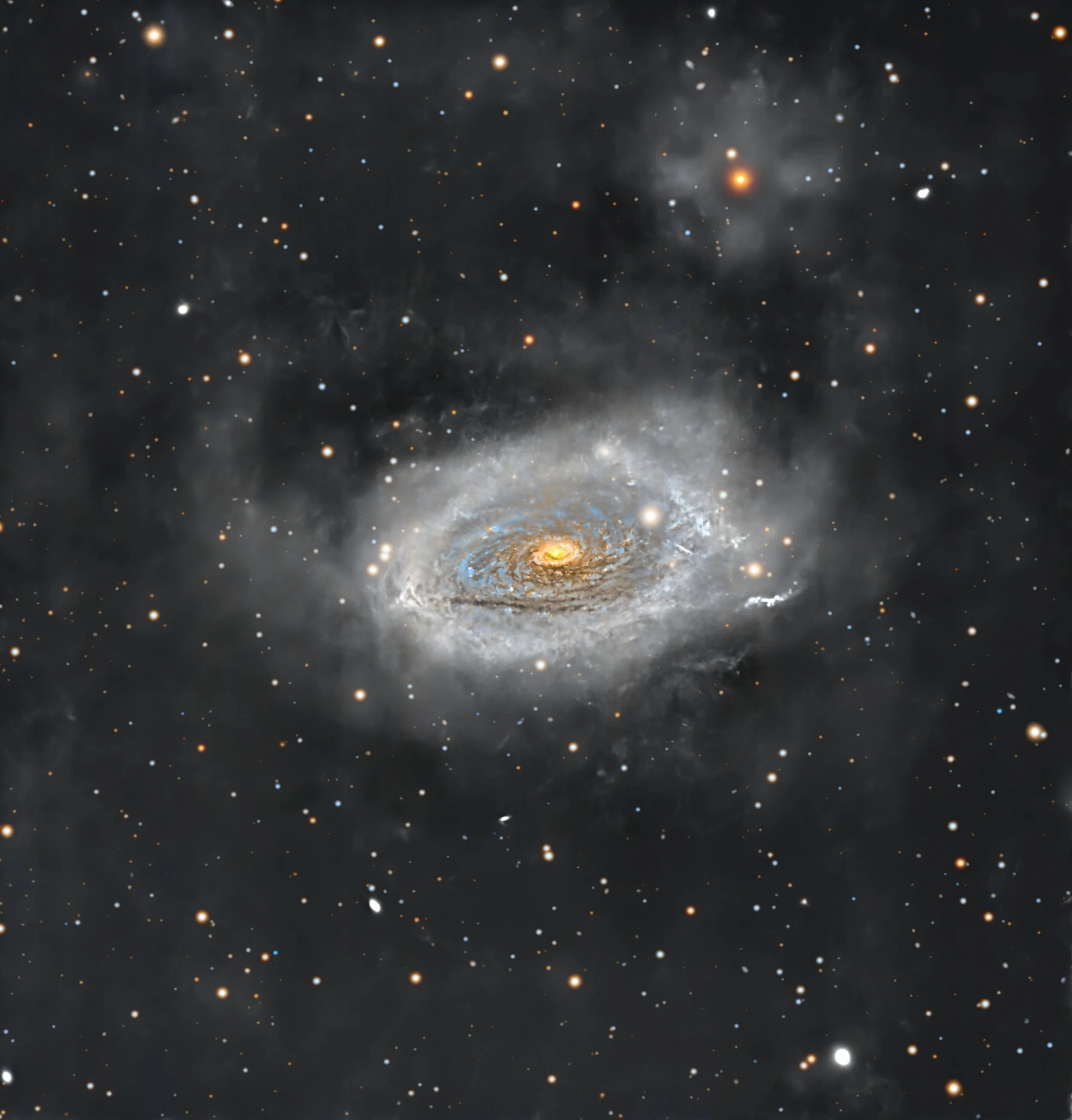
M63 – The Sunflower Galaxy
M63, also known as the Sunflower Galaxy, is a striking spiral galaxy located about 27 million light-years away in the constellation Canes Venatici. This galaxy is a member of the M51 Group and exhibits a flocculent spiral structure, characterized by numerous short, patchy spiral arms rather than well-defined grand design arms. These star-forming regions, rich in young, blue stars, give M63 its distinctive, textured appearance, resembling the pattern of sunflower petals.
A faint, extended halo of stellar streams surrounds the galaxy, remnants of past interactions with smaller satellite galaxies. Observations in infrared and ultraviolet wavelengths reveal ongoing star formation throughout the disk, while deep imaging unveils a complex structure shaped by tidal forces. M63’s active core and vast star-forming regions make it a fascinating target for astrophotography and a valuable object for studying galaxy evolution.
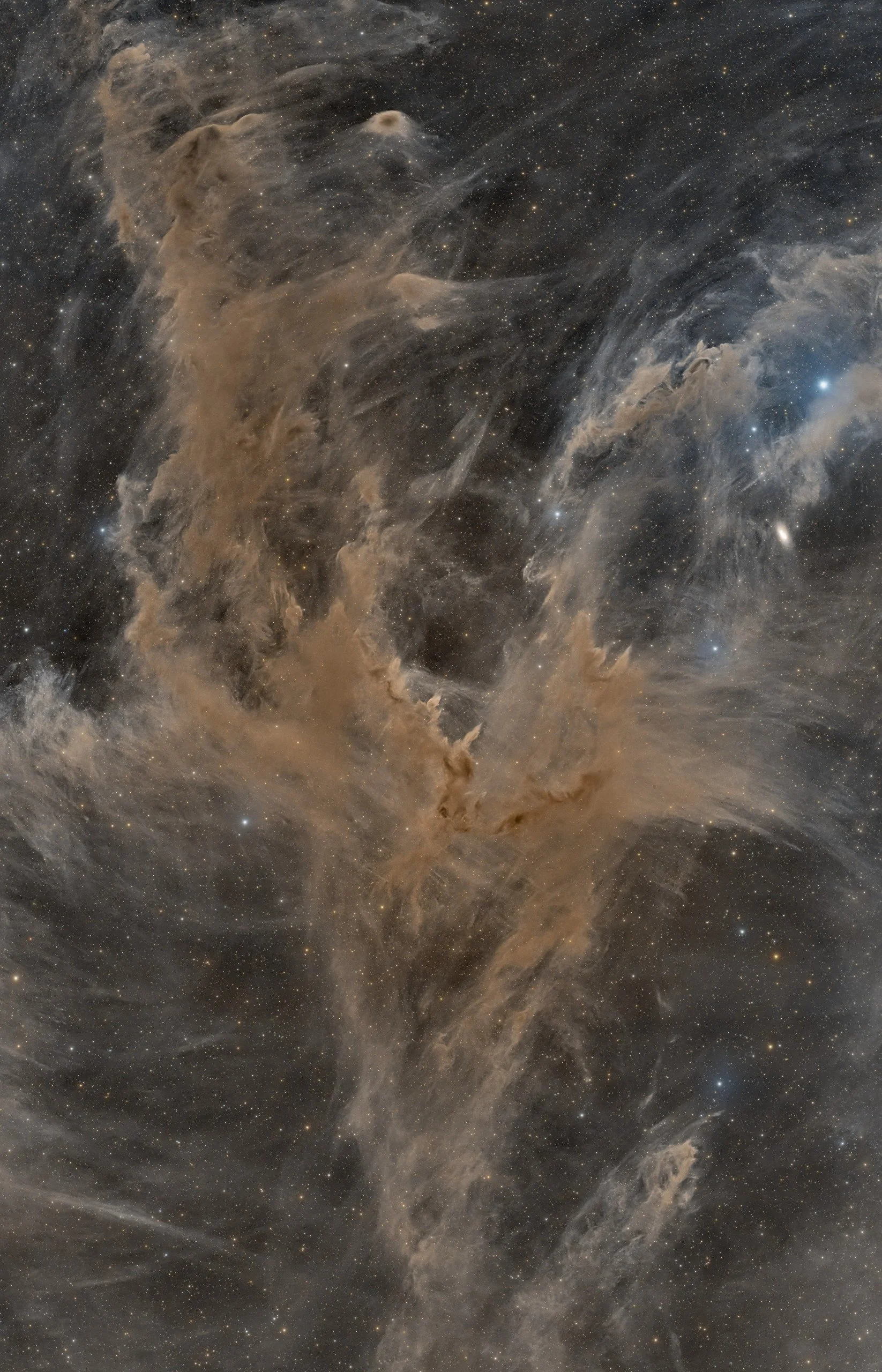
Dark Clouds in Chameleon - V
The Chamaeleon molecular cloud complex is a vast star-forming region in the southern sky, filled with dark nebulae and newborn stars. This image focuses on a portion of this cosmic expanse, highlighting intricate filaments of interstellar dust that obscure background starlight. These dense clouds serve as the raw material for future stellar nurseries, where gravity will eventually trigger the formation of new stars.
Captured from the pristine skies of the Atacama Desert, this deep-field view reveals the interplay between dark nebulae and embedded protostars, some of which are still enshrouded in their natal cocoons. The Chamaeleon complex is one of the nearest star-forming regions to Earth, making it a key area of study for understanding early stellar evolution. The subtle glow of scattered starlight within the cloud hints at ongoing dynamical processes, where turbulence and magnetic fields shape the birthplaces of future stars.
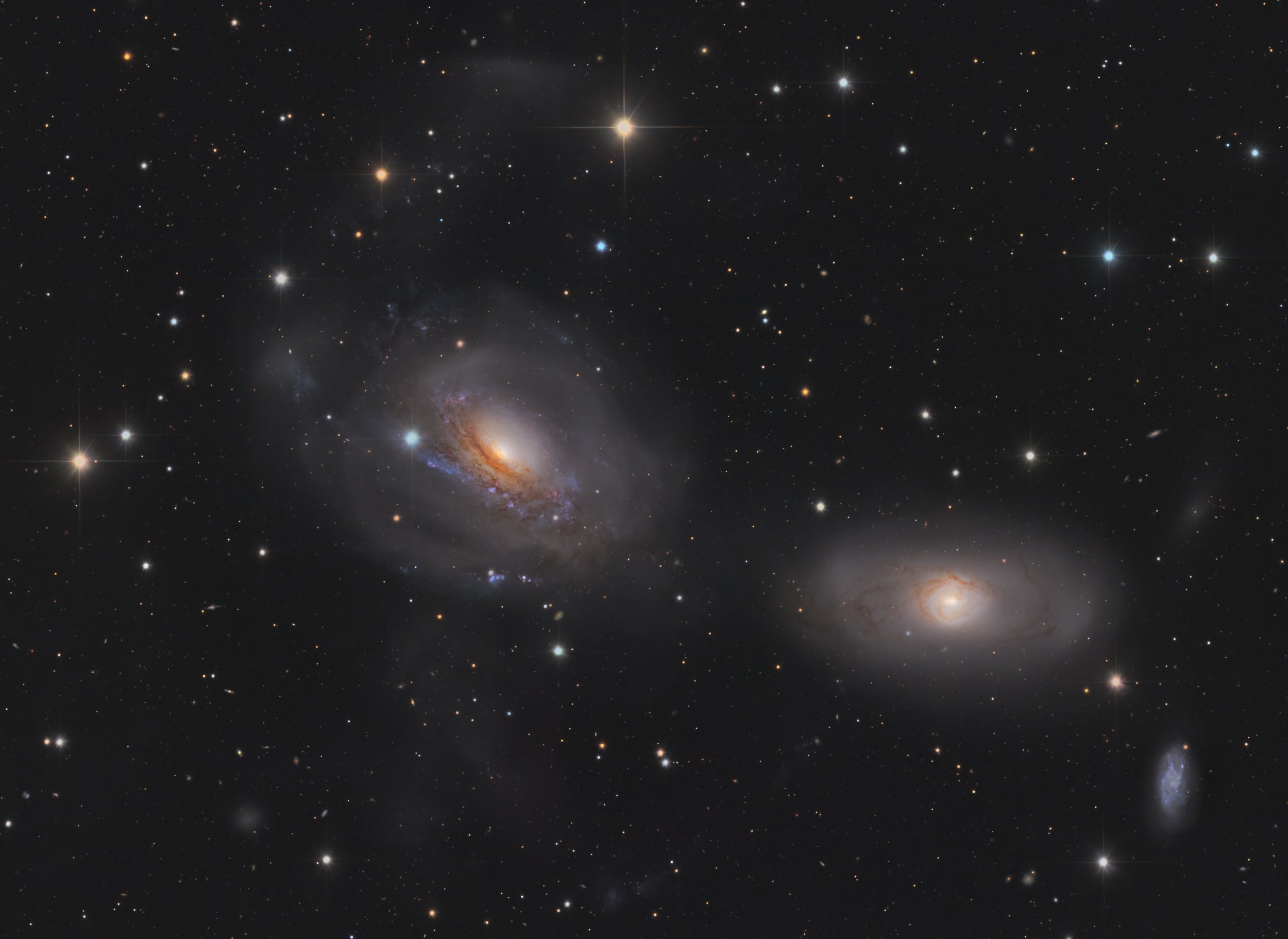
NGC 3169: A Cosmic Dance of Gravitational Tides
NGC 3169 is a striking spiral galaxy located approximately 70 million light-years away in the constellation Sextans. Unlike the classic symmetrical spirals, this galaxy exhibits pronounced distortions in its arms, likely due to gravitational interactions with its neighboring galaxy, NGC 3166. These tidal forces have stretched its outer arms, creating a visually dynamic structure filled with dust lanes and star-forming regions.
This image reveals the intricate details of NGC 3169’s spiral arms, which host young, hot blue stars, while its core glows with the golden light of older stellar populations. A prominent dust lane bisects the central bulge, indicating active star formation and turbulence. The galaxy’s active nucleus, powered by a supermassive black hole, emits faint but detectable emissions across multiple wavelengths, suggesting ongoing accretion activity.

The Rosette Nebula in SHO – A Stellar Bloom
The Rosette Nebula (NGC 2237) is a vast emission nebula located in the constellation Monoceros, approximately 5,200 light-years from Earth. This stunning region of ionized hydrogen glows due to intense ultraviolet radiation from the young, hot stars of its embedded open cluster, NGC 2244. The radiation and stellar winds from these massive stars have sculpted intricate structures within the nebula, creating a cosmic “flower” spanning over 130 light-years.
Captured in the SHO Hubble Palette over 37 hours of integration time, this image reveals the nebula’s complex interplay of gases. The sulfur (SII) emissions appear in red, hydrogen-alpha (Ha) in green, and oxygen (OIII) in blue, highlighting delicate filaments and shock fronts. The deep exposure brings out the faintest wisps of nebulosity, while the central cavity—carved by stellar feedback—stands as a testament to the dynamic life cycle of massive stars.
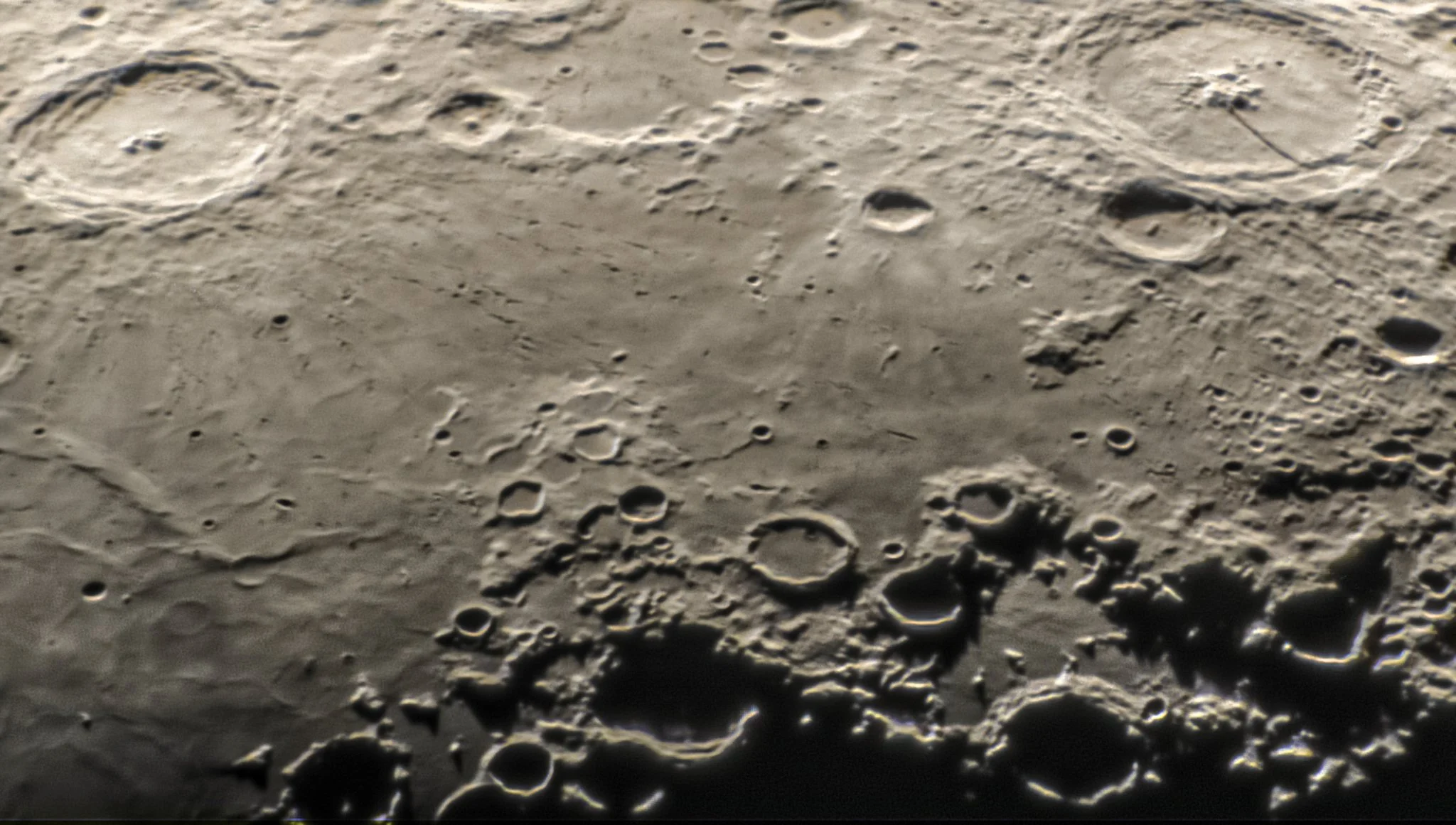
Shadows and Peaks Along Alpine Valley
This high-resolution lunar image showcases the dramatic contrast between shadowed and sunlit terrain along the terminator, revealing an intricate interplay of impact history and geological evolution. The dominant crater Aristoteles, a 3.8-billion-year-old impact structure, stands out with its terraced walls and central peak, while the neighboring Eudoxus adds to the rugged topography. Below, the Cassini crater, partially flooded by ancient lava, marks the transitional boundary between the rough highlands and the smooth plains of Mare Imbrium. The rugged Lunar Alps stretch across the frame, with the sinuous Alpine Valley cutting through them—a rift possibly formed by tectonic forces or subsurface magma movement. This image is a striking testament to the Moon’s violent past and the forces shaping its ever-scarred surface.
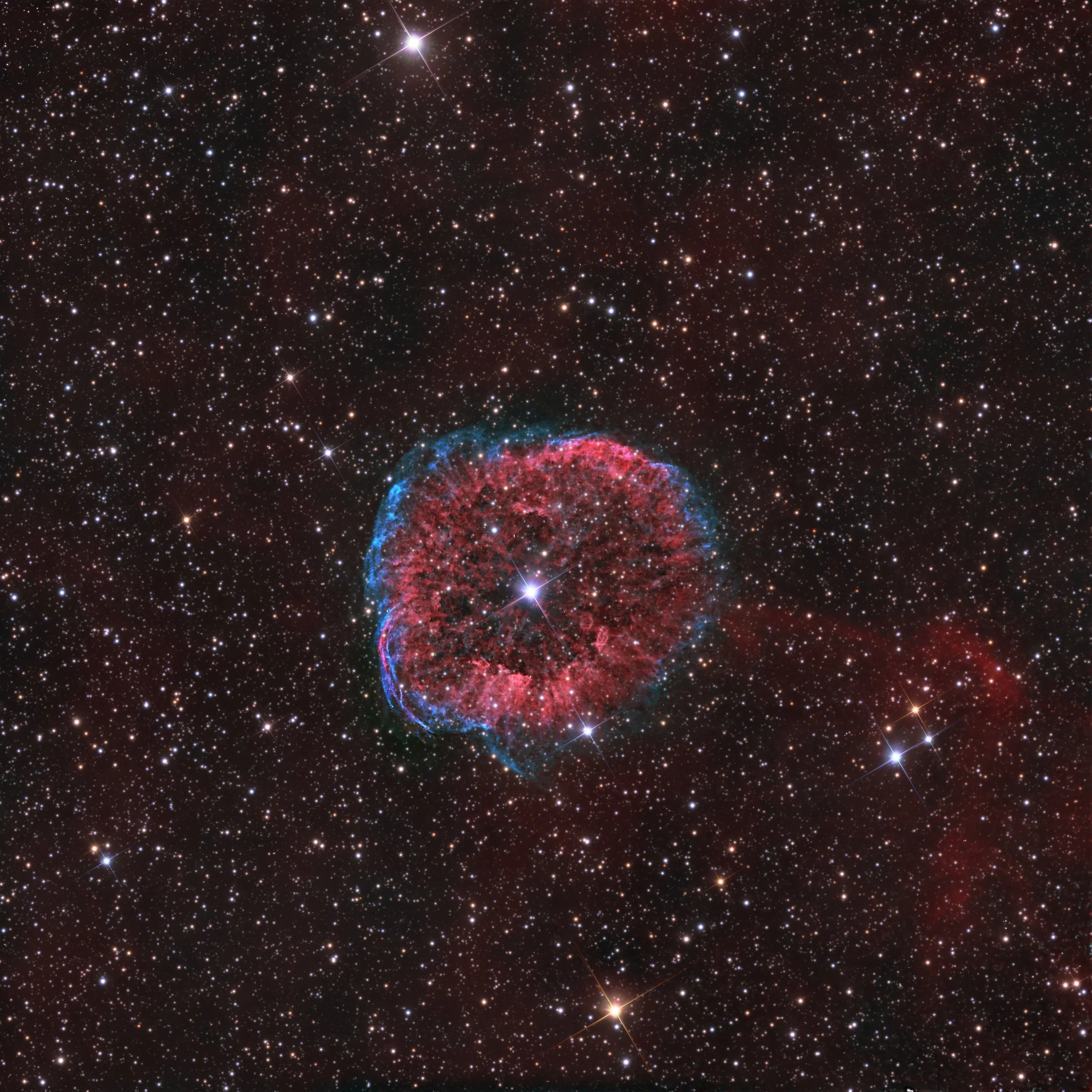
RCW-58 Cosmic Flower
RCW 58 is a striking emission nebula surrounding the Wolf-Rayet star WR 40, located in the constellation Carina. This nebula is a stellar wind-blown bubble formed by the intense radiation and powerful outflows from WR 40, a massive, evolved star nearing the final stages of its life. The surrounding filaments and arcs of ionized gas are the remnants of material ejected by the star in previous evolutionary phases, shaped by its violent stellar winds.
Wolf-Rayet stars like WR 40 are rare and extremely hot, with surface temperatures exceeding 100,000 K. Their strong winds create intricate nebular structures such as RCW 58, which glows brightly in hydrogen-alpha (Hα) and oxygen-III (OIII) emissions. These regions serve as laboratories for studying the late evolution of massive stars before they ultimately end their lives in a supernova explosion. Observing RCW 58 in narrowband filters reveals detailed shock structures and interactions between the ejected material and the surrounding interstellar medium, offering insight into the final turbulent stages of stellar evolution.
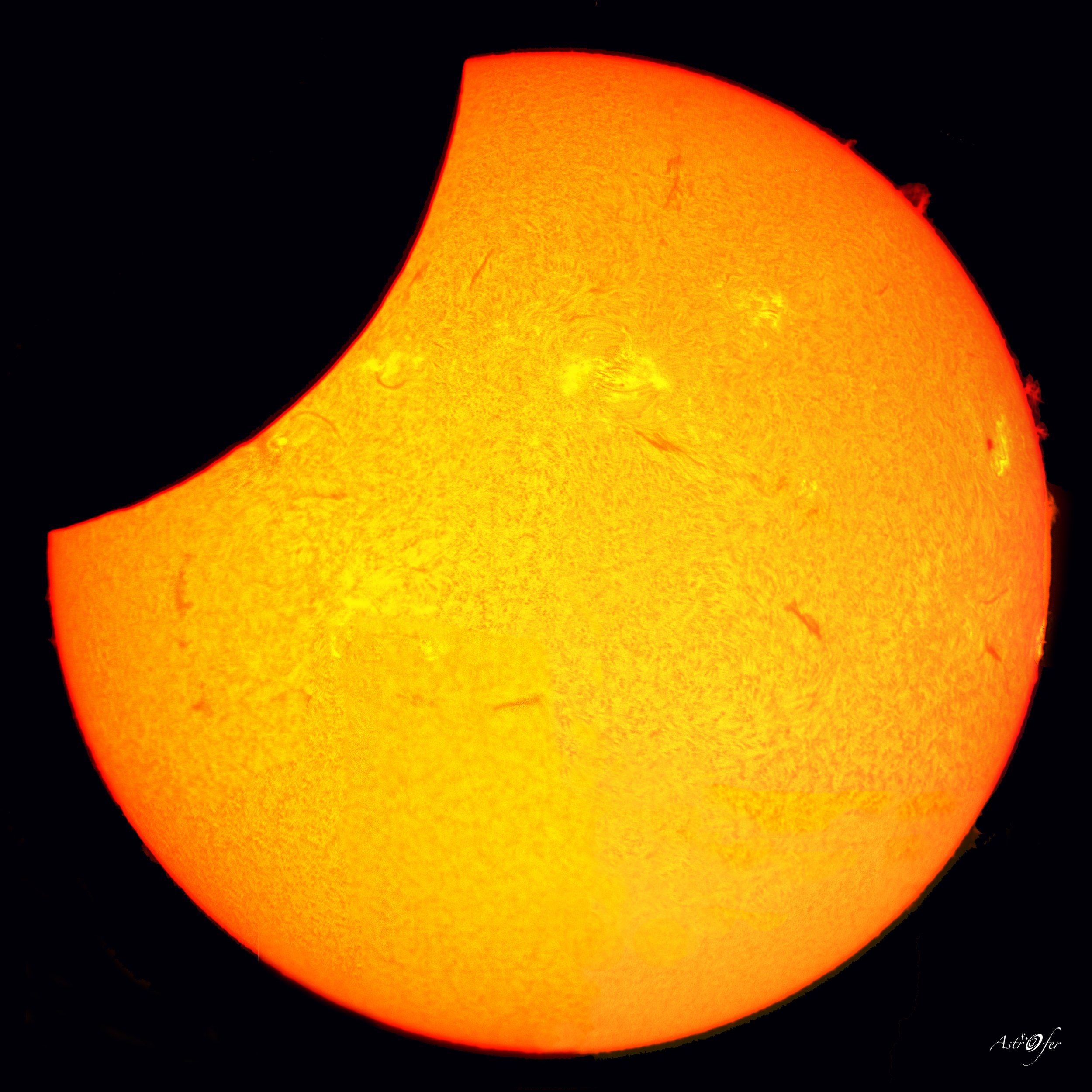
partial solar eclipse
On March 29, 2025, a partial solar eclipse will grace the skies, visible primarily across parts of North America, Europe, and northern Asia. During this event, the Moon will pass between the Earth and the Sun, obscuring a portion of the solar disk and creating a dramatic crescent shape. Unlike a total solar eclipse, where the Moon completely blocks the Sun, a partial eclipse leaves a sliver of sunlight visible, making the event a dazzling but less intense phenomenon.
The magnitude and duration of the eclipse will vary depending on location, with the greatest obscuration occurring in northern latitudes. Observers will witness a noticeable dimming of daylight, and if conditions are clear, solar viewers or eclipse glasses will allow safe observation of the event. Partial solar eclipses provide an excellent opportunity to appreciate the celestial mechanics of our solar system and remind us of the dynamic relationship between the Earth, Moon, and Sun.
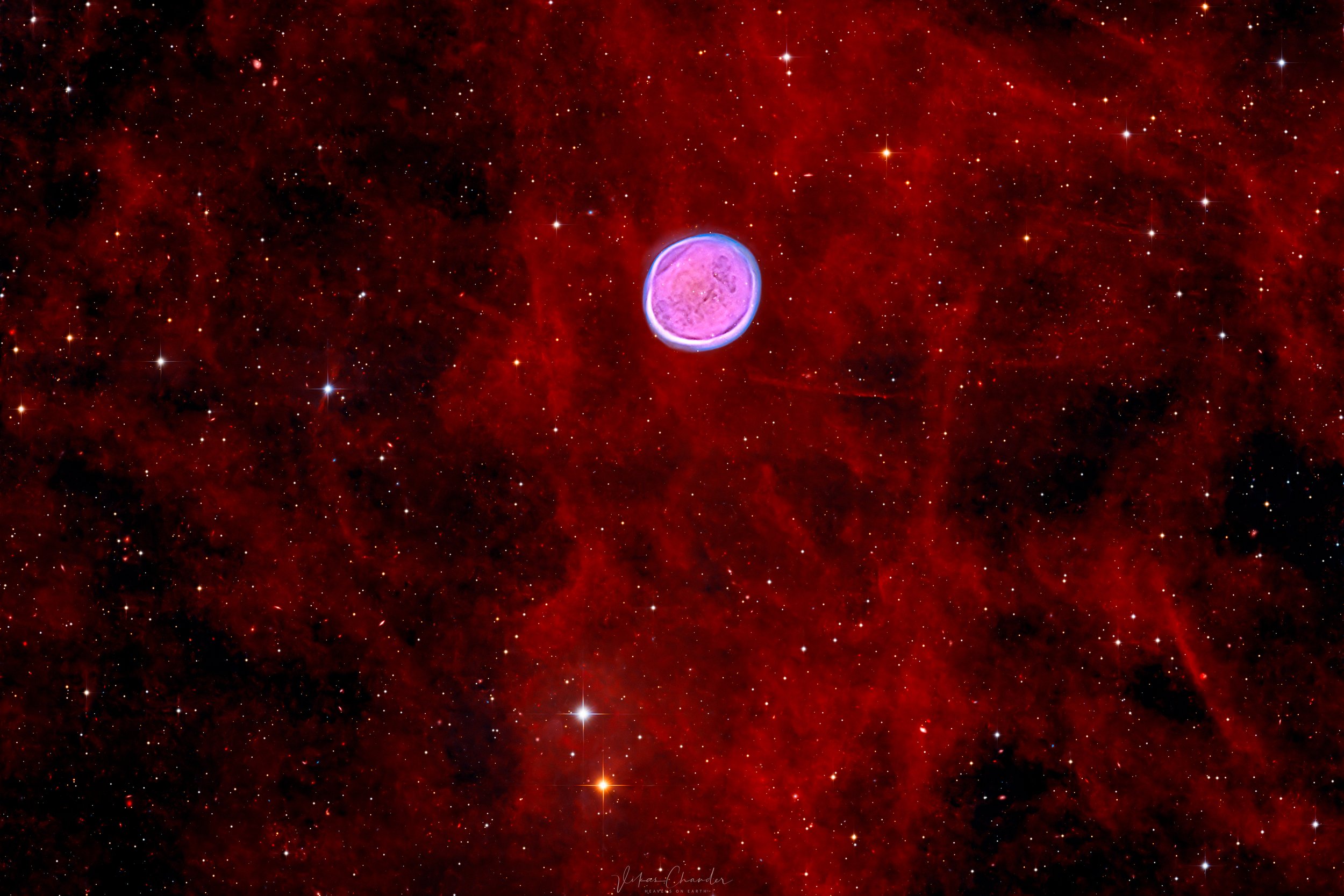
The Southern Owl Nebula
This extraordinary bubble swimming in a glowing red sea of hydrogen may appear supernatural and mysterious to most, but it is a familiar astronomical object, a planetary nebula. Planetary nebulae are created by the ejected and expanding gas of a dying star and although they are brilliant and intriguing objects in the initial stages of formation, these bubbles fade away as their constituent gas moves away and the central stars grow dimmer.
Like all planetary nebulae, the Southern Owl Nebula, (scientific name ESO 378-1), is relatively short-lived, lasting only a few tens of thousands of years, compared to a typical stellar lifetime of several billion years. Located in the constellation of Hydra (The Female Water Snake), it’s informal name relates to its visual cousin in the Northern Hemisphere, M97 or the Owl Nebula.