

AAPOD2 Image Archives

Galaxy with a Tail
Ultra deep View of NGC 5907
Back in 2019 after completing my project on M63 Sunflower galaxy, I decided to search for new objects to image using Insight Observatory's 16" f3.7 Dream astrograph reflector, ATEO-1, remote telescope. While I was surfing the internet, I came across an interesting galaxy. I made sure that it is visible in the northern hemisphere as ATEO-1 is located in the dark skies of New Mexico. I researched a bit more about this edge-on galaxy and found that tidal streams create a loop around this galaxy. I found a couple more images where there were two loops wrapped around the galaxy. I was really excited to capture this galaxy remotely as it was one of a kind and I could not find a similar galaxy that had two loops. I made a decision to capture this galaxy and I decided to email Michael Petrasko and Muir Evenden, Co-founders of Insight Observatory. As the tidal streams were very faint, it would mean investing a lot of imaging time. We started out and collected 5 hours worth of luminance data with ATEO-1.
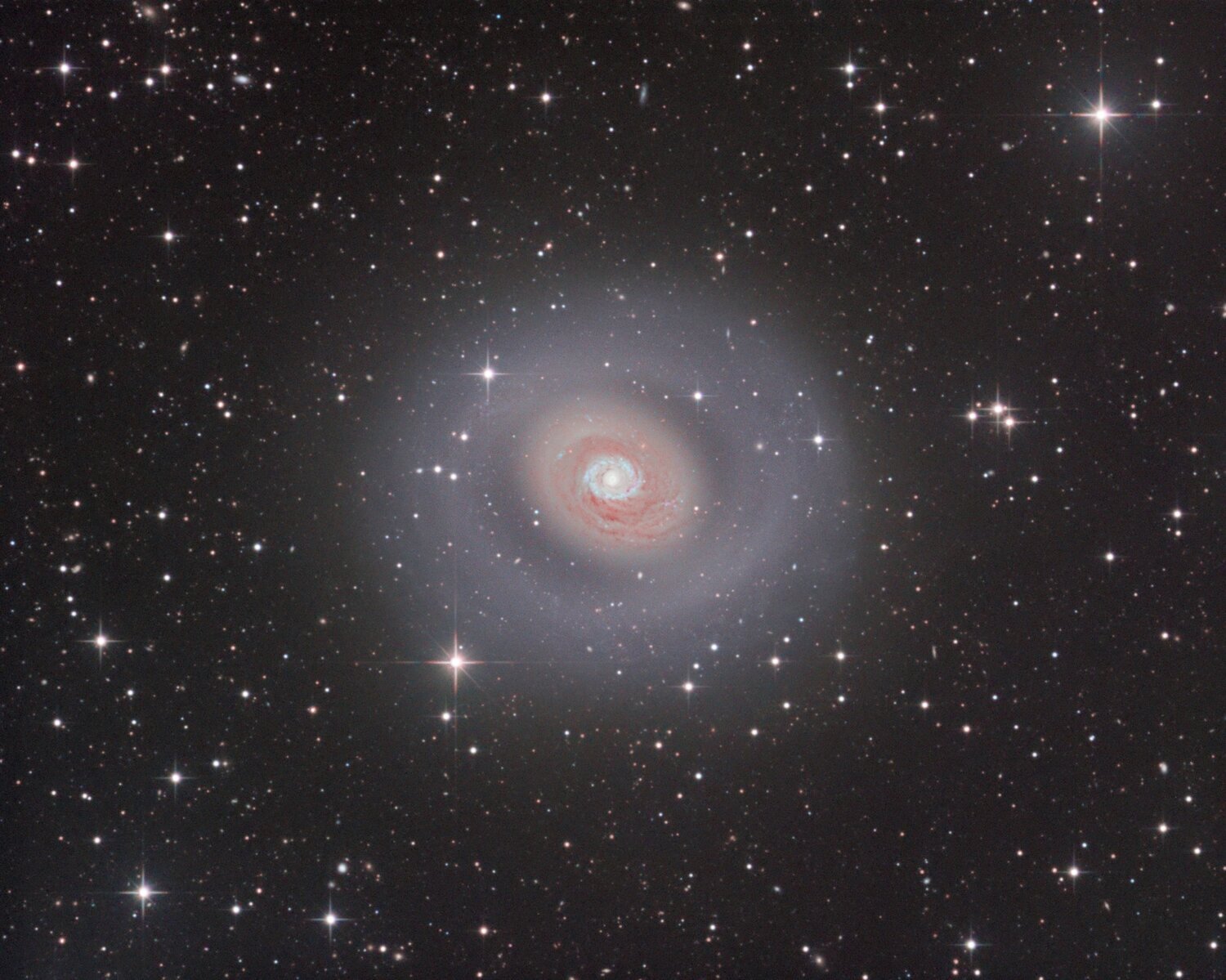
M94
M94 is classified as having a low ionization nuclear emission region (LINER) nucleus. LINERs in general are characterized by optical spectra that reveal that ionized gas is present but the gas is only weakly ionized (i.e. the atoms are missing relatively few electrons). M94 contains both an inner ring with a diameter of 70 arcseconds (approximately 5400 LY, 1.700 kpc at the distance of M94) and an outer ring with a diameter of 600 arcseconds (approx. 45,000 LY, 14 kpc). These rings appear to form at resonance locations within the disk of the galaxy. The inner ring is the site of strong star formation activity and is sometimes referred to as a starburst ring. This star formation is fueled by gas that is dynamically driven into the ring by the inner oval-shaped bar-like structure.
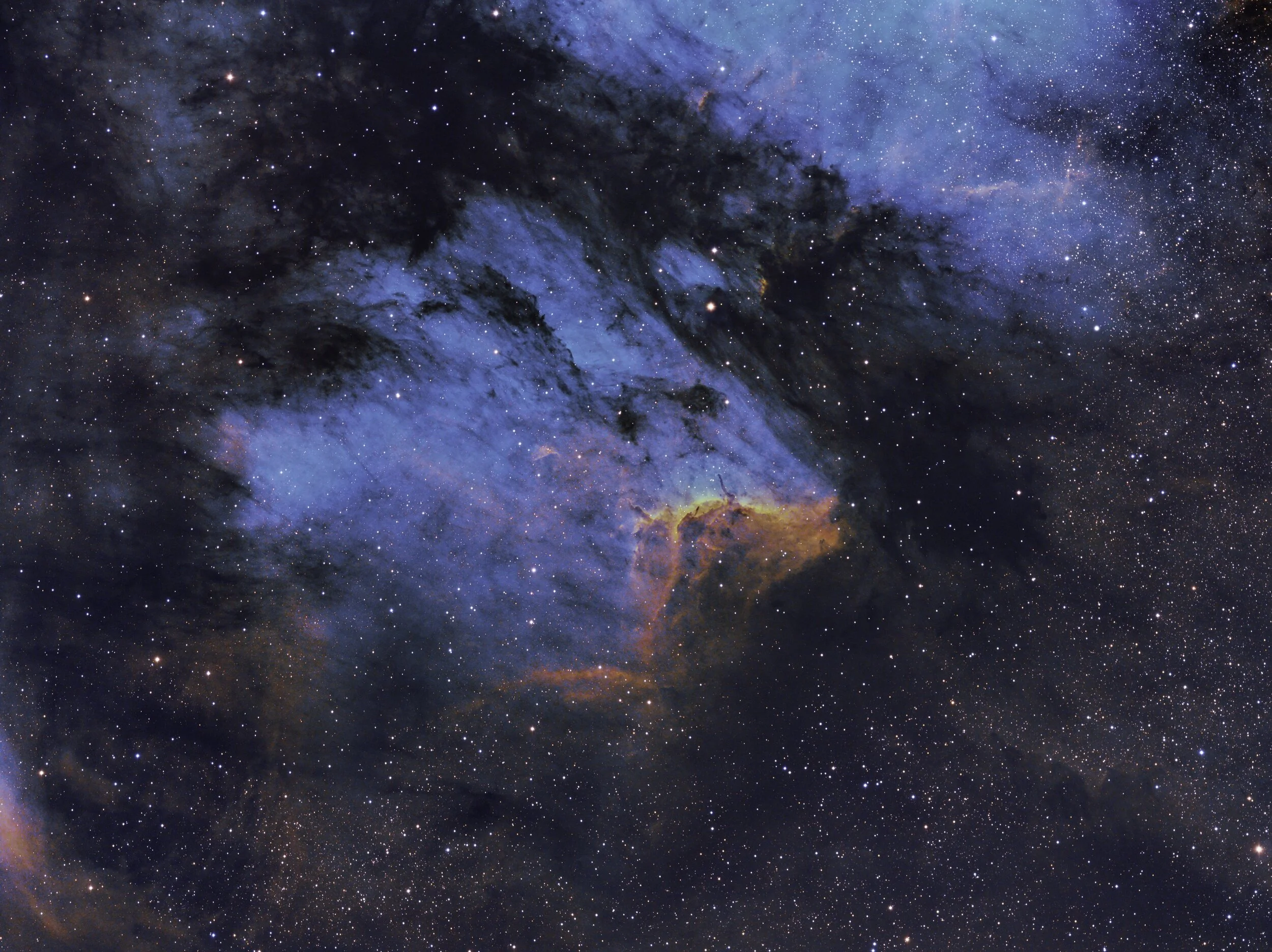
Pelican Nebula also known as IC 5070
Pelican Nebula ( in SHO ) also known as IC 5070 is a large area of emission nebula in the constellation Cygnus, close to Deneb. It bears a resemblance to a pelican, hence its name.
The image was taken during 4 nights and is a total of aprox. 11h of data.
Equipment used :
Baader Narrowband filters
Ha(7nm) - 70x300sec
Oiii (8.5nm)- 8x1200sec
Sii(8nm) - 10x1200sec
Televue Np101 telescope
EQ8_PRO Mount
Moravian G3_16200 camera
SG-4 standalone autoguider and Borg50 guidescope
Data captured with SGpro,alligned and stacked with ccd_stack 2 and processed in Pixinsight.
Location - Henlow (Bedfordshire).
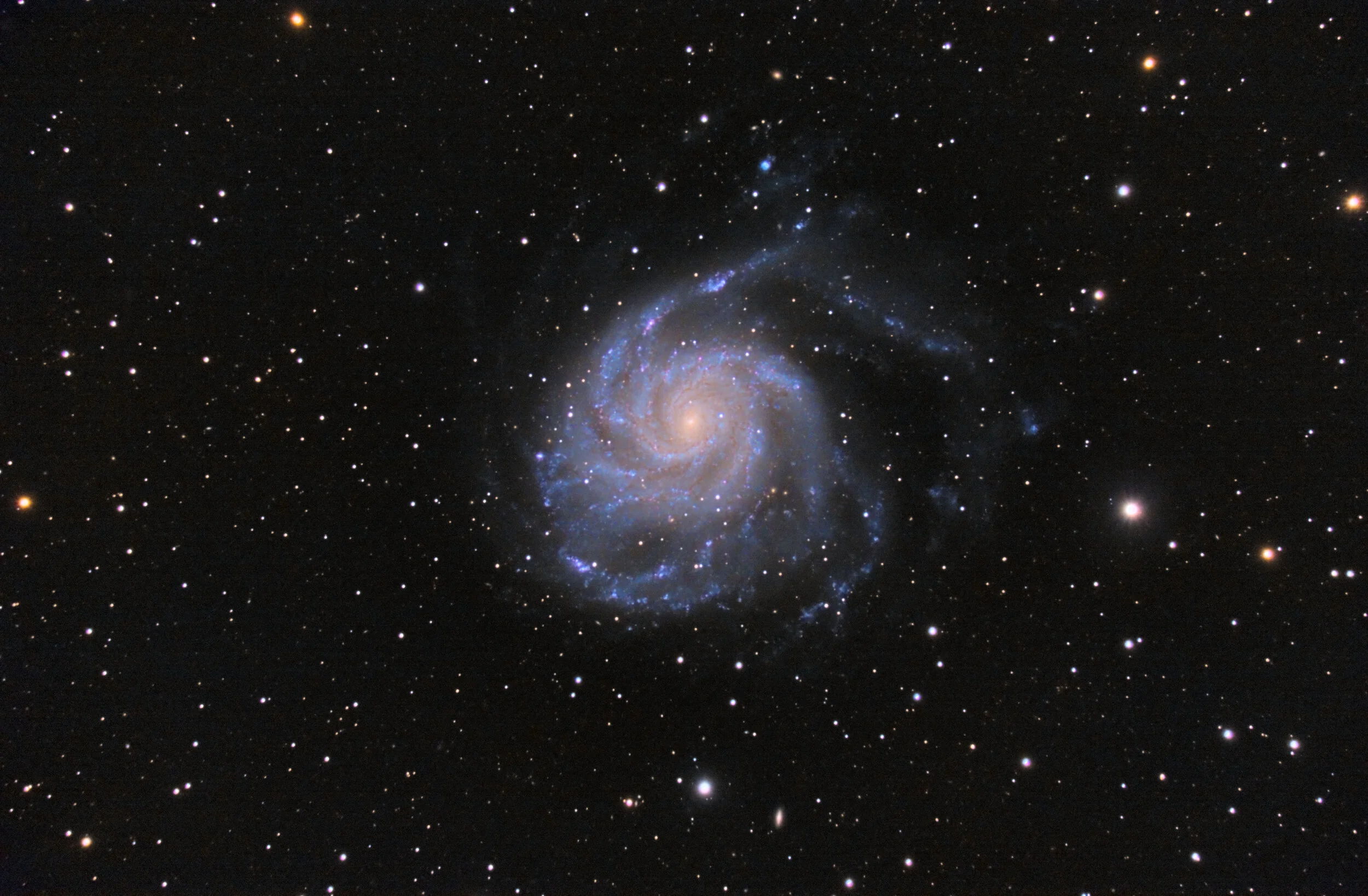
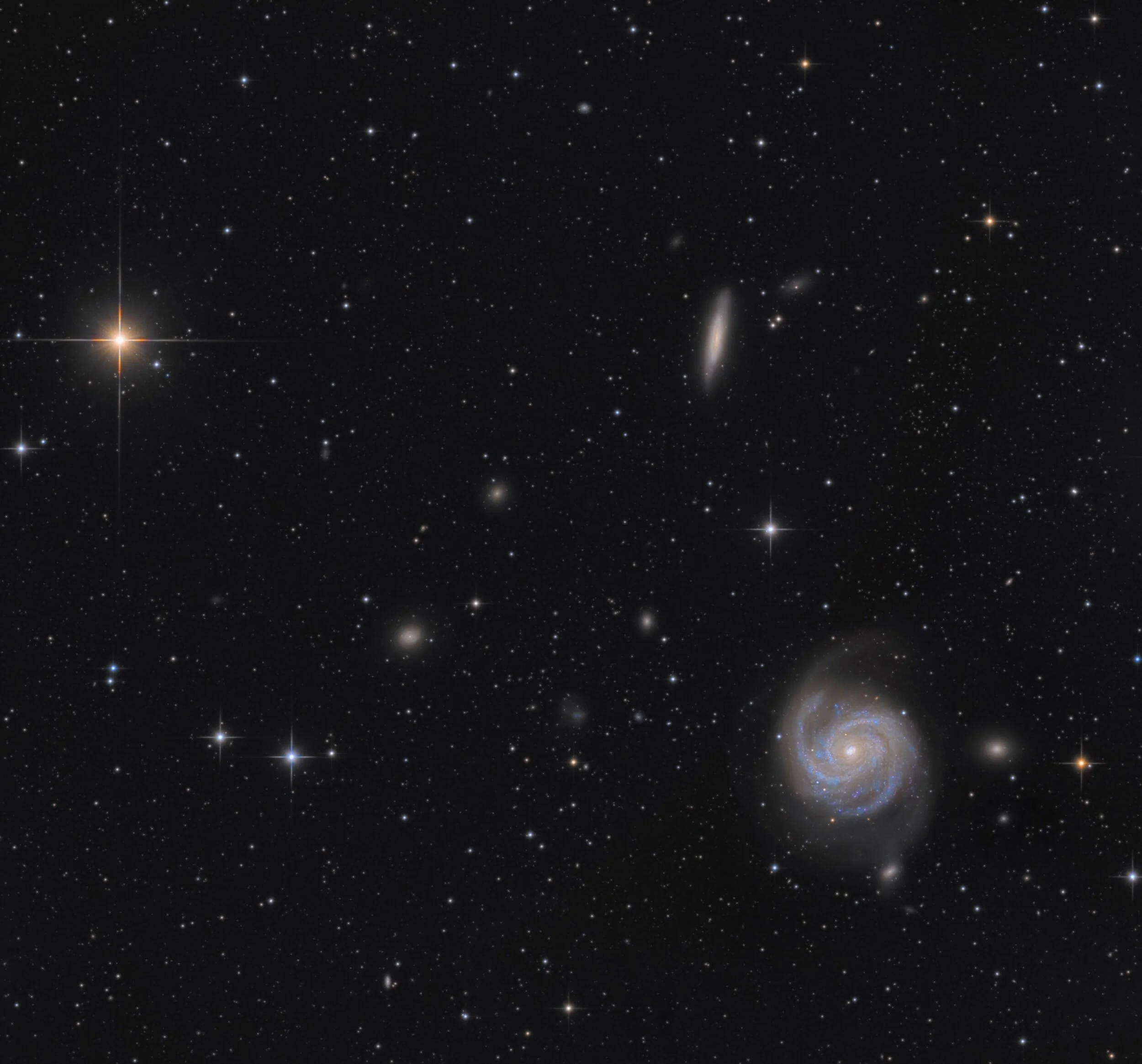
M100 and Surrounding Area
Messier 100 (also known as NGC 4321) is a grand design intermediate spiral galaxy located within the southern part of constellation Coma Berenices. It is one of the brightest and largest galaxies in the Virgo Cluster, located approximately 55 million light-years[3] distant from Earth and has a diameter of 107,000 light years, roughly 60% the size of the Milky Way.

Bode 's Galaxy M81
Messier 81 (also known as NGC 3031 or Bode's Galaxy) is a grand design spiral galaxy about 12 million light-years away, with a diameter of 90,000 light years, about half the size of the Milky Way, in the constellation Ursa Major. Due to its proximity to Earth, large size, and active galactic nucleus (which harbors a 70 million M☉[5] supermassive black hole), Messier 81 has been studied extensively by professional astronomers. The galaxy's large size and relatively high brightness also makes it a popular target for amateur astronomers.

Phases of Venus
The phases of Venus are the variations of lighting seen on the planet's surface, similar to lunar phases. The first recorded observations of them are thought to have been telescopic observations by Galileo Galilei in 1610.

Night Flight with Reds
Over northern China, I was shooting the Cygnus region of the Milky Way, while we passed some active thunderstorms and due to the atmospheric activity, the ride was not very smooth. To get at least a few sharp exposures, I had to push my camera to a higher ISO setting than normal.
For once, this was a good thing, as it enabled me to capture some red sprites. These reddish flashes are a very fleeting phenomena, lasting only a few tens of milliseconds and the high ISO setting helped to make them visible.
Sprites occur in clusters above the troposphere at an altitude range of 50–90 km (31–56 mi). They were first photographed 31 years ago in 1989.
Riding high above the sprites are some deep red astronomical nebulas: North America Nebula, Pelican Nebula and the Gamma Cygni Nebula, belong to the constellation Cygnus, while the Elephant Trunk Nebula and the red Garnet Star are located in Cepheus.
To complete this celestial tour, the Andromeda Galaxy is hugging the horizon to the lower left of the sprited.
EXIF
Canon EOS 6D astro modified
Samyang 24mm f/1.4 @ f/2
Stack of 7 x 2.5s @ ISO 12800
Mount: Boeing 777-300ER
Copyright: Ralf Rohner
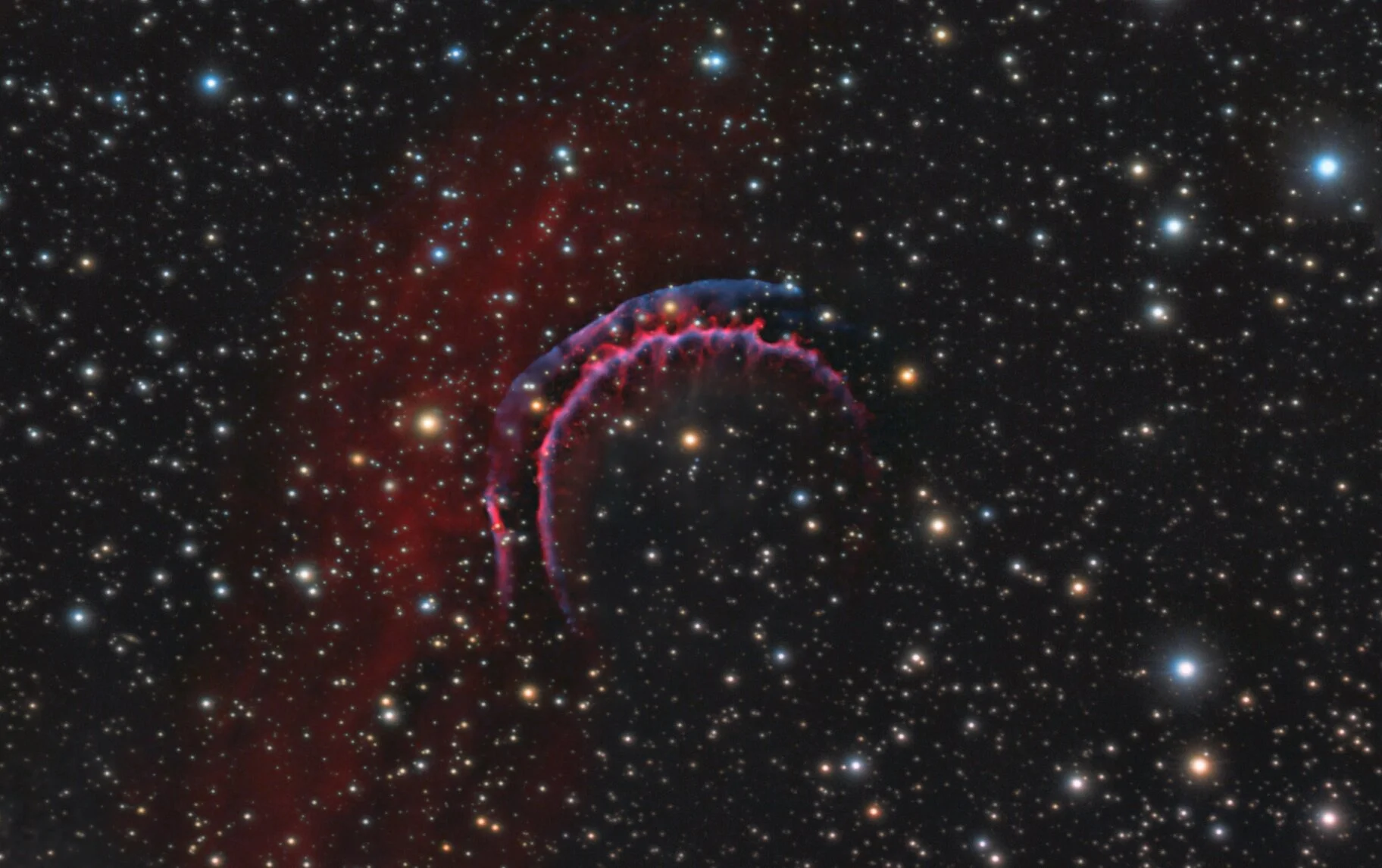
Hartl-Dengel-Weinberger 3 (HDW 3)
Hartl-Dengel-Weinberger 3 (HDW 3) is an extremely faint ancient planetary nebula in the constellation Perseus. It is so faint that it is very rarely imaged.
The progenitor star is the small blue star at the 5 o-clock position just below the large yellow star in HDW 3. The progenitor is not, as one would expect, in the centre of the nebula. This is because it is moving rapidly in a north-westerly direction. It is moving through a dense area of interstellar medium (ISM). This ISM is slowing down HDW 3, creating a shock front and the unusual "braided" appearance. As the star isn't slowed by the ISM it has continued to move and is thus no longer at the centre of HDW 3 and is slowly overtaking HDW 3. This causes the shock front to be brighter as it's getting more ultraviolet radiation, whereas the opposite side of HDW 3 is getting less UV radiation and has become invisible. This movement of the star causes differential excitation of the shell. OIII emission, which requires higher energy of the ionizing radiation than HII emission, only happens close to the star.
EQUIPMENT USED
Twin APM TMB LZOS 152 refractors
10Micron GM2000 HPS mount
Twin QSI6120 CCD cameras
Astrodon filters
IMAGE CAPTURE
5nm H-Alpha: 76x1800 bin 2x2
3nm OIII: 51x1800 bin 2x2
Luminance: 39x300 bin 1x1
Red: 20x300 bin 1x1
Green: 20x300 bin 1x1
Blue: 17x300 bin 1x1
Total integration: 71.5 hours
Pixel scale: 0.534 arcsec/pixel
Field radius: 0.359 degrees
Capture dates: 15 November - 8 December 2019
Capture location: Fregenal de la Sierra, Spain
Copyright: Peter Goodhew
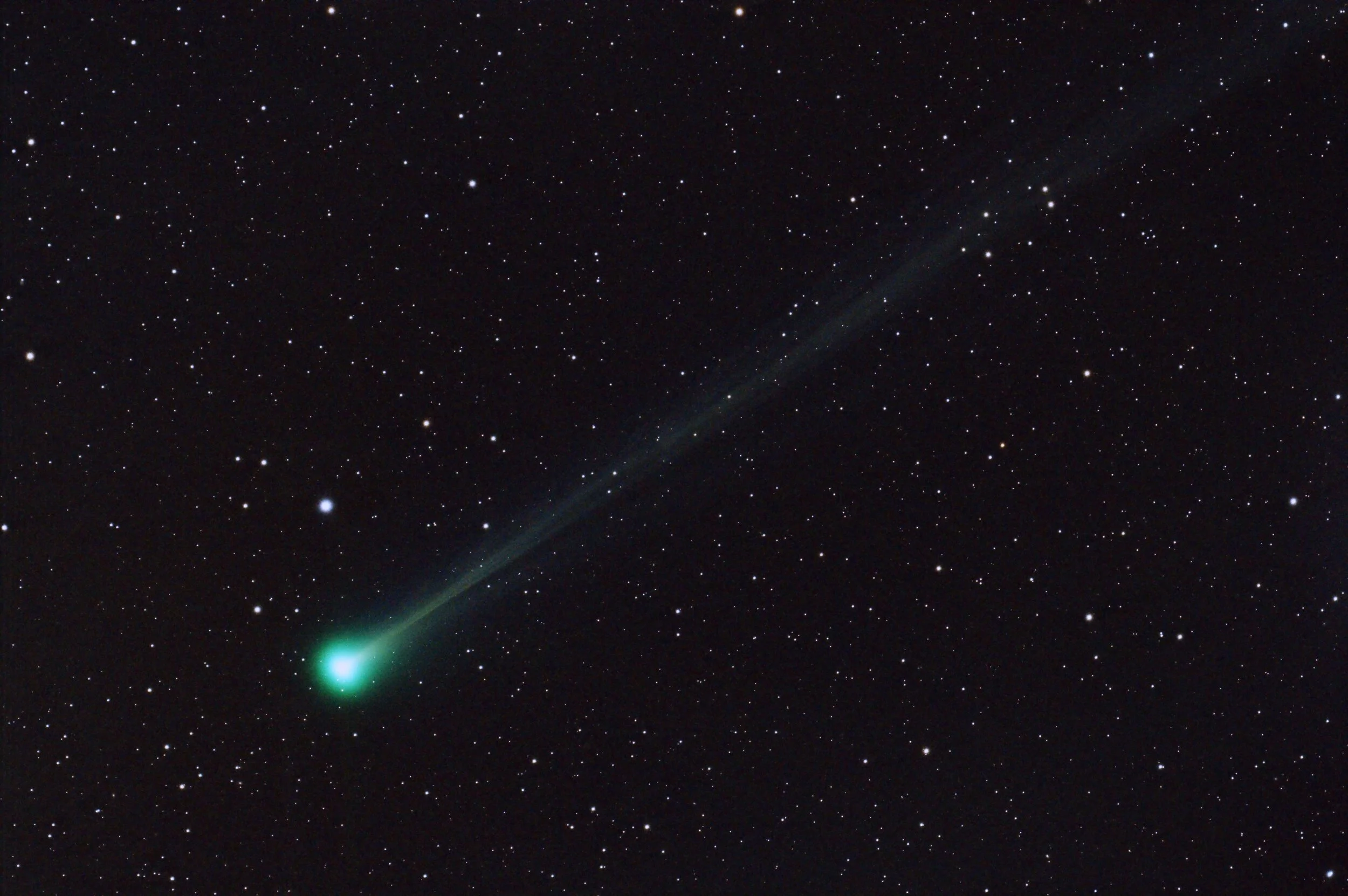
Comet C/2020 F8 SWAN
After taking my first image of the comet from the City, I was not please with the result so I went with my family (wife and 2. 5 year Old kid) to a self isolating camping trip in the desert, after watching the moon set in the horizon and seeing the faith stars and the center of the milky way ilumitate the sky, preparing all the gear to catch, when the Comet was 10° above the horizon (4:45 am) I pointed the Telescope and Capture about 1 hour of 120s exposure.

NGC 4631- The Whale Galaxy
Located 30 million light years distant in constellation Canes Venatici. Imaged using 8 inch RC telescope @ f/8 unguided, MyT mount, QSI 683 mono camera. exposure times RGB 34 x 240 seconds per channel, L 168 x 240 seconds & 40x 480 seconds, HA 24 x 900 seconds.
Copyright: Matthew Herbik

M82
Optic RC Ritchey-Chrétien 254 mm / 10" 2000 mm, ASI 1600 MMC.
Exposure time 21 hours LRGB. including 12 hours in H-Alpha.
Location: Germany North Rhine-Westphalia north of the Ruhr area.
Copyright: Dieter Berger
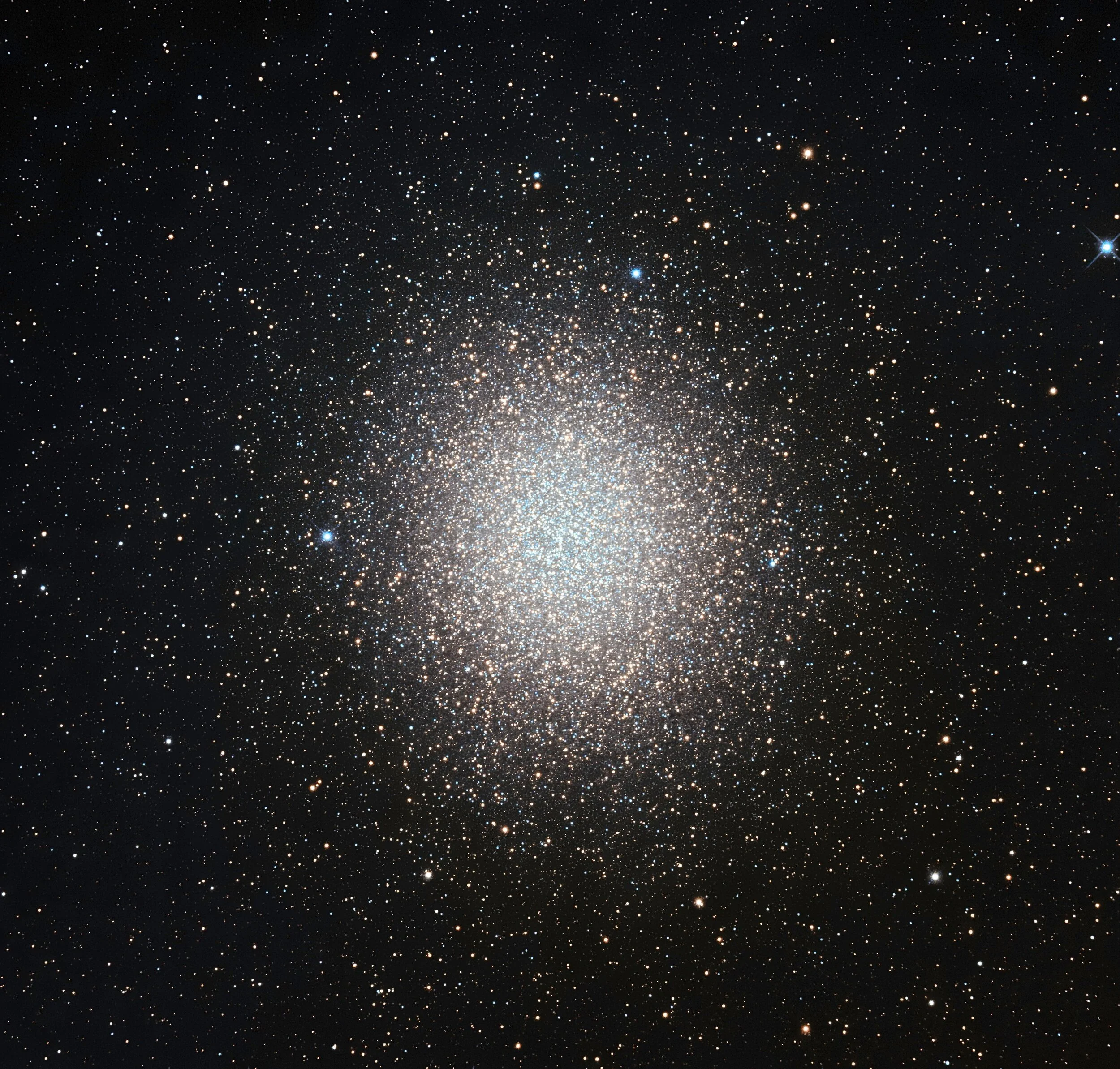
Omega Centauri
Omega Centauri (ω Cen) or NGC 5139 is a globular cluster discovered in 1677 by Edmund Halley, which orbits around the Milky Way, being one of the few that can be observed with the naked eye. It is 17,000 years from Earth, and contains about 10 million stars, which gives it a density such that the average distance between them is 0.1 light years. The stars that comprise it belong mainly to population II, which means that they are very aged.
Copyright : Aniceto Porcel Rosales
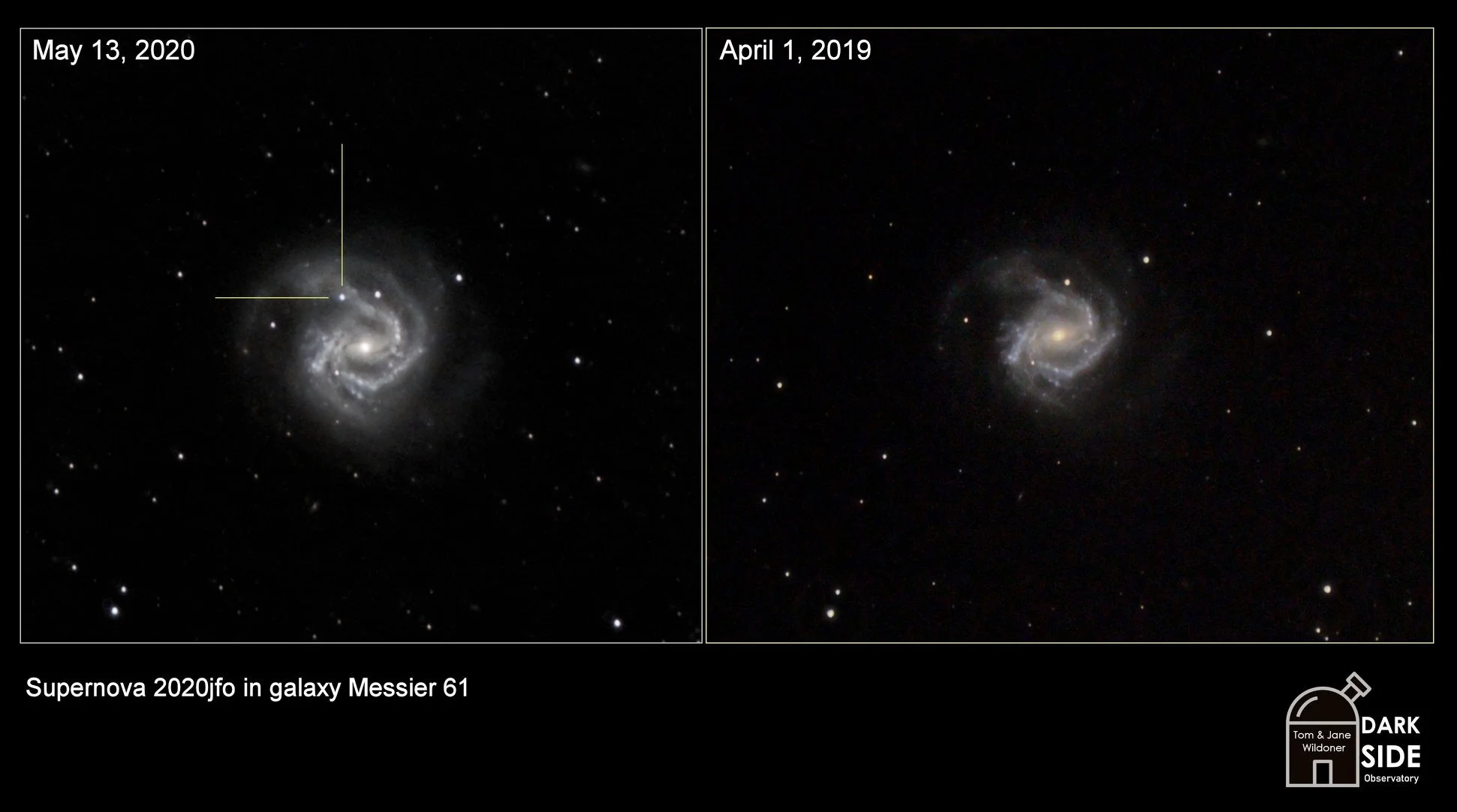
Supernova 2020JFO - M61
Here is a view of the relatively new supernova SN 2020jfo located in the beautiful spiral galaxy Messier 61 in the constellation Virgo. The left image was taken on May 13, 2020 showing the bright supernova, the image on the right was taken on April 1, 2019. Doing a quick comparison, it looks to be hovering at magnitude 14. This supernova was discovered on 6th May 2020 by the Zwicky Transient Facility (ZTF)
Tech Specs: Meade 12” LX-90, ZWO ASI071mc-Pro, 55 x 60 second exposures, guided using a ZWO ASI290MC and Orion 60mm guide scope. Captured using Sequence Generator Pro and processed using PixInsight. Image date: May 13, 2020. Location: The Dark Side Observatory, Weatherly, PA, USA. — at The Dark Side Observatory.
Copyright: Thomas Wildoner

ISS over Santiago -Chile
Both images were captured after sunset from videos recorded, while manually guiding through the Telrad finder of my 11" f/5 dobsonian telescope. I reviewed the videos and extracted the useful frames with PIPP, then I stacked the 10 to 15 best frames in Autostakkert 3. Finally I used Registax 6 to sharpen a bit the stacked image.
For the second image I used a 2x barlow for a better image scale. The same processing procedure was applied to get the final image.
Copyright: Rodrigo Carvajal Aravena

Touch of Venus
I share you a picture who represents for me the link between humans on the ground and stars in the sky. Indeed, I'm located at one of the best sky of the world to practice astronomy.
We can see my figure touching a star. Well, this is not a star but the planet Venus.
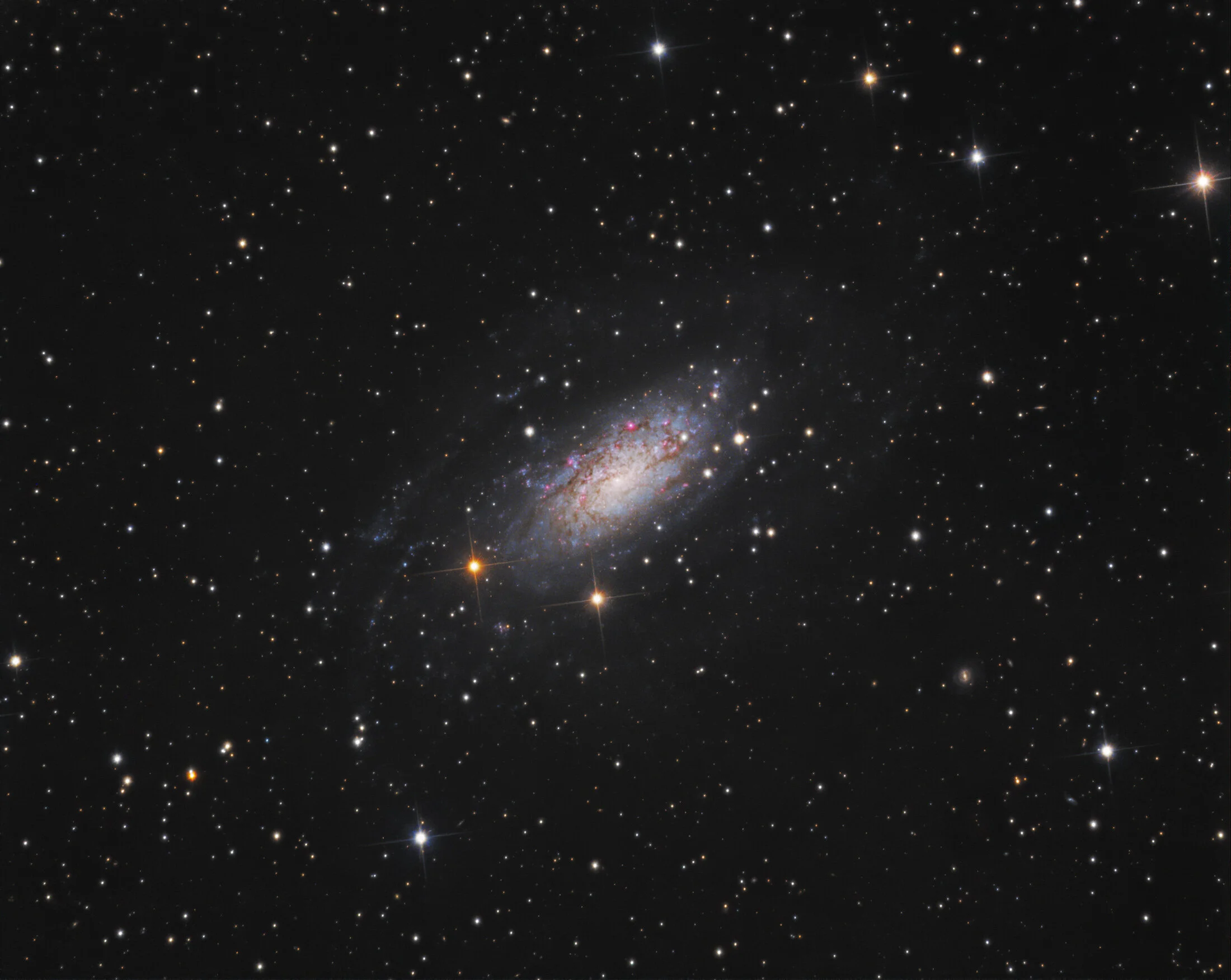
The galaxy NGC 3621
NGC 3621 is a spiral galaxy located 22 Mly away in the constellation of Hydra. It is very bright and can be well seen in moderate-sized telescopes. The galaxy is around 93,000 ly across and is at an angle of 25° from being viewed edge on.
It shines with a luminosity equal to 13 billion times that of the our Sun. This galaxy has an active nucleus that matches a Seyfert 2 optical spectrum, suggesting that a low mass supermassive black hole is present at the core. Based upon the motion of stars in the nucleus, this object may have a mass of up to three million times the mass of the Sun.
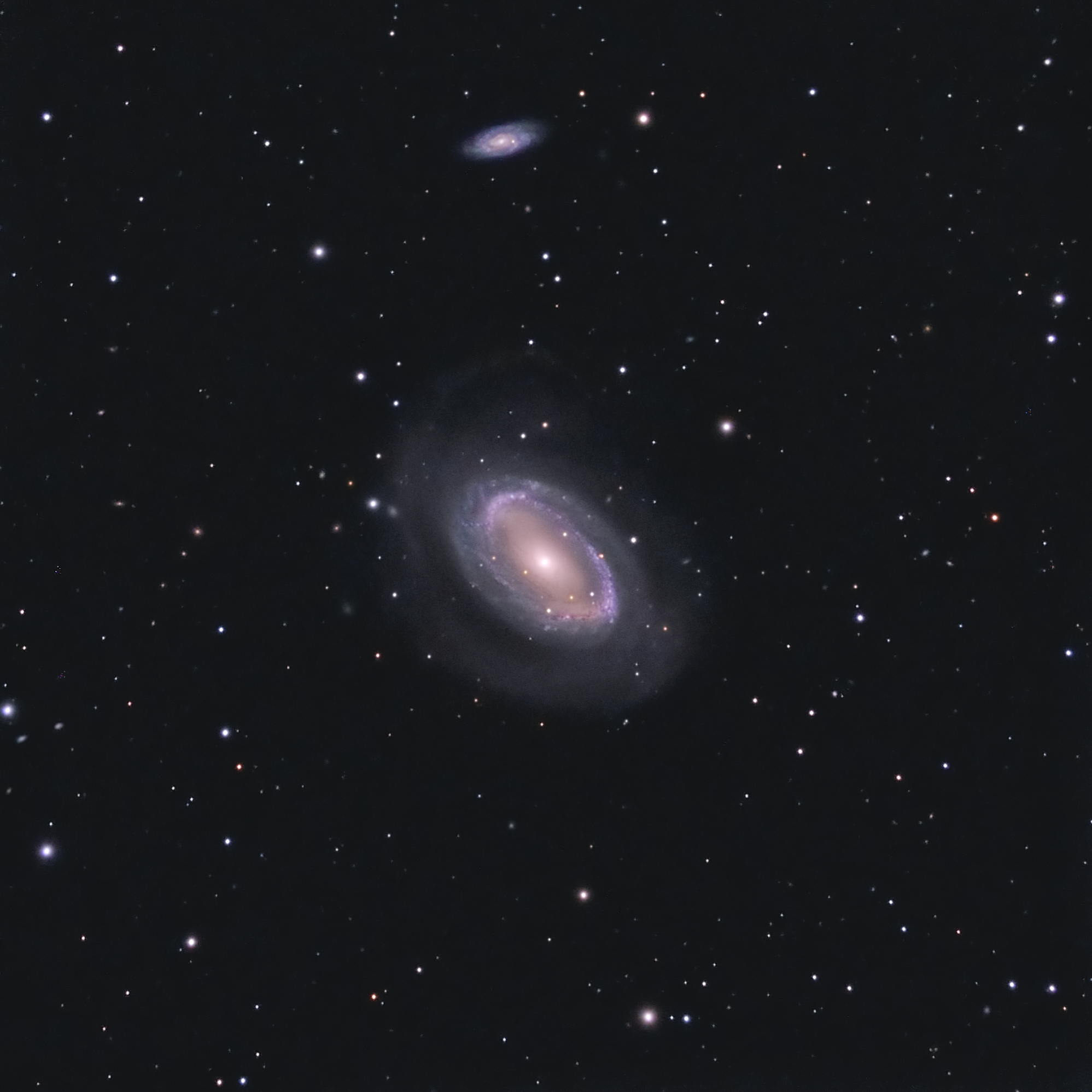

IO’s transit
Io (/ˈaɪ.oʊ/; Ancient Greek: Ἰώ [iːɔ̌ː]) was, in Greek mythology, one of the mortal lovers of Zeus. An Argive princess, she was an ancestor of many kings and heroes such as Perseus, Cadmus, Heracles, Minos, Lynceus, Cepheus, and Danaus. The astronomer Simon Marius named a moon of Jupiter after Io in 1614. Here we a short animation of the transit of IO and its shadow across the Jupiter.
A lost a few frames because of the clouds. 2020/04/29 - 2h25m (start 05h58m, end 08h23m UT) 124 frames, 13fps, AVI Format. Newton 275mm f/5,3 + ASI290MC + PMTV 5x.
Copyright: Jose Luis Pereira
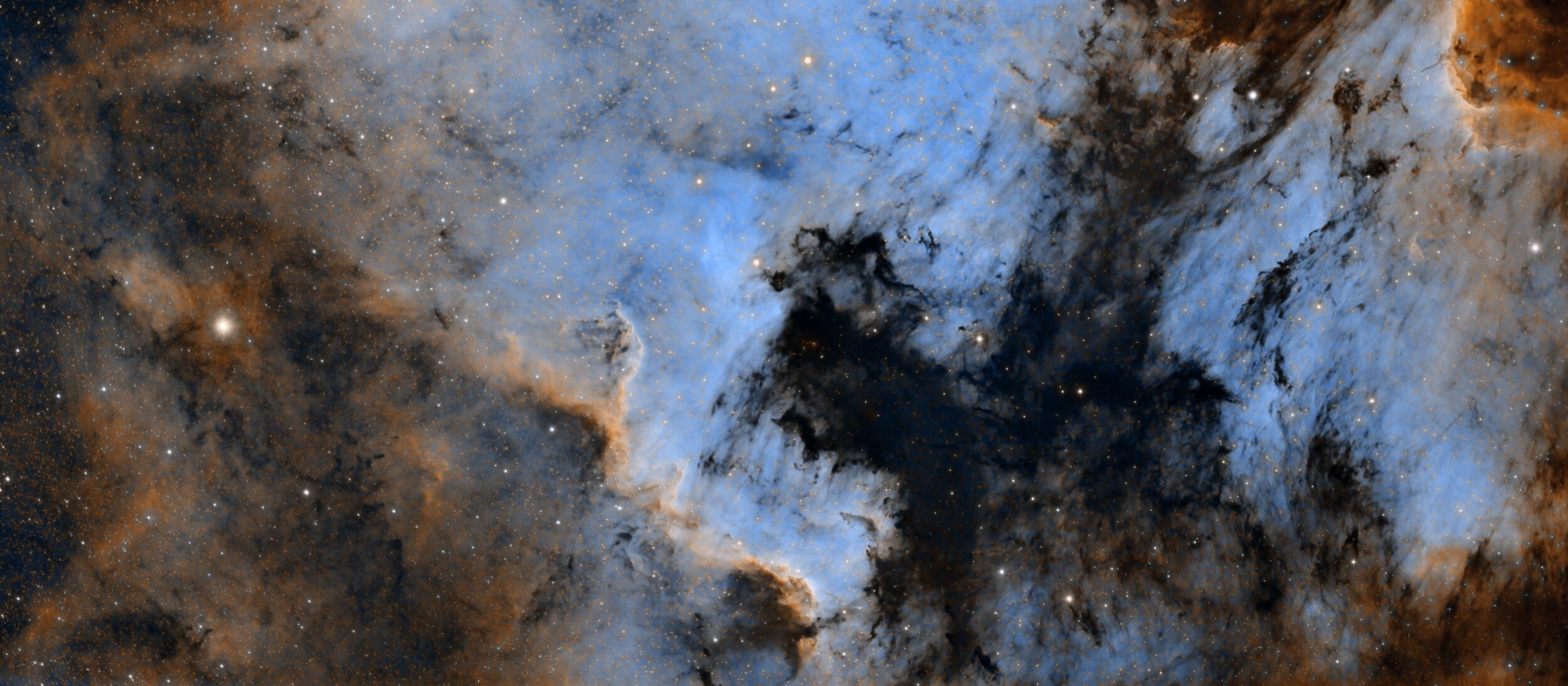
North American Nebula
The North American Nebula, aka NGC 7000, is a ionized-hydrogen region in the constellation Cygnus. The nebula is a cloud of interstellar gas ionized from within by young, hot stars. Interstellar dust particles in part of this cloud absorb the light emitted by recombining atoms. The shape of the nebula roughly resembles that of North America, with the dusty region being shaped like the Gulf of Mexico. The North American Nebula is approximately 520 parsecs from the Sun. It has a diameter of about 30 parsecs and a total mass equal to about 4,000 solar masses.