

AAPOD2 Image Archives

NGC6188
NGC6188
I went deep on this one from my terrace here in Belo Horizonte collecting around 51.1 hours of data during the last 7 years:
SBIG8300 + FS60c:
Ha: 41·900s
L: 58·420s
RGB: (21, 21, 21)·420s
QHY168c + FS60c:
500·90s LPS-IDAS P2
278·180s L-Enhance
Acquisition: FAST
Processing: Pixinsight / PSCS5
Copyright: Roberto Colombari
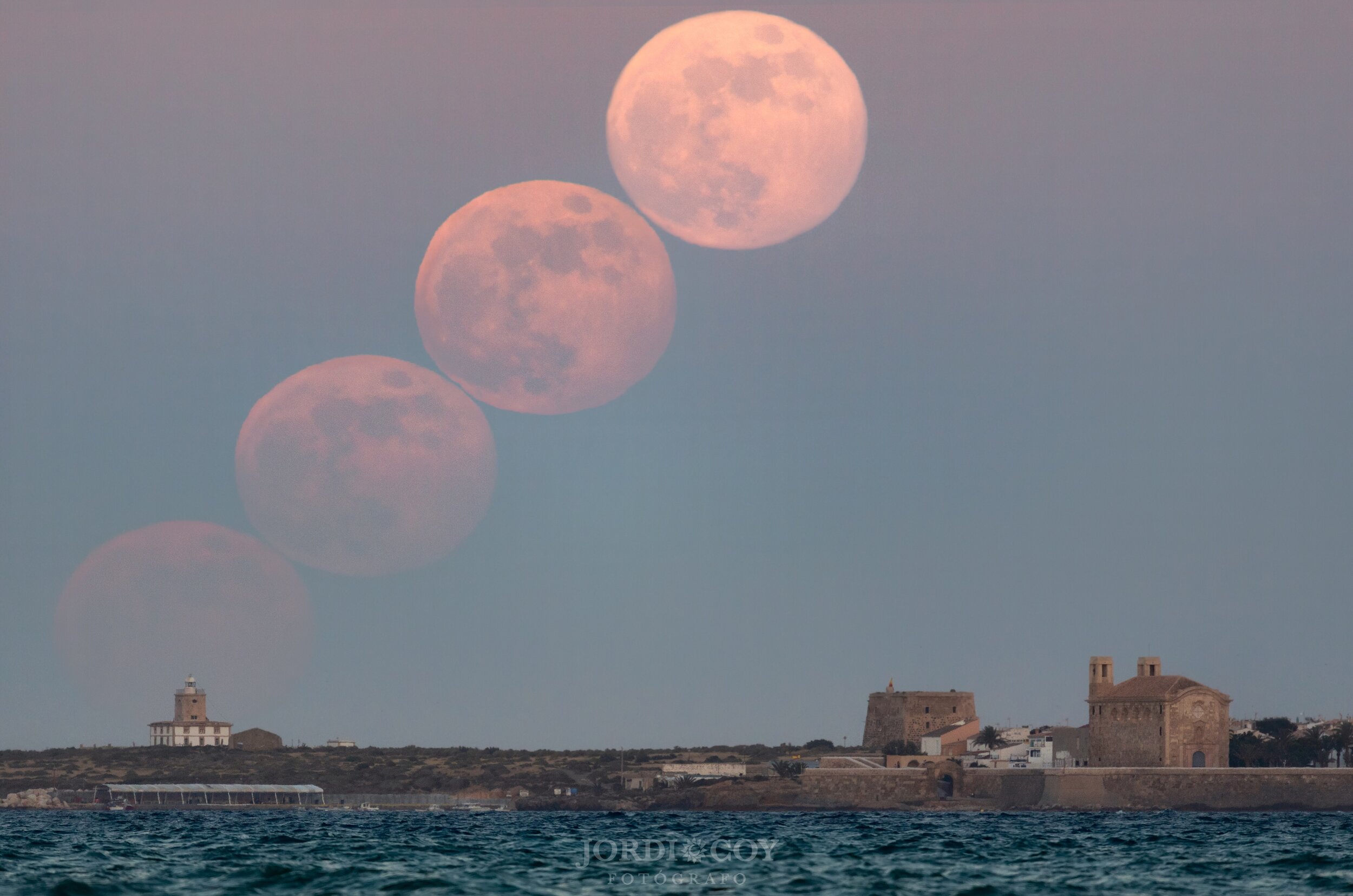
Transit of strawberry moon
The moon passes west to east through the earth's southern penumbral shadow. A penumbral lunar eclipse took place on 5 June 2020. It was the second of four penumbral lunar eclipses in 2020.
Image Description and Details :
Location Tabarca Island, Spain.
Composition of 4 photos for moon sequence.
made 6 km away from the island.
Camera réflex canon 5D MKIV, Sigma 150-600mm
Copyright Information: Jordi Coy
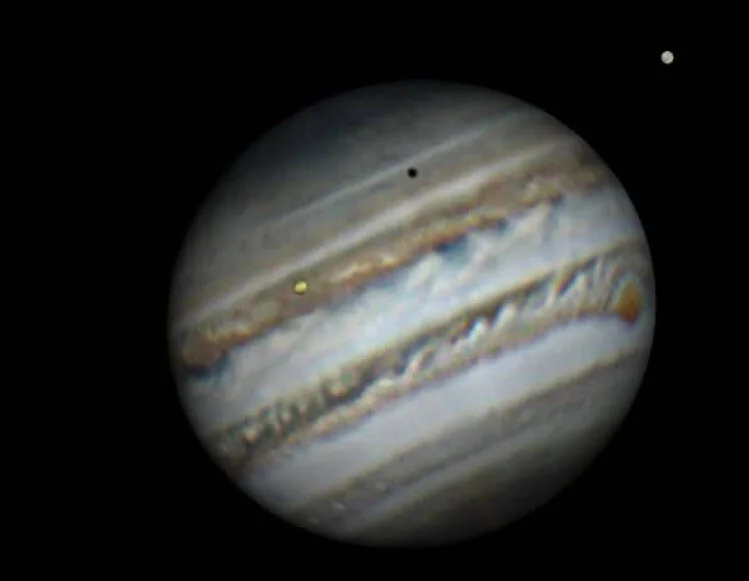
Jupiter with Europa/ Io transit
This one came very close to being a double transit. But just as Europa breaks the limb to the right, Io just starts to enter from the left.The 2 shadows do, however, transit the disk together. Only a few pixels would have made a double planet/ shadow transit. Oh well. This was shot on 05/19/2017. Time starts at 02:51 UT and ends at 04:43 UT.
Copyright: John Cox
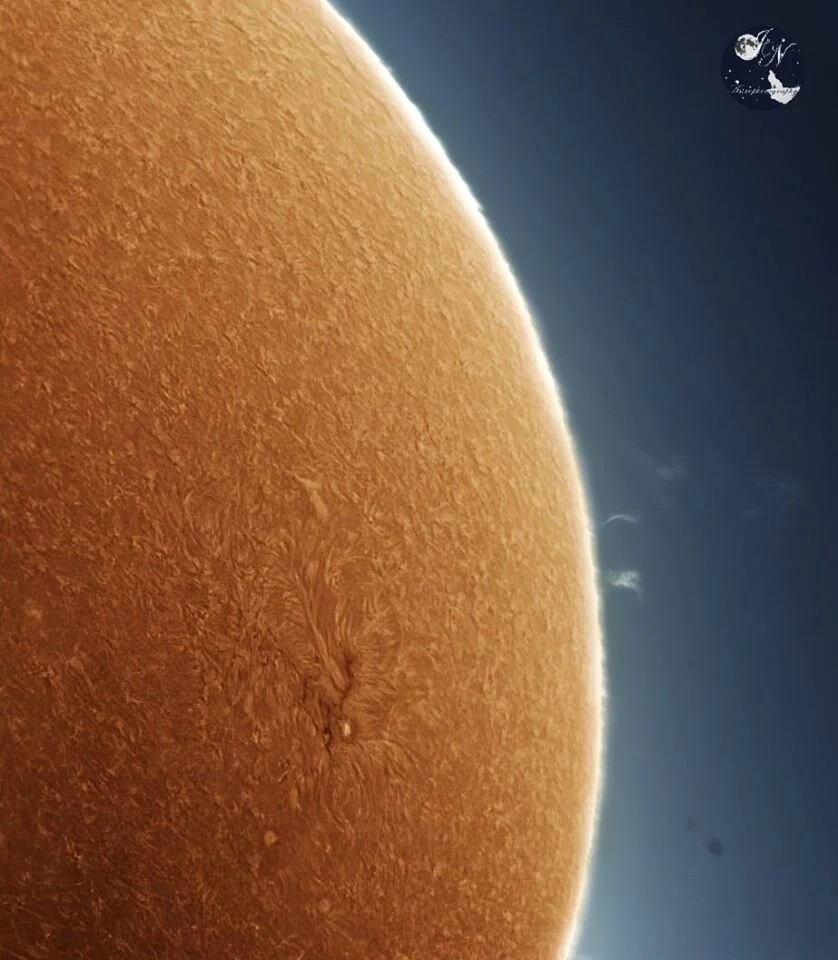
Our Star The Sun
Our star, the sun, is 4,57 billion years old and belongs to the spectral class G2V yellow-orange. She is a so-called yellow dwarf at best age compared to other stars. We will still be approx. Another 4,5 billion years can enjoy her. However, their end will also be our end...
The shot shows the AR2765 sunspot and a protuberance, an ejection of hot gas, on the surface.
Surface Temperature / Surface Temperature:
~ 5700 ℃
Rotation duration / rotation period: 25,4 days
Distance to Earth / Distance to earth: ~ 149,6 million km
Diameter / Diameter: ~ 1,4 million km
Recording data / capture data:
🔭: Lunt LS152 H-alpha
📷: Zwo ASI 120MM mini
🗓: 12.06.2020 17:43 o'clock
👨 💻: Sharpcap, Autostackkert, Photoshop
Copyright: J-N Photography

NGC 6334 Cats Paw Nebula
Third finished image from the big Tak/QSI 6162/Chroma combo.
This is a very Hydrogen rich region, so have deliberately allowed some of the background nebulosity to show through.
The Chroma 5nm filter worked a treat as the Ha was taken just 30 degrees from a full moon!
To me it resembles a genie pouring out of the magic lamp!Ha – 11x1200secs
O3-17 x 1800 secs
S2- 10x1200secs
RG&B 10×180 secs ea.
Captured using Ekos on a Mac.
Processed in APP & PS CC 2020 – with Topaz NR
Taken from my light polluted suburban backyard in Melbourne.
Telescope: Takahashi TOA 130 + Flattener 67
Camera: QSI 6162 WSG8
Mount: Takahashi NJP Temma 2
Filters: Chroma 5nm Ha & S2, 3nm O3 & RGB
Guiding Camera: Starlight Xpress Lodestar X2
Integration time (Exposure)17 hrs
LocationBurwood, Melbourne, Victoria, Australia
Copyright: Andy Campbell
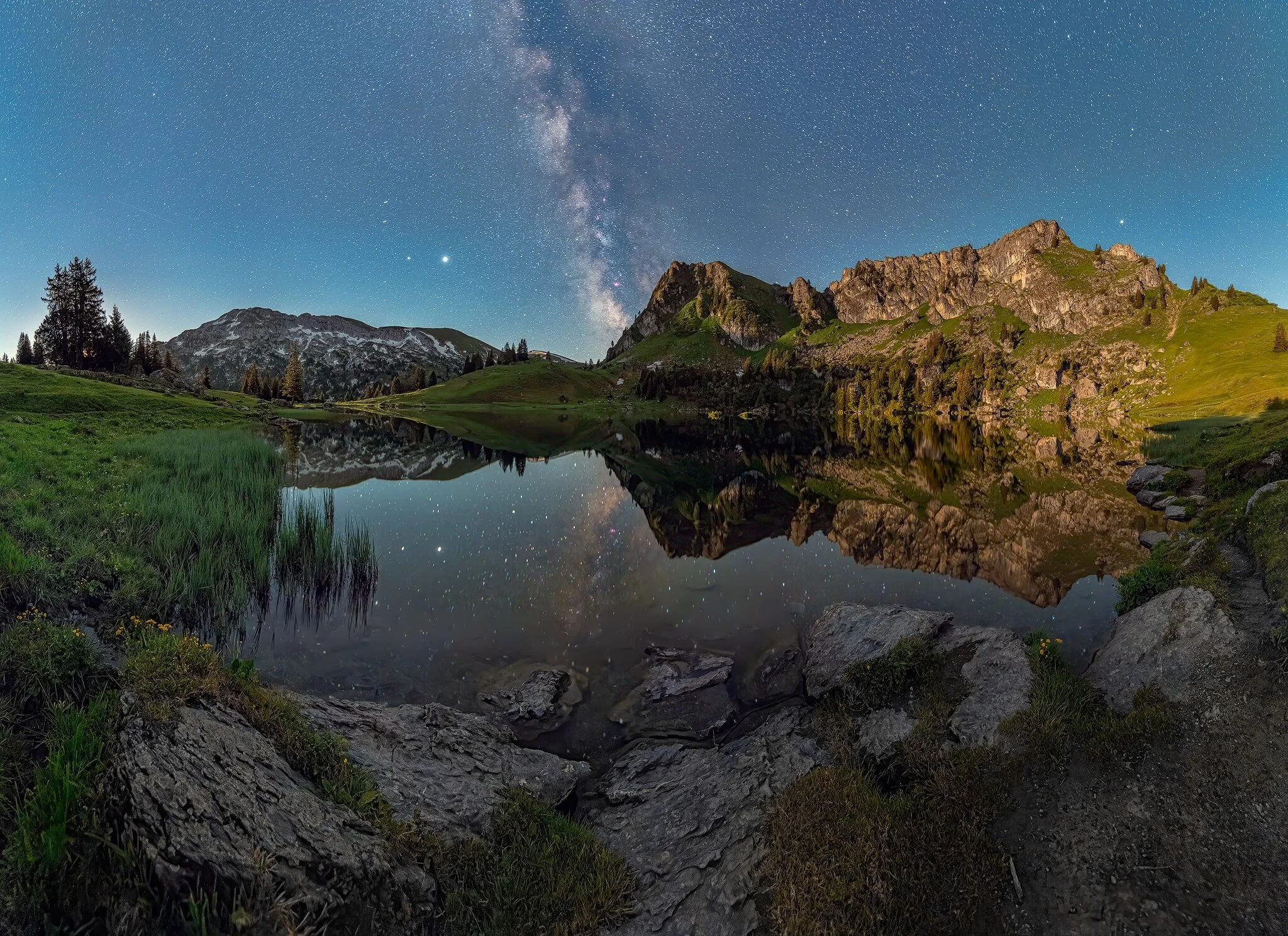
Linger Longer
Yesterday, I spent a beautiful night at this scenic lake with my buddy benjaminbarakat
Shortly before moon rise, I had captured all my planned shots and was ready to call it a night. While packing my gear, I noticed that the peaks started to glow in the light of the rising moon. Despite being tired from shooting two nights in a row, Benjamin and I decided to set up again and shoot a panorama of the lake in moonlight.
The result confirms an old photographers wisdom:
It is always worth to linger a bit longer.
EXIF:
20 panel panorama from fixed tripod.
Canon EOS 6D astro modified
Tamron 15-30mm f2.8
20 x 30s @ ISO6400
Copyright: Ralf Rohner
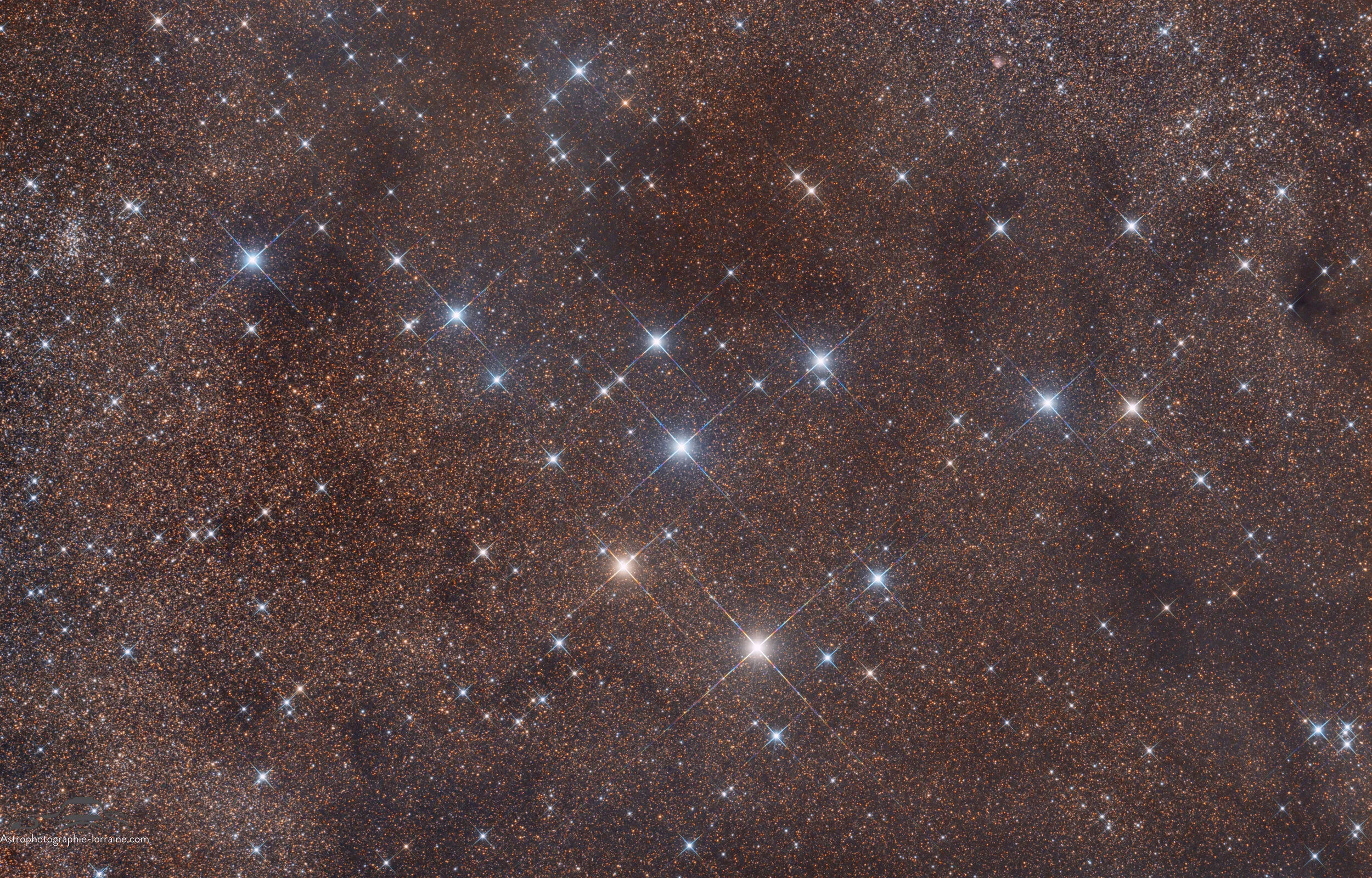
Brocchi's Cluster
Image Description and Details :
The Brocchi's cluster, also known as Collinder 399 or the Coathange ris an asterism located in the constellation of Little Fox.
Easily visible through binoculars, the hanger is made up of ten stars of magnitude between 5 and 7, arranged according to the particular shape that gives it its name.
It has long been cataloged as an open cluster, but it is actually an asterism, that is to say an alignment of unrelated stars.
67x300s
5 hours 35 mins in total.
Equipment used:
Telescope: ASA10"
Camera: Canon Ra
ISO 800
Mount: Paramount MyT
Image Acquisition: BackYardEOS
Stacking and Calibrating: AstropixelProcessor
Processing: Pixinsight 1.8 and Photoshop
Copyright : Thomas LELU
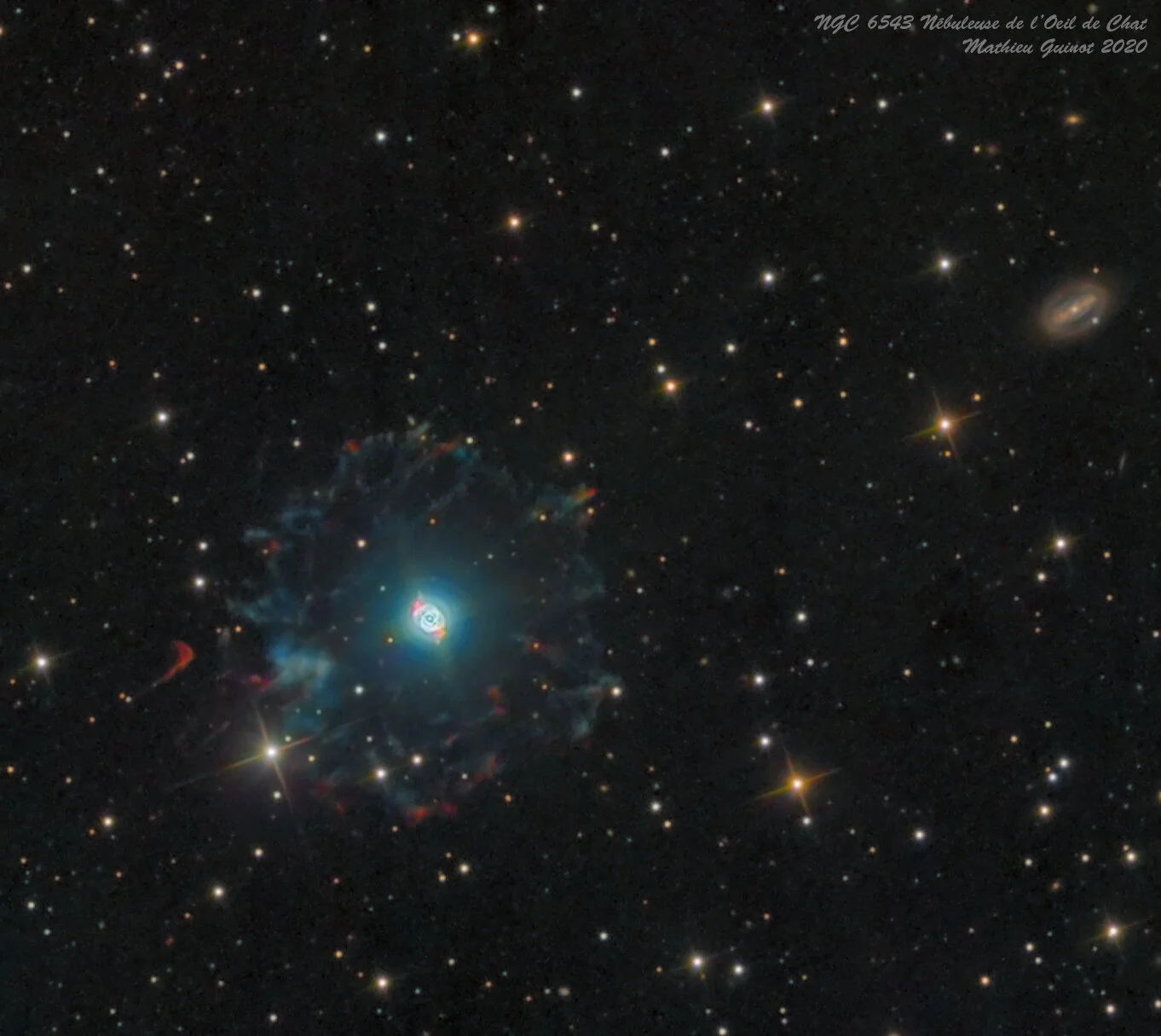
NGC 6543 Cat's Eye Nebula
Image Description and Details :
The Cat Eye Nebula, NGC 6543, is a mythical object from the deep sky of the Northern Hemisphere.
It is a Planetary Nebula (expanding gas shell ejected from an end-of-life star) in the constellation of the Dragon, whose age is estimated at only 1,000 years and the distance at "only" 5,200 light years . (our galaxy has a span of 100,000 light years).
The star in the white dwarf stage is clearly visible in the center of the nebula, the central part of which has a diameter of only 20 arc seconds, which is tiny, one of the reasons why it is relatively little imagined.
The sampling used here made it possible to resolve this core of the nebula by spreading it over approximately 40 pixels of the image and thus to distinguish some details there, which was made possible by the use of one of the telescope Ritchey Chretien 500mm f / 8 from the Astroqueyras observatory in the Hautes Alpes with a focal length of 4000mm.
The outer halo of the nebula, ejected by the star when it was in the red giant stage, extends for its part over nearly 6 minutes of arc, but is much more tenuous than the central part.
It was therefore necessary to mix short exposures on the heart and long exposures on the external halo and the rest of the image and then perform HDR processing.
The galaxy of the "barred spiral" type NGC 6552 visible to the right of the cat's eye also shows us some pretty details despite its dizzying distance of around 360 million light years!
For acquisition data:
- 10 exposures of 1mn in Luminance bin 1 on the heart
- 28 exposures of 2mn in Luminance bin2 on the rest
- 15 poses of 1mn in R, G and B bin1 on the heart
- 12 poses of 2mn in R, G and B bin2 on the rest
A total of only 3 hours of exposure to acquire all of this data at the Pic de Chateau Renard observatory, Alps, France with an RC 500 f / 8 telescope on an AP1600 mount + Apogee 16000 camera
Scale 0.5"
Seeing 1.5"
Bortle 1
1.5<FWHM<1.7
Pixinsight and Photoshop 2020 processing (never managed before to obtain a version which satisfies me).
Copyright Information: Mathieu Guinot
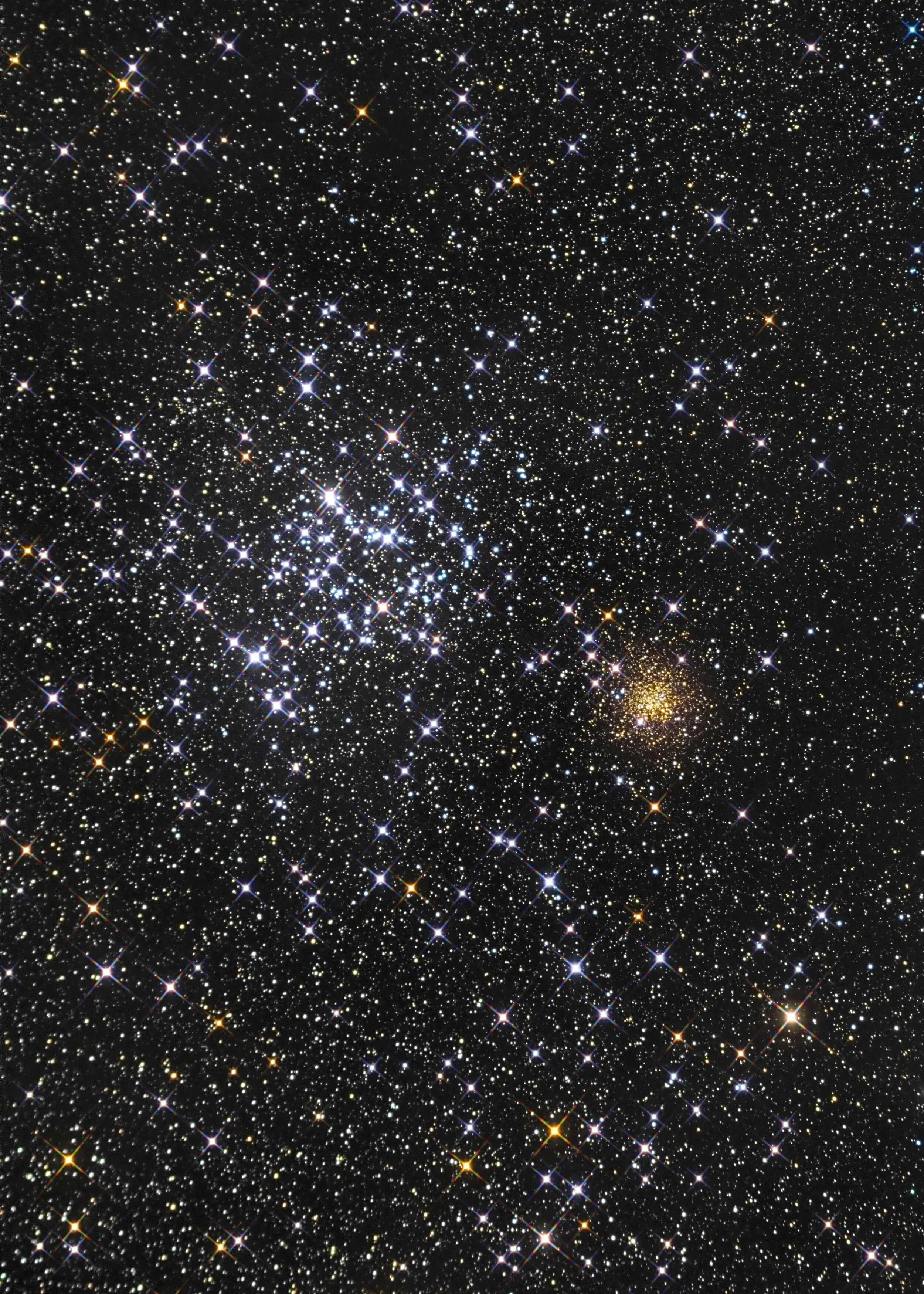
M35 - NGC2158
Image Description and Details :
Super APO 80mm f/6 - at f/4.75
CMOS ZWO ASI 183mm PRO
10Micron GM1000HPS
L 60 x 60 sec Gain 250 (450)
R 30 x 30 sec. Gain 250 (450)
G 30 x 30 sec. Gain 250 (450)
B 30 x 30 sec. Gain 250 (450)
Copyright Information: Bruno Monteleone
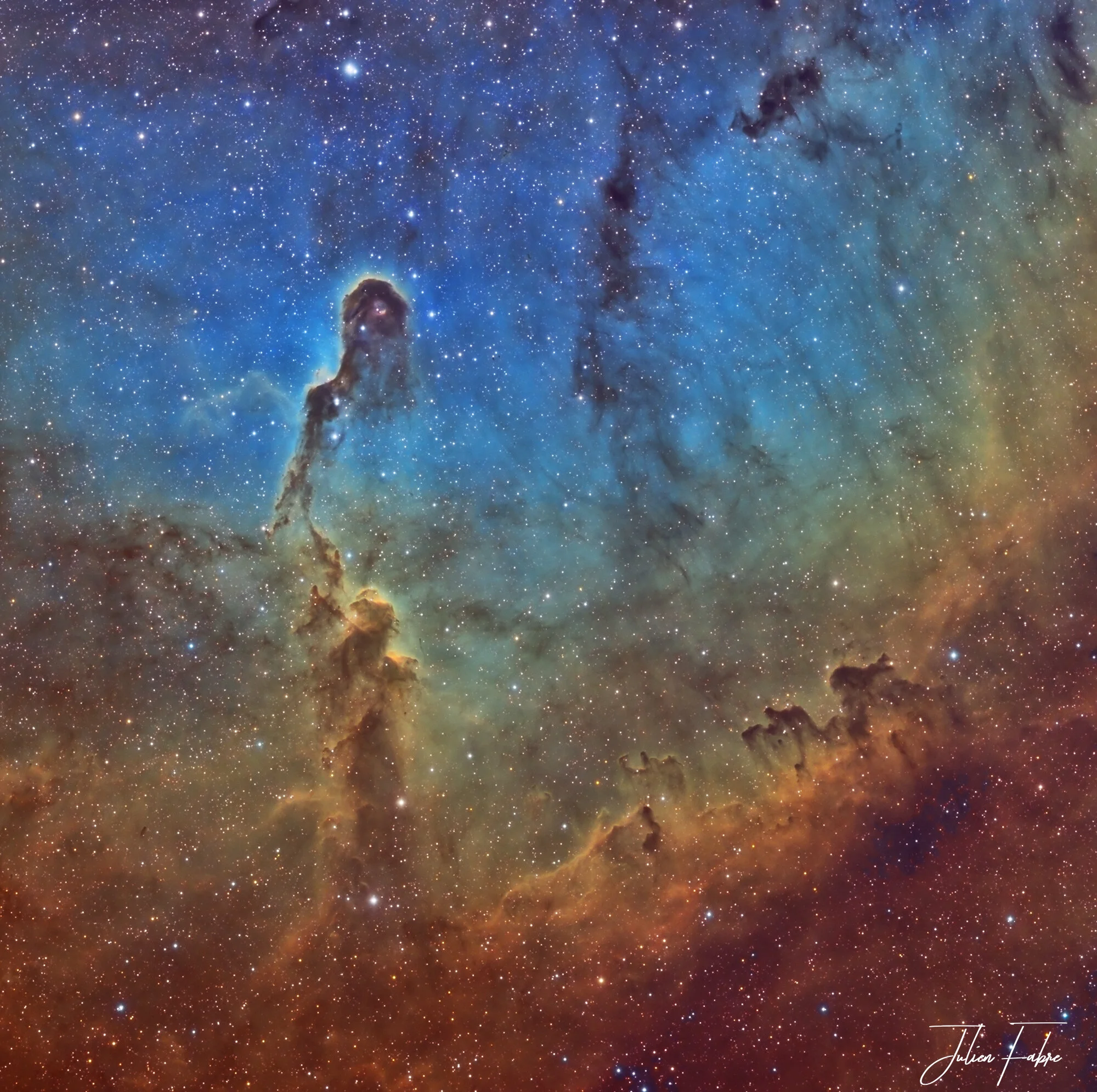
Elephant Trunk nebula
Image Description and Details :
IC 1396 is a star cluster distant about 3000Al in Cepheus. This region, also known as elephant trunk nebula, is very wide in the sky , equivalent at 4 full moon.
This picture represent a quarter of the nebula.
55x600s with Ha 5Nm
55x600s with OIII 5Nm
52x600s with SII 5Nm
12x300s for each RGB
TSA120 with moravian G2-4000
Copyright Information: Julien Fabre
A Snake in the Dark
Image Description and Details :
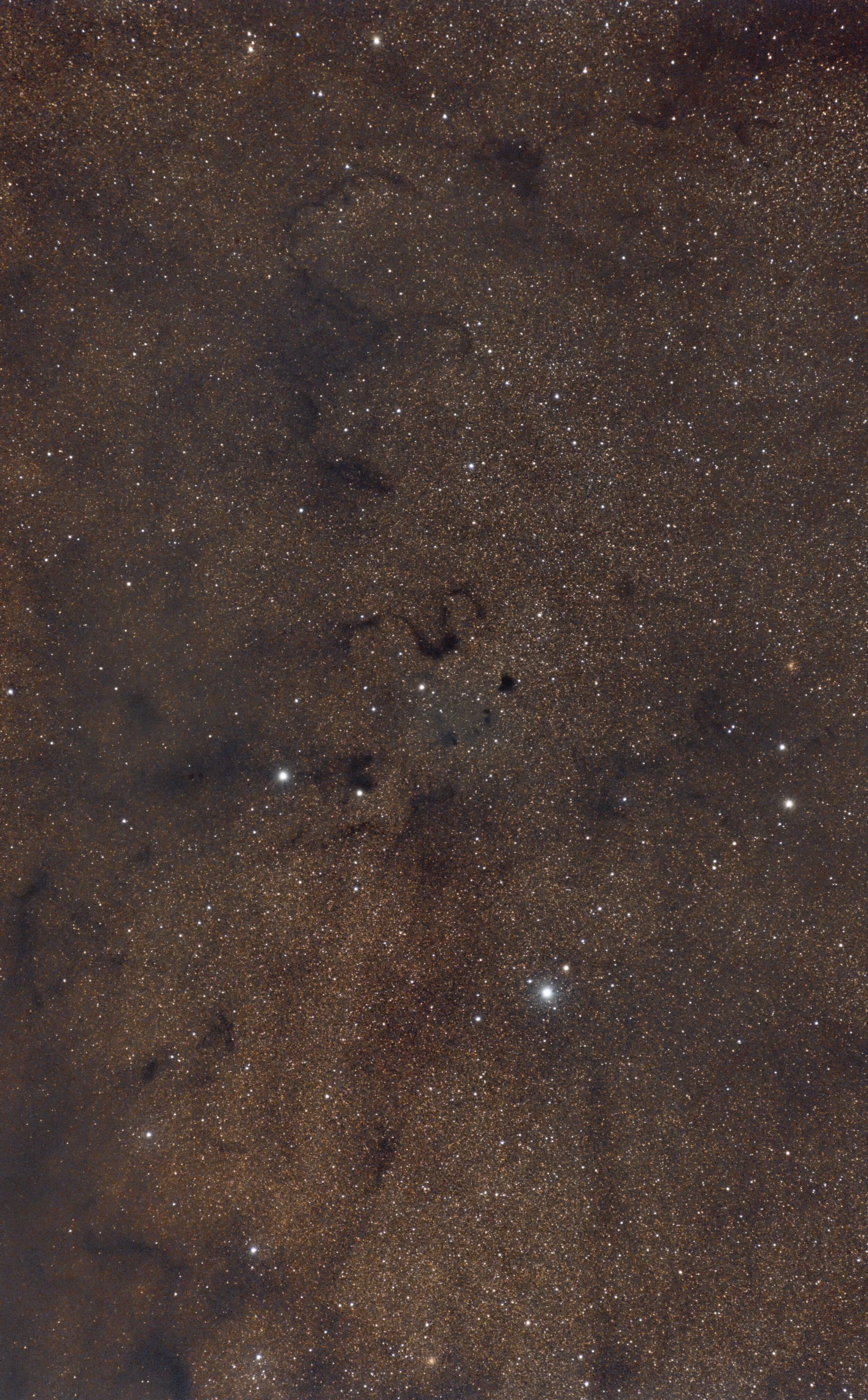
The Snake Nebula and Ink Spot Nebula visible in front of the thousands of coreside stars.
Shot from my backyard under Bortle ~5 rural skies. Located close to Indian city of Dehradun.
40x90s (1 hour) exposures at f6.3 & ISO1600 with a Sigma 100-400 lens at 400mm and a full spectrum Canon 6D on an iOptron SkyGuider Pro portable star tracker.
Processed in Pixinsight and Adobe Photoshop. Binned 2x2 for web display.
Copyright Information: Jaasim Mulla
Ngc 6888
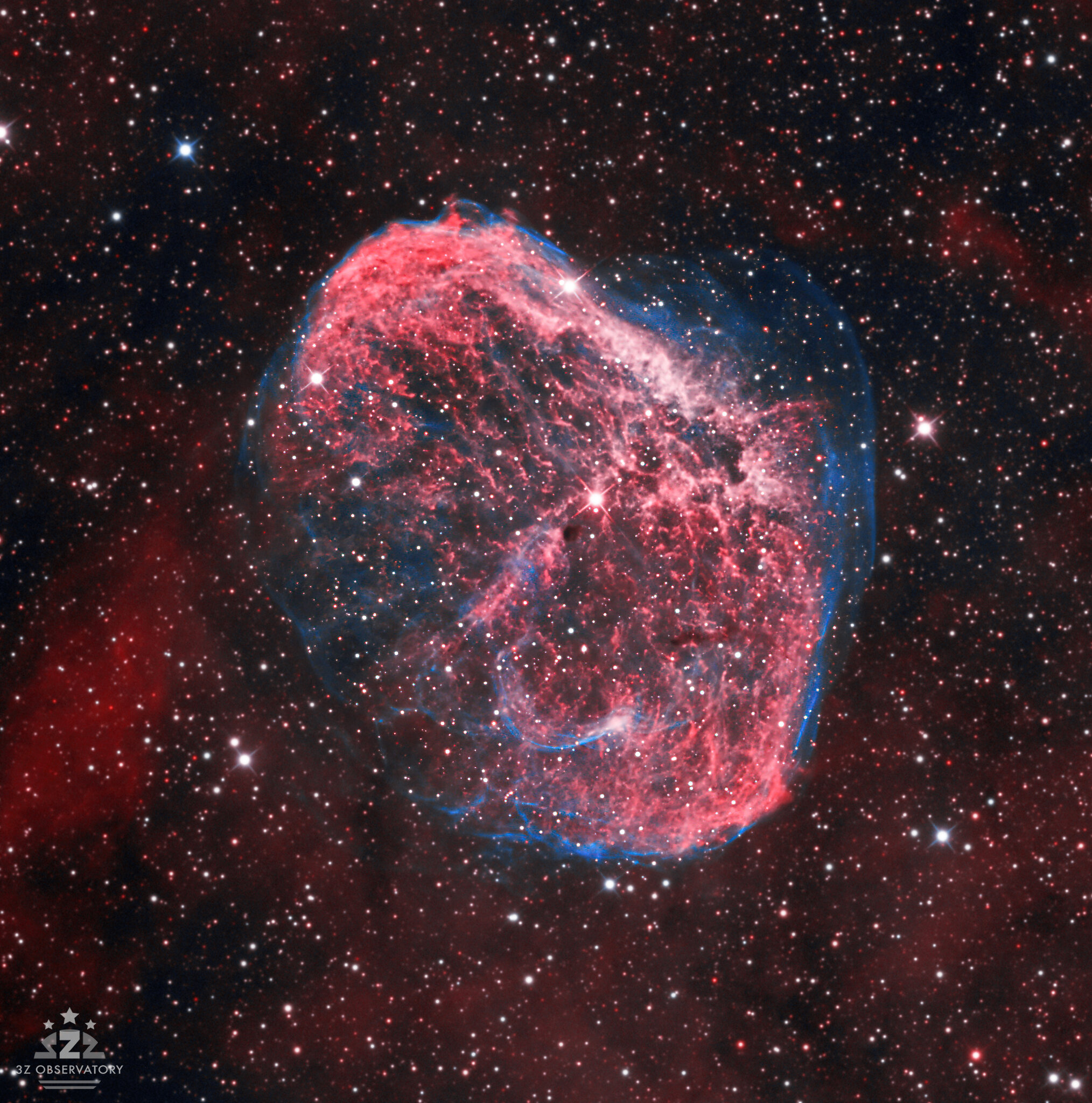
Image Description and Details : NGC6888, also known as the Crescent Nebula, is a diffuse nebula visible in the southern part of the Swan constellation.
It is located approximately 4,700 light years from the solar system and spans 16 light years in space. It can be identified with a small telescope from good quality skies.
LRGB composition about 16 hours of integration with bin2
Instrumentation:
RC12GSO on EQ8
G24000 CCD
Astrodon Filter HAO3S2
62x600 Ha
35x600s O3
Processing via Pixinsight / Photoshop
Copyright Information: 3zObservatory - Paolo Zampolini e Giorgio Mazzacurati
NGC 6946 The Fireworks Galaxy
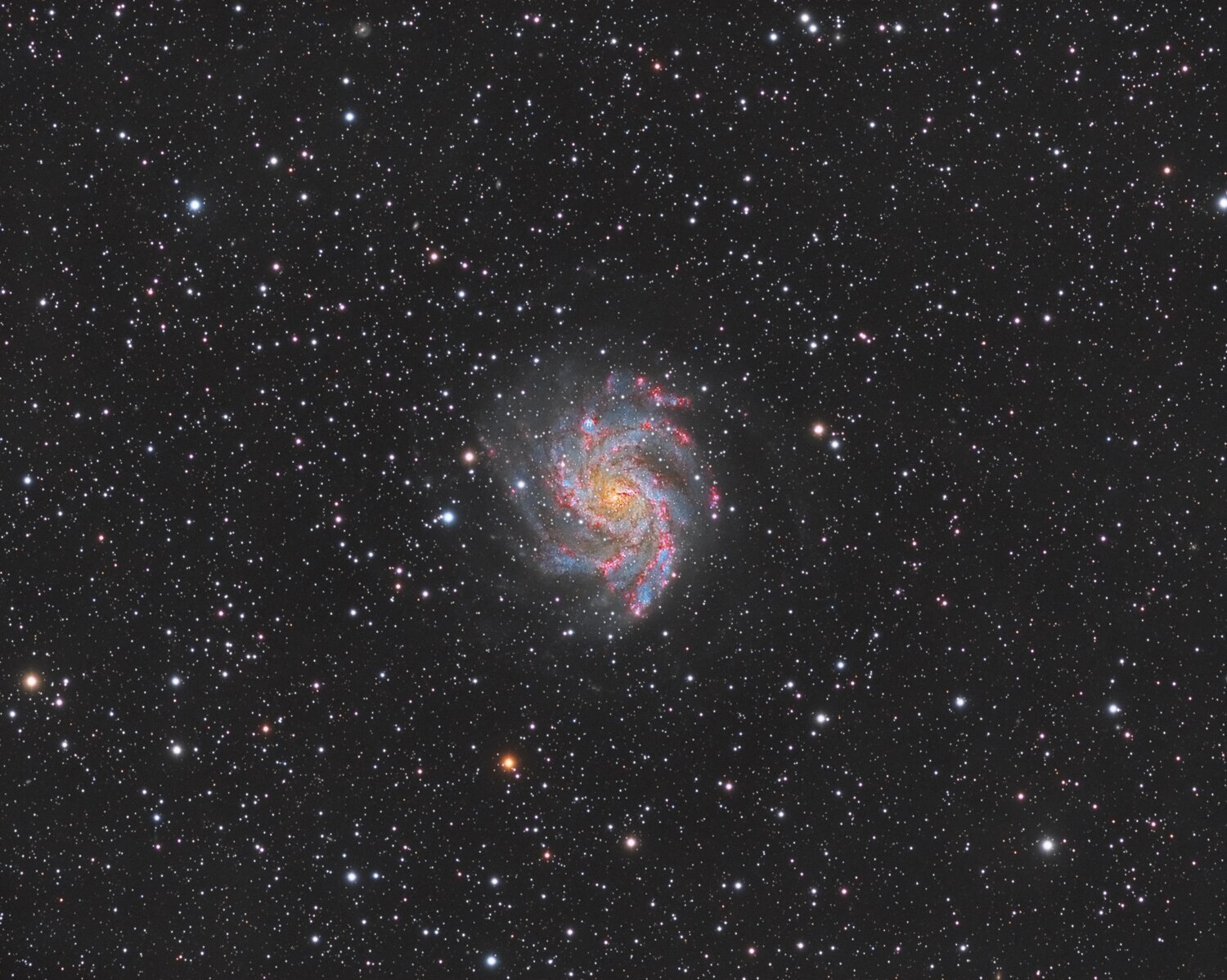
I have had this on my Hard drive for some time now but was never happy with the outcome of the processing so now we are in lockdown it seemed a good time for a revisit. I spent the whole day and started from the beginning I'm now very happy with how it turned out.
Lum 19x900Secs
Red 15x900Secs
Green 11x900Secs
Blue 14x900Secs
Ha 22x1800Secs
22 hours 5 mins in total.
Equipment used:
Telescope: Tec 140 F7
Camera: Xpress Trius SX-694 Pro Mono Cooled to -10C
Guiding: OAG
Filters: Astronomik L
Mount: iOptron CEM60 "Standard" GOTO Centre Balanced Equatorial Mount
Image Acquisition: Voyager
Observatory control: Lunatico Dragonfly
Stacking and Calibrating: Pixinsight
Processing: Pixinsight 1.8
Copyright: David Wills

The dance of the Antennae Galaxies
Image Description and Details : This picture shows the Antennae galaxies (Caldwell 60-61), a pair of interacting spiral galaxies in the constellation Corvus. The blue hue represents a star forming regions.
Date image was taken: 3/8/2020
Scope: Planewave CDK17
CCD: SBIG STXL-11002
Mount: Paramount ME
Integration time: 27.1 hours
Filters: 22*1200s (L), 15*1200s (R); 15*1200s (G), 16*1200s (B), 9*1800s (Ha)
Location: Chile
Copyright Information: Data acquisition by Martin Pugh
Processing by Nicolas Rolland
M20 - Nebulosa Trifida
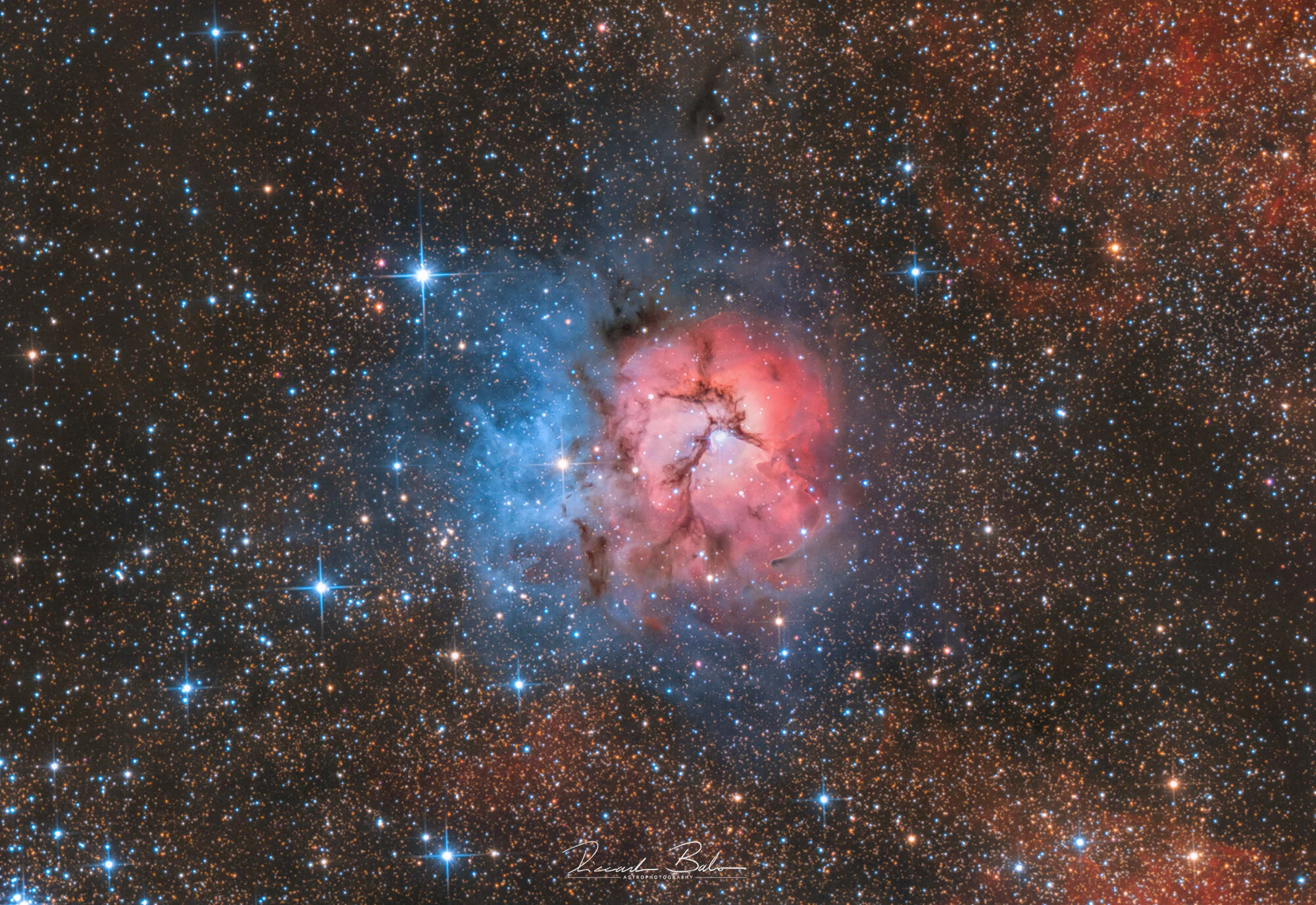
Image Description and Details : M20 - Nebulosa Trifida
The subject of the image is a diffuse nebula in the constellation of Sagittarius, indeed it is possible to see the milky way and Halpha filaments in the background. Frames are acquired from the countryside of Sant'Antioco, Sardinia, Italy.
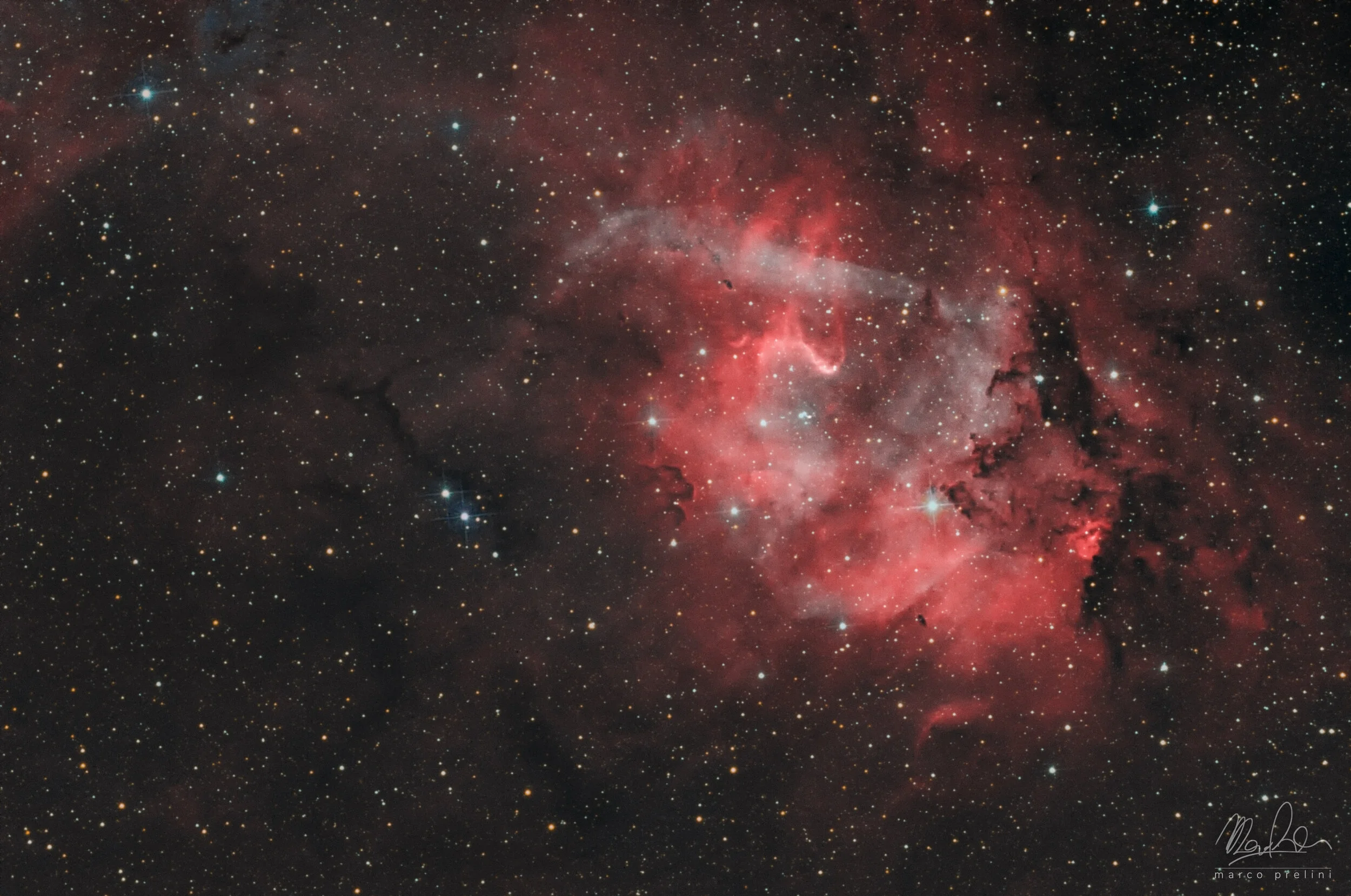
Sh2-132 Lion Nebula
Image Description and Details : This is actually a part of the Lion Nebula: you can see upside down the Lion’s head on the center right and his back and tail doing an arc on the top left of the picture.
This region is populated by a huge number of class O and B and also by a couple of Wolf-Rayet stars as it used to be a strong star nursery area.
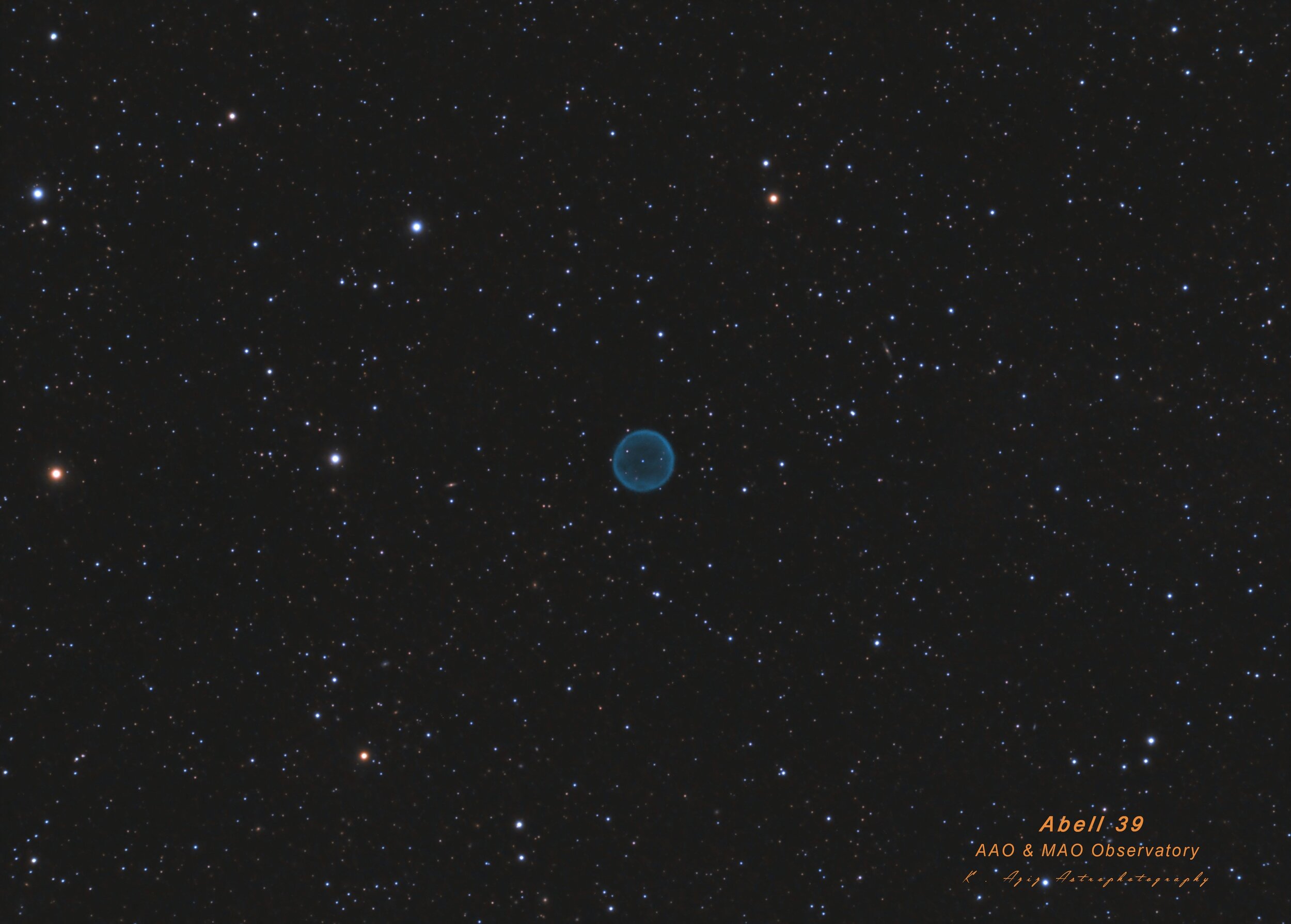
Abell 39
Image Description and Details : Here is the planetary nebula known by the sweet name Abell 39. Very dim, it is located about 6800 light-years from home in the direction of the constellation of Hercules.
Its peculiarity lies in its almost spherical shape, and despite its too small angular size, its radius is 2.5 LY making it one of the largest known planetary nebulae.

NGC 3628: aka The Hamburger Galaxy
This image is a view of an edge-on spiral galaxy named NGC 3628, AKA “The Hamburger Galaxy”. A fluffy galactic hamburger shaped galaxy divided by a dark dust lane.
The galaxy is about 100,000 light-years across and 35 million light-years away in the springtime constellation of Leo.
NGC 3628 shares its neighborhood in the local Universe with two other large spirals M65 and M66 in a grouping otherwise known as the Leo Triplet. Gravitational interactions with its cosmic neighbors are likely responsible for the extended flare and warp of this spiral's disk.

Iris Nebula in Cepheus
The Iris Nebula (also known as NGC 7023 and Caldwell 4) is a bright reflection nebula and Caldwell object in the constellation Cepheus. Reflection nebulae are clouds of interstellar dust which might reflect the light of a nearby star or stars. The energy from the nearby stars is insufficient to ionize the gas of the nebula to create an emission nebula, but is enough to give sufficient scattering to make the dust visible. Thus, the frequency spectrum shown by reflection nebulae is similar to that of the illuminating stars. Among the microscopic particles responsible for the scattering are carbon compounds (e. g. diamond dust) and compounds of other elements such as iron and nickel. The latter two are often aligned with the galactic magnetic field and cause the scattered light to be slightly polarized.
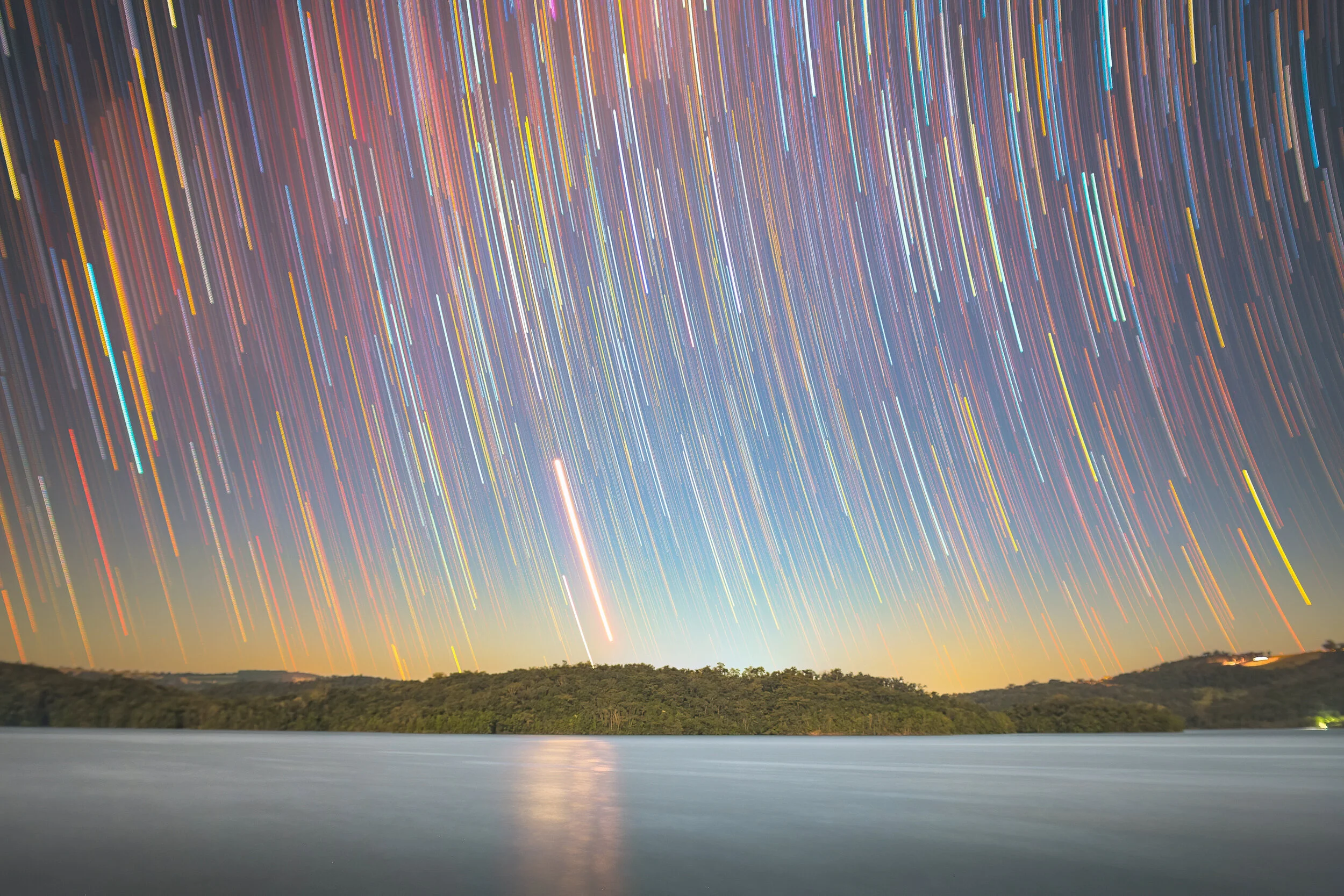
Star-trails and the star colors
Image Description and Details : The color of the stars is linked to their "superficial" temperature (in quotation marks because the stars do not have surfaces, since they are not solid or liquid) - and, contrary to common sense where we associate blue with cold and red in the heat, the bluish / violet ones are the hottest, while the red ones are the coldest - The stars with peak emission in other bands of the visible spectrum have intermediate surface temperatures. Thus, exists stars with peak emission in practically the entire visible spectrum: blue, white, yellow, orange, red ...