
AAPOD2 Image Archives
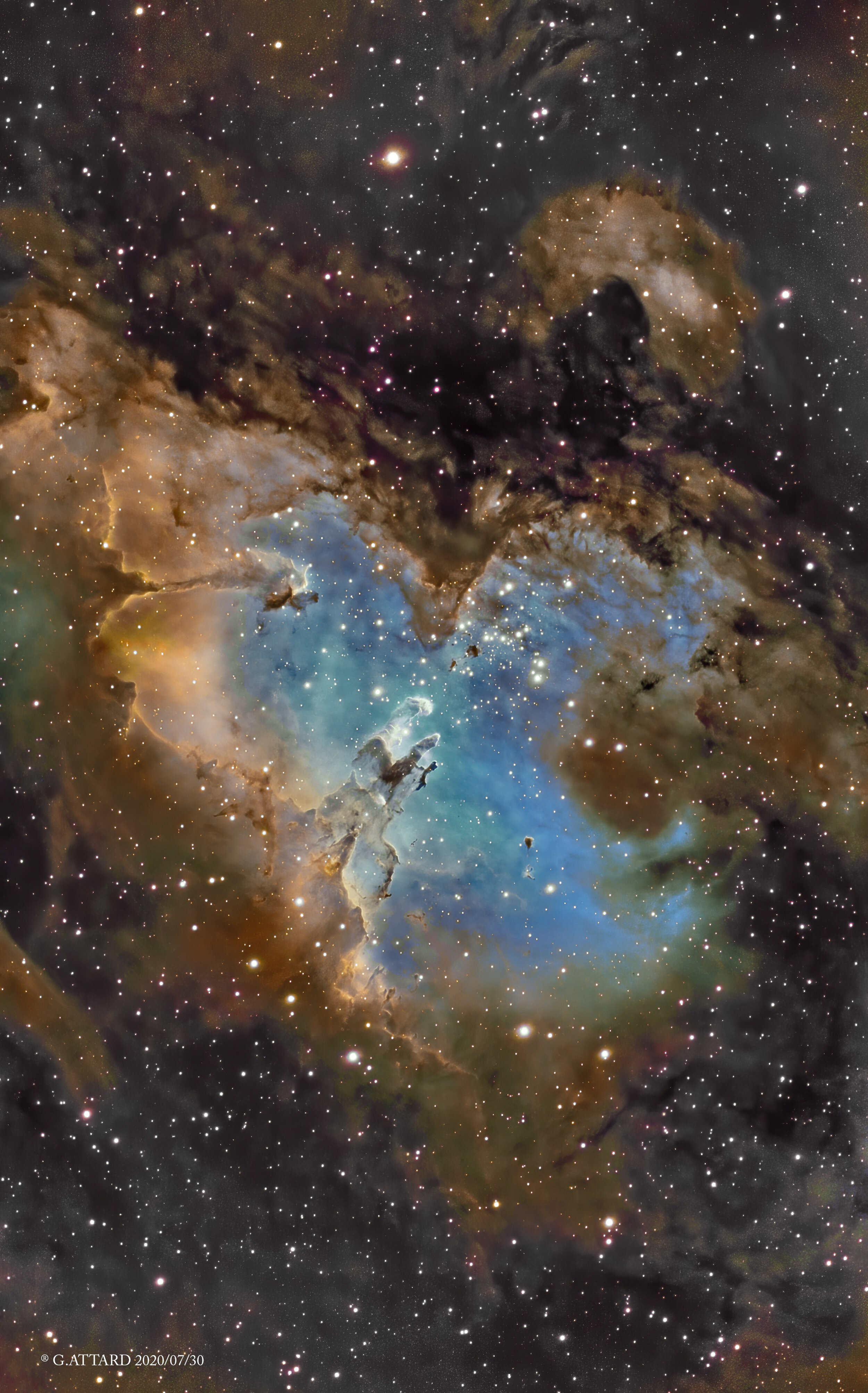
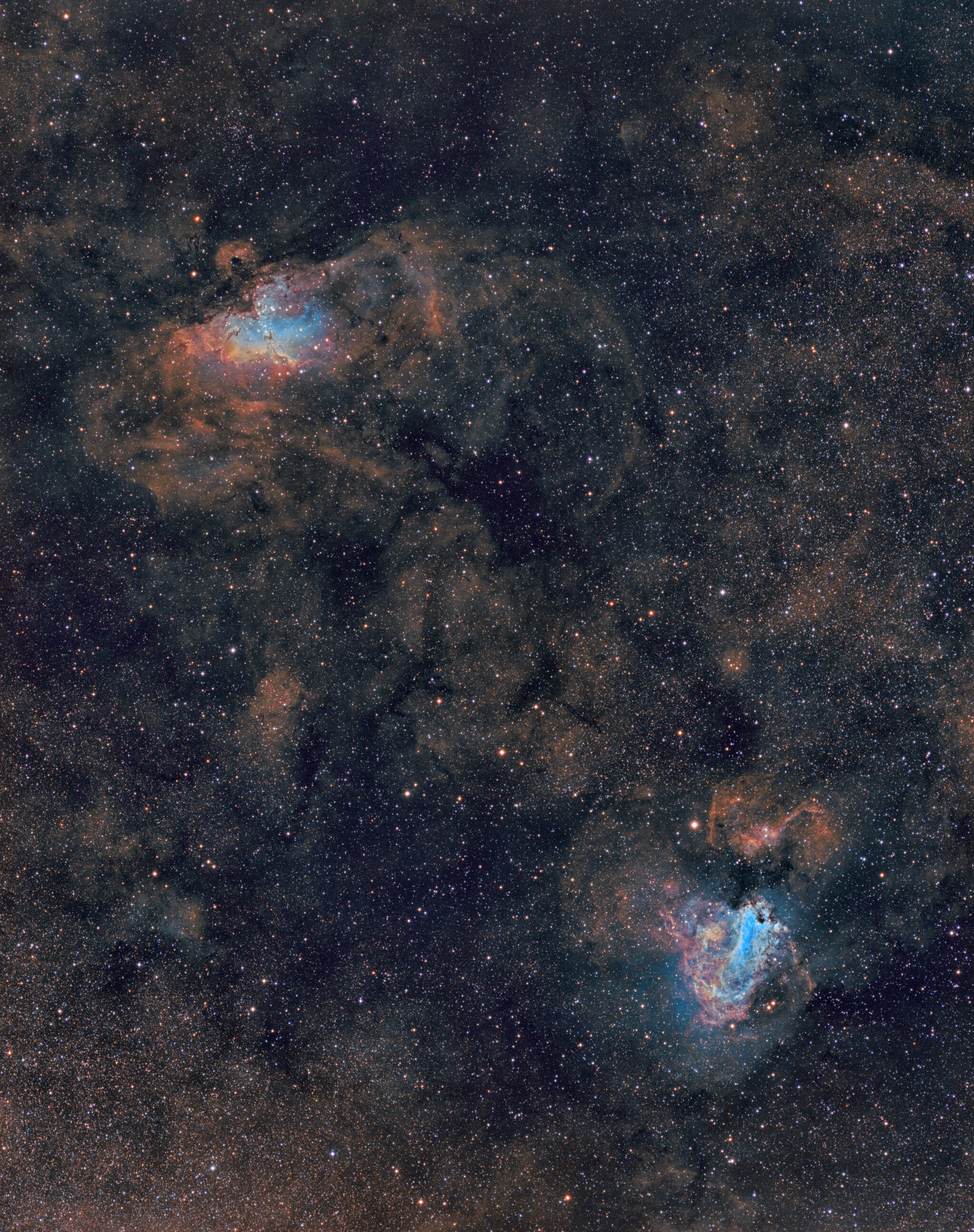
M16 Eagle nebula with pillars of creation and the fairy
Image Description and Details :
- Celestron C11hd at 2800 mm focal length
- main imager zwo Asi6200mm pro
- guiding Zwo OAG and zwo asi290 mono
- filter astronomik 6nm SHO 30x300s each for a total of 7,5H hours of integration time.
This picture was taken from Mougins, in the south-east of France
Copyright Information: Georges ATTARD

Photosphere and Solar Chromosphere
Image Description and Details:
Photosphere: Meade 60mm ZWO ASI120MM Herschel Prism + Baader Solar Continuum + Optolong UV / IR + ND # 3 Nexstar mount 1000 frames Chromosphere: Crowned PST ZWO ASI120MM Nexstar mount 1000 Frames in Under Exposure and Over Exposure Software: Firecapture + Autostakkert + Registax + Fitsworks + Ps Guillermo Cervantes Mosqueda Altaír Astronomical Observatory Poncitlán Jalisco Mexico
Copyright Information: Guillermo Cervantes Mosqueda
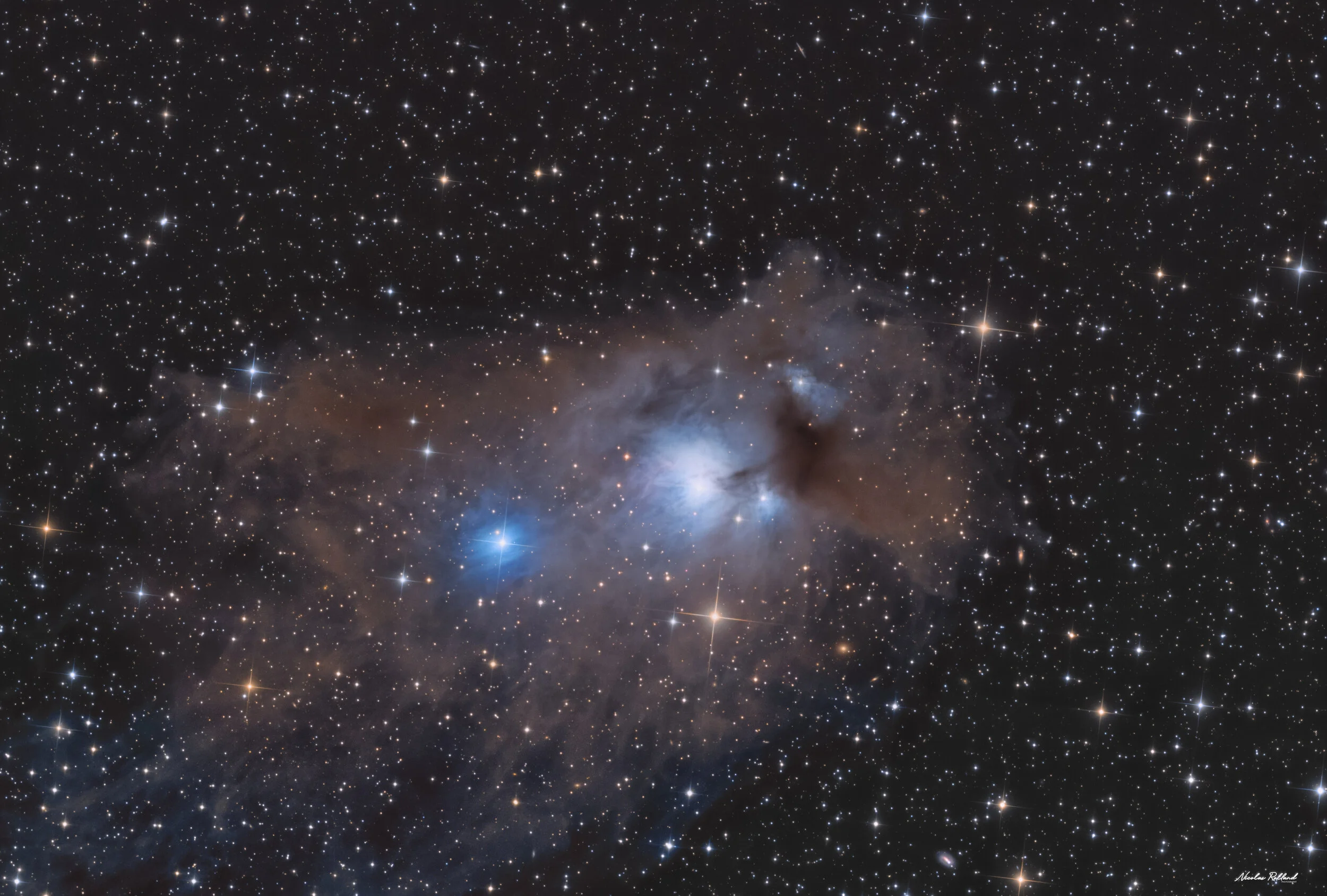
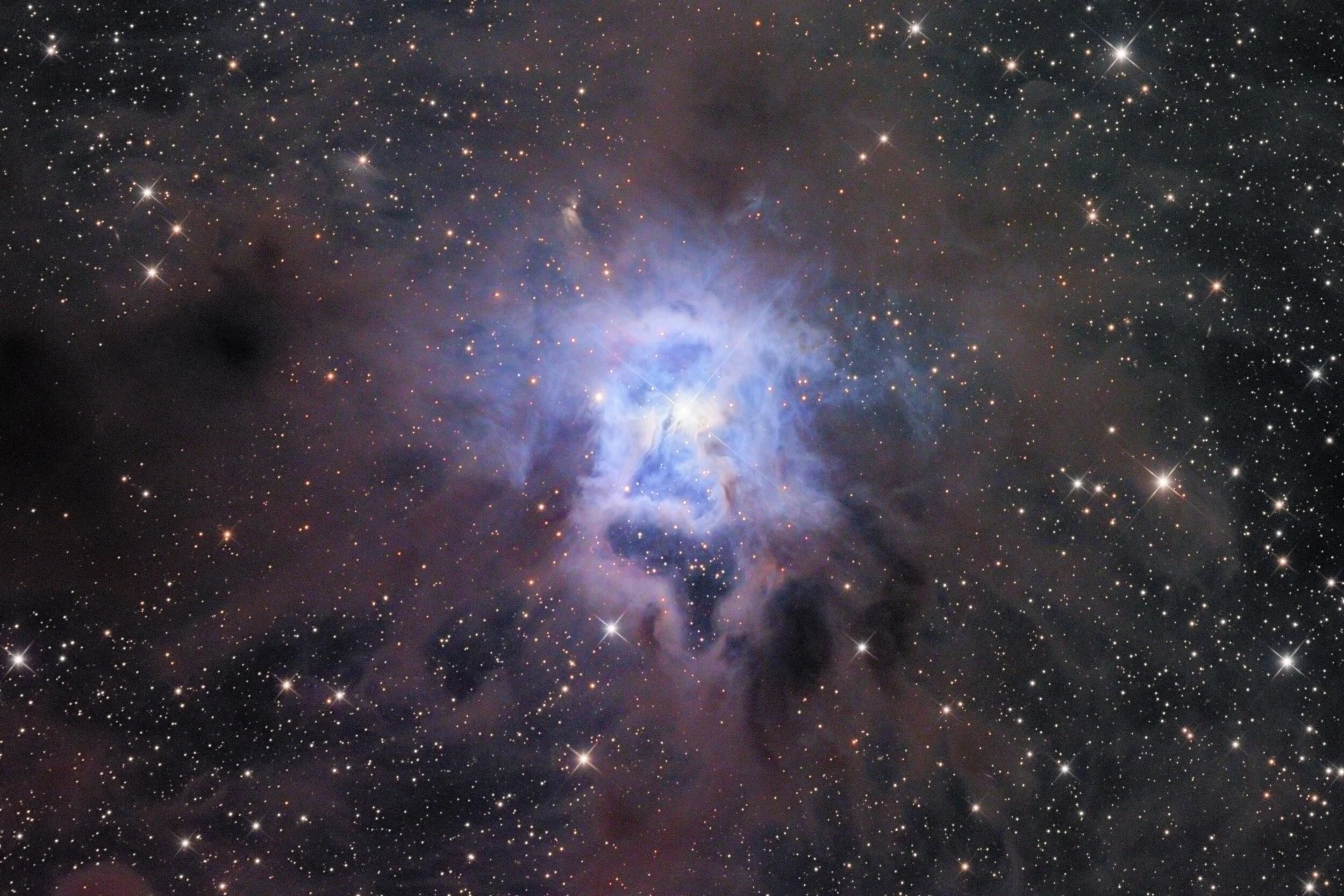
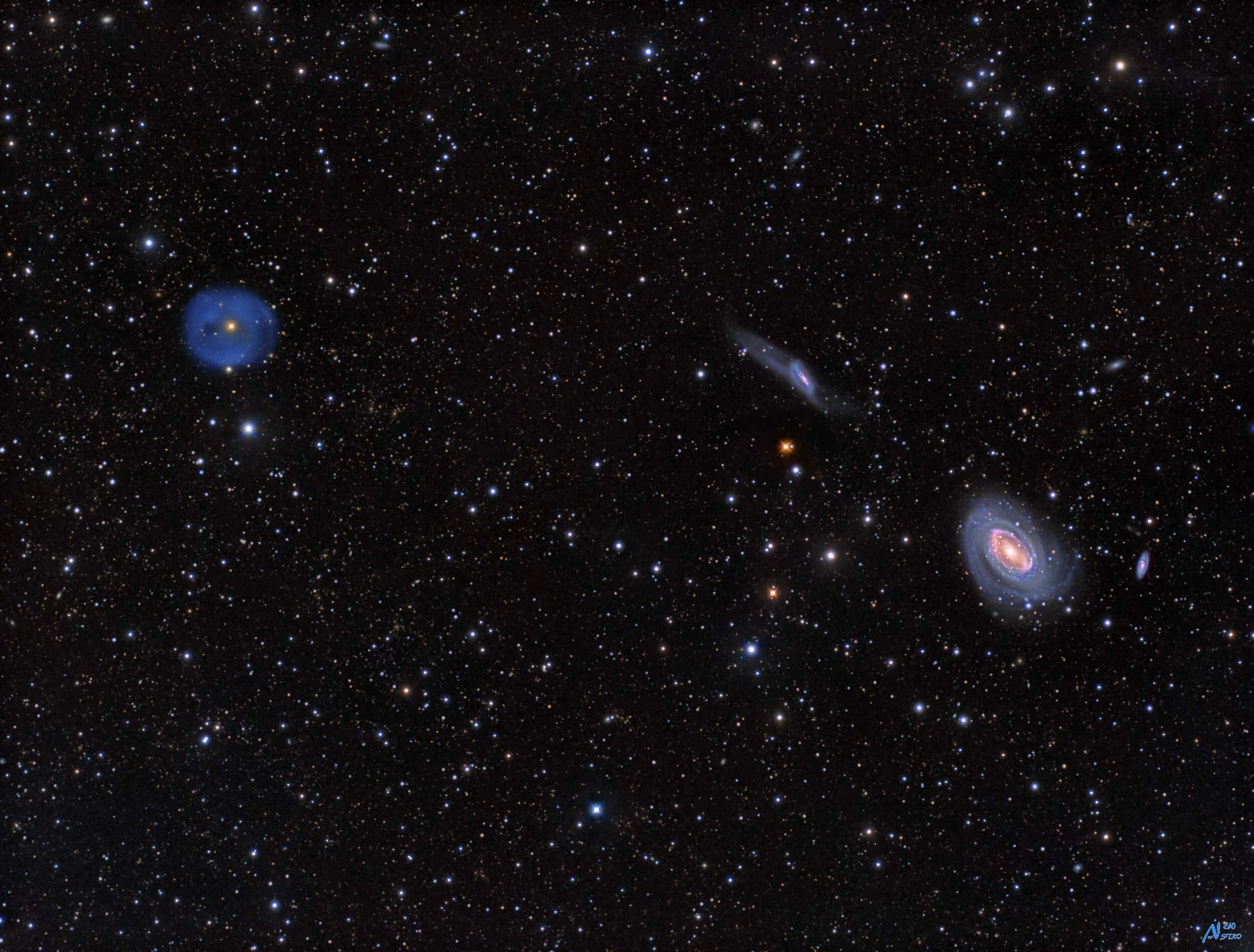
Cometary Globule CG12 & NGC 5367
Image Description and Details :
NGC 5367 is a reflection nebula associated with the cometary globule CG12 in the Centaurus constellation. Dicovered in 1976 on an ESO/SRC Sky Survey plate taken with the UK Schmidt telescope, CG12 is in contrast to the most other Cometary Globules, because it is far away from the galactic disk.The nebula NGC 5367 (also catalogued as IC 4347) reflects light from two bluish stars of the binary system h4636 (the stars are from spectral type B4 and B7).Location: El Sauce Observatory, Rio Hurtado, ChileDates of Capture July & August 2020L 23 x 1200secR 15 x 1200secG 15 x 1200secB 16 x 1200secOptics: Planewave 17“ CDK @ F6.8Mount: Paramount MECCD: SBIG STXL-11002 (AOX)Pre Processing: CCDstack & PixinsightPost Processing: Photoshop CC
Copyright Information:
Data acquisition: Martin PUGHProcessing: Nicolas ROLLAND
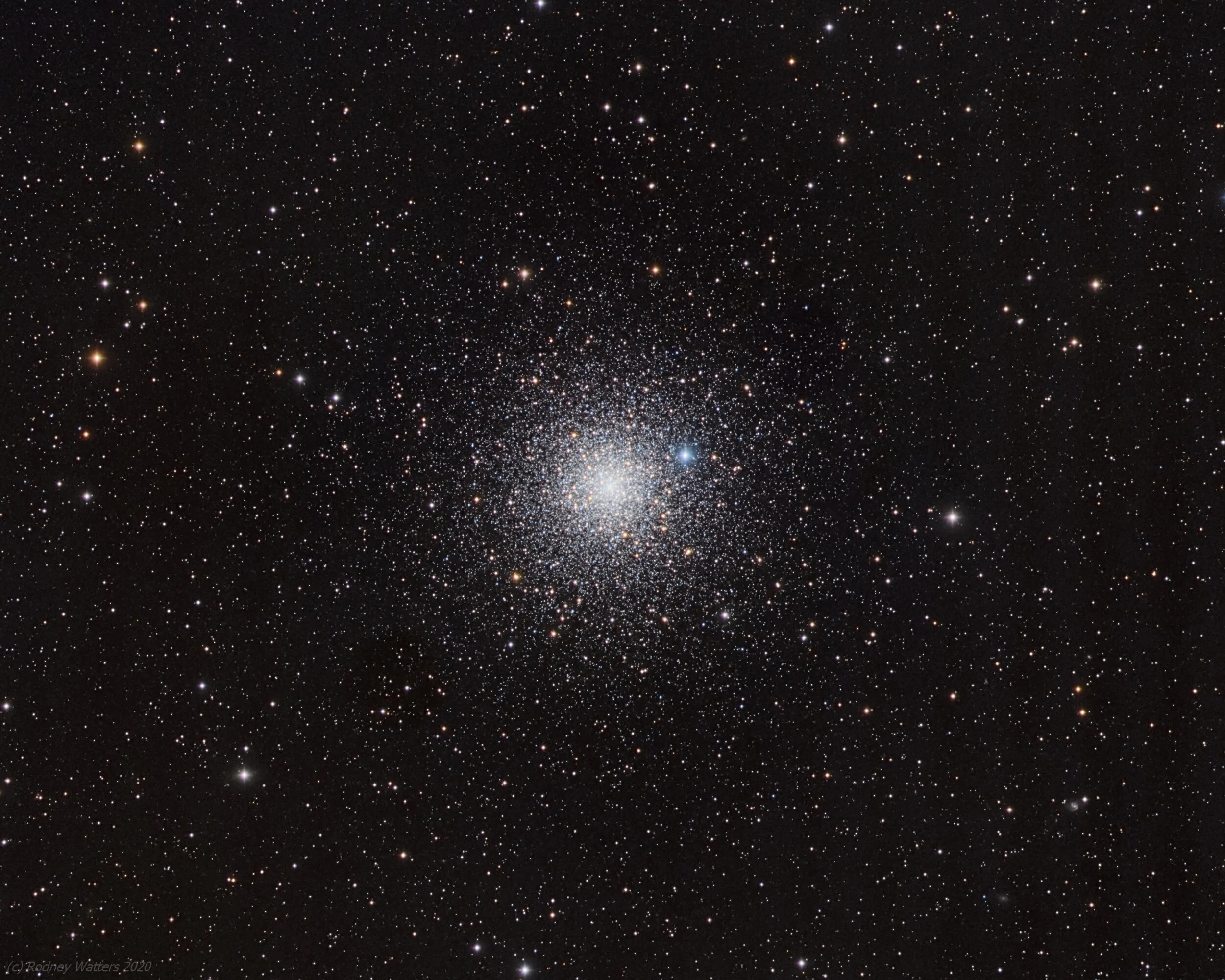
NGC 6752 - Globular Cluster in Pavo
Image Description and Details :
It seems quite appropriate that this very bright globular cluster is located in the constellation of Pavo - the Peacock. The bright scattering of stars look like the fine display of a peacock's tail when it is trying to impress a prospective mate. This globular cluster does a very fine job of that as well.According to Wikipedia, NGC6752 is the fourth brightest globular cluster after Omega Centauri, 47 Tucanae and Messier 22. I already have images of Omega Centauri and 47 Tucanae so now I'm going to have to grab some data on Messier 22.
Copyright Information: Rodney Watters
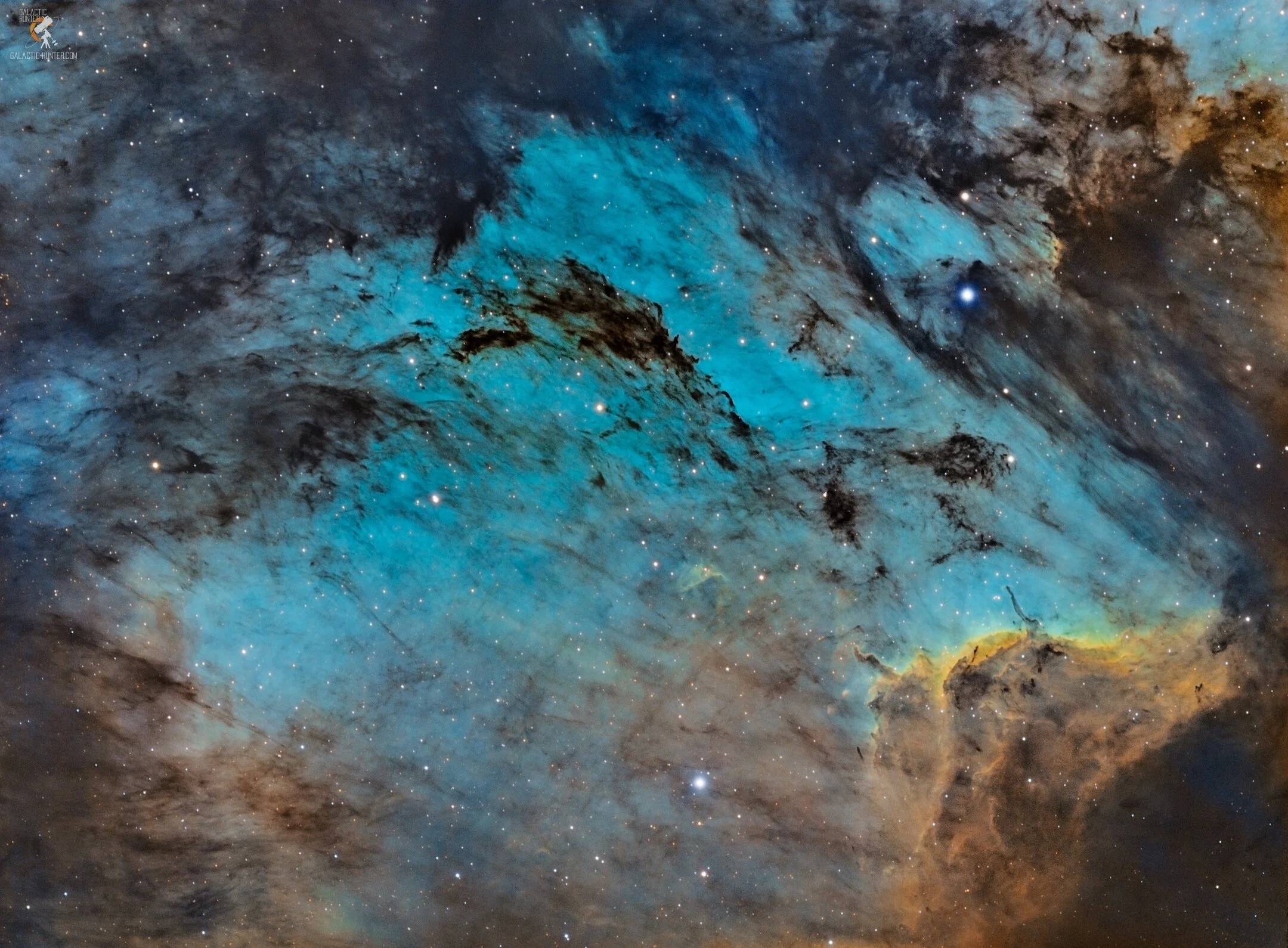
IC 5070/5067 - The Pelican Nebula
Image Information:
Observing Location: backyard, Las Vegas
Sky Conditions: Bortle zone 9
Object's Name or Designation: The Pelican Nebula
Telescope or Lens Used: Meade 115mm APO Astrograph
Camera: ZWO ASI 1600MM
Filters: Ha + Oiii + Sii
Exposure Time(s): 10 minutes per shot. 20 hours and 20 minutes total.
Special Techniques Used: Autoguiding (when it worked, half of the time)
Processed in Pixinsight
Other Comments or Description:
This image shows the bright and busy Pelican Nebula in Cygnus. There are lots of dark clouds visible in the image, as well as streaks of fainter clouds all throughout.
In “front” of the Pelican, near the bottom right can be seen several “Herbig-Haro” objects, which are jets of gasses and other matter being ejected at hundreds of miles per second by the newborn stars. One of the visible ones in the photo (the long thin pillar on the right of the blob) shows HH 555, the most active Herbig-Haro object in the Pelican Nebula.
These objects, when colliding with the surrounded dust of the nebula, create gigantic bright shock waves. These jets will disappears over time as they disperse in space.
Copyright Information: Antoine Grelin - Galactic Hunter