

AAPOD2 Image Archives

Planetary Imaging 2020
Image Description and Details : The images have been acquired during the period February-October.For Jupiter and Saturn was a challenge since the planets were located about 26° above to the horizon.Setup used:C14 Edge HD Fornax52 mount ASI 178/290 mono Barlow Zeiss Baader filters RGB & IR>807nm IR>610nm UV320-380nm with ADC ZWO.
Copyright Information: Luigi Morrone
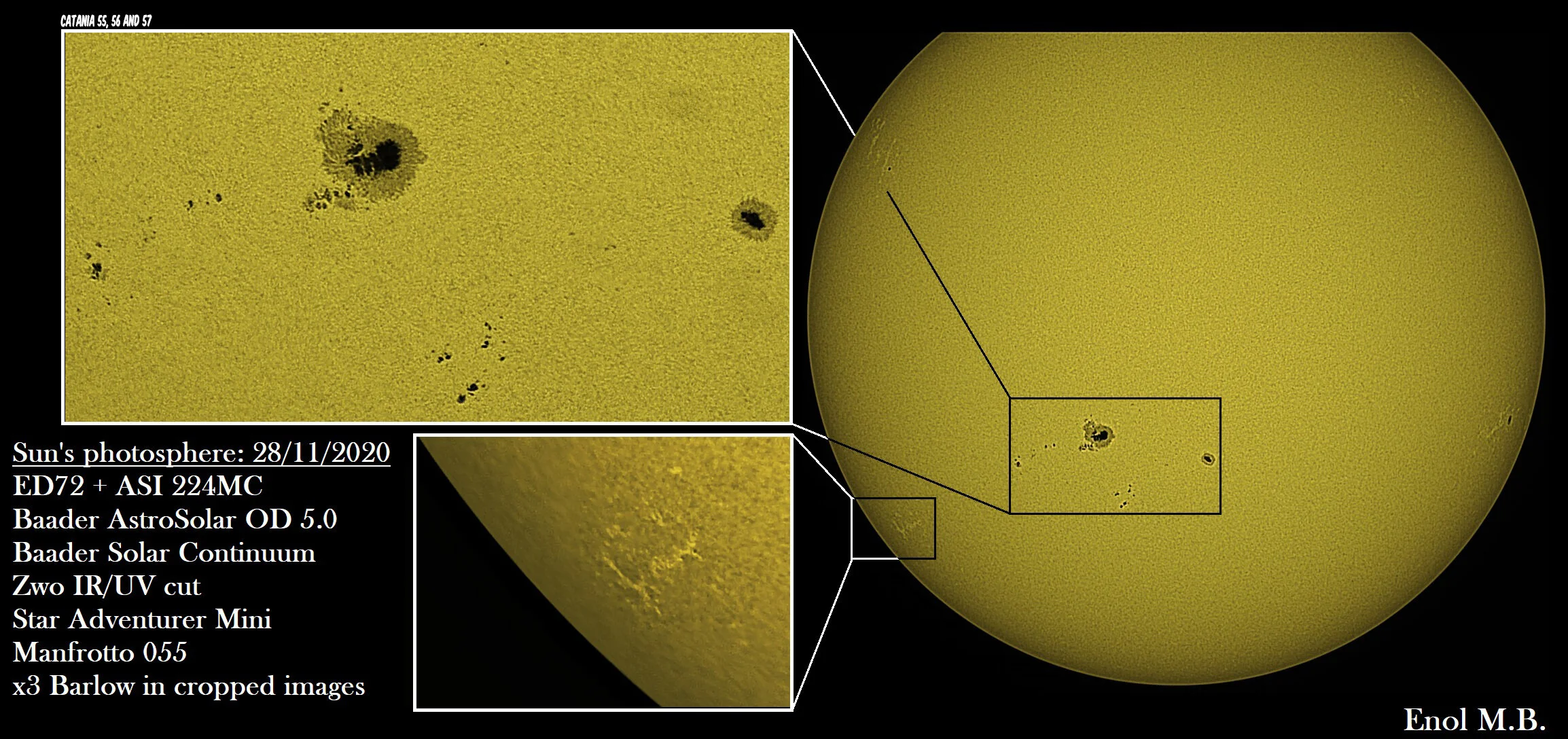
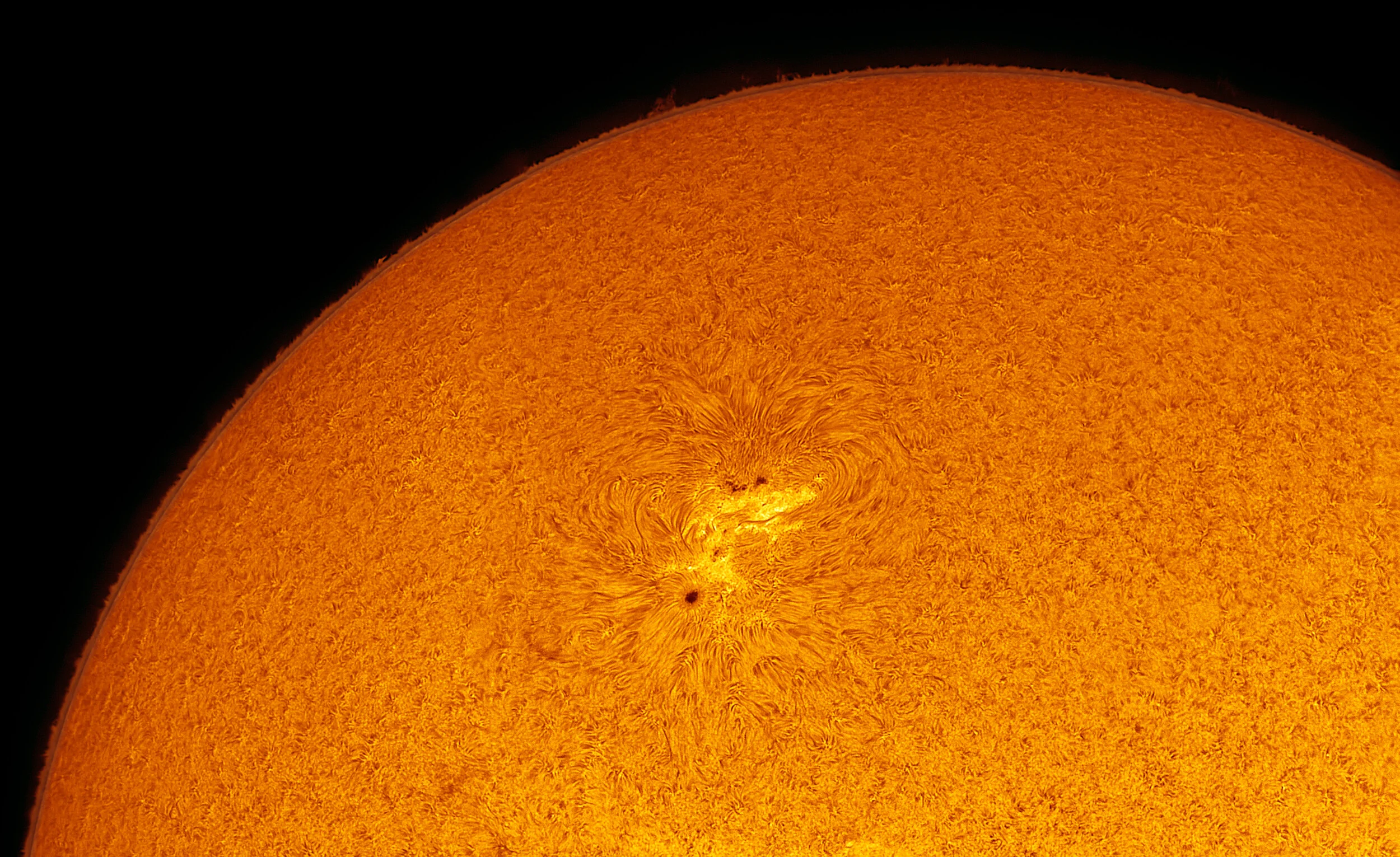
Sun's photosphere. From Catania 54 to Catania 58
Image Description and Details :
The new solar cycle 25 is becoming increasingly active. The big Catania 57 group, the central sunspot have about 5 earths of width.There are also some groups of faculaes around the disk that could turn into sunspots in near days.Tube: SkyWatcher ED 72/420 with a Baader Astrosolar OD 5.0 filter.Camera: Zwo ASI 224MCFilters: Zwo IR/UV cut and Baader Solar ContinuumMount: SkyWatcher Star Adventurer Mini over a Manfrotto 055 tripod.Barlow: Generic x3 on cropped sections.Acquisition: 3 videos of 30" stack on AutoStakkert and processed with Astro Surface OMEGA (deconvolution and wavelets) and Fitswork 4 (luminance extraction and false color).
Copyright Information: Enol Matilla

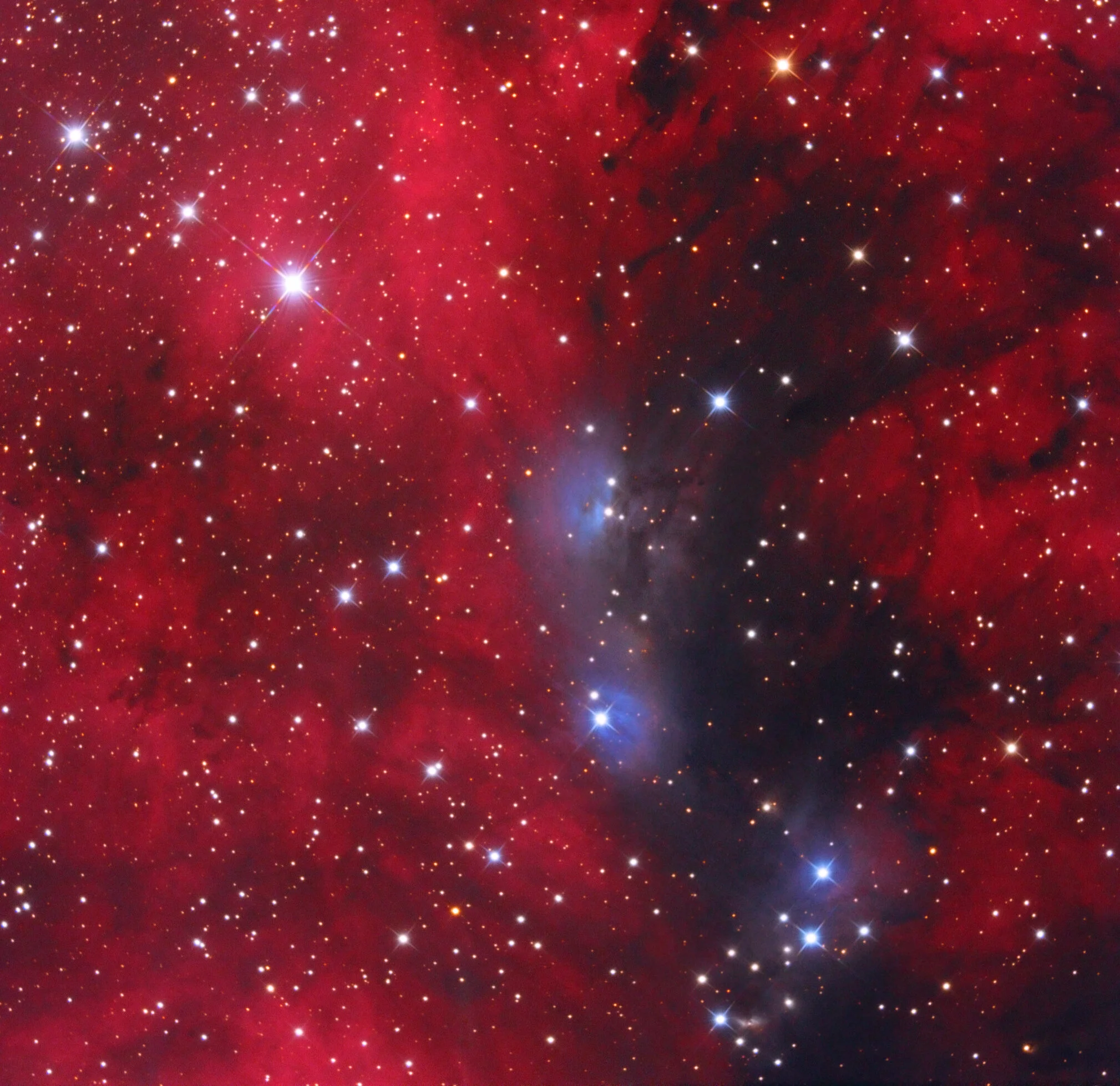
A whole lotta soul ic1848
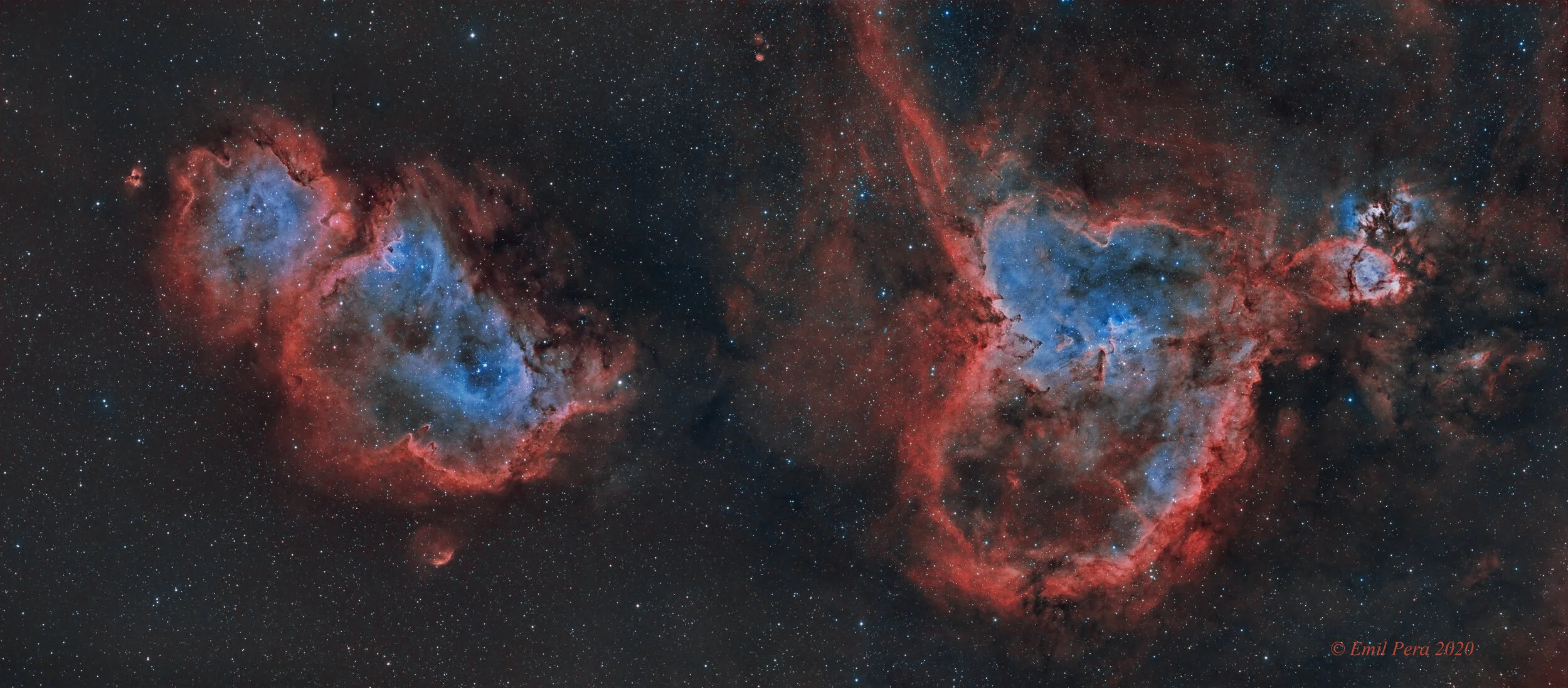
Image Description and Details : Ic 1848. The soul nebula
I am completely IN LOVE with this area of the sky. The nebulosity is so incredible. wide field or close. It's so wonderful
I was able to capture this over 5 nights.
I went to a high gain for a while but ti is challenging to calibrate out so I returned to 200_50 after this image
~~~~Tekkie stuffs:
Telescope: Explorer scientific Ed 80 FCD-100
Camera: ASI1600pro
Filters: Astrodon E series
Mount: Atlas EQ-G
Guiding camera: 290 mini with OAG
SHO~. 84:86:85 300 sec images
Total integration time: 21.25 hours
Seeing/ environment: 2-3
Bortle Class: Class 5/6 Backyard~ Central Indiana
Dates of acquisition: 10/4-5 11/5-8, 2020
processing Pixinsight:
processing: considerations. MULTIPLE nights with good alignment (2 degree error allowed in SGP)
synth lum created for Decon
Aligned all to each other.
Crop
DBE individually
SHO combine with 15% of Ha added to R and 10% to Blue
SHO workflow~BGN; MLT for Noise reduction
Lum workflow~decon with autopsf 40 iterations 5 layers;
MLT for noise reduction
Arc sin for SHO and chose HT for Lum with Bg at 10% for both
TGVDN
LHE after for small and larger kernels masked for the nebula
Curves with range and color and Lum masking for lightness and sat boost
LOADS of masking to bring colors.
XPTR with Lum mask for lum boost;
MLT for sharpening.
Morph to reduce the stars just a bit and ICC to end
Copyright Information: Dawn Lowryl
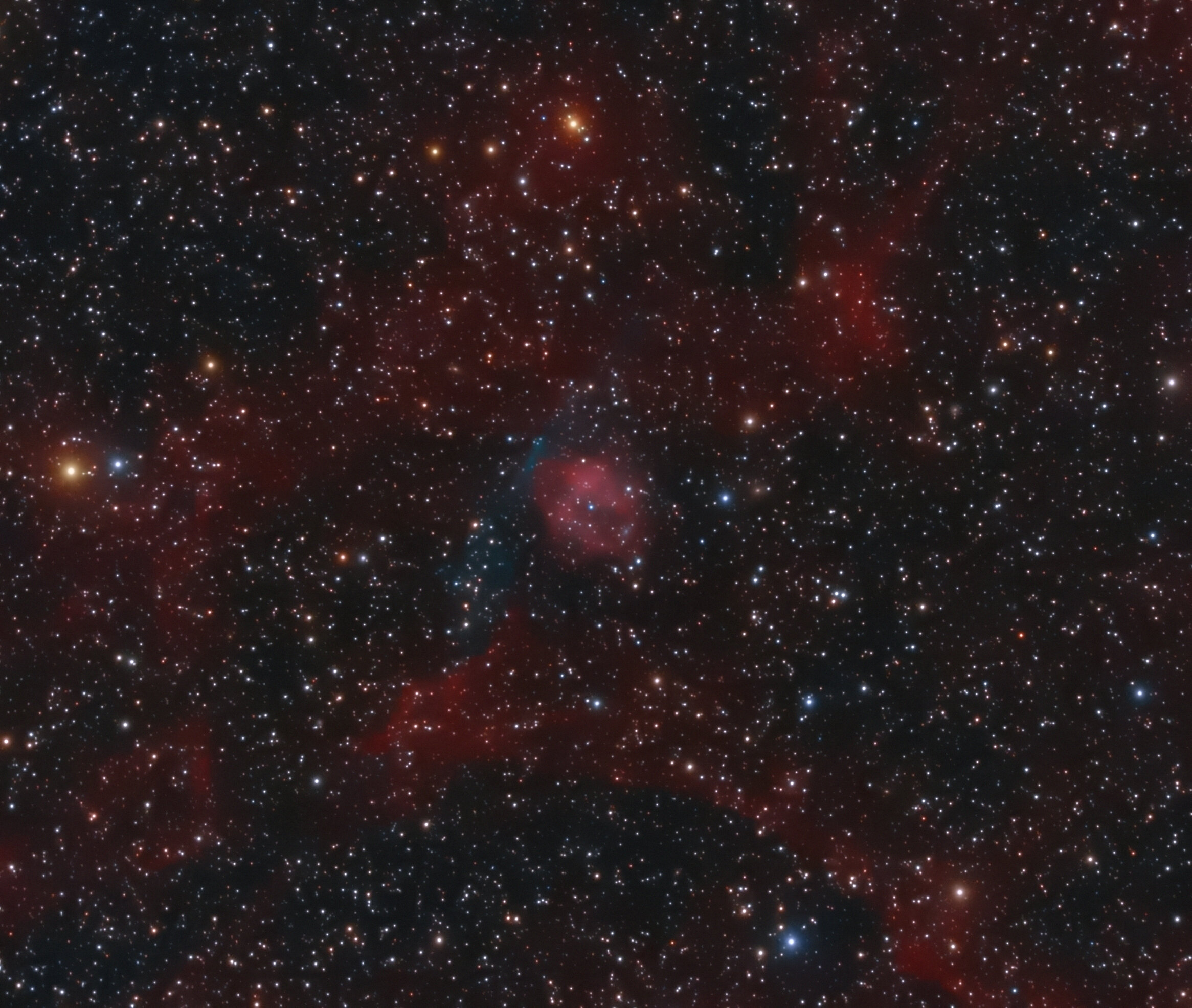
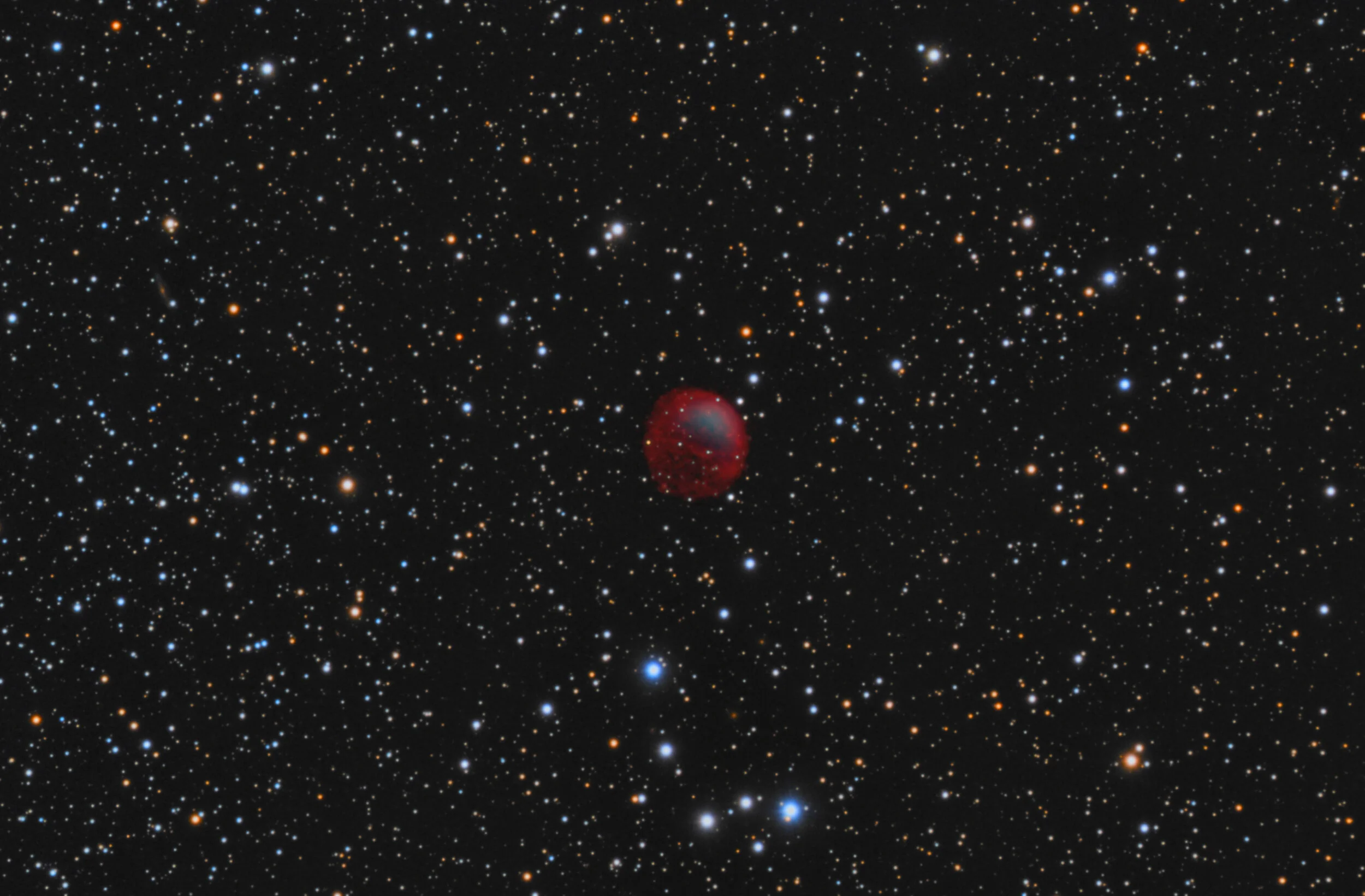
Planetary nebula AMU 1 (PN G075.9+11.6)
Image Description and Details :
AMU 1 (PN G075.9+11.6) is a bipolar planetary nebula in Cygnus.AMU 1 is a faint but extremely strange and beautiful planetary nebula with a size of 5x2 arcminutes. It was discovered by the astronomers Alba Aller, Luis Miranda and Ana Ulla in 2013 and was found in the field covered by the Kepler telescope. It has a complex multishell morphology and a series of low ionisation structures and has a binary central star with orbital period of 2.93 days.As far as I know, this is the first amateur color photo of this nebula. In appearance, I would even give it a name - "Peaceful Atom".This image taken over several nights in September, October 2020.R-channel - 34 x 150 sec. bin 1x1;G-channel - 34 x 150 sec. bin 1x1;B-channel - 34 x 150 sec. bin 1x1;Ha- 60 x 900 sec. bin 2x2;OIII- 55 x 900 sec. bin 2x2.Total integration time about 33 hours.My setup: Telescope 8" Celestron Schmidt-Cassegrain (SCT) CPC800 GPS (XLT) on the equatorial wedge, focal reducer Starizona Night Owl 0.4х, Feq=864mm, camera Starlight Xpress Trius SX694, SX mini filter wheel, filters Astrodon LRGB E-series gen.2, Astrodon Ha 5nm, Astrodon OIII 3nm.Capture and processing software: MaxIm DL6, PHD2, PixInsight, StarTools, Photoshop CC, Zoner photo studio 14.North at the top.
Copyright: Boris Vladimirovich
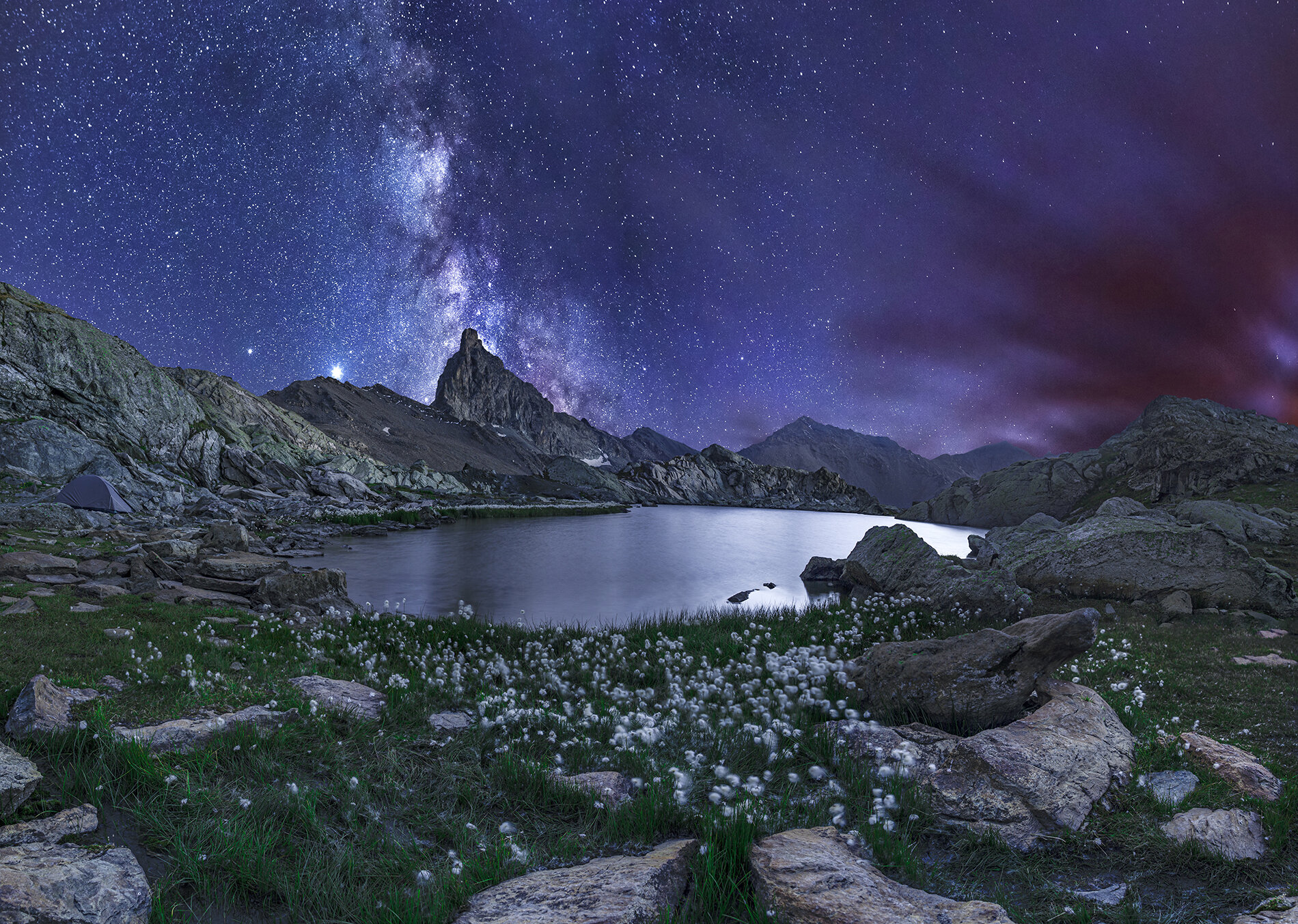
Queyras lake over the Milky Way
Image Description and Details :
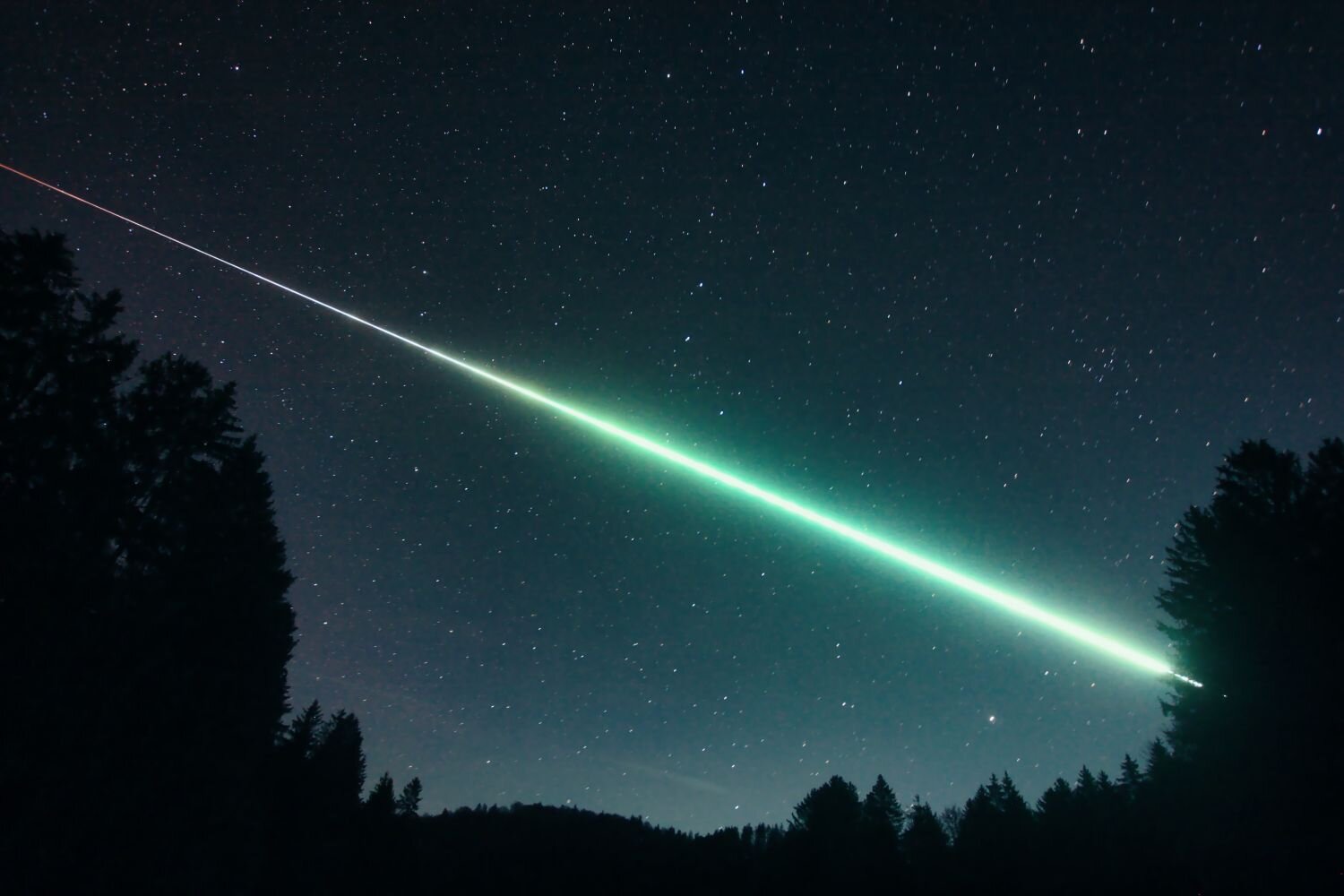
I've been trying to do this photograph for a little over a year. Nearly 11km walk to one of these lakes with food, bivouacing and photo gear on the back. In my last 2 tests, the sky managed to cover for the whole night. Being at an altitude of about 2400m, the lake offers a negative temperature during the summer nights; needless to tell you it does... Cold! Especially since the humidity is high then increasing the feeling of the cold. The night of September 5-6 was cleared at the beginning before the arrival of a cloudy passage that did not last long. Phew! Unfortunately, the sky began to rediscover itself when the Moon rose. Its light was still strong enough to dazzle the starry sky. This lake is located at the border between France and Italy.This photo is panoramic view composed of 9 photos taken with a Canon 5D MKIII + lens Samyng f/1.4 (@f/2.8) on tripod.The the foreground was photographed a little before dark night. For the Milky Way, I waited for the dark night to start photography it. Place : Saint-Véran (Hautes-Alpes / France).
Copyright Information: Jeff Graphy
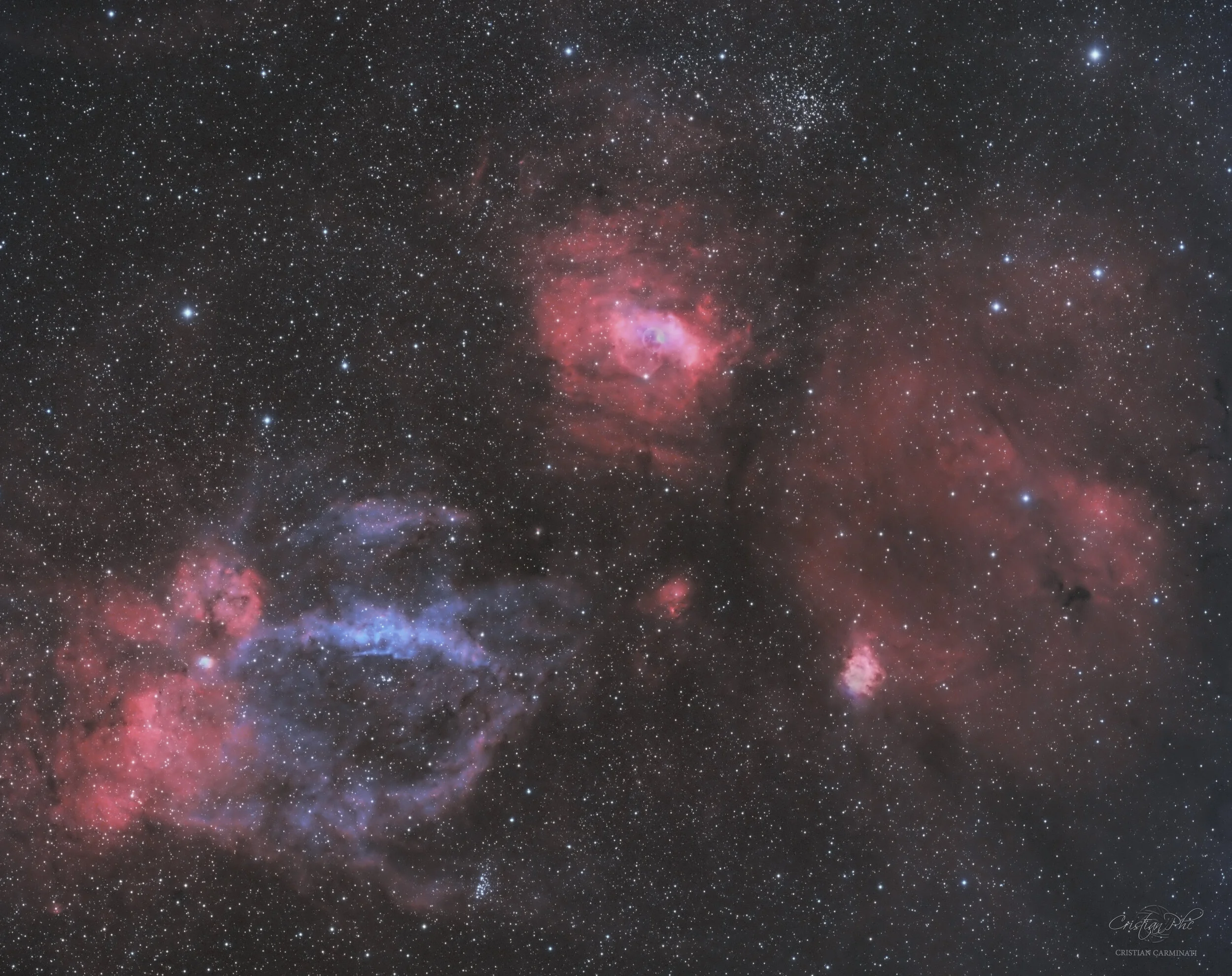
Bubble Nebula Area
Image Description and Details :
M52 - NGC7635 - NGC7538 - NGC7510 - SH2-157 - SH2-161 - LBN544FSQ106EDXIV - Moravian 16200Ha-OIII: 18x1200"Bortle 6Sqm-L 18.5Umidity 75%Moon Phase 75%
Copyright Information: Cristian Carminati

Bailly, Schiller-Zucchius Basin & Schickard
Image Description and Details :
If there were a Book of Strange Places on the Moon, the Schiller Crater would rank high. Long, as if rolled out - it does not lend itself to simple explanations - one could discuss it, brush against genius or ridiculousness. Some see it as a product of an asteroid of a few kilometers tangential to the impact surface, others argue that it is a chain of medium-sized craters that have lost common parts of the crown after lava filling. I like the second translation, because in the outer contour of the Schiller you can find arcs that would indicate that it is a mix of 4-5 craters. You can even see what looks like a central mound at one end.The Schiller Crater marks the northern edge of a multi-ring basin - a structure that is high on my list of favorite structures. Firstly, the concentric circles enhance the aesthetics of the place, secondly, they generate beautiful shadows when the light falls diagonally and it gives the impression that they are more convex. Were it not for the outflow of magma that made this formation shallower, we would have seen one of the most beautiful craters here. Fortunately, I can imagine it.Achromatic refractor TS152/900, Barlow Celestron Ultima 2x (F-2270mm equivalent), ASI290MM, Baader Hα 35nm, EQ-ATM, FireCapture v2.6, Autostakkert!3, Registax6, Multistacking.
Copyright Information: Jerzy Łągiewka "Loxley"
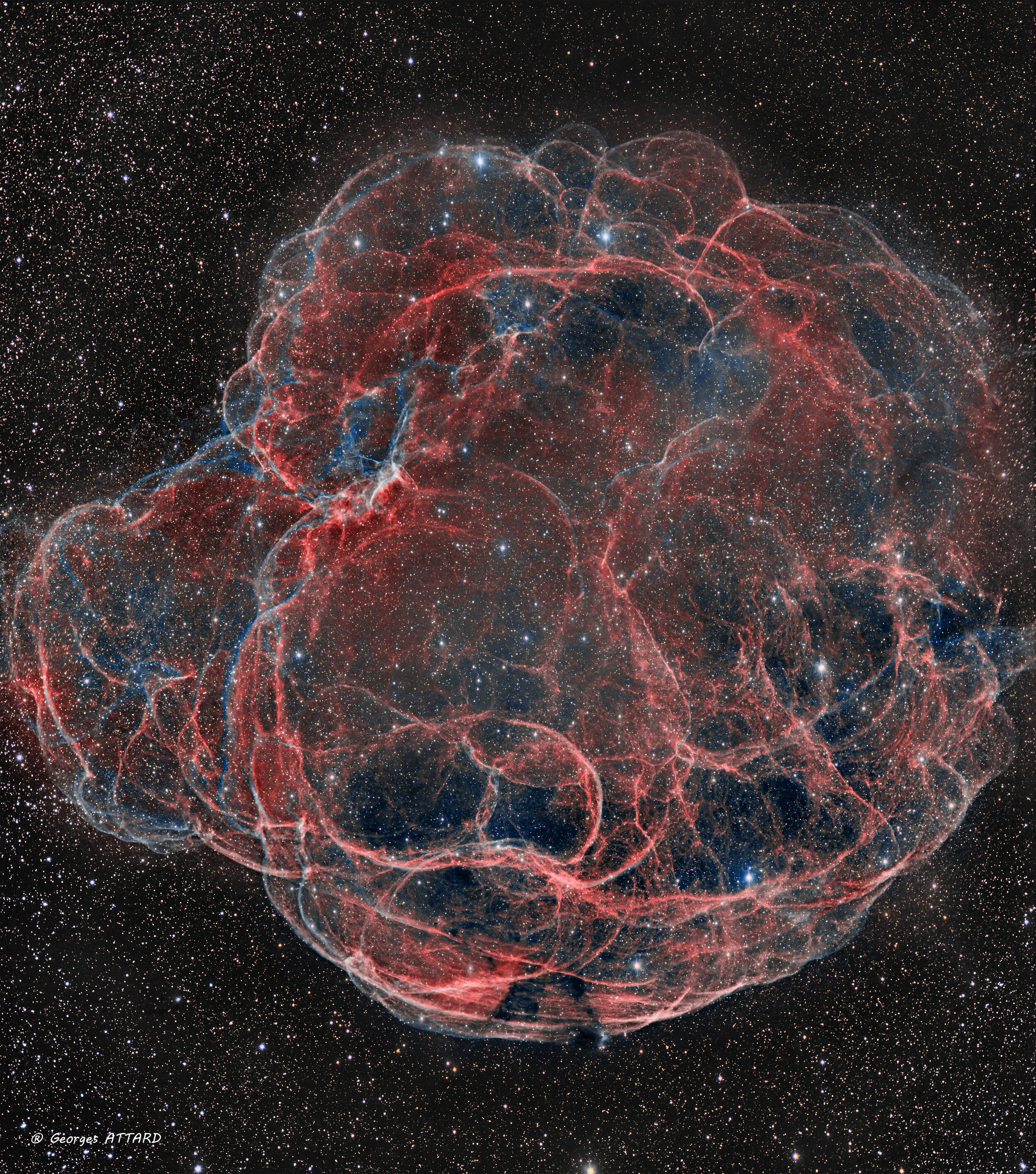


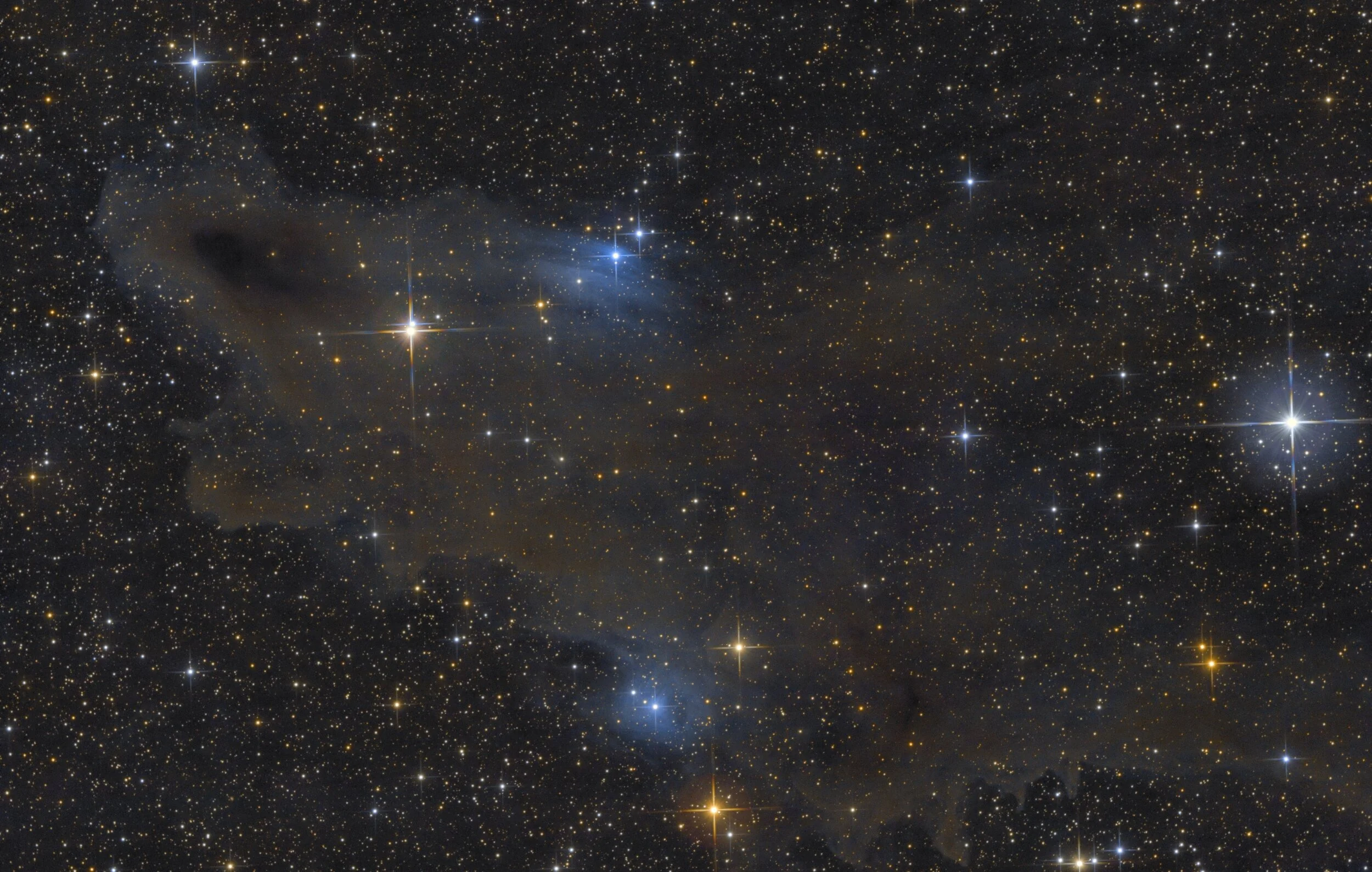
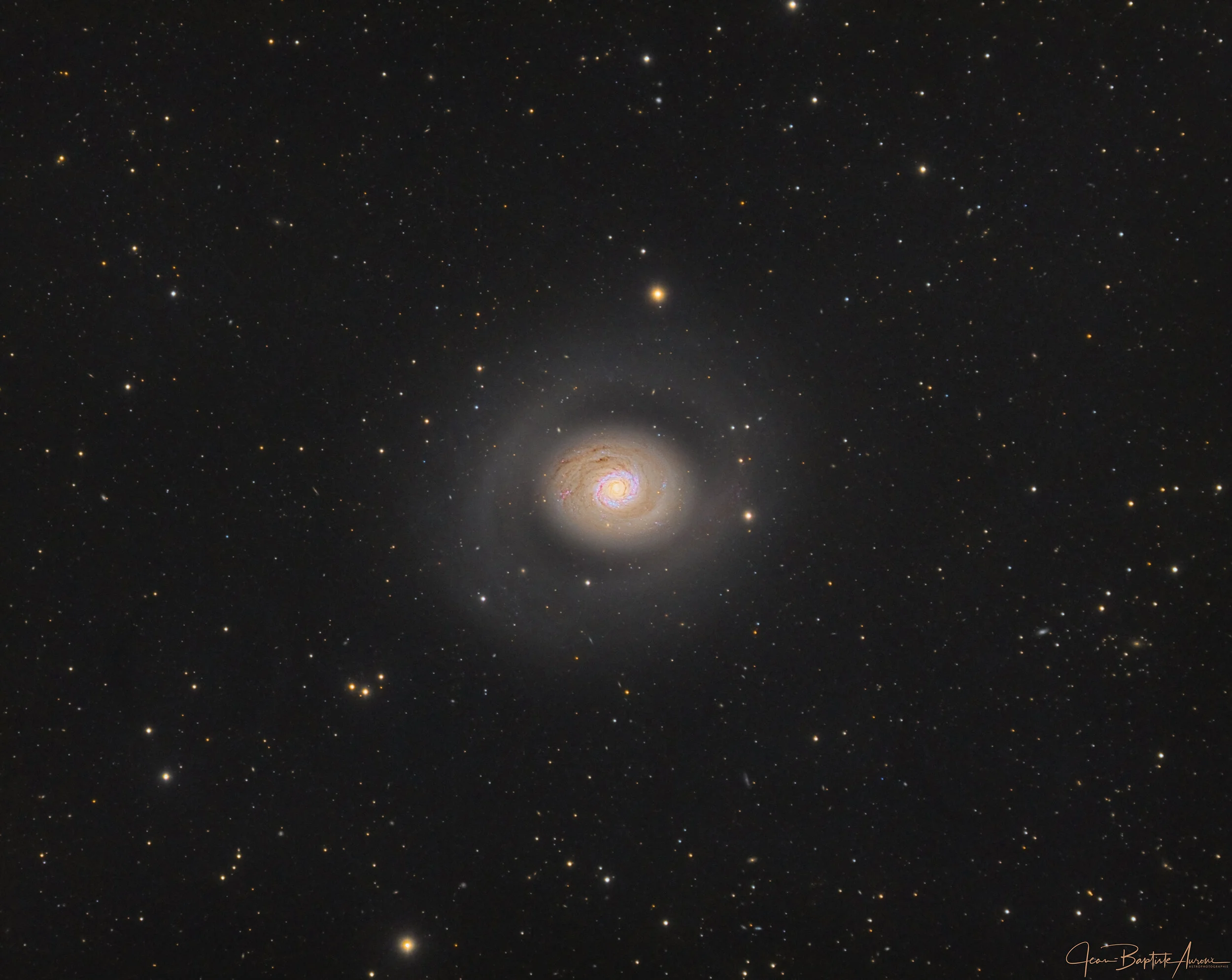
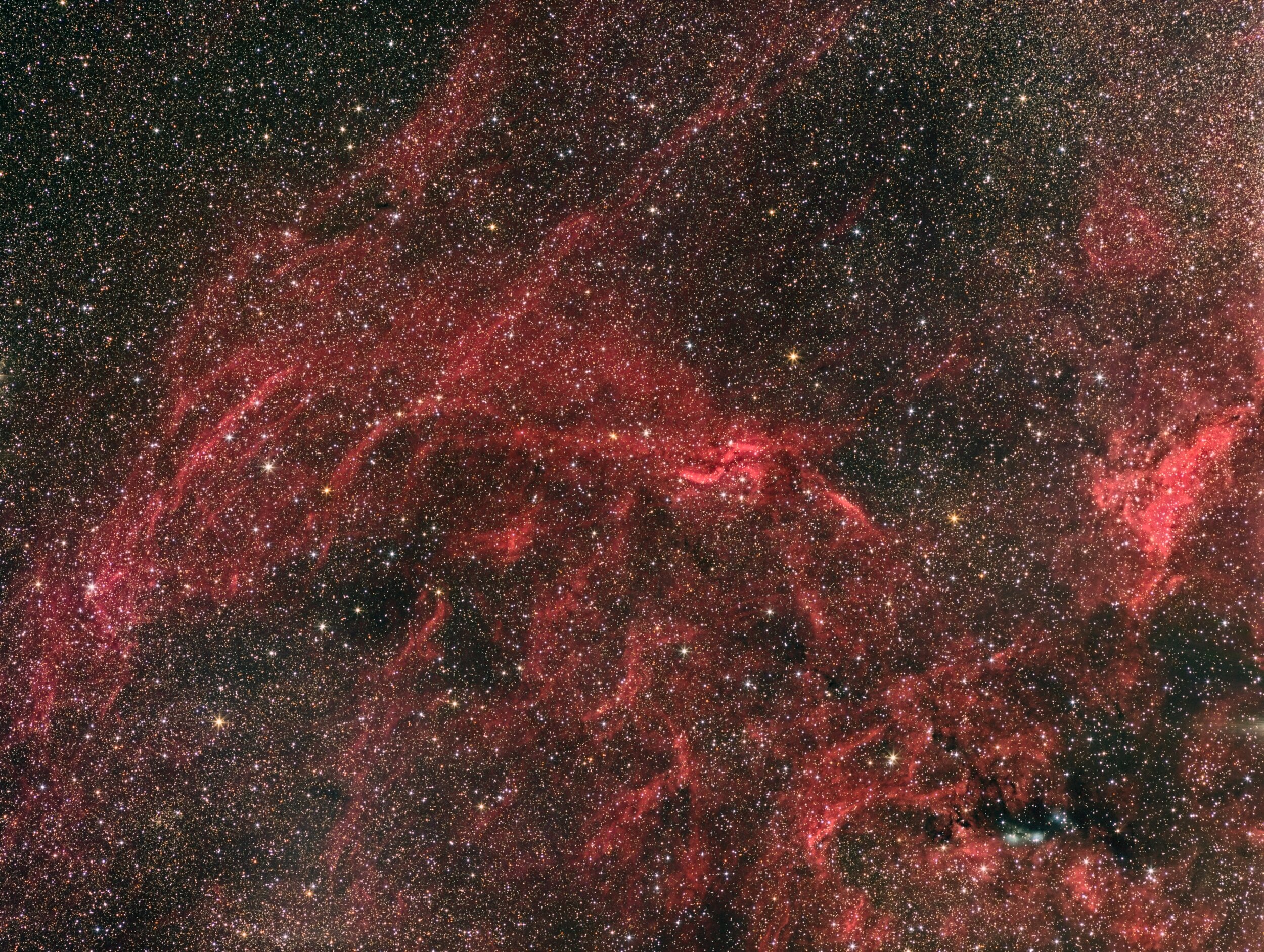
Red Dragon Nebula
Image Description and Details : Head for Deneb, the tail of the Swan. You may be tempted to turn slightly to the East and stop at the beatiful North America and Pelican nebulas. But if you turn West instead, you may be surprised by a huge, lurking deep red dragon.A number of HII regions shape this nebulosity, many of them listed in the Lynds Bright Nebula catalog, with some omissions, notably the "Propeller Nebula" (Simeis 57, DWB 111), located near the center of the image.Exposures:Ha: 24x 600s (15-16/08/2020, from Sevilla city)L: 14x 300s (19-20/08/2020, from Hornachos)R: 10x 300s (19/08/2020, from Hornachos)G: 10x 300s (19/08/2020, from Hornachos)B: 10x 300s (19/08/2020, from Hornachos)Imaging lens: Canon 200 mm F2.8 L II USM @ f/4Imaging camera: Moravian Instruments G2-8300FWFilters: Baader Planetarium LRGB, Baader Planetarium Ha 7nm 1.25"Mount: SkyWatcher AZ-EQ6 GTGuiding telescope: Orion Guidescope 60mmGuiding cameras: ZWO ASI 120 MM-SSoftware: INDILib, Kstars/Ekos, PixInsight 1.8, Adobe Photoshop CS 2021Location: Sierra de Hornachos (Badajoz) and Seville city (Spain)
Copyright Information: Sergio Diaz Ruiz