

AAPOD2 Image Archives

VdB 158
Image Description and Details :
Telescope: Takahashi FSQ106EDX (f/5)Mount: Takahashi EM-400 Temma2Camera: Atik 16200 (KAF-16200)Guider: Lunático EZG-60 + SXLodestarFilters: Astrodon Gen2 LRGB I-Series 50,8mm + IDAS LPSFocuser: RoboFocus Rev3.1Capture: MaxIm DL + AstroMaticProcessing: PixInsight Core + Photoshop CC 2019Esposure:L: 71x600s bin1RGB: 30x300s bin2Total: 19h 30mPlace: Las Inviernas and Montejo de Tiermes, Guadalajara, España
Copyright: Alvaro Ibañez Perez
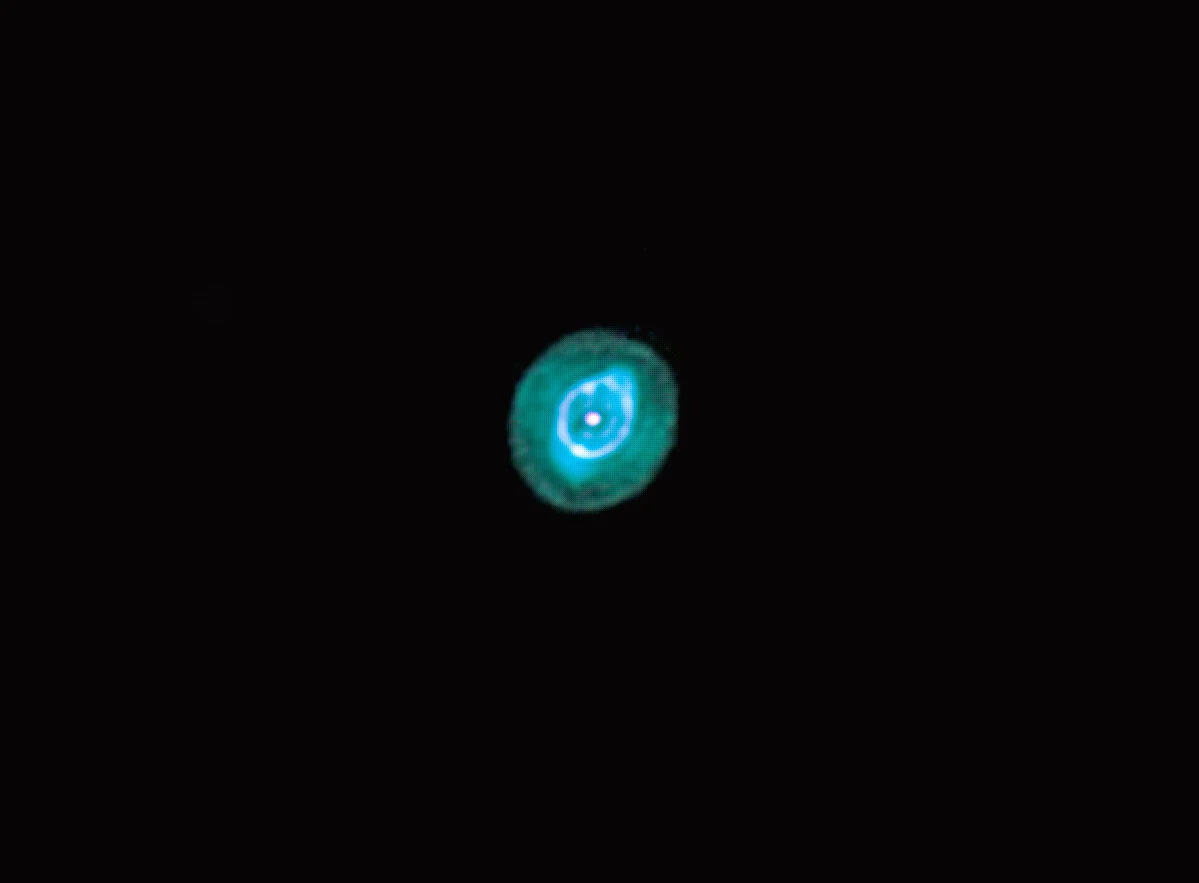
The Ghost Of Jupiter A.K.A The Eye Nebula (NGC3242)
Image Description and Details :
I did a Live stack with Gain 50 and Gain 120 each with ASI294MC-Pro, and drizzle-integrated.Place: Backyard East Pattaya Thaiand (Bortle Class 6, Moon Phase 82.9%)Date:23nd / Feb / 2021 1:24(UTC+7)TS TSRC10T Carbon Truss Prime Focus (250mm F/8 f/2000mm)CCD: ZWO ASI294MC ProFilter: Optolong L-ProMount :iOptron CEM70G
Copyright: Taro Seki Astropical.uk

Stellar Nursery in Perseus
Our Milky Way is actually full of dust, but hidden in the black starry background, it is not easy to see. Only by accumulating a long time of exposure, the dust that pervades the stars will show up, presenting rich details of intricate complexity.
This large patch of dust in the picture is part of the Perseus molecular cloud, located at the junction of Taurus, Aries, and Perseus, about 1,000 light years away from the Earth. The dust with a total mass equivalent to 10,000 suns is gathered in clusters or twisted into twists. The thick areas are dense and opaque, and darker than space itself.
In this darkest corner, new light is gestating.
The dust near the center, a little red light came out from it, that was a star cluster forming in it. Beside this dust, a newborn star dispelled the haze, illuminating the surroundings with bright light, and became the brightest deep sky object in this area.
In the new Chinese year of the ox, may the world sweep away the dust, dispel darkness, and reappear light.
Location: Hebei Kangbao Galaxy Observatory
Filming time: November 7, 2020-February 4, 2021
Telescope: Sharpstar 150 2.8 HNT
Camera: QHY268C
Mount: Aton iOptron CEM70/CEM60
Guide : QHYCCD OAG-M
Guide camera: QHY5L-II-M
Number of shots: 130×1000 seconds, 70×300 seconds
Cumulative exposure: 41.9 hours
Shooting software: APT
Processing software: PixInsight, PhotoShop
Copyright: Steed Yu

M83 The Southern Pinwheel galaxy
Another nice project made with Olivier Désormières from the SADR Team (acquisition Arnaud Peel and Olivier Désormières, processing Arnaud Peel): a complete new version with new RGB in bin 1x1 this time: I tried to keep as much as possible the faint details in the Hapha globules and enhanced the spiralSo thanks a lot to Olivier for the acquisition of a great Luminance and RGB with the Sadr association setup , Newton 14'' in Chile.I select the best FWHM subs for the luminance.60s subs were made not to burn the center of the galaxy.Red 20 subs@300s -20°C bin 1 gain highBlue 20 subs@300s -20°C bin 1 gain highGreen 20 subs@300s -20°C bin 1 gain highLight 30 subs@60s -20°C, gain highLight 39 subs@300s -20°C, gain highLight 81 subs@600s -20°C, gain highHalpha 45 subs@300s -20°C, gain highTotal exposure : 26h05
Copyright: Arnaud Peel

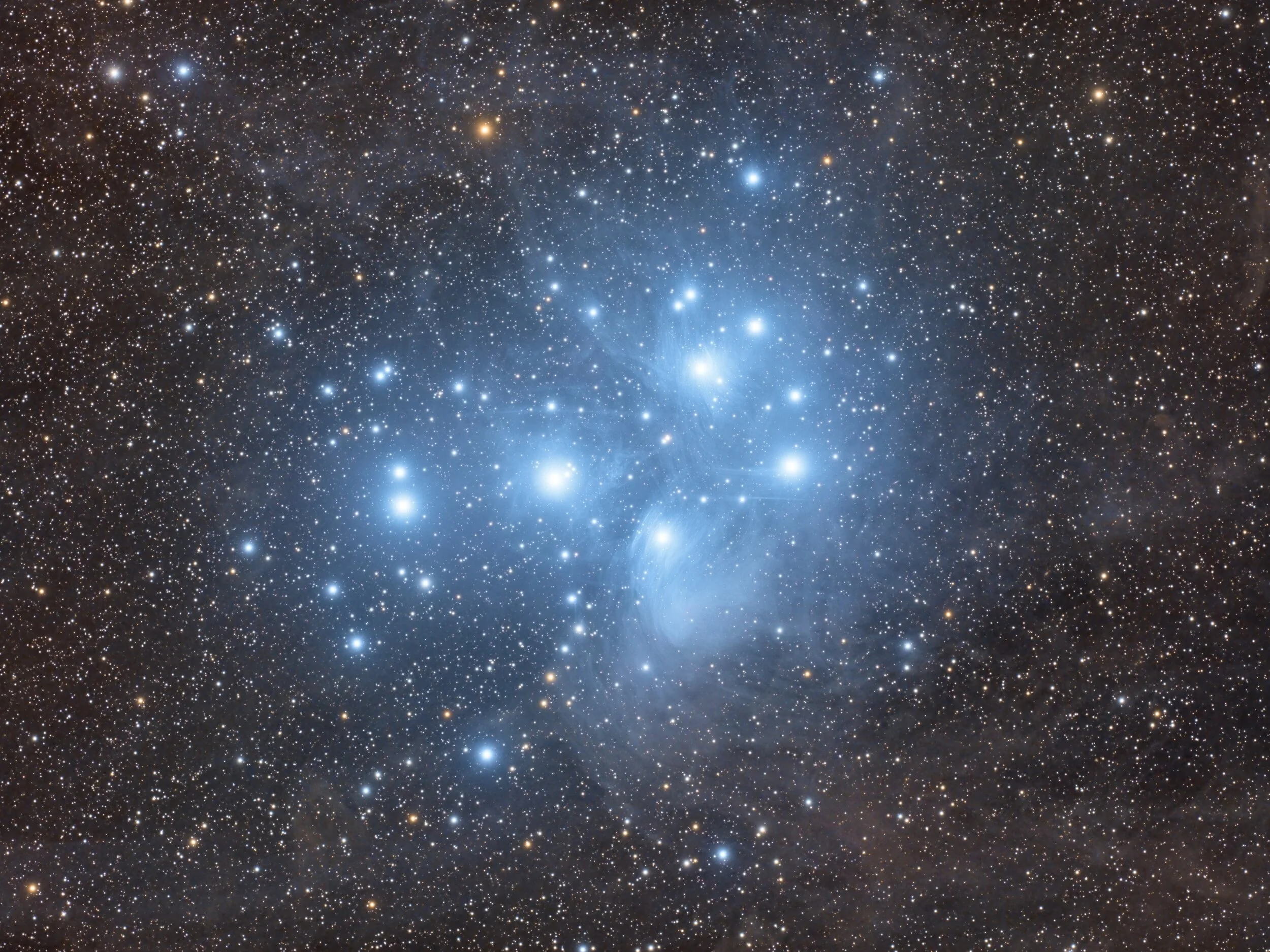
Seven Sisters in a Dusty Veil
Image Description and Details :
Visible to the naked eye, the Seven Sisters, or the Pleiades, is one of the best known open clusters. The blue reflection nebula around it is a popular target for imagers. Very deep images, like this one, show the surrounding faint clouds and tendrils of dust as well as some red H(II) emission regions.Acquisition, focusing, and control of Paramount MX mount (unguided) with TheSkyX. Focus with Optec DirectSync motor and controller. Automation with CCDCommander. Equipment control with PrimaLuce Labs Eagle 3 Pro computer. All pre-processing and processing in PixInsight. Acquired from my SkyShed in Guelph. Average transparency and average seeing. Data acquired December 6, 2020 – February 9, 2020 under a moonless sky.Takahashi FSQ-106 ED IV @ f/5 and QHY367C Pro one-shot colour camera with Optolong UV/IR filter.123 x 5mTotal: 10hr15m Image scale 1.9 arcsec per pixel.
Copyright: Ron Brecher
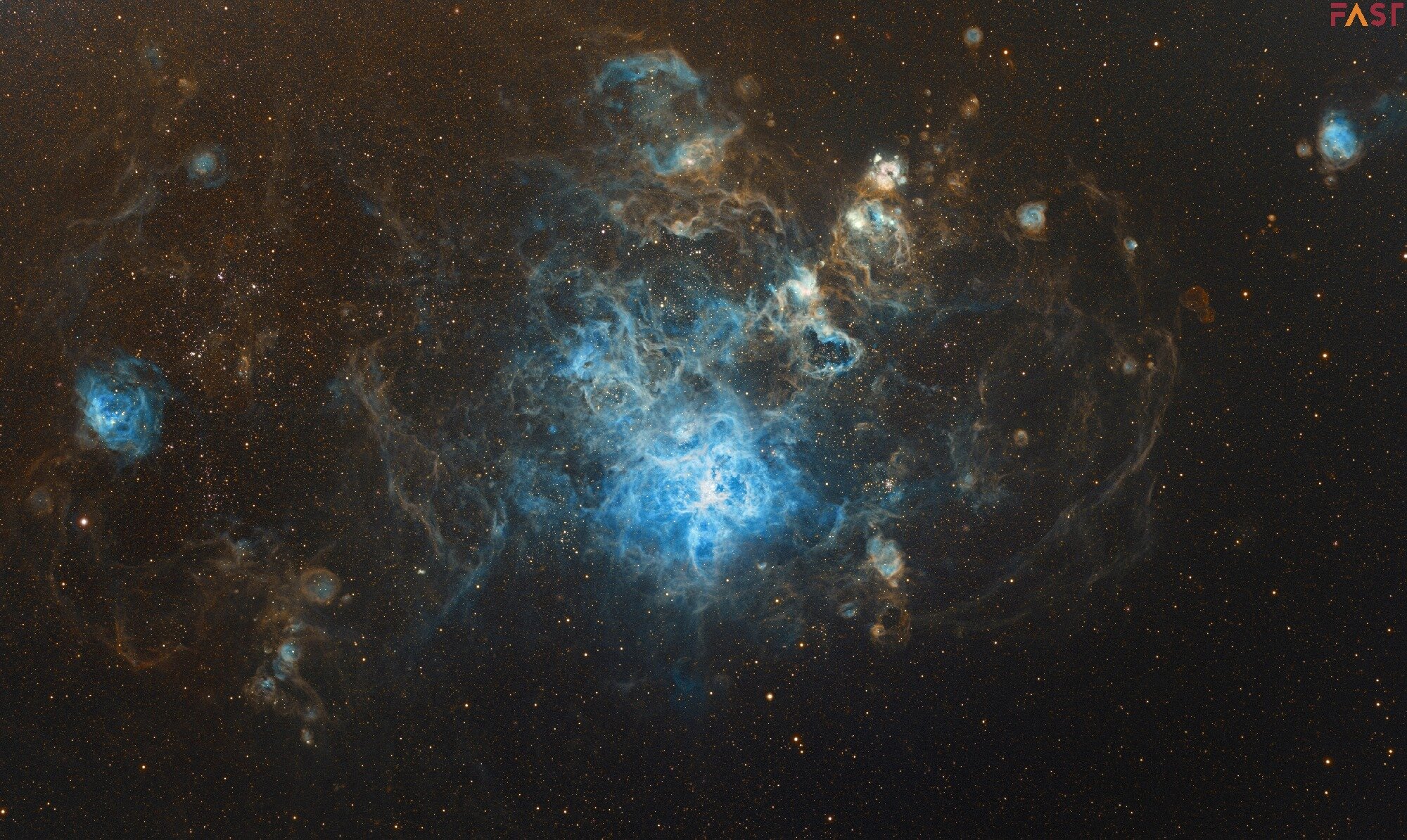
Tarantula nebula and beyond
Session automated with #FAST
Takahashi FS60c
ASI1600MM Pro
7 Position FW, 36mm
Feather Touch Starlight
Pegasus Astro
EQ6
Astronomik Ha 6nm: 140 ∙ 420s (gain: 139.00) -10C bin 1x1
Astronomik Ha 6nm: 10 ∙ 600s (gain: 139.00) -10C bin 1x1
Astronomik S2 6nm: 86∙ 420s (gain: 139.00) -10C bin 1x1
Astronomik O3 6nm: 96 ∙ 420s (gain: 139.00) -10C bin 1x1
Total exposure: ~39 hours
Location:
Colombari's Terrace, Belo Horizonte, Minas Gerais, Brazil
FAST · PSCS5 · Pixinsight
September - October - November - December 2020
January 2021
Copyright: Roberto Colombari
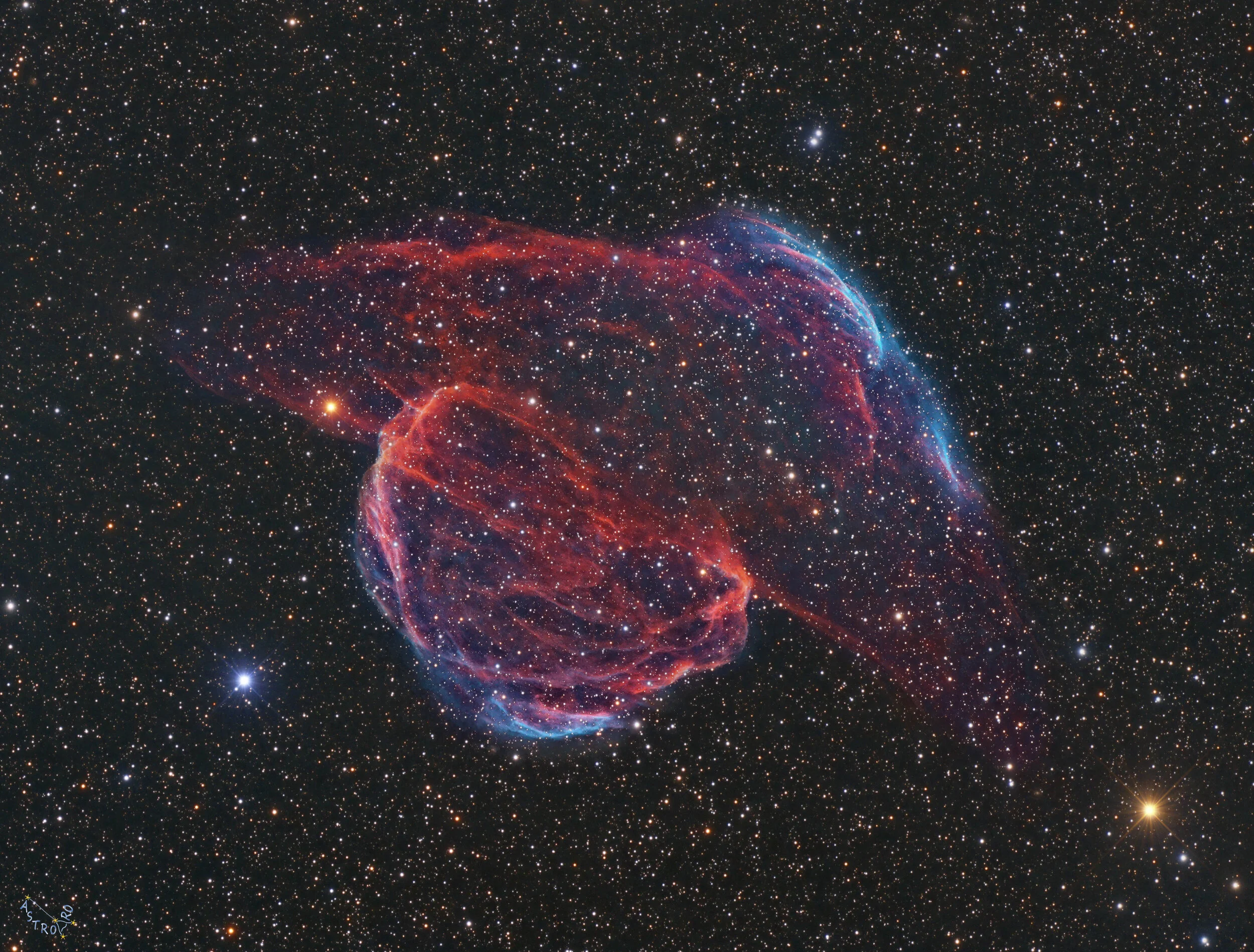
Sh2-224
Image Description and Details :
Sh2-224 in HOOlrvb made by Team ARO (astroaro.fr website) in Southern Portugal, Dark Sky Alqueva area. Francis Bozon, Jean-Luc Gangloff, Stéphane Gueyraud. Sh2-224 is a very weak supernova slash in the constellation of the Auriga, with an unusual shape.The acquisition of this photo was made with a Fsq 106 scope on ArEq6 Pro mount and Asi 1600MM camera.
The exposure times are as follows:Ha= 219X300''S2=112x300''O3=179X300''Luminance= 19x60''Red= 21x90''Green =20x60''Blue=23x60''That is a total time of about 33 hours
Copyright: TEAM ARO (Francis Bozon, Jean-Luc Gangloff, Stéphane Gueyraud.)
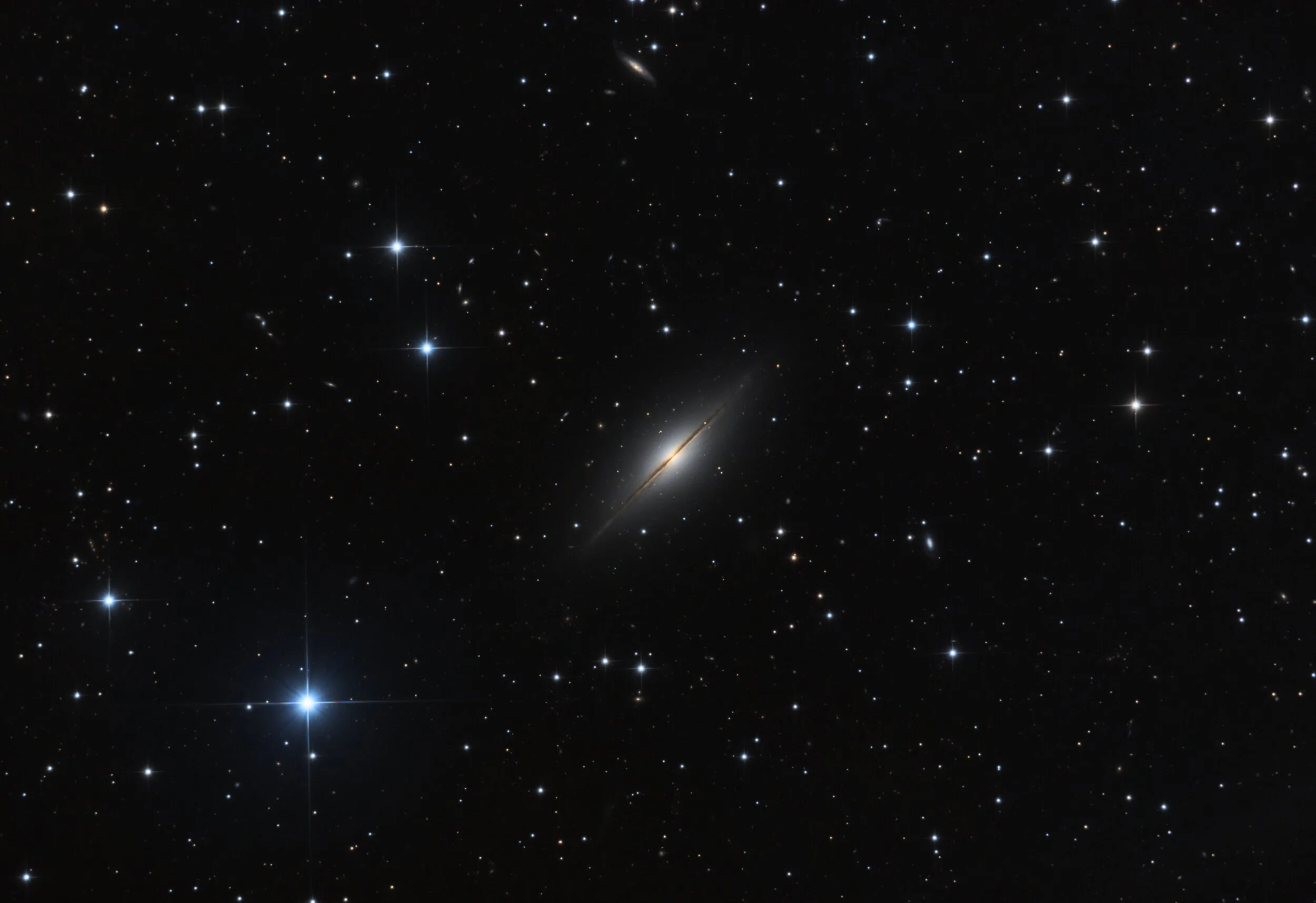

NGC 6888 Crescent Nebula
Image Description and Details : I photographed this composite image during July-August 2020 in my private observatory (Russia, Moscow region, Makeikha SQM 20.70 mag./arc sec2; Bortle class 4).Technical Data:Telescope: SkyWatcher Quattro 8SShooting Camera: ZWO Optical ASI 1600-MM COOLEDMounts: SkyWatcher EQ 8 PRO MountTelescope Guides: SkyWatcher EvoGuide 50EDGuide camera: ZWO ASI ZWO 120mm miniFocus Reducers: TeleVue Paracorr Type-2Program: Ivan Ionov Fitstacker · by Christian Buil Iris 5.59 · Fitswork 4 · Adobe Photoshop CS 5.1Filters: Astronomik LRGB 1.25 "the Type IIc · Baader Planetarium OIII 1.25" 8.5nm-CCD · Baader Planetarium H-alpha 1.25" CCD 7 nmFrames:Astronomik B (type 2c): 10x180" -20C bin 1x1Astronomik G (type 2c): 10x180" -20C bin 1x1Astronomik R (type 2c): 10x180" -20C bin 1x1Baader Planetarium H-alpha 1.25" CCD 7 nm: 105x600" -20C bin 1x1Baader Planetarium OIII 1.25" CCD 8.5nm: 60x600" -20C bin 1x1Accumulation: 29.0 hoursDark frames: ~ 15Flat field frames: ~ 15Offset Frames: ~ 15
Copyright: Sviatoslav Lips

The owl nebula - m97
The Owl Nebula, also known as Messier 97 (M97, NGC 3587, PN G 148.4+57.0), is a planetary nebula located in Ursa Major.
L-channel - 20 x 300 sec. bin 1x1;R-channel - 14 x 600 sec. bin 1x1;G-channel - 14 x 600 sec. bin 1x1;B-channel - 14 x 600 sec. bin 1x1;OIII- 40 x 900 sec. bin 2x2.Total integration time about 18:40 hours.
My setup: Telescope 8" Celestron Schmidt-Cassegrain (SCT) CPC800 GPS (XLT) on the equatorial wedge, focal reducer Starizona 0.75x, Feq.= 1626mm, camera Starlight Xpress Trius SX694, SX mini filter wheel, filters Astrodon LRGB E-series gen.2, Astrodon OIII 3nm.Capture and processing software: MaxIm DL6, PHD2, PixInsight, StarTools, Photoshop CC, Zoner photo studio 14.North at the top.
Copyright: Boris Vladimirovich
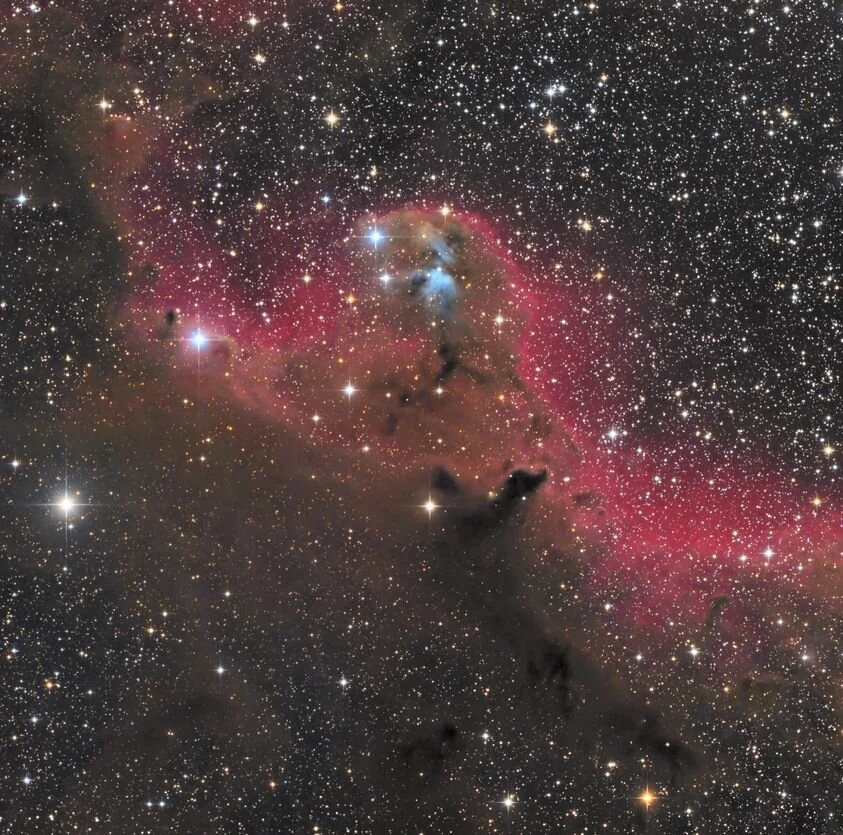
Ced 51
Ced 51 is an interesting juxtaposition of dark and light, containing dense dark nebula in the foreground abs curing portions of the greater hydrogen nebula flowing in red. Right in the middle is an active star forming region birthing new bright blue stars. Part of the greater lambda orionis ring (head of orion), this nebula complex is approximately 5000 light years from earth in the constellation of Orion, the hunter.
Technically, this was a challenge as to do the area justice, we shot a 4 panel mosaic to frame it right.
Imaging System: Planewave CDK14, Paramount ME2, FLI 16803/Chroma filters; Stellarvue SV130, Paramount Mx+, ZWO ASI533MC
Exposure – LHa/OSC, 42.7 hours
Location/Date - Fort Davis, Texas / December 2020
Credit/Copyright – Good Astronomy/Steve Timmons

Wishing Well Cluster
Image Description and Details :
Imaging telescopes or lenses: Astroworx® 12 F4 Truss Tube NewtonianImaging cameras: QHYCCD 600M ProMounts: ioptron CEM60-ECGuiding telescopes or lenses: Astroworx® 12 F4 Truss Tube NewtonianGuiding cameras: QHY5L-IISoftware: Starkeeper.it VOYAGERFilters: astrodon RGB Gen2Accessory: Nexdome ObservatoryDates:Feb. 17, 2021Frames: 40x120"Integration: 1.3 hoursAvg. Moon age: 5.36 daysAvg. Moon phase: 29.11%Data source: Backyard
Copyright: Diego Colonnello
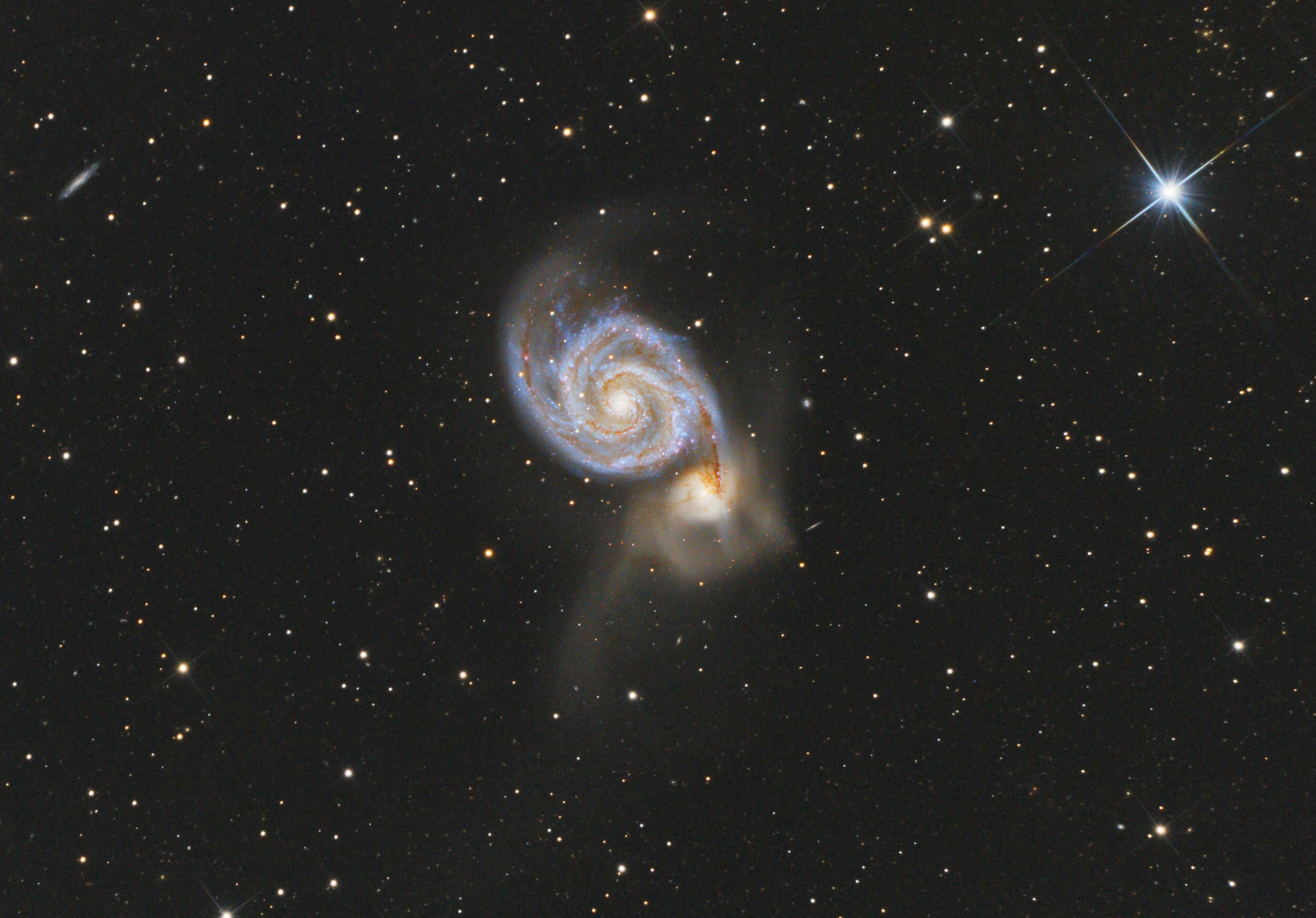
M51 - Whirlpool galaxy
Image Description and Details :
M51 is an interacting galaxy, in the constellation Canes Venati. It is one of the most beautiful example of spiral galaxy, and quite easily observed for an amateur astronomerTechnical data :Newton SkyWatcher 200/1000 EQ6-r proASI 2600 MC proComa corrector Baader MPCC Mk IIIAutoguiding OAG + ZWO ASI 290mm miniZWO EAFASIAIR Pro69*300" : 5h45'Gain 100 - Temp -20°CProcessing PixInsight + Photoshop CC
Copyright: Yann Mevel
Pickering 's triangle
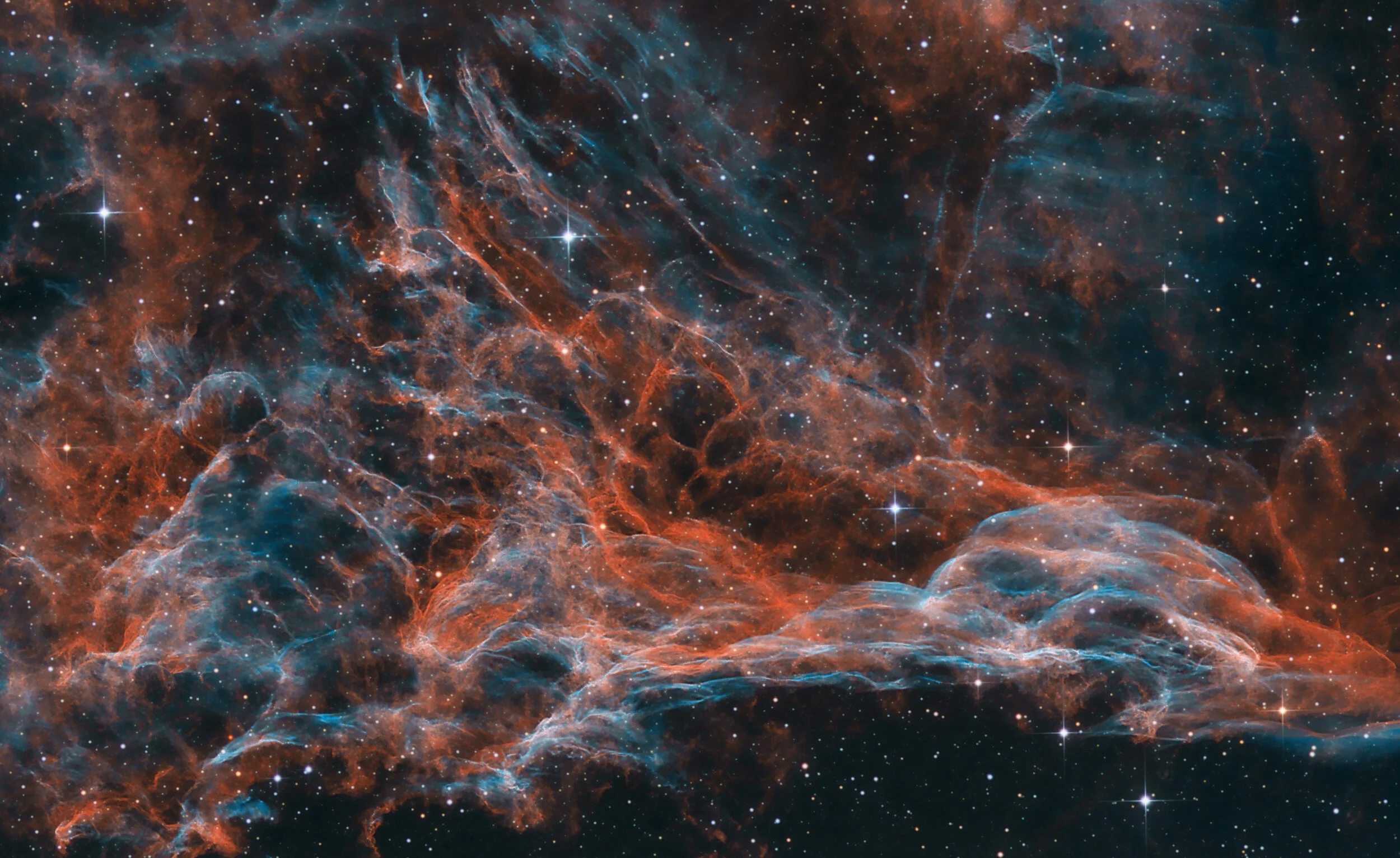
Image Description and Details :
Taken in the South of France , near Ventoux mountain, Newton 300mm F4 with the ZWO ASI6200, mix SHO and RGB starsMosaic of 2 panels in SHO and RGB stars:178 Halpha subs @300s gain 100 and -15°C99 OIII subs @300s gain 100 and -15°C20 Blue subs @60s gain 100 and -15°C20 Green subs @60s gain 100 and -15°C20 Red subs @60s gain 100 and -15°CTotal exposure 24h05
Copyright: Arnaud Peel

Messier 101 - The Pinwheel Galaxy
Image Description and Details :
A spiral galaxy 21 million light-years away in Ursa Major. It is evaluated containing a trillion of stars and it is estimated twice the size of our own galaxy. The image is taken with a SCT C8 and SX694 mono camera in RGB (4 hours per filter). Processed by Pixinsight.
Copyright: Copyright: David James
NGC4517 in Virgo
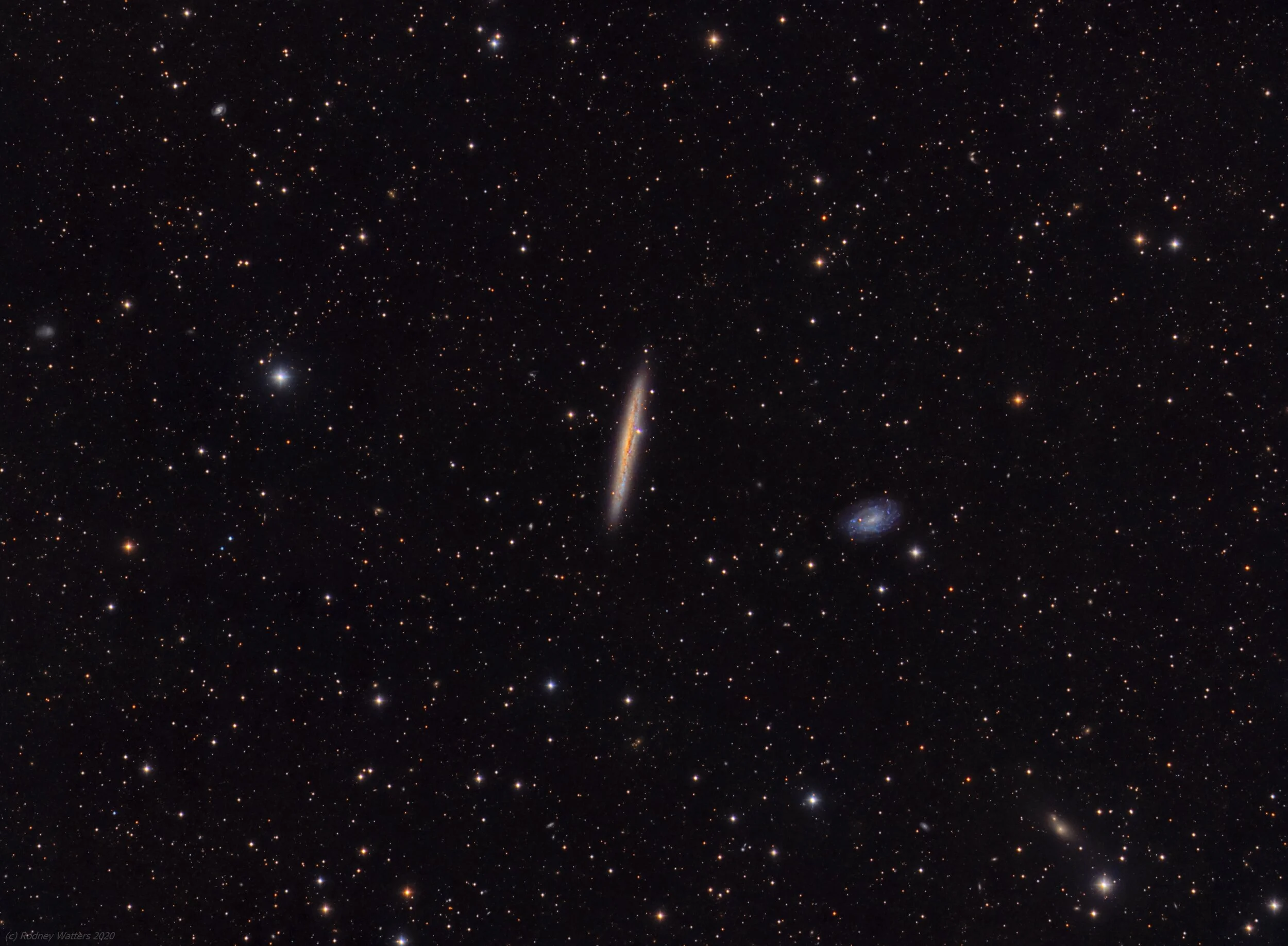
Image Description and Details :
NGC 4517 is a spiral galaxy located in the constellation of Virgo. This field is rich in galaxies and if you take the time to peer around you will find many lurking about in the background. The main galaxy in the image displays a quite noticeable dust lane down the center and blue areas which are most likely groupings of young hot stars. NGC 4517 is about 40 million light years from Earth. The galaxy across to the right between 3 and 4 o'clock is NGC 4517A. NGC 4517 in the center of the image is an edge on spiral and NGC 4517A across to the right is a face on spiral galaxy. The two of them make for a fine display.Technical Details:Title: NGC4517 in VirgoObject: NGC4517Photographer: Rodney WattersTelescope/Lens: Tak TSA120 @ F5.6Camera: QSI683 WS8Filters: Astronomik R, G & BExposure: R = 53 x 600” ; G = 33 x 600” ; B = 31 x 600”Total Exposure: 19.5 hoursImage acquisition: Sequence Generator ProProcessing: Pixinsight 1.8.8-5
Copyright: Rodney Watters
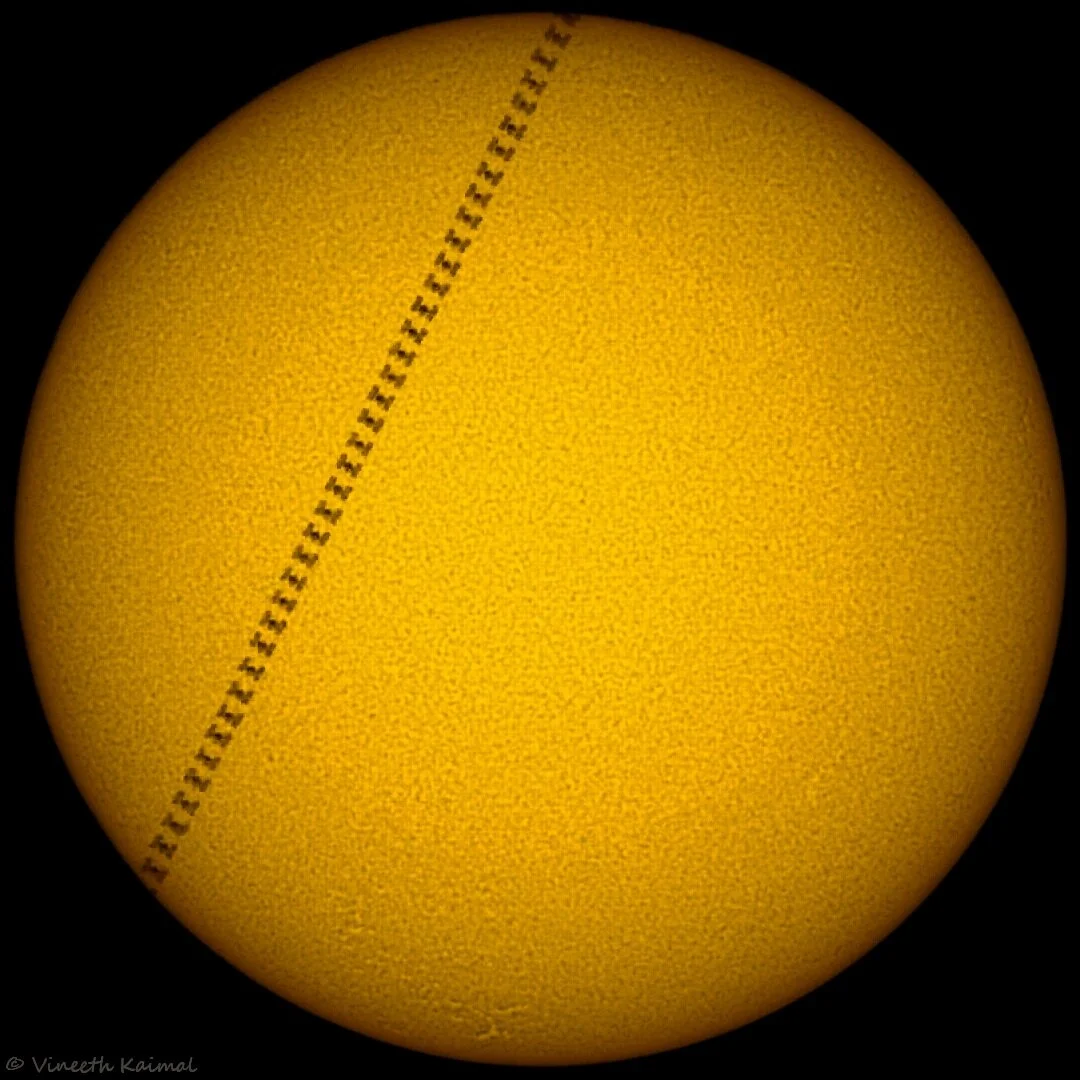
ISS Solar Transit
This image shows the transit of ISS over the Sun captured from Bengaluru, India on 29-Jan-2021. The transit was captured at 60fps - so you can actually estimate the transit time by counting the number of stations you see - roughly 39/60 of a second. All frames of the station have been merged with a stacked image of the sun from the same video as the station capture (50% of ~9000 frames).Equipment: iOptron CEM25P, GSO 6 Inch F5 Newt, Baader Solar Filter, Nikon 1 J5Software: PIPP, Autostakkert, Registax, Gimp
Copyright: Vineeth Kaimal
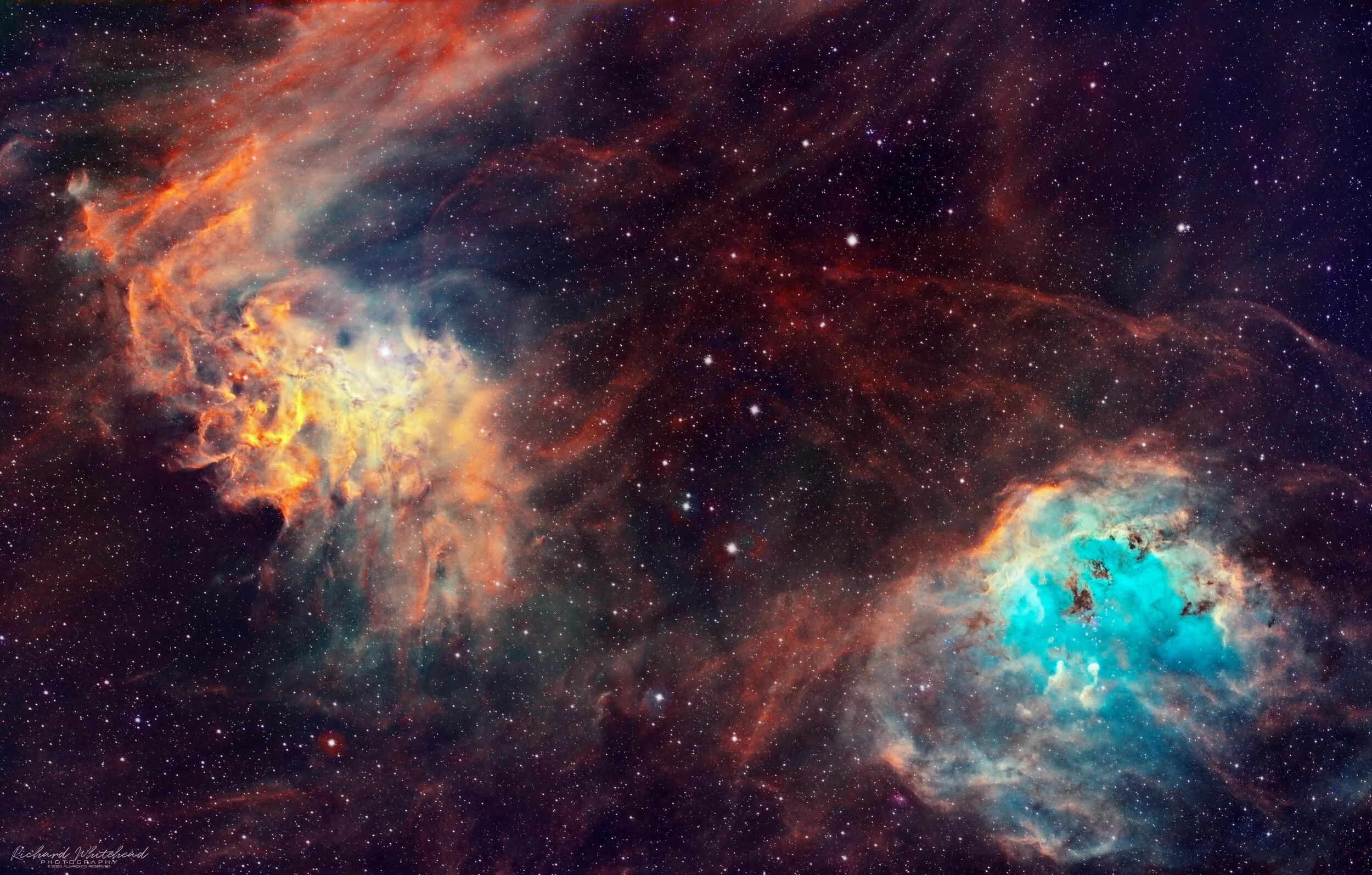
Tadpoles and Flaming Star Nebulae
Image Description and Details :
The Tadpoles Nebula (IC410) and Flaming Star Nebula in the Constellation of Auriga.I took this HaSHO image last week on a very rare almost clear night. In fact it was the clearest night in northern Vermont since last July!. Rather than completing some earlier projects I thought I’d shoot something entirely new, and go for these subjects as they (almost) fit on the same frame at 620mm focal length..The Tadpoles Nebula is so called due to the two light colored tadpole shaped dust and gas clouds that look like they are swimming upwards to the center of the nebula. These are star forming regions, similar to the famous “Pillars of creation” imaged by Hubble in the Eagle Nebula.To get an idea of scale each tadpole is 10 light years long!, more than twice the distance the earth is from its nearest stellar neighbor, Proxima Centauri.To the left is the Flaming Star nebula ( IC 405) which surrounds the variable star AE Aurigae. AE Aurigae is a “runaway” star ejected from gravitational perturbations in the Orion Nebula more than 2 million years ago.Its interesting to note that although these two nebulae appear close together the flaming star is 1500 Light years distant, whereas the Tadpoles Nebula is 12,000 lightyears away and over 100 light years across.This image is processed in the “Hubble Palette where red is aligned with Sulphur emissions, Green with Hydrogen , and Blue with Oxygen .Tech Data : Celestron RASA 11”, CGX Mount, ZWO ASI 6200MMPro cooled (Mono) camera.Ha 12 x 5min, OIII 18 x 5 mins, SII 9 x 5 mins, darks, flats, bias framesSoftware: Stacked in DSS, Processed in Pixinsight and PS 2021
Copyright: Richard Whitehead