

AAPOD2 Image Archives

A Cosmic Mess - 80 hours of M81 and M82
mage Description and Details :
This 80-hour image shows a deep look into the area of the two galaxies M81 and M82 and surroundings. The well known Integrated Flux Nebula shows a lot of detail Arp's loop is clearly defined. Another very interesting part were the H-Alpha observations. Nothing new, really, but rarely shown in a field this wide. For one the "Cap of M82". Its a small area of glowing hydrogen next to M82, likely associated with the Starburst.The small galaxy Holmberg IX also showed a lot of hydrogen signal, that's why it almost looks purple instead of the "usual" blue.The image was taken from January through April 2021, in 11 different nights. Roughly 2/3 of the data was acquired from a dark site, the rest in my Bortle 6 Backyard. Image details: 80 hours total integration time 21h Luminance 8h Red8h Green8h Blue35h H-AlphaCelestron RASA8 Skywatcher EQ6QHY 183M Processing mainly done in PixInsight, though some in Photoshop
Copyright: Julian Shroff
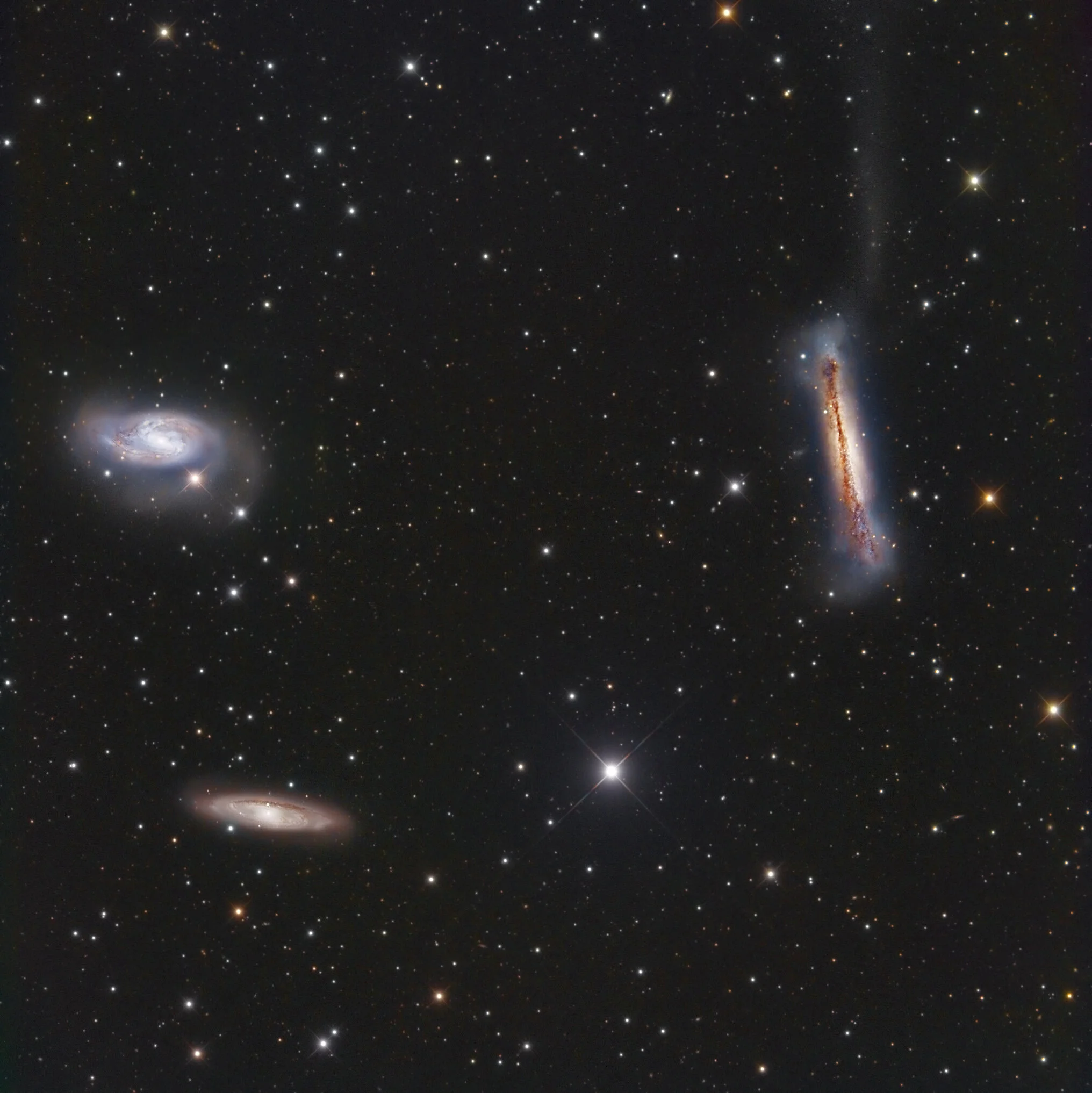
Léo Trio
Image Description and Details :
The Leo Trio is a small cluster of interacting galaxies located about 35 million light years from Earth.On the left-hand side of the image, the near-vertical bar with a thin band of black dust represents the galaxy NGC 3628, magnitude 9.5, seen from the edge. It is also known as the Hamburger Galaxy.Messier objects M 65 (NGC 3623), magnitude 9.3, below the upper right-hand corner, and M 66 (NGC 3627), magnitude 8.9, to the left of the lower right-hand corner, are tilted enough for their spiral arms to be visible.This image was taken in Perche-Normandy France.The total acquisition time is 5h15 in L,R,G,B.The image was taken with a Newton 250-900 telescope (F/D 4), Moravian G2 4000 camera on EQ8 Skywatcher mount
Copyright: Francis Bozon
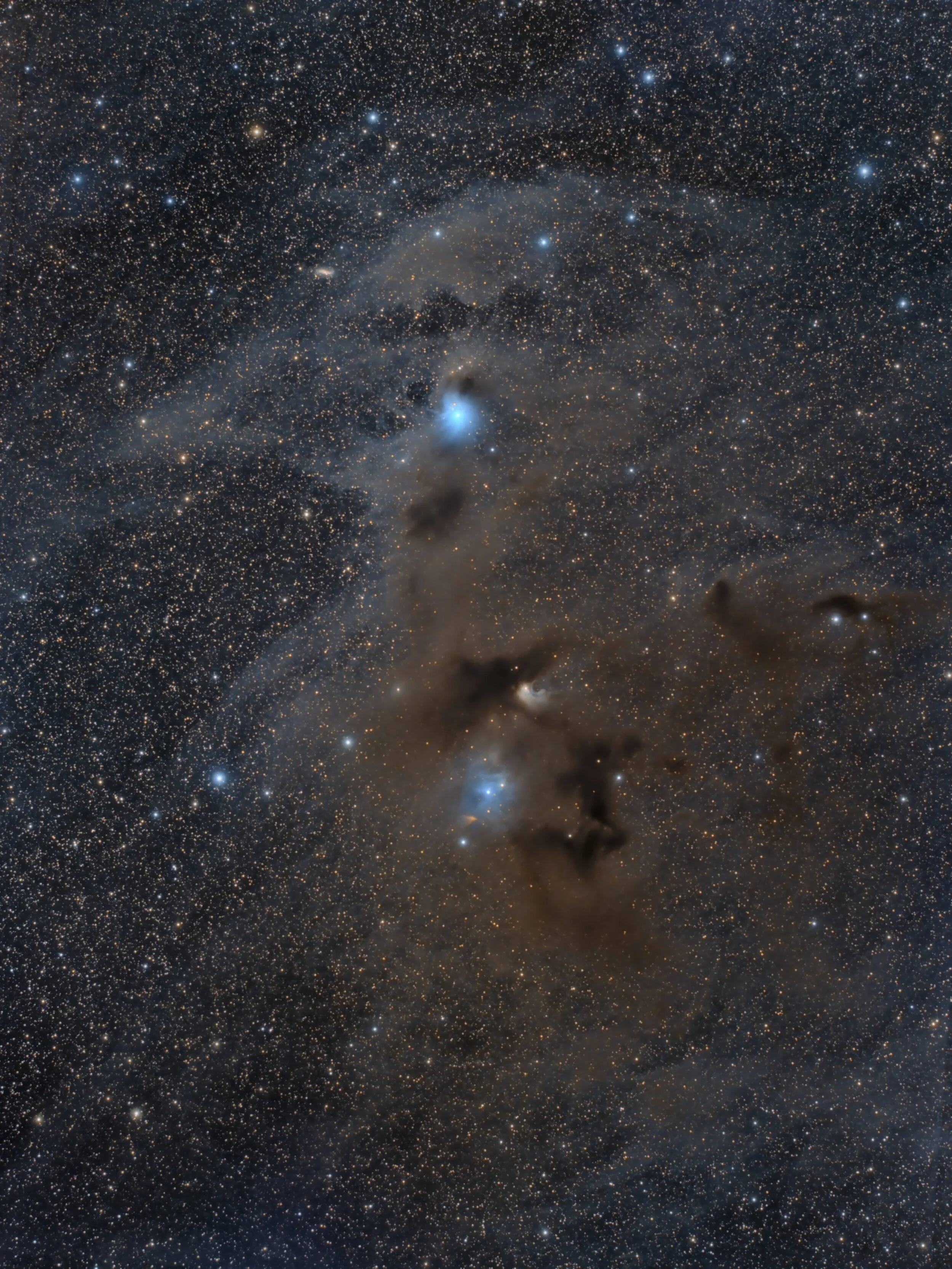
Cederblad 111
Image Description and Details :
I share this capture made in March Cederblad 111 (Ced 111) is a blue reflection region in the southern constellation of Chamaeleon and is part of one of the closest (550 light years) dark cloud complexes to the Sun. Taken from Huinganes / Machalí / ChileTelescope: Askar FRA400 F3.9 Mount: iOptron CEM70-GCamera: QHY163CFocuser: Primalucelab SestoSenso 2 RGB: 78 x 600” 13hrsSoftware: SGP PHD2 PixInsight
Copyright: Claudio Ulloa

Barnard 344 / LBN 234
Image Description and Details :
This region, which stretches for about 50 light years, is part of the Gamma Cygni Nebula, about 1,800 light years away. Barnard 344, a dark dust cloud rich in cold molecular gas, is to the left of the image. LBN 234, a wall of dust and hydrogen gas forms a line to the right of the image.Caméras d'imagerie: ATIK 314L+Monture: HEQ5 PROInstrument de guidage: ORION ShortTube 80x400Caméra de guidage: QHY 5-IILogiciels: PixInsight · Kstars · Photoshop CS6Filtres: Baader HA 7nm · Baader OIII 8,5 nm · Baader S-II 8 nmDates:20 août 2019 , 23 août 2019 , 28 août 2019Images unitaires:Baader HA 7nm: 50x600" -5C bin 1x1Baader OIII 8,5 nm: 50x600" -5C bin 1x1Baader S-II 8 nm: 50x600" -3C bin 1x1Intégration: 25.0 heures
Copyright: Dom .
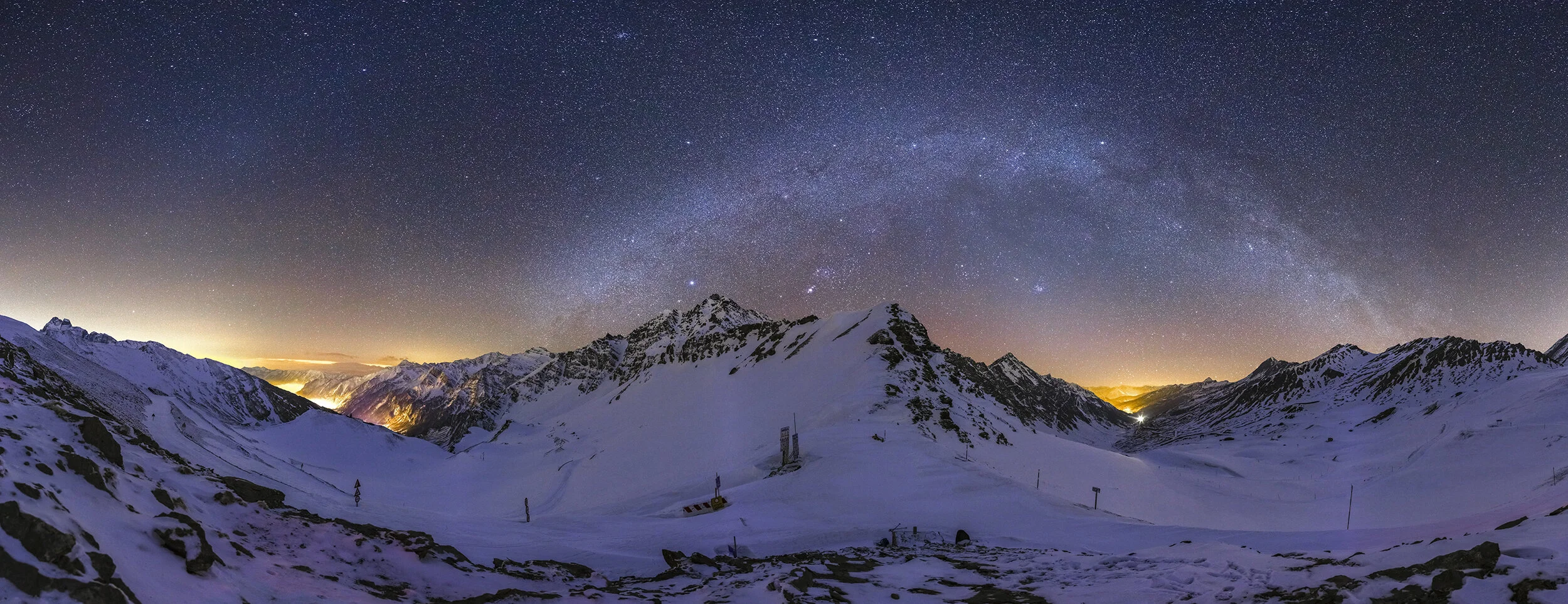
On the border between italy and france
ge Description and Details : During this winter, I decided to photography the winter Milky Way from one of the highest passes in europe : the Agnel pass.During the winter, you can go to this pass on skis or on foot but not by car. I left at 2.30 p.m. from the bottom to climb the 700m of vertical drop over 9km to go skiing.I was alone at an altitude of 2700m. During the night, the temperature was -13°C without wind.I started to ski down around 11.00 p.m under the stars._________________DETAILS Canon 5D MKIII + Samyang lens 24mm f/1.4 on tripod.Sky : panorama of 31 photos.Each photo is a one shot (exposure : 13 seconds, f/2.8, ISO : 4000).Foreground : panorama of 16 photos. Each photo stacked of 4 images (exposure : 4 * 60 seconds, f/2.8, ISO : 4000).
Copyright: Jeff Graphy
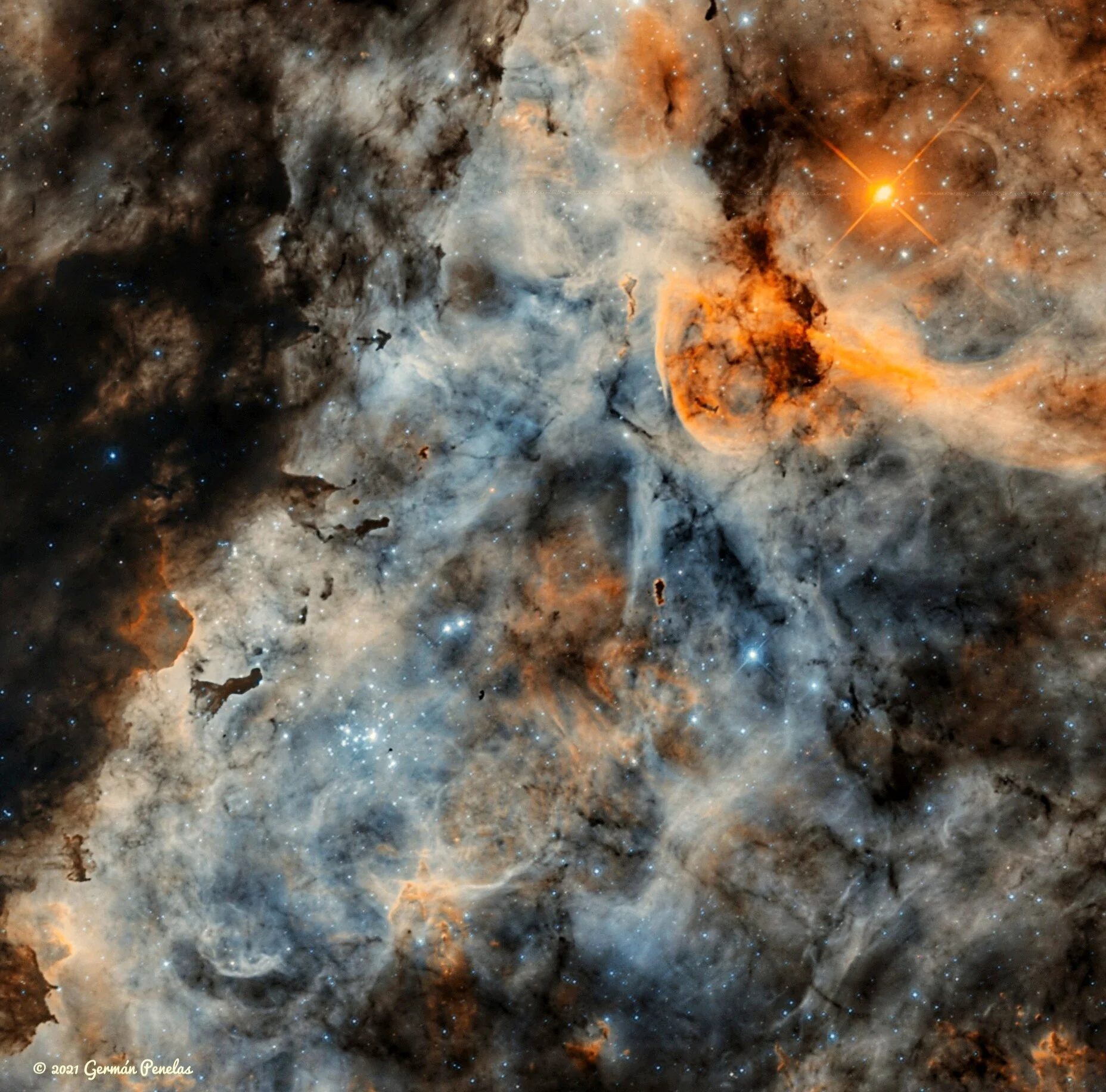
The Keyhole Nebula and Mystic Mountain in the Carina Nebula
Image Description and Details :
In the southern skies there is a nebula four times larger than the Orion nebula called the Keel or Carina nebula, NGC 3372. It is an emission nebula that is located about 8,500 light years from Earth in the arm of Carina Sagitarius of the Milky Way.Inside the Nebula there are very interesting objects such as the star Eta Carinae with a size around 150 times the Sun, the Mystic Mountain in the center that are pillars of dust and gas, and up between the great star and the mountain the Keyhole nebula a dark area of dust.The image is made from a 20" remote telescope located in Namibia with a monochrome camera with H alpha and OIII filters. It is almost four hours processed in a HOO palette with Pixinsight and PS.The photo is a cutout of the full frame format
Copyright: GERMÁN PENELAS PEREZ
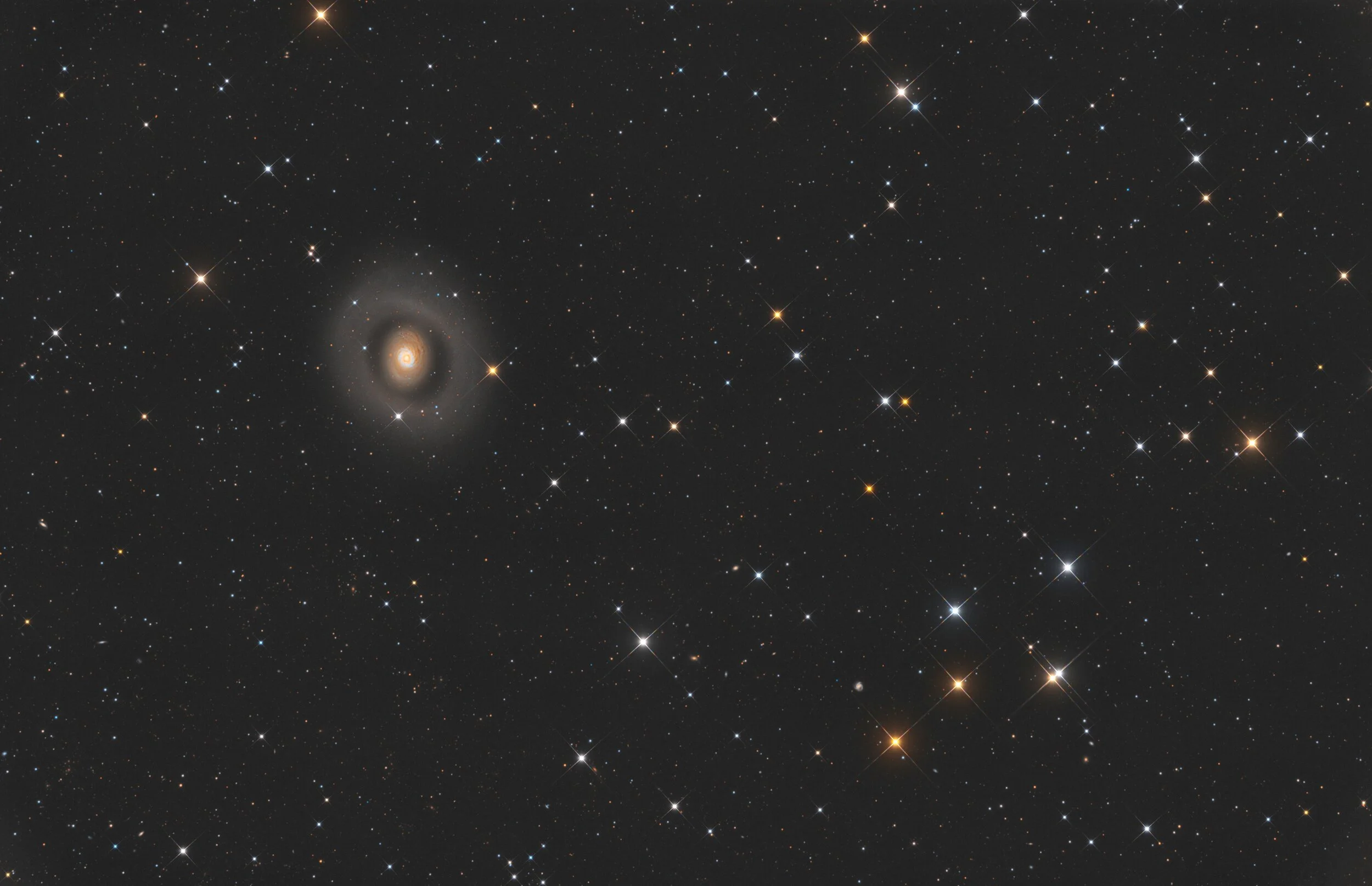
M94 and its galactic halo
Image Description and Details : ASA10"Paramount MyTCanon RaTotal exposure : 31hrs78x60" ISO400311x300" ISO80045x300" ISO1600AstroPixelProcessor Pixinsight and Photoshop.
Copyright: Thomas LELU
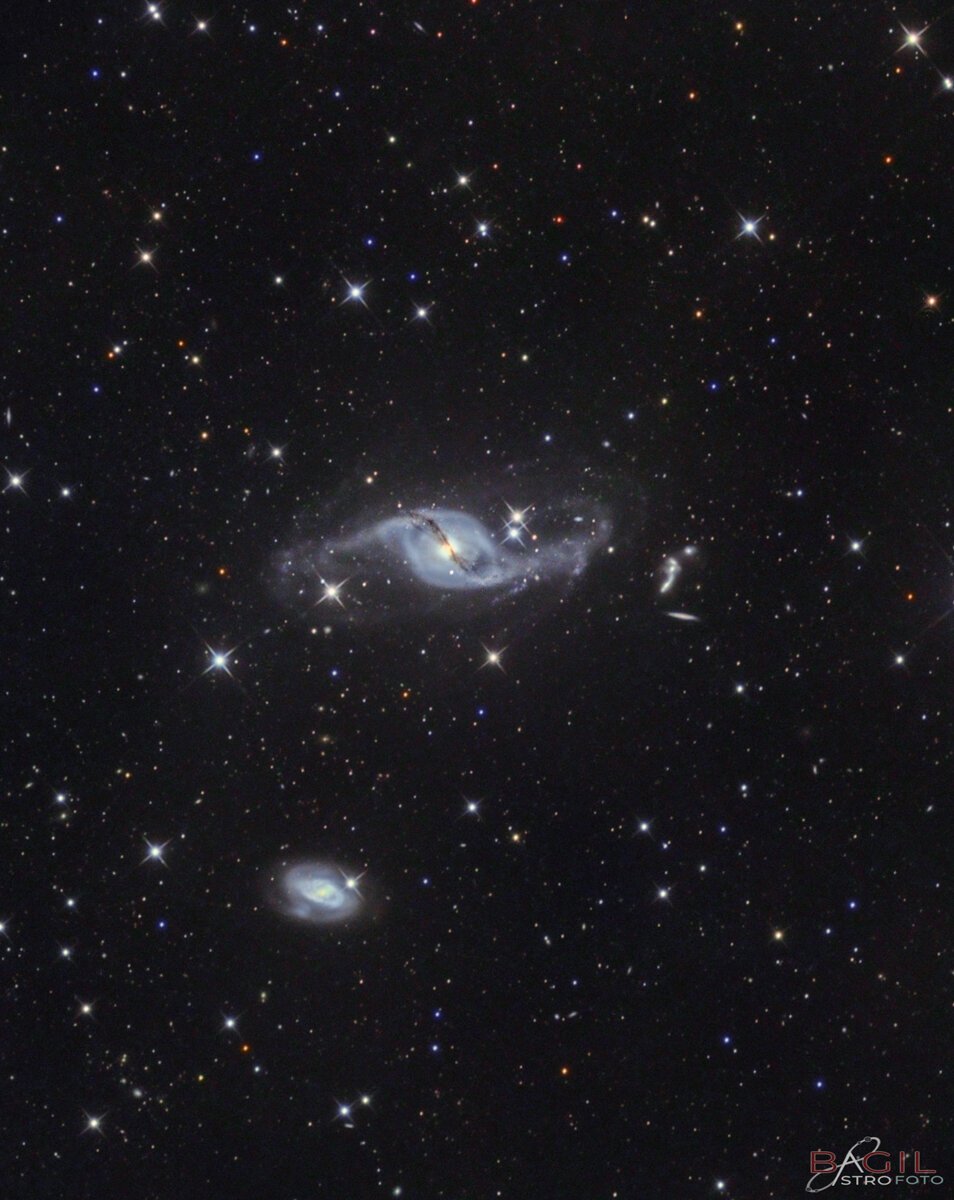
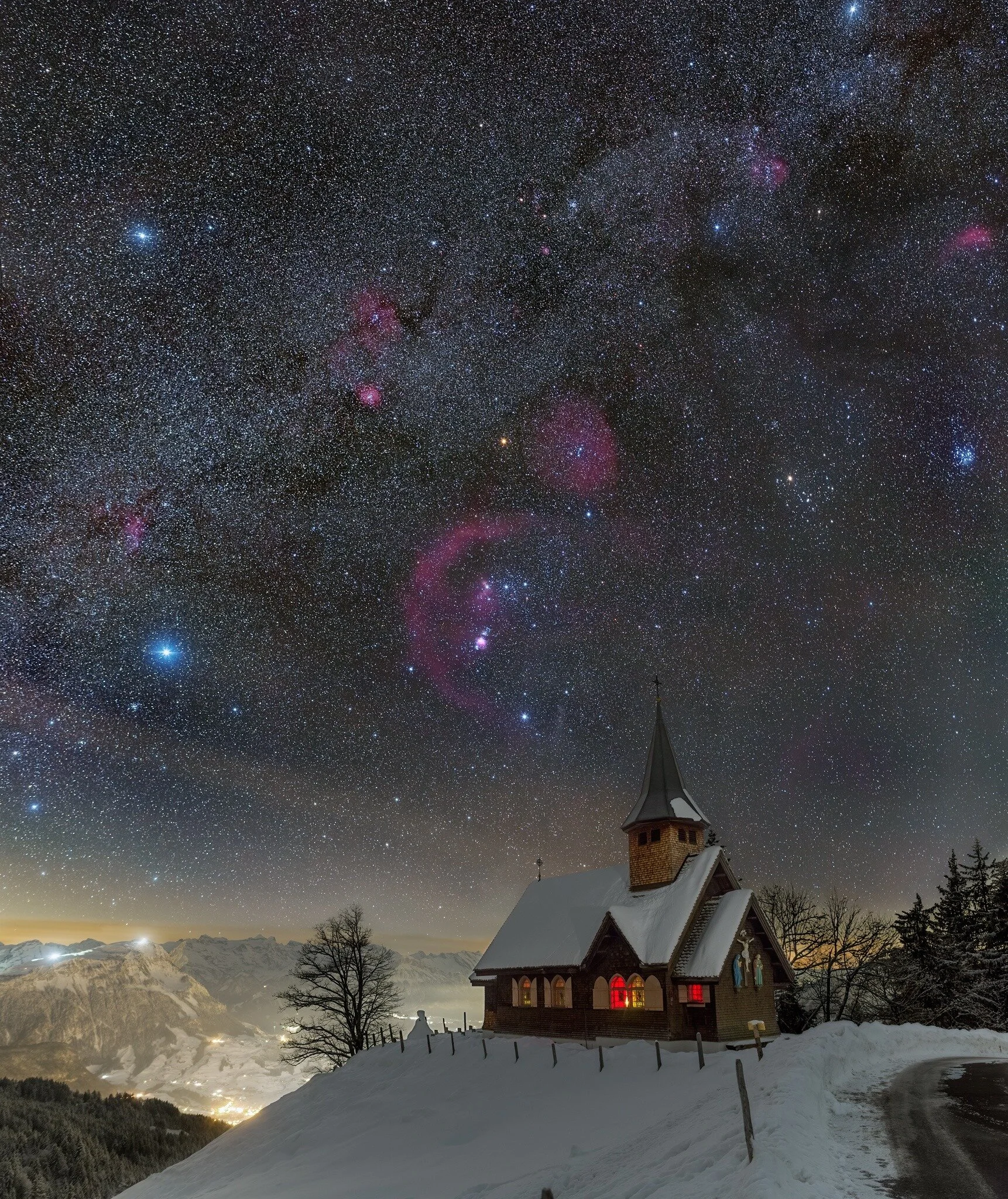
Tranquility under Sparkling Skies
This chapel with a breathtaking view of the Swiss Alps not only is one of the most tranquil places I know, it is also perfectly oriented for astrophotography. The reasonably dark sky allowed me to capture it under the setting winter Milky Way with its wonderful plethora of red emission nebula.
EXIF
Canon EOS 6D, astro-modified
Samyang 24mm f/1.4 @ f/2
iOptron SkyTracker Pro
Sky:
2 panel panorama, each a stack of 21 x 30s @ ISO1600, tracked
Foreground:
24 x 30s @ ISO1600
Copyright: Ralf Rohner
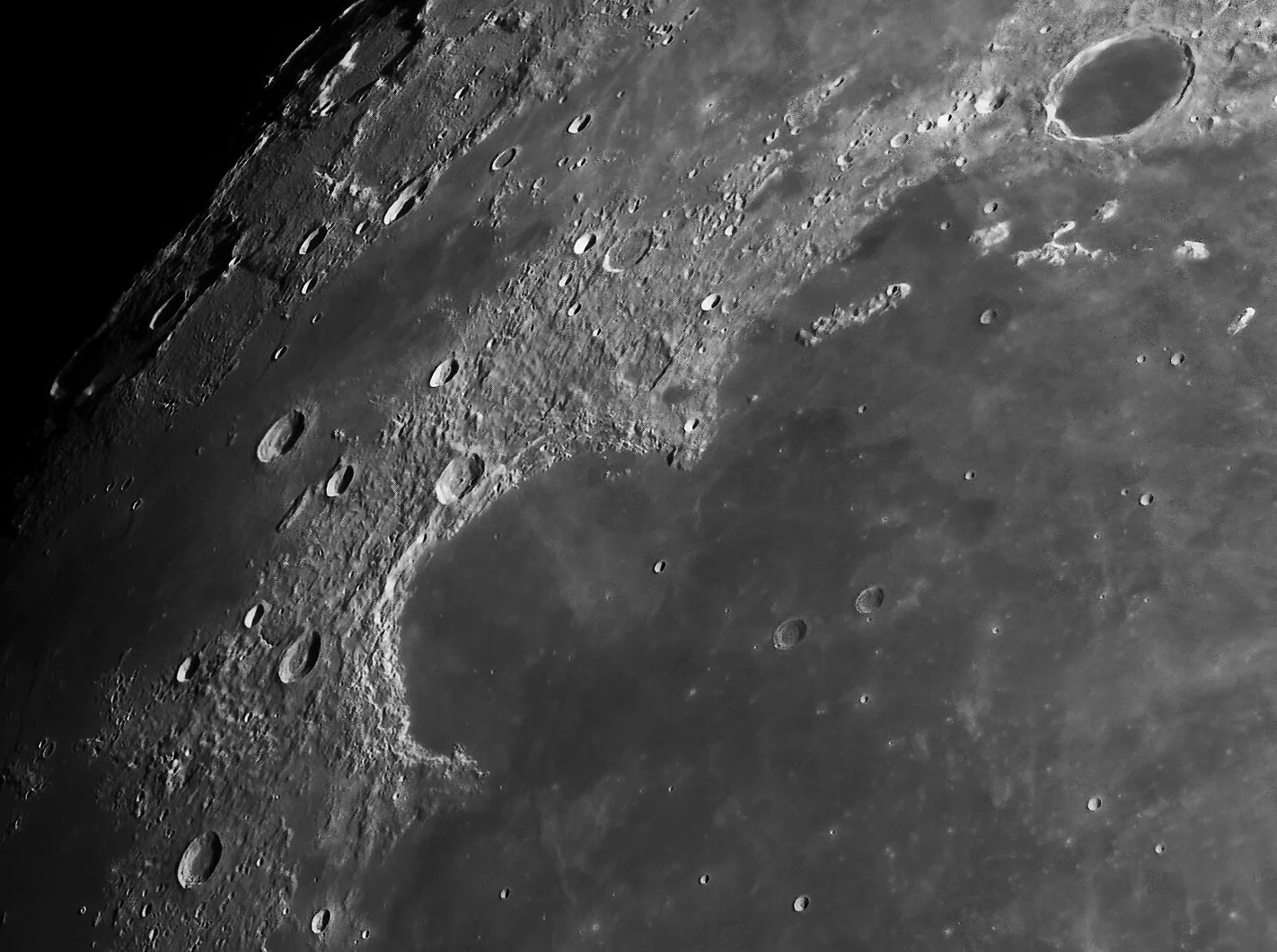
Sinus Iridum to Plato
Image Description and Details :
Sinus Imbrium to PlatoSinus Iridum (“Bay of Rainbows”) to crater Plato on the northwestern rim of Mare Imbrium. Out in the lava sea, Montes Recti (“Straight Range”) points toward Montes Teneriffe just below Plato (“Tenerife Mountains”, as in the Canary Islands. These isolated mountains form part of an inner impact uplift rim of Imbrium, gouged by an asteroid estimated at 236 km across.Santel MK-91 230 mm f/13 Maksutov-Cassegrain (FL 3,000 mm) on an AP 900 mount, from January 25, 2021. Camera: FLIR Grasshopper 2 GigE; Best 1,600 of 13,200 frames at 22 FPS, from Ossipee, New Hampshire.
Copyright: Robert Gillette

ISS TRANSIT
Image Description and Details :
I was able to photograph the iss again 4/2. I planned the shot about 3 weeks ago and with a little luck I was able to take it today at 4:41 pm. This is my 4x ISS transit photo, and every time I am fascinated and excited at the same time
Lunt LS80 DSII & Coronado BF30 Blockfilter
Rainbow RST-135
QHY5III174M Cam
Hutech Hinode Solar Guider
Meade Series 5000 2x Barlow
Copyright: Mehmet Ergün

Polar Alignment
150x 100sec images for the trails, 3x 1 second images of my scope, lightly light painted
Canon 6D and Samyang 135mm f2 @ f2.8
Copyright: Carl Gough

NGC 1398 Galaxy
Image Description and Details :
The galaxy NGC1398 is located 65 million light years away, in the constellation of Fornax.
It's diameter is about 135,000 light years, slightly larger than our Milky Way.
The nucleus of this galaxy is surrounded by a ring ; and the whole galaxy is also surrounded by an outer ring.
Image made using the 1m telescope at Chilescope in LRGB-Ha.
Setup : RC 1m - Alt-Az mount - FLI ProLine16803 - Astrodon filters - Chilescope remote facility
LRGB + Ha
Total integration : 11h20
Copyright : Jean-Baptiste Auroux
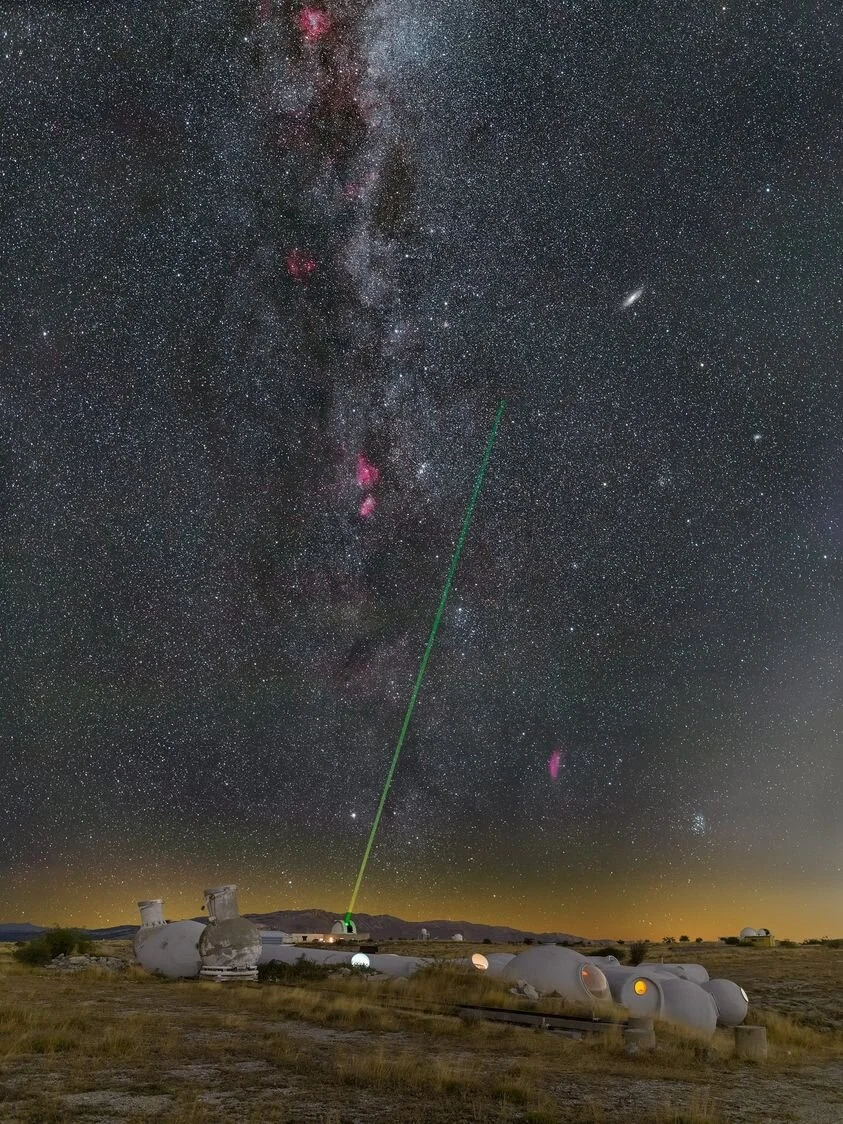
Reaching for the Stars
Have you ever wondered what a future Mars base may look like? For me, the Observatoire de la Côte d’Azur on the Plateau de Calern is the perfect model for such a station.
The futuristic looking buildings in the foreground are the working quarters of the Grand Interferometer of 2 Telescopes (GI2T) and the cupolas in the background on far right belong to the Soirdete Infrared Interferometer. The green laser is emitted from the 1.5m telescope of the MéO laser ranging observatory, which is able to track low earth orbit satellites and can measure the distance to the moon to a precision of under 1cm.
The sky above the observatory suffers from light pollution from the brightly lit Côte d’Azur and the nearby city of Nice, but still proves that the dimmer side of the Milky Way with its red Hydrogen emission nebulas, countless open clusters, dark interstellar dust lanes is sparkling with celestial wonders. The bright Andromeda Galaxy and the Triangulum Galaxy are sharing the same region of the sky.
EXIF
Canon EOS 6D, astro-modified
Samyang 24mm f/1.4 @ f/2
iOptron SkyTracker Pro
Sky:
Vertical panorama of 3 panels, each a stack of 5 x 30s @ ISO1600, tracked
Foreground:
Stack of 5 x 60s @ISO1600
Copyright: Ralf Rohner
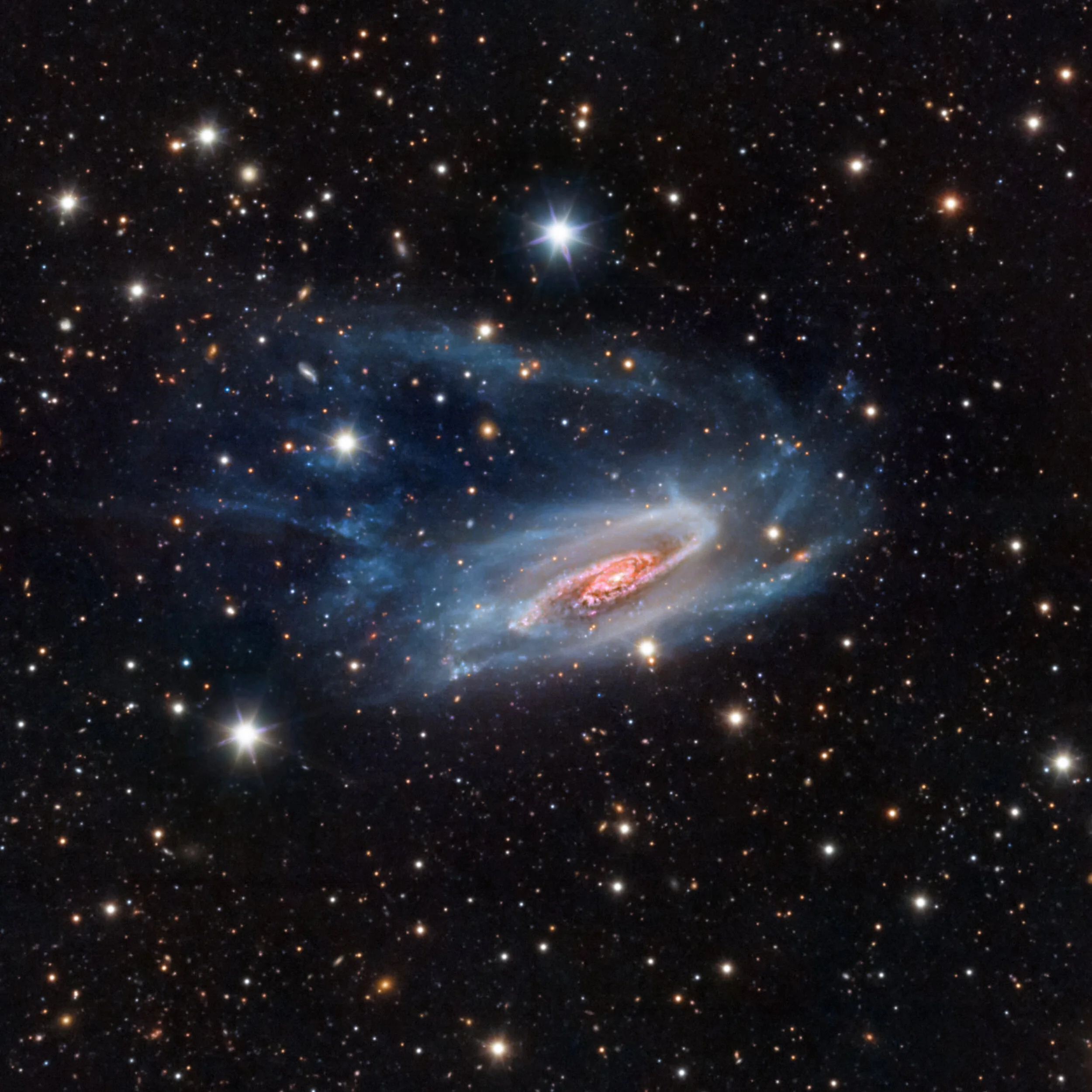
NGC 3981
Image Description and Details :
This is an image of NGC 3981. It is a spiral galaxy about 65 million light years away in the constellation Crater. Its windswept look is due to its outer arms being stripped away by an interaction with another galaxy. Telescope: ASA RC-1000AZ Camera: FLI PL16803 Mount: ASA Alt-Az Direct Drive Luminance: 33x20 minutes (binned 1x1)Red: 24x20 minutes (binned 1x1) Green: 20x20 minutes (binned 1x1) Blue: 25x20 minutes (binned 1x1)
Copyright: Bernard Miller
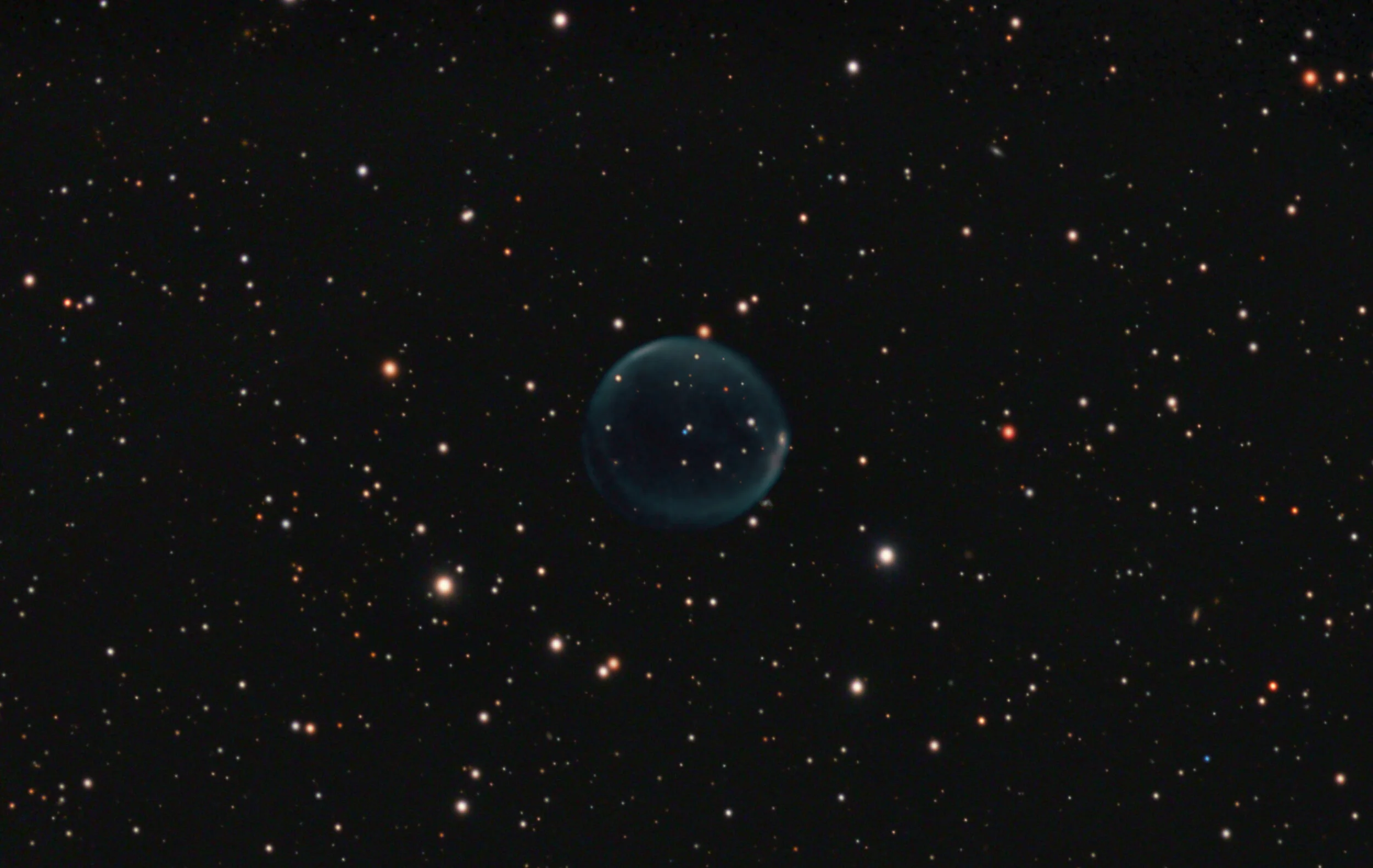
Abell 34
Image Description and Details :
Abell 34 - a large (290 arc seconds) but very faint planetary nebula about 2400 light years away in the constellation Hydra. It's western rim is accompanied by two tiny distant galaxies.Image captured on my dual rig in Spain.Scopes: APM TMB LZOS 152 RefractorsCameras: QSI6120wsg8Mount: 10Micron GM2000 HPSA total of 25.8 hours image capture (HaOIIILRGB)
Copyright: Peter Goodhew
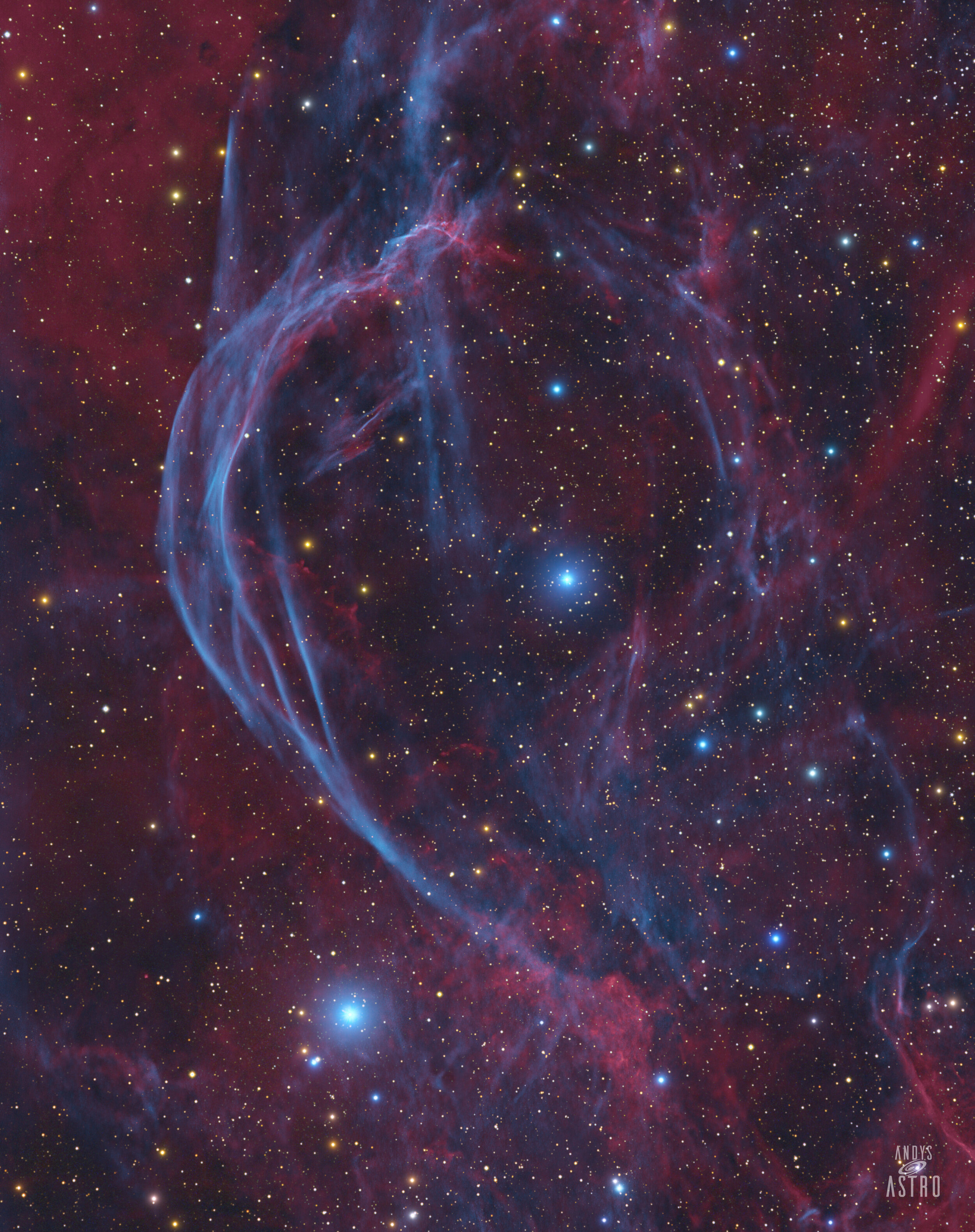
Blue Chilli Nebula
Image Description and Details :
Resembling a hot chilli these superheated blue tendrils of ionised oxygen are remnants of a spectacular supernova that occurred some 11,000 years ago.Located in Vela some 800 LY distant, this small isolated section of this vast region silhouetted against a background rich in Ha seemed worthy of attention it’s own right - as after an exhaustive search, there don’t appear to be any stand alone studies online of this beautiful waveform.Photographed over three nights from my light polluted suburban backyard in Melbourne, Australia. 🇦🇺Acquisition was made using Stellarmate on a Rpi4 Processed in App, PS CC 2021, Topaz NR Ai & Nik.Captured via Stellarmate- 15.0 Hrs HaO3RGB Average seeing, Bortle 5/6 skies.Telescope : Takahashi TOA130 Mount: Takahashi NJPCamera: QSI 6162 WSG8 Filters: Chroma Ha 5nm, Chroma O3 3nm Chroma RG&BProcessed in Astropixel Processor Topaz AI & Photoshop CC 2021
Copyright: Andy Campbell 2021
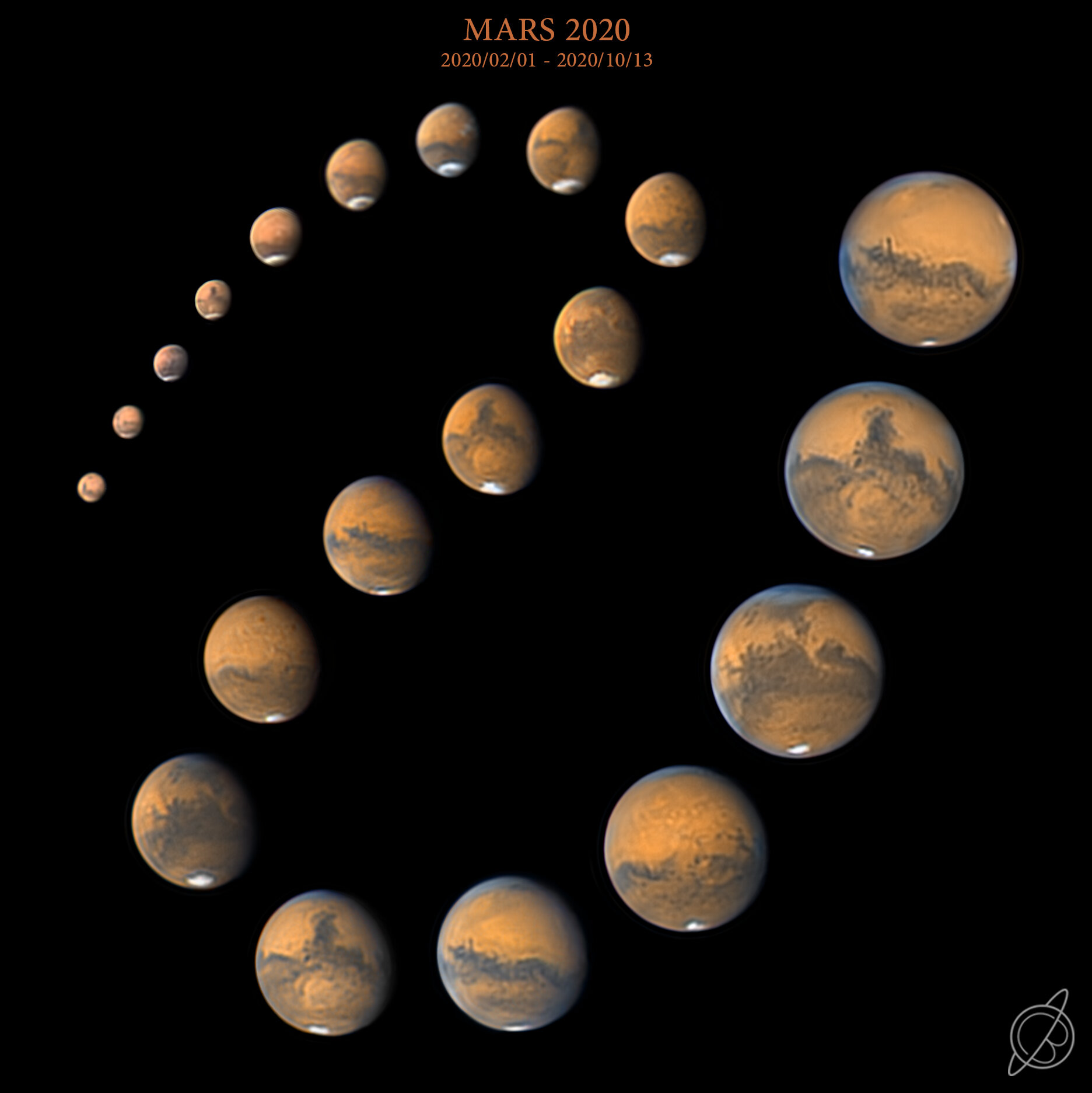
Mars: Progression to opposition
Image Description and Details :
A sequence of 20 images of Mars taken during 8 months that shows the changes of apparent size, ilumination and the southern polar cap of the red planet. From Santo Domingo, Dominican Republic.Equipment: Telescope Orion Skyquest XT8 Plus, Equatorial Platform, ZWO ASI120MC & ZWO ASI290MC, ZWO ADC, Celestron X-Cel 3x Barlow Lens.
Copyright: C. Báez
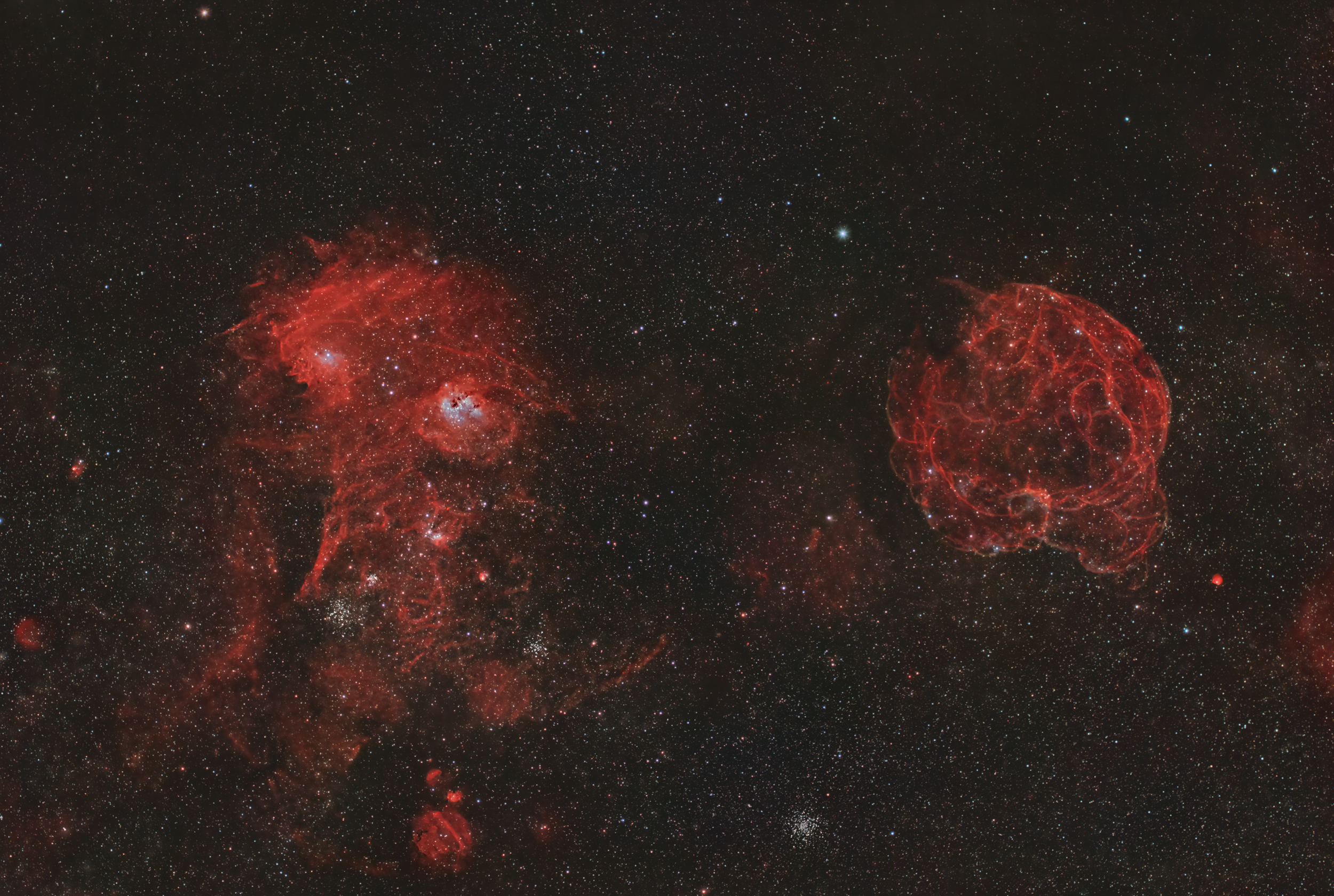
Widefield Auriga
Image Description and Details :
This was shot over the course of 18 nights, spanning 4 months (winter skies in Nashville aren't the greatest). The Canon lens was @ f/4.
The real challenge with this photo came from the Spaghetti Nebula (aka SH2-240, Simeis 147). It's incredibly dim and barely shows up in a single 20 minute sub, which is in stark contrast to brightness of the Flaming Star Nebula (IC 405, SH 2-229, or Caldwell 31) and Tadpoles Nebula (IC 410, NGC 1893). I had to process this as HDR so that they appeared to have the same brightness.
Imaging lens: Canon EF 85 mm f/1.8 USM
Imaging cameras: ZWO ASI2600MC Pro
Mounts: Sky-Watcher EQ6R-PRO
Guiding telescopes or lenses: ZWO Mini Guide Scope
Guiding cameras: ZWO ASI290MM Mini
Software: Pleiades Astrophoto PixInisight · Photoshop CC
Filters: Optlong L-eXtreme 2" · Optolong L-eNhance 2"
Accessory: ZWO AsiAir Pro
Dates:
Dec. 10, 2020, Dec. 11, 2020, Dec. 13, 2020, Dec. 18, 2020, Dec. 21, 2020, Dec. 22, 2020, Jan. 6, 2021, Jan. 13, 2021, Jan. 14, 2021, Feb. 4, 2021, Feb. 8, 2021, March 4, 2021, March 5, 2021, March 7, 2021, March 8, 2021, March 9, 2021, March 10, 2021, March 11, 2021
Frames:
Optolong L-Pro 2'': 40x15" (gain: 100.00) -10C bin 1x1
Optolong L-Pro 2'': 40x30" (gain: 100.00) -10C bin 1x1
Optolong L-Pro 2'': 40x60" (gain: 100.00) -10C bin 1x1
Optolong L-eNhance 2": 143x1200" (gain: 100.00) -10C bin 1x1
Optolong L-eXtreme 2": 56x1200" (gain: 100.00) -10C bin 1x1
Integration: 67.5 hours
Darks: ~40
Bortle Dark-Sky Scale: 8.00
Copyright: Jeffrey Horne
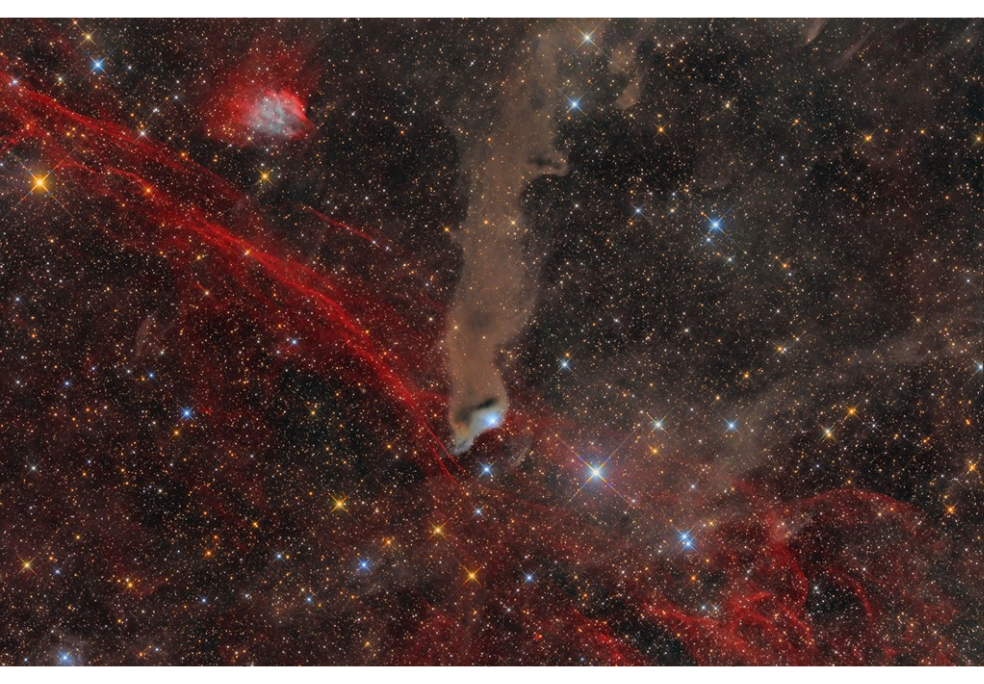
SNR 110.3 + 11.3, DeHt 5 and vdB 152
Telescope / Mount / Guiding
ASA 10" Astrograph, ASA 3" Wynne-Corrector (focal length 910mm)ASA DDM60, no guiding
Camera / Exposure
Canon 6D
73 x 10min
Moravian G3-16200, Astrodon filters
L 45 x 3min bin 2x2, 41 x 3min bin 2x2 Hα 2 x (21 x 20min) OIII 2 x (18 x 10min) bin 2x2
Total exposure time: 36h 28min
Processing
PixInsight, Fitswork, Photoshop
Notes
This image took me more than 7 years to create. The first time I shot with an unmodified Canon 6D in 2013. But was not satisfied with the data after I had the opportunity to process Frank Sackenheim's CCD data of the same object (here or on Frank's homepage). In 2018 I made attempts with luminance shots in 2x2 binning with a Moravian G3-16200 (due to the bigger sensor of the Canon 6D now as 2 panel mosaic), but I have not continued this project. In summer 2020 I found this old data again, added additional Luminance-data and new Halpha- and OIII-data and finally tried to create an image with these old and new data.
The red streakes crossing the image in diagonal direction are a small part of the huge supernova remnant SNR 110.3+11.3 in the constellation Cepheus. It is one of the nearest supernova remnants and only 1300 light years away from earth. These shocked molecular gas filaments were discovered and catalogued in 2001 by John Bally and Bo Reipurth.
Van den Berg (vdB) 152 is a blue reflection nebula that glows at the bottom of a dark Bok globule called Barnard 175. Near the edge of a large molecular cloud, interstellar dust in the region blocks most of the starlight behind it or scatter light from the embedded bright star giving parts of the nebula a characteristic blue color. Ultraviolet light from the star is also thought to cause a dim reddish luminescence in the nebular dust.
Embedded in the left side of the nebula is the Herbig Haro object HH 450, a jet emitted from a newly forming star.
Dengel-Hartl (DeHt) 5 is a HII- and OIII-region, maybe an ancient planetary nebula, ionized by the white dwarf WD 2218+706 (the blue star in the center of the nebula). Beverly Lynds catalogued the brighter part as LBN 538.
Copyright: Thomas Henne