

AAPOD2 Image Archives
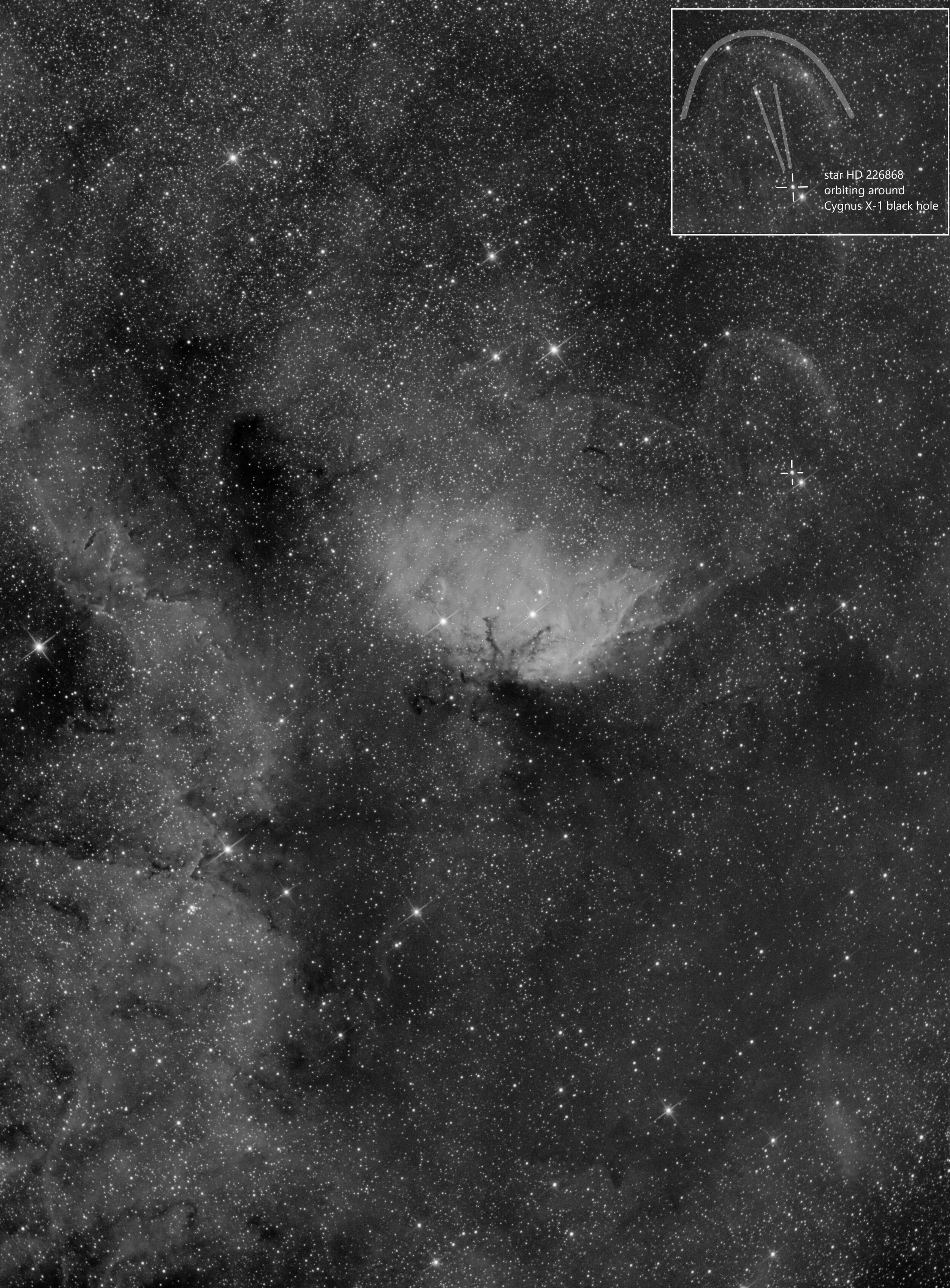
Tulip nebula & Cygnus X-1 black hole jet
Image Description and Details :
Next to the tulip nebula is black hole Cygnus X-1. This is the first X-ray source discovered in Cygnus and the first black hole ever confirmed. The blue star HD 226868 revolves around this black hole in 5.5 days.
The black hole draws in gas from this star. The gas that piles up in the accretion disk around the black hole becomes so hot that it emits X-rays. In addition, the infalling gas also forms a jet.
This jet collides with the interstellar gas. The shock wave that this forms can be seen in this image.
Details:
telescope: Skywatcher 150/750PDS
mount: Skywatgcher HEQ5
camera: QHY 294M
filter: Astronomik 12nm Ha
74 x 6 minutes (7.4 hours) over 2 nights
40x flat and darkflat frames
30x dark frames
image aquisition: NINA
processing: Pixinsight.
Copyright: Remco Kemperman
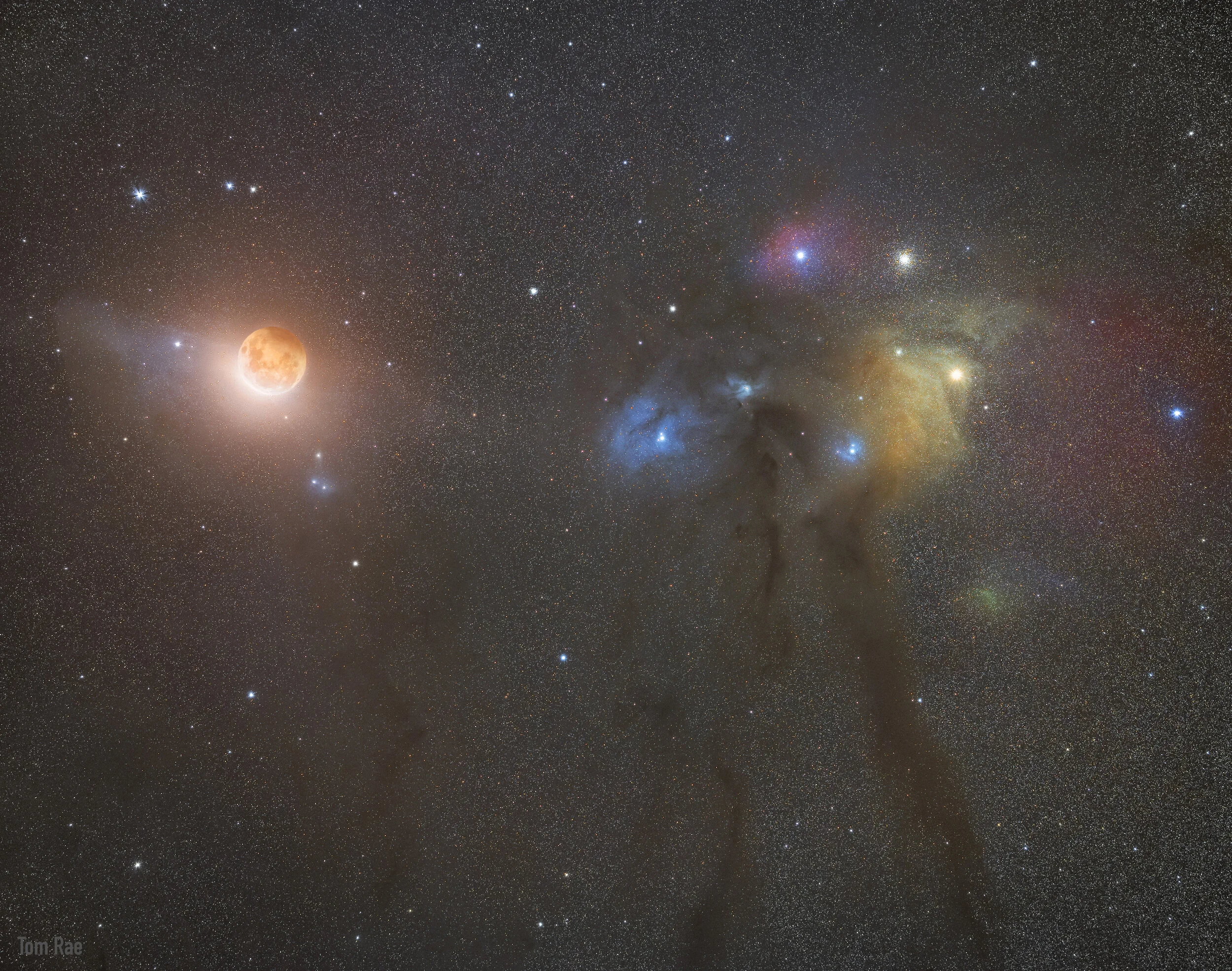
Rho Ophiuchi and The Eclipse
Image Description and Details :
All of the data acquired to produce this image was shot during the Lunar eclipse's totality. The image was shot on the east coastline of New Zealand (Bortle 2) on the 26th of May 2021. This eclipse was special, not only because it occurred during a supermoon, but also because of its positioning in the night sky. Gear includes: Nikon Z6 and Rokinon 135mm F2, mounted on an iOptron Skyguider Pro. Exposure settings: Rho Ophiuchi - 16 x 30s, ISO 1600, F2.8. Lunar Surface: 1/5th of a second, ISO 1600, F2.8.
Copyright: Tom Rae

A bubble in Hercules, Abell 39
Image Description and Details :
Abell 39 is a faint nearly symmetrical planetary nebula in Hercules. Exposures for Abell 39 taken from 3 April to 21 May 2021 from my backyard Observatory. 32.1 hrs of exposure time consisting of 160min of Red and Green, 140min of Blue, 700min of Ha and 760min of OIII. I used my Stellarvue SVX 152T with a ZWO ASI 6200 camera. Control was with Voyager automation. The images were taken using 1x1 binning for a resolution of .64 arcsec/pixel. The exposures were also done using a 1/2 frame ROI.
Abell 39 is the 39th entry into George Abell's catalog of planetary nebula. Within this field are an enormous amount of background galaxies, probably more than foreground stars. The image is a crop of a much larger field of view.
Copyright: Jon Talbot
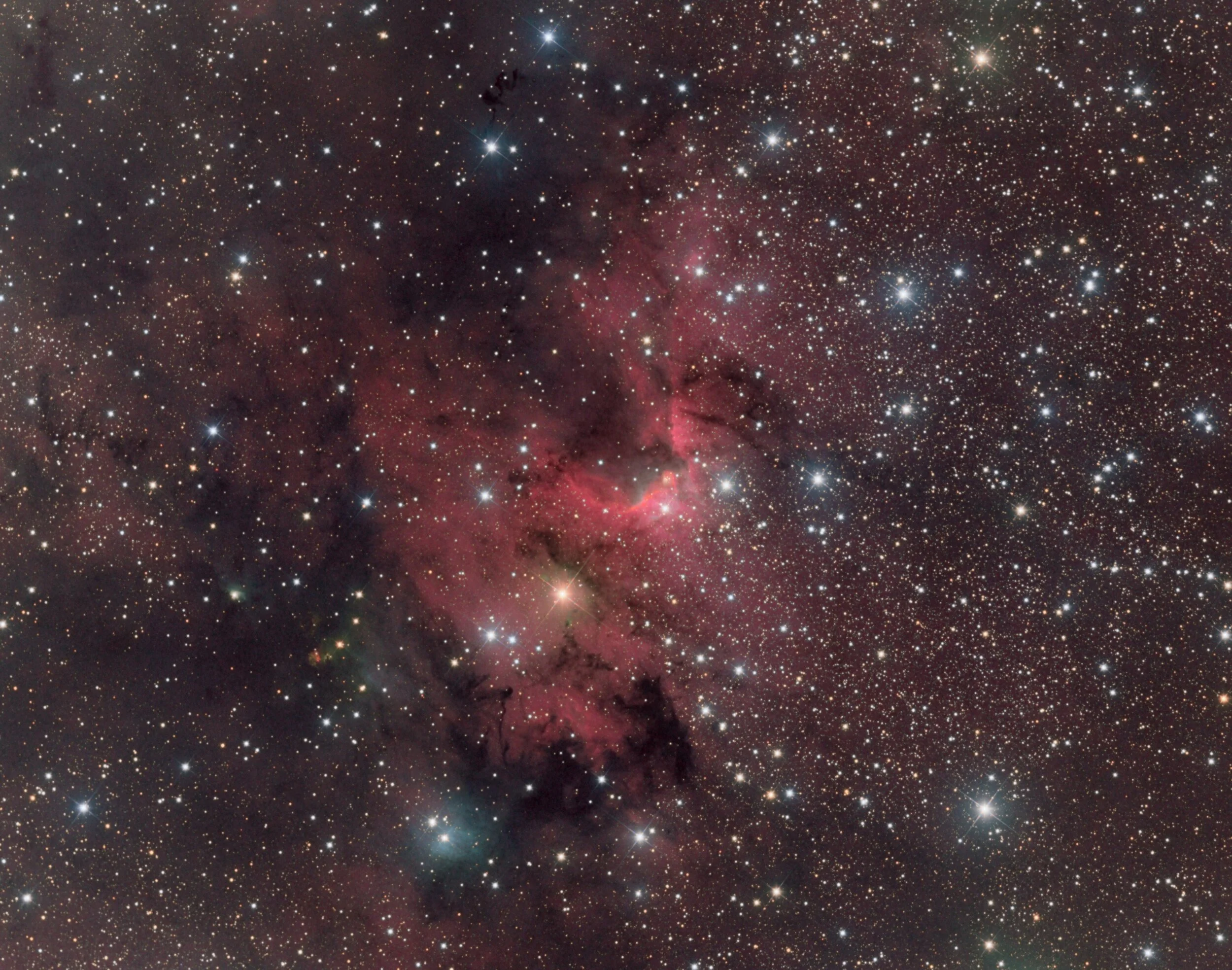
Sh2 155 "Cave" Nebula
Image Description and Details : Sh2-155 or Sharpless 155 is a diffuse nebula in the constellation Cepheus, within a larger nebula complex containing emission, reflection, and dark nebulosity. Images showing a curved arc of emission nebulosity corresponding to a cave mouth (roughly center of image) gives rise to the popular moniker "Cave Nebula". Sh2-155 is an ionized H II region with ongoing star formation activity, at an estimated distance of 2400 light-years from Earth.
Capture info:
Location: Orion’s Belt Remote Observatory, Mayhill NM, USA
Telescope: Takahashi 180ED reflector
Mount: Paramount MX+
Camera: SBIG STXL 16200
Data: 4.75,4.25,4,4.75,4.5 hours LRGB , Ha respectively
Processing: Pixinsight
Copyright: David Doctor

Solar System 2020
This is a collage of solar system objects Left to right: Mercury, Venus(in a very thin crescent phase), International Space Station, Mars, Jupiter, Saturn, Uranus, Wanning gibbous Moon on the top(19-panel mosaic), and Sun at the bottom(4-panel mosaic) all Captured in 2020 using Different equipment.
Equipment:
Telescopes: GSO 16" Dob on EQ platform, EdgeHD11", Esprit 80mmAPO
Cameras: ZWO462MC, ZWO 290MC, ZWO1600mmpro.
Accessories: ZWO UV/IR Cut filter, IR 685nm filter, ZWO ADC, Daystar quark Chromosphere, Tilt adaptor.
Software: Autostakkert!3, Registax, Photoshop
Location: Sharjah, UAE
Date: Jan - Dec 2020
Copyright: Prabhu S Kutti
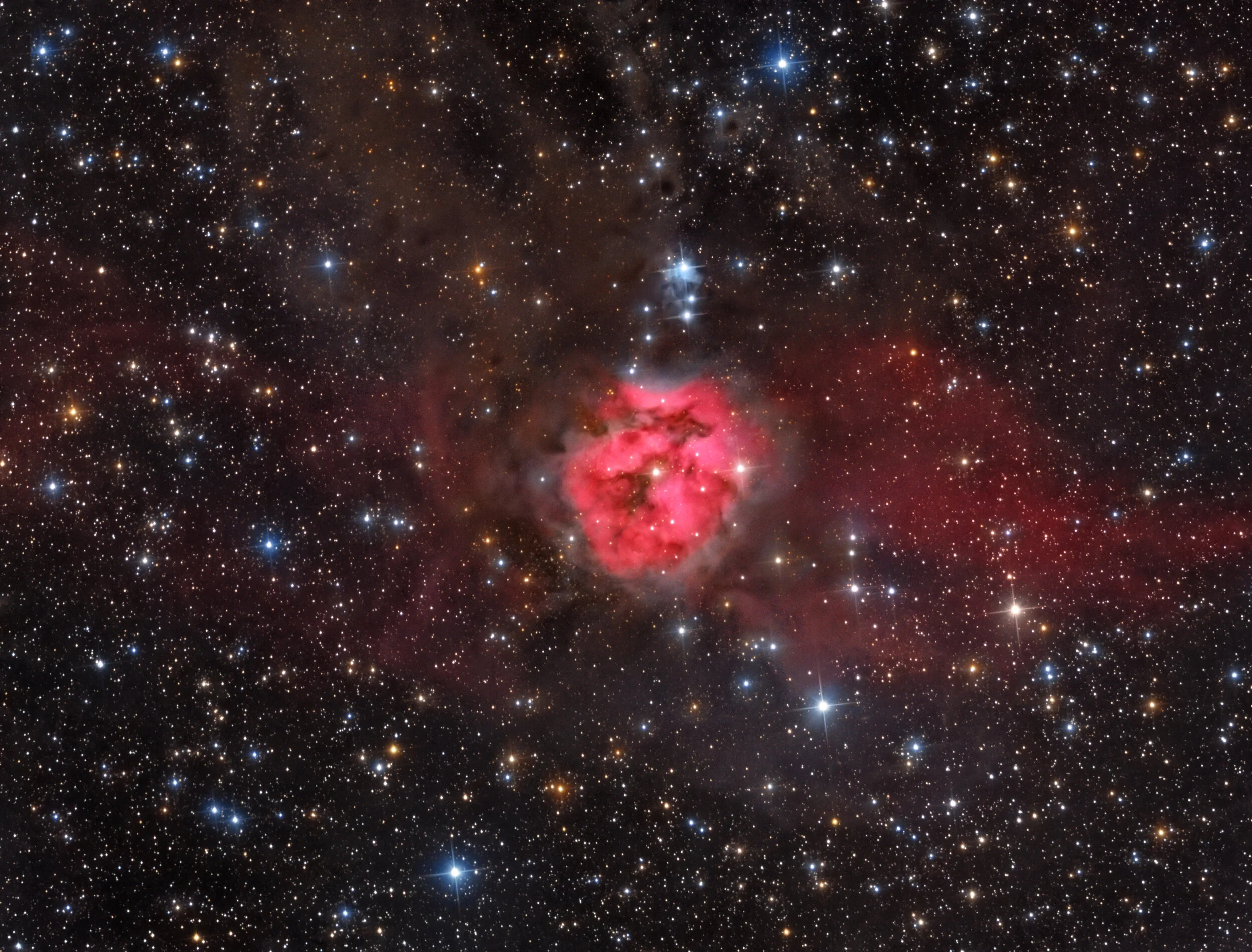
IC 5146 The Cocoon Nebula
Image Description and Details :
Accumulation: 23.3 hours
HaRGB
Telescope / shooting lens: SkyWatcher Quattro 8S
Shooting Cameras: ZWO Optical ASI 1600-MM COOLED
Mounts : Celestron CGEM 1100
Telescope / Lens Guides: Celestron GuideScope 80mm f / 7.5
Guide cameras: ZWO Optical ASI 290 MM
Focus Reducers: Tele Vue Paracorr Type-II
Filters: Astronomik LRGB 1.25 "Type IIc · Baader Planetarium H-alpha 1.25" CCD 7 nm
Copyright: Sviatoslav Lips
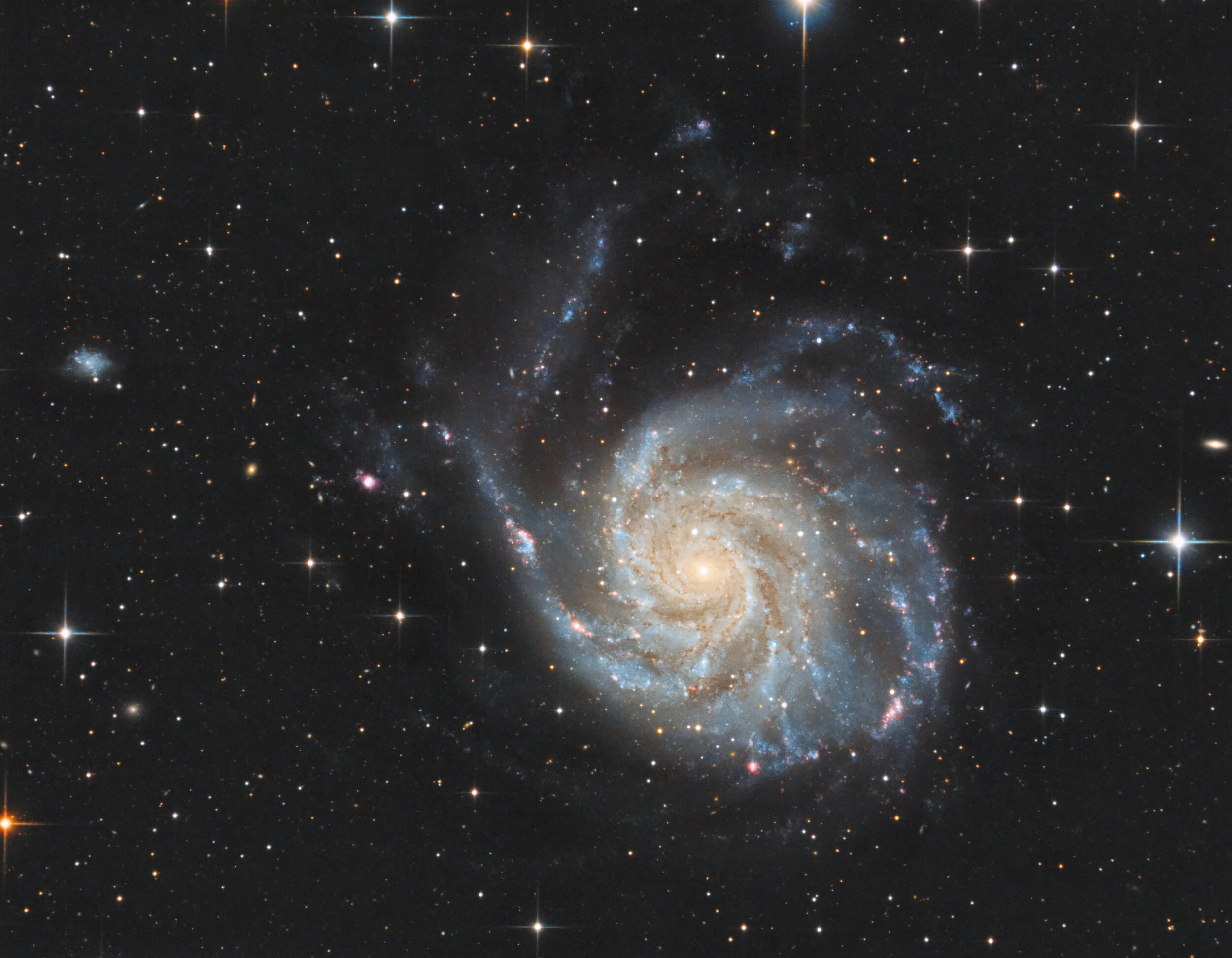
M101
Image Description and Details :
M101 taken with a Newton 250 f/4, AZEQ6 and a ATIK ONE monochrome camera.
53 exposure hours in LRGB-Ha (38 L, 11 RGB, 4 Ha), under various Moon conditions and always polluted sky (SQM 19,7 without Moon)
But the seeing was good, allowing great resolution.
Hundreds of very far and faint galaxies can be seen in the background.
Done at 35 km North of Paris and 15 North of Roissy.
Copyright: Olivier Aguerre
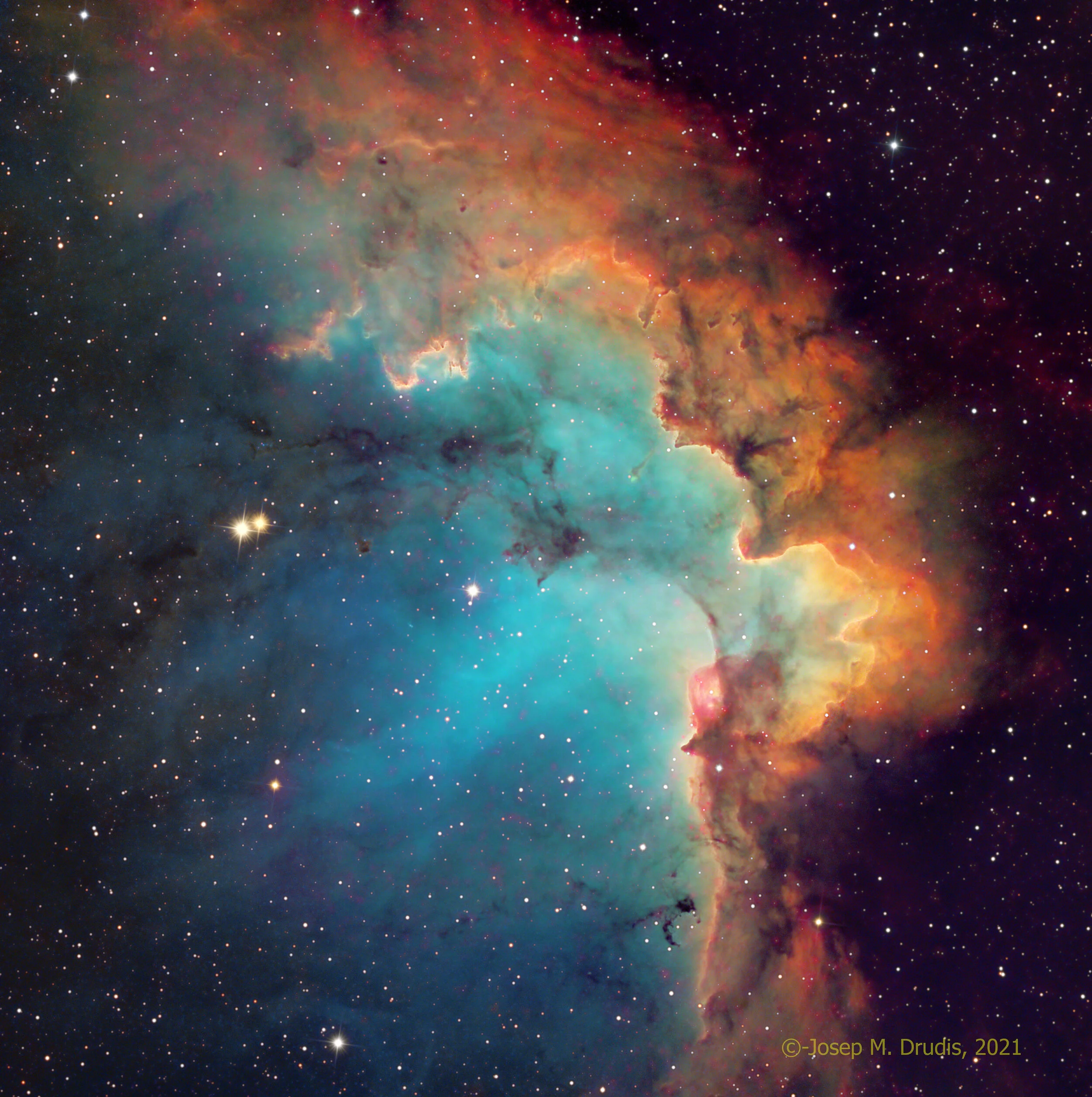
NGC 7380- The Wizard Nebula
Image Description and Details : This image depicts the Wizard Nebula taken with narrowband filters and color mapped to a slightly modified Hubble Palette. The shape of this nebula is due to the strong stellar winds of the nearby O and B stars, most notably, the star that lies close to the rim of the nebula. Location: Curiosity2 Observatory, New Mexico Skies, Mayhill, NM, USA. Telescope: 24” (61 cm) f/6.5 Reflector. Total exposure: 31h 40m (Ha: 10h 40m; OIII: 10h; SII: 8h; RGB: 3h).
Copyright: Josep Drudis
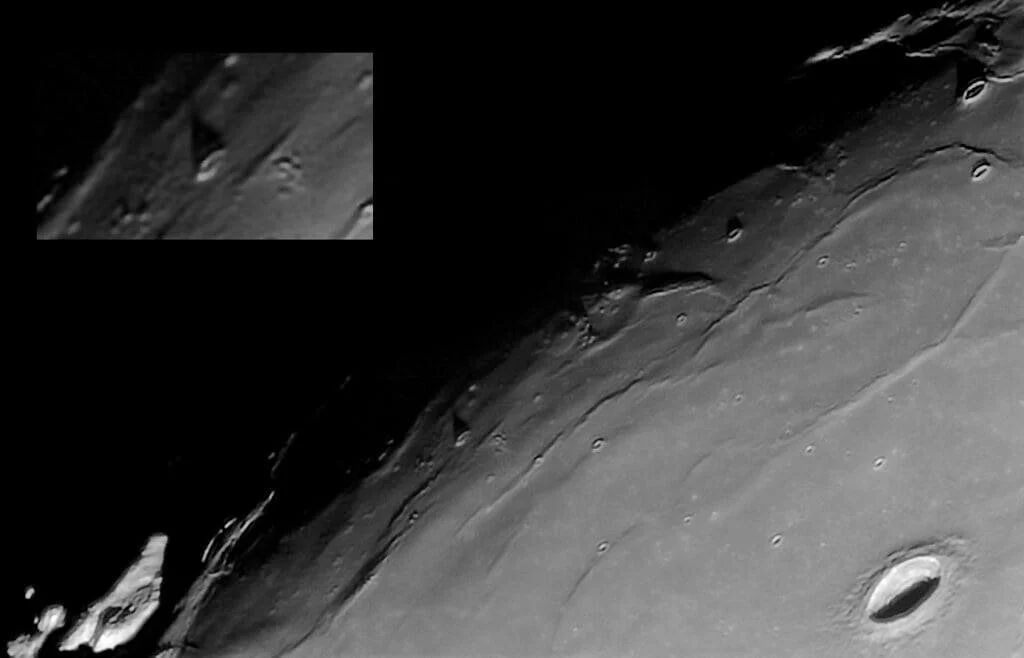
HorseSHoe Crater in mare crisium
Image Title: Horseshoe Crater in Mare Crisium
Image Description and Details : This is not the most spectacular image I have captured of the Moon, but what transpired with it is.
NASA has awarded Firefly Aerospace of Cedar Park, Texas, approximately $93.3 million to deliver a suite of 10 science investigations and technology demonstrations to the Moon in 2023. The delivery, planned for Mare Crisium, a low-lying basin on the Moon’s near side, will investigate a variety of lunar surface conditions and resources. Such investigations will help prepare for human missions to the lunar surface.
My friend Brian Hamilton Day from NASA Ames Research Center presented me with a challenge to try and capture Horseshoe Crater in Mare Crisium, where the Firefly mission landing is mentioned above. Brian then sent this image to the Chief Engineer at Firefly Aerospace and here is a segment of that conversation.
*** I brought Horseshoe Crater forward as a challenge object to the Amateur Astronomy Selenology Project, a group of expert lunar imagers. With its small diameter, low profile and no significant albedo difference from the surrounding terrain, this is truly a very challenging subject of terrestrial imaging. It is only visible when close proximity to the terminator results in greatly prolonged shadowing that accentuates its modest topography. Gary Varney, one of the leaders of the group, responded successfully with the enclosed image. Gary captured this remarkable image at the 96% waning gibbous phase using an 11-inch aperture Celestron CPC Deluxe 1100 Edge HD telescope, an Altair IMX174 Mono camera, and a 3X barlow lens. With this demonstration that this is indeed a possible target, the challenge of tracking down this remarkable landform could add to the public interest and involvement in this very intriguing area, especially if it becomes the target of a landed mission. A current effort by the Solar System Treks development team in conjunction with Cal State University Los Angeles is adding functionality to the Moon Trek portal facilitate ground-based telescopes and amateur astronomers tracking down and identifying a wide range of lunar landforms such as this. ***
Firefly responded...
*** Thanks Bryan, that’s a fantastic image! We are discussing the possibility of operating some hours into the lunar night. This image shows that even after our lander is in the dark, we’ll still be able to see the horseshoe for a period. We’ll have to discuss an exact definition of “dusk” with our Contracting Officer.***
Copyright: [Gary P Varney ][1]
[1]: http://www.facebook.com/gary.varney.79

Lunar Eclipse May 26 2021
Image Description and Details :
Canon 60D
Celestron Schmidt Cassegrain 8"
Focal Reducer Celestron 0.63x
Celestron CGEM
Exposure Time: 2s
Iso: 1600
F: 6.3
Focal Distance: 1260 mm.
Lightroom
Guillermo Cervantes Mosqueda
Observatorio Astronómico Altaïr
Poncitlán Jalisco México
Copyright: Guillermo Cervantes Mosqueda
Omega Centauri
Image Description and Details :
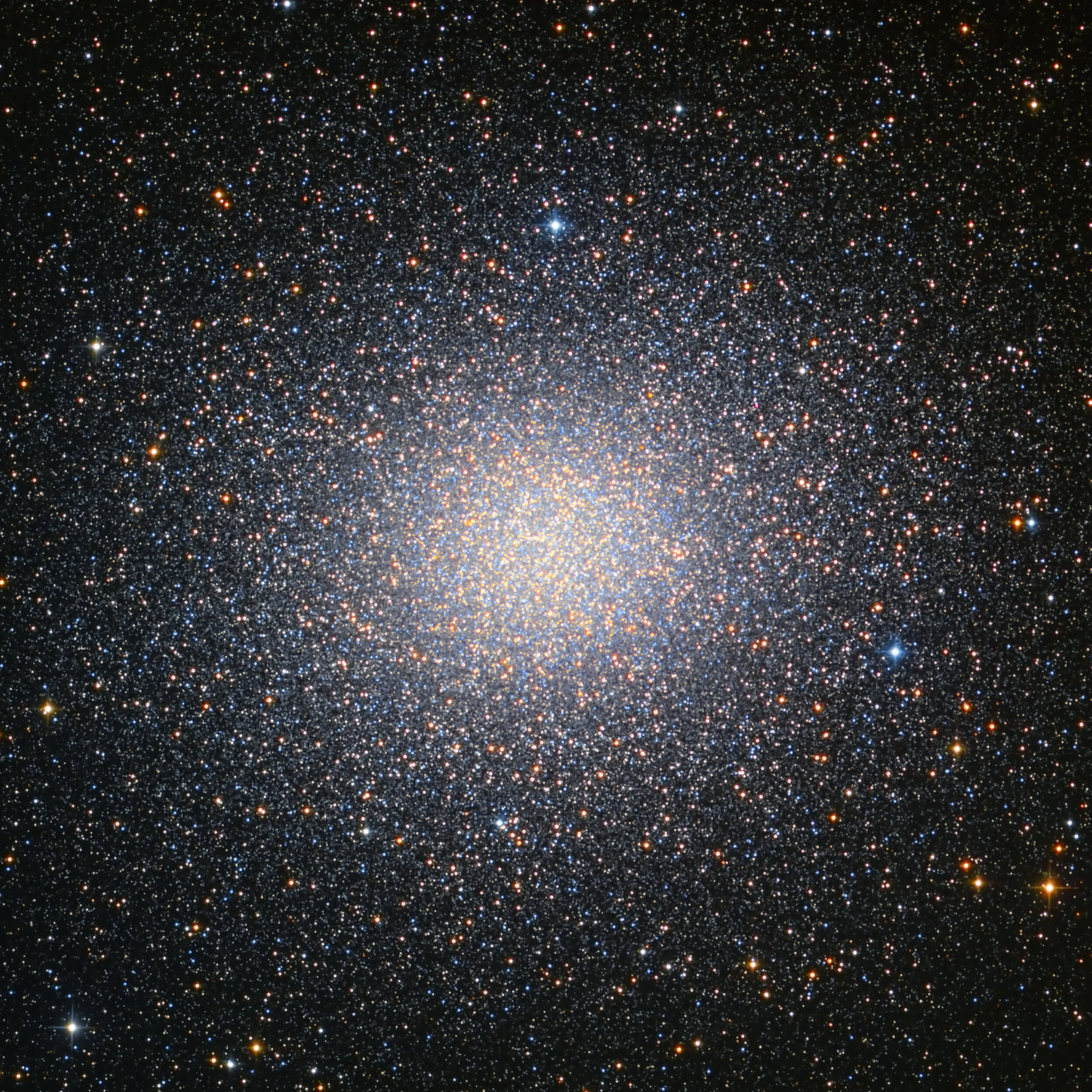
This is an image of Omega Centauri. . It is the largest globular cluster in the Milky Way and is located about 16,000 light years away in the constellation Centaurus. It is estimated to contain approximately 10 million stars and is about 150 light years in diameter.
Telescope: Planewave CDK-24
Camera: FLI PL 9000
Mount: Mathis MI-1000/1250
Red: 4x10 minutes (binned 1x1)
Green: 4x10 minutes (binned 1x1)
Blue: 4x10 minutes (binned 1x1)
Copyright: Bernard Miller
Saturn and its moons
Image Description:
Is Saturn your favourite?
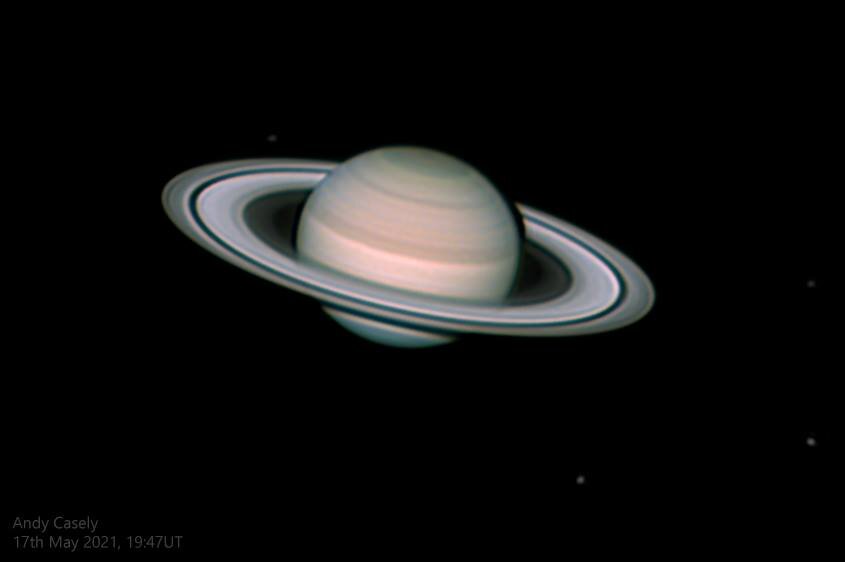
It was looking a bit pretty on a chilly morning from the Blue Mountains. Nice conditions for this capture, and it's accompanied by four moons (l-r: Mimas, Dione, Tethys, Enceladus).
C14, ASI290MM, 15mins with RGB filters.
Copyright: Andy Casely
The Coma cluster of galaxies
Image Details:
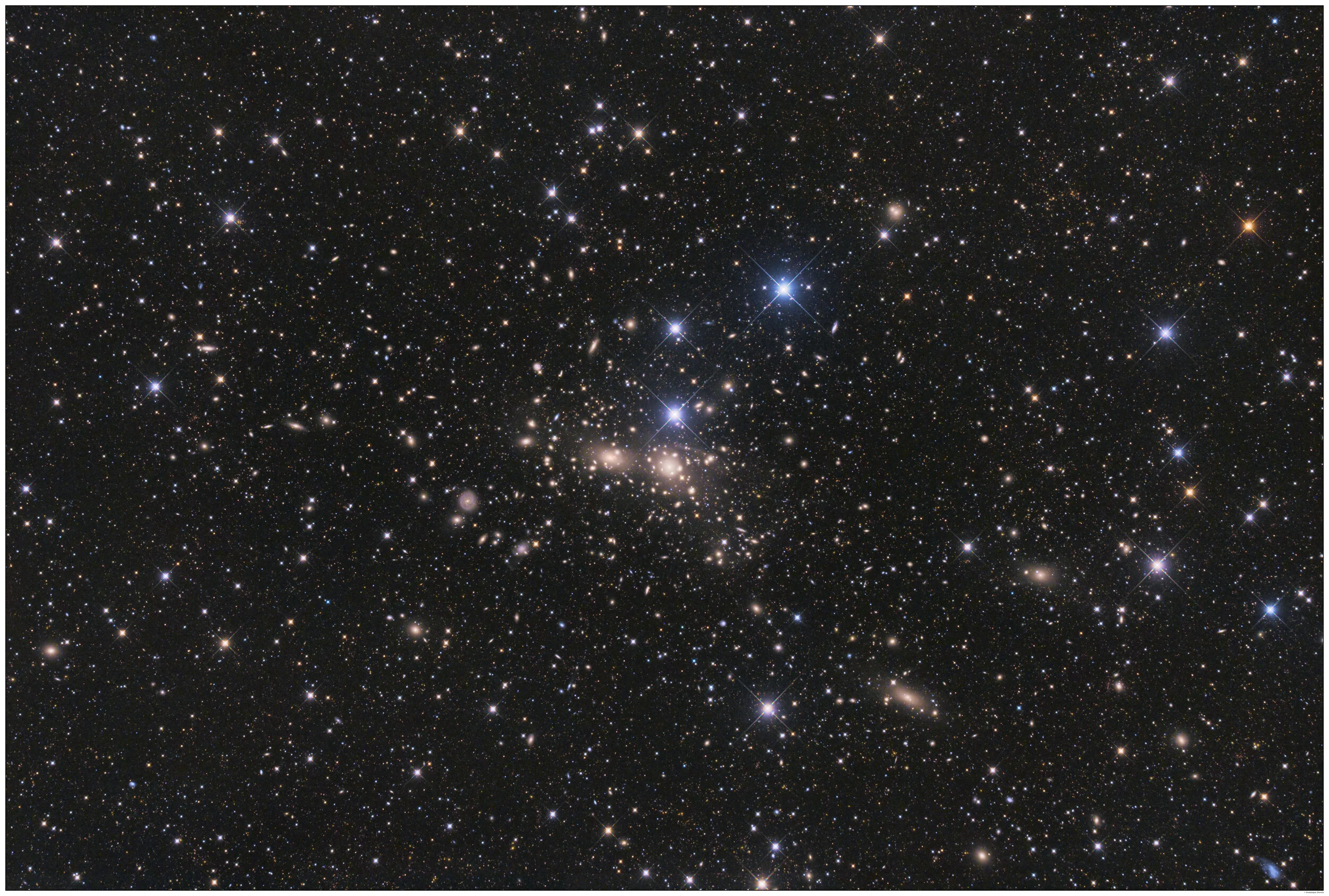
The Coma cluster of galaxies. Deep exposure of 36 hours with Takahashi Epsilon 180ED and ZWO ASI2600MC. Best seen full size on Flickr. There are thousands of galaxies in the image, a lot more than there are foreground stars of our galaxy. Faintest object I could identify has a V magnitude of 22.8.
Copyright: Dominique Dierick
NGC 2170
Image Description and Details :
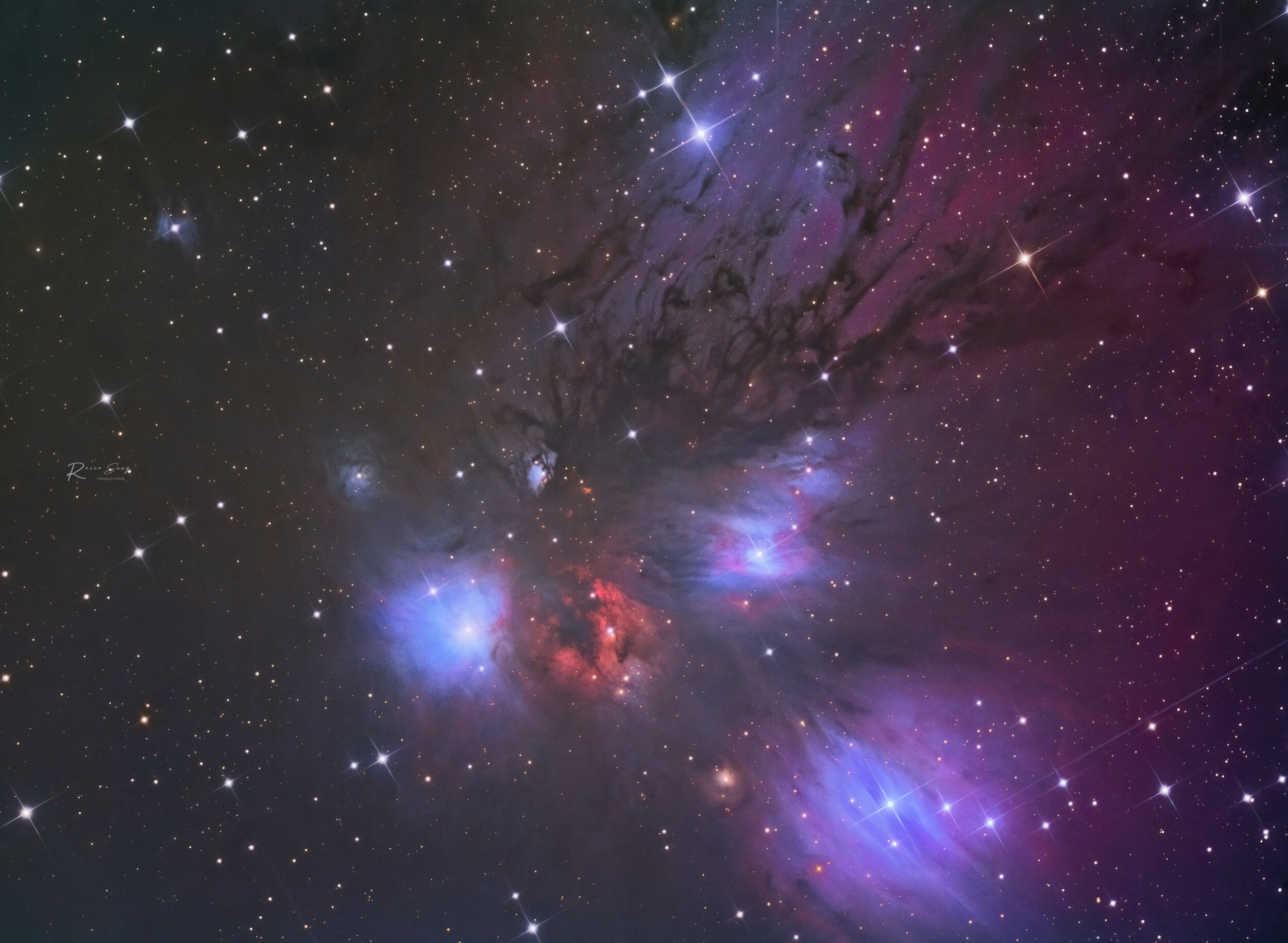
NGC 2170, LRGB 300:300:300:300, total 20 hours
A dusty reflection nebula and stellar nursery that formed about 6 to 10 million years ago, located at the edge of the elliptically shaped, giant star-forming molecular cloud Monoceros R2 (Mon R2), some 2,700 light-years away in the constellation of Monoceros.
Telescope : Planewave CDK 17, Camera : SBIG STXL 11002 with AOX, Tracking : Paramount ME
Location : Observatorio El Sauce, Chile
Image processing software : Pixinsight, Photoshop
Copyright:
Image captured : Martin Pugh
Image processing : Rocco Sung

Wandering Comets
On the night of May 1, two tiny comets made a close encounter in the Earth's night sky. The smaller one on the left is C/2020 T2 Palomar, while the larger one on the right is C/2020 R4 ATLAS. In fact, they were still hundreds of millions of kilometers apart but happened to appear in the same direction of the Earth's perspective. The two comets went their separate ways soon after, and it will be a long time before they meet each other again.
Location: Galaxy Remote Observatory, Kangbao, Hebei, China
Time: May 1, 2020
Telescope: SharpStar 150 2.8 HNT
Camera: QHY268C
Mount: iOptron CEM60
Guide: QHYCCD OAG-M
Guide camera: QHY5L-II-M
Frames: 139×30 seconds
Integration: 1.2 hours
Acquired by APT
Processed by PixInsight and PhotoShop
Copyright: [Steed Yu][1]

Cederblad 111
Image Description and Details :
Cederblad 111 is a blue reflection nebula in the southern constellation of Chamaeleon and is part of one of the closest dark cloud complexes to the earth at only 550 Ly distance away. Cederblad 110 is the accompanying reflection nebula in this wide field image Both are part of Chameleon I molecular cloud complex. The small, elongated, bright red objects at the center of the image are Hebrig-Haro objects (HH 49-50), which form from a collision between ionized jets of gas ejected from newly born stars and the surrounding cloud. This area of the sky is rich in dust and Ha creating new bright stars within the dusty shroud. 40 x 900s Stellarvue SV80ST - ASI6200 - AP1600 Processed entirely in Pixinsights Imaged from Obstech Observatory El Sauce, Chile
Copyright: Simon Lewis
Fighting Dragons of Ara
Image Description and Details :
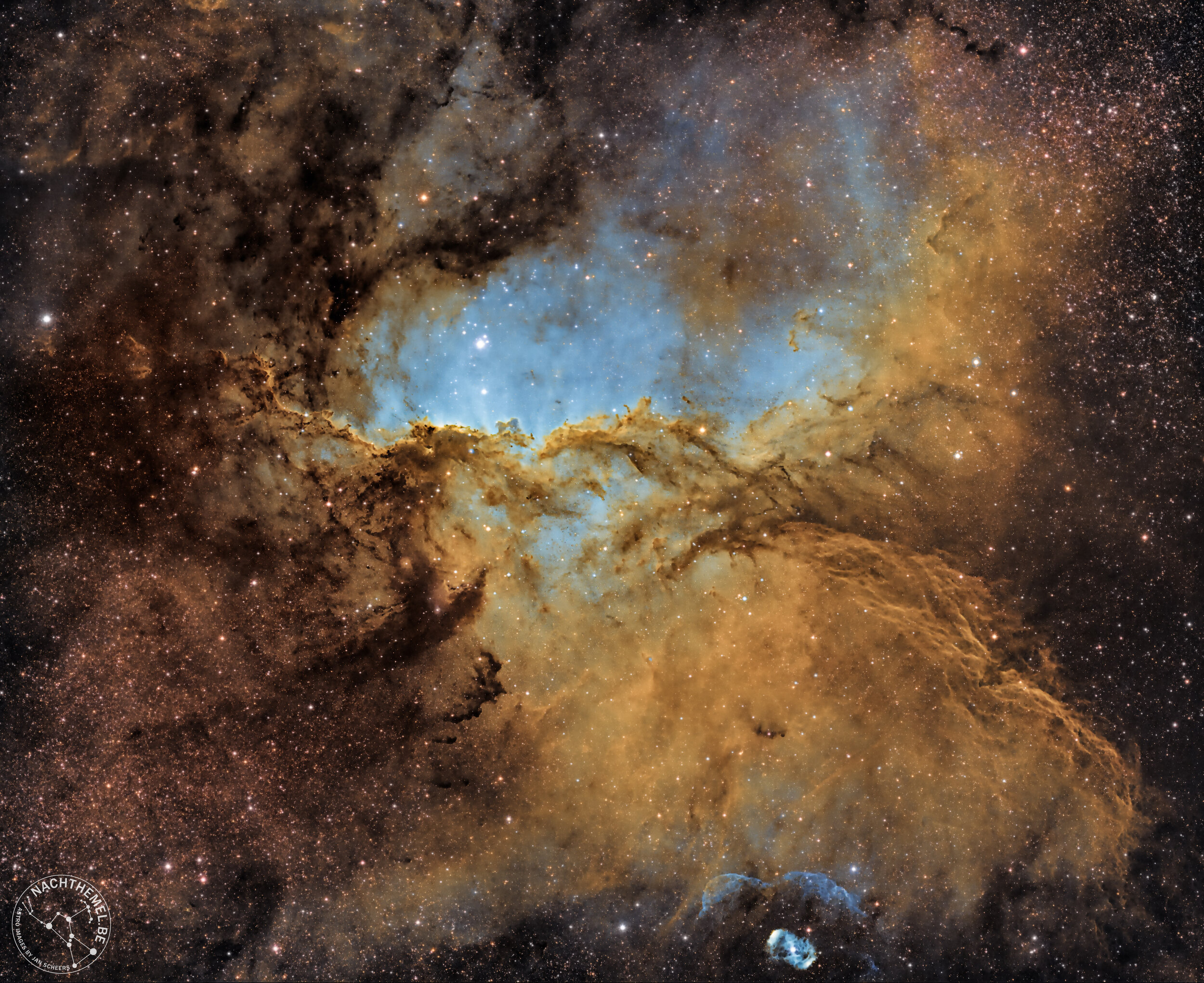
SHO-image of NGC 6188 - the Fighting Dragons of Ara - an emission nebula located about 4,000 light years away in the constellation Ara. The bright open cluster NGC 6193, visible to the naked eye, is responsible for a region of reflection nebulosity within NGC 6188. At the bottom you can recognize "the egg", a planetary nebula.
Image acquired with the Officina Stellare RH200 telescope and FLI ML16200 camera from Telescope Live in El Sauce Observatory, Chile.
Total exposure time 150 minutes; 5 subs of 600s with each filter. Dataset N. Szymanek.
Processing with AstroPixel Processor, Photoshop CC with AstroPanel V4.2, Astronomy Tools, Topaz Sharpen AI and Denoise Projects 3 plug-ins.
Copyright: [Jan Scheers ][1]
[1]: http://www.nachthemel.be/NGC6188.html

V1405 Cas - Nova in Cassiopeia
Image Description and Details :
The two images on the left date back to 23 June 2020 while the two on the right were made on 14 May 2021, the latter clearly highlight the presence of the nova V1405 Cas discovered on 18 March 2021 and which at the time had an approximate magnitude of 9 , 6 but in the last few days the magnitude has unexpectedly risen to about 5.2. It is hypothesized that the star that produced the nova is the eclipsing variable CzeV3217 located at a distance of about 5,500 light years from the Solar System, V1405 Cas was initially classified as a "classic nova" or the result of an explosion that occurred in a binary system consisting of a star and a white dwarf but further studies are currently underway.
In order to show more details the original frames were heavily cropped.
Images by: Luca Balestrieri Cosimelli & Nicoletta Guarniera
June 2020 image
23x360s
Skywatcher 150/750
Skywatcher AZ EQ5
Canon 200D
May 2021 image
15x300s
Skywatcher 200/800
Skywatcher AZ EQ6
SBIG STF8300C
Copyright:[Luca Balestrieri Cosimelli ][1]

RUTHERFURD CRATER OVERFLIGHT
Image Description and Details :
The Rutherfurd crater seems only a satellite of Clavius but its relief presents a certain interest with its mountain ranges and its collapses.When the conditions are good we can at a strong focal length (13650 mm) have the impression of flying over it. Taken with à 625 mm barlow Televue 5 and QHY5III178M.
Copyright: Luc CATHALA