

AAPOD2 Image Archives

Hockey Stick and Whale galaxies
Image Detail:
Here is the beautiful pair of the Hockey Stick (NGC 4656) and Whale galaxies (NGC 4631) in the constellation Canes Venatici. There are dozens of other more distant galaxies in the background that were too faint to plate solve.
The smaller “Hockey Stick Galaxy” on the left is mainly blue because of the large amount of young blue stars. Typically, abundance of star birth activity indicates some violent event, which triggered the condensation of gas clouds into proto-stars, which lead to occurrence of many new young stars. Such event is very often merger of two galaxies and the slightly irregular shape of NGC4656 and also streams of stars reaching far from the galaxy spiral arms hint such merger occurred only recently.
The larger Whale Galaxy at right is probably rather typical spiral galaxy, but visible from the side. It shows a yellow and orange central bulge, composed mainly of old stars, as well as dark interstellar dust lanes and dark reddish hydrogen clouds around the galaxy disk. Light blue portions indicate presence of many bright, young blue stars consuming the outer arms.
OTA: Explore Scientific ED152 Air-Spaced Triplet 1216mm focal length f/8Mount: Celestron CGX-LCamera: ZWO ASI2600MM ProGain: 100Cooling Temperature: -10 CelsiusAuto-guiding: ZWO ASI174MM Mini and ZWO M68 OAGControl: ZWO ASIAIR ProFilters: 2" Astronomik L3, RGB (CCD), Ha (12nm)
Acquisition:L 60 x 300s = 5 hoursR 31 x 600s = 5.2 hoursG 31 x 600s = 5.2 hoursB 31 x 600s = 5.2 hoursHa 15 x 900s = 3.75 hours24.35 hours total
Flagstaff, AZ - Bortle 4 skiesCalibrated in Astro Pixel Processor with darks and flatsProcessed in Pixinsight and Lightroom
Copyright: Drew Evans

tarantula nebula - NGC 2070
Image Description:
At the beginning of our presentation of the southern sky, we see the spectacular tarantula nebula, catalogue NGC 2070 or 30 Doradus, today in the constellation Swordfish. The last name comes from the explorer Nicolas Louis de Lacaille who saw him as a star in 1751 and therefore gave a star number. The fog is located in the Great Magellanian cloud approx. 163 000 light years away.
It is one of the largest star emerging areas in our local galaxy group. He is stimulated by the star cluster R136 in his midst. The pile houses the most well-known and brightest star R136a1 with 265 solar masses and 10 million times luminosity and another two stars with about 150 solar masses.
Copyright: Hans Bernd Dörfeldt

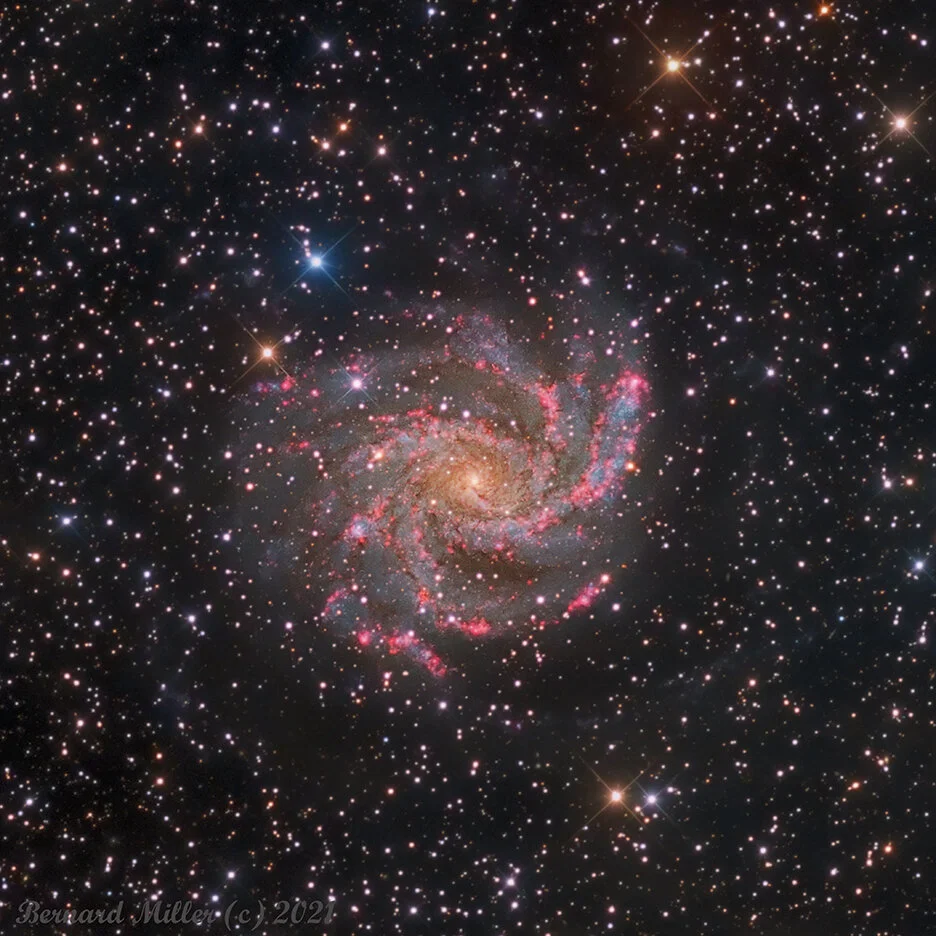
NGC 6946 - The Fireworks Galaxy
Image Description and Details :
This is an image of NGC 6946, also known as the Fireworks Galaxy. It is a face-on intermediate spiral galaxy about 25 million light years away near the boundary of the constellations of Cepheus and Cygnus. It spans about 40,000 light years in diameter, which is about one third the size of the Milky Way. It is classified as a starburst galaxy which means there is a lot of star forming regions as can be seen in the magenta regions in the image.
Telescope: Planewave CDK-17
Camera: FLI PL16803
Mount: Paramount ME
Luminance: 27x20 minutes (binned 1x1)
Red: 16x15 minutes (binned 1x1)
Green: 16x15 minutes (binned 1x1)
Blue: 16x15 minutes (binned 1x1)
Copyright: Bernard Miller
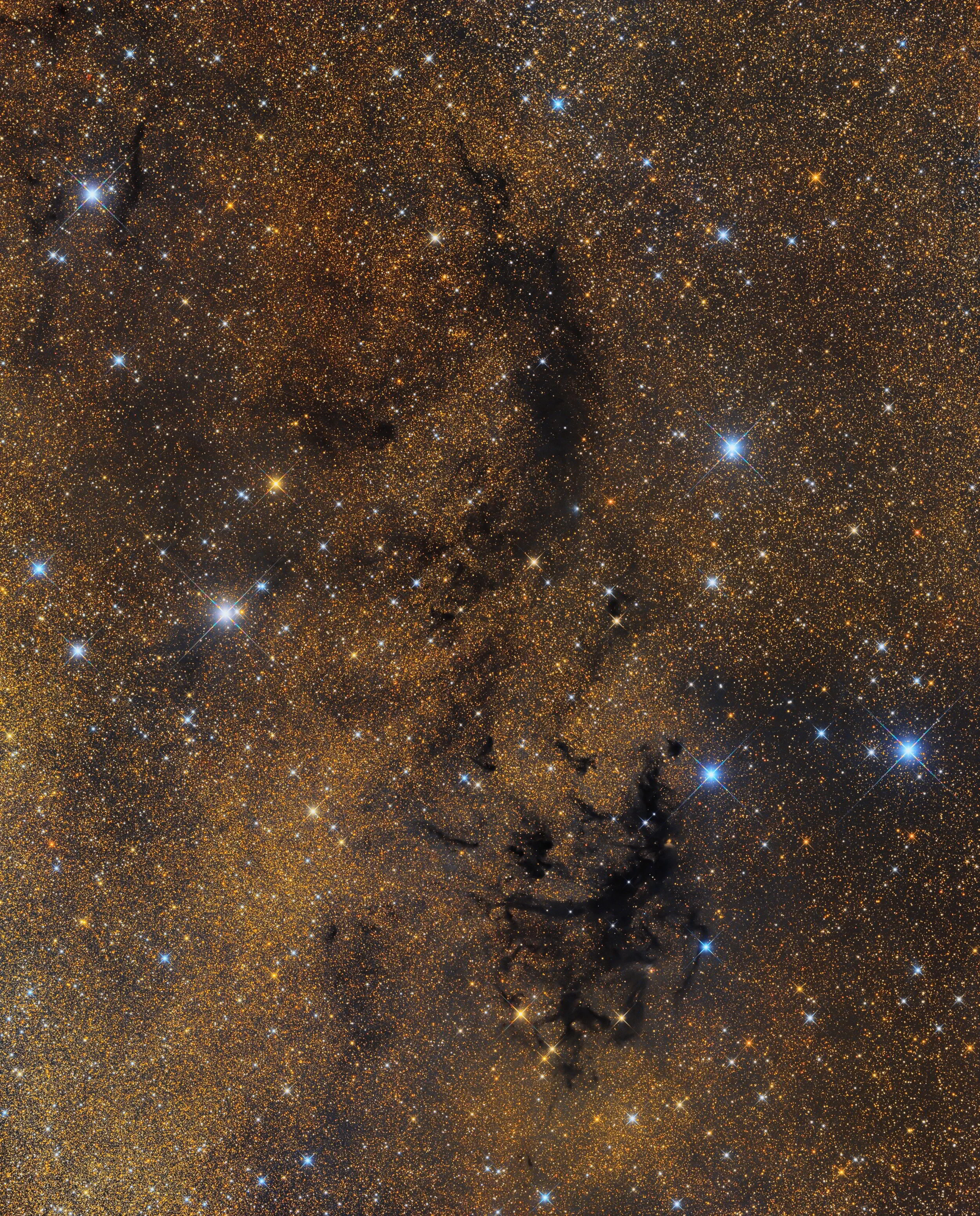
LDN 673 & LDN 684
Image Description and Details :
LDN 673 (Lynds’ Dark Nebula 673) is a highly fractured and very dense dark cloud complex about 600 light-years from Earth in the constellation Aquila. It is located near the center of the Aquila Rift, a great mass of dark molecular clouds along the summer Milky Way through the constellations Aquila, Serpens, and eastern Ophiuchus. This molecular cloud make the distant stars appear reddish, while the very dense LDN 673 nebula completely blocks the starlight.
In silhouette against the Milky Way’s faint starlight, LDN 673’s dusty molecular clouds likely contain raw material to form hundreds of thousands of stars. Visible indications of energetic outflows associated with young stars include the small red tinted nebulosity RNO 109 (GN 19.18.0) and several Herbig-Haro objects, like HH 32 near the young variable T-Tauri star V1352 (AS 353). These objects are signs of active star formation.
Telescope: ASA 10" Astrograph
Mount: ASA DDM60
Camera: Moravian G3-16200
4-panel mosaic with a total exposure time of 20h 30min
Copyright: Thomas Henne
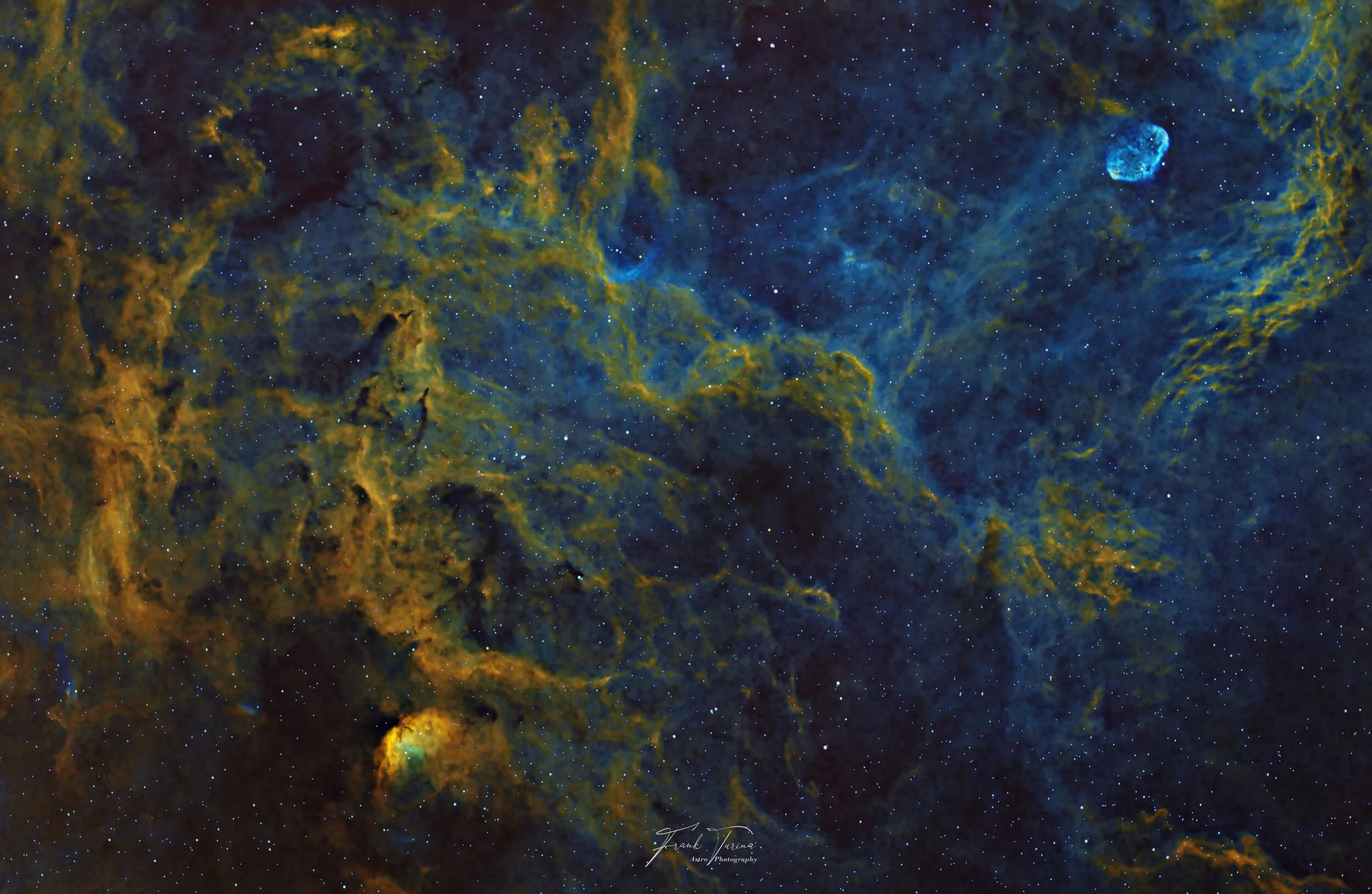
Crescent and Tulip Nebulae Wide field
Image Description and Details : Widefield image of a nebula-dense region in the constellation Cygnus. The image contains the crescent nebula in the top right and the tulip nebula in the lower left.
OIII: 120x300" (10h) bin 1x1
Hɑ: 135x300" (11h 15') bin 1x1
SII: 106x300" (8h 50') bin 1x1
Gain: 111.00; -15C
Total Integration: 30h
Camera: ZWO 183MM Pro
Lens: Rokinon 135 f/2
Mount: Sky-Watcher EQ6R Pro
Copyright: Frank Turina

Leo Triplet
Image Description and Details :
Leo Triplet, the three galaxies M65 - M66 and NGC3628 with its Tidal Tail.
Telescope: Takahashi FSQ 106 - Unguided CCD: QSI 683 ws8 LRGB Baader planetarium filters Mount: 10 Micron HPS1000 Rotator: Pegasus Focuser: Lunatic Armadillo Software: Mountwizar 4, Voyager, Pixinsight
"FAR LIGHT TEAM" Remote Observatory in Spain ( Fregenal de la Sierra ) Badajoz, Extremadura Region, in the hosting of telescopes "Entre Encinas y Estrellas". Photographic work done during the month of May 2021
Authors and copyright : Marc Valero, Bittor Zabalegui, José Esteban & Jesús M. Vargas
Lights: ( -15º ) Luminance 44 x 1200" bininx1 Luminance 25 x 200" bininx1 R 20 x 300" bininx2 G 20 x 300" bininx2 B 20 x 300" bininx2
Calibration: ( -15º ) 50 DARKS x 1200" bininx1 100 DARKS x 200" bininx1 75 DARKS x 300" bininx2
200 BIAS bininx1 200 BIAS bininx2
60 FLATS Luminance 60 FLATS Blue 60 FLATS Green 60 FLATS Red
Website or Facebook Profile: https://www.flickr.com/photos/190787445@N02/albums
Copyright: Authors and copyright : Marc Valero, Bittor Zabalegui, José Esteban & Jesús M. Vargas

Jupiter's GRS rapid changes
Image Description and Details :
Jupiter can be even more dynamic in regions close to storms. Here we can observe the variation in the atmosphere close to GRS in an interval of only 3 days. The gas giant's best sighting season has just begun!
Celestron C8 @ f/20, ASI290, orhto 7mm, uv-ir cut
Copyright: Carlos Alberto Palhares
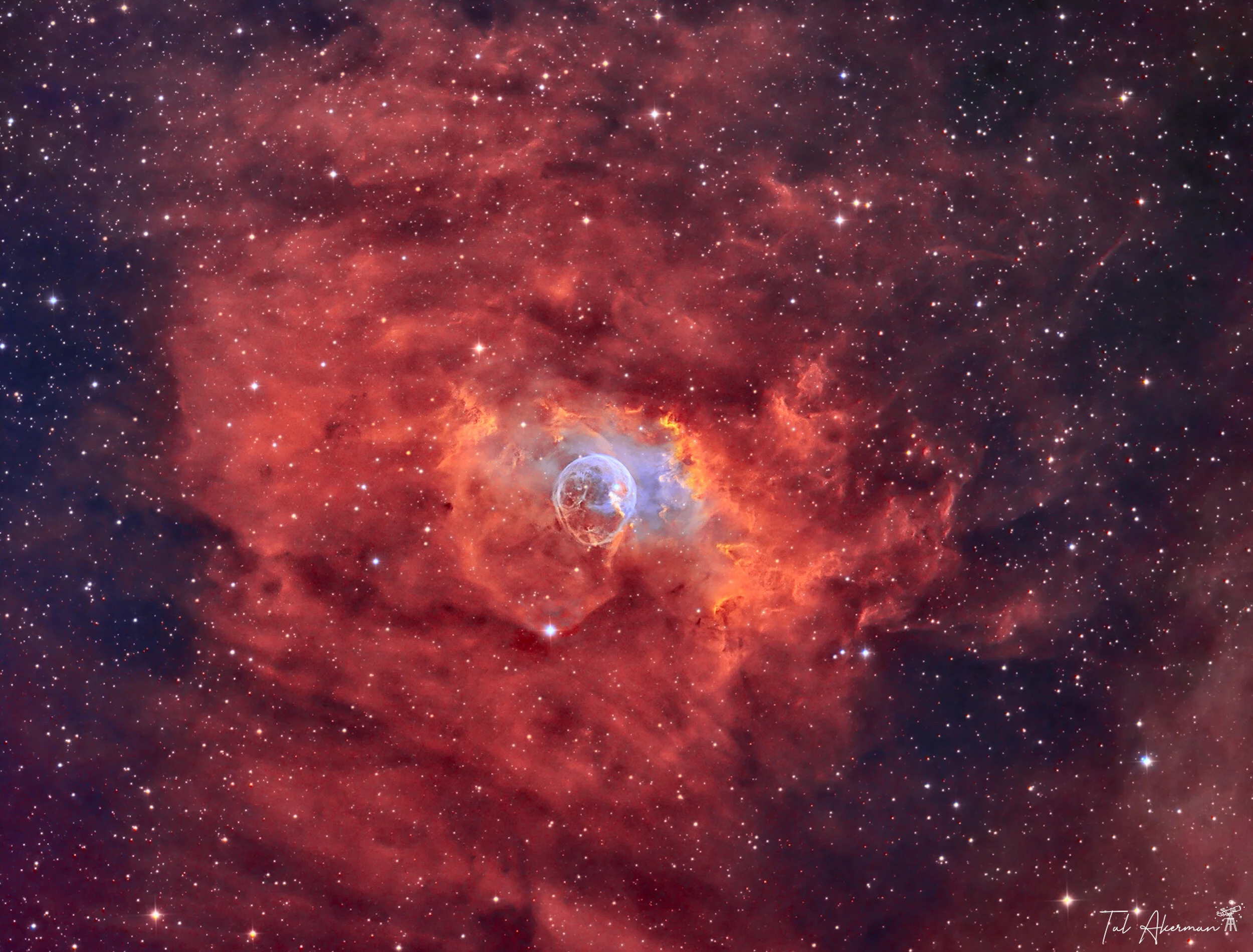
The Bubble Nebula
Image Description and Details :
53 Hours of SHO and RGB Stars !
This project was in my bucket list for a long time, mainly because the Bubble was the reason I started with astrophotography.
oh boy I'm happy with this final version
Astrodon Ha 3nm - 80x900s (20 hours)
Astrodon Oiii 3nm - 60x900s (15 hours)
Astrodon Sii 3nm - 60x900s (15 hours)
Chroma Red - 60x60s
Chroma Green - 60x60s
Chroma Blue - 60x60s
Telescope - GSO RC 8" Carbon Tube
Mount iOptron CEM70
Camera - ZWO ASI 1600mm Pro
Guide Camera - OAG + ZWO ASI174mm Mini
Copyright: Tal Akerman
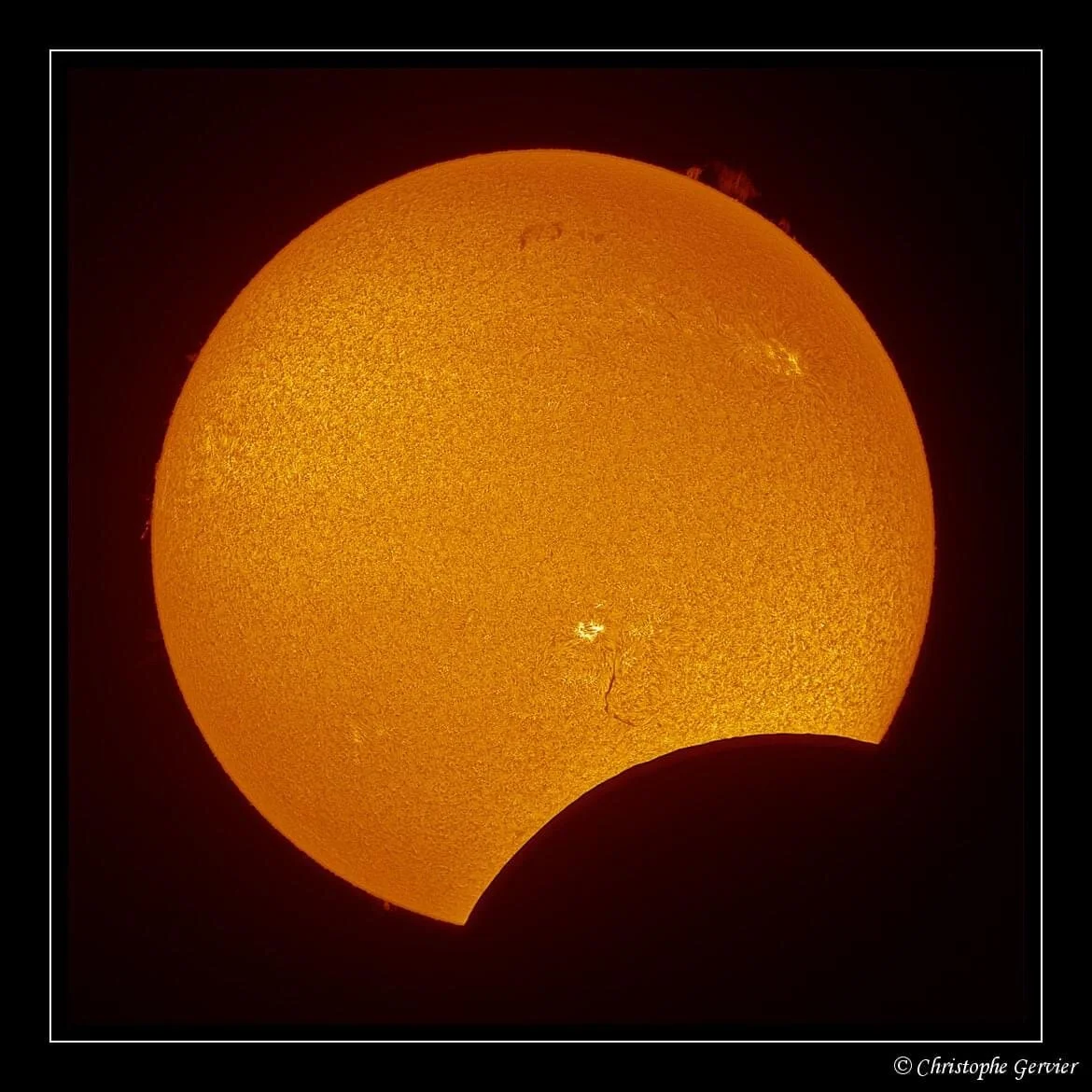
Partial solar eclipse
Partial solar eclipse of the day from the South-West of France
- Orion 80ED
- Coronado SolarMax 60
- ZWO ASI 174MM
- SharpCap, post-processing AutoStakkert v3, Registax 6, Photoshop and Lightroom.
Copyright: Christophe Gervier

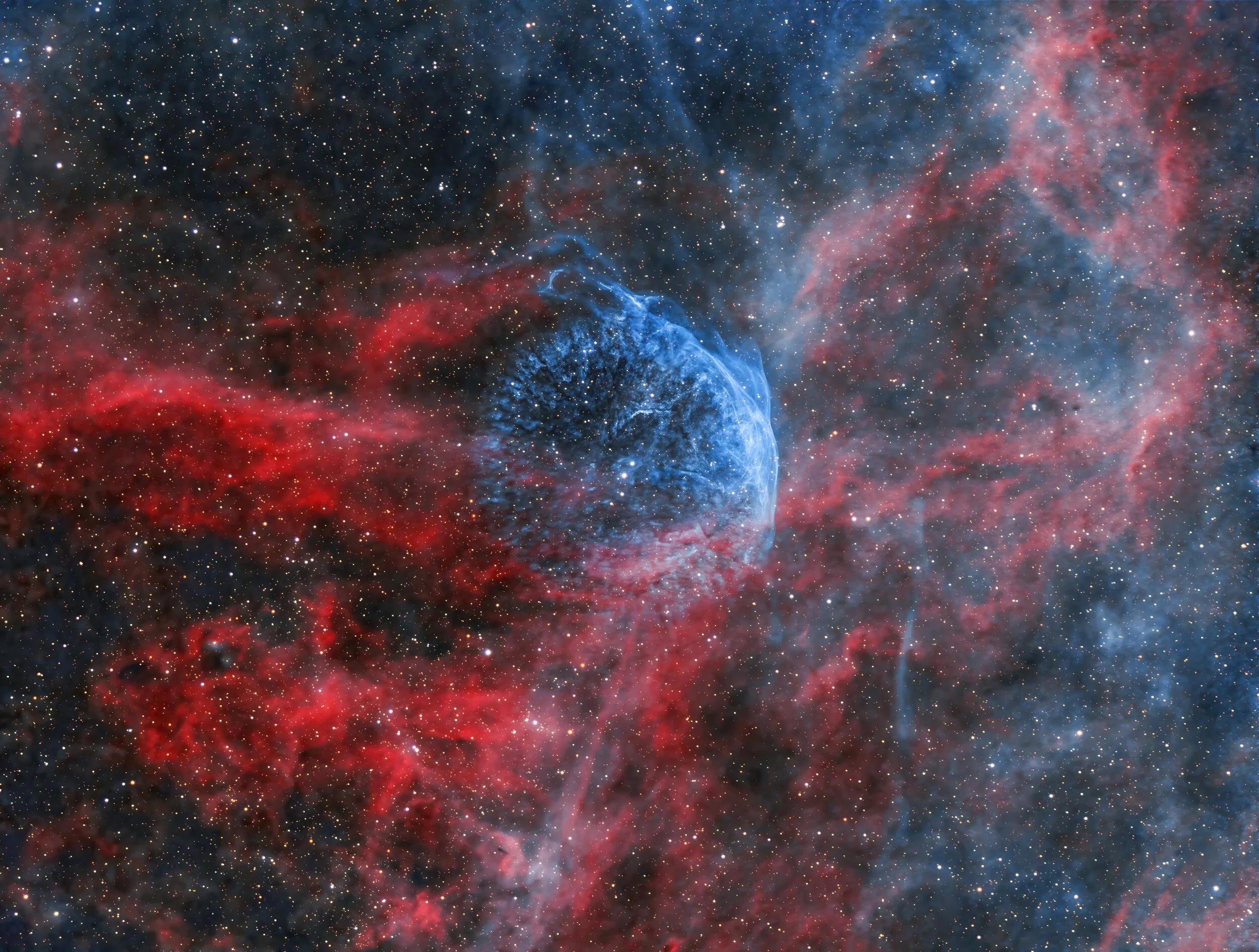
WR 134 - V1769 Cyg
This colorful shot covers a field of view about the size of the full Moon within the boundaries of the constellation Cygnus. It highlights the bright edge of a ring-like nebula traced by the glow of ionized hydrogen and oxygen gas. Embedded in the region's interstellar clouds of gas and dust, the complex, glowing arcs are sections of bubbles or shells of material swept up by the wind from Wolf-Rayet star WR 134, brightest star near the center of the frame. Distance estimates put WR 134 about 6,000 light-years away. Shedding their outer envelopes in powerful stellar winds, massive Wolf-Rayet stars have burned through their nuclear fuel at a prodigious rate and end this final phase of massive star evolution in a spectacular supernova explosion. The stellar winds and final supernovae enrich the interstellar material with heavy elements to be incorporated in future generations of stars.
Tech card:
Imaging telescope: Explore Scientific 127mm ED TRIPLET APO.
Imaging camera: ZWO ASI1600MM Pro-Cool.
Mount: iOptron CEM60.
Guiding camera: ZWO ASI290MM mini.
Focal reducer: Explore Scientific 0.7 Reducer/Flattener.
Accessory: ZWO EAF Electronic Auto Focuser · ZWO ASIAIR Pro · ZWO OAG · ZWO 8x 1.25" Filter Wheel (EFW).
Frames:
Chroma 3nm Ha: 10x600" (gain: 200.00) -20C bin 1x1.
Chroma 3nm OIII: 22x600" (gain: 200.00) -20C bin 1x1.
Total integration: 5.3 hours.
Darks: ~30.
Flats: ~30.
Flat darks: ~60.
Avg. Moon age: 18.13 days.
Avg. Moon phase: 87.56%
Bortle Dark-Sky Scale: 4.00.
Temperature: 20.00.
Pixel scale: 1.159 arcsec/pixel.
Imaging location: Abu Dhabi desert, UAE.
A re-process of my data of Dec. 3 and 4, 2020.
I tried to boost the OIII channel and tried to pull out some more details.
Copyright: Wissam Ayoub

Purgathofer-Weinberger 1
Purgathofer-Weinberger 1, PuWe1 ( PN G 158.9 + 17.8 ) is a large, circular planetary nebula in the constellation of Lynx.
PuWe1 was discovered by Alois Purgathofer and Ronald Weinberger in 1980 on the Palomar Deep Sky Survey prints. The nebula is one of the largest planetary nebulae visible in our skies, with a diameter of 20 arc minutes. PuWe1 is also one of the nearest known planetaries with a distance of only about 1200 light years.
This image taken over several nights in March-April 2021.
R-channel - 30 x 150 sec. bin 1x1;
G-channel - 30 x 150 sec. bin 1x1;
B-channel - 30 x 150 sec. bin 1x1;
Ha- 88 x 600 sec. bin 2x2;
OIII- 40 x 600 sec. bin 2x2.
Total integration time about 25:05 hours.
My setup: Telescope 8" Celestron Schmidt-Cassegrain (SCT) CPC800 GPS (XLT) on the equatorial wedge, focal reducer Starizona Night Owl 0.4х, Feq=864mm, camera Starlight Xpress Trius SX694, SX mini filter wheel, filters Astrodon LRGB E-series gen.2, Astrodon Ha 5nm, Astrodon OIII 3nm.
Capture and processing software: MaxIm DL6, PHD2, PixInsight, StarTools, Photoshop CC, Zoner photo studio 14.
North at the top.
Copyright: Boris Vladimirovich

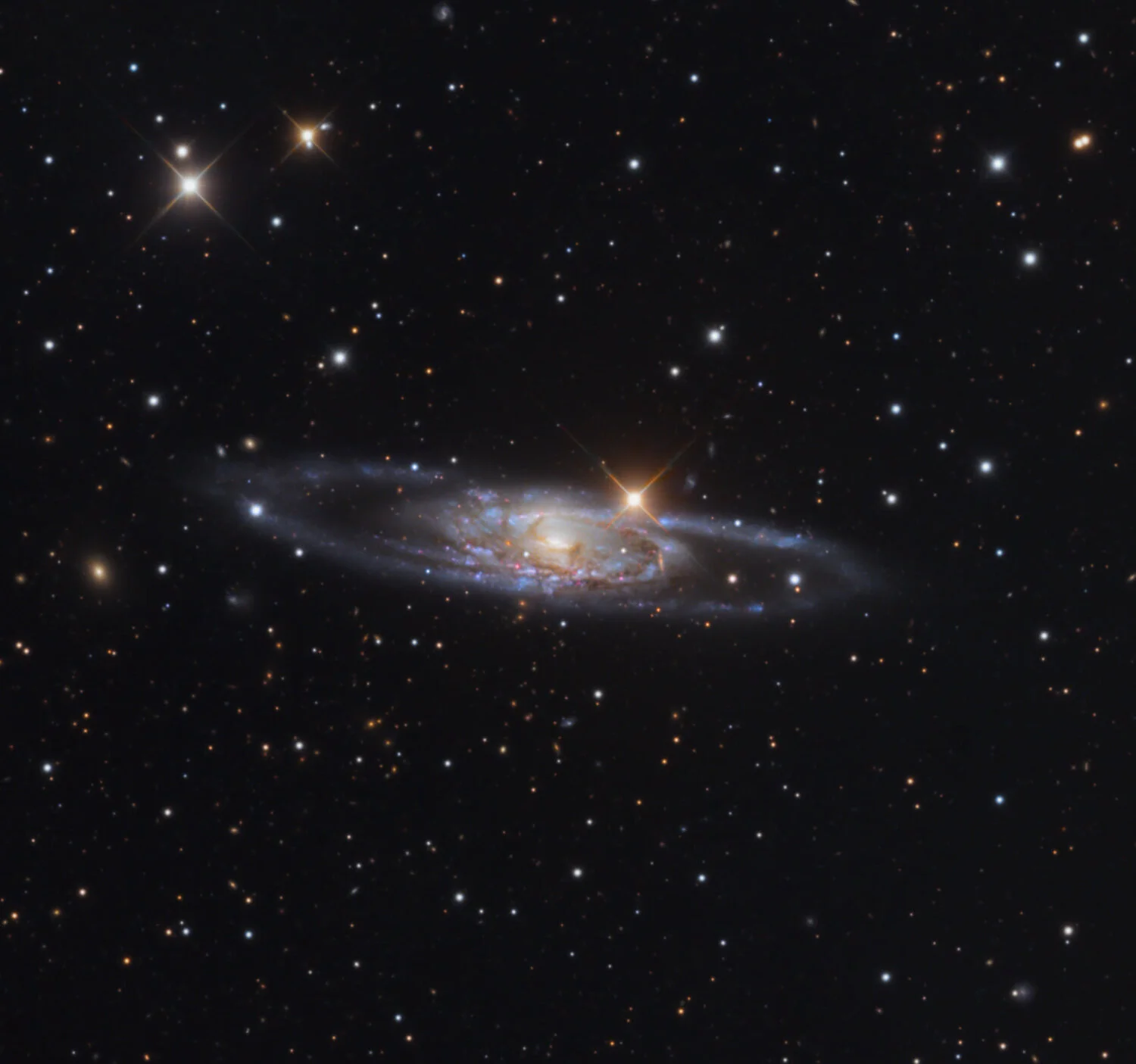
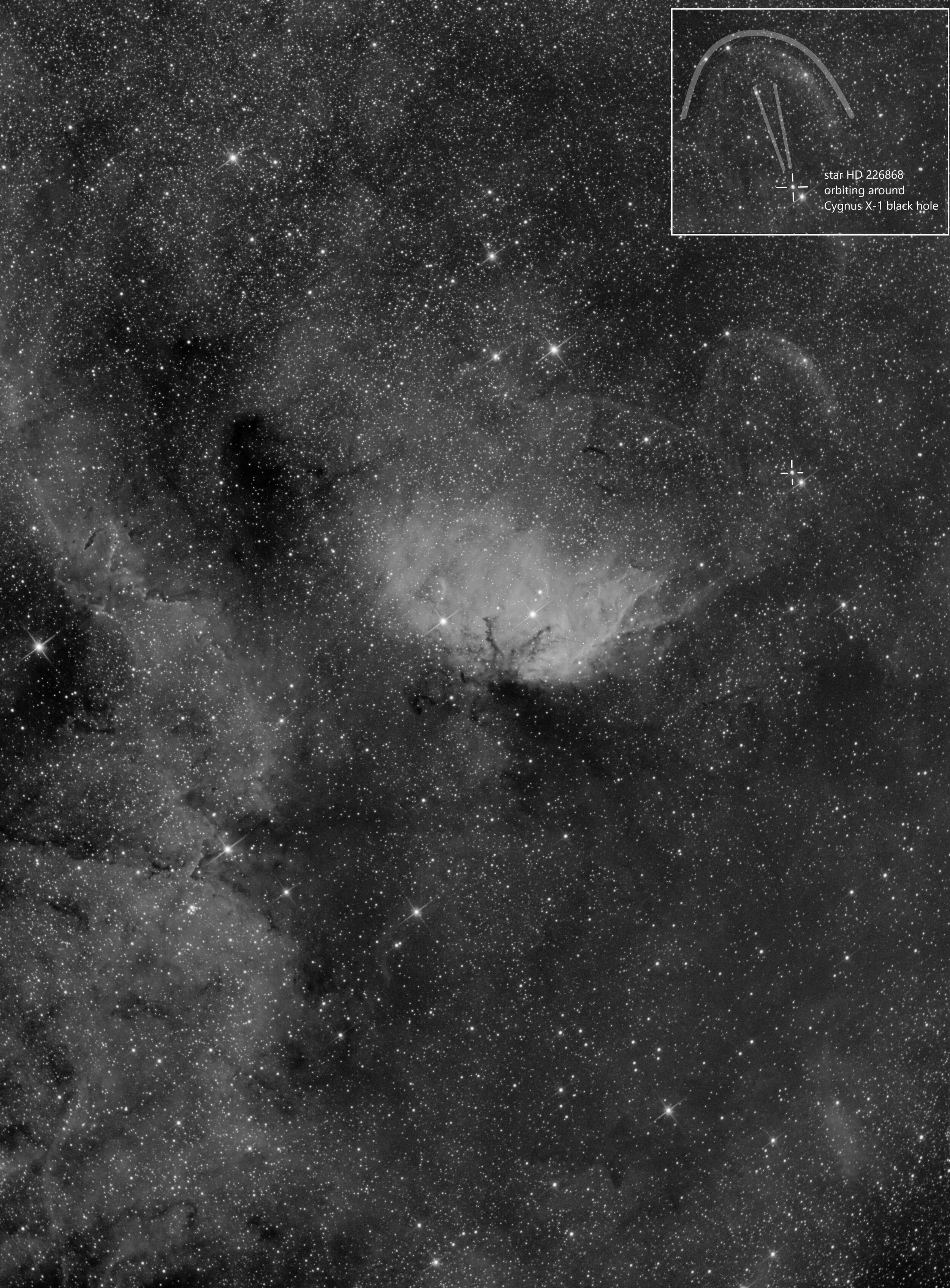
Tulip nebula & Cygnus X-1 black hole jet
Image Description and Details :
Next to the tulip nebula is black hole Cygnus X-1. This is the first X-ray source discovered in Cygnus and the first black hole ever confirmed. The blue star HD 226868 revolves around this black hole in 5.5 days.
The black hole draws in gas from this star. The gas that piles up in the accretion disk around the black hole becomes so hot that it emits X-rays. In addition, the infalling gas also forms a jet.
This jet collides with the interstellar gas. The shock wave that this forms can be seen in this image.
Details:
telescope: Skywatcher 150/750PDS
mount: Skywatgcher HEQ5
camera: QHY 294M
filter: Astronomik 12nm Ha
74 x 6 minutes (7.4 hours) over 2 nights
40x flat and darkflat frames
30x dark frames
image aquisition: NINA
processing: Pixinsight.
Copyright: Remco Kemperman
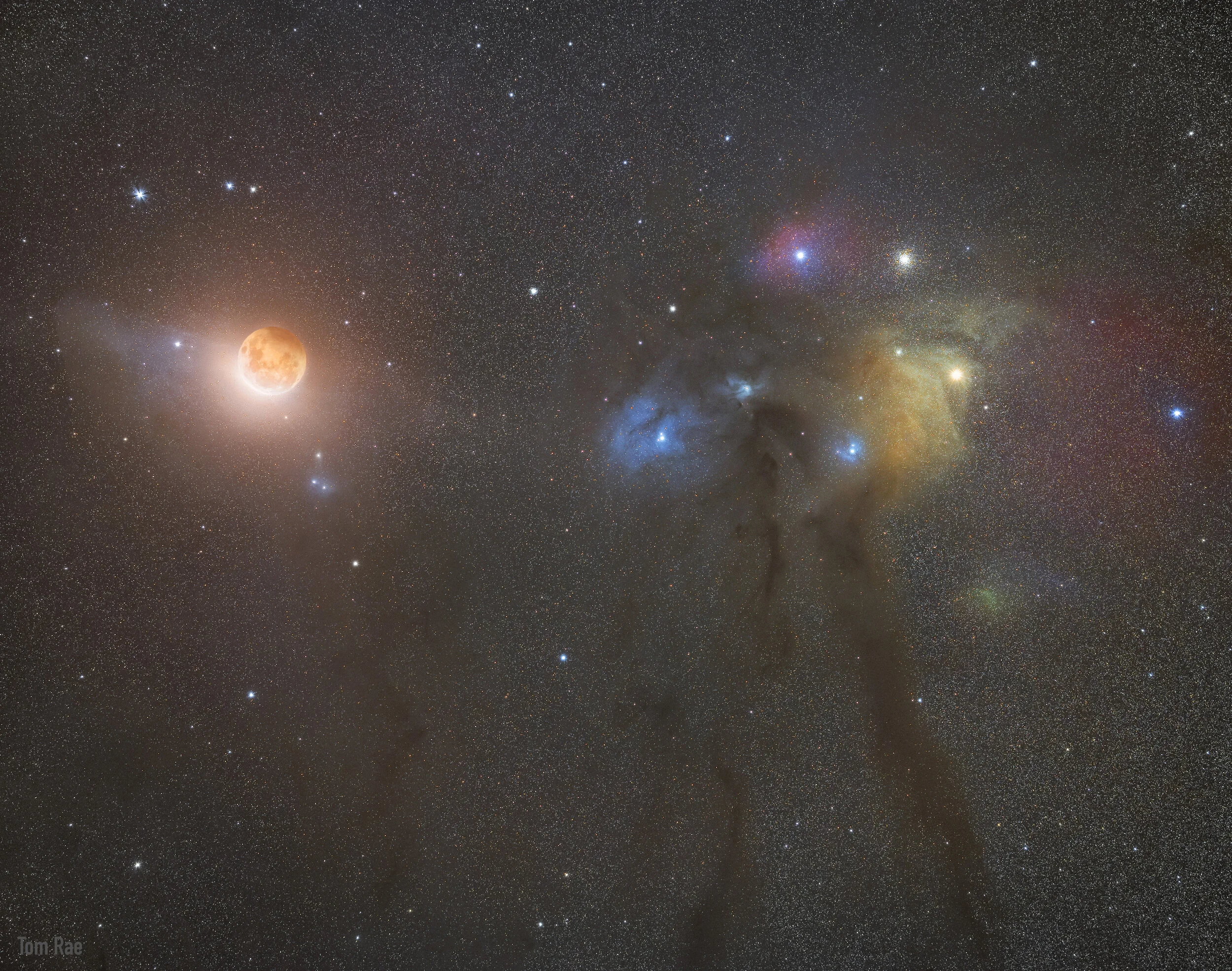
Rho Ophiuchi and The Eclipse
Image Description and Details :
All of the data acquired to produce this image was shot during the Lunar eclipse's totality. The image was shot on the east coastline of New Zealand (Bortle 2) on the 26th of May 2021. This eclipse was special, not only because it occurred during a supermoon, but also because of its positioning in the night sky. Gear includes: Nikon Z6 and Rokinon 135mm F2, mounted on an iOptron Skyguider Pro. Exposure settings: Rho Ophiuchi - 16 x 30s, ISO 1600, F2.8. Lunar Surface: 1/5th of a second, ISO 1600, F2.8.
Copyright: Tom Rae

A bubble in Hercules, Abell 39
Image Description and Details :
Abell 39 is a faint nearly symmetrical planetary nebula in Hercules. Exposures for Abell 39 taken from 3 April to 21 May 2021 from my backyard Observatory. 32.1 hrs of exposure time consisting of 160min of Red and Green, 140min of Blue, 700min of Ha and 760min of OIII. I used my Stellarvue SVX 152T with a ZWO ASI 6200 camera. Control was with Voyager automation. The images were taken using 1x1 binning for a resolution of .64 arcsec/pixel. The exposures were also done using a 1/2 frame ROI.
Abell 39 is the 39th entry into George Abell's catalog of planetary nebula. Within this field are an enormous amount of background galaxies, probably more than foreground stars. The image is a crop of a much larger field of view.
Copyright: Jon Talbot
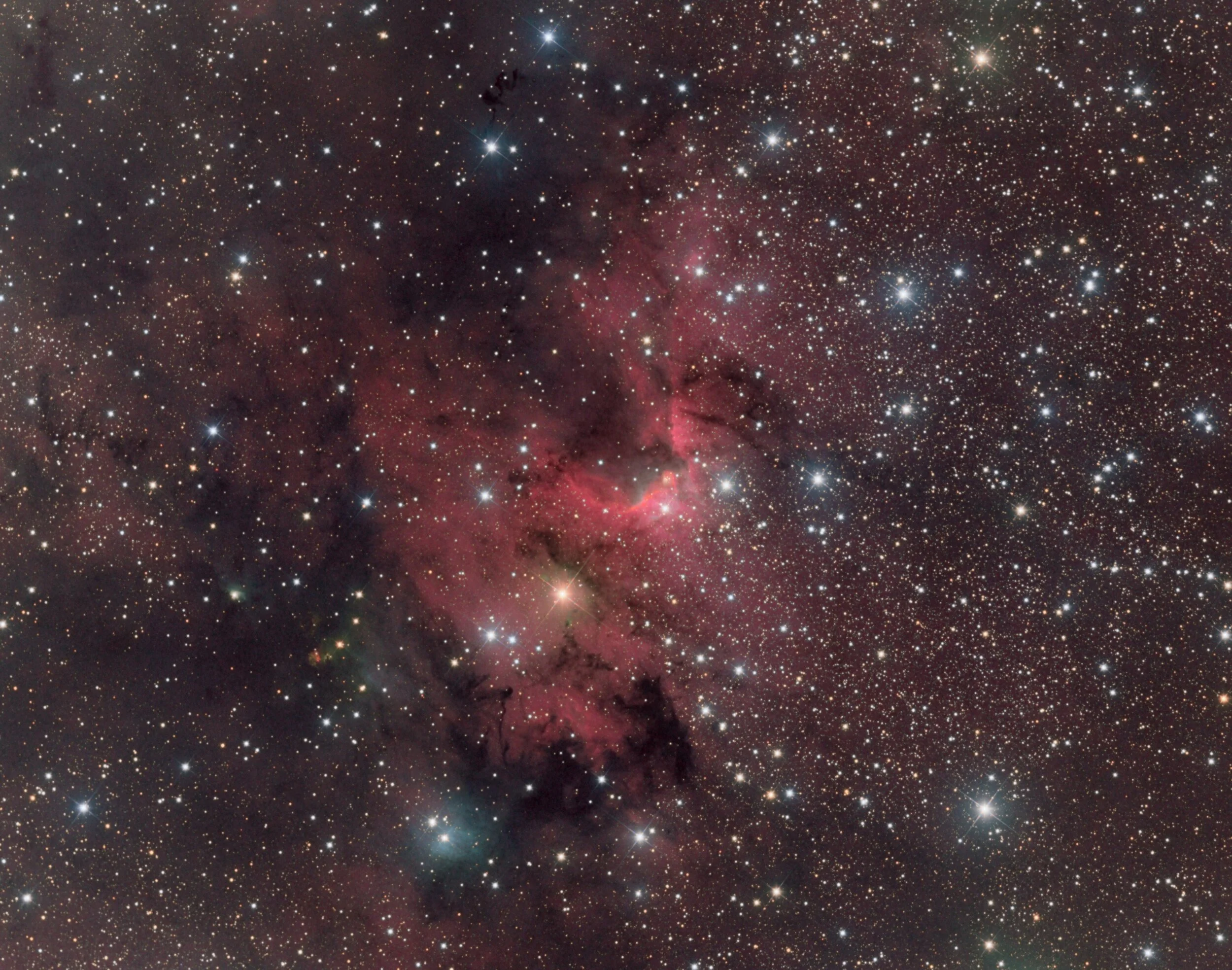
Sh2 155 "Cave" Nebula
Image Description and Details : Sh2-155 or Sharpless 155 is a diffuse nebula in the constellation Cepheus, within a larger nebula complex containing emission, reflection, and dark nebulosity. Images showing a curved arc of emission nebulosity corresponding to a cave mouth (roughly center of image) gives rise to the popular moniker "Cave Nebula". Sh2-155 is an ionized H II region with ongoing star formation activity, at an estimated distance of 2400 light-years from Earth.
Capture info:
Location: Orion’s Belt Remote Observatory, Mayhill NM, USA
Telescope: Takahashi 180ED reflector
Mount: Paramount MX+
Camera: SBIG STXL 16200
Data: 4.75,4.25,4,4.75,4.5 hours LRGB , Ha respectively
Processing: Pixinsight
Copyright: David Doctor

Solar System 2020
This is a collage of solar system objects Left to right: Mercury, Venus(in a very thin crescent phase), International Space Station, Mars, Jupiter, Saturn, Uranus, Wanning gibbous Moon on the top(19-panel mosaic), and Sun at the bottom(4-panel mosaic) all Captured in 2020 using Different equipment.
Equipment:
Telescopes: GSO 16" Dob on EQ platform, EdgeHD11", Esprit 80mmAPO
Cameras: ZWO462MC, ZWO 290MC, ZWO1600mmpro.
Accessories: ZWO UV/IR Cut filter, IR 685nm filter, ZWO ADC, Daystar quark Chromosphere, Tilt adaptor.
Software: Autostakkert!3, Registax, Photoshop
Location: Sharjah, UAE
Date: Jan - Dec 2020
Copyright: Prabhu S Kutti