

AAPOD2 Image Archives
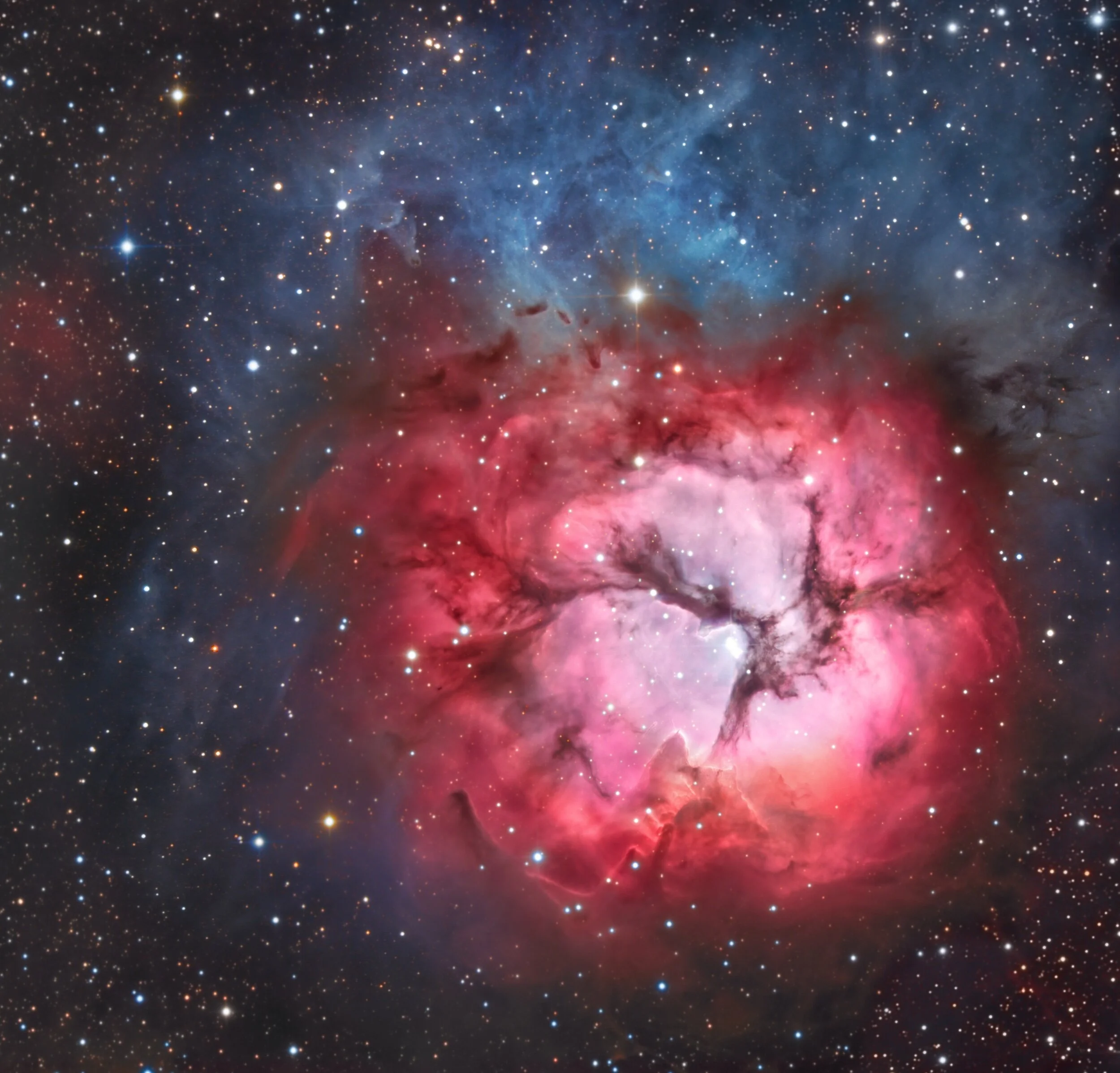
M20
Close up of M20 the Trifid Nebula. Located 9000 light years away in Sagittarius Trifid is a star forming nebula. It is a very popular subject for astrophotographers. This image was taken with our RiDK 700 in LRGB Hydrogen Alpha and Oxygen III to provide a detailed close up of the Nebula and surrounding gas clouds.
Imaged at El Sauce, Obstech, Chile
Image Processing: Mike Selby
System Control Software: Voyager by Leo Orazi.
Copyright: Mike Selby
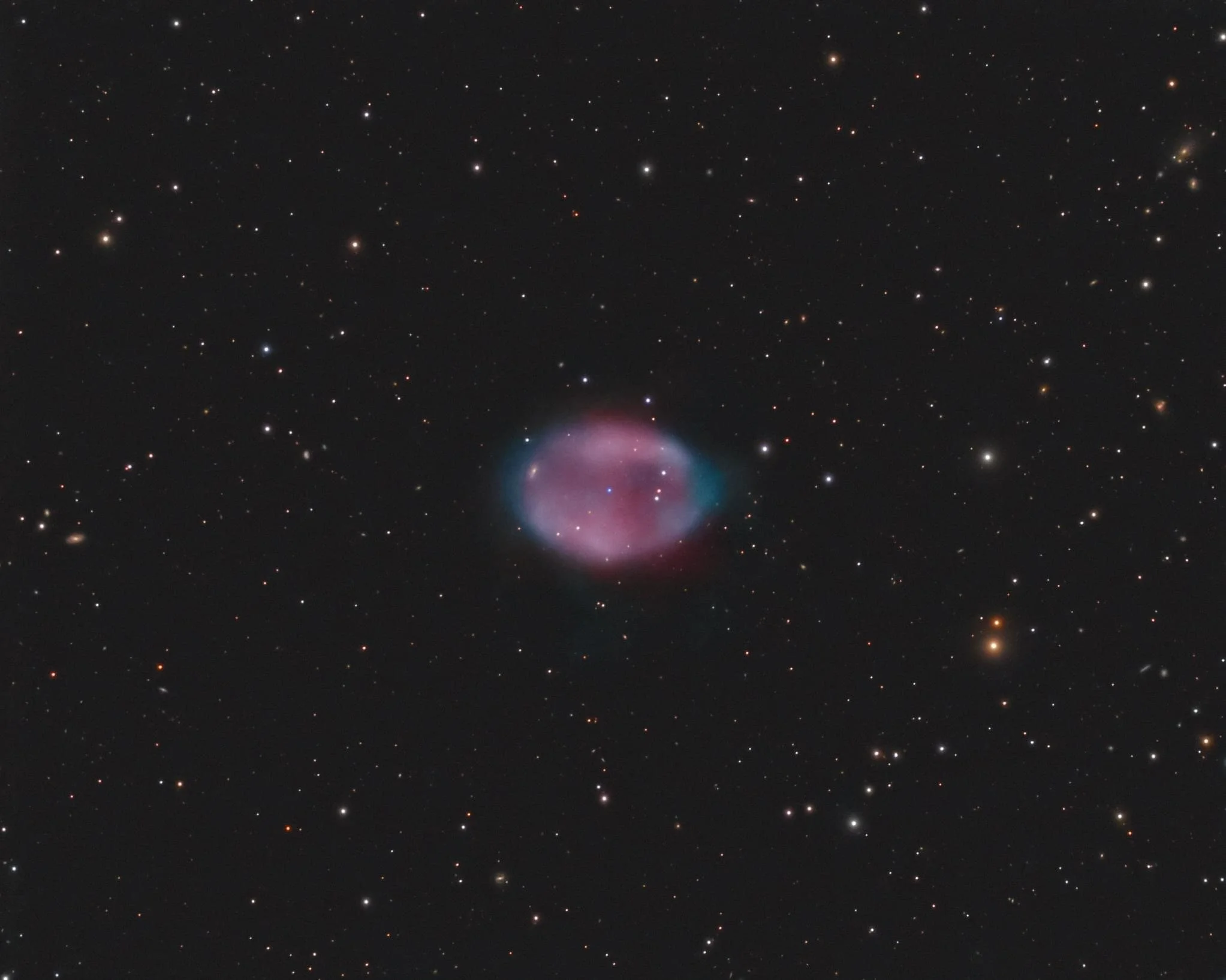
PN G136.7+61.9
PN G136.7+61.9 is a planetary nebula in Ursa Major.
PN G136.7+61.9 is extremely faint planetary nebula with size of about 7 arcminute that was discovered in 2013 by analysing data from the SDSS spectroscopic survey. The Sloan Digital Sky Survey or SDSS is a major multi-spectral imaging and spectroscopic redshift survey using a dedicated 2.5m wide-angle optical telescope at Apache Point Observatory in New Mexico, United States. The project was named after the Alfred P. Sloan Foundation, which contributed significant funding.
This is the first colour image ever taken of PN G136.7+61.9 planetary nebula. In appearance, as well as low surface brightness, this planetary nebula could be called "Night Owl Nebula".
This image taken over several nights in May 2021.
L-channel - 52 x 150 sec. bin 1x1;
R-channel - 24 x 150 sec. bin 1x1;
G-channel - 24 x 150 sec. bin 1x1;
B-channel - 24 x 150 sec. bin 1x1;
Ha- 59 x 900 sec. bin 2x2;
OIII- 50 x 900 sec. bin 2x2.
Total integration time about 32:25 hours.
My setup: Telescope 8" Celestron Schmidt-Cassegrain (SCT) CPC800 GPS (XLT) on the equatorial wedge, focal reducer Starizona Night Owl 0.4х, Feq=864mm, camera Starlight Xpress Trius SX694, SX mini filter wheel, filters Astrodon LRGB E-series gen.2, Astrodon Ha 5nm, Astrodon OIII 3nm.
Capture and processing software: MaxIm DL6, PHD2, PixInsight, StarTools, Photoshop CC, Zoner photo studio 14.
North at the top.
Copyright: Boris Vladimirovich
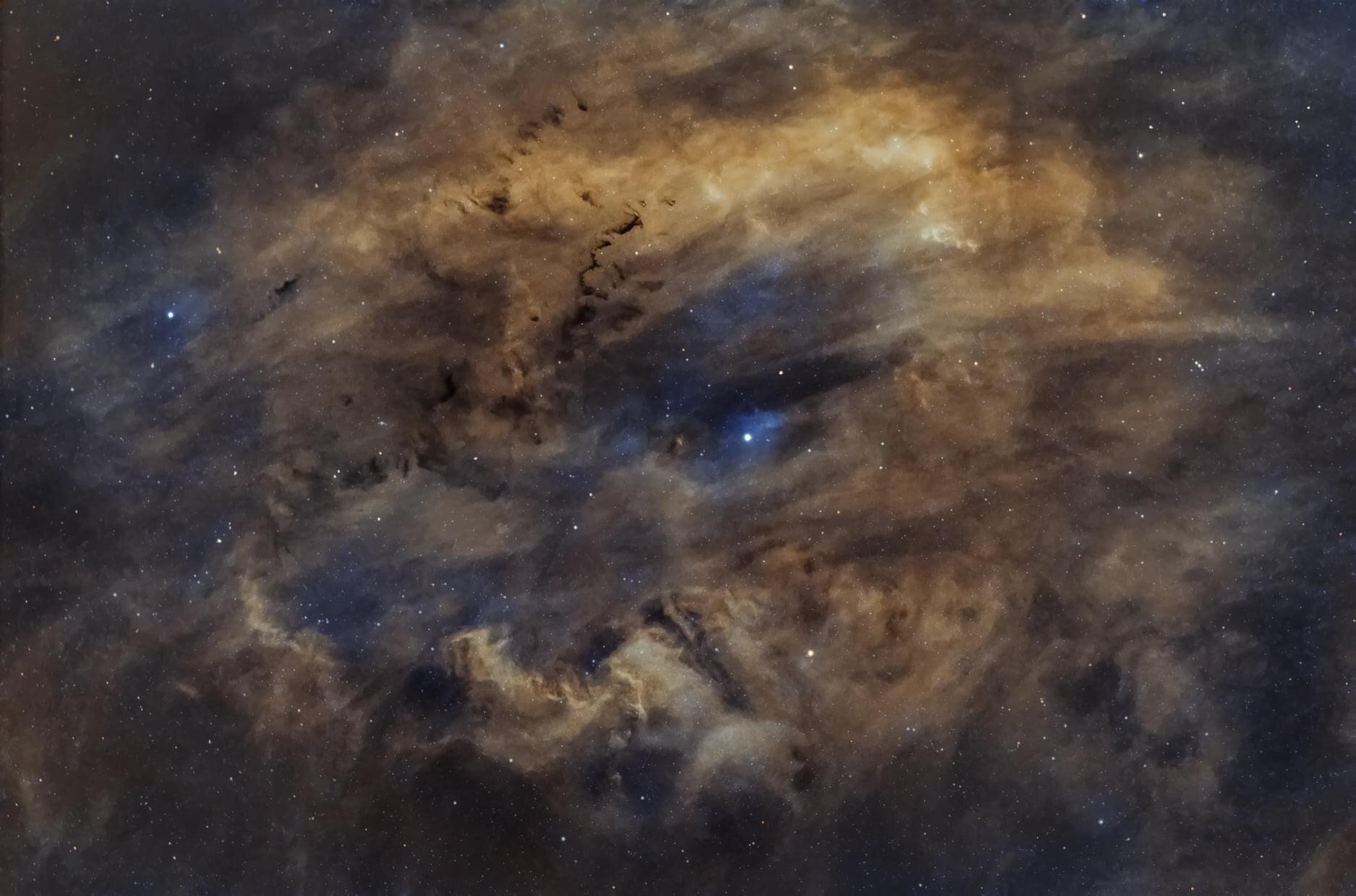
Sh2-119
Last astrophotography done mid-July on 5 straight nights.
This is Sh2- 119 show nebula from the Sharpless catalog, located in the Swan constellation.
Little photographed object, dark and H-Alpha gas areas and especially Oiii can be captured with long poses.
Especially since the moon was well present, so I used my L-Extrem filter to capture the signal from these two gases.
I used a PixInsight script from Zloch Team Astro (again thanks for all you tutorials if by chance you see this message..) to create a layer of Sulfure gas and mix all three layers into SHO - which results Interesting.
The 10 min posing times will have allowed me to be even more picky on my stationing and self-guiding. At this time we don't really have the right to ' about ' anymore.
A huge thank you to Yann Sty for all his tips: settings + treatment.
Matos+exives:
- EQM35 Pro mount driven via EQMOD
- bezel TS 71 SDQ f / 6.3
- ZWO ASI 2600 MC camera / gain 100 offset 50 / cooled to-10°C
- 90 x 600 s or 15 h with the L-extrem
- 20 x 120 sec in RGB with IDAS LPS P3 filter for stars
- 50 DOF
- pre-treatment + extraction of Ha and Oiii layers with SIRIL
- treatment with PixInsight and Photoshop.
Copyright: Nicolas Martino

Saturn and moons
Saturn and mmons taken from Réunion Island (indian océan) with C11, x2 barlox and asi224mc. we can see some moons like Mimas left top, Encelade right top and Rhéa left Bottom of saturn.
there is beautiful détails, A,B,C rings and cassini division. beautiful colors.
Copyright: Quentin Gineys
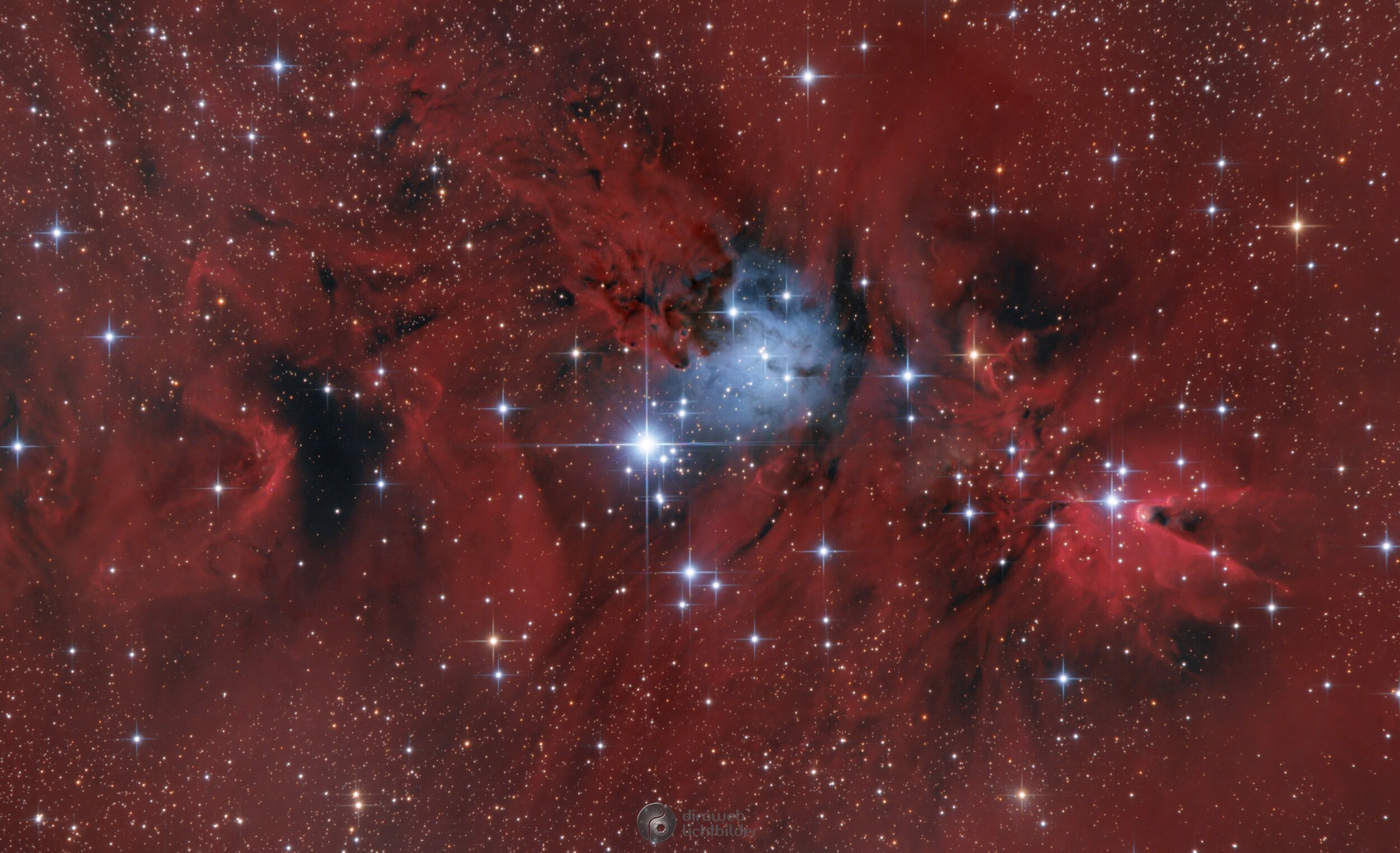
NGC2264
Image Description and Details :
NGC 2264, Christmas Tree Cluster, Cone Nebula
Begin, 21.02.2021, End 03.06.2021, five Nights
City: Hildesheim, Germany
Exposure:
71 x 600s H-alpha-OIII = 11,8 h
70 x 180s ´RGB = 3,5 h
Total = 15,3 h
Equipment:
Camera: ZWO ASI2600 MCpro
Telescope: Lacerta Carbon-Newton 8" (200/800)
Mount: EQ6R Pro
Gain 0, offset 20, temp -20°C
Guiding Mgen 2, dithering
No Flats, no Bias, no Darks
Software NINA, APP, PS
The first Project with the Astro Duo-Narrowband-Filter (Hα, OIII).
5 Nights, Moon 50-80 %
Copyright: Copyright: Ralf Dienst
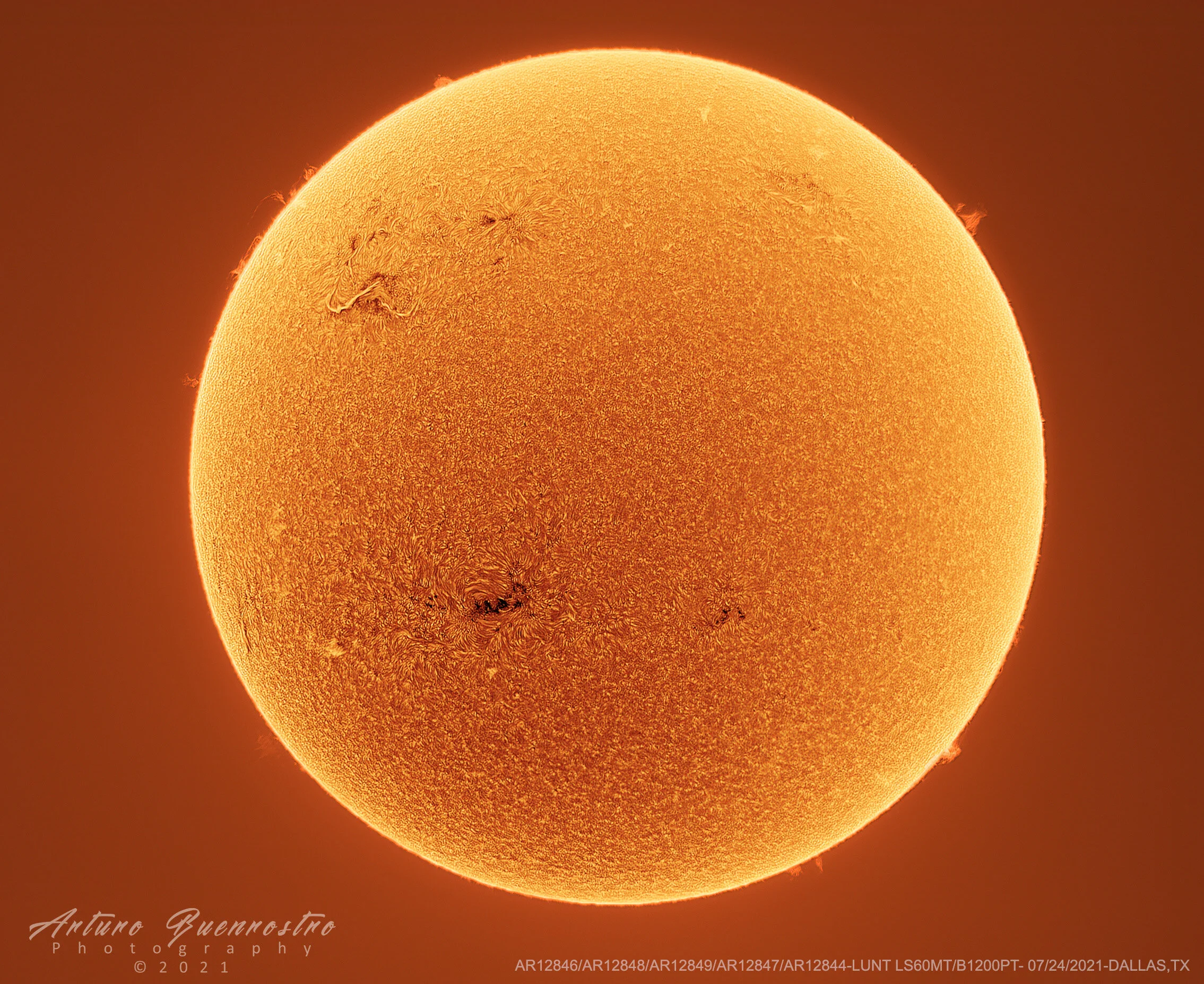
The sun wake up
Image Description and Details :
Solar activity continues and it seems that it is increasing, that is why we expect more solar landscapes like this, every day, every minute, a different landscape, you have to be there to capture it, here I managed to capture the solar activity of last July. 24 from Dallas, Texas.
Copyright: Arturo Buenrostro
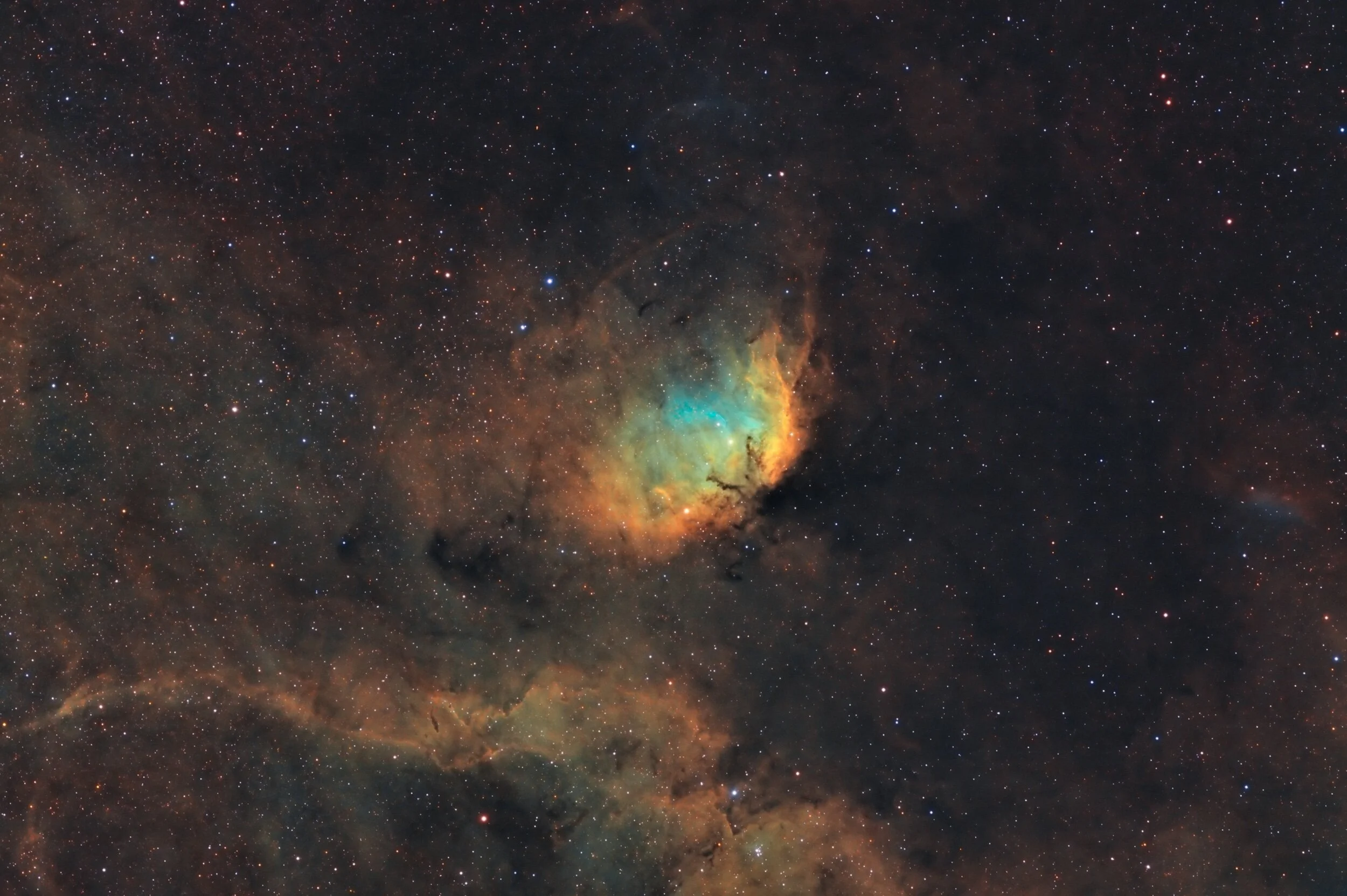
SH2-101 Tulip Nebula
Image Description and Details :
A real challenge! Through the smoke of Canadian forest fires, during a full moon and under a Bortle 9 sky, I took this picture of the Tulip Nebula (SH2-101) with about 10 hours of exposure in SHO from Montreal. I struggled with the processing, especially to bring out the weak OIII signal…
Interesting thing here, we can see the Cygnus X-1 binary system (above the Tulip nebula on the picture). It is a high mass X-ray binary system, it is a galactic source of X-rays. It was the first source of this type to be considered as a black hole.
TSA102
CEM70
Chroma 3nm filters
QHY294M
Copyright: Jonathan Durand
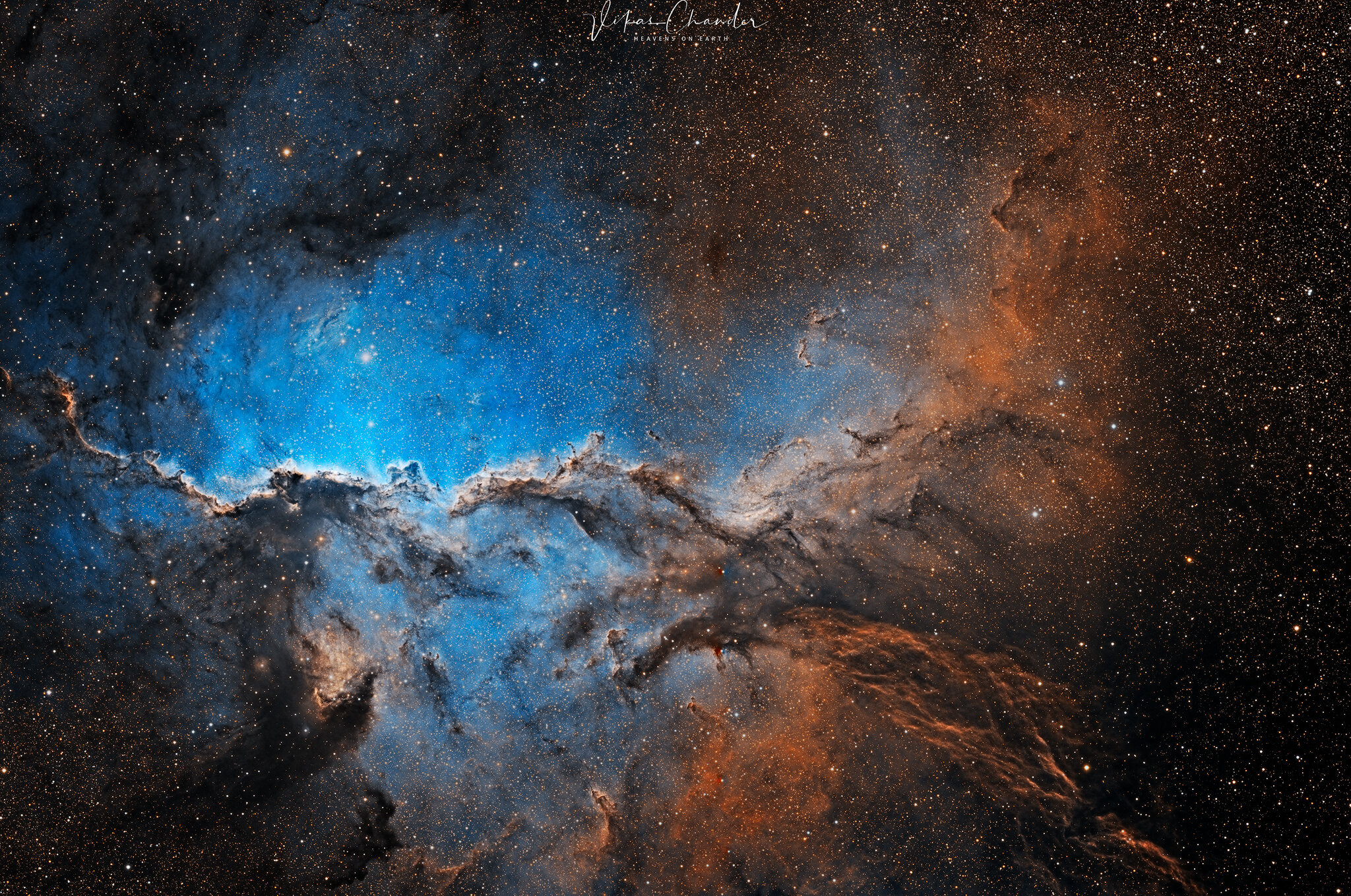
NGC 6188 Dragons of Ara
Image Description and Details :
The NGC 6188 emission nebula is found near the edge of an otherwise dark large molecular cloud in the southern constellation Ara, about 4,000 light-years away from us. Born in that region only a few million years ago, the massive young stars sculpt the fantastic shapes and power the nebular glow with stellar winds and intense ultraviolet radiation. The recent star formation itself was likely triggered by winds and supernova explosions, from previous generations of massive stars, that swept up and compressed the molecular gas. The field of view spans about four full Moons, corresponding to about 150 light years at the estimated distance of NGC 6188.
Telescope : Astro Physics 12″ Riccardi-Honders f3.8
Camera : ZWO ASI6200
Mount: Software Bisque Paramount ME II
Pixel scale : 1.07 arcsec/pixel
FOV : 88 x 66 arcmins
Filters :SHO & RGB for stars
2 panel mosaic
Integration: 21hrs each panel total 42 hrs
Sii 14x30m Ha 14x30m Oiii 14x30m
R 3x10m G 3x10m B 3x10m
Copyright: vikas chander
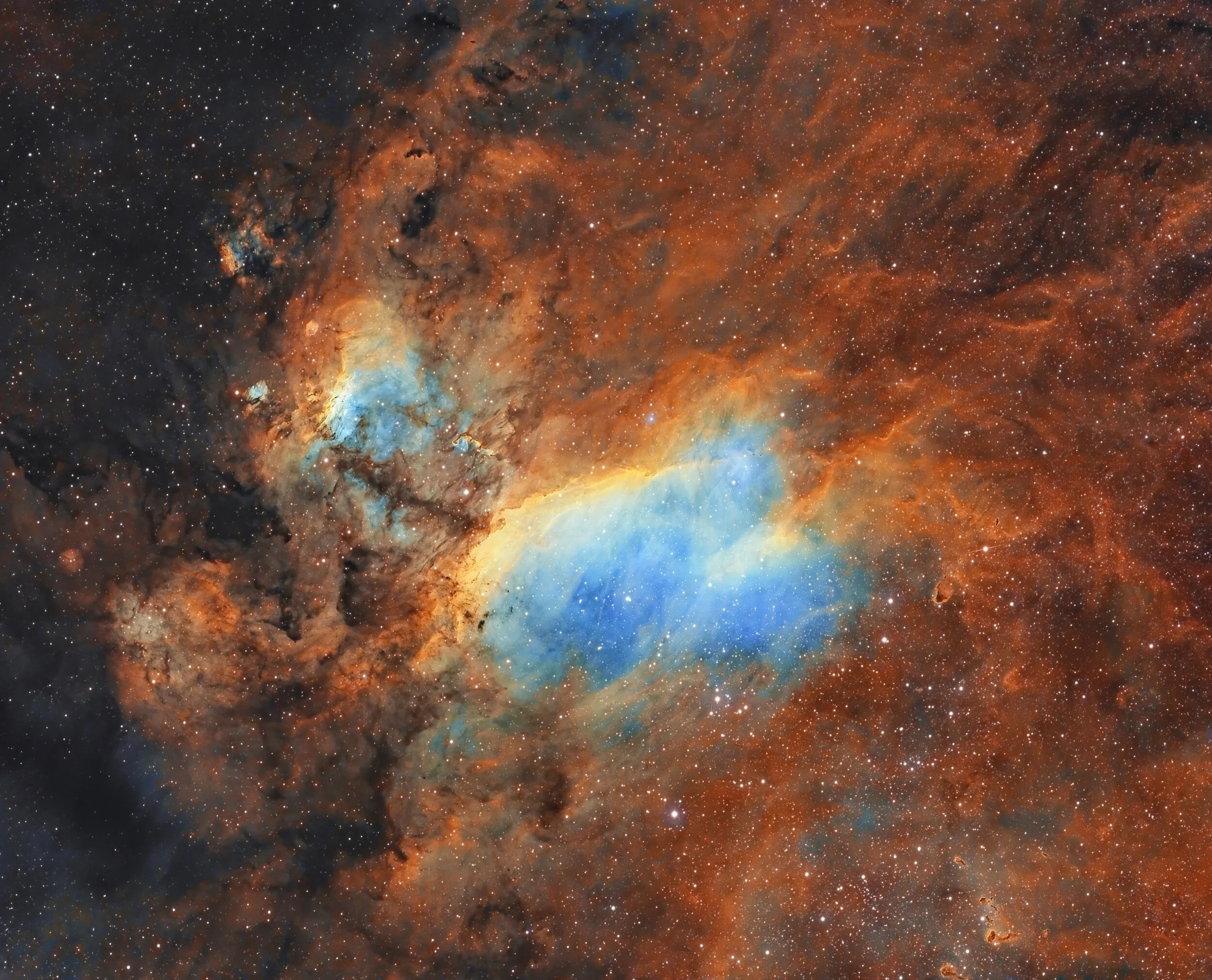
The Prawn Nebula
Image Description and Details : The Prawn Nebula was taken with my own backyard observatory, in Posadas city, Argentina, during march 2021 and processed in july 2021. More than 26 hours of exposure were integrated.
Equipment:
Imaging telescope: Skywatcher Esprit 120 ED Super APO Triplet
Imaging camera: QHY 16200A
Mount: SkyWatcher EQ6R-PRO
Guiding telescope: Sky-Watcher Evoguide 50 APO Refractor
Guiding camera: QHY5III-462C
Software: Main Sequence Generator Pro · Photoshop CC · PHD 2 · Pixinsight
Filters: Baader Planetarium SII 2" 8.5nm · Baader Planetarium H-Alpha 2" 7nm
Frames:
H-Alpha: 42x900" (10h 30') -20C bin 1x1
SII: 40x900" (10h) -20C bin 1x1
OIII: 25x900" (6h 15') -20C bin 1x1
Integration: 26h 45'
Avg. Moon age: 15.88 days
Avg. Moon phase: 84.70%
Bortle Dark-Sky Scale: 8.00
Copyright: Christian Hilbert
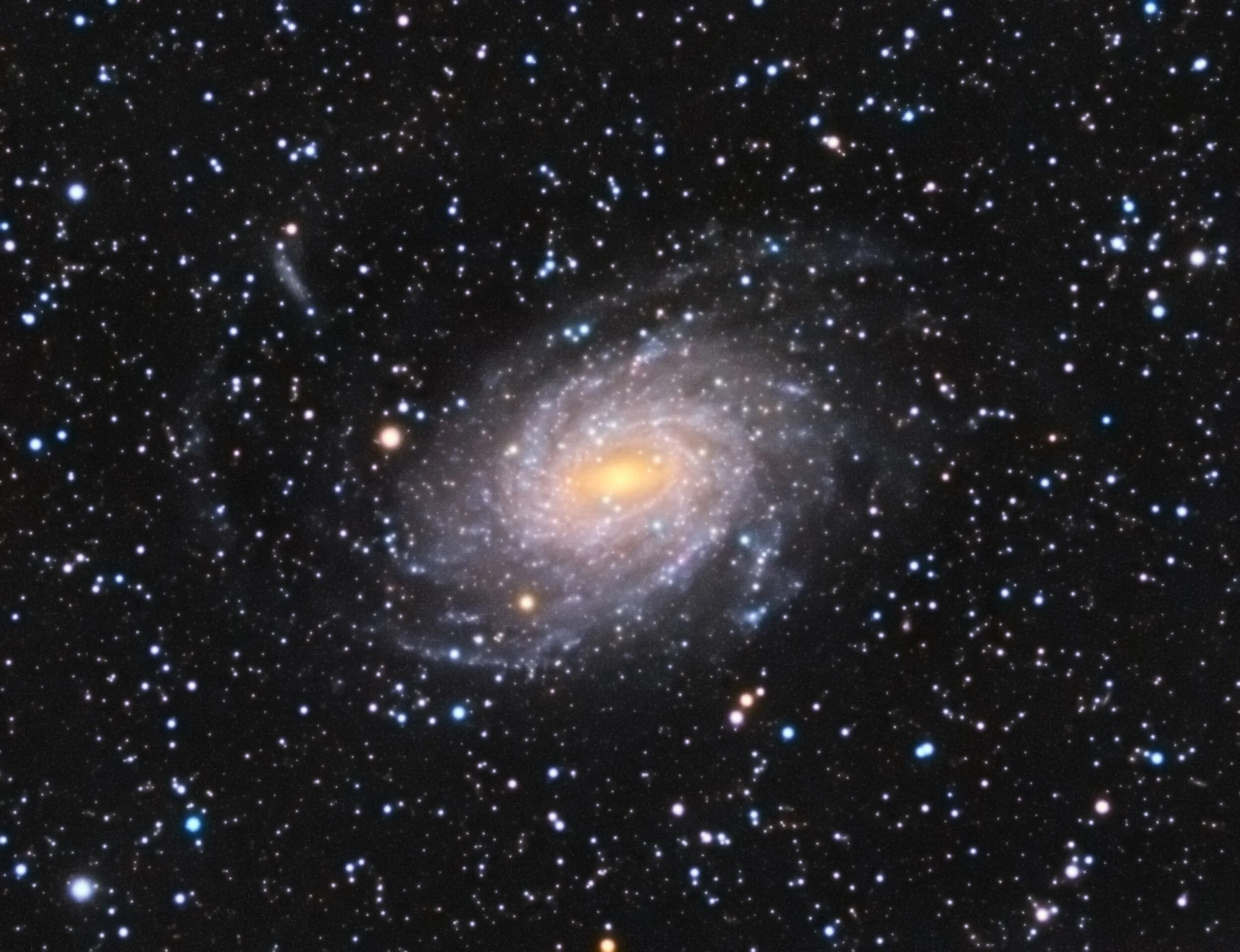
NGC 6744
Image Description and Details : NGC 6744 - I started this project at the end of May, capturing data over a total of 10 nights. This intermediate spiral galaxy is bigger than the Milky Way, with a disk stretching 175,000 light-years across. A small, distorted companion galaxy is located nearby, which is similar to our galaxy's Large Magellanic Cloud. This companion, called NGC 6744A can be seen in the main galaxy's outer arm in the upper left of this image.
Lights -
Lum: 529 X 60 sec
Red: 200 X 60 sec
Green: 200 X 60 sec
Blue: 200 X 60 sec
Darks - 50
Flats - 50 per filter
Flat darks - 50 per filter
Total integration time - 18.82 hours
Equipment
Telescope - @celestronuniverse Edge HD 800
Camera - @zwoasi ASI294MM Pro
Filters - Optalong L-Pro & Baader RGB filters
Mount - SW EQ6-R Pro
Focuser - @primalucelab ESATTO 2”
Guidescope - Astromania 70mm guidescope
Guide camera - @zwoasi 120mm
Controller - Pegasus Astro Pocket Powerbox
Main processing steps in Pixinsight
For Luminance data
1. Calibration, registration, normalisation & stacking
2. Dynamic background extraction
3. Deconvolution
4. MultiscaleLinearTransform
5. Histogram stretch
6. Curves
For the Colour data
1. Calibration, registration, normalisation & stacking
2. Dynamic background extraction
3. MultiscaleLinearTransform
4. Histogram stretch
5. Curves
For the RGB image
1. ChannelCombination
2. Dynamic background extraction
3. PhotometricColorCalibration
4. SCNR
5. Histogram stretch
6. Extract Luminance from RGB image
7. Apply LRGBCombination (L only) on RGB image repeatedly until colours are saturated
8. Convolution
For LRGB image
1. Apply Luminance date using LRGBCombination (L only)
2. Curves
3. MorphologicalTransformation
Copyright:Peter Dunsby

Transit from Ganymede
Image Description and Details :
Transit from Ganymede 25 July 2021
Average night conditions due to fine mist. The idea was to make a Gif of the Ganymede transit with at least 1 hour of duration, but due to fog the light conditions varied a lot, which would prevent having a homogeneous Gif.
Good thing Ganymede himself came out with good definition, note that especially in the image with the infrared filter the dark region of Edfu Facula at 2 am and the light region of Osiris at 6 am are perfectly distinguishable in the photo, which shows that they are not artifacts.
PS: The high resolution image of Ganymede was taken from the Virtual Planet Atlas.
Copyright: Astrovani
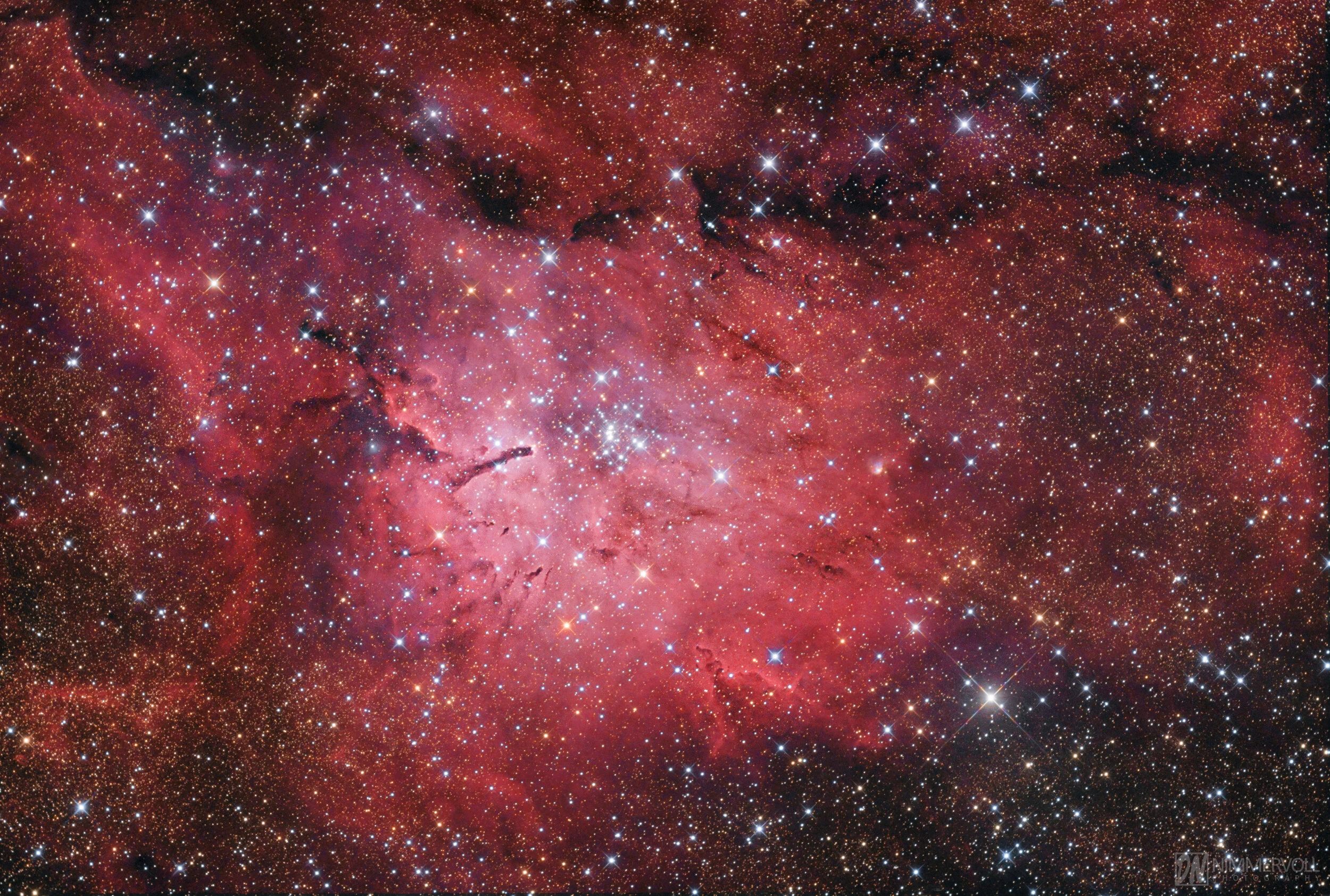
NGC 6820 / NGC 6823 / SH2-86
Image Description and Details :
Recording dates:
Photo taken in: July 2021
Location: Upper Austria
Distance: 6000 light years
Diameter: 50 light years
Exposure: 66 x 300 sec. For RGB
27 x 900 sec. With dual narrowband
Total: 12.2 hours
Calibration: Darks / Flats / DarkFlats
Mount: Skywatcher EQ6-R PRO
Telescope: Lacerta 10 ″ Photo Newton 250/1000
Corrector: Lacerta GPU coma corrector
Filter: Astronomik L2 UV-IR block
2 ″ Optolong Filter L-eXtreme 2 ″
Camera: QHY268c @ Gain 0 at -15 ° C
Guiding: ZWO OAG with QHY5III462c and PHD2
Software: APP / Photoshop CC
Copyright: Daniel Nimmervoll
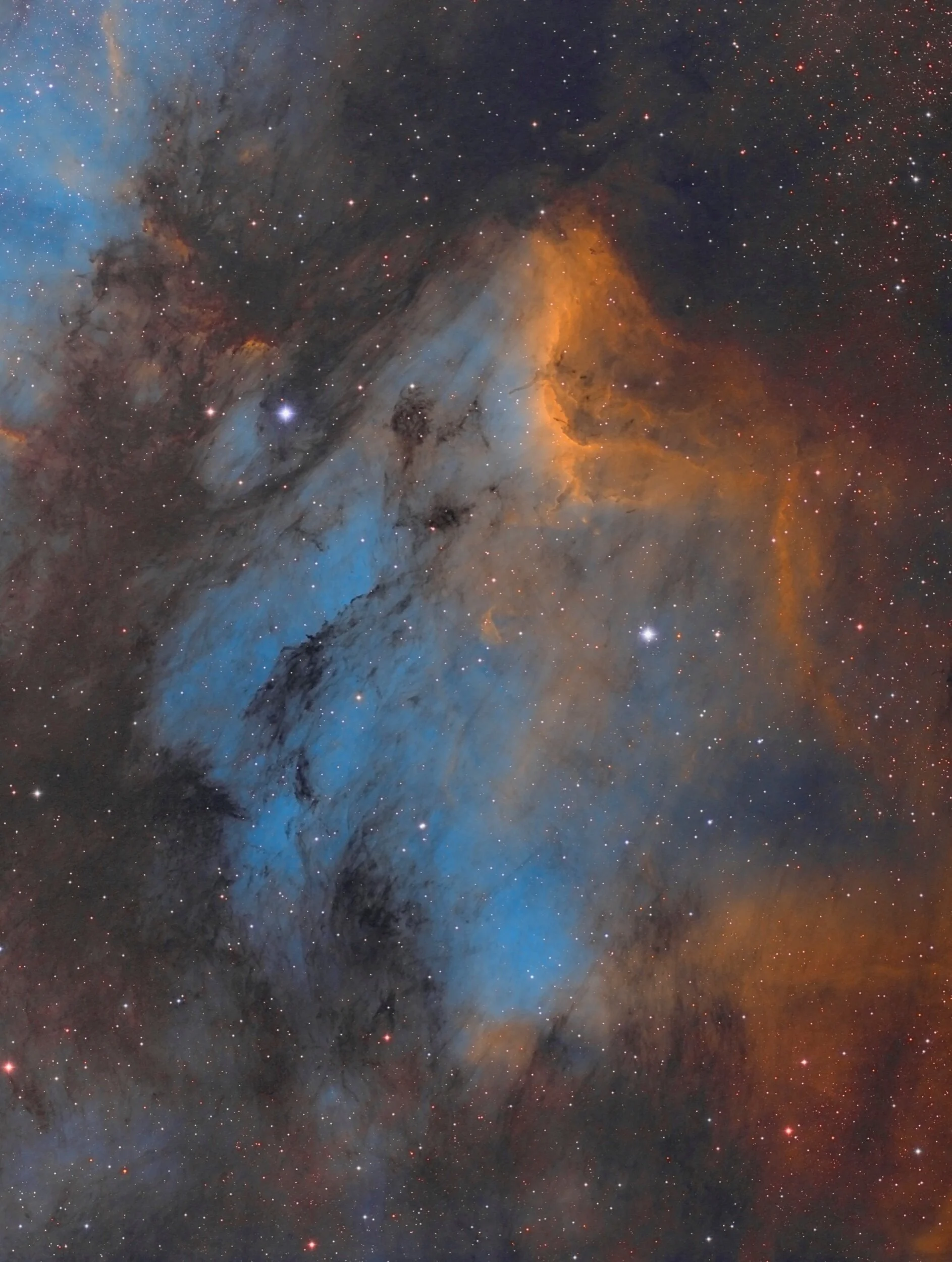
Pelican Nebula (IC5070)
Image Description and Details :
Tak FSQ-106ED F/5
SBIG STF-8300M
Astrodon S-ll, H-a, O-lll each 5nm 36mm 600sec x 21, 1bin
Orion CT80 + ZWO ASI 120mm mini
FLI Atlas Focuser
Skywatcher EQ8 mount (with EQ Drive standard4 TCS)
Copyright: Kim Young-Dae
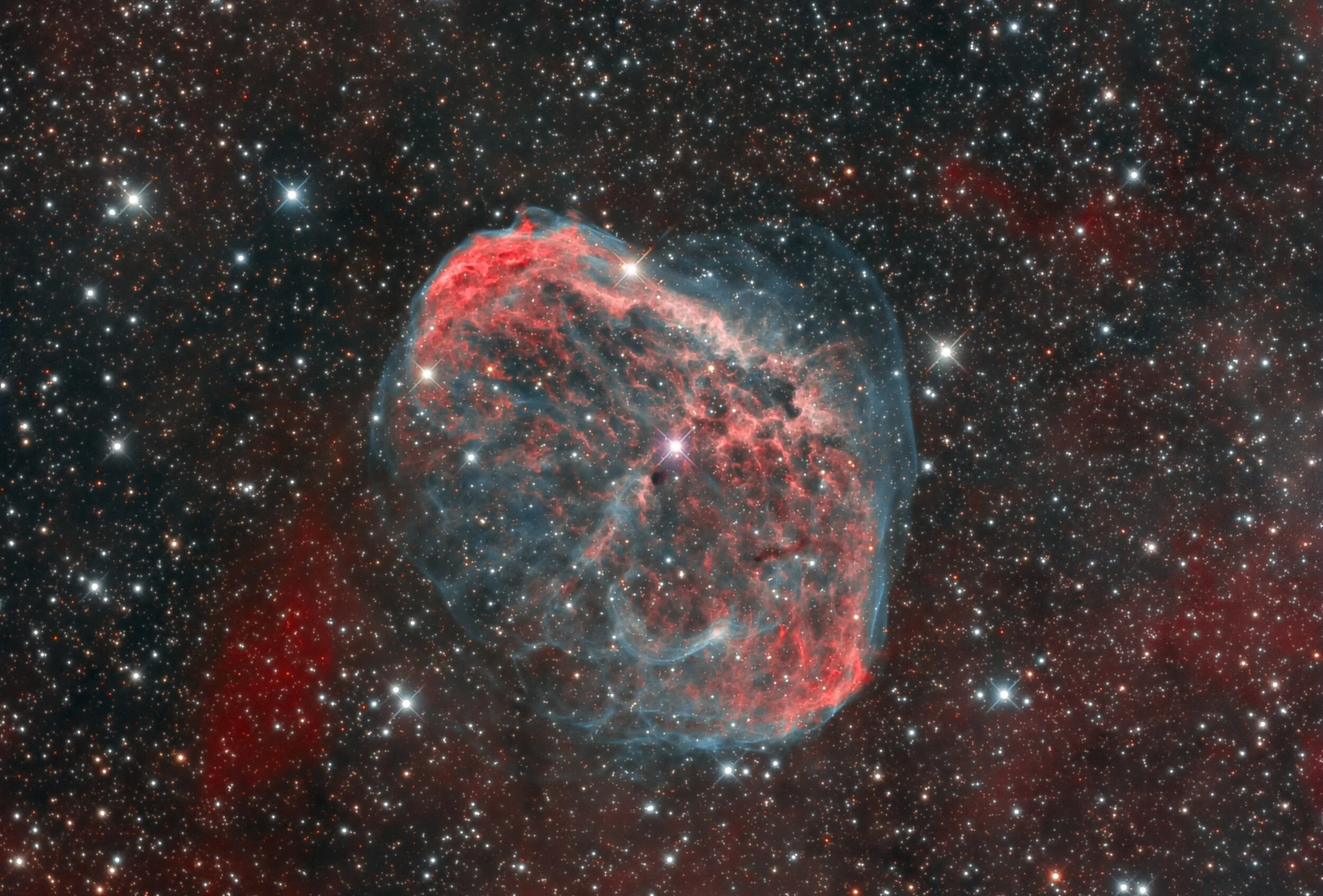
NGC6888 Crescent nebula
Image Description and Details : NGC 6888 captured during multiple nights between 2 and 13 July 2021, with two RC 8" on EQ6 mount and CEM70, two QHYCCD 183M camera and a CFW3 filter wheel equipped with Baader LRGB filters and Optolong LRGB-HA-Oiii fillter.
Multiple exposure time has been used to obtain the best of details, for a total exposure time of about 45 hours.
HAlpha 135x600" -20C bin 1x1aa
Oiii 120x600" -20C bin 1x1
RGB: 30x300" -20C bin 1x1 10s for each filter
Copyright: Acquisition by Giuseppe Amante & Alessandro Pensato.
Pixinsight processing by Giuseppe Amante
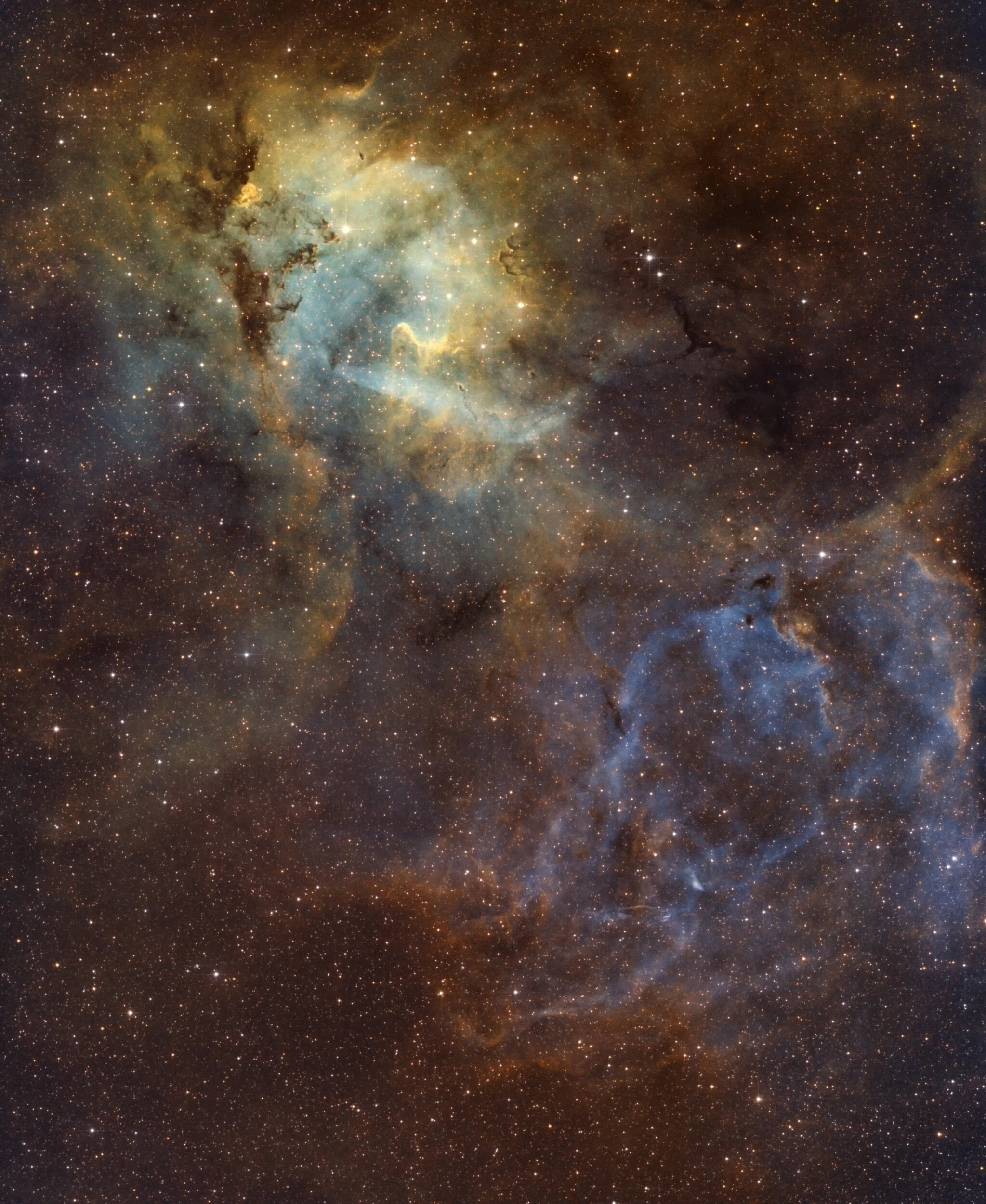
SH2-132 (Lion Nebula)
Image Description and Details :
SH2-132 SHO 2 Panel Mosaik (Lionnebula)
One night with each Filter and Panel.
Zwo Asi 1600mm Pro
UNC8" F4 (800mm)
600mm Guidescope and the Zwo Asi120mm for guiding.
Mount SW EQ6 Pro.
All together 18h integration time
Subframes 600sec Gain 139 -15C .
Flats Darks Darkflats
Dithering
Software: N.I.N.A PHD Pixinsight Photoshop
Imaged in west germany under bortle 4 Sky.
Copyright: Frank Föhles
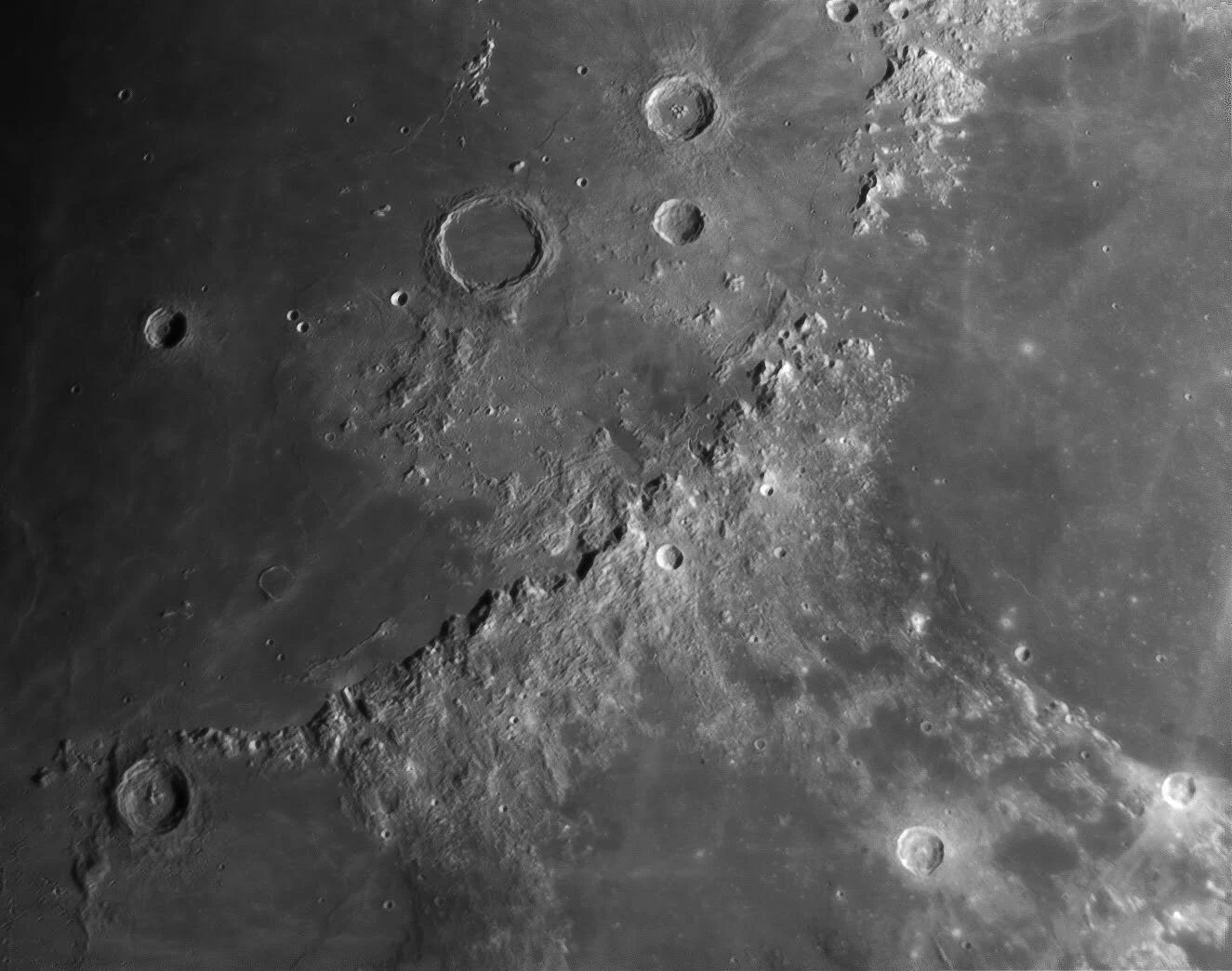
Montes Apeninos
Image Description and Details The Apennines stretch a total length of about 600 km and the mountain peaks reach heights of 5000 m. The slopes towards Mare Imbrium are relatively steep with slopes of approximately 30 °, while on the opposite side, towards Mare Vaporum and Sinus Aestuum they are significantly less.
Equipo:
Telescopio CPC1100
Cámara Zwo Asi 385mc
Observatorio CASA
Granada / España
Copyright: Benjamin Hernandez
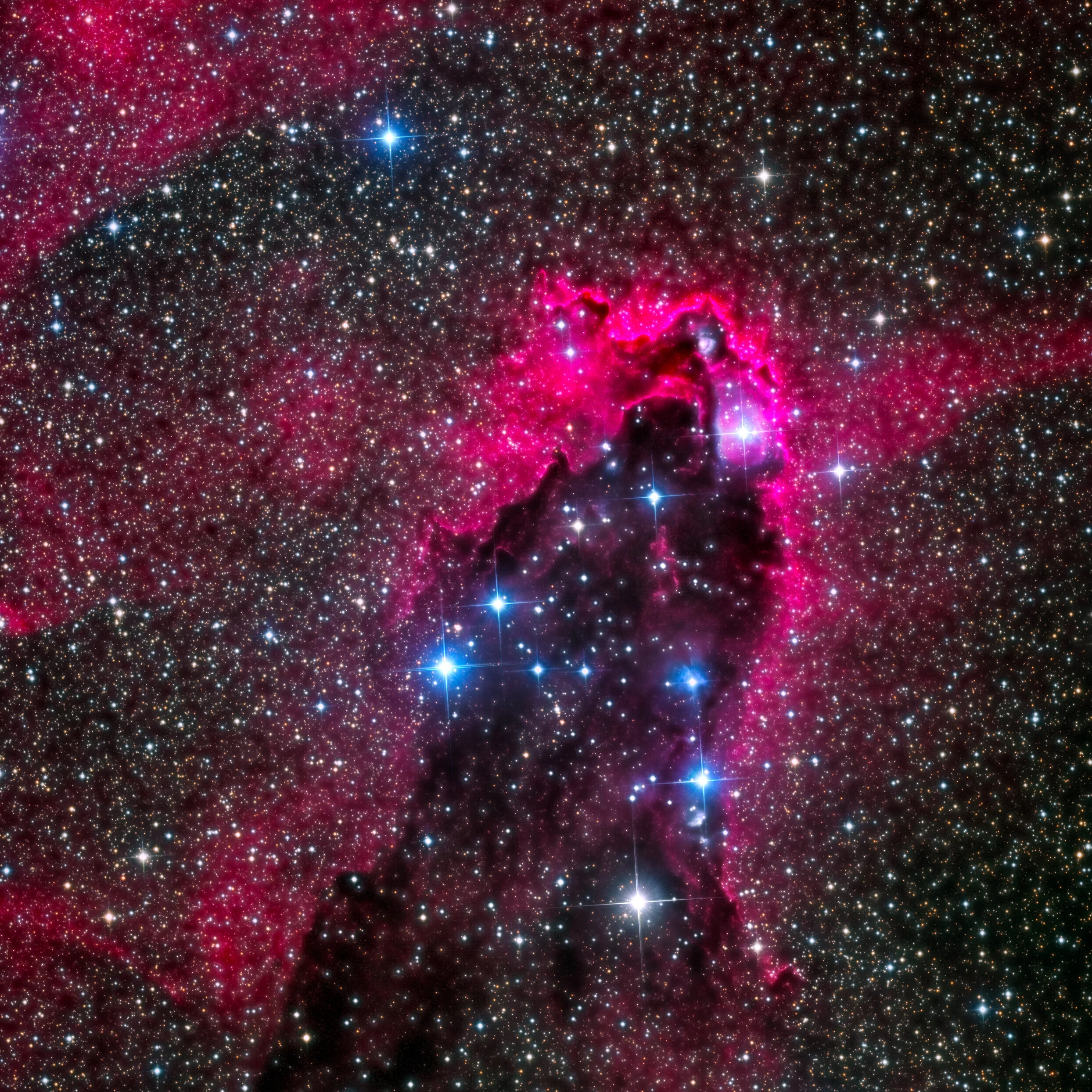
Dark Nebula in Scorpius
Image Description and Details :
An ominous dark nebula rises against the a bright star field and glowing gasses, alongside the tail of the Scorpius constellation. The structure spans almost 40 light years and dust and gas collapse to form stars within this dark nebula. Also known as a cometary globule, the cloud is shaped by ultraviolet radiation from the very hot stars in NGC 6231. The ultraviolet light also illuminates the reddish glow of hydrogen gas. Hot stars embedded in the dust can be seen as bluish reflection nebulae. This dark nebula, NGC 6231, and associated nebulae are about 5,000 light-years away.
Telescope : Planewave CDK 17 F6.8
Camera : SBIG STXL 11002
Mount: Software Bisque Paramount ME
Pixel scale : 0.63 arcsec/pixel
FOV : 42 x 29 arcmins
Filters :LRGB & Ha
Integration: 28hrs
Observatory : El Sauce
Software: PixInsight & Photoshop
Copyright: vikas chander
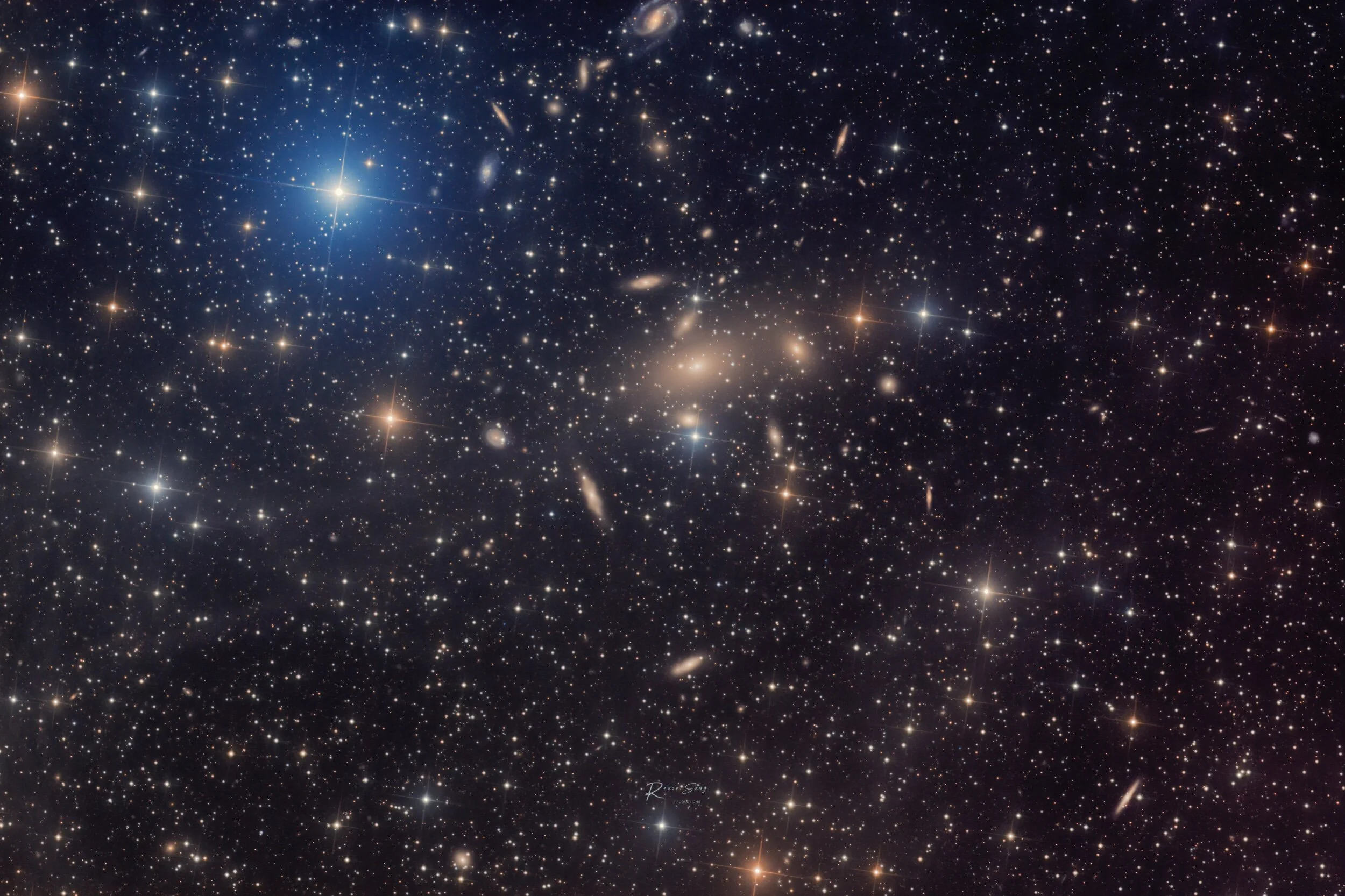
IC4765
Image Description and Details : Object : IC4765
Data : LRGB 500:330:420:240, total 24 hours 50 minutes
Description : Galaxy Cluster in Pavo
Telescope : Planewave CDK 17, Camera : SBIG STXL 11002 with AOX, Tracking : Paramount ME
Location : Observatorio El Sauce, Chile
Image processing software : Pixinsight, Photoshop
Date last acquired the data : 14-Jul-2021
Copyright: Image captured : Martin Pugh
Image processing : Rocco Sung
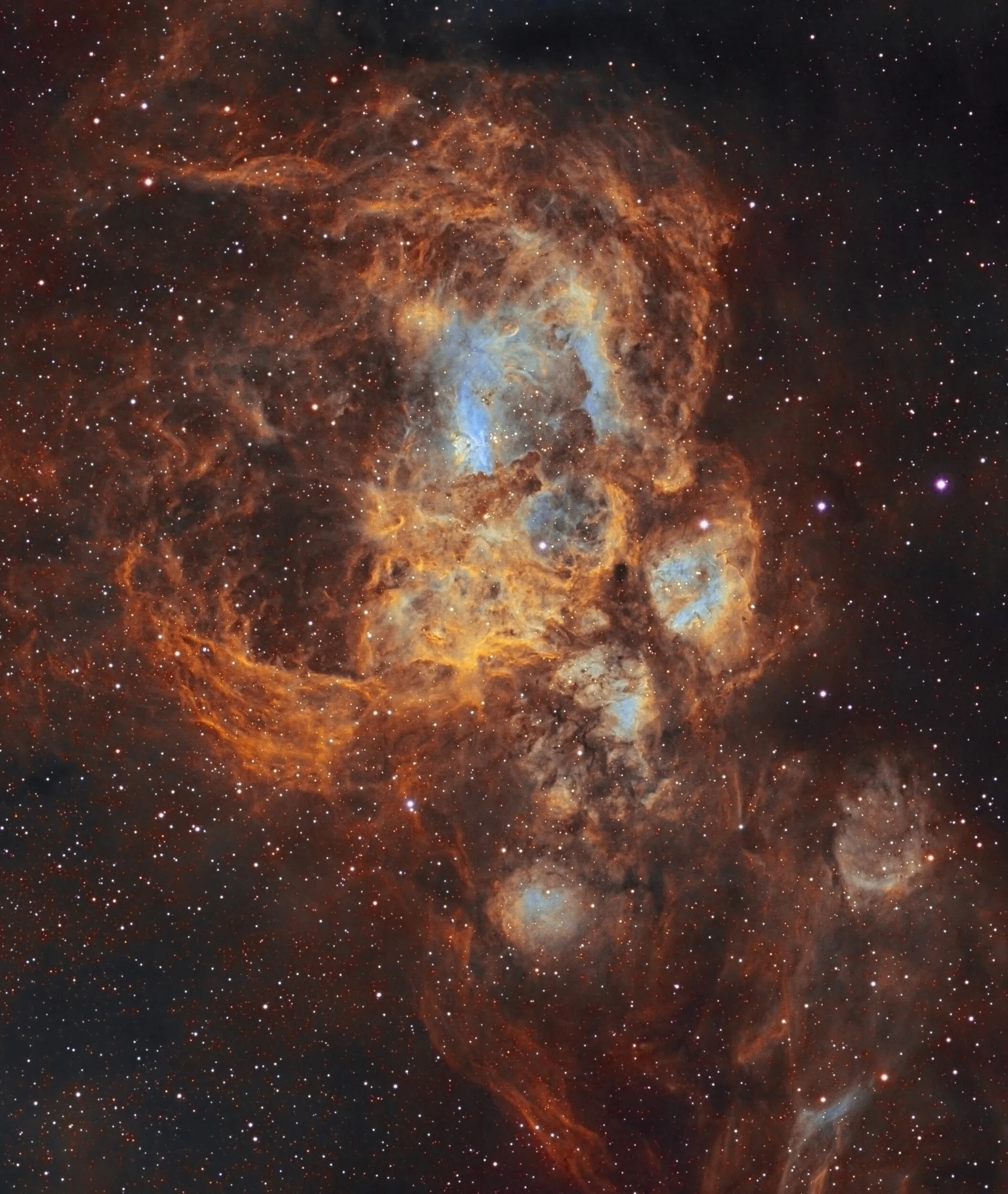
NGC 6357 War & Peace Nebula
Image Description and Details :Astrophotography taken in 2020 with my own equipment and reprocessing in 2021.
Imaging telescope: Skywatcher Esprit 120 ED Super APO Triplet
Imaging camera: QHYCCD 16200A
Mount: SkyWatcher EQ6R-PRO
Guiding camera: QHY5L-II
Software: Sequence Generator Pro · Photoshop CC PS · PHD2 · Pixinsight
Filters: Chroma OIII 3nm · Baader Planetarium SII 8.5nm · Baader Planetarium H-Alpha 7nm
Frames:
Ha: 34x900" (8h 30')
SII: 35x900" (8h 45')
OIII: 35x900" (8h 45')
Integration: 26 hours
Avg. Moon age: 15.01 days
Avg. Moon phase: 39.41%
Bortle Dark-Sky Scale: 8.00
Posadas, Argentina
Copyright: Christian Hilbert
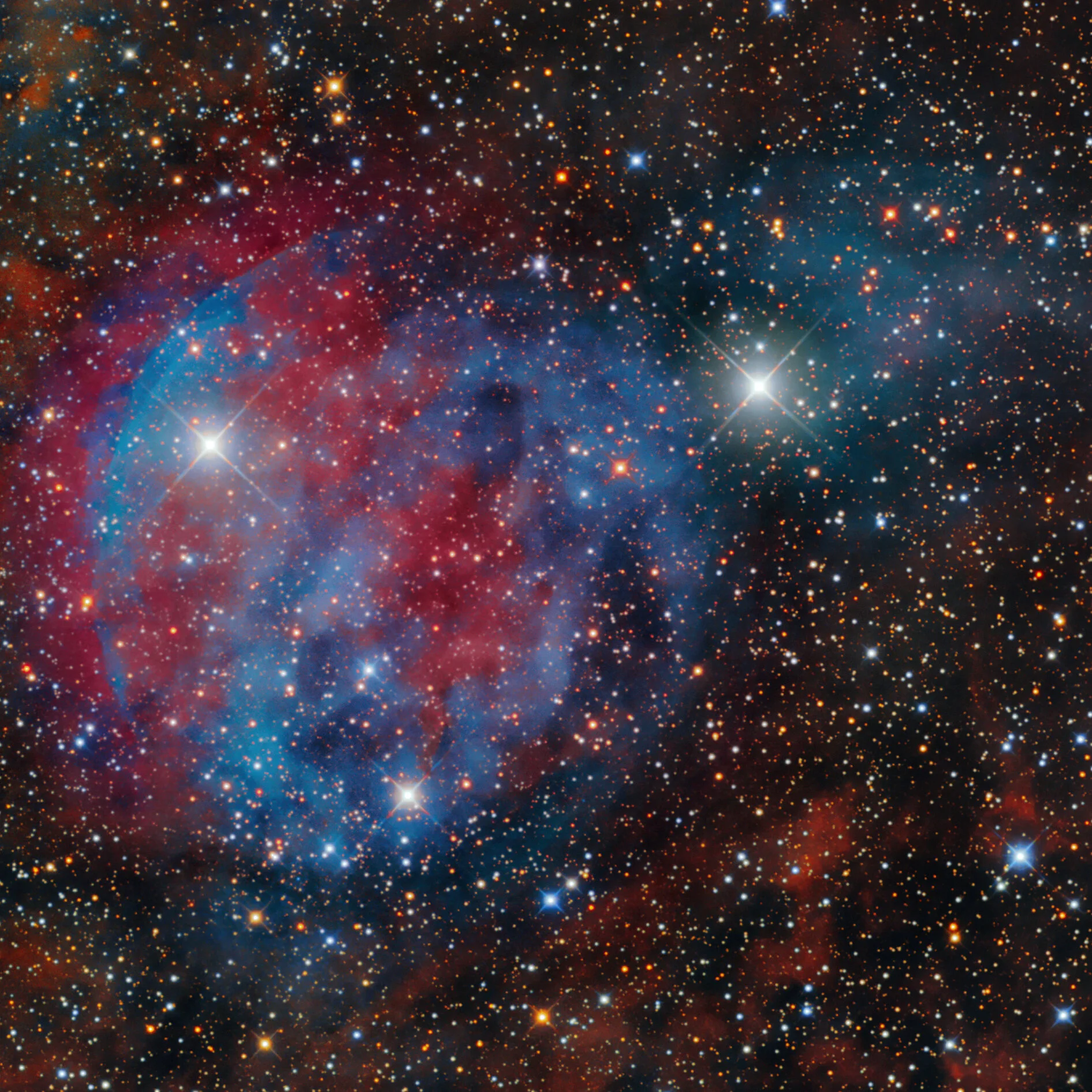
PaRasMoMi-1
Image Description and Details :
Dear friends, we are pleased to present you our latest discovery!
PaRasMoMi-1 stands for: "Dana Patchick-Sakib Rasool-Sankalp Mohan-Utkarsh Mishra".
It was Discovered by all four of us in april 2021 and we tried to guess what this object could be using the data that was available online, no doubt this new discovery needs some good scientific study
PaRasMoMi-1 lies in the constellation Monoceros and is 5942 ly (light-years) away from earth.
It is near the Rosette nebula/NGC 2237 and is officially designated at Hong Kong/AAO/Strasbourg H-alpha planetary nebula database. Comprehensive database of all known planetary nebulae.
PaRasMoMi-1 is Potential Planetary Nebula candidate which officially designated at Planetary Nebula net and at HASH Portal. by Dr. Quentin Andrew Parker
and designated By Pascal Le Dû on Planetary Nebula dot net.
The size of this nebula is very big and that is around 26 arcmins
*(Almost same size of moon in terms of apparent size)*
We want to thank our friend Patrick Dufour who photographed this nebula for around 20hrs from his remote observatory in Chile. He used a 12" AG Optical RC Telescope and QHY 600 Mono CMOS camera with SHOLRGB filter to capture the region. Since the object was only visible in OIII we asked him to capture as much OIII as possible and Patrick did a great job by collecting the data quickly - as the object was close to the horizon.
Patrick supplied us with the data and I started examining it and created a few Continuum free images of OIII and H-alpha to really bring out the structure details.
Sakib and Dana i look forward to learn more from you
PaRasMoMi-1 object details:
PN-G: 206.2+00.6
Coordinates: 06:41:30.00 +06:16:30.00
Size: 26 arcmins (Almost apparent size of the moon)
Visible in : OIII
Image Credit copyright ; Patrick Dufour, Utkarsh Mishra
Technical Information
Imaging telescopes or lenses: AG Optical 12.5" iHW
Imaging cameras: QHYCCD QHY600
Mounts: iOptron CEM120 EC2
Guiding telescopes or lenses: AG Optical 12.5" iHW
Guiding cameras: ZWO ASI290MC
Software: Pixinsight 1.8 · NINA - Nighttime Imaging ‘N’ Astronomy
Filters: Astrodon Ha 50mm 5nm · Astronomik LRGB IIc lrgb · Astrodon S2 50mm 5nm · Astrodon O3 50mm 5nm
Dates: April 8, 2021 , April 10, 2021 , April 11, 2021 , April 14, 2021 , April 15, 2021 , April 17, 2021 , April 18, 2021
Frames:
Astrodon Ha 50mm 5nm: 27x600" (4h 30') (gain: 26.00) bin 1x1
Astrodon O3 50mm 5nm: 55x600" (9h 10') (gain: 26.00) bin 1x1
Astrodon S2 50mm 5nm: 12x600" (2h) (gain: 26.00) bin 1x1
Astronomik LRGB IIc lrgb: 124x120" (4h 8') (gain: 26.00) bin 1x1
Integration: 19h 48'
Avg. Moon age: 14.14 days
Avg. Moon phase: 12.42%
Copyright: Image acquisition :Patrick Dufour ,
Image Processing : Utkarsh Mishra