

AAPOD2 Image Archives
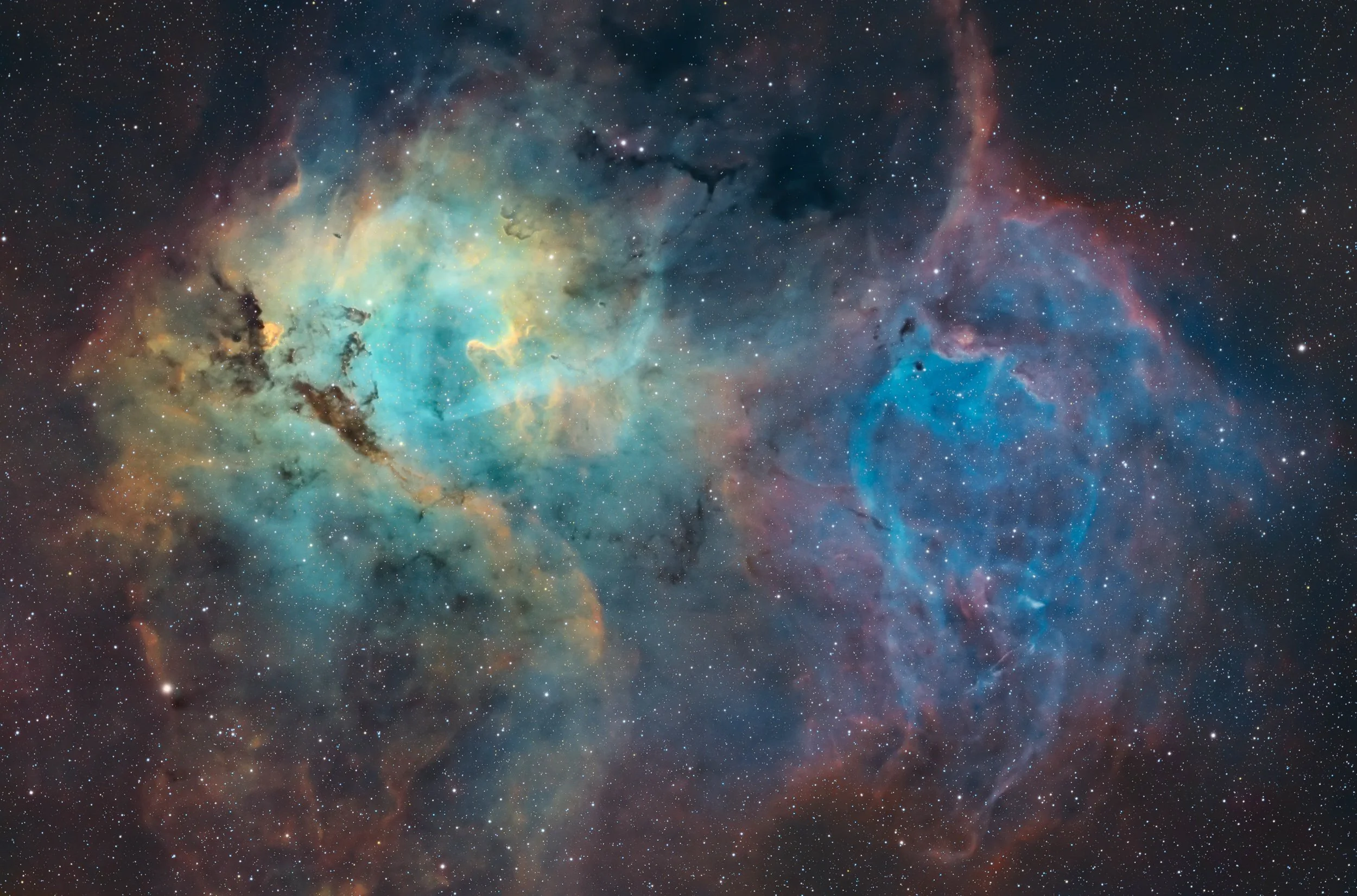
SH2-132 Lion Nebula
Image Description and Details : Sh2-132 or Lion Nebula, is a nebula of relatively weak emission located at about 10 000 light-years, at the border of Cepheus/Lacerta.
About 22 hours of exposure from Montreal, Bortle 9
Setup:
CEM70A
TSA102
QHY294MM
Chroma 3nm filters
Copyright: Jonathan Durand
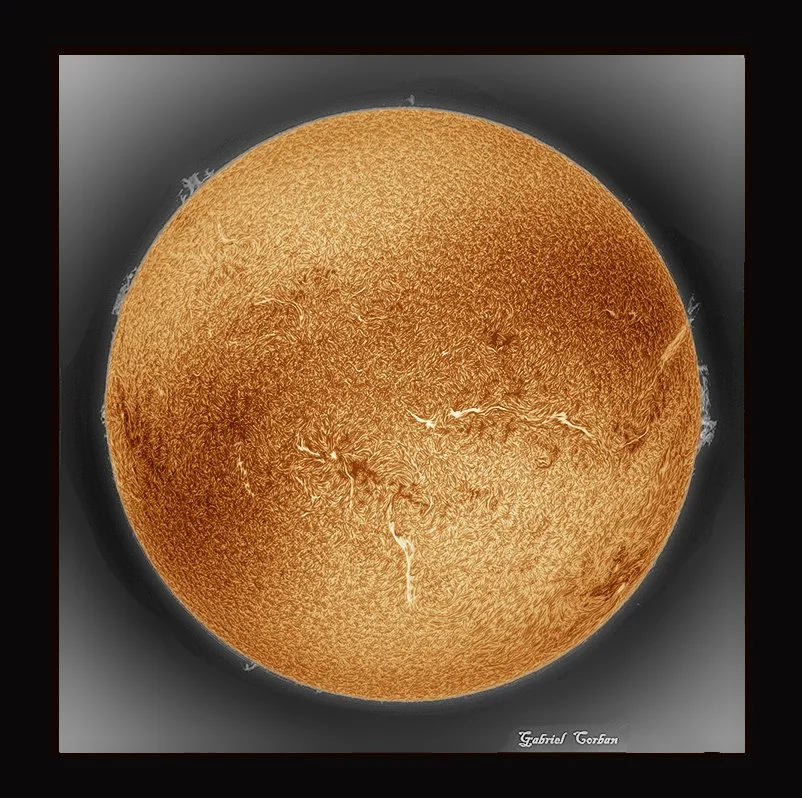
The golden Sun
Image Description and Details : This splendid disk of the Sun image shot in H-alpha frequency was obtaining using a Lunt 60 DS (double stack) telescope, a Point Grey Chameleon b/w camera and a Skywatcher NEQ6 Mount. Capturing frames using the FireCapture Software and processing frames using AutoStakkerty, PhotoShop, PIPP and RegiStax6 software. i
Copyright: Gabriel Corban

Heart, Soul & Bear Claw
Image Description and Details : Imaging telescope: TPO Ultrawide 180
Imaging camera: ZWO ASI2600MC Pro
Mount: Sky-Watcher EQ6R-PRO
Guiding telescope: ZWO Mini Guide Scope
Guiding camera: ZWO ASI290MM Mini
Software: Pleiades Astrophoto PixInisight, Aries Productions Astro Pixel Processor, ZWO ASIAir Pro, Photoshop CC
Filters: Optolong L-eXtreme 2", Optolong L-Pro 2''
Dates: Sept. 28, 2021, Sept. 29, 2021, Oct. 5, 2021, Oct. 8, 2021, Oct. 9, 2021, Oct. 10, 2021, Oct. 11, 2021
Frames:
Optolong L-Pro 2'': 60x60" (1h) (gain: 100.00) -10C bin 1x1
Optolong L-eXtreme 2": 96x1200" (32h) (gain: 100.00) -10C bin 1x1
Integration: 33h
Darks: 40
Flats: 40
Flat darks: 40
Bortle Dark-Sky Scale: 8.00
Copyright: Jeffrey Horne
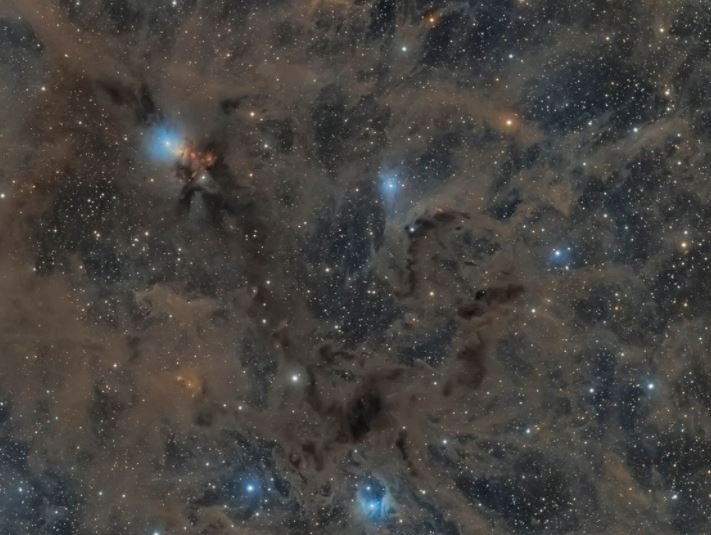
Perseus Molecular Cloud
Image Description and Details : First "official" photo of our team Team Stellae Orientis Astrophotographie with the Perseus molecular cloud in LRGB by Yann SAINTY.
The Perseus molecular cloud contains the nebulae NGC1333 and IC348.
First lights on the fsq106 and the 2600MM and the result is up to my expectations. Combined with a bortle 4 sky this setup promises beautiful moments.
No moon so I wanted to image NGC1333 but seeing the beauty of IC348 next to it I could not resist the appeal of the mosaic despite the fact that it was not recommended during a first session with a new setup.
I imaged over 2 nights instead of 4 (lots of humidity and fog), which frustrates me in the sense that I only got half of the raws I wanted and so I had to shoot more processing. as desired, but you have to know how to have fun and try things!
Technic :
Takahashi FSQ106 EDX4 with 645-QE super reducer
Asi 2600MM Pro
LRGB Antilla Filters
Eq6r-pro
Altaïr 60/225 guide + asi 290mm mini
L: 45x300 '' per tile
R - V -B: 15x300 '' per filter per tile
Sky bortle 4
Acquisition: N.I.N.A + Phd2
Processing: Siril + PixInsight + Photoshop
From France
2021/10/07 & 2021/10/10
Copyright Yann SAINTY

The wizard nebula
This image was captured through 3nm ultra-narrowband filters and is a composite of ionized Sulphur, Hydrogen, and Oxygen atoms and displayed with a modified SHO "Hubble" Palette. Data was collected over 2 nights from the 11th to 12th of October 2021 from the outskirts of Vancouver, Canada.
Imaging telescopes or lenses: Planewave CDK 12.5
Mounts: Astro-Physics AP1100 GTO CP4
Unguided
Chroma 3nm H⍺: 52x300" (4h 20')
Chroma 3nm OIII: 36x300" (3h)
Chroma 3nm Sii: 35x300" (2h 55')
Integration: 10h 15'
Pixel scale: 0.923 arcsec/pixel
Copyright: Rouzbeh Astro
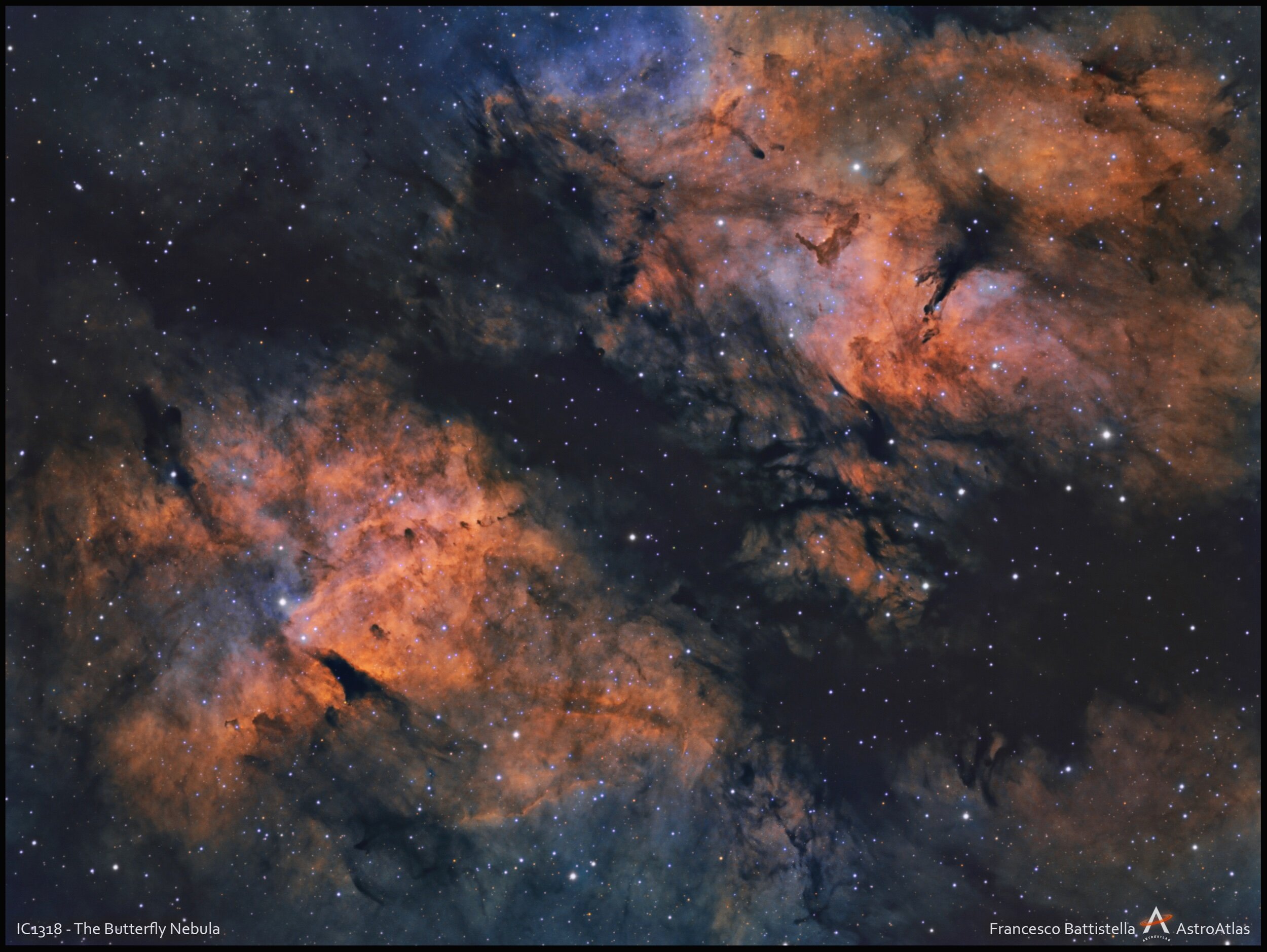
IC1318 - The Butterfly Nebula
Image Description and Details : Technical Information:
Telescope: AIRY APO 130T
Mount: Paramount MyT - Software Bisque
Camera: QHYCCD QHY9
Filter: Optolong H-a 7nm, OIII 6.5nm, SII 6.5nm
Frames: H-a: 60x900s -- OIII: 34x900s -- SII: 44x900s
Total Integration: 34.5 Hours
Software: SGP – TheSkyX – PHD2 – DSS – PixInsight – Photoshop 2021
Location: AstroAtlas Observatory - Noventa di Piave (Venice) 4 meter above sea level – ITALY
Environment Temperature: About 18°C
Relative Humidity: 84%
Date: 27.05.21 - 28.05.21 - 03.06.21 - 22.06.21 - 26.06.21 - 30.06.21 - 05.07.21 - 09.07.21 - 10.07.21 - 11.07.21 - 28.07.21
This is the Hubble Palette version of IC1318 - The Butterfly Nebula - taken from the AstroAtlas Observatory situated in Noventa di Piave (ITALY);
NOTE: The image was acquired from a polluted sky with high humidity - Bortle 5.
Copyright: Francesco Battistella
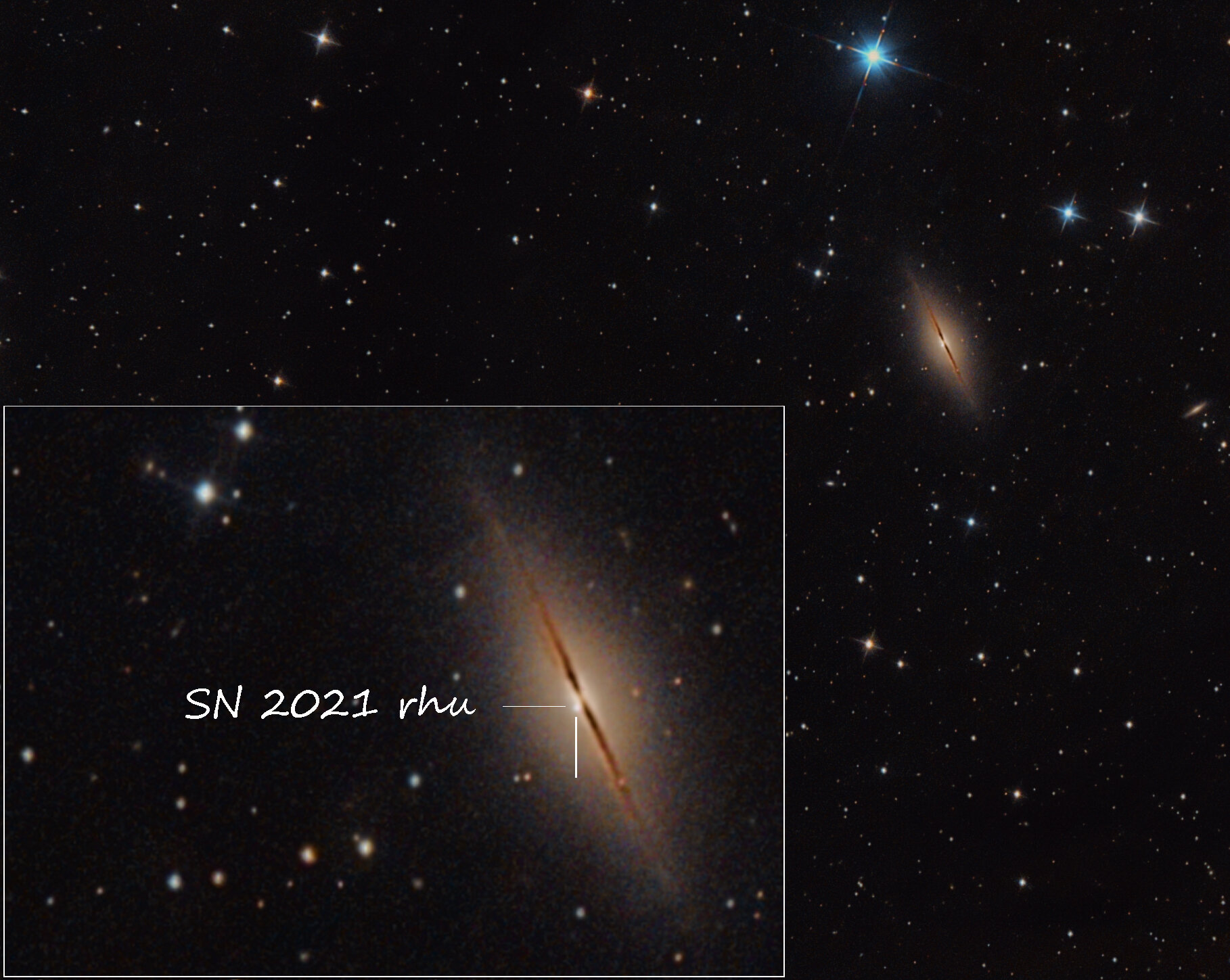
NGC 7814 & SN 2021 RHU - Little Sombrero and its Supernova
Image Description and Details : NGC 7814 is sometimes called the Little Sombrero for its resemblance to the brighter more famous M104, the Sombrero Galaxy. Both Sombrero and Little Sombrero are spiral galaxies seen edge-on, and both have extensive halos and central bulges cut by a thin disk with thinner dust lanes in silhouette. In fact, NGC 7814 is some 40 million light-years away and an estimated 60,000 light-years across. That actually makes the Little Sombrero about the same physical size as its better known namesake, appearing smaller and fainter only because it is farther away. In this view, NGC 7814 is hosting a newly discovered supernova, cataloged as SN 2021rhu, the stellar explosion has been identified as a Type Ia supernova, useful toward calibrating the distance scale of the universe.
Scope: Skywatcher 254/1000 reduced @960mm, f3.8
Camera: QHY8L @-10°C, gain 10, offset 113, with coma corrector Tecnosky 0.95x and Optolong L_pro filter
Guide: Skywatcher 70/500 with Asi120MM and UV/IR-cut filter Svbony
Mount: Skywatcher Eq6r Pro
Accessories: Zwo EAF
Management system: Raspberry PI4 with Stellarmate OS remotely controlled with Windows 10
Acquisition software: Kstars/Ekos
Frames: 144x300" calibrated with flat, dark and bias
Stacking and post-production softwares: AstroPixelProcessor, Pixinsight and Photoshop
Location: Ferrara (Italy), Bortle 6, SQM 19,22
Copyright: Massimo Di Fusco

LDN 1251
Image Description and Details : LDN 1251 - the frogfish fog, or in English "Lynds Nebula".
Personally, I like "The Rotten Fish Nebula"
This exciting dark or reflection nebula can be found in the constellation Cepheus and is estimated to be about 110LY.
The recording was made with my Lacerta 800/200 Newton,
67 * 120 minutes RGB with the ASI1600pro in September,
199 * 240 minutes with the QHY268c in October,
N.i.n.a, Pixinsight and PS in progress.
Copyright: Jan Schubert

Barnard 33
HorseHead Nebula
38 X 480 seconds
C 8 Hyperstar
SX M 25C
Baader L Booster filter
Copyright: JP Pecorino
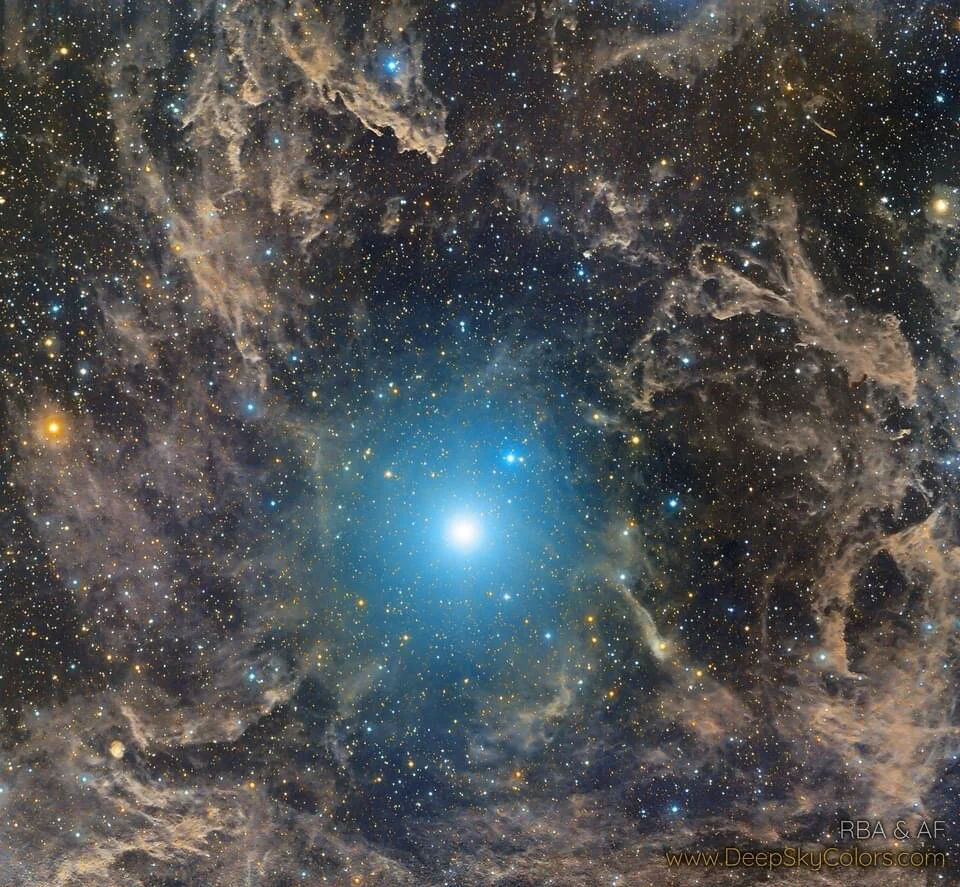
Follow your star
Polaris, the Northern Star, and cosmic dust.
(Captured the night of October 9-10, 2021)
Last Saturday night, from the "field of dreams" during Calstar, I tried to find something to photograph in the night sky that would feel a connection with the loss and grief we're experiencing since we said goodbye to Ariana, my soulmate for over 30 years, this past July.
Then, as I was staring at the night sky wiping my tears, I looked to the North... And there it was. What would be more meaningful for someone feeling so lost than the star that has guided the most people in the history of mankind? The star that, for now at least, tells most of us where North is.
There's an expression we use in Spain "No pierdas el norte". It literally means " Don't lose your north" but it's more like: don't drift, stay on course...
Meaning aside, Polaris is also a beautiful (triple) star to photograph. A yellow giant that shines in a bluish white color that also happens to be in the field of view (FOV) of tons of high galactic dust that, with enough exposure, we can get a glimpse of.
Polaris isn't an easy target for a deep capture either, maybe that's why it's not photographed very often (going deep I mean). First, because we can't guide. Guiding allows us to do very long exposures by "following" a star in our FOV, but when you point at the pole, stars don't "move" enough - if anything, they rotate, meaning some stars "move" up, others "move" down, etc. In other words, we can only take exposures as long as our mount and our precision when "polar aligning" (another process required to set up a deep-sky imaging rig) allow. Also, if we want to reveal the very faint high galactic dust surrounding the North Star, we need good skies and as much data (exposure) as we can get.
This image is 14.5 hours of total exposure. 7.25 hours of luminance and another 7.25 hours of RGB (one of my two scopes was capturing the L, the other scope captured the RGB), with all sub-exposures of 3 minutes each, all between 9:30pm and 5:30am that night. Therefore, the image is not outrageously deep, but the data was enough to allow me bringing out all that faint galactic dust somewhat tastefully (going deep isn't enough).
For Ariana, eternally.
Copyright: Rogelio Bernal Andreo
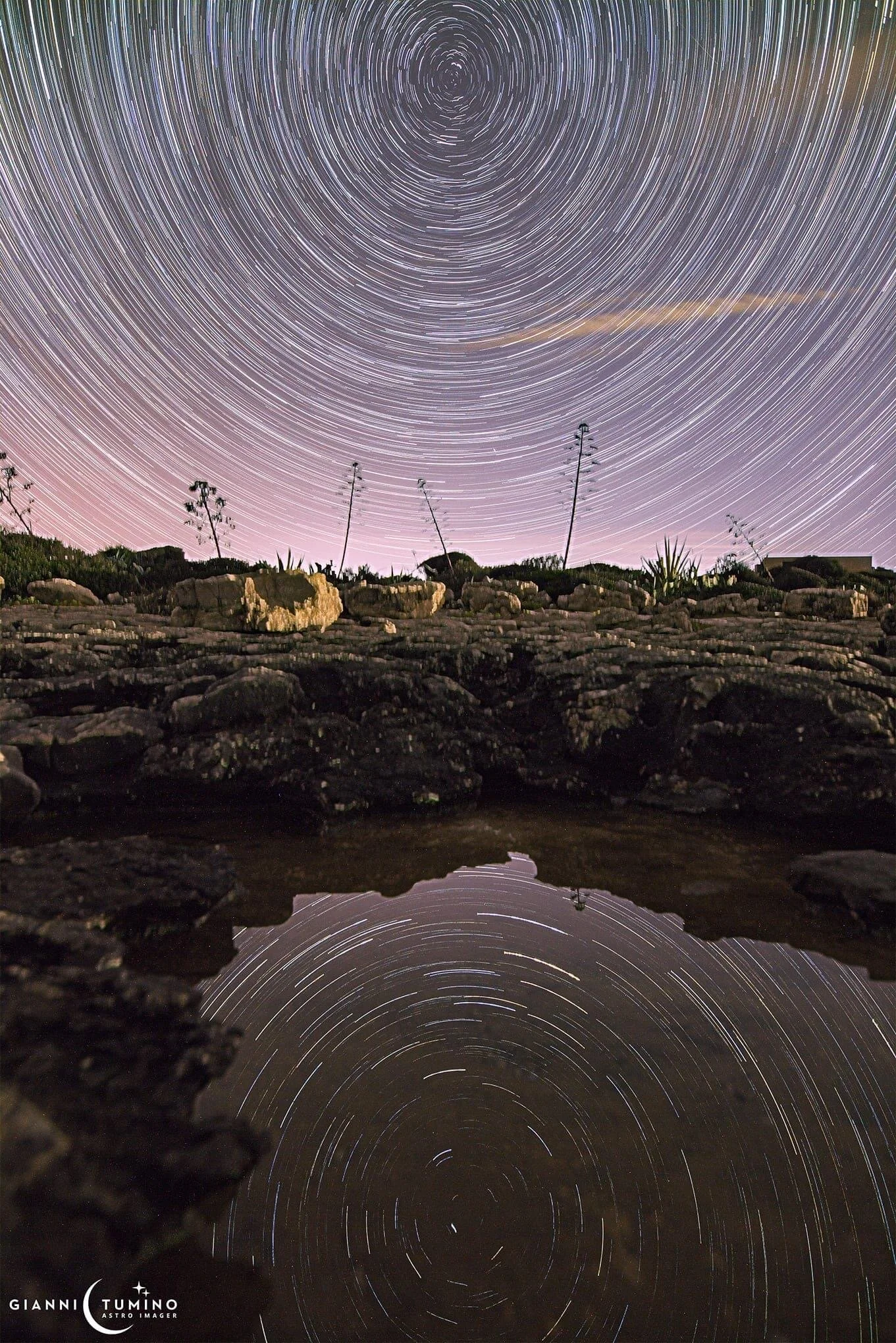
Reflections
STAR TRAIL REFLECTION:
CANON 6D MARK II
SIGMA ART 20 mm lens. f / 1,4 @ f / 2,8
No 239 POSE 15 SEC. @ ISO 1600
Interval between poses 5 sec.
Softwares: Sequator, Photoshop
Location: Navy of Modica (RG)
13/10/2021
Copyright: Gianni Tumino
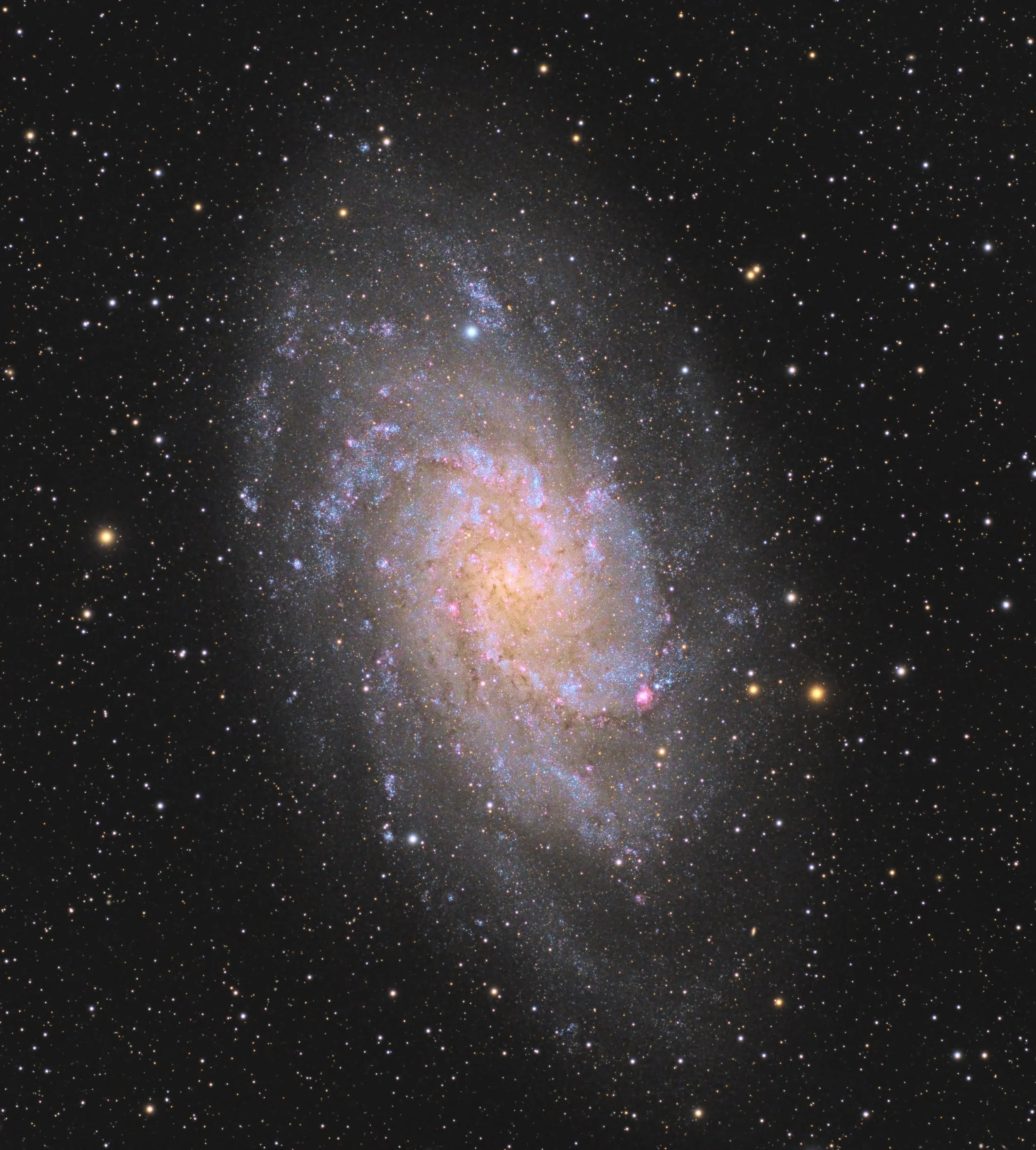
m33
Image Description and Details : M33, familiarly known as the Triangulum Galaxy, is one of the closest large galaxies to Earth. It’s located in the constellation Triangulum at a distance of about 2.5 million light years and has a diameter of around 60,000 light years.
Luminance: Sky-Watcher Esprit 150 f/7 refractor and QHY600M camera with Optolong UV/IR filter
Chrominance: Takahashi FSQ-106 ED IV @ f/5 and QHY367C Pro one-shot colour camera with Optolong UV/IR filter
Processed in PixInsight
27x10m Lum = 4hr30m
51 x 5m OSC = 4hr25m
Total: 8hr45m
Image scale 0.72 arcsec per pixel (based on Luminance)
Copyright: Ron Brecher
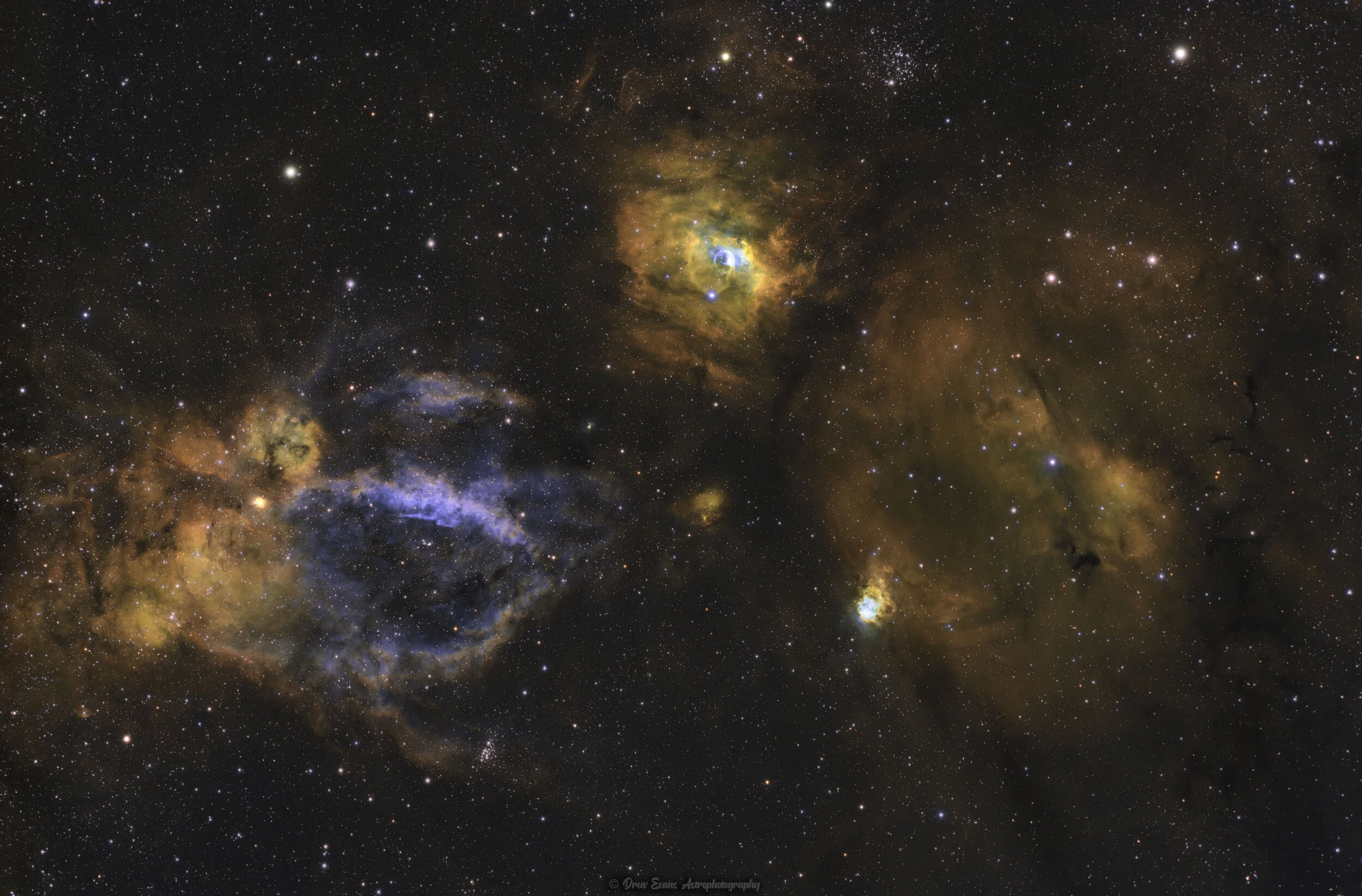
LOBSTER CLAW & BUBBLE NEBULA
The LOBSTER CLAW (SH2-157) & BUBBLE NEBULA (SH2-162), or Sharpless 157 (Sh2-157), is an emission nebula, around 12,000 light-years from Earth between the Cassiopeia and Cepheus constellations. There are several interesting features in this nebula rich region, including the Bubble Nebula, NGC 7635 (or Sh2-162), a HII region emission nebula which lies in a surrounding shell, and excited by the star SAO 20575. Also in the frame are the Wolf-Rayet massive star WR 157, two large open clusters of stars NGC 7510 and NGC 7654, and the nebula NGC 7538, which is home to the largest yet discovered protostar, 300 times the size of our solar system! This image was captured over the span of a week totaling 14.2 hours in narrowband. Each filter was mapped to the Hubble Palette. OTA: William Optics GT81 using 0.8x Flat6A-81 reducerMount: Celestron CGX-LCamera: ZWO ASI294MM ProGain: 100 Night 13nm Sii 22x600s3.7 hours Night 27nm Oiii 30x600s5 hours Night 33nm Ha 22x900s5.5 hours 14.2 hours total Cooling Temperature: -10 CelsiusAuto-guiding: ZWO ASI174MM Mini and ZWO M48 OAGControl: ZWO ASIAIR Pro Flagstaff, AZ - Bortle 4 skies Calibrated in Astro Pixel Processor with darks and flatsProcessed in Pixinsight and Lightroom
Copyright: Copyright: Drew Evans
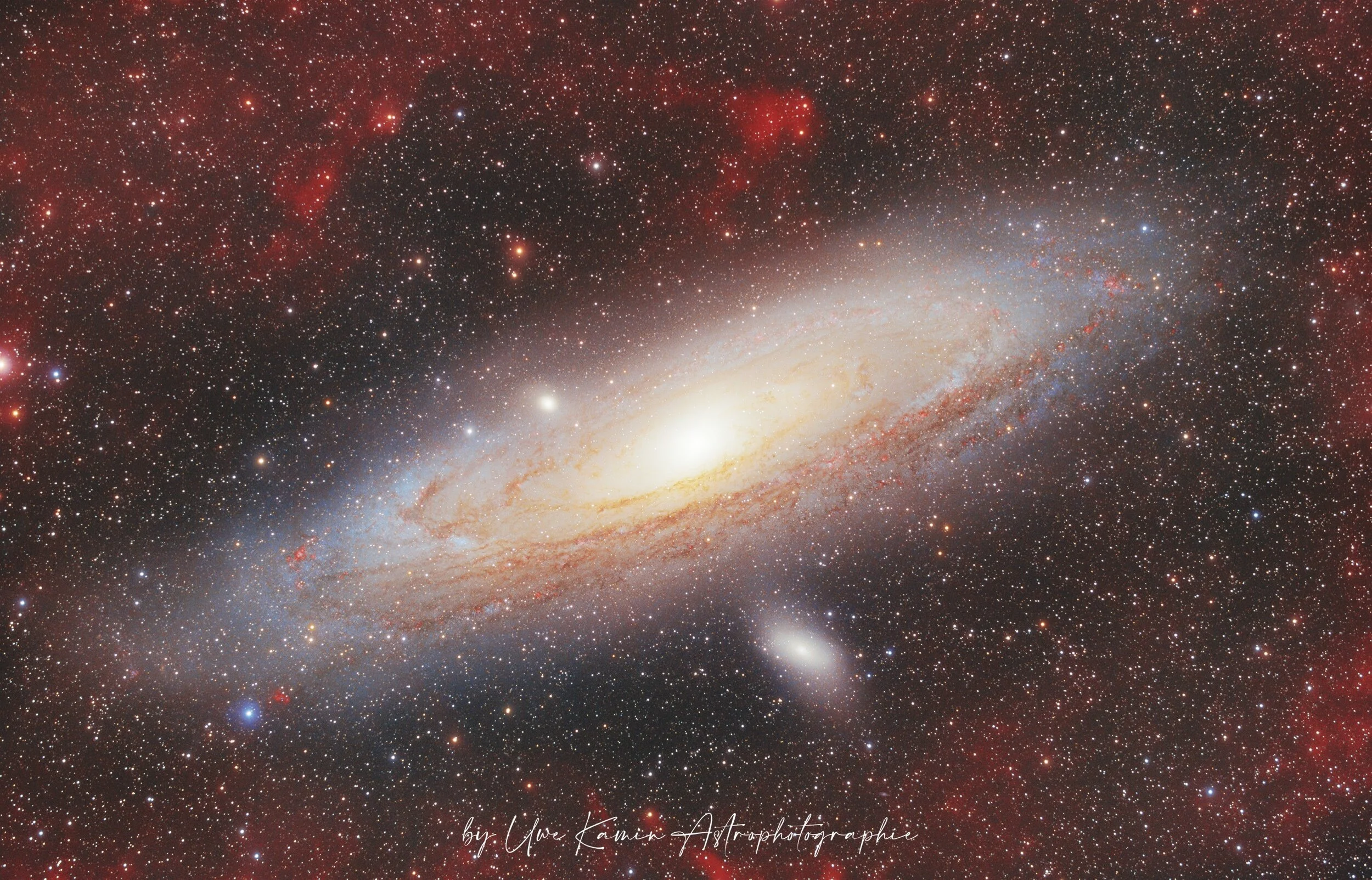
M31 The great Andromeda galaxy in hydrogen dust
Image Description and Details : M31 dans sa robe de soirée. 19H15 d'exposition, dont 6H20 en Ha.
38 Ha de 10 min
65 Luminances de 5 min et 50 poses de 3 min sur chaque canal RVB
Lunette TS 86/464 Quadruplet APO astrographe
Réducteur Televue x0.80
Focale 371mm à F 4.3
Monture EQ6 Pro
Autoguidage Lunette Orion 50mm Guide Scope 163mm
Camera Starshoot Autoguider
Imageur ZWO ASI2600MM Pro
Roue à FiltreZWO 7*36MM
Filtre Baader L, R, V, B ,S2, Ha et O3
Sky Quality 19.95
Magnitude CLASS 5 Bortle
SGP SEQUENCE GENERATOR PRO, SIRIL et UWE ASTRO TOOLS
Copyright: by Uwe Kamin Astrophotographie
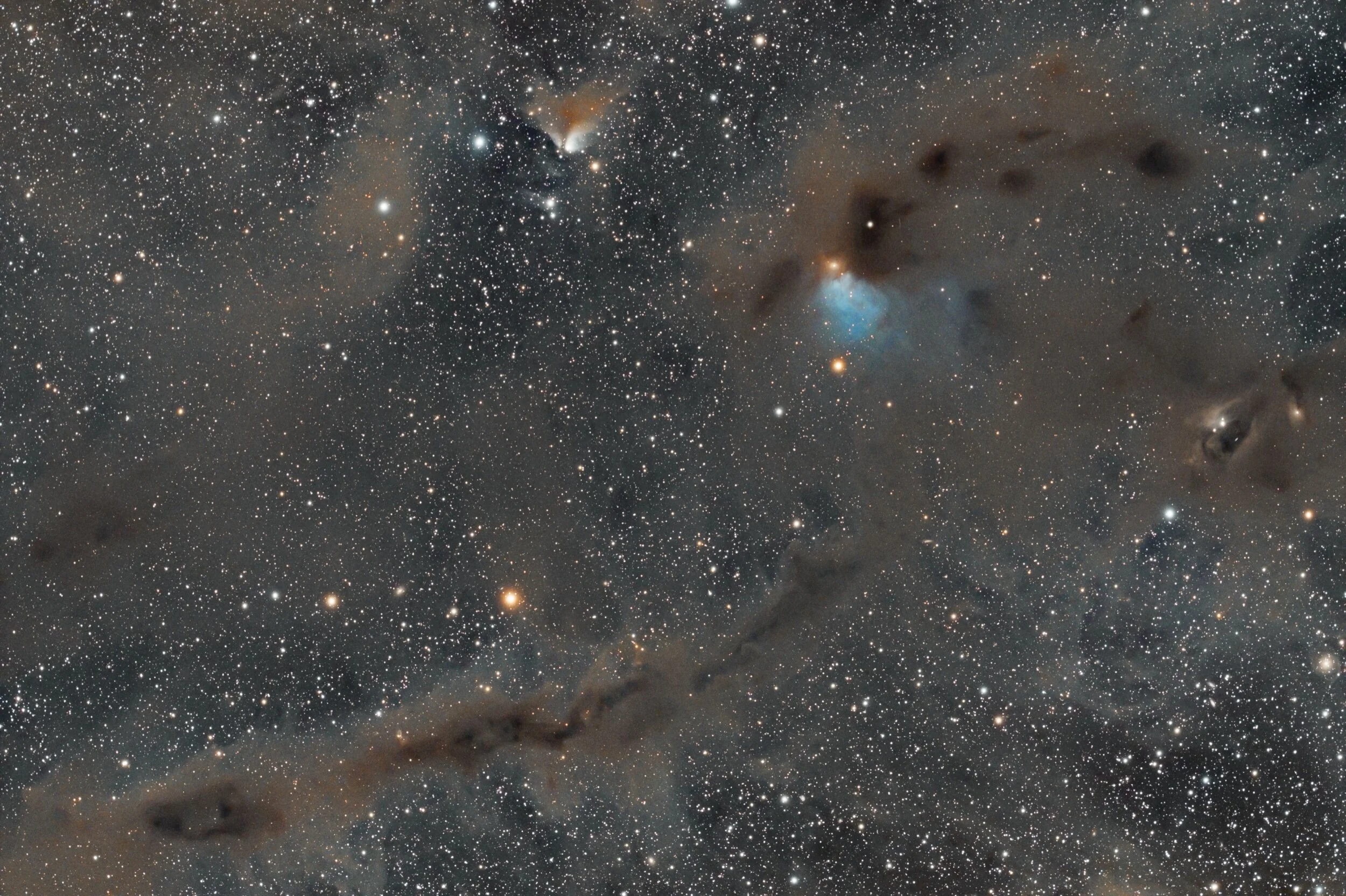
Dark Salamander
Image Description and Details : ASI 2600c + Sharpstar 94mm APO. About 5.5 hours total.
Copyright: Dave Dev

fornax dwarf galaxy
This is the Fornax Dwarf Galaxy from an advanced request I did at telescope.live. I had to split it over 2 different nights to get it all due to issues with acquisition and while I didn't get all the luminance I intended it still turned out decent to me.
This is 3x 600s L, 5x 600s, R, 5x 600s, B, and 5x 600s G taken with an FLI PL16083 through Astrodon LRGB filters and an ASA 500N f/3.6.
Copyright: Scotty Bishop
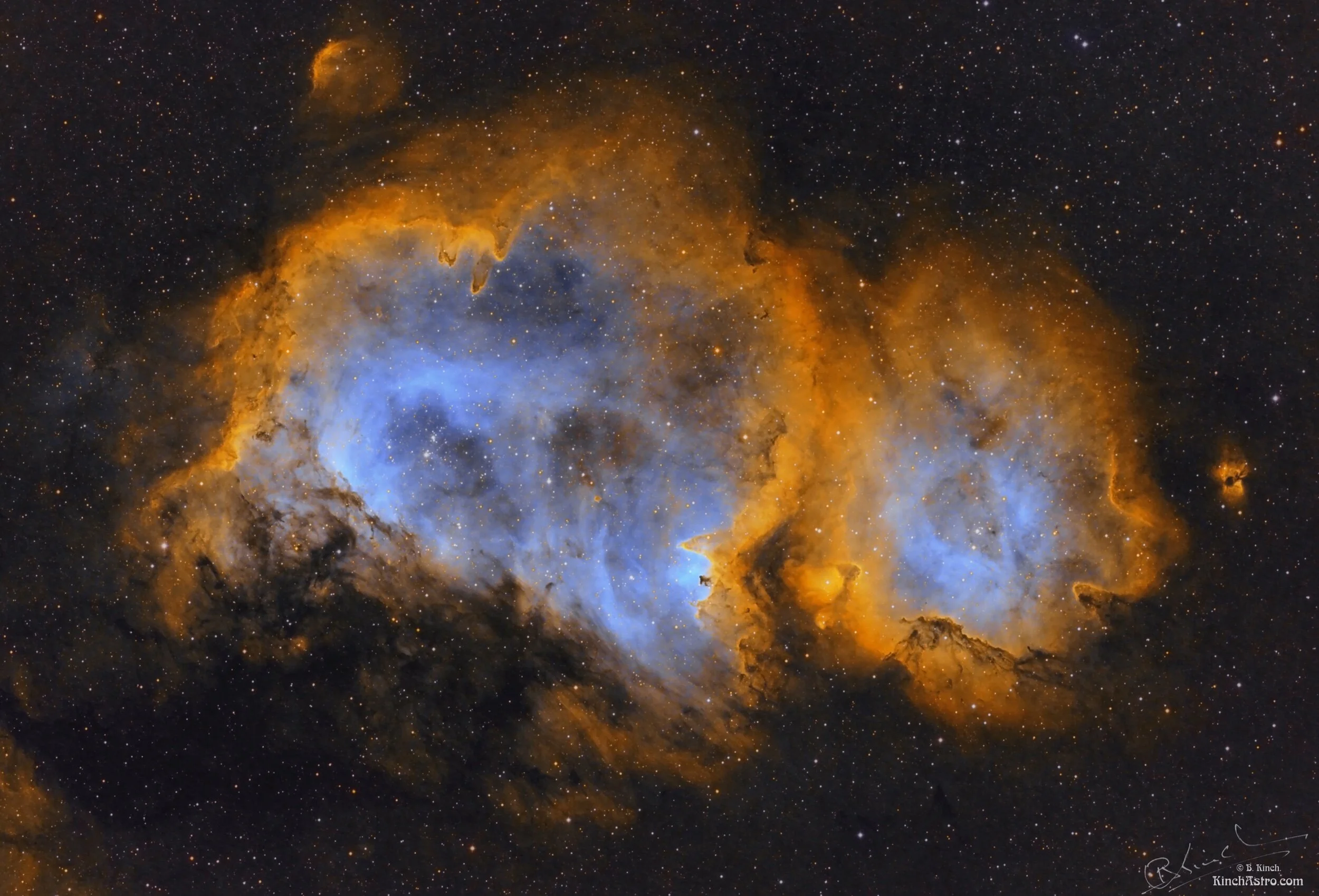
Soul Nebula
This complex is the eastern neighbor of IC1805 (Heart Nebula) and the two are often mentioned together as the "Heart and Soul". Located about 6,000 light-years from Earth, the Heart and Soul nebulae form a vast star-forming complex that makes up part of the Perseus spiral arm of our Milky Way galaxy. The Soul nebula is also known as the Embryo nebula, IC 1848 or W5.The Perseus arm lies further from the centre of the Milky Way than the arm that contains our sun. The Heart and Soul nebulae stretch out nearly 580 light-years across; the diameter of the Milky Way, is roughly 100,000 light-years across.Imaging telescope: Takahashi FSQ130EDImaging cameras: FLI ML16200Mounts: Takahashi EM 400 Temma 2MGuiding cameras: QHY CCD QHY 5 IIFocal Extender / Reducer: Tak QE 0.73x Software: PHD 2, Astro Pixel Processer, PixInsight , Sequence Generator Pro SGPFilters: Astrodon Ha + Astrodon OIII + Astrodon SIIAccessories: ATIK EFW3Original Resolution: 3500 x 2500 Dates: Sep 15 - Oct 5, 2021Frames:Astrodon Ha: 42 x 600"Astrodon OIII: 42 x 600"Astrodon SII: 42 x 600"Integration: 21 Hours.Center (RA, Dec): (43.568, 60.344)Center (RA, hms): 02h 54m 16.291sCenter (Dec, dms): +60° 20' 38.560"Size: 2.52 x 1.8 degRadius: 1.551 degPixel scale: 2.6 arcsec/pixelOrientation: Up is 180 degrees E of N
Copyright: Brendan Kinch
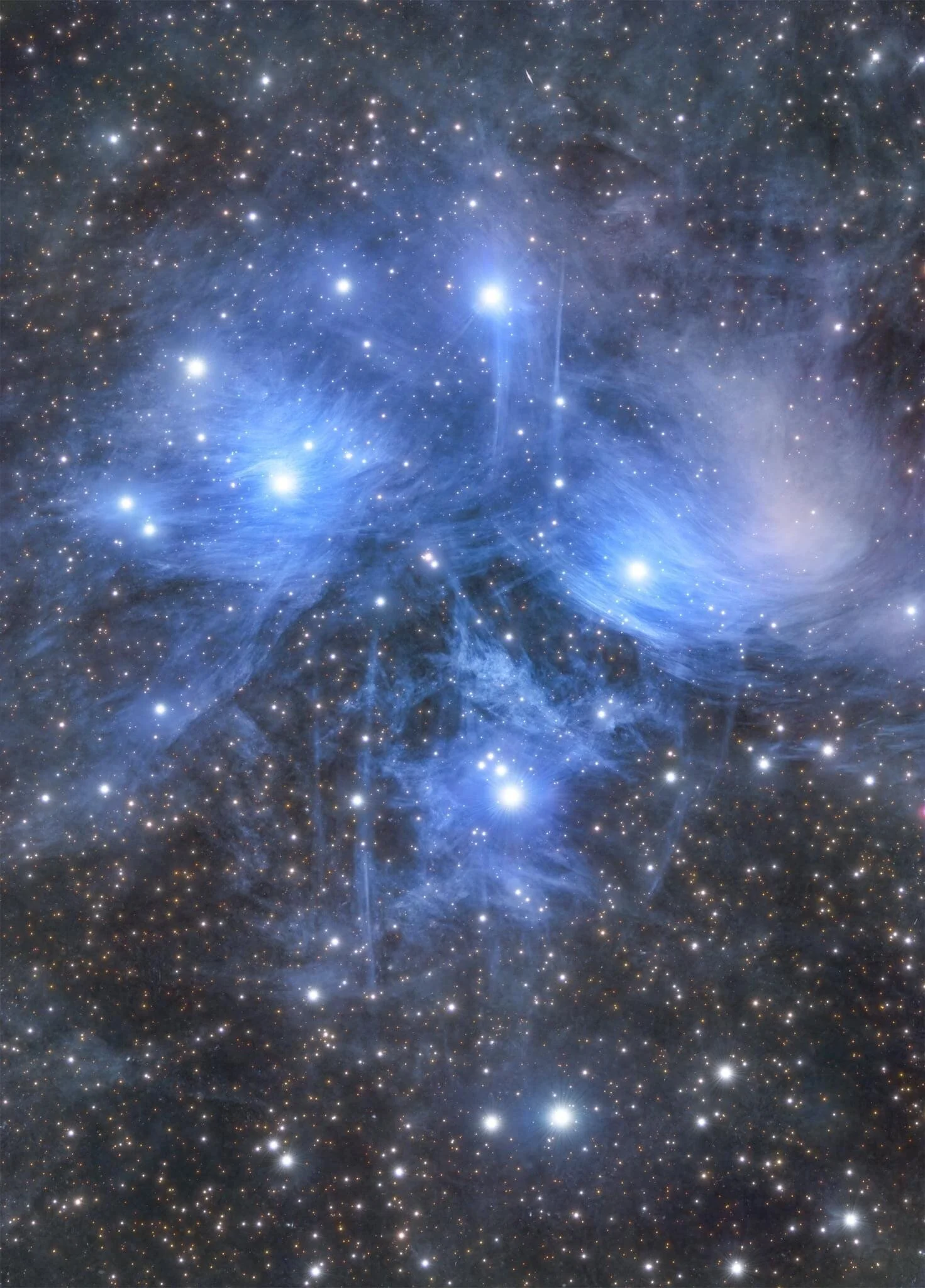
m45
M45 - Pleiades: The Seven Sisters Star Cluster.
…lies about 444 light years away toward the constellation of the Bull (Taurus). A common legend with a modern twist is that one of the brighter stars faded since the cluster was named, leaving only six of the sister stars visible to the unaided eye. The actual number of Pleiades stars visible, however, may be more or less than seven, depending on the darkness of the surrounding sky and the clarity of the observer's eyesight.
Tech card:
Imaging telescope: Explore Scientific 127mm ED TRIPLET APO.
Imaging camera: ZWO ASI294MM-Pro.
Mount: iOptron CEM60.
Guiding camera: ZWO ASI290MM mini.
Focal reducer: Explore Scientific 0.7 Reducer/Flattener.
Accessory: ZWO OAG · ZWO EAF Electronic Auto Focuser · ZWO ASIAIR Pro · ZWO 8x 1.25" Filter Wheel (EFW).
Frames: Astrodon Gen 2 LRGB E Series: 80x120" (2h 40' ) (gain: 120.00) -20C bin 1x1.
Integration: 2h 40'
Darks: 50.
Flats: 30.
Flat darks: 30.
Avg. Moon age: 3.55 days.
Avg. Moon phase: 13.62%
Bortle Dark-Sky Scale: 4.00.
RA center: 03h46m41s.
DEC center: +24°09′32″
Pixel scale: 0.706 arcsec/pixel.
Orientation: 91.368 degrees.
Field radius: 0.943 degrees.
Re-process of my data of Feb. 15, 2021.
Imaging location: Abu Dhabi desert, UAE.
Copyright:Wissam Ayoub
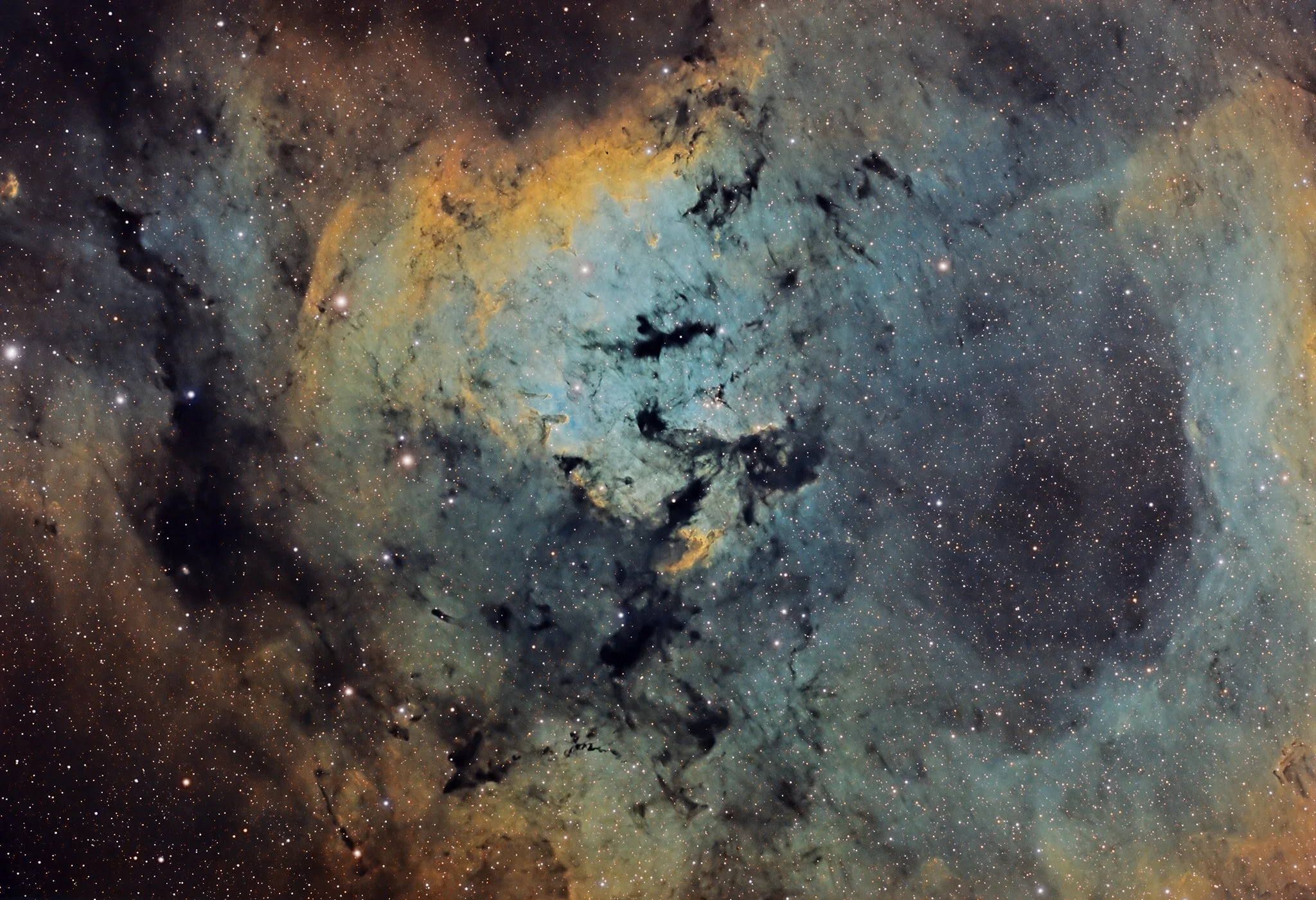
NGC7822
NGC7822, Sh2-171. This is an object that I have been wanting to re capture for several years now. My first complete image with the new William Optics FLT91.Technical cardImaging telescopes or lenses: William Optics FLT91mmImaging cameras: ZWO ASI 294 MM Pro Cooled Mounts: iOptron CEM120Guiding telescopes or lenses: William Optics Guidestar 61mmGuiding cameras: ZWO ASI 120mm mini Focal reducers: William Optics 0.8 reducer/flattnerSoftware: SharpCap Sharcap 3.2.60 · Stark Labs PHD2 · QHYCCD Pole master · Pleaides Astrophoto PixInsight · N.I.N.A.Filters: Astronomik 6nm Ha · Astronomik 6nm OIII · Astronomik 6nm SIIAccessory: AstroZap Dew Heater Straps · Pegasus Astro Ultimate Powerbox V.2 · Moonlite focuser 2.5 inch Focuser with high resolution stepper motor Dates: September 26-28 2021Frames:Astronomik 6nm Ha: 131x180" (gain: 120.00) bin 1x1Astronomik 6nm OIII: 90x180" (gain: 120.00) bin 1x1Astronomik 6nm SII: 103x180" (gain: 120.00) bin 1x1Integration: 16.2 hoursDarks: ~50Flats: ~50Flat darks: ~50Locations: Remote site: Fredonia, Al., Lanett, Alabama, United States
Copyright: Altum spatium Astrophotography
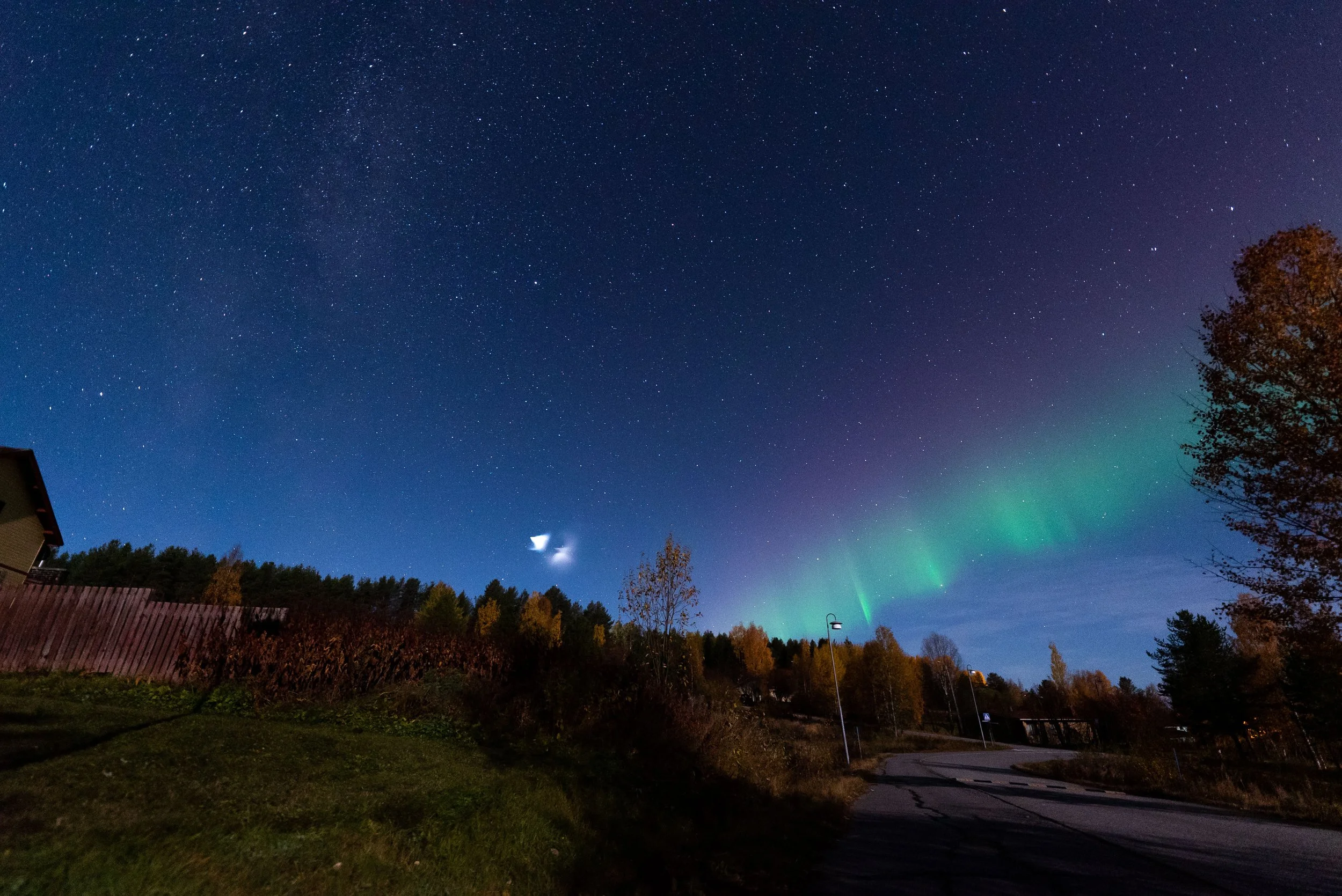
Rocket launch, auroras & milky way
Image Description and Details : A rocket launch was visible in Finland on night 27-28-9-2021 and I saw the first time it appeared on the sky from a sky camera. Then I suspected it could be visible again in about 90 minutes. I waited for it and was rewarded with a photo I am very satisfied with.
Copyright: Dennis Lehtonen