

AAPOD2 Image Archives
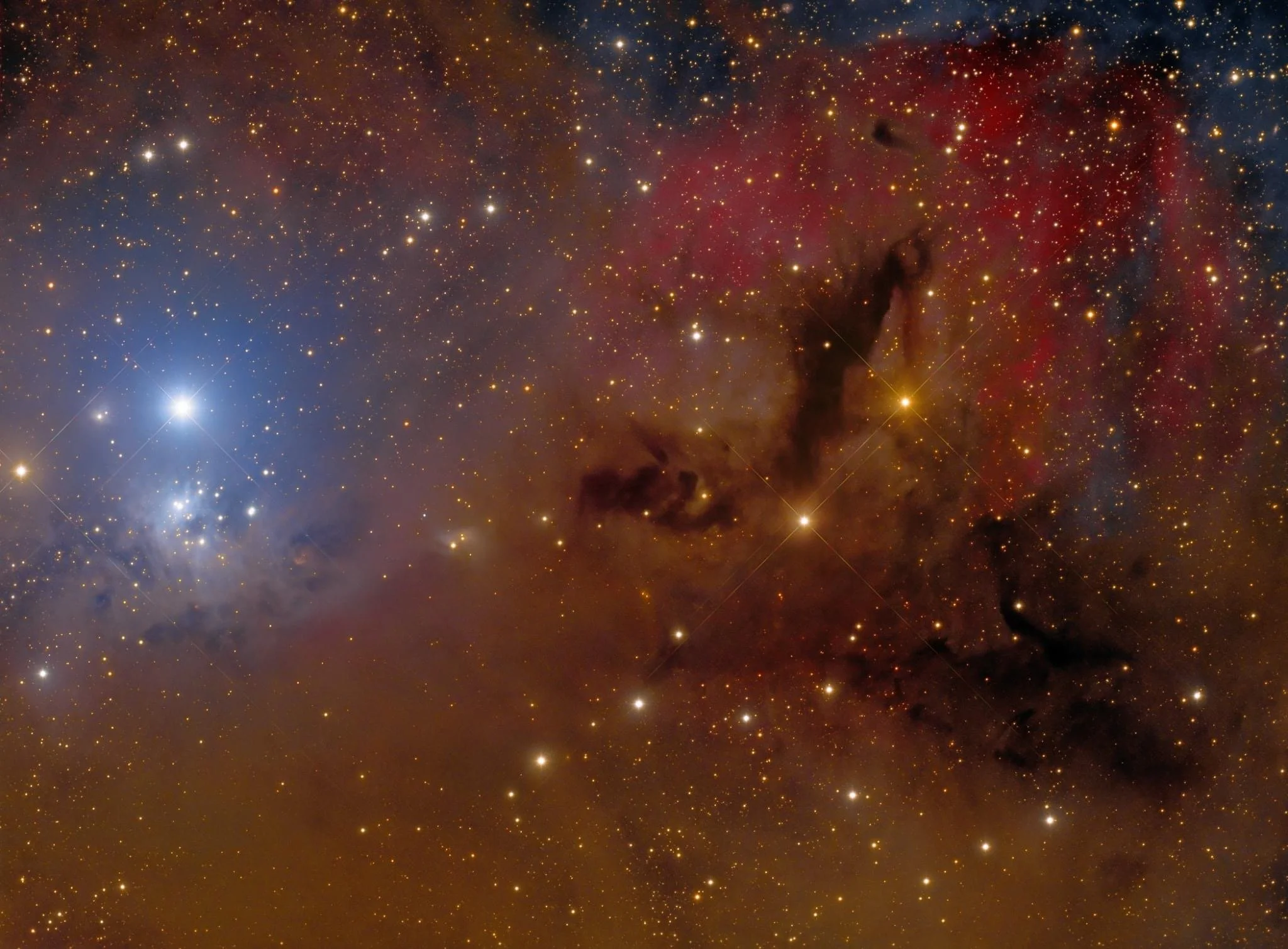
IC348 and surroundings
Image Description:
Takahashi FSQ106EDXIII
QSI683
Paramount ME
Astrodon Tru-Balance E-Series Gen 2 L: 23 · 900s
Astrodon Tru-Balance E-Series Gen 2 RGB: (26, 26, 24) · 900s
Copyright: R. Colombari
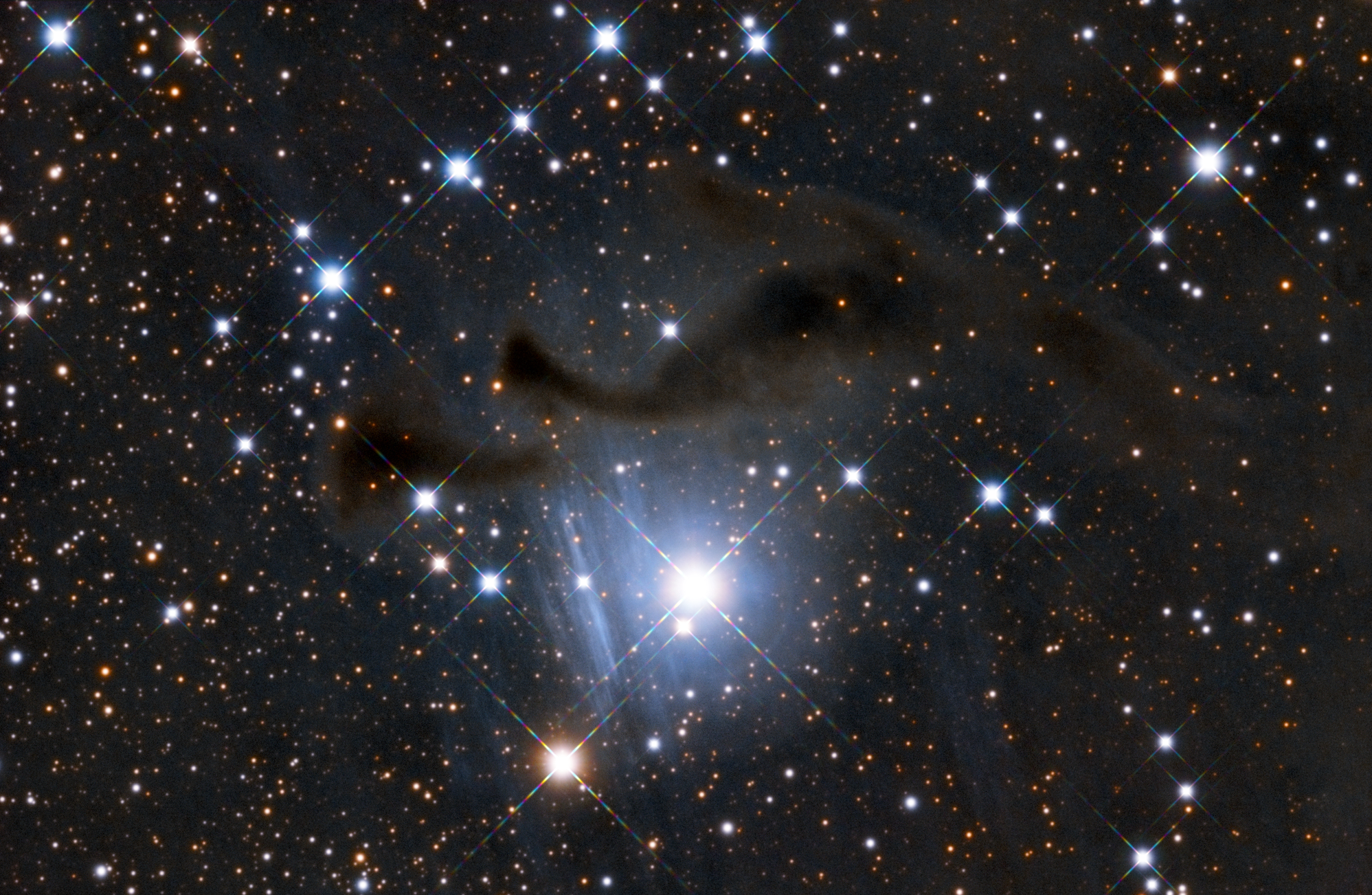
VdB 9
Image Description and Details :
This is the 9th object in the van der Bergh surrounded by LDN 1357 and 1355 in the constellation Cassiopeia.
Captured over 2 nights with a Celestion EdgeHD 9.25" at 2350mm focal length for a total of 18.625 hours using LRGB filters.
Copyright: Matthew Proulx

Ghost Crater (Astroavani/Brazil-2012)
Image Description and Details : With only 2 months left to complete 10 years of the ghost crater discovered by me, I present a new photo in better resulution of the formation in question and take the opportunity to transcribe the original text with some minor adaptations."I've always had the greatest interest in astrophotography of Lunar formations and from the beginning, using mainly the Virtual Moon Atlas, I tried to find and know the most striking features of the regions I observed or photographed.As time went by, I acquired a better knowledge and more easily recognized these regions and their main accidents, which greatly facilitated the perception of anything that clashed with the traditionally observed landscape.So on January 5, 2012, photographing the region near Plateau Aristarchus, I noticed a strange depression that caught my attention. I tried to locate it on lunar maps and even in the Virtual Moon Atlas, but I found nothing.I searched the internet, asked for help from colleagues in Brazil and abroad to clarify what this training could be, I believed that it should already be known or that others had already observed it.In principle, I couldn't find any reference to this lunar formation.Looking at the attached photo, the impression we have is the existence of a depression that is only revealed when the Sun is at a very low angle of illumination.I sent the original photos to my friend Vaz Tolentino from the Lunar Observatory (VTOL) back in 2012 and he gave me the following explanation: Indeed, your photo, due to the angle of sunlight, captured an interesting and unusual circular depression, which has along its southwestern rim, the crater WOLLASTON D (5km in diameter). The formation is very strange in that it doesn't look in the style of known ghost craters. The strange and unusual thing is that, it appears that the supposed crater was flooded by basaltic lava and, instead of filling up and leveling off with the surrounding outer floor, it only filled a little and didn't even out, remaining like a "gourd" or "bowl ", in addition to leaving no traces of a central peak. This depression appears to be about 42 km in diameter, being slightly larger than ARISTARCHUS. I checked LRO images and unfortunately I can't identify anything due to the sunlight being high in the photos. We need more photos of this region, in light conditions similar to the one in this photo.At Alexandre Amorim's suggestion, I decided to contact BAA (http://www.baalunarsection.org.uk/) Lunar Section where I made contact with Dr. Anthony Cook. I sent to the same the photos obtained by me in January and June 2012, as well as I reported the suspicion that the referred depression had not yet been catalogued. After exchanging several emails, I received the following message from Dr. Cook, which I transfer in full:On Mon 4/06/12 07:06 , "Tony Cook [atc]" atc@aber.ac.uk sat:Dear Avani,Thank you for your images. It looks like a buried ghost crater that you have found. Please keep on looking for another ghost craters elsewhere on the Moon because I think that there may be quite a few that are visible near to sun rise or sunset that remain to be discovered. I think this work will be of great interest to Peter the Greek.
Dr Anthony Cook Institute of Mathematics and Physics, Aberystwyth University, Penglais, Aberystwyth, Ceredigion. SY23 3BZ. United KingdomIn April 2013 using the new QHY 5L camera, a color CMOs dedicated to high resolution Lunar and planetary photography, I got a more detailed photo of the place where the depression was located:This allowed colleague Vaz Tolentino to trace the altimetric profile of depression and perform the following analysis:"Dear Avani and Amorim:Analyzing the Avani photos (January/2012 - April/2013), together with the altimetric profile that presents a classic phantom crater depression, I reach the conclusion that, most likely, it is the discovery of a new phantom crater without cataloging.Also analyzing the altimetry of the ghost craters DAGUERRE, LAMONT and that discovered by VTOL in February 2011, I came to the conclusion that they have very similar altimetric profiles, and the Avani ghost crater is a little shallower (46 km of diameter per 130 m depth) than DAGUERRE and LAMONT (both approximately 400 m deep).However, Avani's ghost crater depth (130m) is more compatible with the ghost crater discovered by VTOL (which is approximately 100m deep). What this means?It means that, in the past (at the time of the ancient selenographers), when the main interest in observing the Moon was to map its relief, identifying and naming its formations, they did not have the current technology, that is, shallow formations like these two Phantom craters (Avani and VTOL) are very difficult to see through an eyepiece, to be sure of what you are actually looking at.After the initial period of cataloging and naming relief formations, lunar map drawings and other studies, the space age arrived. The first robotic lunar probes (Soviet and American) and the manned landings of the APOLLO missions had other scientific goals than discovering new, uncatalogued formations. Furthermore, even in the very high resolution photos taken by modern robotic lunar probes (SELENE, LRO, GRAIL, etc.), the images were mostly captured with sunlight coming from above and not obliquely, which makes it difficult relief enhancement and does not facilitate the identification of shallower formations such as these phantom craters.For modern selenographs, only after the technological evolution of digital cameras (CCD and CMOS), together with the evolution of telescope optics (large and good mirrors and also APO lenses), combined with the favorable angle of incidence of light on the lunar surface, it became easier to identify new smaller formations, "camouflaged" and not cataloged on the Moon.Congratulations Avani Soares on your discovery!Another point marked by the new generation of Brazilian selenographers. A hug from the VTOL team!In this way, I believe that any misunderstanding regarding the existence and identification of the aforementioned training is ruled out, only lacking the official disclosure and recognition to crown the aforementioned work."
Copyright: Astroavani
ngc 986
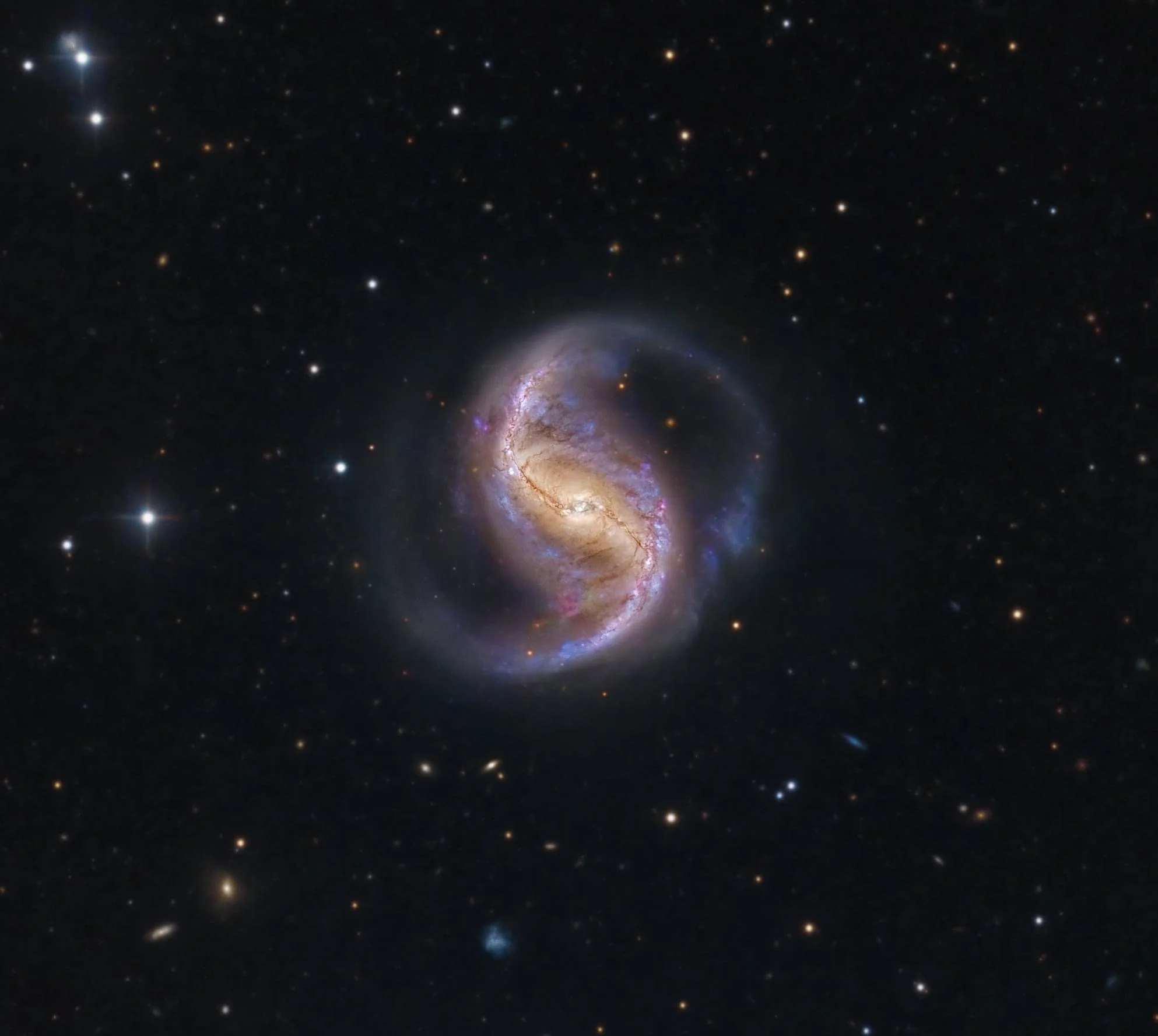
NGC 986 is a barred spiral galaxy in the constellation of Fornax, located about 56 million light-years away. It is a small target and is not imaged often. The galaxy contains two large, extended and slightly warped arms that begin at each end of the central bar.
Young blue stars are spread through the arms and the core of the galaxy glows with star formation surrounded by numerous dust lanes.
Imaged in LRGB at El Sauce, Obstech, Chile on our CDK 1000
Image Processing: Mike Selby
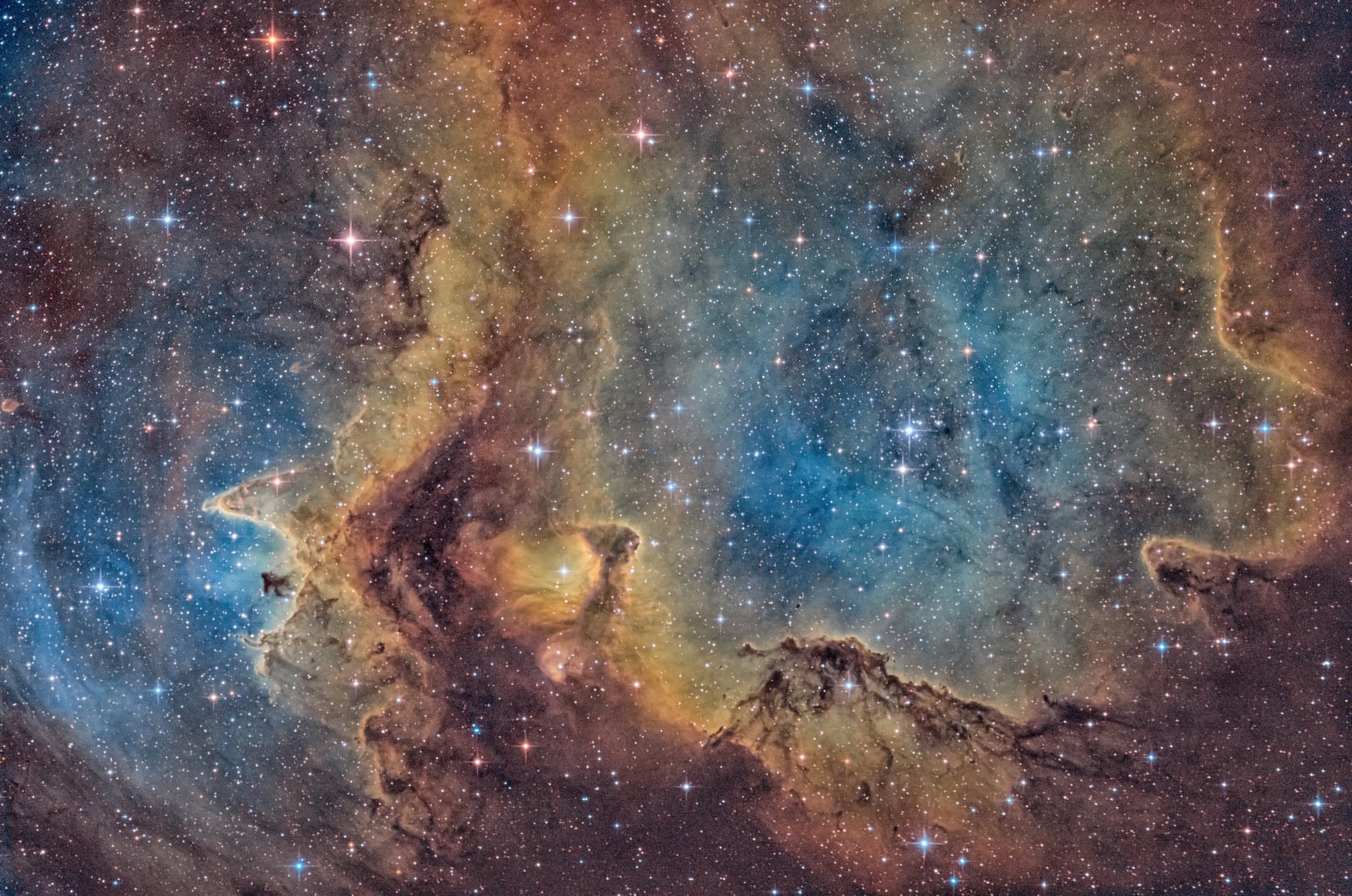
soul nebula
Imaging telescopes or lenses: Telescop Service TS-PHOTON 10" F4 Advanced Newtonian Telescope with Carbon Tube
Imaging cameras: ZWO ASI294MM Pro
Mounts: iOptron CEM70 CEM70-NUC
Guiding telescopes or lenses: Williams Optics RedCat 51
Guiding cameras: ZWO ASI290MM Mini
Focal reducers: Telescope Service TS-Optics NEWTON Coma Corrector 1.0x TSGPU Superflat - 4-element
Software: PixInsight · Lightroom · Photoshop
Filters: Astronomik S2 1.25" 6nm · Astronomik 1.25" Ha 6nm · Astronomik 1.25" OIII 6nm
Accessory: MoonLite CRL 2.5" Focuser/Stepper Motor/V2 mini Controller · ZWO EFW 1.25" 8 positions
Frames:
Astronomik 1.25" Ha 6nm: 61x180" (3h 3') -20C bin 2x2
Astronomik 1.25" OIII 6nm: 67x180" (3h 21')-20C bin 2x2
Astronomik S2 1.25" 6nm: 70x180" (3h 30') -20C bin 2x2
Integration: 9h 54'
Copyright: Andrei Gusan
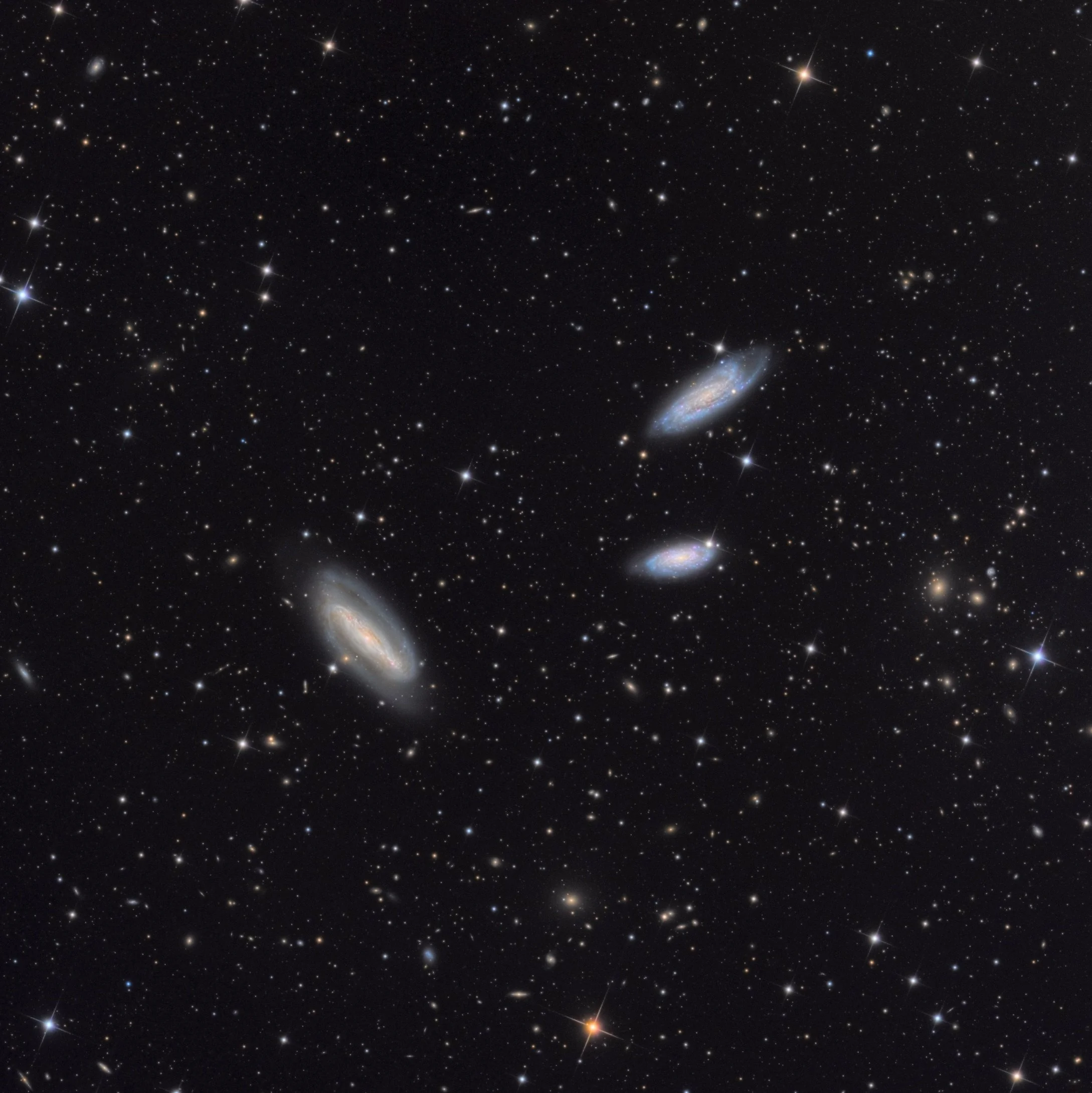
The Grus Triplet
Image Description and Details : The Grus Triplet is group of galaxies about 60 million light years away in the constellation Grus and is comprised of NGC 7582, NGC 7590, and NGC 7599. These three galaxies along with NGC 7552 make up the Grus Quartet, which is part of the IC 1459 Group.
Location/Date – El Sauce, Chile, August 2021
Imaging System – Planewave 17” CDK, 10 Micron GM3000, FLI ML16803 Chroma Filters
Exposure – LRGB, 11 hours
Copyright: Good Astronomy
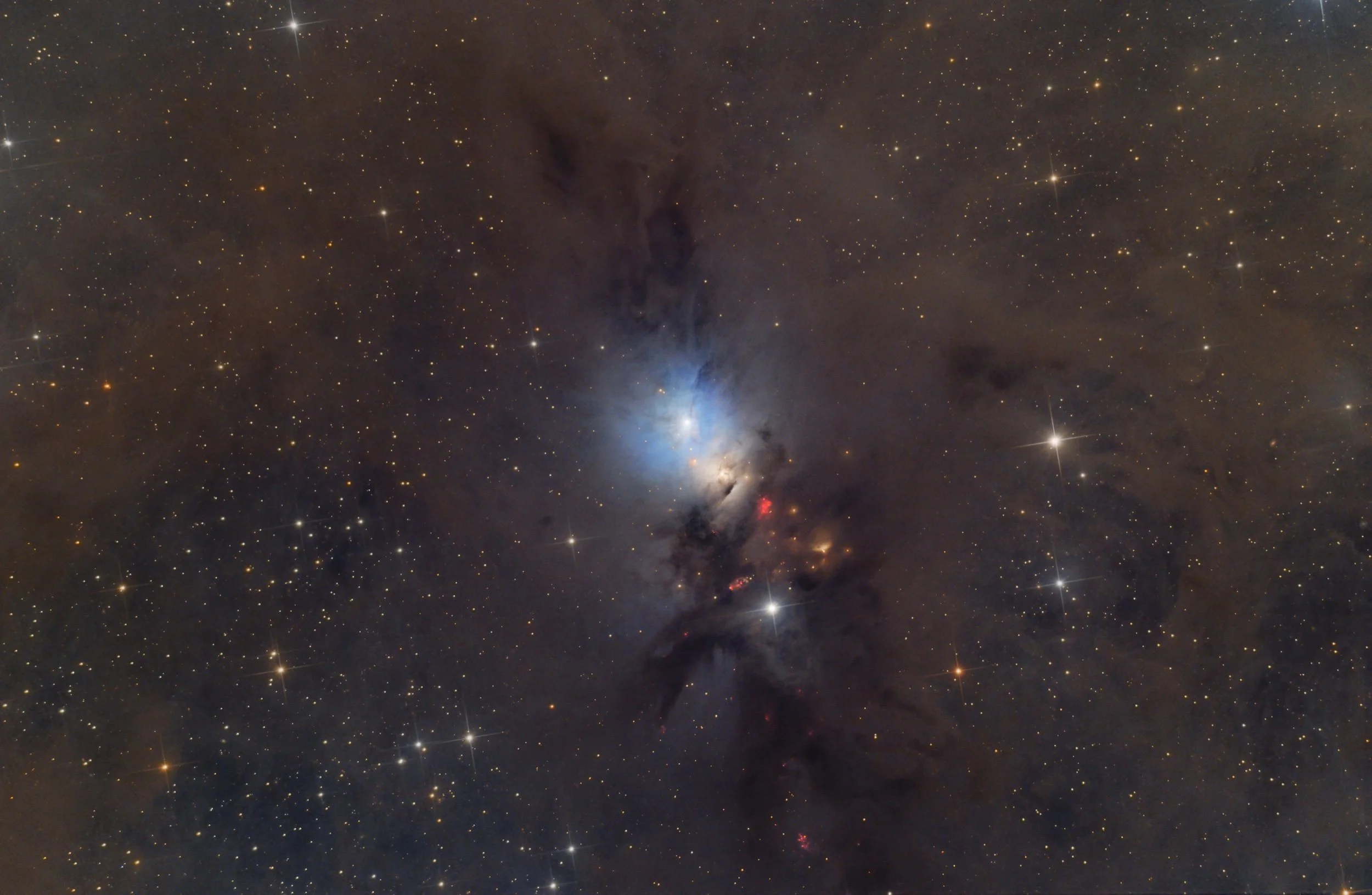
NGC 1333 in Perseus molecular cloud
Image Description and Details : NGC 1333 is a reflexion nebula, located inside the Perseus molecular cloud
This picture combines 24h20' of data, taken during four nights. Long exposure reveals faint structures surrounding the nebula.
Scope : 200/1000 Newtonian
Mount : eq6r-pro
Camera : ASI2600 MC
Off axis guiding
No filter
146x600s : 24h20'
Copyright: Yann MEVEL
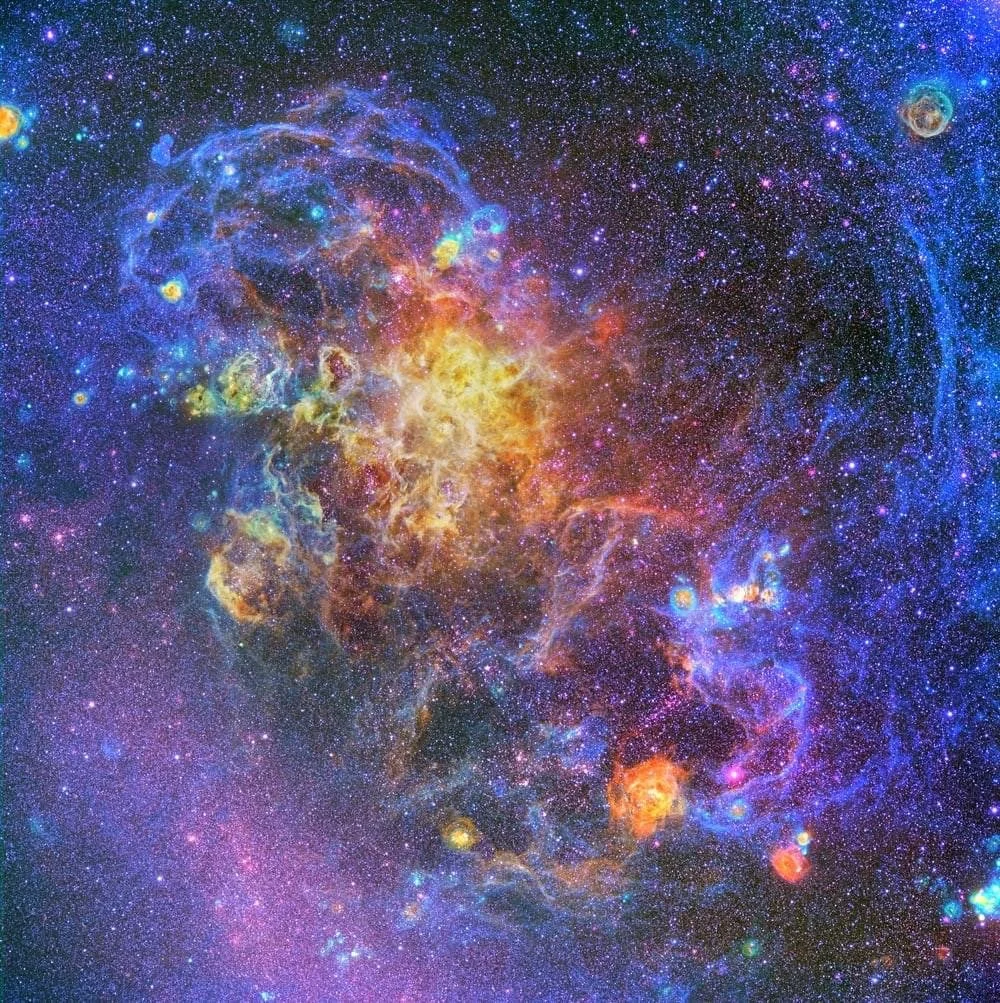
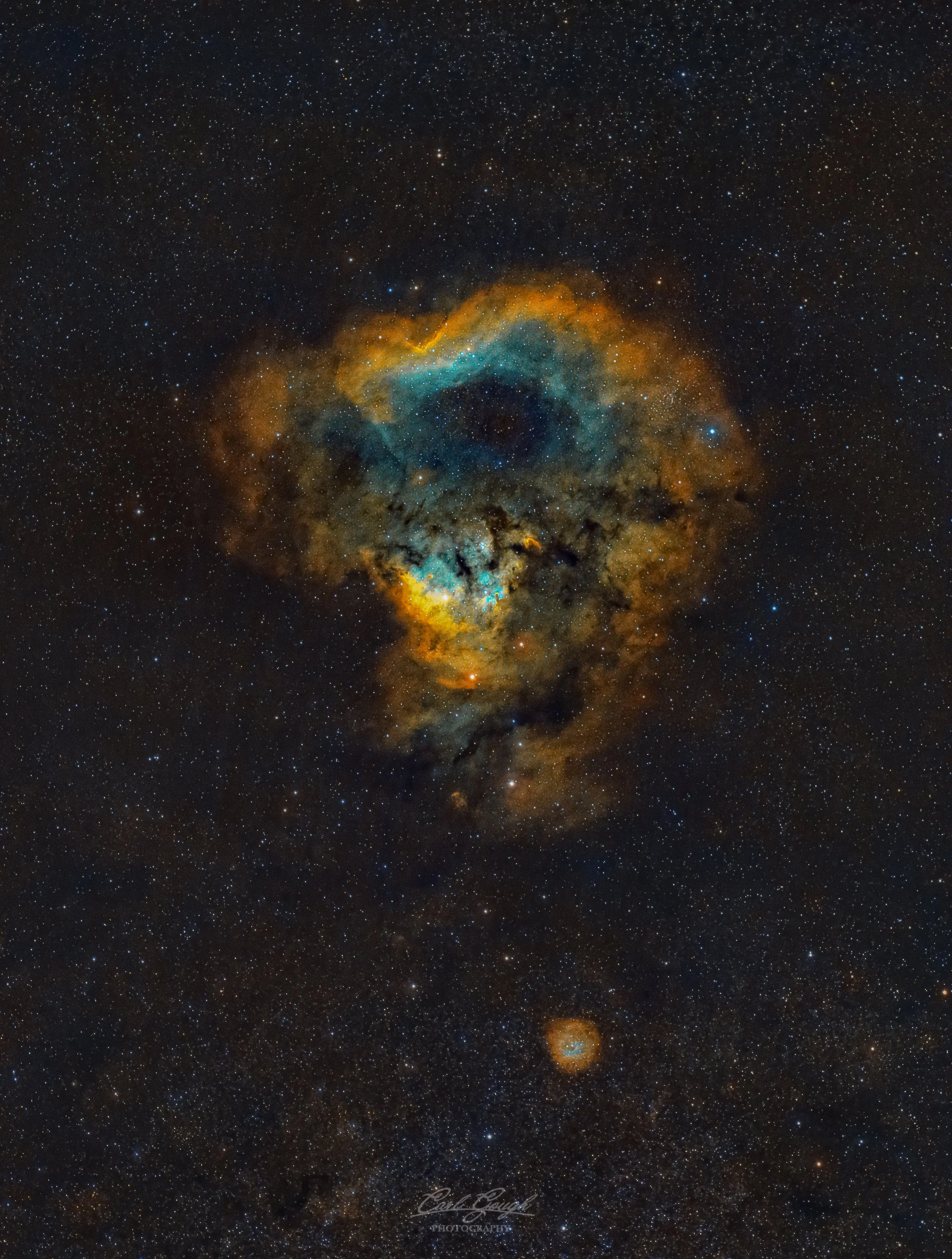
The Cosmic Question ?
Image Description and Details : Equipment: ZWO ASI 1600mm, Samyang 135mm @f4, EQ6-r equatorial mount, Svbony 50mm guide scope, ZWO ASI 224mc guide camera, ZWO 8 position EFW, Canon to EOS lens adaptor, Baader 1.25" narrowband filters.
Integration:
HA: 60x 600 @ gain 139, temp -20
Sii: 12x 600 @ gain 139, temp -20
Oiii: 15x 600 @ gain 139, temp -20
Taken over multiple night from my Bortle 5 backgarden in Littlehampton, west Sussex. 21st – 26th October’21.
Copyright: carl gough
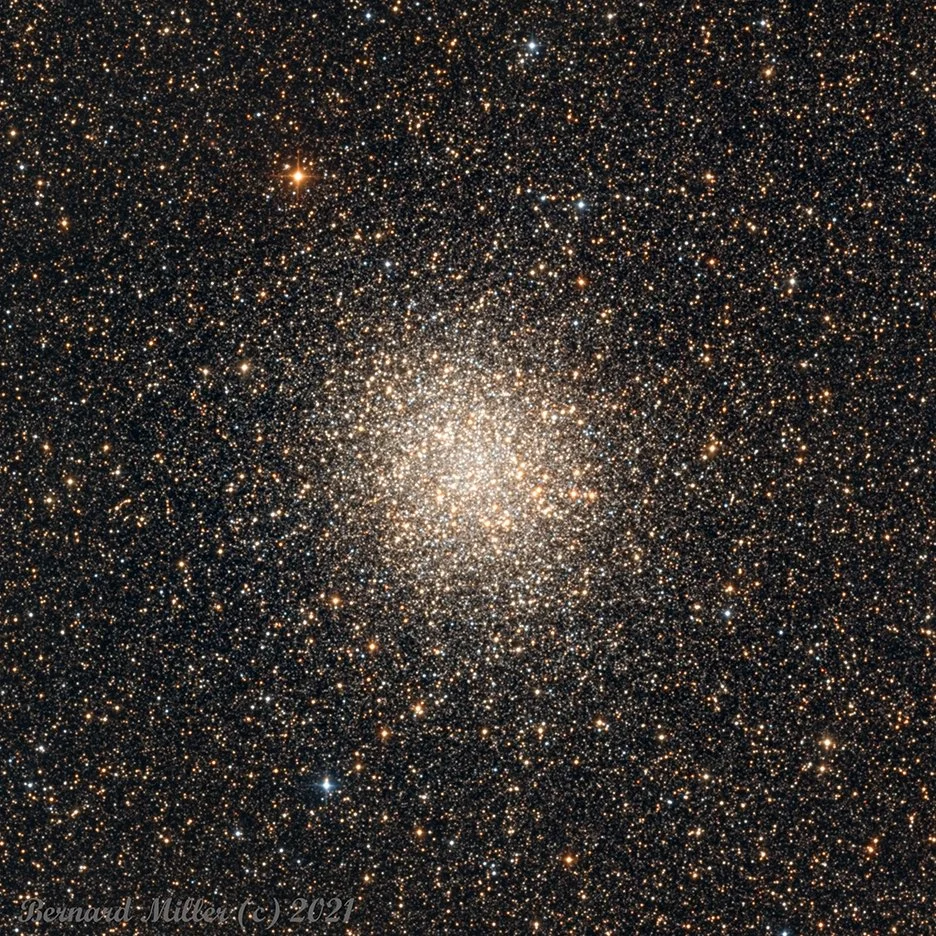
m22
This is an image of M22. It is a globular cluster about 10,000 light years away in the constellation Sagittarius. It has over 70,000 stars in a diameter of about 100 light years.
October 25, 2021
Location: Rio Hurtado, Chile
Telescope: Planewave CDK-24
Camera: FLI PL16803
Mount: Mathis MI-1000/1250
Luminance: 12x5 minutes (binned 1x1)
Red: 12x5 minutes (binned 1x1)
Green: 12x5 minutes (binned 1x1)
Blue: 12x5 minutes (binned 1x1)
Copyright 2021 Bernard Miller

ic 348
Image description: IC348 to NGC1333 in part of the Large Molecular Cloud in Taurus. Imaged remotely from Spain with the FSQ106 and ZWO-ASI6200MM pro, Unguided on an Paramount MX.
Exposures was just over 7hrs total, 15x 240s in Blue, 30x240s in Green and 24x 240s in Red, Luminance was 33x 300s combined for a super Luminance all binned 1x1. Processed in Pixinsight and Photoshop.
Copyright: Peter Shah
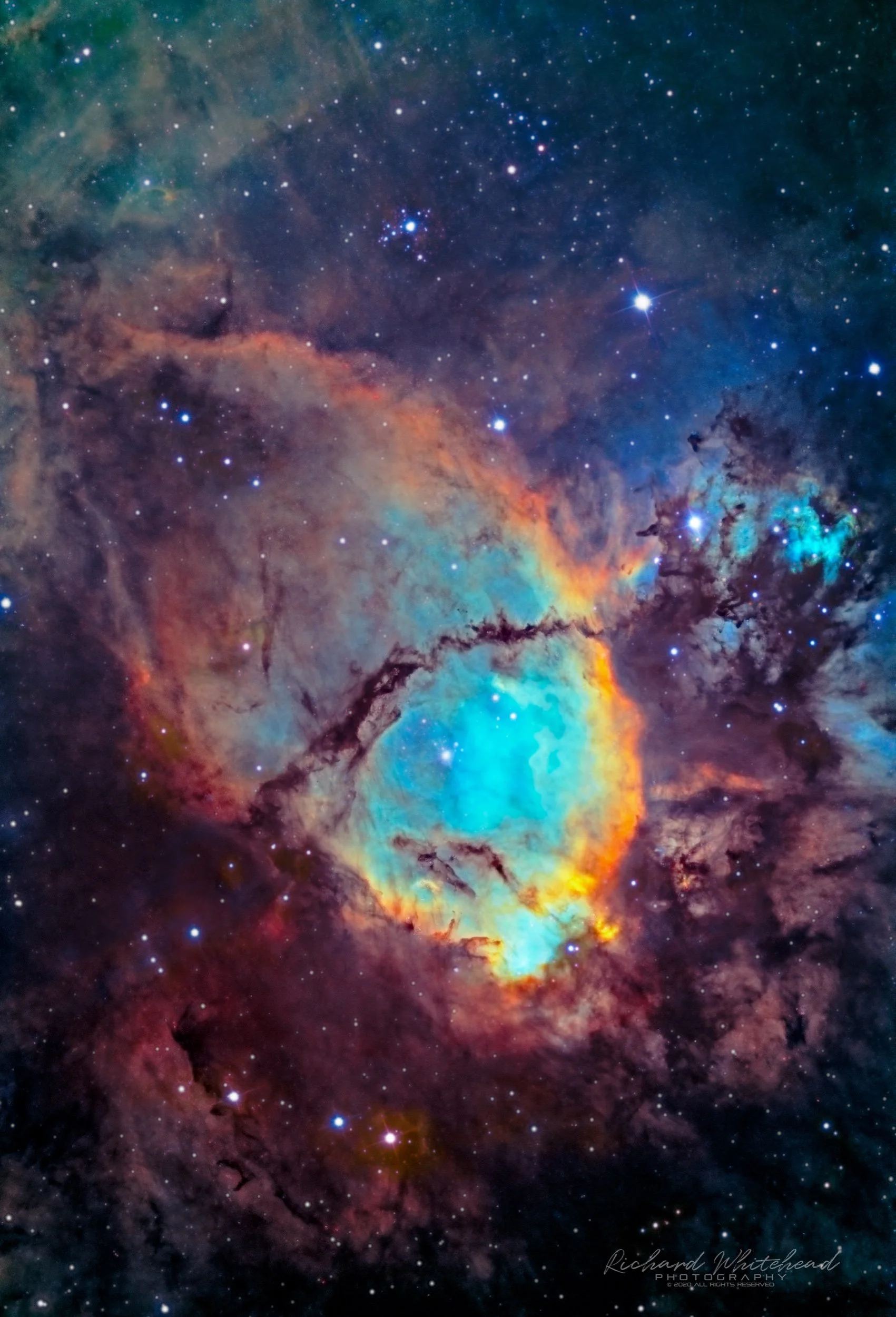
The Fish Head Nebula
Image Description and Details : The Fish head Nebula (IC1795) is a star forming region in Casseopeia, and part of the Heart Nebula Complex. Often seen as an appendage in wide field shots, close up it has some fascinating dust lanes, back lighting and reflection as well as emission components.
Its relatively close to Earth at 6000 light years. This image is shot in SHO ( Hubble) Palette and is full frame ( no crop) at 2650mm Focal length.
I shot this over 4 nights about two weeks ago on my Planewave CDK14 out in the New Mexico desert.
This was my first test of 15 min unguided sub shooting on the Planewave mounted on an L-350 mount. I was able to use about 80% of all subs.
Tech stuff:
Scope : Planewave CDK14
Mount : Planewave L-350
Camera : ZWO ASI 6200 MM Pro ZWO filter wheel Astronomik filters
35 x 15 min Ha 12nm
30 x15 Min OIII 12nm
24 x15 Min SII 12nm
Shot as Bin 1 downsampled to Bin 2x2 in Pixinsight
Processing Pixinsight and PS 2021
Copyright: Richard Whitehead 2021
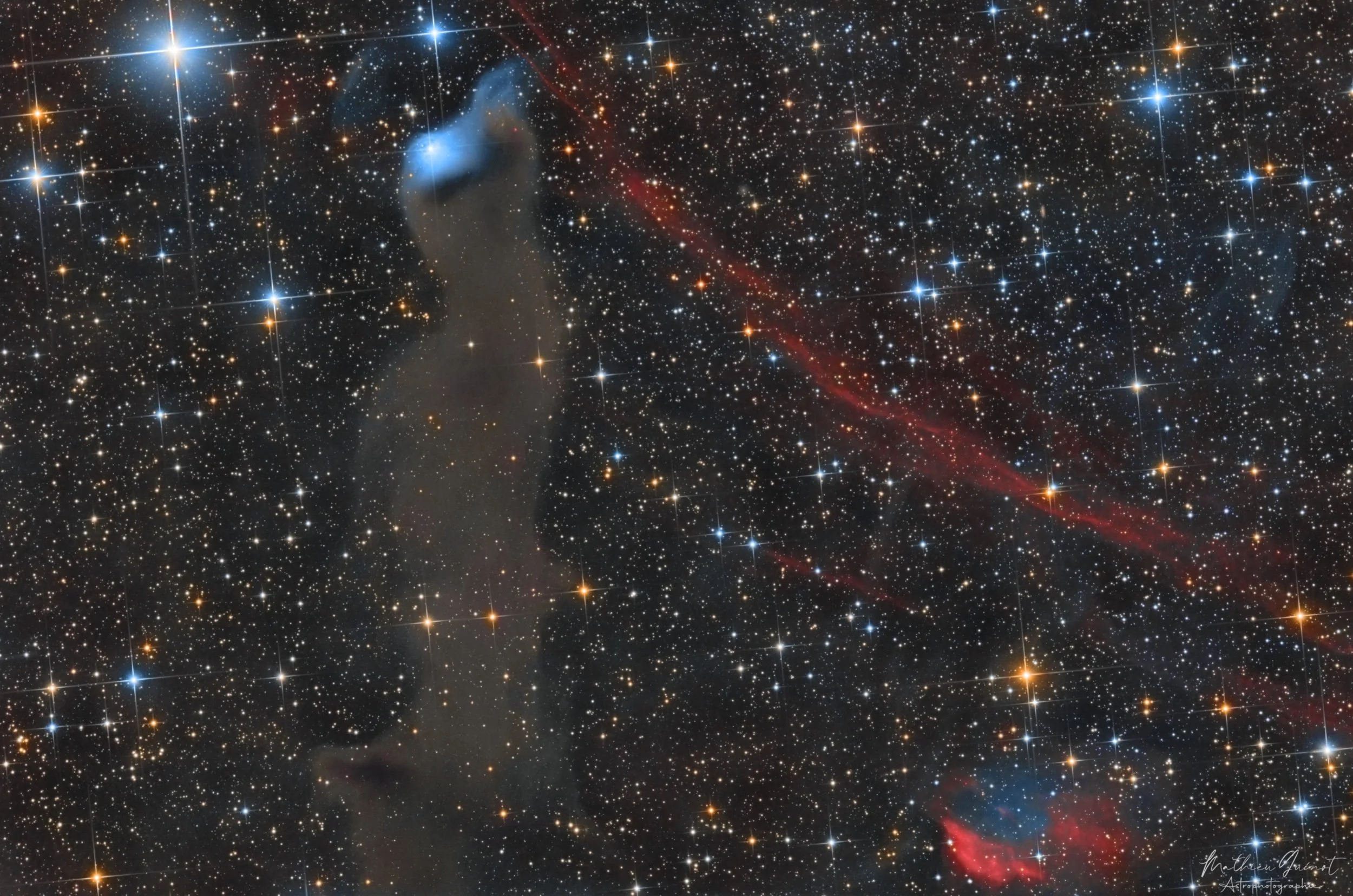
VdB 152, Barnard 175 & Co
Image Description and Details : Here is a rich field located within the large molecular cloud of Cepheus.
This image was an experiment under my downtown sky, and i am rather happy with the result because, although having probably approached the limits of the Bortle 7 sky, it shows that urban astrophotography still offers possibilities with this type of object.
4 types of nebulae are visible in this image, against a background of nebulosities of interstellar dust:
- the dark nebula Barnard 175, a dense pillar of dust
- the reflection nebula Vdb 152, shining a characteristic blue at the top of this dark pillar
- the old planetary nebula DeHt-5 radiating mainly in the wavelengths of ionized hydrogen and oxygen (red and blue)
- part of the SNR 110.3 + 11.3 supernova remnant whose ionized hydrogen filaments (red) cross the field
Some distant small galaxies are visible in the background despite the density of this area of the Milky Way.
37h30 of exposures carried out in September and October 2021 in Amiens (Bortle 7) through LRVB filters supplemented by H and O filters for NP and supernova remanence with:
newton 250mm f / 3.8
CEM120 mount
Camera ZWO ASI 2600mm
Processing with Pixinsight and Photoshop.
L: 645 x 120s
RGB: 33x120s, 40x120s and 44x120s
H: 85 x 300s
O: 60 x 300s
Copyright: Mathieu Guinot
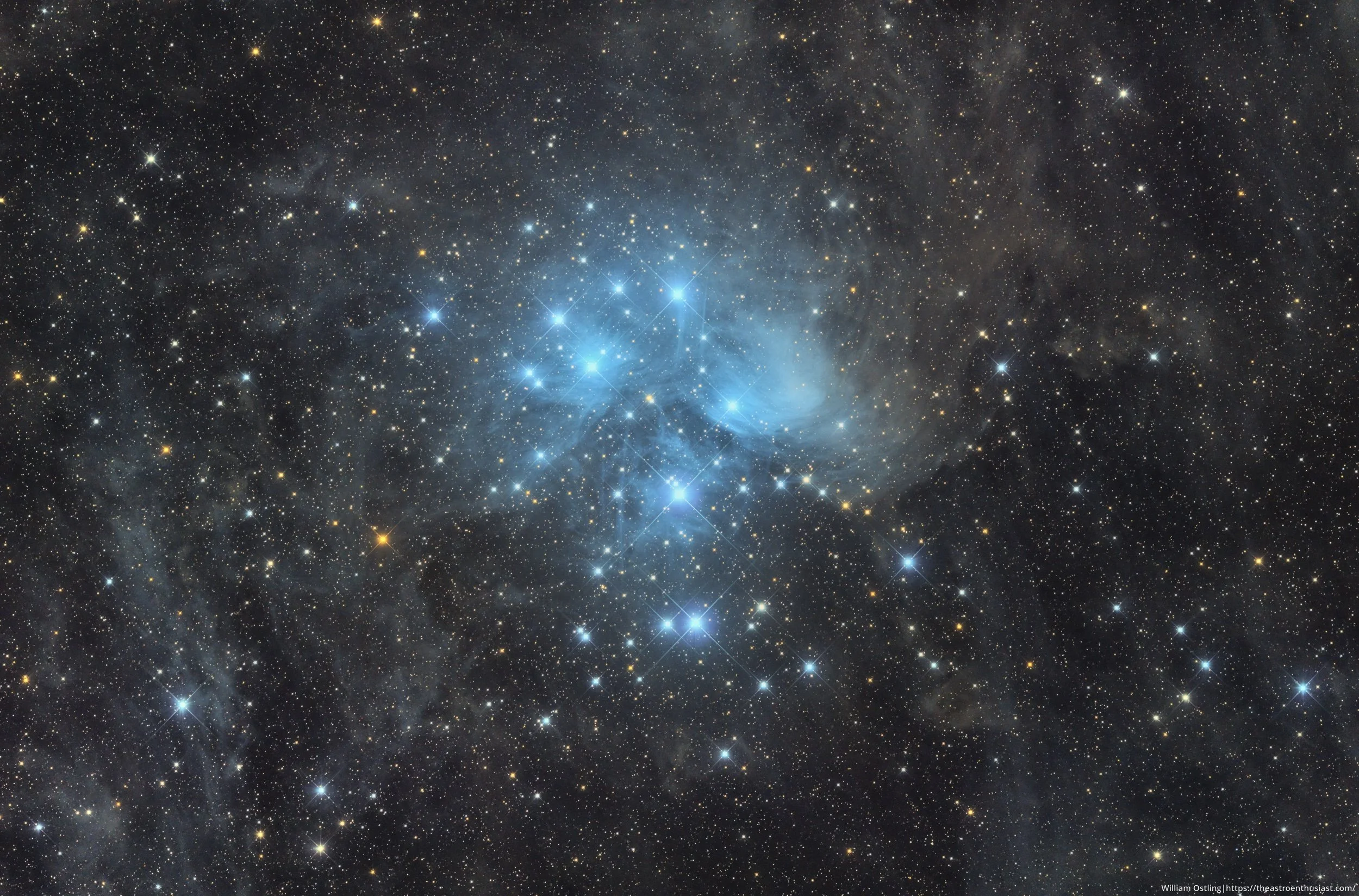
Grand Pleiades
Image Description and Details : Perhaps the most famous star cluster on the sky, the bright stars of the Pleiades can be seen without binoculars from even the depths of a light-polluted city. With a long exposure from a dark location, though, the dust cloud surrounding the Pleiades star cluster becomes very evident.
Two techniques were used to get this image: framing selection and downsampling. I chose only about 65% of the frames that I actually shot, removing bad signal from out of focus, cloudy, or polluted frames. I also downsampled the image by 50% increasing snr and the amount of dust I imaged.
Equipment:
Nikon D90
Sigma 300mm prime lens
Sky-Watcher Star Adventurer
Star Adventurer Tripod
Bahintov Mask
Intervalometer
DIY diffraction spikes
Stellarium
All Sky Plate Solver
Nina
Acquisition:
ISO 800, f/4.0
Taken from a bortle 2 zone during the new moon.
Taken on 10/4, 10/6, 10/7, 10/8
231 x 3′ light frames (11.2 hours)
200 total flat frames
67 dark frames
200 bias frames
Processing:
WBPP for calibration
Normalize scale gradient +ESD stacking
Crop away stacking artifacts
DBE
Color calibration
Noise reduction
Repair HSV separation
ArcsinH stretch
Starnet + exponential transform + pixel math to enhance nebulosity
MMT, histogram transformation, curves transformation, Local histogram – Multiscale processing
HDR multiscale transform
Local histogram equalization
Curves transformation
Copyright: William Ostling
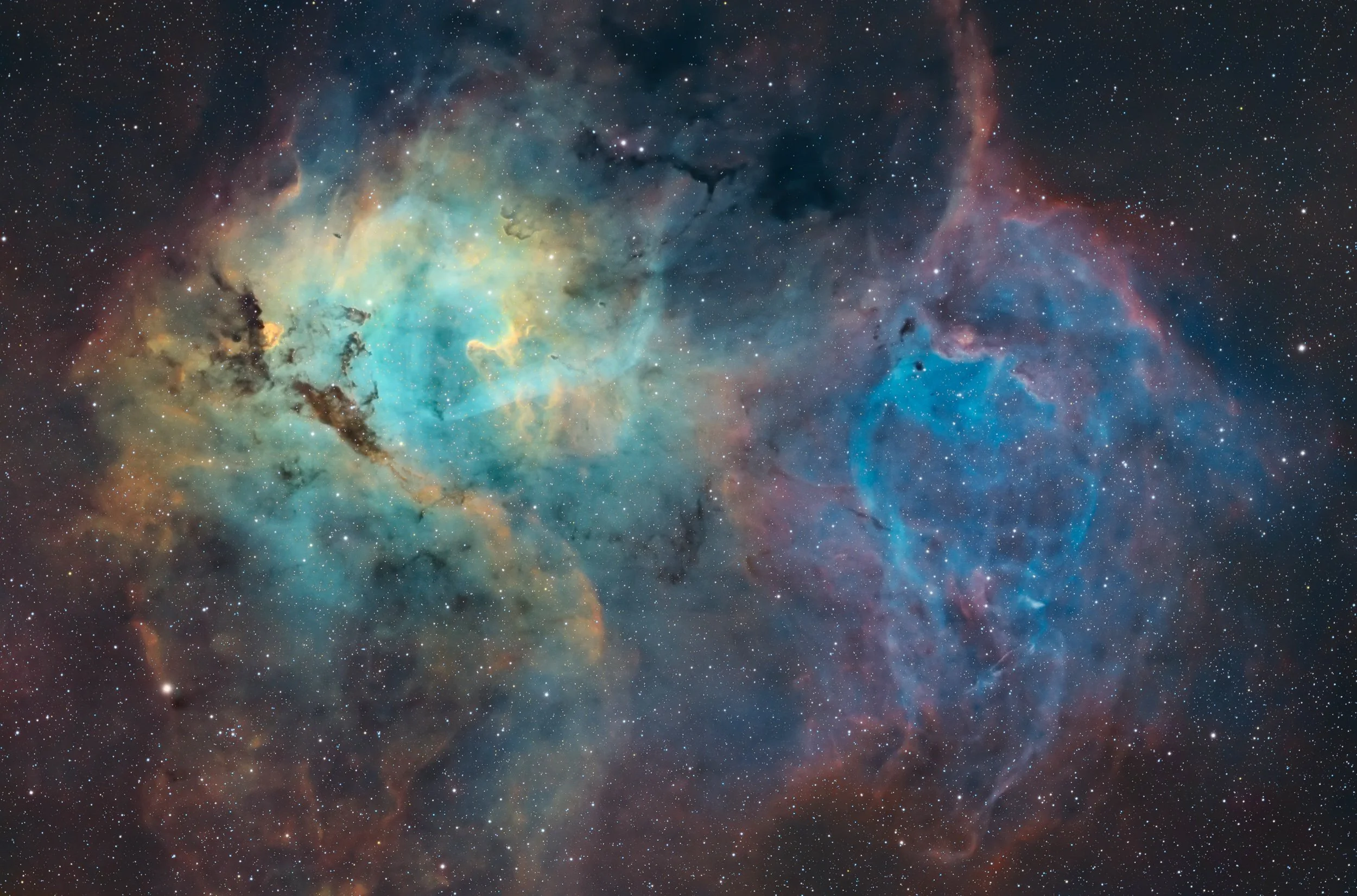
SH2-132 Lion Nebula
Image Description and Details : Sh2-132 or Lion Nebula, is a nebula of relatively weak emission located at about 10 000 light-years, at the border of Cepheus/Lacerta.
About 22 hours of exposure from Montreal, Bortle 9
Setup:
CEM70A
TSA102
QHY294MM
Chroma 3nm filters
Copyright: Jonathan Durand
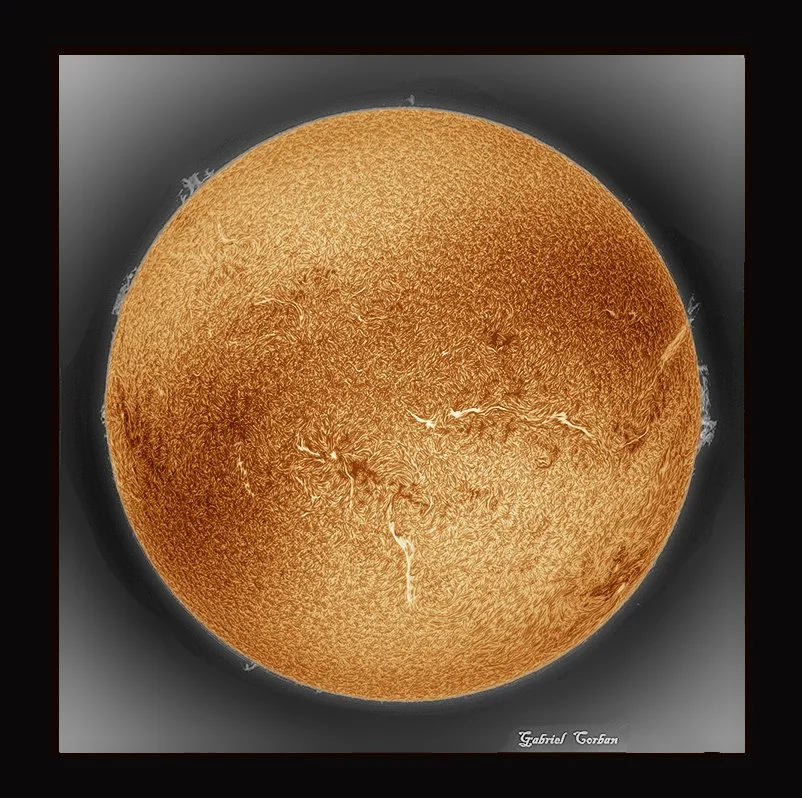
The golden Sun
Image Description and Details : This splendid disk of the Sun image shot in H-alpha frequency was obtaining using a Lunt 60 DS (double stack) telescope, a Point Grey Chameleon b/w camera and a Skywatcher NEQ6 Mount. Capturing frames using the FireCapture Software and processing frames using AutoStakkerty, PhotoShop, PIPP and RegiStax6 software. i
Copyright: Gabriel Corban

Heart, Soul & Bear Claw
Image Description and Details : Imaging telescope: TPO Ultrawide 180
Imaging camera: ZWO ASI2600MC Pro
Mount: Sky-Watcher EQ6R-PRO
Guiding telescope: ZWO Mini Guide Scope
Guiding camera: ZWO ASI290MM Mini
Software: Pleiades Astrophoto PixInisight, Aries Productions Astro Pixel Processor, ZWO ASIAir Pro, Photoshop CC
Filters: Optolong L-eXtreme 2", Optolong L-Pro 2''
Dates: Sept. 28, 2021, Sept. 29, 2021, Oct. 5, 2021, Oct. 8, 2021, Oct. 9, 2021, Oct. 10, 2021, Oct. 11, 2021
Frames:
Optolong L-Pro 2'': 60x60" (1h) (gain: 100.00) -10C bin 1x1
Optolong L-eXtreme 2": 96x1200" (32h) (gain: 100.00) -10C bin 1x1
Integration: 33h
Darks: 40
Flats: 40
Flat darks: 40
Bortle Dark-Sky Scale: 8.00
Copyright: Jeffrey Horne
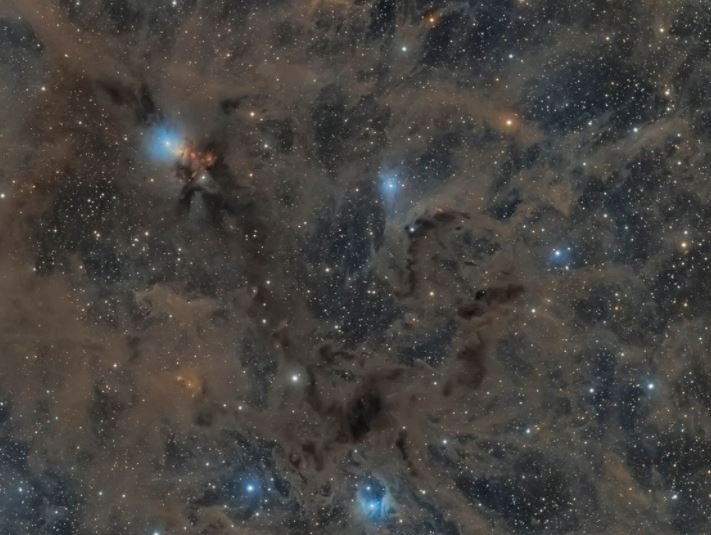
Perseus Molecular Cloud
Image Description and Details : First "official" photo of our team Team Stellae Orientis Astrophotographie with the Perseus molecular cloud in LRGB by Yann SAINTY.
The Perseus molecular cloud contains the nebulae NGC1333 and IC348.
First lights on the fsq106 and the 2600MM and the result is up to my expectations. Combined with a bortle 4 sky this setup promises beautiful moments.
No moon so I wanted to image NGC1333 but seeing the beauty of IC348 next to it I could not resist the appeal of the mosaic despite the fact that it was not recommended during a first session with a new setup.
I imaged over 2 nights instead of 4 (lots of humidity and fog), which frustrates me in the sense that I only got half of the raws I wanted and so I had to shoot more processing. as desired, but you have to know how to have fun and try things!
Technic :
Takahashi FSQ106 EDX4 with 645-QE super reducer
Asi 2600MM Pro
LRGB Antilla Filters
Eq6r-pro
Altaïr 60/225 guide + asi 290mm mini
L: 45x300 '' per tile
R - V -B: 15x300 '' per filter per tile
Sky bortle 4
Acquisition: N.I.N.A + Phd2
Processing: Siril + PixInsight + Photoshop
From France
2021/10/07 & 2021/10/10
Copyright Yann SAINTY

The wizard nebula
This image was captured through 3nm ultra-narrowband filters and is a composite of ionized Sulphur, Hydrogen, and Oxygen atoms and displayed with a modified SHO "Hubble" Palette. Data was collected over 2 nights from the 11th to 12th of October 2021 from the outskirts of Vancouver, Canada.
Imaging telescopes or lenses: Planewave CDK 12.5
Mounts: Astro-Physics AP1100 GTO CP4
Unguided
Chroma 3nm H⍺: 52x300" (4h 20')
Chroma 3nm OIII: 36x300" (3h)
Chroma 3nm Sii: 35x300" (2h 55')
Integration: 10h 15'
Pixel scale: 0.923 arcsec/pixel
Copyright: Rouzbeh Astro
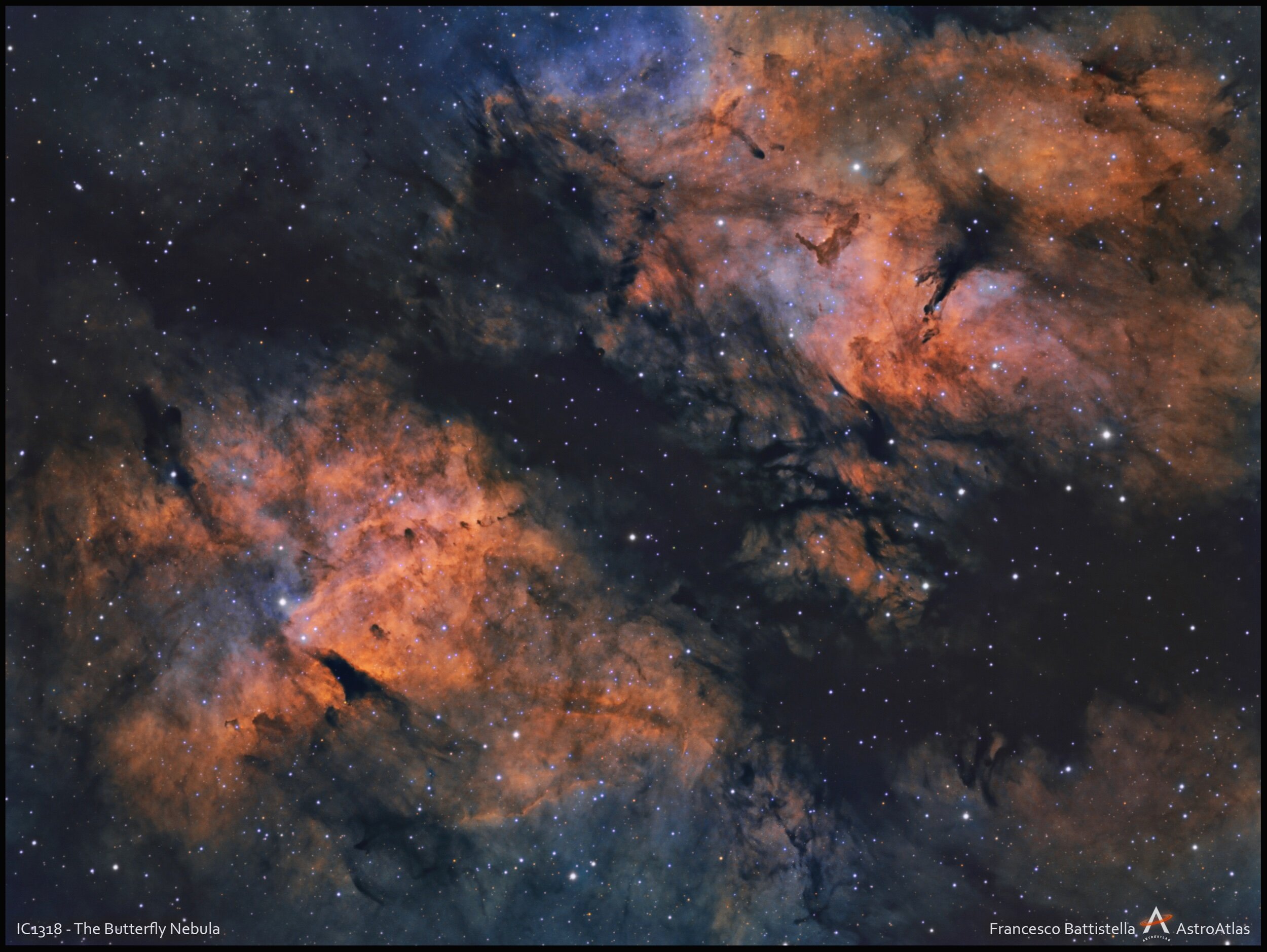
IC1318 - The Butterfly Nebula
Image Description and Details : Technical Information:
Telescope: AIRY APO 130T
Mount: Paramount MyT - Software Bisque
Camera: QHYCCD QHY9
Filter: Optolong H-a 7nm, OIII 6.5nm, SII 6.5nm
Frames: H-a: 60x900s -- OIII: 34x900s -- SII: 44x900s
Total Integration: 34.5 Hours
Software: SGP – TheSkyX – PHD2 – DSS – PixInsight – Photoshop 2021
Location: AstroAtlas Observatory - Noventa di Piave (Venice) 4 meter above sea level – ITALY
Environment Temperature: About 18°C
Relative Humidity: 84%
Date: 27.05.21 - 28.05.21 - 03.06.21 - 22.06.21 - 26.06.21 - 30.06.21 - 05.07.21 - 09.07.21 - 10.07.21 - 11.07.21 - 28.07.21
This is the Hubble Palette version of IC1318 - The Butterfly Nebula - taken from the AstroAtlas Observatory situated in Noventa di Piave (ITALY);
NOTE: The image was acquired from a polluted sky with high humidity - Bortle 5.
Copyright: Francesco Battistella