

AAPOD2 Image Archives
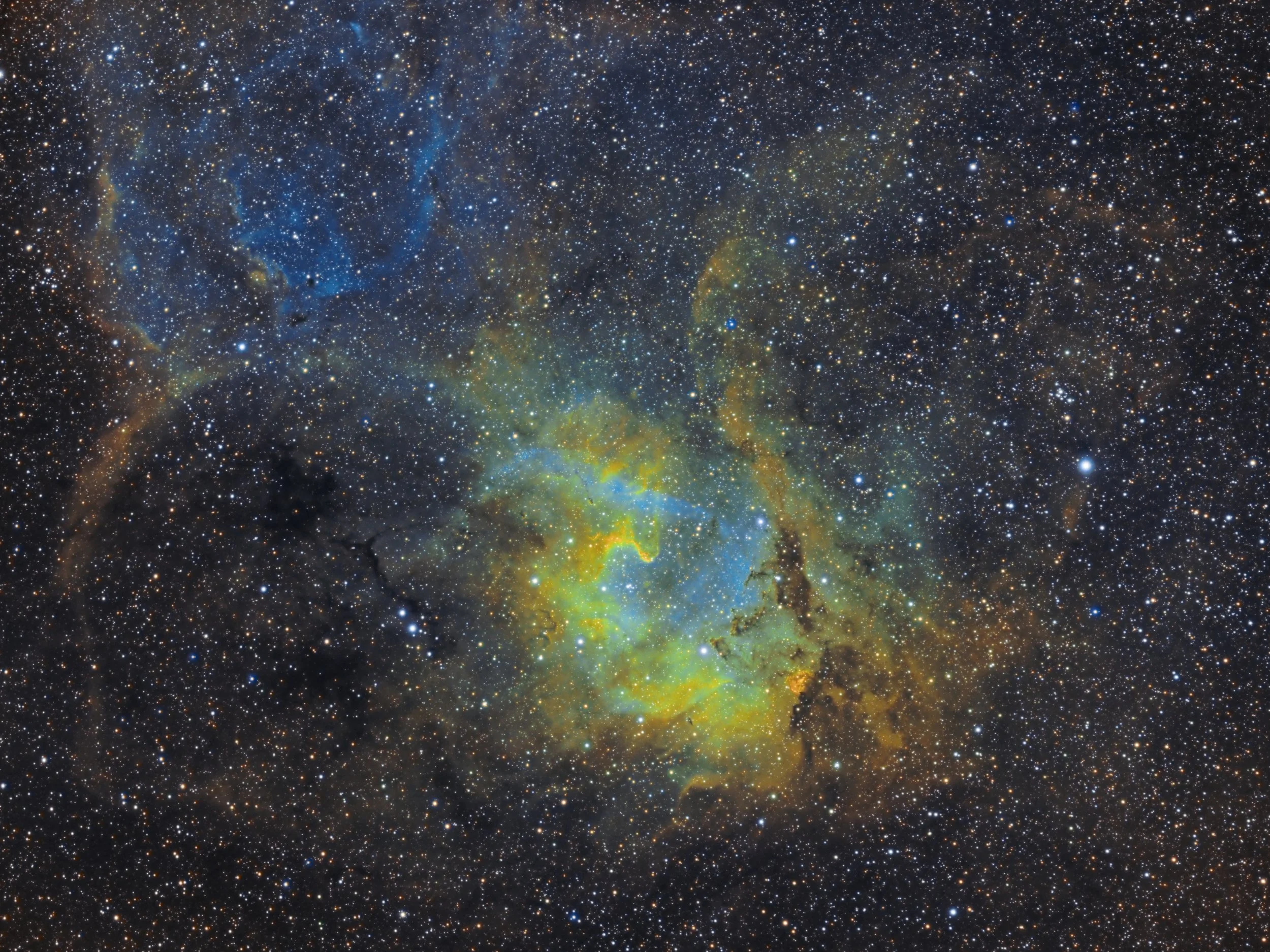
Sh2-132 in Hubble Palette
Image Description and Details : Sh2-132 is one of the 312 bright emission nebulae catalogued by Stewart Sharpless. This large area of emission nebula in the constellation Cepheus glows from the characteristic red light of ionized hydrogen. Sh2-132 is about 1,200 light years away. Dark patches within it are due to soot blocking out the light. There are also some prominent dark nebulae blocking out the light of the stars behind them outside the main area of Sh2-132.
Acquisition, focusing, and control of Paramount MX mount with N.I.N.A., TheSkyX and PHD2. Focus with Optec DirectSync motors and controller. Equipment control with PrimaLuce Labs Eagle 4 Pro computer. All pre-processing and processing in PixInsight. Acquired from my SkyShed in Guelph. Average transparency and seeing. Acquired November 23 – December 19, 2021, mostly under a moderately moonlit sky.
Sky-Watcher Esprit 150 f/7 refractor and QHY600M camera with Optolong H-alpha, O(III) and S(II) 3nm filters
Chrominance: Takahashi FSQ-106 ED IV @ f/5 and QHY367C Pro one-shot color camera with Optolong UV/IR filter.
Ha: 22 x 20m = 7hr20m
O3: 22 x 20m = 7hr20m
S2: 22 x 20m = 7hr20m
OSC: 123 x 5m = 10hr15m
Total: 22hr for narrowband image; 37hr45m for broadband/narrowband blend
Image scale 0.72 arc sec per pixel
Copyright: Ron Brecher (astrodoc.ca)

Witch Head Nebula
Image Description and Details : 2 Panel Mosaic of the Witch Head nebula
As the name implies, this reflection nebula associated with the star Rigel looks suspiciously like a fairy tale crone. Formally known as IC 2118 in the constellation Orion, the Witch Head Nebula glows primarily by light reflected from the star. The color of this very blue nebula is caused not only by blue color of its star, but also because the dust grains reflect blue light more efficiently than red. A similar physical process causes Earth's daytime sky to appear blue as well.
Telescope : Astro Physics 12″ Riccardi-Honders f3.8
Camera : ZWO ASI6200
Mount: Software Bisque Paramount ME II
Pixel scale : 1.07 arcsec/pixel
FOV : 88 x 66 arcmins
Filters :LRGB
Integration: 28h00m
L 30x20m R 18x20m G 18x20m B 18x20m
RA center: 05h05m52s.3
DEC center: -06°43′01″
Accquistion: NINA
Processing: PixInsight
Copyright: vikas chander
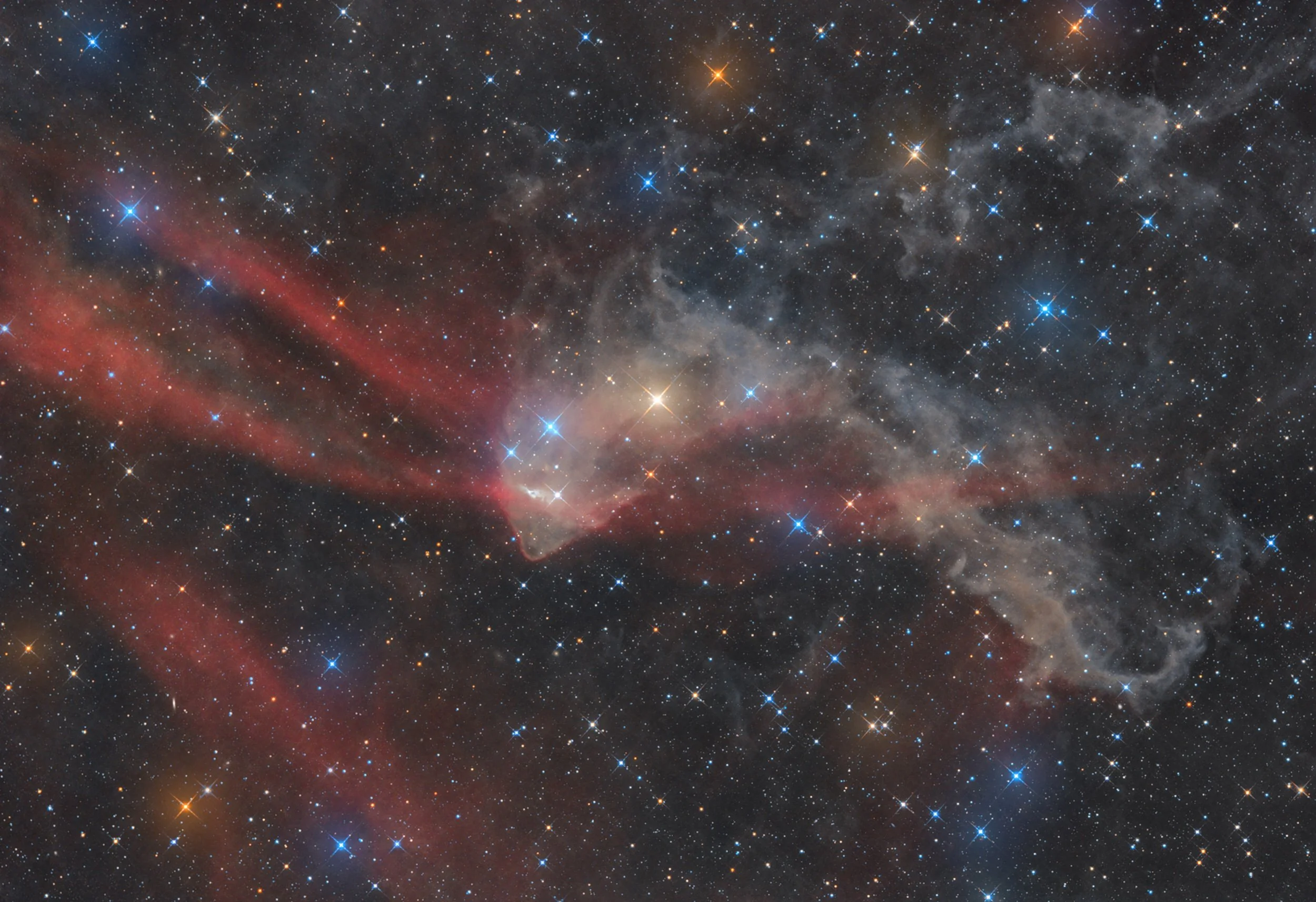
A cosmic lizard (Sh2-126)
Image Description and Details : Sharpless 126 (Sh2-126) is the designation of a large emission nebula in Lacerta, which appears in this image as a red background and exceeds the edges of the image. The source of its ionization is the intense ultraviolet radiation from the star 10 Lacertae, a blue main sequence star.
The nebula, which forms a "stellar funnel" in the center of the image and snakes away to the right, is designated LBN 437. It is a molecular cloud whose densest part is associated with some bright young stars. Its most striking feature is a symmetrical reflection nebula associated with the Herbig Ae / Be star V375 Lacertae. This star is also responsible for the bipolar Herbig-Haro objects within the nebula. Herbig-Haro objects are small nebulae around young stars. They form when gas ejected by the star hits dust clouds.
Telescope : ASA - Astro Systeme Austria ASA 10'
CMOS : ZWO ASI2400MC
Mount : Paramount MyT
Filter : IDAS LPS P3 2" LPS-P3
Softwares : PHD2 · Astro Pixel Processor · N.I.N.A. · Adobe Photoshop CC · The SkyX Pro · PIXINSIGHT
Guiding : Sky-Watcher Evostar 72ED Evostar 72ED and ZWO ASI290MM Mini
IDAS LPS P3 2" LPS-P3: 128x600" (21h 20') (gain: 145.00) -10C bin 1x1
IDAS NBZ Nebula Boost Filter: 20x600" (3h 20') (gain: 145.00) -10C bin 1x1
IDAS NBZ Nebula Boost Filter: 19x900" (4h 45') (gain: 145.00) -10C bin 1x1
TOTAL EXPOSURE : 29 hrs
Copyright: Thomas LELU
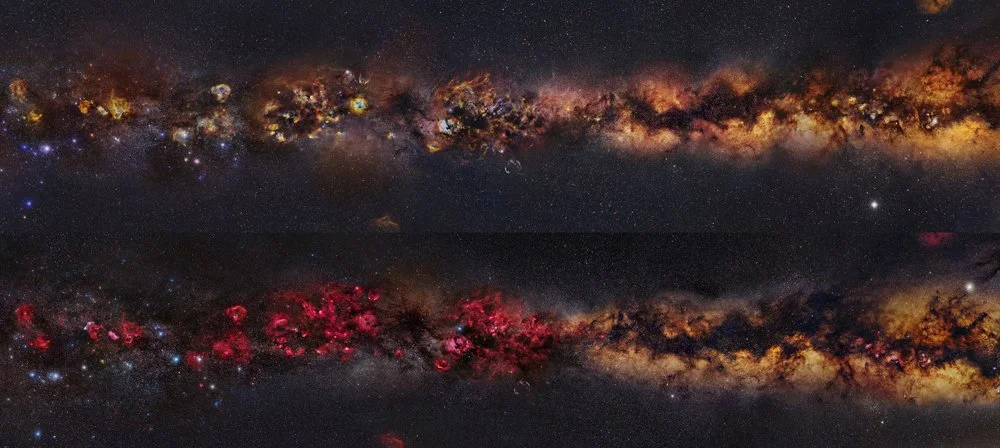
Two Milky Ways
Image Description:
I have updated my large mosaic of the Milky Way with the high resolution imaging I did in 2021. The upper image is taken through H-alpha, SII and OIII filters and the lower one through HaRGB. All the major nebulosity is now taken at a focal length of 530mm. This gives the image very crisp detail when viewed as a whole. Other images around the major nebulosity were taken at focal lengths of 85mm and 14mm. This mosaic has a total of 216 panels and over 2200 hours of imaging time. It uses data taken over the last 3 years which is why in the HaRGB image Jupiter (which looks like a very bright star) is above Sagittarius and in the SHO image which I took 12 months later it is below. That's how far it moved in a year.
Equipment Used
Telescope Canon 35mm L Series Lens, Sigma 85mm Lens, Takahashi TOA-130/FSQ 106 (Detail for the Nebulae)
Camera STL-11000M/STXL-11002M (Detail of the Nebulae) and SBIG STF-8300 and Canon 6D DSLR for the Widefield
216 image Mosaic with ~2268 hours of imaging through RGB. H-alpha, SII and OIII filters.
Copyright: Alistair Symon
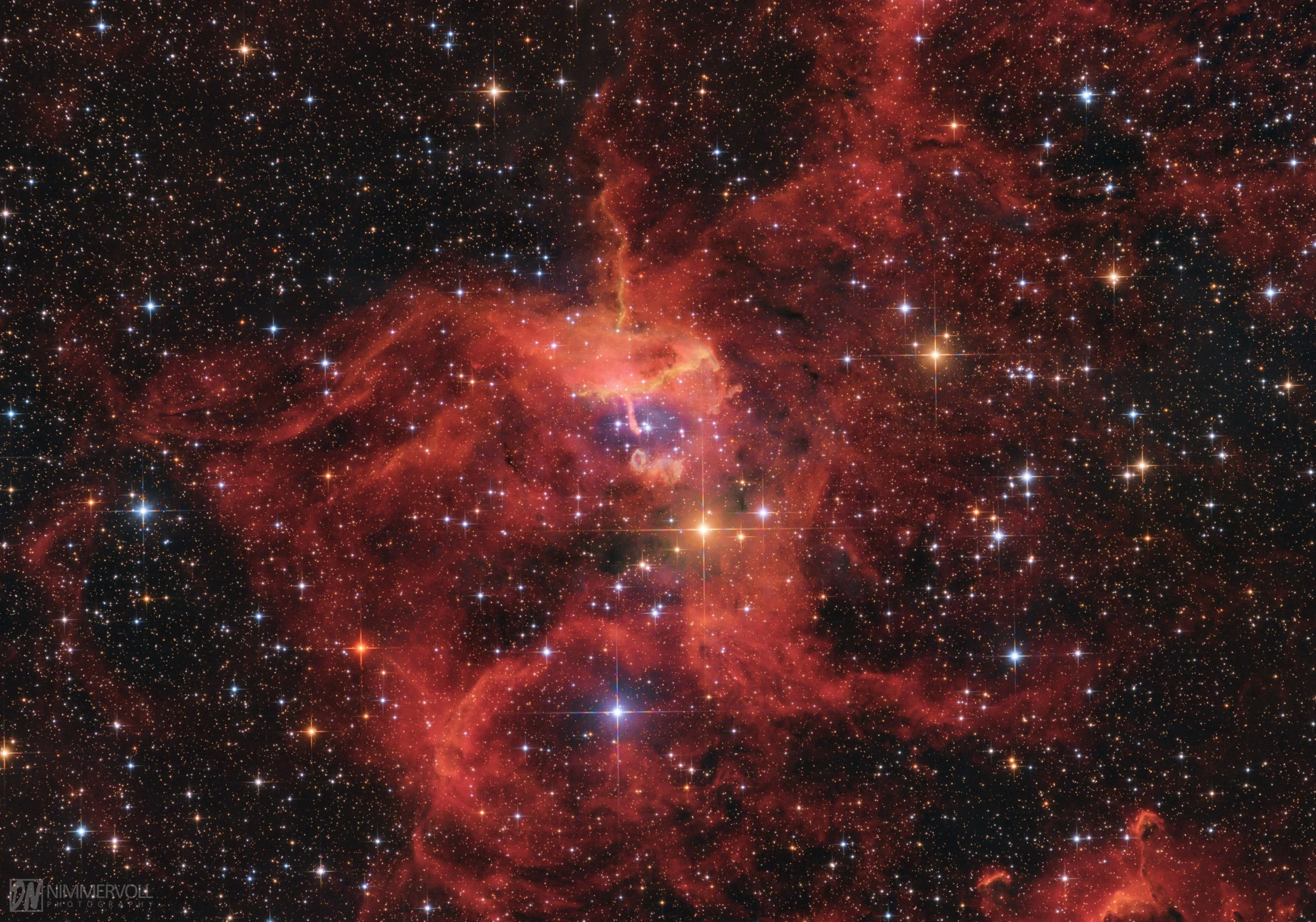
IC 417 - The Spider Nebula
Location: Upper AustriaPhoto taken on: December 2021Distance: 7500 light yearsExposure: RGB each 11 x 300 sec.Luminance: 30 x 300 sec.H-alpha: 51 x 900 sec.O-III: 25 x 900 sec.S-II: 58 x 900 sec.Total: 38.7 hoursCalibration: Darks / Flats / DarkFlatsMount: Skywatcher EQ6-R PROTelescope: Lacerta Fotonewton 250/1000Corrector: Lacerta GPU coma correctorFilter: Antlia LRGB-V ProAntlia 3nm Pro H-AlphaAntlia 3nm Pro O-IIIAntlia 3nm Pro S-IICamera: QHY268m @ Gain 0/60 at -15 ° CGuiding: QHY OAG with QHY5III462c and PHD2Software: APP / Photoshop CC
Copyright: Daniel Nimmervoll
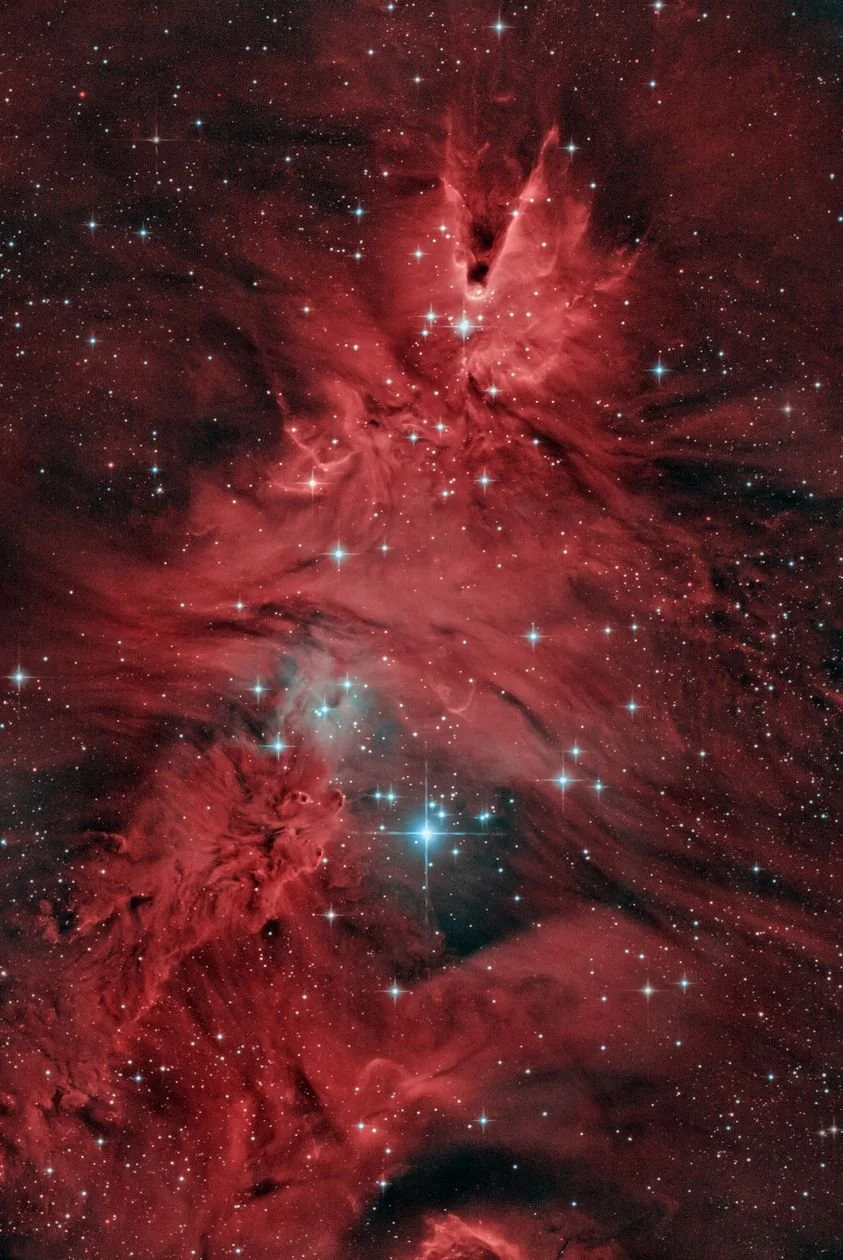
NGC 2264 Christmas Tree Cluster & Cone Nebula
10 hour in HOO
100 x 3 min Ha + 100 x 3 min OIII
Telescope: TS Newton 10" f/4 CF, GPU 1x
Camera: ZWO ASI294MM Pro
Filters: Astronomik 6nm
Mount: iOptron CEM70-NUC
Software: PixInsight, Photoshop, Lightroom
Copyright: Andrei Gusan

Ariane V carrying James Webb Space Telescope
The historic launch of JWST took place on 25th December 2021. The visuals were sudden as we did not expect to come across the Ariane V rocket from West Bengal. Initially we thought it to be a comet (including Leonard for a moment) and confirmed the object sometime later. It was a "Dream come true" for us.
The first image shows Ariane V trailing past Sculptor Galaxy. The second image is a sequence captured over 15 minutes and the third image was its first visuals.
Exif: 2 seconds, f/2, ISO 500, 135mm, Stack of 40 images (Image 1), Stack of 10 images each (Image 2), Stack of 10 images (Image 3).
Gear: Nikon D5600, Samyang 135mm (on a tripod)
Processing: Sequator, Pixinsight, Adobe Camera Raw, Photoshop
Location: Sukna, West Bengal, India
Date: 25th December 2021
Copyright: Samit Saha & Soumyadeep Mukherjee
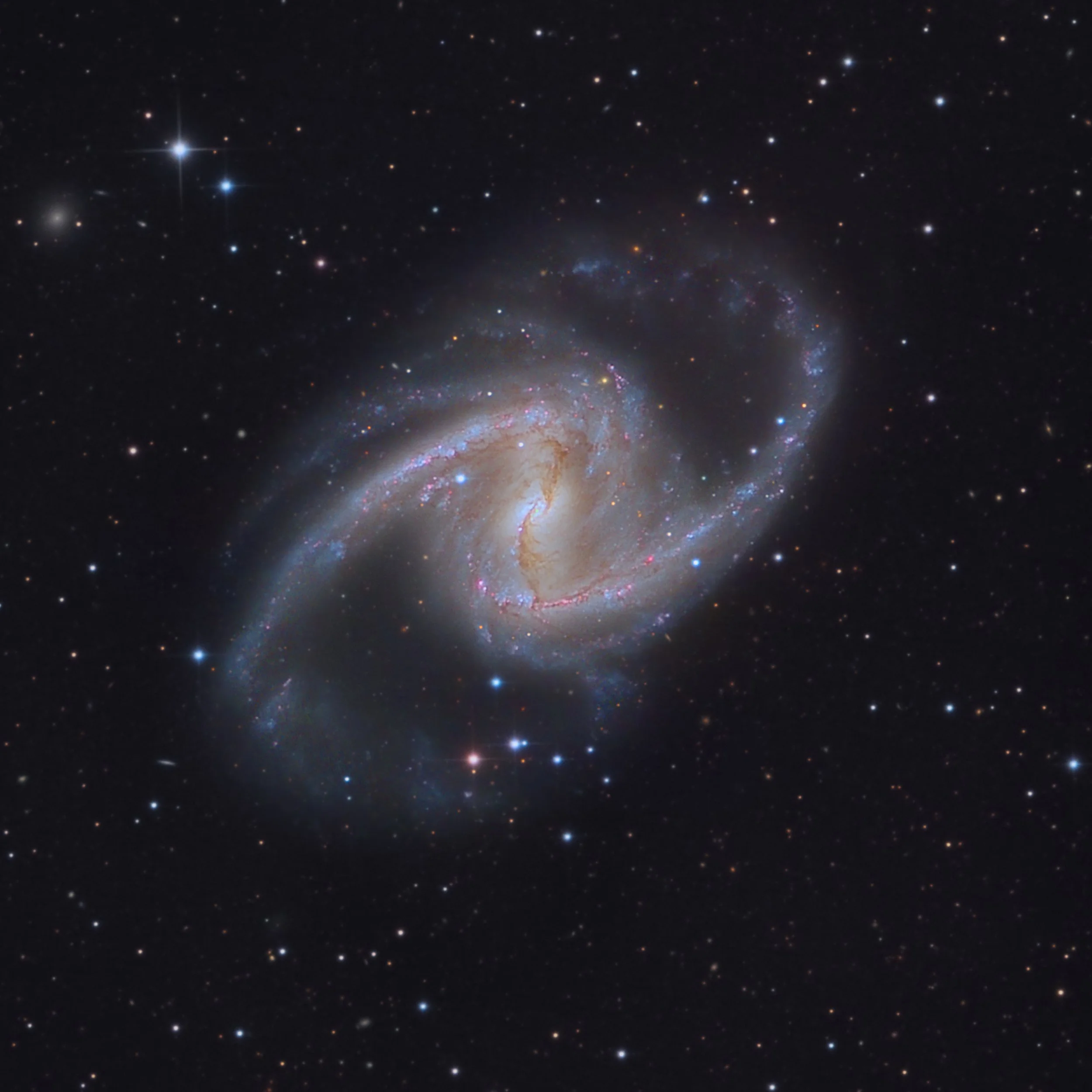
NGC1365 in Fornax
Image Description and Details :
First light of ATRIA observatory, one of the most beautiful galaxies from the Fornax NGC1365 and NGC1097 with a PlaneWave CDK17 installed at Deep Sky Chile. ATRIA team composed of 6 members: Olivier Désormières, Fabien T., Frédéric L .. David Néel, Julien Bourdette, and myself ;-) Arnaud PeelI try to keep as much detail as possible for a close-up view. I specifically process the center core of the galaxy to keep the colors and the detail at the maximum of the resolution of the acquisition FWHM< 1.6" .Processing: Arnaud PeelTotal exposure : 11h15Red 18subs@420s -15°C gain highGreen 20 subs@300s -15°C gain highBlue 20 subs@300s -15°C gain highLight 165subs@180s -15°C, gain high
Copyright: Arnaud PEEL

The Wizard Nebula
Image Description and Details :
Ngc 7380, nébuleuse du Sorcier.
version sho,
optique: 200/1000 SW
camera: Atik 460ex guidage: Asi 290 mini.
monture: eq6
integration: 20h
Copyright: Rémi Méré
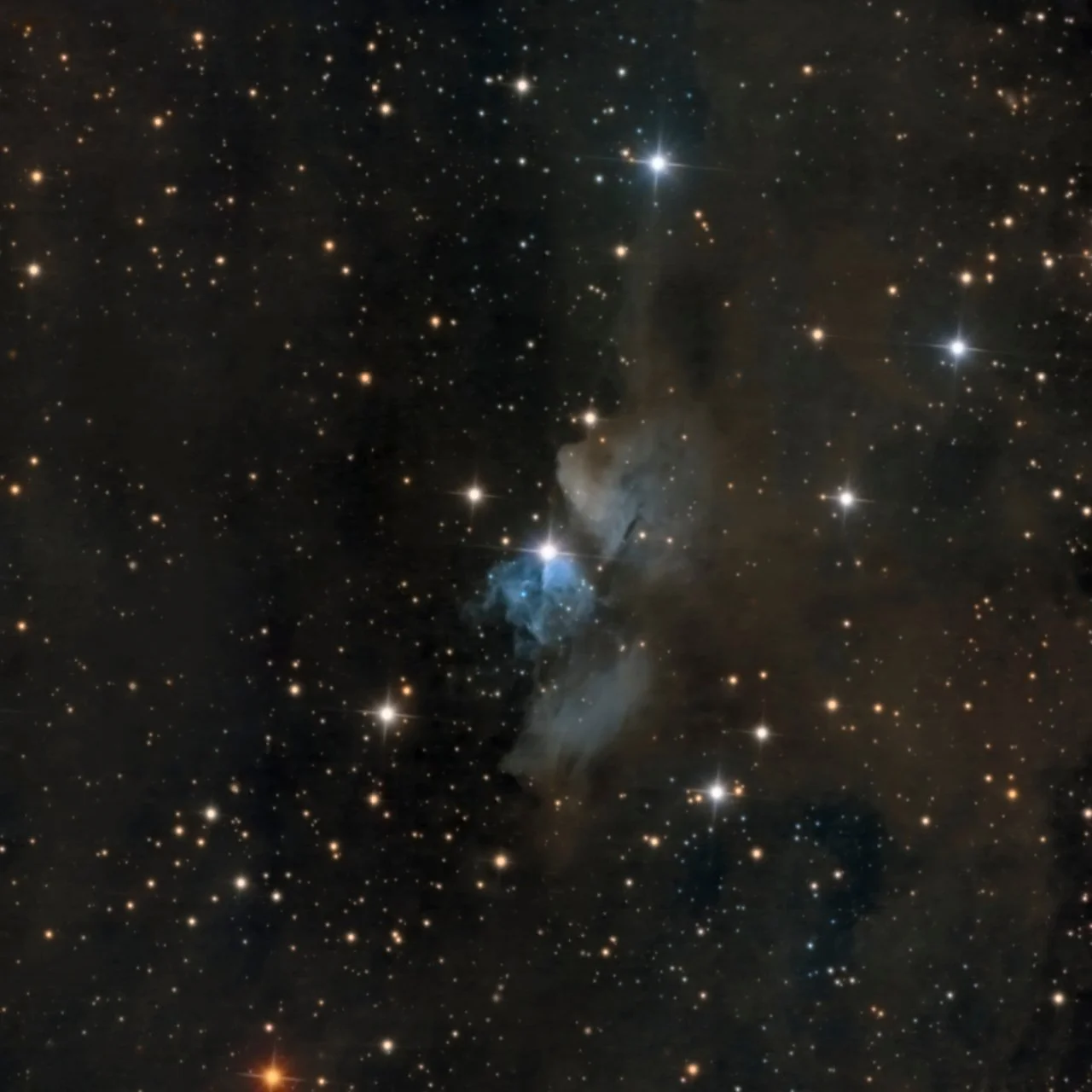
vDB 24
Image Description and Details :
vdB 24 is a reflection nebula in the constellation of Perseus. It is illuminated by the luminous and variable star 'XY Per', which is the bright star just below the blue nebulosity near the center of the image. vdB 24 is embedded in a larger dark nebula called LDN 1442, which can be seen as the brownish gas
Telescope Astrosib 20" + camera FLI Kepler 4040 cmos
Total=36h50mn
CCDautopilot +Pixinsight
From E-eye my remote observatory in Spain
Copyright: Georges Chassaigne
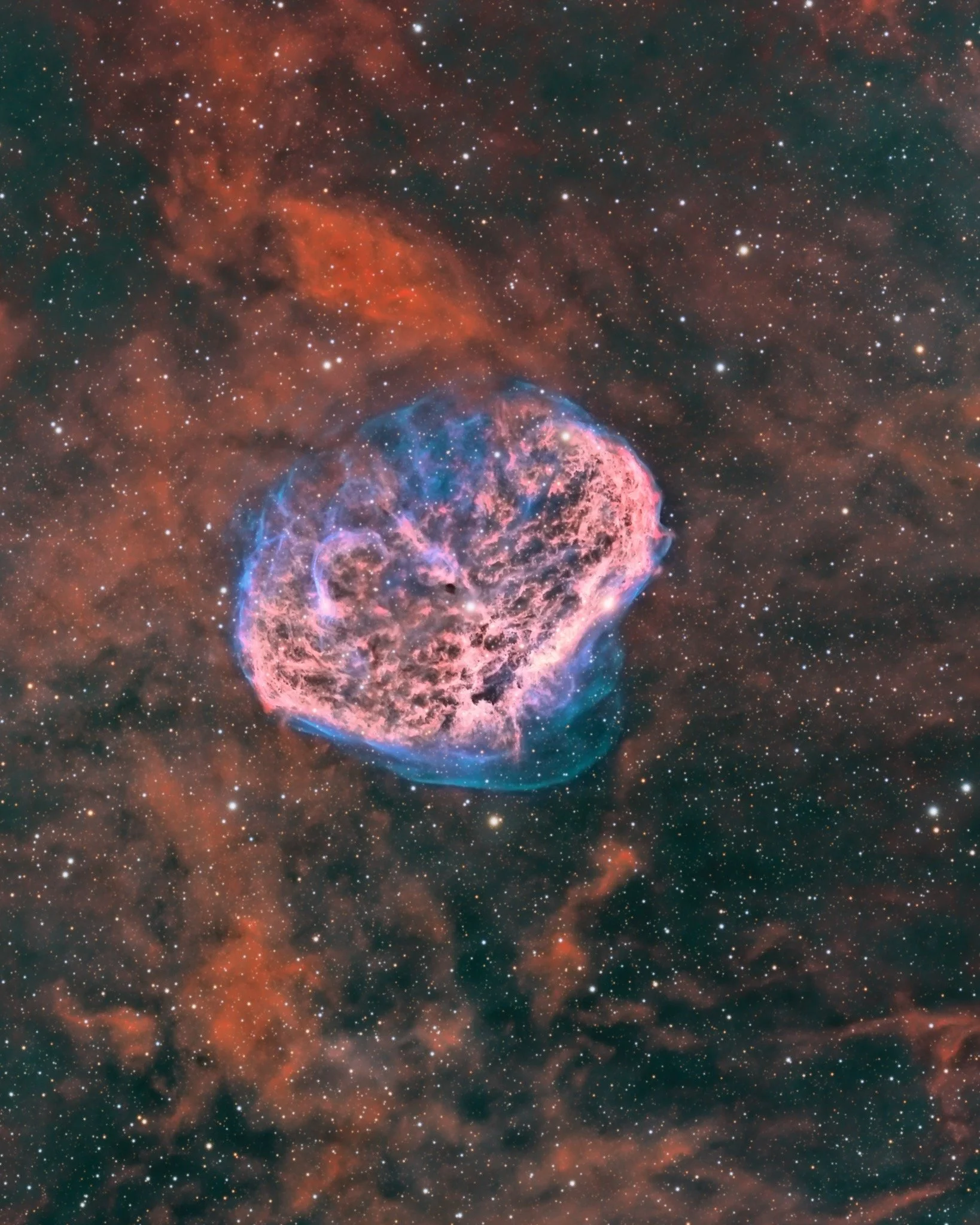
THE CRESCENT
34hr 31min total exposure time
96x300” Ha
119x300” Oiii
150x60” R
66x60” G
74x60” B
40x Darks360 Flats/Dark Flats06/13-15,06/17-18, 06/21-22, 07/22, 08/03, 08/13/2021Bortle 6/7Calgary, ABSetup#1 - HHOHO 711mm Focal Lengthwilliam optics GT102william optics Flat68iiiantlia filters HO 3nm, 2”antlia filters RGB, 2”sky watcher usa EQ6-R Prozwo asi ASI2600MM-Pro, unity, -10Czwo asi EAFzwo asi EFW 7x2, 2”zwo asi OAG68Mzwo asi ASI290MM-minizwoasi ASIAir Pro
APP, PI, PS, MLR
Copyright: Andrew Lesser
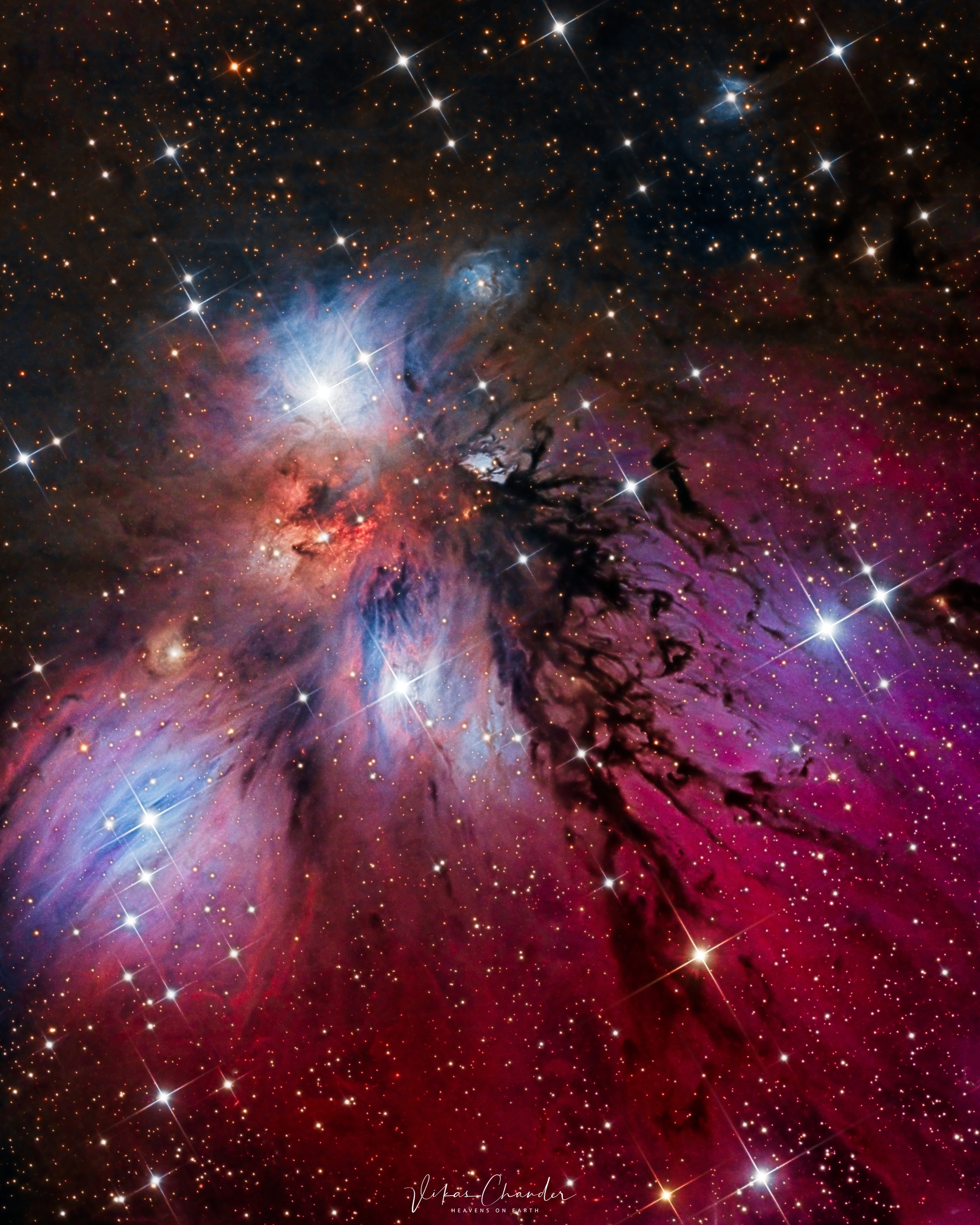
NGC 2170 Angel Nebula
Image Description and Details : Is this a painting or a photograph? In this classic celestial still life composed with a cosmic brush, dusty nebula NGC 2170, also known as the Angel Nebula, shines near the image center. Reflecting the light of nearby hot stars, NGC 2170 is joined by other bluish reflection nebulae, a red emission region, many dark absorption nebulae, and a backdrop of colourful stars. Like the common household items that still life painters often choose for their subjects, the clouds of gas, dust, and hot stars featured here are also commonly found in this setting -- a massive, star-forming molecular cloud in the constellation of the Unicorn (Monoceros). The giant molecular cloud, Mon R2, is impressively close, estimated to be only 2,400 light-years or so away. At that distance, this canvas would be over 60 light-years across.
Telescope : Planewave CDK 17 F6.8
Camera : SBIG STXL 11002
Mount: Software Bisque Paramount ME
Pixel scale : 0.63 arcsec/pixel
FOV : 42 x 29 arcmins
Filters :LRGB
Integration: 20h00m
L 15x20m R 15x20m G 15x20m B 15x20m
RA center: 06h08m24s.0
DEC center: -06°27′28″
Software: PixInsight
Copyright: Vikas Chander

EGB 4 Emission Nebula
Image Description and Details :
I was rather reluctant to take the object on given my bortle sky scale of 8 and how few clear nights we have had this year in Michigan, USA. I decided to give it a shot anyways, however. It really could of used twice the amount of integration time I have into it, though. It was extremely hard to process and pull out the detail. I have learned over the years that doing narrowband imaging evens the playing field with highly light polluted skies like mine EXCEPT when the object is faint like this one.
EGB 4 (Ellis-Grayson-Bond 4) is a binary star system that is not well understood. In most cataclysmic variables, matter from a normal star accumulates on the surface of the companion white dwarf star, eventually causing a nova-like flare as the material becomes hot enough to ignite nuclear fusion. In this case, however, light appears to flicker unpredictably, and an unusually large wind of particles is being expelled. The wind creates a large bow-shock as the system moves through surrounding interstellar gas. It lies about 2500 light-years away toward the constellation of Camelopardalis.
Copyright: Douglas J Struble
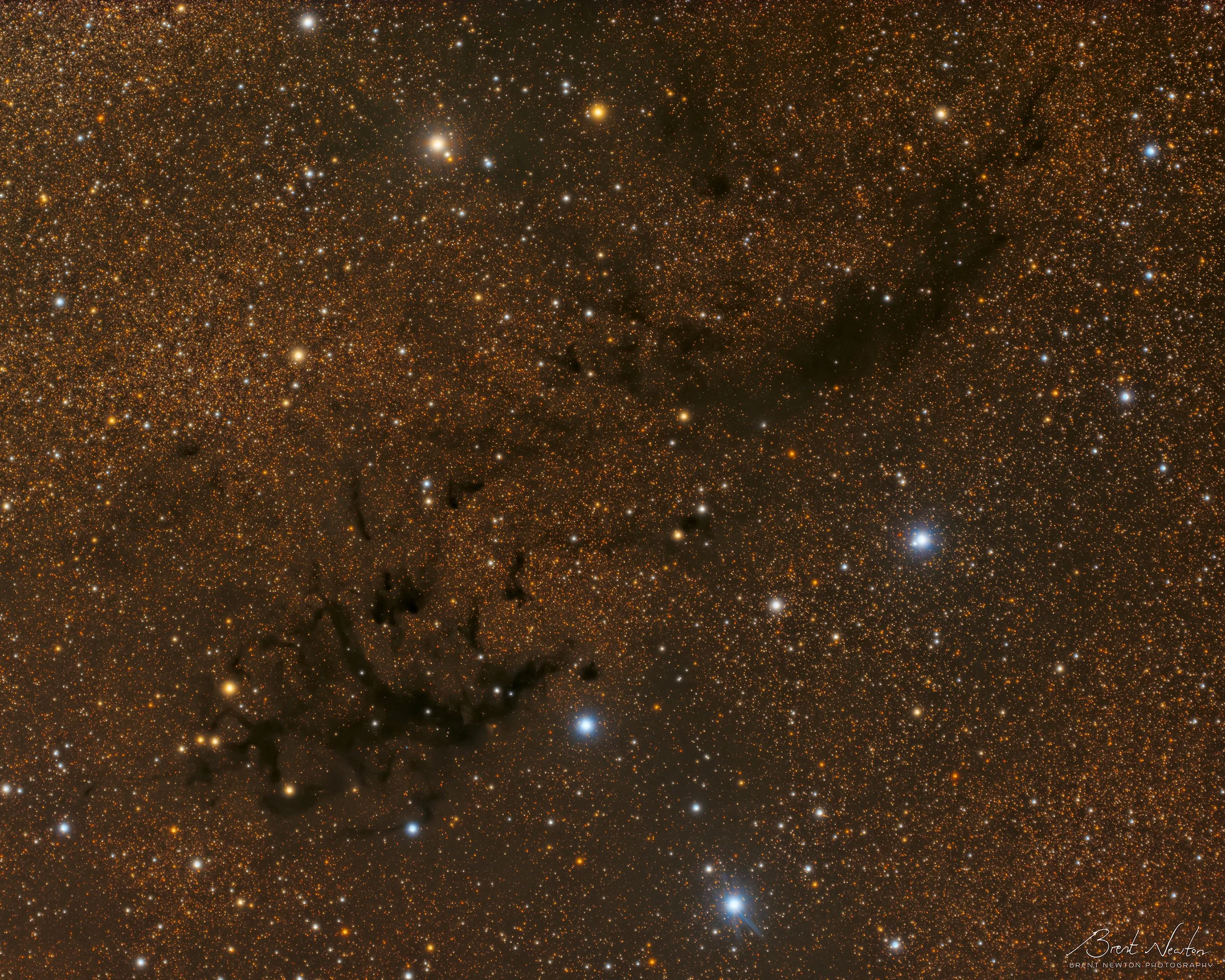
The Reaper (LDN 673, 684)
Image Description and Details :
LDN 673 (lower-left) is a swirling Dark Nebula located within the main band of the Milky Way in Aquila which takes on a tentacle-like appearance. Including the dark nebula LDN 684 in the upper-right, the entire complex appears much like the silhouette of a Reaper from the Mass Effect series. I shot this across 6 nights under the Bortle 1 skies of the 2021 Okie-Tex Star Party totaling 6 hours Luminance (full visible light spectrum for contrast) and 2.3 hours exposure for each Red, Green, and Blue channels. 350mm Focal Length Refractor, ASI1600MM-P, APT for capture, Pixinsight for processing
Copyright: Brent Newton
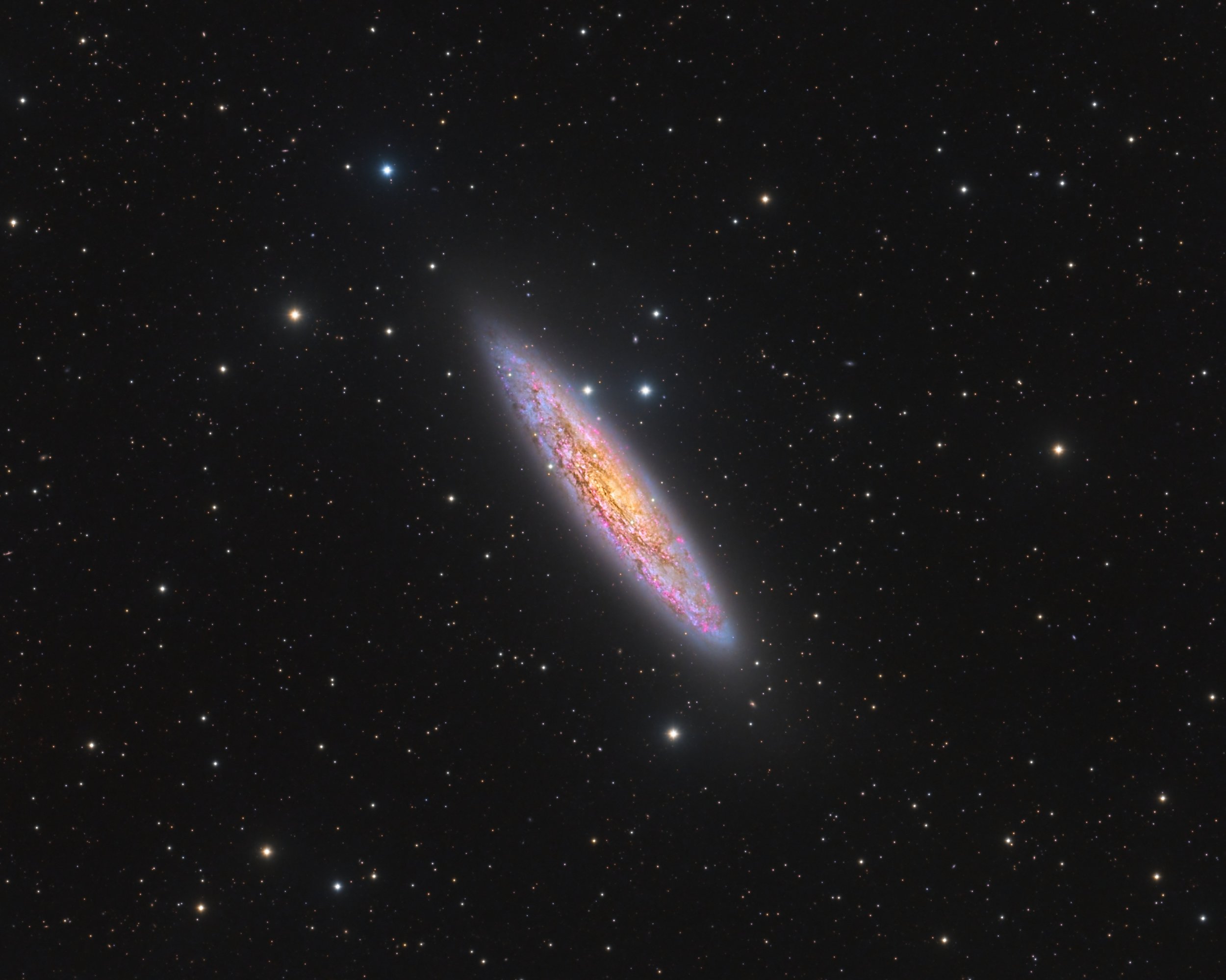
Silver Coin Galaxy
Image Description and Details :
NGC 253 The Sculptor Galaxy. Also known as The Silver Coin or Silver Dollar Galaxy is an intermediate spiral galaxy in the constellation Sculptor. Discovered in 1783 by Caroline Herschel it is one of the brightest galaxies in the night sky. Imaging dates: September 3 to October 3, 2021LRGB - 9 hours 30 minsHa - 4 hoursEquipment list:Takahashi TOA-150 Camera: FLI ML16200Filter: Chroma LRGBSHO 8nmFocuser: FLI AtlasFocal Length: 1100mmFocal Ratio: f/5.0Pixels: 6μmImage Scale: 1.1"Mount: A-P 1600GTO-AELocation: Deep Sky West, Chile
Copyright: Chris Parfett

Catena Davy and Muller?
Image Description and Details :
Some time ago I posted a photo with the Astrobin comment ( http://www.astrobin.com/57641/ ) that I suspected that the alignment of craters near Muller could be a Catena.Seeing this new photo taken a few days ago when the two are present (Muller and Davy) this feeling gets even stronger.Still, I reserve the right to doubt mainly due to the diameter of the craters that appear to form Muller, they are too large for us to imagine a stone block of this size rebounding or even a succession of blocks hitting the Moon after the initial object has been fragmented. .However, not being totally impossible, the suggestion for posteriority remains.Catena, catenae (Chain of Craters) -Name adopted by the UAI to designate a chain of craters on the surface of the moon or a planet. They are the result of the rebound and eject material from the impact that formed the main crater. Davy crater crater is one of the most spectacular crater ridges on the Moon, stretching about 50 km away from the rim of ancient Davy crater.
Copyright: Astroavani
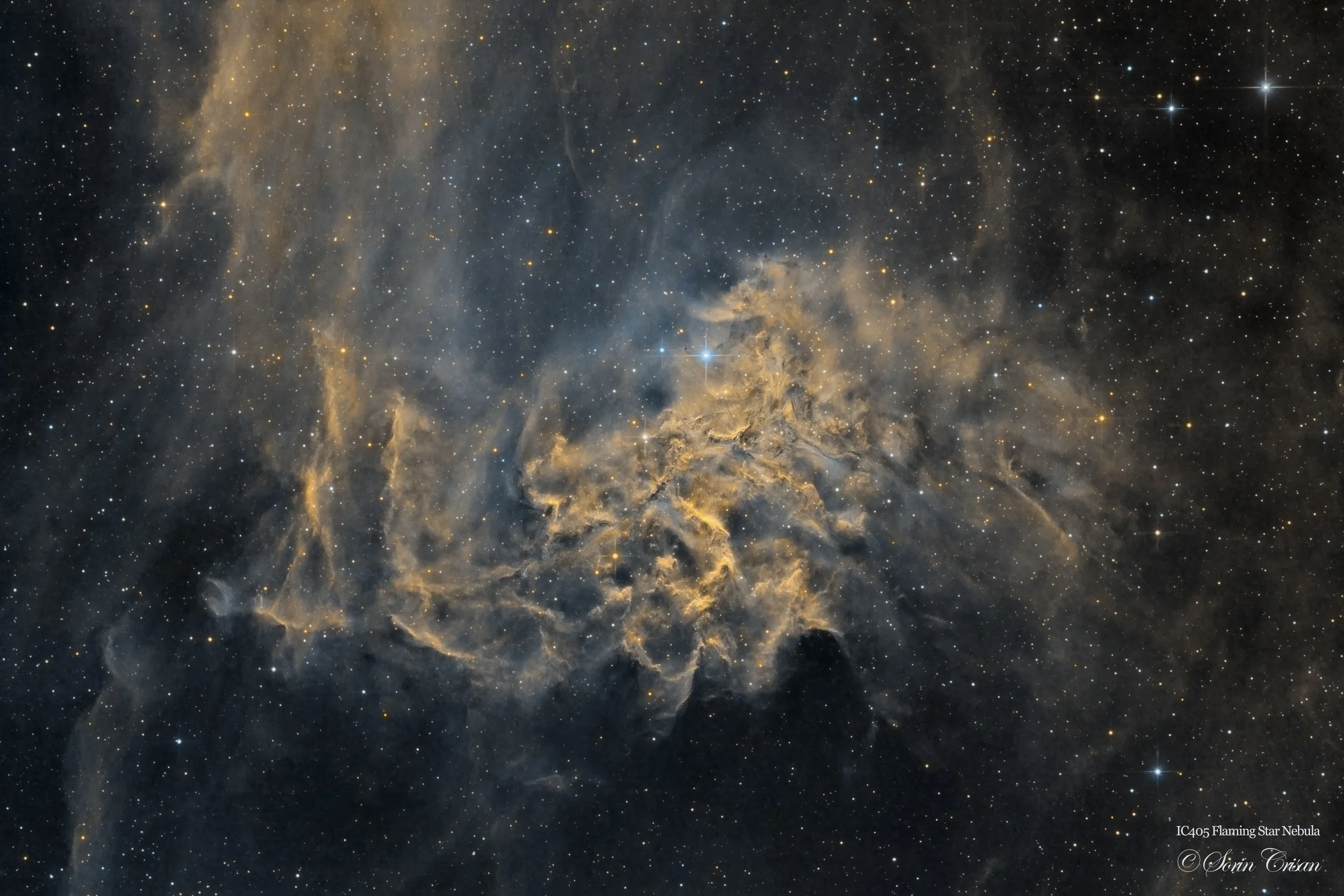
Flaming Star Nebula in SHO
Image Description and Details :
Imaging telescopes or lenses: Skywatcher 130PDSImaging cameras: ZWO ASI294MM ProMounts: Synta Sky-Watcher EQ6-r PROGuiding telescopes or lenses: Artesky 70/400 mmGuiding cameras: ZWO ASI290MM MiniFocal reducers: Sky-Watcher Coma corrector 0.9xSoftware: N.I.N.A. Nighttime Imaging 'N' Astronomy · Astro Pixel Processor · PixInshight · PHD2Filters: Astronomik 31mm 6nm SII Astronomik 6nm SII · Astronomik 31mm 6nm OIII Astronomik 6nm OIII · Astronomik 31mm 6nm Ha Astronomik 6nm HaAccessory: Pegasus power box micro · ZWO Off-Axis Guider · ASI ZWO EAF (Electronic Automatic Focuser) · ZWO 8x 1.25" Filter Wheel (EFW) ZWO 8X EFWDates:24 Nov 2021 , 25 Nov 2021 , 3 Dec 2021Frames:Astronomik 31mm 6nm Ha Astronomik 6nm Ha: 57x300" (4h 45') (gain: 120.00) -10C bin 2x2Astronomik 31mm 6nm OIII Astronomik 6nm OIII: 22x300" (1h 50') (gain: 120.00) -10C bin 2x2Astronomik 31mm 6nm SII Astronomik 6nm SII: 48x300" (4h) (gain: 120.00) -10C bin 2x2Integration: 10h 35'Darks: 30Flats: 20Flat darks: 20Avg. Moon age: 22.72 daysAvg. Moon phase: 49.61%Bortle Dark-Sky Scale: 5.00Mean SQM: 20.25Temperature: -3.67
Copyright: Sorin Crisan
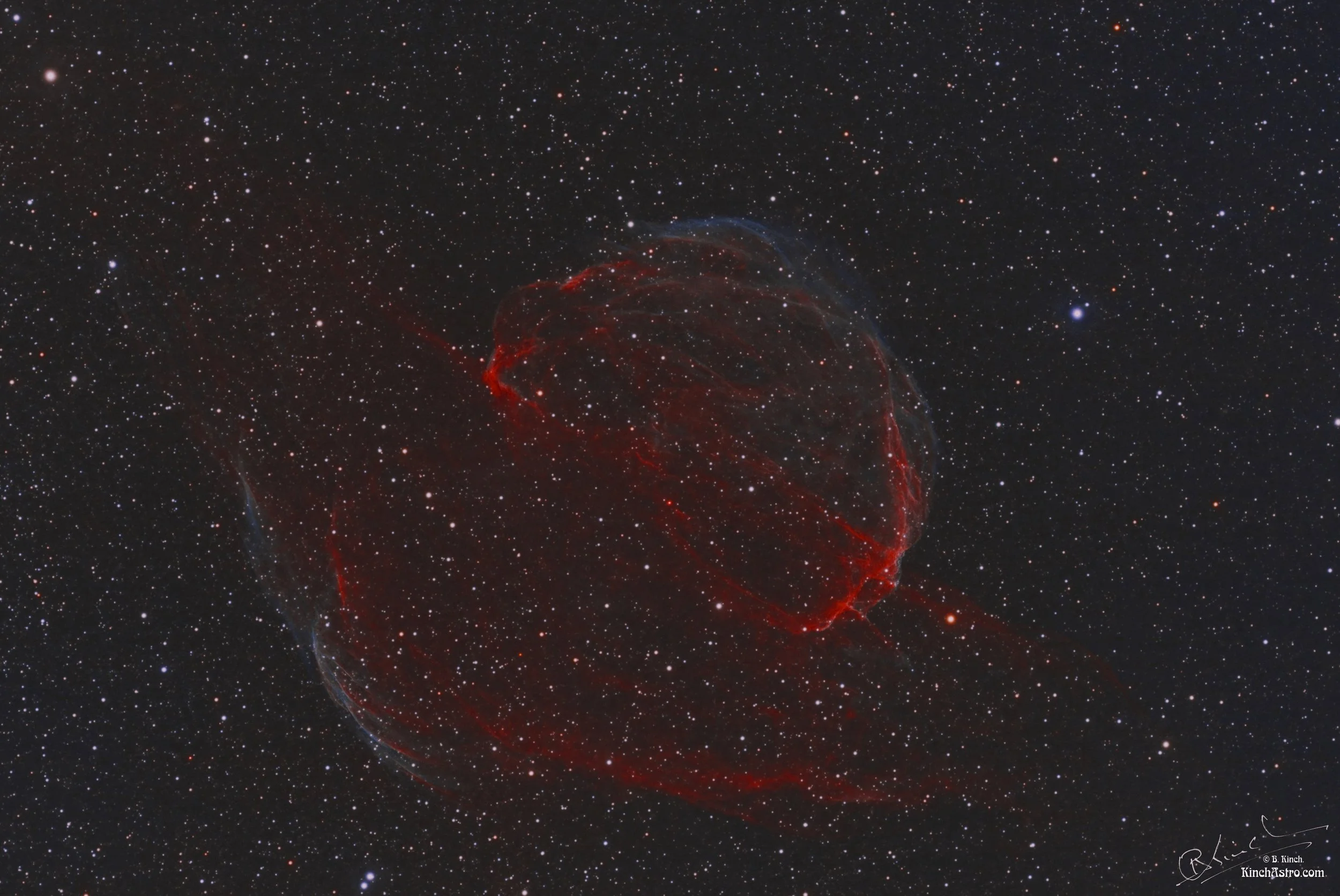
Sh2-224
Image Description and Details :
Sh2-224 is a supernova remnant visible in the constellation of Auriga. It is situated 3.5 ° to SSE of the bright star Capella, the dominant star of the constellation. It is formed by two soft nebulous filaments, the most conspicuous of which is that of the northwest and extends for 20 'x 30' towards the center of the source of radio waves, which has dimensions of 70 'x 75'. The object has an unusual shape, with a shell structure with a radius of about 25 parsec, and is in interaction with a cavity of the interstellar medium at a higher temperature than the surrounding environment, located in the south-western part and of the arch. This conformation suggests that the rest of the supernova in the southwest direction has come into contact with the cavity, first deforming and entering into interaction with this structure, then expanding inside it and creating a wider propagation wave that has emerged from the opposite part, thus creating the arch structure visible in the westernmost part, ie beyond the cavity. The distance of the structure is estimated at about 14,700 light years from the solar system, in a peripheral region of the Arm of Perseus. The X-ray study determined an age of the structure between 13,000 and 24,000 years.Imaging telescopes or lenses: Takahashi FSQ130EDImaging cameras: ASI 2600MM-PMounts: Takahashi EM 400 Temma 2MGuiding telescopes or lenses: Takahashi FS60CBGuiding cameras: QHY CCD QHY 5 IIFocal Extender / Reducer: NoneSoftware: PHD 2, Pleiades Astrophoto PixInsight , Astro Pixel Processor (for stacking), Sequence Generator Pro SGP (for capture)Filters: Astrodon Ha, OIII & RGBAccessories: SeleTEK2/Robofocus Focuser, ATIK EFW3Original Image: 6237 x 4167 Dates: 2nd Dec - 14th Dec '21 Frames: Astrodon Ha 60 x 10' Astrodon OIII 48 x 10' RGB 3 x 15 x 2'Total Time: 19 Hours 30 Mins.Center (RA, Dec): (81.717, 42.933)Center (RA, hms): 05h 26m 51.963sCenter (Dec, dms): +42° 55' 58.987"Size: 85.9 x 57.4 arcminRadius: 0.861 degPixel scale: 1.2 arcsec/pixelOrientation: Up is 270 degrees E of N
Copyright: Brendan Kinch
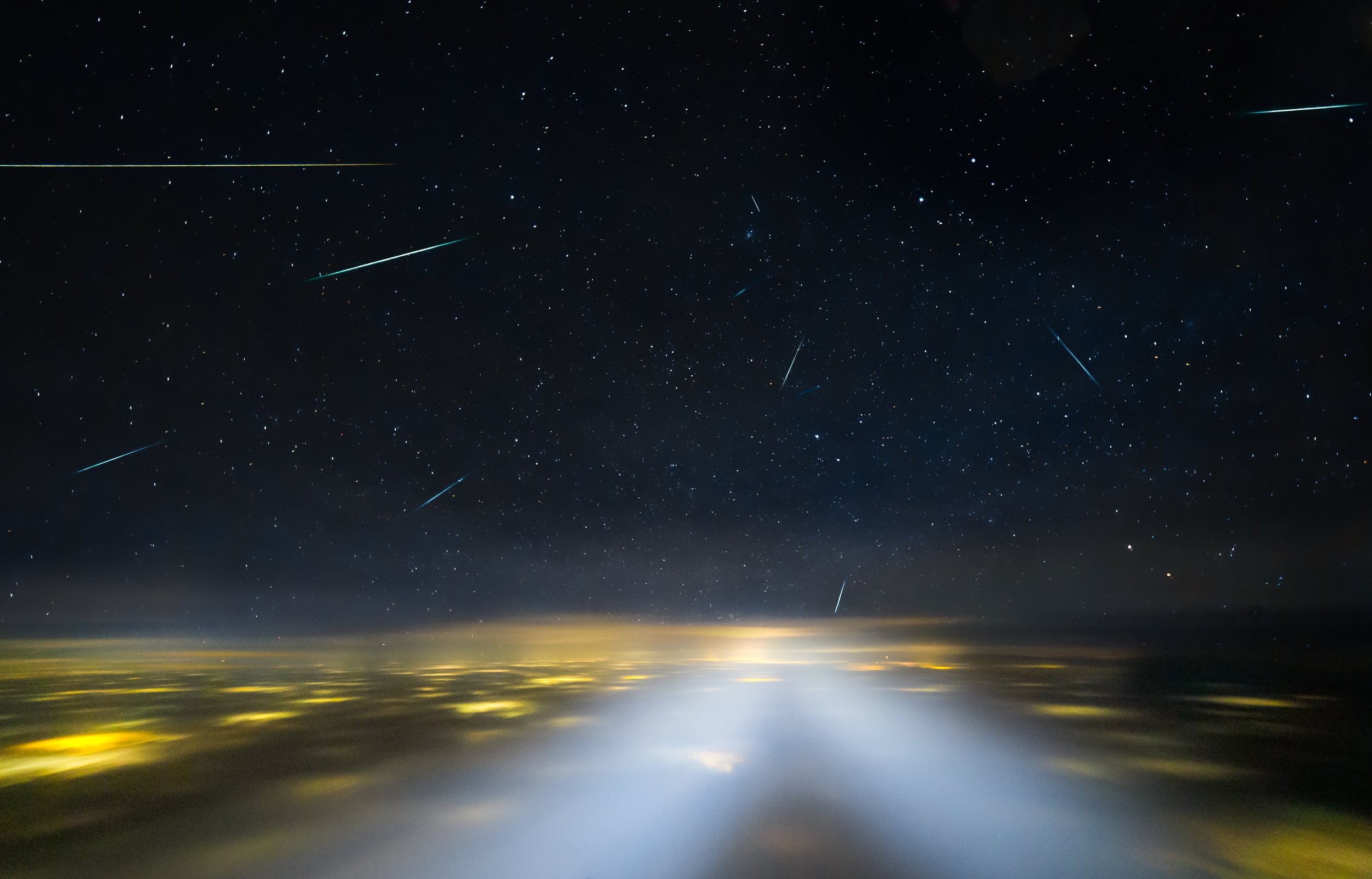
Geminide meteor shower 2021
Image Description and Details :
Here an image of the Geminides meteor shower as seen from the cockpit at an altitude of 40.000’. It was taken yesterday morning on a flight from Denmark back to The Netherlands. Being high above the clouds meant my copilot and I wouldn't be bothered by the thick clouds which covered most of Europe during the peak of this year’s shower. The landing light I switched on for a better composition, to lead the eye towards the constellation of Gemini.The image is a composite of 10 different images, blended together in Photoshop. Taken with a canon 6D an a Samyang 14mm lens.
Copyright: Thomas Röell