

AAPOD2 Image Archives
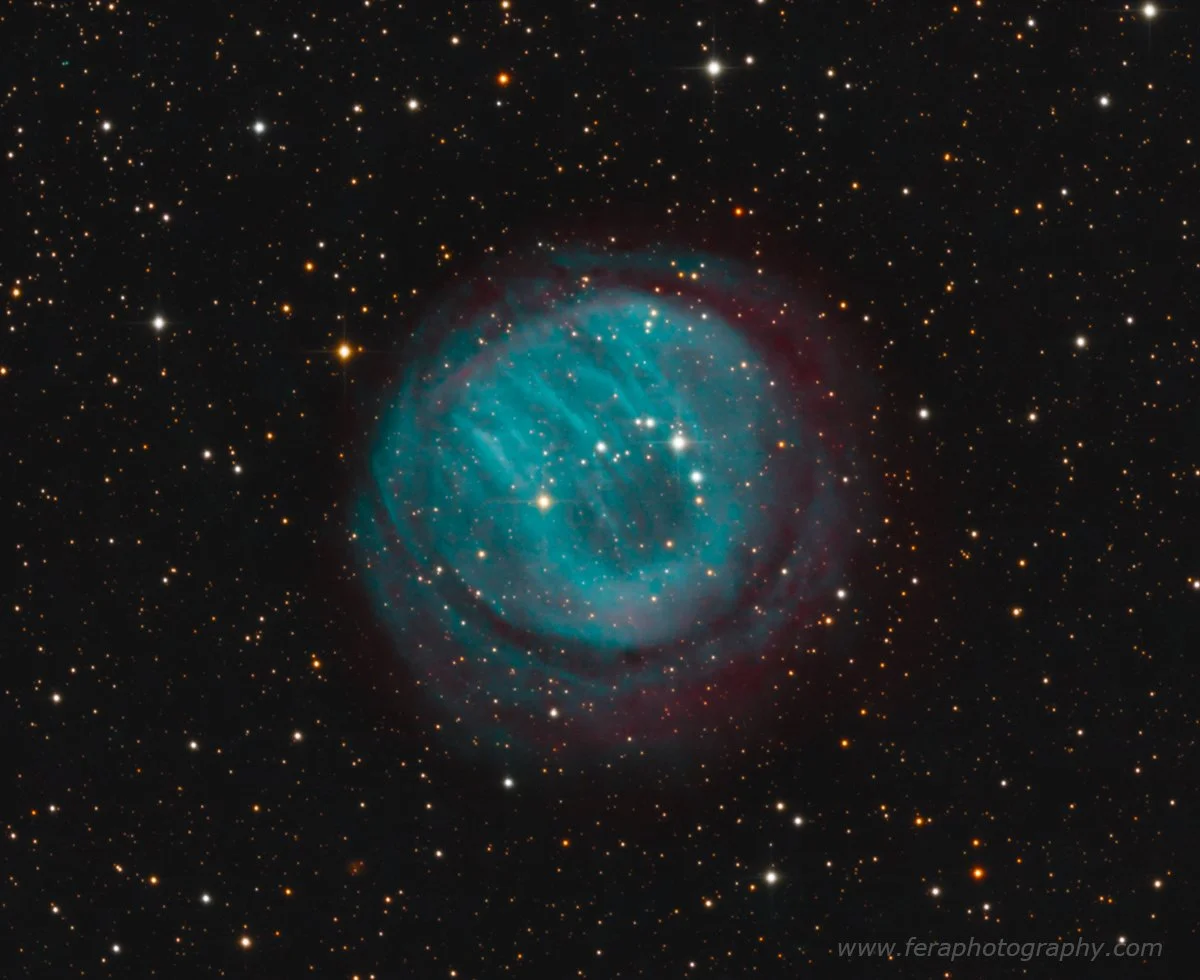
The Bear Claw Nebula
HDW-2 - The Bear Claw Nebula - Planetary Nebula in Cassiopeia
PlaneWave CDK-20 20" f/7.7 Astrograph
PlaneWave L-500 Mount
QHY600M CMOS Camera
Total exposure: HaOiiiLRGB 16.8 hours
Sierra Remote Observatories
August 2022
Data acquisition by Eric Coles
Image processing by Bob Fera
The Bear Claw is a large, faint planetary nebula that's officially, and poetically, known as Hartl-Dengl-Weinberger 2. (It's also known as Sh2-200, from the Sharpless catalog of emission nebulae.) Discovered in 1983, it wasn't determined to be a planetary nebula until 2017. This image is a composite taken through narrowband Hydrogen-Alpha (red) and Oxygen-III (teal) filters along with standard broadband RGB filters for the stars. The nebula is extremely faint, especially in H-alpha, and took lots of post-processing to bring out. As I normally do, I processed the narrowband data to approximate "true" color as best as I could.
Copyright: Bob Fera

Neptune and Triton
Image Description and Details : Neptune and Triton October 08th, 2022
Under good seeing conditions.
Some bright features in the southern hemisphere can be seen.
The orientation is confirmed by the position of Triton.
The false color image is only for aesthetic reasons.
C14 Edge HD, Fornax52 mount,ASI 290 mono, Baader R+IR610nm
Agerola-Amalfitan Coast-Italy
Copyright: Luigi Morrone
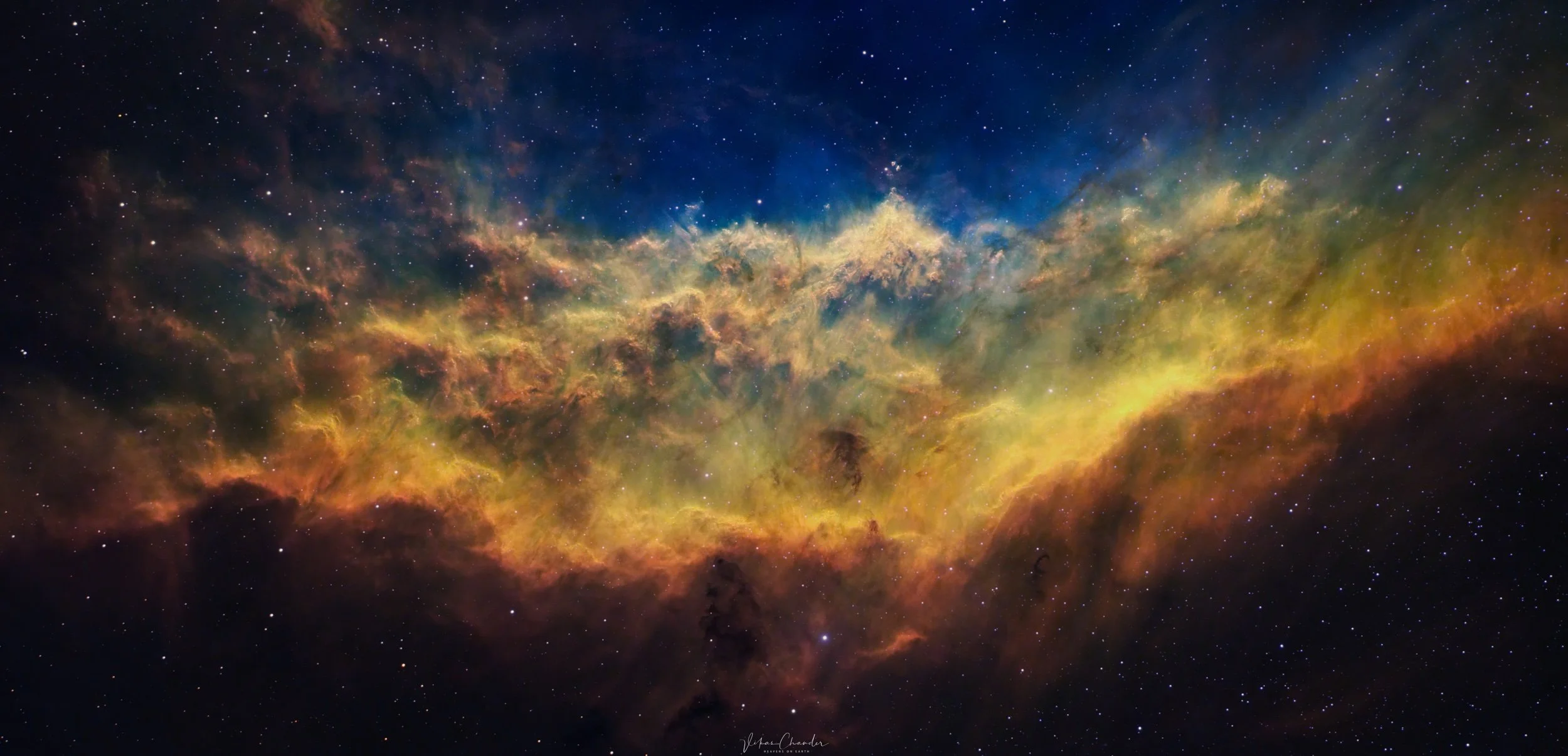
California Nebula
Image Description and Details : A favourite deep-sky target of astrophotographers is NGC 1499, the California Nebula. The California Nebula is found in the Orion Arm of our Milky Way galaxy, and has been given its informal nickname because its shape resembles the outline of the US state of California. It is a large emission nebula stretching across almost 2.5 degrees of the night sky in the constellation Perseus, with an apparent magnitude of 6.0 and lies approximately 1,000 light-years away. It is very well imaged in broadband filters as well as the narrowband Hubble palette seen here.
Telescope: Takahashi FSQ106-ED F/3.6
Camera: ZWO ASI 2600MM Pro CMOS
Mount: Paramount MX
Observatory : RoboScopes, Spain.
Sii = 51 x 240s
Ha = 38 x 240s
Oiii = 51 x 240s
Total integration = 9h20m
Software = PixInsight
Copyright: vikas chander

NGC 1333 Embryo Nebula
Image Description and Details : Nearly 12 hours of data using the RASA 8, ASIAIR PRO, EQ6-R PRO, ASI071 MC PRO. Filters included the Celestron LP filter for the RASA 8, and the Optolong L-Pro. Processed using Astro Pixel Processor, Photoshop and Topaz Denoise.
Copyright: Copyright: John Quinn

Ngc 7123
Here is a galaxy you may not have seen before.
Located in Indus 180 million light years from here, NGC 7123 is a rarely imaged spiral seen edge on. The shape is some what reminiscent of the Sombrero Galaxy. The galaxy itself presents a very small target in the field of view.
Imaged in LRGB on our Planewave CDK 1000 at Observatorio El Sauce, Chile
Image Processing: Mike Selby
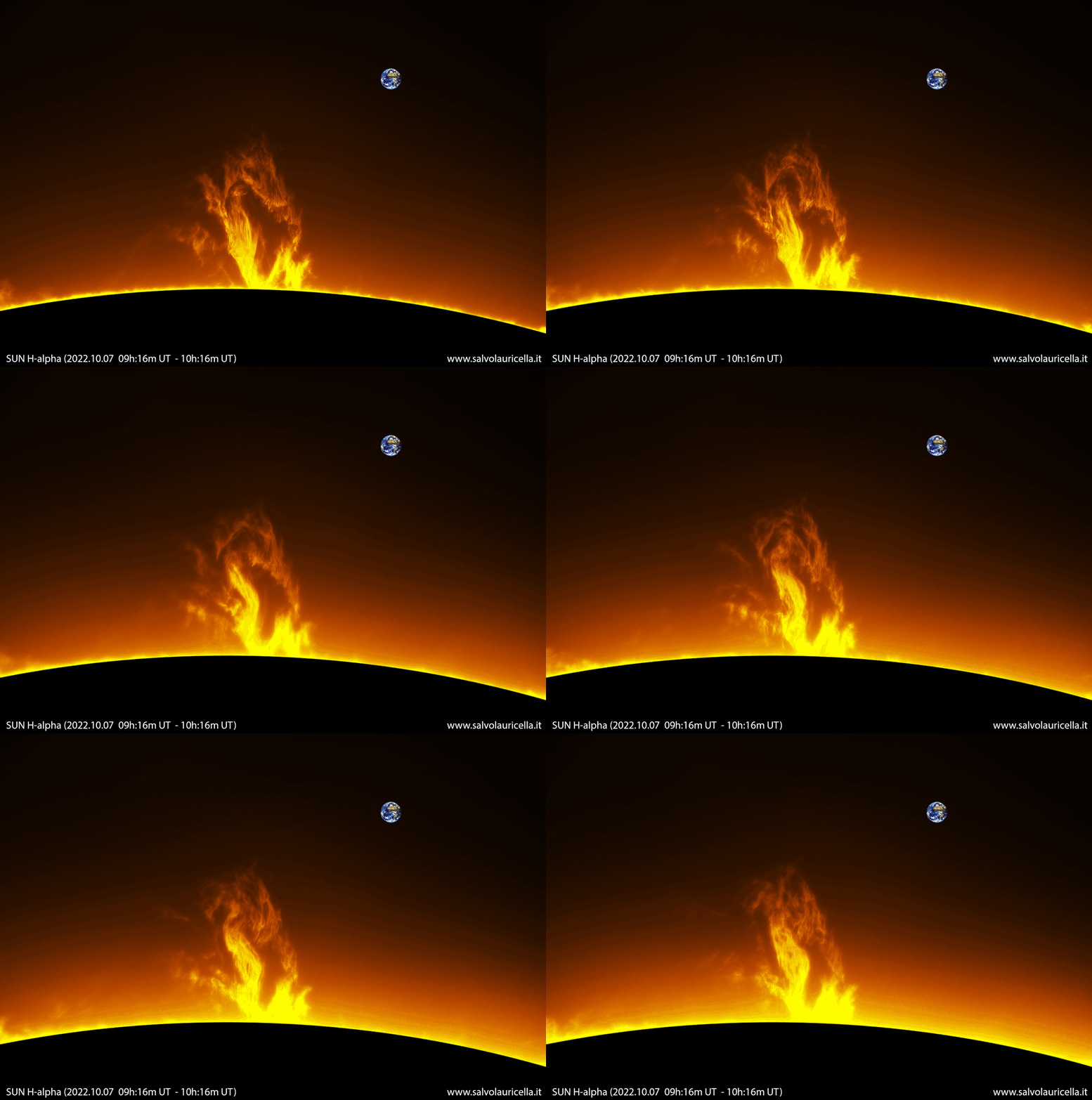
Prominence evolution
Prominence evolution (07/10/2022) from 09h:16m UT to 10h:16m UT
iOptron CEM70G, Tecnosky APO SLD 130/910, Baader D-ERF 135mm, Daystar Filters Quark Chromosphere, ZWO ASI174MM
Copyright: Salvo Lauricella
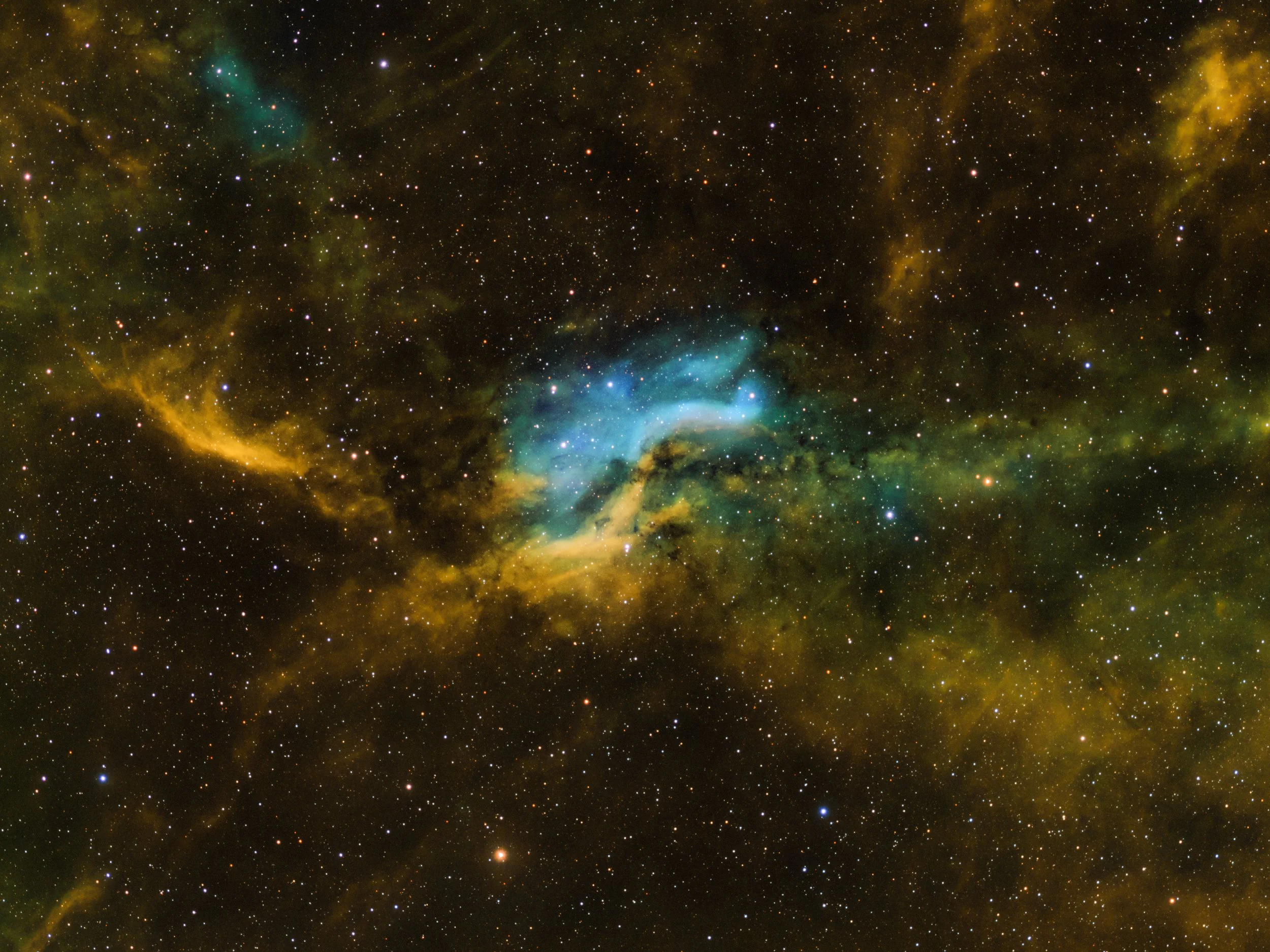
The Propeller Nebula
Image Description and Details : This cosmic landscape features a often overlooken object in the amateur astronomy community, Simeis 57. It’s nicknamed as the Propeller Nebula. I imaged this nebulosity on multiple nights during September and October between brief gaps in the clouds, acquiring a total exposure time of 14 hours with narrowband filters + RGB for the stars.
Most amateur astronomers use designation DWB 111 for the "Propeller" but it is incorrect as it is only a designation for the southern arm of the object. Designation DWB 119 is used for the northern arm. In 1950s Crimean Astrophysical Observatory at Simeiz, Ukraine designated this object as Simeis 57 in their catalogue of 306 objects of HII regions.
Ten years later the DWB catalog was created by H. R. Dickel, H. Wendker, and J. H. Bieritz. This catalog was intended for HII regions in the Cygnus X complex that they were studying in 1960s. Distance of this nebulosity is unknown but in general the objects in the Cygnus X complex are about 4600 light-years away.
Copyright: © Ville Puoskari
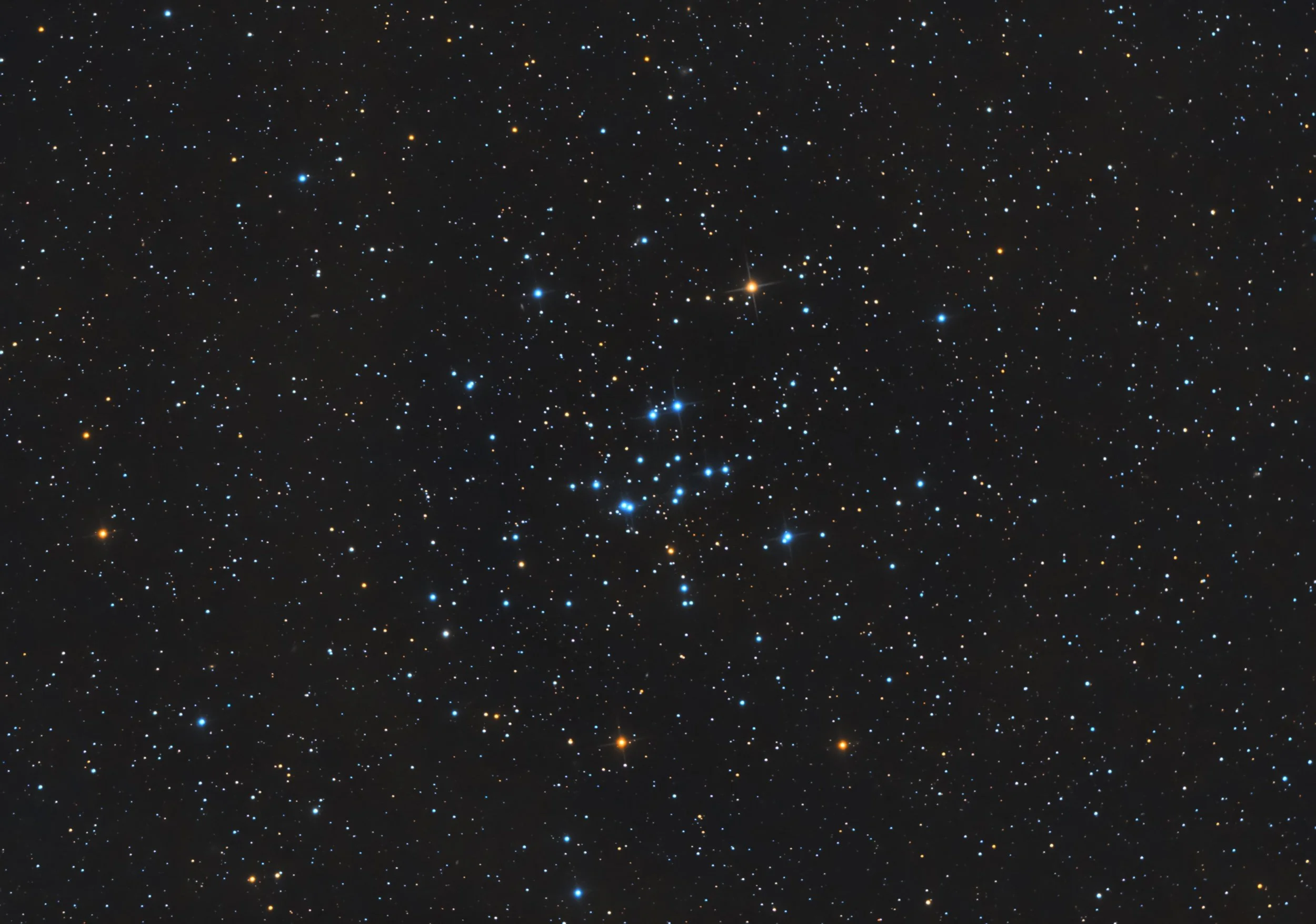
M 34
Image Description and Details :
Messier 34 (also known as M34 or NGC 1039) is a large open cluster located in the constellation of Perseus. It was probably discovered by Giovanni Batista Hodierna before 1654 and included by Charles Messier in his catalog of comet-like objects in 1764. Messier described it as "A cluster of small stars a little below the parallel of γ (Andromedae). In an ordinary telescope of 3 feet one can distinguish the stars. "
M34 is 1500 light years away from us and includes stars of mass between 0.12 and 1 solar mass. It extends for about 35 'into the firmament, which translates into a real radius of 7.5 light years at the distance at which it is located. The cluster is barely visible to the naked eye in very dark conditions, well away from city lights and can be seen through binoculars when light pollution is low.
The age of this cluster is between that of the Pleiades (100 million years) and that of the Hyades (800 million years). In particular, the comparison between known stellar spectra and predicted values from stellar evolutionary models suggest 200-250 million years.
Konus 200/1000 @960mm, F4.8
Qhy168c @-5 °C
Sky-Watcher Eq6r Pro Mount
SvBony UV/IR-cut filter 30x60" (gain 1, offset 35)
Kstars/ekos, APP, PixInsight, PS
Copyright: Massimo Di Fusco
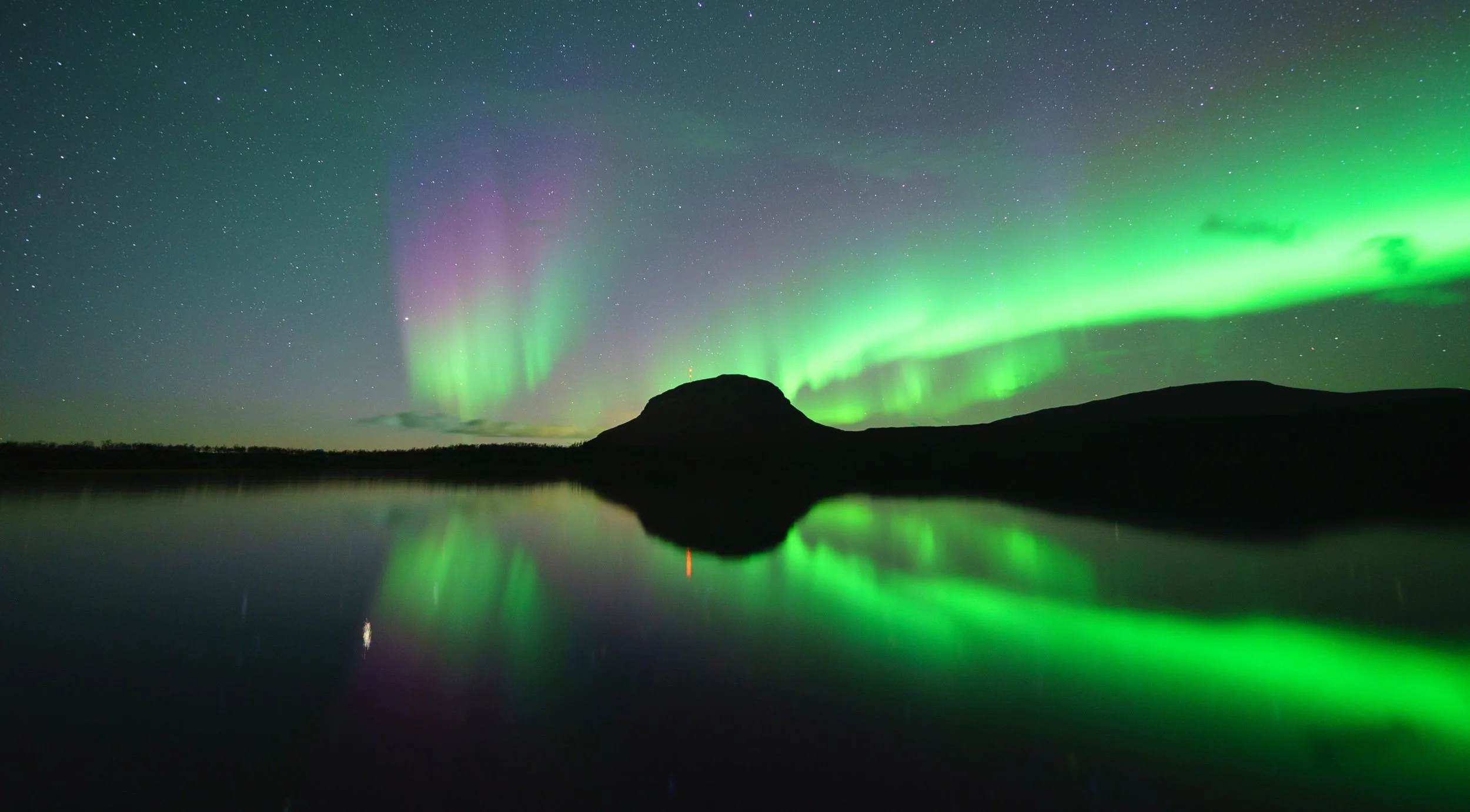
A calm night
Image Description and Details : Reflections here in Kilpisjärvi are quite rare due to strong winds, but that night in october I was lucky with calm weather. The auroras weren't that big, but had some nice colors. The saana mountain (1029m) in the background is one of the tallest and well-known in Finland.
Sony A7S
Sony FE 14mm f/1.8 GM
20 seconds, ISO 2500
Minor adjustments in adobe photoshop
Copyright: Dennis Lehtonen
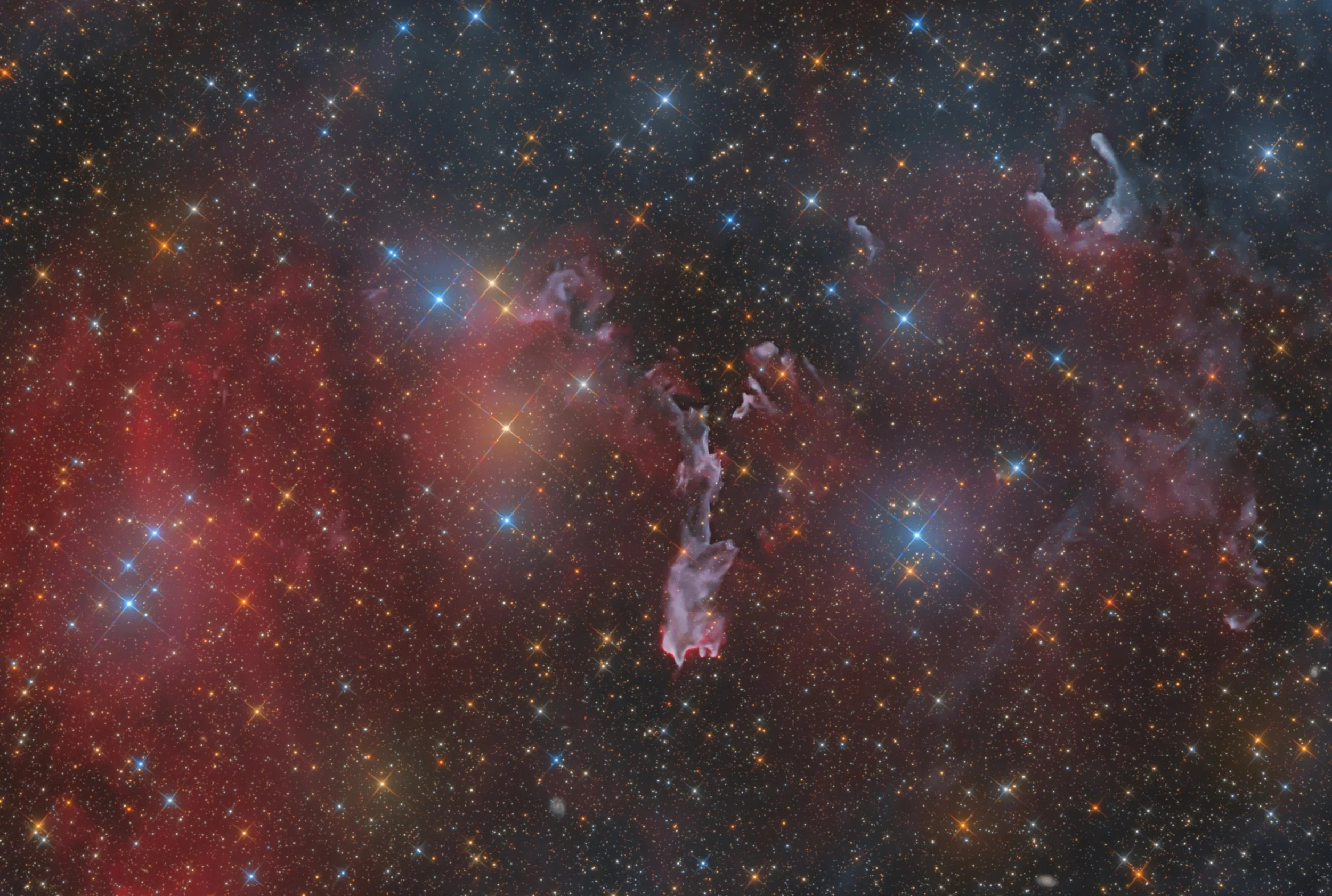
LBN438 - The Lizard Pillar
Image Description and Details :
Little known and poorly imaged LBN438 is a dark galactic nebula located in the constellation Lizard.
The nebula is illuminated by interstellar radiation known as Extended Red Emission or ERE. This is commonly observed from UV-excited interstellar grains.
A lot of small galaxies in the background of the sky to discover.
Shooting data:
🔭: ASA Newton 254/950 F3.6
⚙️: Paramount MyT
📷: ZWO ASI2400MC at -10°C
🕶: IDAS LPS-P3 & IDAS NBZ
🎯: Skywatcher Evostar72ED + ASI290MM mini
💻: TheSkyX pro, NINA, PHD2, AstroPixel Processor (100% of treatment), PixInsight (5% of treatment), Photoshop CC (95% of treatment)
⏱: IDAS LPS-P3 = 21h (126x600”)
⏱: IDAS NBZ = 17h55 (71x900"+ 1x600")
⏱: TOTAL = 38h55
🌍: Lorraine, France
📆: Over 8 nights: August 27, 2022 August 28, 2022 August 29, 2022 September 1, 2022 September 03, 2022 September 21, 2022 September 29, 2022
Copyright: Thomas LELU
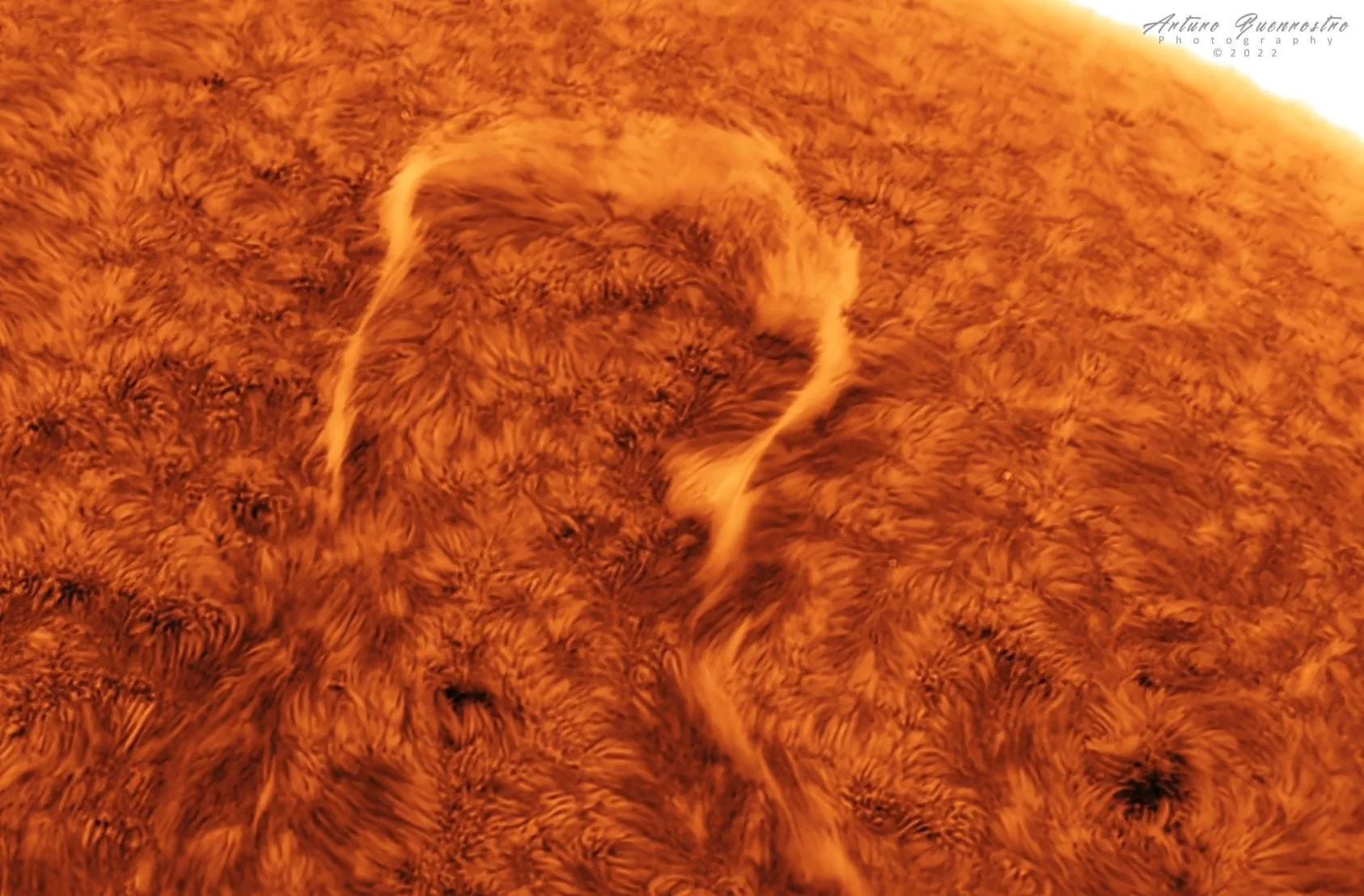
Sun
Here a shots taken last October 1, from Texas, as always a great spectacle of filaments and some protuberances, the Sun very active in its solar cycle number 25 that promises much more.
ZWO 174mm camera and Payer one Apollo M-Max
Zwo EAF focuser
Skywatcher AZEQ6 mount
Lunt 100mm double stack
HINODE SOLAR AUTIGUIDER
Fire Capture, Autostacker, Registax, Photoshop.
Dallas TX.
Copyright: Arturo Buenrostro
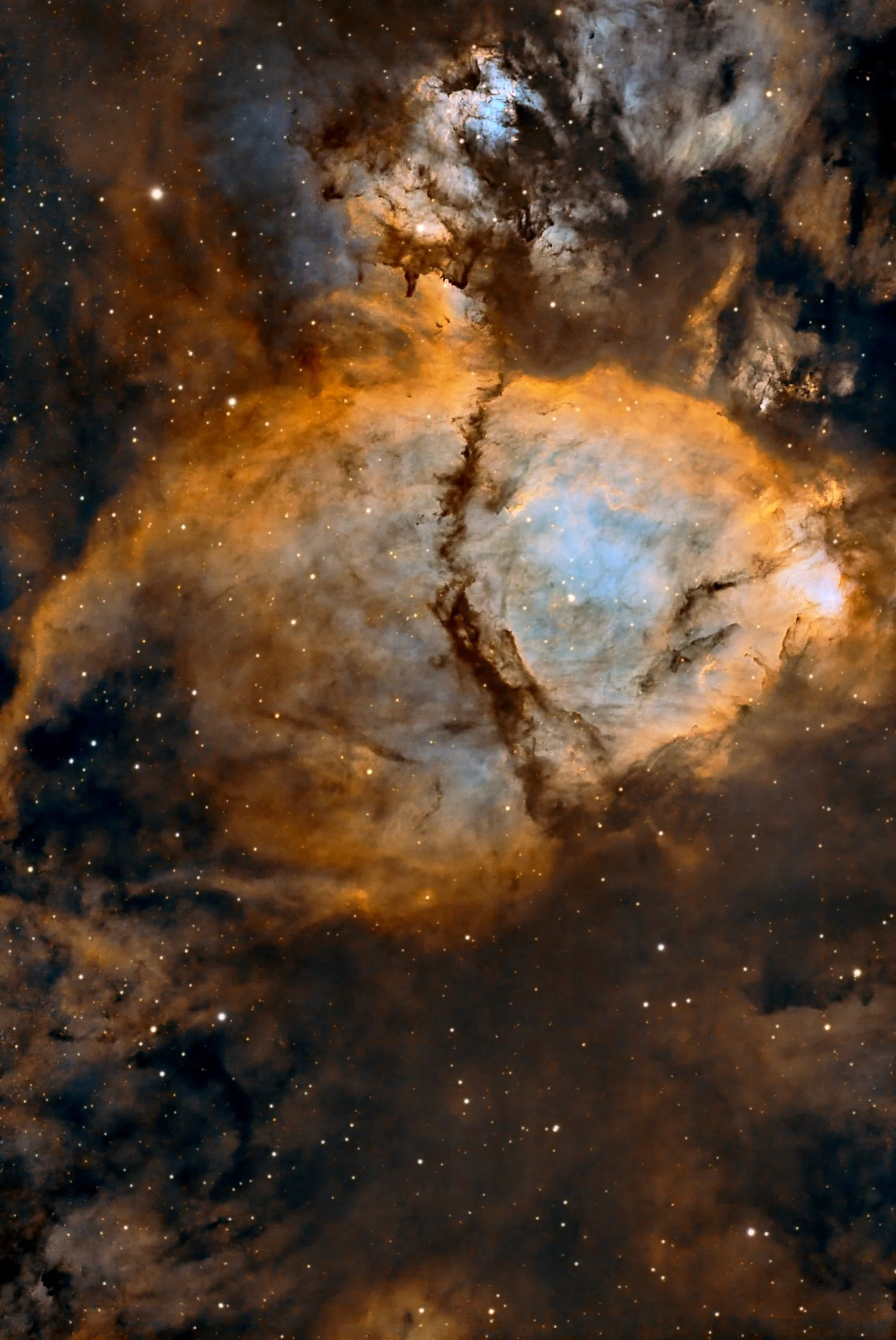
Fishhead Nebula
Image Description and Details :
Image taken in Chicago, IL
23 hours of total exposure using the SHO palette
Processed in Pixinsight
Telescope: Celestron 11 inch edge HD at F/10
Camera: 2600MM Pro
Chroma SHO 3nm filters
Copyright: Richard McInnis
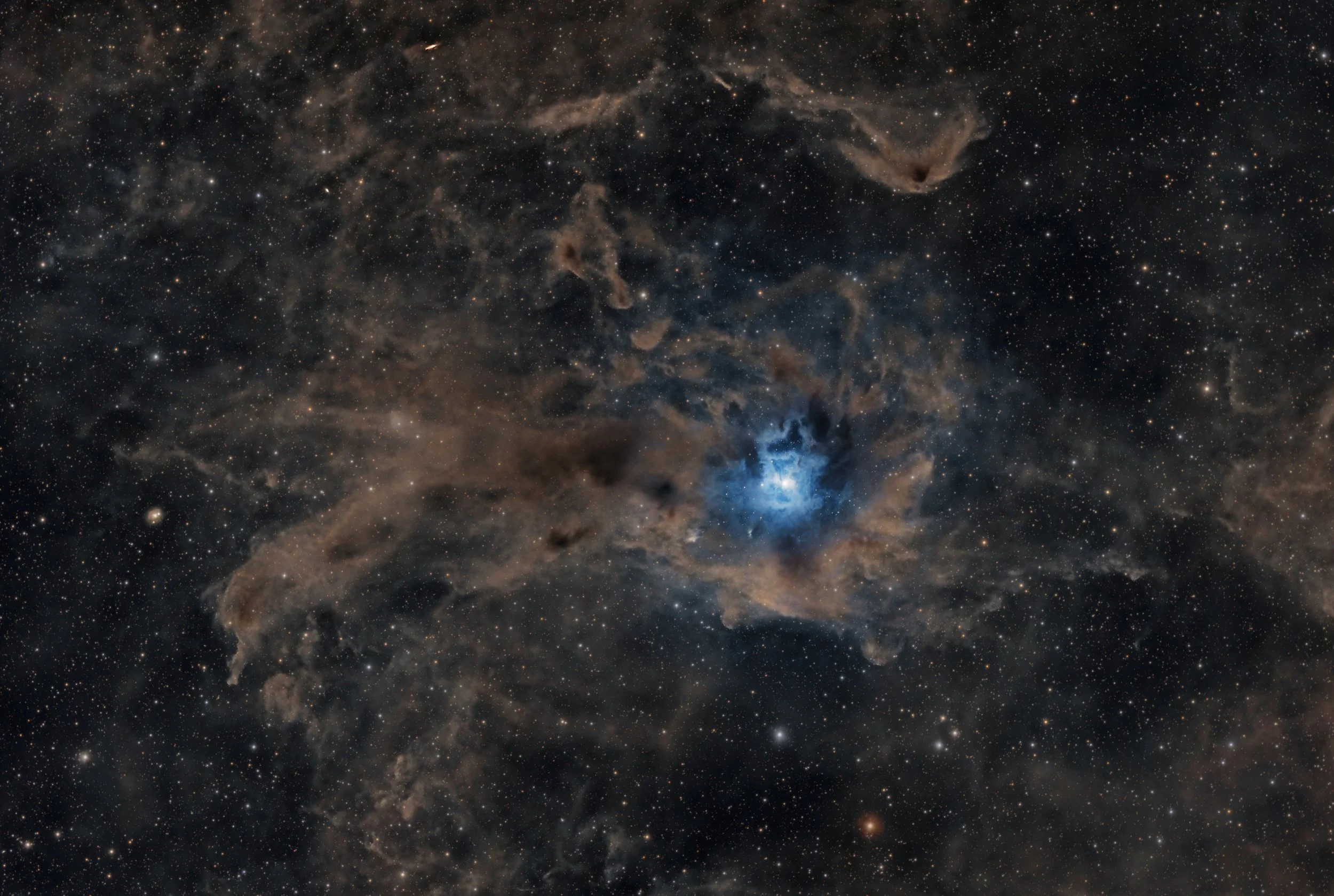
The Iris Nebula (NGC 7023) and lots of dust
Image Description and Details : Shooting from suburban Bortle 5-6 skies, dark nebula are a real challenge for me. After two sessions on the wonderful Iris Nebula in Cepheus, I wasn't satisfied with the quality of my picture. So, I invested another night to increase the total integration time to 11 hours, which made bringing out the faint dust surrounding it possible. Hope you like it!
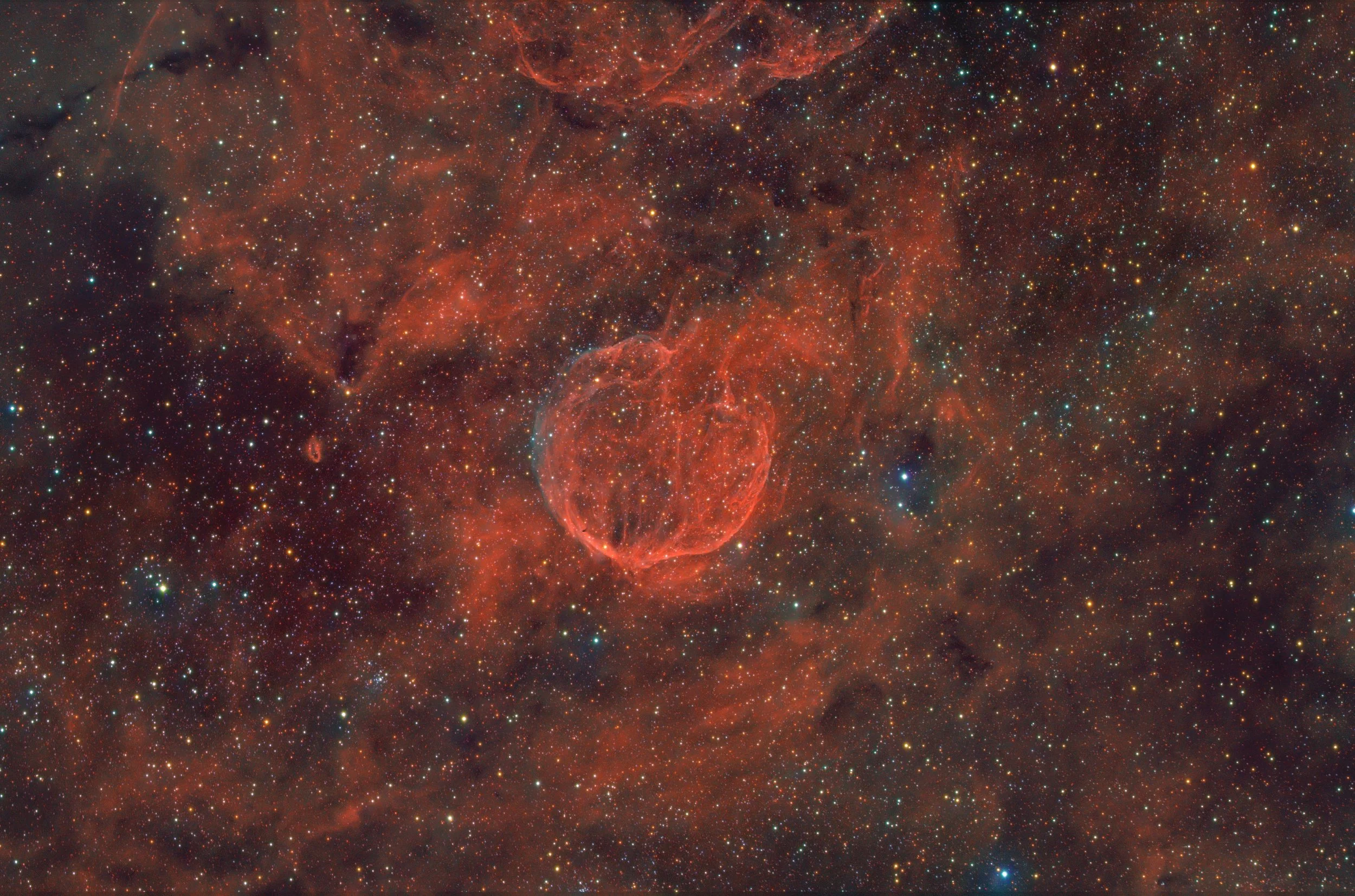
CTB1/Abell 85/ LBN 576
CTB 1 is a supernova remnant (SNR) in the constellation Cassiopeia…
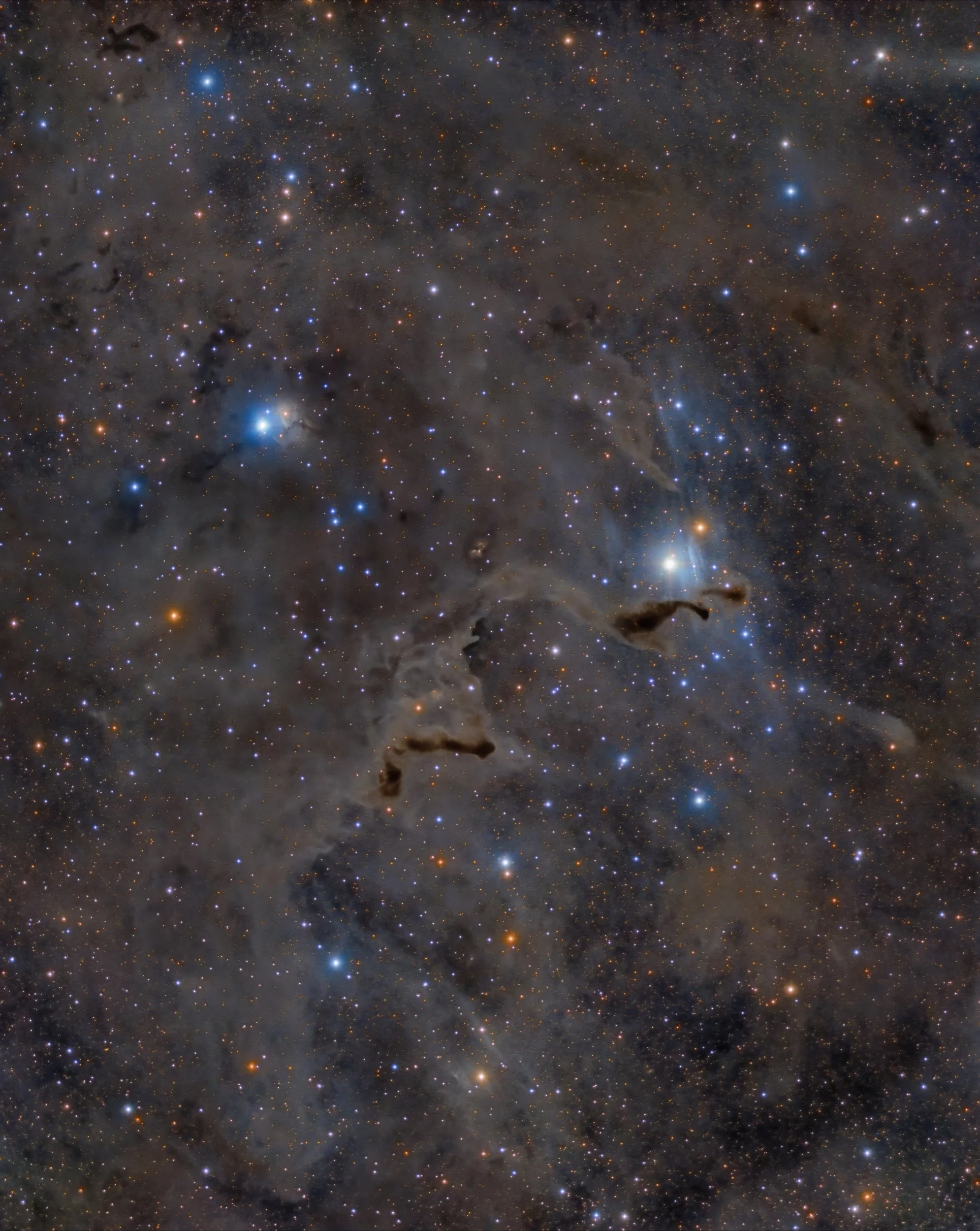
LDN1355
Image Description and Details :
Nebula LDN 1355
Located in the constellation of Cassiopeia,
These dark nebulae lurk in the stellar lairs of the Milky Way. They often connect with the sites of low-mass star formation, but can also float in the arms of the Milky Way as simple cold molecular clouds. They do not have their own light in the visible range and are more recognizable by obscuring more distant stars. And if the astrophoto is taken with long exposure, its brownish color can be seen in the light of nearby stars.
The Helping Hand Nebula is seen toward the constellation Cassiopeia. The shape of the dust cloud darkens in the light of nearby stars, either with a bluish light or sometimes with a yellowish light, but we mainly see its brownish hue.
Photo taken halfway with my outing partner Héctor Hernández
He was in charge of the luminance part with his team, TS imagine star 130, qhy 16200a camera on an eq6 pro and RB focus Merlin 34x600s focuser
For my part, I was in charge of taking the shots in RGB, 75x120s, for each RGB channel, equipment: TS photoline 80/480, TS 0.79x reducer, asi 1600mm camera, eq6pro mount, RB focus Merlin, controlled with RB focus gaiusS
Copyright: Carlos Luna and Héctor Hernández
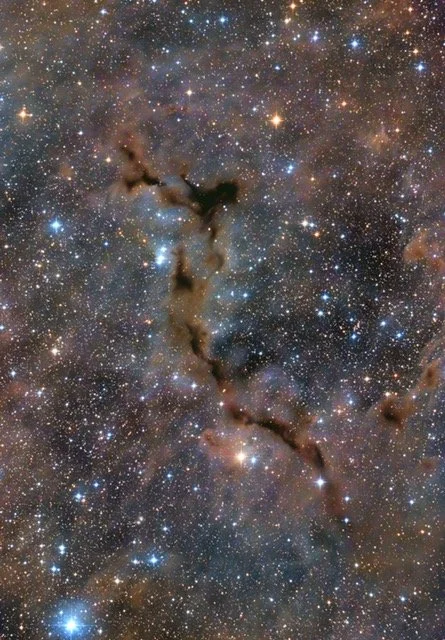
Barnard 150 the Seahorse Nebula
Image Description and Details : My latest astro project is Barnard 150. A dark nebula in the constellation of Cepheus. Also known as the Seahorse nebula. A dark nebula (absorption nebula), is a dense interstellar cloud that obscures the light from objects behind it, such as background stars and emission or reflection nebulae. Interstellar dust grains located in the coldest, densest parts of larger molecular clouds cause light extinction.
Imaged with:
Starfield Optics 8 (200mm) astrograph
Starizona Nexus reducer/flattener for F3
QHY268M camera and QHY filter wheel
Optolong LRGB filters
Shot from the backyard in Kitchener, Ontario, Canada. 20hrs 45min total. Processed in PixInsight.
Copyright: Shawn Nielsen | VisibleDark
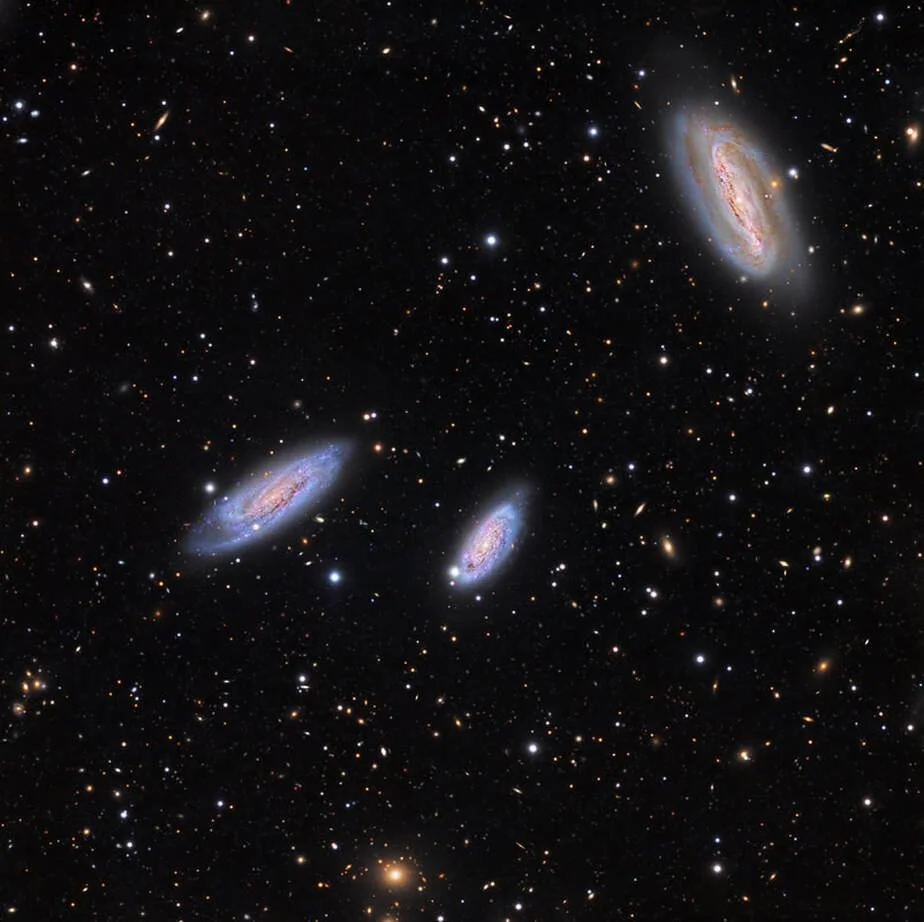
The Grus Quartet of Galaxies
Image Description:
Here reveals only three of its four members in the constellation of The Crane.
Located about 60,000,000 light-years from Earth, this beautiful group of spiral galaxies is gravitationally bound.
At top-right is NGC 7582, a Seyfert Type-2 galaxy, exhibiting lots of star birth. At left is NGC 7599, with NGC 7590 at center.
The missing member of the quartet is NGC 7552, which is another 'starburst' galaxy. The elliptical galaxy, PGC 71043 is at 6 o'clock.
Many thanks to my collaborator and friend, Mike Selby, who acquired and calibrated this fine data from Observatorio El Sauce, Chile.
Copyright: Warren Keller
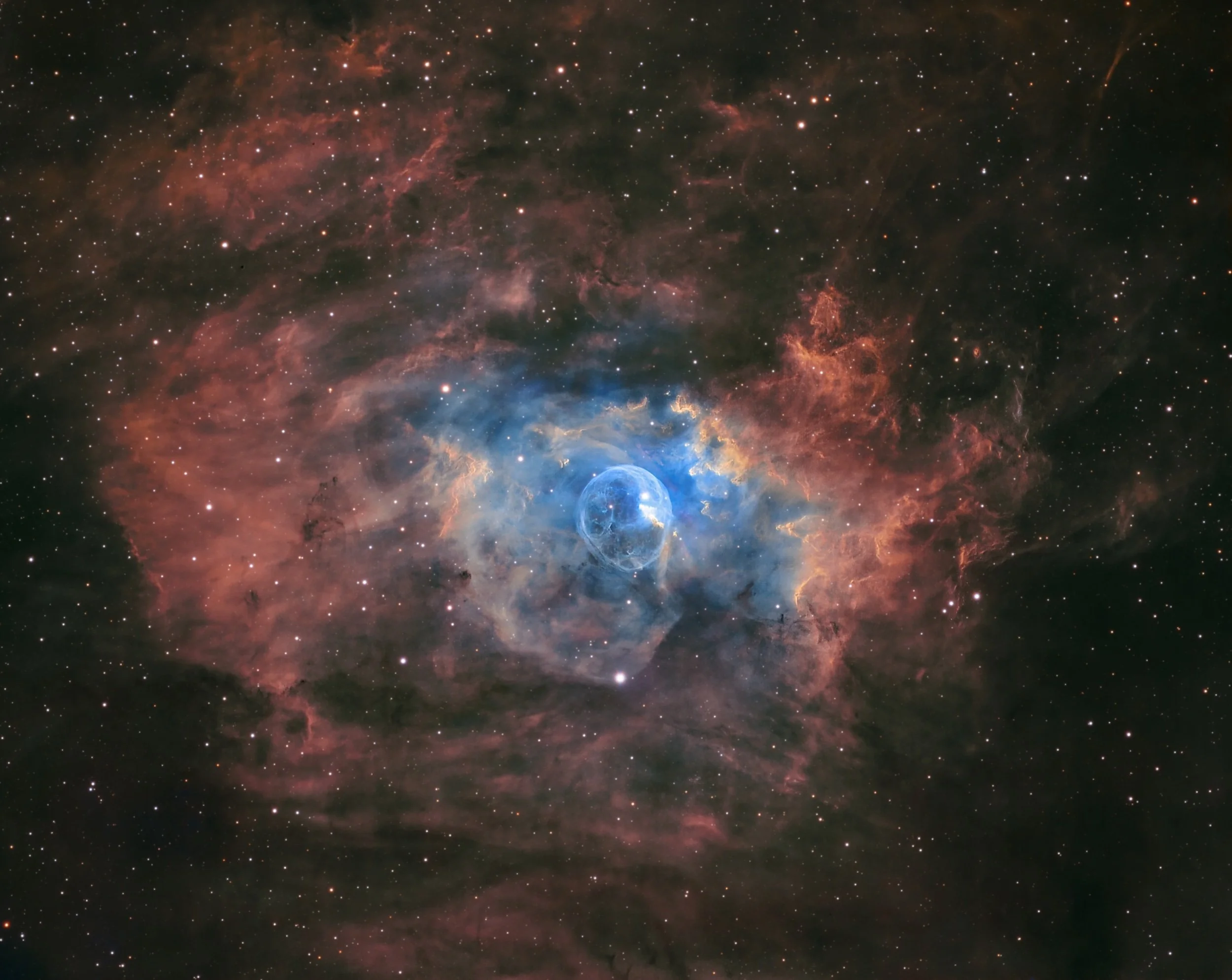
NGC 7635: A bubble between clouds
Image Description and Details : My last image is a Bubble nebula (NGC 7635) with SHO narrowband channel and added RGB stars.
It is an emission nebula located in the constellation of Cassiopeia. The central bubble is one of three layers of hot gas surrounding the star SAO 20575, a very hot O6.5-class star. Curiously, this star (which is the one that heats the gas so that it emits light), due to its rapid movement, is not in the geometric center of the bubble. It is seen in the lower left area of the center of the bubble. It is a very young star (about 4 million years old...) and is expected to explode as a supernova in about 15 million years (more or less a million...). Interestingly, this nebula is located in a region where another supernova has already exploded.
It's great a lot of signal of SII, and aprecciate a large structures between bubble.
Tech data:
Halpha 25 of 900" astrodon 5nm
OIII 30 of 900" astrodon 5nm
SII 25 of 900" astrodon 5nm
RGB 25 each channel 120" astdodon
Telescope: Skywatcher Esprit 150
CCD: Atik 460ex
Mount: Paramount ME
Copyright: Carlos Uriarte Castilllo

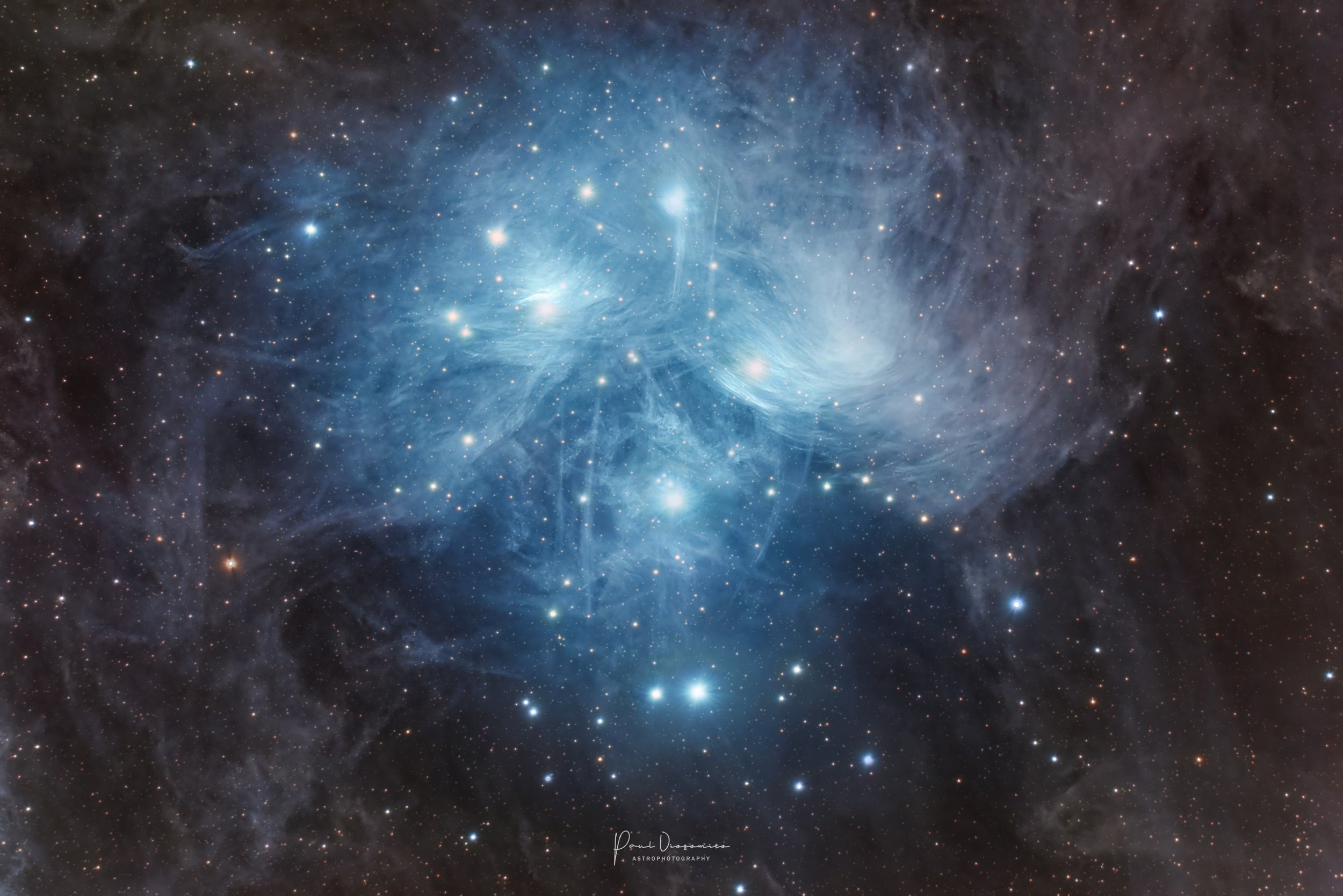
Pleiades (M45)
Image Description and Details : Pleiades (M45)
Open Star Cluster
Magnitude: 1.6
Distance: 444 ly
Constellation: Taurus the Bull
A beautiful and mesmerizing deep sky objects that is etched on several folklores and mythology. This open star cluster is dominated by hot luminous B-Type stars that formed a 100 million years ago and is not gravitationally bound that will eventually drift apart. Pleiades stars are passing through a dust cloud and is completely unrelated reflection nebula. Scientist has found over a 1000 stars in the region. Pleiades is easy to find visually and is also a reference object in finding other deepsky targets.
SCT 8”, Hyperstar v4, ZWO(294MC Pro, ASIAR Pro, EAF) | EQ6R P
X120”- 5.77 hrs. | IDAS LPS D3
Gain: 100, -10 °C
APP, PS(Camera Raw + Plug-ins)
9/24-25/2022
Bortle 5 Ca, USA
Copyright: Paul Diosomito