
AAPOD2 Image Archives

The Orion Nebula and The Running Man
The Orion Nebula, AKA Messier 42 (or M42), is a very near, star-forming region, located approximately 1,350 light-years away and is about 2 million years old.
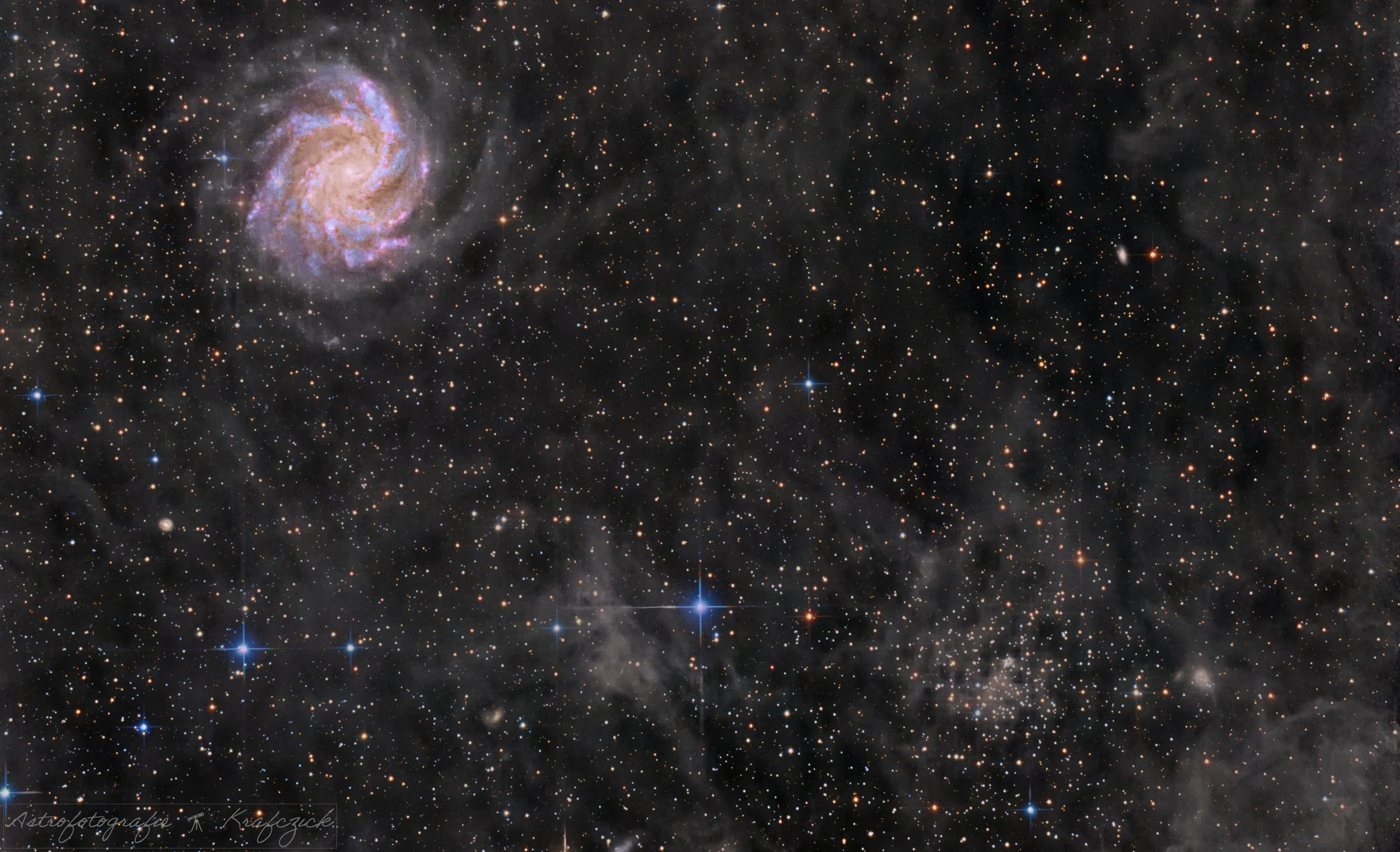
NGC 6946 + NGC 6939 firework galaxy
Image Description and Details : 273×180″(13h 39′) (gain: 120.00) -15°C bin 1×1Darks:30Flats:30Flat Darks:30TS-Optics PHOTON 200mm/8" f/5 Newtonian ZWO ASI294MC ProSky-Watcher EQ6-R Pro Optolong UV/IR cut 2"Baader 2" MPCC Mark III Newton Coma Corrector ZWO ASIAIR PlusSVBony SV106 50mm Guide ScopeZWO ASI120MM MiniBortel 4Queidersbach/Germany
Copyright: Bryan Krafczick
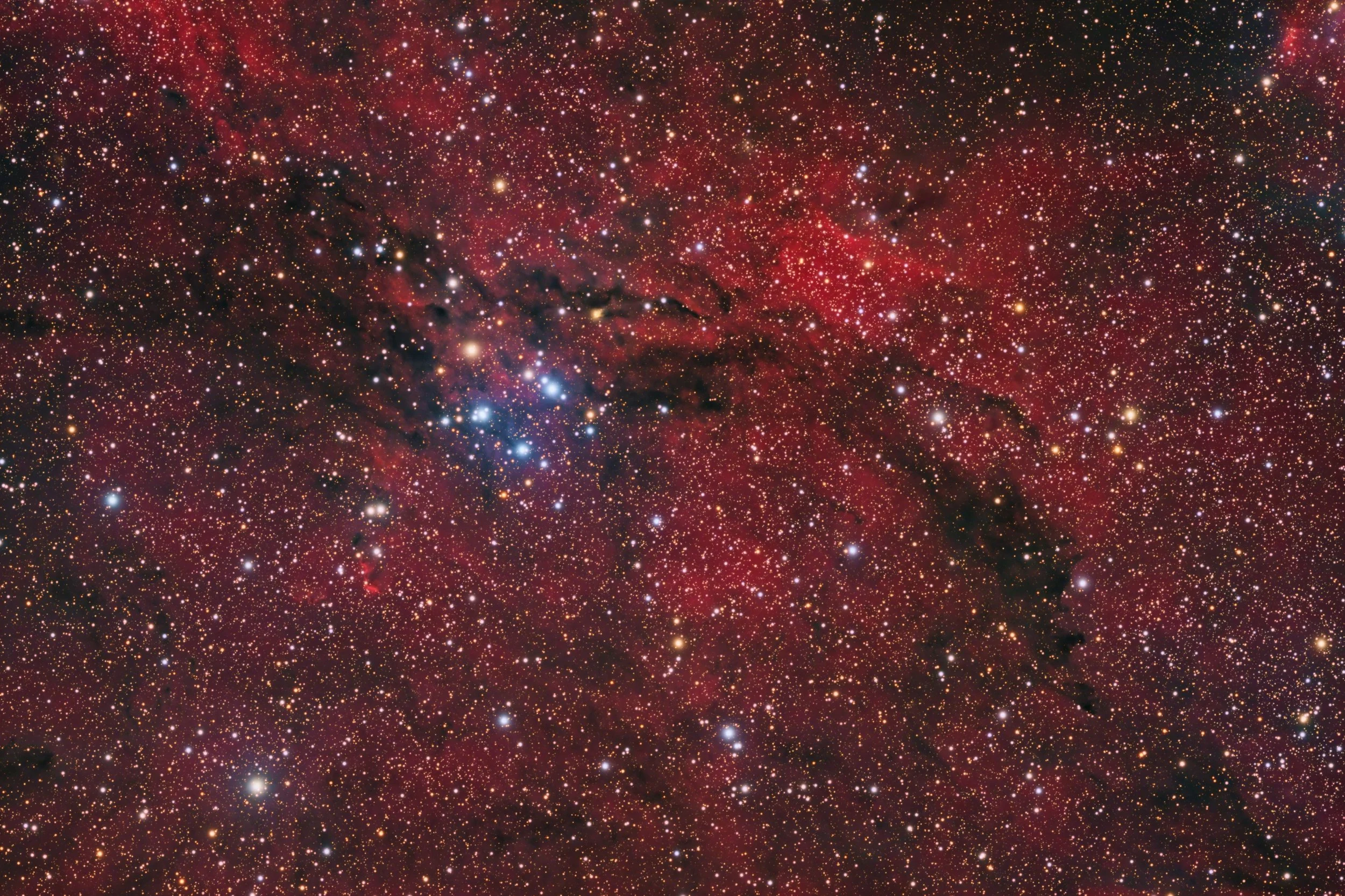
Dark Nebula along the Cassiopeia/Camelopardalis Border
Image Description and Details : About 3 degrees east of the famous Soul Nebula and right on the border between Cassiopeia and Camelopardalis lies a rather long area of dark molecular clouds within a larger area of background HII emission. A good portion of these molecular clouds are part of Lynds Catalog of Dark Nebulae which is a list assembled by Beverly Lynds in the 1950s-1960s. These dense molecular clouds are often areas of star formation and indeed there is at lease one easily visible young stellar object (YSO) within the image and nine LDN objects (1378-1386). The annotated image circles these LDN objects along with a few background galaxies. This area also has a large area of HII emission and some brighter un-catalogued emission nebula and is part of the larger Sharpless 2-202 area. Just left of center is the large (29 arc minute) Stock 23 open star cluster which lies 1200 light years distant.
Scope: Stellarvue SVX 152T, Camera: ZWO ASI 6200, Paramount MyT. Image taken from 24-30 Sept 22 at the Okie Tex Star party. 180min of Luminance, 240min or Red, Green and Blue, 1200min of Ha. 14.3hrs total.
Copyright: Jonathan Talbot
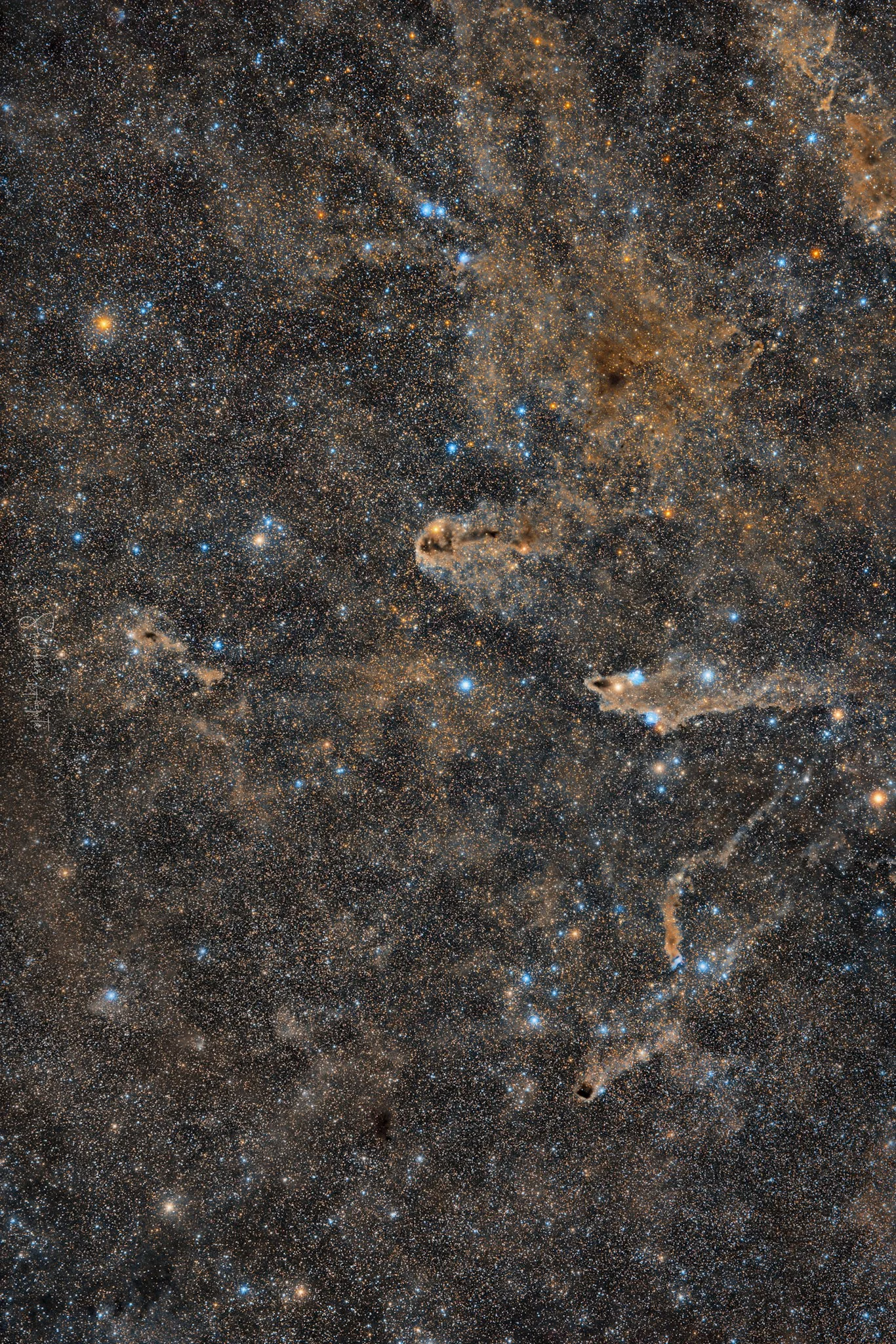
Race of the Fish Nebulae in Cepheus
Image Description and Details : This widefield image consists of the extremely dusty patch of the Cepheus constellation. The region contains a plethora of dark and bright nebulae belonging to the Lynd's dark and bright sky catalogue, the more notable of them being the three nebulae named after the fishes LDN 1251 or the Rotten fish or Angler fish Nebula, LDN 1235 or the Shark Nebula, and VBD 152 or Barnard 175 also sometimes referred as the Eel nebula, which all seem to be engrossed in some sort of a race.
Equipment:
Nikon Z5
Samyang 135 f2
Fornax Lightrack ii
EXIF:
180 n 240s subs shot over 2 sessions
Calibrated with flats
Total Integration: 6h 33m
Processed in PixInsight and Photoshop
Shot under Bortle 1 skies in Spiti Valley, India.
Copyright: Copyright: Shikhar Gupta
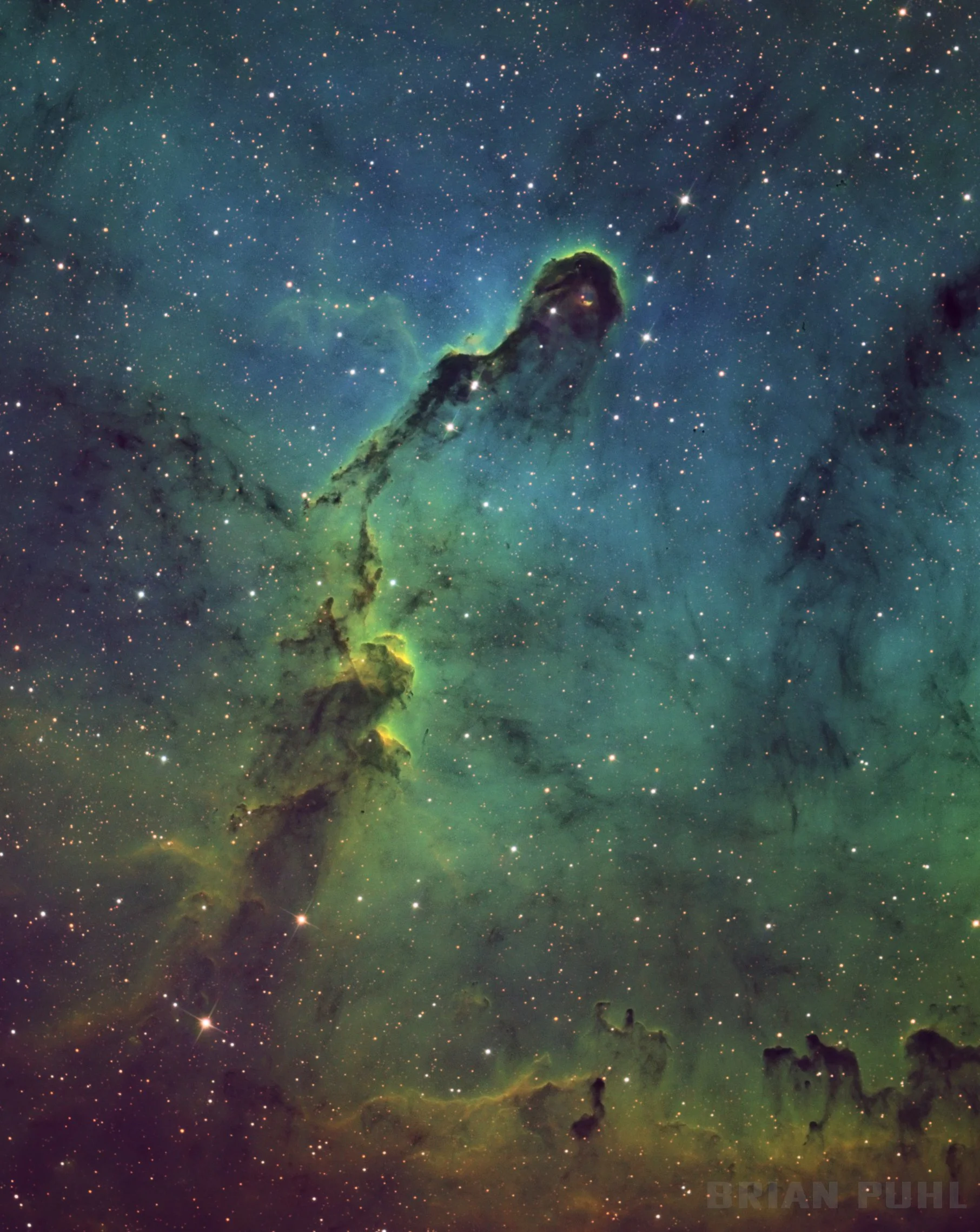
ic1396
Image Description and Details : Taken over 4 nights with my 8" newtonian, there are approximately 12 hours total with a small addition of RGB integration purely for the color stars. While most people use SCNR to remove the green, I particularly enjoy it on this target; it adds a nice taste of color depth. I am also fond of the stars glowing through the 'bullet hole' iof the trunk.
TPO 8" F/4 Newtonian
QHY-268M with Antlia 3nm 2" SHO filters
Paracorr 2" Coma Corrector (Final FL 920mm, F 4.5)
EQ6-R Pro
Copyright: Copyright: Brian Puhl
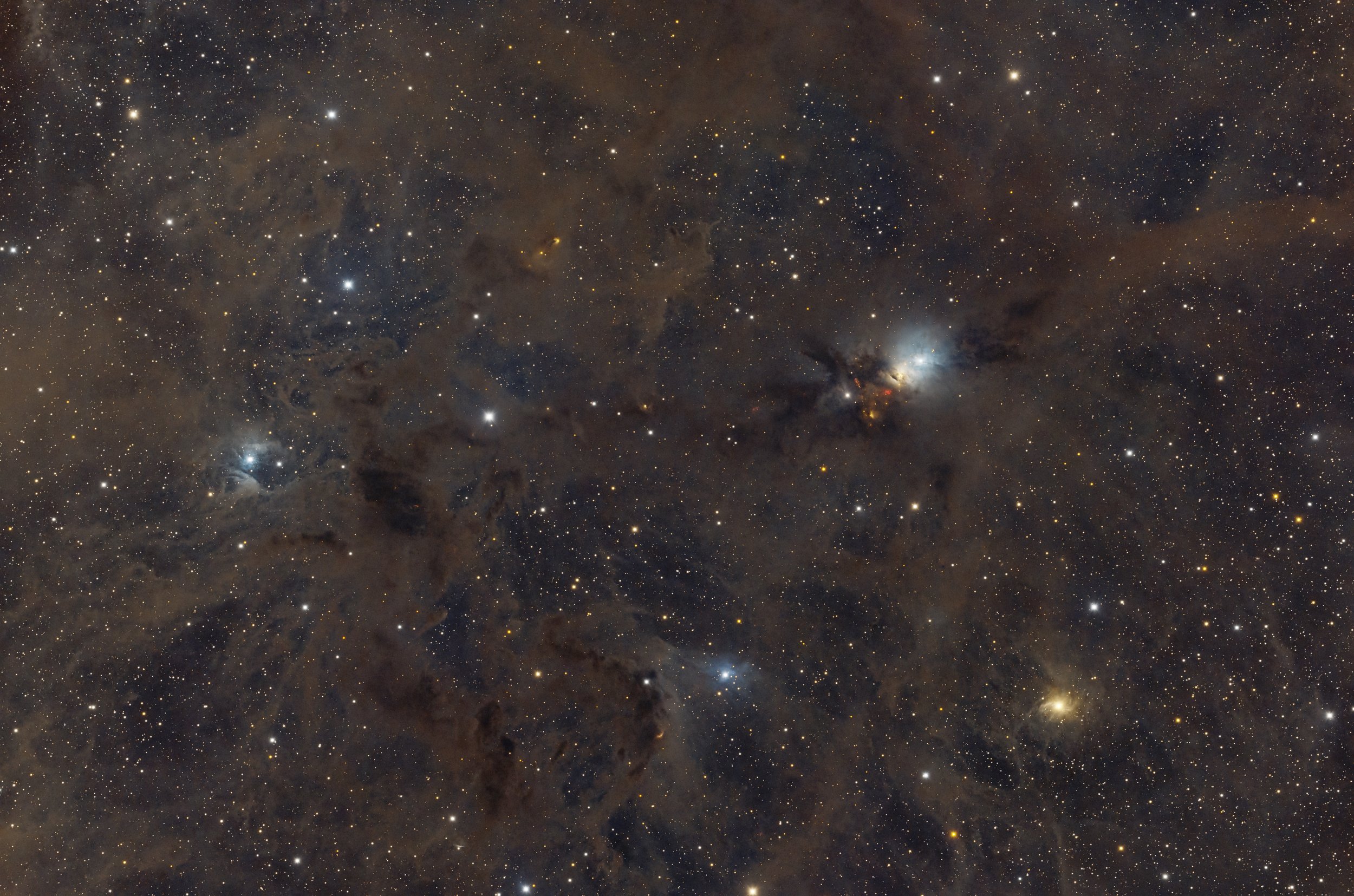
ngc 1333
Image Description and Details : The picture was taken to show the area around NGC1333.
It was taken in one night from my backyard.
Image details:
220 min of total integration time.
110 x 120sec of light frames.
Calibrated with 30 darks, 15 flats and 15 dark flats.
Equipment used:
Celestron RASA 8 (400mm f2)
Omegon veTEC 571C
Skywatcher HEQ5 Pro
ZWO ASI 120mm Mini and a 50mm Guide Scope
ZWO EAF
Controlled by NINA
Edit with:
APP, Siril and Photoshop
Copyright: Christian Göppert

Toal Lunar Eclipse 2022 - from Farmington Hills, Michigan
Image Description and Details : The image was shot during the few clear minutes during maximum totality. The image is comprised of a stack of the best 25% of the frames.
Captured using the Celestron Evolution 8 with F6.3 focal reducer and ASI 294 MC Pro. recorded in Firecapture. Stacked in Autostakkert and processed in Photoshop.
Copyright: Michael Shapiro
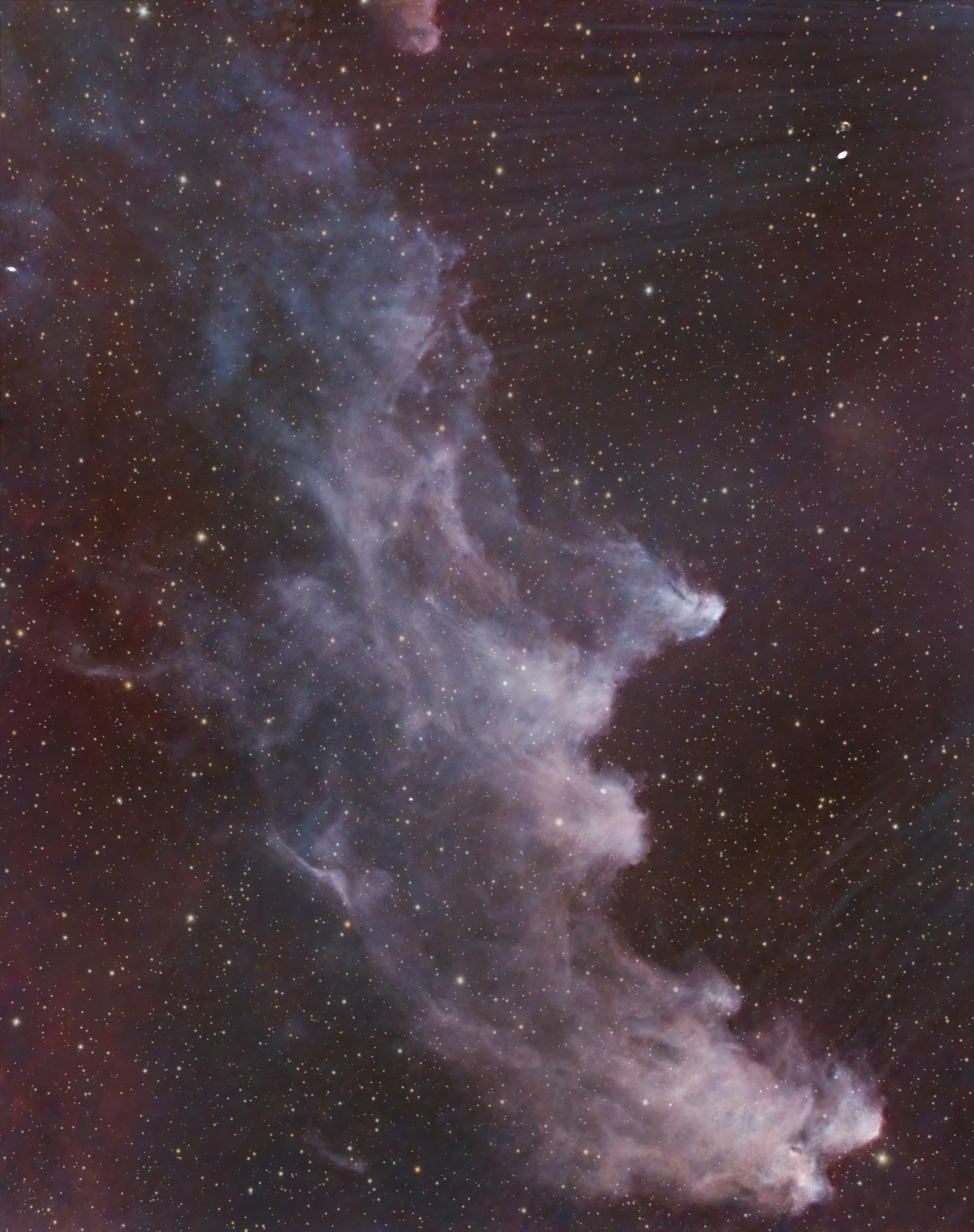
Witch head nebula
Image Description and Details : Witch Head Nebula
[NGC1909 | IC2118 | LBN956]
Magnitude: +13.0
Distance: 899 ly
Constellation: Eridanus
This faint nebula resembles a shape that of a witches head. It was believed to be a remnant from of a supernova. Categorized as a reflection nebula. It is illuminated by a nearby blue supergiant star Rigel.
SCT 8”, Hyperstar v4, ZWO(ASI294MC Pro, ASIAR Pro, ASI290mm, EAF) | EQ6R P
94X120” | IDAS LPS D3
Gain: 100, -10 °C
APP, PS(Camera Raw + Plug-ins)
10/20/2022
Bortle 5 Ca, USA
Copyright: Paul Diosomito
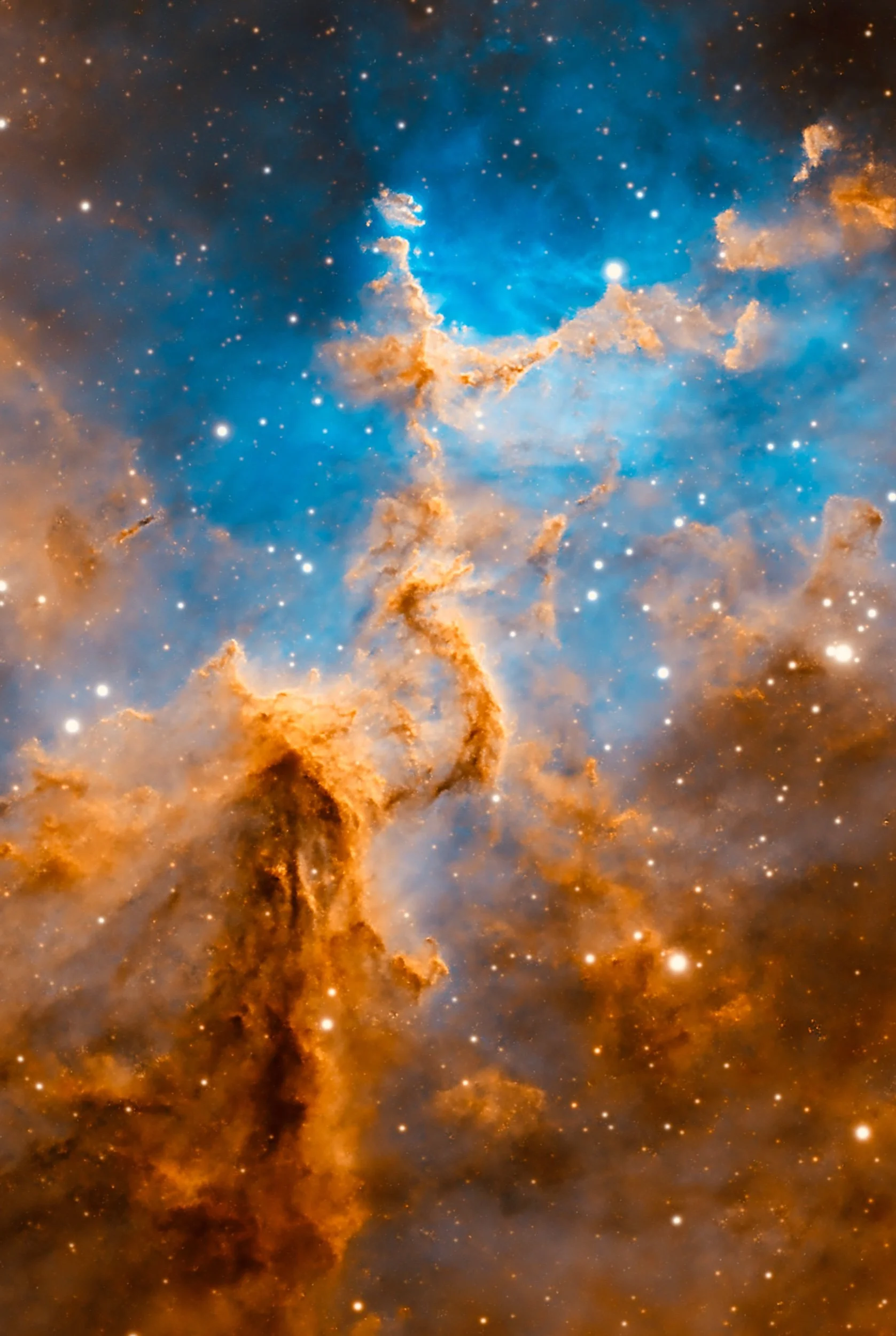
The heart of the heart nebula
Image Description and Details : Capture Details:
Celestron 14” Edge HD with .7x reducer at F/8
Celestron OAG and a 174mm guide camera
Ioptron CEM 120 mount
ZWO 2600MM Pro cooled to -10° / gain 100.
Chroma 3nm S, H, O filters with ZWO 7x36mm EFW
Processed in Pixinsight.
Shot from my backyard, bortle 8 (October 2022).
Sii - 5 min subs x 179 = 14.9 hrs.
Ha - 5 min subs x 101 = 8.4 hrs.
Oiii - 5 min subs x 82 = 6.8 hrs.
Total integration time = 30.1 hrs.
Copyright: Richard McInnis
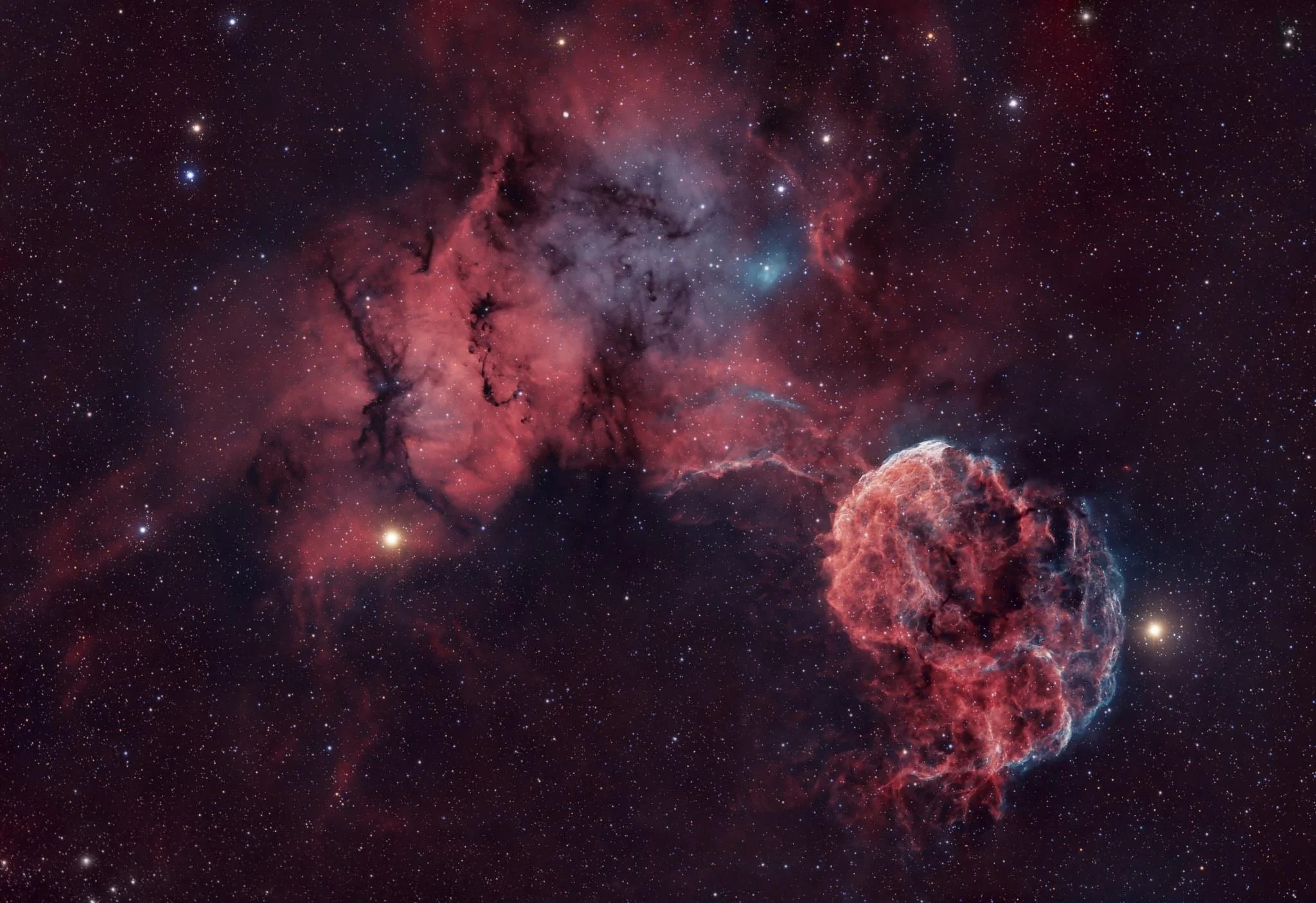
The Jellyfish Nebula in Geminiii
Due to the bad weather, I decided to invest some time in a new, improved version of the „Jellyfish Nebula“ (IC 443) in Gemini. I captured this fantastic nebula 7 months ago, and it’s still one of my favorite objects in the sky! Hope you like it!
Celestron RASA 8
Celestron Motorfocuser
EQ6-R Pro
ZWO ASI 2600 MC Pro (Gain 100, Offset 18, -10°)
RGB: 53 x 120" (1h 46')
Ha & OIII: 73 x 240" (4h 52')
Darks, Flats, Darkflats, Dithering
N.I.N.A., Guiding: ZWO ASI 120MM & PHD2
Astropixelprocessor, Photoshop, Pixinsight
copyright: Markus Horn
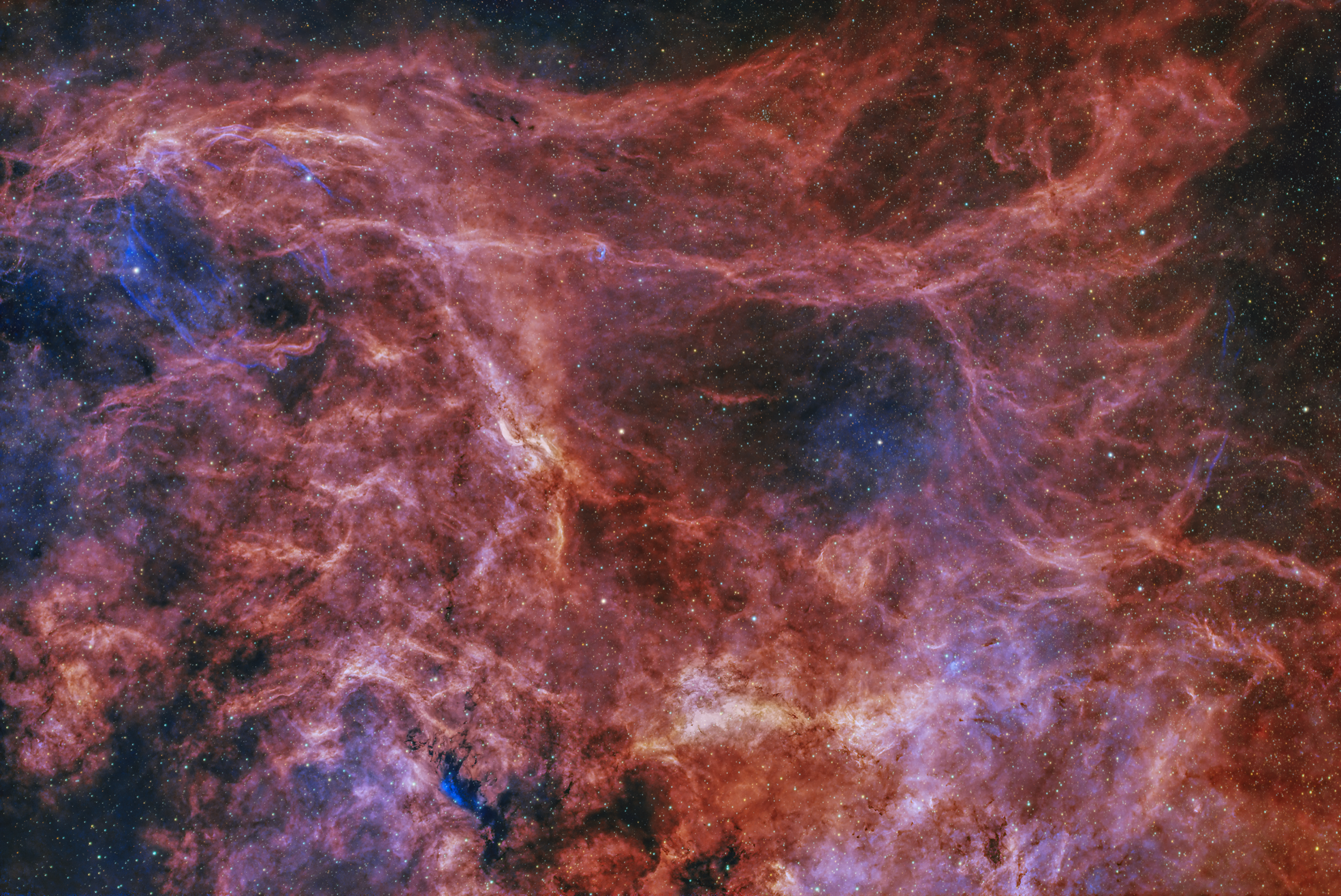
The Wing of the Swan
Image Description and Details : The Wing of the Swan. 108 hours over the course of 31 nights. I hope you enjoy this image as much as I loved creating it!
Details:
Imaging Telescope: OPT Telescopes TPO UltraWide 180 f/4.5
Imaging Camera: ZWO Astronomy Cameras ASI2600MC Pro
Mount: Sky-Watcher USA EQ6-R Pro
Filters: Baader Planetarium Fringe Killer 2", Optolong Astronomy Filter L-eXtreme 2"
Accessories: ZWO ASIAIR Plus, ZWO EAF
Baader Fringe Killer 2": 350×5″ (29′ 10″)
Optolong L-eXtreme 2": 810×480″ (108h)
Copyright: Jeffrey Horne
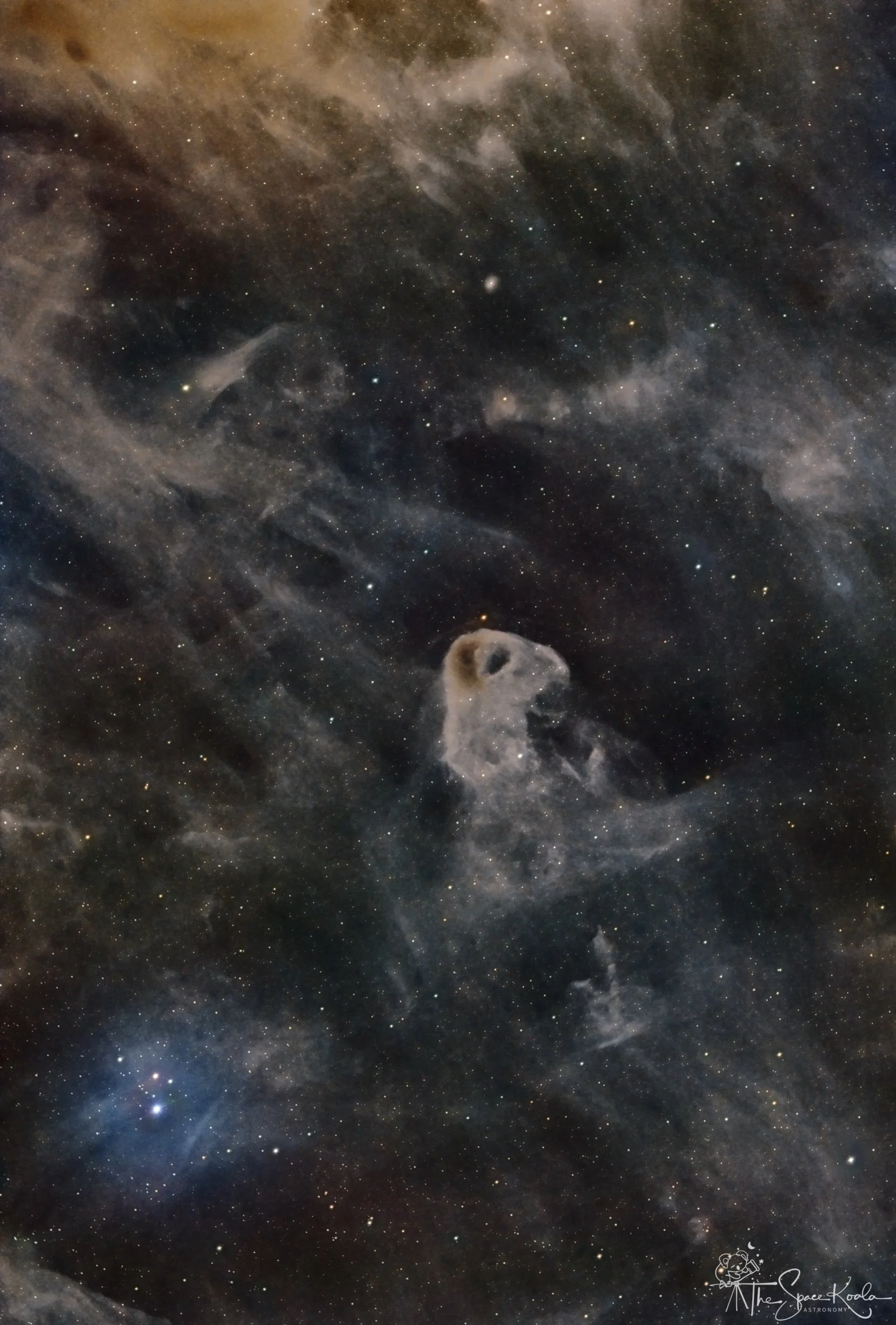
Baby Eagle Nebula
Image Description and Details : As soon as I saw a photo of this nebula on the internet, I immediately knew I also wanted to photograph it. I went up to a nearby mountain pass with dark skies that same night and shot the nebula for as long as my battery allowed me. I was very pleased that in addition to the Eagle, I was also able to photograph a large amount of the nearby dust clouds.
Telescope: Celestron RASA 8
Mount: Rainbow Astro RST-300
Camera: ZWO ASI 2600MC Pro
10/28/2022 San Bernardino, CH
4 hours of total integration time
Copyright: The Space Koala
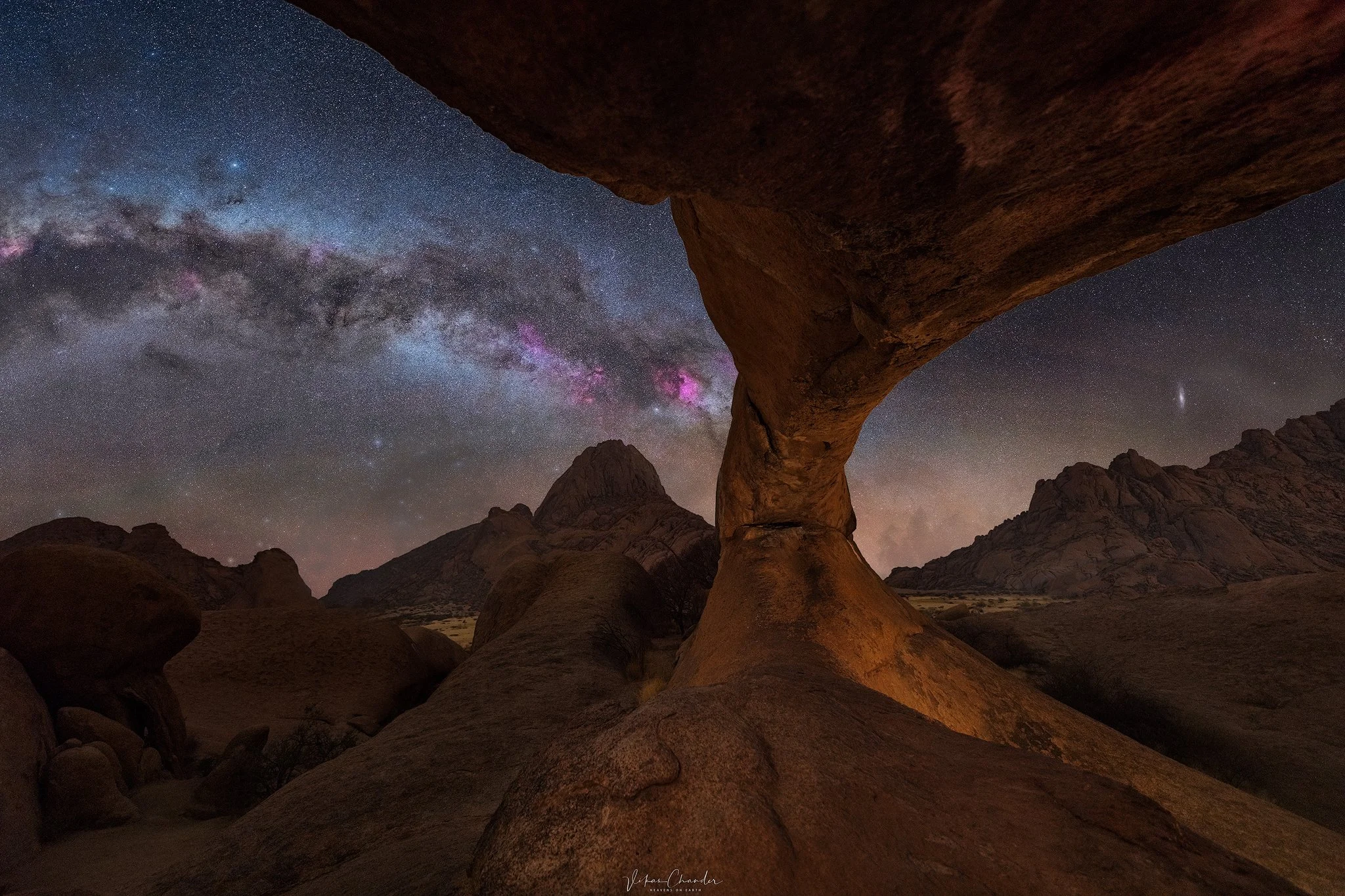
Spitzkoppe Arch
Image Description and Details : The Spitzkoppe, or the "Matterhorn of Namibia", is a group of bald granite peaks located between Usakos and Swakopmund in the Namib desert of Namibia. More than 120 million years old, the highest outcrop rises about 1700mtrs above sea level. Many examples of Bushmen artwork can be seen painted on the rocks in the Spitzkoppe area though many of them have been destroyed. The Spitzkoppe Mountains were also the filming location for 2001: A Space Odyssey in the "Dawn of Man" sequences.
The rock arch seen here is also a well-known formation and has featured in many a composition and to photograph the arch, one has to camp inside the reserve as the gates are closed at night. Behind and to the left of the arch is the Spitzkoppe peak while to the right I think is the Pontos range. In the sky we can see the North American nebula and the Sadr region showing off their hydrogen gases and the Andromeda Galaxy puts in an appearance on the right, in an orientation we Northerners are not used to seeing….
Camera = Nikon D850 H-alpha mod
Lens = Nikon 14-24mm, Zeiss Otus 55mm
Sky Exposure = 10secs, f2, iso 6400, 18 panels
Ground Exposure = 480 secs, f2.8, iso 800, light painted
Software = PtGui, Pixinsight, Lightroom, Photoshop, Luminar Neo
Copyright: vikas chander
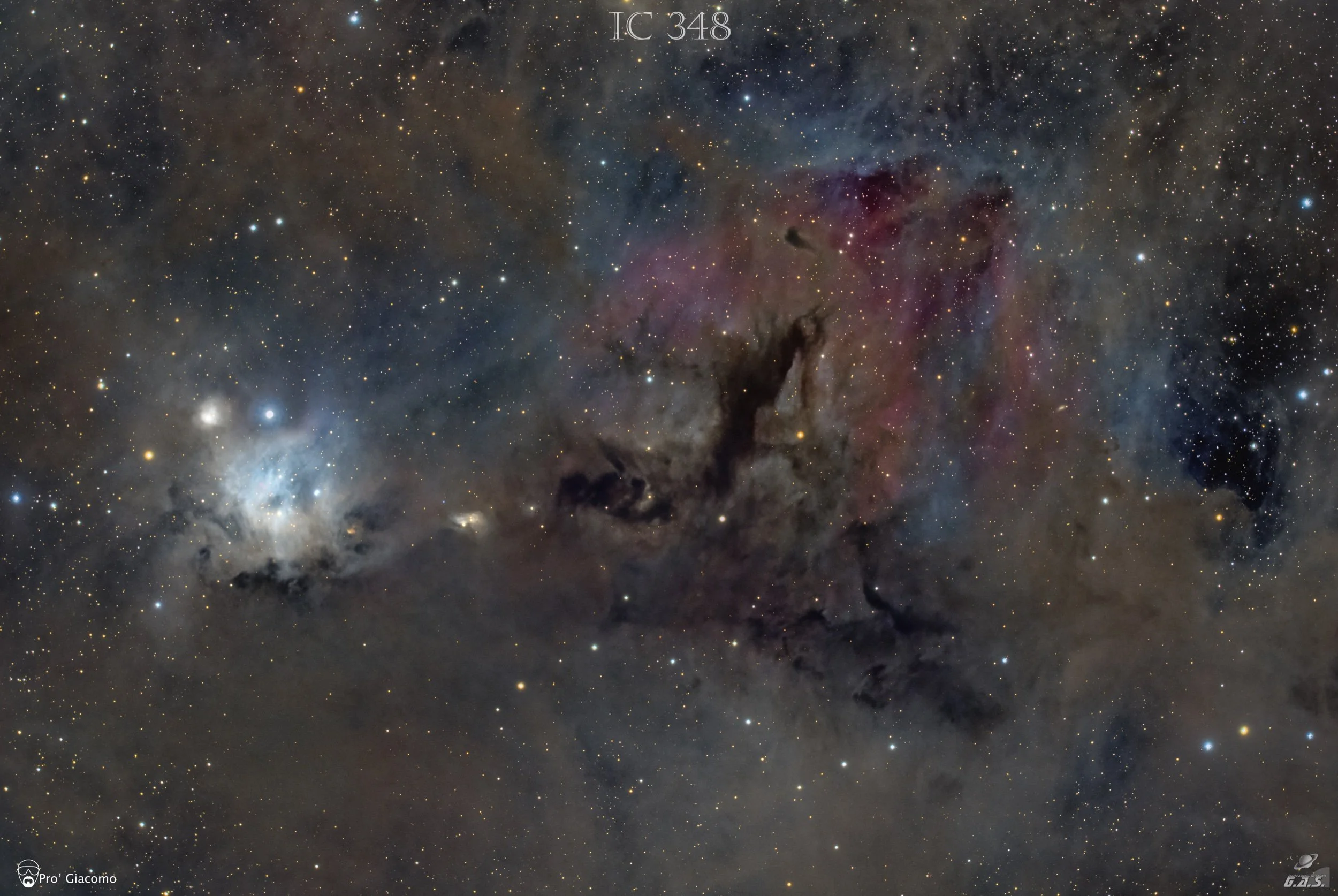
Ic 348
Image Description and Details : ic 348 ir flying ghost nebula
Questa distesa cosmica di polvere, gas e stelle copre circa 3 gradi del cielo nell'eroica costellazione del Perseo.
Si individua pochissimi primi d'arco a sud della stella ο Persei, nell'area di cielo in cui si incontrano le costellazioni di Perseo, Ariete e Toro; è poco nota nell'ambito dell'osservazione amatoriale a causa della vicina presenza delle Pleiadi e della ben più grande Nebulosa California, sebbene sia più luminosa delle nebulose associate alle Pleiadi.
In alto a sinistra nello splendido paesaggio del cielo c'è l'affascinante giovane ammasso stellare IC 348 e la vicina Flying Ghost Nebula alla periferia della gigantesca nuvola molecolare di Perseo, a circa 850 anni luce di distanza. Altre nebulose polverose sono sparse nel campo visivo, insieme al debole bagliore rossastro dell'idrogeno gassoso.
In effetti, la polvere cosmica tende a nascondere le stelle di nuova formazione e i giovani oggetti stellari o protostelle da telescopi ottici indiscreti. Crollo a causa dell'auto-gravità, le protostelle si formano dai densi nuclei incorporati nella polverosa nuvola molecolare. Alla distanza stimata della nuvola molecolare, questo campo visivo si estenderebbe per quasi 35 anni luce
Light 70 x 600” filter: Optolong L-Pro
Light 39 x 600” filter: Optolong UV/IR cut
+dark, flat e darkflat
Camera: Asi 294 mc pro
Telescope: Sharpstar 94 EDPH 517mm F5.5 reduced to 423mm F/4.4
Guide camera: Asi 120 mini Filter Svbony CLS
Guide scope: 50-190mm
Mount: Skywatcher Eq 6-r Pro
Acquisition: Asiair Plus
Software: Pixinsight – Photoshop
Shots:
19-20-25-27/10/2022 Manduria (TA)
28/10/2022 Stigliamo (MT)
Italy
Author: PRO’ GIACOMO
Copyright: PRO' GIACOMO
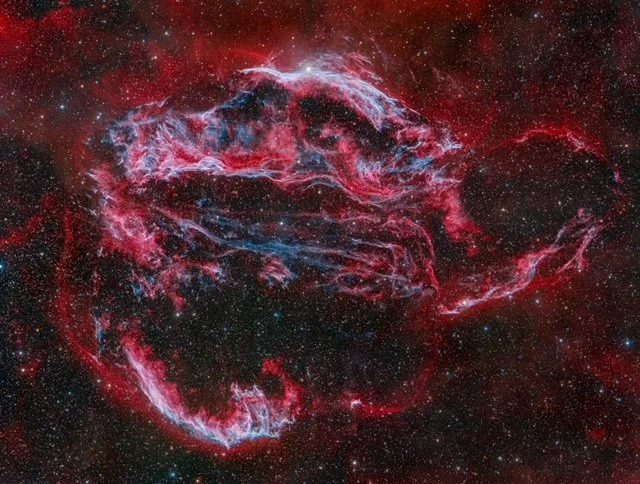
The Veil Nebula - a 4 pannel mosaic
Image Description and Details : EXIF DATA:
[General]
Camera: Sony a7r + QSI 583 [Kodak KAF8300]
Filters: Antlia RGB + Baader 7nm Ha + Optolong L-Extreme [Mainly for OIII]
Telescope: Skywatcher Esprit 100 + Riccardi 0.75 Reducer
Mount: iOptron cem70
Location: Schauinsland, Germany [Observatory from the "Sternfreunde Breisgau" local astronomy club]
[Integration]
Exposures:
Antlia Blue 1.25": 64×300″(5h 20′) -10°C bin 1×1
Antlia Green 1.25": 64×300″(5h 20′) -10°C bin 1×1
Antlia Red 1.25": 64×300″(5h 20′) -10°C bin 1×1
Baader H-alpha 7nm 1.25": 131×900″(32h 45′) -10°C bin 1×1
Optolong L-eXtreme 2": 231×300″(19h 15′) ISO3200 bin 1×1
Total: 68h
Copyright: Jakob Sahner
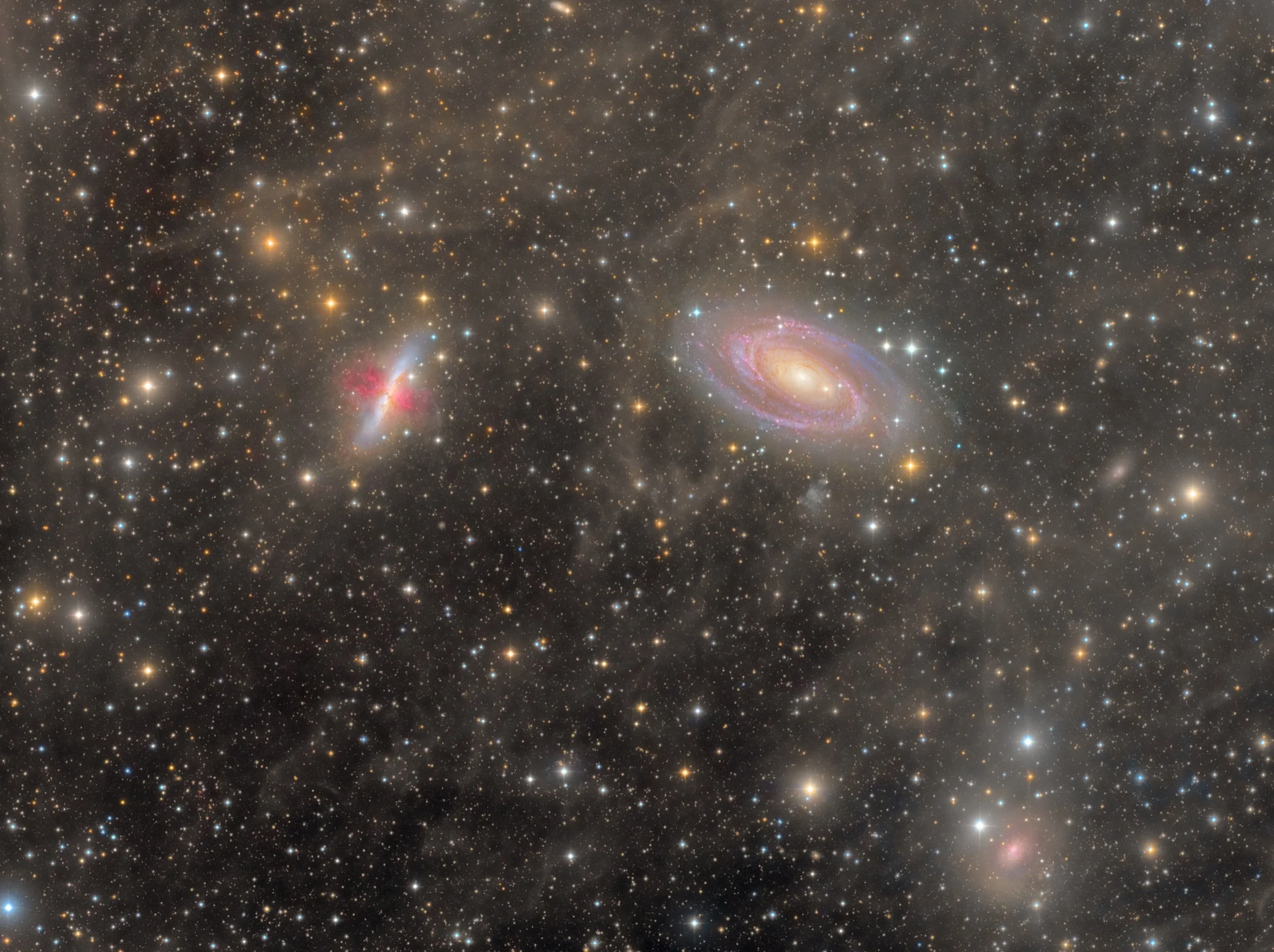
M81 & m82
Image Description and Details :FSQ106EDXIII and QSI683
Filter Astrodon
L: 39 x 900s
RGB: (19, 14, 18) x 300s
ORION ASTROGRAPH and 294C pro
Filter Optolong
L-PRO: 120 x 240s
TS RC 12" TRUSS and MORAVIAN G2-8300 MARK II
Filter Astronomik
L: 49 x 300s
Ha: 21 x 600s
RGB: 21 x 240s bin 2
Copyright: Luca Dinoi and Roberto Colombari
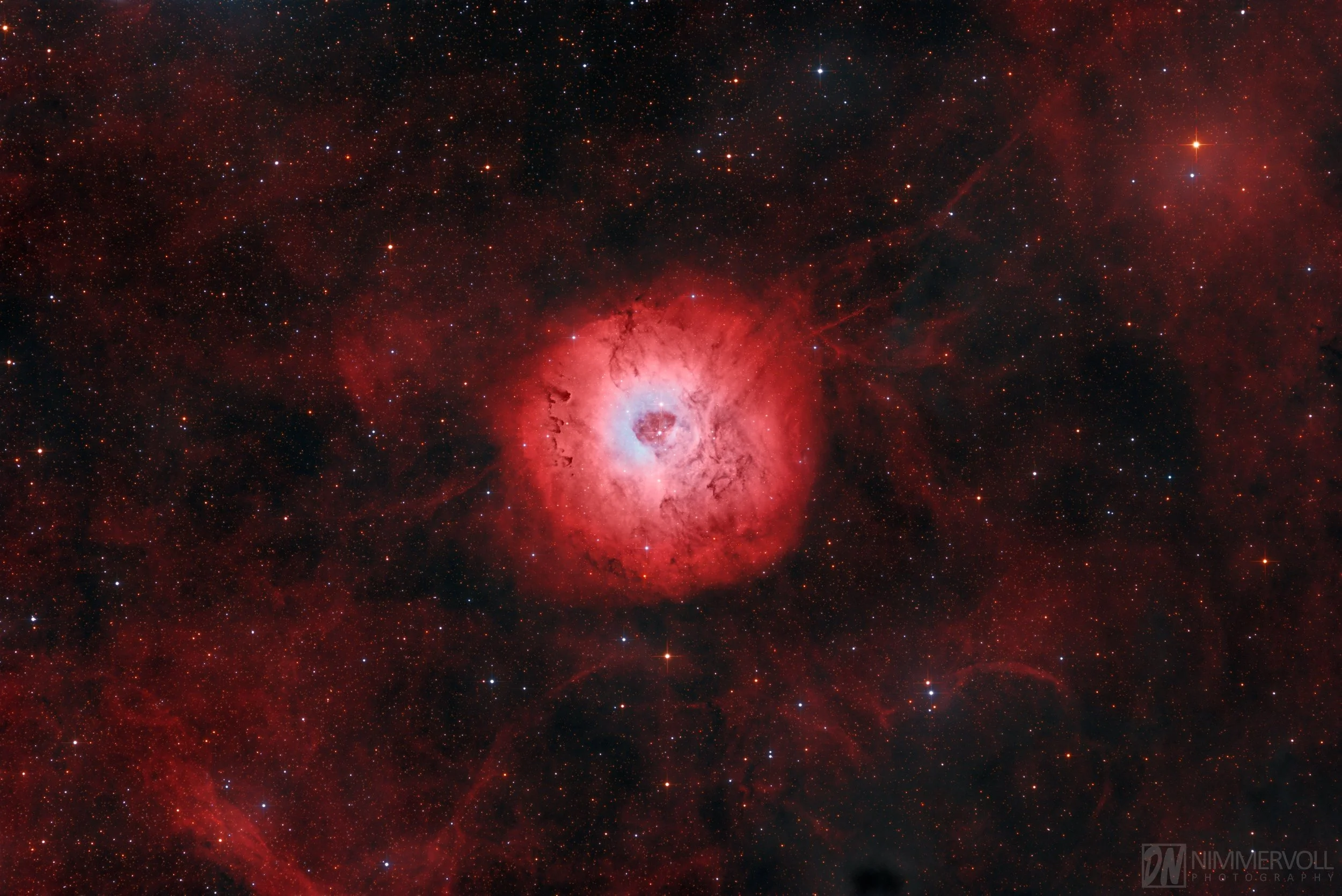
SH2-170
Image Description and Details :RECORDING DATA:
Location: Upper Austria
Date taken: August 2022
Distance: 7,500 light years
Diameter: -
Exposure: RGB each 30 x 120 sec. / Gain 56 at -15°C
Luminance: 192 x 150 sec / gain 0 at -15°C
H-Alpha: 39x 900 sec. / Gain 56 at -15°C
O-III: 32x 900 sec. / Gain 56 at -15°C
Total: 28.7 hours
Calibration: BIAS / Flats / DarkFlats
Mount: Skywatcher EQ6-R PRO
Telescope: Lacerta 10″ Fotonewton 250/1000
Corrector: Pál Gyulai GPU coma corrector
Filter: Antlia LRGB-V Pro
Antlia 3nm Pro H-Alpha
Antilia 3nm Pro O-III
Camera: QHY268m
Guiding: QHY OAG with QHY5III462c and PHD2
Software: APP / Photoshop CC
Copyright: Daniel Nimmervoll - astro-fotografie.at
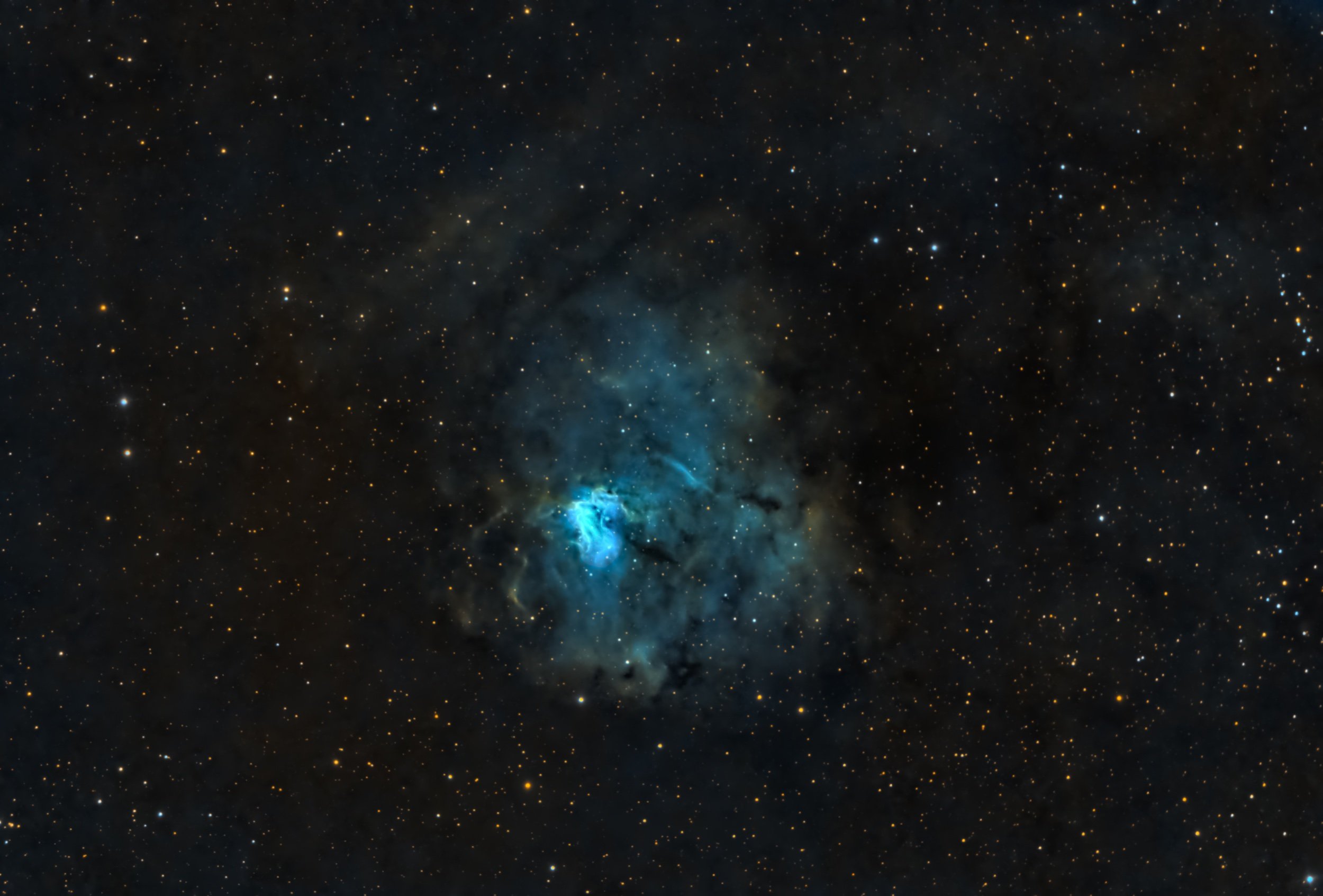
Fossil Footprint Nebula in Hubble palette
Image Description and Details : NGC 1491 (also known as the Fossil Footprint, LBN 704 or Sh2-206) is a bright nebula discovered by William Herschel in 1790, in the constellation of Perseus. It is glowing deep red because the hydrogen gas in the nebula is energized by hot, massive stars embedded within. These stars emit copious amounts of ultraviolet (UV) light that causes the gas to glow.
Here is in Hubble palette rendition.
Konus 200/1000 @960mm, F4.8
Qhy168c @-5 °C
Sky-Watcher Eq6r Pro Mount
Optolong L_eXtreme 58x300" (gain 11, offset 60)
Optolong L_Ultimate 75x300" (gain 11, offset 60)
SvBony SII 7nm 172x300" (gain 11, offset 60)
SvBony UV/IR-cut 33x60" (gain 1, offset 35)
Kstars/ekos, APP, PixInsight, PS
Copyright: Massimo Di Fusco
Ic63
Image Description and Details :
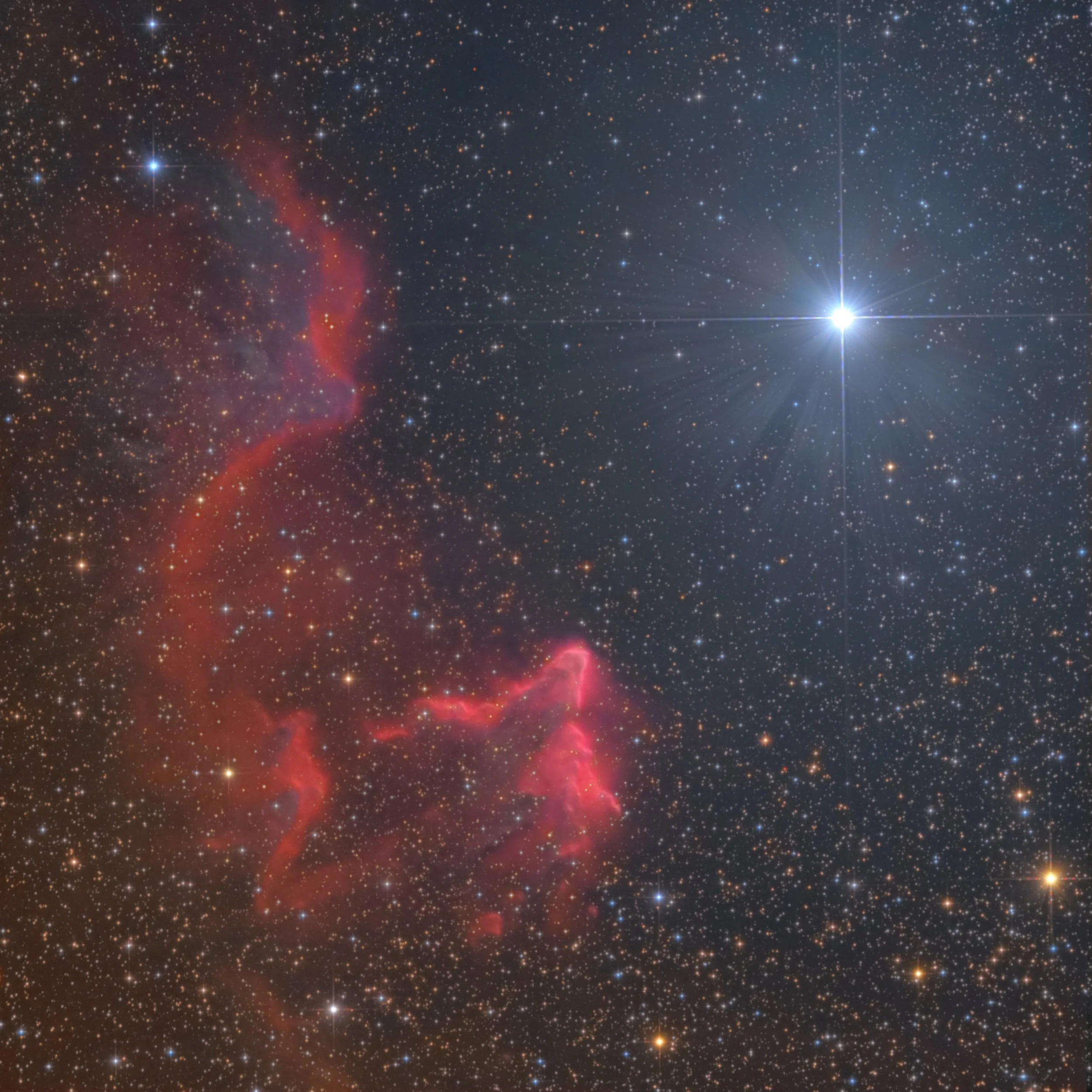
IC63 THE GHOST OF CASSIOPEE
Very pale and indistinct nebula, it is nicknamed "The Ghost". It's a difficult object to see because it's drowned under a flood of stars. Only large light instruments allow you to see this nebula that accompanies IC 59, even less distinct.
Images unitaires:
Antlia 3nm Pro Ha: 16×240″(1h 4′) (gain: 100.00) f/3.6 -10°C
Antlia Blue Pro: 90×60″(1h 30′) (gain: 100.00) f/3.6 -10°C
Antlia Green Pro: 90×60″(1h 30′) (gain: 100.00) f/3.6 -10°C
Antlia Lum Pro: 249×60″(4h 9′) (gain: 100.00) f/3.6 -10°C
Antlia Red Pro: 90×60″(1h 30′) (gain: 100.00) f/3.6 -10°C
Total : 9H43
Matériels :
Newton Vixen R200SS
Monture Ioptron CEM120
Camera ASI533MM
Acquisitions avec NINA
Traitement Pixinsight & Photoshop
Copyright: lamagat frederic
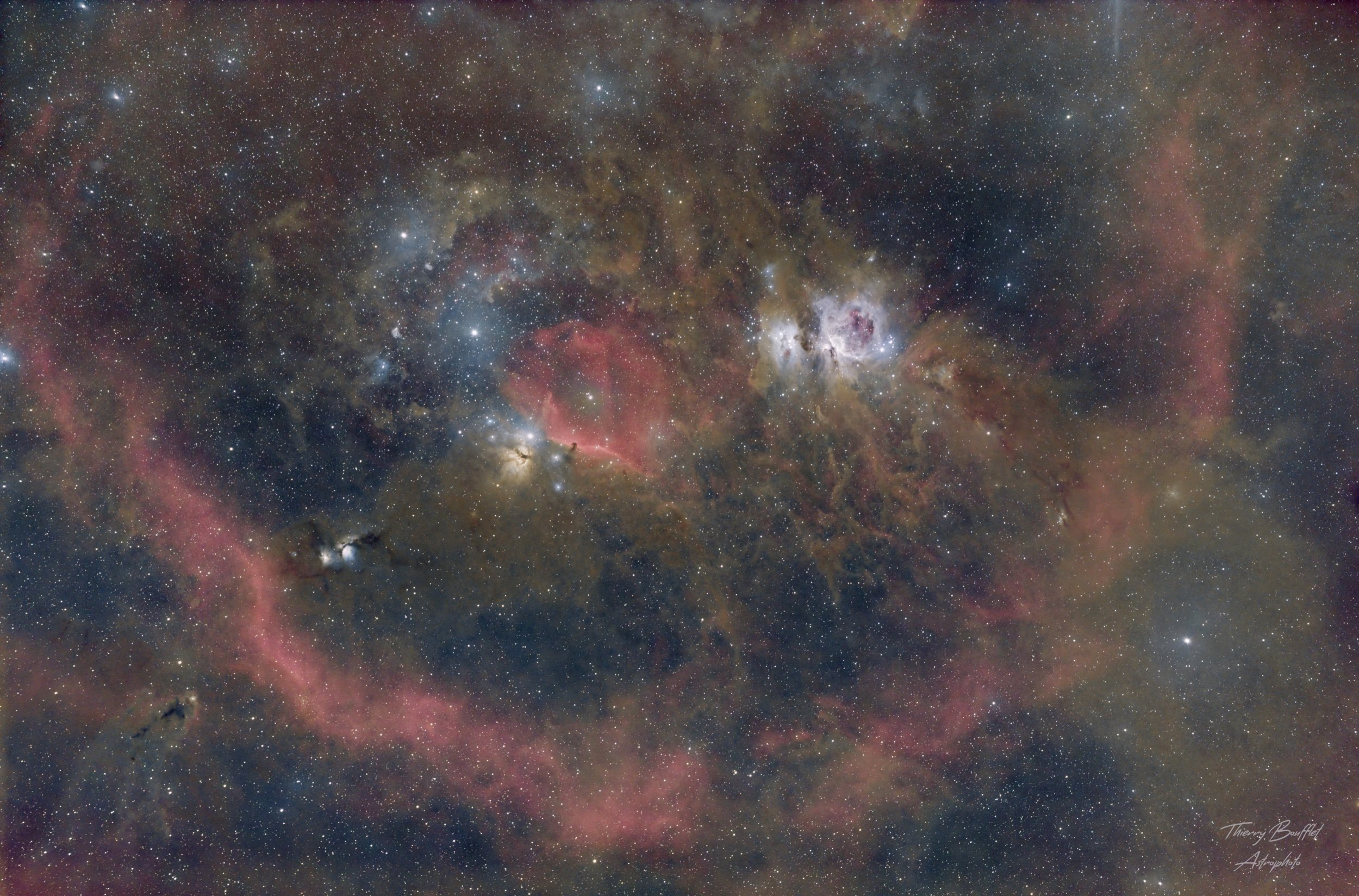
Barnard's Loop M42 Wide Field
Image Description and Details : Samyang 135 F2.8 and Canon 6Da
140 x 60s
Mount Ioptron Skyguider pro
Copyright: Thierry BOUFFLET