
Fossil Footprint Nebula in Hubble palette
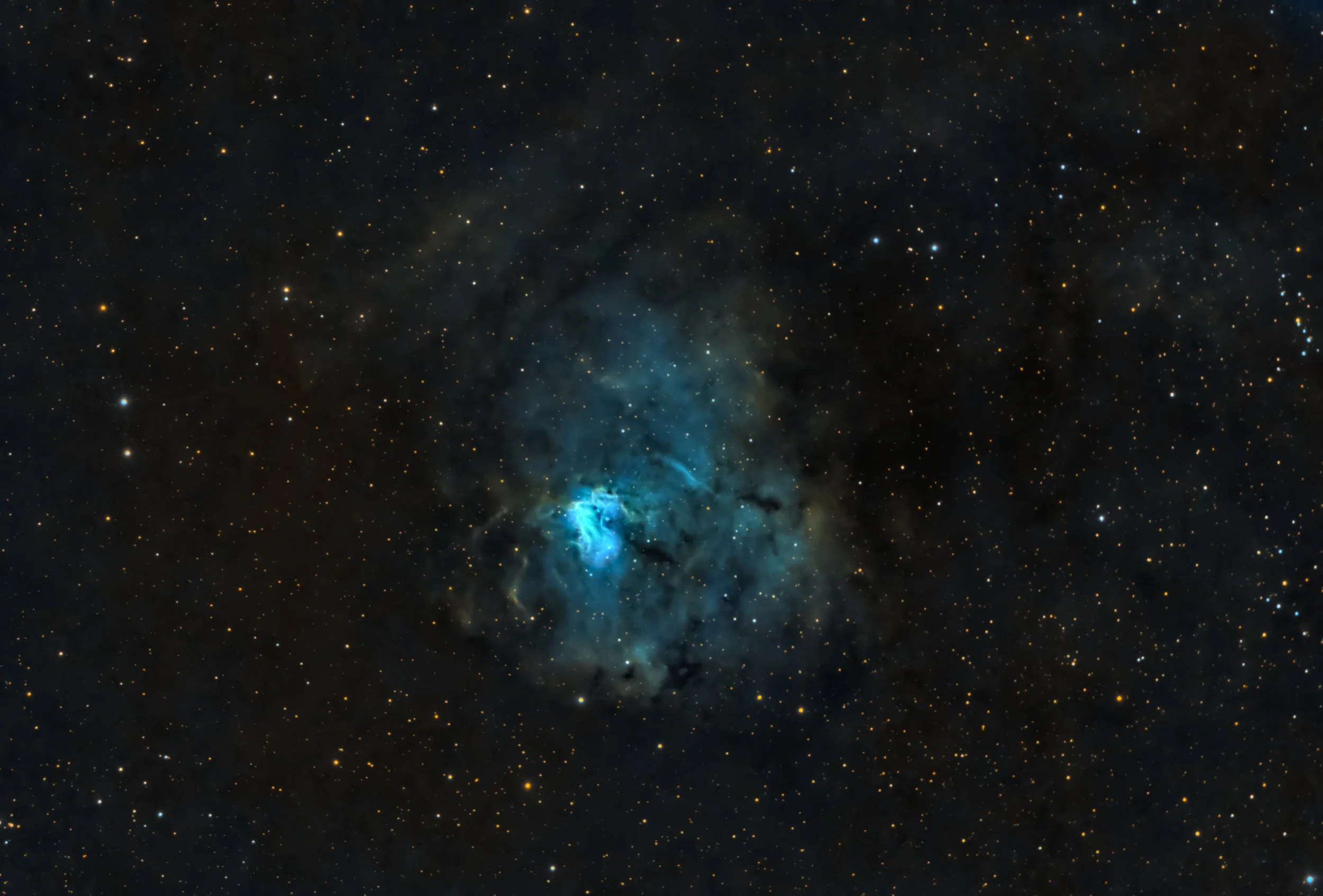
Image Description and Details : NGC 1491 (also known as the Fossil Footprint, LBN 704 or Sh2-206) is a bright nebula discovered by William Herschel in 1790, in the constellation of Perseus. It is glowing deep red because the hydrogen gas in the nebula is energized by hot, massive stars embedded within. These stars emit copious amounts of ultraviolet (UV) light that causes the gas to glow.
Here is in Hubble palette rendition.
Konus 200/1000 @960mm, F4.8
Qhy168c @-5 °C
Sky-Watcher Eq6r Pro Mount
Optolong L_eXtreme 58x300" (gain 11, offset 60)
Optolong L_Ultimate 75x300" (gain 11, offset 60)
SvBony SII 7nm 172x300" (gain 11, offset 60)
SvBony UV/IR-cut 33x60" (gain 1, offset 35)
Kstars/ekos, APP, PixInsight, PS
Copyright: Massimo Di Fusco
Share & Credit This AAPOD2 Feature
When you share this image on AstroBin, social media, forums, or your own website, please include a credit to AAPOD2 so viewers can discover where this feature came from.
Support AAPOD2 for free! Use Our AGENA ASTRO Affliate Link
AAPOD2 Title: Fossil Footprint Nebula in Hubble palette
AAPOD2 Page Link: https://www.aapod2.com/blog/m3qq0glj76tuaquddlmnhv53fokcr9
Submit Your Photo!