

AAPOD2 Image Archives
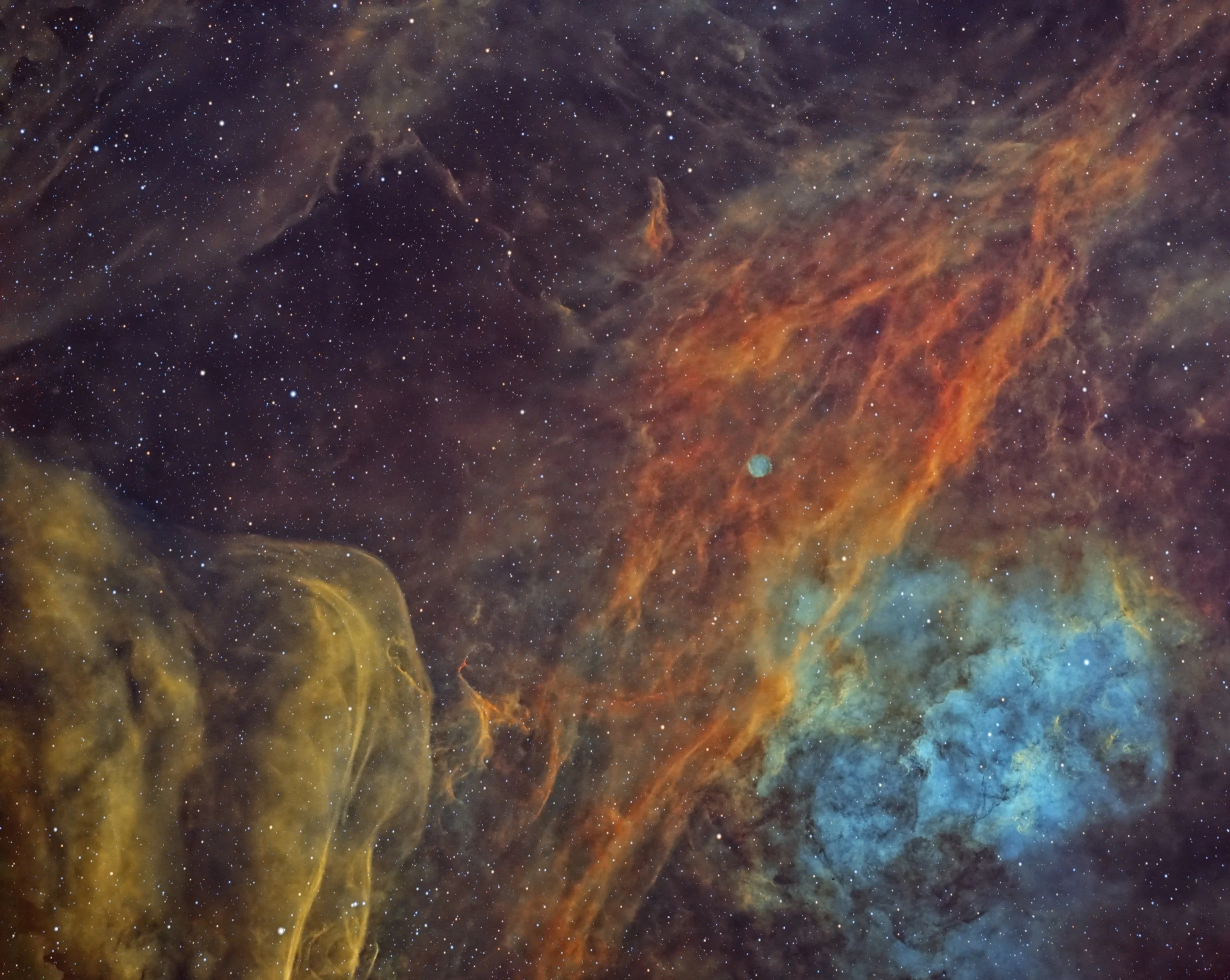
SH2-115 and SH2-116
Image Description and Details : SH2-115 is a faint emission nebula located in Cygnus, close to Deneb, the brightest star of that constellation.
SH2-116 or Abell 71 is the designation of the small round patch of emission nebulosity in the center, it is a small patch of emission nebula.
Imaged in Bortle 6 skies in Washington DC suburbs in my backyard.
Scope: Astro-Physics Stowaway 92mm f/5.3
Imaging Cameras: ZWO ASI2600MM Pro
Mounts: iOptron CEM40
Filters: Chroma 3nm SHO
Software: Adobe Photoshop, Pleiades Astrophoto PixInsight, Tria
Copyright: gmadkat
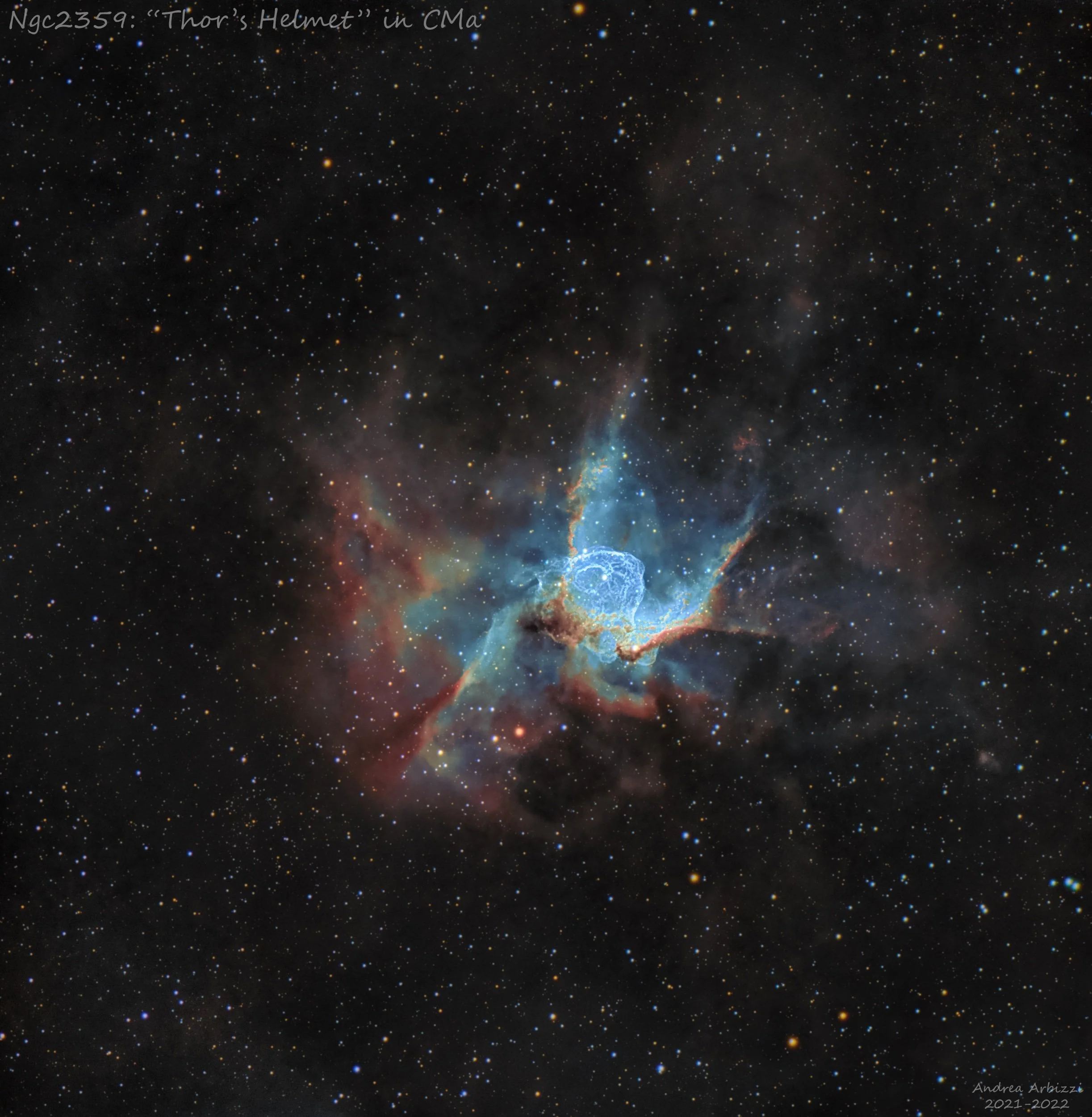
Ngc2359: "Thor's helmet" nebula
Image Description and Details : NGC 2359 (also known as Thor's Helmet) is an emission nebula in the constellation Canis Major. The nebula is approximately 30 light-years in size. The central star is the Wolf-Rayet star WR7, an extremely hot star thought to be in a brief pre-supernova stage of evolution. It is similar in nature to the Bubble Nebula, but interactions with a nearby large molecular cloud are thought to have contributed to the more complex shape and curved bow-shock structure of Thor's Helmet.
The nebula has an overall bubble shape, but with complex filamentary structures.
APM Apo 140 F4,6 (646 mm) + Tecnosky Apo 125 f5,1 (640 mm)
ZWO ASI533MC Pro
iOptron GEM45 + iOptron CEM40
November 2022
Optolong L-Ultimate (3 nm): 62X600"
Optolong Uv Ir cut: 40X30” (star color)
November 2021
Optolong L-eXtreme: 87X600"
Tot: 25h 10'
Modena (Bortle 8), Italy
Copyright: Andrea Arbizzi
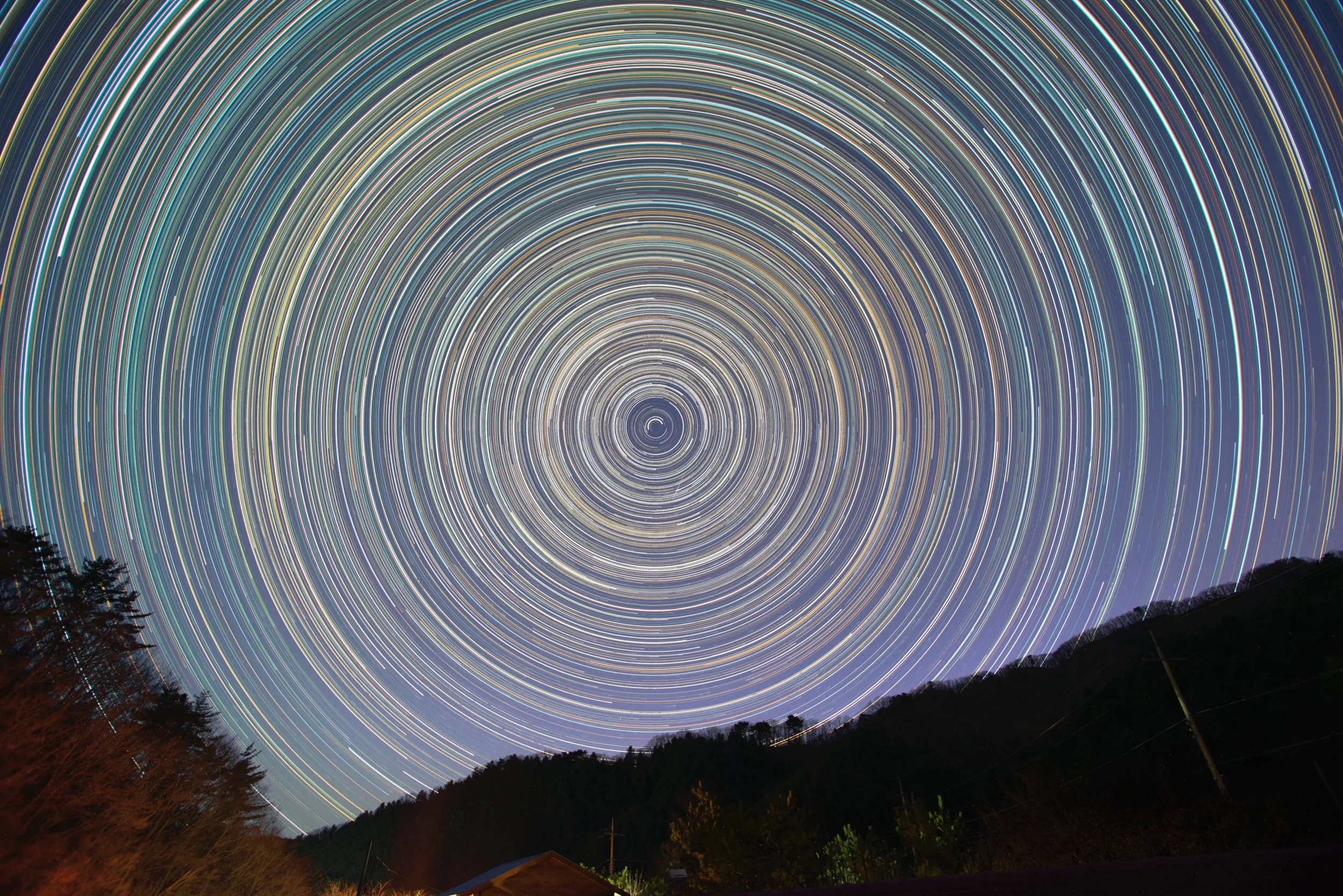
North Sky Star trail
Image Description and Details : Nikon D800
Tamron SP AF 17-35mm F/2.4 (25mm, F/4)
ISO 200, 1min x 692
Manfrotto 055D
Copyright: Kim Young Dae
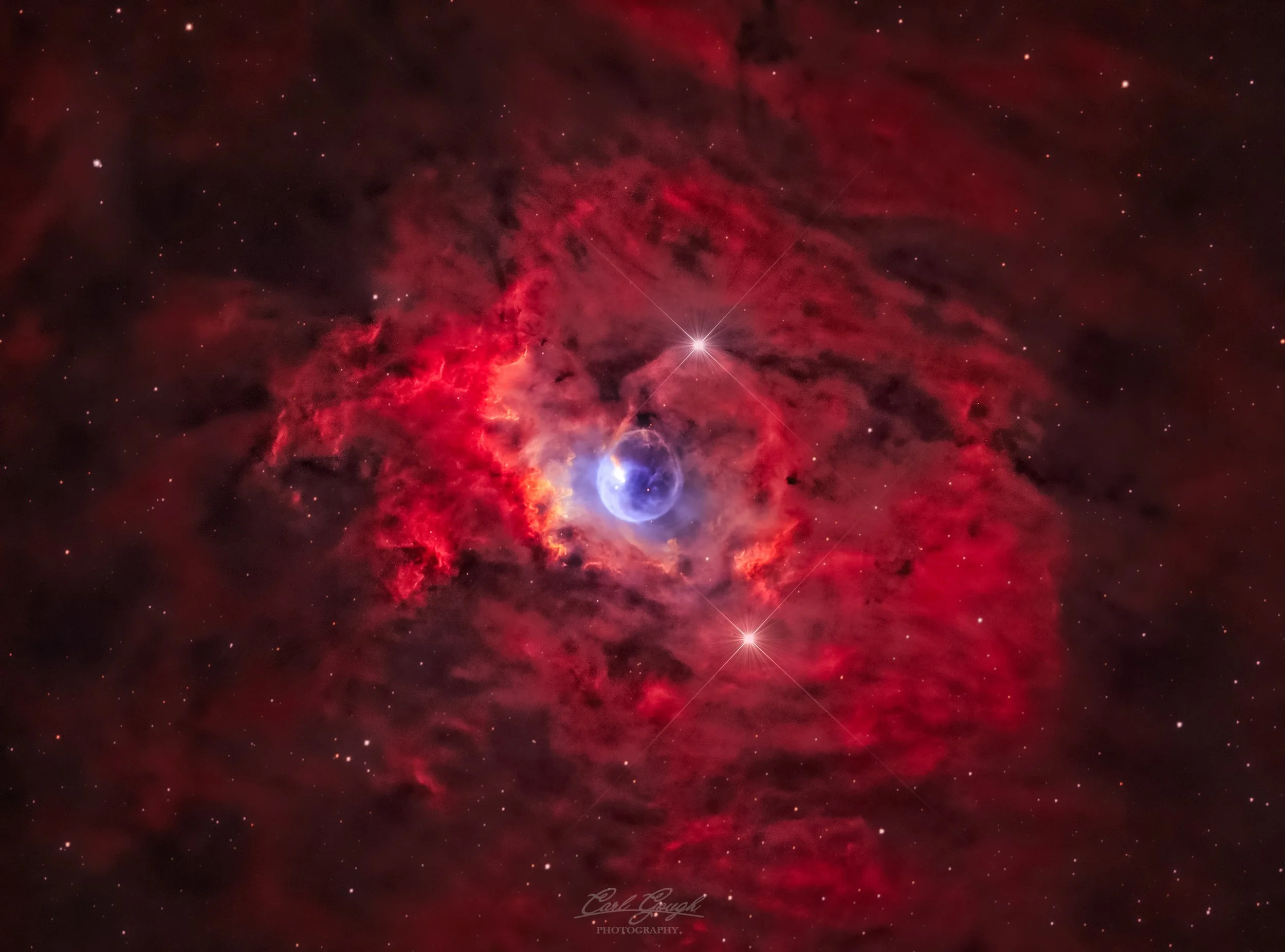
Bubbling Rose
Image Description and Details : After a few months off while i had planetary equipment on the mount. The RC is now back on the mount for some deep sky imaging again. Starting with the Bubble nebula or NGC 7635. 8000 light years away in the constellation Cassiopeia. Captured from my Bortle 5 backgarden in west sussex over many nights. I also added the data i captured back in 2021, as it's a target i find fascinating and keep returning to. Capture details:118x 600 Ha. 63x 600 oiii and 58x 600 sii.Equipment details: EQ6-rASI 1600mmBaader 1.25" narrowband filtersOrion RC 8"
Copyright: Carl Gough

Messier 78 - Casper the Friendly Ghost
Image Description and Details :
Shot in true color (with Ha added) in Borrego Springs earlier this month at the Nightfall star party, this is one I have attempted several times at home and it's never really worked out. It needs a dark sky. Casper is a rather famous reflection nebula in Orion not far from the Horsehead and the Great Orion Nebula. About 1,500 light years distant, Casper is a dynamic star-forming region containing about 45 T Tauri stars (young stars that are still forming) and 17 Herbig-Haro (HH) objects (objects that are not quite stars but presumably will be soon). Several of the HH objects are visible in the image as bright red dots surrounded by cold, dark dust.Details: Celestron EdgeHD 1100 telescope with 0.7x reducer; 10Micron GM1000HPS mount; ZWO ASI6200MM camera; Chroma LRGB filters and Chroma 3nm Ha filter for the hydrogen-alpha signal); 9 hours exposure time.
Copyright: Copyright © 2022 by the Accidental Astronomers
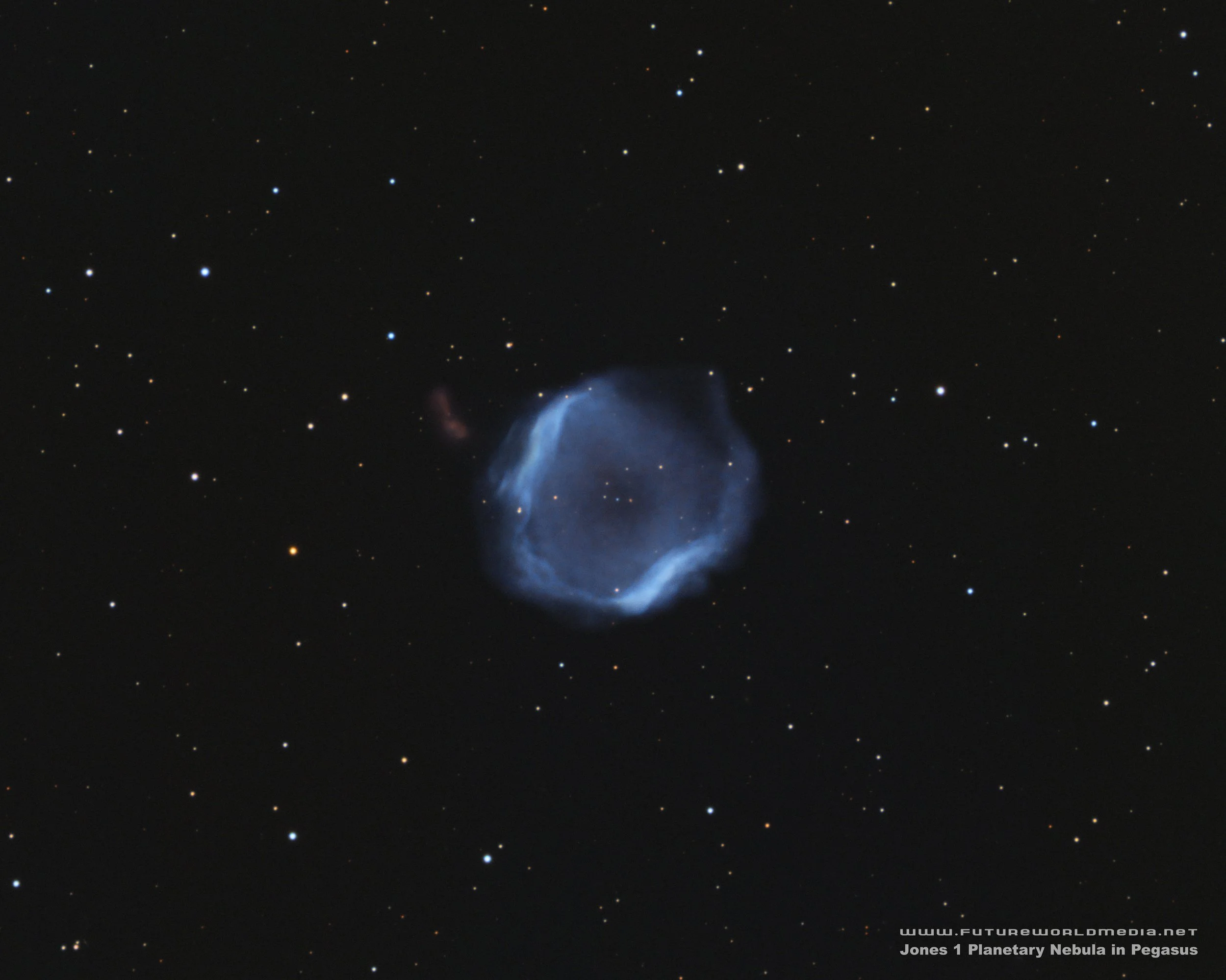
Jones 1 Planetary Nebula PN.G104.2-29.6
Image Description and Details :
I captured Jones 1 back in 2019, but wanted to really add on more data to not only bring out more detail, but that Ha off to the side as well: The planetary nebula Jones 1 (Jn 1, PK 104-29.1, VV '578) was discovered in 1941 by the American astronomer Rebecca Jones on photo plates of the Harvard Observatory. Two years earlier, together with Richard M. Emberson, she discovered another planetary nebula: Jones-Emberson 1 (PK 164+31.1) in the constellation Lynx. The designation PK 104-29.1 comes from the two Czechoslovak astronomers Luboš Perek and Luboš Kohoutek, who in 1967 compiled a catalog of all the planetary nebulae of the Milky Way known at the time. The designation VV '578 goes back to the Russian astronomer Boris Vorontsov-Velyaminov, who studied and classified planetary nebulae in addition to cataloging galaxies. Jones 1 is a large planetary nebula with an angular diameter of 320 arcseconds, but a faint with only 15 magnitudes. The central star is 16.8 magnitudes bright. Distance measurements range from 716 pc to 826 pc (around 2300 to 2700 light years).
Copyright: Douglas J Struble

Flaming Star Nebula (IC405) & Tadpole Nebula (IC410)
Image Description and Details :
Flaming Star Nebula (IC405) Tadpole Nebula (IC410)IC417Messier 38 (NGC1912)Exposure: 10 Hour Equipment:Optics: Askar Fra400 (Reducer)3.9Focal Ratio / 280 Focal Length Mount: ZWO AM5Camera: ASI2600 MC ProOptolong L UltimateAsiAir Plus
Copyright: Godfrey Aguinaldo
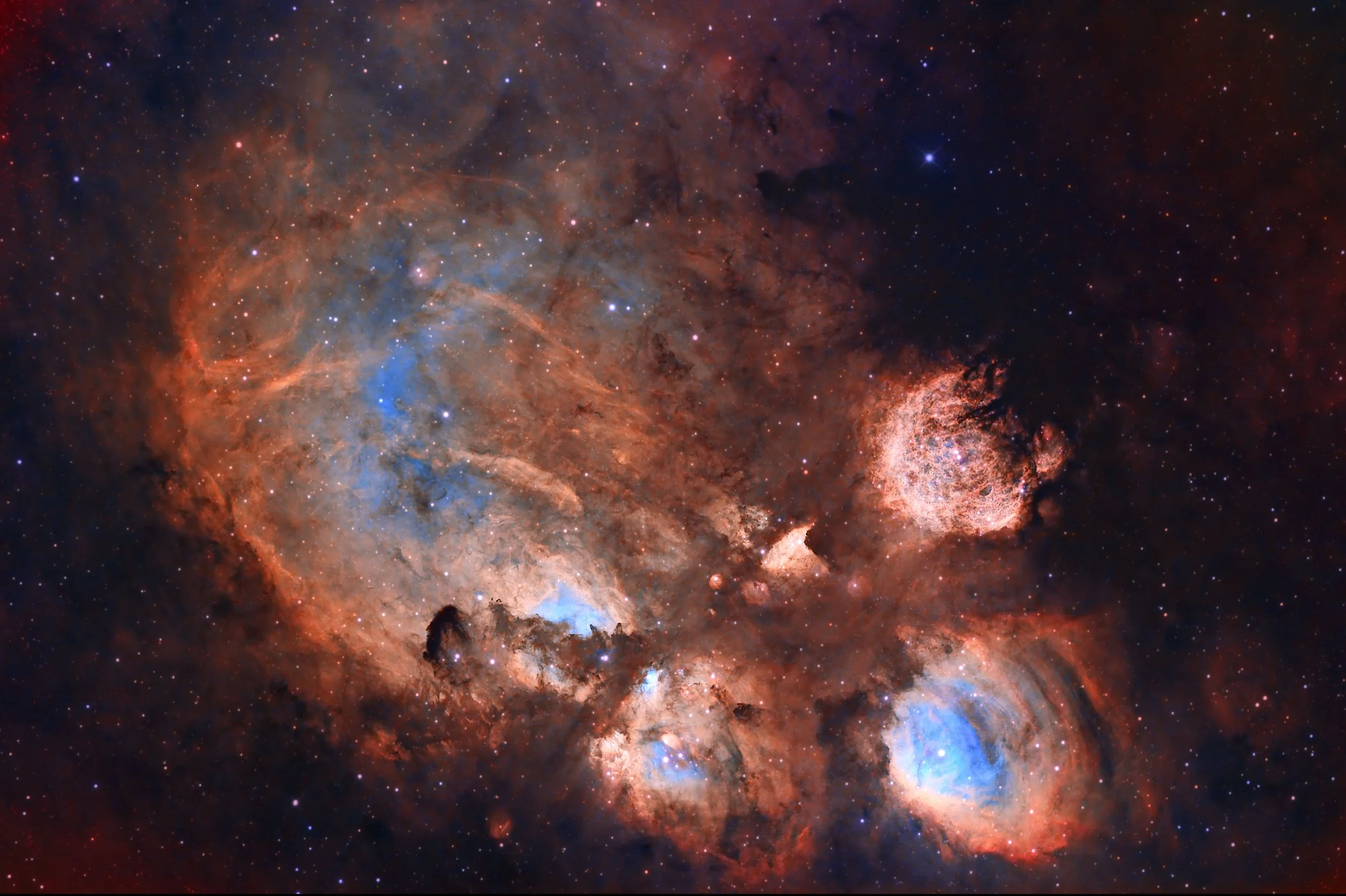
The Cats Paw Nebula
At 5,500 light years distant, the Cat's Paw is an emission nebula with a red color that originates from an abundance of ionized hydrogen atoms.
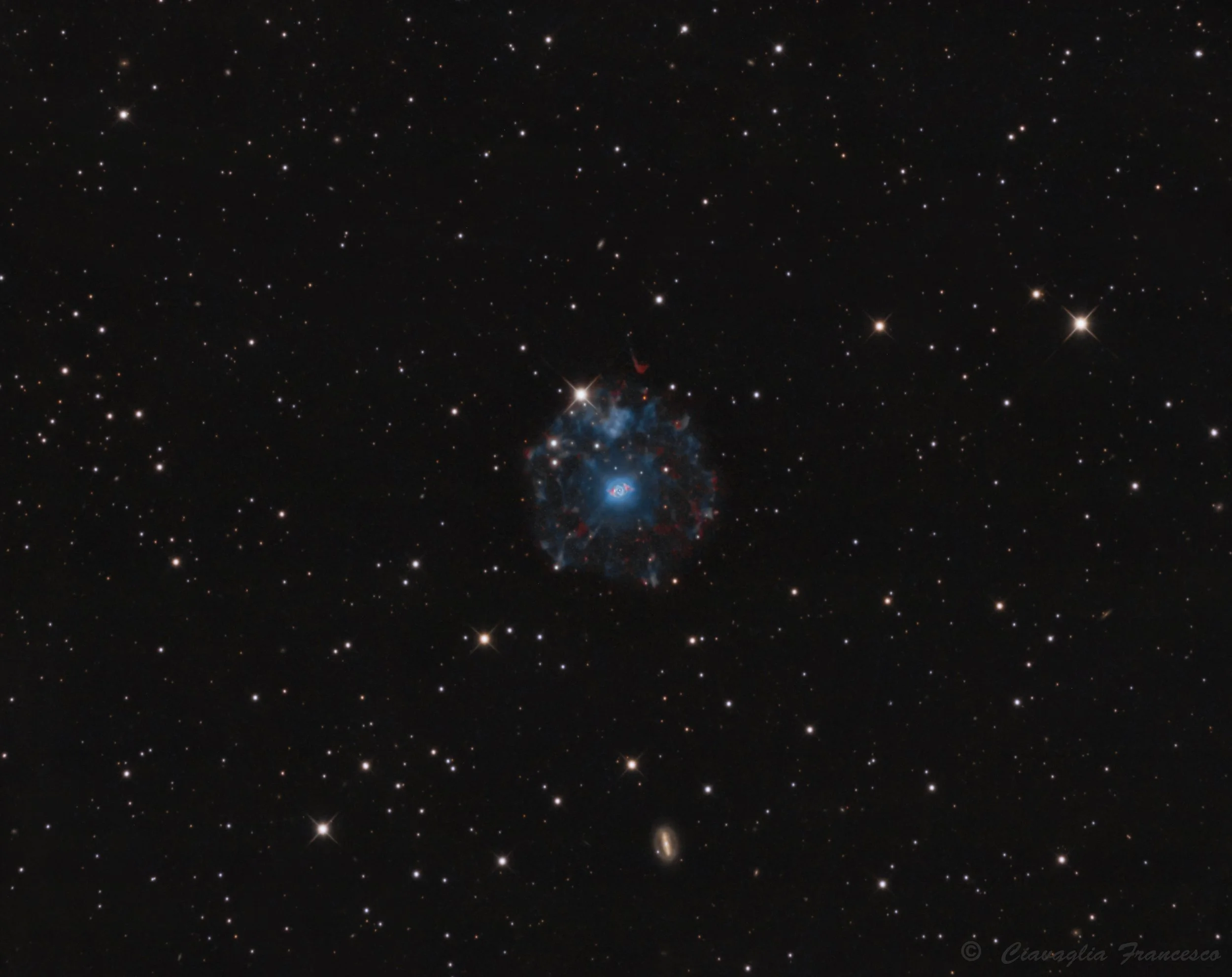
NGC 6543 Cat's Eye Nebula
The Cat's Eye Nebula AKA NGC 6543, a planetary nebula in the northern constellation of Draco, discovered by William Herschel.

Mars , the Flaming Star and Tadpole Nebula
Mars, the red planet is by joined by IC 405 and IC 410 two large emission nebulae. The 3 targets lined up in the constellation Auriga for this this widefield image.
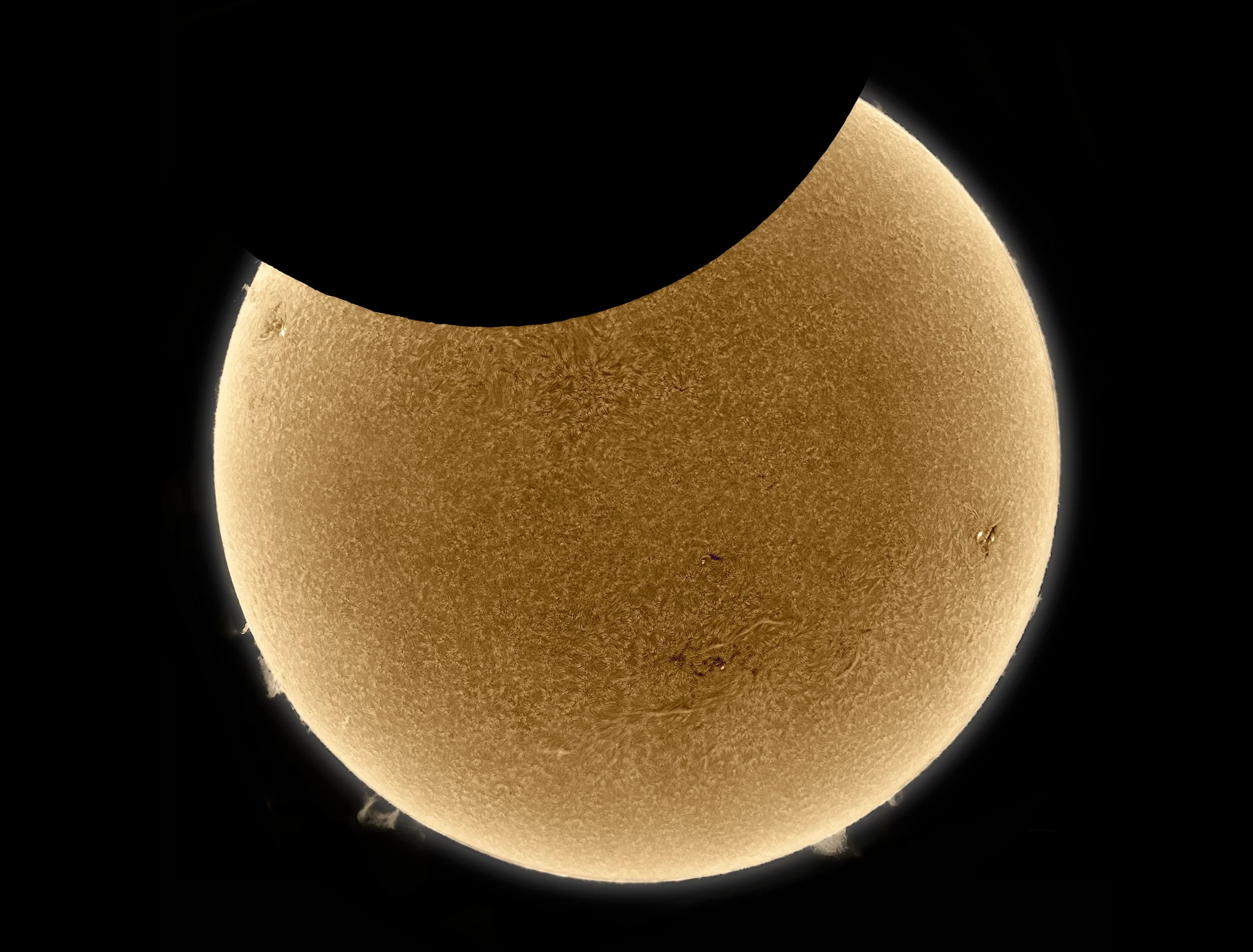
Partial solar Eclipse of the Sun
In that great journey of the stars through space, about the mighty, all-directing Sun, the pallid, faithful Moon, has been the one companion of the Earth.
A Solar Eclipse: Ella Wheeler Wilcox - 1850-1919
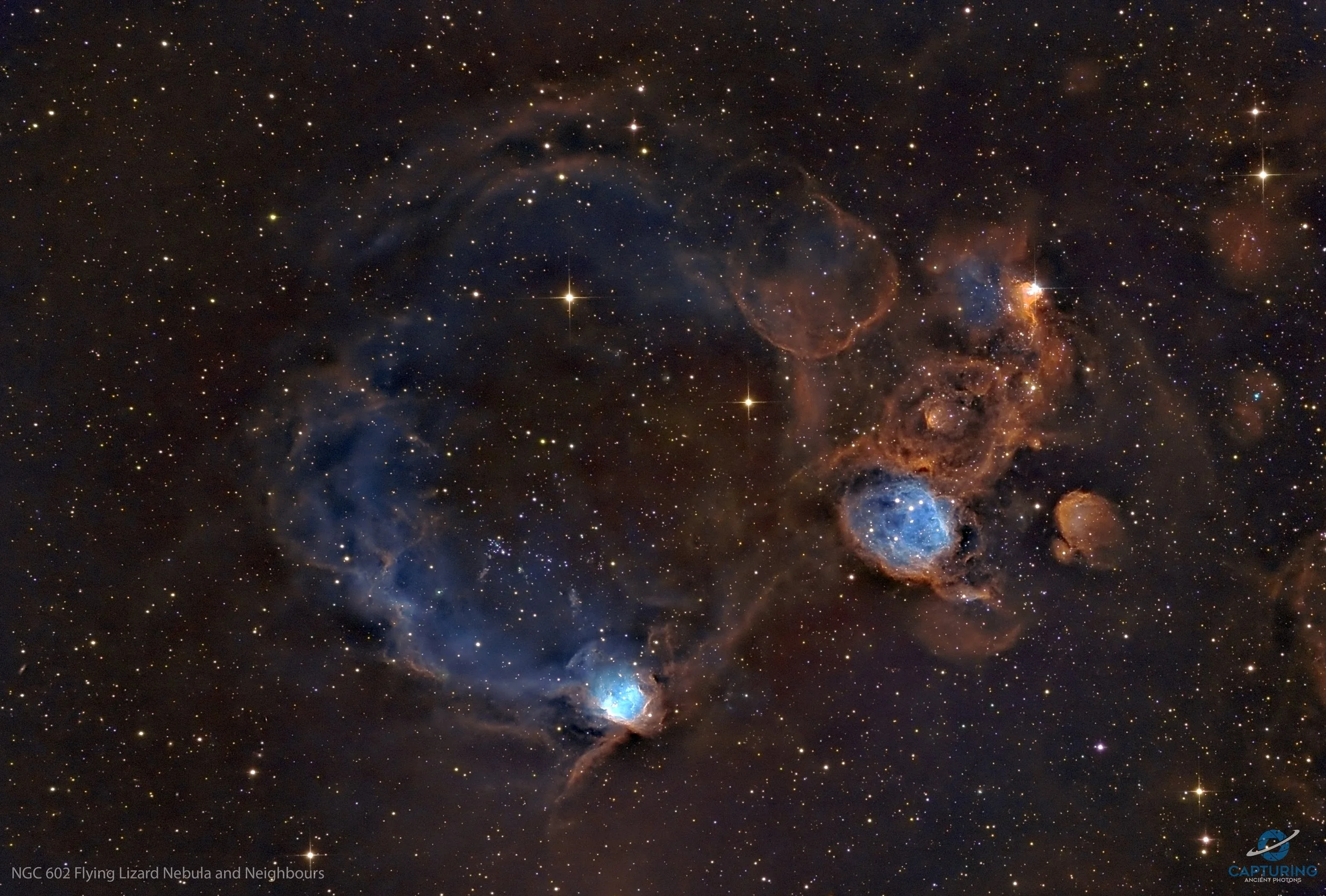
NGC 602 Flying Lizard Nebula and Neighbors
Image Description and Details :
NGC 602 or the Flying Lizard Nebula and its neighbors lie near the outskirts of the Small Magellanic Cloud (SMC) some 200,000 light-years away. 204 x 300s SHO subs shot @-10C spread across 5 nights for a total integration time of about 17hrs Equipment used:Skywatcher 10" f4 Newtonian 250PSkywatcher F4 Aplanatic Coma CorrectorSkywatcher NEQ6 Pro Hypertuned by Astronomy Academy PerthZWO ASI2600MM Pro Cooled CameraPrimaluce Sesto Senso2 Electronic FocuserWilliam Optics Uniguide 50/200mm guidescopeZWO ASI290MM Mini Guide CameraZWO Electronic Filter WheelAntlia Pro 36mm unmounted filtersRollon rolloff modified shed observatoryBortle 5Data acquisition software: NINA Astronomy SoftwareProcessing software: PixInsight and Photoshop CC
Copyright: Capturing Ancient Photons
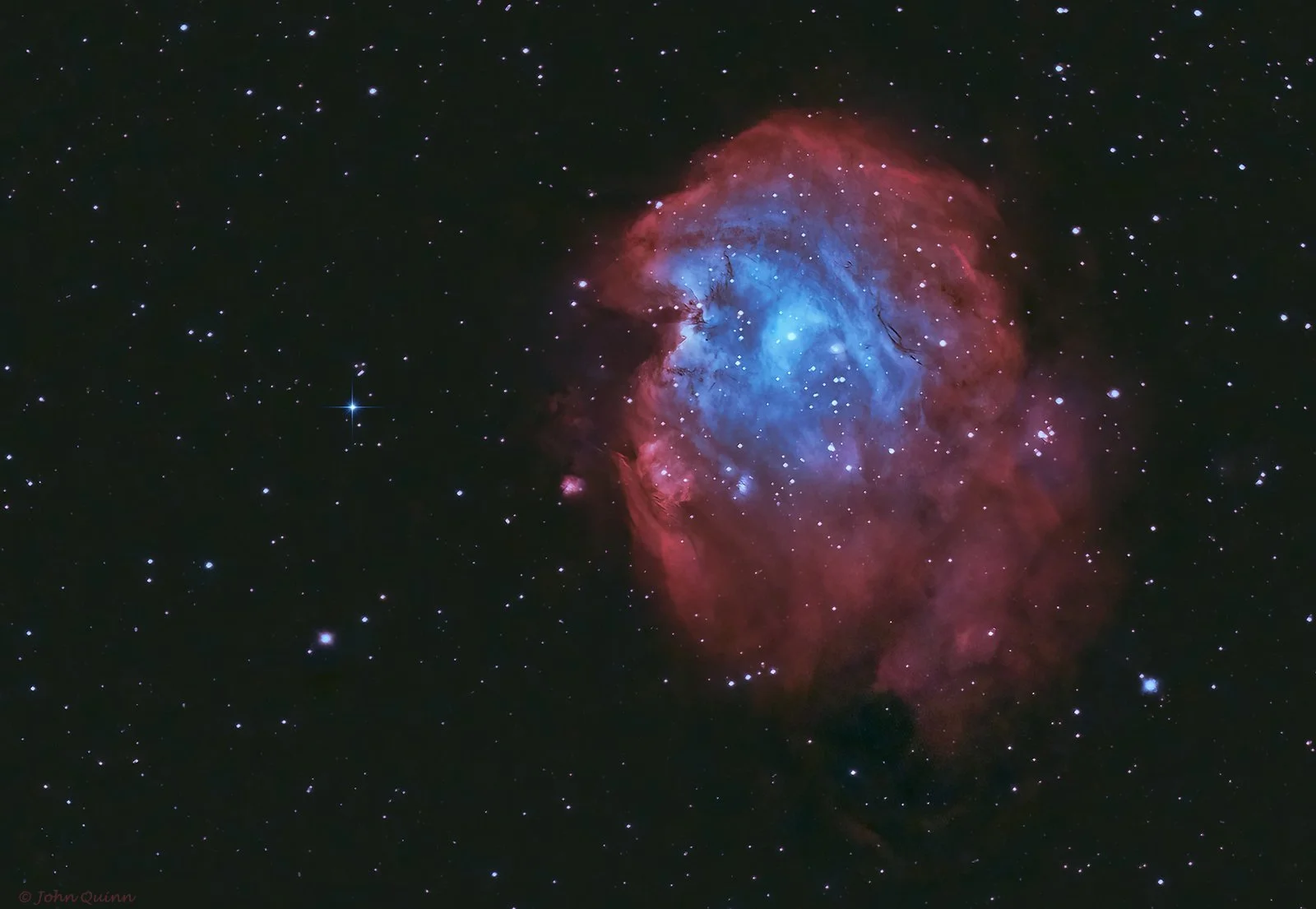
The Monkey Head Nebula
Image Description and Details :
NGC 2174, also known as the Monkey Head Nebula, is an emission nebula home to active star formation, and is about 6400 light years from Earth.Nearly 7 hours of data, RASA 8, ASI071 MC PRO, ASIAIR PRO, Radian Triad Ultra Quadband. EQ 6-R ProBortle 6
Copyright: John Quinn
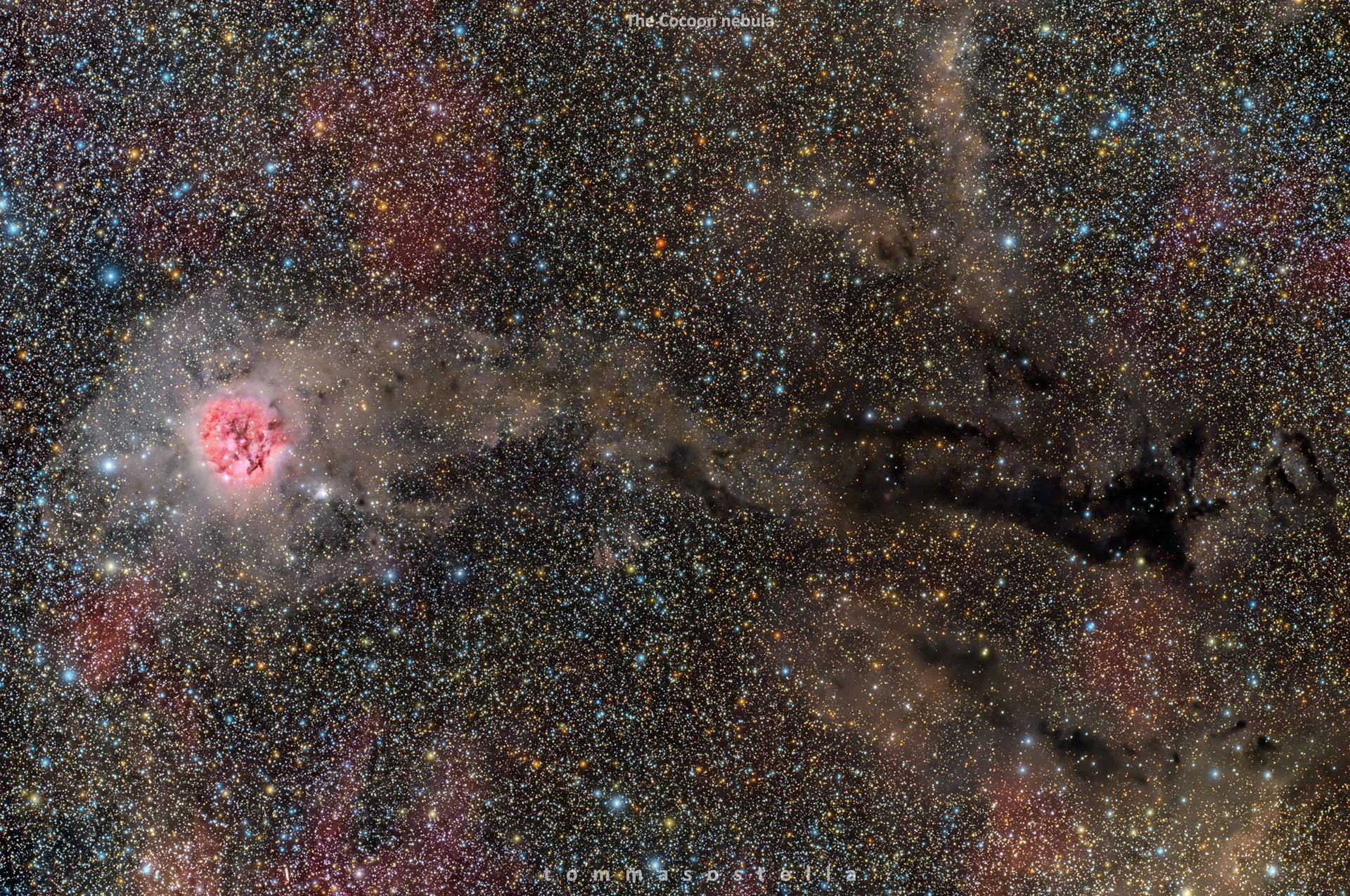
The Cocoon nebula & B168
Image Description and Details :
For this photo I integrated narrow field shots of 2018 (carried out with newton 200/800) with wide field exposures (carried out with apo triplet) of 2022.Lights were acquired in Taranto (Italy) in August 2018 and September 2022.Technical data--------------Total integration: 15hSky: Bortle 6Lights: 885x40s (2018, ZWO ASI 224) + 60x300s (2022, Omegon veTEC571)Telescope: Skywatcher 200/800 Wide Photo + TS PhotoLine Triplet FPL53 102@564mm Camera: ZWO ASI 224mc + Omegon veTEC571Mount: Skywatcher AZ-EQ6 GTFilters: Optolong L-ProProcessing: DeepSkyStacker, Photoshop CC, PixInsight
Copyright: Tommaso Stella
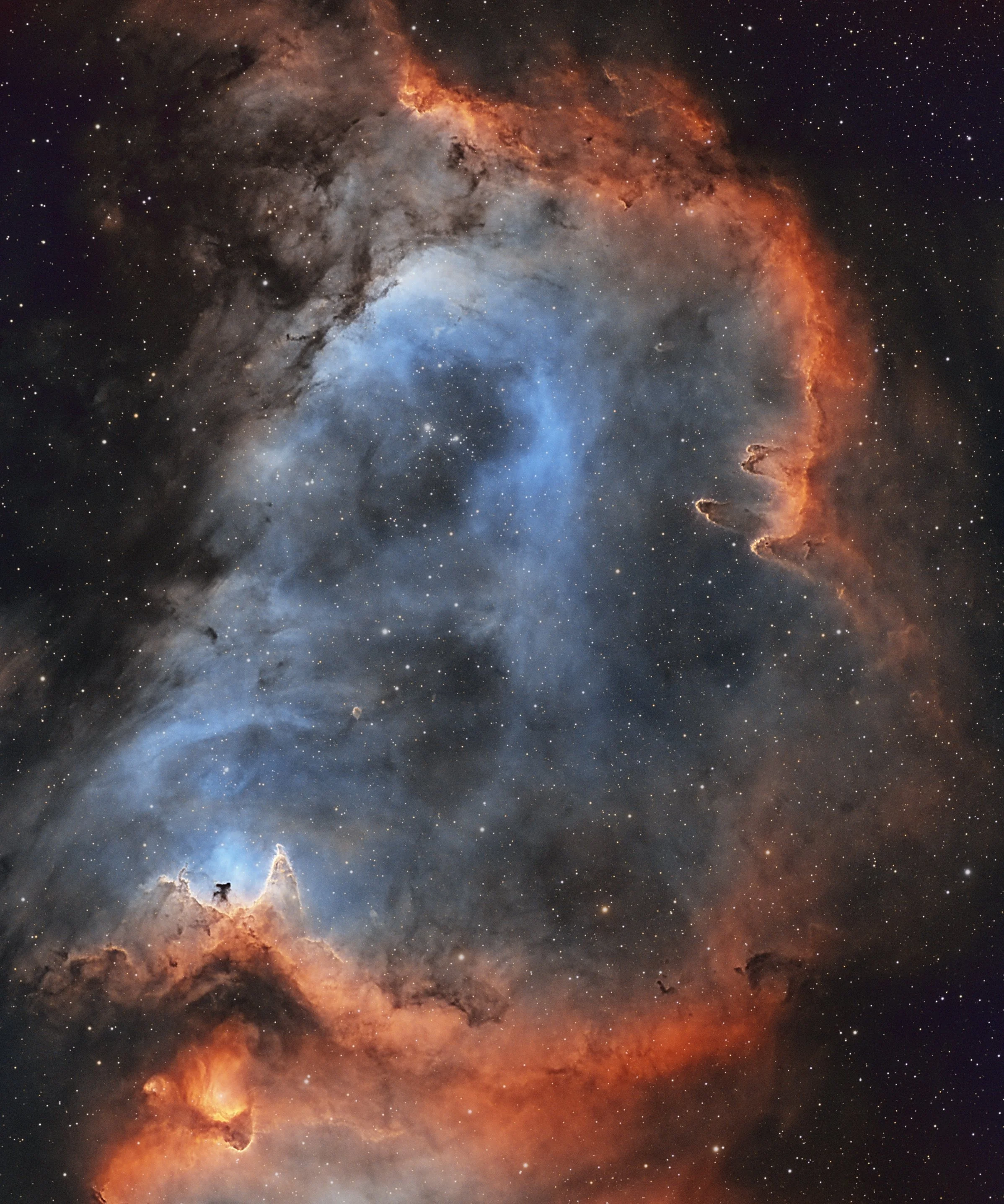
westerhout 5
Image Description and Details :
My longest integration yet. This is a total of 25.13hrs combined 5 minutes exposures on Ha/S2/O3 (not counting the 5% obligatory throw-away exposures). Image was taken using an Svbony 102ED scope paired with an ASI294mm through 2" 3nm Antlia filters. All mounted on an AM5 mount, guided by a Skywatcher 50ED+ASI120mini.
Copyright: Paul Capino
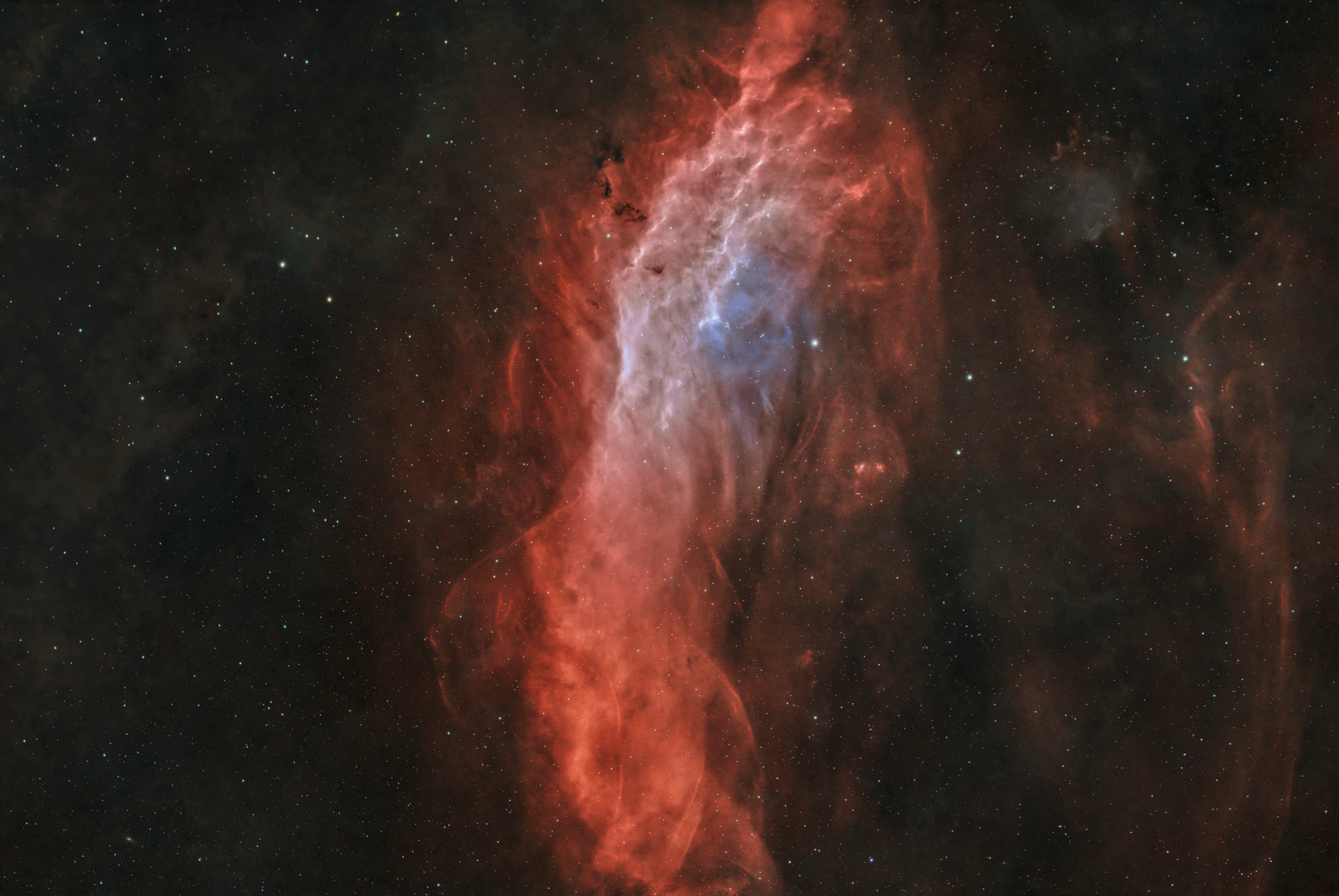
California Nebula
Image Description and Details :
The California Nebula. 110 hours of integration, imaged for 29 nights over the course of 2 months.It seems rare that I see images of the California Nebula with more than 40-50 hours, so I wanted to pile on a lot of data and see what details I could bring out.Imaging details:Imaging Telescope: OPT Telescopes TPO UltraWide 180 f/4.5Imaging Camera: ZWO Astronomy Cameras ASI2600MC ProMount: Sky-Watcher USA EQ6-R ProFilters:Baader Planetarium Fringe Killer 2"Optolong Astronomy Filter L-eXtreme 2"Accessories: ZWO ASIAIR Plus, ZWO EAFBaader Fringe Killer 2": 350×5″ (29′ 10″)Optolong L-eXtreme 2": 818×480″ (109h, 4min)
Copyright: Jeffrey Horne

M27
Image Description and Details : The Dumbbell Nebula is a planetary nebula located in the constellation Vulpecula at about 1227 light years. It was discovered by Charles Messier on 12 July 1764 and is the first observed planetary nebula in the history of astronomy. It is number 27 in his catalogue.
This object is particularly bright and has a very large apparent diameter, with the brightest part being 1/5 that of the Moon. With an expansion rate of 6.8 arcseconds per century, its age is estimated at 3 000 to 4 000 years.
The central star (the origin of the nebula) has an apparent magnitude of 13.5, which makes it difficult for an amateur astronomer to observe. It is a white dwarf with a very hot blue colour (85 000 K).
The peculiar shape of the luminous part of the nebula has earned it the name Dumbbell Nebula.
Looking at this nebula, we can see the end of our own solar system in 5 billion years.
Photo taken in South Portugal in Remote de France by the ARO team, from
04/08 to 28/09/22.
Set-Up: Astrosib RC 400 (F/D 8) on DDM 85 ASA mount. Camera Moravian G3 16200.
52 Hours in H,O,L,R,G,B
Copyright: Team ARO
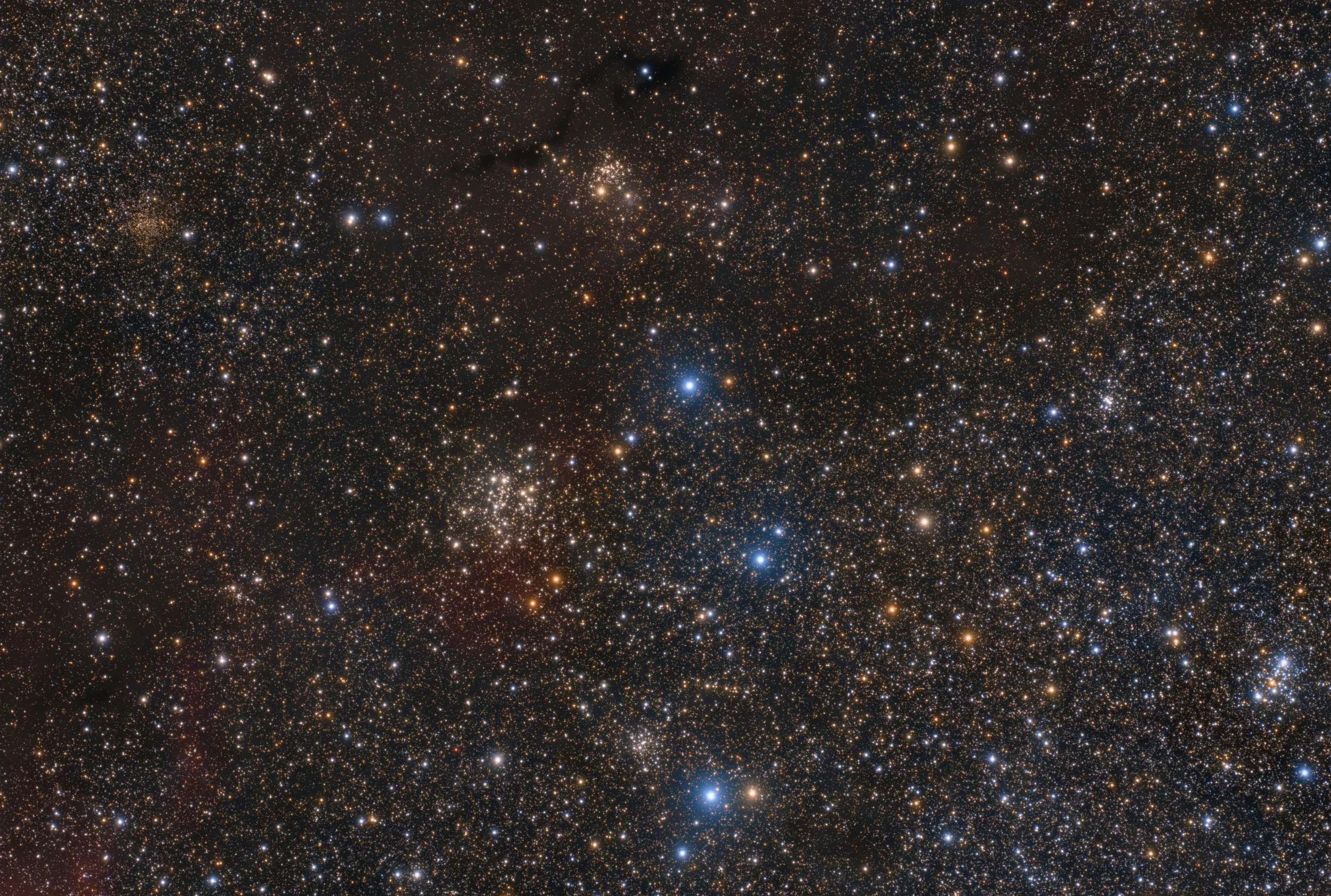
Cassiopeia’s "Open Clusters"
Image Description and Details :
A short trip to Cassiopeia has brought out this impressive star field. It is teeming with star clusters and galactic dust. Since there are delicate foothills of Ha areas in this region, I have decided to collect additional Ha data in addition to the LRGB data.Telescope: Takahashi FSQ-85EDCamera: ZWO ASI2600MM ProMount: Sky-Watcher EQ6-R ProFilters:Baader Blue (B-CCD) 36 mm · Baader Green (G-CCD) 36 mm · Baader H-alpha 6.5nm (CMOS-Optimized) 36 mm · Baader Red (R-CCD) 36 mm · Baader UV/IR Cut / Luminance 36 mmSupport:Takahashi Flattener for FSQ-85EDX (TKA37582)Guiding: Primaluce Lab 60mm Compact Guide scope, ZWO ASI120MM MiniDatum: 25. Oktober 2022 · 26. Oktober 2022 · 27. Oktober 2022 · 29. Oktober 2022 · 4. November 2022
Copyright: Stefan "Harry" Thrun
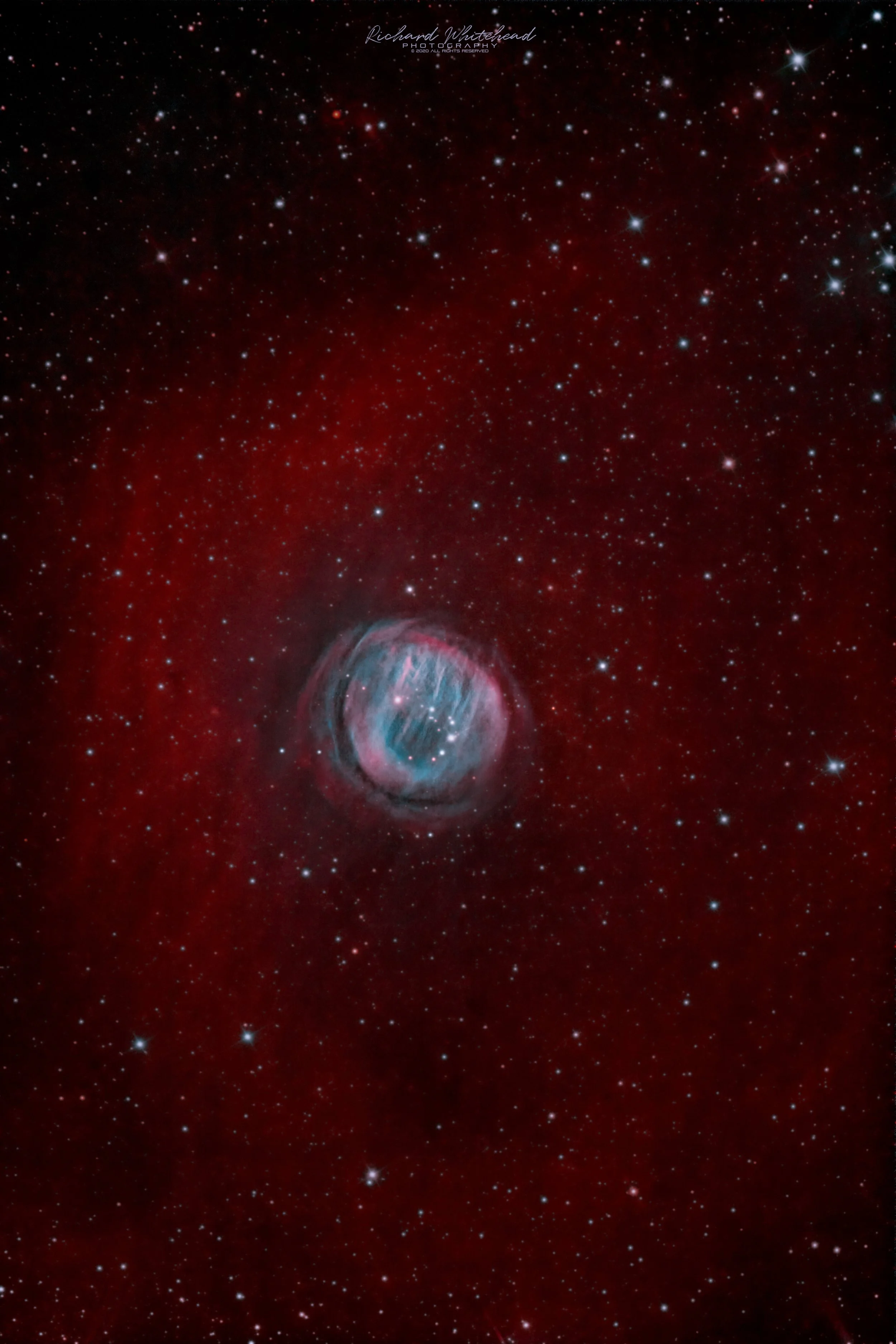
The Bear Claw Nebula
Image Description and Details :
The Bear Claw Nebula Sh2-200 is a very low brightness planetary Nebula discovered by Stuart Sharpless and incorporated into his catalog in 1959, although it wasn't until 2017 that it was spectroscopically confirmed as a planetary nebula!Planetary Nebulae are so called because to astronomers in years past, they looked disc-like, like a planet!.They are actually the remnants of a star reaching the end of its life and exploding into space, its outer layers, this will be the fate, one day of our sun.This is a very highly evolved and ancient planetary nebula.Someone has to call these objects, to me it looks more like a snow globe set adrift in a sea of glowing hydrogen ( that's the red background)Another fact that makes this image interesting is the halo of ionized Hydrogen gas that surrounds it. This is thought not to be linked to the planetary nebula, but the result of the extremely hot remnant star at its center ionizing the surrounding interstellar hydrogen.Tech stuffLocation: Animas, NMScope : Planewave CDK14Mount : Planewave L-350Camera : ZWO 6200 Mm Pro HOO ImageHa (Antlia 4.5nm) 25 x30 mins, OIII (Antlia 4.5nm) 25x30minsTotal Integration time 25 hoursProcessed in Pixinsight and PS
Copyright: Richard Whitehead 2022

NGC 225 The Sailboat Cluster
Image Description and Details :
SW 130PDSHeq5pro QHY268C Baader CMOS optimized 2" UV/IR Pegasus pocket powerbox Pegasus flatbox Beelink miniPC/Mango travel router 210x180" Gain 56 Offset 11 mode 1 Location: Mt. Parnon, GreeceShot with NINA processed in Pixinsight
Copyright: George Karantzalos