

AAPOD2 Image Archives
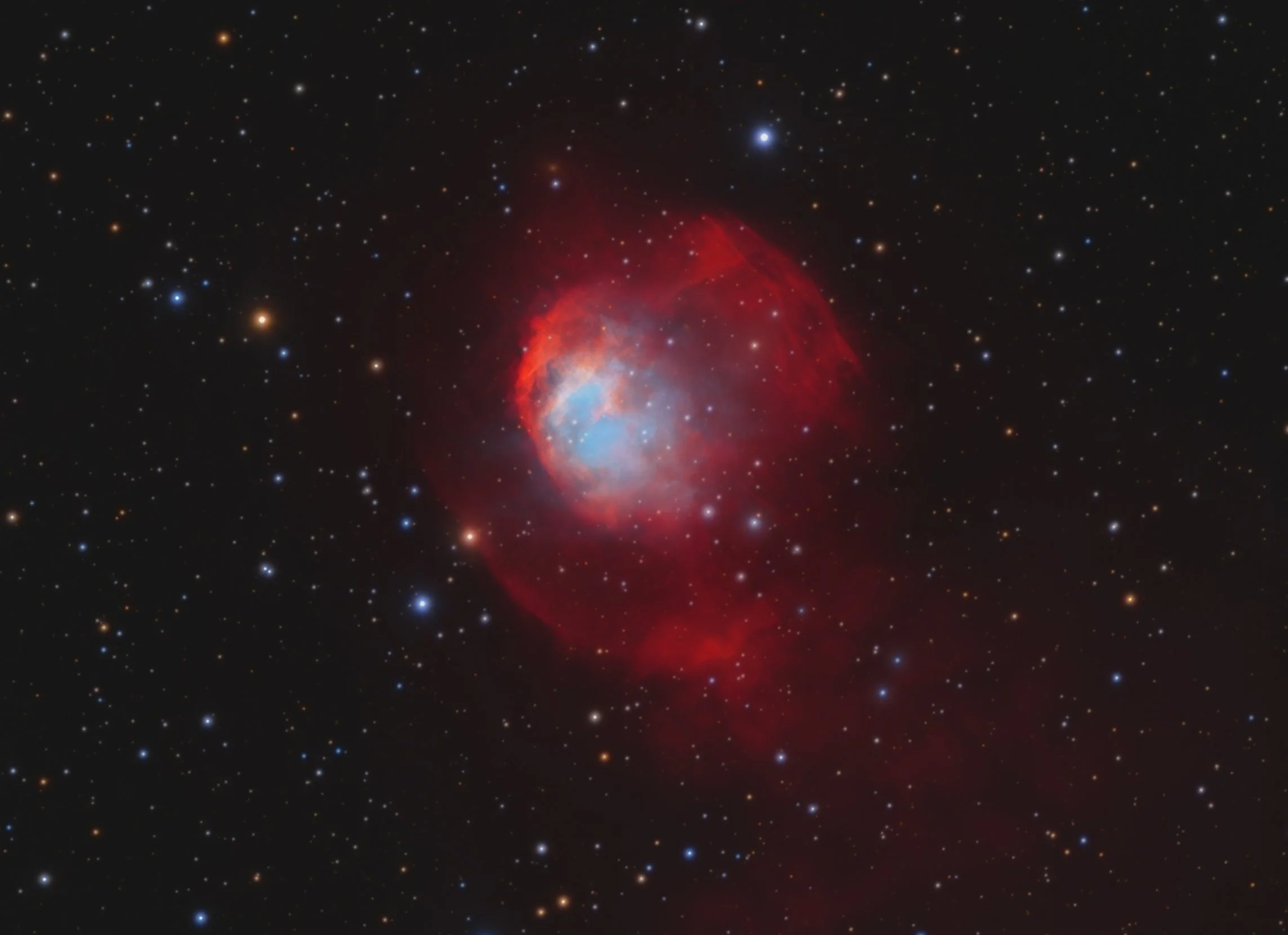
Strottner-Drechsler 163 / PNG 184.4+05.4
Image Description and Details : Strottner-Drechsler 163 / PNG 184.4+05.4
This candidate planetary nebula was discovered by our team in August 2022.
StDr 163 in the constellation Gemini is without doubt one of the most beautiful objects in the StDr catalogue.
The remarkable aspect of this nebula is that we can literally watch the structure expand.
The hot star in the centre is surrounded by a constantly growing envelope of ionised oxygen (OIII).
Gently, the blue OIII core breaks through the red cocoon of ionised hydrogen (H-alpha).
It is not known whether the reddish halo area around the nebula, which resembles two wings, belongs to the object itself, or whether it is interstellar material that is ionised and excited to glow by the potential white dwarf in the centre.
Discovery by my amazing friends Xavier Strottner and Marcel Drechsler. Data capture by myself and Sven Eklund from our remote observatories in Spain. Image processing by Marcel Drechsler.
Scopes: APM TMB LZOS 152 Refractors and Celestron C14 Edge HD
Cameras: QSI6120wsg8 and ZWO ASI6200MM Pro
Mounts: 10Micron GM2000 HPS and iOptron CEM120
A total of 76 hours 40 minutes (HaOIIIRGB)
More information at
Copyright: Copyright: Peter Goodhew, Sven Eklund, Xavier Strottner, Marcel Drechsler
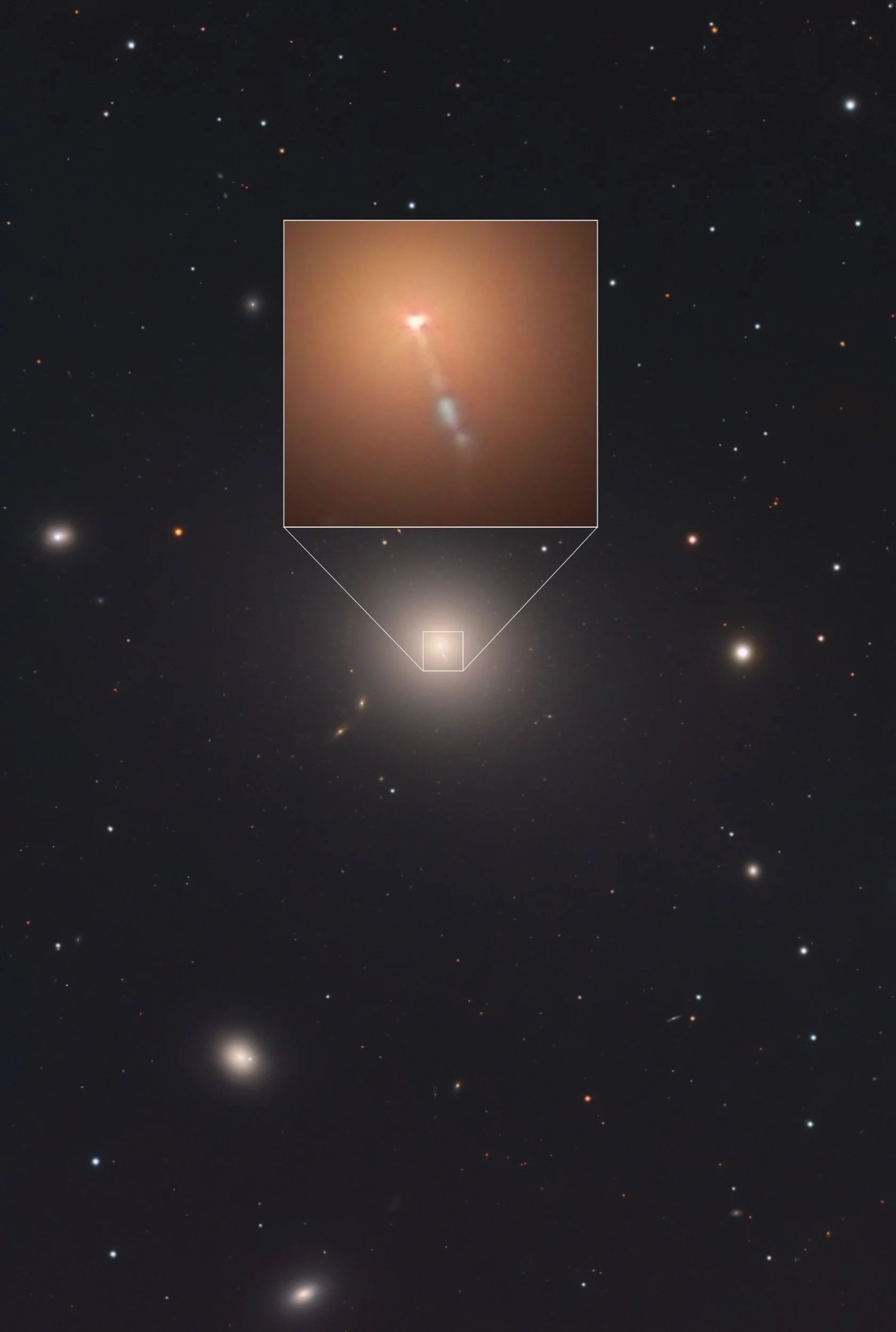
M 87 - Supermassive Black Hole relativistic jet
Image Description and Details : The supermassive black hole powering M87's core has a mass about 6.5 billion times that of the Sun and generates two jets of plasma in opposite directions that span thousands of light-years. The jet oriented towards the Earth is visible and appears blue / light blue while the other is extremely weak and is not visible. The great luminosity and blue tint of the jet are due to the relativistic effect called "relativistic beaming" or "Doppler boosting" which occurs because particles oriented towards our line of sight are accelerated by the black hole up to 99% of the speed of light and simultaneously emit radiation.
Scope: Meade LX200 10” ACF Camera: QHY268m Filters: Astrodon LRGB Tru-balance Mount: 10 Micron GM2000 HPS II
Processing: PixInsight Exposure: 10h 30m
Copyright: Antonio Ferretti & Attilio Bruzzone
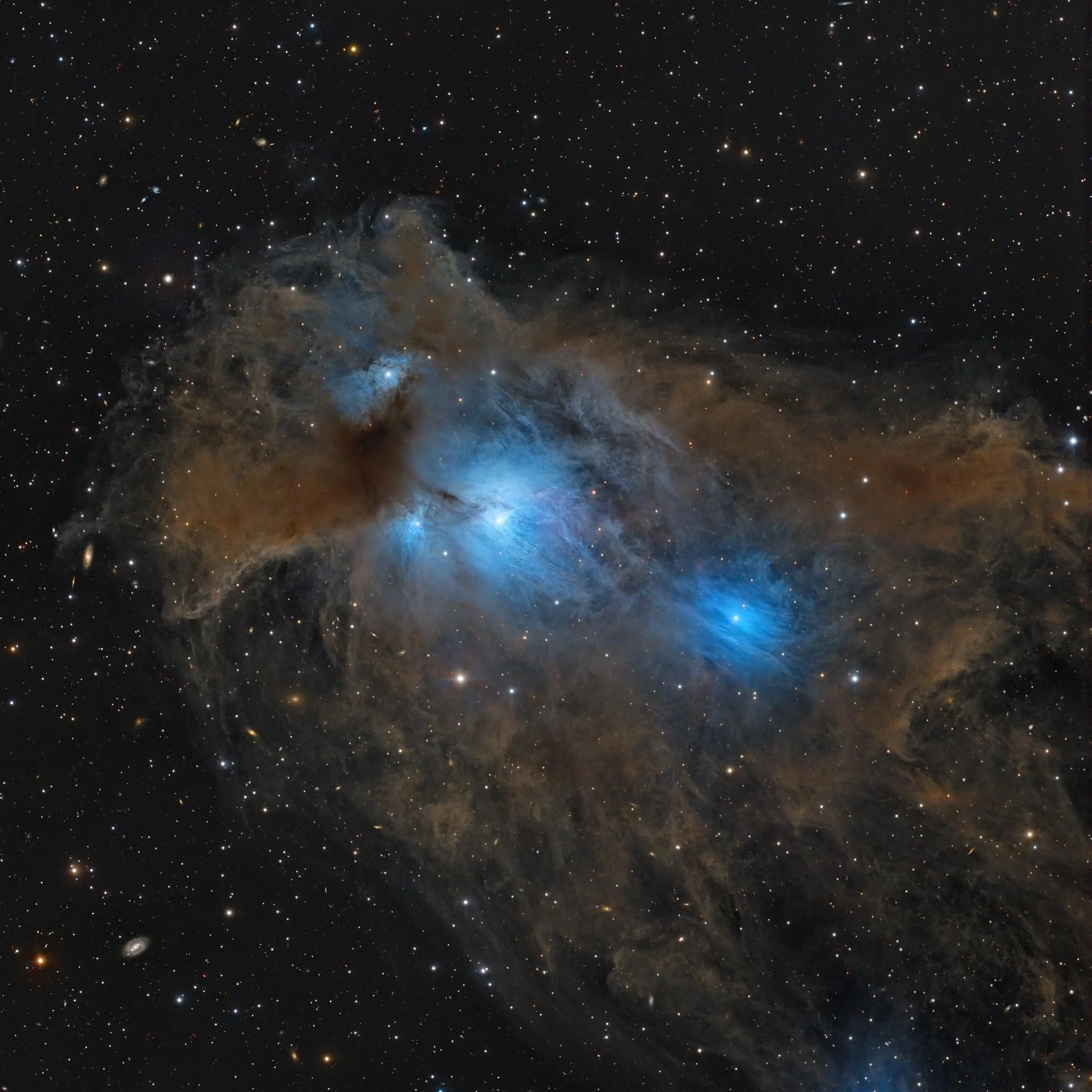
NGC 5367
NGC 5367 is a reflection nebula around 2500 light years away in Centaurus. It is embedded in the Cometary Globule CG 12.
The reflection nebula is lit by a double star H4636 which are type B4 and B7 stars.
Imaged in LRGB on our Planewave CDK 700 at Observatorio El Sauce, Chile.
Image Processing: Mike Selby and Mark Hanson
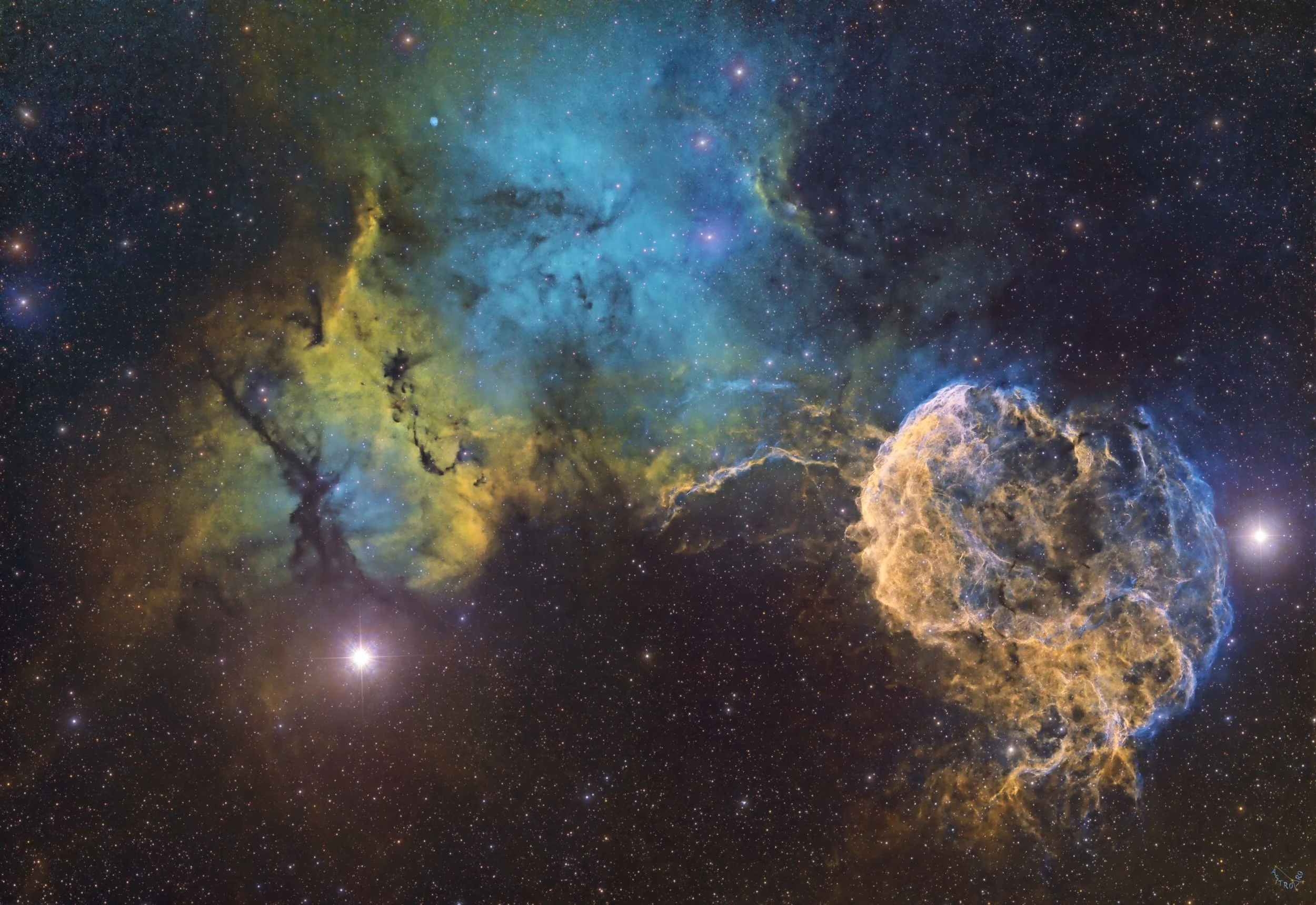
IC 443
Image Description and Details : On the right of the picture, IC 443, or SNR G189.0+03.0, is a supernova remnant located in the constellation of Gemini, with a large angular size (45 minutes of arc, or one and a half times the apparent diameter of the Moon), and quite luminous both in X and in radio. Its distance is rather uncertain and is estimated to be between 2800 and 8000 light years, while its age varies between 3000 and 30 000 years.
The supernova afterglow IC443, with a golden colour indicates that the Ha and SII are strongly interacting, and OIII surrounds a large part of the object. OIII has a slightly faster expansion rate.
On the left of the picture, the emission nebula SH2-249, which is not in the same plane as Ic 443. It is at about 5200 AL There is also a very small nebula in the field.
Photo taken in South Portugal . Set Up FSQ 106 on EQ6 Pro mount. Camera ZWO Asi 1600MM .
Photo in SHO, LRVB; 80 hours of exposure, double panels.
PixinSight processing, Photoshop
Copyright: Team ARO

Sunspots in Highlights
Image Description and Details : Sunspots are temporary phenomena that occur on the surface of the Sun, which appear as dark spots and are regions of reduced temperature relative to the regions around it.
In the week of February 27, 2023, the Sun had several sunspots, with the highlight of AR 3234, a very beautiful group of sunspots, with a beautiful sunspot standing out, with many details.
The group of sunspots AR 3237, on the other hand, helped the composition of the photo, highlighting with beautiful groups of sunspots.
The photo was captured on the same morning of February 27, 2023, in 02 different telescopes (with an ASI290MM camera + Baader white light filter + Baader Solar Continuum Filter): an 11” SCT (C11 - in the details with photos on the right) and an APO 80mm composing a mosaic of 02 panels in full disk, defining the context of the location of the large groups of highlighted sunspots.
Its yellowish coloring is artificial, as the capture is made with a monochromatic camera with a white light filter, enhancing these beautiful images.
This composition with full disk (on the left) and large sunspots highlighted (on the right) presents a beautiful scenario of that beautiful moment.
Copyright: Natan Fontes
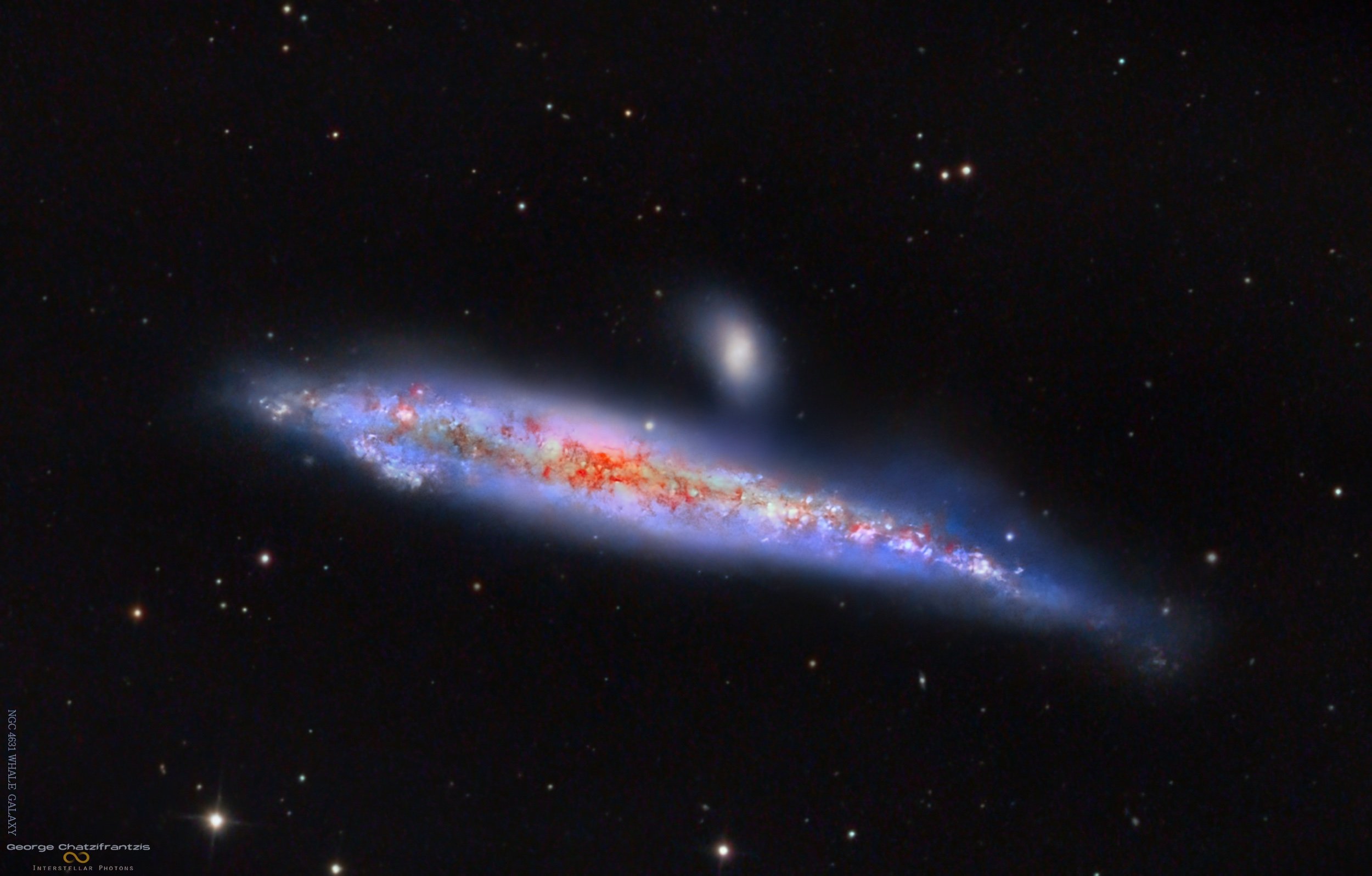
NGC 4631 The Whale Galaxy
Image Description and Details : NGC 4631 (also known as the Whale Galaxy or Caldwell 32) is a barred spiral galaxy in the constellation Canes Venatici. This galaxy's slightly distorted wedge shape gives it the appearance of a herring or a whale, hence its nickname.Because this nearby galaxy is seen edge-on from Earth, professional astronomers observe this galaxy to better understand the gas and stars located outside the plane of the galaxy.
Equipment :
OTA : Newton 12 f4
Mount : EQ8 pro
Camera : Atik Apx60
Reducer : Riccardi 2.5" Wynne Newtonian coma corrector
Focuser : Pegasus Astro Prodigy
Guiding : Stellarvue sv80st2 Lodestar X2
Filters : Astronomik CLS
Exposure:
L : 2 h
RGB : 2h
Location :
Chalkidiki (bortle 4)
Copyright: Copyright : George Chatzifrantzis
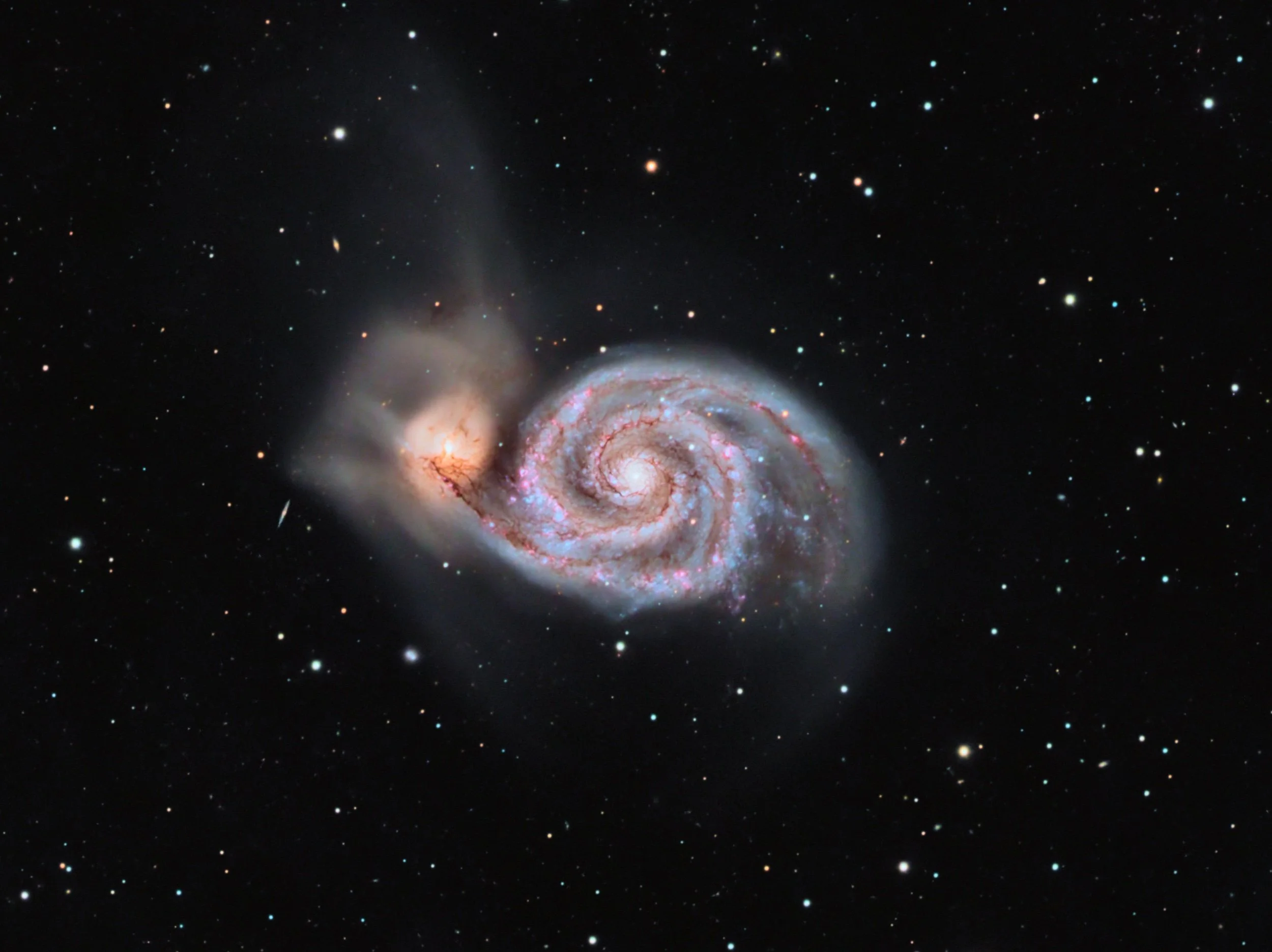
The Glorious Whirlpool (M51)
Image Description and Details : Hi. Here is my image of M51 from my Bortle 6 backyard. I took this with the following equipment over the last 2 weeks:
C11 Edge HD
Hyperstar V3
Asi1600mm
Filters: LRGBHa
Processed entirely in Pixinsight
Total exposure was 24.9 hours.
This is one of the most detailed image of this object I have seen from an amateur. Please let me know if any more info is required.
Abdur Anwar
Cochrane, Alberta
Copyright: Abdur Rahman
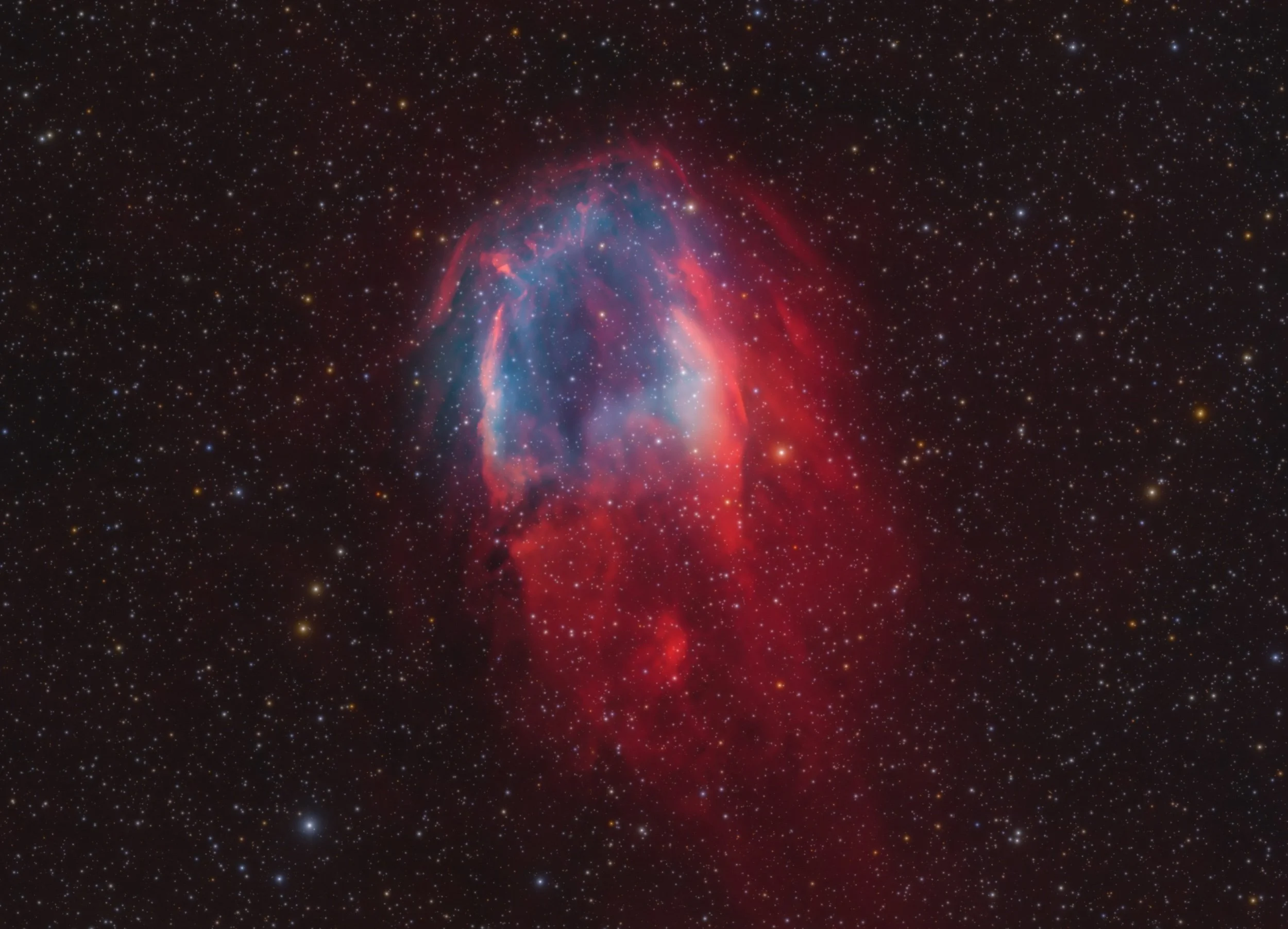
A gem in Auriga -Pa J0637.4+3327
Image Description and Details : Name: Pa J0637.4 +3327
Catalog number: PNG 181.2+11.8
Coordinates: 06 37 28.2 +33 27 07.5 (J2000)
Pa J0637.4 +3327 is a candidate for a planetary nebula in the constellation Auriga and this is the first image of this nebula ever taken.
The object was discovered by the famous and highly successful amateur astronomer Dana Patchick back in December 2018.
Pa J0637.4 +3327 consists of a hot star of magnitude 17.19 surrounded by a nebula about 15 arcminutes in diameter. The total extent of the nebula in H-alpha is probably 30 arcminutes or more.
If a spectrum confirms that it is a true planetary nebula, then Pa J0637.4 +3327 is an exceptionally large representative of its class, making it additionally a true rarity. Optics: Stellarvue SVX 152T, Camera: ZWO ASI 6200MM pro. RGB, 2 hours each filter, Ha 25hrs, OIII 27.6hrs for a total imaging time of 58hrs 40min. Data Credit: Jonathan Talbot, Processing Credit: Marcel Dreschler
Copyright: Copyright: Jonathan Talbot, Marcel Dreschler
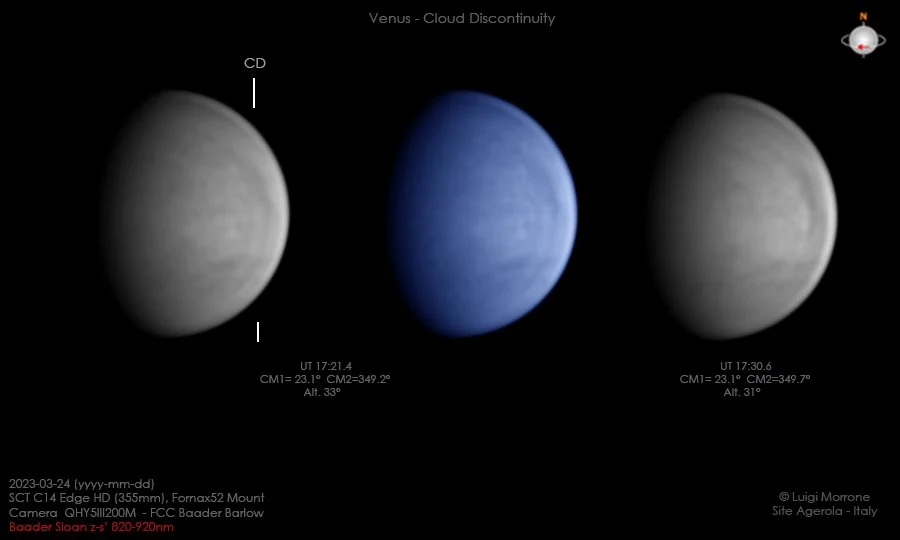
Venus Cloud Discontinuity
Image Description and Details : Venus March 24 2023
Under good seeing conditions, average transparency.
The Cloud Discontinuity on the right limb can be seen.
Setup:C14 Edge HD, Fornax52 mount, QHY5III200M,FFC Badder Barlow, Baader Sloan z-s' 820-920nm, Chroma U- Bessel
Agerola-Amalfitan Coast-Italy
Copyright: luigi morrone
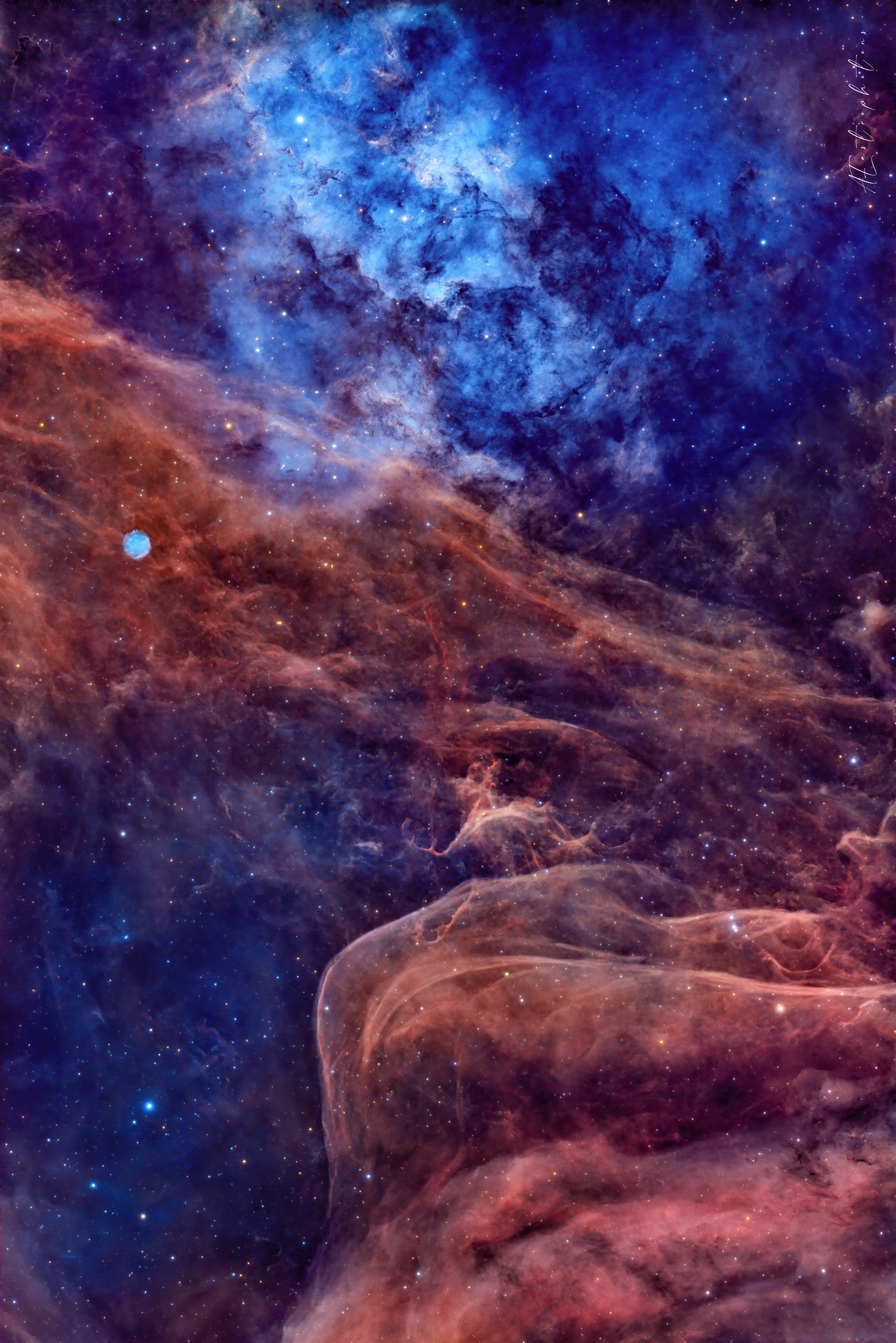
Sharpless 115 & 116 and Co in Cygnus
Image Description and Details : This image features many interesting celestial objects in Cygnus, the brightest star in that constellation. First and foremost, there are two Sharpless objects known as SH2-115 & SH2 116. The first one is a very large, faint emission nebula approximately 2 degrees northwest of Deneb. Its neighbor, SH2-116, is a small round planetary nebula, featured also in this image. Secondly, they are many LBN objects in the field of view – too much ! Let’s pause there for the time being….
Copyright: @ae_astrophotoons
Location: Spain, my remote observatory
Telescope: Takahashi TOA 130 NFB
Camera: ASI 6200 mm pro
Mounts: 10 Micron 1000 HPS
Filters:
-Chroma Blue 50 mm
-Chroma Green 50 mm
-Chroma Red 50 mm
-Chroma H-alpha 3nm Bandpass 50 mm
-Chroma Sii 3nm Bandpass 50 mm
-Chroma Oiii 3nm bandpass 50mm
Integration time: 22H
Copyright: Aygen Erkaslan

LUNAR OCCULTATION OF VENUS
Image Description and Details : I spend 1.5 hours to capture the distance between moon and venus at Kolkata, India from 6:02 pm to 7:36 pm... Here 15 images stacked that shows from the Rise of Venus to go far away...
Copyright: Shreya Roy
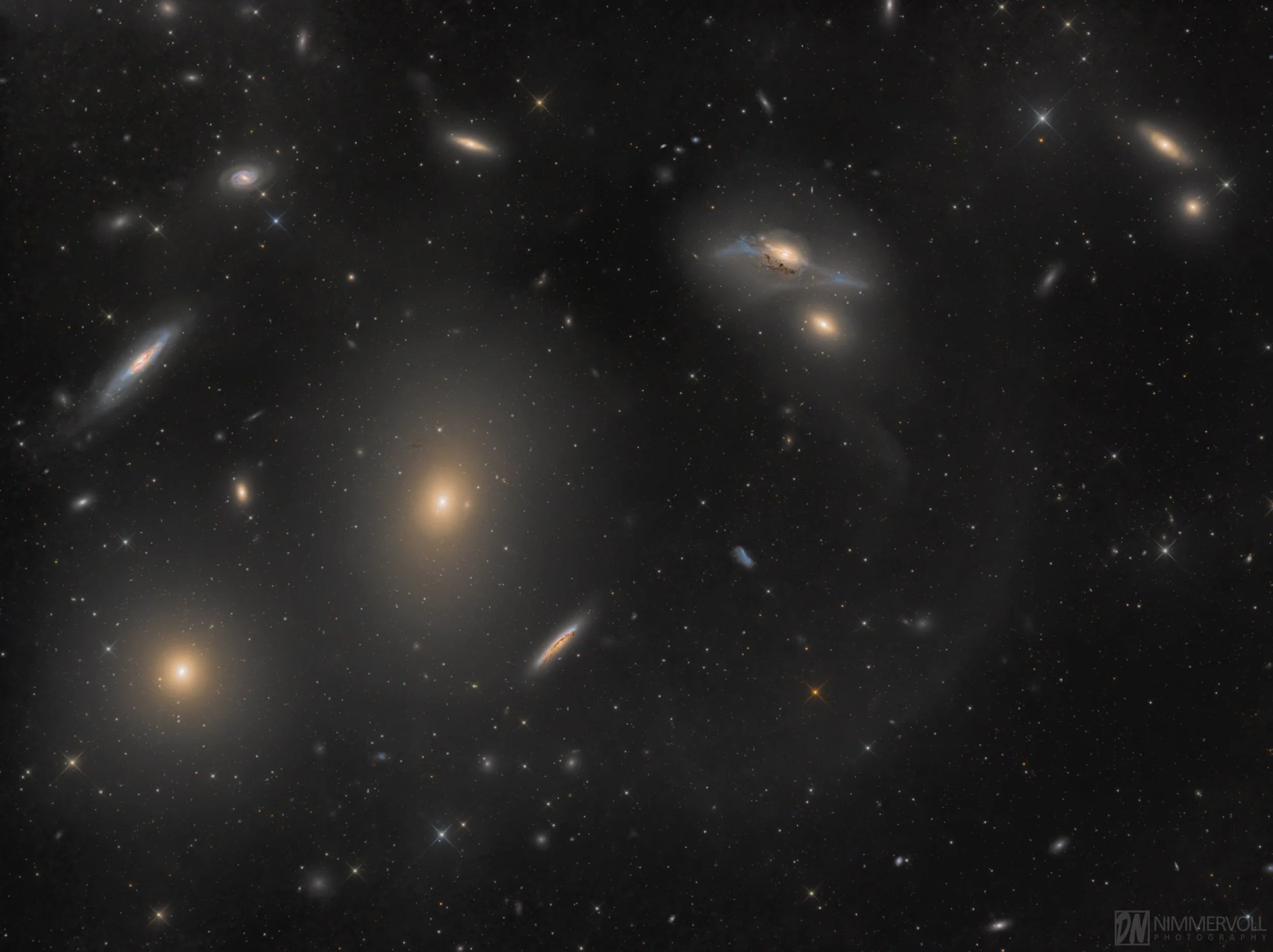
Beacon in the dark universe
Image Description and Details :RECORDING DATA:
Object: Markarian chain
Date taken: March 2023
Distance: Between 33 and 98 million light years
Exposure: RGB each 73 x 120 sec. / Gain 56 at -15 °C
Luminance: 387 x 150 sec / Gain 0 at -15°C
Total: 23.4 hrs
Calibration: BIAS / Flats / DarkFlats
Mount: Skywatcher EQ6-R PRO
Telescope: Lacerta 10″ Fotonewton 250/1000
Corrector: Pál Gyulai GPU coma corrector
Filter: Antlia LRGB-V Pro
Camera: QHY268m
Guiding: QHY OAG with QHY5III462c and PHD2
Software: APP/PI/Photoshop CC
Copyright: Daniel Nimmervoll
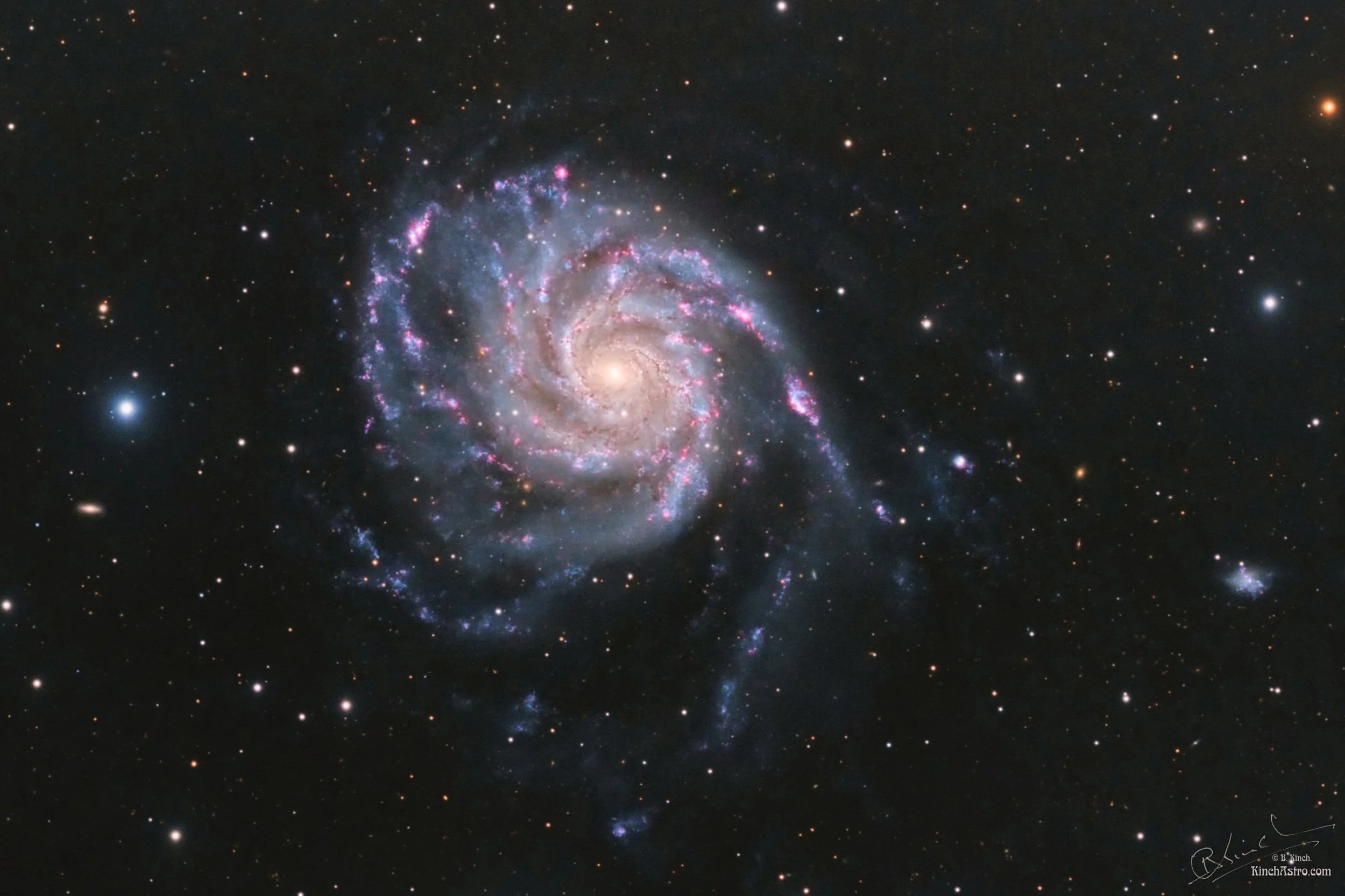
M 101 - Pinwheel Galaxy
Image Description and Details : The Pinwheel Galaxy (also known as Messier 101, M101 or NGC 5457) is a face-on spiral galaxy distanced 21 million light-years (six megaparsecs) away from Earth in the constellation Ursa Major. Discovered by Pierre Méchain on March 27, 1781, it was communicated to Charles Messier who verified its position for inclusion in the Messier Catalogue as one of its final entries.
M101 is a large galaxy, with a diameter of 170,000 light-years. By comparison, the Milky Way has a diameter of 100,000 light years. It has around a trillion stars, a little more than twice the number in the Milky Way. It has a disk mass on the order of 100 billion solar masses, along with a small central bulge of about 3 billion solar masses.
M101 has a high population of H II regions, many of which are very large and bright. H II regions usually accompany the enormous clouds of high density molecular hydrogen gas contracting under their own gravitational force where stars form. H II regions are ionized by large numbers of extremely bright and hot young stars; those in M101 are capable of creating hot super-bubbles.
M101 is asymmetrical due to the tidal forces from interactions with its companion galaxies. These gravitational interactions compress interstellar hydrogen gas, which then triggers strong star formation activity in M101's spiral arms that can be detected in ultraviolet images.
Imaging telescopes or lenses: Takahashi FSQ130ED
Imaging cameras: QSI 6120i
Mounts: Takahashi EM 400 Temma 2M
Guiding telescopes or lenses: Takahashi FS60CB
Guiding cameras: QHY CCD QHY 5 II
Focal Extender / Reducer: None
Software: Sequence Generator Pro SGP (for capture) PHD 2 (guiding), Astro Pixel Processor & PixInsight,
Filters: Astrodon LRGB Astrodon Ha (3nm)
Dates: 3rd Mar 2019 - 8th Mar 2019 AND 22nd March 2023
Copyright: Brendan Kinch
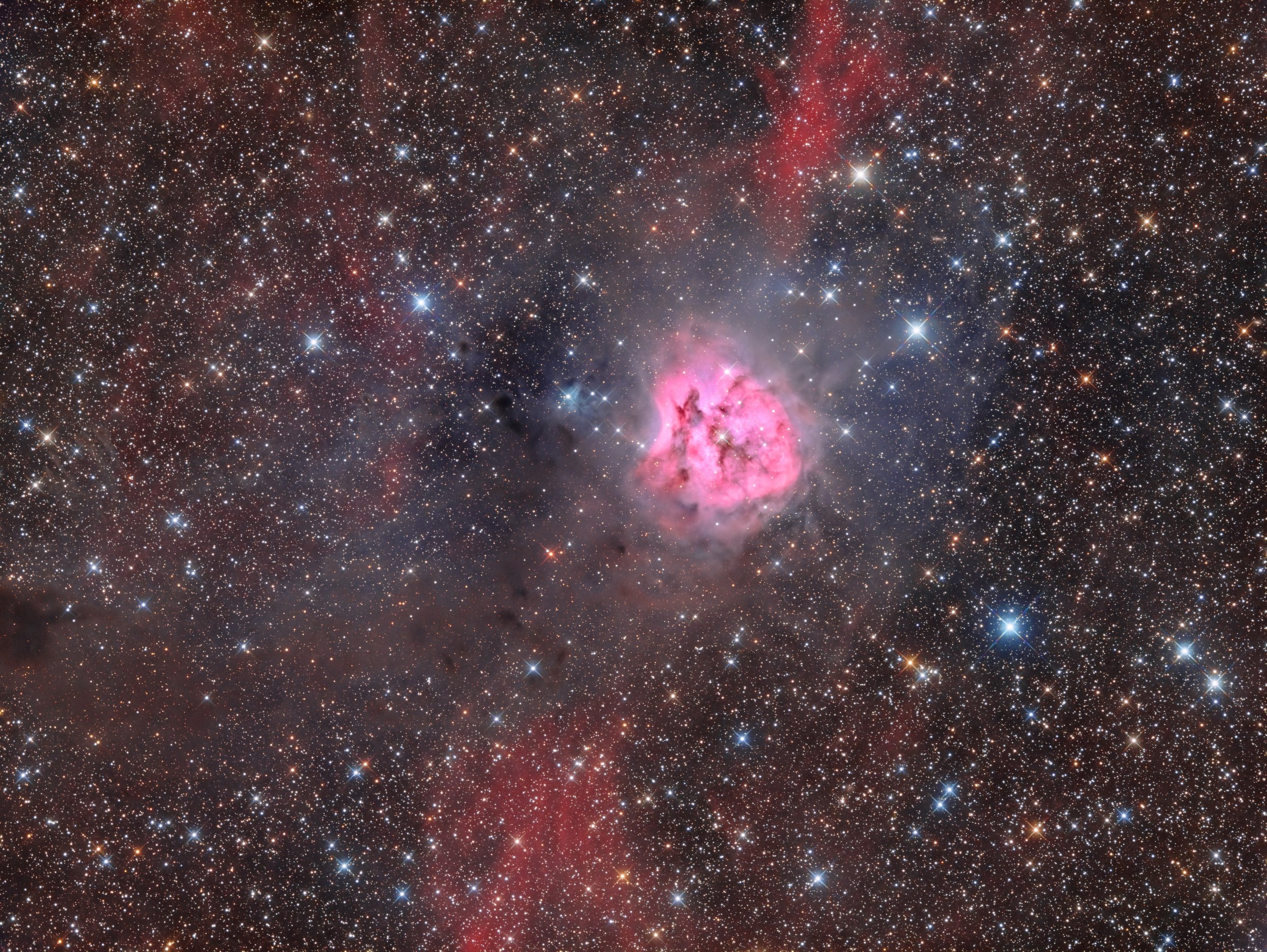
IC 5146 - COCCON NEBULA
Image Description and Details :
This photo of IC5146 was taken over several nights between August and September 2022 from the south of France.
A 200/800 newton telescope and a ZWO ASI 1600MM pro camera were used.
Antlia 3nm Narrowband H-alpha 1.25": 280×240″(18h 40′) (gain: 139.00) f/3.8 bin 1×1
ZWO 1.25" R: 60×180″(3h) (gain: 0.00) f/3.8 bin 1×1
ZWO 1.25" V: 60×180″(3h) (gain: 0.00) f/3.8 bin 1×1
ZWO 1.25" B: 60×180″(3h) (gain: 0.00) f/3.8 bin 1×1
ZWO 1.25" Lum zwo 1.25" Lum: 250×180″(12h 30′) (gain: 0.00) f/3.8 bin 1×1
Integration:
40h 10′
Copyright: PUIG Nicolas
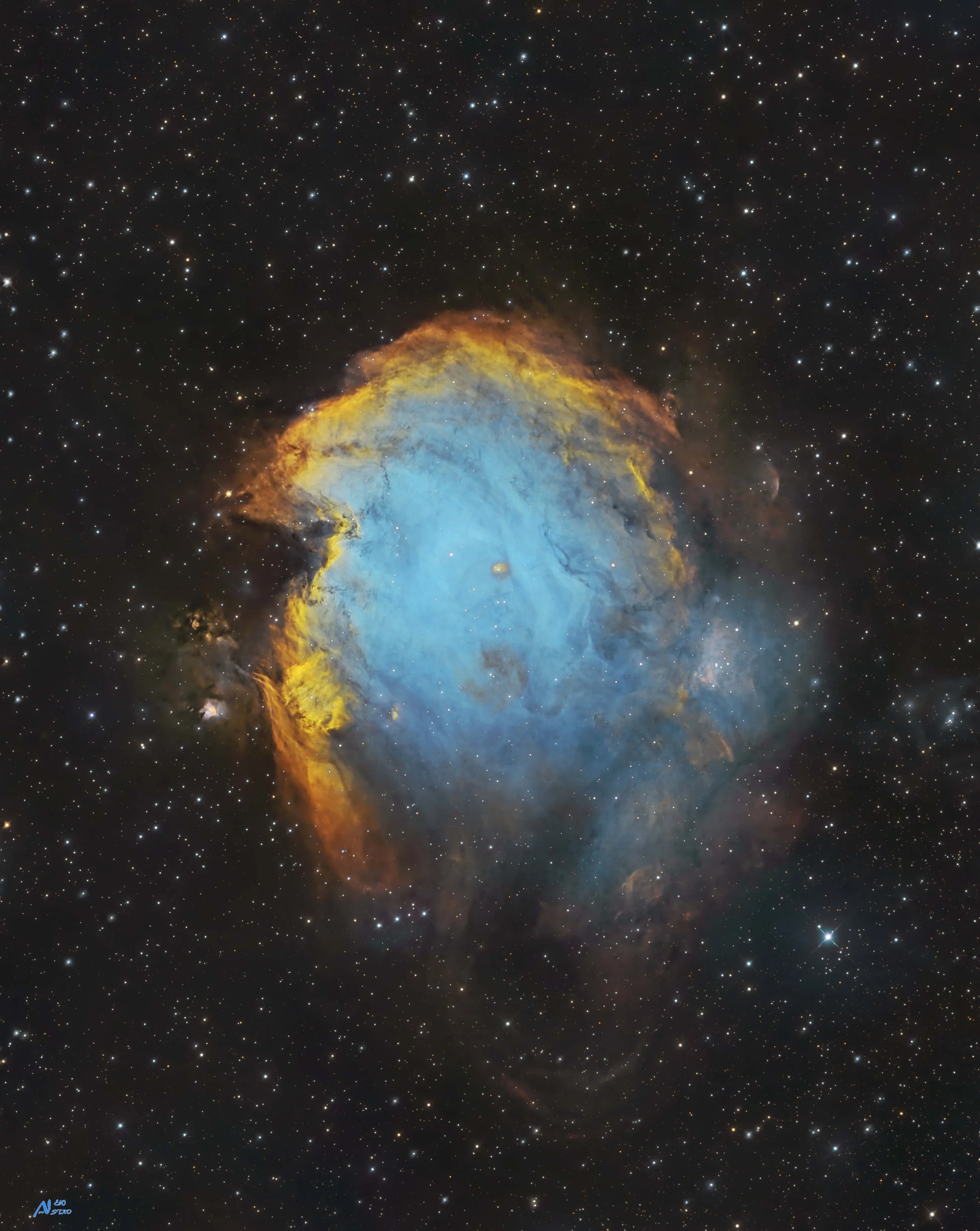
Ngc 2174
Image Description and Details : NGC 2174 is an emission nebula located in the constellation Orion, and is also called the Monkey Head Nebula. NGC 2174 contains the open cluster NGC 2175 whose distance is known. According to the WEBDA database, this cluster is about 1,627 pc (∼5,310 a.l.) from the solar system.NGC 2174 has a size of 62 a.l.
Photo taken in France (Normandy). Set up Newton Skyvision 250/900 F/D= 3.6 on Eq8 mount.
Camera ZWO asi 6200 MM .
24 hours of acquisition with S,H,O and R,G,B filters
Copyright: Francis Bozon
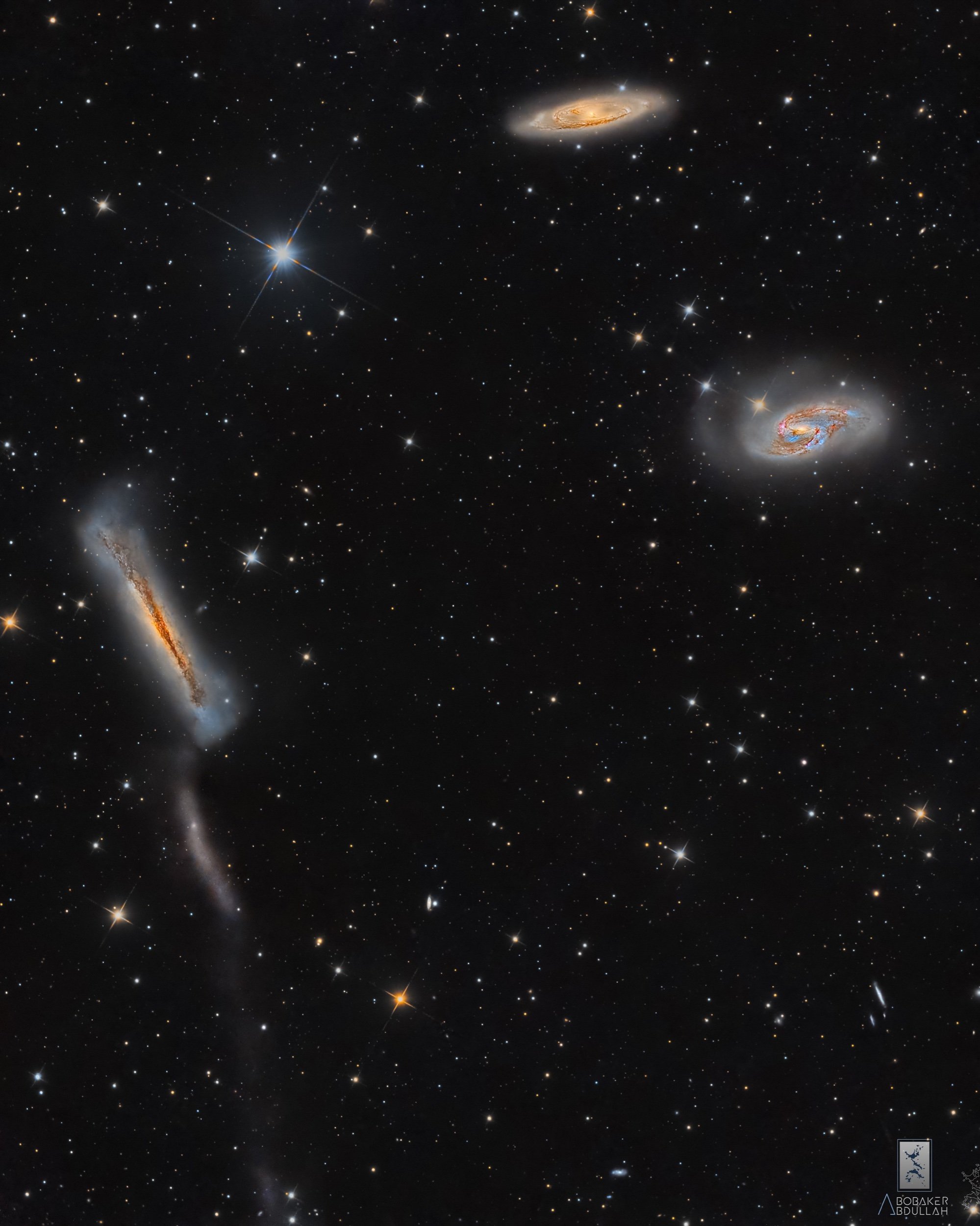
Leo Triplet with Tidal Tail
Description:
Far from home, under a dark and clear sky, I had to drive 3 hours from my light polluted city, "Jeddah" to capture one of the most gorgeous targets in the sky, the Leo Triplet Galaxies with the beautiful tail of NGC3628 Galaxy. I wasn't sure if the night would be cloudy or not, I wasn't sure if it was a safe place or not, but I just packed my rig and drove to the place. Fortunately, I found a nice shepherd living there so I stayed with him, the sky was crystal clear, and the place was safe. I was able to collect 6 hours of LRGB data until the cloud passed by. But, since the sky was too dark and clear, I was able to bring out a lot of nice and breathtaking details of this beautiful region of the sky. I believe it's my best deep sky capture to date. As we can see in the image, there are three main Galaxies which are M66, M65, and NGC3628 with its 300,000 light-years long tidal tail. These Galaxies are about 35 million light year away from Earth in the constellation Leo.
Location:
Saudi Arabia, West of Saudi Arabia
Light pollution Bortle 2 (SQM 21.9)
Date: March 17th, 2023
Equipment:
- ASI2600MM Pro
- iOptron RC6
- Skywatcher EQ6-R Pro
- X0.67 Reducer
- Antlia 36mm LRGB
- ESATTO ROBOTIC FOCUSER
Integration:
- L: 62X180" (3.1 hrs)
- RGB: 20X180" (1 hr) / Each
Total: 6.1 hours
Copyright: Bakry Abdullah
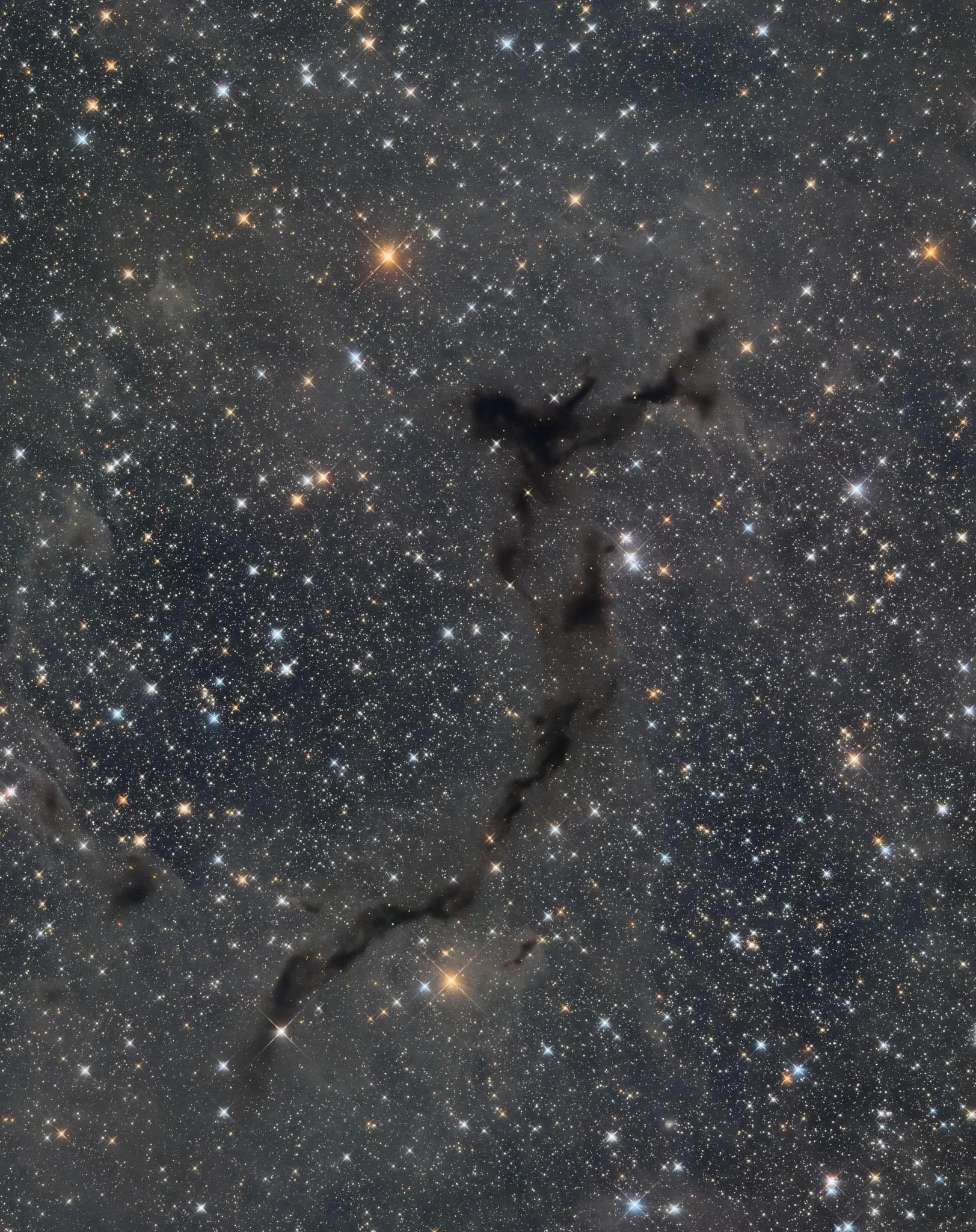
LDN1082
Here is the seahorse nebula - LDN1082
This is dark nebula located 1200 light years away. It is visible in the constellation Cepheus near the flying bag and the squid nebula.
R : 56 x 120″
G : 40 x 120″
B : 40 x 120″
L : 247 x 120″
Takahashi Epsilon 160ED
Ioptron GEM45
ZWO ASI 2600MM-Pro
Baader Filters
Copyright: Julien Dufour
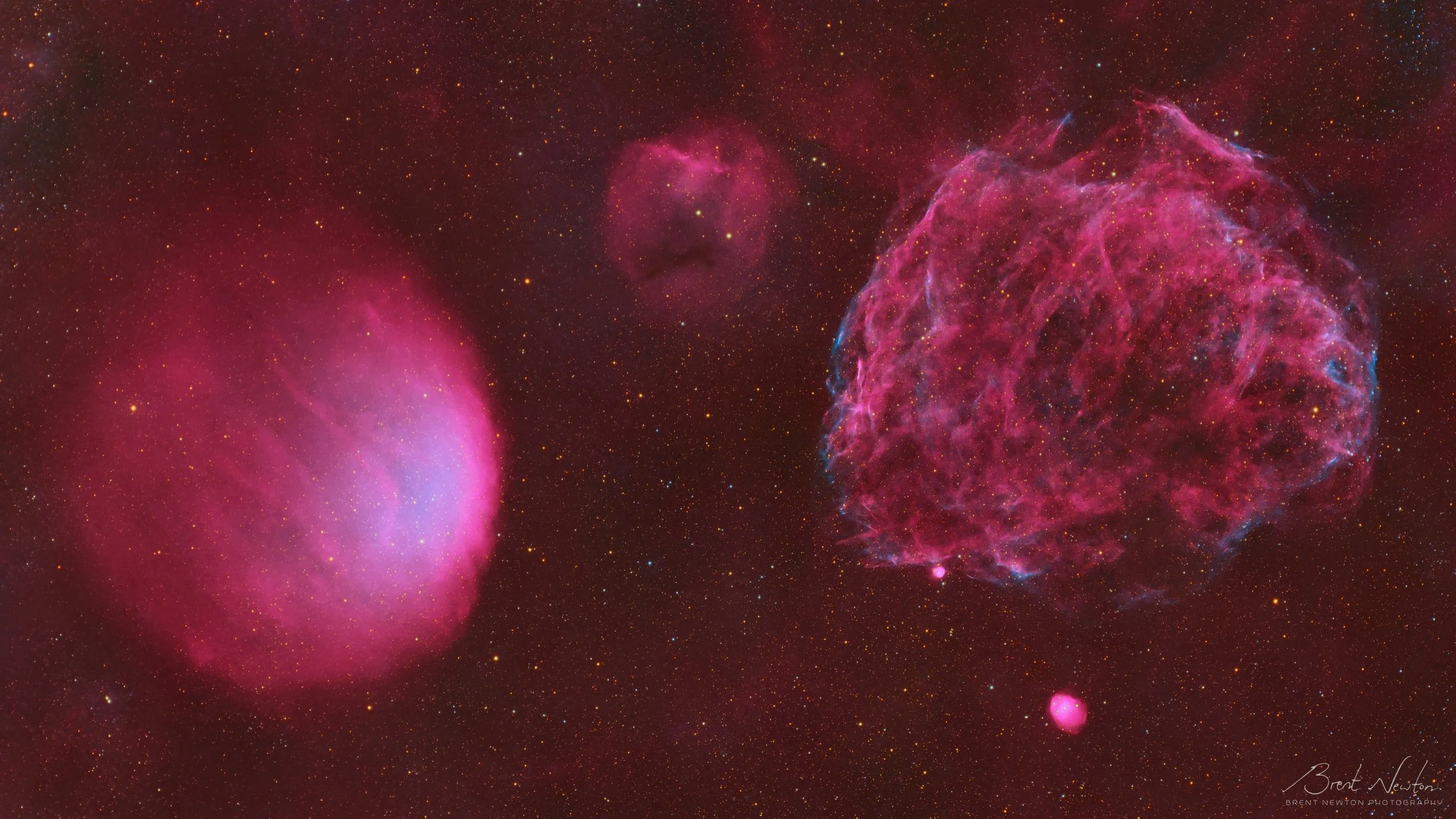
Dying Fast & Slow (Sharpless 216, 221 Region)
Image Description and Details : This is a region of space in Auriga showing a large and faint Supernova Remnant (Sh2-221) next an equally large and faint Planetary Nebula (Sh2-216). The latter is also often called the "Second Closest Planetary Nebula." The former may be an example of the earliest recorded supernova (~6600 years ago) as a cave drawing depicting this area of sky was found with a possible illustration of a bright light in the same area of sky, though this interpretation is not conclusive.
Altogether this field of view covers over a dozen times the apparent width of the Full Moon in our sky and was captured with a total of 44.5 hours across 9 nights of imaging (9 hours RGB, 36.5 hours evenly split between Hydrogen and Oxygen filters).
71mm F/4.9 Petzval Refractor, ZWO ASI6200MM-P, Antlia RGB & 3nm Ha/Oiii filters. Captured with APT and processed in PixInsight
Copyright: Brent Newton Photography
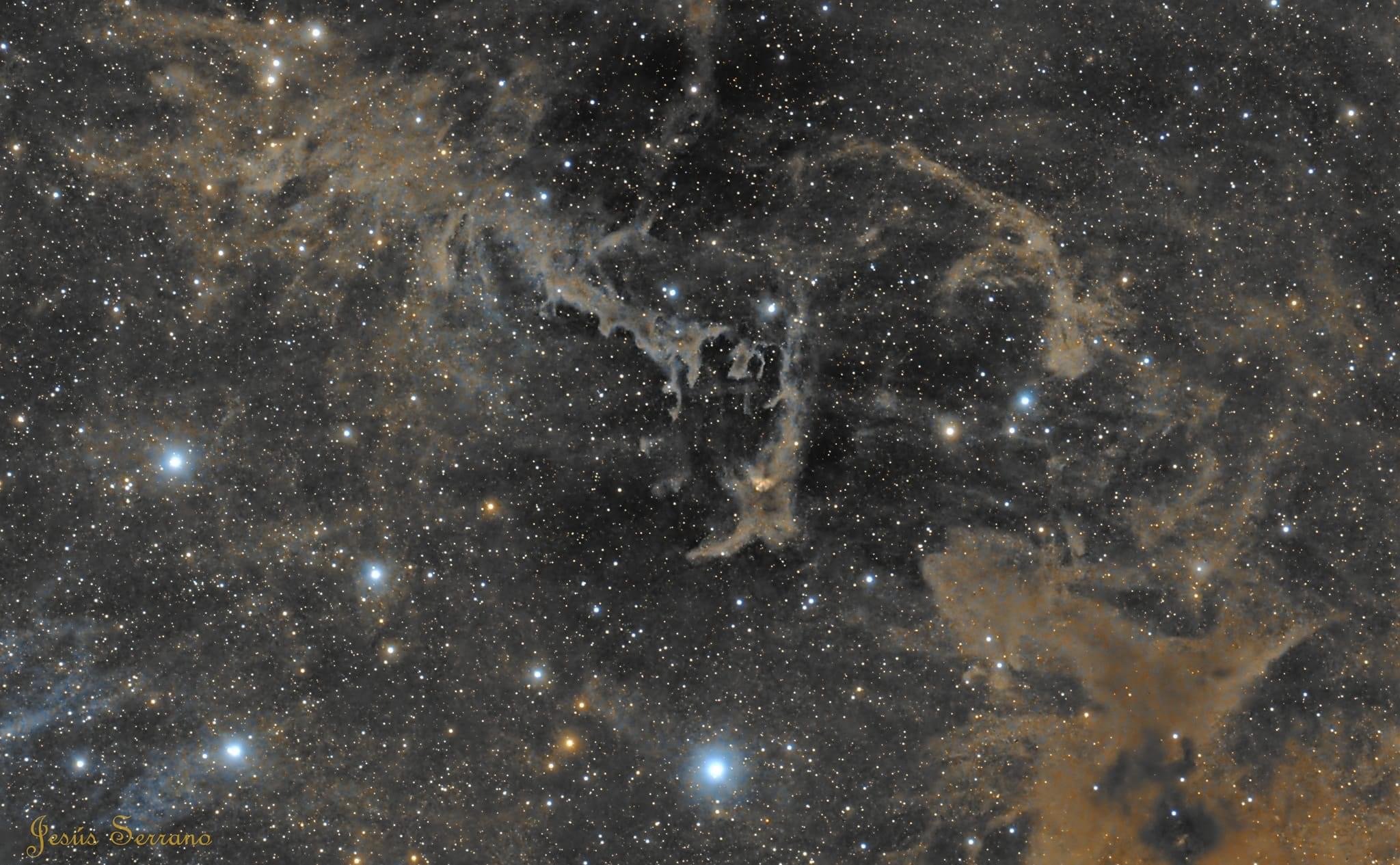
LDN 1228 Nebula
Image Description
Color zwo 2600mc William 81 gtf 97x300s telescope
Luminance with 2600mm, sprit telescope 120 101x300s
Mount eq6r-pro
Copyright: Jesus Cantero
Two photos, two moments, the same place!
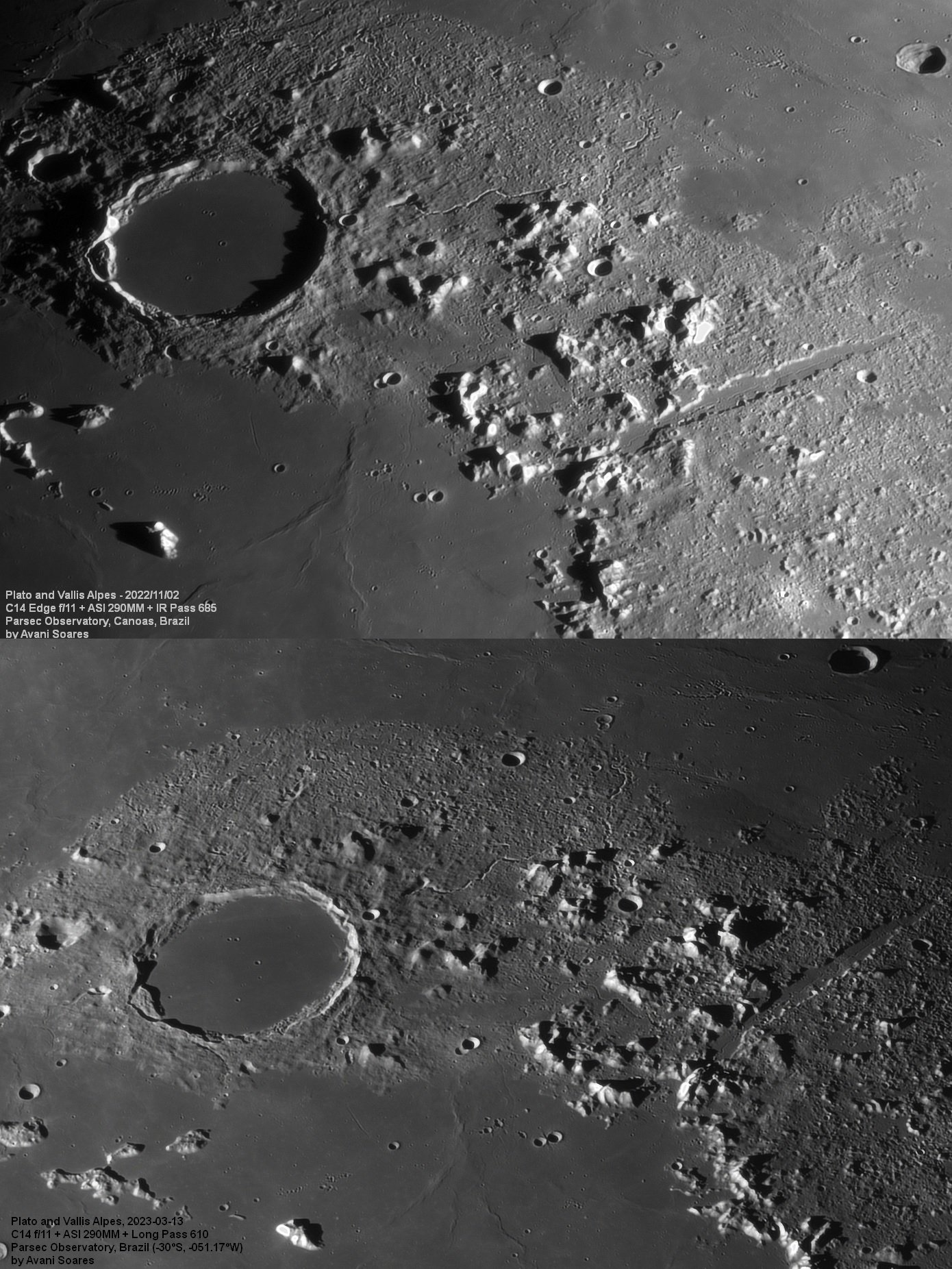
Image Description and Details : Two photos, two moments, the same place!
How about photographing the same location in completely different lighting angles?
The attached photos were taken 4 months apart and with the sun in exactly opposite positions. In the photo above we have the Sun to the east, rising in Plato and Valiis Alps, the photo below was taken with the Sun to the west, there the Sun is setting in the same region. Photos in these conditions and of such magnitude, sublimely show the differences that the Moon offers us at every moment and show us that one day will never be the same as the other.
Plato is one of the main targets of lunar astrophotography.
A good photo of Plato should show at least 3 or 4 smaller craters present on its floor, always in a darker hue than the surrounding terrain.
But every good self-respecting astrophotographer knows that it's not easy to make these small craters appear on your floor, and for that to happen certain conditions must be met.
Firstly, an opening of no less than 250mm is ideal, not that it is impossible to register them with 200mm or even 180mm, but with 250mm it is much easier.
Secondly, the angle of incidence of sunlight must also be observed, if the terminator is too low and close, the contrast is too great making it difficult to record, if on the other hand the sun is too high, the smaller craters do not form shadows which it also makes it impossible to register them. I believe that the ideal is the Sun at an altitude of 30° to 45° so the contrast is not so great and shadows are still formed, facilitating their perception.
Thirdly, we must pay attention to seeing, with a bad seeing any recording is almost impossible, as these small craters disappear when the turbulence is strong.
Focus I won't talk because any mistake ends with a good result!
As a general rule, in order to get an impressive photo of at least some of these small craters, they would have to be briefly visible during real-time computer screen capture. If so, we learned that after the best stacked frames, these small craters will show up perfectly as seen in the attached photo.
Vallis Alpes, in the south of Mare Frigoris, not far from Cassini crater and Plato's Great Eastern Plain, is one of the most spectacular valleys on the moon.
Seen in this image, Vallis Alpes (Alpine Valley) is a feature that extends 166 km from Mare Imbrium, running northeast to the edge of Mare Frigoris. This valley was discovered in 1727 by Francesco Bianchini. The valley is narrow at both ends and widens in the center to be about 10 kilometers in diameter.
The bottom of the valley has a flat, lava-flooded surface with a narrow 'channel' winding through the middle. This channel is generally thought of as a "graben", an area between two parallel faults that have fallen below the surrounding area. The narrow inner channel is believed to have formed after the formation of the Imbrium basin, after the lava flows into the sea. It probably corresponds to a 'lava tube' that collapsed in a later geological episode due to the high velocity and low viscosity of the magma.
It is very interesting to know that channels are common on the moon, considered one of the most fascinating volcanic features due to their wide range of scales (from 100 meters to over 100 km in length) and the morphologies they present (linear, curved or sinuous). .
Channels typically form when lava flows erode the existing surface, melting the substrate, removing mechanical material, or a combination of thermal and mechanical processes. However, some may have been lava tubes, rilles, that suffered roof collapse after their formation.
Trying to detect this relatively narrow and winding channel that runs along the bottom of Vallis Alpes is one of the favorite challenges of lunar observers, its exact dimensions have not been determined, but its vision is a very satisfactory test, as are the small craterlets on the Plato floor. .
I hope these tips are of some use to anyone like me who likes to venture into lunar photography!
PS: The bottom photo is just a result of stacking in AS!3 with a sharpness of 60% and nothing else. There is no post processing, Registax, Astrosurface, Photoshop or any other editing program was not used, nor was brightness or contrast adjusted. I've been developing a capture line on lunars for years to avoid any post processing as much as possible, I'm almost there.
Avani Soares (Astroavani)
Copyright: Astroavani