

AAPOD2 Image Archives
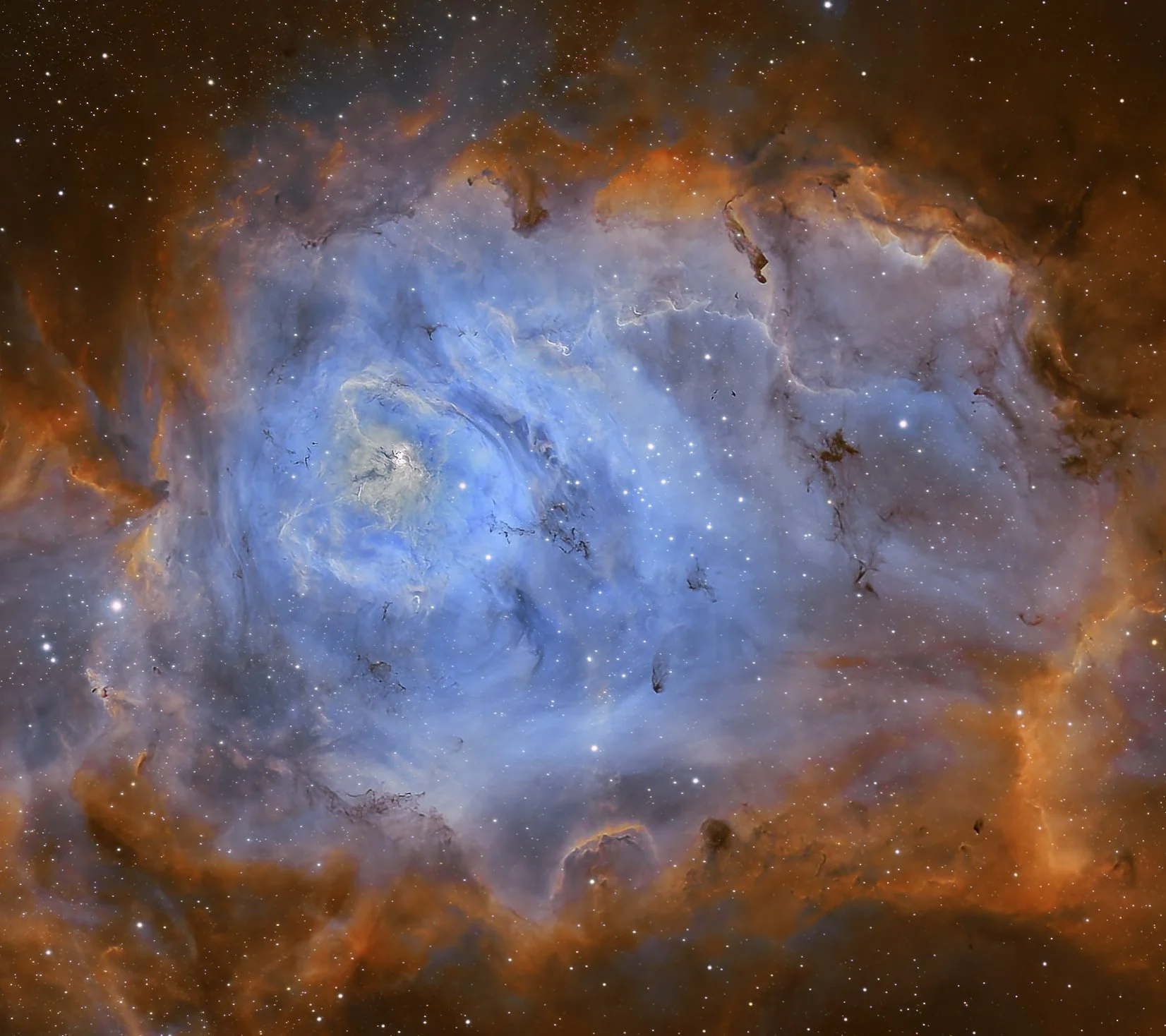
M8
Image Description and Details :
It is a core of M8 Lagoon Nebula, which was acquired during 11 nights of the month of May, from Maringá Brasil.
Obtained with a
Telescope Stellarvue 80 ED Raptor
Filter SHO - Astronomik 12nm
Camera ASI294mm Pro
Mount Sky Watcher Neq6
Capture N.I.N.A.
Processing Pixinsight - Topaz
Sky Bortle 6
It has a total of 15hs 32min for acquisition, but I selected between the best 21hours of exposure.
From Maringa Brazil
When I saw the result I saw that it looks like an ice lagoon surrounded by fire, hence the name I gave to this photo
Copyright: Marcelo G Salemme - Astromgs
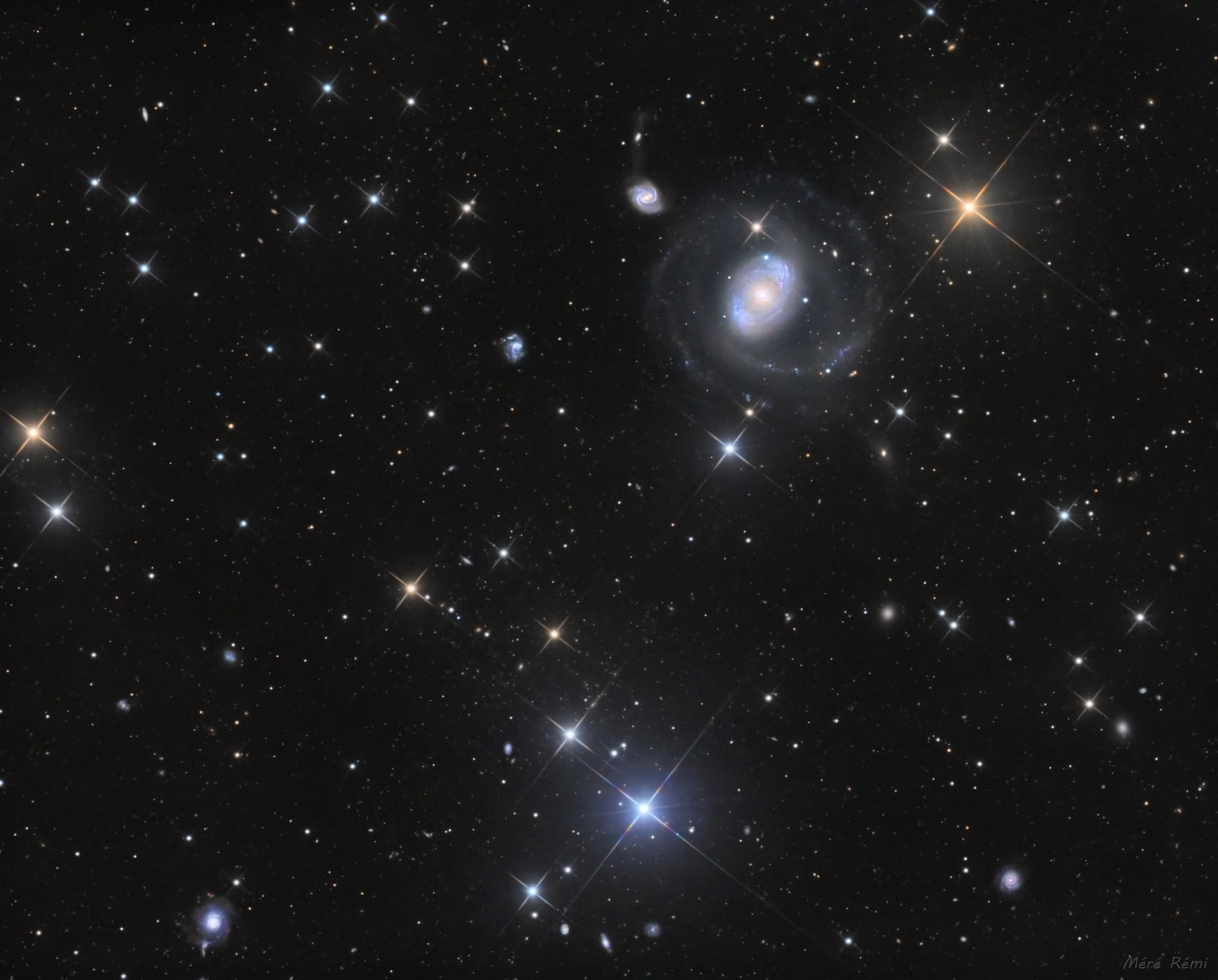
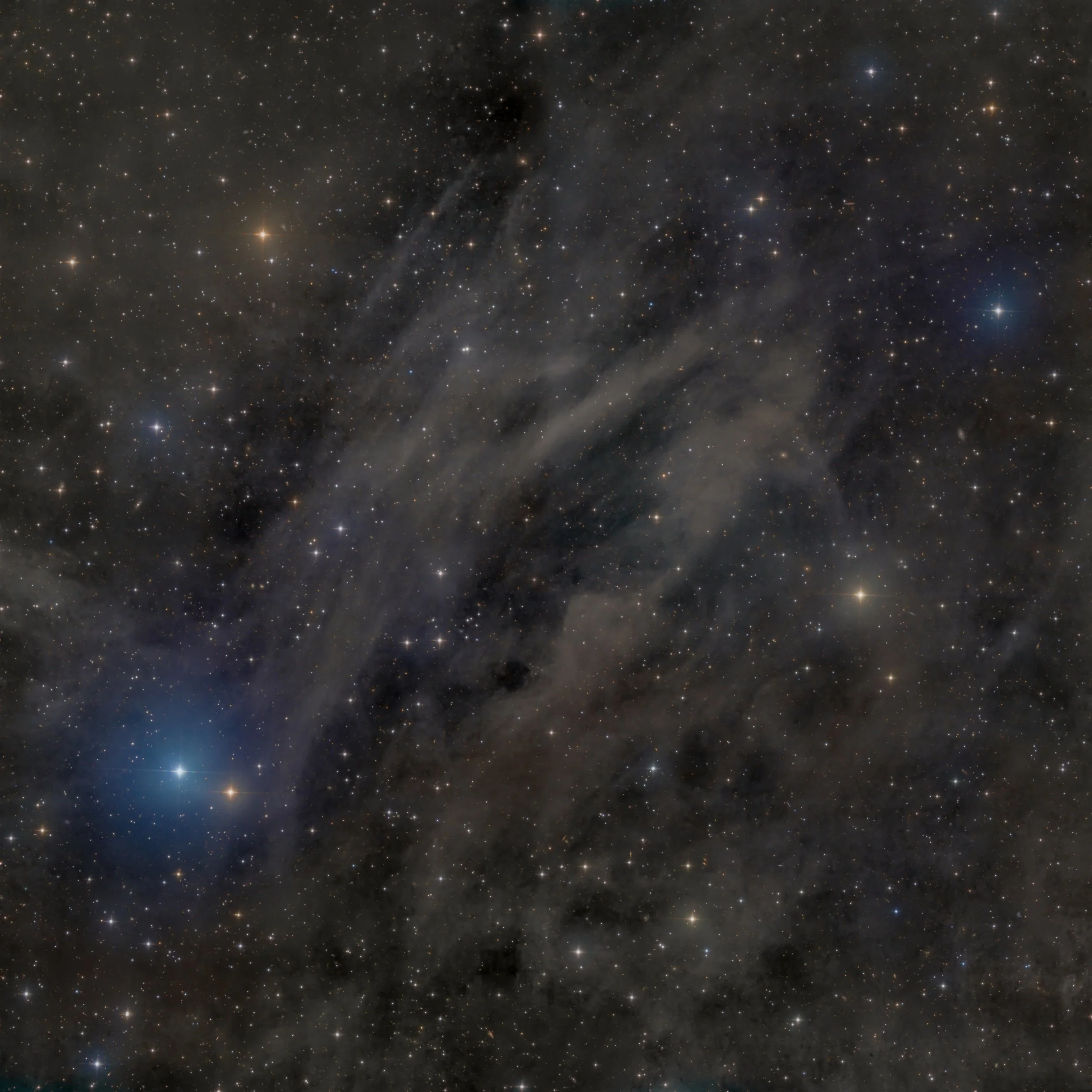
Sh2-73
Image Description and Details : Sh2-73is located in the constellation Hercules and was mistakenly included in the Sharpless catalog as an emission nebula.We now know that the nebula is simply a molecular cloud. With its relatively high galactic latitude, about 45°, the integrated light of the galaxy illuminates the nebula.
Astrosib RC 20" + camera FLI Kepler 4040
Total RGB=28h15mn
The skyX + ccdautopilot + APP + Pixinsight +Photoshop
Form E-eye (Fregenal de la Sierra,Spain)
Copyright: Georges Chassaigne
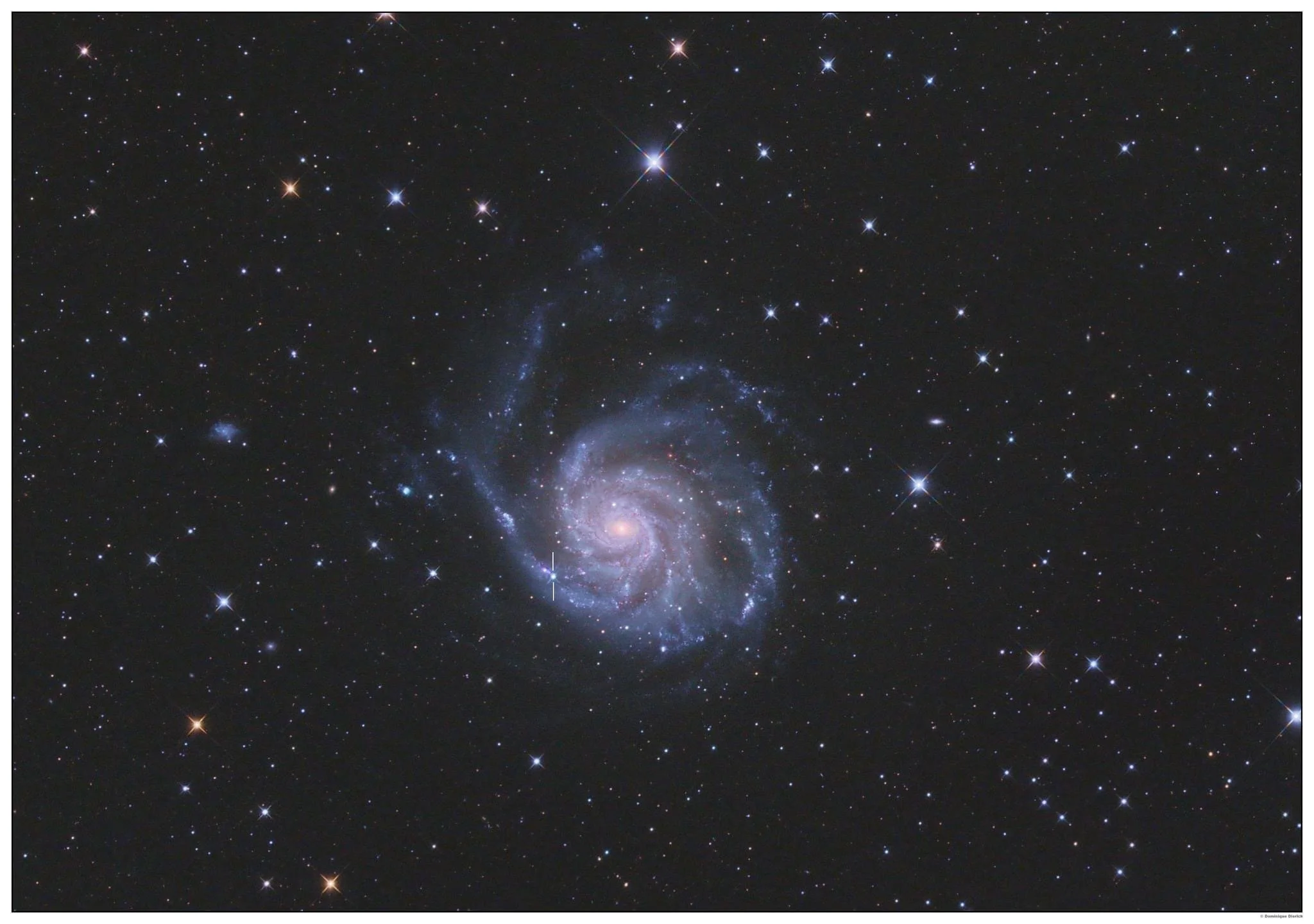
M101 supernova
Cropped image of M101 image of last night, with bright supernova 2023ixf (discovered in Japan on May 19th). The supernova is indicated between two line segments. The sky was not really good, with high thin clouds present during the 2 hour exposure with Takahashi Epsilon 160ED.
Copyright: Dominique Dierick
M24
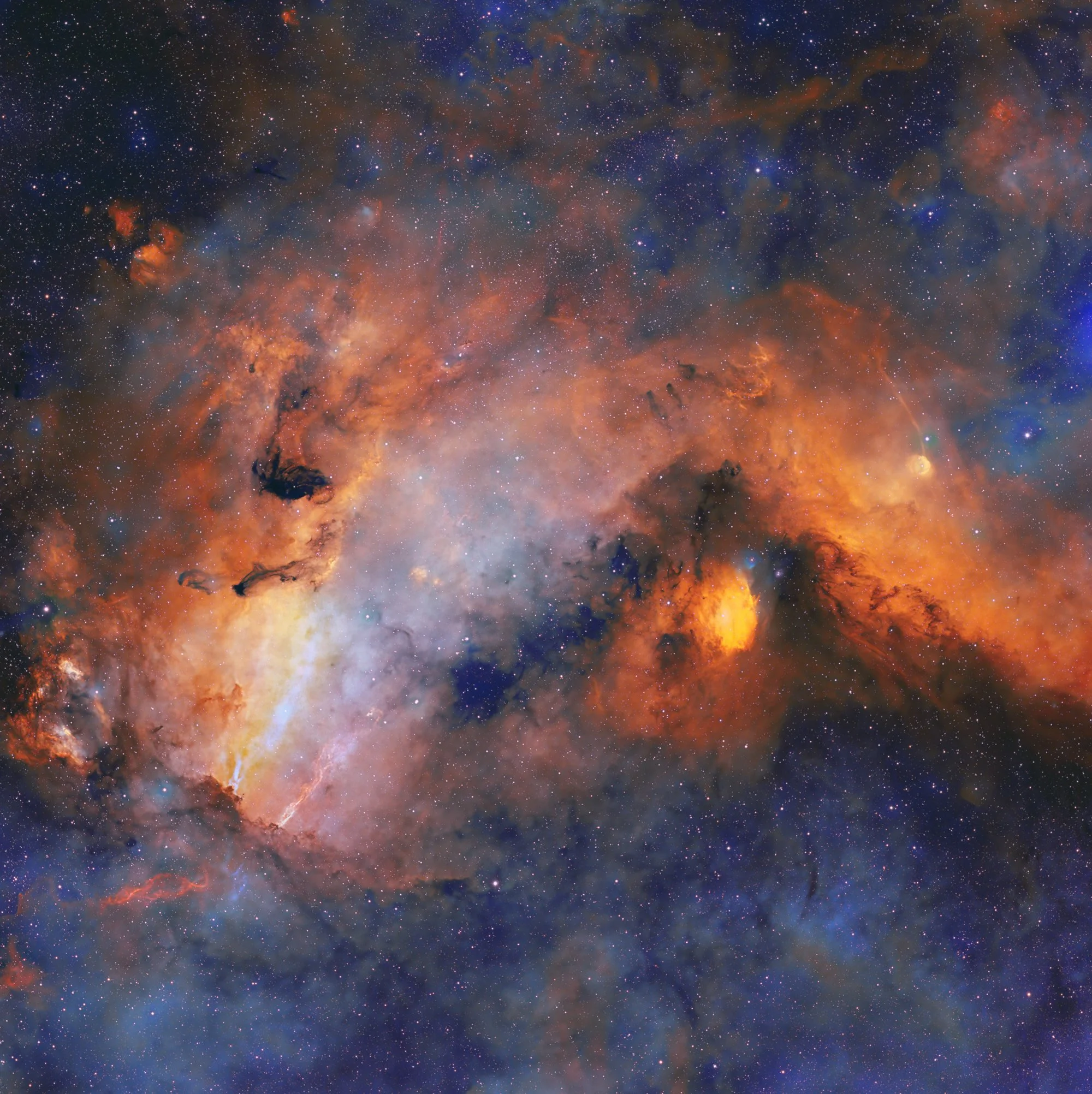
Image Description and Details : M24, also known as the Small Sagittarius Star Cloud, is a large star cloud in the constellation of Sagittarius. It is located about 10,000 light-years from Earth and has an apparent magnitude of 4.6. M24 is about 600 light-years wide and lies in the Sagittarius Arm of our galaxy, the next inner spiral arm to our own.
The star cloud is visible to the naked eye as a large, hazy patch in the Milky Way. Binoculars and small telescopes reveal a dense concentration of stars, including many young, bright stars. M24 is also home to a number of open clusters, including NGC 6603.
The physical composition of M24 is dominated by hydrogen and helium, with trace amounts of other elements. The average temperature of the gas in M24 is about 10,000 degrees Kelvin. The stars in M24 are mostly young and hot, with a few older, cooler stars. The open clusters in M24 are about 100 million years old. A detailed examination of the image reveals the full life cycle of stars. Supernova remnants, gas clouds, and condensing dark nebulae are scattered across this narrowband vista, providing a glimpse into the birth, life, and death of stars.
Tech:
Takahashi FSQ @ f/5
FLI Proline 16803
5nm Ha and OIII filters
10 x 1800s exposure each color channel. Ha assigned to red. OIII assigned to blue
MaximDL, Astro Pixel Processor, Croman StarX, Photoshop
Coonabarabran, NSW, AUS
Copyright John P. Gleason
NGC 2467 - Skull and Crossbones Nebula
Image Description and Details :
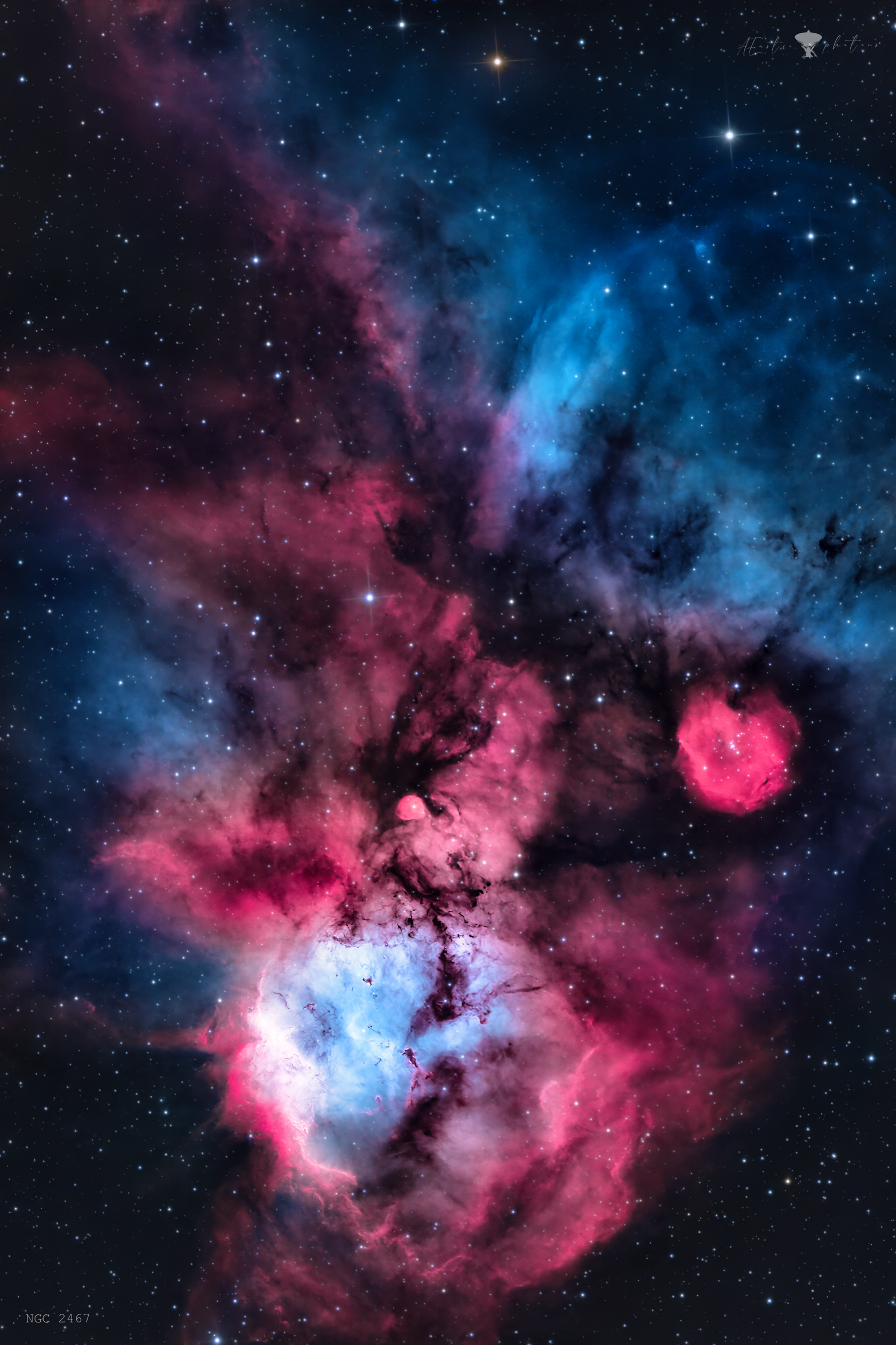
Known as the "Skull and Crossbones Nebula", NGC 2467 is an extremely active stellar nursery that glows in deep reddish tones and is located within the constellation Puppis. Numerous stars and clusters come together to make this stunning stellar portrait. Among numerous gems in the region, dust lanes and dark globules mark sites of future star formation. One of the most notable clusters within NGC 2467, known as Haffner 18, houses around 50 stars. The NGC 2467 complex lies about 17,000 light-years away.
Photographed in narrowband emission (H-alpha & O-3) at El Sauce Observatory, Rio Hurtado, Chile, during May 2023.
Clear skies,
A.
Copyright: @ae_astrophotons
Scope: Planewave CDK 24”
Filters: H-alpha & O-3
Integration: 5h
Country: El Sauce Observatory, Rio Hurtado, Chile (T-Live)
Date: May 2023
Copyright: Copyright: @ae_astrophotons

Iss
Image Description and Details : I took this Picture from the ISS on May the 19. at 0h29m04s MESZ from my Balkony in Hamm / Western Germany / Ruhrgebiet.
My Teleskop was an Explore Scientific 10 Inch Dobson with f/5
The Camera was a Asi 178mm with a cheap 2x Barlow
I once labeled a few parts of the ISS. I hope I got it right.
Copyright: Jörg Ortmann
Propeller Nebula
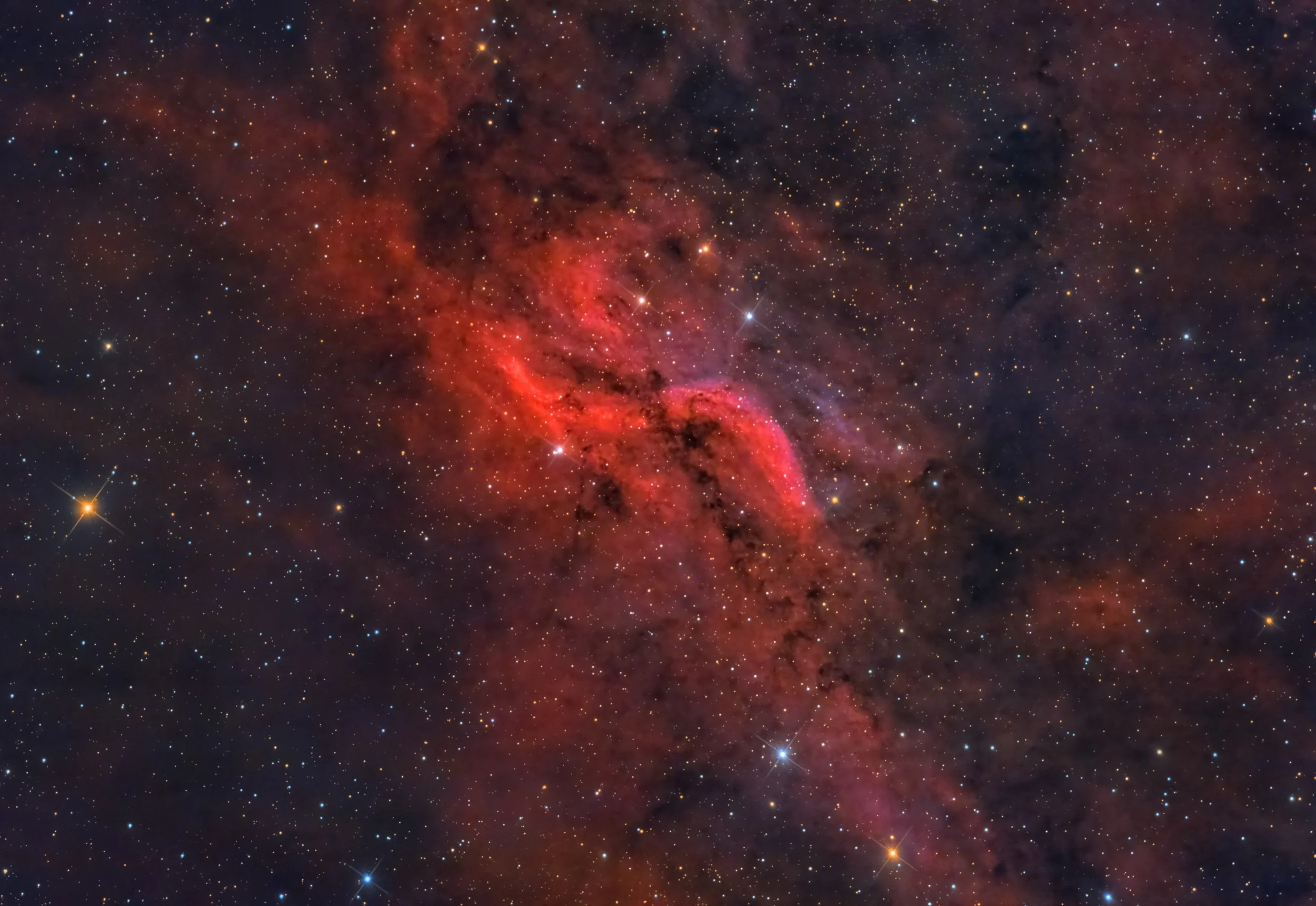
Image Description and Details : The Propeller nebula (also known as DWB 111 or Simeis 57) is a emission H-alfa nebula in Cygnus constellation in the center of a triangle made by Deneb, Sadr and Delta-Cyg.
DWB and Simies designations are not so commonly known. The Simeis Catalog was created in the 1950s by the Crimean Astrophysical Observatory in Simeis, Ukraine. This catalog is focused on HII regions and documented 306 of them. The Propeller Nebula is item 57 in this catalog.
The DWB catalog was created in the 1960s by H. R. Dickel, H. Wendker, and J. H. Bieritz, and it cataloged the HII regions they were studying in the Cygnus X Complex. While DWB 111 is often used as the designation for the Propeller, it only deals with the southern arm of the Propeller, while DWB 119 deals with the northern arm. So you can call the Propeller Nebula DWB 111/119 or Semeis 57.
Konus 200/1000 @960mm, f/4.8
Qhy168c @-5 °C
Sky-Watcher Eq6r Pro mount
Optolong L_Ultimate 126x300" (gain 11, offset 60)
SvBony UV/IR-cut 161x30 (gain 1, offset 30)
N.I.N.A., DSS, APP, PixInsight, PS
Copyright: Massimo Di Fusco
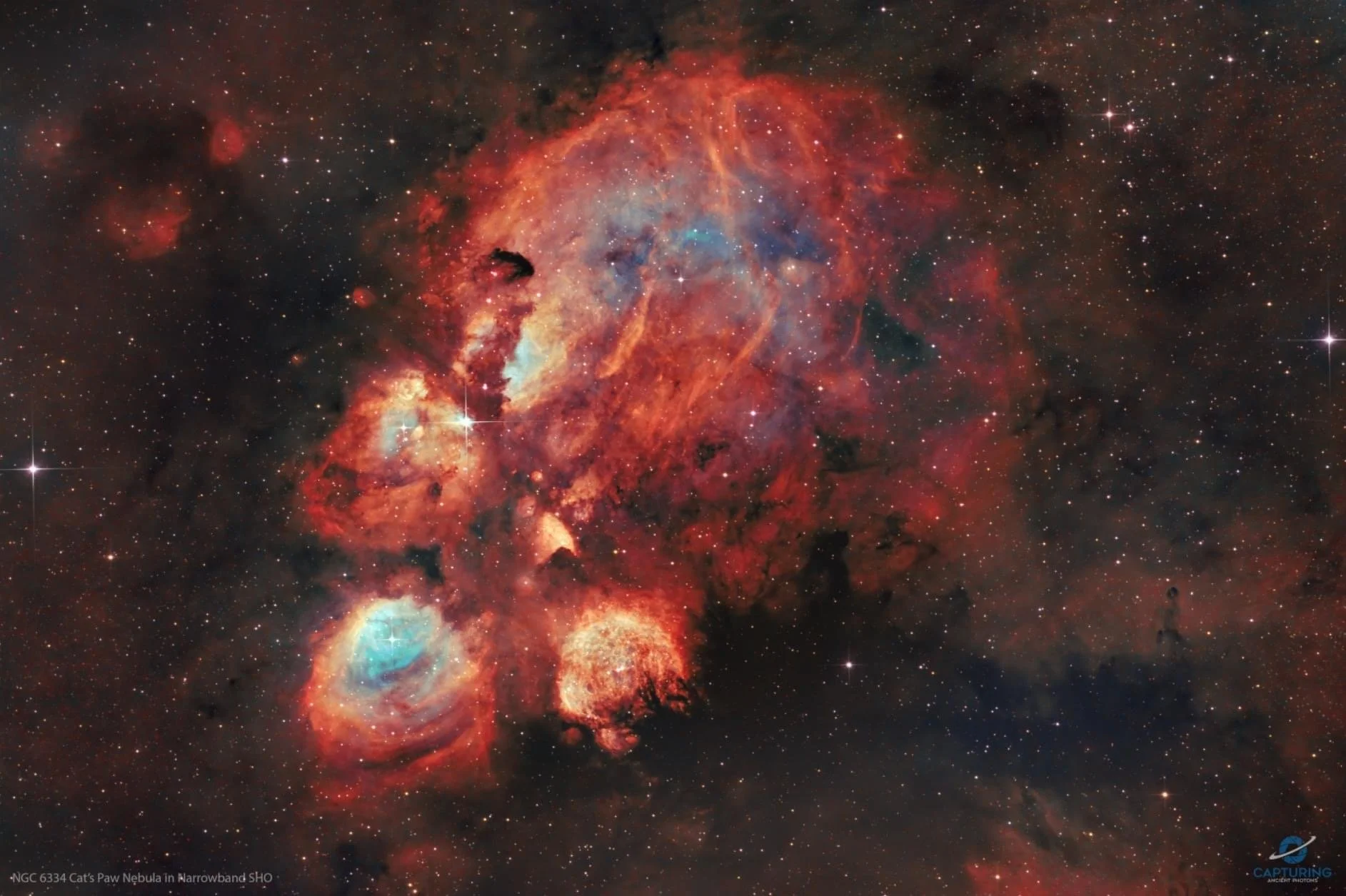
Ngc. 6334
NGC 6334 is an ionized hydrogen-rich emission nebula and star-forming region more commonly known as the Cat's Paw nebula. It lies in the constellation Scorpius and is around 5,500 light-years from Earth and 50 light-years across.
94 x 300s SHO subs shot @0C spread across 3 nights for a total integration time of about 8 hrs.
Equipment used:
Skywatcher 10" f4 Newtonian 250P
Skywatcher F4 Aplanatic Coma Corrector
Skywatcher NEQ6 Pro Hypertuned by Astronomy Academy Perth
ZWO ASI2600MM Pro Cooled Camera
Primaluce Sesto Senso2 Electronic Focuser
William Optics Uniguide 50/200mm guidescope
ZWO ASI290MM Mini Guide Camera
ZWO Electronic Filter Wheel
Antlia Pro 36mm unmounted filters
Rollon rolloff modified shed observatory
Bortle 5
Data acquisition software: NINA Astronomy Software
Processing software: PixInsight and Photoshop CC
Copyright: Capturing Ancient Photons
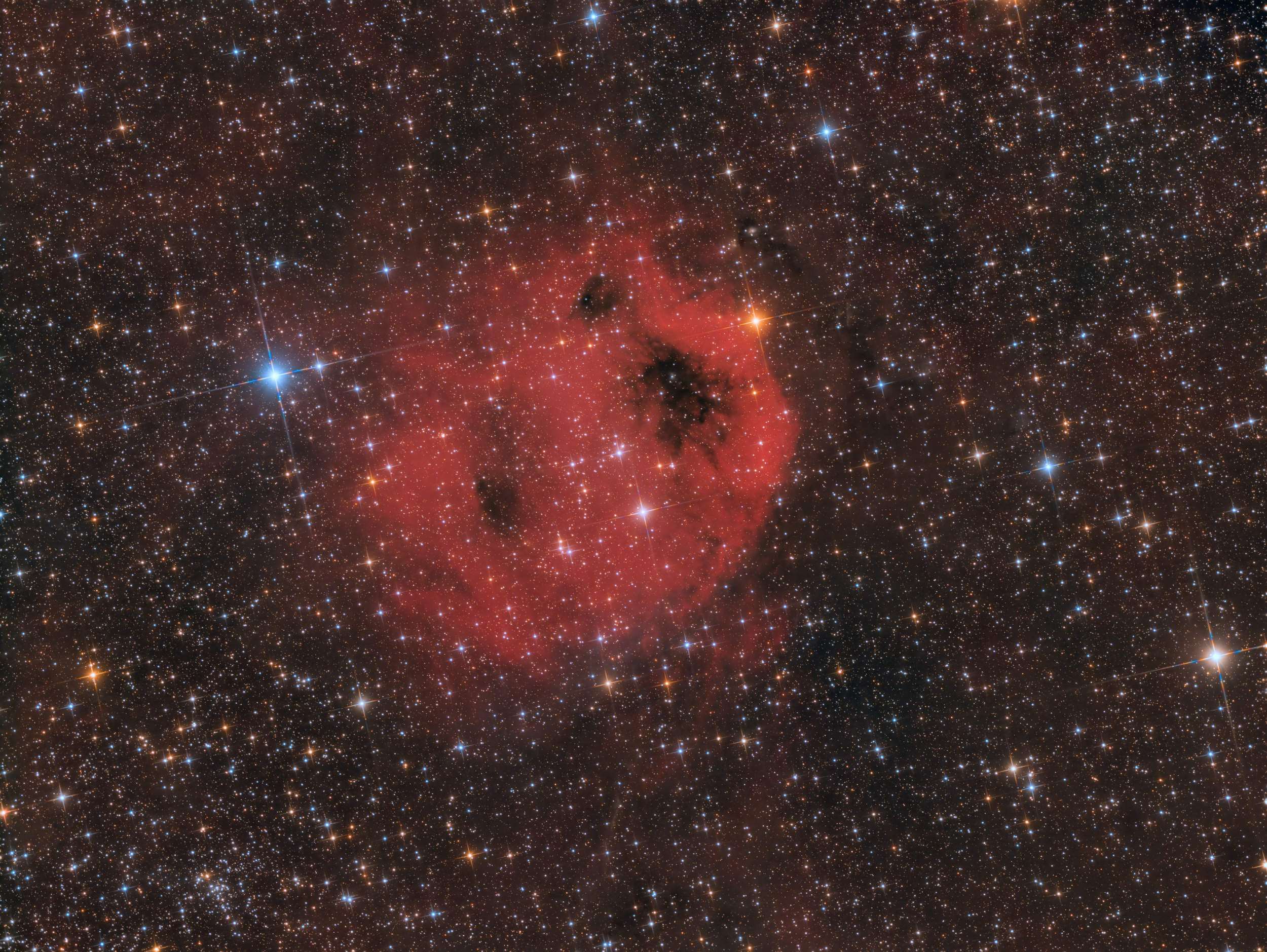
Sh2-173 | Phantom of the Opera
Image Description and Details : Hardware
Lacerta Fotonewton 200/800 (pre-2021)
QHYCCD QHY268 Pro C · ZWO ASI1600MM Pro
Sky-Watcher EQ6-R Pro
Astronomik H-alpha CCD 6nm 1.25" · Astronomik L-2 Luminance UV/IR Block 2"
Lacerta MFOC Motorfocus · Lacerta MGEN-3 standalone autoguider
Frames:
Astronomik H-alpha CCD 6nm 1.25": 91×300″(7h 35′) (gain: 139.00) -15°C bin 1×1
Astronomik L-2 Luminance UV/IR Block 2": 98×300″(8h 10′) (gain: 0.00) -15°C bin 1×1
Software
Adobe Photoshop · Pleiades Astrophoto PixInsight · Russell Croman Astrophotography BlurXTerminator · Russell Croman Astrophotography NoiseXTerminator · Stefan Berg Nighttime Imaging 'N' Astronomy (N.I.N.A. / NINA)
Copyright: Jan Schubert

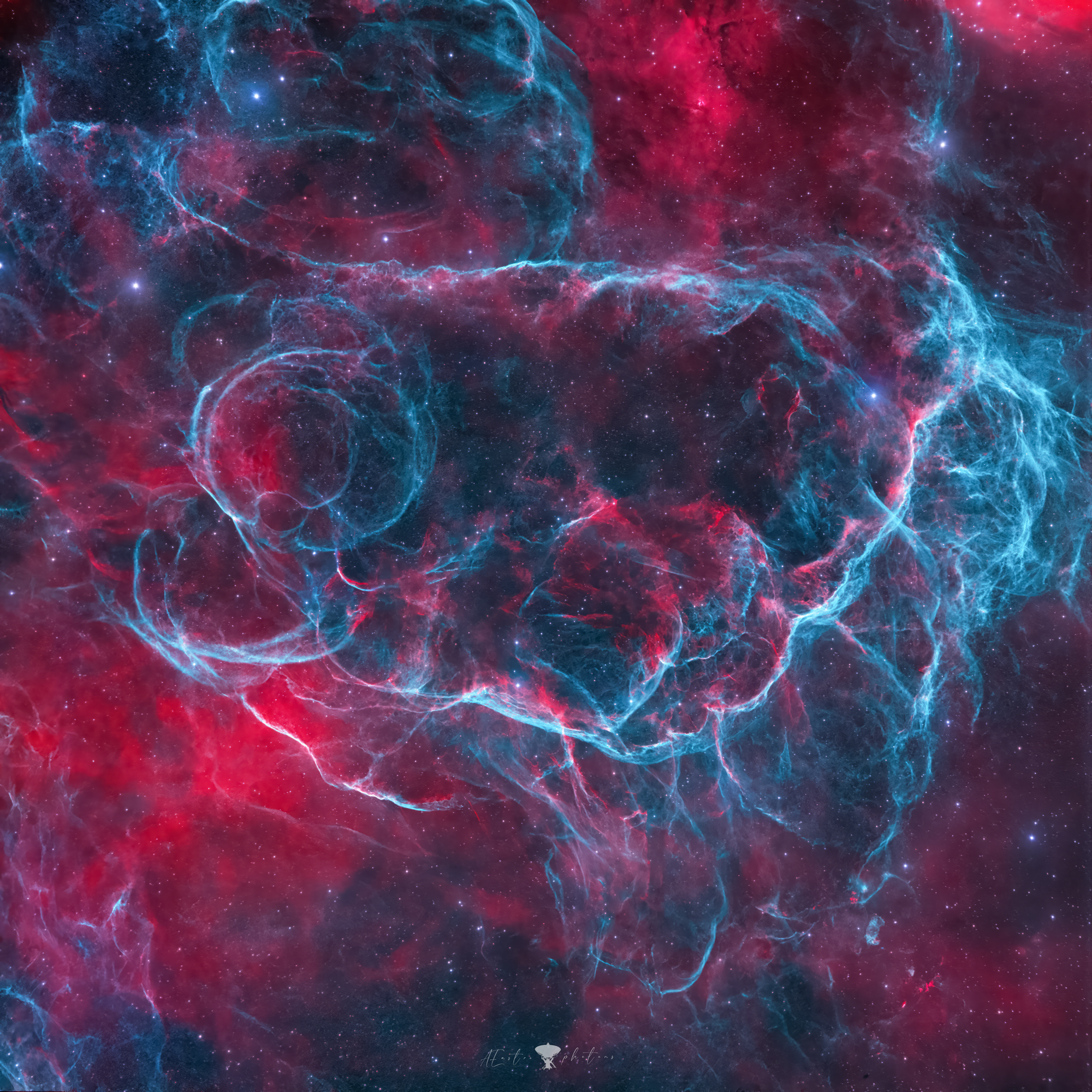
The Molecular Nebula in Corona Australe
Image description:
Taken with ZWO ASI 2600 MC and Fsq 106 on AP 1200 mount, 21 x300 gain 0, from Tivoli Farm, Namibia 🇳🇦, April 2023
Copyright: Alessandro Bares
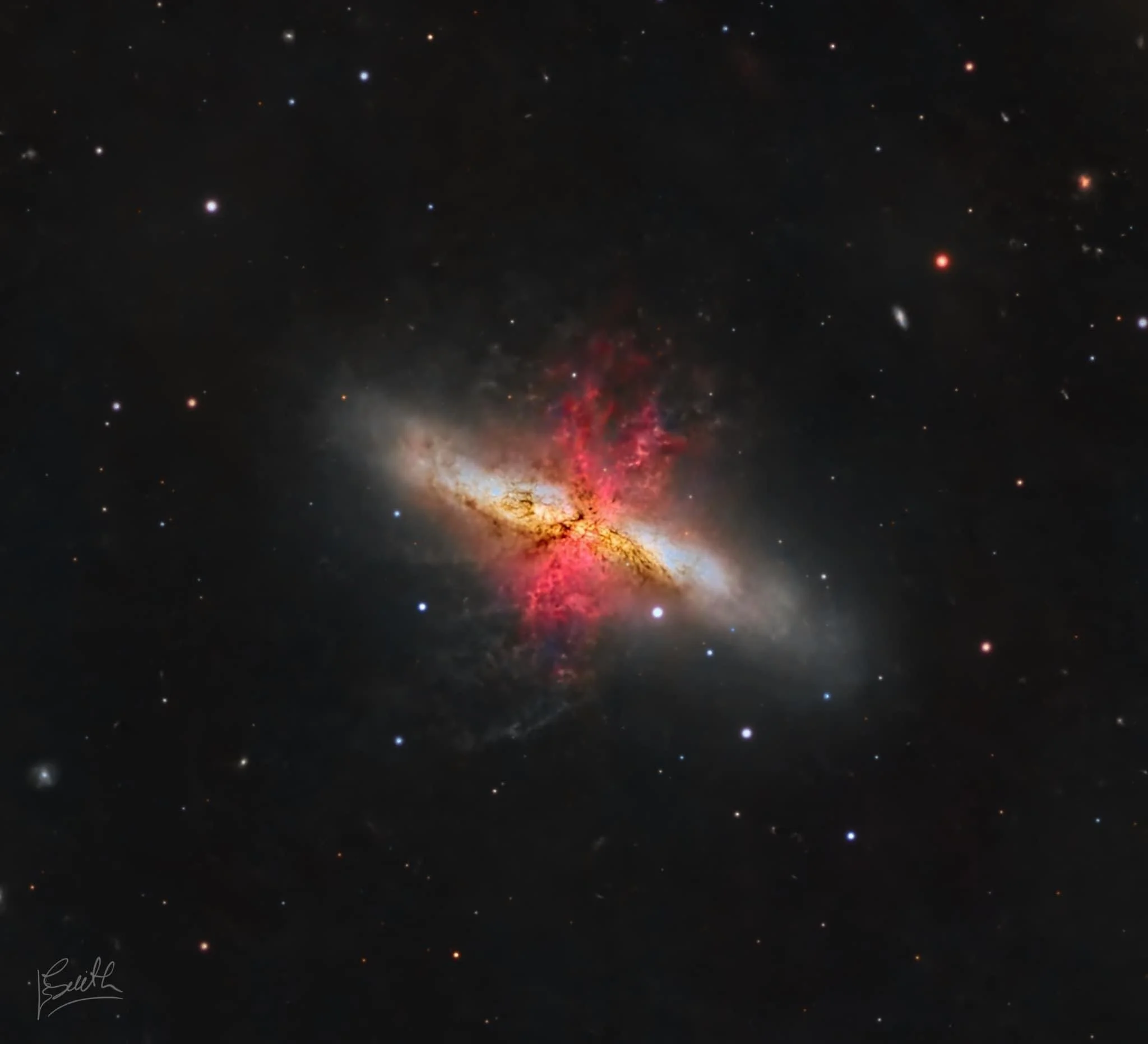
M 82 Cigar Galaxy
Messier 82 was discovered in 1774 by Johann Elert Bode, rediscovered by Pierre Mechain August 1779 who reported them to Charles Messier, who added them to his catalog in 1781.
M 82 is the prototype irregular starburst disk galaxy. In the core of M 82, the active starburst region spans a diameter of 500 parsecs.
Tendrils of material extend away from the nucleus, suggesting a colossal explosion. Studies have revealed filaments expanding outward from M 82 at 600 miles per second.
Imaged over 5 nights from my home in Gérgal, Spain.
Technical summary:
Captured: 26,27,28-02-2023 & 02,03-03-2023
Imaging Sessions: 5
Location: Gérgal, Andalucía, Spain
Bortle Class: 4
Total Integration: 32h 28m
Filters:
Red 349x 60s 5h 49m BIN 3 Gain 100 -5C SQM 20.7
Green 300x 60s 5h 00m BIN 3 Gain 100 -5C SQM 20.7
Blue 300x 60s 5h 00m BIN 3 Gain 100 -5C SQM 20.7
UV/IR 484x 60s 8h 04m BIN 3 Gain 100 -5C SQM 20.7
Ha 103x 300s 8h 35m BIN 3 Gain 100 -5C SQM 20.7
Pixel Scale: 0.33 arcsec/pixel
Telescope: Celestron C11 Edge HD 2800mm fl
Image Camera: ZWO ASI 6200MM Pro
Guiding: ZWO OAG L with ZWO ASI 192MM Mini
Filters: Astronomik R, G, B, UV/IR, Ha
Mount: Skywatcher EQ6R Pro
Computer: Minix NUC
Capture software: NINA, PHD2
Processing Software: PixInsight, Adobe Lightroom
copyright: Eric Smith
Lacus Veris, Lacus Autumni, Schluter and Montes
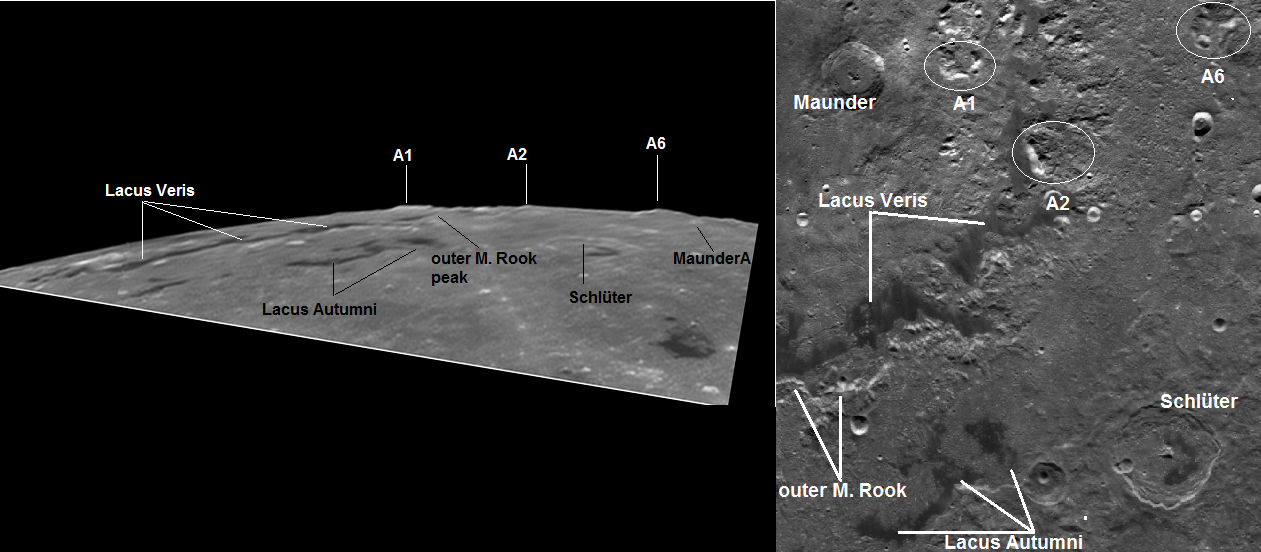
Image Description and Details : During May 6 2023 i imaged the Lacus Veris Lacus Autumni Schluter and the Montes on the lunar limb as in previous image. The region into account was selected and studied for identification of the features here enclosed and compared with WAC LRO imagery. some peaks of this region were identified, according to the work of Vandenbohede (J. Br. Astron. Assoc. 132, 2, 2022). The location is shown based on favourable libration.
Copyright: Raffaello Lena
Ic2948
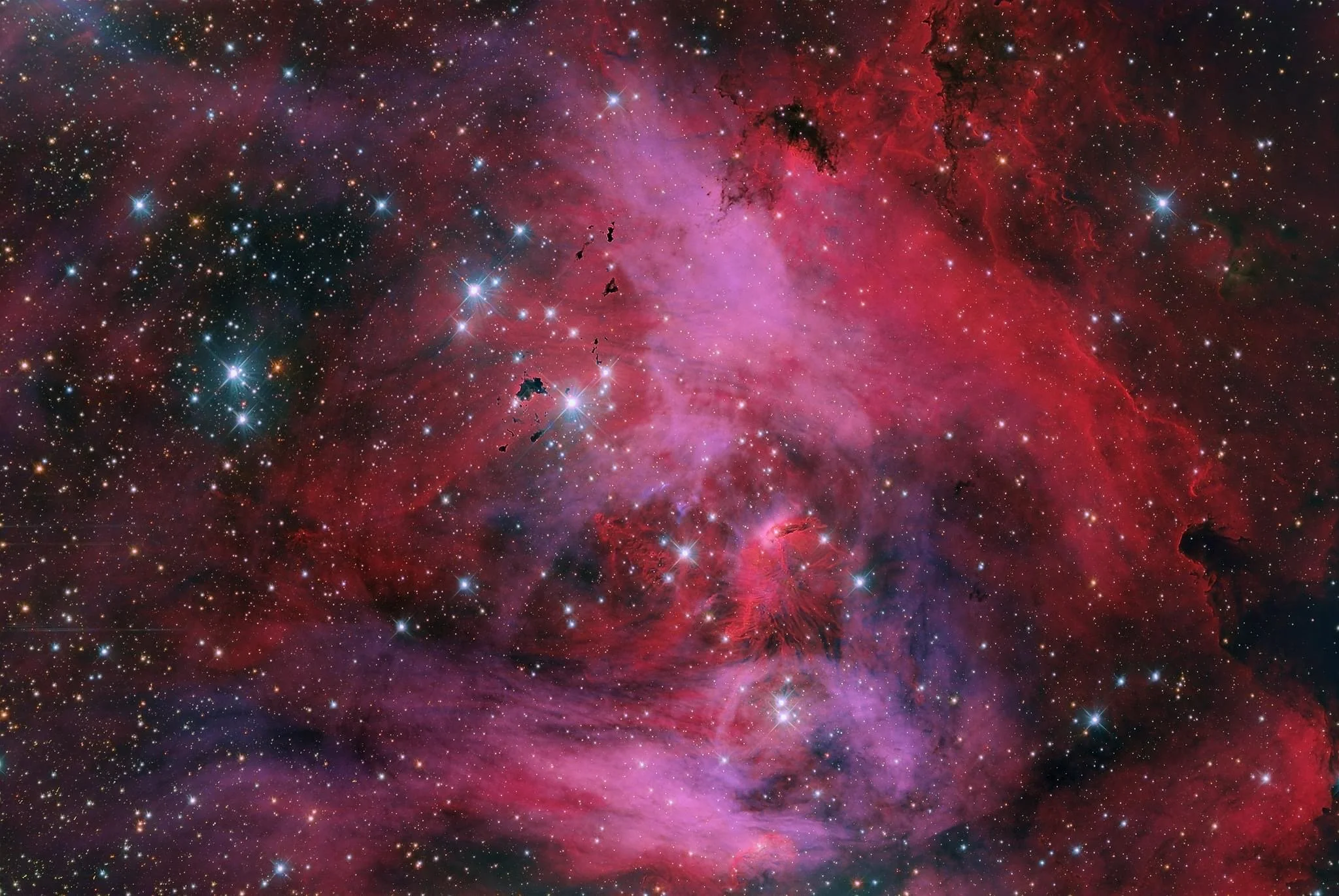
IC 2948 - The Heart of the Running Chicken Nebula.
Hello everyone, we reached the middle of the week and I am going to leave here this image of another object located in the southern hemisphere and that I finished yesterday, I hope you like it and you all have a very good day.
The image covers IC 2948 and part of IC 2944, it is located in the constellation of Centaurus, very close to the star λ Centauri.
IC 2948 is the brightest emission and reflection nebula, located within the nebula but to the southeast of the Running Chicken Nebula. IC 2948 harbors several Bok globules, although this time here called Thackeray globules in honor of their discoverer, these globules made of dust and gas are places where active star formation usually occurs.
It is separated from us by approximately 6,500 light years.
Technical details:
Telescope: Quasar 12.5" f/9 Ritchey-Chretien Mount: Losmandy Titan Camera: SBIG STL11000 Set Filtros Ha, OIII, y LRGB. Datos: Luminancia : 43x600" -15C bin 1x1 Blue: 25x600" -15C bin 1x1 Green: 33x600" -15C bin 1x1 Red: 41x600" -15C bin 1x1 Ha: 80x600" -15C bin 1x1 OIII: 73x600" -15C bin 1x1 Tiempo de integración total: 48,7 horas.
Cooyright: Alberto Pissabarro
The Pencil Nebula NGC 2736
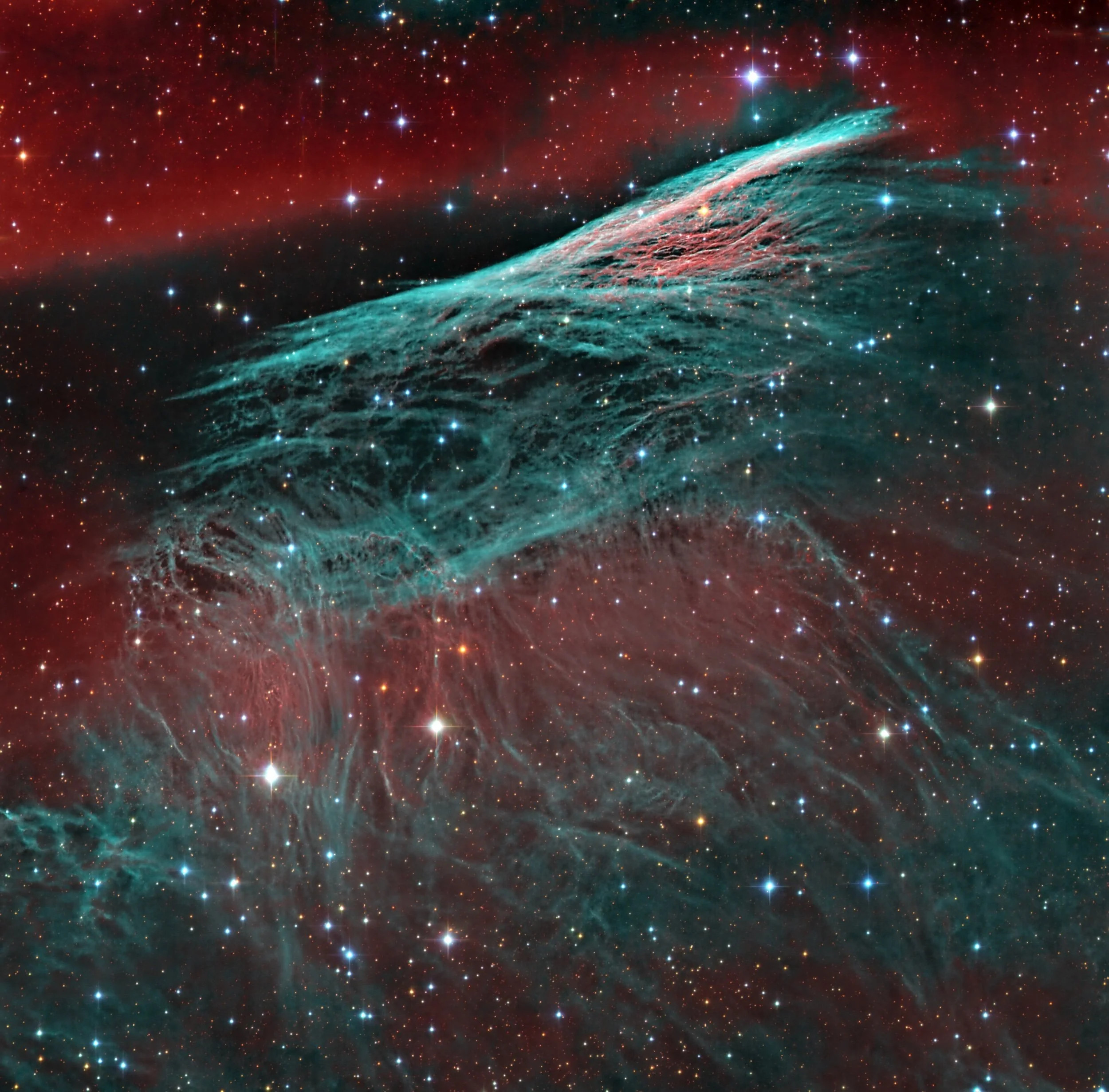
Image Description and Details : The Pencil Nebula is an emission nebula in the constellation Vela. It’s a small part of a supernova remnant that exploded about 11,000 years ago. The pencil-like shape suggests that it is part of the supernova shockwave that encountered a region of dense gas. It’s that intersection that causes the nebula to glow. The colors of the various regions in the nebula yield clues about this cooling process. Some regions are still so hot that the emission is dominated by ionized oxygen atoms, which glow blue/green in the picture. Other regions have cooled more and are seen emitting red in the image (cooler hydrogen atoms). In this situation, color shows the temperature of the gas.
The image was acquired over 9 days between 4/14/23 and 5/5/23 with total integration time of about 38 hours. It was processed in the HOO palette with RGB for the stars.
Ha - 233 x 300 secs
O3 - 197 x 300 secs
RBG - 8 x 300 sec each
Copyright: Daniel Stern
Thor's Lightning (SNR G150.3+4.5) with a new discovery MarSai Object 1
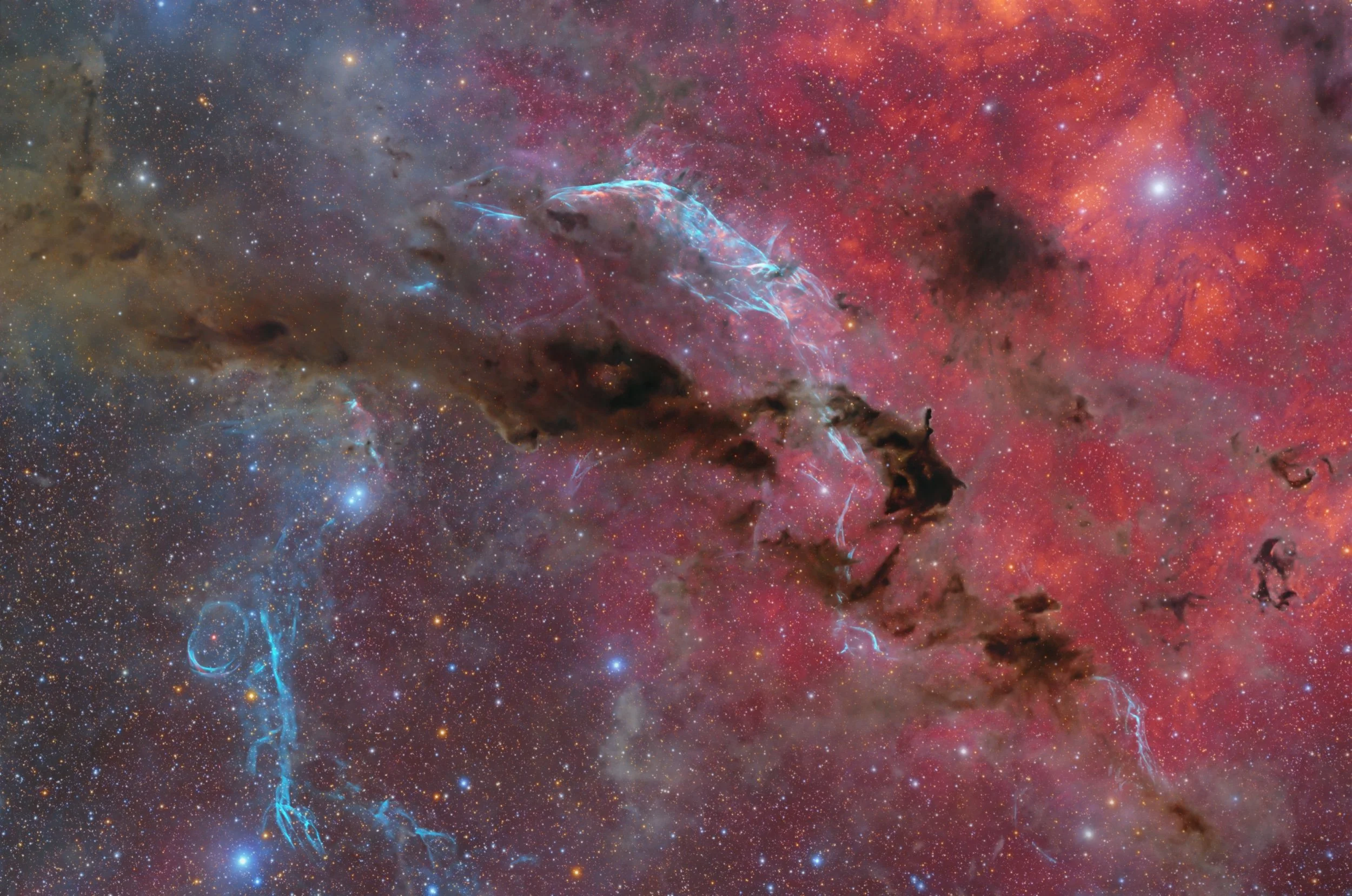
Image Description and Details : We have photographed the LDN 1400 object that hides the SNR G150.3+4.5, aka "Thor's Lightning."
A collaboration on data acquisition allowed us to highlight the SNR signal but also to unveil an OIII shell around the star "CI Camelopardalis".
The StDr team, which supported us on this project, analyzed our data and helped us to register this discovery, allowing us to open the Martino-Sainty Object (MarSai O) catalog
MarSai O 1 was named the "Angelo's Nebula", in homage to my father.
- Material and exifs from Nico:
RGB exifs: 269x300s
Alpha exifs : 83x600s
Takahashi FSQ85-EDX scope and ZWO ASI2400MC camera and Optolong L-Ultimate filter for the Hydrogen Alpha signal.
Sky-Watcher EQ6-R Pro mount driven by AsiAir Plus
- Yann's material and exifs :
Exifs Oiii : 60x600s
Takahashi FSQ106-EDX4 scope with reducer, and ZWO ASI2600MM camera and Antlia 3Nm 36mm filter
Sky-Watcher EQ6-R Pro mount driven via NINA.
Total integration 46h15
Pre-processing was done with Siril and post-processing with PixInsight and Photoshop.
Copyright: Nicolas MARTINO
Yann SAINTY
Team StDr
Gum 14/15 and the small planetary nebula He 2-11
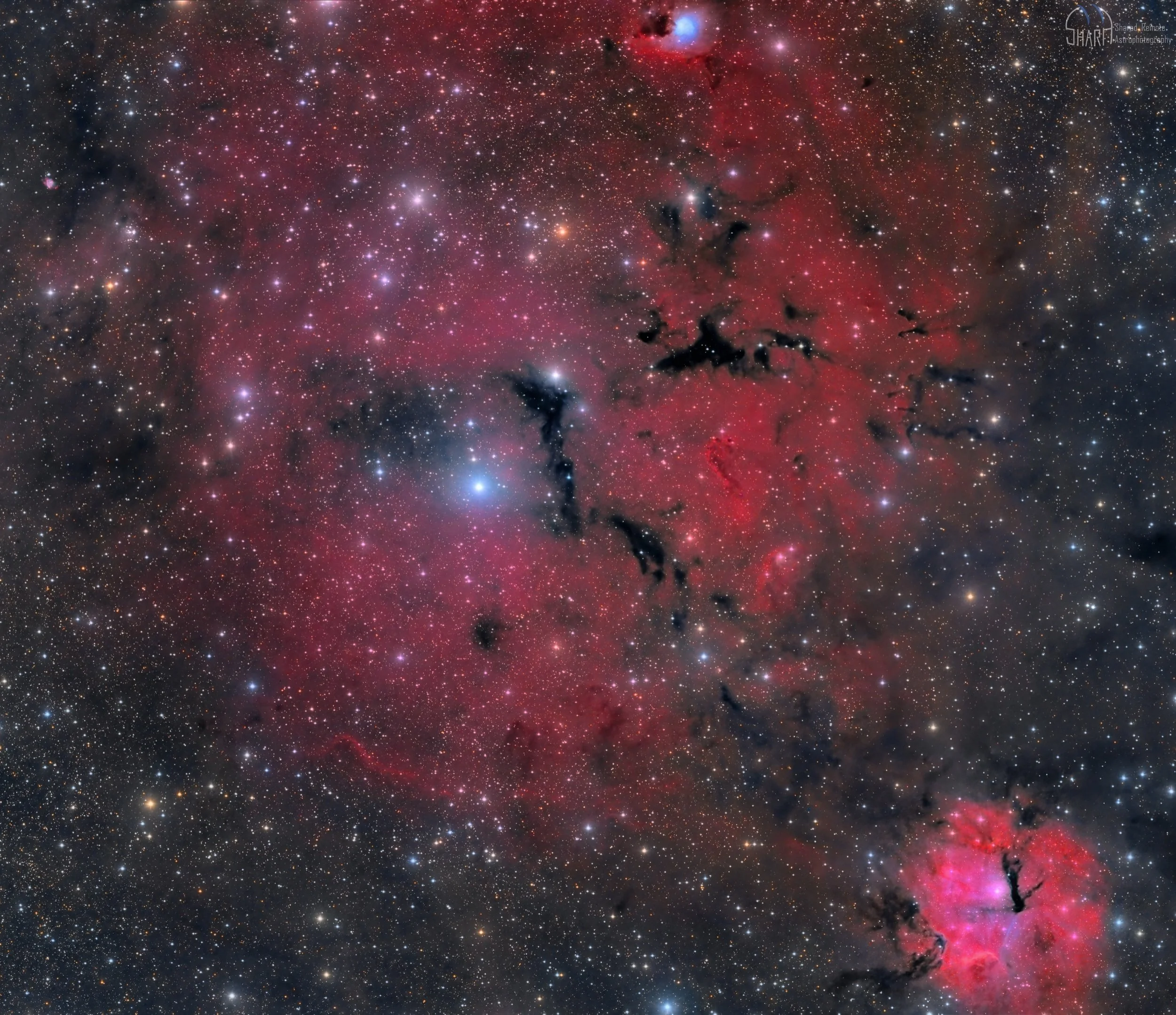
Image Description and Details : Also the fourth stage of the ShaRA project, with which we occasionally go on a remote trip to the southern hemisphere to film some marvel of that marvelous sky, has recently concluded. ShaRA#4 was characterized by the multitude of shots taken but in this post I show you only the first part that featured the extended nebulae Gum 14 and Gum 15 and the small planetary nebula He 2-11, of which we made the first ever amateur shot and which we renamed the Spin Nebula.
Gum 14/15 are two little photographed nebulae in the constellation of Vela and apparently linked to each other. Gum 14, the largest, is an emission nebula excited by a class O blue supergiant and prospectively adjacent to a complex of reflection nebulae whose most important is NGC 2626. Gum 15 is another emission nebula which, together with Gum 14 belongs to the Vela Molecular Ridge: a mega molecular complex full of young and hot stars, which thanks to their radiation, becomes visible to our telescopes.
He 2-11 is a planetary nebula about 2300 light years away, with the rare peculiarity that its nucleus is characterized by a variable binary system. He 2-11 has a structure characterized by a uniform central core of OIII and two filamentous outer protuberances of low ionization H-alpha.
Copyright: Massimo Di Fusco (Team ShaRA
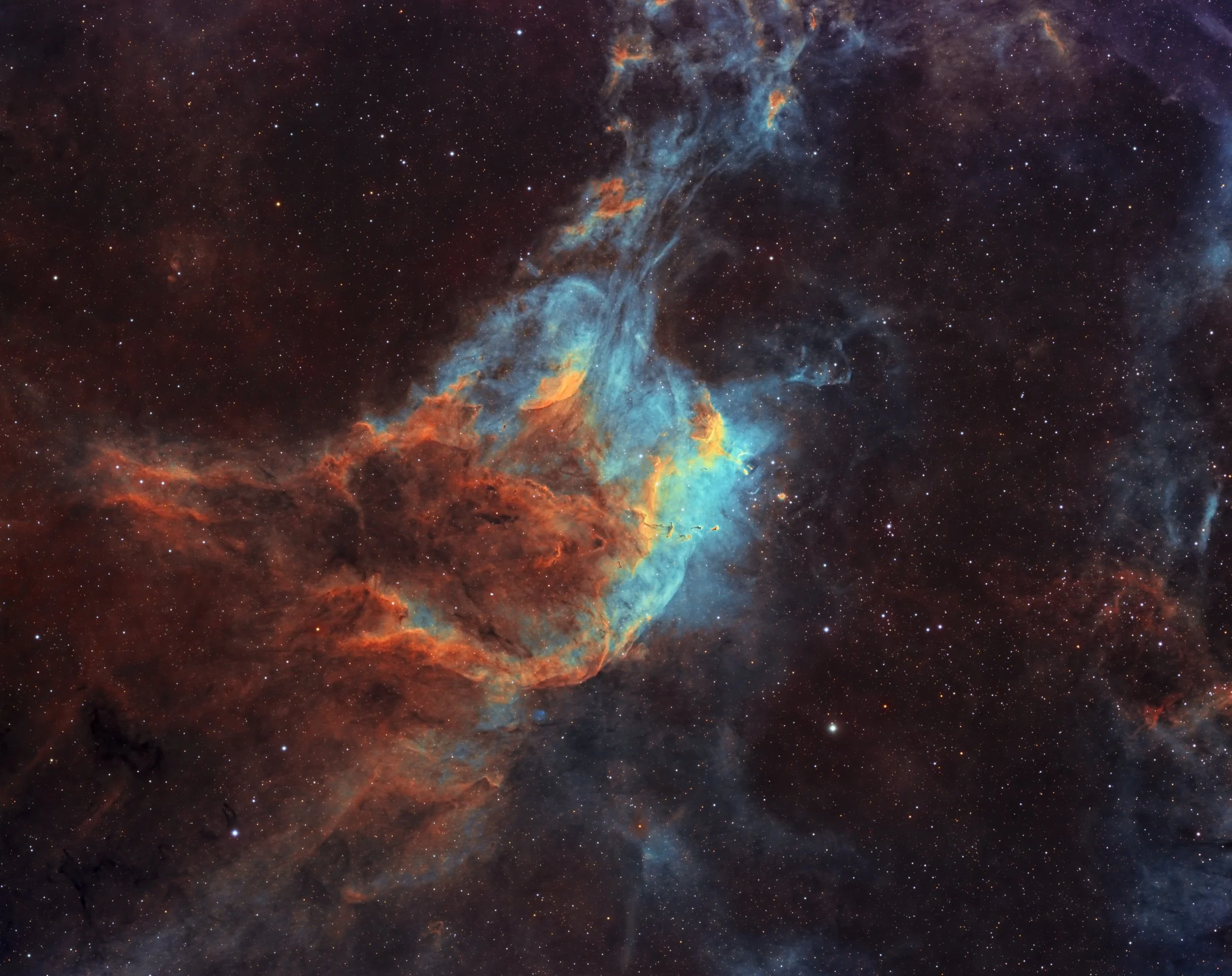
NGC 3572 and the Southern Tadpoles
Image Description and Details : I have taken this image in Ma5 2023, with my own equipment from the backyard of my house, in Posadas city, Argentina.
The data of the equipment used the details of the image are as follows:
Telescope: Skywatcher Esprit 150 ED Super APO Triplet
Cameras: QHYCCD 16200A
Mount: SkyWatcher EQ8-RH Pro
Guiding telescopes: SW Evoguider 50/250
Guiding camera: QHY5l II
Filters for Stars: Baader R - G - B
Filters for Nebula: Chroma OIII 3 nm - Antlia Ha 3 nm - Antlia SII 3 nm
Software: NINA - PHD2 - Pixinsight 1.8
Integration time: 15 h 15 min 30 sec
Copyright: Christian Hilbert