

AAPOD2 Image Archives
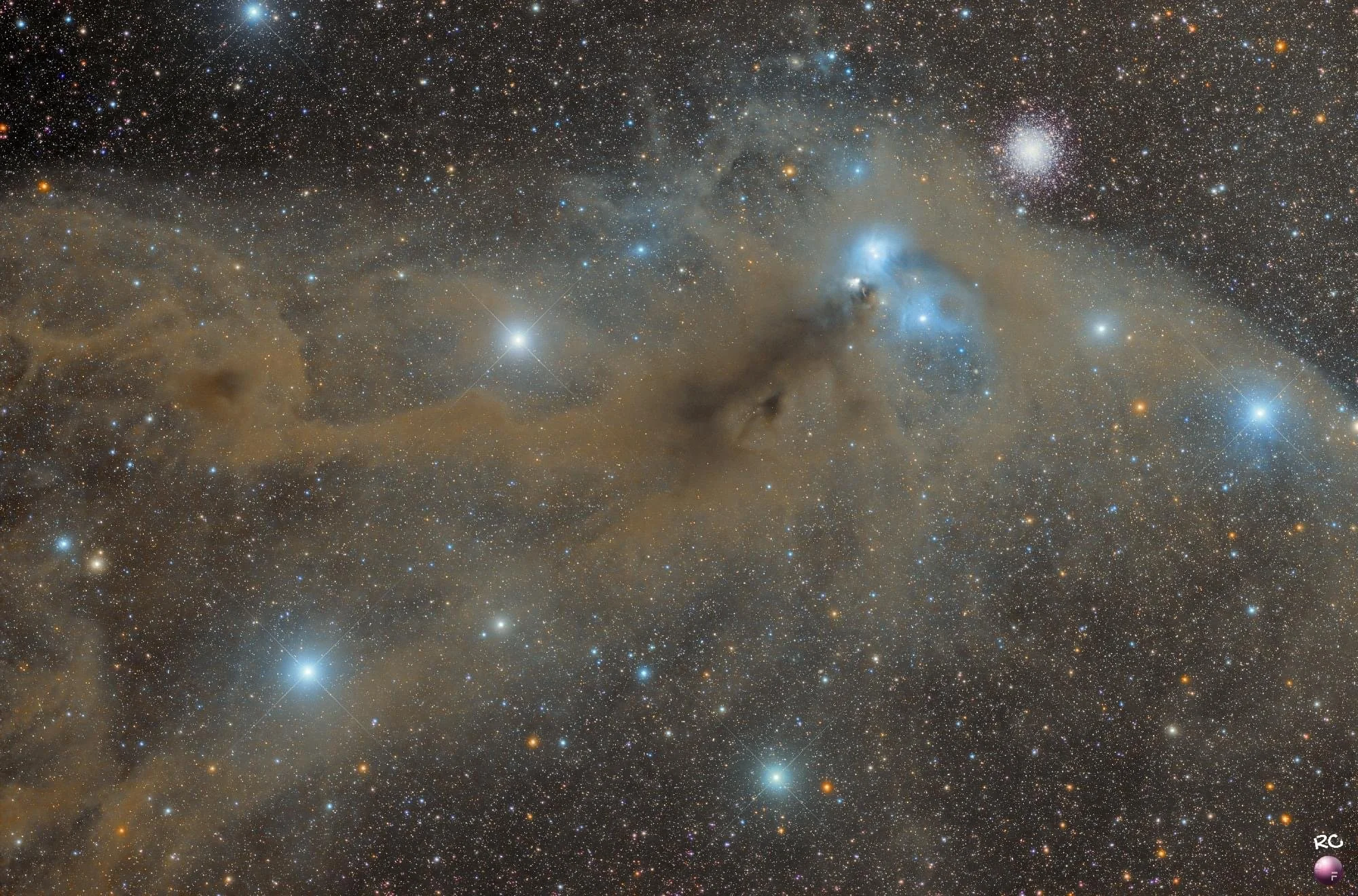
Cosmic dust
mage Details:
Takahashi FS60c
QHY168c
QHY5L-ii
Pegasus Astro SMFC
Feather touch FTF2015BCR-RP
HEQ5
116 · 150s -10ºC, Gain 12
Location: Serra do Cipó, Minas Gerais, Brazil
FAST · PSCS5 · Pixinsight
July 2018
Cosmic dust clouds are draped across a rich field of stars in this broad telescopic panorama near the northern boundary of Corona Australis, the Southern Crown. Less than 500 light-years away the denser clouds effectively block light from more distant background stars in the Milky Way. The entire vista spans about 5 degrees or nearly 45 light-years. Toward the right lies a group of bluish reflection nebulae cataloged as NGC 6726, 6727, 6729 and IC 4812. The dust also obscures from view stars in the region still in the process of formation. Smaller yellowish nebula NGC 6729 surrounds young variable star R Coronae Australis.
Copyright:: Roberto Colombari

The Eagle Nebula in True Color
Image Description and Details : First image using an ASI2600MC with a RASA8! This shows 15 hours on the Messier 16 Eagle Nebula region of the sky in true color, without the use of any filter. This region is most often captured in narrowband, but I like the true color feel for this particular part of the sky. You can see the wings of the eagle spanning in rich hydrogen alpha gas, and the bright stars lighting up the famous Pillars of Creation.
Copyright: Antoine and Dalia Grelin
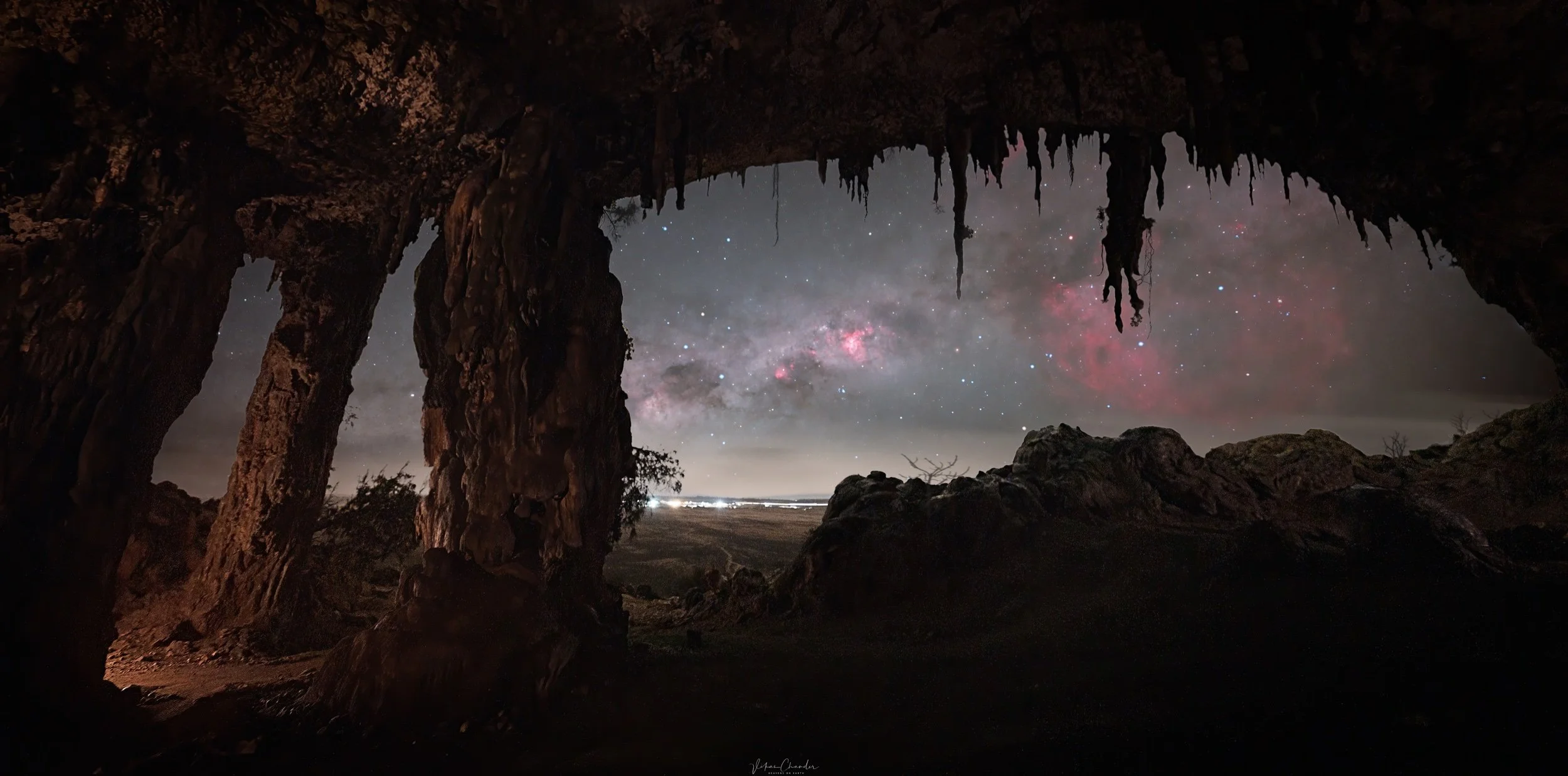
Dagub cave
Image Description and Details : Dagub Cave
While Socotra is better known for its endemic species of trees and wildlife, there are many limestone caves which dot the island. The largest of these is the Al-Hoq Cave but it is the Dagub cave which offers the more interesting nightscape thanks to its view to the south.
Stalactites, formed over centuries of water dripping from the cliffs, come together at the mouth of the cave to form an interesting foreground against which to frame the night sky. Socotra is very sparsely populated and as a result the skies are very clear whenever the clouds part ways. Being close to the equator, allows one to frame objects otherwise seen only in the Southern Hemisphere. See in the sky here from left to right is the Coalsack Nebula, the Southern Cross, the Running Chicken Nebula, Eta Carina and Gum 15…..
Camera = Sony A7rv
Lens = Sony 12-24 F2.8GM at 15mm
Tracker = Benro Polaris
Sky Exposure = 240secs, F2.8, iso 800, stack of 12, tracked
Ground Exposure = 480secs, F2.8, iso 800, LENR, LLL
Software = Lightroom, Photoshop.
Copyright: vikas chander
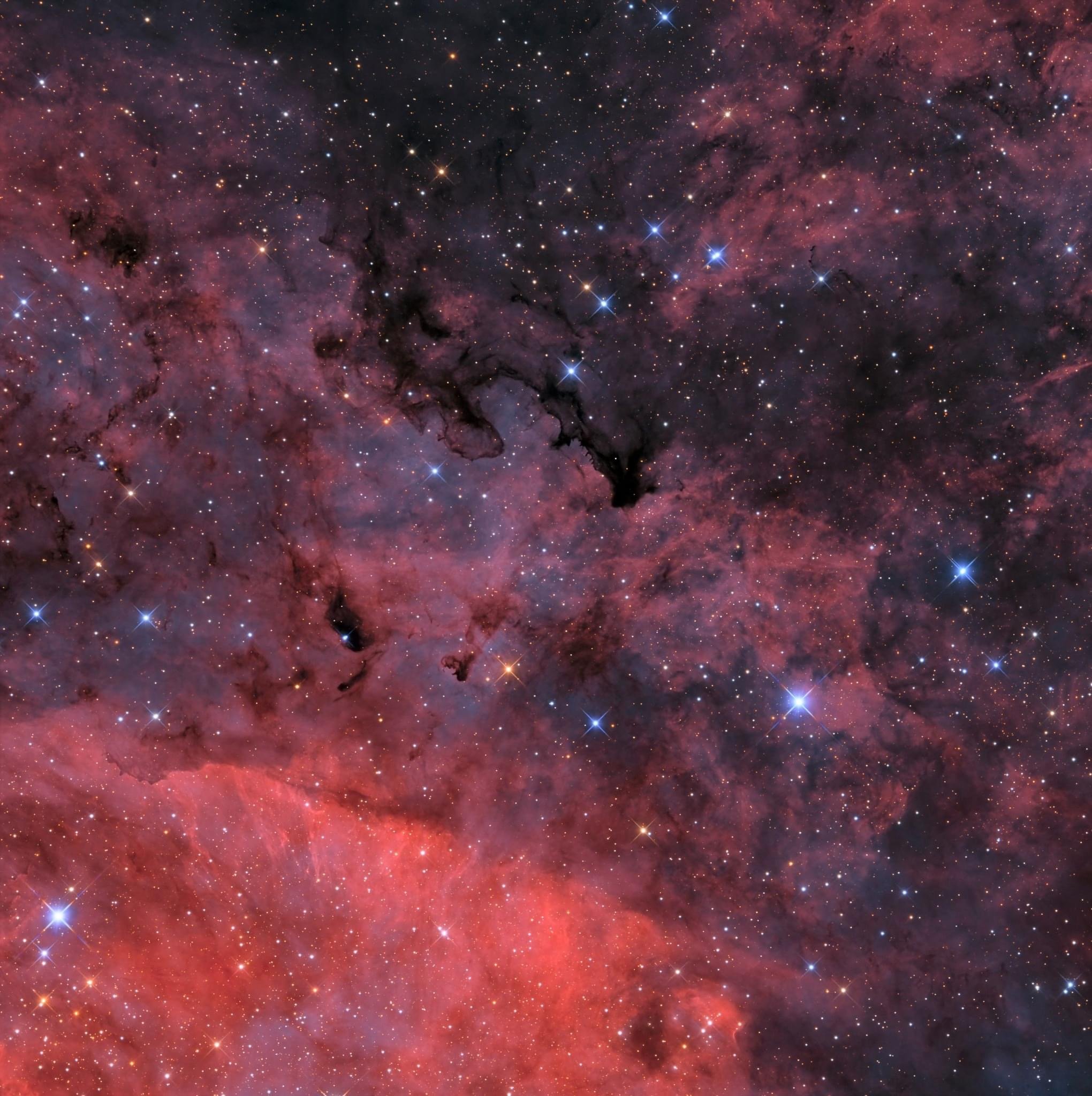
B 344
Image Description:
In the center BARNARD 344 a dark nebula in the constellation Cygnus. It is located near the star Sadr in the Gamma Cygni nebula (RA: 20h18m57.4s DEC: +40º 40′ 01″).
Photo made in HOO and RGB stars.
H for Hydrogen and O for Oxygen.
The Sulfur layer is in progress so I will do a SHO version.
SETUP:👇
Skywatcher Quattro 8CF
ZWO ASI533MM Pro
iOptron GEM45
Unit pictures:
Antlia 3nm Narrowband H-alpha 1.25": 150×240″(10h) (gain: 100.00) f/3.8 -10°C bin 1×1
Antlia 3nm Narrowband Oxygen III 1.25": 70×240″(4h 40′) (gain: 100.00) f/3.8 -10°C bin 1×1
Astronomik Deep-Sky Blue 1.25": 40×30″(20′) (gain: 0.00) f/3.8 -10°C bin 1×1
Astronomik Deep-Sky Green 1.25": 40×30″(20′) (gain: 0.00) f/3.8 -10°C bin 1×1
Astronomik Deep-Sky Red 1.25": 40×30″(20′) (gain: 0.00) f/3.8 -10°C bin 1×1
Integration:
Copyright: Puig Nicolas
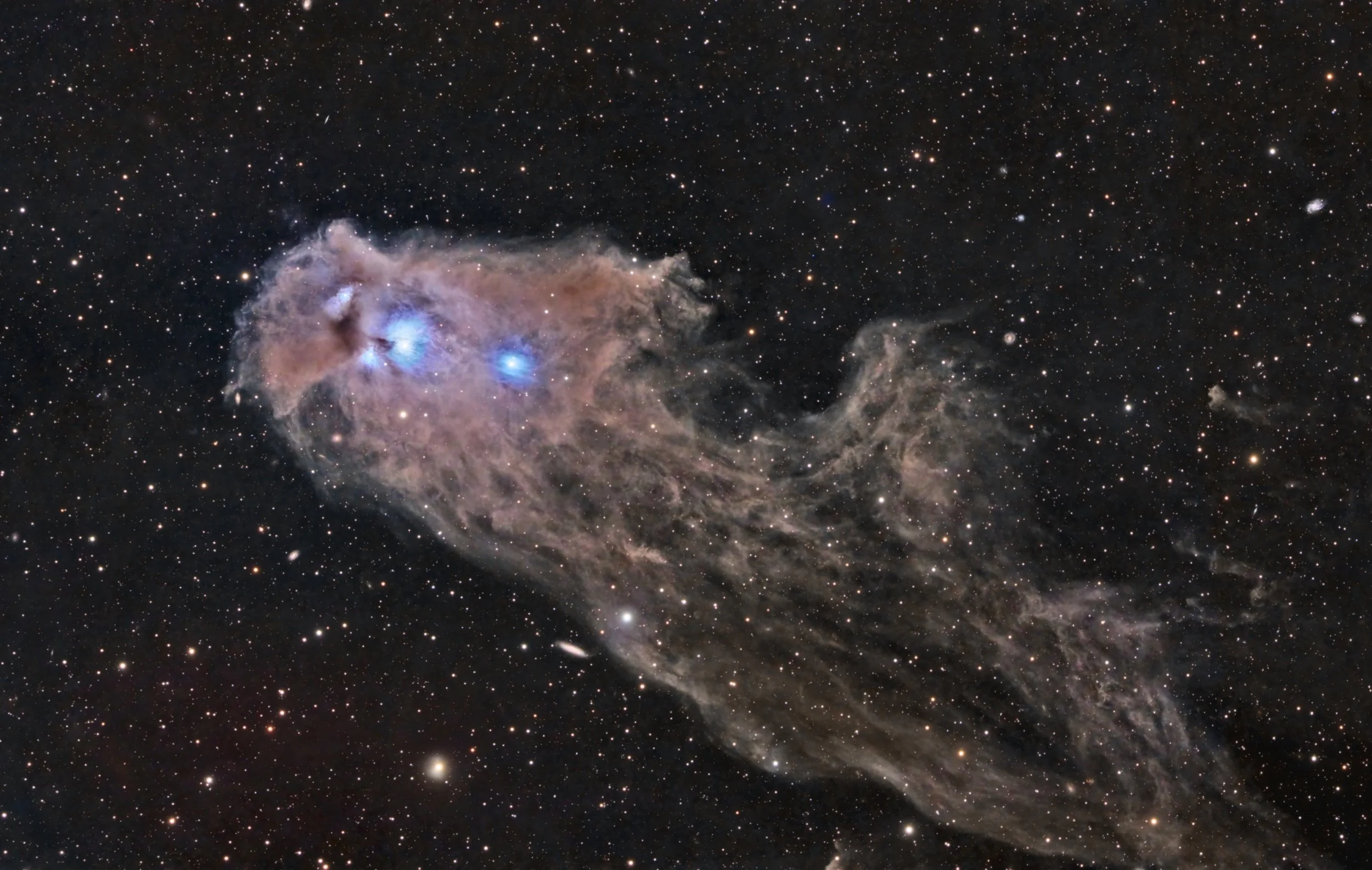
Night Flight Reflection Nebula 5367
Image Description and Details : This beautiful reflection nebula NGC 5367 is associated with the cometary globule CG12 in Centaurus, about 2500 light years away and is lit up by double star H4636.
Taken from my back yard , LRGB image 21 hours integration time.
William Optics Fluorostar 132 , ZWO ASI2600MM , 10-Micron GM2000 HPSII combi mount. Processed in Astropixel Processor and Pixinsight.
Copyright: Michelle Bennett
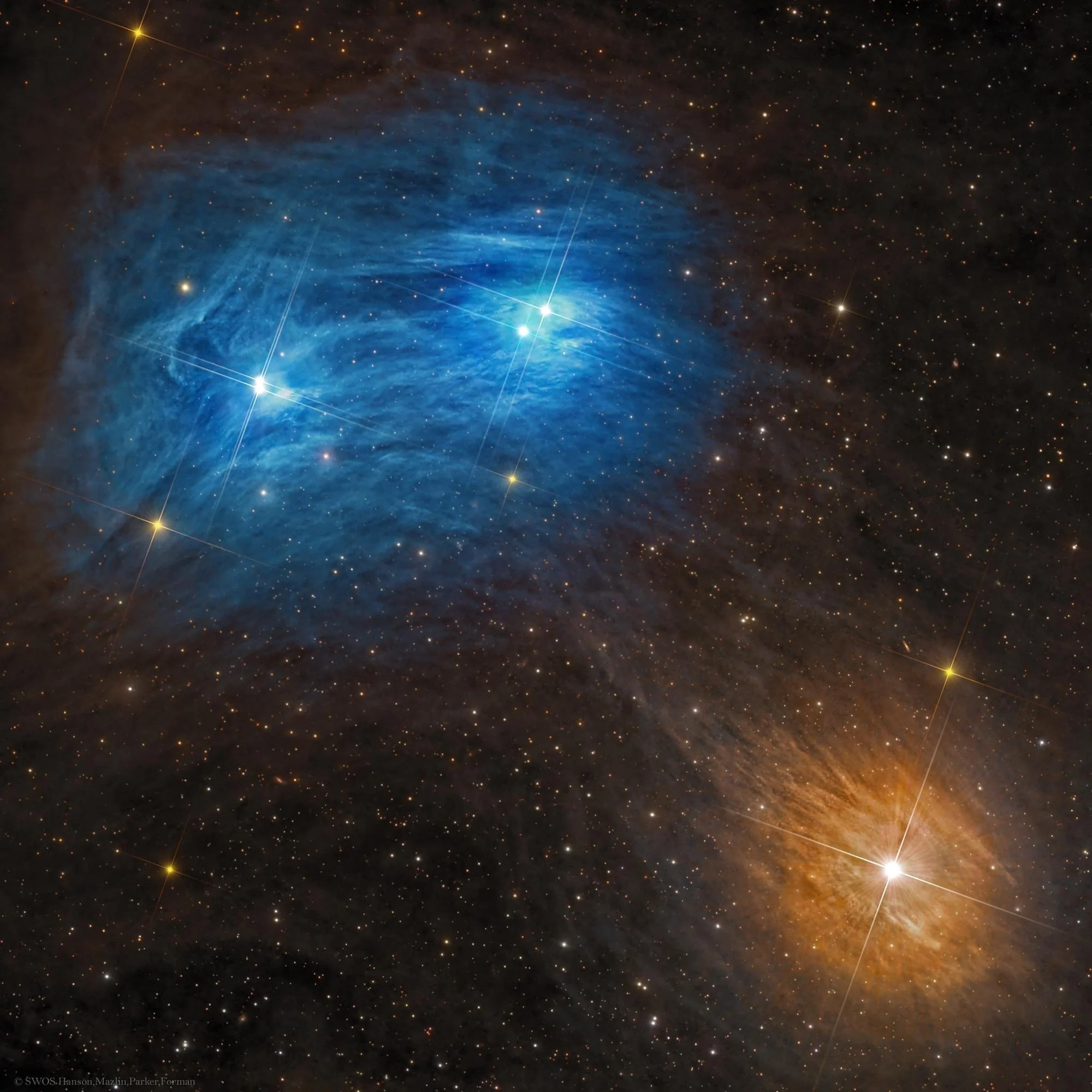
NGC 4601- Reflection Nebula in Scorpius
Image Description: IC 4601 is a reflection nebula which is located about 420 light-years away in Scorpius.
The bluish reflection nebula with the two embedded double stars is IC 4601 (vdB 102,vdB 103), the yellowish reflection nebula is vdB 101. The two reflection nebulae appear so different due to the temperature differences of the illuminating stars.
These types of nebulae are called “reflection,” because they reflect the light of nearby stars.
IC 4601 is illuminated by the intense radiation of the stars present in its vicinity, among which the most brilliant star HD 147010, and the two stars of a binary system known as HD 147013, which are all blue giants.
The dust of IC 4601 contains the heavy elements that planets are made of and plays a major role in the creation of new stars. There probably are baby stars wrapped in these blankets of dust.
Taken with CDK 24 from El Sauce Chile
Data: SWOS group Mazlin,Parker,Forman,Hanson
Image Processing: Mark Hanson
Copyright: Mark Hanson
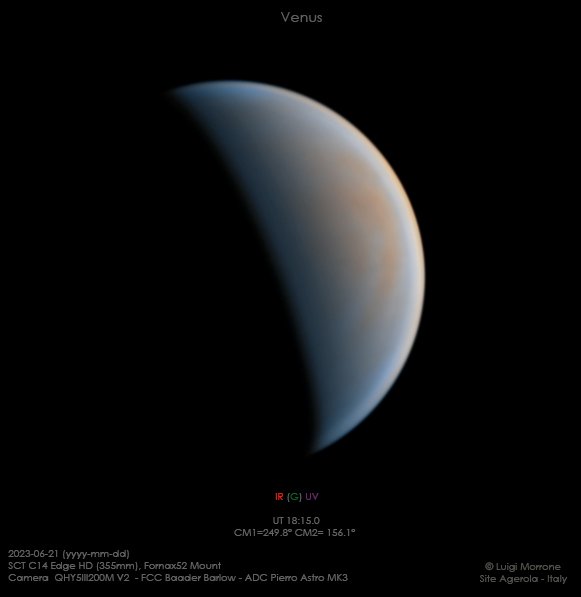
Saturn
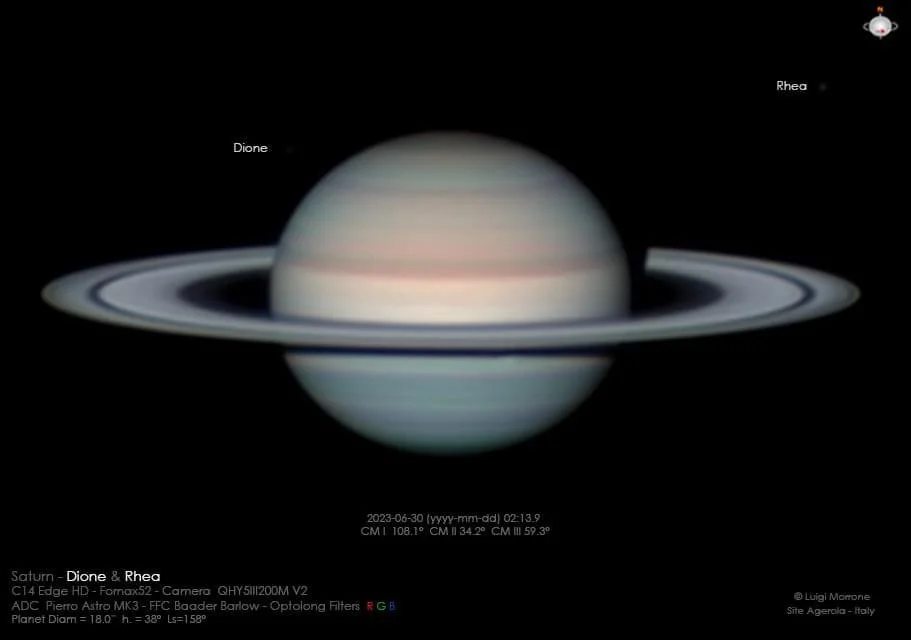
Saturn 30 June 2023
Under good seeing conditions and transparency.
The transit of Dione and Rhea over the globe can be seen.
Setup: C14 Edge HD, Fornax52 mount, QHY5III200M, OPTOLONG RGB filters,Barlow FFC Baader, ADC Pietro Astro MK3
Dia.:18.0 arcsec
h:38°
Ls:158°
Agerola-Amalfitan Coast-Italy
Copyright: Luigi Morrone
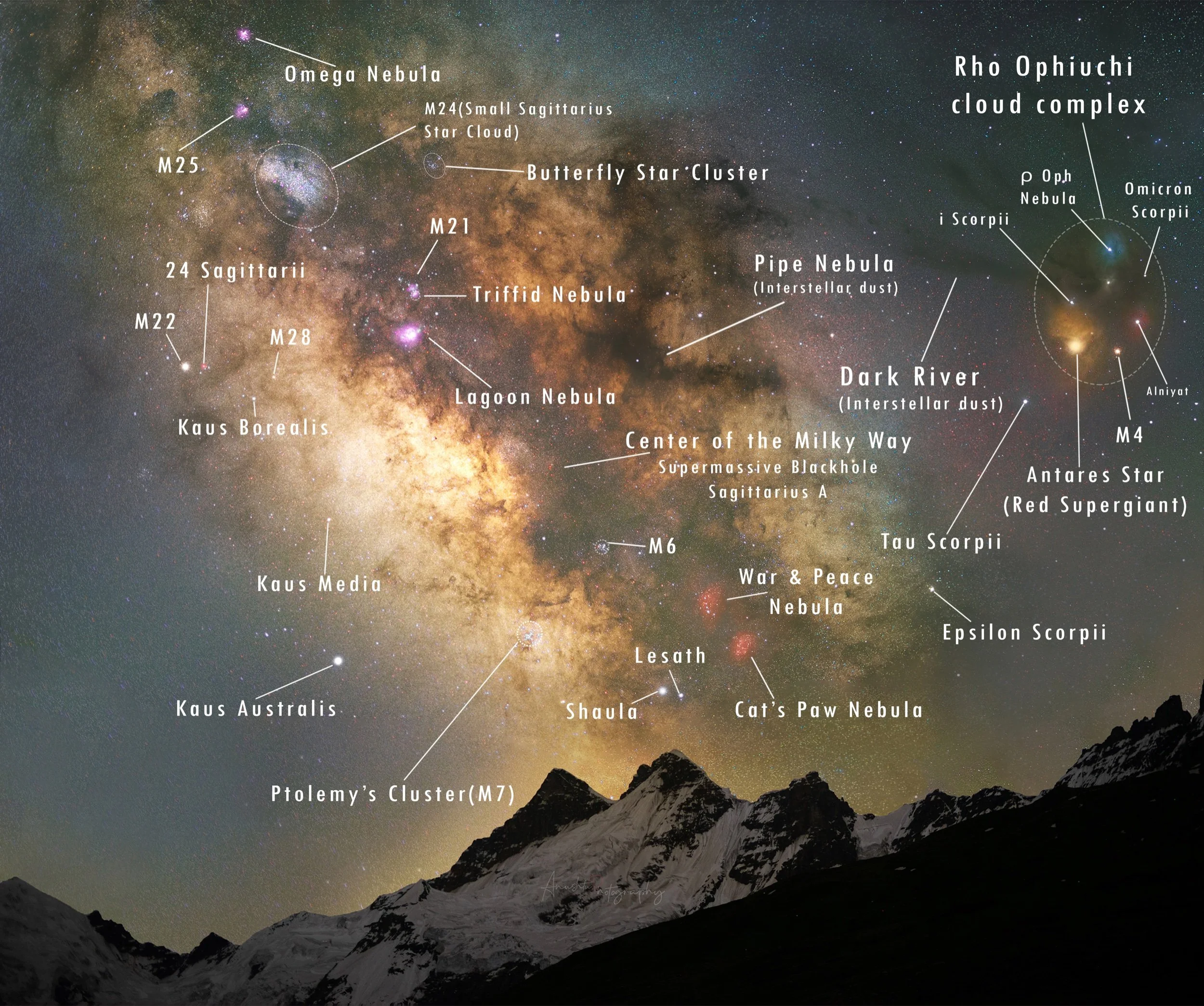
Rho Ophiuchi cloud complex
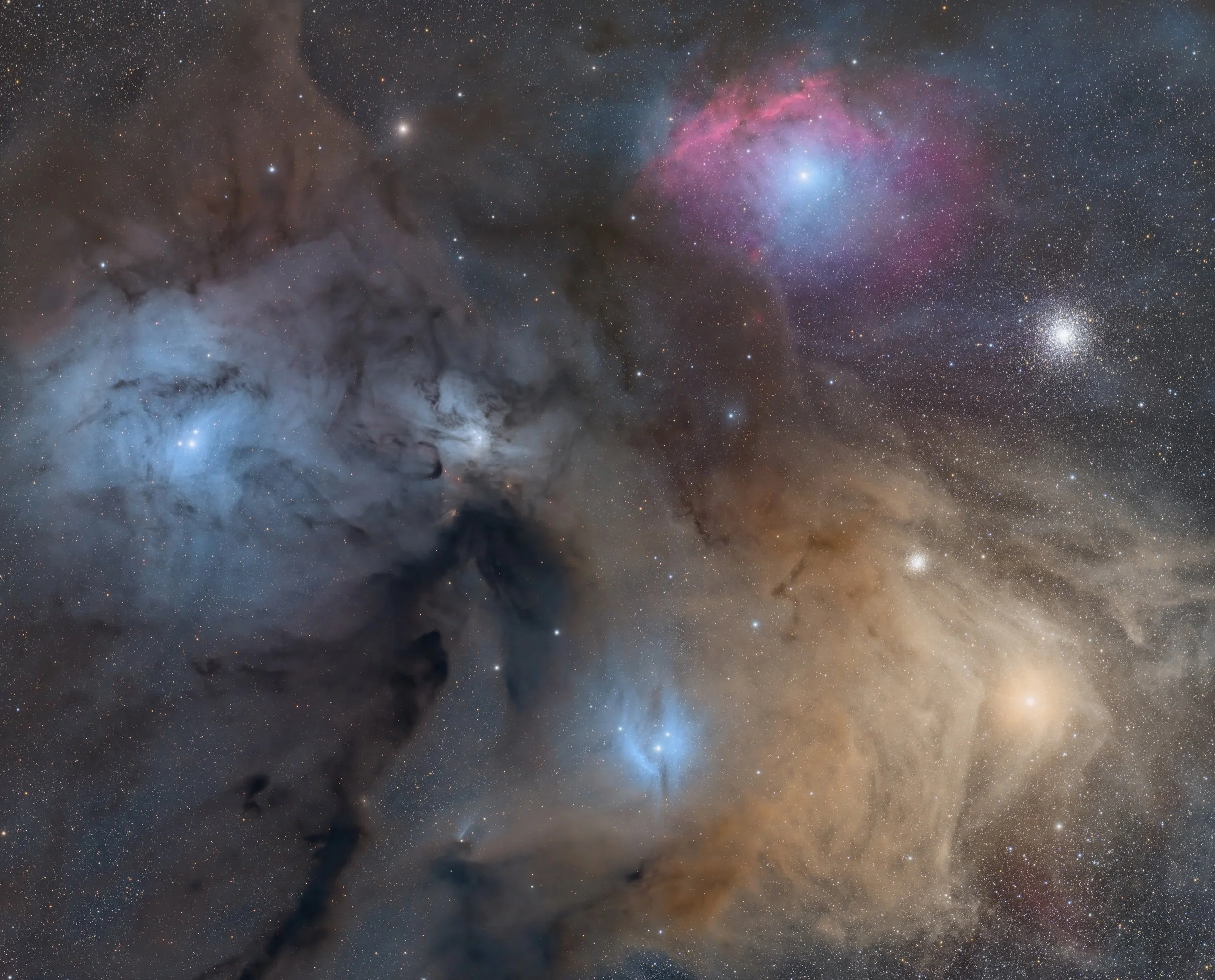
Image Description and Details : In order to image the Rho Ophiuchi cloud complex, we decided to create a two-panel mosaic, so as to have a good resolution and be able to walk around the image.
The Rho Ophiuchi cloud complex is a complex of interstellar clouds with mainly dark nebulae.
At a distance of around 450 light-years, it is one of the solar system's closest star nurseries.
Rho Ophiuchi is the star system in the blue area on the left of the image. With a surface temperature of over 6,500K (making them more than 160 times brighter than the Sun), these stars reflect their light onto the dark clouds around them.
Some structures appear to be the result of a shockwave passing through the cloud from the direction of the nearby Scorpius-Centaurus association.
Dust and gas that makes the star system appear 1.45 magnitudes dimmer than it really is. Without the interstellar extinction, Rho Ophiuchi would shine at magnitude 3.18.
We can also find two globular clusters: M4 (the largest) and NGC 6144 (the smallest).
This area of the sky is known for its wide range of colors, making it a very photogenic zone.
Copyright: Team Atlaskies
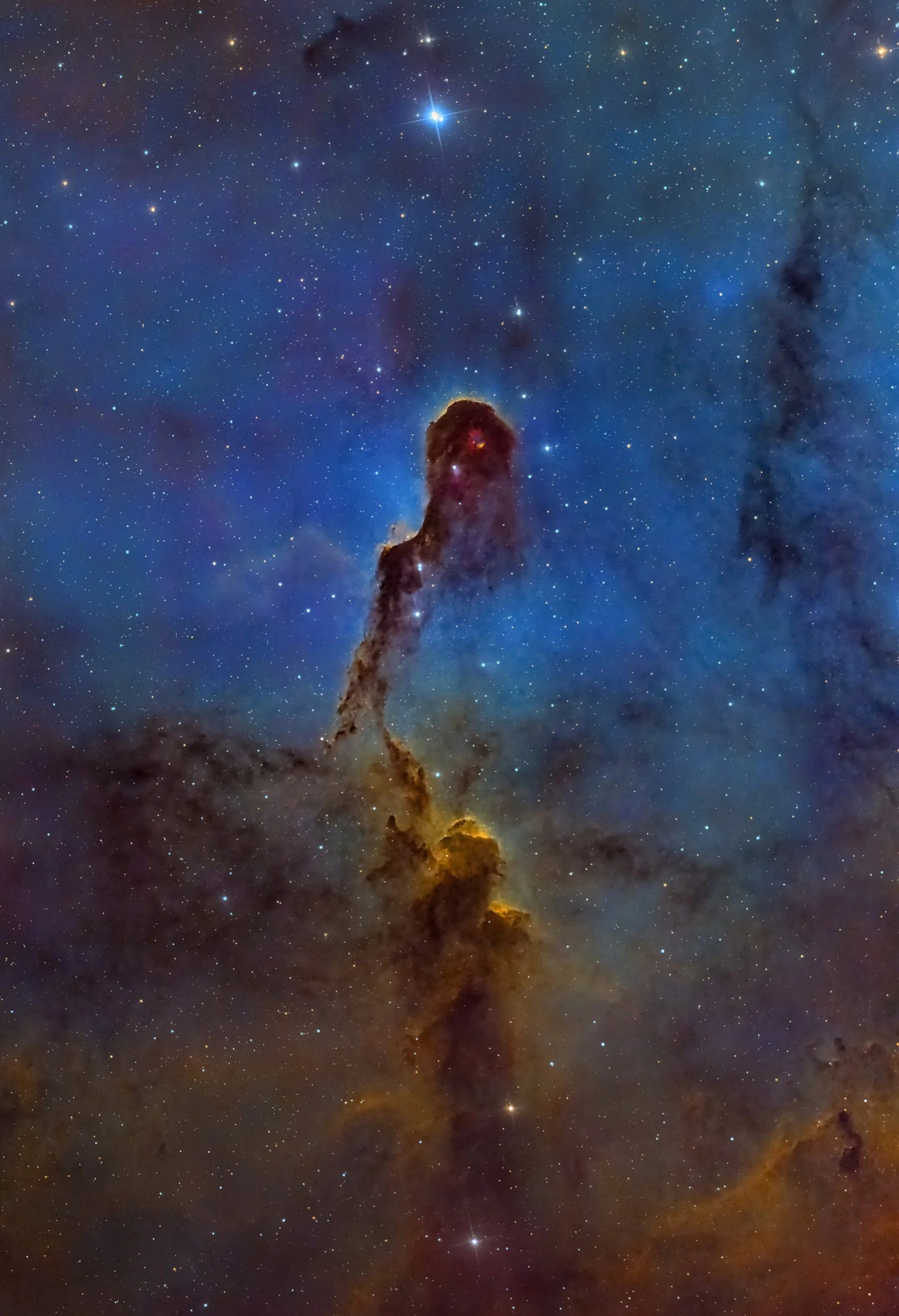
Elephant's Trunk Nebula
Image Description and Details : The Elephant's Trunk Nebula is a concentration of interstellar gas and dust within the much larger ionized gas region IC 1396 located in the constellation Cepheus about 2400 light years away from Earth. The piece of the nebula shown here is the dark dense globule IC 1396A; it is commonly called the Elephant's Trunk nebula because of its appearance at visible light wavelengths, where there is a dark patch with a bright, sinuous rim. The bright rim is the surface of the dense cloud that is being illuminated and ionized by a very bright massive star (HD 206267) that is just to the east of IC 1396A.
The Elephant's Trunk Nebula is now thought to be a site of star formation, containing several very young (less than 100000 years) stars that were discovered in infrared images in 2003. Two older stars are present in a small, circular cavity in the head of the globule. Winds from these young stars may have emptied the cavity.
The combined action of the light from the massive star ionizing and compressing the rim of the cloud, and the wind from the young stars shifting gas from the center outward lead to very high compression in the Elephant's Trunk Nebula. This pressure has triggered the current generation of protostars.
Konus 200/1000 @960mm, f/4.8
Qhy168c @-5 °C
Sky-Watcher Eq6r Pro mount
Optolong L_Ultimate filter 45x600"
SvBony SII 7nm filter 45x600"
SvBony UV/IR-cut filter 115x30"
N.I.N.A., DSS, APP, PixInsight, PS
Ferrara (Italy)
Copyright: Massimo Di Fusco
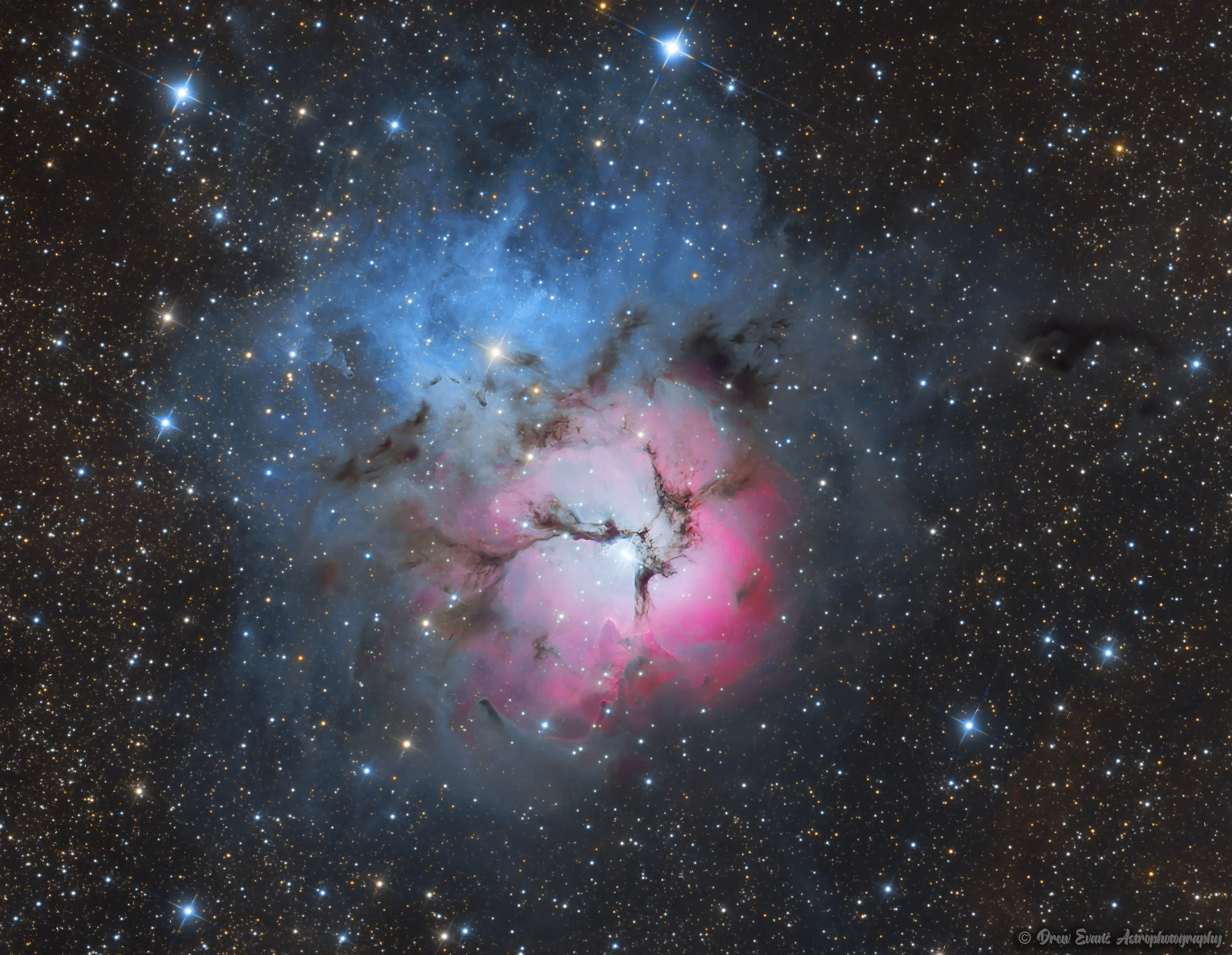
TRIFID NEBULA - M20
The Trifid Nebula's vivid hues are brought to life by the radiation from young, hot stars, which excite the surrounding hydrogen gas, causing it to glow with a mesmerizing red hue. Intertwined among the bright emission nebula, dark lanes of obscuring dust create captivating contrasts, while reflection nebulae scatter and reflect the light of nearby stars, adding a soft, ethereal glow.

M16
The striking 'Pillars of Creation' stood as a testament to the ongoing process of star birth and the vast cosmic forces at play. Captured by various observatories in stunning detail, these towering structures continue to inspire and deepen our understanding of the profound processes that shape galaxies and give rise to new generations of stars, providing a glimpse into the captivating beauty and complexity of our universe
copyright: Jörg Ortmann
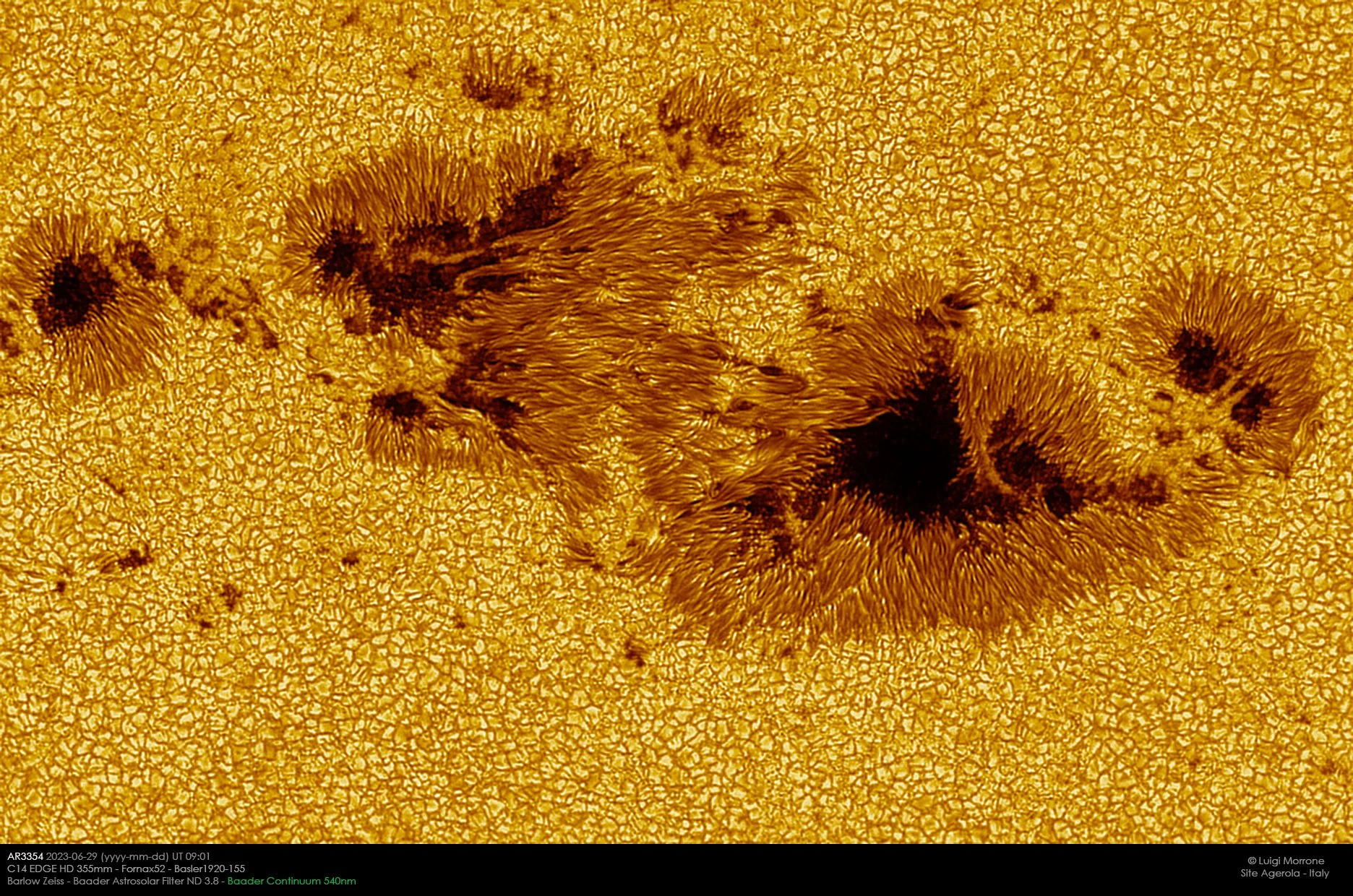
AR3354
Image Description and Details : AR3354 29 June 2023
The huge sunspot AR3354 taken under wonderful seeing conditions.
C14 Edge HD, Fornax52 mount, Basler1920-155,Barlow Zeiss, Baader Astrosolar ND3.8 Full Aperture solar filter, Baader Continuum 540nm
Agerola-Amalfitan Coast- Italy
Copyright: Luigi Morrone
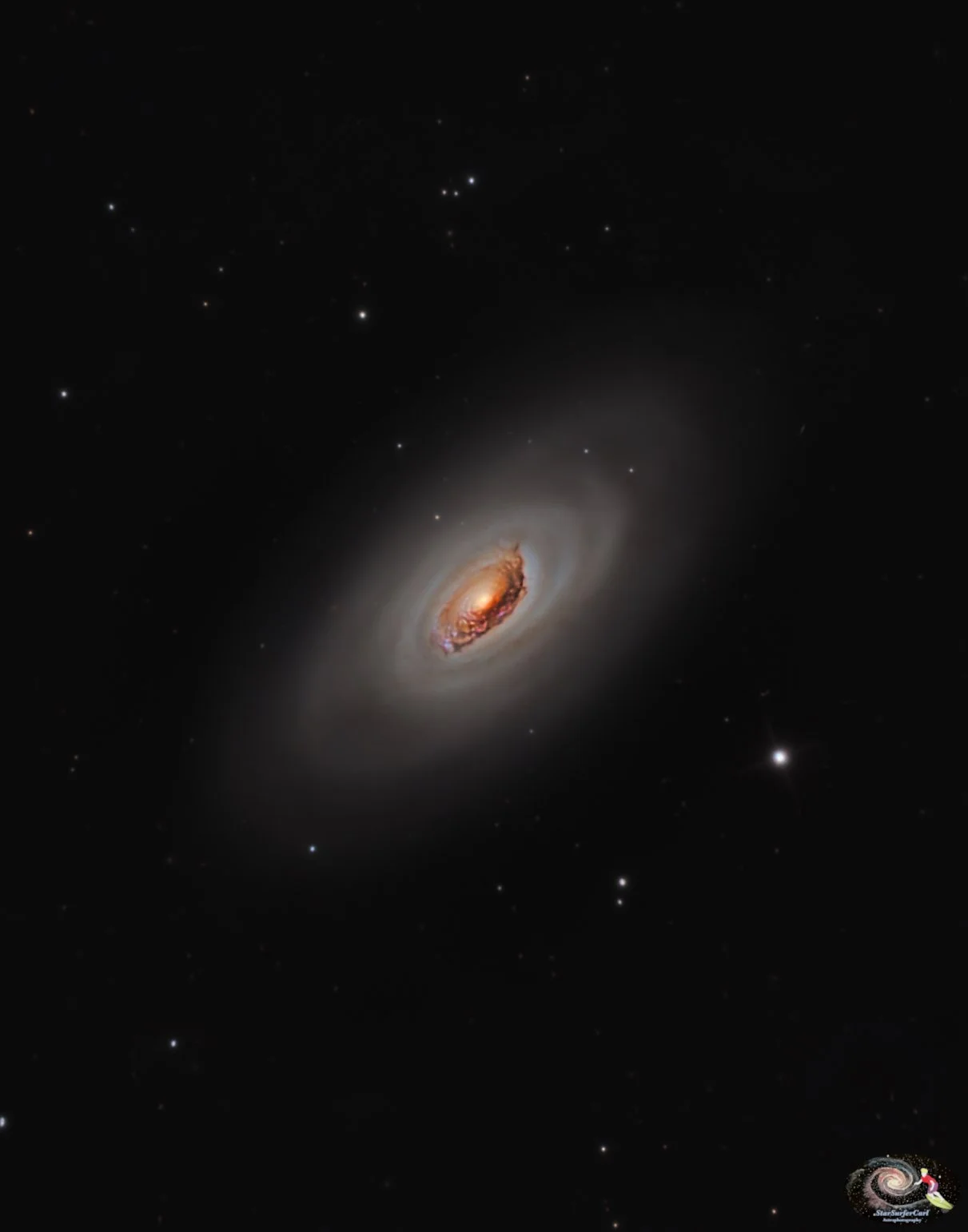
The Black Eye Galaxy
Image Description and Details : The Black Eye Galaxy, or M64, is located 17 million light-years away in the constellation Coma Berenices. Its nucleus is packed with impressive dust lanes laden with rigorous star formation. Charles Messier added this galaxy to his list in 1780, but it had already been discovered by English astronomer Edward Pigott in 1779.
Acquisition Date: April 24 - May 10, 2023
Equipment: Planewave CDK12.5, Astrodon LRGB, ZWO ASI2600MM
Integration: 25 hours
- L: 119 x 300s
- R: 58 x 300s
- G: 64 x 300s
- B: 65 x 300s
Processed in PixInsight
Copyright: Carl Crum
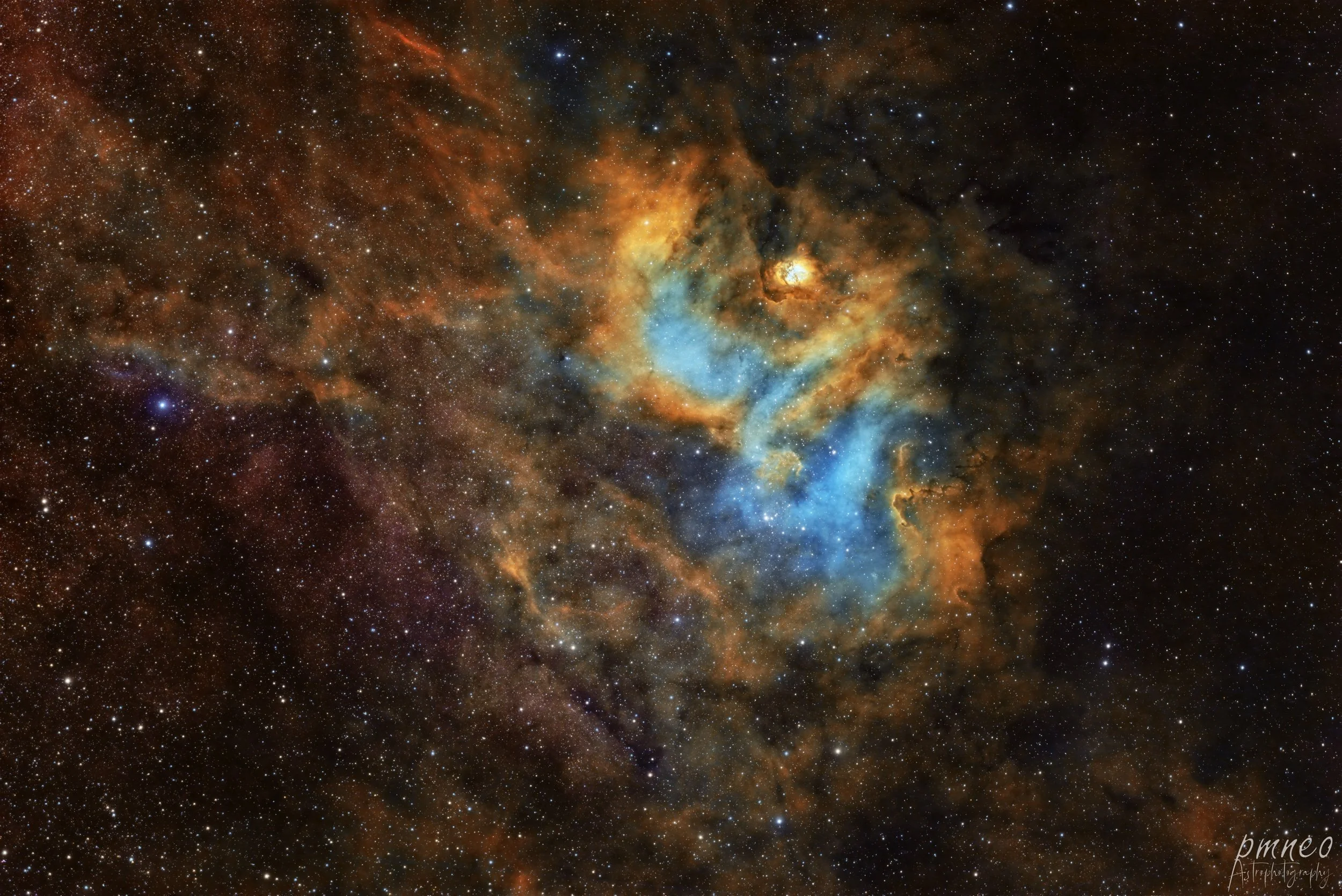
SH2-54
Image Description and Details : Sh2-54 with my dual Setup of a TS80 and TS130 as SHO with (partial) RGB Stars from the TS130.
I have double checked all data and the lower left dark nebula is a bit stronger in S-II line.
27:42h total capture time:
Astronomik Deep-Sky Blue 36 mm: 33×180″(1h 39′)
Astronomik Deep-Sky Green 36 mm: 25×180″(1h 15′)
Astronomik Deep-Sky Red 36 mm: 26×180″(1h 18′)
Astronomik H-alpha CCD 6nm 36mm: 43×300″(3h 35′)
Astronomik OIII CCD 6nm 36 mm: 30×300″(2h 30′)
Astronomik SII CCD 6nm 36 mm: 33×300″(2h 45′)
ZWO H-alpha 7nm 36mm: 62×300″(5h 10′)
ZWO O-III 7nm 36mm: 55×300″(4h 35′)
ZWO S-II 7nm 36 mm: 59×300″(4h 55′)
Copyright: Philip Mair
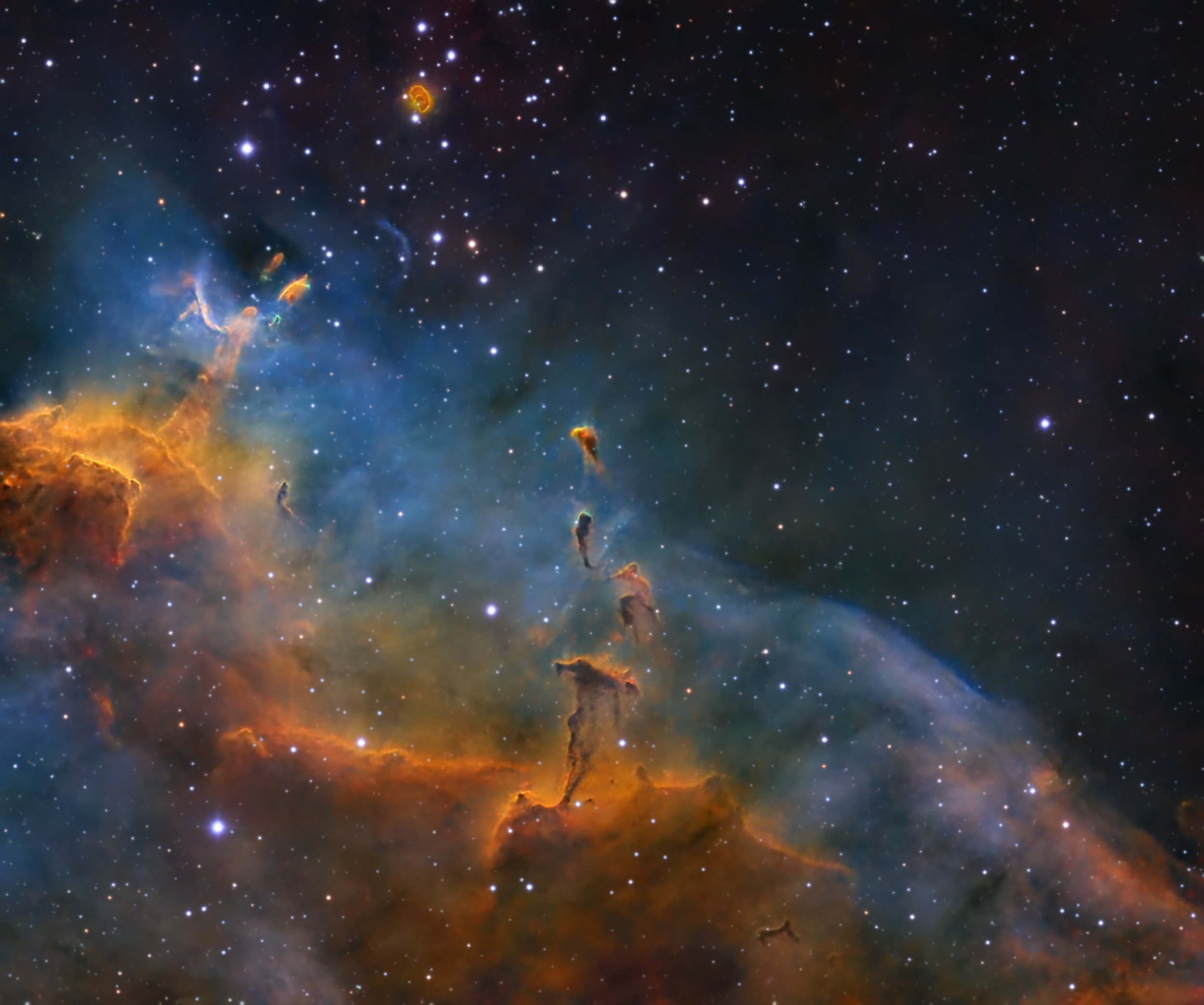
The Southern Tadpoles in NGC 3572
Image Description and Details : Integration time= 15h 17′ 30″
Imaging Telescopes Sky-Watcher Esprit 150ED
Imaging Camera QHY16200A
Mount Sky-Watcher EQ8-RH
Filter Antlia 3.5nm Narrowband H-alpha 2" · Antlia 3.5nm Narrowband Sulfur II 2" · Baader Blue (B-CCD) 2" · Baader Green (G-CCD) 2" · Baader Red (R-CCD) 2" · Chroma OIII 3nm Bandpass 2"
Copyright: Christian Hilbert
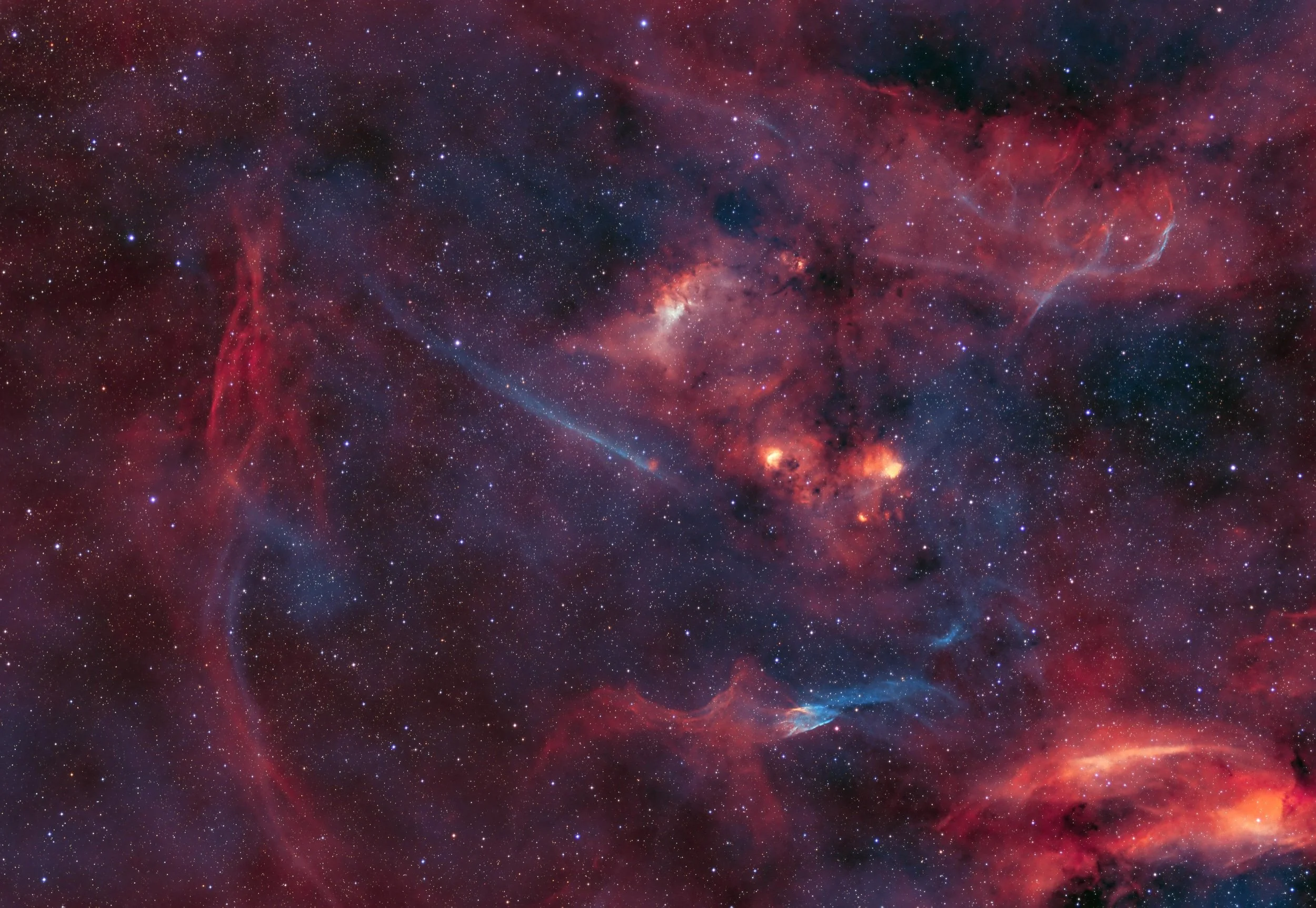
Field on Sh2-99 and Sh2-100
Image Description and Details : Very happy to share with you this photography which is to date, is the one where I realized the most exposure time : 37H30.
Realized between May 29 and June 15, 2023.
It is a colorimetric assembly, with SHO, HOO, and RGB layers.
SH2-99 and SH2-100 are emission nebulae visible in the constellation Cygnus, at the edge of a very bright stretch of the Milky Way. These small regions of ionized hydrogen are located at a distance of approximately 26,000 light-years and 28,000 light-years respectively from us.
Exifs :
S : 31x600s - H : 85 x 600s - O : 73 x 600s
R : 110 x 60s - G : 110 x 60s - B : 140 x 60s
Sharpstar Optics Askar FRA600 with 0,7x reductor
ZWO ASI Cameras ASI1600 Pro mono
Antlia Astronomy Filters 3nm SII, Ha OIII – Zwo filters R, G, B
Sky-Watcher AZ Eq6 GT
Primalucelab EAGLE 4 – Sesto Senso II – ECCO2
Copyright: Jordan Marlière
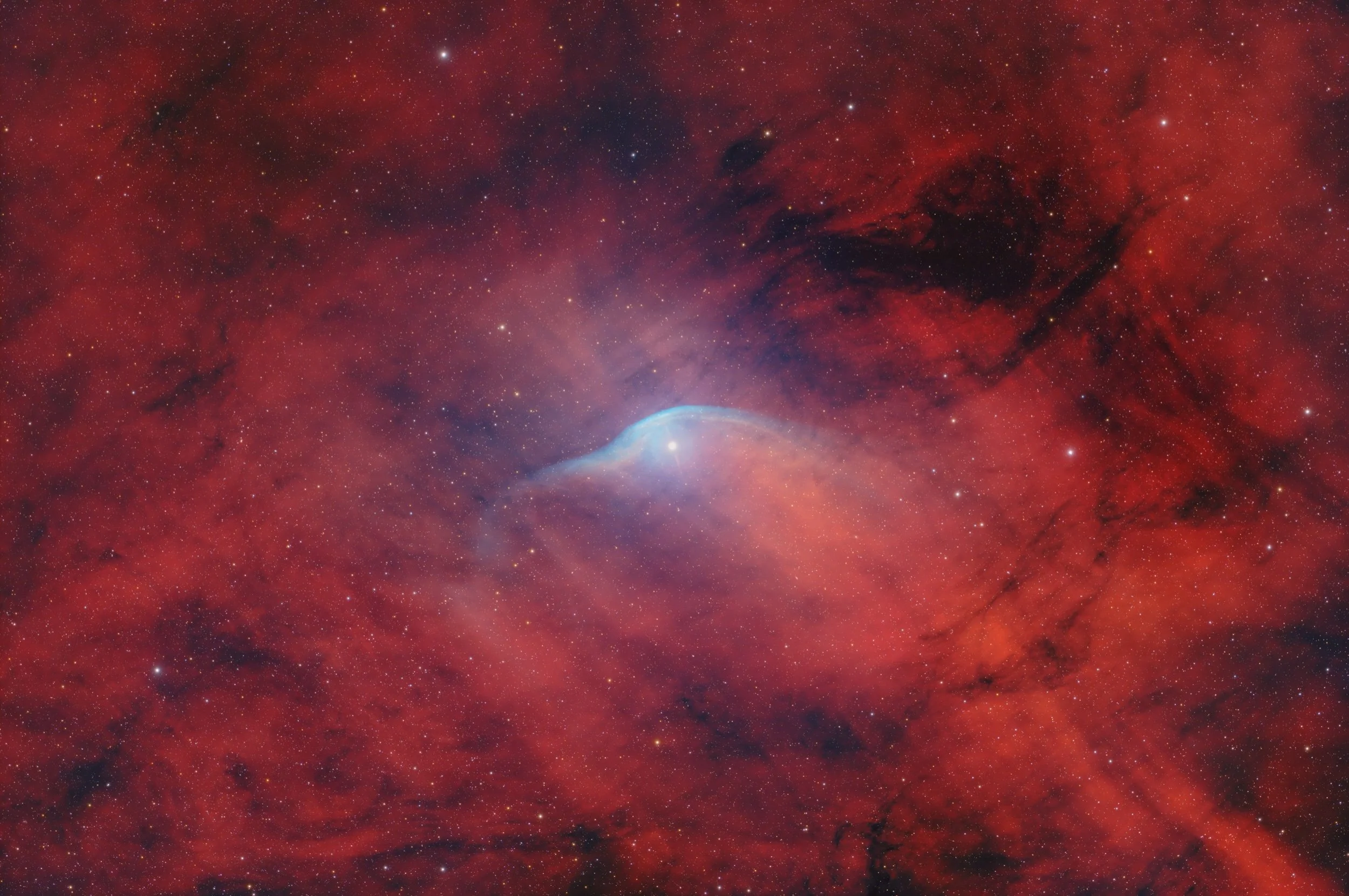
The bird of Zeta Ophiuchi
Image Description and Details : Zeta Ophicuchi is a star 20 times more massive than the Sun and is moving very fast, at 24km/s, which is relatively rare since there are currently 16 of them in our galaxy.
This can be explained by the fact that it probably originally formed a binary system with a much more massive star. When this became a supernova, the explosion propelled Zeta Ophiuchi.
The envelope that surrounds it is due to the shockwave between the star, which compresses and heats the dust in the stellar medium. Its shape strongly resembles a bird.
Copyright: Team Atlaskies
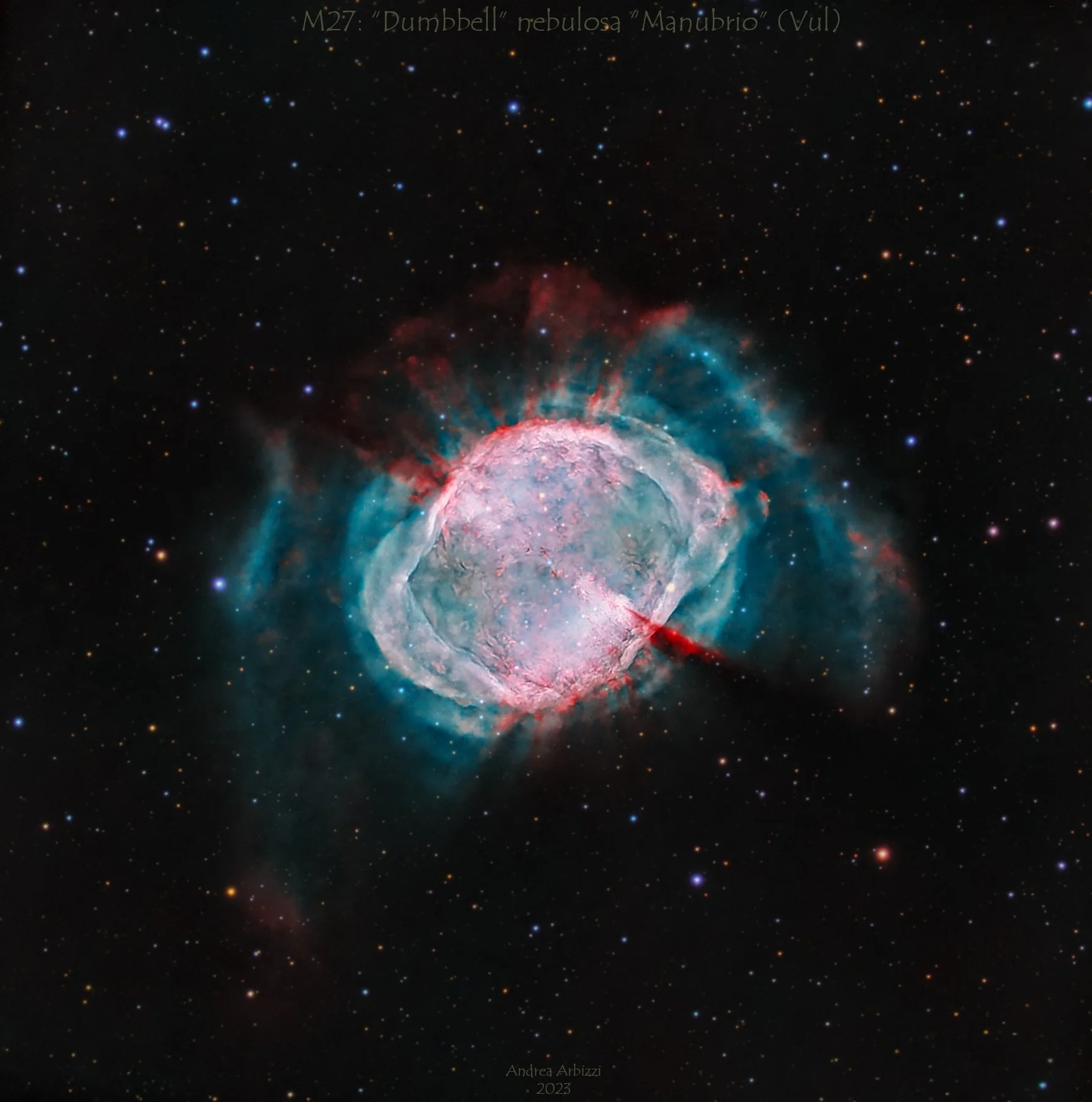
M27: the "Dumbbell" nebula
Image Description and Details : M27: the "Dumbbell" nebula, is a famous and bright planetary nebula visible in the constellation Vulpecula.
C8 HD Edge F7,3 (1472 mm) + APM Apo (Fpl53) 140 F7 (979 mm)
ZWO ASI 533MC Pro + iOptron GEM45
ZWO ASI 220MM Mini + ZWO OAG-L
ZWO EAF ZWO + EFW 5X2
ZWO AsiAir Plus
Apr - Giu 2023
Optolong L-Ultimate: 80X600’’ (C8 HD Edge) + 34X600" (APM 140)
Optolong Uvir cut: 30X60”
Tot: 19h 30’
Modena (Sqm 18.3-18.9 Bortle 7,5-8), Italy
Copyright: Andrea Arbizzi