

AAPOD2 Image Archives
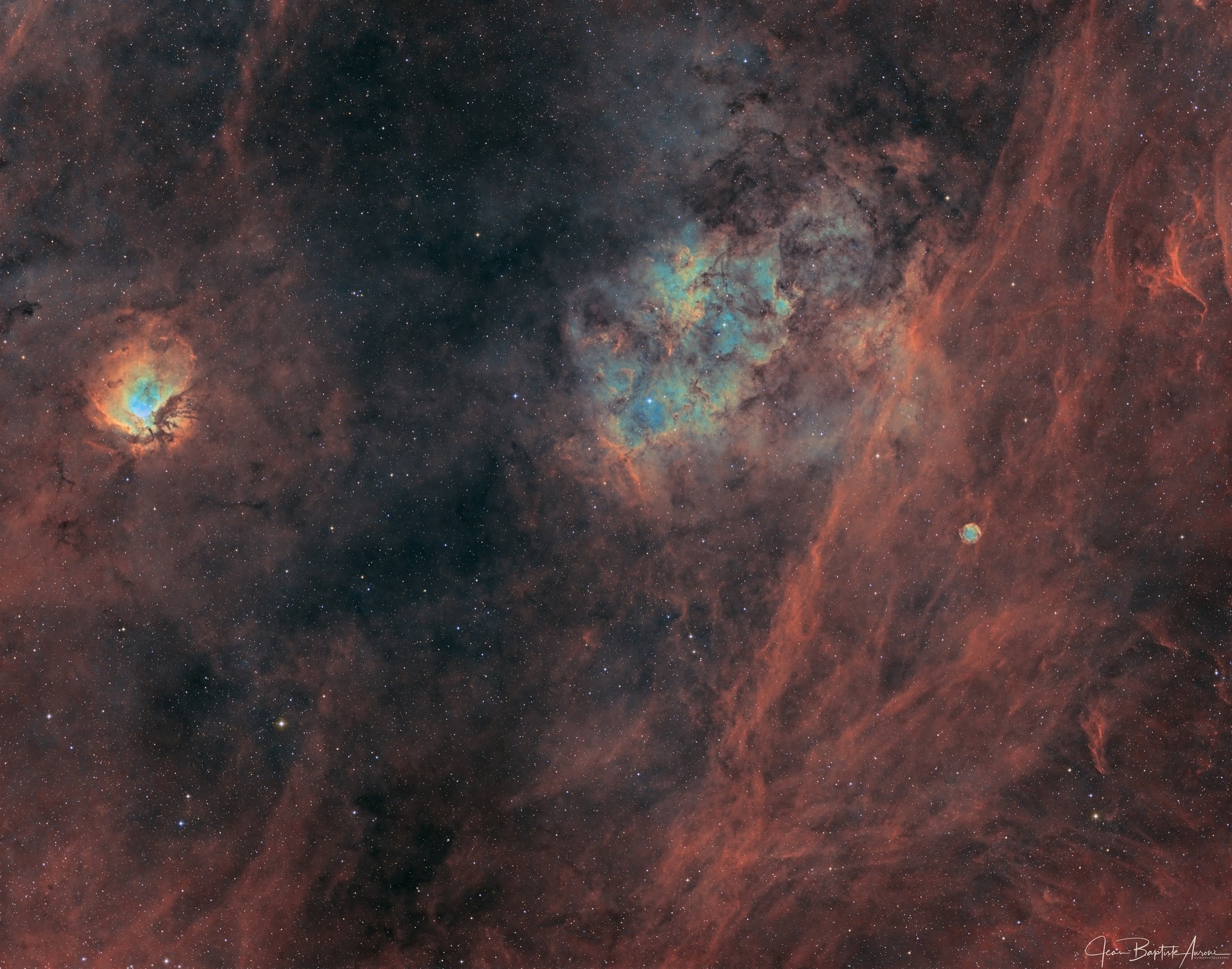
SH2-112, SH2-115 & PN Abell 71 in Cygnus
Image Description and Details : Here are the Sh2-112 (left) and Sh2-115 (right) nebulae in emission, together with the beautiful Abell 71 planetary nebula (PLN 85+4.1), in Cygnus.
The Ha clouds that dot this area are just a small part of the giant hydrogen cloud that stretches across most of the constellation, some 6,000 light-years away.
The planetary nebula is located closer to us, some 2500 light-years away...
Note that for this image, I've kept the palette from the mix without playing the selective corrections, in an attempt to best render the two main nebulae.
TSA102 - Atik Cameras 16200M - AZEQ6 - Baader UltraNarrowband filters (3/4nm) + RGB for stars.
Ha : 45 x 900s
OIII: 34 x 600s
SII: 34 x 600s
RGB: 3 x (30 x 60s)
Total: 24h05
Corsica & Charente-Maritime (France), August 26-29, 2022
Copyright: Jean-Baptiste Auroux

The Nova and Friends
Scientists and astrophotgraphers around the world were captivated by the awe-inspiring spectacle of a recent supernova in the magnificent spiral galaxy, M101, also known as the Pinwheel Galaxy. The brilliant explosion occurred in a distant corner of the galaxy, illuminating the cosmic stage with a dazzling display of celestial fireworks.
This cataclysmic event unleashed an incredible amount of energy, as the massive star met its dramatic end, releasing shockwaves and dispersing heavy elements into the vastness of space. Observations and measurements from various telescopes and instruments have provided invaluable insights into the dynamics and aftermath of this breathtaking supernova, contributing to our ever-expanding knowledge of stellar evolution and the extraordinary forces that shape our universe.
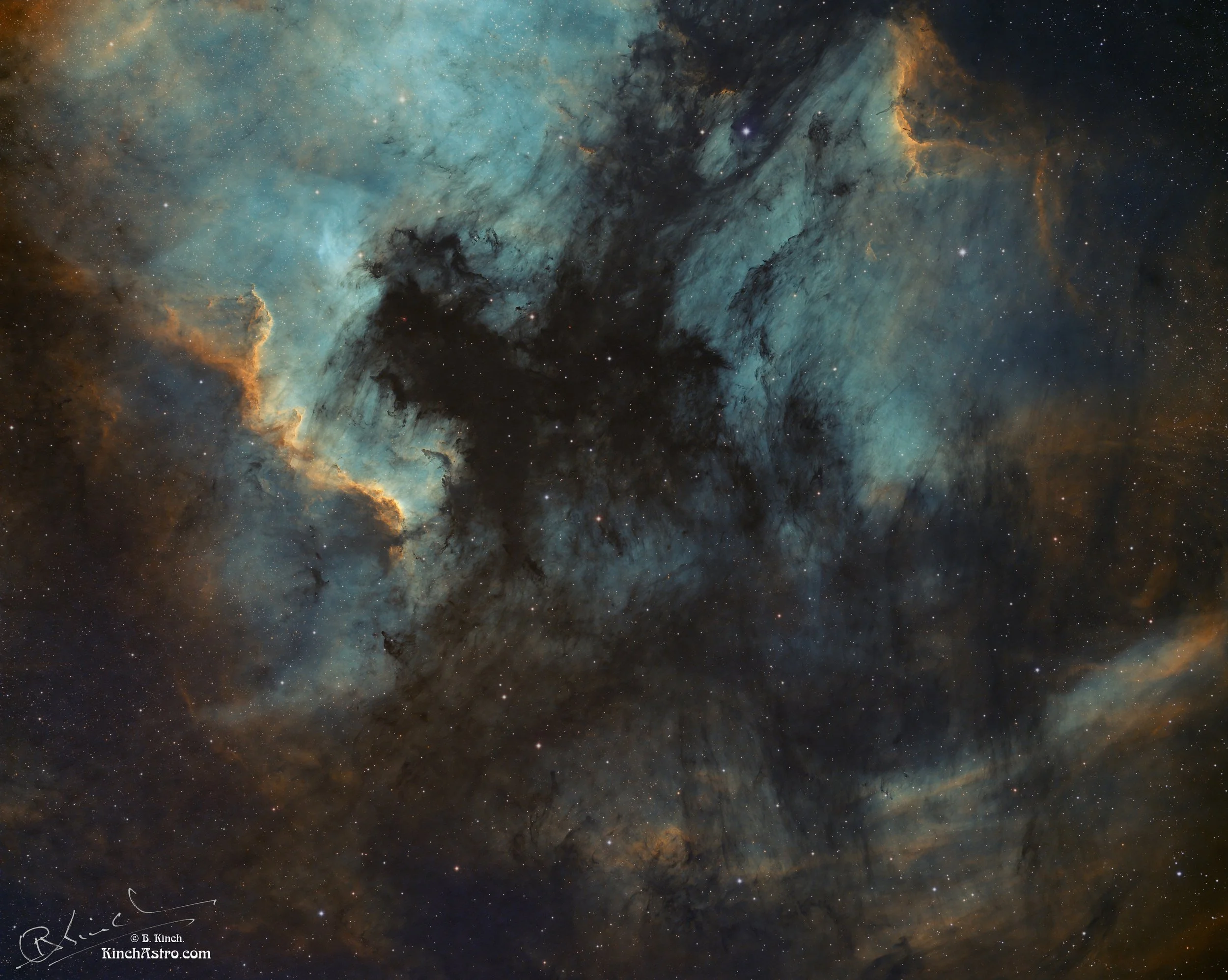
Pelican & Wall
The captivating Pelican Nebula, an intricate star-forming region within the Cygnus constellation. Spanning across vast expanses of space, the Pelican Nebula showcases a tapestry of interstellar gas and dust, intricately shaped by the forces of gravity and stellar activity. Deep within its ethereal embrace, young, hot stars illuminate the nebula, their intense radiation causing the surrounding hydrogen gas to glow in shades of crimson and pink.
In the large FOV of this image, the Cygnus Wall emerges as a striking feature—a dense ridge of gas and dust that serves as a stellar nursery, nurturing the birth of new stars. This dynamic interplay of stellar processes and cosmic forces within the Pelican Nebula and the Cygnus Wall offers use a glimpse into the fascinating mechanisms driving the formation and evolution of stars in our universe.
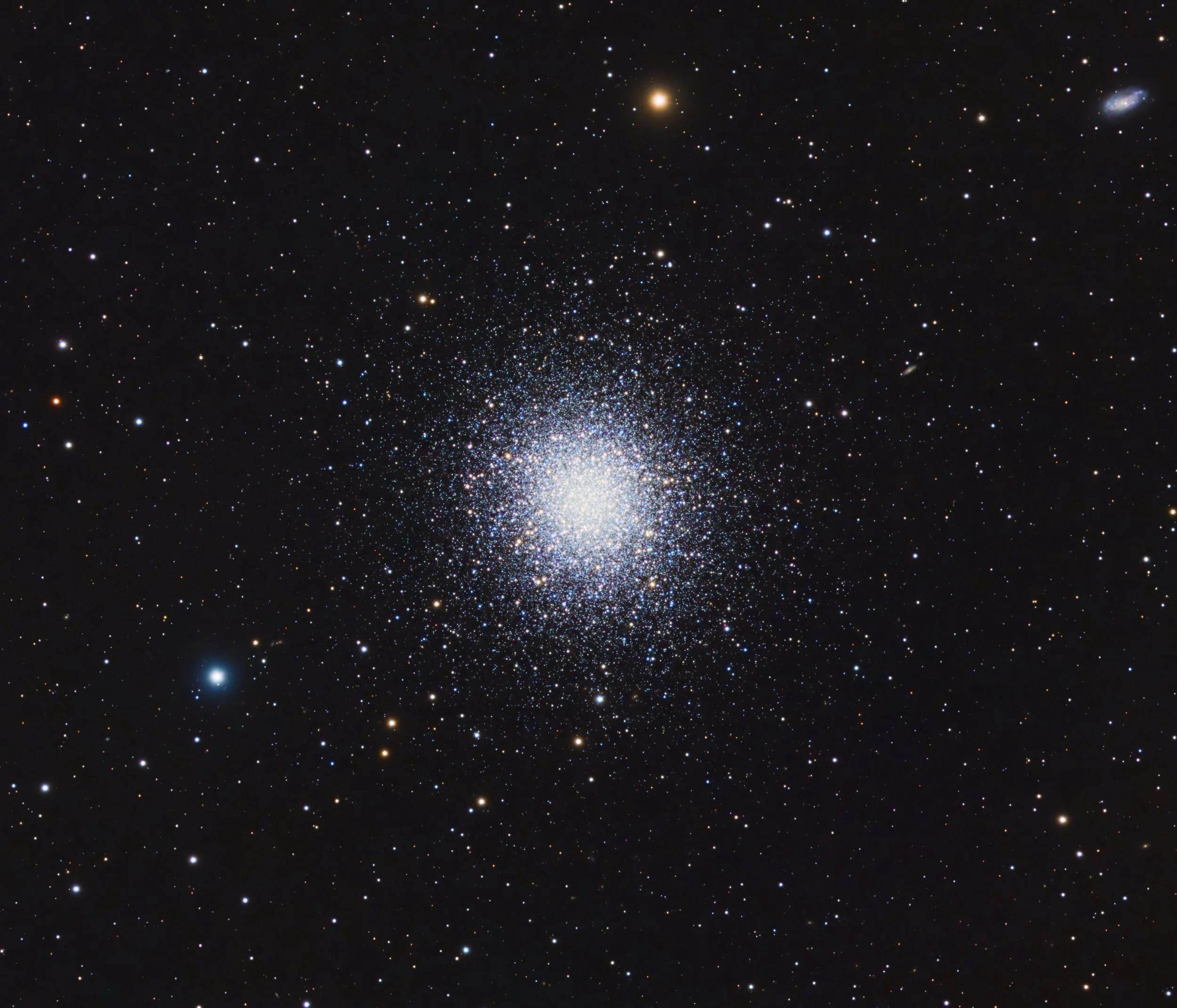
The Great Hercules Globular Cluster (M13)
Nestled within the cosmic tapestry, M13 showcases the incredible resilience of stars and their collective gravitational dance. Comprising hundreds of thousands of stars tightly bound by gravity, this ancient cluster stands as a testament to the resilience and longevity of stellar systems.
At its core, the dense concentration of stars reveals a rich assortment of celestial objects, including variable stars, blue stragglers, and intriguing stellar remnants. With an estimated age of over 12 billion years.
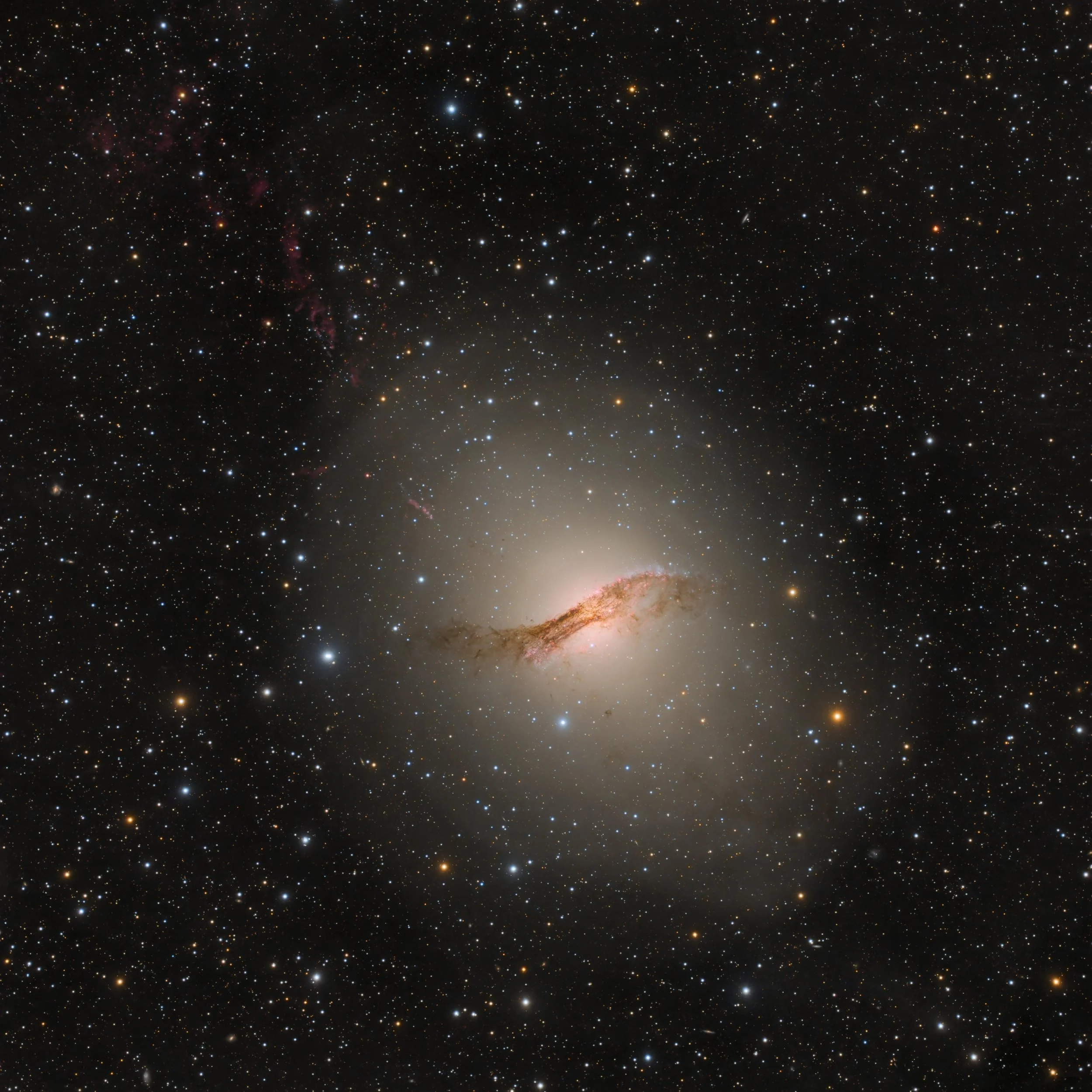
Centaurus A - NGC 5128
The captivating Centaurus A, also known as NGC 5128.
This galaxy, situated within the Centaurus constellation, offers a fascinating amalgamation of scientific phenomena and visual intrigue. At its core resides a supermassive black hole, with a mass of approximately 55 million times that of our Sun, accreting surrounding matter and producing colossal jets of high-energy particles. These jets extend across vast distances, spanning thousands of light-years and emitting radiation in multiple wavelengths, including radio waves and X-rays. Surrounding the galactic nucleus, a dusty disk obscures our view, harboring regions of active star formation and interstellar matter. The complex interplay of these features within Centaurus A provides scientists with valuable insights into the dynamics of galactic nuclei, black hole accretion, and the interplay between star formation and the presence of dust structures. Through meticulous observation and analysis, Centaurus A continues to unveil the intriguing mechanisms governing the universe's most enigmatic objects.
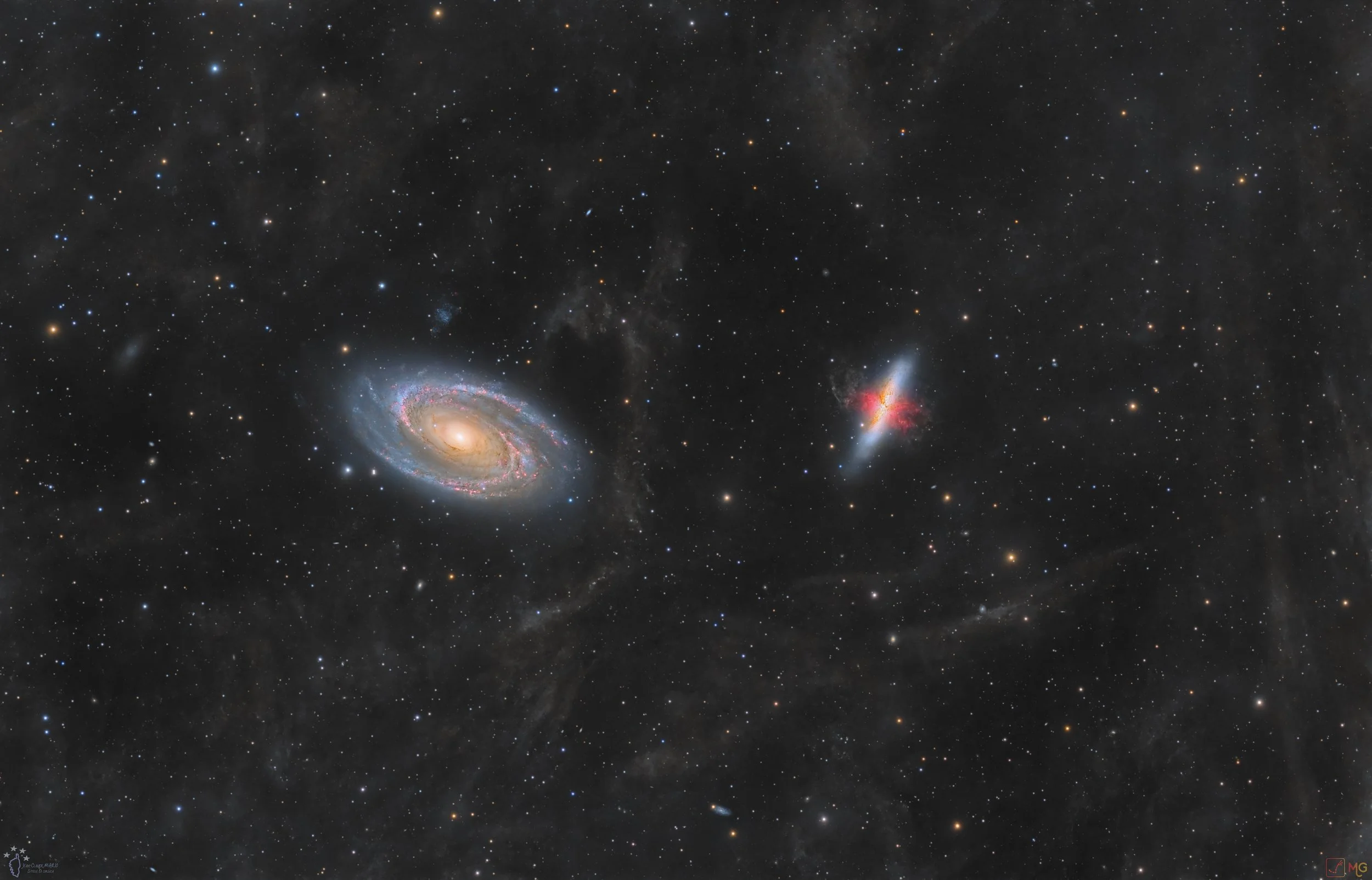
M81 & M82
Within the cosmic embrace of M81 and M82, an intergalactic medium of dust particles permeates the space, creating an intriguing interplay of scientific phenomena and aesthetic allure. Delicate tendrils of dust meander throughout the vast expanse, influenced by gravitational forces and stellar activity. These cosmic particles, comprised of micron-sized grains, play a pivotal role in the evolution of galaxies. They act as catalysts for star formation, providing the necessary material for the birth of new stellar systems. As they navigate the intergalactic void, these interstellar dust clouds contribute to the complex dynamics of M81 and M82, shaping their morphologies and influencing their ongoing stellar processes.
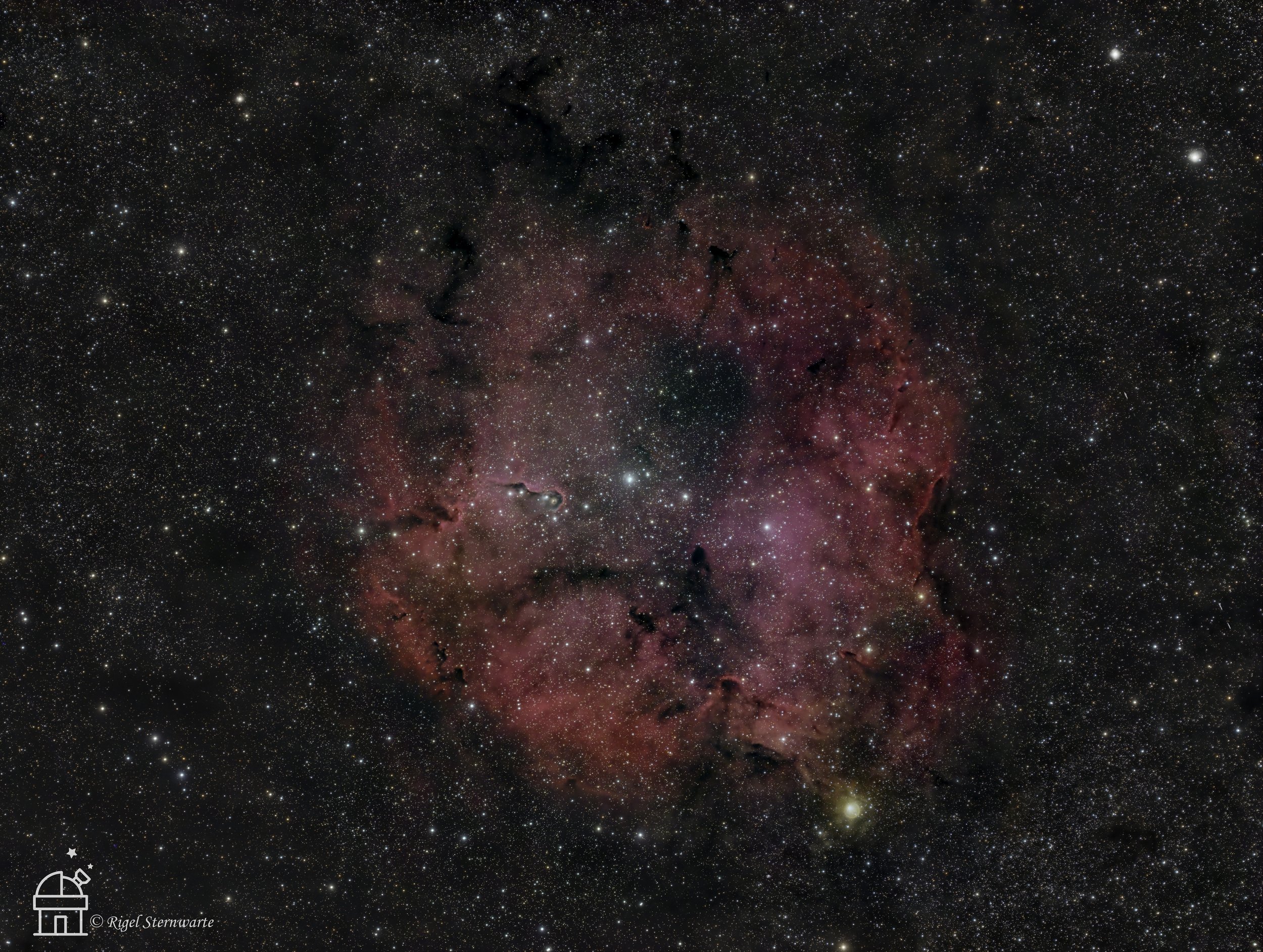
Elephant's trunk nebula
The celestial grandeur of the Elephant's Trunk Nebula, an ethereal masterpiece adorning the cosmos. This enigmatic nebula, nestled within the vast expanse of the night sky, beckons stargazers with its awe-inspiring beauty. Resembling an elongated trunk reaching out from a cosmic creature, the nebula's wispy tendrils of interstellar gas and dust create a captivating interplay of colors. Hues of crimson, cerulean, and emerald merge harmoniously, painting a celestial tapestry that sparks wonder and imagination. Nestled within the vastness of the Milky Way, the Elephant's Trunk Nebula serves as a timeless reminder of the extraordinary wonders that lie beyond our earthly confines.
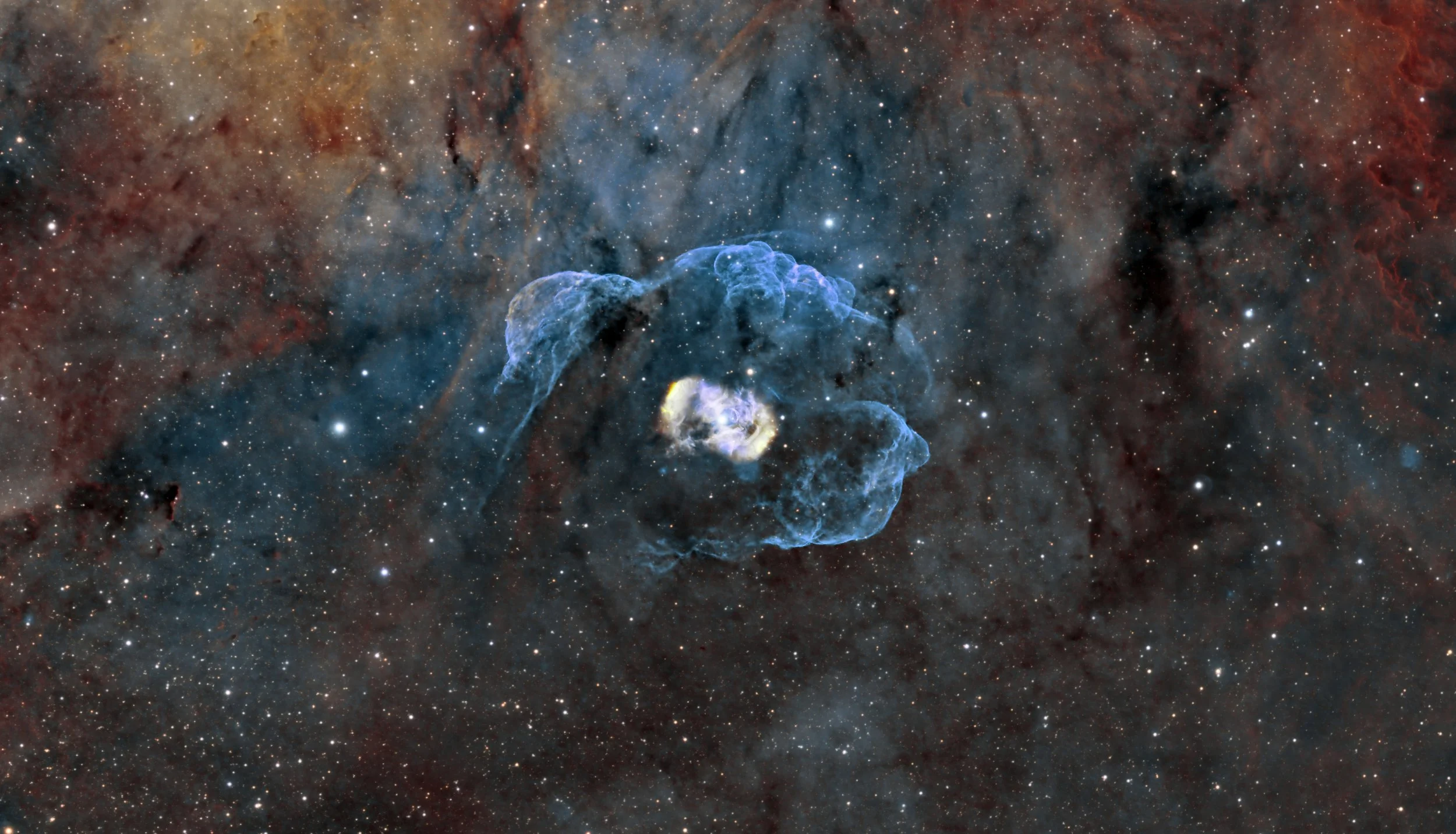
Dragon's Egg Nebula NGC 6164
NGC 6164, a stunning planetary nebula that unfolds like a celestial dance in the depths of space. Located approximately 4,200 light-years away in the southern constellation Norma, this captivating cosmic wonder showcases an intricate tapestry of colors and shapes. NGC 6164's filaments and arcs, are sculpted by a dying star at its core, present a profound visual feast for the curious eyes of astronomers and stargazers alike.

Belt of Venus over Mt. Everest
The Belt of Venus is a mesmerizing atmospheric phenomenon that graces the twilight sky. Just before sunrise or after sunset, a delicate pinkish band, known as the Belt of Venus, stretches across the horizon, gently embracing the fading light of the Sun and casting an enchanting aura upon the Earth's celestial canvas.
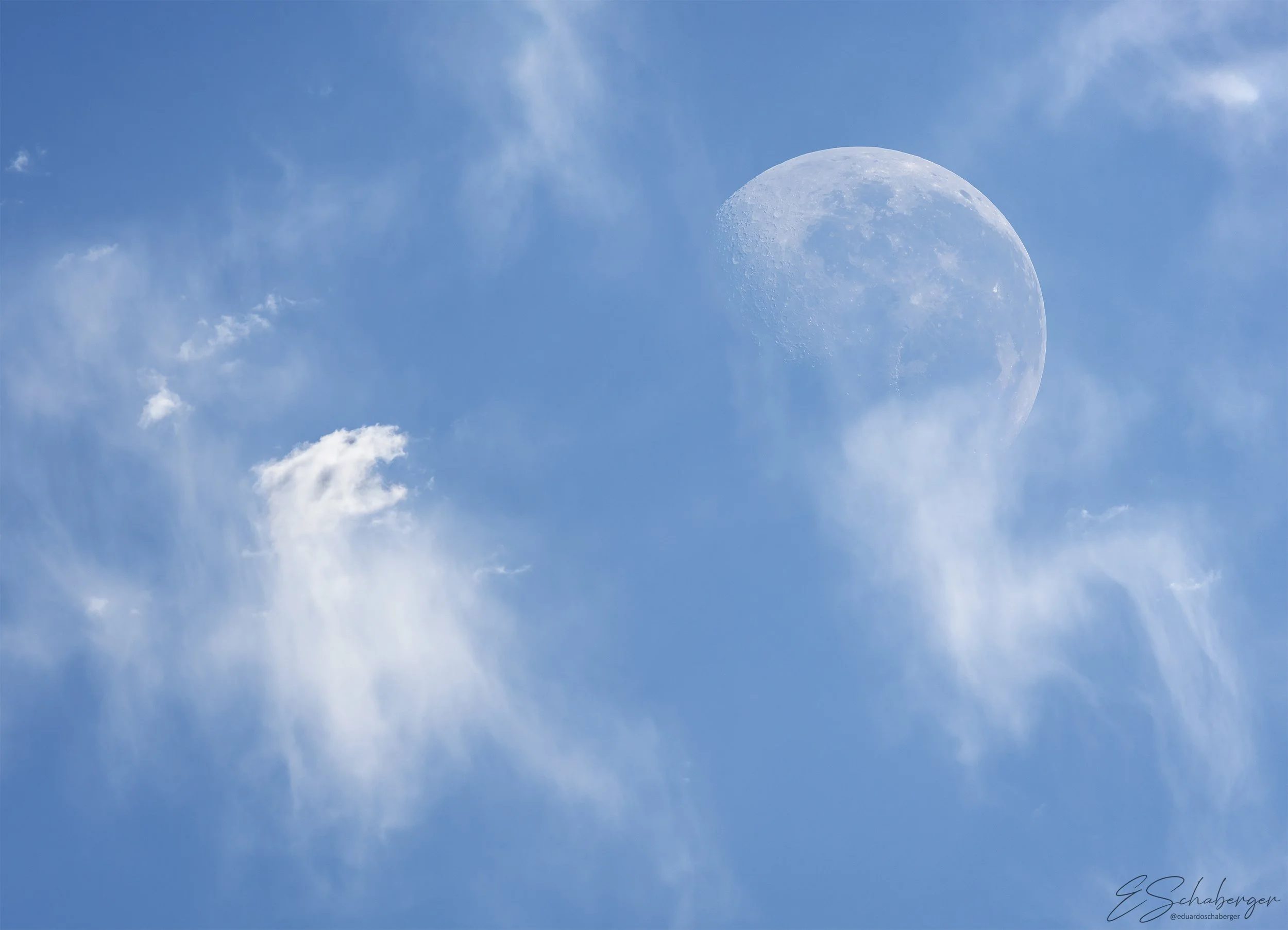
The moon and the lioness
Despite our common association of the moon with the nighttime sky, it is indeed possible to catch a glimpse of the moon during the daytime. While the sun's brilliance tends to overshadow the moon's subtle glow, certain conditions make it visible even in broad daylight. The moon's position in relation to the Earth and the sun plays a crucial role in its daytime visibility. When the moon is at or near its full phase, it rises in the east just as the sun sets in the west, allowing it to be visible for some time during the day. During this period, keen observers may spot the moon hanging delicately against the backdrop of the blue sky, lending an ethereal touch to the daytime experience.
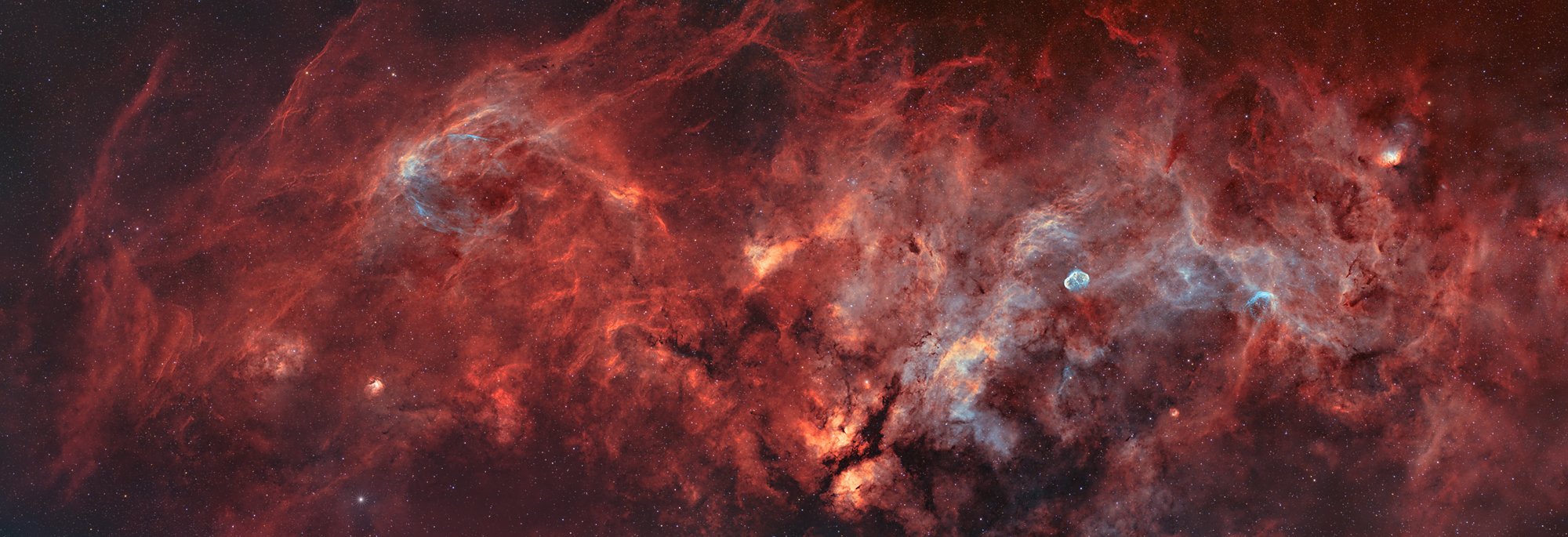
The jewels of Cygnus
Within the expansive boundaries of the constellation Cygnus, two remarkable astrophotography targets beckon sky gazers. The Crescent Nebula (NGC 6888) unveils its ethereal beauty, emanating from the powerful stellar winds of its central Wolf-Rayet star. The nebula's distinctive shape resembles a delicate crescent, bathed in hues of magenta and blue. Its intricate filaments, sculpted by the star's intense radiation, paint a captivating celestial portrait.
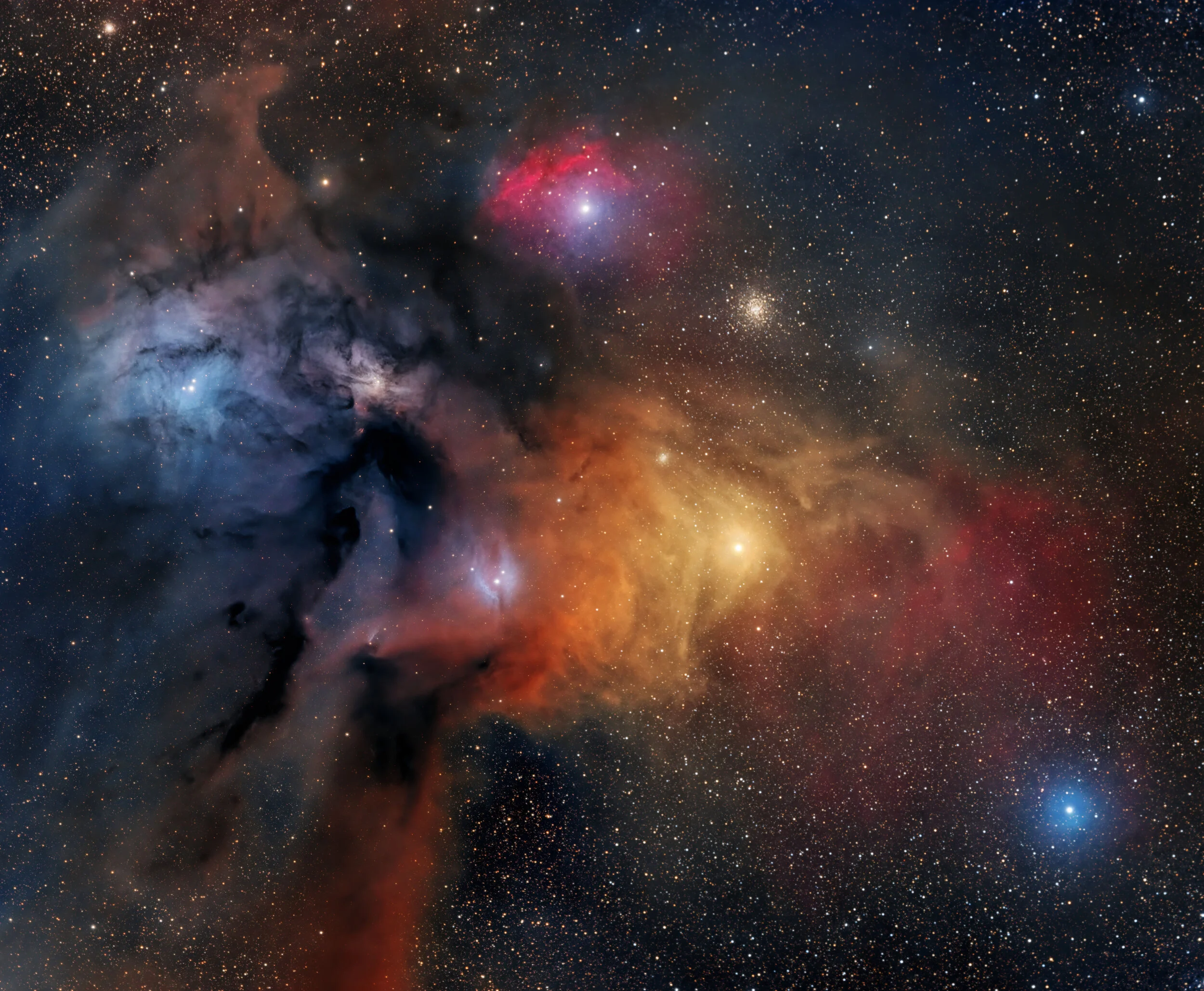
Rho Ophiuchi
Rho Ophiuchi - Stellar Nursery in the Constellation Ophiuchus.
Within this stellar nursery, new stars emerge, their radiant energy illuminating the surrounding nebulae. The intense ultraviolet radiation emitted by these stellar infants interacts with the surrounding gas and dust, causing it to glow in striking shades of crimson, magenta, and azure. The billowing clouds of cosmic material, shaped by stellar winds and gravitational forces, create a visual spectacle that captivates the imagination.
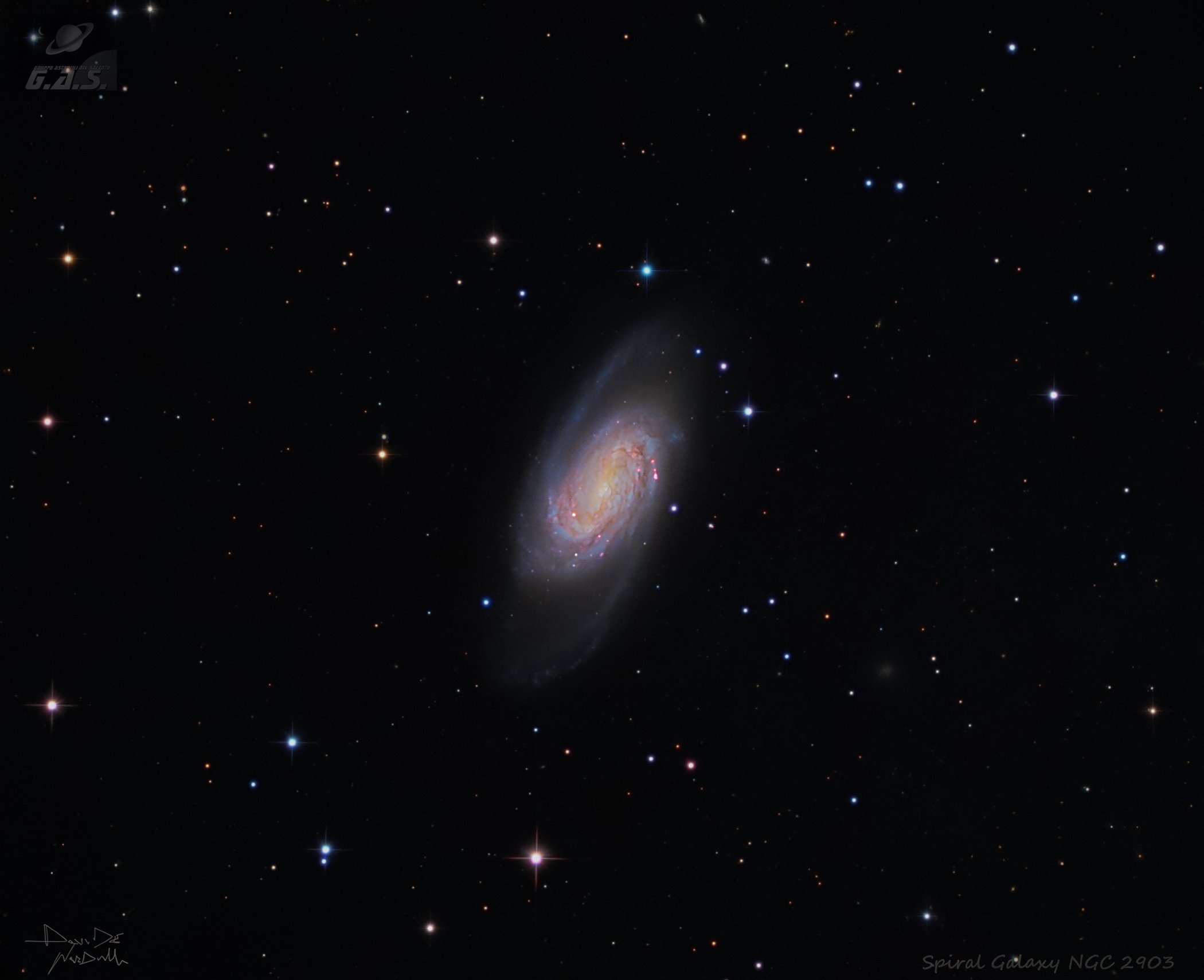
NGC 2903 - Galaxy in "Leo"
NGC 2903 is a barred spiral galaxy situated in the constellation Leo, approximately 20.5 million light-years away from our location. Discovered by William Herschel and cataloged on November 16, 1784, this galaxy bears a striking resemblance to our own Milky Way. It boasts a size slightly smaller than our galaxy, with a diameter spanning around 80,000 light-years.

M20 Trifid Nebula in HaRGB
The Trifid Nebula, a celestial masterpiece captured in the vast expanse of our galactic tapestry. Situated approximately 5,200 light-years away in the constellation Sagittarius, this mesmerizing nebula combines interstellar gas, dust, and the dazzling radiance of newborn stars to create a captivating visual symphony. Its name derives from the intricate filaments that divide the nebula into three distinct sections.
As new stars ignite within its vast expanse, the Trifid Nebula unveils the ongoing spectacle of stellar birth and evolution, captivating our imaginations and offering a glimpse into the captivating beauty of our ever-expanding universe.
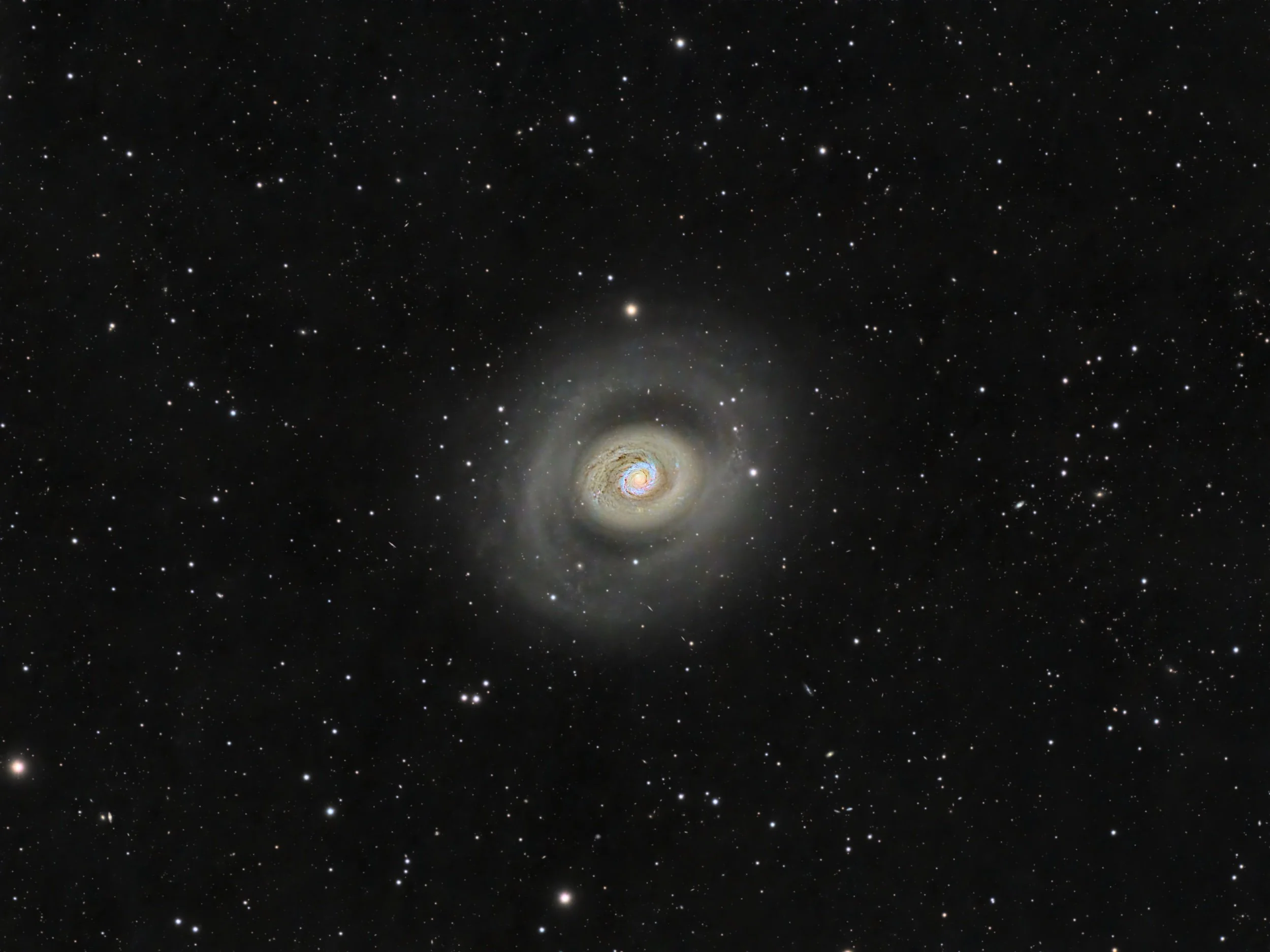
M94
Image Description: Messier 94 (M94) is a spiral galaxy located in the constellation Canes Venatici. It’s about 16 million light years from us and has two rings. The inner ring structure is about 5,400 light years wide, and the outer ring is about 45,000 light years across. The outer ring contains more than 20% of the galaxy’s mass. There is a lot of star formation occurring occurring in this galaxy, particularly in the central region. There are numerous other little galaxies in the image, but I didn’t find any of them in the catalogues that I had readily available.
Tekkies:
Acquisition, focusing, and control of Paramount MX mount with N.I.N.A., TheSkyX and PHD2. Focus with Optec DirectSync motor and controller. Equipment control with PrimaLuce Labs Eagle 3 (2021) and 4 (2023) Pro computer. All pre-processing and processing in PixInsight. Acquired from my SkyShed in Guelph. Average transparency and seeing. Data acquired May 24-29, 2023 in a nearly moonless sky.
Luminance: Sky-Watcher Esprit 150 f/7 refractor and QHY600M camera with Optolong UV/IR filter
Chrominance: Takahashi FSQ-106 ED IV @ f/5 and QHY367C Pro one-shot colour camera with Optolong UV/IR filter
231 x 5m Lum = 19hr15m
234 x 5m chrominance = 19hr30m
Total: 38hr45m
Copyright: Ron Brecher
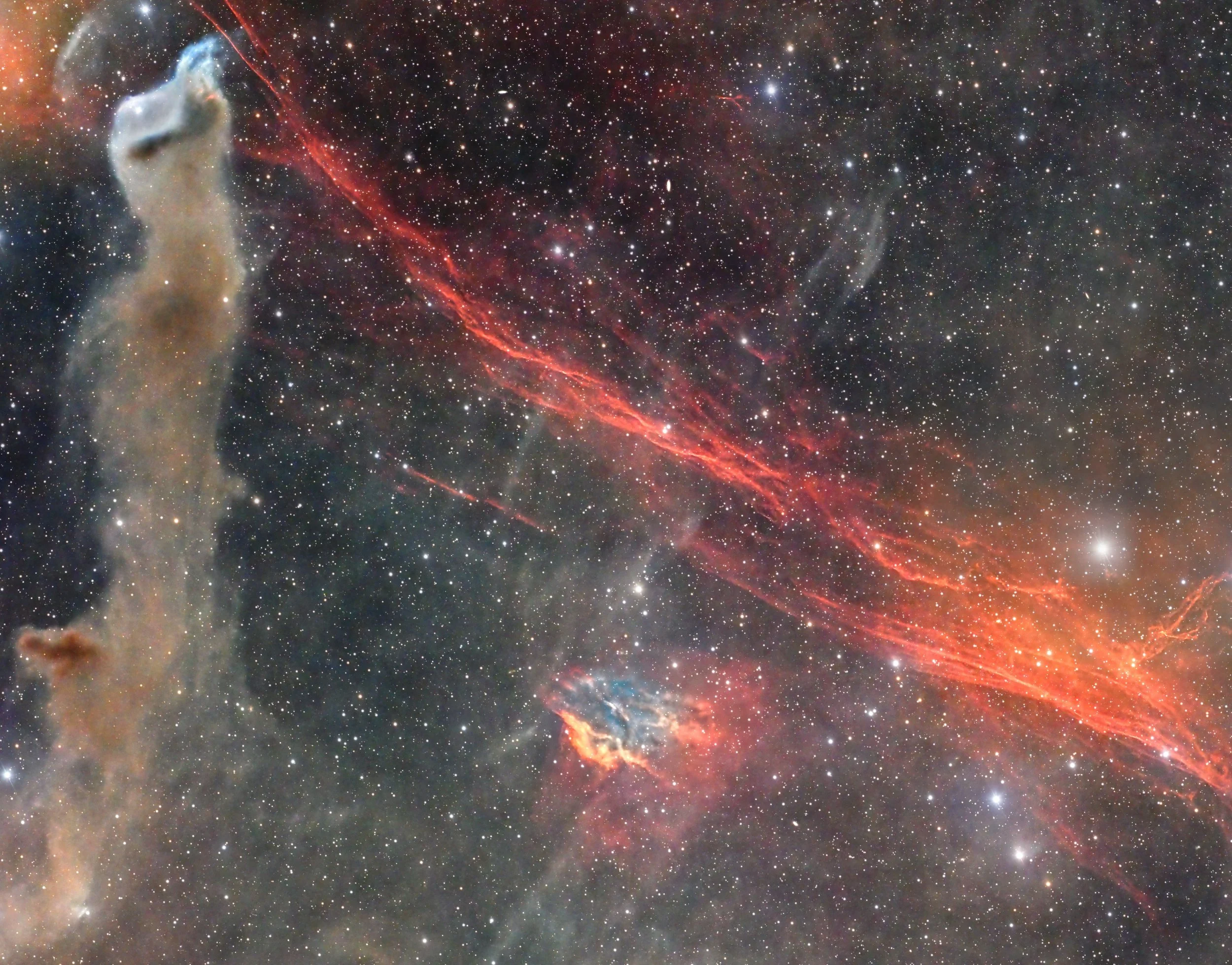
DeHt 5 - VdB152 - LDN1217
Image Description and Details : This is a very exciting area in Cepheus. The image contains several interesting objects, the most prominent being filaments of a super nova remnant (SNR110.3+11.3), a planetary nebulae (Dengel-Hartl-5), a reflection nebula (VdB152) and a dark nebulae (LDN1217). Most of the area is also streaked by faint dust lanes partially obscuring the objects.
All exposures are unguided 120s at f/2 and binned 1x1. A dynamic combination of Ha and Oiii was used. Image is cropped.
26h Ha
14h Oiii
3*1h RGB
Equipment:
Scopedome 3M
Celestron EdgeHD 14" with Hyperstar Lens
ZWO asi6200mm
Chroma 3nm
10Micron GM3000 HPS II
Captured from E-eye, Spain during April and May 2023.
Copyright: Sven Eklund
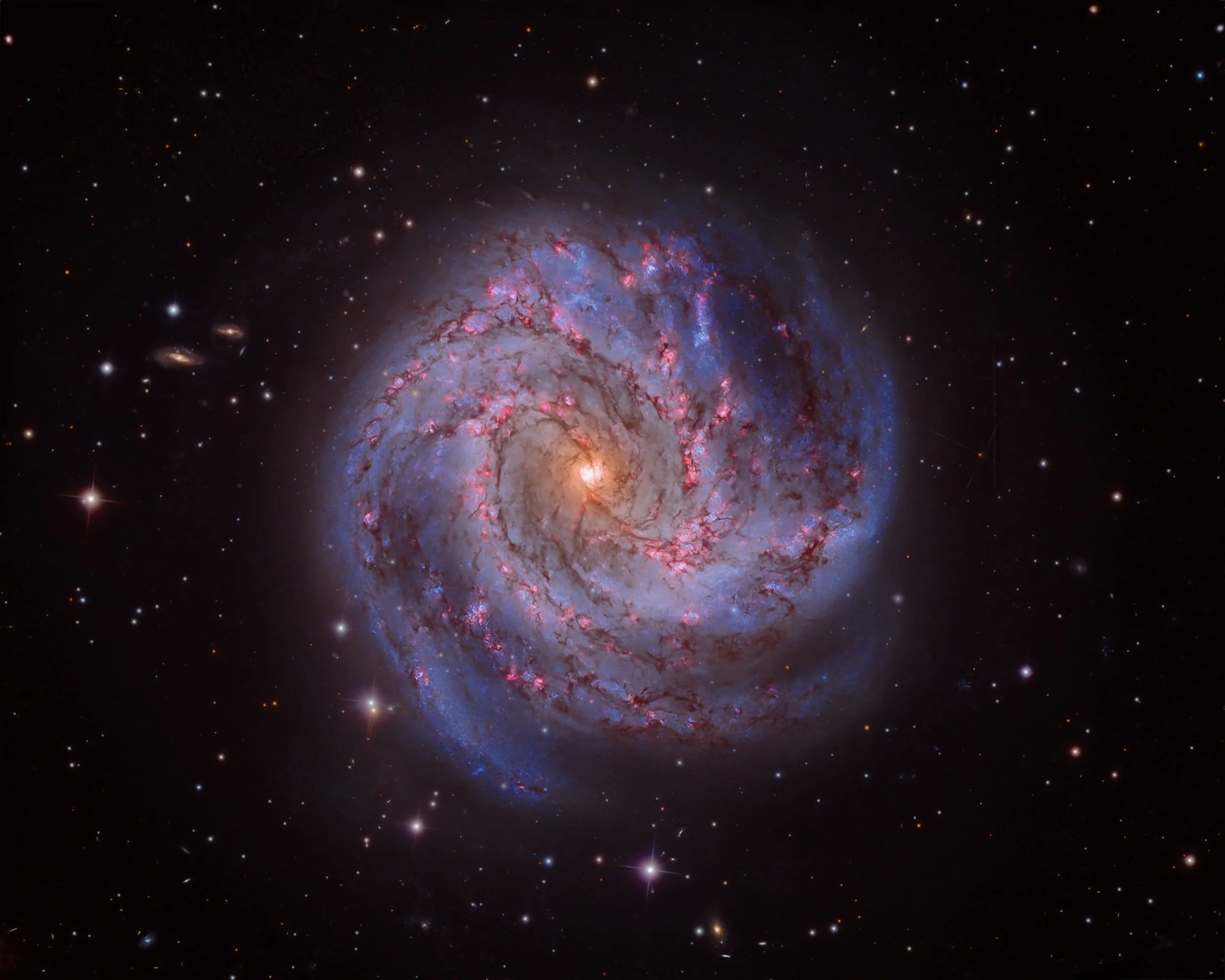
M83 -The Southern PinwheEl
Image Description and Details : Image captured from Observatorio El Sauce, Chile
Telescope: Planewave CDK24
Camera: Moravian C3-1600 PRO
Luminance: 21 x 10mins
Red: 16 x 10mins
Blue: 18 x 10 mins
Green: 18 x 15 mins
Ha: 21 x 15mins
Total Integration: 17:55 hours
Processed with PixInsight and Photoshop
Captured by Martin Pugh
Processed by Neil Corke
Copyright: Neil Corke & Martin Pugh
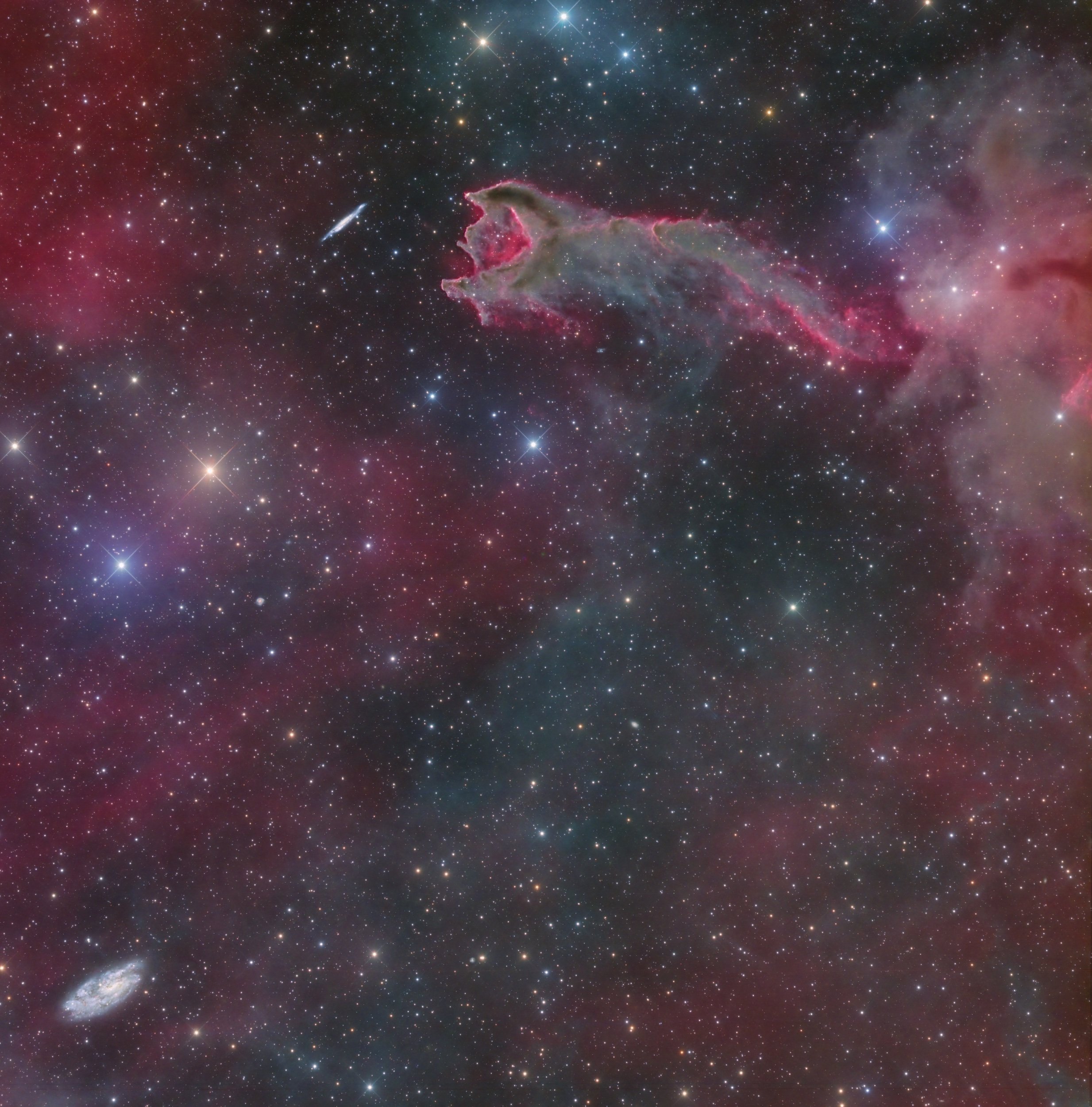
Cosmic monster CG4 and surrounding
Image Description and Details : CG4 means “Cometary Globule #4” and is a complex of nebulosity and dust with a very peculiar shape (it looks like a concentrate of comets) located in the southern constellation of Poppa. The “head” of the galactic worm has dimensions of about 1.5 light years, while the offshoot that follows the head and which is directed in the opposite direction with respect to the rest of the famous Vela supernova (which is at the center of the huge GUM nebula), it has a length of about 8 light years.
The complex was photographed during ShaRA#4 project; this is a composition of 3 different images in wide field taken with the T3 from Chilescope Service (a very fast 500m f/3.8 Newtonian), processed by Christian Privitera, Andrea Iorio and me (Alessandro Ravagnin). RGB composition, total 2 hours of integration.
Copyright: ShaRA Team
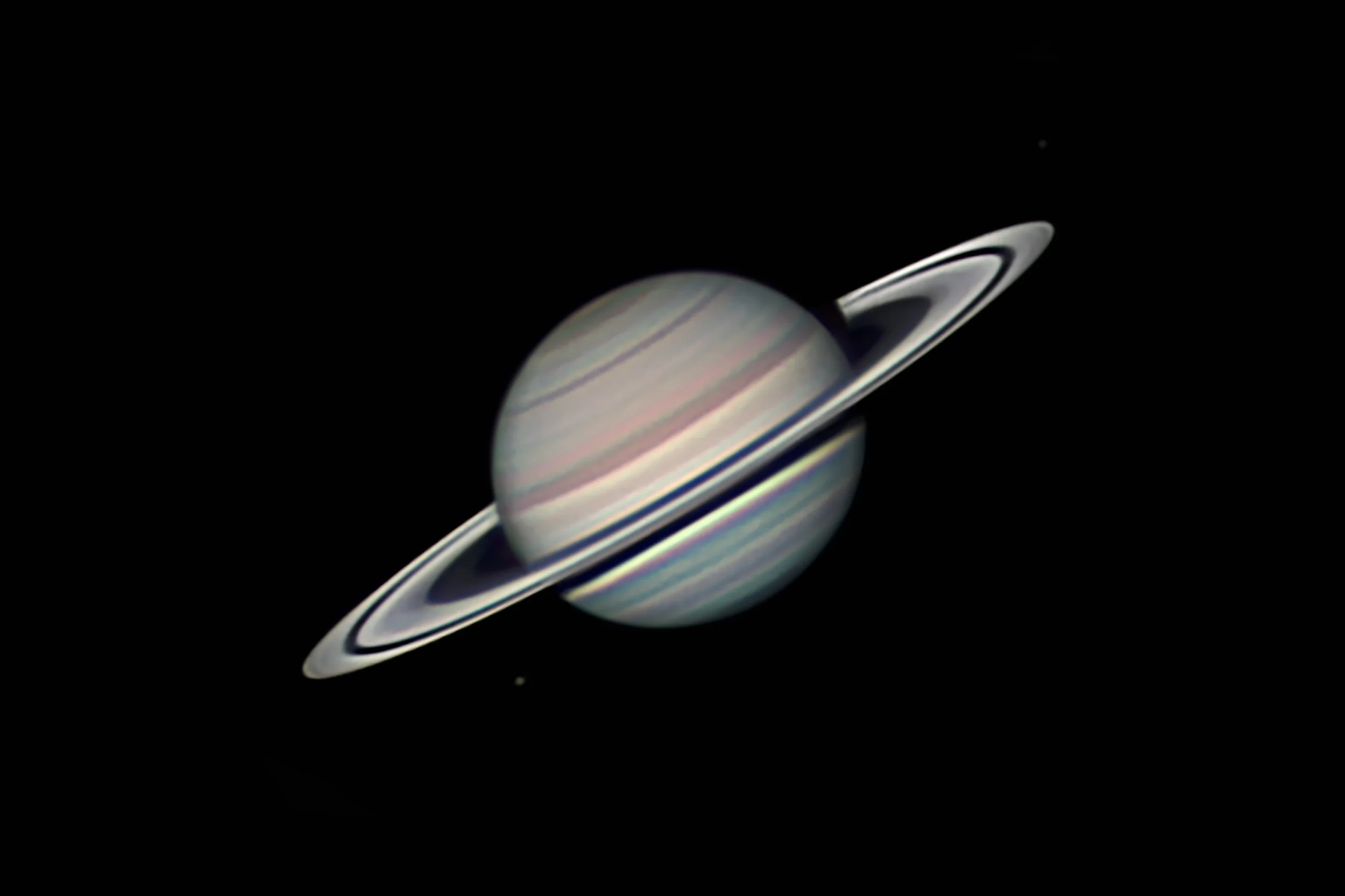
Saturn with Tethys and Enceladus
Image Description and Details : 13 x 90 sec IR and RGB video captures of Saturn (~ 1 hr) were made under very good seeing conditions.
The narrowing of the rings since last year is very clear, so it is pleasing to see a hint of the Encke Division. The Southern Hemisphere is more active than the north, as it receiving more sunlight than before and a particularly large system is evident in the STrZ to the p side of the Central Meridian. The colours of this region that have emerged as the planet's tilt allows a better view are astonishing and beautiful. I have not altered these in any way, save for a balancing of the histograms.
The moons Tehtys (left) and Enceladus (right) were close to the planet and some time later Tethys and its shadow transitted the southern Hemisphere of the planet.
OTA: C14 EdgeHD
Camera: Player One Saturn-M SQR
Mount: PME II
Filters: Chroma RGB
Barlow: Tele Vue 2X
Copyright: Copyright: Niall MacNeill