
AAPOD2 Image Archives
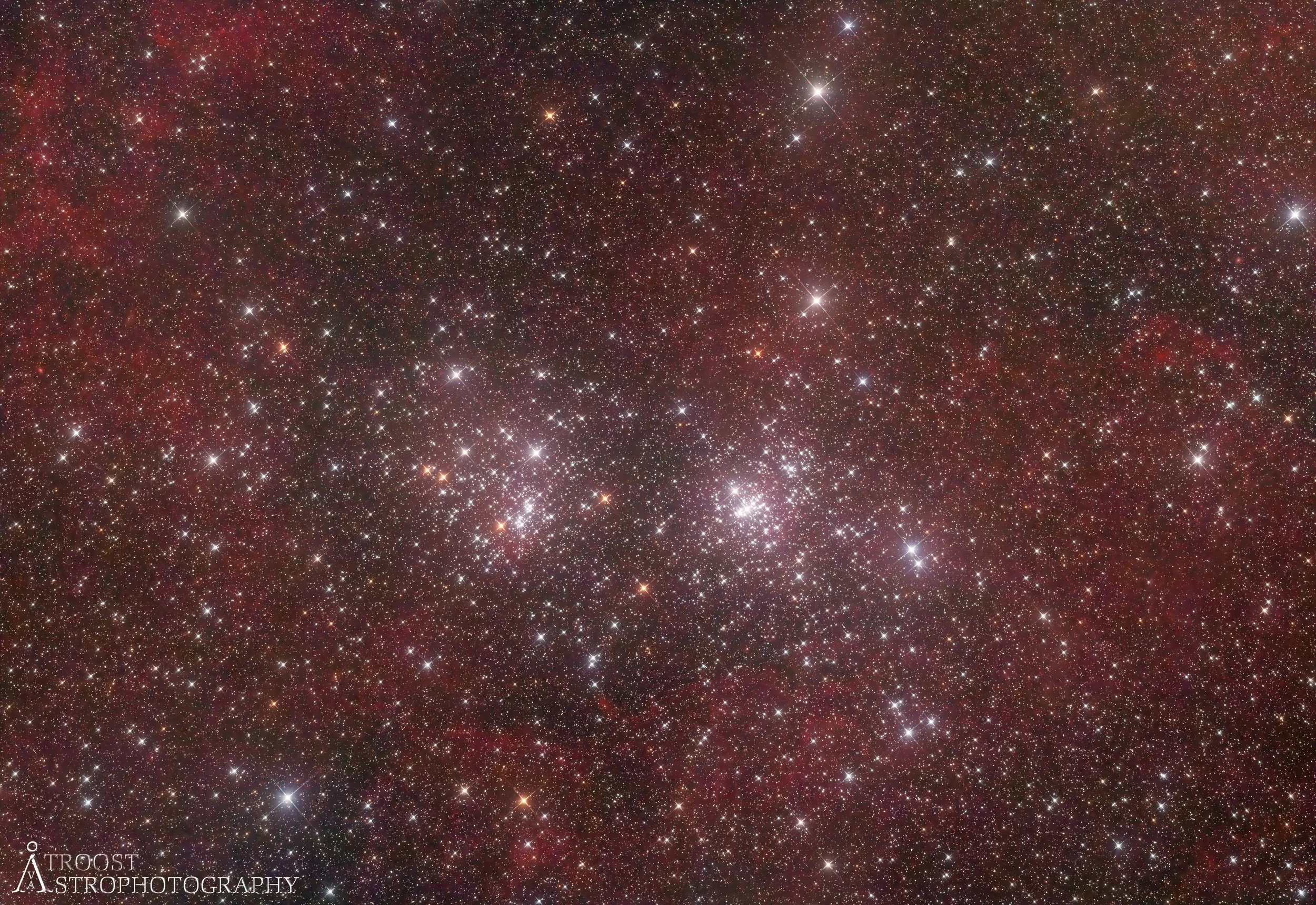
Double Cluster in a bed of H-Alpha
The Double Cluster, a celestial gem that graces the northern night sky, is a breathtaking duo of two open star clusters: NGC 869 and NGC 884, situated in the constellation Perseus. This cosmic pair, located approximately 7,500 light-years away from Earth, captivates stargazers with its luminous splendor. Comprising a multitude of young, hot stars, the Double Cluster's brilliance illuminates the surrounding dark skies, making it a favorite among astronomers and amateur stargazers alike. Its stars formed from the same interstellar cloud, yet they embarked on unique stellar journeys, resulting in a spectacular celestial ballet. When observed with binoculars or a telescope, the Double Cluster unveils a resplendent tapestry of stars, providing a glimpse into the captivating intricacies of the cosmos. In this particular image, the photographer has skillfully captured some very faint hydrogen-alpha (HA) emissions, adding an ethereal touch to the already mesmerizing celestial display, revealing the hidden threads that bind these stellar jewels together.
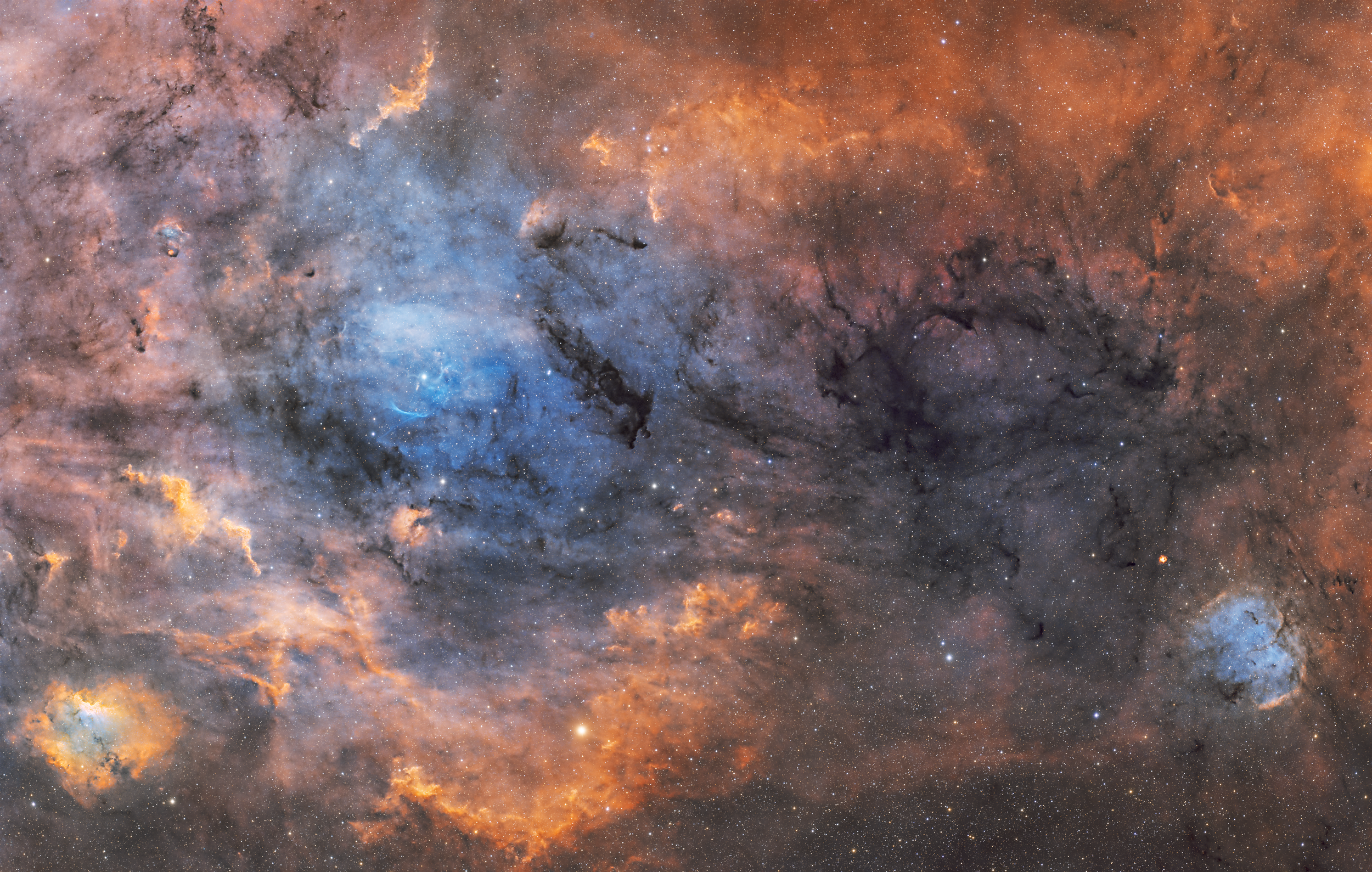
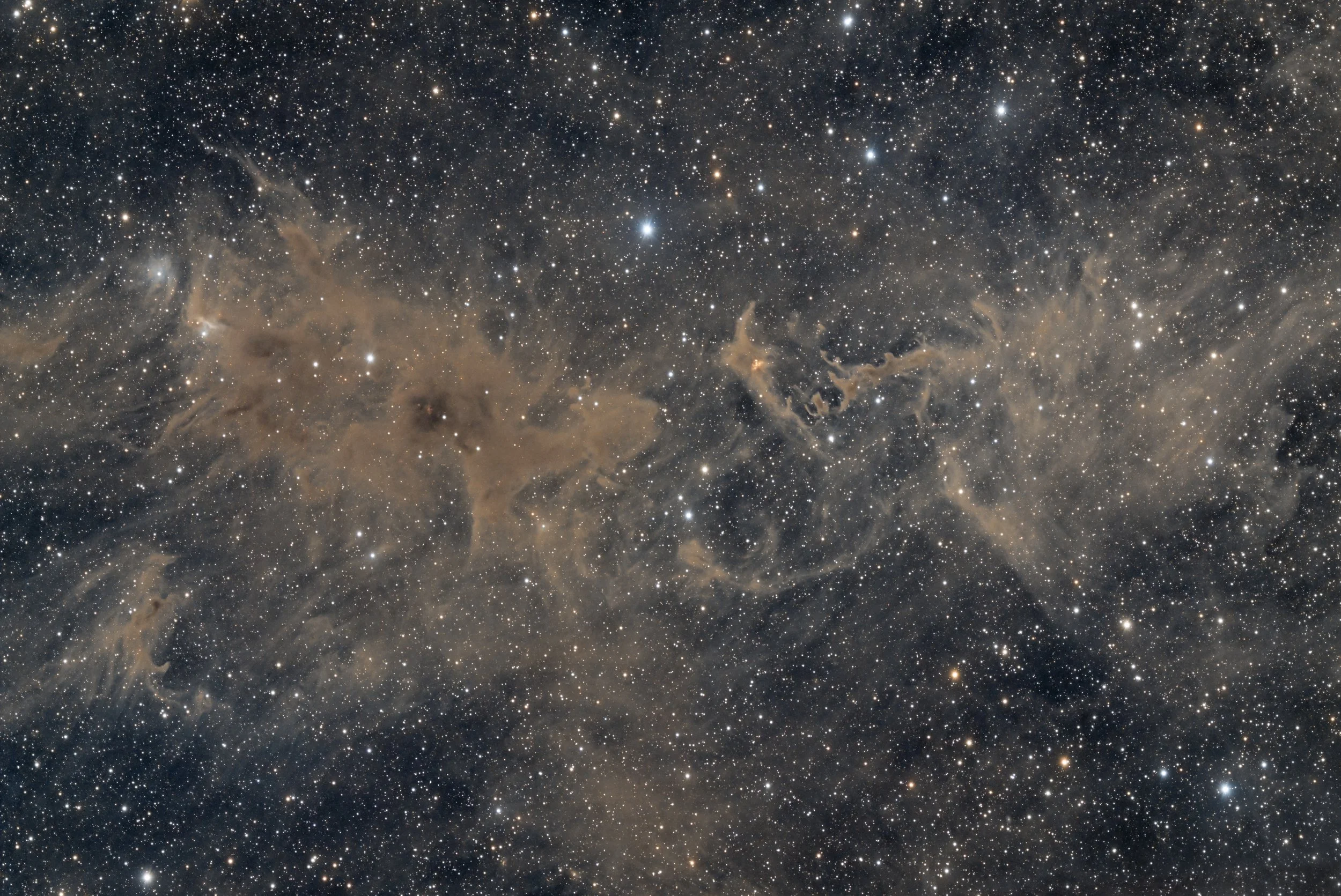
The Edge of the Elephant Trunk
The Edge of the Elephant Trunk
Taken over the course of 33 nights, this is 174 hours of exposure on an area of sky that's rarely imaged alone, but often included in wide field views of Cygnus.
This region is directly north of the Elephant Trunk Nebula, and the faint outer edge of the Elephant Trunk can be seen on the right side of this image.
This is my first image since upgrading to a mono camera, and I couldn't be happier with the switch from OSC to mono.
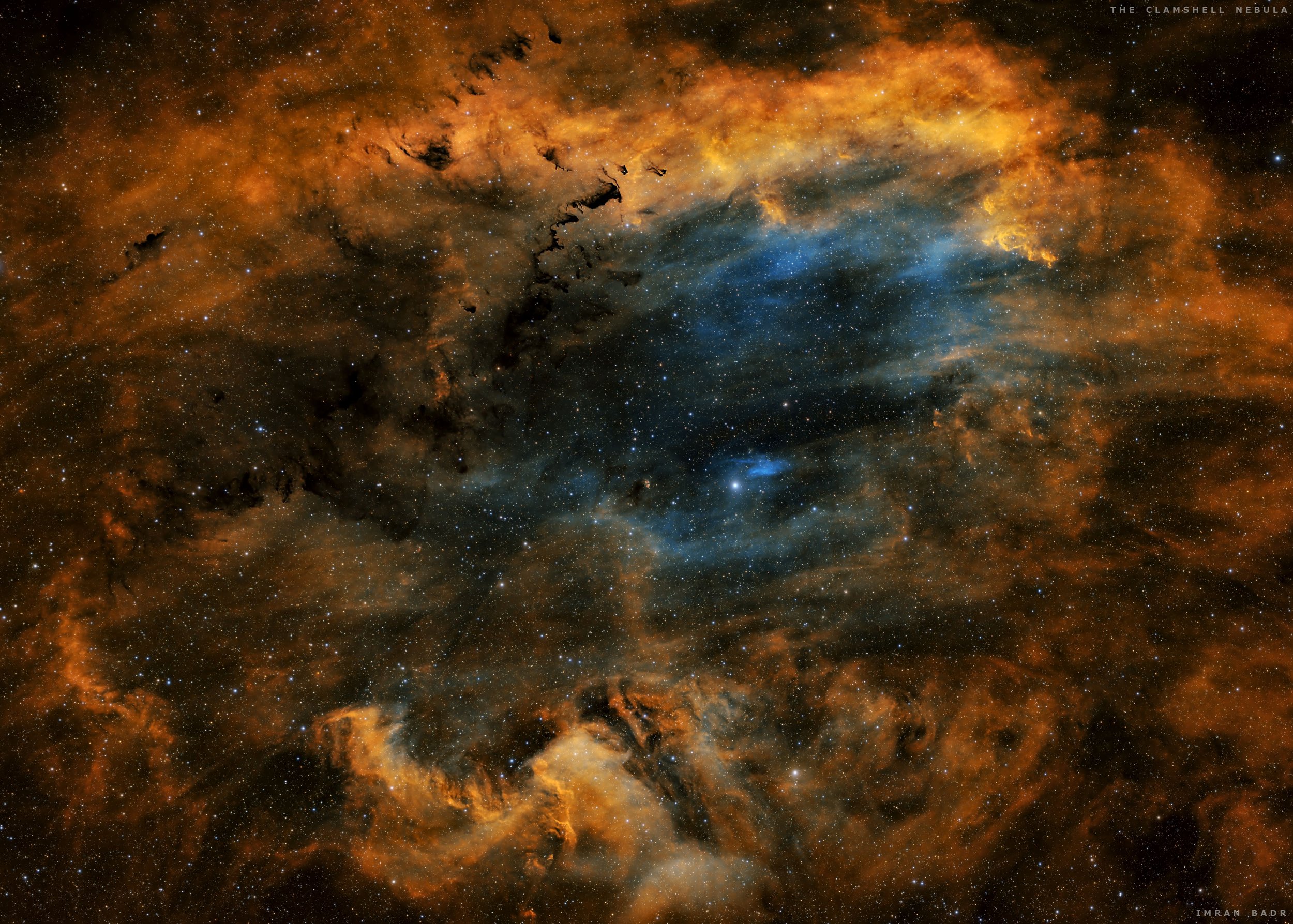
The Clamshell Nebula (sh2-119)
The Clam Shell Nebula, officially known as NGC 2653, is a captivating celestial formation located in the constellation Camelopardalis, some 300 million light-years away from our own Milky Way galaxy. This mesmerizing nebula earned its popular moniker due to its striking resemblance to a giant clam shell gracefully unfurling in the cosmic depths. Its vivid colors and intricate, filamentous structures are the result of a tumultuous stellar birth and death cycle, where massive stars have exploded as supernovae, sculpting the surrounding gas and dust into a breathtaking display of cosmic artistry. The Clam Shell Nebula serves as a poignant reminder of the perpetual dance of destruction and creation that unfolds across the vast expanse of our universe.
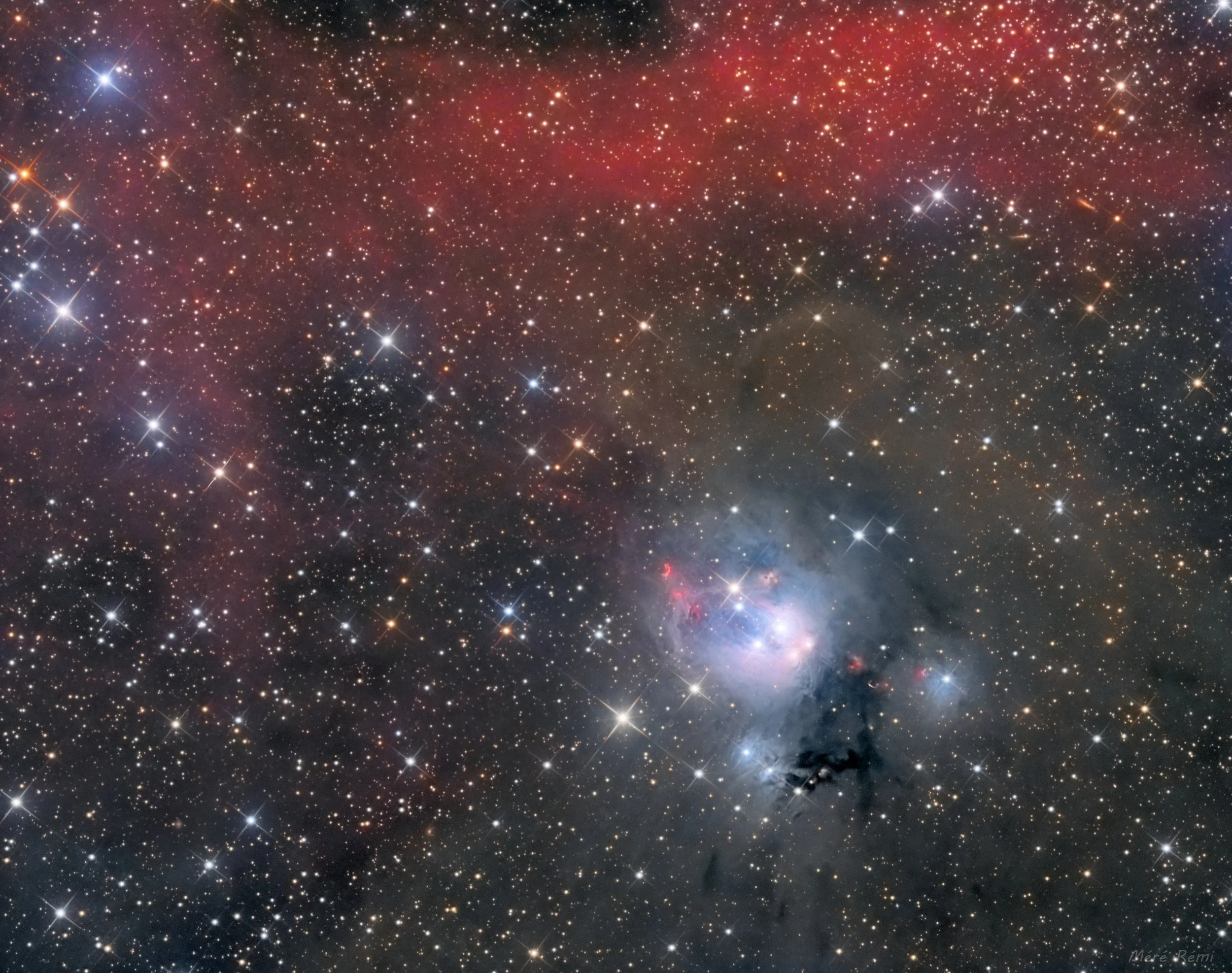
Ngc 7129
NGC 7129 is an open star cluster located in the constellation Cepheus. This cluster is associated with a reflection nebula, meaning it shines due to the scattered light from nearby stars rather than emitting its own light. NGC 7129 is situated approximately 3,300 light-years away from Earth.

Sadr Region 2xPanel Mosaic (50 shades of Red)
The Sadr Region, also known as IC 1318, is a fascinating area in space located within the Cygnus constellation. It is primarily recognized for the emission nebula IC 1318, which spans across a vast expanse of interstellar gas and dust. At its heart lies the prominent star Sadr (Gamma Cygni), which is one of the brightest stars in the Cygnus constellation and serves as a critical reference point for astronomers. This region is a hub of ongoing stellar formation, with numerous young, massive stars emerging from the surrounding gas clouds. Sadr Region's intricate mix of stellar nurseries, star clusters, and intricate nebular structures make it an important target for astrophysical research and a visually captivating sight in the night sky.
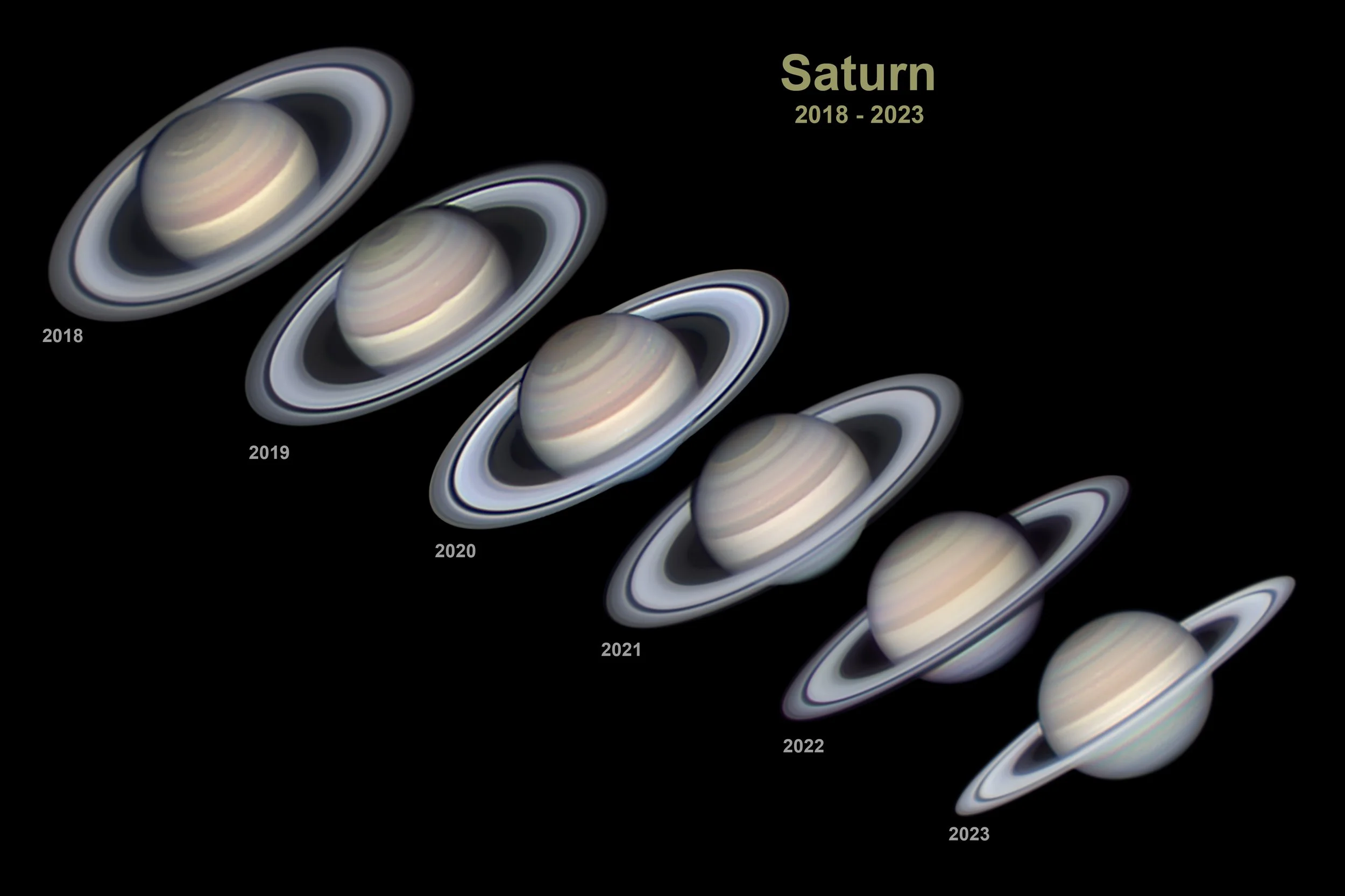
Saturn over the last 6 years (2018-2023)
The excellent seeing of August 29th 2023 allowed me to produce a Saturn image of sufficient quality to add to my montage of images over the ringed planet over the last few years. This made number six (2018 to 2023)
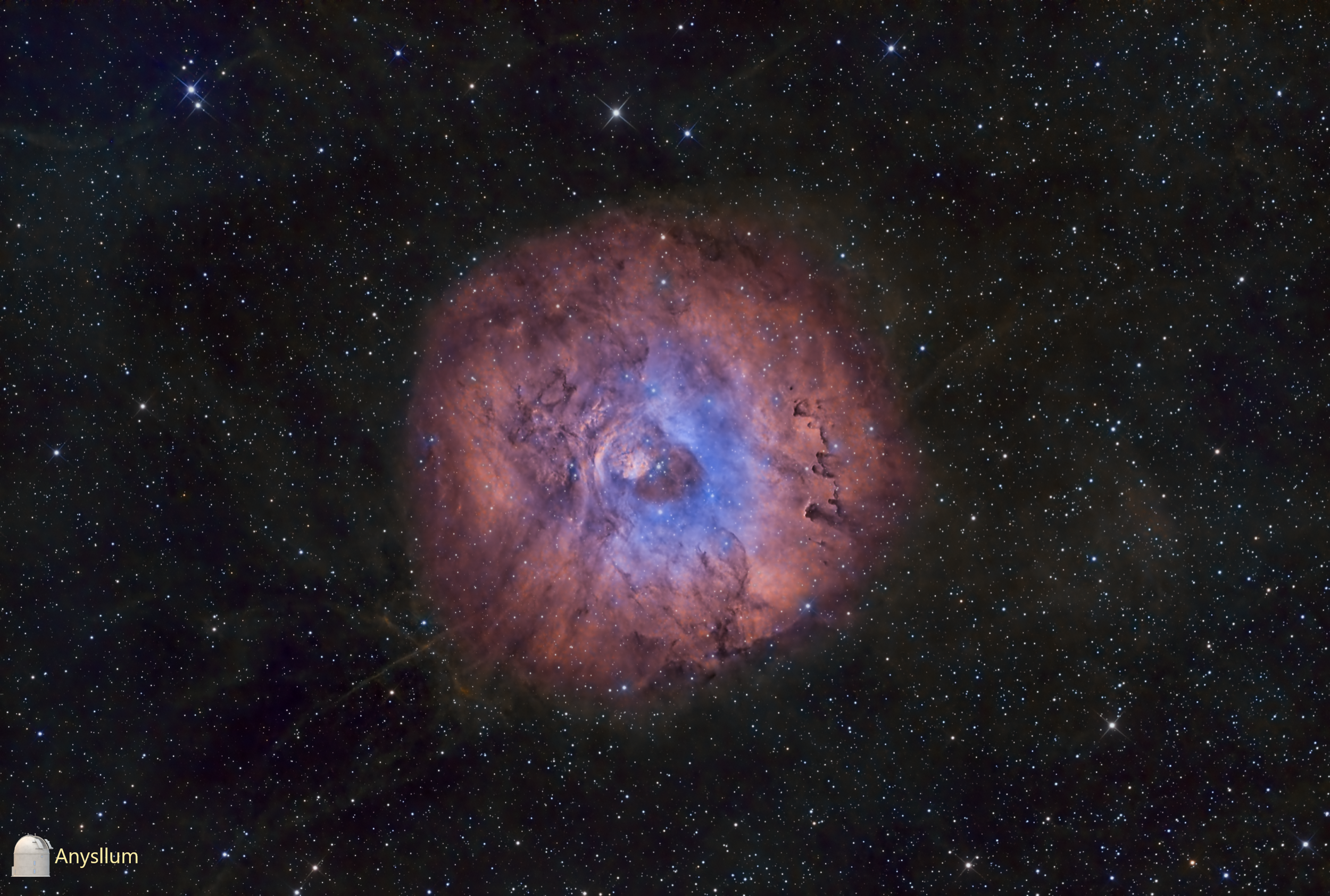
The Little Rosette Nebula
Image Description and Details : Little Rosette Nebula or the "Question Mark Point", 4 nights of captures from the "Anysllum" observatory with my colleague Xavi Bros.
Astronomik 6nm Ha: 9h 50'
Astronomik 6nm OIII: 6h 50'
Astronomik 6nm SII: 1h 20'
Total: 18h
Equipment Details: - Orion Optics 14"
- Losmandy Titan
- ZWO ASI2600MM Pro
Copyright: Jaume Zapata & Xavi Bros
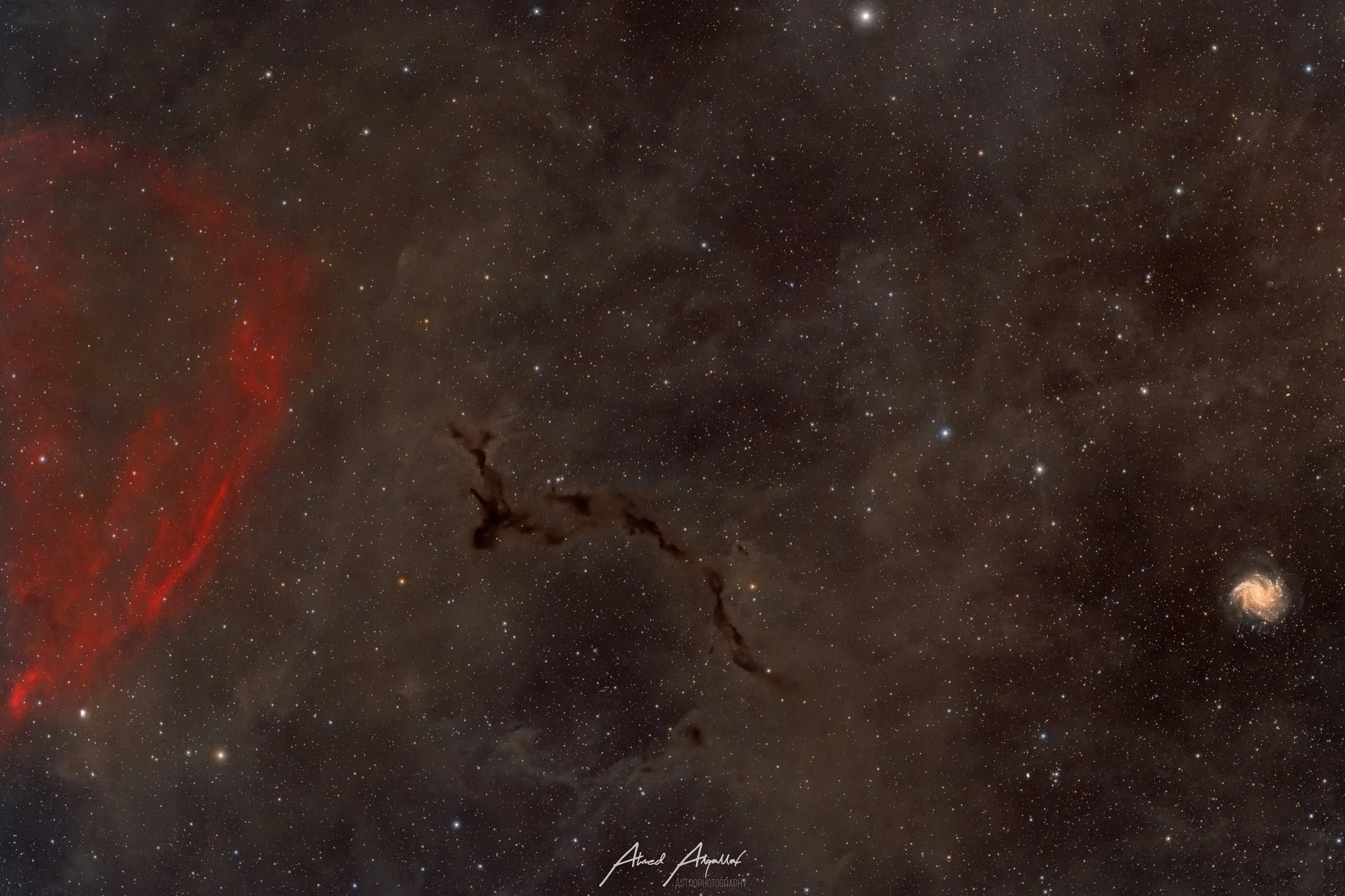
Seahorse nebula (Barnard 150)
Image Description and Details : Location:
Al Salmi desert, Kuwait (Bortle 5).
Acquisition
L 62 x 300” (5hr 10min)
R 20 x 300” (1hr 40min)
G 20 x 300” (1hr 40min)
B 20 x 300” (1hr 40min)
Ha 14 x 300” (1hr 10min)
Total integration time 11hr 20min
Gears:
C: ASI294MM Pro
M: AM5
T: RC51
F: ZWO
Copyright: Ahmed Alqallaf
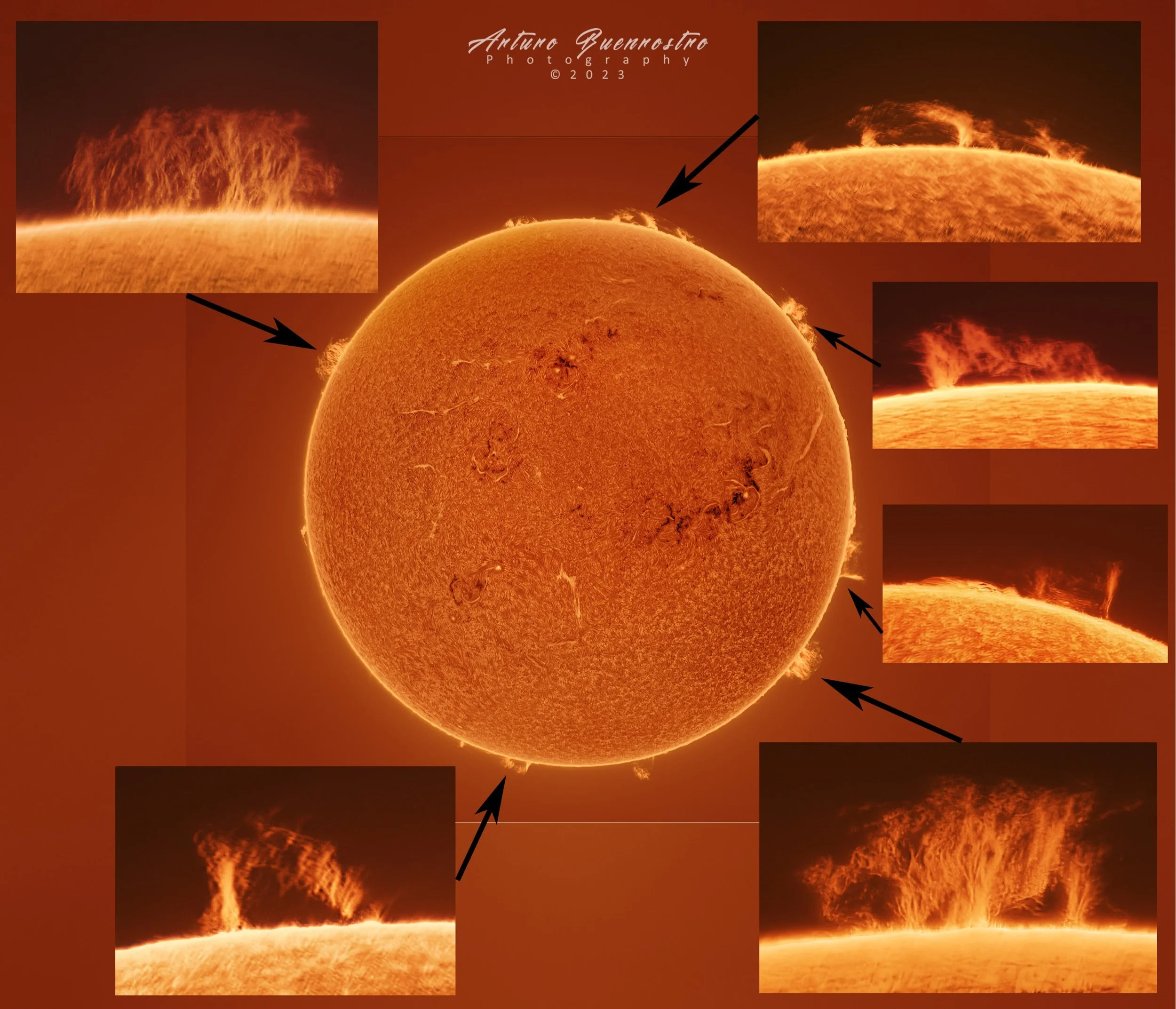
Prominences
Image Description and Details : In a single day, more than 6 large prominences, solar cycle number 25 continues to give us a fabulous spectacle, under 110 degrees Fahrenheit, this work took more than 6 hours, just to be capturing data, of our beautiful sun, plus the hours of image processing. from Dallas, Texas.
Equipment Details: Lunt 100mm,Lunt 60mm
Copyright: Arturo Buenrostro
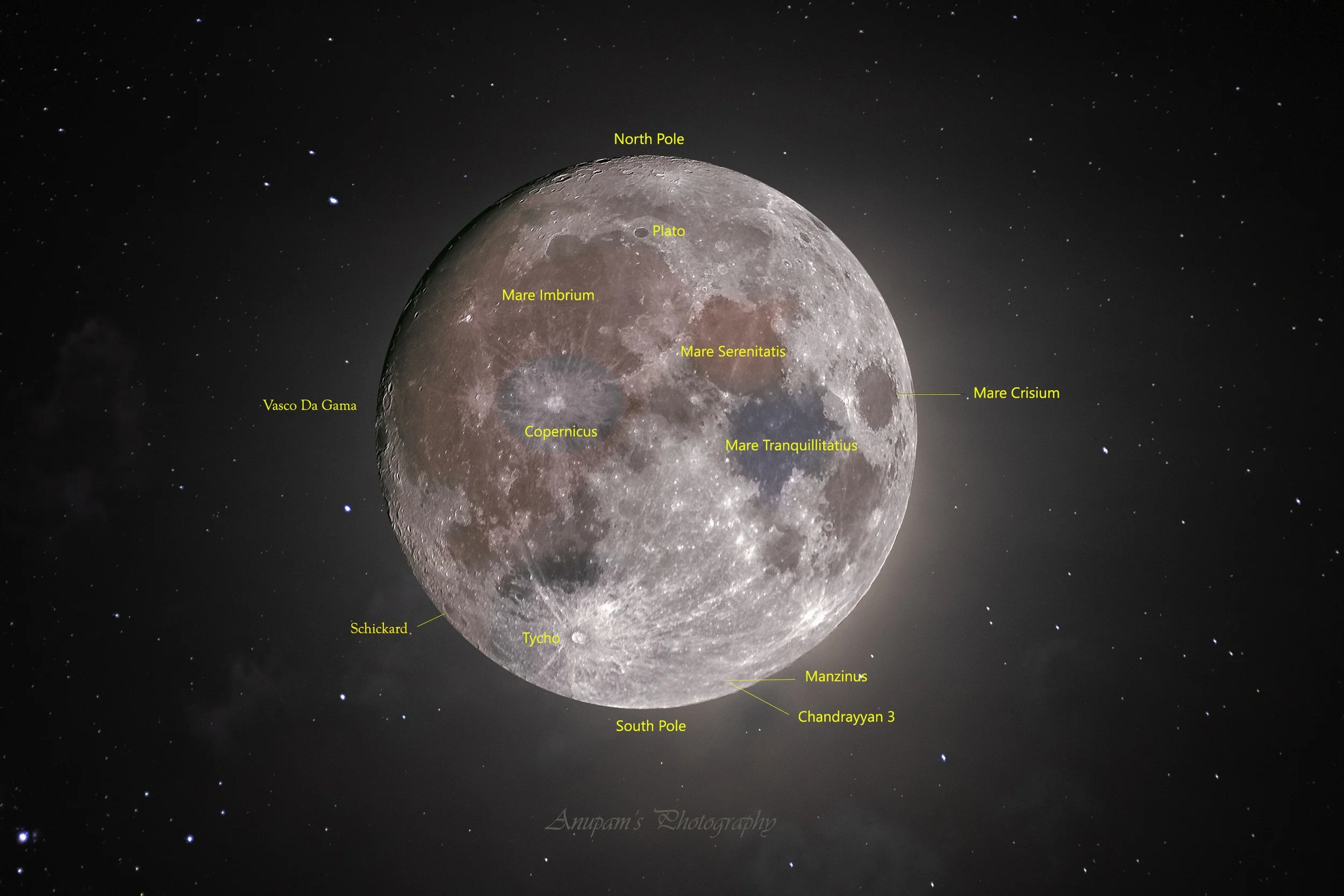
THE Super Blue & Mineral Moon
A so-called ‘Mineral Moon’ image is a saturated color image of the Moon’s surface which indicates the presence of certain minerals in the lunar soil. So, the cooler differences correspond to the variations in chemical composition of the lunar surface (mostly by variations in iron and titanium content). Blue areas contain high amounts of titanium, whereas brown/orange areas indicate an abundance of iron and iron oxide. As some of the craters have unusually dense concentrations of titanium, it is assumed that asteroids that impact on the Moon are rich in rare metals.
India’s Spacecraft Chandrayaan 3 landed on Moon on 23 August which is finding water & minerals.
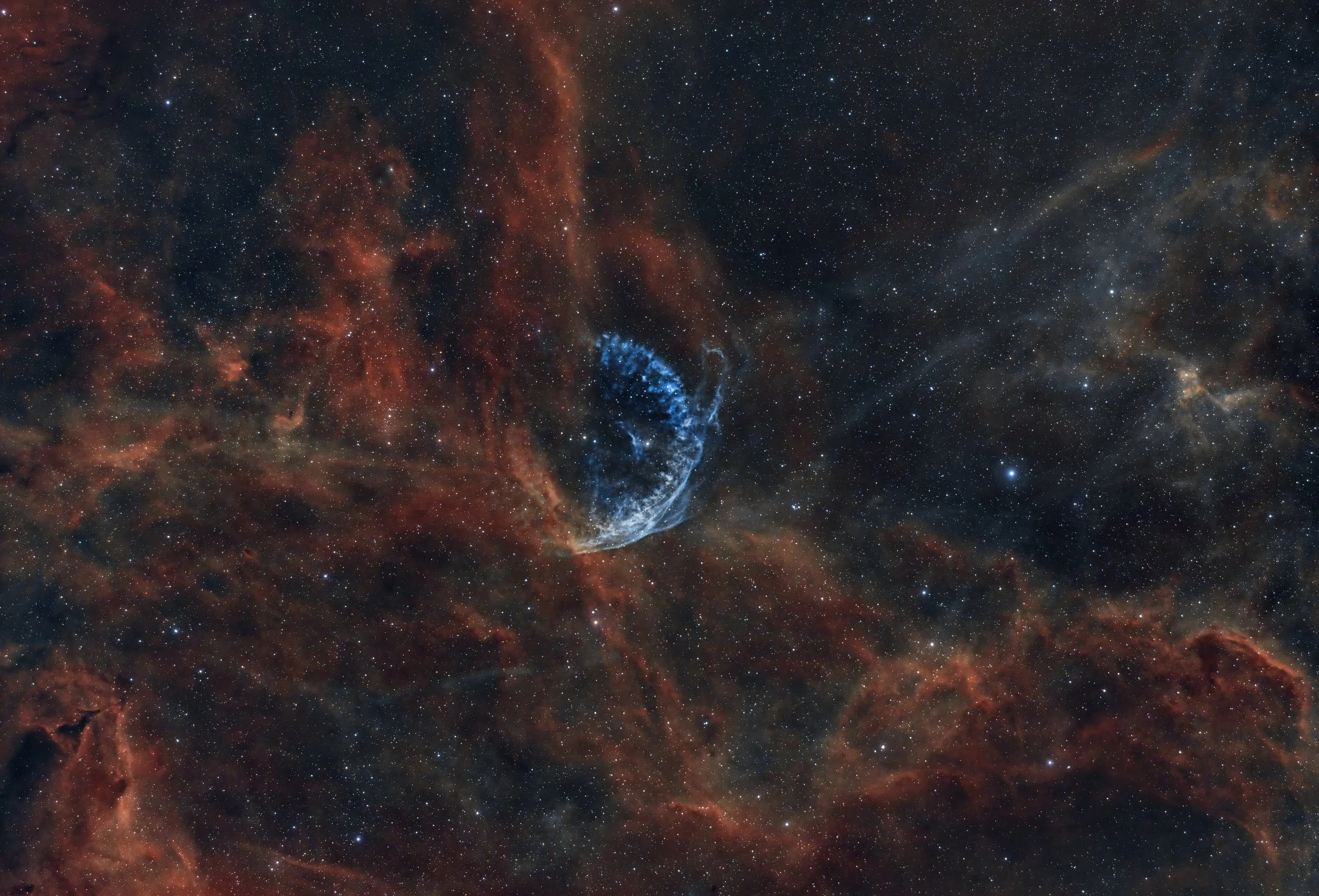
WR 134
WR 134, a captivating member of the Wolf-Rayet star family, stands as a beacon of stellar grandeur in the cosmos. This massive and luminous star has shed its outer layers, creating a stellar wind that rushes into space, sculpting intricate patterns in the surrounding interstellar medium. Its fierce radiance and powerful emissions reveal the profound evolutionary processes occurring within its core.
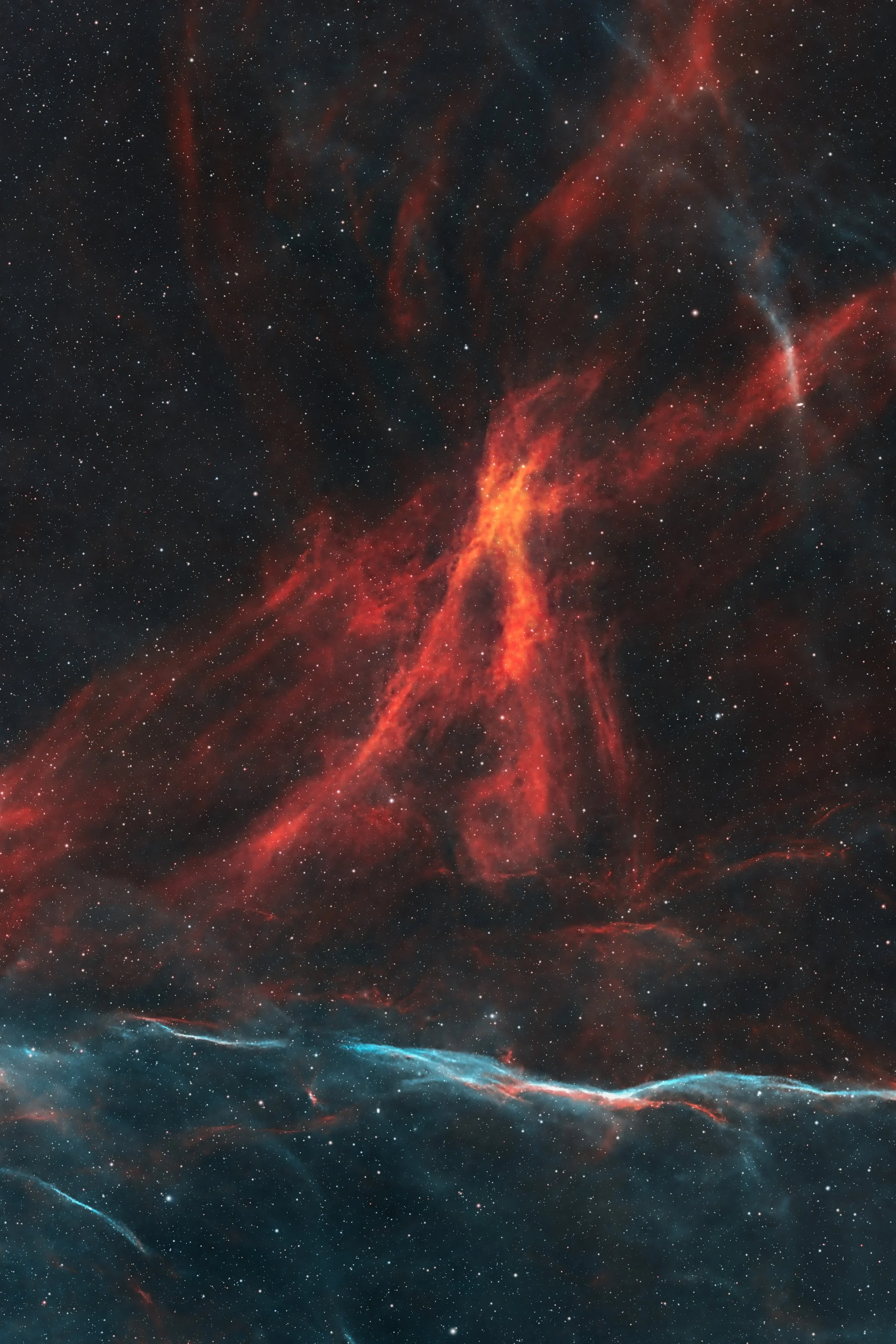
Supernova Remnant - Sh2-96
Sh2-96, a lesser-known gem in the night sky, is an emission nebula that emanates a subtle yet mesmerizing glow. Nestled amidst the tapestry of stars, it remains hidden from casual view, inviting dedicated observers to uncover its secrets. Within its gossamer threads of gas and dust, stars are being born, their radiant energy sculpting the surrounding nebulous material. Like a cosmic cradle, Sh2-96 nurtures the formation of celestial offspring, unseen by many but holding the promise of new stellar wonders yet to be unveiled.
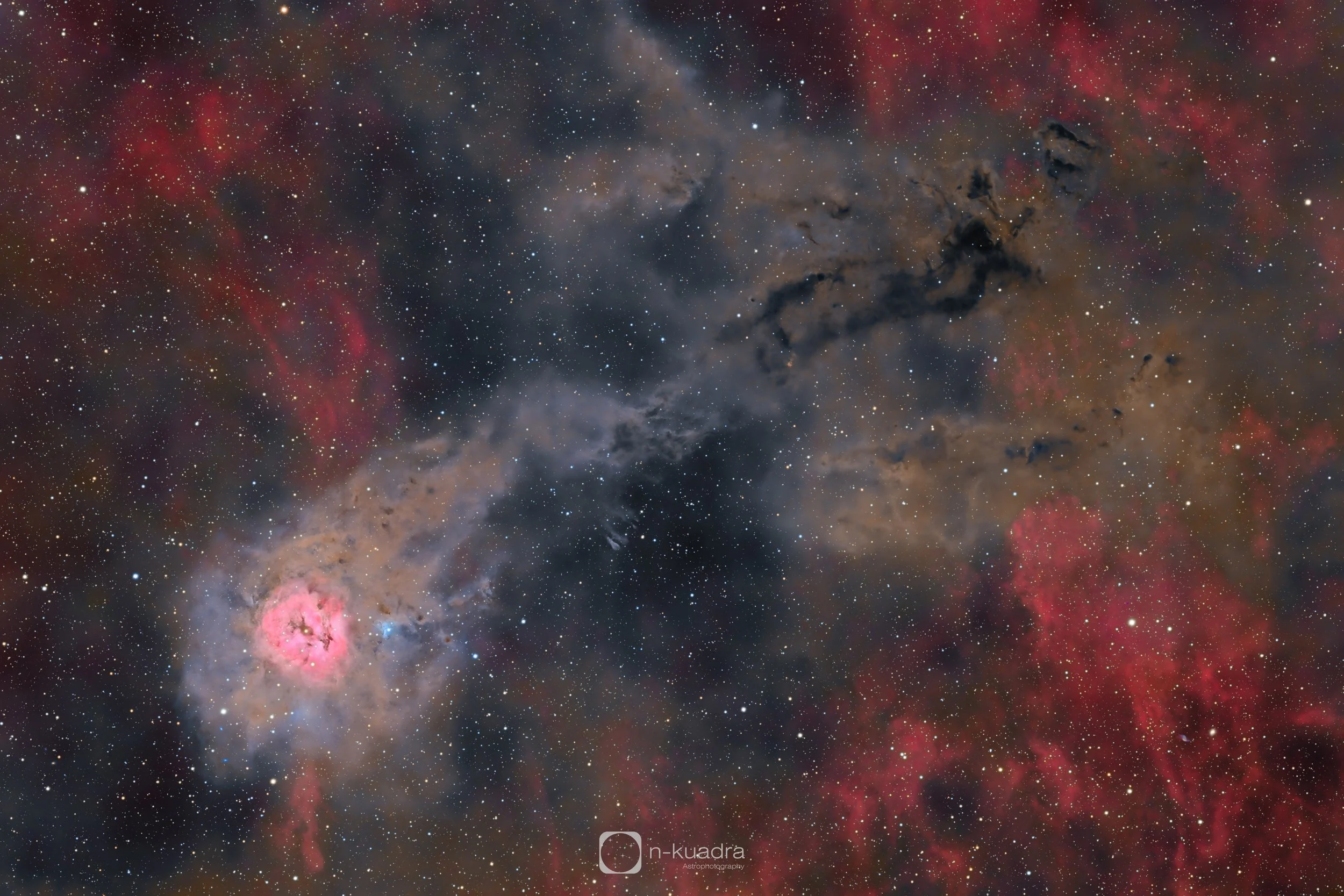
COCOON NEBULA (IC5146) AND RIVER DUST
Nestled within the constellation Cygnus, the Cocoon Nebula, also known as IC 5146, unveils a realm of star formation and transformation. This cosmic cocoon is a blend of dark interstellar dust and the incandescent glow of young stars, enshrouded in a veil of gas and dust that masks their brilliance. The nebula's captivating form evokes the image of a nascent butterfly taking shape, as hidden stellar embryos prepare to burst forth and illuminate their surroundings. The Cocoon Nebula, showcases the cosmic metamorphosis that underpins the creation of new stars, reminding us of the ever-changing and dynamic nature of the universe.

IC 1311 and Patchick6
IC 1311 and Patchick 6 together grace the night sky with their ethereal presence. IC 1311, a diffuse nebula, shimmers like a cosmic canvas painted with the hues of hydrogen gas, a stellar nursery where new suns come to life. In contrast, Patchick 6, a distant open cluster, dazzles like a jewelry box filled with stars, each one telling a story of its place in the vast expanse. As we observe these celestial companions, we glimpse into the intricate tapestry of the universe, where celestial entities intertwine and create a spectacle that stirs wonder in the hearts of observers.
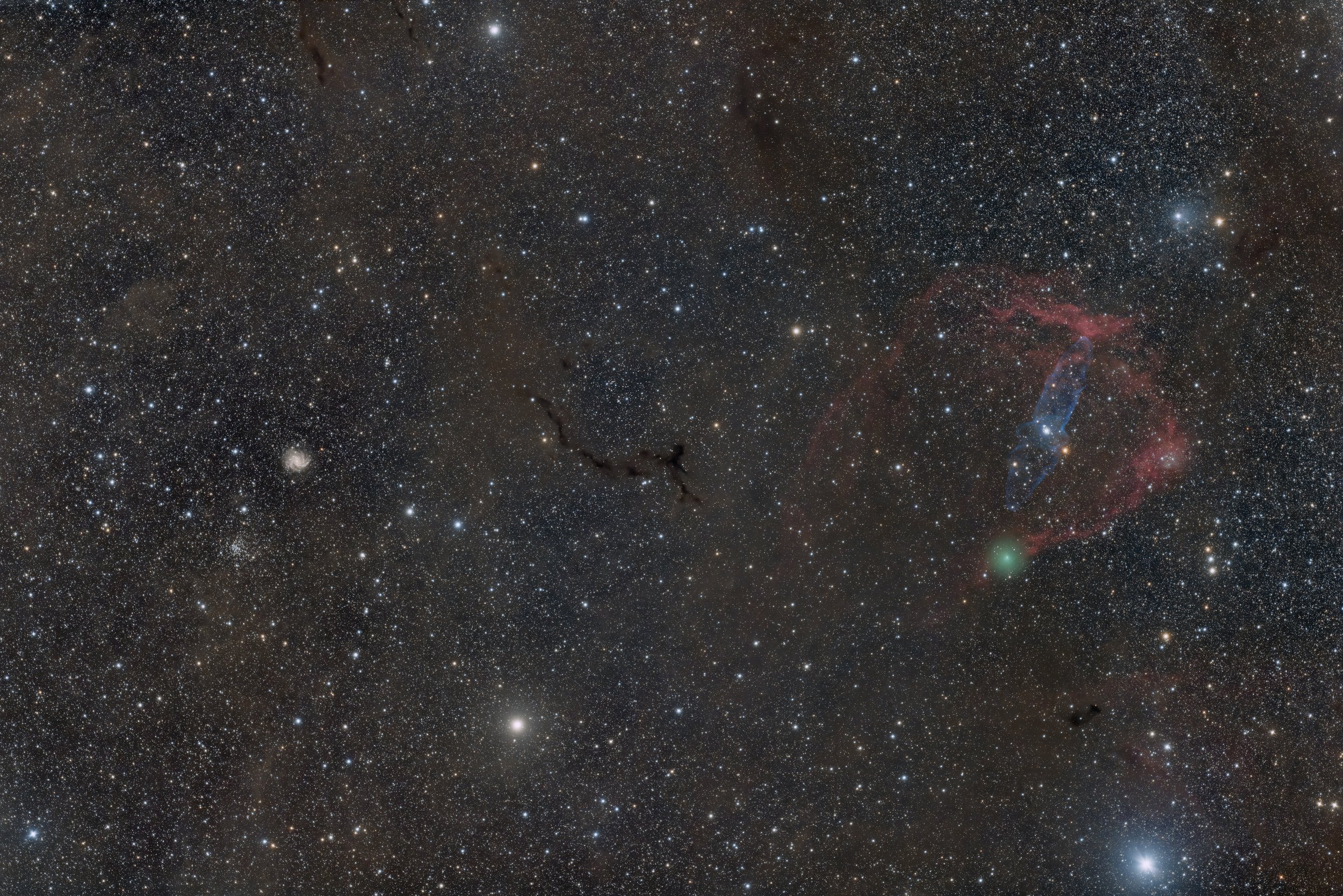
A bat, a seahorse and a squid meeting a comet (C/2023 E1 Atlas)
Originating from the outer fringes of the solar system, Comet C/2023 E1 (Atlas) embarks on a cosmic journey along a profoundly elliptical path. As it makes its way around our Sun, a luminous coma and occasionally a trailing tail materialize, crafting an enchanting visual spectacle that captivates terrestrial observers. The comet's capricious orbital behavior defies easy prognostication of its luminosity and characteristics, introducing an element of unpredicted allure to its study. In this particular capture, the comet finds itself in the company of a celestial seahorse, SH2-129, and the Bat Nebula, forming an uncommon and intriguing field of view that undoubtedly sparks fascination.
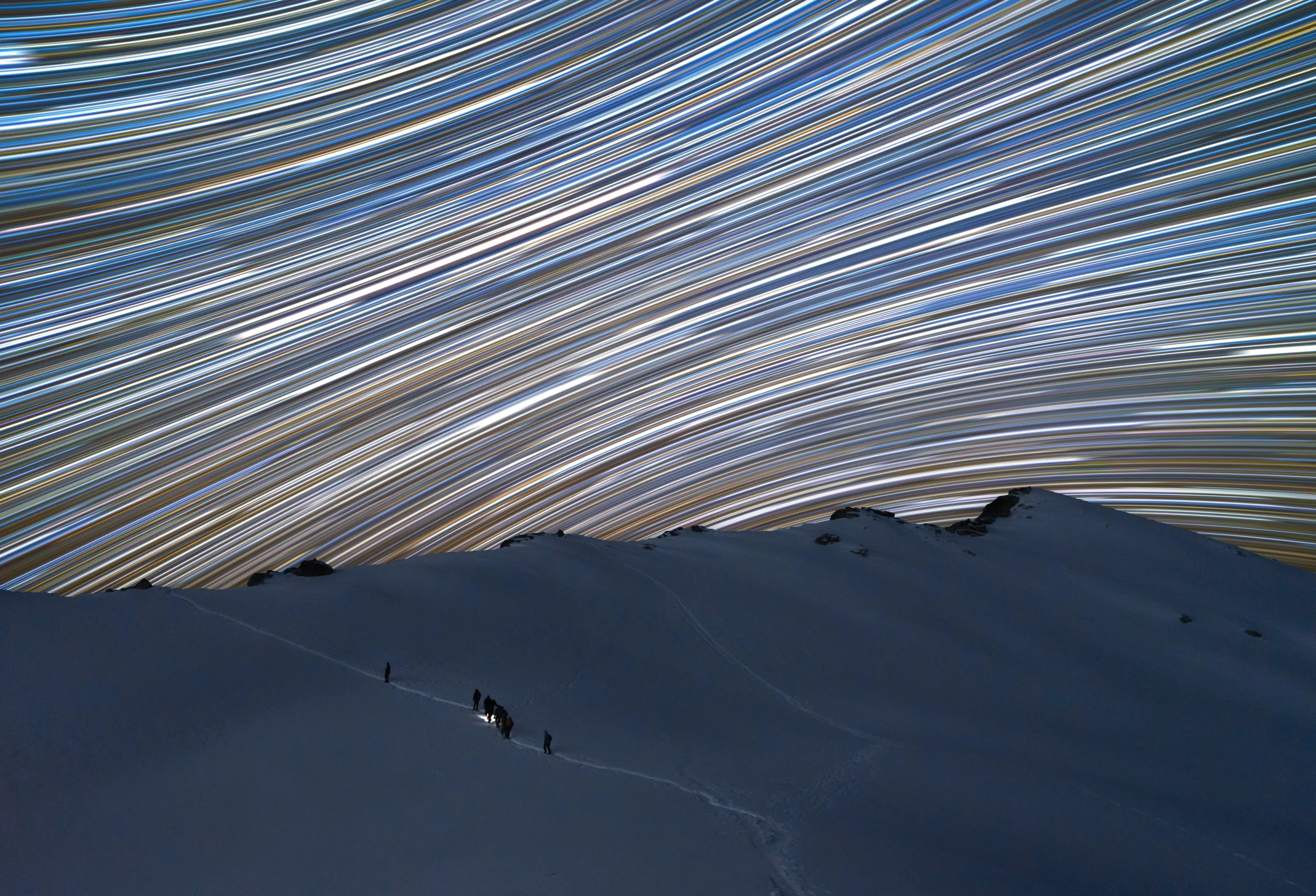
Quest for Cosmos
Hyperbolic star trails, a creative and artistic photography technique, involve capturing star trails that take on a hyperbolic shape due to the movement of the camera or lens during exposure. By introducing controlled camera motion, photographers can produce visually striking and unconventional star trail patterns that deviate from the traditional circular or arc-like trails. This technique adds a dynamic and abstract element to astrophotography, allowing for a blend of science and artistic expression in capturing the motion of celestial bodies.
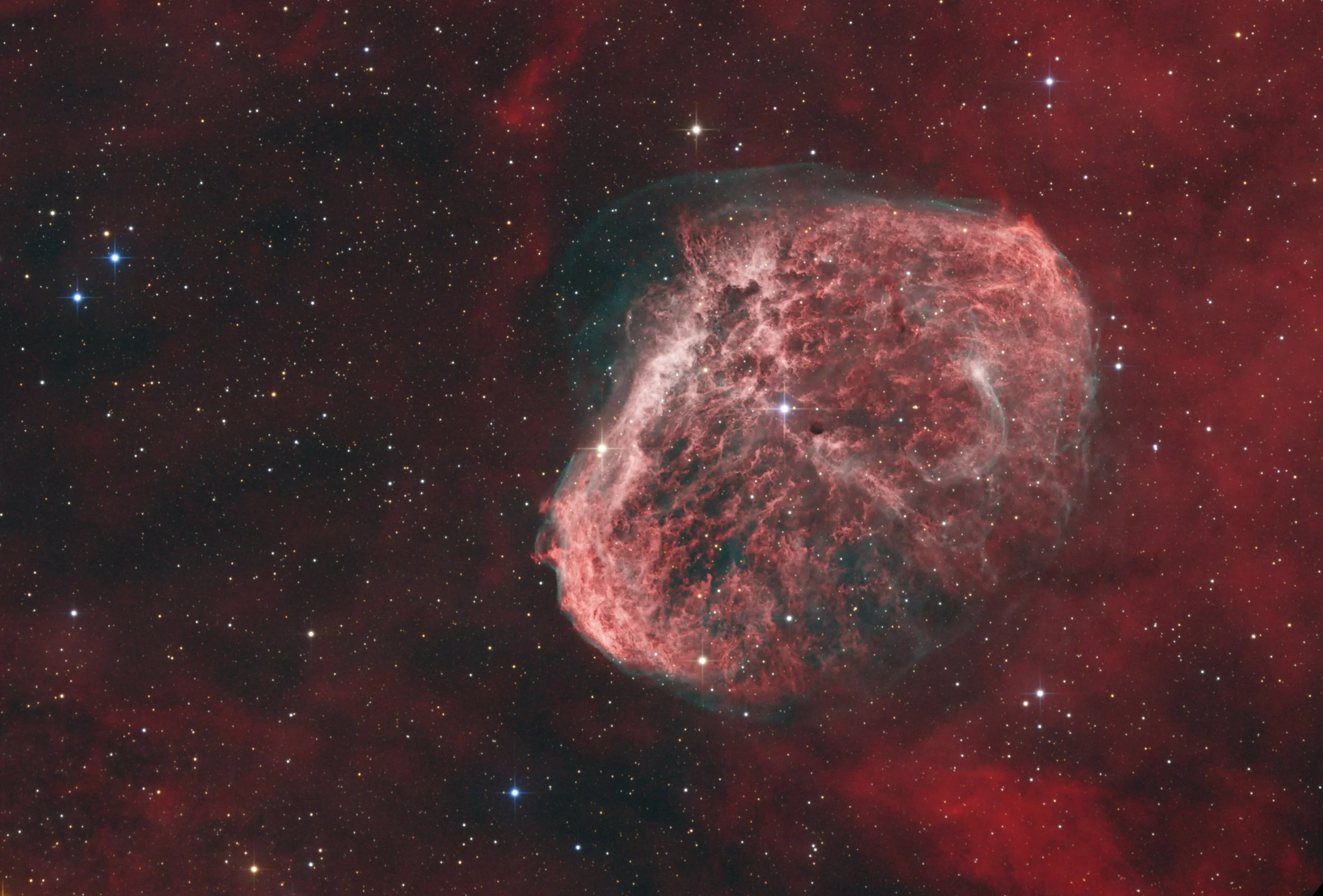
NGC 6888 Crescent
NGC 6888, known as the "Crescent Nebula," is an emission nebula located in the constellation Cygnus. It's formed by the powerful stellar wind from a Wolf-Rayet star colliding with the surrounding interstellar material, creating its distinctive crescent shape. A fascinating aspect of this nebula is the presence of intricate, filamentary structures illuminated by the energetic radiation emitted by the central star, resulting in a captivating interplay of light and gas.
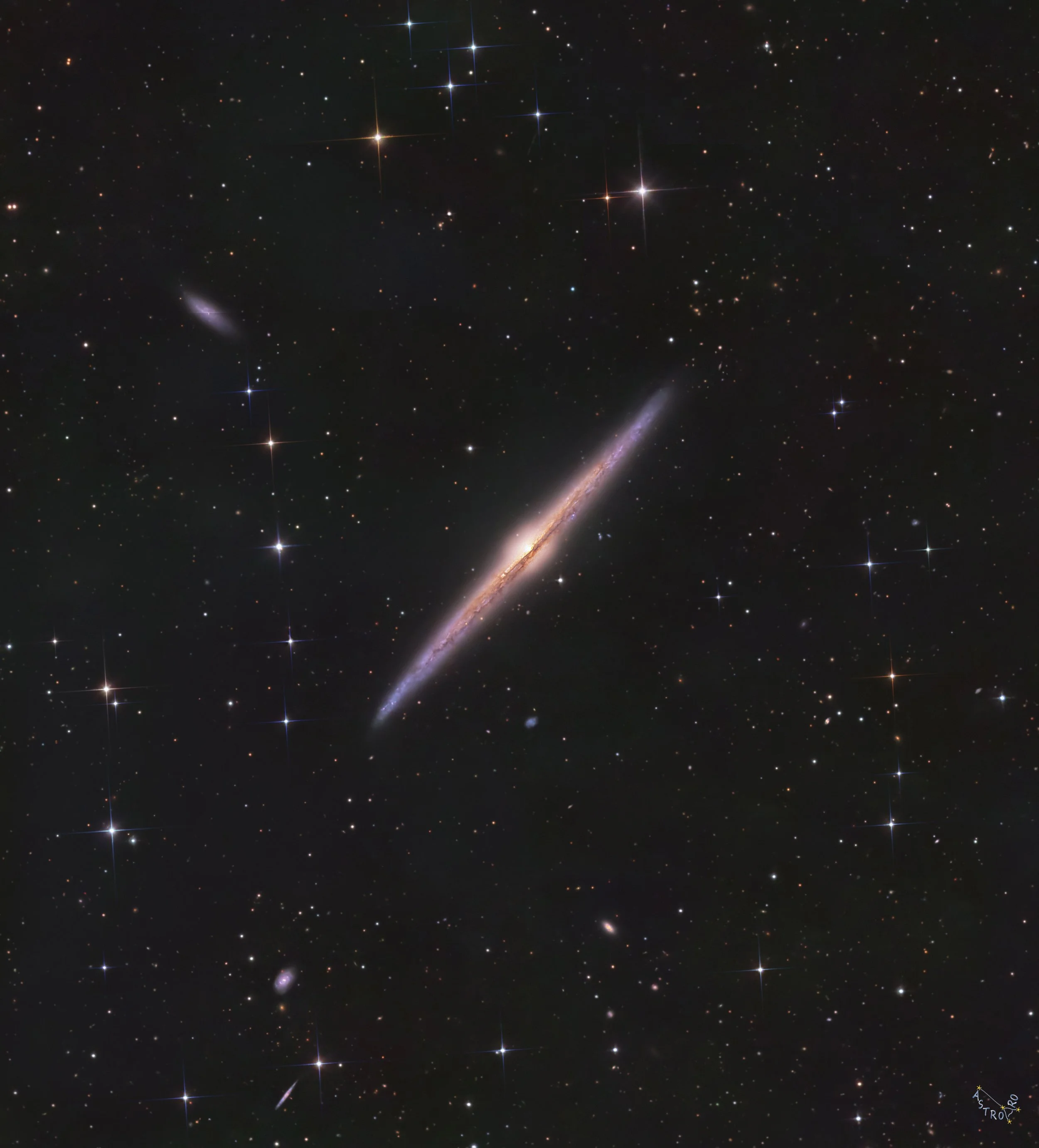
Ngc 4565
NGC 4565, often referred to as the "Needle Galaxy," is a remarkable edge-on spiral galaxy situated in the constellation Coma Berenices. One of its lesser-known facts is that it hosts a dense central bulge, which contains a supermassive black hole that emits powerful X-rays as it interacts with surrounding matter. This galaxy is also famous for its prominent dust lane that spans its length, expertly made visible in this image, partially obscuring the galactic disk and adding to its distinctive appearance.