
AAPOD2 Image Archives
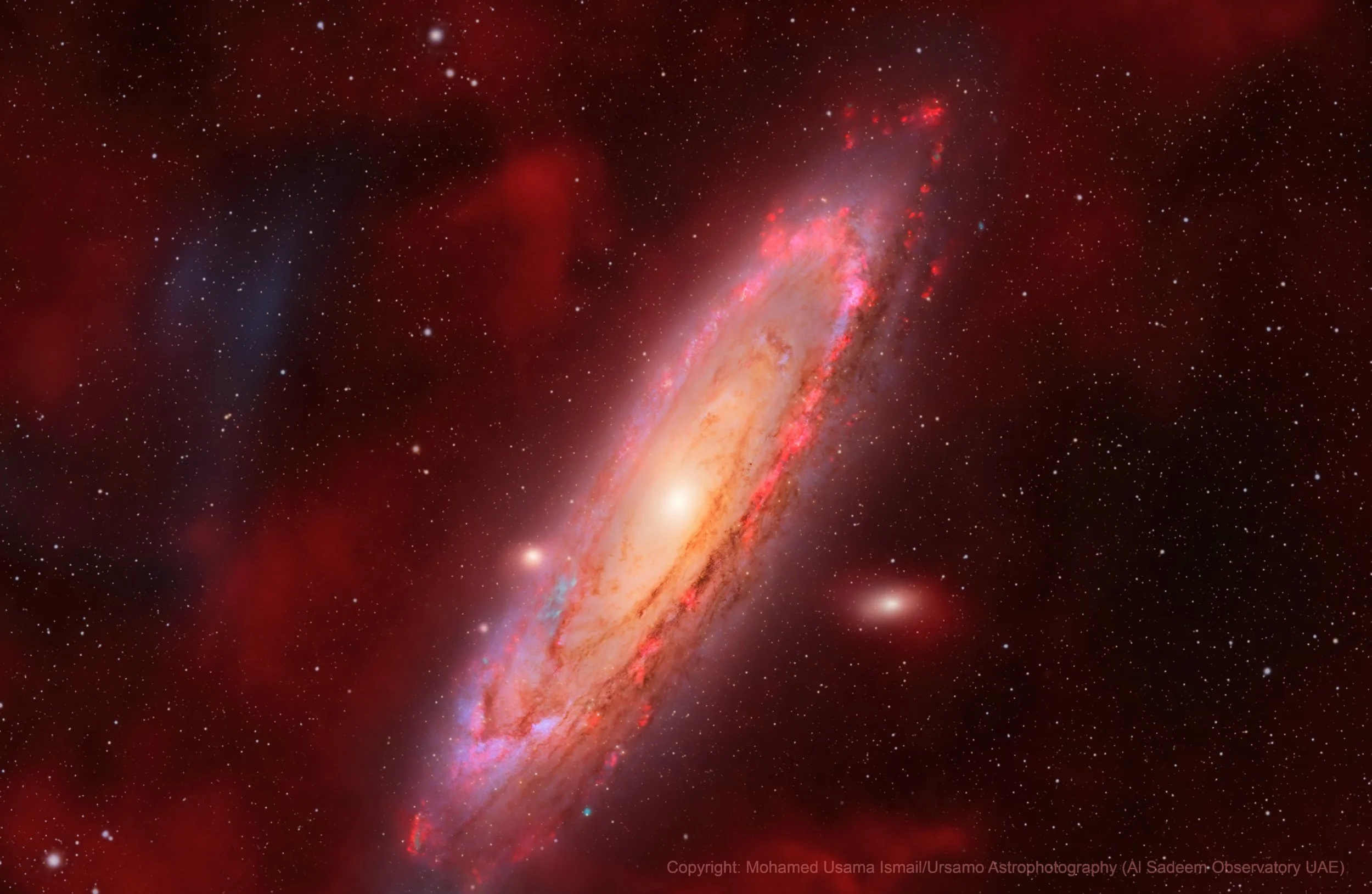
Andromeda in narrow/broad-band with the recently discovered SDSO1!
Image Description and Details: The Fiery Veil of Andromeda!
Gaze upon the Andromeda Galaxy, our cosmic neighbour, as it reveals its hidden secrets. The crimson halo you see is the Ha emission, a testament to the vast clouds of hydrogen gas that envelop this majestic galaxy. It's like Andromeda's own ethereal aura, glowing softly against the backdrop of the cosmos.
Now, let's dive deeper. The inverted image you see is a result of meticulous processing of the data taken using the Radian Triad filter. But what's that faint glimmer to the left? Ah, that's the STROTTNER-DRECHSLER-SAINTY OBJECT 1. Processing this was no easy feat. It was like trying to hear a whisper in a storm. But with a blend of channels, some masking magic, and this ghostly presence was brought to life. Its amazing how the world of Oiii has so much for us unknown.
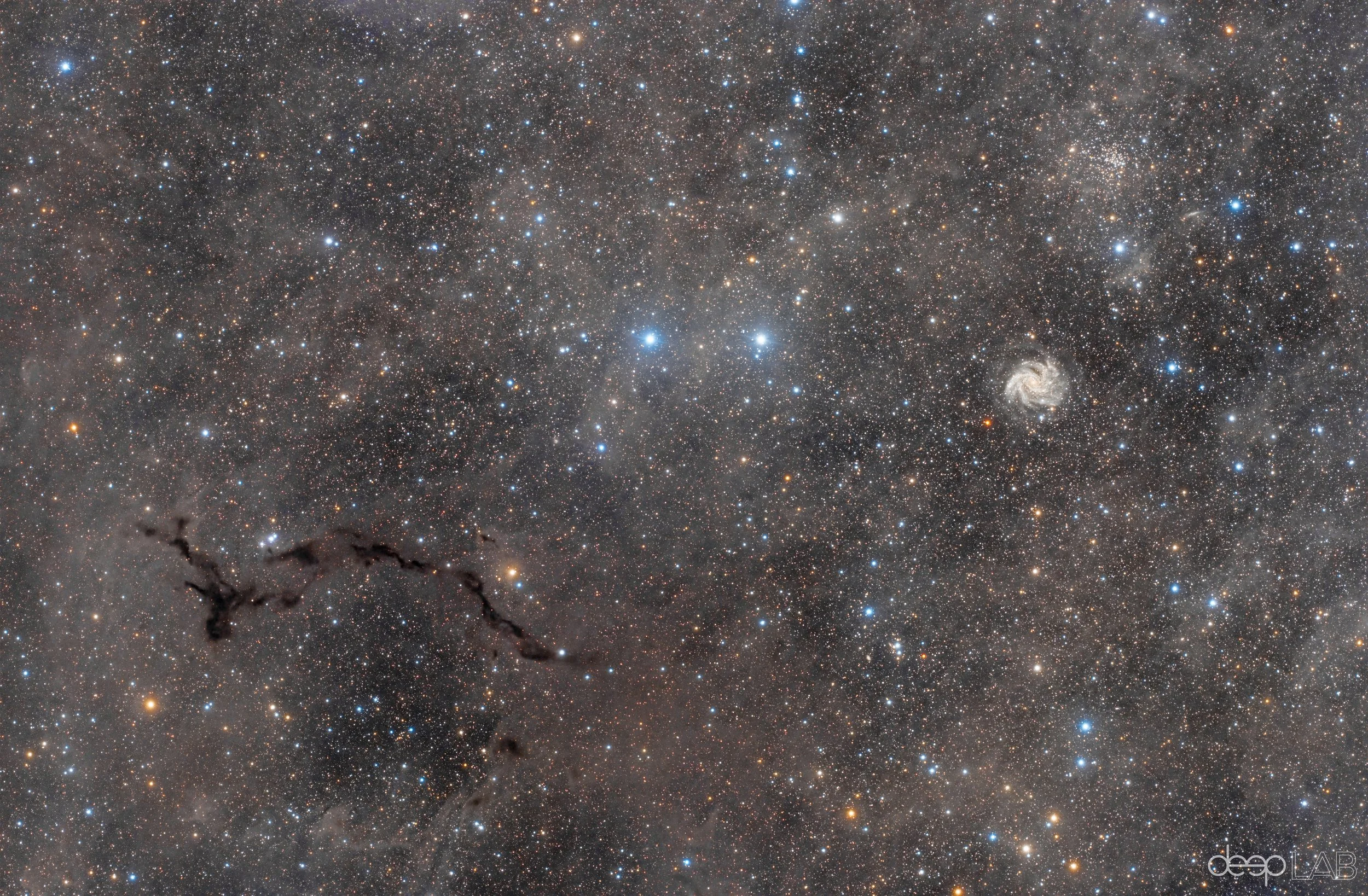
B150- Fireworks and Dust
Barnard 150 is a dark nebula visible in Cepheus constellation. It is also known as the Seahorse Nebula due to its shape.
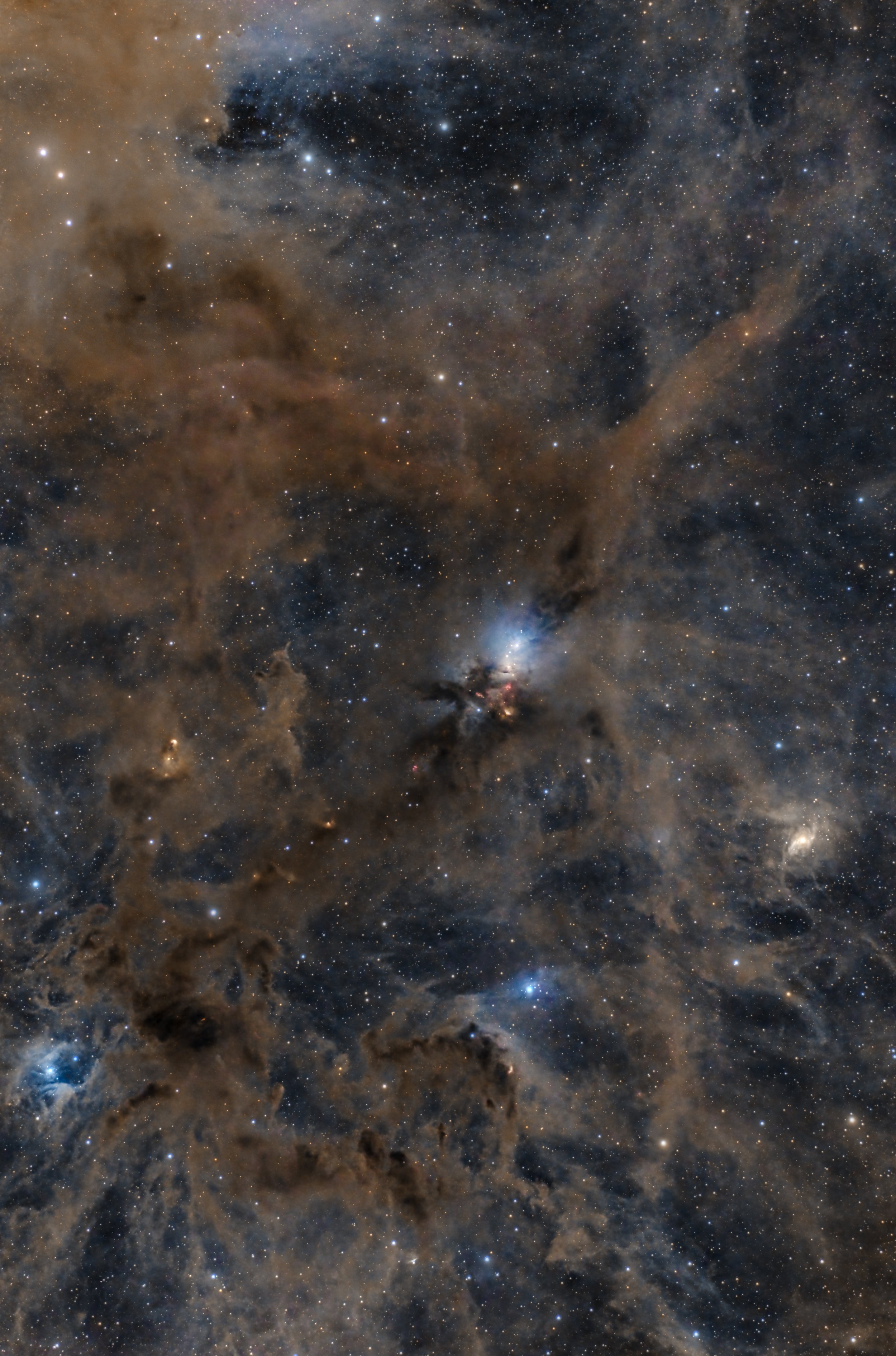
Ngc1333 Wide field
Image Title: Ngc1333 Wide field
Image Description and Details: NGC 1333 is a reflection nebula located in the northern constellation Perseus.
This nebula is a young region of very active star formation, being one of the best-studied objects of its type.
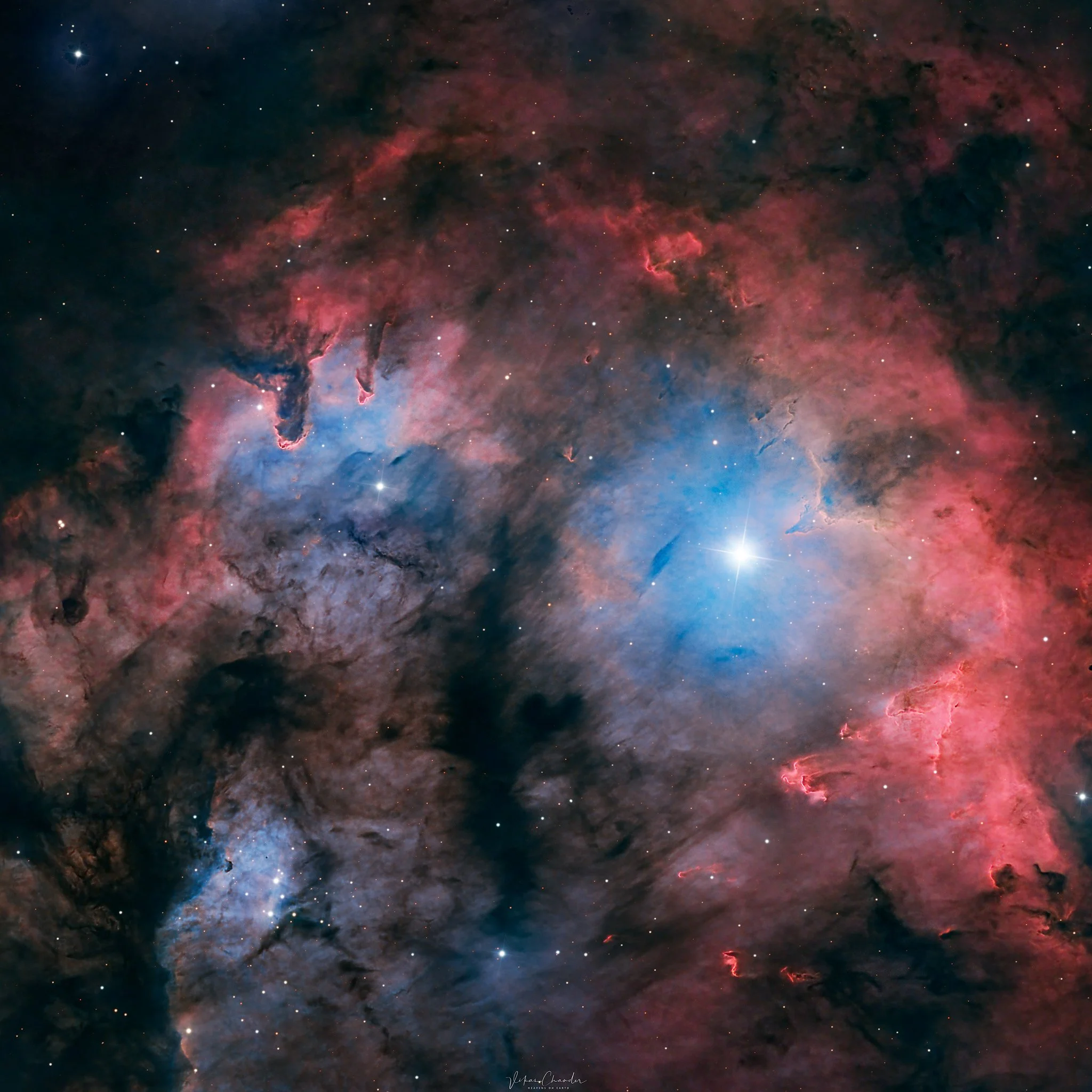
NGC 7822
Image Description and Details: Can you see the face in space ? Blue eyes, a dark nose and mouth with curly red hair….
The red in space is ionised hydrogen and blue is atomised oxygen. Cosmic pillars of cold molecular gas and clouds of dark dust – often called elephant trunks – lie within NGC 7822. Powering the nebular glow are the young, hot stars of the Berkeley 59 cluster, whose powerful winds and radiation also sculpt and erode the dense pillar shapes. Stars could still be forming inside the pillars by gravitational collapse, but as the pillars are eroded away, any forming stars will ultimately be cut off from their reservoir of star stuff…..
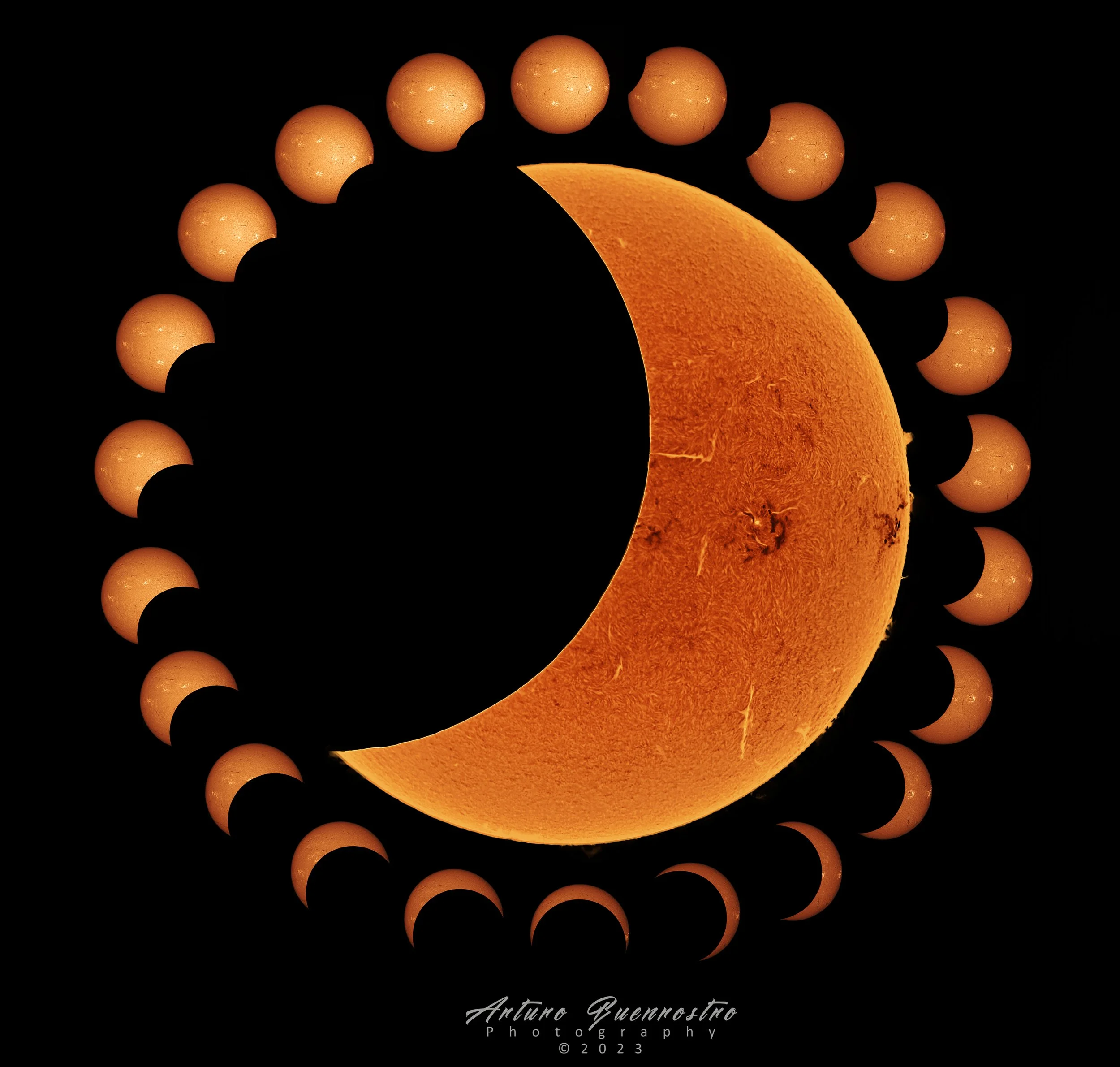
Solar Eclipse from Texas
Image Description and Details: It was a great experience to enjoy this great phenomenon of nature, although from where I was (Dallas, Tx.) it was not possible to see 100% of this annular solar eclipse, but here I leave you the result of these images taken from my dedicated telescope I hope you like it, and we will wait for the next total eclipse, from Dallas, now we will see it completely in this area, next April 2024.
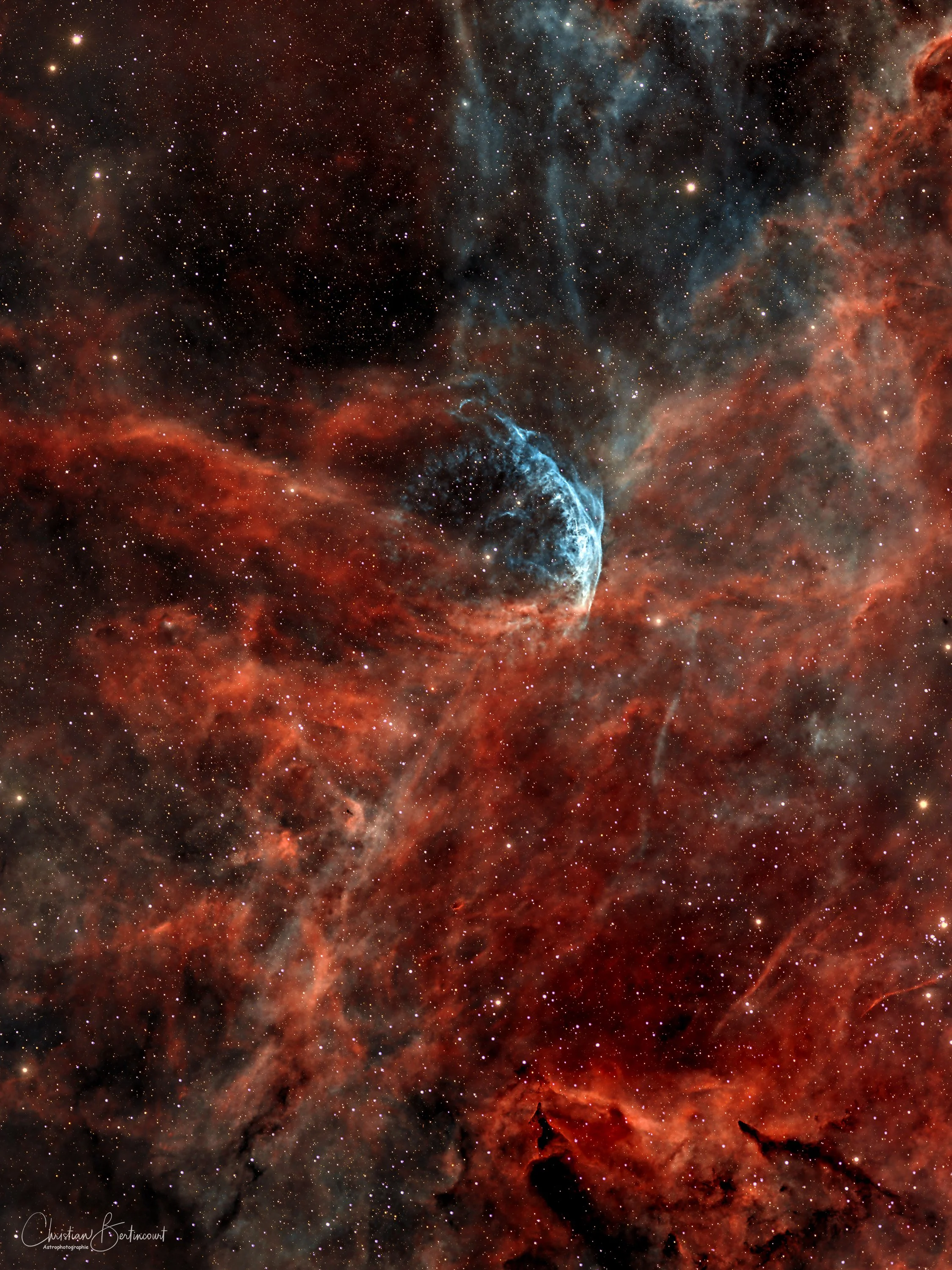
WR-134
Image Description and Details: WR 134 est une étoile variable située à environ 6 000 années-lumière de la Terre dans la constellation du Cygne. WR 134 expulse une partie de ces couches externes qui sont ensuite soufflées par le rayonnement intense et les vents stellaires rapides de l’étoile. L’éjecta est ensuite entré en collision avec la nébuleuse ambiante entourant l’étoile pour former cette espèce de disque (en bleu dans l’image).
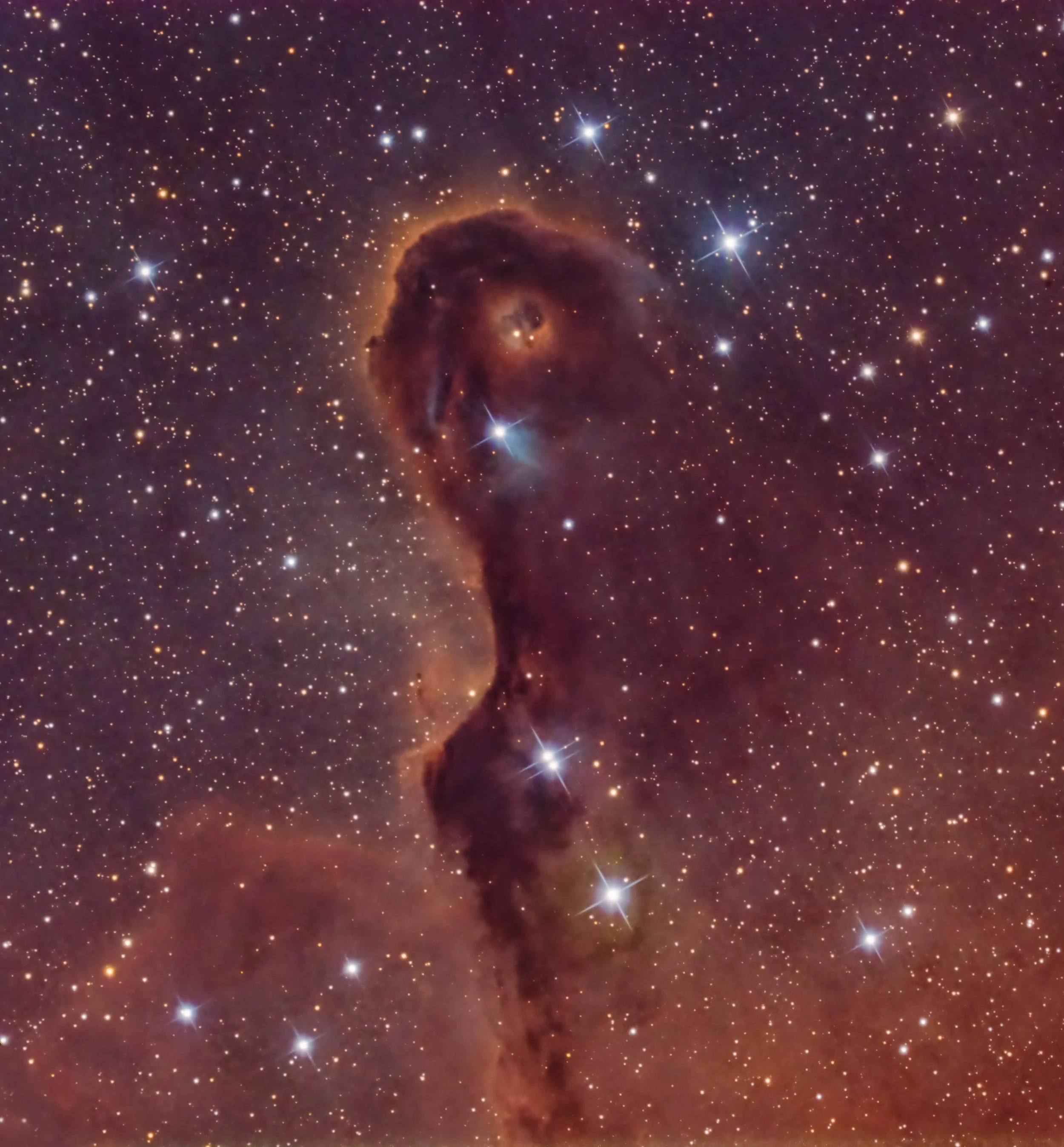
The Nose of the Elephant Trunk
Image Description and Details: This is the cometary globule inside IC1396, in Cepheus. It is named "the elephant trunk" due to the similarity with the trunk of this big animal. The globule contains many different protostars and it is shaped by a very energetic star in the center of the nebula complex. In this image I composed 3 different sessions: SHO and L-Extreme images taken with my C11HD from my backyard and RGB images taken with CDK500 from Skygems remote service.
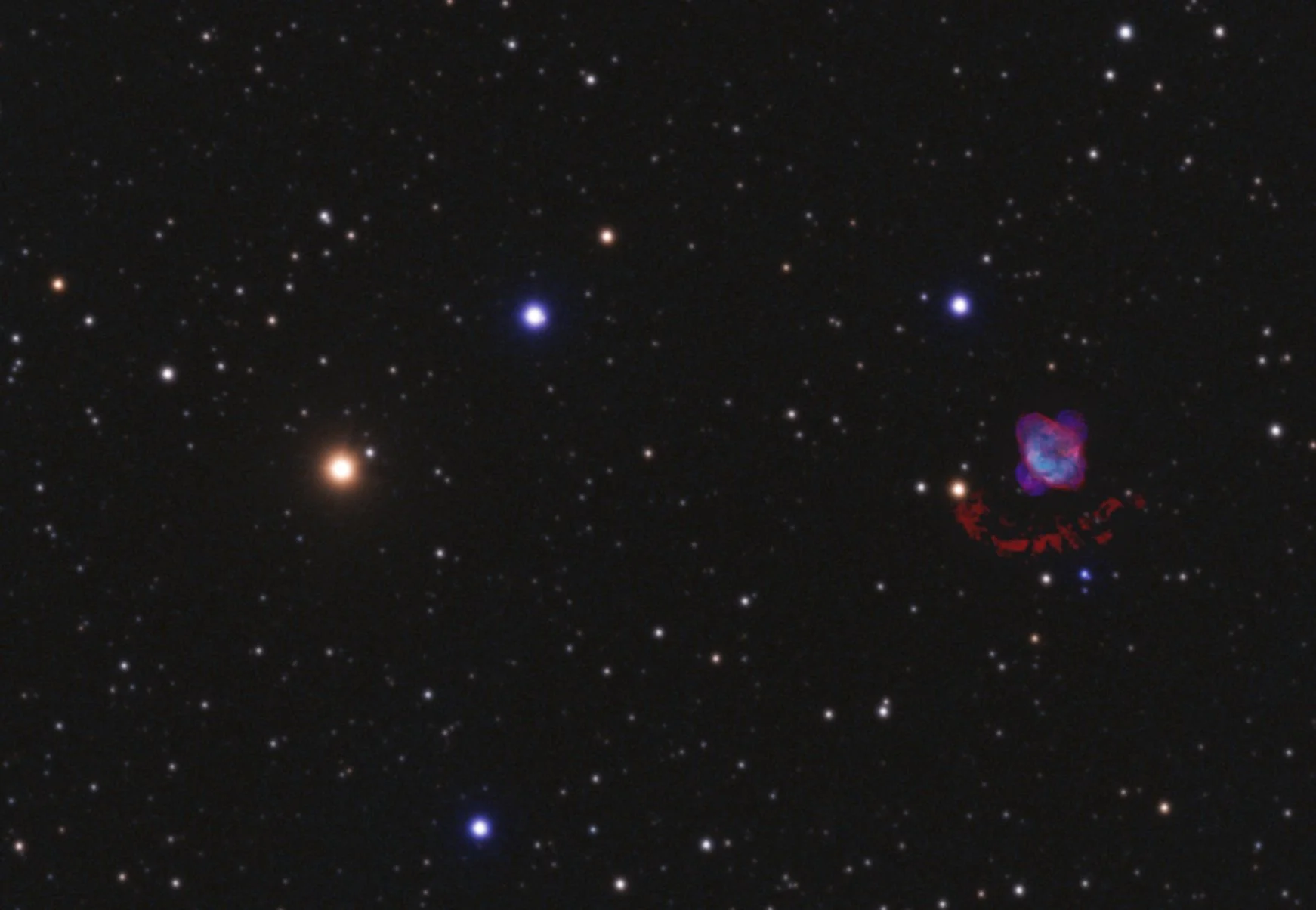
M 2-55 and its elusive fragmented bow-shock front
Image Description and Details: M 2-55 is an evolved rarely-imaged planetary nebula in the constellation Cepheus. It was first discovered and identified by the German-American astronomer Rudolph Minkowski on photographic plates at Mount Wilson in 1947. The plates were taken by W.C. Miller with a 10" f/5.2 refractor.
IM 2-55 possesses two sets of bipolar lobes.
It was only in 2020 that a team of Chinese professional astronomers detected an arc of material running from the SE to the SSW. (Chih-Hao Hsia et. al, March 13th 2020, “Discovery of Extended Structures around Two Evolved Planetary Nebulae M 2-55 and Abell 2”). They concluded that this arc was furnishing strong evidence for an interaction of the expanding nebula of \m 2-55 with its surrounding interstellar material. The presence of fragmentation in the arc may be the result of a phenomenon known as Rayleigh-Taylor (RT) instabilities.
A total of 115 hours HaOIIIRGB image capture
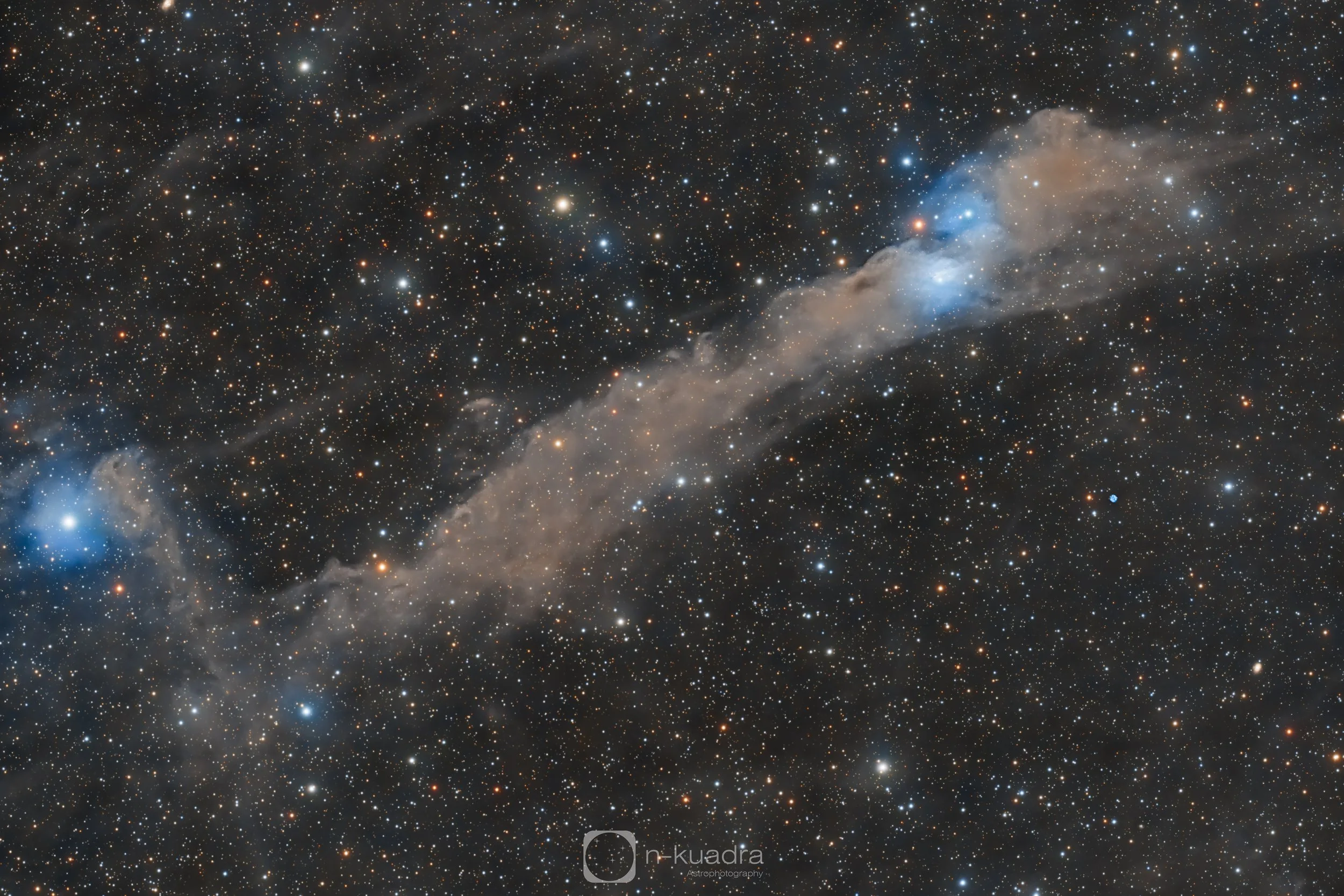
COSMIC CHECKMARK (LBN534+VdB158)
LBN 534 and VdB 158, located in the constellation Cepheus, together form a captivating interstellar duo offering a wealth of scientific insights. LBN 534 is classified as a diffuse emission nebula, while VdB 158 is a reflection nebula. Emission nebulae, like LBN 534, are primarily composed of ionized gas emitting light at various wavelengths, providing valuable information about the properties of the interstellar medium. VdB 158, on the other hand, owes its striking appearance to the scattering of light by dust particles.
In the case of VdB 158, the bluish appearance is the result of the preferential scattering of shorter, bluer wavelengths of light. Its juxtaposition with LBN 534 offers a unique opportunity for astronomers to study the interaction between the illuminating stars and the surrounding dust and gas. Analyzing these nebulae contributes to our understanding of the intricate processes governing star formation and the dynamics of the interstellar medium in the vast expanse of our galaxy.
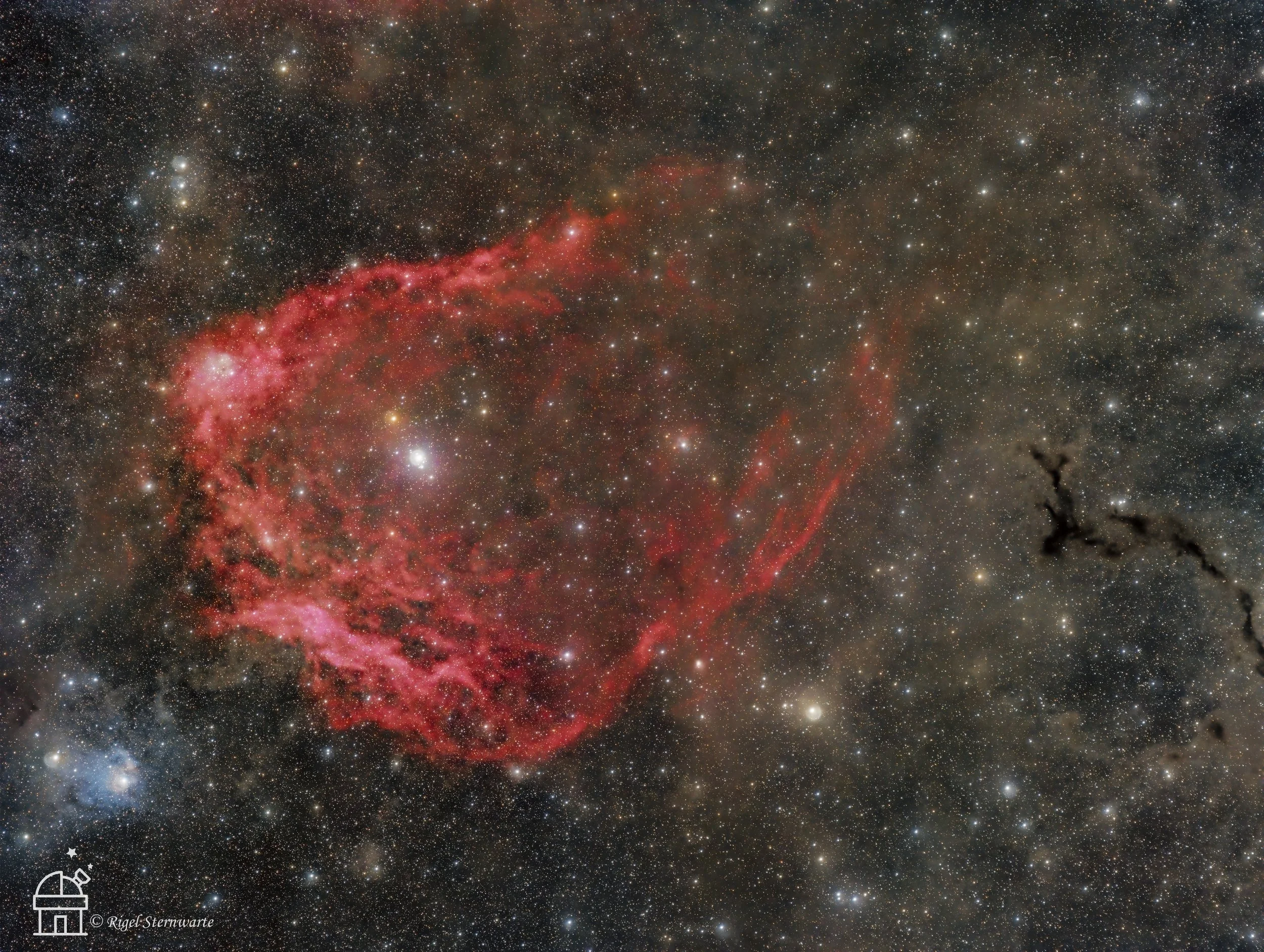
SH2-129 LRGB
Sh2-129, also known as the Flying Bat Nebula, is an emission nebula located in the constellation of Cepheus. It derives its name from its resemblance to a flying bat with outstretched wings. Scientifically, Sh2-129 is a complex nebula featuring both emission and reflection components. Emission nebulae are formed by the ionization of gases by nearby stars, while reflection nebulae occur when dust particles scatter light from nearby stars. Sh2-129 is illuminated by the radiation from O-type stars, which are known for their high temperature and luminosity. Its intricate structure provides astronomers with an opportunity to study the interplay between stellar radiation and the surrounding interstellar medium. The examination of Sh2-129 contributes to our understanding of the mechanisms behind the shaping and evolution of such intricate cosmic formations.

2023 October 14 Annular Solar Eclipse in H-Alpha
An annular solar eclipse occurs when the Moon covers the Sun's center, leaving the Sun's visible outer edges to form a "ring of fire" or annulus around the Moon. Observing such an eclipse in H-alpha light, which is a specific spectral line of hydrogen, can provide valuable insights into the Sun's chromosphere and prominences.
For the October 14, 2023, annular solar eclipse, this H-alpha view highlights the chromospheric features and prominences. Observers using specialized solar telescopes equipped with H-alpha filters would have been able to see the eclipse with more details and observe any solar prominences that were present during the eclipse.
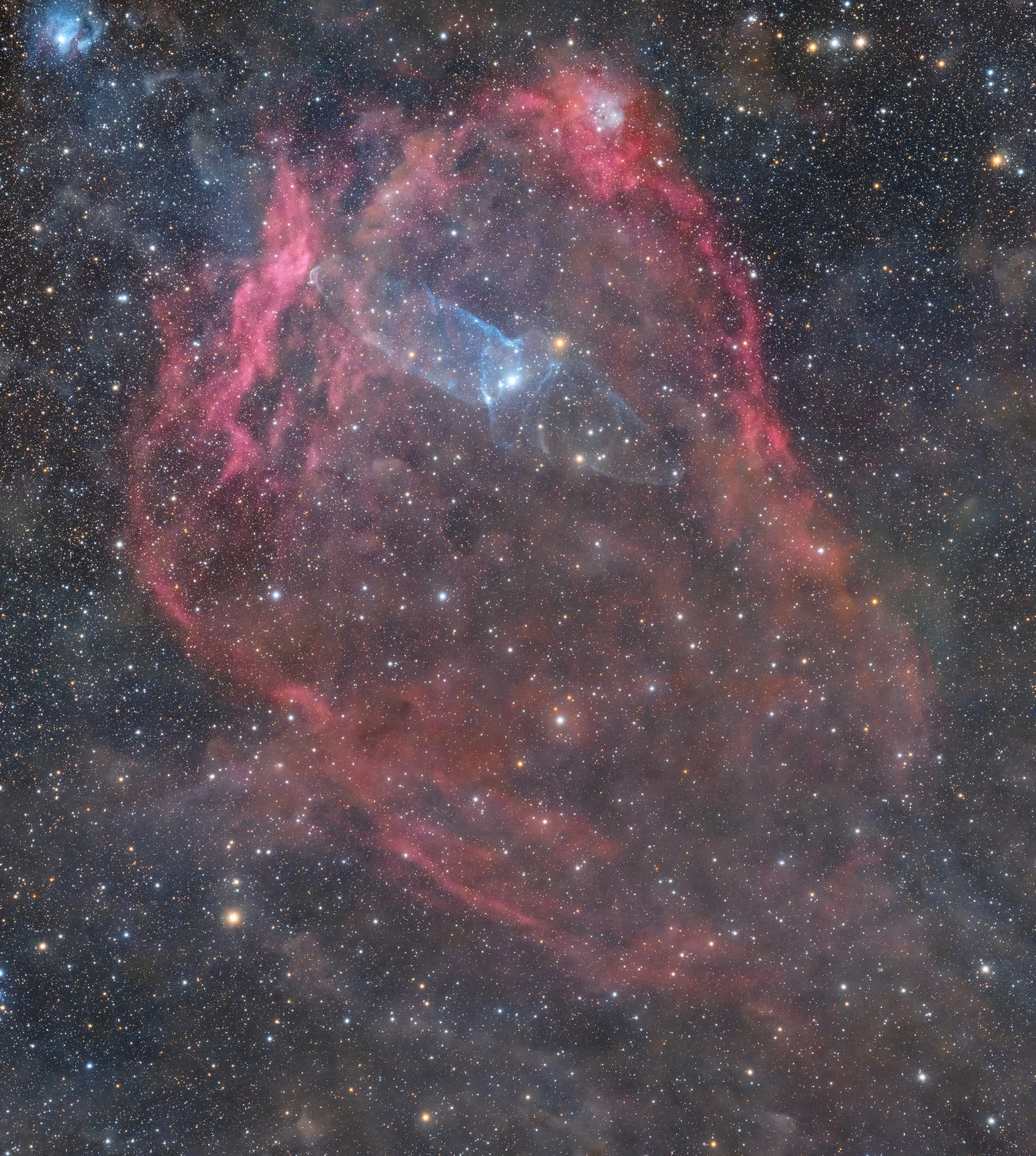
SH2-129 and OU4 in OIII-RGB
This composite image features a captivating 2-panel mosaic of the intricate SH2-129 and OU4 nebulae, highlighting their stunning OIII-RGB emission patterns. Through the implementation of specialized filters, the mosaic vividly portrays the intricate interstellar structures and the distinct emission characteristics of these nebulae. SH2-129, also known as the Flying Bat Nebula, boasts dynamic filamentary features, while OU4, the Iris Nebula, exhibits intricate details and a captivating ring-like appearance. The utilization of the OIII-RGB technique enhances the contrast and color separation of the nebular components, providing valuable insights into the ionized gas dynamics and the underlying physical processes driving the evolution of these stellar nurseries.
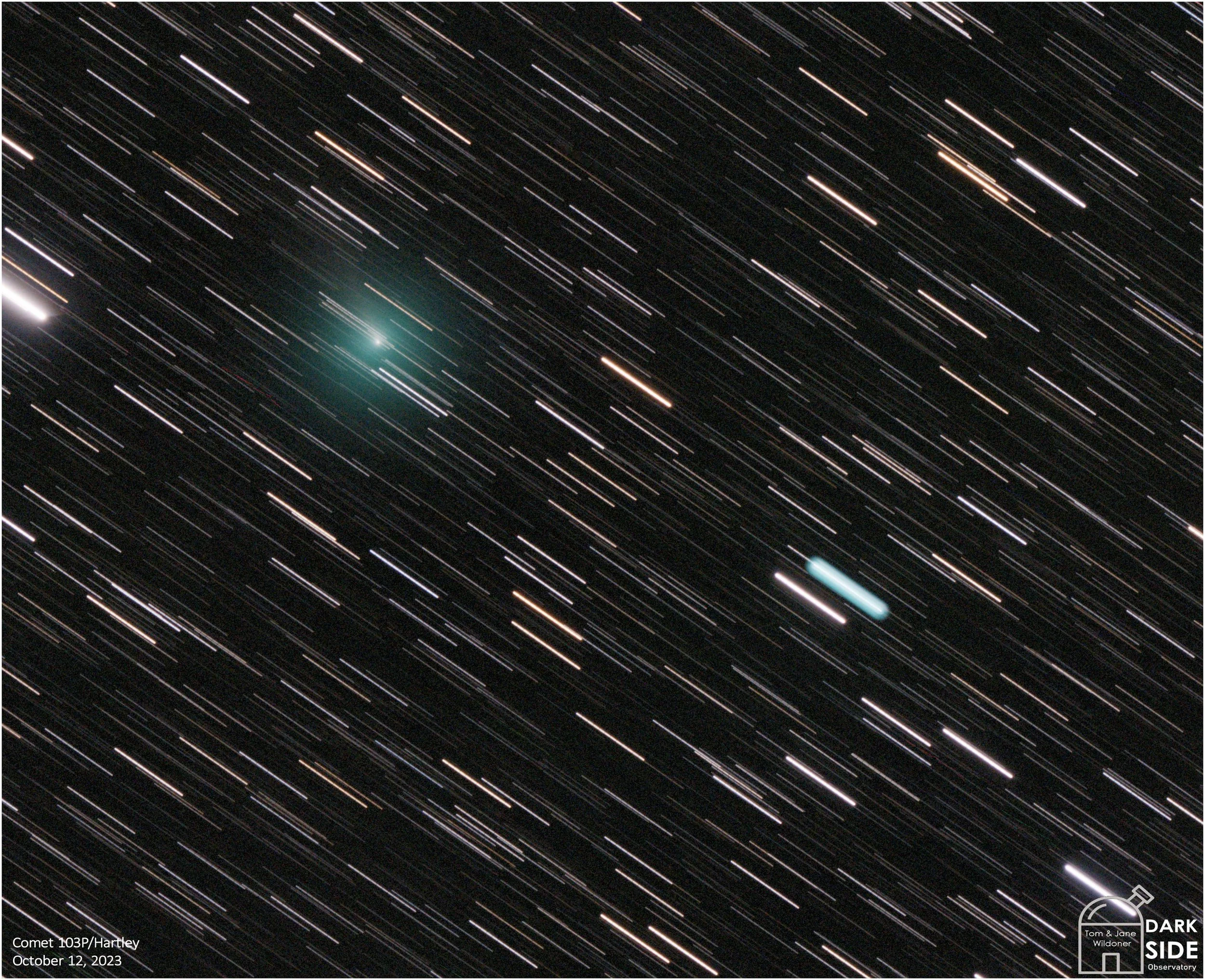
Comet 103P/Hartley and the Eskimo Nebula
This composite image captures the celestial journey of Comet 103P/Hartley against the backdrop of a starry night sky. The stacked image technique highlights the graceful trajectory of the comet, while accentuating the subtle motion of the trailing stars due to the Earth's rotation. Comet 103P/Hartley, known for its periodic return to the inner solar system, exhibits a distinguishable coma and tail, showcasing its volatile nature as it interacts with the solar wind. The juxtaposition of the comet's transient presence and the steadfast backdrop of the stars offers a profound visual testament to the dynamic and timeless nature of our universe.
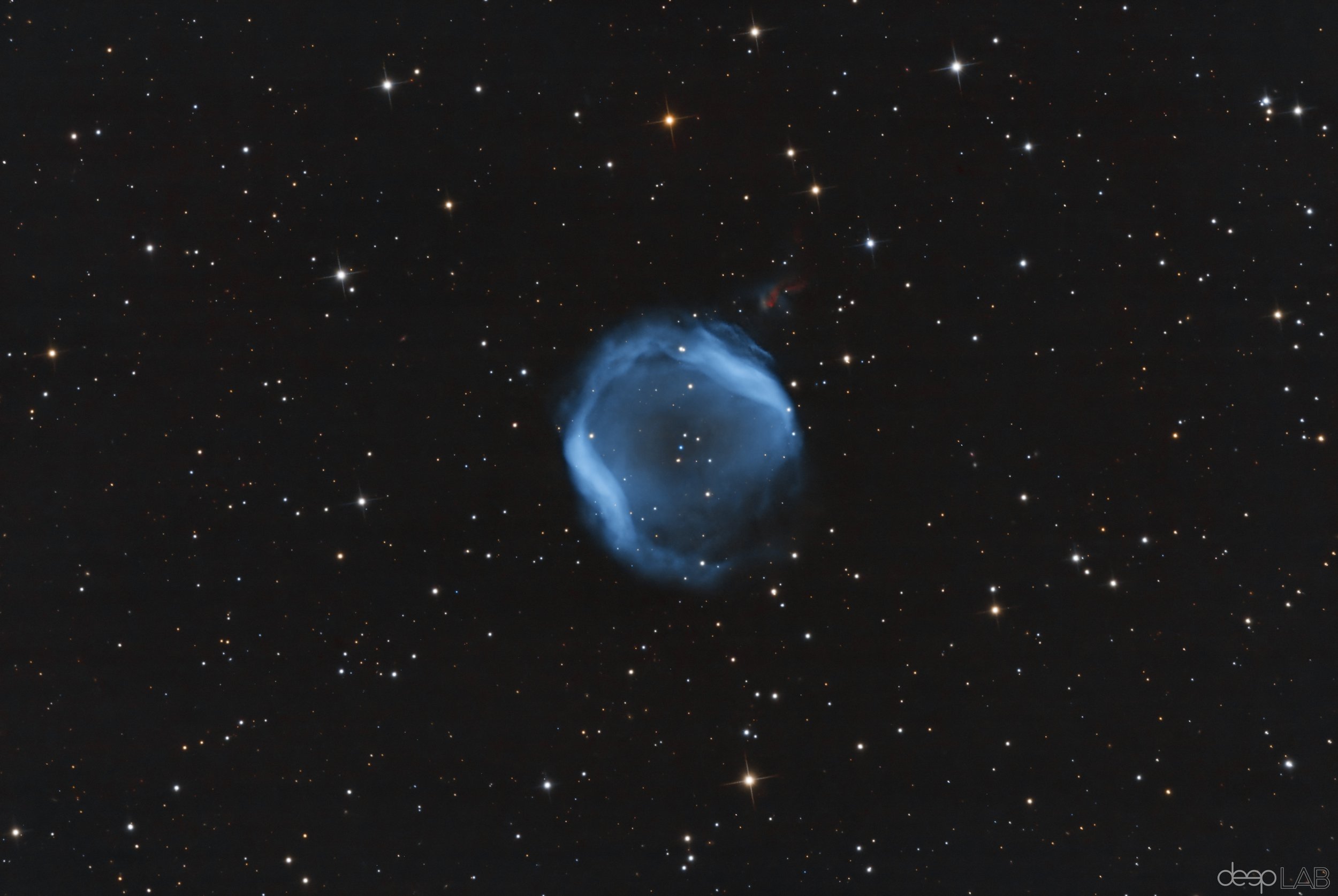
PK104-29.1 PLANETARY NEBULA IN PEGASUS
This image provides a comprehensive view of the PK104-29.1 planetary nebula situated in the Pegasus constellation. The image delineates the complex structures and color variations inherent in the nebula, shedding light on its intricate composition and spatial distribution. PK104-29.1, characterized by its distinctive bipolar morphology, offers valuable insights into the astrophysical processes governing the late stages of stellar evolution.

IC1805 - Melotte 15
This deep-space image, captured using the Hubble palette, offers a unique perspective of Melotte 15, a star cluster nestled within the expansive cosmos. Comprising Sulfur (S), Hydrogen-alpha (Ha), and doubly ionized Oxygen (OIII) emissions, the image provides a distinctive, color-enhanced view of the cosmic phenomena. Melotte 15 is renowned for its remarkable stellar richness, harboring a concentration of hot, massive stars, including O-type stars, which are among the universe's most massive. This makes it an exceptional laboratory for exploring the intricacies of stellar evolution and massive star formation. Additionally, within this cluster, various variable stars exhibit periodic changes in brightness, supplying astronomers with valuable data for unraveling the fundamental properties of stars and the dynamics of Melotte 15, enhancing our comprehension of this celestial ensemble.
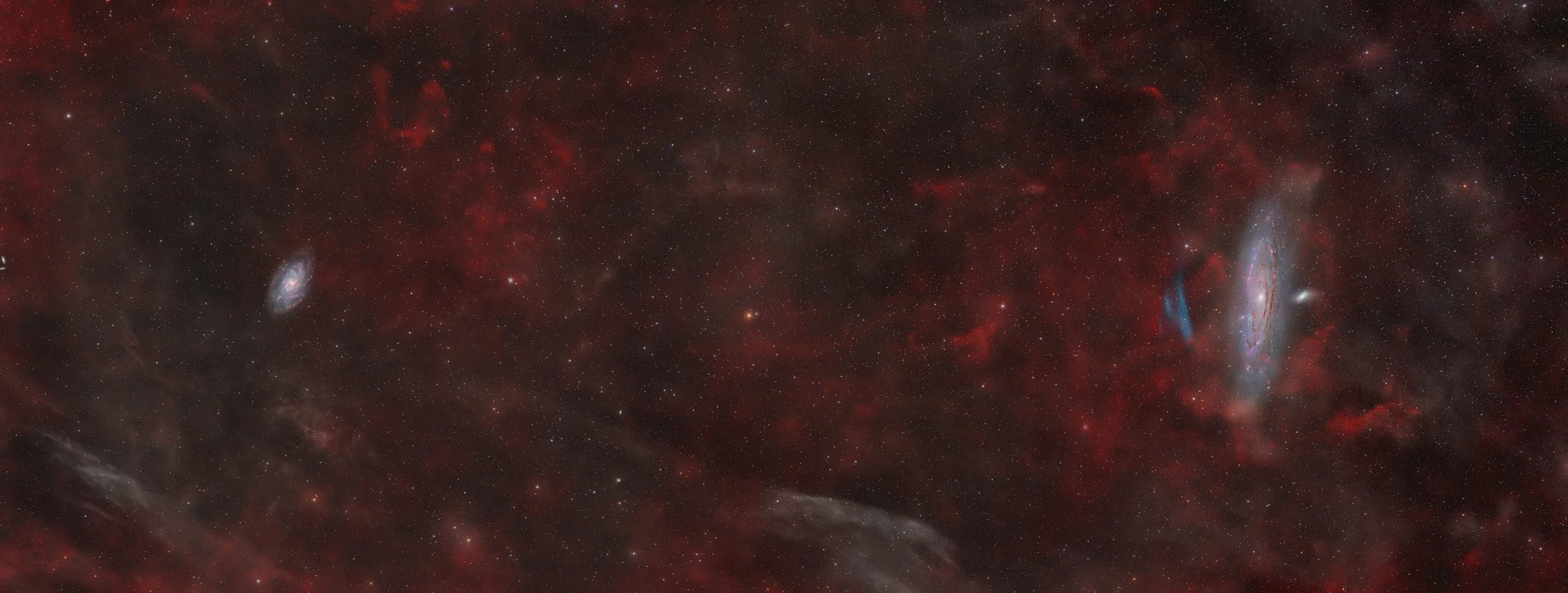
From Triangulum to Andromeda
This captivating deep-space image spans a vast cosmic expanse from the Andromeda Galaxy (M31) to the smaller yet equally enchanting Triangulum Galaxy (M33). This astronomical composition is a mesmerizing blend of multi-spectrum imagery, seamlessly harmonizing hydrogen-alpha (Ha) and doubly ionized oxygen (OIII) emissions with luminance (L), red (R), green (G), and blue (B) channels. In this breathtaking capture, the fiery tendrils of Ha and the ethereal glow of OIII emissions intertwine with the intricate details of stars and dust, creating a celestial astro-photo that not only reveals the grandeur of these neighboring galaxies but also provides a glimpse into the intricate astrophysical processes shaping the universe.
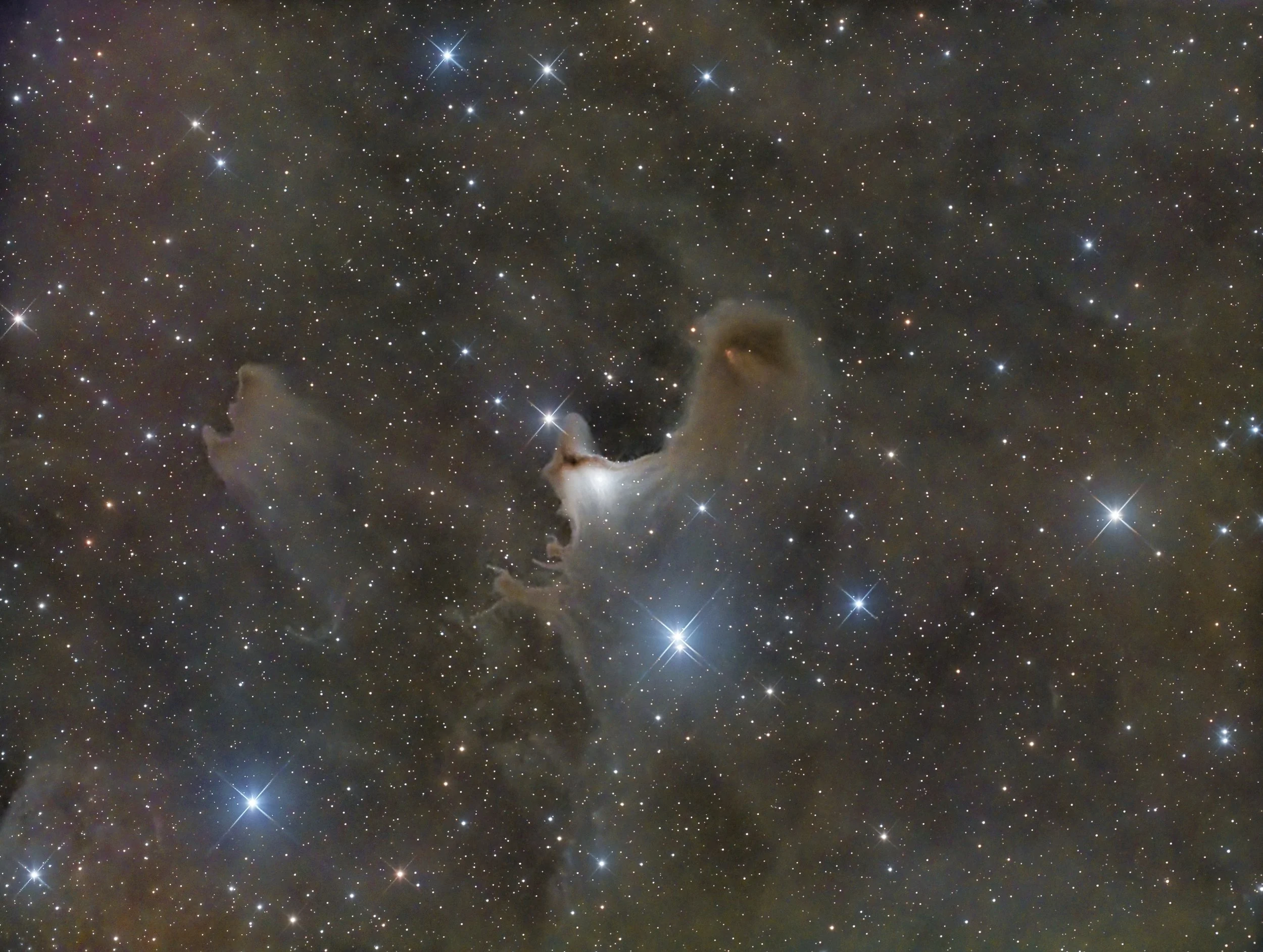
VDB 141 The Ghost Nebula
VdB 141, also known as the Ghost Nebula, is a hauntingly beautiful reflection nebula situated in the constellation Cepheus. This celestial apparition gets its name due to its ghostly, ethereal appearance, as it appears to be a faint, shimmering cloud against the dark backdrop of space.
In this striking image, VdB 141 is bathed in the soft glow of starlight, which is scattered and reflected by dust grains within the nebula. This creates a captivating blue haze that envelopes the nebula, making it seem almost like a phantom in the cosmic night. The nebula is a stellar nursery where new stars are born.
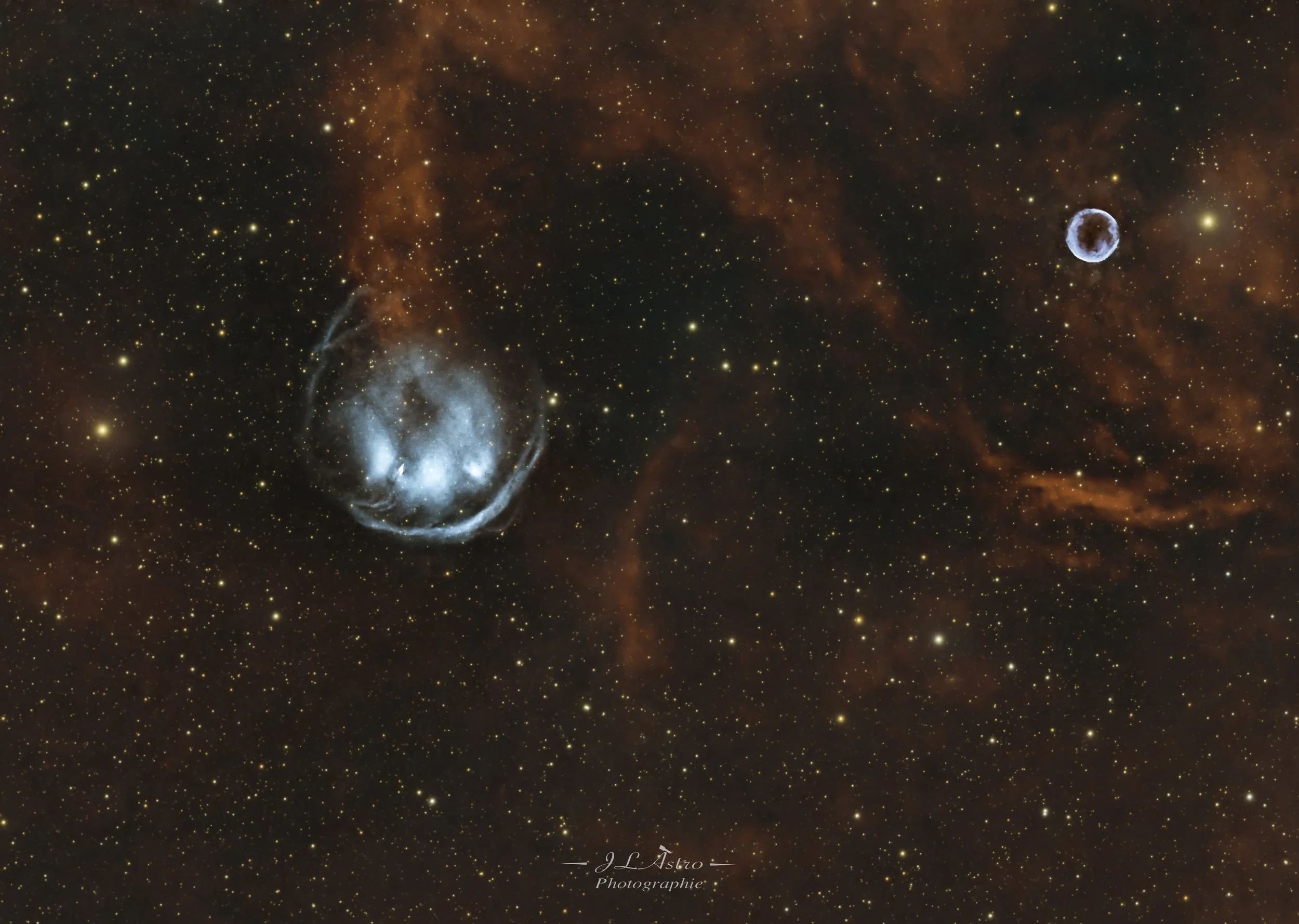
HFG1 & Abell 6
HFG 1, also known as Abell 6, is an intriguing planetary nebula located in the constellation Lynx. Planetary nebulae are shells of gas and dust ejected by dying stars, and they often exhibit unique and captivating shapes. HFG 1 is no exception and offers a remarkable cosmic spectacle.
In this image, HFG 1 and Abell 6 come to life, revealing their intricate and alluring features. HFG 1, the central object, showcases its intricate, lacy structure with a central star at its heart. Surrounding it, Abell 6 is a faint, circular shell of gas, representing the outer layers of a star that were expelled during its final stages of evolution.
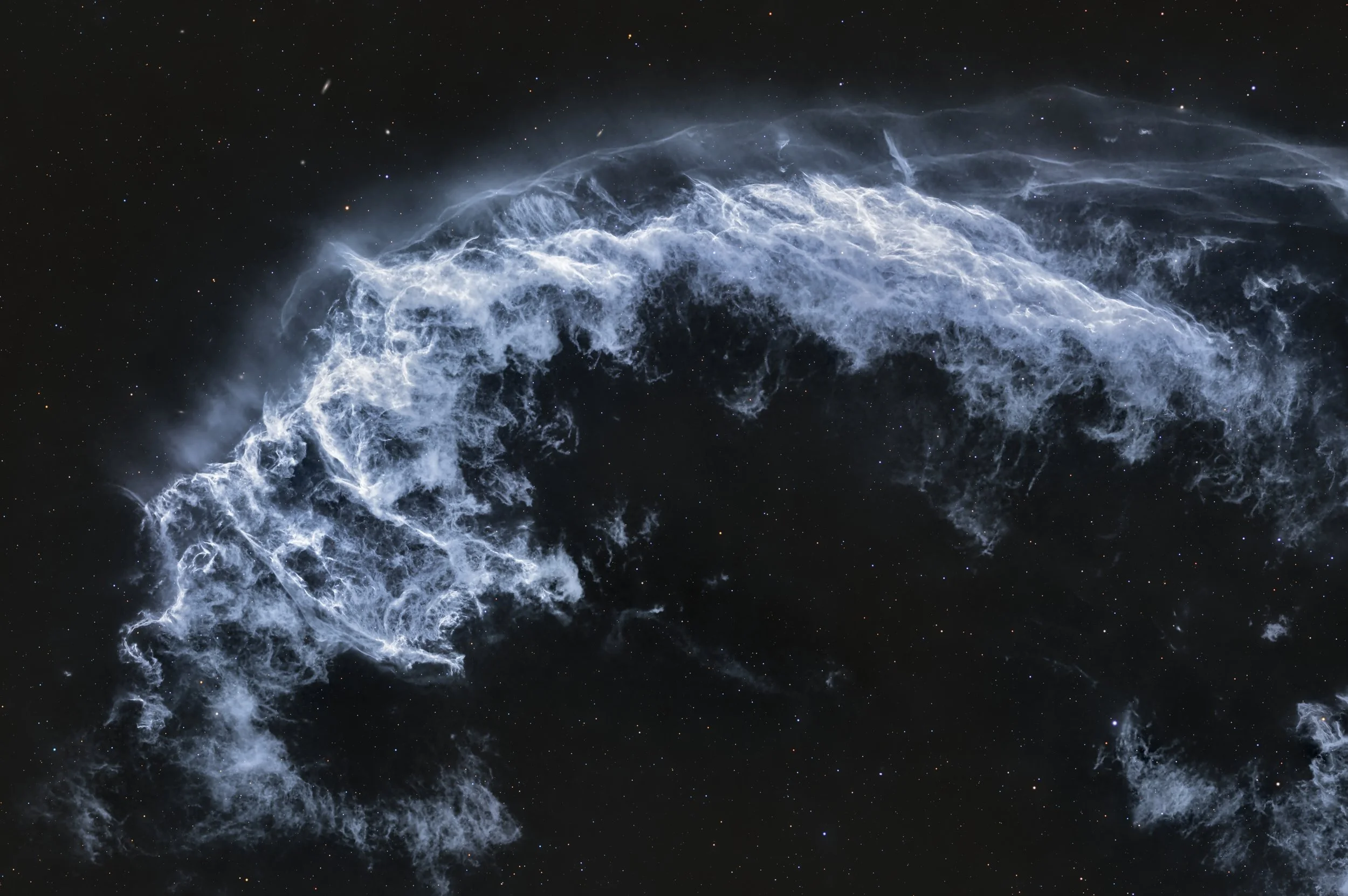
The Great Wave of the Eastern Veil nebula
This unique processing of the Eastern Veil Nebula, blending data from Hydrogen-Alpha (HA) and Oxygen-III (OIII) emissions to create an ethereal palette of light blue and white, presents a celestial masterpiece that transcends the boundaries of conventional astrophotography. Located in the constellation Cygnus, this nebula's delicate tendrils and intricate structures are unveiled in a new, captivating light.
The light blue hues represent the dominance of Oxygen-III emissions, highlighting regions where oxygen ions are abundant. These areas often signify shock fronts and interactions with the surrounding interstellar medium. In contrast, the serene white regions emanate from Hydrogen-Alpha emissions, showcasing areas rich in ionized hydrogen gas, a hallmark of star-forming regions.
This artistic synthesis of data results in a mesmerizing celestial dreamscape, where the veil-like wisps of the nebula come to life with an otherworldly beauty. It's a testament to the power of image processing in revealing the hidden nuances and cosmic wonders that reside within the vast expanse of space, inviting us to contemplate the profound mysteries of the universe.
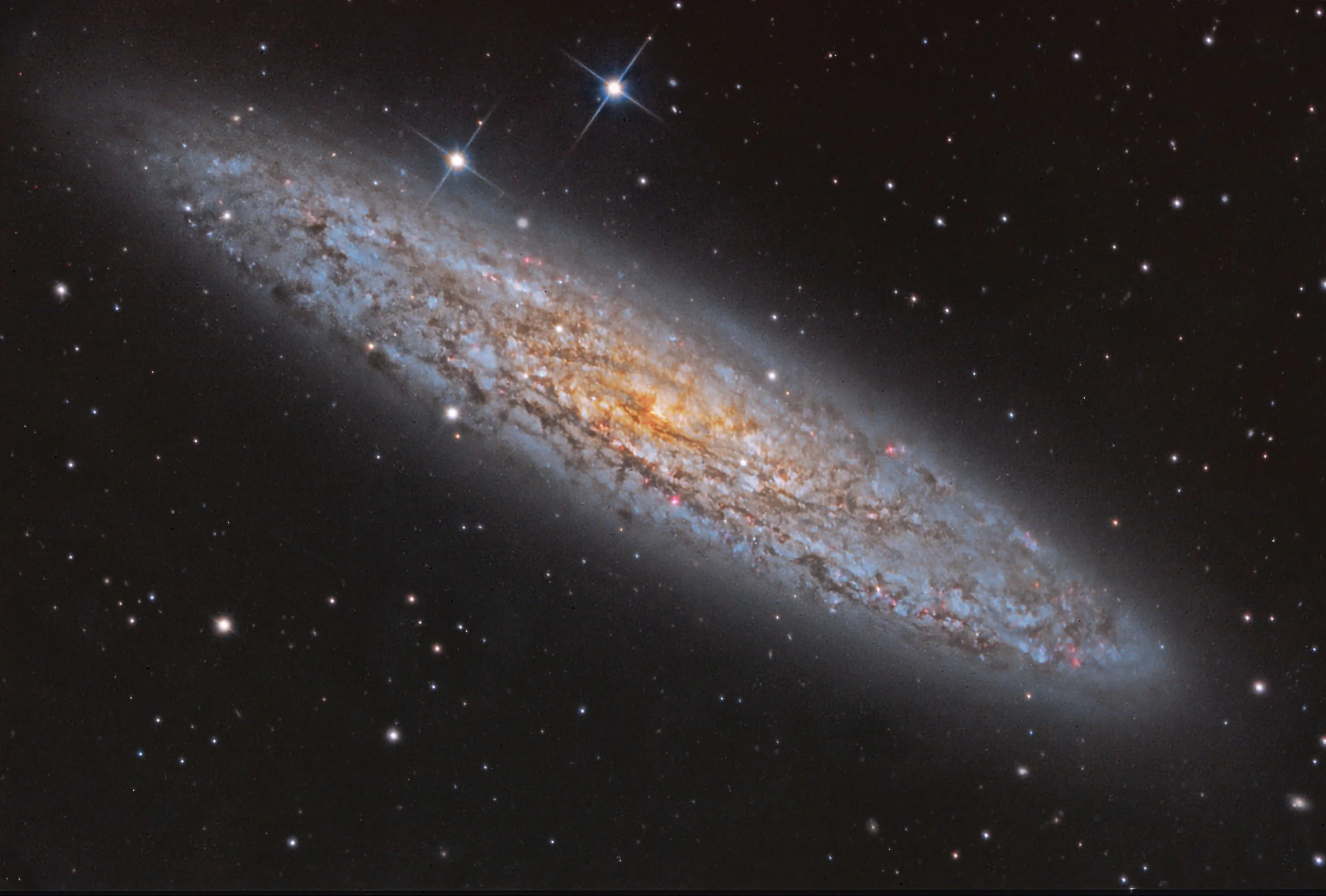
NGC 253 - the Sculptor Galaxy
The Sculptor Galaxy, NGC 253, is a magnificent spiral galaxy that graces our night sky from the constellation Sculptor. Its remarkable beauty lies in its intricate spiral arms, which swirl with bright, young stars and cosmic dust lanes. Located about 11 million light-years away, this galaxy's central region harbors intense star formation, evident in the luminous clusters of blue, while the surrounding arms stretch out gracefully like a cosmic pinwheel. The Sculptor Galaxy's visual appeal and proximity make it a favorite target for both amateur and professional astronomers seeking to unravel the mysteries of our universe.