

AAPOD2 Image Archives
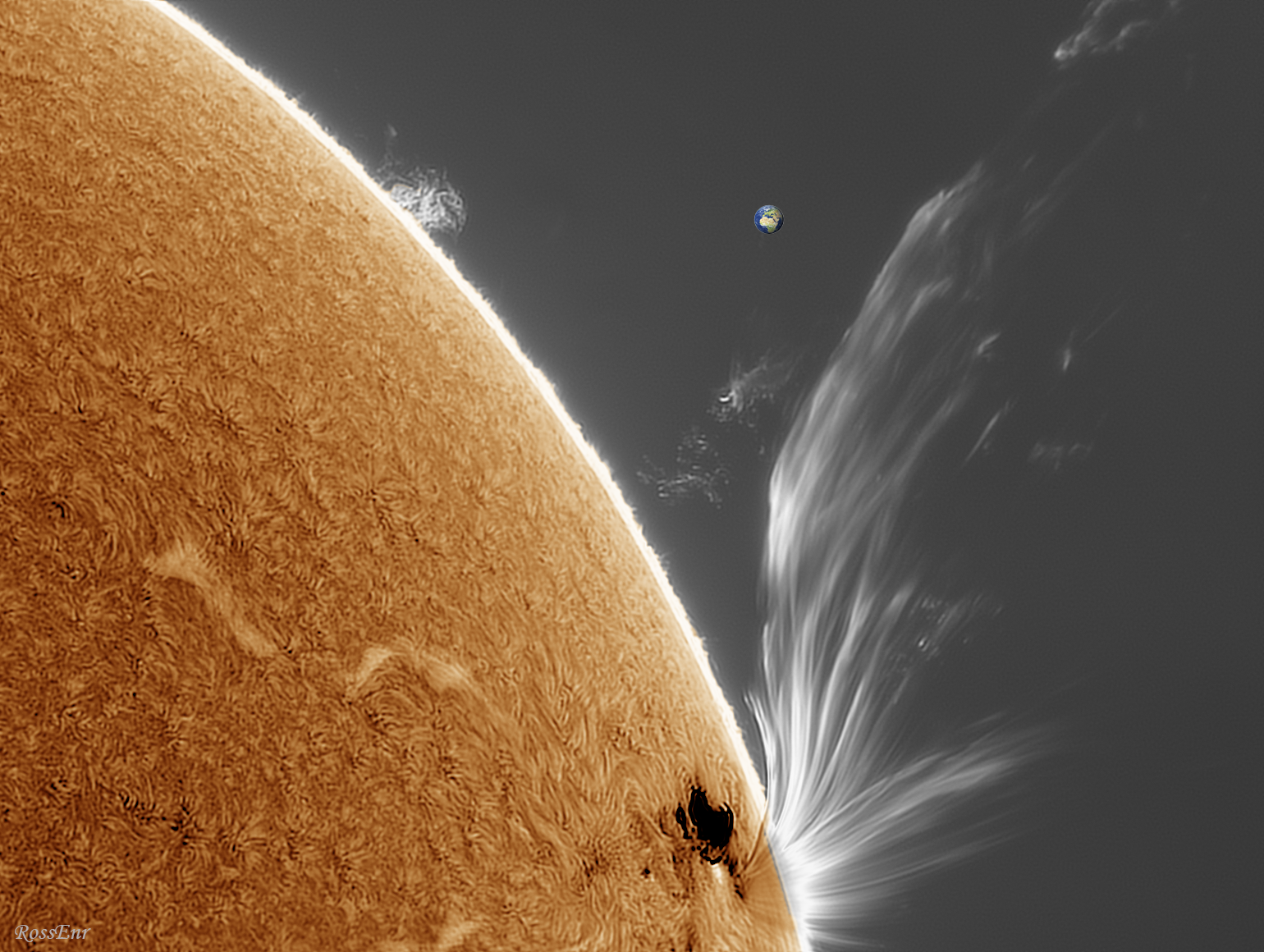
Boom... a powerful solar flare breaks the silence!
The active region AR 4419 has just produced another X-ray flare, this time reaching X2.52. The suddenly hyperactive sunspot region continues to rotate as it approaches the northwest limb.
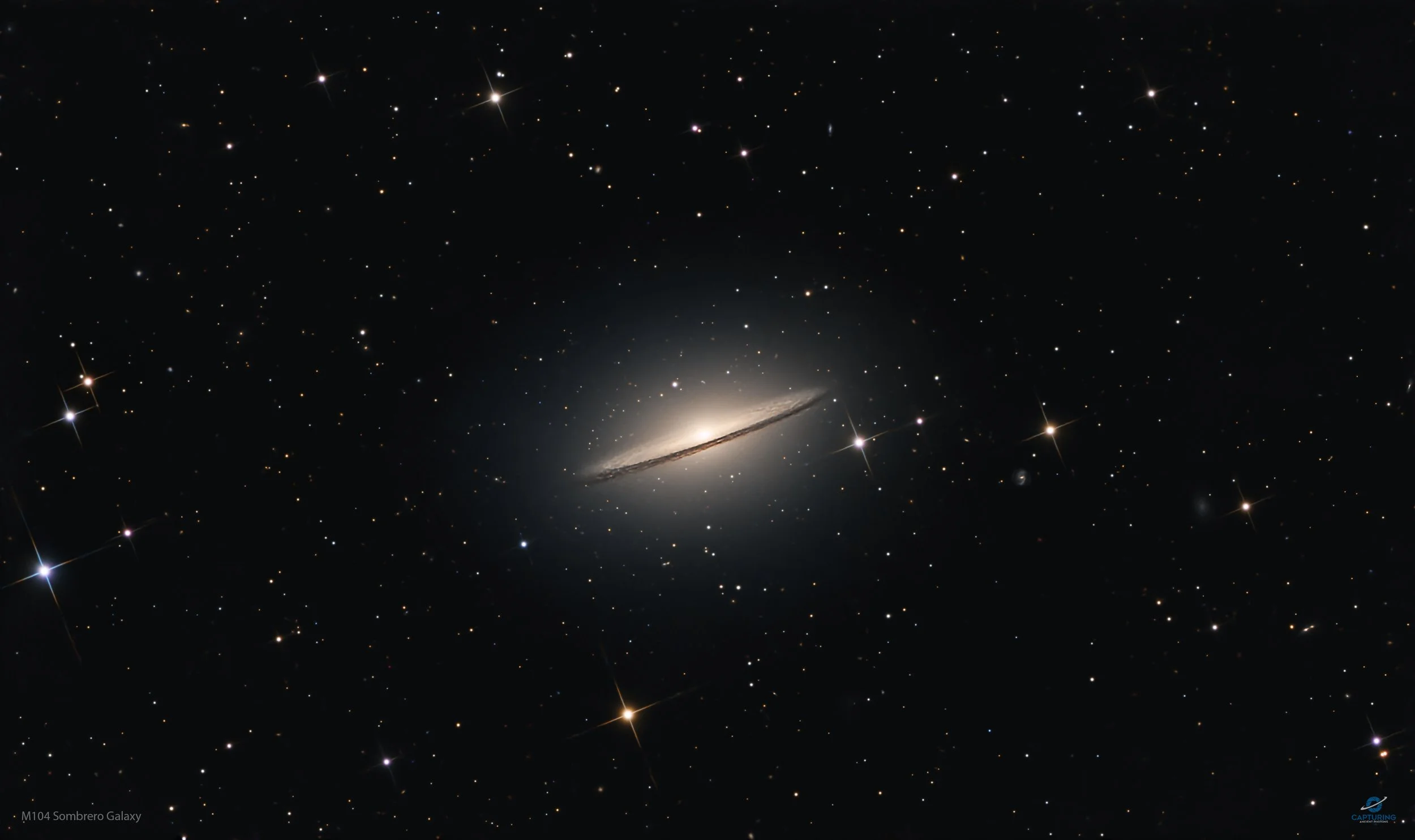
M104 Sombrero Galaxy
The Sombrero Galaxy, cataloged as M104, is one of the most recognizable galaxies in the night sky. Located about 31 million light-years away in the constellation Virgo, it is distinguished by its brilliant central bulge and the prominent dark dust lane that encircles its disk, giving it the appearance of a wide-brimmed Mexican hat. Although often classified as a spiral galaxy, M104 exhibits characteristics of both spiral and elliptical galaxies, making it an intriguing object for astronomers studying galactic structure and evolution. Its luminous core contains billions of ancient stars packed tightly around a supermassive black hole estimated to contain roughly a billion times the mass of our Sun.
Beyond its striking appearance, the Sombrero Galaxy offers a rich laboratory for exploring the life cycles of stars and the assembly of galaxies. The dark band slicing across its bright halo is composed of cold dust and gas, the raw ingredients for future star formation, while its vast population of globular clusters suggests a dynamic history shaped by mergers and interactions over cosmic time. Deep images reveal the galaxy's expansive stellar halo extending far beyond its familiar silhouette, highlighting the immense scale of this island universe. M104 stands as a reminder that even the most elegant objects in the cosmos are shaped by billions of years of change, growth, and gravitational influence.
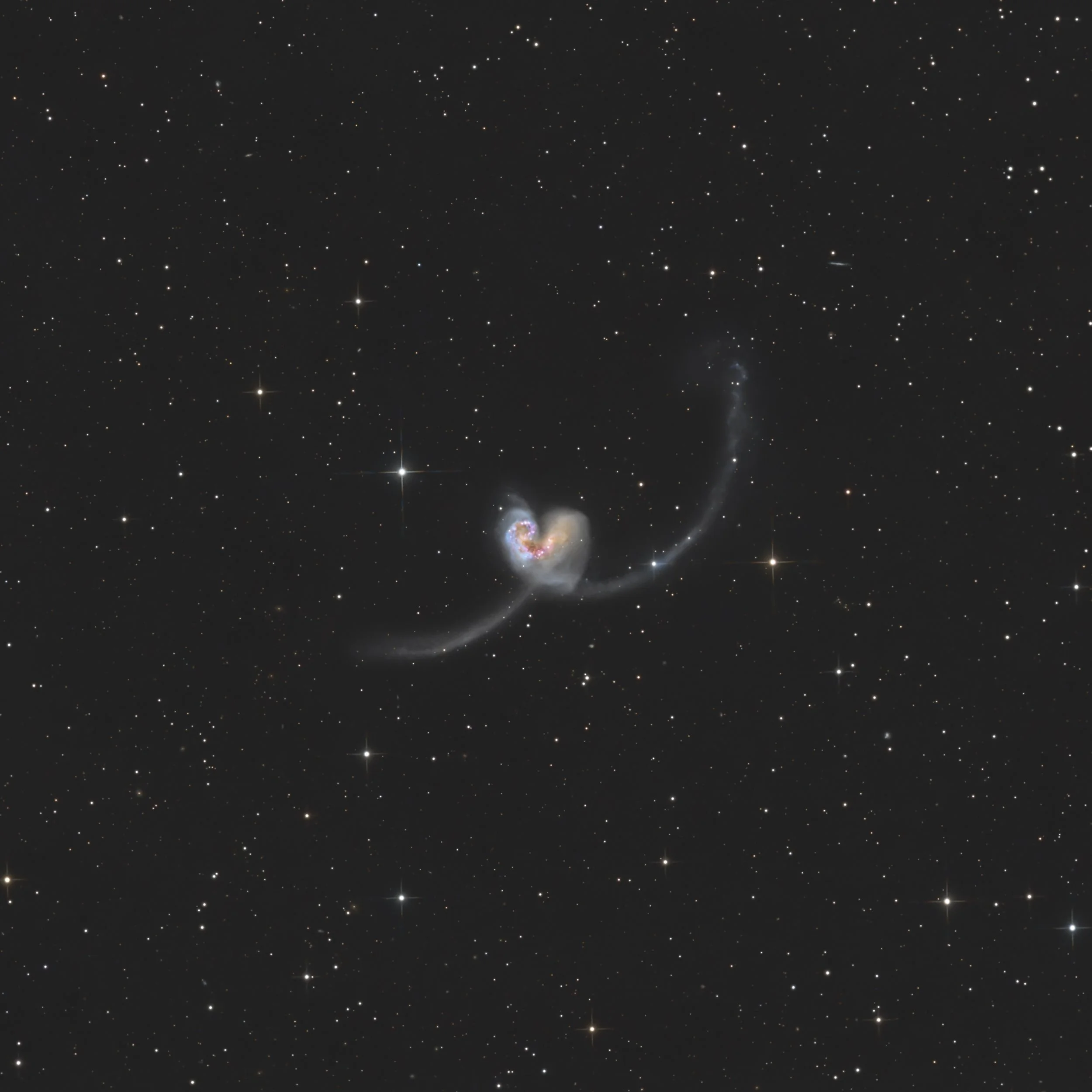
The Antennae Galaxies - NGC 4038 and 4039
The Antennae Galaxies are among the most spectacular objects in the deep sky. Located about 45 million light-years away in the constellation Corvus, they are the result of an ongoing collision between two spiral galaxies, known as NGC 4038 and NGC 4039.
Their nickname comes from the long, luminous structures shaped like antennae that extend on either side of the system. These “antennae” are actually tidal tails, formed by the intense gravitational interaction between the two galaxies. As they draw closer, their stars, gas, and dust are violently disturbed, creating these stretched and elegant shapes.
This galactic collision does not occur in total chaos: stars rarely collide directly due to the enormous distances between them. However, clouds of gas are strongly compressed, triggering intense star formation activity. The Antennae Galaxies thus act as a true cosmic laboratory where thousands of new stars are born, often grouped into very bright stellar clusters.
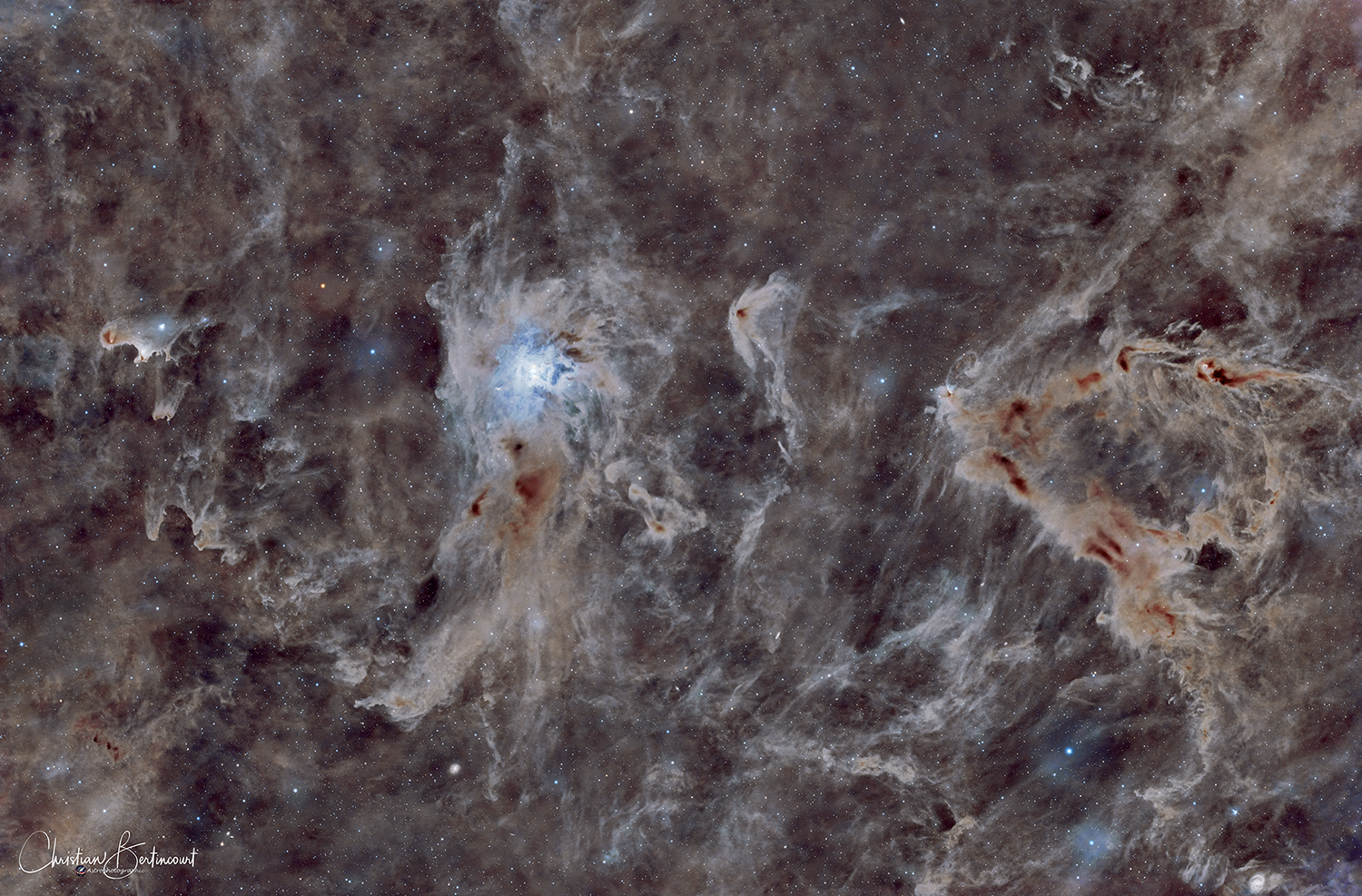
NGC 7023
The Iris Nebula, cataloged as NGC 7023, blooms within the northern constellation Cepheus as one of the sky's most striking reflection nebulae. Unlike emission nebulae that glow from ionized gas, the Iris shines because fine grains of cosmic dust scatter and reflect the light of the hot young star HD 200775 at its center. The nebula's delicate blue hues arise through the same process that gives Earth's daytime sky its color, with shorter wavelengths of light scattered more efficiently by microscopic dust particles. Surrounding the bright core, intricate filaments of dark dust weave through the scene, revealing the complex structure of the interstellar medium from which stars are born.
Located roughly 1,300 light-years from Earth, the Iris Nebula offers a glimpse into the transitional relationship between stellar birth and the environments that nurture it. The central star's energetic radiation is gradually sculpting and dispersing the very cloud from which it formed, carving cavities and illuminating hidden textures within the dust. Deep exposures unveil faint brown and golden dust clouds extending far beyond the familiar blue petals, exposing a rich tapestry of cosmic material that bridges the gap between reflection nebula and dark molecular cloud. The result is a celestial portrait that combines scientific insight with extraordinary beauty, capturing a fleeting stage in the ongoing cycle of stellar evolution.
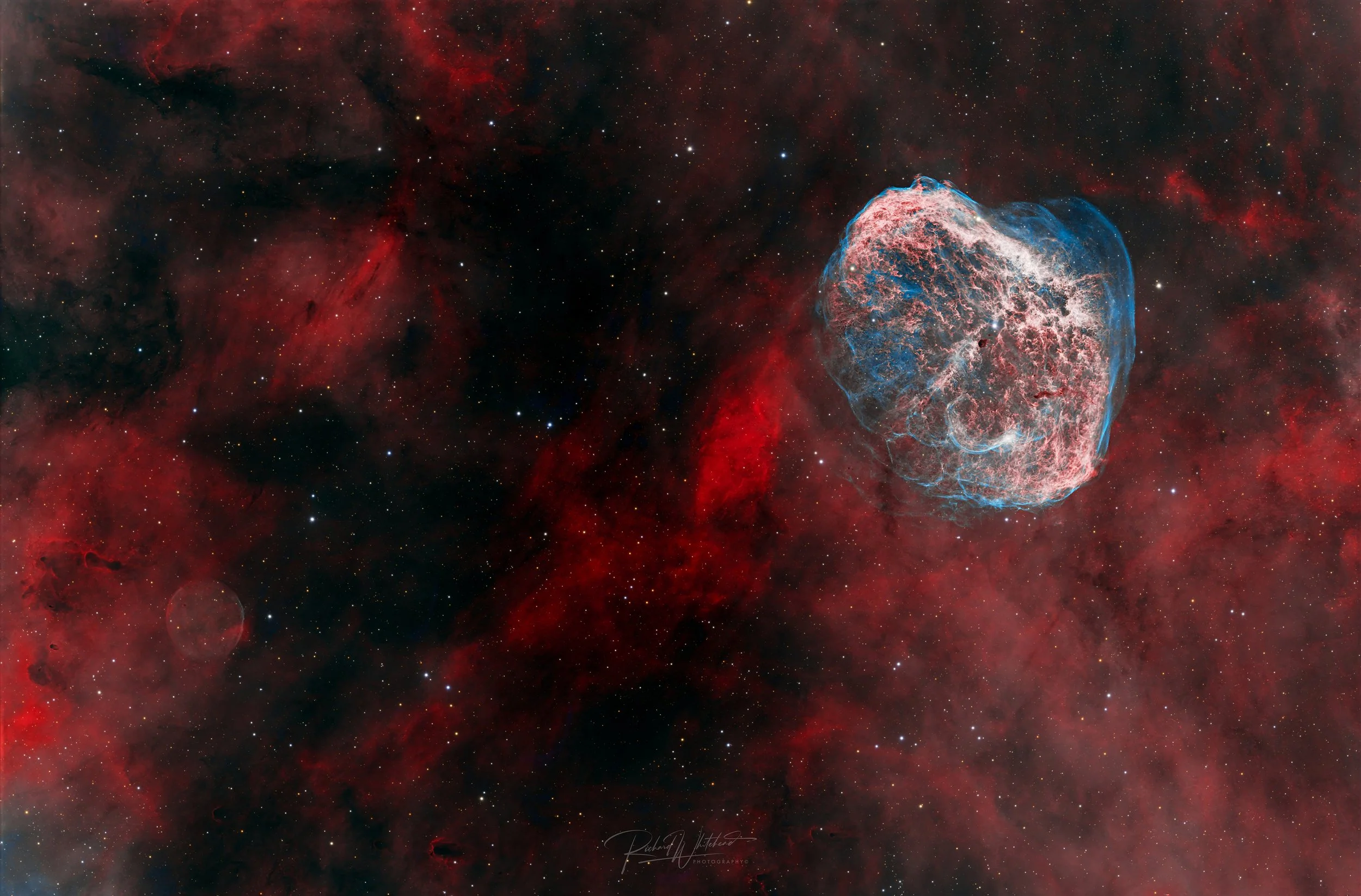
The Crescent and the Soap Bubble
The Crescent and the Soap Bubble: An incredible cosmic widefield showcasing the iconic wind-blown emission shell of the Crescent Nebula (NGC 6888) alongside the elusive, perfectly spherical planetary nebula known as the Soap Bubble, captured beautifully by Richard Whitehead.
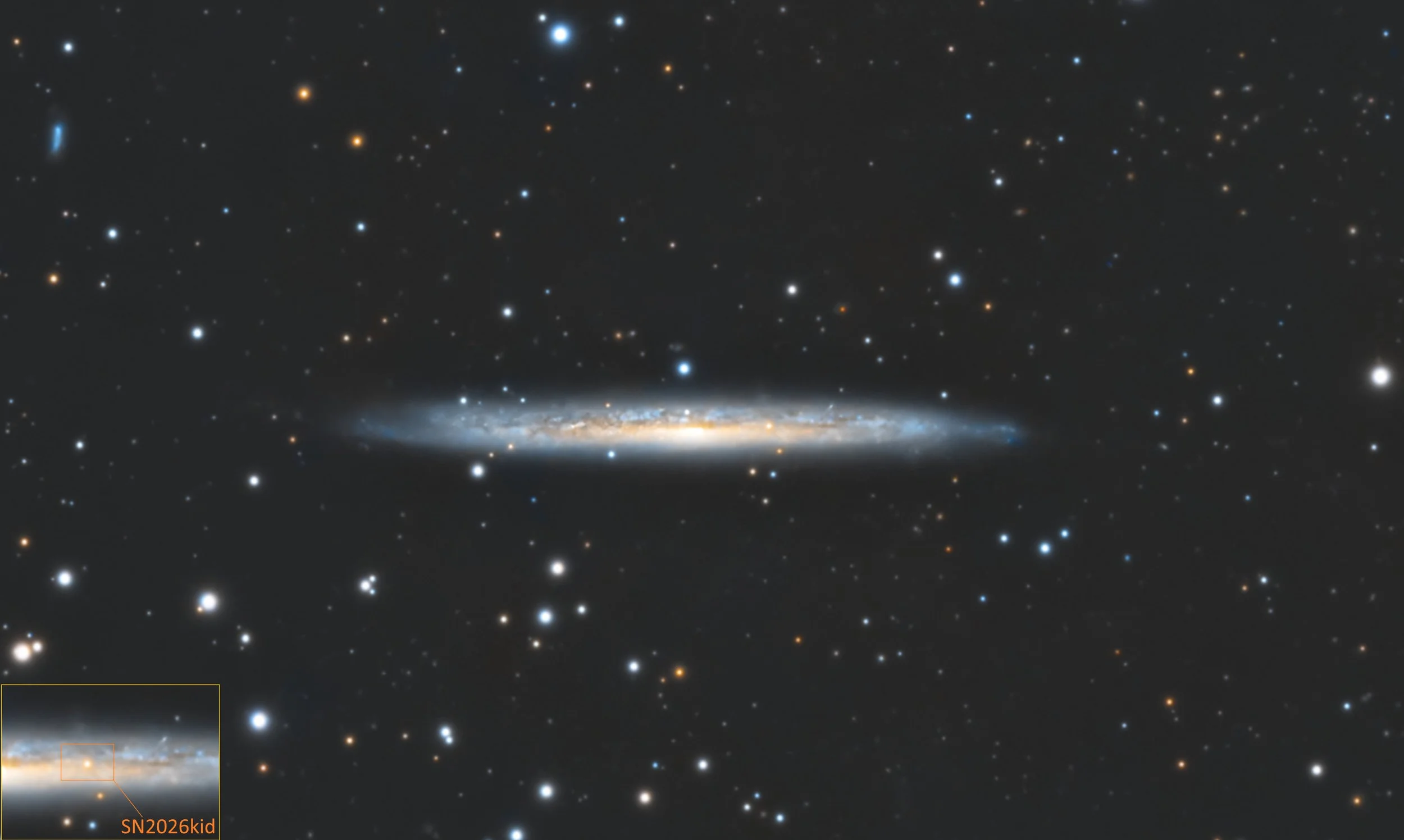
NGC 5907 – Knife Edge Galaxy & Supernova SN 2026kid
NGC 5907 – Knife Edge Galaxy & Supernova SN 2026kid: A cosmic portrait featuring the striking edge-on spiral galaxy NGC 5907 alongside the brilliant flare of supernova SN 2026kid, captured beautifully by Sandu Val Cosmin.
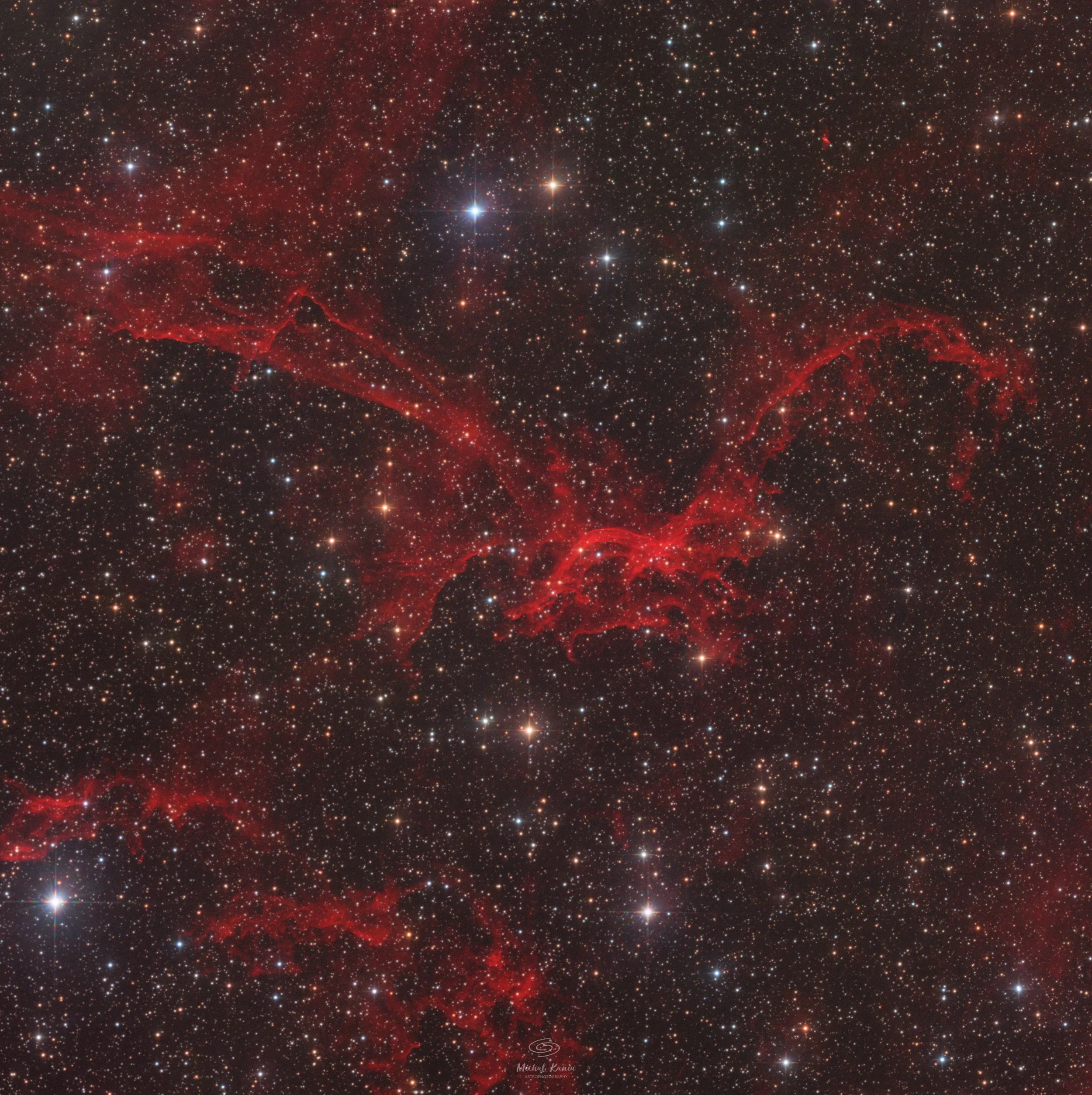
Sh2-114 Flying Dragon in HaRGB
Sh2-114 Flying Dragon in HaRGB: A cosmic portrait featuring the faint and highly complex HII emission nebula Sh2-114 in Cygnus alongside the tiny quadrupolar planetary nebula Kronberger 26, captured beautifully by Michał Kania.
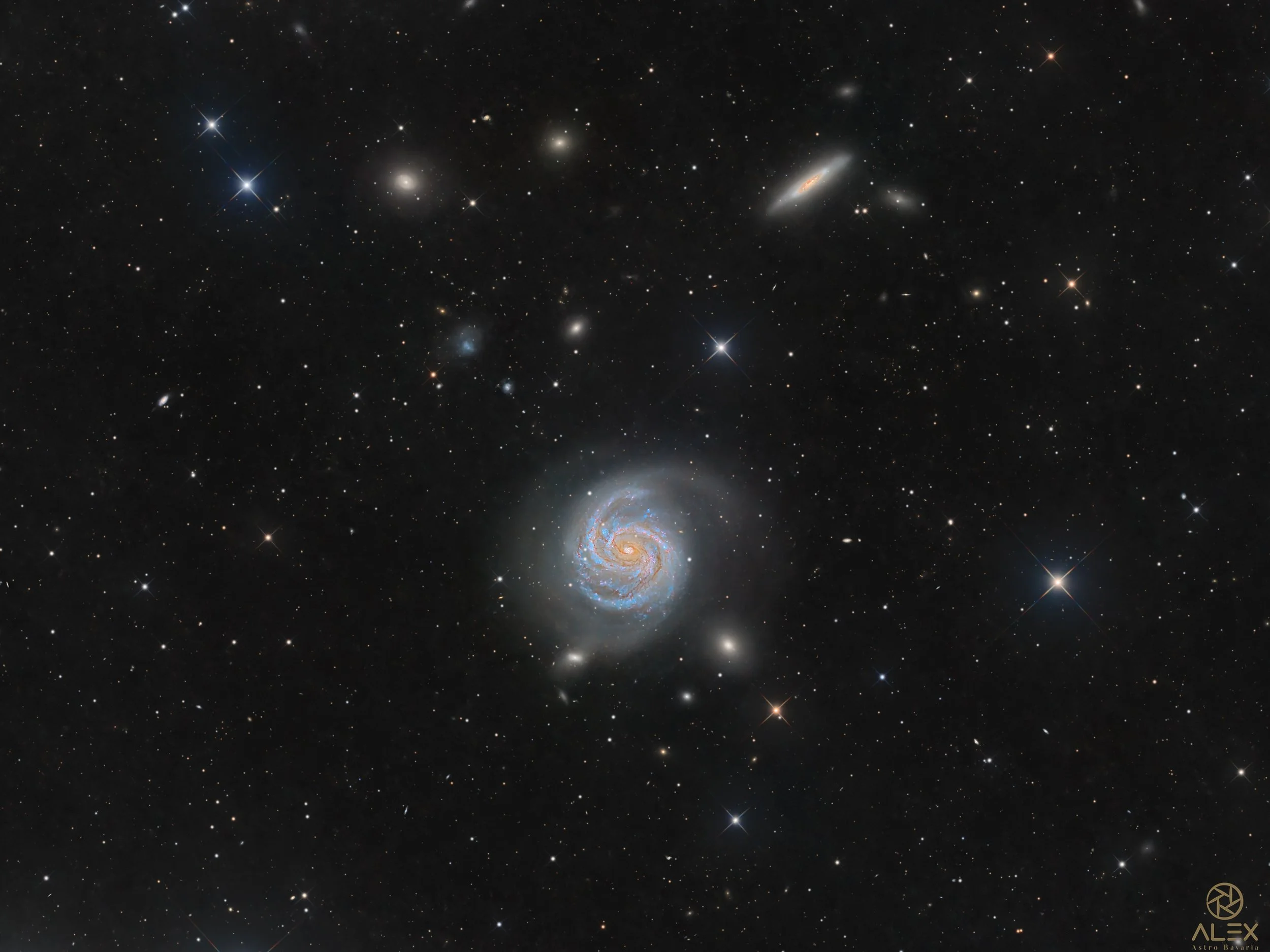
Messier 100
Known as the Blowdryer Galaxy, M100 is a magnificent grand design spiral galaxy located approximately 55 million light-years away in the direction of the constellation Coma Berenices. As one of the brightest members of the Virgo Cluster, its elegant spiral arms are lined with clusters of hot, young blue stars, glowing pink hydrogen regions, and intricate lanes of dark interstellar dust. These sweeping structures trace waves of star formation moving through the galaxy's disk, where gas clouds are compressed and transformed into new stellar generations. At its core lies a compact central bulge surrounding a supermassive black hole, hidden beneath layers of densely packed stars.
M100 has played an important role in modern astronomy beyond its visual beauty. Observations of Cepheid variable stars within the galaxy by the Hubble Space Telescope helped refine one of the first highly accurate measurements of the expansion rate of the universe, contributing to our understanding of the cosmic distance scale. It has also hosted several observed supernovae, offering astronomers valuable opportunities to study stellar death and galactic evolution. Detailed images of M100 reveal not only the graceful symmetry of a classic spiral galaxy, but also the dynamic processes that continue to shape it across millions of years.
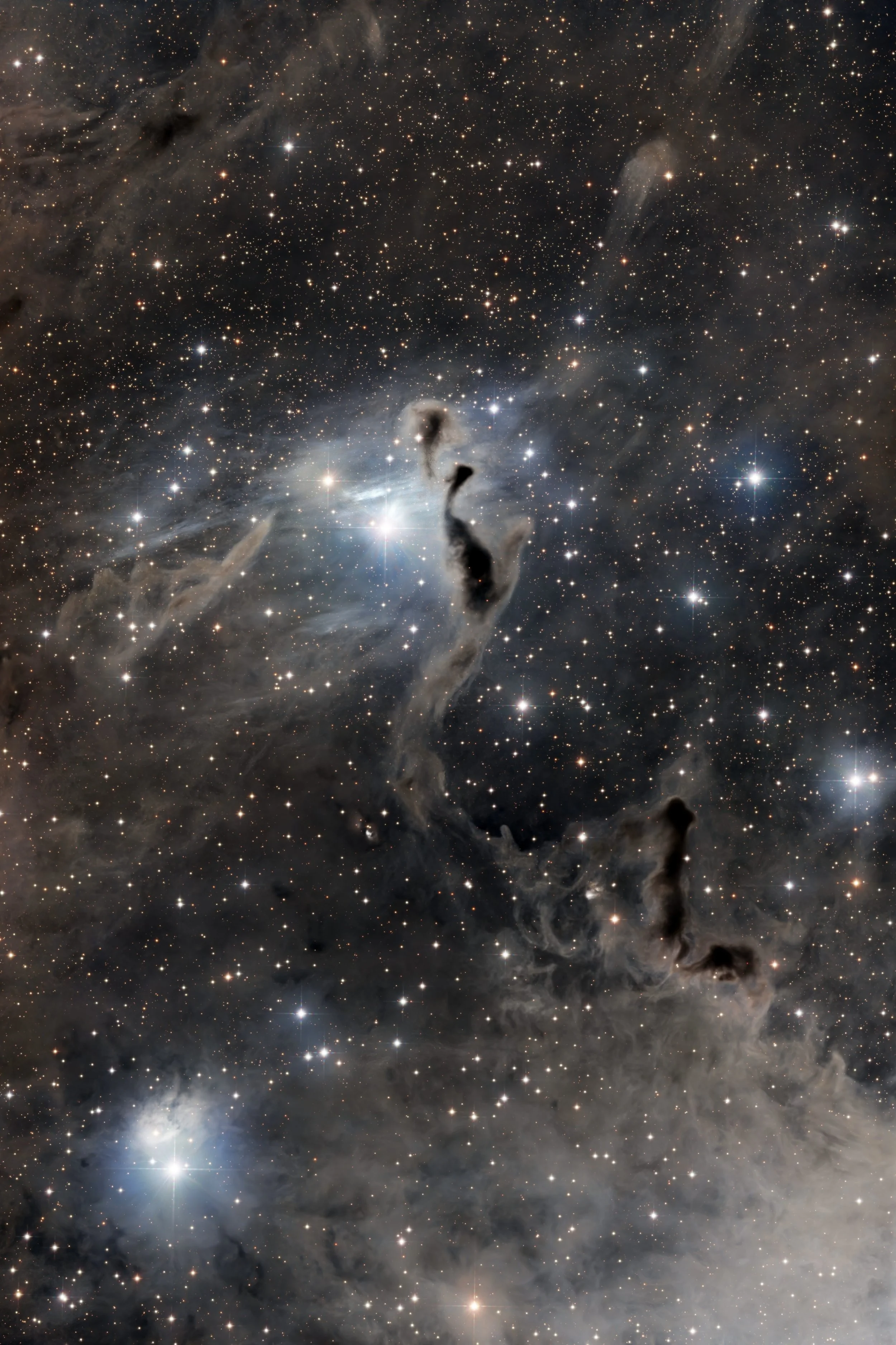
Helping Hand Nebula
The nebula is comprised of dense clouds of dust and gas which obscures the light from the stars in the background, unlike emission nebula which glow due to ionized gas. It’s located in the constellation of Cassiopeia and is approximately 700 to 3,000 Lys from the gravity-well. It gets its nickname from the appearance of an outstretched hand reaching up (orientation of this picture). There are a number of Lynd’s Dark Nebula (LDN) within frame including LDN 1355 (palm), LDN 1357 (the fingers) and 1358 (the shoulder) along with the blue reflection nebulae VdB 9 which is located to the left of the hand and VdB 7 located in the lower left corner of the frame.
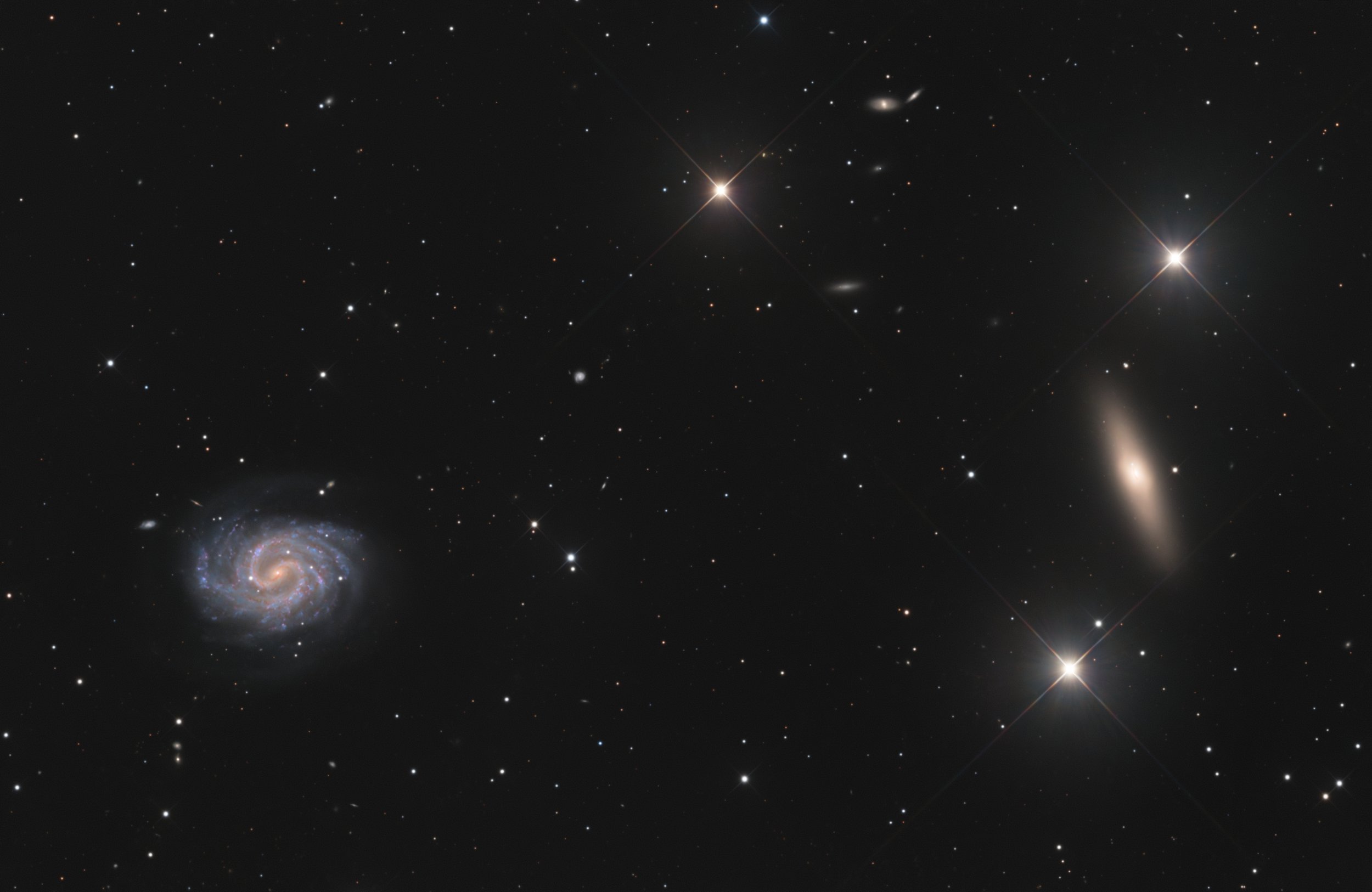
NGC4535 - The Lost Galaxy
NGC 4535, nicknamed the "Lost Galaxy," is a large, barred spiral galaxy in the Virgo constellation, about 50 million light-years away, known for its faintness in small telescopes but revealed in stunning detail by the Hubble Space Telescope as a vibrant system with bright blue star clusters, pink H II regions, and red nebulae, indicating active star formation. Its blue spiral arms contrast with a yellower central bulge of older stars, and it's a key target for studies like the PHANGS survey, which links gas, star formation, and galactic structure.
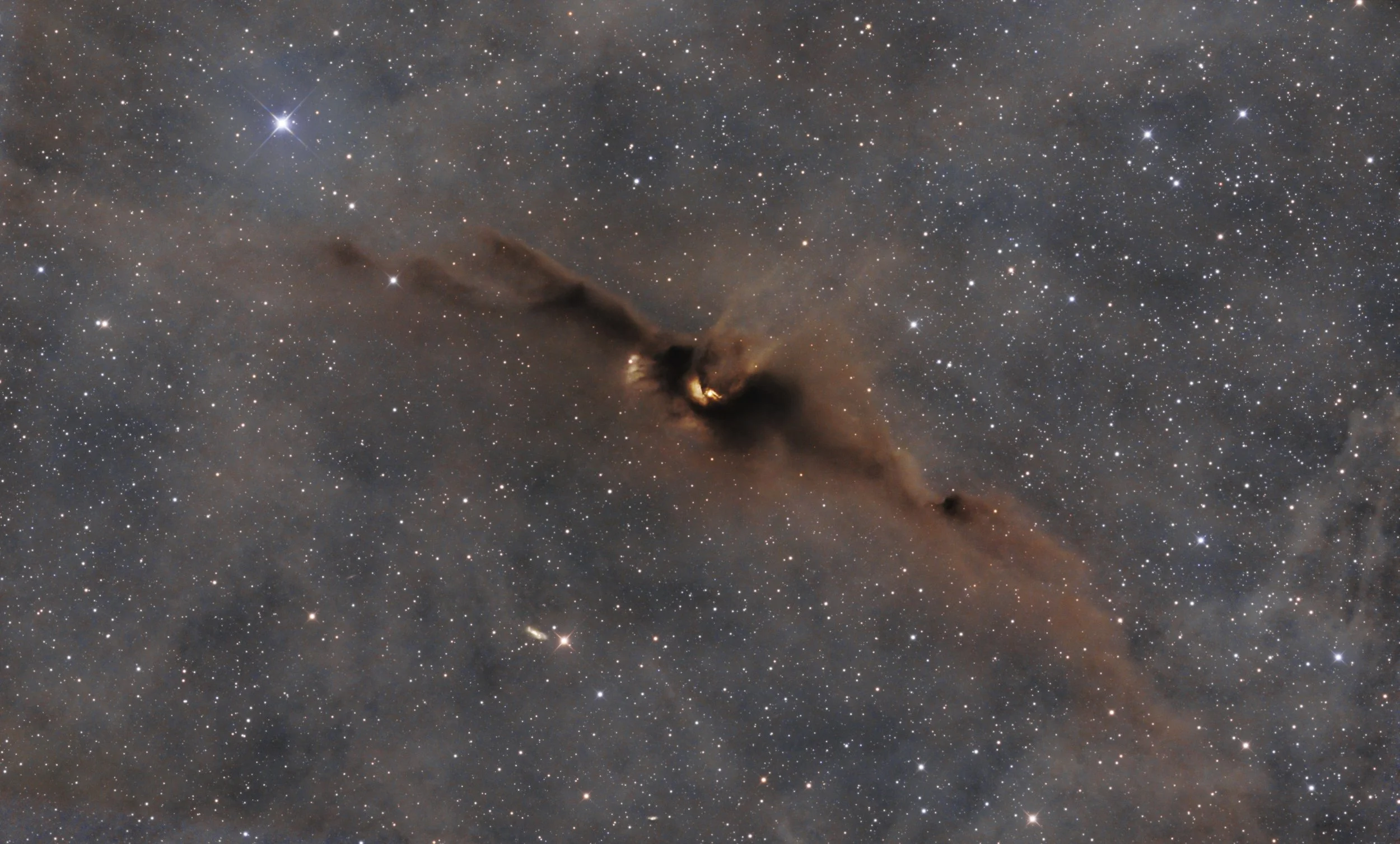
Bat Nebula - LDN43
The Bat Nebula, cataloged as Sh2-129, stretches across the constellation Cepheus as a vast and intricate cloud of ionized hydrogen glowing deep within the Milky Way. Its nickname comes from the dark dust lanes and sweeping arcs of emission that resemble the outstretched wings of a bat in flight. Energized by the intense ultraviolet radiation of nearby young stars, the nebula's hydrogen atoms emit the characteristic red glow captured so vividly in narrowband astrophotography. Embedded within this sprawling region are pockets of ongoing stellar evolution, where dense concentrations of gas and dust may eventually collapse to form new generations of stars.
One of the Bat Nebula's most remarkable features is the faint bipolar outflow known as Ou4, often called the Giant Squid Nebula. This enormous structure extends across a significant portion of the sky and remains one of the most intriguing deep sky objects discovered through amateur imaging efforts. The juxtaposition of Sh2-129's delicate filaments, dark molecular clouds, and the ghostly tendrils of Ou4 creates a scene rich in both beauty and scientific mystery. Images of this region reveal the dynamic interplay between stellar birth, powerful stellar winds, and the gradual reshaping of the interstellar medium over millions of years.
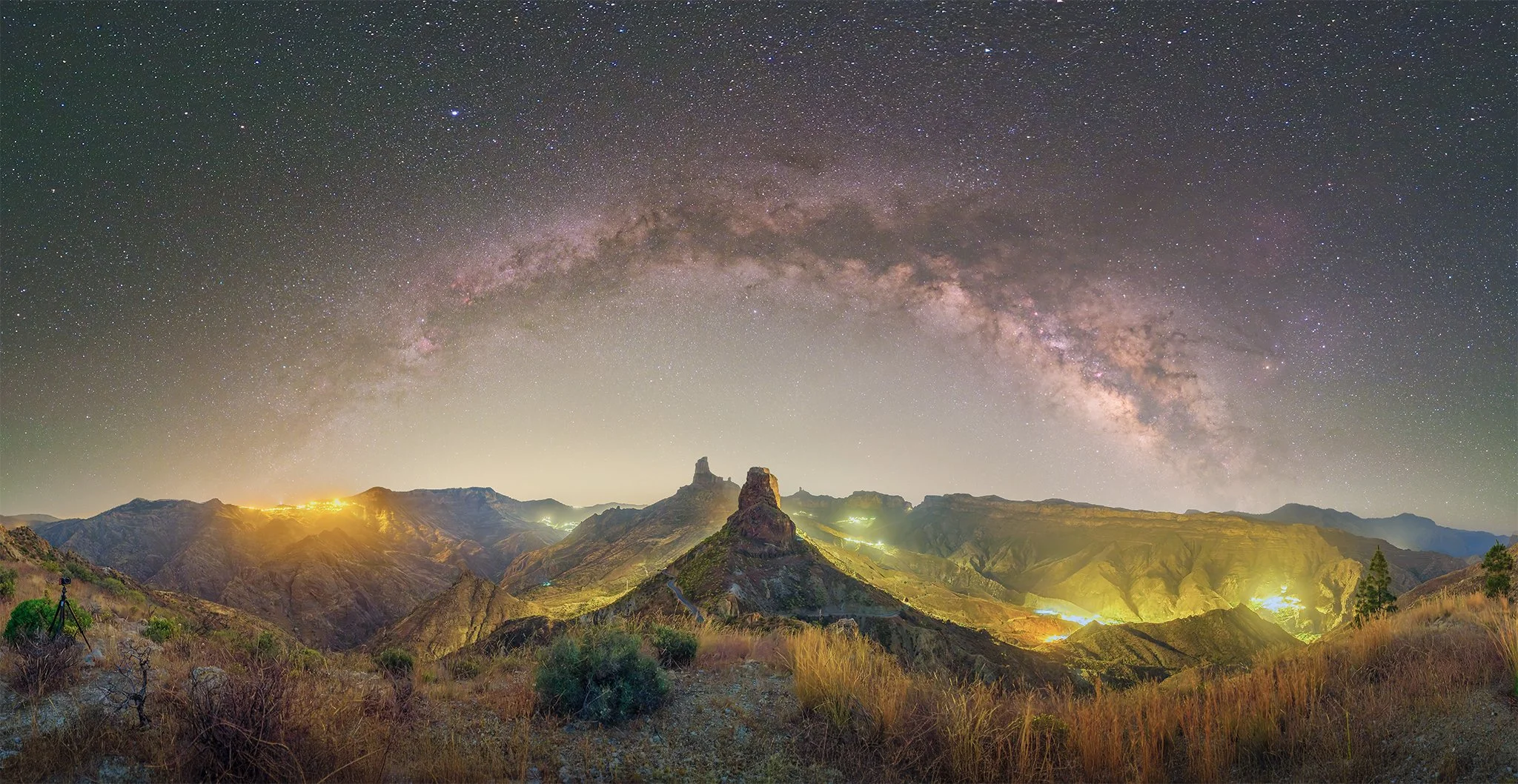
Milky Way Arch over the Sacred Mountains of Gran Canaria
Milky Way Arch over the Sacred Mountains of Gran Canaria
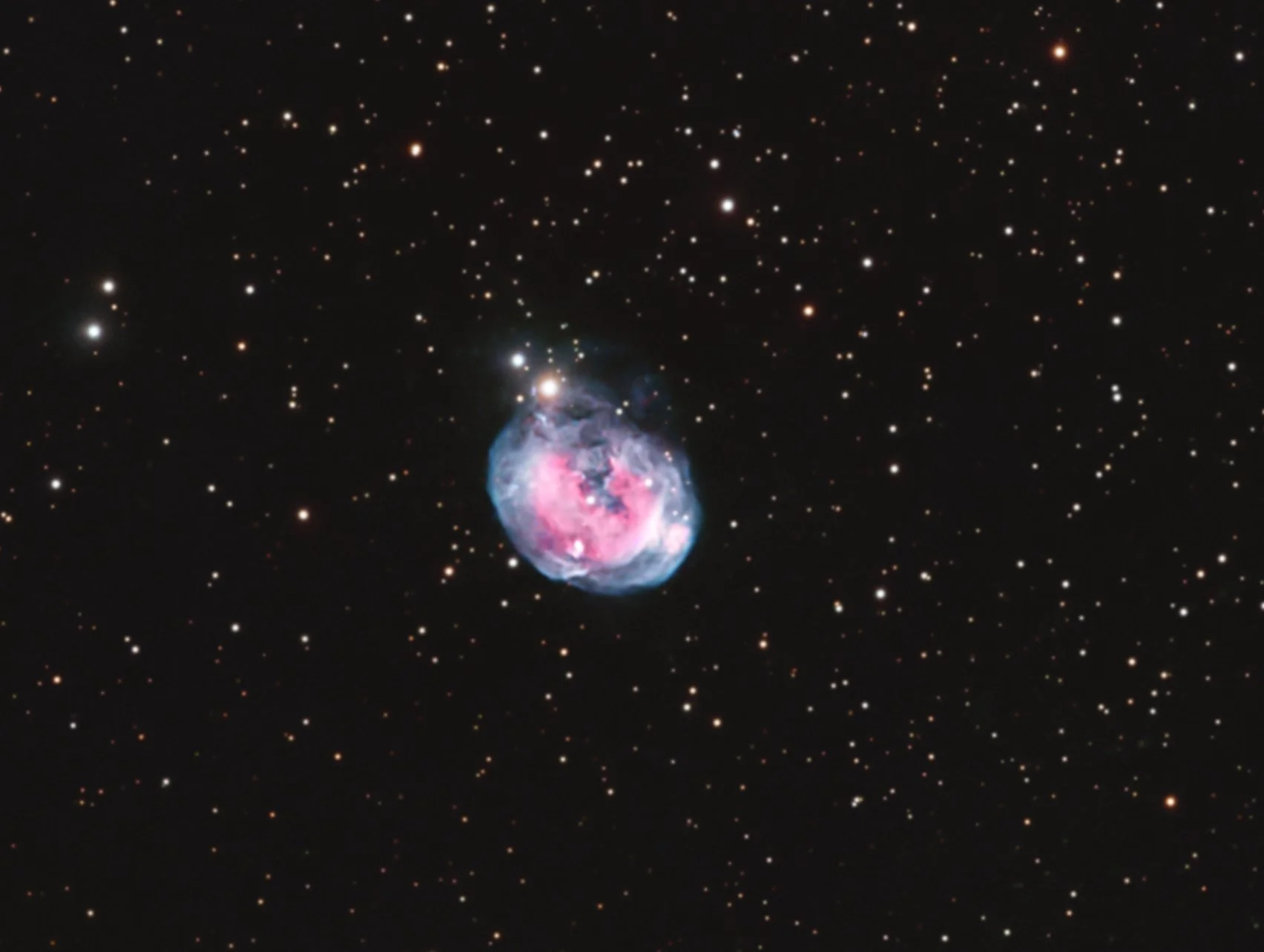
NGC 7008, the Fetus Nebula
NGC 7008 is a bright planetary nebula located in the constellation Cygnus and approximately 2,800 light-years away. It is commonly known as the Fetus Nebula because its shape resembles a human fetus. It is the remnant of a sun-like star. These stars do not have enough mass to explode in a supernova, and when the star ran out of fuel, it began to pulsate and "blow" its outer layers into space, like gigantic bubbles of gas. This gas detachment began between 4,000 and 5,700 years ago, and since then the gas has continued to expand until it formed the shape we see today.
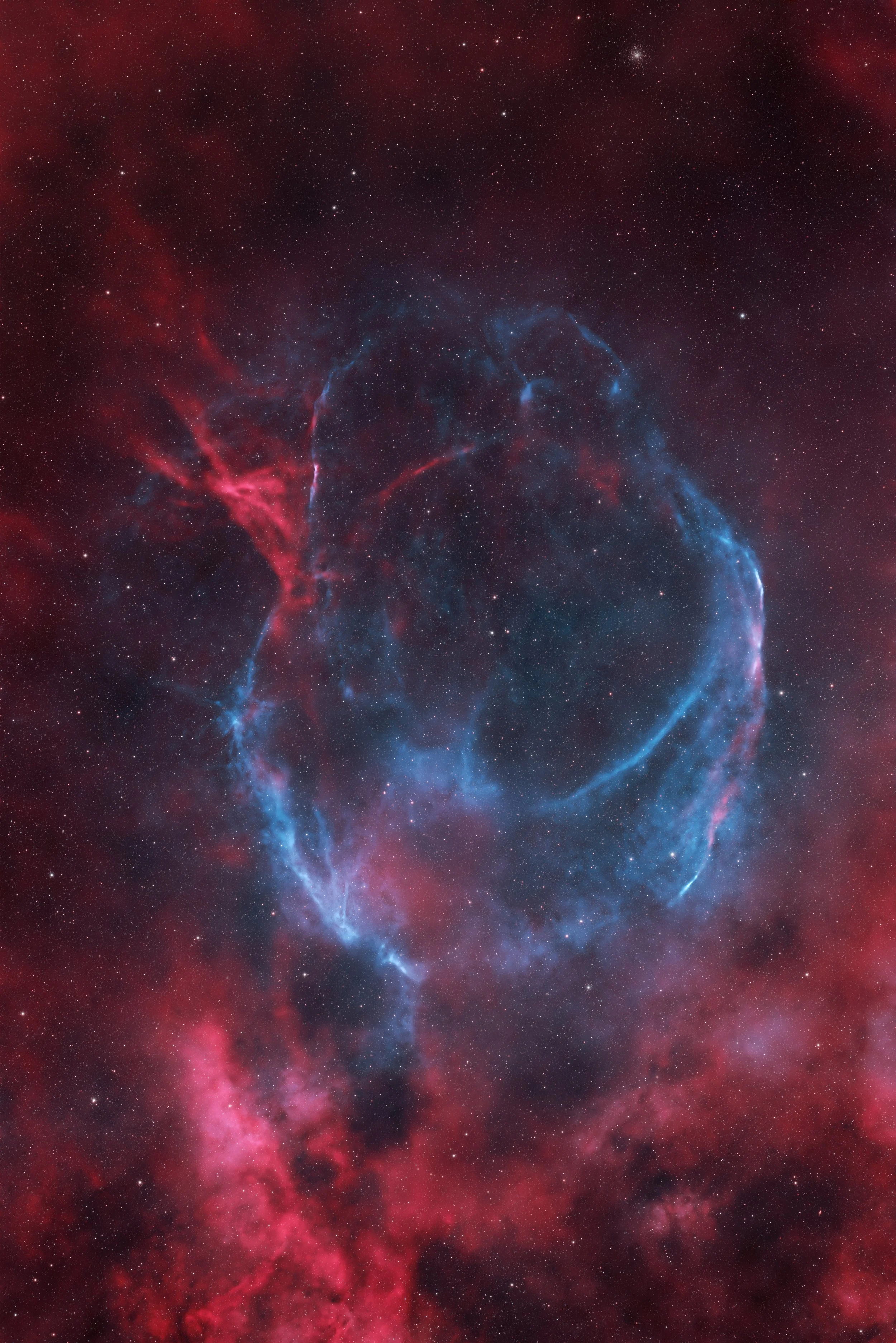
Supernova Remnant SNR G065.3+05.7
A supernova remnant in the constellation Cygnus, formed approximately 27,500 years ago, with a pulsar hidden at its center. Often overlooked due to its brighter neighbor, the Veil Nebula, there are very few images online with such short exposure times and taken under polluted skies. For me, this shot represents a great achievement: both for the evanescence of the subject and because I had never accumulated so many hours on a single target!
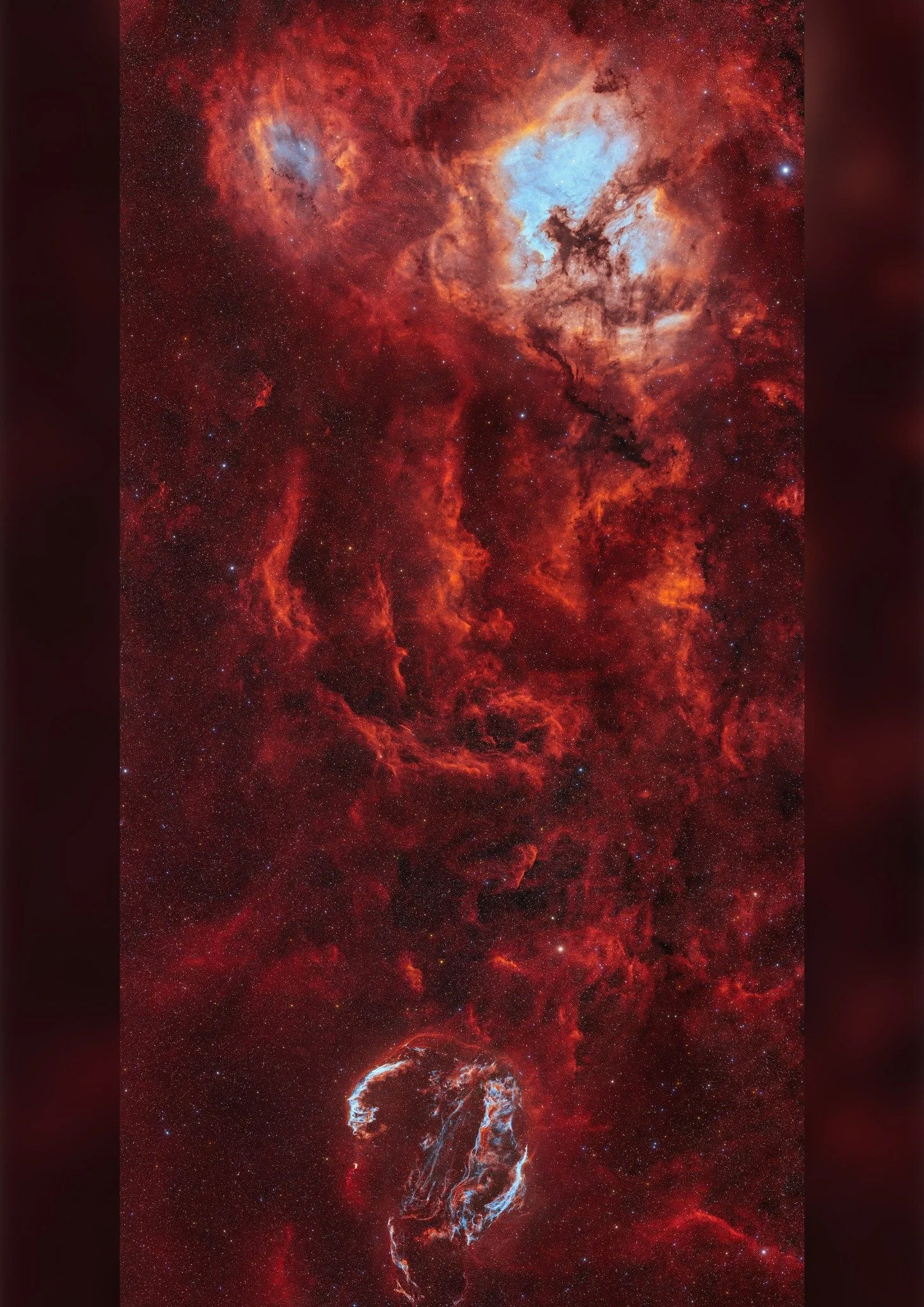
North American Nebula to Swan
Located about 2,600 light-years away in the constellation Cygnus, the North America Nebula (NGC 7000) is one of the largest and most recognizable star-forming regions in the northern sky. Its distinctive shape resembles the North American continent, with dark clouds of cosmic dust outlining familiar features such as the Gulf of Mexico and the eastern seaboard. The nebula's crimson glow comes primarily from hydrogen gas energized by intense ultraviolet radiation from nearby young, massive stars hidden within the surrounding stellar nursery.
Beneath its striking appearance lies a vast complex of gas and dust spanning more than 100 light-years. Within these dense molecular clouds, gravity continues to sculpt new generations of stars, while stellar winds and radiation carve intricate pillars, ridges, and cavities throughout the region. Rich in both scientific significance and visual beauty, the North America Nebula offers a remarkable glimpse into the processes that transform cold interstellar material into the stars and planetary systems of the future.