
AAPOD2 Image Archives
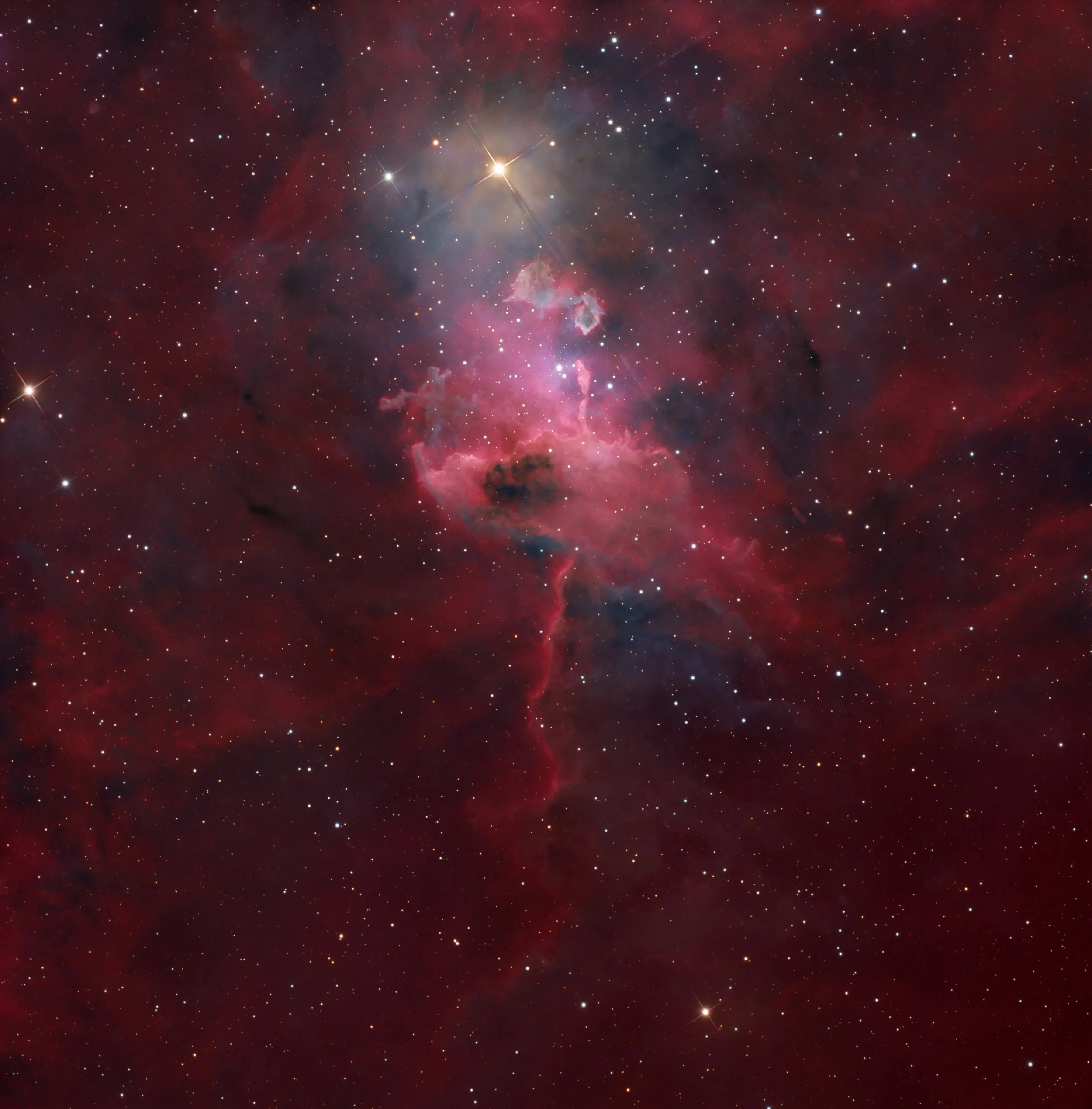
IC 417 – The Spider Nebula
Located in the constellation Auriga, IC 417 is a sprawling emission nebula energized by young, massive stars embedded within its core. Its intense red glow comes from ionized hydrogen gas excited by ultraviolet radiation from these hot stellar newborns. The surrounding region is part of a larger star forming complex that includes the nearby open cluster Stock 8, whose energetic stars sculpt the nebula’s intricate shapes and carve out pockets of glowing plasma and obscuring dust.
Delicate tendrils of gas stretch outward like cosmic legs, giving IC 417 its popular nickname, the Spider Nebula. Dark lanes of interstellar dust thread through the luminous hydrogen clouds, hinting at ongoing star formation hidden within. The interplay between radiation, stellar winds, and gravity continues to shape this dynamic region, making it both an active stellar nursery and a dramatic example of how massive stars influence their galactic environment.
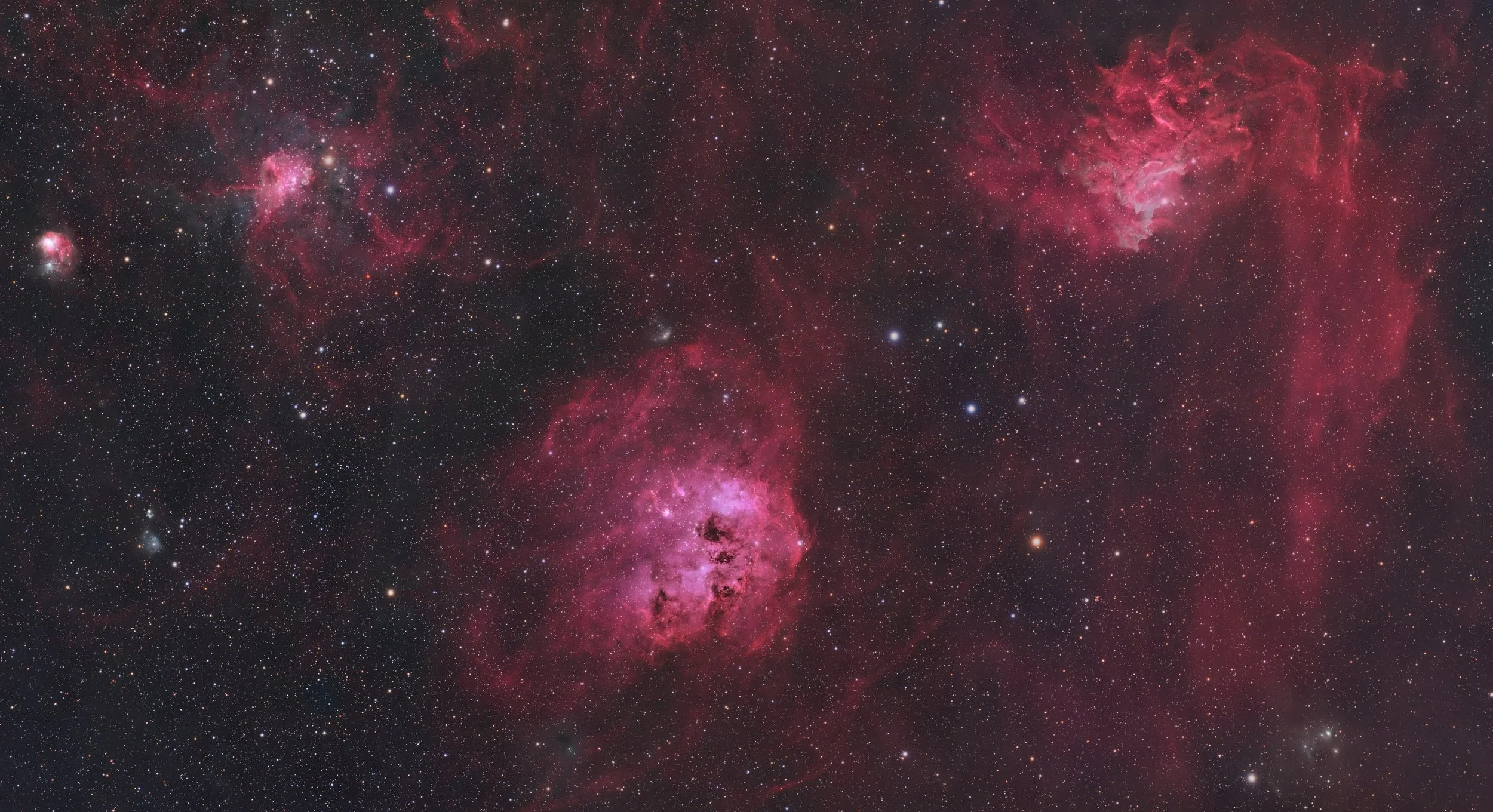
IC 417, IC 410 & IC 405. Three-panel mosaic in HaLRGB
This three-panel mosaic showcases the intriguing nebulae IC 417, IC 410, and IC 405, captured in HaLRGB. These emission nebulae are located in the constellation Auriga and present a stunning array of colors and structures.
IC 417, often referred to as the Spider Nebula, lies approximately 10,000 light-years from Earth. It features a cluster of young stars known as Stock 8, whose intense radiation ionizes the surrounding gas, creating the nebula's characteristic glow.
IC 410, also known as the Tadpoles Nebula, is located about 12,000 light-years away. It contains the open star cluster NGC 1893, which energizes the nebula. Notably, IC 410 includes two striking "tadpole" structures, which are dense regions of gas and dust being sculpted by stellar winds and radiation.
IC 405, the Flaming Star Nebula, is roughly 1,500 light-years from Earth. It is illuminated by the variable star AE Aurigae, which is believed to have been ejected from the Orion Nebula region millions of years ago. The interaction of AE Aurigae's intense light with the surrounding hydrogen gas creates a spectacular emission and reflection nebula, exhibiting striking red and blue hues.
Together, these nebulae form a vibrant tapestry of star formation and cosmic activity, offering a vivid glimpse into the dynamic processes shaping our galaxy.