

AAPOD2 Image Archives
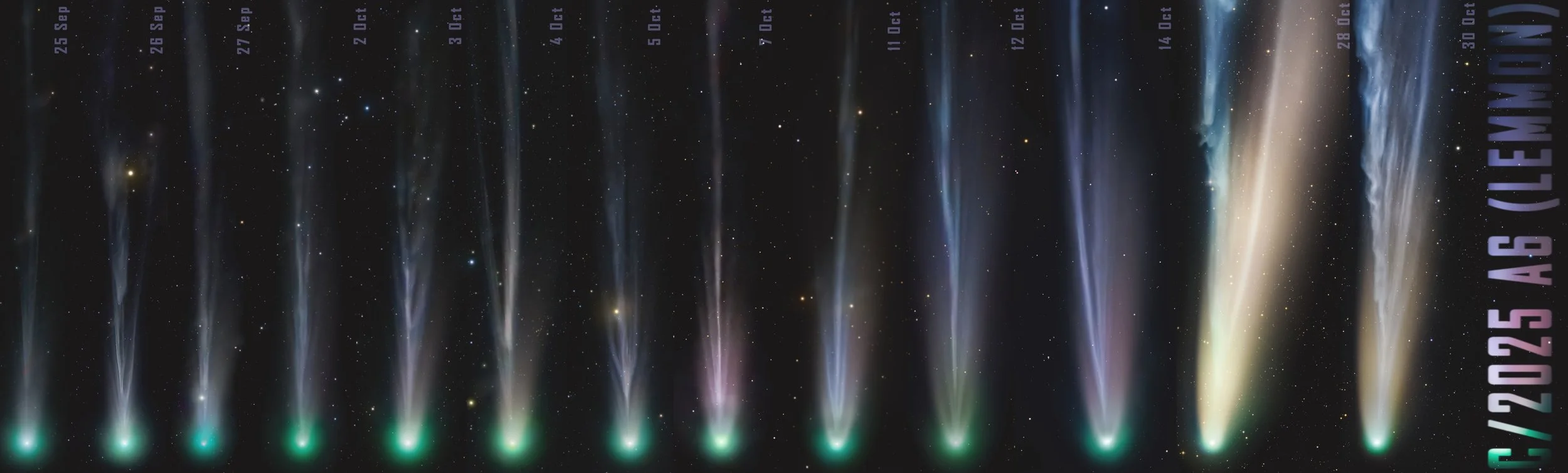
Goodbye Lemmon
Between September 25 and October 30, 2025, this sequence of thirteen images follows the week by week transformation of comet C/2025 A6 Lemmon as it moved deeper into the inner solar system. Each frame captures the growing brightness of the coma along with dramatic changes in the tail as sunlight and the solar wind stripped gas and dust from the nucleus. Subtle streamers early in the series gave way to long, sharply defined ion structures and broader dust fans. The shifting colors across the dates reflect a mix of carbon dominated green emission from the coma and the blue glow of ionized gases driven outward at high speed.
This kind of single frame time lapse is rare because most comets simply do not show so much structural variation over such a short period. Lemmon surprised observers with recurring outbursts that fed new material into the tail and produced those twisting filaments and forked jets seen toward the end of the series. Watching these changes across a month offers a front row view of how dynamic cometary physics can be when a fresh nucleus interacts with the solar wind. It also helps researchers refine dust release models for a comet that has only recently been characterized and continues to deliver surprises.
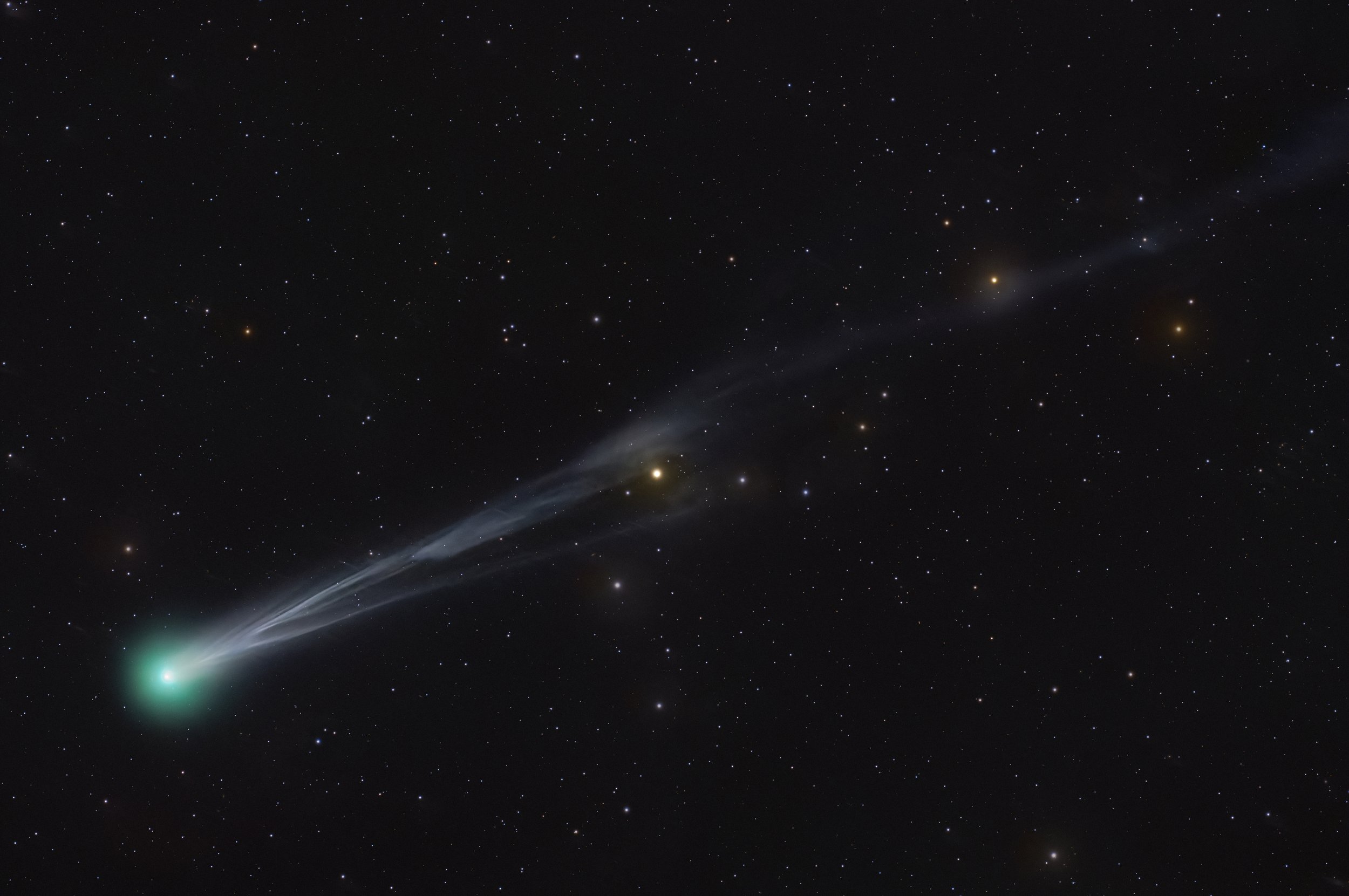
C/2025 A6 (Lemmon) Captured on September 26, 2025
Comet C/2025 A6 (Lemmon) shows off a strikingly green coma and a long, intricate ion tail stretching across the starry background. Captured on September 26, 2025, this image reveals delicate streamers in the tail and subtle interactions with the solar wind, producing a flowing, almost ribbon-like appearance. The contrast between the comet's bright nucleus and the golden foreground stars adds depth to the scene.
This image was made using RGB and luminance exposures totaling just over an hour of integration time, combining 30×30″ frames for each color channel with additional 120″ and 300″ luminance frames to bring out the faintest structures in the tail. C/2025 A6 continues to be a dynamic and visually spectacular visitor to the inner solar system.