

AAPOD2 Image Archives
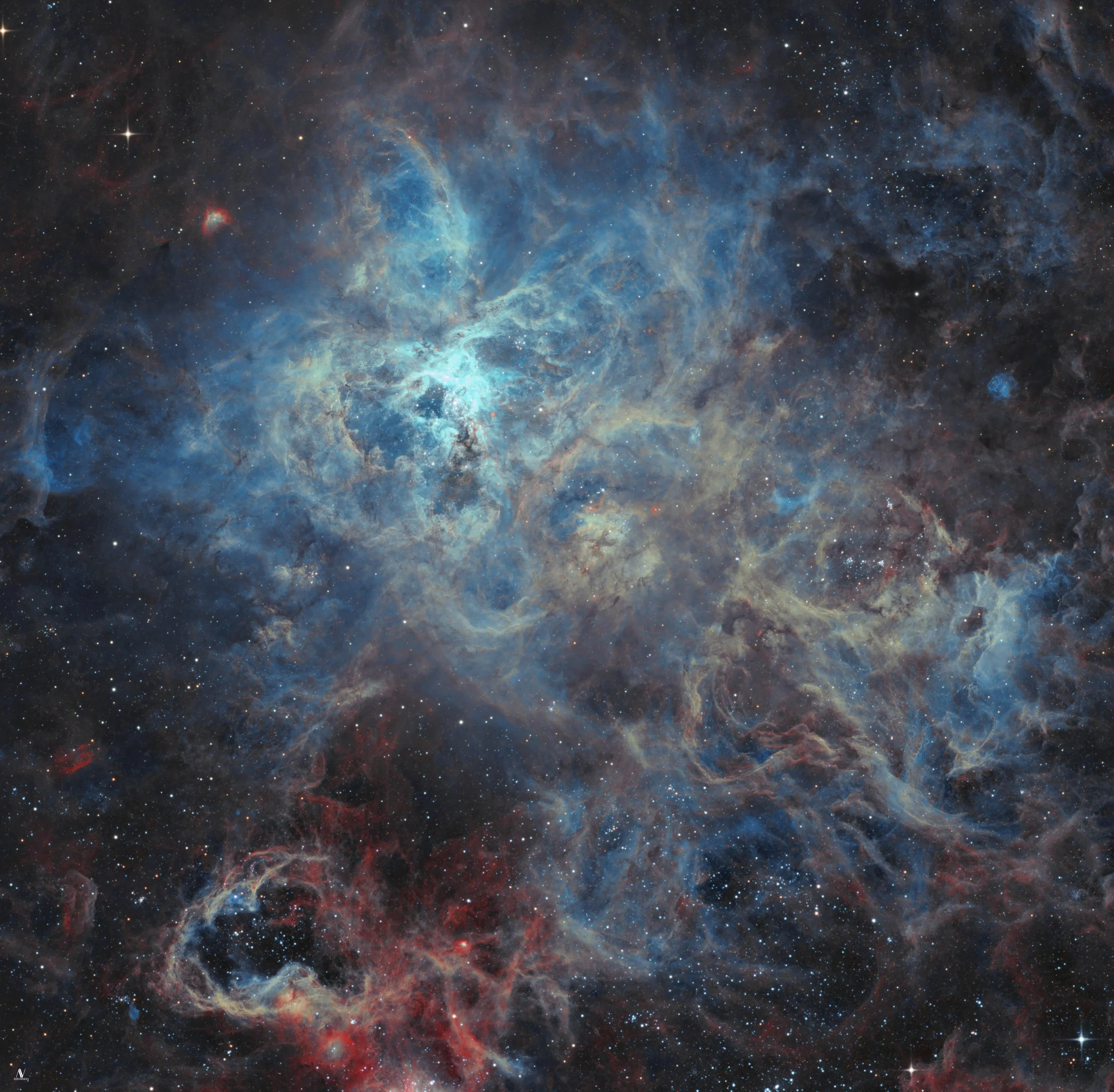
NGC 2070 – The Heart of the Tarantula Nebula
NGC 2070 is the dense, energetic core of the Tarantula Nebula, the most active star-forming region in the Local Group of galaxies. Located within the Large Magellanic Cloud roughly 160,000 light-years away, this region is dominated by the massive young star cluster R136, whose intense ultraviolet radiation ionizes the surrounding hydrogen and oxygen gas. The result is a complex network of glowing filaments, cavities, and shock fronts sculpted by stellar winds and radiation pressure from some of the most massive stars known.
Rendered here in an HOO-based palette with additional RGB contribution, ionized hydrogen traces vast turbulent clouds while doubly ionized oxygen highlights the hottest and most energetic structures near the cluster core. Dark dust lanes weave through the luminous gas, marking regions where future stars may still be forming. Captured from Obstech in Chile, this image reveals NGC 2070 not as a single object, but as a dynamic ecosystem where stellar birth, feedback, and destruction unfold on truly galactic scales.
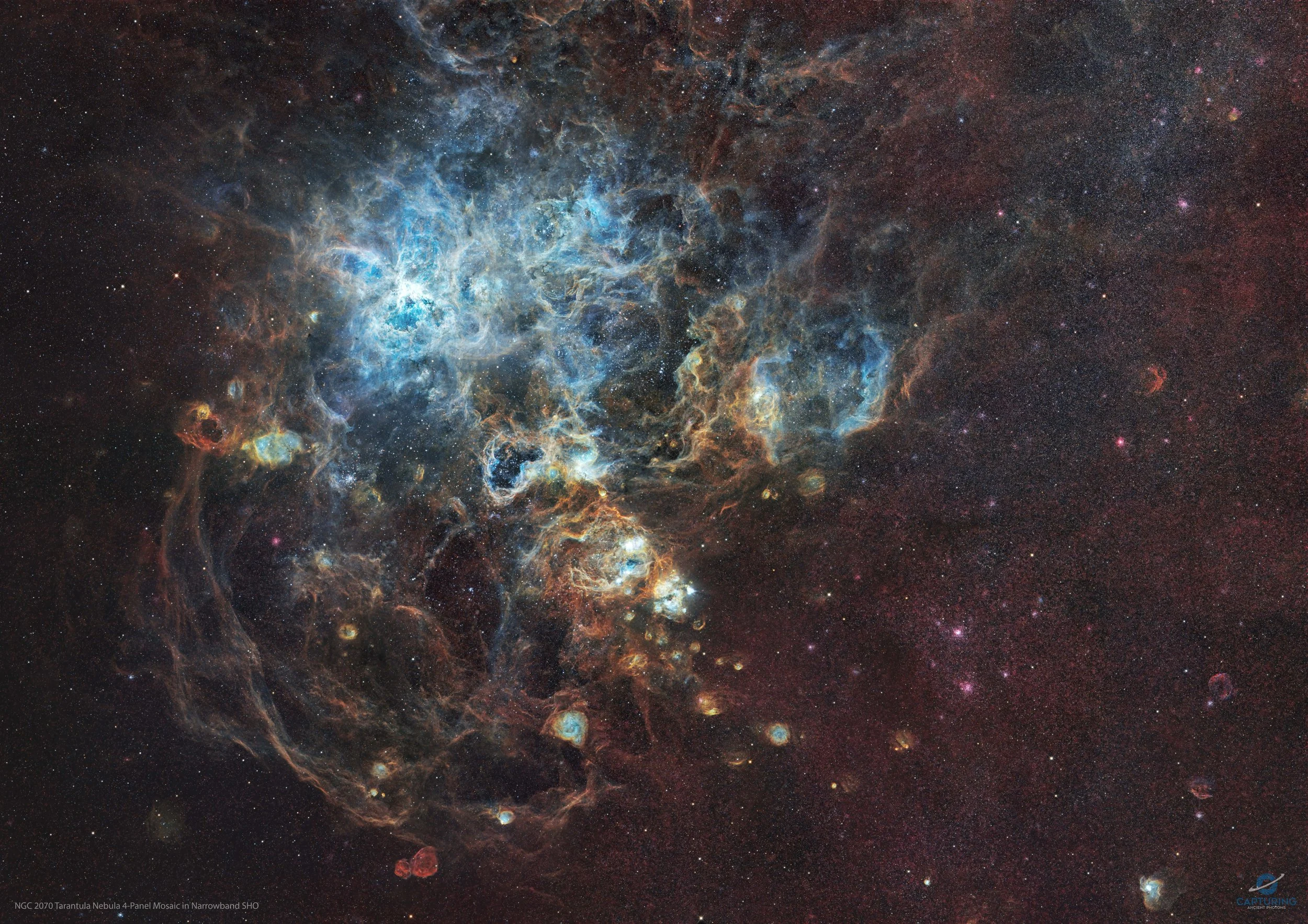
the Tarantula Nebula (NGC 2070, or 30 Doradus)
The Tarantula Nebula, cataloged as NGC 2070 or 30 Doradus, is the most active star forming region in the Local Group. Located in the Large Magellanic Cloud about 160 thousand light years away, it contains immense clouds of ionized hydrogen sculpted by powerful stellar winds and radiation from the massive stars in the central cluster R136. These young stars energize the nebula so intensely that the region outshines entire small galaxies, making it a striking example of how extreme star birth can shape and illuminate the interstellar medium.
Filaments, ridges, and cavities weave throughout the nebula, each tracing the aftermath of past generations of massive stars that have already ended their lives in supernova explosions. Shock fronts from those explosions continue to trigger new waves of star formation, creating a dynamic cycle of collapse and renewal. The Tarantula Nebula offers a rare look at large scale stellar feedback in real time and reveals what conditions may have been like in the early Milky Way when star formation rates were significantly higher.
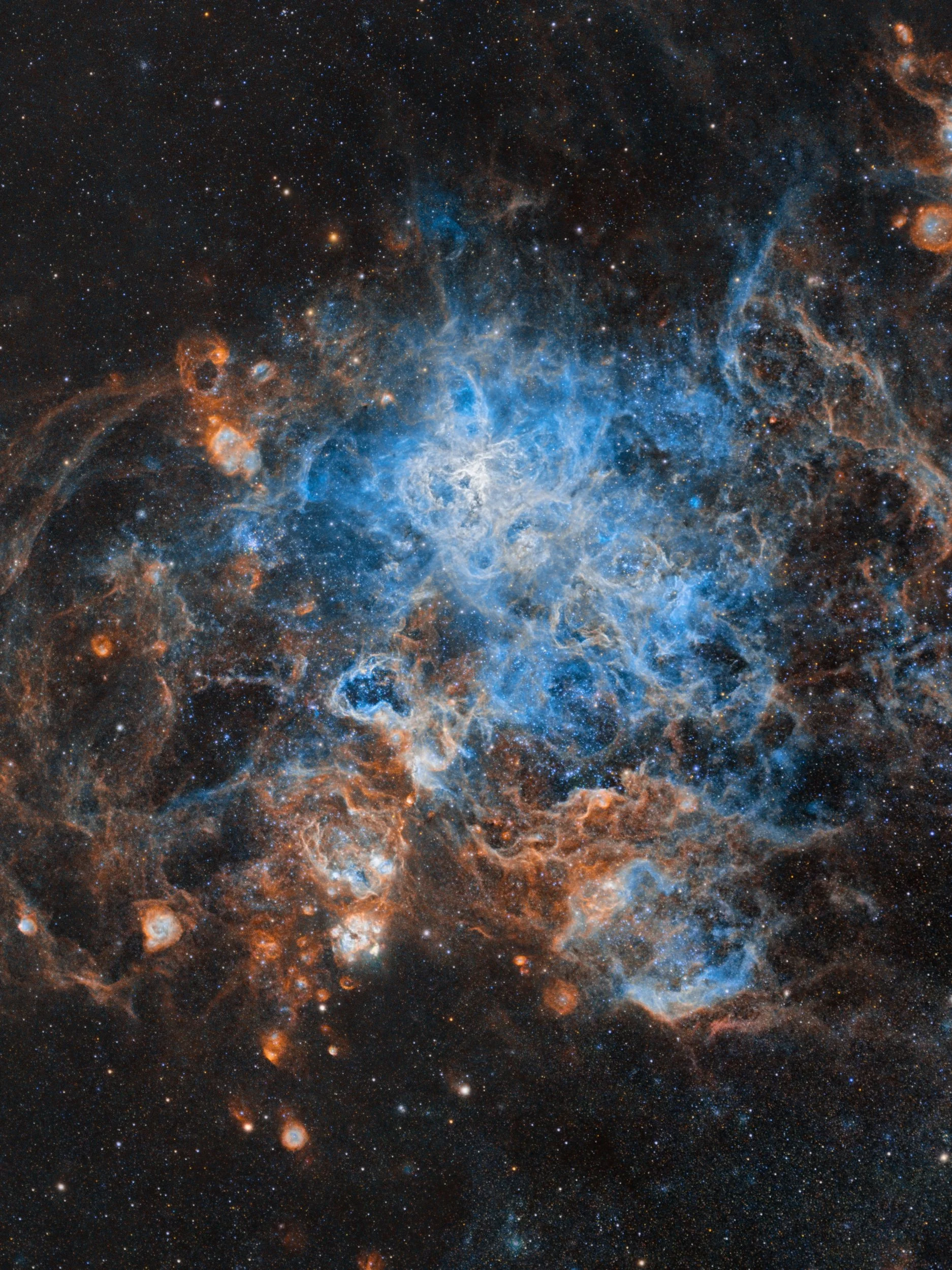
Tarantula Nebula - NGC 2070
Image Description and Details : Tarantula Nebula, NGC 2070
One of the most amazing things in the entire sky - and only seen from the Southern Hemisphere - the Tarantula Nebula NGC 2070 in the Large Magellan Cloud is so large and bright that if it were as close as the Orion Nebula, it was cast shadows at night!
This is a SHO blend with RGB stars, taken over 12 nights through Oct-Nov 2022
Copyright: Christopher Boyd
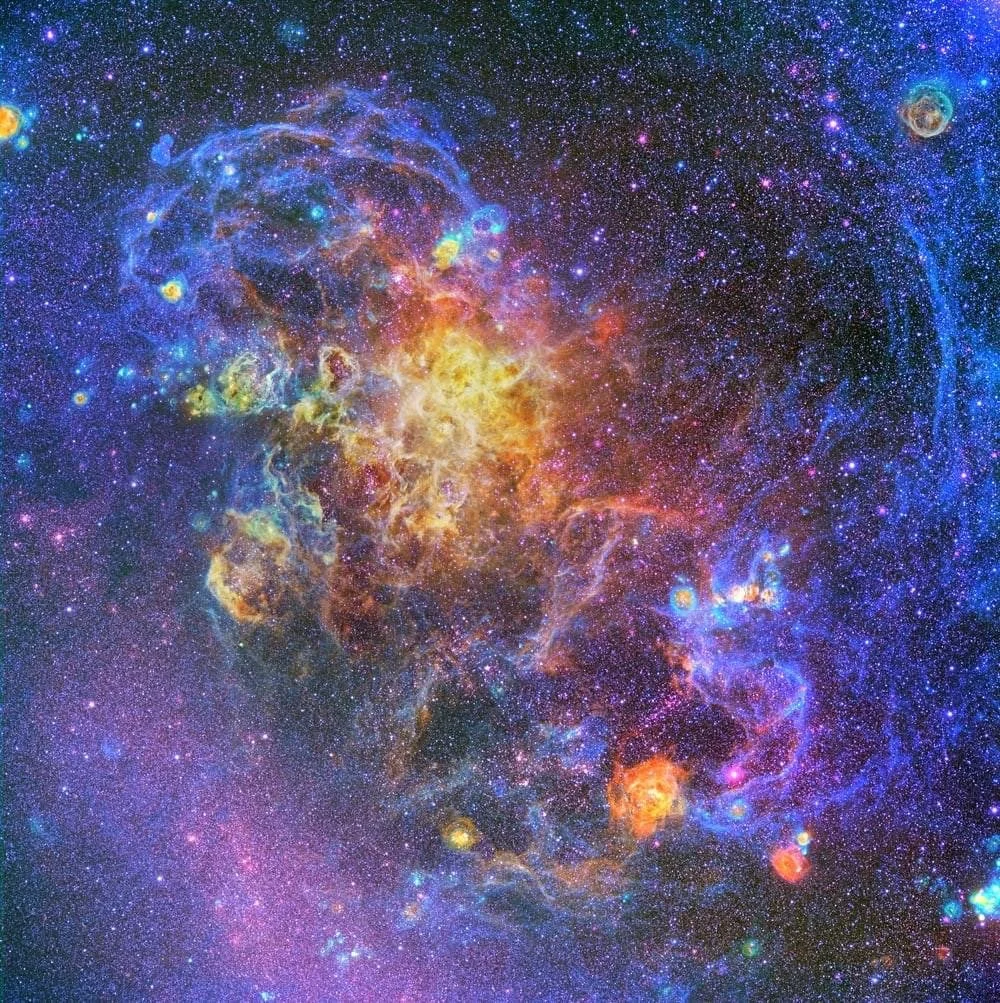

tarantula nebula - NGC 2070
Image Description:
At the beginning of our presentation of the southern sky, we see the spectacular tarantula nebula, catalogue NGC 2070 or 30 Doradus, today in the constellation Swordfish. The last name comes from the explorer Nicolas Louis de Lacaille who saw him as a star in 1751 and therefore gave a star number. The fog is located in the Great Magellanian cloud approx. 163 000 light years away.
It is one of the largest star emerging areas in our local galaxy group. He is stimulated by the star cluster R136 in his midst. The pile houses the most well-known and brightest star R136a1 with 265 solar masses and 10 million times luminosity and another two stars with about 150 solar masses.
Copyright: Hans Bernd Dörfeldt