

AAPOD2 Image Archives
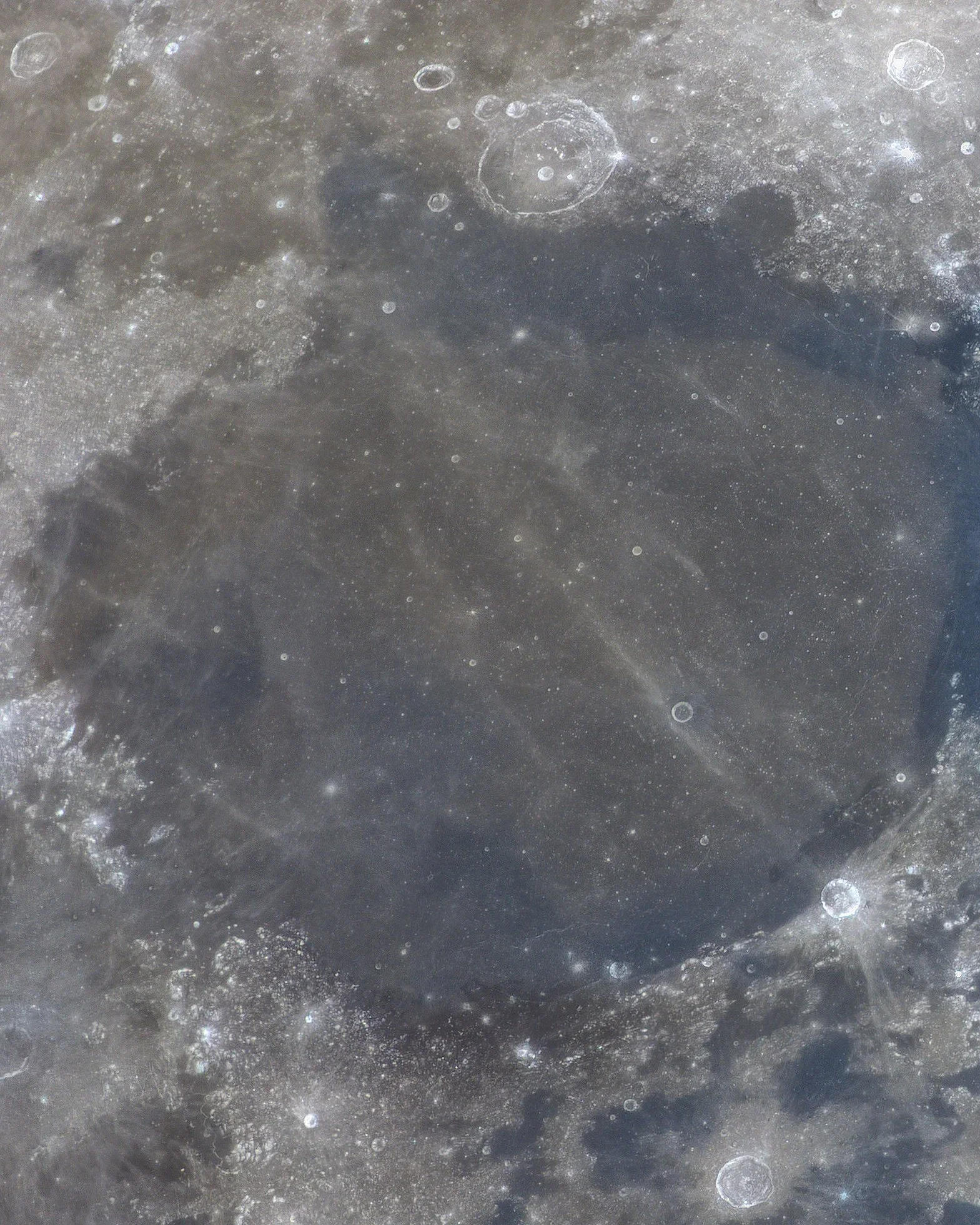
Sea of Serenity in mineral detail
This high-contrast mineral image of Mare Serenitatis (Sea of Serenity) captures the rich geological history of an ancient lunar impact basin flooded by volcanic basalt. The distinct tonal variations across the basaltic plains highlight regional differences in mineral chemistry, where darker, low-albedo deposits signify high concentrations of titanium dioxide and iron-rich minerals such as ilmenite and pyroxene. In contrast, bright impact features and crater rims—such as Posidonius and Bessel—display high-albedo ejecta blankets composed of pulverized, pristine silicate minerals like plagioclase feldspar (anorthosite) excavated from beneath the regolith, illustrating the interplay between volcanic effusion and impact cratering on the lunar surface.
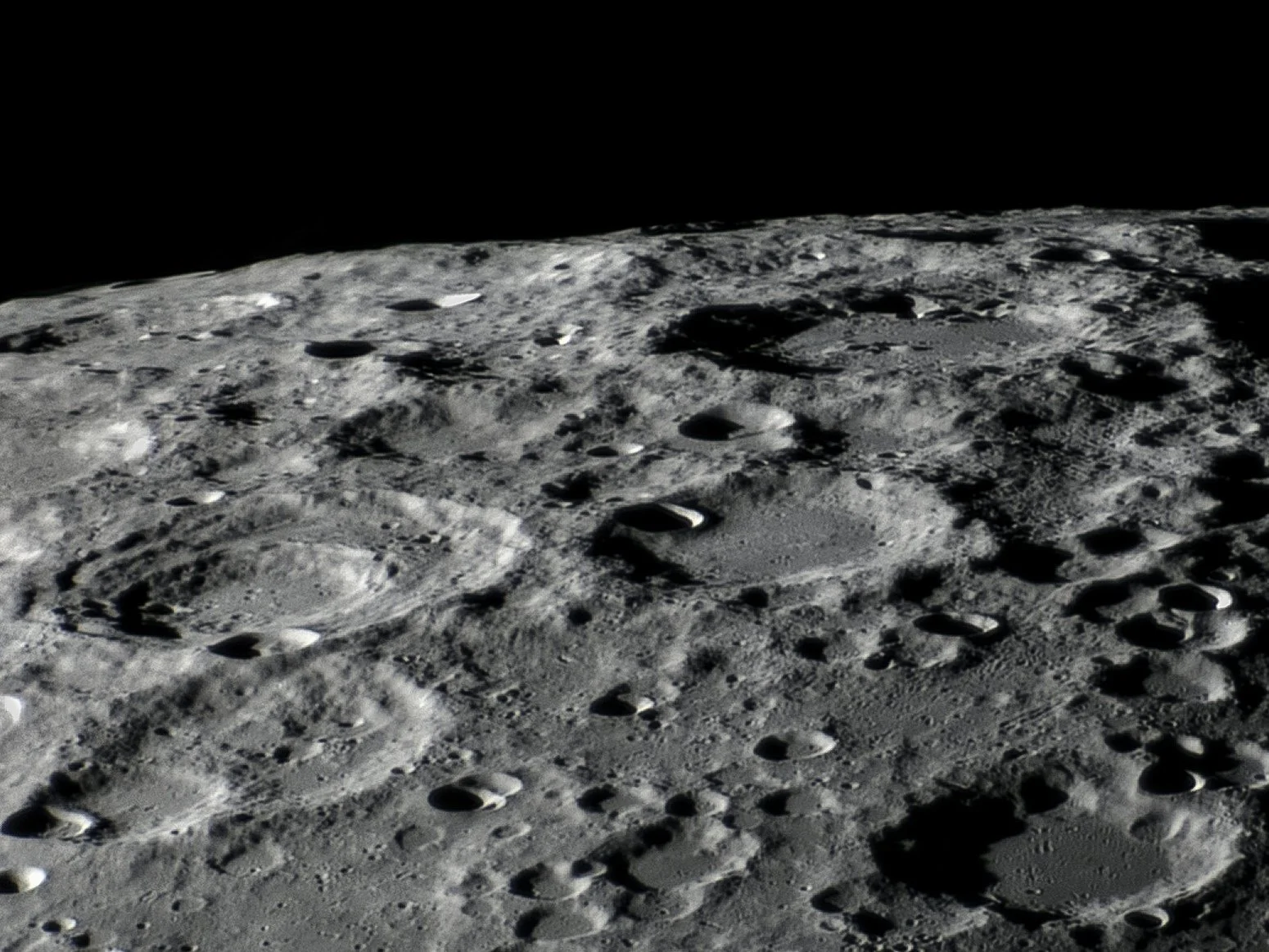
Craters on the Southern Limb of the Moon
Raking sunlight reveals dramatic topography across the rugged southern highlands of the Moon. In this high-resolution view along the lunar limb, a cascade of overlapping craters stretches across the field, including several large impact structures displaying well-preserved rims and terraced walls.
The oblique angle of the shot emphasizes shadow and elevation, capturing a stark sense of depth across the ancient terrain. These highlands, among the oldest parts of the lunar surface, have endured countless collisions—each crater a story in stone. This image offers a striking reminder of the Moon's violent, cratered past, carved in stark relief against the blackness of space.
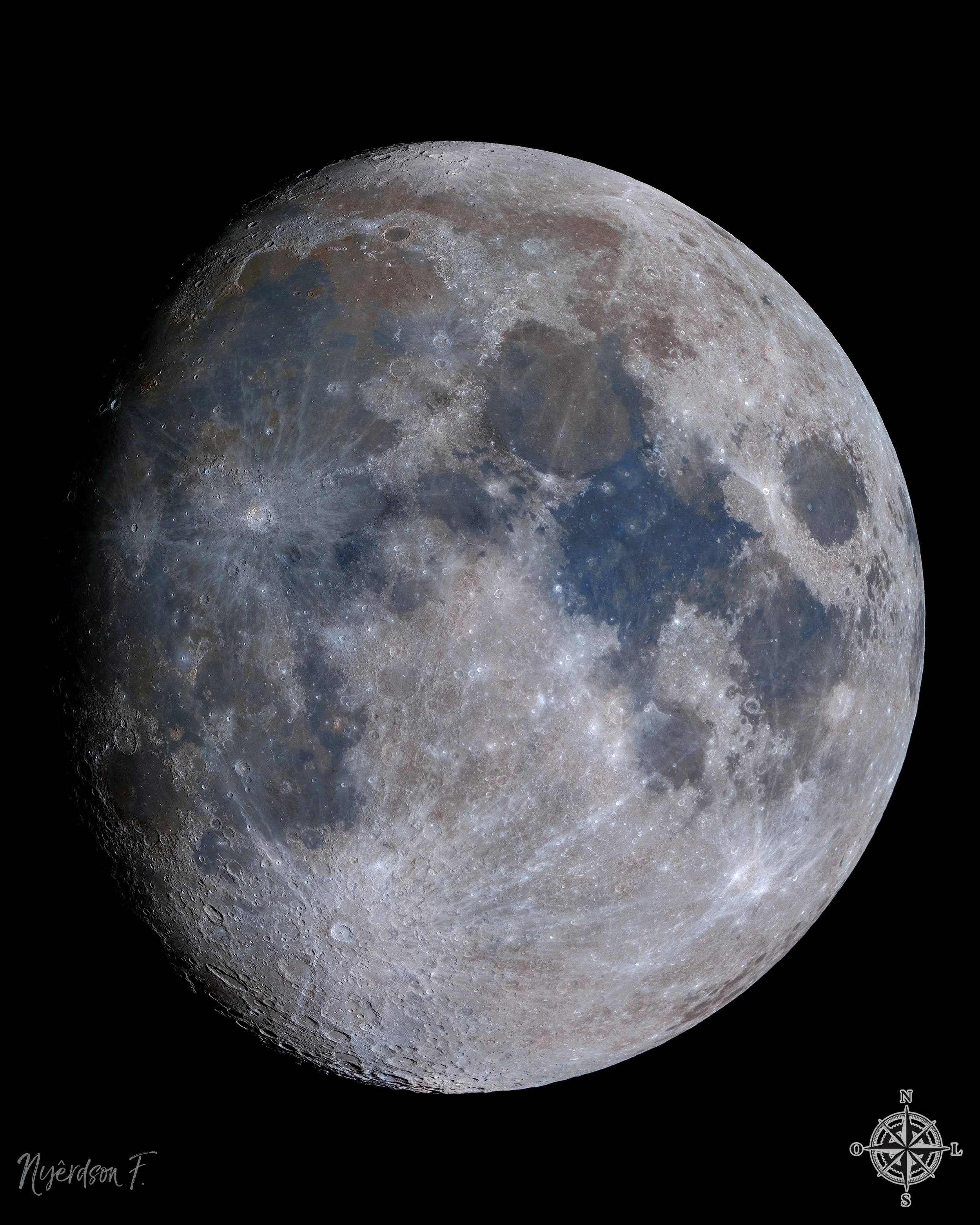
MINERAL LUNAR MOSAIC
Seen from Earth, the Moon appears mostly grey—but a closer look with enhanced color processing reveals a mosaic of subtle mineral diversity across its surface. This striking mineral Moon portrait highlights variations in lunar soil composition using color: blue tones represent titanium-rich basaltic regions, while reddish and brownish areas indicate lower titanium content and ancient highlands. Mare Imbrium and Oceanus Procellarum stretch across the upper left in cool blues, while Tycho’s bright rays explode from the lower hemisphere in radiant whites, hinting at a relatively young impact site.
This detailed mosaic was captured using stacked and sharpened frames to bring out both color and clarity, with a natural orientation indicated by the compass rose in the corner. Despite the Moon being a familiar object, its geologic history remains one of contrasts—between dark volcanic plains and light, cratered highlands; between old and young; and, as revealed here, between one mineral and another. It’s a reminder that even our nearest celestial neighbor still holds mysteries visible only to those who look a little deeper.
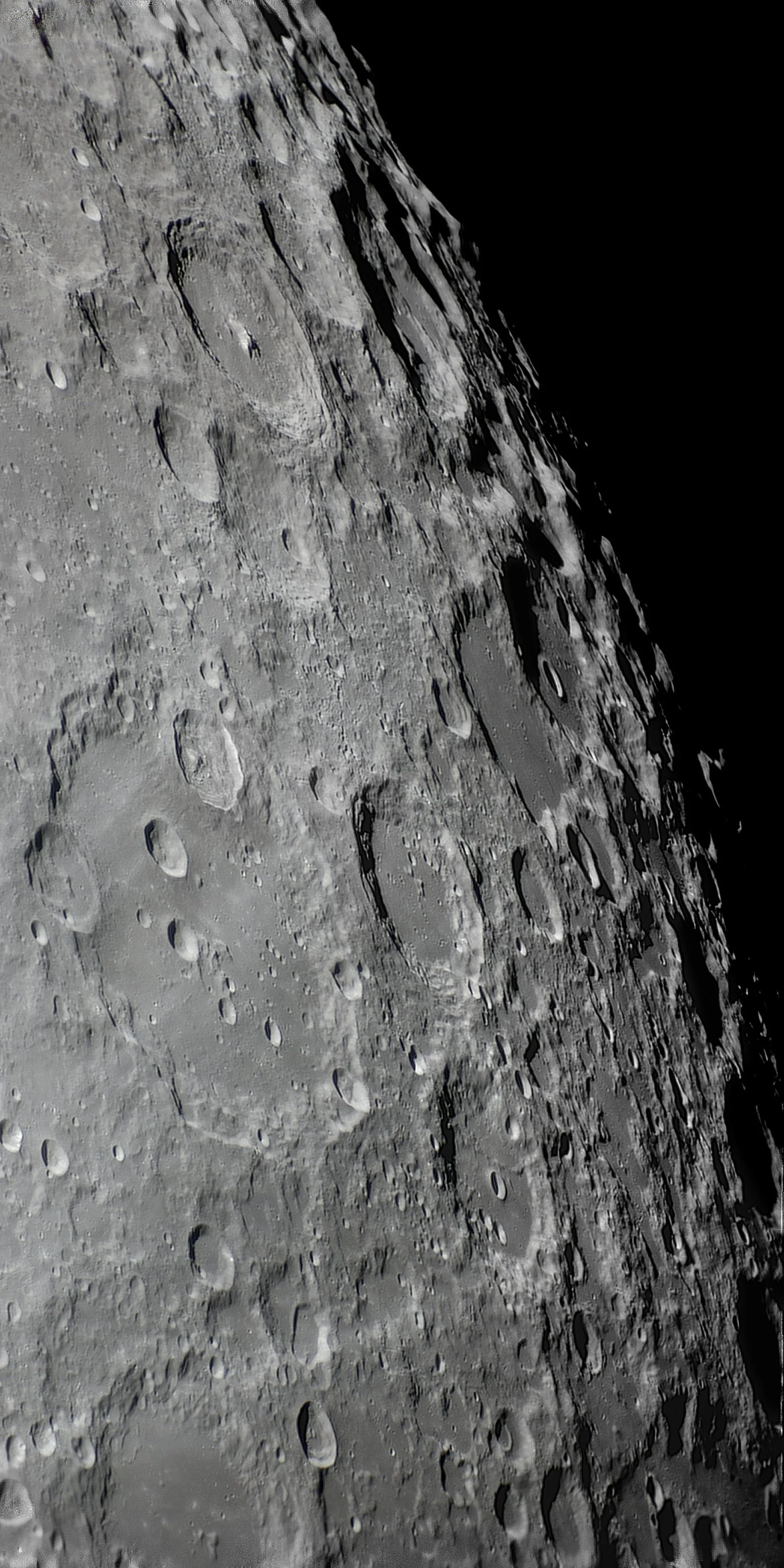
The Lunar Highlands – Earth's Battered Companion
This image captures the most heavily cratered region on the visible side of the Moon: the lunar highlands. Unlike the smoother basalt plains of the lunar maria, the highlands are ancient, rugged terrain, dating back over 4 billion years. Their densely packed craters tell the violent story of the early solar system, when impacts were far more frequent and intense.
Craters of all sizes overlap across the highlands, with sharp rims and long shadows that highlight their depth and age. The sheer density of impacts in this region, visible in stark detail near the Moon’s limb, is a testament to its ancient and unshielded surface. The image’s angle enhances the topography, revealing ridges, ejecta blankets, and the chaotic texture of a surface shaped by billions of years of celestial bombardment.
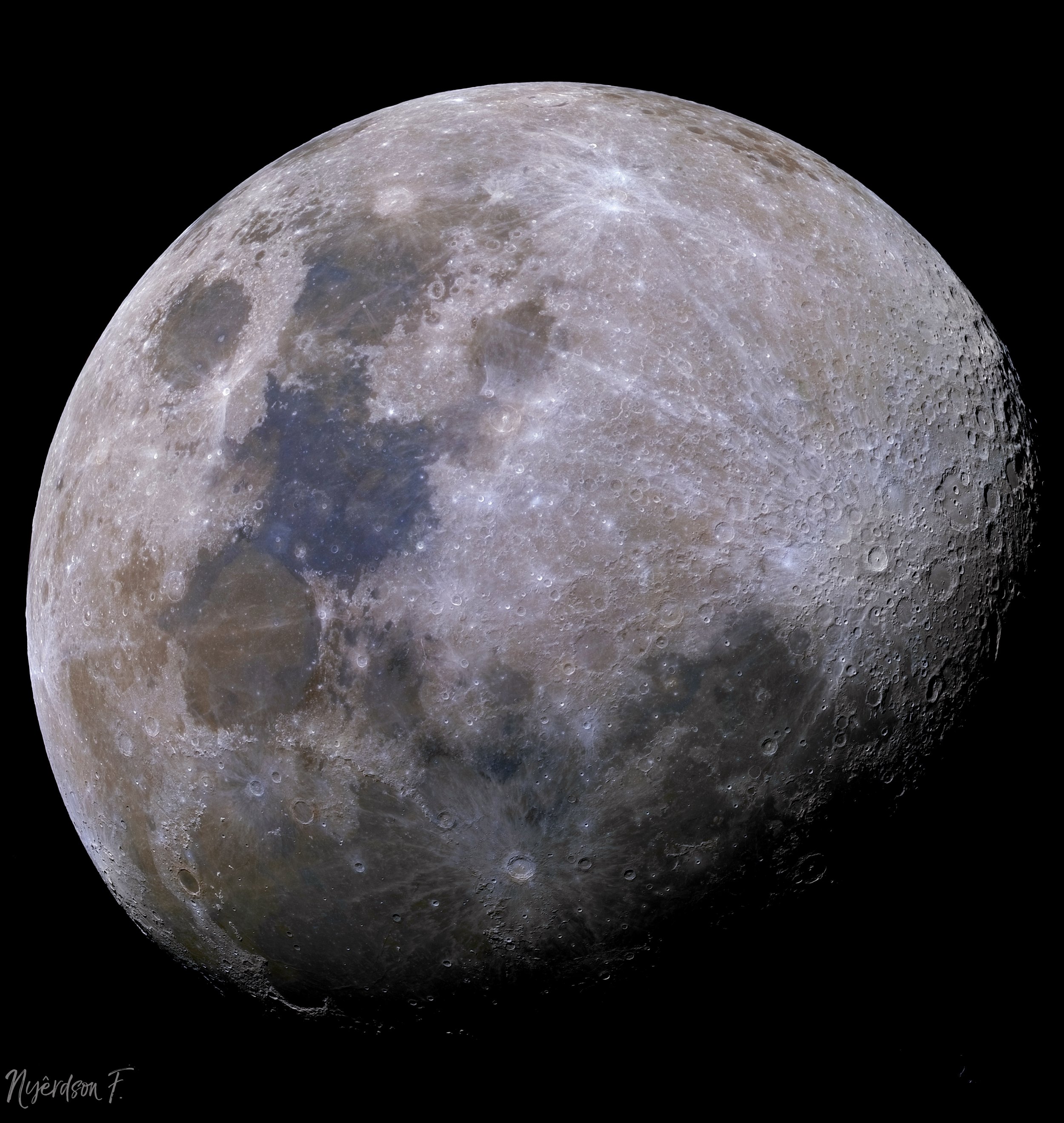
CRESCENT GIBBOUS MOON REVEALS ITS MINERALS
The Crescent Gibbous Moon, bathed in sunlight, unveils a spectacular display of its hidden mineral diversity, revealing a lunar landscape painted in subtle yet scientifically significant hues. While the Moon often appears monochromatic to the naked eye, specialized imaging techniques bring out the geological secrets of its surface, showcasing the distribution of various elements across its rugged terrain.
This enhanced image, captured using mineral mapping techniques, highlights the Moon’s crustal composition in vivid detail. The blue and violet tones indicate areas rich in titanium-bearing basalts, found primarily in the lunar maria, vast plains formed by ancient volcanic activity. In contrast, the reddish and brown hues trace the presence of iron-rich materials and highland regions composed of anorthosite—a mineral abundant in aluminum that forms the Moon’s ancient crust.
The transition from the illuminated portion to the dark lunar terminator offers a breathtaking contrast, revealing long, jagged shadows cast by crater walls and towering mountain ranges. This interplay of light and shadow enhances the dramatic topography of impact craters, ridges, and volcanic plains, offering a glimpse into the Moon’s violent past shaped by asteroid impacts and internal geological activity.
By utilizing multispectral imaging and color enhancement, this image transforms the Moon from a familiar celestial neighbor into a richly textured and scientifically revealing world—one whose mineral composition provides key insights into the history of our solar system and the processes that shaped planetary bodies.