

AAPOD2 Image Archives
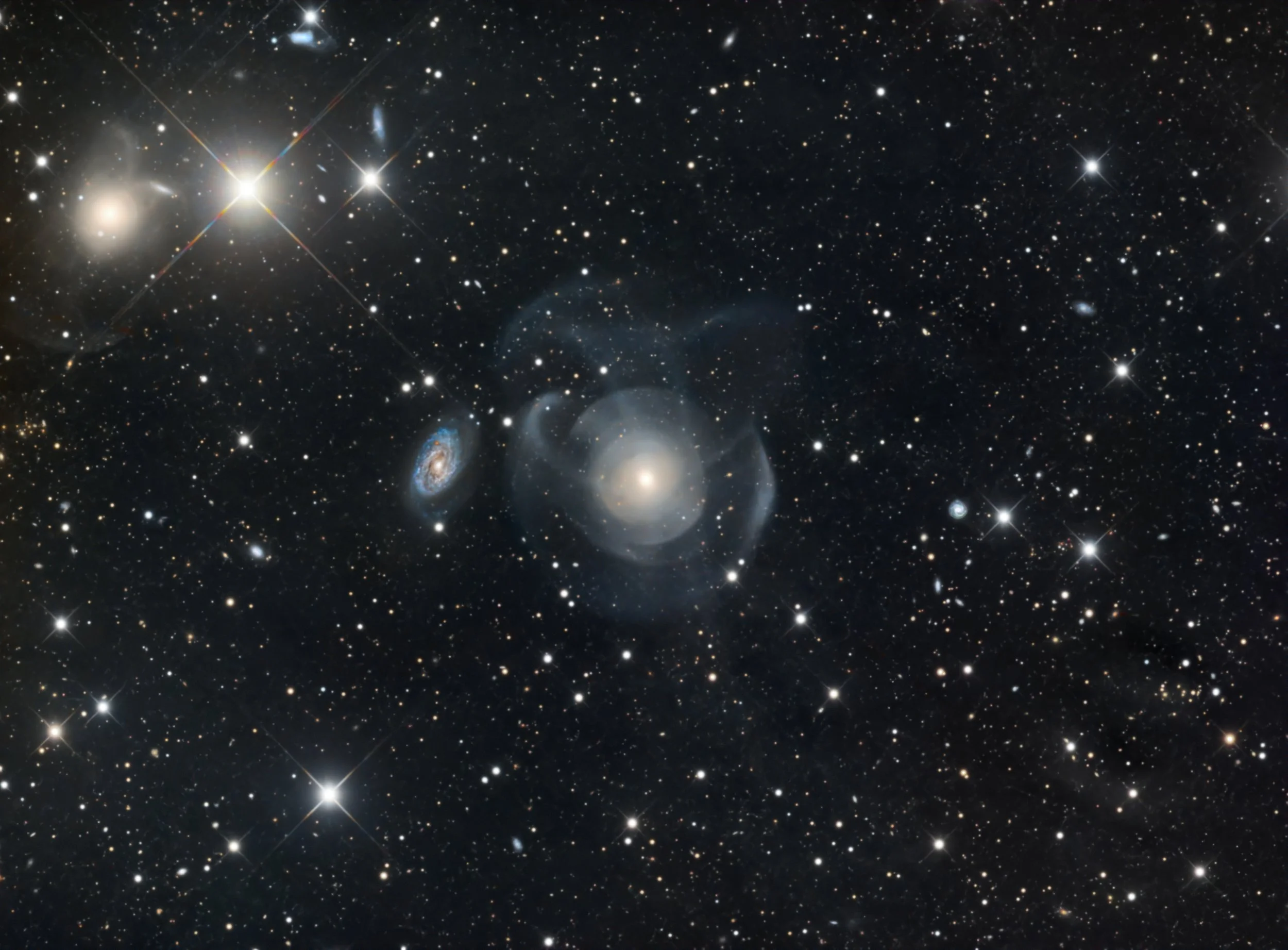
NGC 474 and Its Ghostly Shells
NGC 474 is a lenticular galaxy about 100 million light-years away in Pisces, but it doesn’t behave like the quiet, orderly systems lenticulars are known for. Instead, it wears a stunning set of tidal shells that ripple outward like expanding rings in a pond. These faint, overlapping arcs are the fossil signatures of past galactic encounters, most likely involving its spiral neighbor, NGC 470. Each shell marks a moment when a smaller galaxy was torn apart and its stars were deposited into gently curving layers, giving NGC 474 its strangely hypnotic, almost fluid appearance.
In deep exposures, those shells stretch far beyond the galaxy’s bright core, revealing an evolutionary history shaped by repeated mergers and billions of years of gravitational sculpting. The outer layers are so delicate that they only appear under long integration times, making them a favorite target for astrophotographers who love chasing faint structures. Images like this one highlight the quiet violence of galactic evolution: collisions that happened long before humanity existed, still written in starlight across the cosmos.
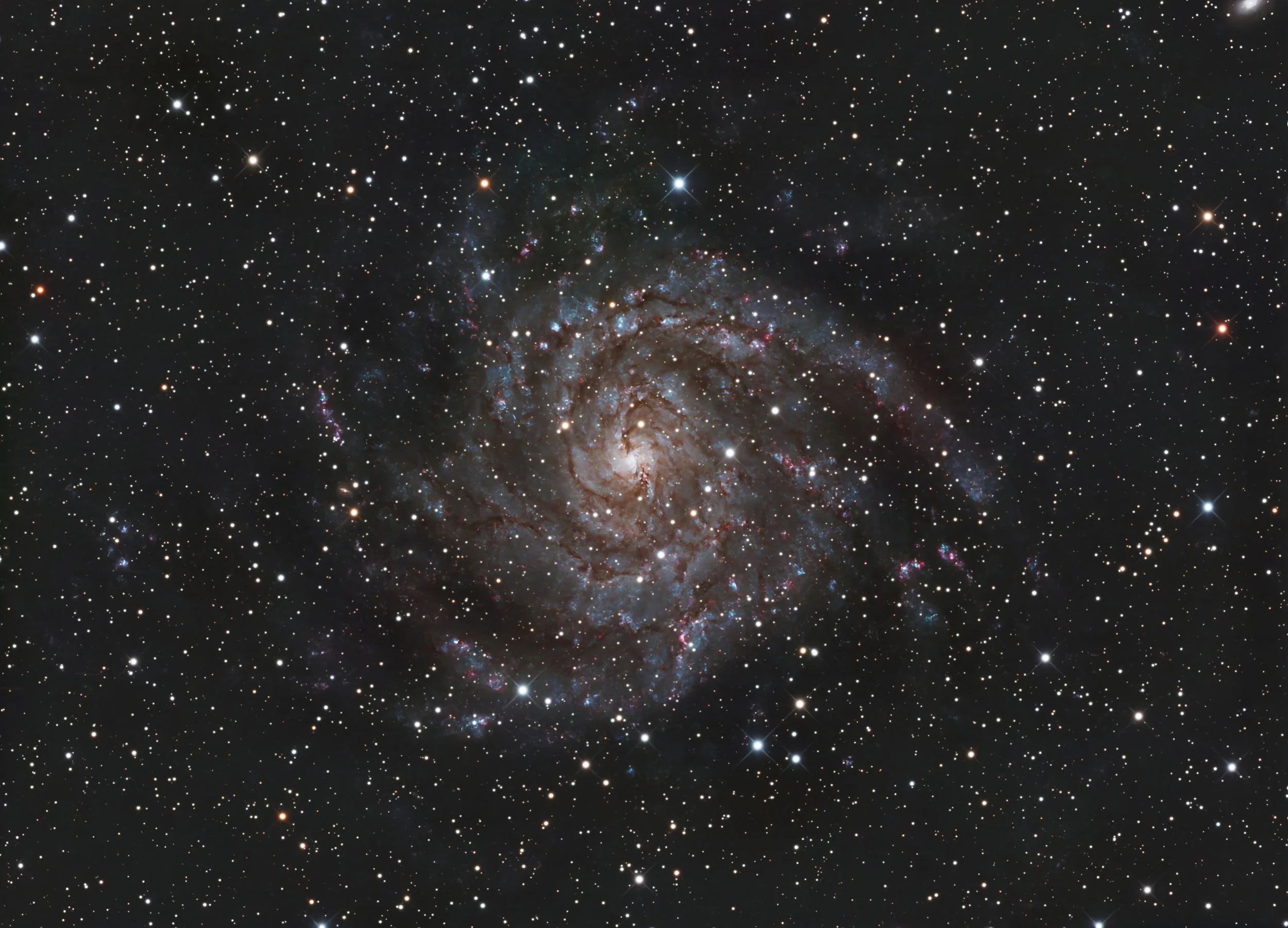
IC 342 – The Hidden Galaxy
IC 342, often called the Hidden Galaxy, lies just 10 million light-years away in the constellation Camelopardalis. Despite its proximity, it is shrouded behind the dense dust of the Milky Way, making it challenging to observe. Its sprawling spiral arms emerge faintly through the obscuring dust, revealing star-forming regions and the complex structure of this nearby galaxy.
This image was captured under dark Bortle-class skies in West Texas using a ROCS 16-inch Ruggedized Military telescope and a QHY600m camera. Careful calibration and long-exposure imaging allowed the faint details of this hidden neighbor to emerge from the galactic foreground, unveiling its subtle luminosity and structure.
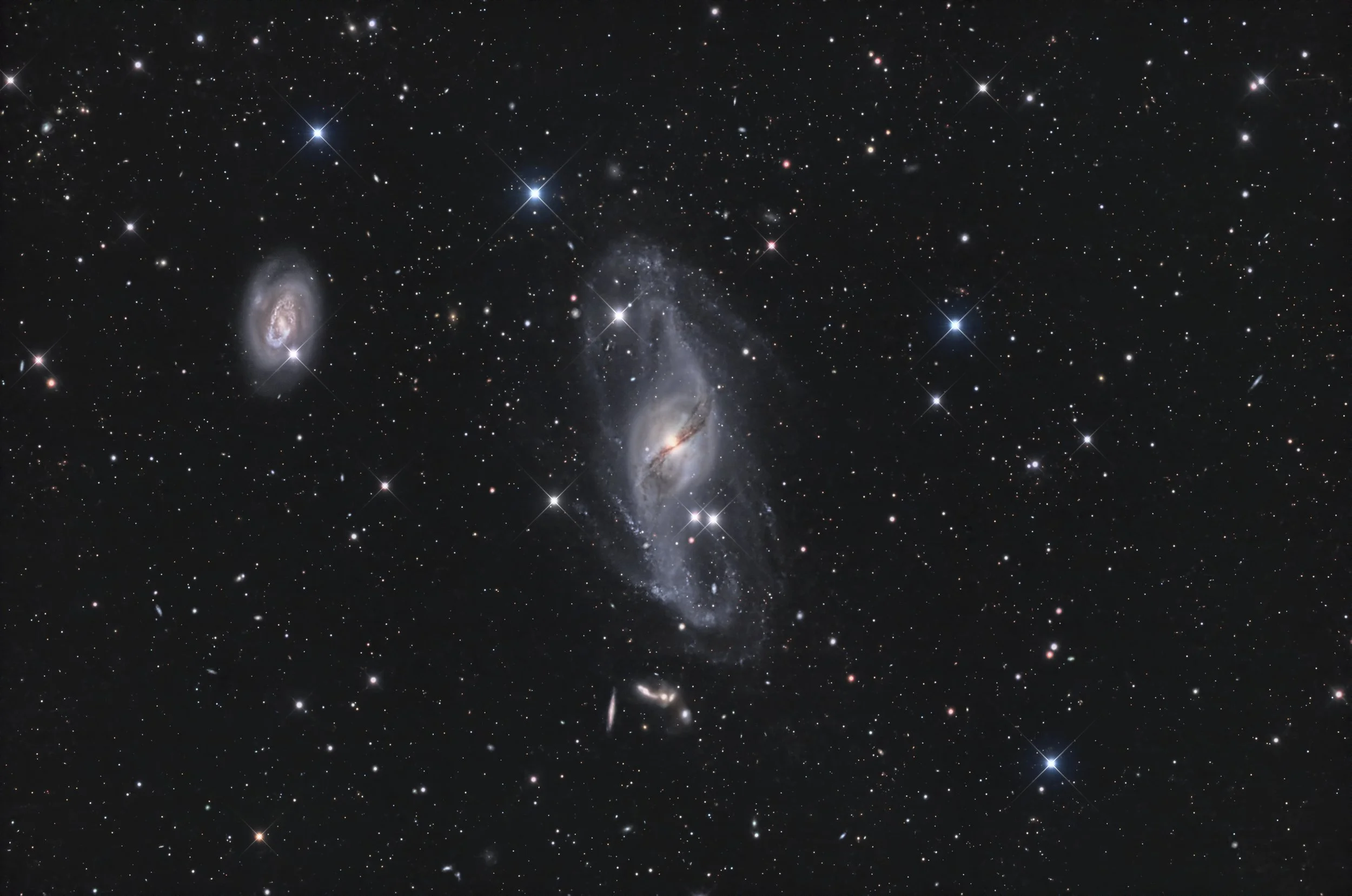
NGC3718
NGC 3718, a captivating spiral galaxy nestled in the constellation Ursa Major, offers us a glimpse into the intricate dance of cosmic forces shaping our universe. Located approximately 52 million light-years away from Earth, this galaxy presents a striking appearance, with its warped and twisted disk hinting at gravitational interactions with neighboring galaxies.
One of the most notable features of NGC 3718 is its prominent tidal tail, a stream of stars and gas extending outward from the galaxy's main body. This elongated structure, forged through gravitational interactions with nearby galactic companions, offers valuable insights into the dynamics of galactic encounters and the transformative effects they impart on the involved galaxies. NGC 3718 stands as a testament to the dynamic nature of the cosmos, where gravitational tugs and cosmic collisions sculpt the majestic tapestry of the universe.