

AAPOD2 Image Archives
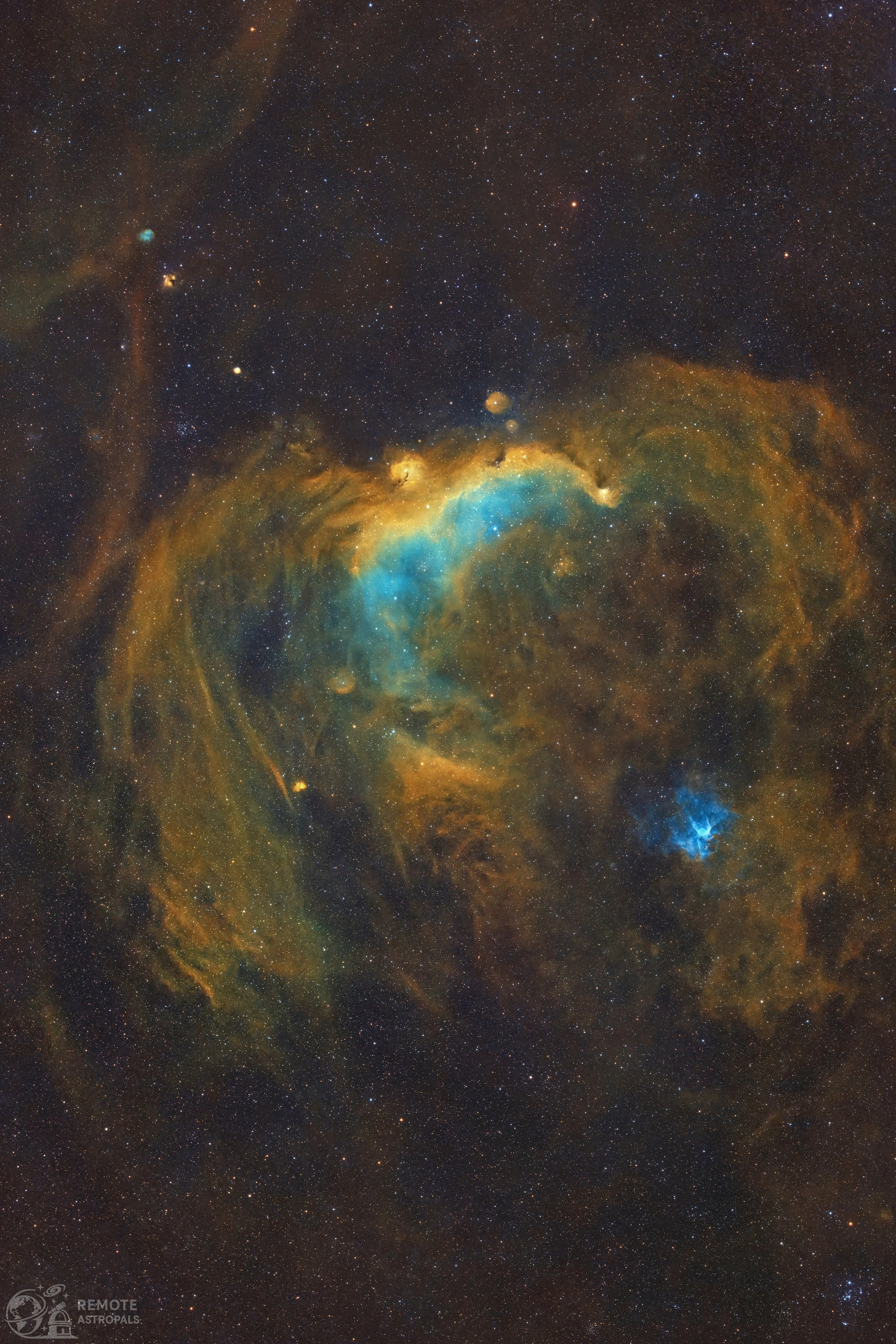
The Phoenix rising from its ashes (IC 2177 – The Seagull Nebula)
IC 2177, commonly known as the Seagull Nebula, is a vast complex of ionized hydrogen, dust, and young stars located along the border of the constellations Monoceros and Canis Major, roughly 3,800 light-years from Earth. The dominant emission arises from hydrogen gas energized by ultraviolet radiation from massive, recently formed stars embedded within the nebula. These stars sculpt the surrounding material into sweeping arcs and filaments, giving rise to the nebula’s wing-like appearance.
In this view, the glowing hydrogen clouds are interwoven with dark dust lanes that trace the colder, denser regions of the interstellar medium. Bright knots and compact blue regions mark active star-forming zones, while the broader, faint structures reveal how stellar winds and radiation gradually reshape the nebula over millions of years. The interplay of destruction and creation within IC 2177 makes it a striking example of how star birth emerges from the remnants of earlier generations.